
A new rent and service charge standard for Wales
We want your views on the development of a refreshed social rent policy.
In this page
Overview
Date of issue: 30 June 2025
Action required: Responses by 12 August 2025
This consultation seeks views on proposals to strengthen the Welsh Government’s social rent policy. The consultation applies only to Wales.
How to respond
Responses can be submitted in the following ways.
Email: HousingQualityStandards@gov.wales
Post:
Social Rent Policy
Homes & People Division
Welsh Government
Cathays Park
Cardiff
CF10 3NQ
Please respond to this consultation by 17.00 on Friday 12 August 2025. When responding, please state whether you are responding as an individual or are representing the views of an organisation.
Further information and related documents
Large print, Braille and alternative language versions of this document are available on request.
Contact details
For further information:
Homes & People Division
Welsh Government
Cathays Park
Cardiff
CF10 3NQ
Email: HousingQualityStandards@gov.wales
This document is also available in Welsh: Safon rhenti a thaliadau gwasanaeth newydd i Gymru | LLYW.CYMRU
UK General Data Protection Regulation (UK GDPR)
The Welsh Government will be data controller for Welsh Government consultations and for any personal data you provide as part of your response to the consultation.
Welsh Ministers have statutory powers they will rely on to process this personal data which will enable them to make informed decisions about how they exercise their public functions. The lawful basis for processing information in this data collection exercise is our public task; that is, exercising our official authority to undertake the core role and functions of the Welsh Government. (Art 6(1)(e))
Any response you send us will be seen in full by Welsh Government staff dealing with the issues which this consultation is about or planning future consultations. In the case of joint consultations this may also include other public authorities. Where the Welsh Government undertakes further analysis of consultation responses then this work may be commissioned to be carried out by an accredited third party (e.g. a research organisation or a consultancy company). Any such work will only be undertaken under contract. Welsh Government’s standard terms and conditions for such contracts set out strict requirements for the processing and safekeeping of personal data.
In order to show that the consultation was carried out properly, the Welsh Government intends to publish a summary of the responses to this document. We may also publish responses in full. Normally, the name and address (or part of the address) of the person or organisation who sent the response are published with the response. If you do not want your name or address published, please tell us this in writing when you send your response. We will then redact them before publishing.
You should also be aware of our responsibilities under Freedom of Information legislation and that the Welsh Government may be under a legal obligation to disclose some information.
If your details are published as part of the consultation response then these published reports will be retained indefinitely. Any of your data held otherwise by Welsh Government will be kept for no more than three years.
Your rights
Under the data protection legislation, you have the right:
- to be informed of the personal data held about you and to access it
- to require us to rectify inaccuracies in that data
- to (in certain circumstances) object to or restrict processing
- for (in certain circumstances) your data to be ‘erased’
- to (in certain circumstances) data portability
- to lodge a complaint with the Information Commissioner’s Office (ICO) who is our independent regulator for data protection
For further details about the information the Welsh Government holds and its use, or if you want to exercise your rights under the UK GDPR, please see contact details below:
Data Protection Officer:
Welsh Government
Cathays Park
CARDIFF
CF10 3NQ
e-mail: dataprotectionofficer@gov.wales
The contact details for the Information Commissioner’s Office are:
Wycliffe House
Water Lane
Wilmslow
Cheshire
SK9 5AF
Tel: 0303 123 1113
Website: https://ico.org.uk/
Introduction
The Welsh Government Rent and Service Charge Standard 2020 – 2025 (the ‘Rent Standard’) is the policy that applies to registered social landlords and local authorities (referred to here as social landlords), providing homes for social rent in Wales. This policy sets out the framework and parameters within which social landlords can adjust the social rents they charge their tenants. The social rent policy applies to all general needs and sheltered housing funded through Welsh Government programmes or provided from social landlords’ own resources.
The current Rent Standard was agreed in 2019 and moved away from annual rent decisions to a five-year rent settlement, based on a formula for capping any increase to social rents. This sought to provide social landlords and their tenants with longer-term rent certainty. The Rent and Service Charge Standard has provided a consistent framework for rent-setting by social landlords. However, the continuing pressures of the cost-of-living crisis, alongside broader economic challenges, have highlighted the need to more strongly embed affordability into our policies, to protect tenants from financial hardship while supporting the long-term sustainability of social housing provision.
The current Rent Standard was extended by a further year to enable work with stakeholders from across the social housing sector including tenants and tenant representatives, to learn from their experiences of the application of the Rent Standard. These reflections enabled consideration and evaluation of potential opportunities to improve and strengthen our social rent policy for the future.
This consultation document represents the culmination of extensive collaboration and policy evaluation with a wide range of stakeholders and partners working within, and living in, the social housing sector across Wales. Their feedback and input have directly informed the policy proposals set out here. We are now seeking views on the details of these proposals to ensure that the final policy framework establishes a robust, transparent, and sustainable approach to social rent uplifts for the future.
Your feedback will help inform the development of a refreshed social rent policy that continues to balance the needs of tenants and social landlords, to ensure rent and service charge policies in Wales remain rooted in principles of equity, transparency, and social justice.
Background and context of the work
The existing rent setting rules
The Rent Standard allows social rent to be increased in line with inflation in the UK as measured by the consumer price index (CPI). Specifically, it put in place a maximum annual rent increase of CPI+1% based on the previous September’s CPI figure. This is the maximum overall increase social landlords in Wales can set over their whole stock in any one year.
Within this rent envelope (i.e. CPI+1%), landlords are responsible for setting their own rents and service charges. They have flexibility within their stock to freeze, reduce or increase an individual tenant’s rent beyond CPI+1% by a further £2 a week (allowing a maximum individual property rent increase of CPI+1% plus £2.00 a week). However, their overall rental income from their housing stock cannot increase beyond CPI+1%.
The current Rent Standard includes the provision that should annual CPI inflation in September fall below 0% or increase to above 3%, Welsh Ministers can review and determine the maximum rent increase for the following year.
Impact of economic volatility
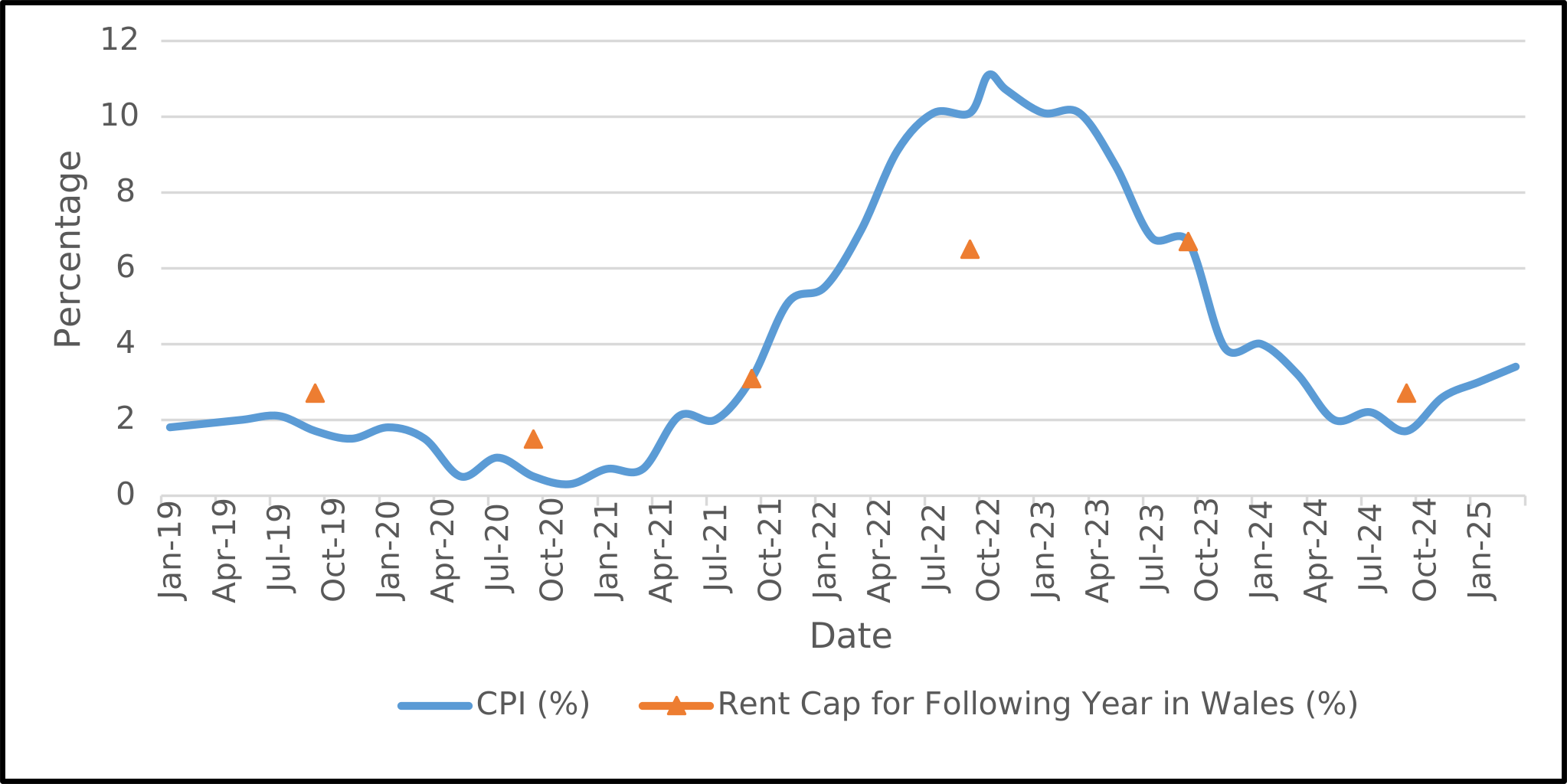
Since publication of the Rent Standard in 2019, the economy has experienced several disruptive events including EU exit, the covid-19 pandemic, and the war in Ukraine. These have contributed to a prolonged cost-of-living crisis and spiralling inflation, which peaked at a 41-year high of 11.1% in October 2022. This resulted in three of the five annual social rent settlements being determined by Welsh Ministers. As can be seen from Chart 1 below, in September 2021 and again in September 2023, the maximum rent cap was set at the level of September’s CPI. However, in September 2022 the maximum rent cap was set below the rate of CPI inflation at 6.5%.
Chart 1: Consumer Price Index (CPI) inflation and maximum social rent caps between 2019 – 2025
Source: CPI ANNUAL RATE 00: ALL ITEMS 2015=100 | Office for National Statistics
Deciding the appropriate level to set the maximum rent cap to apply six months into the future, from April the following year is extremely challenging. Table 1 sets out CPI in September, which informs the rent cap to be applied from the following April and shows what the CPI inflation increase was by April.
Table 1: CPI inflation and rent caps in Wales
| (Calendar) Year | *CPI in September | *CPI in the following April | Rent cap for following year in Wales |
|---|---|---|---|
| 2019 | 1.7% | 0.8% | 2.7% |
| 2020 | 0.5% | 1.5% | 1.5% |
| 2021 | 3.1% | 9 % | 3.1% |
| 2022 | 10.1% | 8.7% | 6.5% |
| 2023 | 6.7% | 2.4% | 6.7% |
| 2024 | 1.7% | 3.5% | 2.7% |
*Source: CPI ANNUAL RATE 00: ALL ITEMS 2015=100 | Office for National Statistics
Table 1 demonstrates in some years the rent caps will be perceived to benefit tenants and in other years, they will appear to better impact social landlords. Setting the maximum rent cap significantly above the rate of CPI inflation will place pressure on tenants’ income (where their income is not linked to inflation). Conversely setting the maximum rent cap significantly below the rate of inflation will potentially mean social landlords have less revenue in real terms with which to maintain and improve their housing stock and provide tenant services. In determining the maximum rent cap, Welsh Ministers must consider a range of factors including the importance of affordability for tenants as well as the financial viability of social landlords.
Affordability, both for tenants and for social landlords drives our social rent policy. Indeed, it is on this premise that stakeholders expressed the strongest levels of consensus, maintaining that our approach to social rent setting should exemplify what makes us distinct in Wales. Welsh Government is clear - affordability remains front and central to our social rent policy. The rent envelope, in providing for a maximum rent cap and setting out the parameters for Ministerial intervention should annual consumer price inflation significantly decrease or increase, serves to ensure this.
Affordability
Analysis of the implementation of the Rent Standard together with feedback from social landlords demonstrates that affordability is now central to the way social landlords approach rent setting. Most social landlords have adopted the principles of the ‘Living Rent Model’ to guide affordability and rent setting. This model links rent to local income levels and advocates capping rent at around 28% of household income. While specific approaches may vary, the adoption of Living Rent principles provides a consistent basis for assessing affordability across Wales.
In 2022, in response to the cost-of-living crisis, the sector pledged to work together to develop a consistent approach to assessing affordability across the social housing sector in Wales. The Welsh Government has commenced work to better understand how commonalities in social landlords’ rent setting approaches can be identified and collated to inform a structured framework for ensuring affordability. The objective remains to foster consistency while allowing flexibility to reflect local needs and circumstances. We will continue to work with the sector and key partners in progressing this work.
An immediate action stakeholders agreed we should take however, was to underpin our future social rent policy with a ‘principle’ or ‘principles’ that demonstrate our commitment to ensuring affordability in the social housing sector.
Through engagement with stakeholders, we explored the guiding principles that encapsulate the concept of affordability. We found a range of established principles already inform social landlords’ rent-setting approaches for their tenants. These ranged from simple, transparent, fair, and accountable to sustainable, long-term and affordable. We agree with the feedback from stakeholders that the specific affordability principles adopted by individual social landlords will reflect their organisation’s culture and ethos.
Therefore, we propose the future Welsh Government social rent policy should be clearly underpinned by the principle that “affordability requires balancing the needs of social landlords and their tenants, ensuring rents remain affordable for both new and existing tenants while enabling social landlords to meet tenants’ housing need”.
We are seeking feedback to determine if this principle, shaped by stakeholder input, should be adopted by Welsh Government to underpin the commitment to equally consider the needs of social landlords and tenants. At the same time providing an appropriate platform enabling social landlords to align their existing individual affordability principles to.
Service charges
The spike in inflation and the energy crisis has led to significant increases to service charges leading to calls from tenants for service charges to be capped. In the past social landlords will have sought to absorb some of these costs. In the current climate, however, with decreasing operating margins, increased expenditure on maintenance, staffing and other essential services including the need to comply with new statutory requirements e.g. enhanced fire safety measures, social landlords are passing on greater costs to tenants.
The level and amount of service charges levied will be governed by a range of different considerations including for example local costs, availability of services and other factors pertaining to individual properties. It is not possible or appropriate for Welsh Government to prescribe the level at which social landlords are to set service charges. However, having listened to both tenants and social landlords operating different service charging regimes, we consider the existing guidance need to be strengthened. This will seek to provide greater clarity of expectations, so tenants are reassured that landlords have undertaken sufficient action to ensure any service charges levied are reasonable and offer value for money.
As the existing landscape governing service charges is drawn from a range of different legal, regulatory and policy frameworks, strengthening the guidance will be challenging. It is further complicated by whether social landlords charge ‘fixed’ or ‘variable’ service charges. ‘Fixed’ service charges are those where the amount levied does not change. ‘Variable’ service charges refer to those charges where landlords estimate costs in advance but make periodic adjustments to reflect actual costs resulting in fluctuating charges.
In addition, the UK Government’s Leasehold and Freehold Reform Act 2024 will, once implemented, introduce significant changes aimed at strengthening leaseholder rights, improving transparency, and reforming service charge practices. Meanwhile, the heat network regulations, set to be fully enforced by January 2027, will require social landlords operating heat networks to comply with new consumer protection standards, pricing transparency rules, and regulatory oversight by Ofgem. These developments introduce additional complexity which will need to be carefully navigated to understand how new responsibilities and compliance requirements will interact with existing policy and practice.
The Welsh Government will continue to work with the social housing sector to increase transparency and consistency as new statutory and regulatory requirements come into force. In the interim, we propose to strengthen the existing guidance in the Rent Standard by clarifying that social landlords are expected to:
- Ensure service charges remain reasonable and affordable by factoring them into their affordability modelling.
- Annually review service charges to seek efficiencies, deliver value for money and ensure service charges remain reasonable and affordable.
- Provide tenants with adequate notice of any changes to service charges. We appreciate that the notice period will be dependent upon the service charging regime and other contractual factors, but as a minimum social landlords should endeavour to provide at least one month’s notice of changes.
- Provide tenants with clear and transparent information on their service charges (separate from their rent), including detailed breakdowns of costs.
- Consult tenants on service standards, clearly defining expectations and being accountable for service quality.
- Develop consistent communications to ensure clarity and accessibility of service charge information. This should include signposting tenants to where and how to access additional information on service charges.
- Tenant communications on service charges should signpost recourse mechanisms, ensuring tenants can escalate concerns via internal complaints processes and, if necessary, escalate concerns, to the Public Services Ombudsman for Wales.
The above proposals have been informed by listening to the direct experiences of tenants and developed with social landlords. We are interested to know if together, the proposals listed above, work to help strengthen the existing guidance on service charges by reinforcing transparency, fairness, and accountability in service charge management.
The rent envelope
The Welsh Government recognises social landlords as key partners in delivering shared policy objectives—meeting housing need, preventing homelessness, decarbonising social housing, and supporting tenant wellbeing. The rent envelope—the maximum allowable rent increase in a given year—is central to their ability to fund these efforts.
Rent is the primary source of income for social landlords, impacting their abilities to meet tenant expectations through timely delivery of core services such as routine repairs and maintenance. Social landlords’ abilities to generate a reliable income stream from rent is also important for attracting additional investment. Additional funding allows social landlords to maximise investment to build more new homes to address housing demand and retrofit existing properties, making them more energy-efficient and affordable to heat for tenants. Lenders consider a social landlord’s long-term financial forecasts when making decisions on funding and investment.
Recent economic volatility with fluctuations in inflation and high interest rates have led to higher borrowing costs, making it more expensive for social landlords to finance new developments and invest in improving existing stock. Annual rent settlements, outside of the CPI+1% rent envelope, have constrained landlords’ abilities to recover rising costs in construction, labour, and energy. This has led to calls from stakeholders to review whether the CPI+1% formula remains appropriate for rent setting, particularly given inflationary pressures measured by different indices.
Social landlords sometimes refer to the Retail Price Index (RPI) to illustrate the gap between their higher operating costs and the maximum income they are allowed to generate from rent (set through CPI). RPI tracks higher than CPI and while it was once the primary measure of inflation, it has been deemed a flawed measure by statistical authorities and is no longer an official inflation benchmark.
The Consumer Price Index including Housing (CPIH) includes owner-occupiers housing costs such as mortgage interest payments. The Consumer Price Index (CPI) is the standard measure of inflation used in government policy and rent-setting. It excludes housing costs but remains the most consistent and widely accepted inflation indicator.
Chart 2: CPI, CPIH and CPI+1% compared
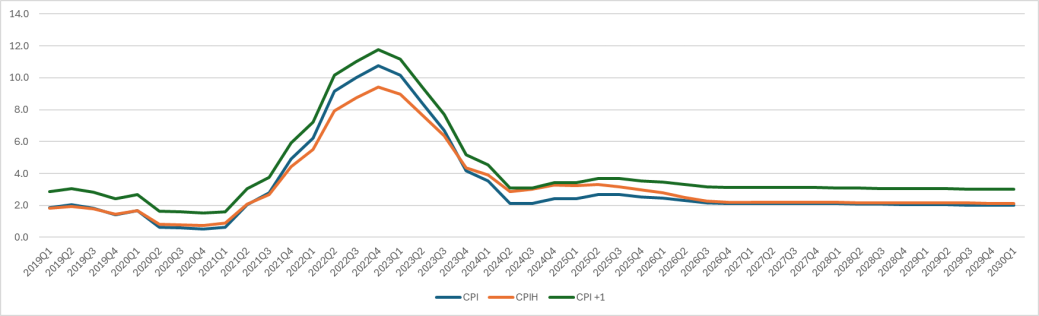
As can be seen from Chart 2, CPIH tracks similarly to CPI. We believe the rent envelope of CPI+1% continues to offer a balanced approach, ensuring rents remain affordable while still allowing social landlords to recover costs and sustain essential services. This formula provides predictability for tenants, as CPI is consistently used for government policy including economic planning, uprating social security benefits and financial regulation, thus safeguarding tenants from being disproportionately impacted by inflationary spikes.
Following extensive engagement with stakeholders, we are proposing to retain the current rent envelope at CPI+1%. This follows a thorough review of the merits of different indices and reflects longer term economic forecasts for inflation from the Office for Budget Responsibility and the Bank of England which suggest that inflation will peak at around 3.7% in 2025 before falling back to the Bank of England’s target rate of 2%.
We recognise the importance of long-term certainty for social landlords with its implications for business planning, capital programming and attracting additional finance to meet housing objectives. We explored this issue at length with stakeholders, together with the implications of annual rent settlements. The prevailing view was that a social rent policy lasting less than five years would not provide the necessary certainty and stability. However, a 10-year policy was seen by some as too long. Instead, stakeholders emphasised the need for ‘flexibility’ and ‘adaptability’. In response, we propose to test stakeholder preferences on whether our social rent policy should span five years or 10 years. We also propose the rent settlement should apply to rent increases from 1 April 2026, maintaining the rent envelope at CPI+1%.
We also discussed with stakeholders, whether in light of the three annual rent settlements outside the rent envelope between 2021 and 2023, there is merit in amending the parameters that trigger Ministerial intervention in rent setting to provide greater certainty. Currently, Welsh Ministers intervene to set a maximum rent cap when CPI falls outside the range of 0% to 3%. Stakeholders generally agreed that the upper threshold triggering Ministerial involvement is appropriate. However, some questioned whether allowing CPI to fall to 0%— before any assessment of financial viability and affordability is undertaken—is appropriate, given the critical role social landlords play in delivering shared policy ambitions. While no clear solution or consensus emerged, there was recognition that early intervention—when a rent settlement is lower than expected—could help assess its impact on the delivery of housing goals and may be beneficial.
Radically changing the current rent-setting approach has risks. While such risks may have minimal impact in times of stability, they could be more disruptive following a period of economic volatility. Therefore, maintaining a degree of consistency is essential to help establish stability in the rent-setting system which should further support a measured recovery. However, we would welcome views on the proposals outlined here, including how we could seek to build in additional safeguards and/or flexibilities to help more effectively respond to future economic volatility and inflationary spikes.
The reliance on September’s CPI, published in mid-October, to determine rent increases for the following April has been highlighted by social landlords as problematic—particularly when Ministerial intervention is required to set an annual rent settlement. The window for conducting the necessary activities to inform and ratify the rent uplift, while ensuring tenants receive the required notice, is extremely tight, leaving little room for contingencies.
Following engagement with stakeholders and investigating this issue, we believe there are valid reasons to retain the link to September’s CPI. It ensures the latest inflation data can be incorporated into organisational business planning, government fiscal decisions, and budget cycles in time for the start of the new financial year. As such September’s CPI presents the most up-to-date inflation data that can be used to inform rent setting, whilst still allowing sufficient time to implement the rent uplift by the following April. In addition, the UK Government uses September’s CPI to uprate pensions and benefits which also factors in business planning, making it a stable reference point following any fluctuations in the summer months, which can be more volatile due to seasonal spending patterns.
In response to stakeholders' concerns, however, we are seeking views on the option to use the previous April’s CPI outturn as an alternative reference point for rent uplift calculations. This would mean CPI in April 2025 (published in May at 3.5%) would inform the maximum rent cap to apply from April 2026. This option would align rent-setting more closely with the financial year. However, CPI can fluctuate from month-to-month, meaning social landlords would need to weigh the benefit of extended time for rent-setting and business planning against the potential risk of losing six months of inflation growth due to the lag in capturing more recent price changes.
Social landlords currently have flexibility in setting rents across their housing stock within the rent envelope. This means that while their overall rental income cannot exceed CPI+1%, they do not have to increase rents by the maximum allowable. Additional flexibility is also provided in that social landlords may freeze, reduce, or increase an individual tenant’s rent by up to an additional £2.00 per week above CPI+1%, as long as their overall rental income from their housing stock does not increase beyond CPI+1%. This flexibility has been widely used to address affordability challenges, allowing social landlords to reduce rents for one-bedroom properties while slightly raising rents for larger homes to maintain overall income levels. This mechanism has also helped landlords with historically low rents move toward convergence, aligning their charges with other social landlords in the same area to ensure rent parity and greater fairness for tenants.
To support continued rent restructuring to achieve affordability objectives, we propose maintaining this flexibility and adjusting the £2 cap set in 2019 for inflation, raising it to £2.55 per week. However, before applying this increase on top of CPI+1%, social landlords must ensure the total rent increase remains affordable for tenants.
The package of amendments proposed here in respect of the rent envelope rules have been developed from direct feedback from stakeholders. We are interested to hear if these proposals align with our underpinning principle committing to balancing affordability for social landlords and tenants, whilst seeking to deliver on the objective to provide longer-term certainty and stability.
Target rent bands
Target rent bands (TRBs) were introduced over a decade ago to address rent volatility across Wales, including fluctuations within the same geographical area. Their primary aim was to promote equity by encouraging social landlords to set rents within designated bands, ensuring fairness for tenants.
Analysis based on average data of TRBs over their operational period indicates that social rents across Wales successfully converged, ensuring that no social landlord was charging rents above the highest threshold (based on the 2019 analysis for 2020). In this respect, TRBs have largely fulfilled their intended purpose.
However, the Covid-19 pandemic disrupted normal data collection processes, leading to the decision to suspend TRBs in rent-setting from 2021-22. Following discussions with stakeholders, it is evident the rent envelope (CPI+1%) now serves as the primary mechanism for ensuring rent affordability and fairness. Furthermore, social landlords have established their own mechanisms incorporating a broad range of data sources—including private rental costs and local housing allowance rates—to inform rent-setting decisions and affordability modelling.
We would welcome views on our position that reinstating the TRB policy and mandating compliance with Welsh Government-produced TRB data tables would introduce unnecessary complexity and reduce transparency in social rent setting. It also remains inconsistent with stakeholder calls for flexibility, particularly given the sector’s expertise in undertaking comprehensive affordability assessments.
Other provisions
The current Rent Standard applies to all general needs and sheltered housing funded through Welsh Government programmes or provided from a landlord’s own resources. Annex A to the current Rent Standard lists properties exempt from the Rent and Service Charge Standard. We have reviewed this list with stakeholders and propose to maintain the exemptions to the social rent policy as currently listed.
A further issue raised during the engagement process relates to the occurrence of 53 payment weeks in a single year. This happens every five to six years and most recently affected the 2024-25 rent year. This is likely to become a bigger issue with the rollout of universal credit increasing and presents tenants with affordability challenges. This is because universal credit is calculated monthly based on a 52-week year, leaving tenants who pay rent weekly liable for an extra week’s rent—potentially without additional benefit payments to cover the cost.
Universal credit payments are a reserved matter, and the Department for Work and Pensions (DWP) maintains landlords can mitigate the issue by charging rent monthly. A further solution from the UK Government is for social landlords to convert weekly rents to monthly payments by multiplying weekly rents by 52.18 before dividing by 12 to calculate the monthly charge. Social landlords in Wales are advised to follow this approach, or resolve the issue of 53 payment weeks through daily accounting practices.
Improved homes
Improvements to existing social housing to meet decarbonisation requirements and improve energy efficiency for tenants will require investment. There is significant debate within the sector as to how such requirements might be funded and whether a warm rents model might play a role.
‘Warm rents’ usually refers to the rent model where higher rents are charged to tenants where investment in energy efficiency has led to lower utility bills for the home. It is based on the principle that tenants would see no rise in their cost of living and landlords would be able to maximise returns to re-invest in making more homes energy efficient. However, this model is limited by defining changes in bills that are difficult to forecast in an ever-changing energy market.
The impact of landlords investing in low-carbon technology on rent is currently uncertain and further work is required to determine and test how a model might work in future. We therefore propose beginning exploratory work with stakeholders, alongside the rent standard, on how a ‘warm rents’ provision could be incorporated into our wider social rent policy in the future. Such a provision would have to comply with strict criteria to ensure rent affordability is maintained.
Strengthening tenant involvement
Social landlords currently undertake a standardised tenant satisfaction survey, the results of which are published. Evidence from these and landlords’ own tenant surveys shows that tenants may not be obtaining accessible information explaining how their rent is used to maintain and improve existing homes.
Registered social landlords also submit quarterly data returns in relation to key aspects of service provision e.g. tenant safety compliance, rent arrears, voids and evictions. We propose to work with the sector to bring greater consistency and transparency to bear on what is collected and published to aid continuous improvement and build stronger tenant awareness and understanding of the work of the sector.
The wider rent settlement agreements have enabled us to articulate where and how social landlords are taking action to deliver shared policy objectives. These areas include but have not been limited to supporting work on tackling homelessness and meeting housing quality and standards requirements.
Our 'jointly agreed initiatives' will be reviewed and updated to ensure we are able to better collect and reflect the important and valuable work social landlords undertake to support community cohesion, tenant inclusion and wellbeing. This will make clear the expectations on landlords to be proactive in promoting tenants’ rights as well as explaining tenants’ responsibilities.
Throughout all our engagement, stakeholders — social landlords and tenants have consistently called for more information to be shared and to be made public. The current Rent Standard requires social landlord to submit an annual self-certification return by 28th February, to evidence compliance with the Rent Standard. We propose to work with stakeholders and through the re-design of the annual self-certification monitoring form, and the further work outlined above, to take these requests forward. To inform our on-going discussions and further work in this area, your views are sought on what additional information you wish to see collected and published.
Consultation questions
Question 1
Please specify if you are responding as an individual member of the public or on behalf of an organisation.
Question 2
The Welsh Government believes the principle that “affordability requires balancing the needs of social landlords and their tenants, ensuring rents remain affordable for both new and existing tenants while enabling social landlords to meet tenants’ housing need”, embodies our commitment to ensuring affordability and should underpin our approach to social rent setting across Wales.
Do you agree that the Welsh Government should adopt this principle?
(Yes/No/Unsure – please explain)
Question 3
The Welsh Government will continue to work with the social housing sector to increase transparency and consistency of all service charges but has outlined proposals to strengthen the existing guidance on service charges.
Do you agree these proposals work to help strengthen the existing guidance on service charges by reinforcing transparency, fairness, and accountability in service charge management?
(Yes/No/Unsure – please explain)
Question 4
The Welsh Government has proposed the new social rent policy should apply from 1 April 2026. In your view, should this policy apply for five years or 10 years?
(5 years/10 years/Unsure – please explain)
Question 5
Do you agree with the proposal that rents should be permitted to increase by up to CPI+1% per annum?
(Yes/No/Unsure – please explain)
Question 6
Do you have views on whether to amend the parameters that trigger Welsh Ministers involvement in rent setting, which is currently set at CPI falling outside the parameters of 0% - 3%?
(No/Yes– please explain/Unsure – please explain)
Question 7
The Welsh Government believes there are good reasons to retain the use of September’s CPI to inform the social rent increase for the following April but recognises this can place landlords under significant pressure to undertake all necessary activities ahead of rent changes being applied from April. We have assessed options and propose to consider using the previous April’s CPI measure to inform the following year’s rent increase (i.e. CPI in April 2025 is used to inform the rent increase to be applied from April 2026).
Do you have any views on whether we should retain the link to the previous September’s CPI or amend this to the previous April’s CPI instead for rent increases to be applied from the following April?
(Yes/No/Unsure – please explain)
Question 8
Do you agree with the proposal to retain the flexibility social landlords have to amend individual rents by up to a further £2.55 (as adjusted for inflation) to help achieve and maintain rent affordability?
(Yes/No/Unsure – please explain)
Question 9
Do you have any further views on how we could seek to build in additional safeguards and/or flexibilities to help more efficiently respond to future economic volatility and inflationary spikes?
(Yes/No/Unsure – please explain)
Question 10
Do you agree with the position that reinstating the target rent band (TRB) policy and mandating compliance with Welsh Government-produced TRB data tables undermines the sectors calls for flexibility and autonomy, and would introduce unnecessary complexity and reduce transparency in social rent setting?
(Yes/No/Unsure – please explain)
Question 11
Do you agree with the proposal that the future social rent policy should continue to apply to all general needs and sheltered housing funded through Welsh Government programmes or provided from a landlord’s own resources (i.e. maintain the current list of exempt properties as identified in the Annex to the current Rent and Service Charge Standard)?
(Yes/No/Unsure – please explain)
Question 12
The Welsh Government is aware of on-going debates and discussions around a ‘warm rents’ model. We anticipate the evidence-base on this subject will grow in the coming years. We want to begin exploring if a ‘warm rents’ provision could be incorporated into a future social rent policy. How do you envisage this working?
(Please explain)
Question 13
The Welsh Government is committed to supporting the sector to learn from existing practices and drive continuous improvement. We will actively review and improve our data collection to publish information to support landlords while strengthening accountability to tenants.
What additional information do you believe Welsh Government should collect and publish to fulfil this objective and meet the requests for more publicly available data?
(Please explain)
Question 14
What, in your opinion, would be the likely effects of the social rent policy on the Welsh language? We are particularly interested in any likely effects on opportunities to use the Welsh language and on not treating the Welsh language less favourably than English.
Do you think that there are opportunities to promote any positive effects?
Do you think that there are opportunities to mitigate any adverse effects?
(Yes/No/Unsure – please explain)
Question 15
In your opinion, could the social rent policy be formulated or changed so as to:
- have positive effects or more positive effects on using the Welsh language and on not treating the Welsh language less favourably than English; or
- mitigate any negative effects on using the Welsh language and on not treating the Welsh language less favourably than English?
(Yes/No/Unsure – please explain)
Question 16
We have asked a number of specific questions. If you have any related issues which we have not specifically addressed, please use this space to report them
(Please explain)
Responses to consultations are likely to be made public, on the internet or in a report. If you would prefer your response to remain anonymous, please let us know.
Next steps
The consultation is open for a six-week period until 12 August 2025. The policy proposals outlined in this document have been developed through direct input from a wide range of stakeholders from across the social housing sector, including tenant representatives. The outcome of this consultation will determine if, and how, the Welsh Government reflects the proposals outlined in this document, in the next Welsh Government Rent and Service Charge Standard.