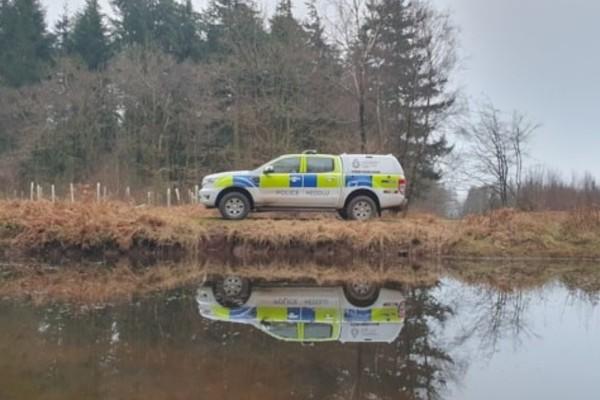
Rural communities and wildlife in Wales will receive greater protection under a new three-year strategy launched today at the Wales Wildlife & Rural Crime Conference.
- Ambitious three-year strategy builds on successful joint approach between Welsh Government and police to tackle rural and wildlife crime
- Heritage crime becomes new priority area as Wales steps up protection of historical sites and cultural assets
- Gwent Police announces expansion of rural crime team to strengthen enforcement capabilities across the region
The new Wales Rural Crime Strategy (2025-2028) continues the successful collaboration between Welsh police forces and the Welsh Government, building on achievements of the landmark first joint strategy which has helped coordinate action against crimes affecting Wales' countryside.
Almost 100 delegates from law enforcement, government and conservation organisations have gathered at Welsh Government buildings for the Wales Wildlife & Rural Crime Conference, chaired by Deputy Chief Constable Nigel Harrison of North Wales Police.
Deputy First Minister with responsibility for Climate Change and Rural Affairs, Huw Irranca-Davies, said:
Both wildlife and rural crime are issues of national and international significance. It is not only the intrinsic importance of the species, habitats and people affected by these crimes, but it is also the gravity of the links with other harmful behaviours, including serious organised crime.
We are confident that collaboration is the right approach for Wales – between the Welsh Government and the police and, critically, with our other partners in the statutory and NGO sectors, without who much of this work simply could not be delivered.
The new strategy responds to evolving crime patterns, with Heritage Crime elevated to become a full priority area, reflecting increased threats to Wales' historical sites and the growing network of partners dedicated to protecting Welsh cultural assets.
At the conference, Gwent Police announced plans to expand its rural crime team, strengthening enforcement capabilities and providing enhanced support to farming communities and wildlife protection across the region.
Temporary Chief Superintendent, Jason White, Head of Neighbourhood Policing in Gwent, said:
We recognise that crime in rural areas has a significant impact on those affected, and our dedicated Rural Crime Team works with partners, landowners and other groups to respond to the concerns of our communities.
We believe partnership working is the key to addressing rural crime, which can damage livelihoods, erode trust, and leave people feeling isolated.
Throughout this financial year, we will be increasing the resources within our Rural Crime Team to help us tackle the issues that can have a lasting impact on our countryside communities.
The strategy adopts a comprehensive 4P approach – prepare, prevent, pursue and protect – to tackle wildlife and rural crime. This structured approach focuses on preparing for potential crime scenarios, preventing and deterring criminal activity, pursuing offenders relentlessly, and protecting rural communities and wildlife from harm.
Rob Taylor QPM, Wales Wildlife & Rural Crime Coordinator, said:
Our mission is to provide the best possible service to those residing and working within rural Wales, ensuring the preservation of our world-renowned farming produce, rich historical culture, and wildlife habitats for now and generations to come.
A coordinated and strategic approach is essential for success and sustainability. The police and our partner agencies are at the forefront of this progress, facilitating a combined approach to problem solving by utilising expert knowledge and experience throughout Wales and beyond.
Recent figures highlight the continuing challenges, with NFU Mutual reporting rural crime claims in Wales increased from £2.4m in 2023 to £2.8m in 2024, though Wales maintains lower rates than many parts of England.
The new strategy outlines six priority areas: Bird Crime, Farm Crime, Habitats, Heritage Crime, Mammals and European Protected Species, and Networking Rural Support Services - the latter uniquely addressing mental health vulnerabilities in rural communities.
The Welsh Government has committed to funding the Wales Wildlife and Rural Crime Coordinator position for a further three years, recognising the pivotal role this position plays in coordinating efforts across the country.