Trends in NHS urgent and emergency care activity: as at March 2025
Report summarising data on activity and performance in NHS urgent and emergency care, including ambulance services, emergency departments and the NHS 111 service, as at March 2025.
In this page
Introduction
This report provides a summary of calls made to the 111 service, ambulance service activity and attendances at emergency departments. These services are available 24 hours a day.
Performance targets associated with urgent and emergency care are monitored in the monthly NHS activity and performance summary and are not reported here. This report focuses on longer term trends. Annual data are presented by financial years.
The data sources used in this release cover different time periods and in all cases the full available time series has been used.Data for each topic area are also available in more detail on our StatsWales website.
There is a parallel report on trends in NHS planned care activity which includes; NHS waiting lists, inpatient activity, outpatient referrals & activity, diagnostic and therapy waits, NHS beds and cancer services.
Main points
Over the long term, ambulance and emergency department activity has increased significantly and at a far greater rate than the corresponding increase in Wales’ population.
An aging population contributes to growing demand on health services. Over 65s made up 21.6% of the population in 2023 up from 17.2% in 1991, increasing by almost 40% (189,000).
Ambulance calls
Total calls to the ambulance service more than doubled between 1992 and 2018 but have been on a generally decreasing trend since.
The number of urgent ‘red’ calls has more than tripled in the last five years, partly reflecting changes in how some calls are categorised and a long term increase in respiratory conditions and falls coded as red.
There is a clear relationship between the volume of red calls and ambulance response times, with both increasing in recent years.
Emergency departments
Ambulance handover delays have increased significantly in the last four years. In 2024-25, 264,000 hours were lost to handover delays at emergency departments, almost five times as many hours lost compared with 2016-17.
In 2024-25 there were almost 1.1 million attendances at emergency departments, the highest on record and five times higher than the level seen in 1959.
Emergency department attendances are higher in the summer than in winter, with more occurring on Mondays. There are many more attendances during daylight hours than at night, though waits are shortest during the day.
Median waiting times in emergency departments have increased slowly over the past decade. Reaching record highs following the COVID-19 pandemic they have decreased but plateaued in recent years, remaining above pre-pandemic levels.
Patients over age 85 are the most likely to attend emergency departments. Waiting times for triage and to be seen by clinicians are similar for older and younger patients, however older patients spend the longest time in the department until admission, transfer or discharge.
Calls to the ambulance service
Historically, there have been different emergency services call classifications. Figure 1 is based on:
- emergency calls and GP urgent patient journeys from 1991-92 to 1998-99
- Category A, Category B and GP urgent journeys from 1999-2000 until November 2011
- Category A, Category C and Category C (HCP) from December 2011 until September 2015
- red, amber and green calls from October 2015 to 2025
Figure 1: Calls to the ambulance service, 1991-92 to 2024-25 [Note 1]
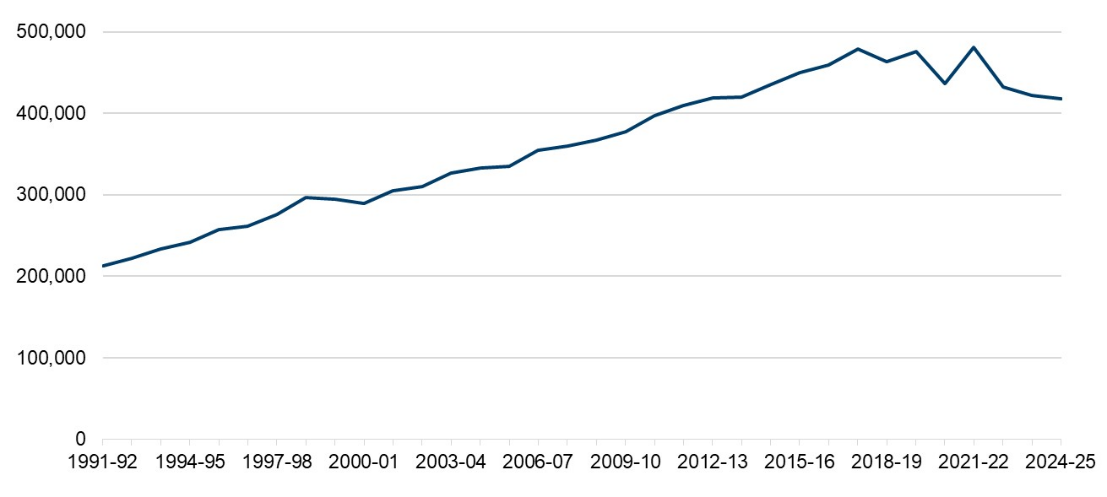
Description of Figure 1: A line chart showing the number of calls made to the ambulance service from 1991 onwards. There was a consistent upwards trend until around 2017-18, and a fluctuating but generally downward trend since.
Source: Welsh Ambulance Services NHS Trust
Emergency ambulance calls and responses, by local health board and month, on StatsWales
[Note 1]: Call classification systems have changed over the last 30 years, meaning these data are not fully comparable over the whole series. However, the data in Figure 1 illustrate very clear trends over time.
By 2024-25, calls were at their lowest level (418,000) since 2011-12. Despite this recent decrease, the number of calls received remains calls remain at almost twice the amount received in 1991-92.
Figure 2: Average daily ambulance calls, by call type and month, April 2016 to March 2025, [Note 1]
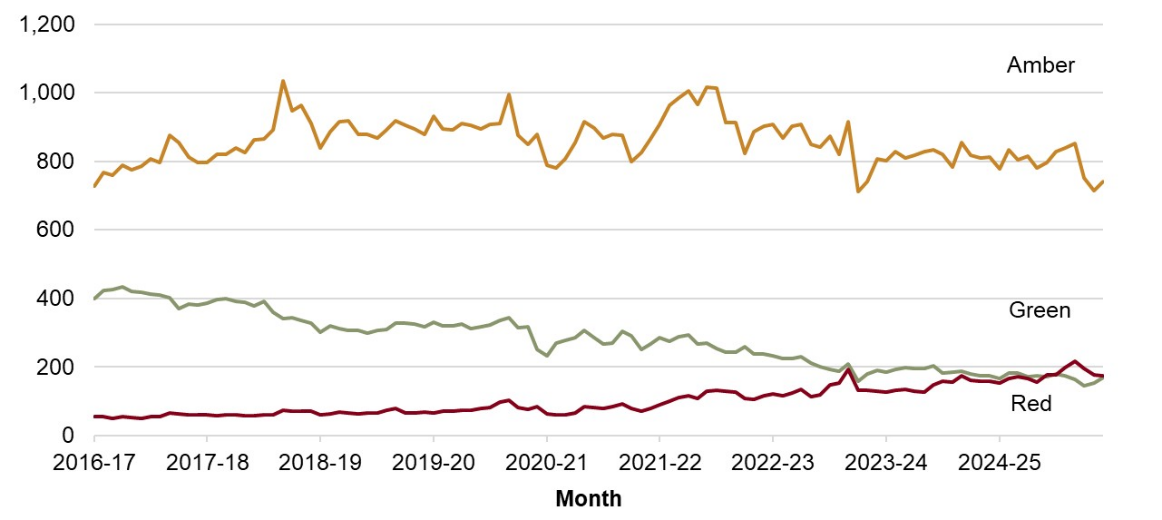
Description of Figure 2: A line chart showing the number of red emergency calls has tripled since 2016-17, while green calls have more than halved. Amber calls account for the majority of all calls and have been relatively stable.
Source: Welsh Ambulance Services NHS Trust
Emergency ambulance calls and responses, by local health board and month, on StatsWales
[Note 1]: An update to call handling in May 2019 resulted in a change to red incident volume. Direct comparisons should not be made before and after this date. Further details are available in our quality report.
The number of red calls has increased significantly since 2016, from around 50 calls on average per day to almost 180 in 2025, while amber calls have fluctuated. Green calls have more than halved, from over 400 per day in 2016-17 to less than 200 in recent years.
Although the total number of calls has decreased in recent years, the increase in red calls, which take clinical priority over other calls, means the burden on system resources has increased.
Red calls accounted for 15.5% of all calls in the latest year, compared with 4.5% in 2016-17. The increase at least partially reflects two things: changes in how some calls are handled, as some calls that used to be categorised as amber such as convulsions, fitting and hemorrhaging and lacerations are now categorised as red; and a continuing long term increase in falls and respiratory incidents coded as red calls.
An aging population contributes to growing demand on health services. In Wales, the number of adults aged 65 and over has increased by almost 40% (189,000) since 1991. Over 65s made up 21.6% of the population in 2023, up from 17.2% in 1991.
Figure 3: Average red calls per day and median red call response times, April 2016 to March 2025
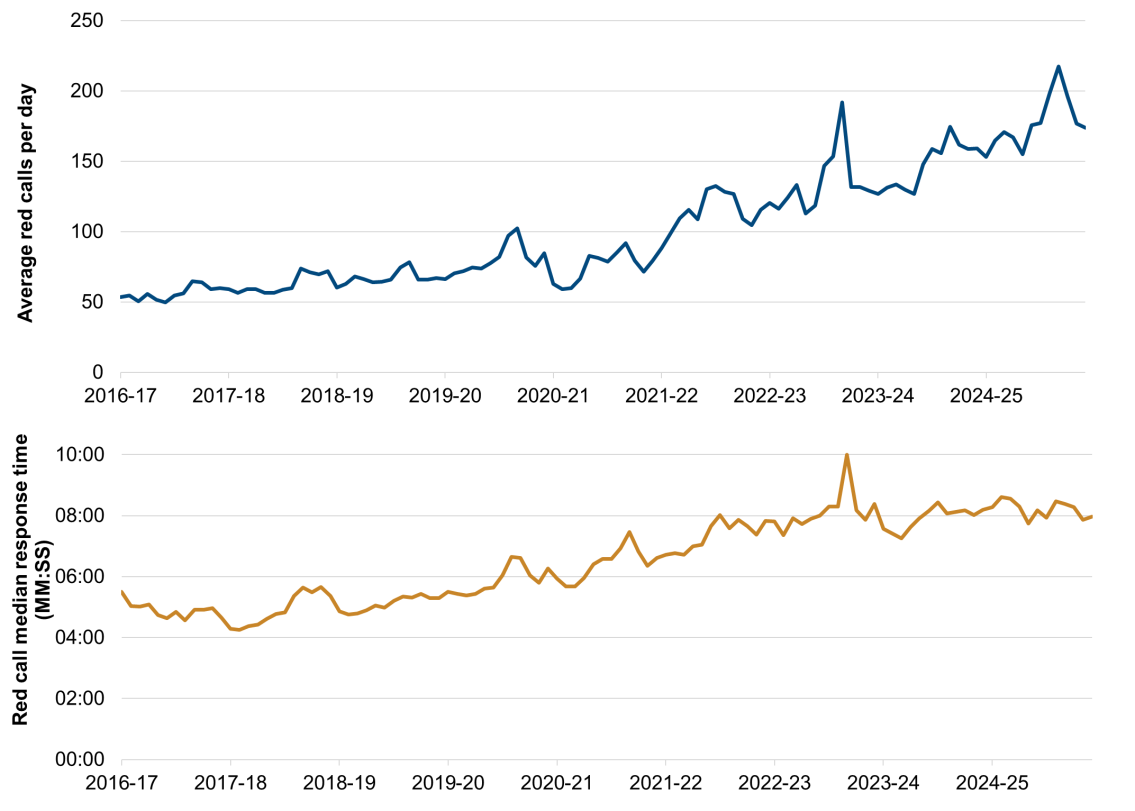
Description of Figure 3: A line chart showing similar trends in the number of red emergency calls received and the median response time, with increases in both in recent years.
Source: Welsh Ambulance Services NHS Trust
Emergency ambulance calls and responses, by local health board and month, on StatsWales
The average number of red calls per day and median response time for red calls have increased since 2016-17, with a clear relationship between call volume and response times. However, the most recent year has seen a further increase in demand, which has not led to a similar increase in response time.
In the latest year there were an average of 177 red calls per day, more than triple the number seen in 2016-17 (56 per day). The overall median response time in the latest year for red calls was 8 minutes and 13 seconds, an increase of 67.5% since 2016-17 (4:54).
Figure 4: Lost hours for the ambulance service following notification to handover at emergency departments, April 2016 to March 2025 [Note 1]
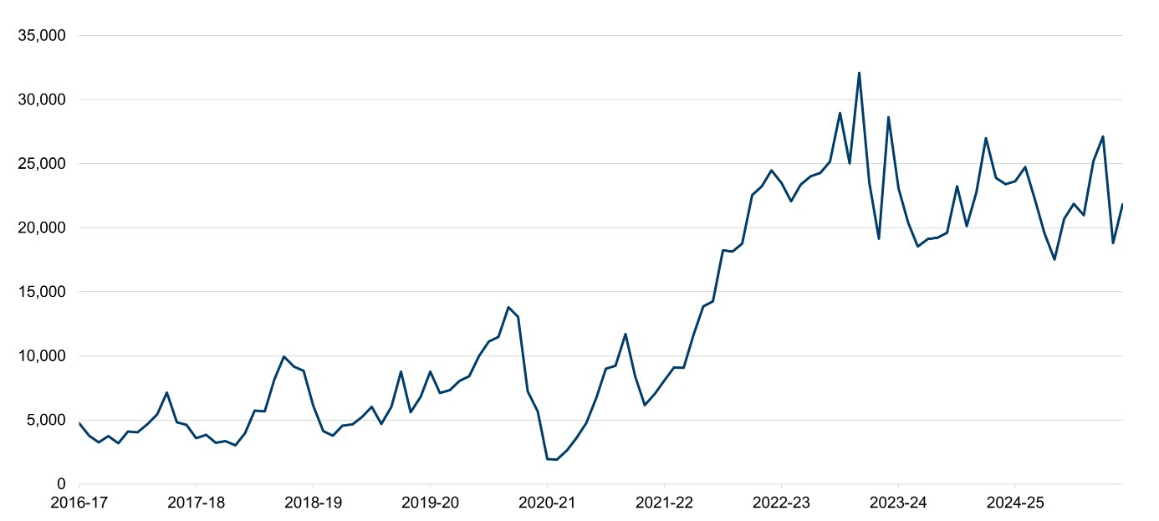
Description of Figure 4: A line chart showing a substantial increase in the number of lost hours following the pandemic, with just under five times as many hours lost in 2024-25 compared with 2016-17.
Source: Welsh Ambulance Services NHS Trust (WAST)
NHS Wales Joint Commissioning Committee Ambulance Service Indicators dashboard.
[Note 1]: Lost hours reflect the total amount of time the ambulance service ‘loses’ while ambulance crews wait to hand patients over to emergency departments. Only waits longer than 15 minutes are counted. Lost hours due to a handover delay does not necessarily mean that the patient waited in the ambulance.
Ambulance response can be affected by the level of demand, but also by handover delays at hospitals. Handover delays occur when ambulance crews are unable to respond to new calls while waiting to handover patients to emergency departments.
In 2024-25, 264,000 hours were lost by the ambulance service, a slight increase compared with the previous year (260,000). Typically, winter months see peaks in the number of hours lost.
Figure 5: Average amber calls per day and median amber call response times, April 2016 to March 2025
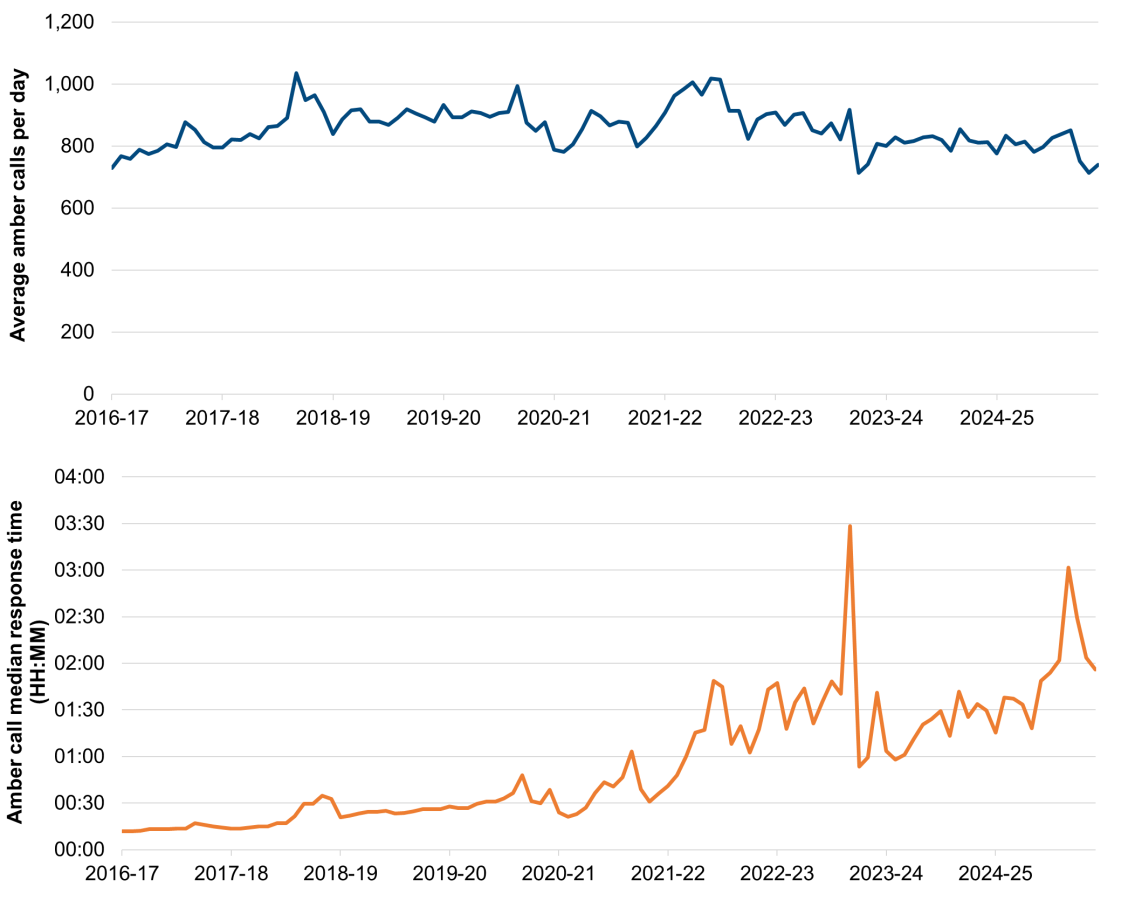
Description of Figure 5: A line chart showing the average number of amber calls per day has slowly decreased in recent years. Median waiting times generally increased up to 2022 and have fluctuated since.
Source: Welsh Ambulance Services NHS Trust
Emergency ambulance calls and responses, by local health board and month, on StatsWales
The median waiting time for amber calls peaked in December 2022 (3 hours 29 minutes) and in December 2024 (3 hours and 1 minute), though the number of calls did not greatly increase.
This reflects the fact that red calls also reached record highs, and since they are prioritised for ambulance response, this reduced the resources available to respond to amber calls.
In February 2025 the average number of amber calls per day fell to the joint lowest on record (713 calls). In the latest year the median waiting time fluctuated between 1 hour 15 minutes in April 2024 and 3 hours and 1 minute in December 2024.
In historical context, the latest median waiting times are high, and around five times higher than in 2016.
Emergency departments
Figure 6: Attendances at emergency departments, 1959 to 2024-25 [Note 1]
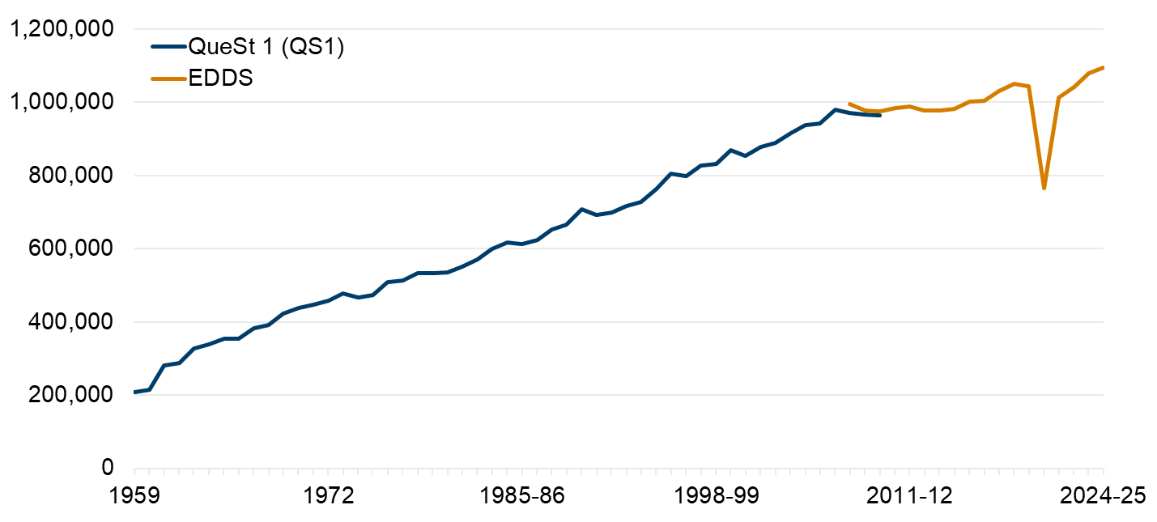
Description of Figure 6: A line chart showing an upward trend in attendances to emergency departments from 1959 to 2025. The trend levelled off slightly from 2005 up to 2020-21, where there was a sharp drop, corresponding with the COVID-19 pandemic. Since then, attendances have increased each year and reached a new high in 2024-25.
Source: QueSt 1 (QS1) and Emergency Department Data Set (EDDS), DHCW
Attendances in NHS Wales emergency departments, on StatsWales
[Note 1]: These figures are based on different data sources from 1959 to 2009-10 and 2007-08 to 2022-23. Where they overlap figures are close, meaning data is regarded as broadly comparable. From 1959 to 1983 data were collected by calendar year, and from 1983-84 they were based on financial years.
In 2024-25 there were just under 1.1 million attendances at emergency departments across Wales, the highest on record, and five times higher than the level seen in 1959. This was a small increase of 1% on the previous year.
Figure 7: Attendances at emergency departments by type of department, April 2007 to March 2025 [Note 1]
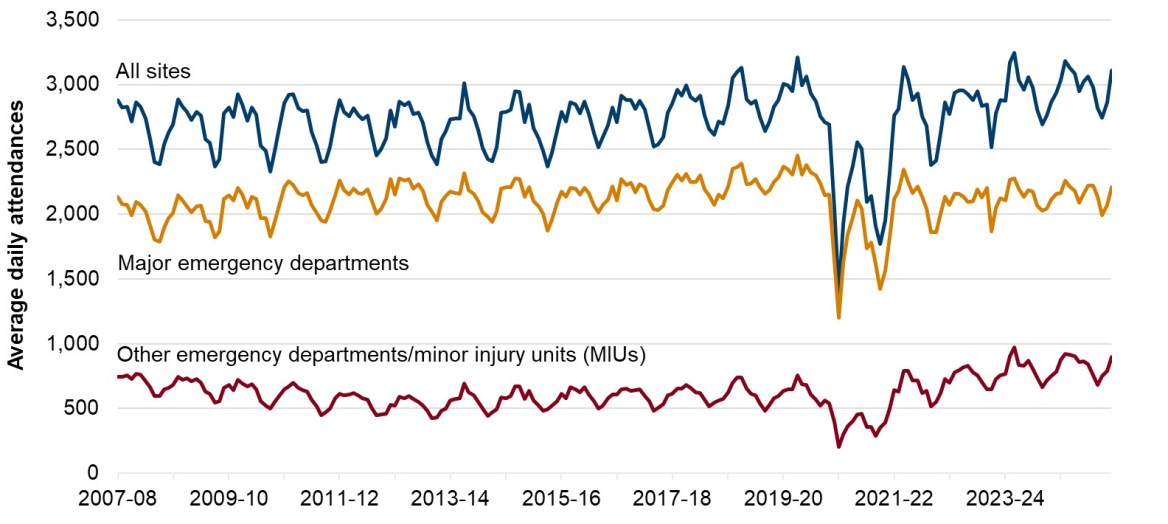
Description of Figure 7: A line chart showing attendances at major and other / minor emergency departments. The data show strong seasonality, with more attendances in the summer months and fewer in the winter months. In recent years, there are increases in attendances at other emergency departments/minor injury units and slightly fewer at major emergency departments.
Source: Situational reports (SITREPS), Emergency Department Data Set (EDDS), DHCW
Attendances in NHS Wales emergency departments, on StatsWales
[Note 1] From June 2006 to March 2010 emergency department data was collected via weekly SITREPS submissions. Between April 2010 and March 2012, major emergency departments submitted monthly data to the EDDS whilst minor emergency department data continued to be sourced from SITREPS. From April 2012, all data is sourced from the EDDS.
The majority of attendances are at major emergency departments. Over the long term there has been relatively little change in the number of attendances at major emergency departments or other types of emergency department.
The higher number of attendances in summer compared with winter reflects the fact that people are generally more active in the lighter, warmer months of the year, and particularly during school holidays.
Figure 8: Monthly emergency department attendances and median waiting time to be admitted, transferred or discharged, April 2012 to March 2025
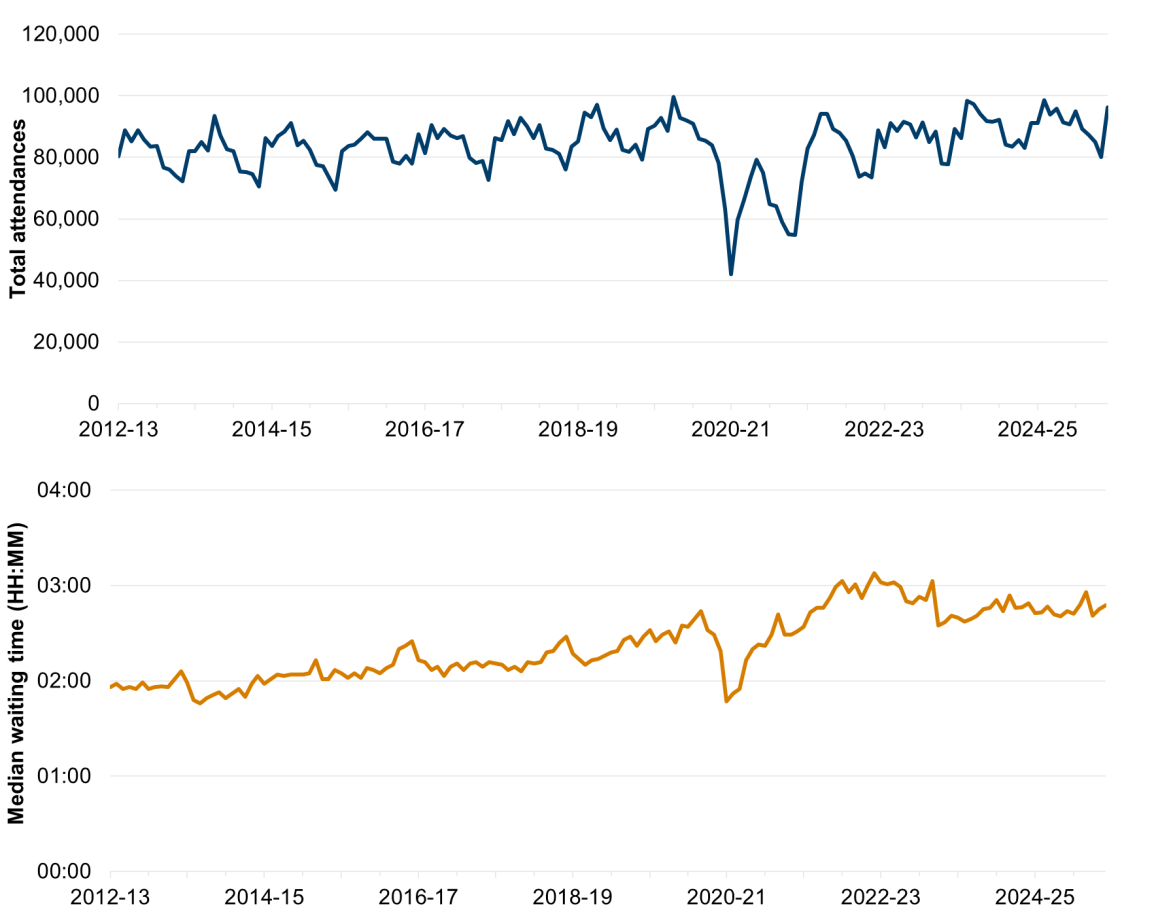
Description of Figure 8: A line chart showing emergency department attendances have been relatively stable since 2012, though with strong seasonality, with more in the summer months and fewer in the winter. Median waiting times have increased over time, but despite levelling off in recent years they remain high in historical context.
Source: Emergency Department Data Set (EDDS), DHCW
Attendances in NHS Wales emergency departments, on StatsWales
The relationship between the volume of attendances and waiting times has become less stable since 2020-21. The longest waiting times were seen in 2022-23, but there were higher attendances before and since then. March 2022, saw the longest median wait on record, at 3 hours and 8 minutes. Over the longer term, median waiting times have increased at a higher rate (around 40% since 2012-13) than the number of attendances (around 12%).
Figure 9: Attendance rates at emergency departments by age, 2024-25
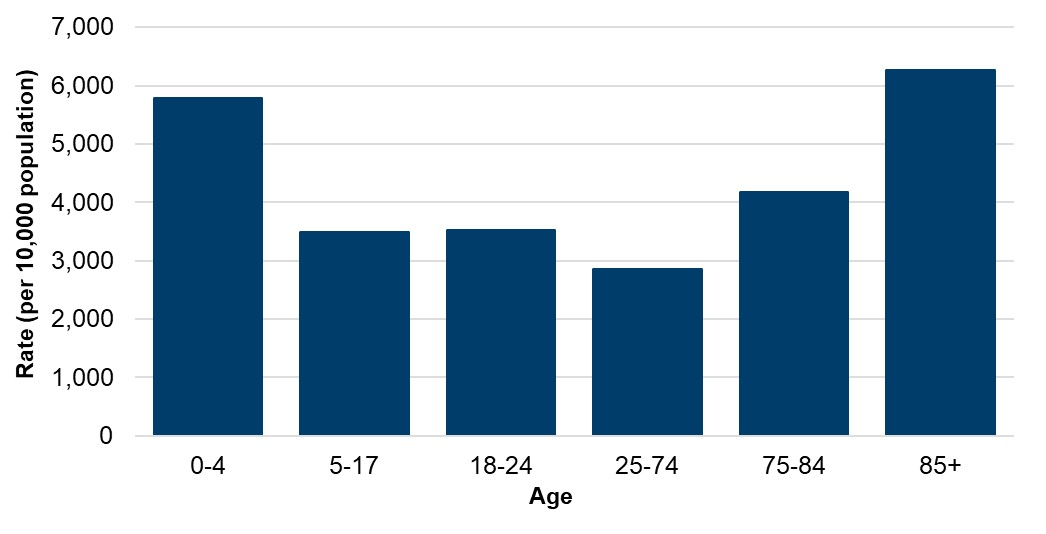
Description of Figure 9: A bar chart showing attendance rates at emergency departments were highest for the 85 and over age group, at just under 6,300 per 10,000 population in 2024-25. The lowest rate of attendances per 10,000 population was for the 25-74 group (2,850).
Source: Emergency Department Data Set (EDDS), DHCW
Attendances in NHS Wales emergency departments, on StatsWales
There is little difference when looking at gender for rates of attendance (Number of attendances in NHS Wales emergency departments by age band, sex and site on StatsWales). The age and sex distributions of emergency department data are very consistent over time.
Figure 10: Median waiting time to be admitted, transferred or discharged by age groups 85 and over and under 85, April 2012 to March 2025
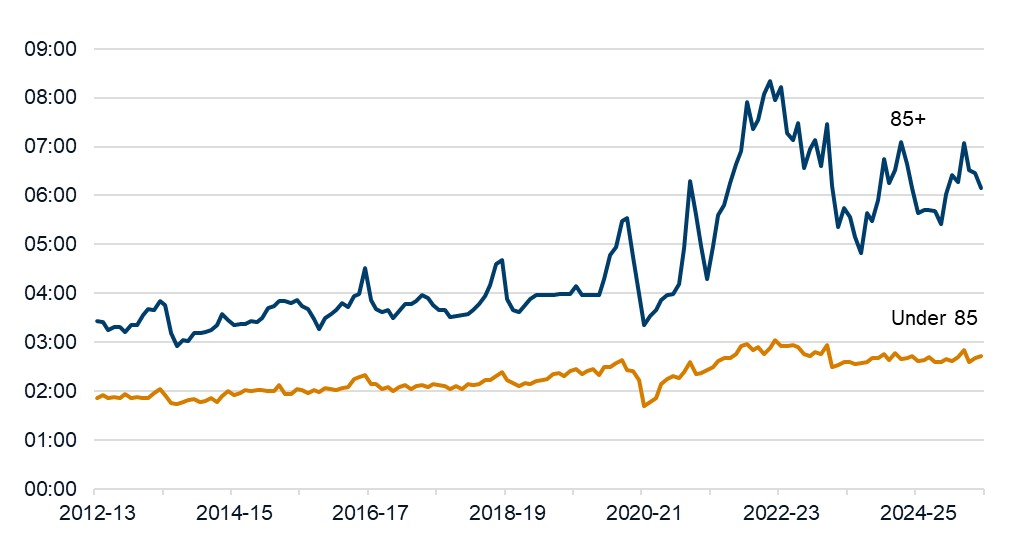
Description of Figure 10: A line chart showing median waiting times for those aged over 85 are consistently longer than for those aged under 85.
Source: Emergency Department Data Set (EDDS), DHCW
Attendances in NHS Wales emergency departments, on StatsWales
The longest median waiting times to admission, transfer or discharge are seen in the 85+ age group. This has consistently been the case over the last decade but has become more pronounced in the last few years. Compared with the low point in 2013, when average waits for over 85s dipped below 3 hours, in the latest winter they were often more than double that time. A record high of 8 hours and 21 minutes was seen in February 2022. Median waits for those aged under 85 have also increased but plateaued in recent years. Though older patients spend the longest time in the department, they wait similar times as younger patients for triage and to be seen by clinicians following arrival at emergency departments.
Long term trends have been similar across most age groups with a gradual increase in median waiting times, though the waiting times in the 0-17 age group were relatively stable.
Figure 11: Emergency department attendances per 10,000 population by time of day and age band, 2024-25
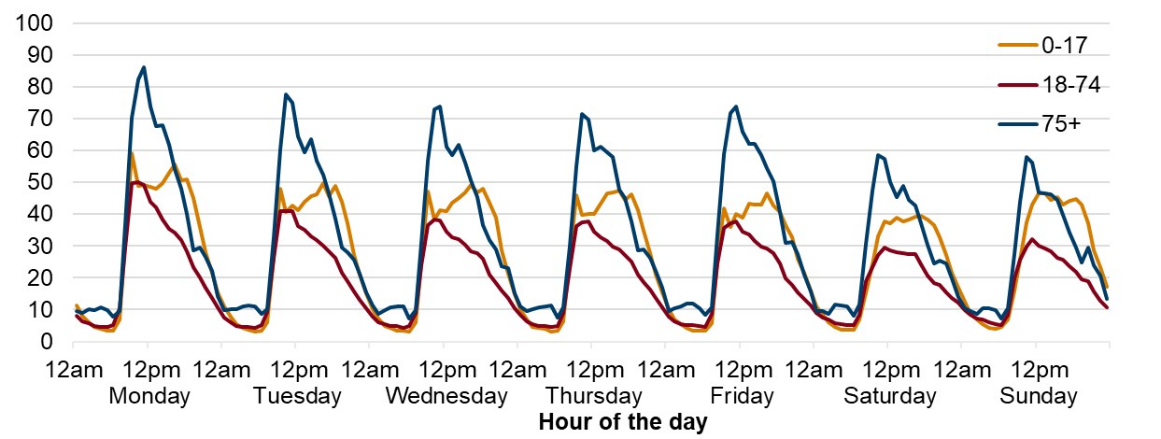
Description of Figure 11: a line chart showing attendance rates peak around midday for those aged over 18, and between midday and 10pm for the 0-17 age group. Attendances are higher on weekdays than weekends for all age groups. Monday sees the most attendances, falling gradually during the week.
Source: Emergency Department Data Set (EDDS), DHCW
Attendances in NHS Wales emergency departments, on StatsWales
The higher number of attendances on Mondays reflects patients needing care for issues that occurred or worsened over the weekend. In the younger age group (under 18), attendances have a less pronounced peak in day time but peak again in the evening hours on weekdays.
Figure 12: Heat map of attendances at emergency departments by day and time of arrival, 2024-25
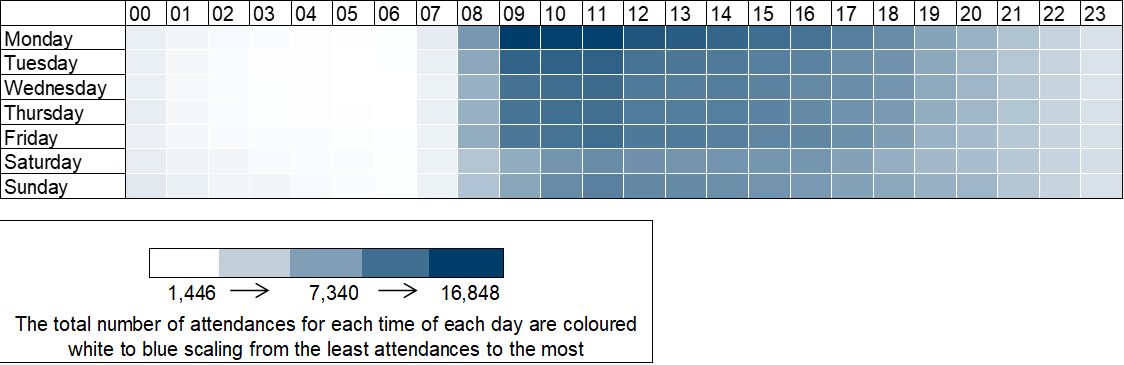
Description of Figure 12: A heat map showing most attendances at emergency departments are during daylight hours, with much less activity at night.
Source: Emergency Department Data Set (EDDS), DHCW
The most common time for arrival at is Monday morning between 9am to 12 noon. The higher attendances during daylight hours reflects the fact that people are generally more active and at risk of injury while awake and going about their day- to-day activities
Figure 13: Heat map of median waits at emergency departments by day and time of arrival, 2024-25
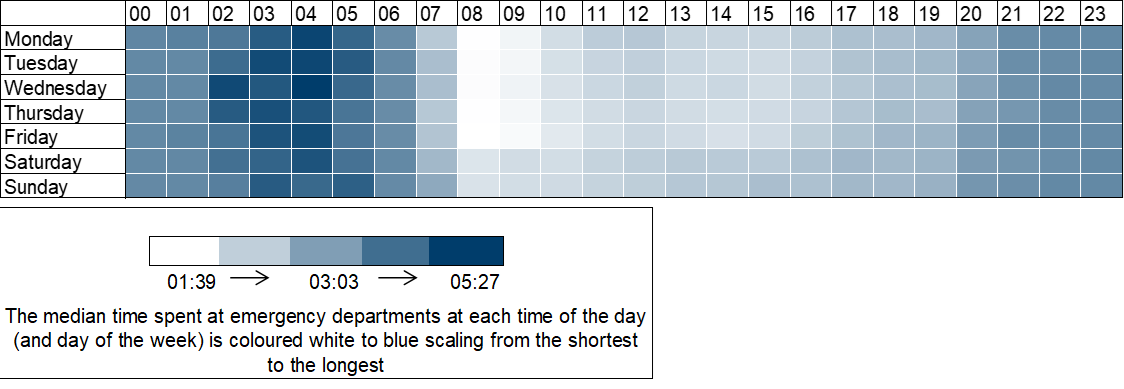
Description of Figure 13: a heat map showing median times spent in emergency departments are shortest during daylight hours, despite the higher number of attendances, and longest during the early hours of the morning.
Source: Emergency Department Data Set (EDDS), DHCW
The fact that daytime waits are shorter than at night likely reflects staffing levels throughout the course of the day. The shortest waits of all were seen on weekdays between 8am and 10am, where median waits were less than 1 hour and 43 minutes. Waiting times for patients arriving between 4am and 5am on some days were over 5 hours.
Calls to the NHS 111 Wales service
Prior to the COVID-19 pandemic Welsh Government published data on calls to NHS Direct Wales (StatsWales). Over a period of years NHS Direct has been phased out across health boards and replaced by the NHS 111 Wales service.
As of mid-March 2022, all health boards had implemented the 111 system and data was first published from April 2022.
Figure 14: Calls made to the NHS 111 Wales service, Apr 2022 to Mar 2025
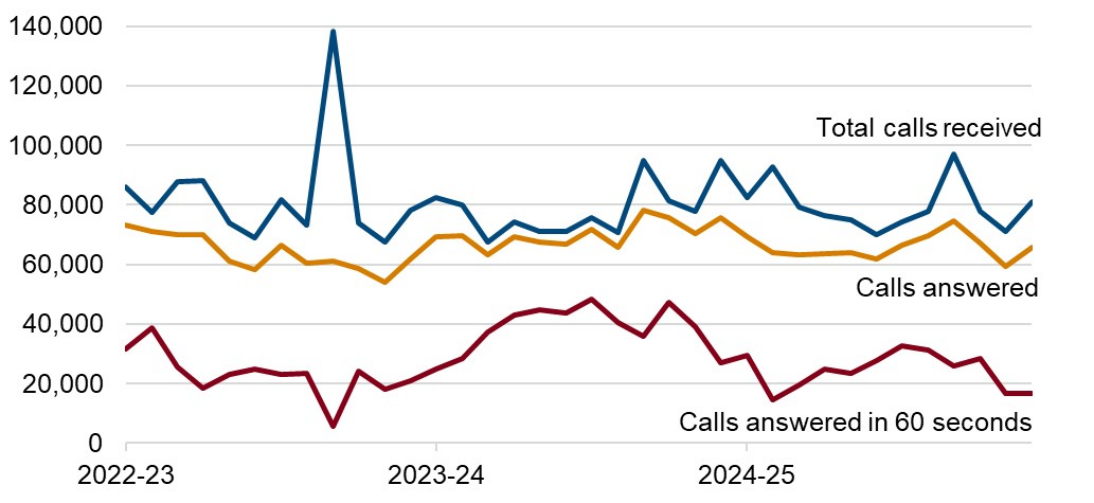
Description of Figure 14: A line chart showing the number of calls made to the NHS 111 Wales service between April 2022 and March 2025. The trend has been relatively stable, with the exception of December 2022 where there was a significant peak. Slightly more calls are seen in the winter months, with peaks in December 2022 and December 2024.
Source: Welsh Ambulance Services NHS Trust (WAST)
Calls offered, answered and abandoned for the NHS 111 service in Wales on StatsWales
Quality and methodology information
Further quality and methodology information relevant to this statistical release can be found in the NHS activity and performance summary quality report.
Official statistics status
All official statistics should show the standards of the Code of Practice for Statistics (UK Statistics Authority).
These are accredited official statistics. They were independently reviewed by the Office for Statistics Regulation (OSR) in July 2012. They comply with the standards of trustworthiness, quality, and value in the Code of Practice for Statistics.
It is Welsh Government’s responsibility to maintain compliance with the standards expected of accreditation. If we become concerned about whether these statistics are still meeting the appropriate standards, we will discuss any concerns with OSR promptly. Accreditation can be cancelled or suspended at any point when the highest standards are not maintained, and reinstated when standards are restored.
Accredited official statistics (OSR) are called National Statistics in the Statistics and Registration Service Act 2007.
Statement of compliance with the Code of Practice for Statistics
Our statistical practice is regulated by the OSR. OSR sets the standards of trustworthiness, quality and value in the Code of Practice for Statistics that all producers of official statistics should adhere to.
All of our statistics are produced and published in accordance with a number of statements and protocols to enhance trustworthiness, quality and value. These are set out in the Welsh Government’s Statement of Compliance.
These accredited official statistics demonstrate the standards expected around trustworthiness, quality and public value in the following ways.
Trustworthiness
These statistics are compiled from a range of sources derived from administrative data systems in use across the NHS in Wales. Data on the 111 service, 999 ambulance calls and ambulance response times are provided by the Wales Ambulance Services NHS Trust (WAST), and all other data sources are collected by the Welsh Local Health Boards and provided to Digital Health and Care Wales (DHCW) to enable them to be collated at a national level.
The data collections are overseen by the Welsh Information Standards Board (WISB), which is the custodian of the Information Standards Assurance Process. WISB mandates data collections through the NHS and Local Heath Boards, appraises information standards and provides assurance on matters related to confidentiality and consent.
The published figures are compiled by professional analysts using the latest available data and applying methods using their professional judgement and analytical skillset.
These statistics are pre-announced on the Statistics and Research area of the Welsh Government website. Access to the data during processing is restricted to those involved in the production of the statistics, quality assurance and for operational purposes. Pre-release access is restricted to eligible recipients in line with the Code of Practice (UK Statistics Authority).
Quality
Statistics published by Welsh Government adhere to the Statistical Quality Management Strategy which supplements the Quality pillar of the Code of Practice for Statistics and the European Statistical System principles of quality for statistical outputs.
Data standards and definitions are established by the Welsh Information Standards Board (WISB). Guidance is issued to the data providing organisations and training provided to staff responsible for collecting the data at source. DHCW collates and validates health board level data and queries anomalous and missing data directly with the health boards. Before validated datasets are provided by DHCW to Welsh Government, all data are signed off by health boards. DHCW provides validated datasets to Welsh Government, where analysts process the data to produce the aggregate statistics in the format required for publication. Welsh Government undertakes final validation checks which can be queried with DHCW and the health boards before publication. The statistical release is signed off by senior statisticians before publication.
Value
The purposes of this statistical release and the accompanying data published on StatsWales are: to provide evidence for policy development; to inform the media and wider public about activity and performance in the Welsh NHS; to enable service providers such as Local Health Boards and WAST to monitor their own performance.
Reliable statistics on the volume of activity undertaken in the NHS, the size of waiting lists, ambulance response times and emergency department and cancer waiting times are vital to inform users about the state of NHS services and the performance of the Welsh government and the Local Health Boards. These services have a significant impact on citizens’ lives and these topics feature prominently in media coverage and political discourse.
The information published here also supports the Welsh Government’s long term plan for health and social care: A Healthier Wales.
The timeliness of the data provides the most recent update using reliable data.
You are welcome to contact us directly with any comments about how we meet these standards. Alternatively, you can contact OSR by emailing regulation@statistics.gov.uk or via the OSR website.
Well-being of Future Generations Act (WFG)
The Well-being of Future Generations Act 2015 is about improving the social, economic, environmental and cultural wellbeing of Wales. The Act puts in place seven wellbeing goals for Wales. These are for a more equal, prosperous, resilient, healthier and globally responsible Wales, with cohesive communities and a vibrant culture and thriving Welsh language. Under section (10)(1) of the Act, the Welsh Ministers must (a) publish indicators (“national indicators”) that must be applied for the purpose of measuring progress towards the achievement of the wellbeing goals, and (b) lay a copy of the national indicators before Senedd Cymru. Under section 10(8) of the Well-being of Future Generations Act, where the Welsh Ministers revise the national indicators, they must as soon as reasonably practicable (a) publish the indicators as revised and (b) lay a copy of them before the Senedd. These national indicators were laid before the Senedd in 2021. The indicators laid on 14 December 2021 replace the set laid on 16 March 2016.
Information on the indicators, along with narratives for each of the well-being goals and associated technical information is available in the Wellbeing of Wales report.
Further information on the Well-being of Future Generations (Wales) Act 2015.
The statistics included in this release could also provide supporting narrative to the national indicators and be used by public services boards in relation to their local well-being assessments and local well-being plans.
We want your feedback
We welcome any feedback on any aspect of these statistics which can be provided by email to stats.healthinfo@gov.wales.