
Science Research Evidence: winter modelling 2025 to 2026 - Part 7: capacity and resilience
This paper provides modelled scenarios for influenza and pneumonia, COVID-19 and respiratory syncytial virus (RSV) for the upcoming winter season.
In this page
Top line summary
In Winter 2024 to 2025, 84 to 87% of all beds and 55 to 63% of paediatric beds were occupied on average.
The number of delayed transfers declined from 1,750 in April 2023 to 1,275 in July 2025.
NHS hospital beds
Figure 24: Average daily available and occupied beds in Wales, between April 2014 and March 2025.
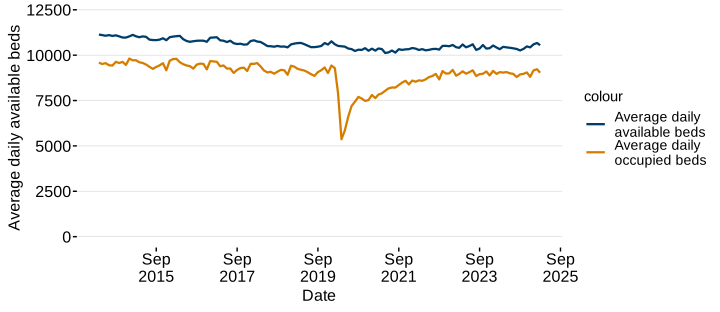
Description of Figure 24: A line chart showing trends in average daily available and occupied hospital beds in Wales from April 2014 to March 2025, highlighting changes in hospital capacity and bed occupancy over time.
Source: Stats Wales and Digital Health and Care Wales (DHCW).
During the winter of 2024 to 2025, average daily bed numbers available ranged from 10,260 to 10,670, with bed occupancy ranging between 84 to 87%. The percentage of beds occupied has remained relatively stable over the past three winters, consistently above 80% but never exceeding 90%. Historical data from April 2014 to March 2025 indicate that the number of beds occupied by patients in hospitals in Wales did not surpass the total number of available beds.
This contrasts with the widely reported demand pressures in hospitals, where patients frequently experience difficulty obtaining hospital beds. Such discrepancies may result from staffing shortages within particular hospitals, variations in the availability of specialised care beds (such as ICU, cardiac, or paediatric units), surges in emergency admissions during peak periods, or differing hospital policies and procedures.
Wales had between 399 and 422 paediatric beds available during the winter of 2024 to 2025, with occupancy ranging between 55 to 63%. As noted by Stats Wales, the highest occupancy in the 2024 to 2025 winter occurred in November, reaching 63%, which was lower than the peak occupancy of 69% observed in the previous winter, 2023 to 2024. The introduction of the RSV maternal vaccination programme may have contributed to a reduction in paediatric bed occupancy.
Referrals
The patients receiving referrals from a GP or other medical practitioner to hospital for treatment in the NHS in Wales are categorised by the wait times: up to 26 weeks, 26 to 36 weeks and above 36 weeks. As noted by Stats Wales, the total number of patients waiting to start treatment rose from 775,031 in April 2024 to 802,268 in November 2024, after which it began to decrease. Most patients had to wait for less than 26 weeks. The number of patients waiting over 36 weeks reached a peak of 284,586 in December 2024.
Delayed transfers of care
As noted by Stats Wales, a delayed discharge occurs when a patient who is clinically ready for discharge cannot leave hospital because the necessary ongoing care and support or suitable accommodation for them is not yet accessible. Delayed discharge can adversely affect patient health and cause significant distress due to unnecessarily prolonged hospital stays. Additionally, such delays impact the overall productivity of the NHS by increasing waiting times for care, as they reduce the number of beds available for other patients.
The Welsh Government releases data on pathway of care delays, measuring the number of adults in NHS hospital beds who are deemed 'clinically optimised' and ready to return home or transition to the next stage of care but have experienced a transfer delay exceeding 48 hours. As noted by Stats Wales, the number of delayed transfers of care declined from 1,750 in April 2023 to 1,275 in July 2025 (-27%). Most of the delays were due to assessment issues including awaiting social worker allocation, awaiting completion of assessment by social care, awaiting completion of assessment nursing and awaiting joint assessment.