
Wellbeing of Wales 2025 - A Wales of vibrant culture and thriving Welsh language
A summary of progress on improving our social, economic, environmental and cultural wellbeing.
In this page
A Wales of vibrant culture and thriving Welsh language
Author: Stephanie Howarth
A Wales of vibrant culture and thriving Welsh language: A society that promotes and protects culture, heritage and the Welsh language, and which encourages people to participate in the arts, sports and recreation.
Progress towards the goal
Progress towards this well-being goal is inconsistent. Some indicators, like arts, culture and heritage, and daily use of Welsh, remain stable, while previous gains in sport and children’s arts engagement have reversed. Despite this, adult sport participation has improved long term, as has museum and archive accreditation, but the number of Welsh speakers has notably declined. Disparities across groups persist for many measures.
The national indicator on arts, culture and heritage has not changed considerably in the three years it has been collected. The most recent data from financial year 2022 to 2023 found that 72% of adults engaged in these activities at least 3 times a year. There continue to be wide differences depending on age, health, deprivation and qualifications, but not for sex or ethnic groups.
Looking back over the last decade, there were initially increases in both attendance and participation in the arts by children. But both are now falling and are either at or lower than the level seen 10 years ago.
More museums and archive services are meeting accredited standards. Between 2017 and 2025, there have been larger increases in the percentage of archive services meeting accredited standards (from 57% to 88%) than museums (from 59% to 62%).
Regular sports participation fell in financial year 2024 to 2025, with 35% of adults taking part in sport three or more times a week. But over the long term the percentage of adults regularly taking part in sport has been increasing. Sports participation amongst school pupils had increased previously but has now fallen back to similar levels seen in 2013.
The number and percentage of people able to speak Welsh fell according to Census 2021, with the percentage now the lowest ever recorded in a census. There is a national milestone for one million Welsh speakers by 2050. According to the census, 538,000 people were able to speak Welsh in 2021, down from close to one million in 1911.
Survey data suggests an increase in non-fluent Welsh speakers over the long term. The percentage of Welsh speakers that use the language every day has been fairly stable, and currently stands at 11%.
Conditions of listed buildings in Wales have improved slightly since 2015, while the conditions of scheduled monuments have gradually worsened.
Arts, culture and heritage
The latest data for the national indicator on arts, culture and heritage shows relatively stable attendance and participation over recent years. In financial year 2022 to 2023, 72% of adults engaged in these activities at least 3 times a year, similar to previous years. Younger adults, those with higher qualifications, and people living in less deprived areas were more likely to attend or participate in these activities.
Figure 6.1: adults attending or participating in arts, culture and heritage 3 or more times a year, between financial years 2017 to 2018 and 2022 to 2023

Description of figure 6.1: a bar chart showing 3 years of data for the national indicator on regularly attending or participating in arts, culture and heritage. There are no significant differences between financial year 2022 to 2023 and the previous years this indicator was measured.
Source: National Survey for Wales
Looking at the arts specifically, arts attendance increased in 2024 to 2025, with 69% of adults attending an arts event in the last 12 months. This is now closer to its pre-pandemic position, following a fall in 2022 to 2023. Arts participation appears to have increased considerably from 18% in 2022 to 2023 to 26% in 2024 to 2025, however information on a wider range of arts activities was collected this year which is likely to have contributed to this increase. Prior to this, arts participation had been gradually falling since 2017 to 2018.
For children, looking back over the last decade, there were initially increases in both arts attendance and participation. But participation among children has been gradually falling since 2015 and now stands at 84%, similar to levels seen a decade ago. The fall in attendance has been more recent, down from a peak of 89% in 2018 to 82% in 2023.
Attendance and participation in arts continues to be higher among girls, younger children (7 to 10 year olds) and children from higher social grades.
Figure 6.2: children attending or participating in the arts at least once a year, 2013 to 2023
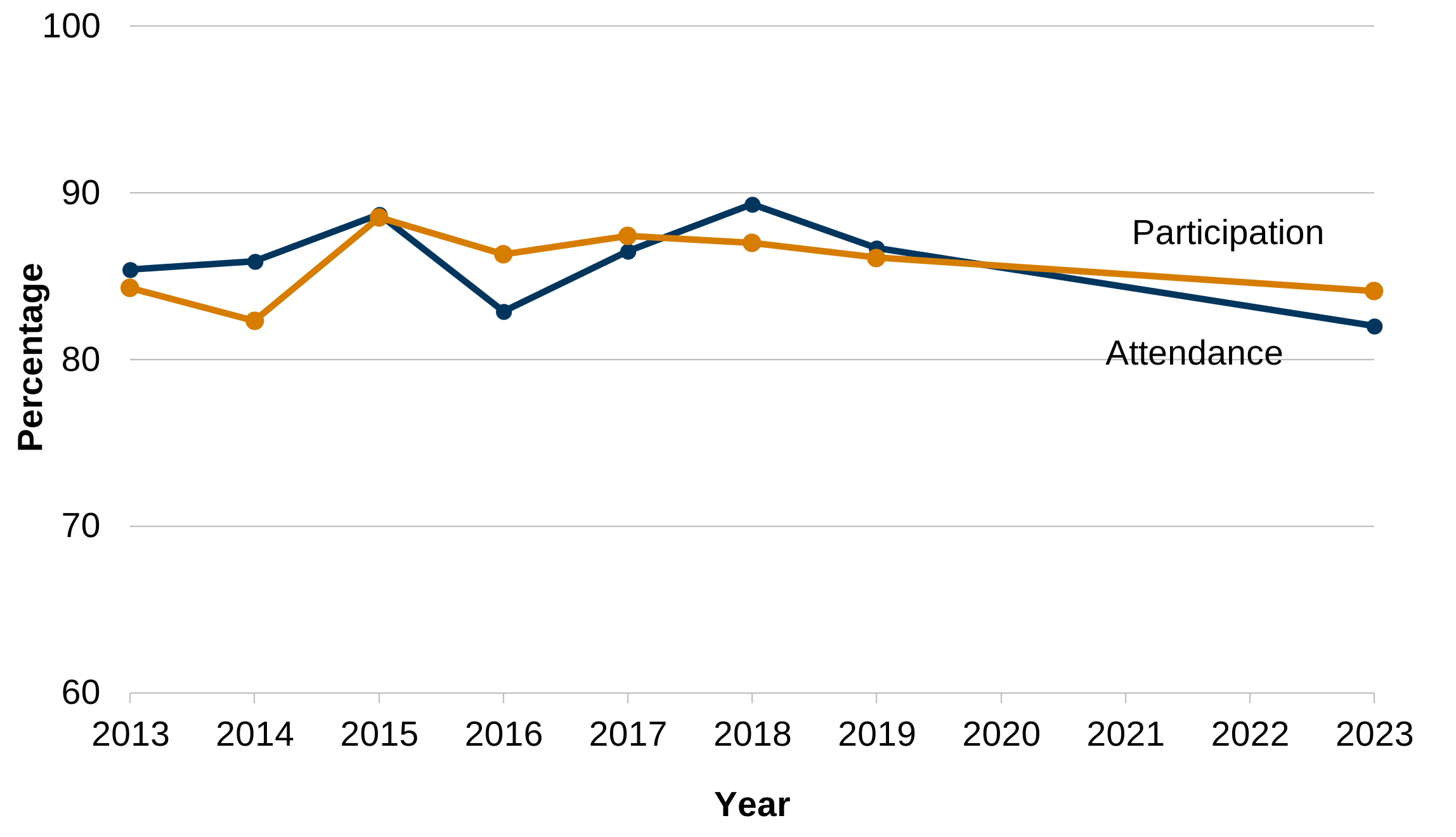
Description of figure 6.2: a line chart showing 10 years of data on children’s attendance and participation in the arts. Both attendance and participation have been falling in recent years.
Source: Arts Council of Wales
Museums and archives
According to the latest data, 99 museums met accreditation standards in 2025. The total number and proportion of accredited museums has remained relatively stable over recent years, with 62% now accredited compared to 59% in 2017.
In 2025, 15 archive services met the accreditation standard, representing 88% of all eligible archive services. This marks a notable increase from 57% accreditation in 2017.
Sport participation
Over the long term, more adults are taking part in sport regularly, although there was a fall in the rate for the most recent year. The rate of adults taking part in sport three or more times a week has increased from 29% in financial year 2016 to 2017 to 35% in 2024 to 2025.
Regular sports participation decreases with age. 52% of 16 to 24 year olds are estimated to take part in regular sport, declining to 12% of those aged 75 and over. There are also higher levels of regular sport participation among men, people in good health, and people who live in the least deprived areas.
41% of people do not take part in any sport, a figure which has remained broadly unchanged over many years. 35% of people said they want to do more sport or physical activity, an increase from 27% in 2022 to 2023.
Figure 6.3: percentage of adults participating in sport 3 or more times a week, between financial years 2016 to 2017 and 2024 to 2025

Description of figure 6.3: line chart showing the percentage of adults taking part in sport 3 or more times a week, which has increased over the long term.
Source: National Survey for Wales
Children's participation in organized sport outside the curriculum has decreased, with only 39% of pupils taking part 3 or more times a week in 2022, down from 48% in 2018. This reflects the lowest figure ever recorded by the School Sport Survey. Despite this decline, 93% of pupils expressed a desire to do more sport. Boys were generally more active than girls, and primary school children participated slightly less frequently than secondary school pupils. Among different ethnic groups, children from mixed or multiple ethnic groups had the highest participation rates at 43%.
Figure 6.4: percentage of children participating in sport 3 or more times a week, 2013 to 2022

Description of figure 6.4: a line chart showing the percentage of children regularly participating in sport. Participation has fallen back to a similar level seen in 2013.
Source: School Sport Survey
Welsh speakers
We consider the census to be the main source of information on the number of people who can speak Welsh in Wales. According to Census 2021, 17.8% of people aged three years or older in Wales can speak Welsh. This is down from 19.0% in 2011 and is the lowest percentage ever recorded on a census.
The national milestone on Welsh language is for one million Welsh speakers by 2050. Over the long term, the number of Welsh speakers has been falling from almost one million people in 1911 to 538,000 now. The decrease in Welsh speakers in 2021 was primarily due to fewer children and young people reported as able to speak Welsh. The 2021 Census, held during the COVID-19 pandemic, followed lockdowns and remote learning which may have influenced people's reported Welsh language ability.
Figure 6.5: people aged 3 years and older able to speak Welsh, 1911 to 2021 [Note 1]
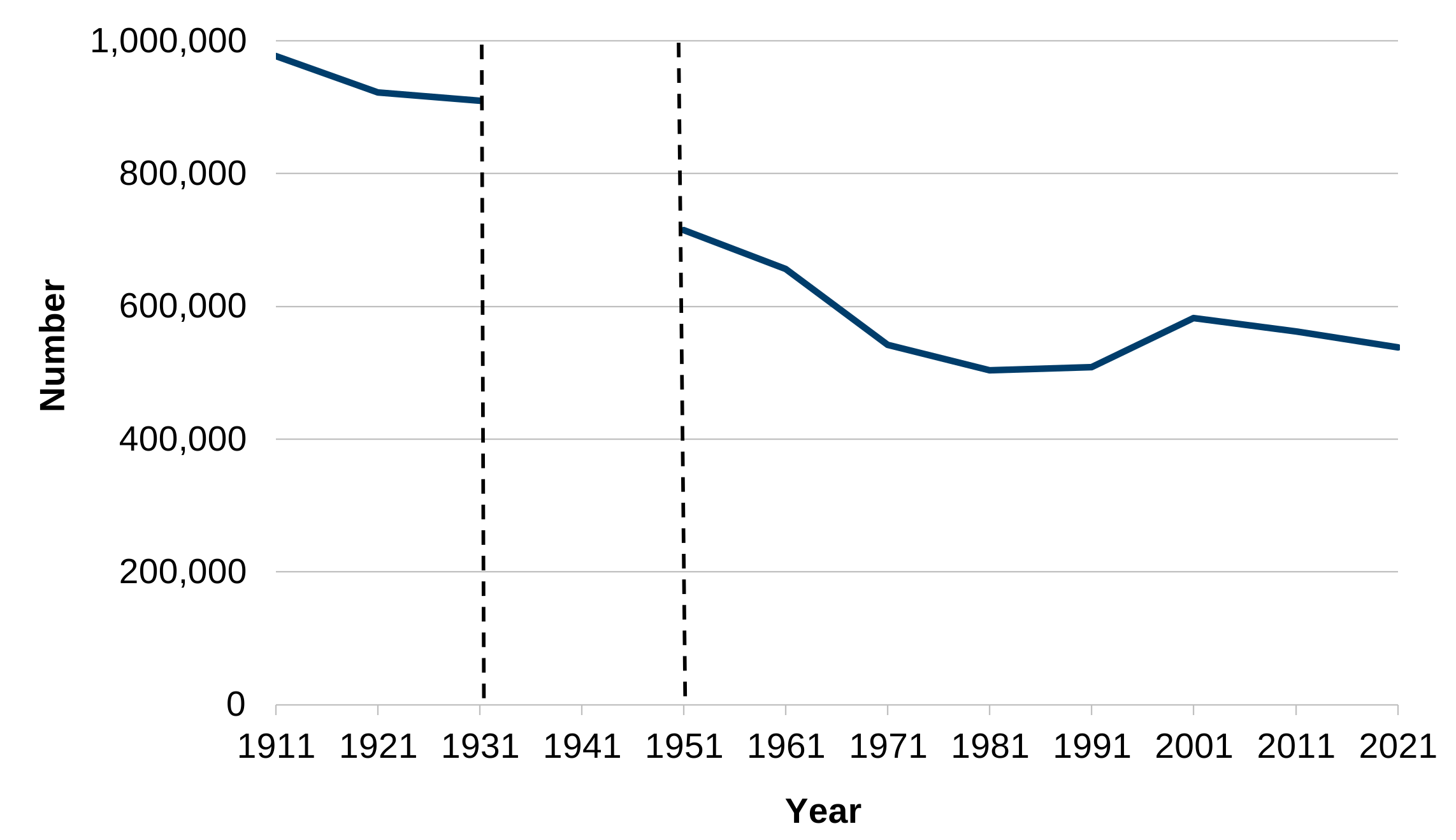
Description of figure 6.5: a line chart showing the number of people able to speak Welsh since 1911. Numbers fell substantially in the first half of the 20th century, with smaller changes since.
[Note 1] There was no census in 1941.
Source: Census of Population
Since 2011, estimates from the National Survey for Wales of people who have more than some Welsh-speaking ability have remained stable at around 19%, but there has been an increase in people who say they have some Welsh-speaking ability.
Welsh language use
The latest Welsh language use survey shows there has been little change in how often people speak Welsh.
In July 2019 to March 2020, 10% of people aged 3 or older spoke Welsh daily and could speak more than just a few words of Welsh. This is unchanged from the previous survey in April 2013 to March 2015. More recent data from the National Survey for Wales for people aged 16 or older also suggests there has been little overall change in the rate of people using Welsh daily.
According to the National Survey for Wales, the percentage of people aged 16 years or older who are fluent in Welsh has remained relatively unchanged over the last 10 years, at around 10 to 11%. However, over the long term, there have been increases in Welsh speakers who are not fluent. Fluent Welsh speakers speak the language more often than those who are not fluent.
Recent National Survey for Wales analysis using data for financial year 2022 to 2023 identified several factors independently associated with speaking Welsh or using it daily. These included being female, aged 16 to 44, single, living in rural areas (especially northwest Wales), being employed, educated to higher levels, volunteering, and residing outside the most or least deprived areas.
Historic buildings and monuments
Each year Cadw assesses the conditions of a sample of listed buildings and scheduled monuments in Wales. Listed buildings are those of special or architectural interest in Wales, while scheduled monuments represent archaeological sites of national importance. Conditions of listed buildings in Wales have improved slightly since 2015, while the conditions of scheduled monuments have gradually worsened.
There are just over 30,000 listed buildings in Wales, with 76% in a stable or improving condition in 2025, up slightly from 74% in 2015. 9% of listed buildings are classed as being at risk.
A sample of scheduled monuments is assessed each year as part of a 10-year rolling programme. This shows that the condition of the 4,200 monuments in Wales has been declining. 66% were in a stable or improving condition in financial year 2016 to 2017, but this dropped to 58% in 2024 to 2025. Nearly 15% are considered at risk, mainly due to weathering, vegetation encroachment and erosion.
Figure 6.6: percentage of scheduled monuments that are in a stable or improving condition, financial years 2011-12 to 2024-25
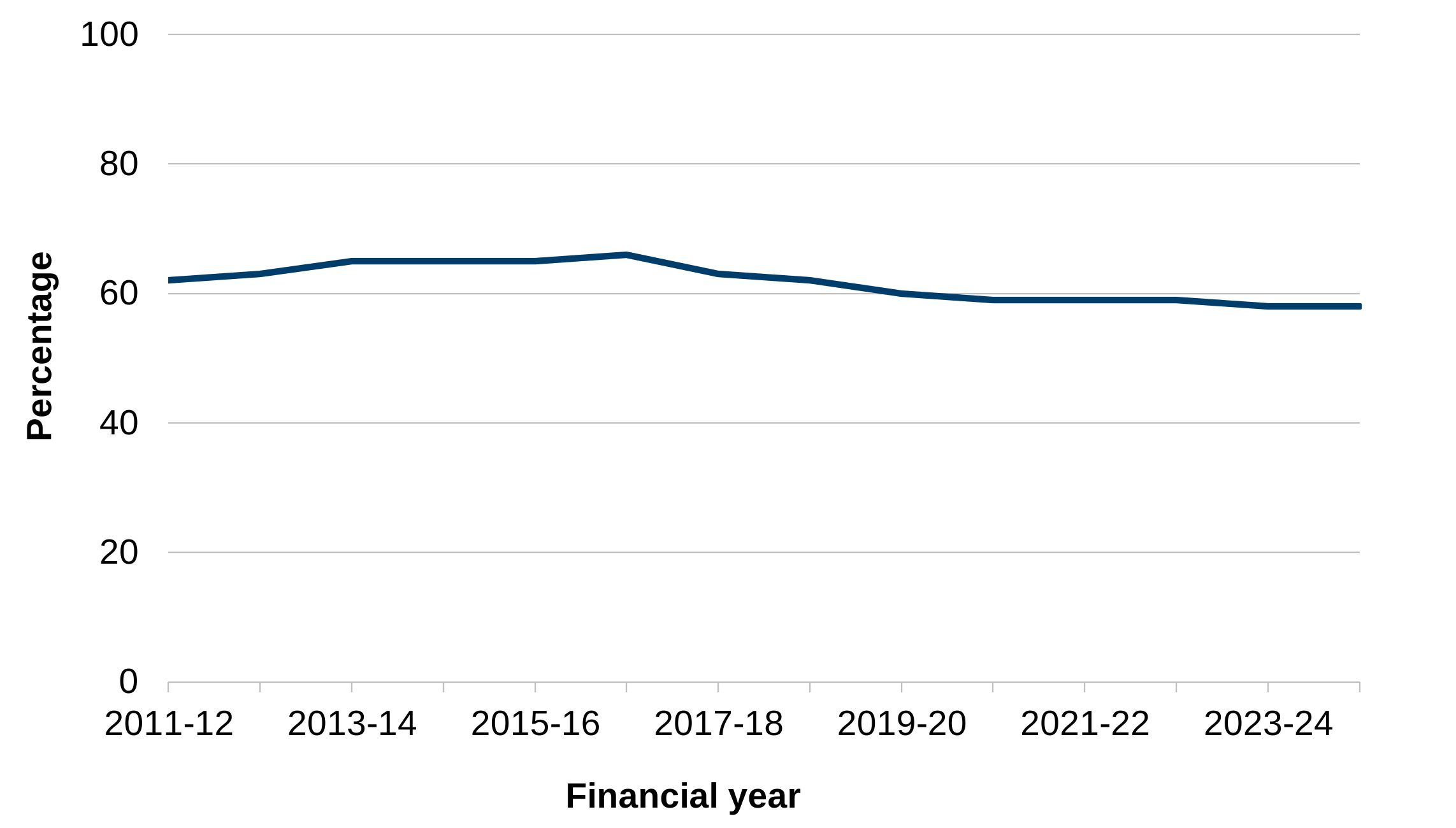
Description of figure 6.6: a line chart showing the share of monuments that are in a stable or improving condition. The percentage has gradually fallen over the last 10 years.
Source: Cadw
Further reading
Previous versions of the Wellbeing of Wales report include further analysis of:
- taking part in volunteering or in arts or sports activities
- barriers to participation in arts and differences between socio-economic and population groups in arts and sports participation
- the types of arts activities people have participated in
- use of Welsh language by children and young people, and use of Welsh in social and work contexts
- links between Welsh language and arts and culture events
- ethnicity and arts, culture, sport and Welsh language
- visits to museums and archives
The Arts Council of Wales and Sport Wales produce regular in-depth reports on arts and sports. This includes the Children’s Omnibus Survey and the School Sport Survey.
A range of analysis on the Welsh language is also available from Census 2021, and in Welsh Language Use Survey reports for financial year 2019 to 2020.