Eye care statistics: April 2024 to March 2025
New statistics on NHS eye care services provided for the financial year April 2024 to March 2025.
In this page
Introduction
This annual report summarises statistics on NHS eye care services including both primary and secondary care services for the financial year 2024-25.
The statistics help to monitor the delivery of eye care services in Wales and provide evidence for eye care policy development and evaluation.
All non-NHS funded eye care activity is not included in this report.
Some data relating to Diabetic Eye Screening Wales have been revised as of 2 February 2026. Public Health Wales provided additional retrospective data for 2023-24 and 2024-25 on screening results for low-risk recall participants as these results only recently became available. This release originally published on 30 September 2025 has been updated to include these revised data, resulting in large changes to the number of results reported and to the number of patients with no retinopathy. The scale of these revisions is shown in Figure 17 in the quality and methodology information section.
Background information is available in the quality report and all underlying datasets are published on StatsWales.
Main points
- There have been record levels of primary eye care activity in each year following the introduction of the Wales General Ophthalmic Service (WGOS) in 2023.
- In 2024-25, more than 865,000 sight tests were paid for by the NHS, more than 280,000 urgent examinations occurred, and more than 26,000 independent prescribing appointments happened.
- The number of low vision assessments increased, driven by a large increase in the number of follow-up appointments, and the number of new certificates of visual impairment increased to the highest on record.
- The number of primary care optometrists registered to work in Wales has increased since comparable data was first collected in 2020.
- In secondary care, more ophthalmology referrals were received for first outpatient appointments than ever before, but the annual rate of growth in the number of referrals was ten times smaller than the previous year.
- While a record high number of ophthalmology pathways closed in the year, the long-term effects from disrupted services caused by COVID-19 remain with more than twice as many open patient pathways (108,000) waiting for treatment than in the months prior to the pandemic.
- The total number of open ophthalmology pathways and the number of pathways where the patient has been waiting longer than a year decreased in the first three months of 2025, which may indicate the start of a downward trend.
- Over the short-term there has been a small decrease in both ophthalmologists and orthoptic staff directly employed by the NHS (secondary care), but both staff groups have increased in number over the past five years.
Primary eye care services: Wales General Ophthalmic Services (WGOS)
As a result of legislative reforms in 2023, primary eye care services are now delivered through WGOS. The reform is intended to relieve some pressure in secondary care by delivering more services in primary care, closer to patients’ homes. WGOS replaced the previous primary eye care service structure which contained: General Ophthalmic Services (GOS), Eye Health Examination Wales (EHEW), Low Vision Services Wales (LVSW), and other enhanced service pathways.
There are five main elements of WGOS, all of which are reported on in this release.
A full breakdown of WGOS services can be found on the NHS Wales website.
WGOS 1: Sight tests and optical vouchers
WGOS 1 covers comprehensive eye examinations in optometry practices, including routine sight tests, assessments of visual function, preventative eye health screening and the provision of optical vouchers. The NHS recommends most people should have a sight test with an optometrist at least once every two years to reduce preventable sight loss.
Many people qualify for free sight tests which are paid for by the NHS. The eligibility criteria for these widened with the introduction of WGOS 1 in 2023 eligibility (NHS Wales).
As of 31 March 2025, 309 optometry practices were providing full WGOS services, with a further 46 exclusively providing WGOS mobile services.
Figure 1: Number of sight tests paid for by the NHS, 2015-16 to 2024-25
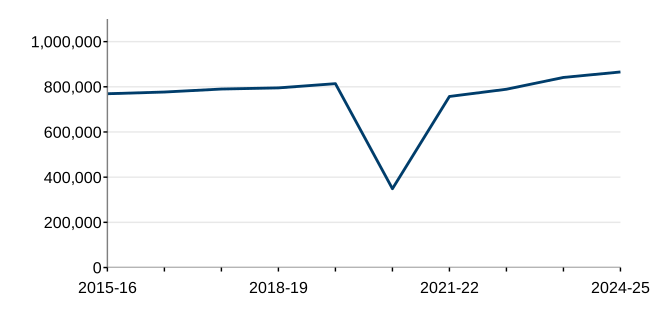
Description of Figure 1: line chart showing the number of sight tests had been on a slight upward trend until 2019-20 where it decreased sharply due to the COVID-19 pandemic. In the two years following this, the number broadly returned to pre-pandemic levels and increased to a record high level in 2024-25.
Source: General Ophthalmic Service 1 sight test form, NHS Wales Shared Services Partnership
Number of sight tests paid for by the NHS (StatsWales)
In 2024-25 the number of sight tests paid for by the NHS increased to a record high of over 865,000; an increase of 2.9% compared to 2023-24.
Excluding the years heavily impacted by the COVID-19 pandemic, the long-term trend shows broadly steady year-on-year increases, and the number of sight tests paid for by the NHS has increased by 12.5% over the last 10 years.
Note that for clinical reasons, some people may have more than one sight test per year. Sight tests data by patient eligibility is available on StatsWales.
Domiciliary sight tests
While the majority of sight tests paid for by the NHS take place at primary care optometry practices, a small proportion take place at other locations such as people’s homes and residential homes.
In 2024-25, just over 28,000 domiciliary sight tests were paid for by the NHS. While this is a decrease of 2.6% compared to 2023-24, the number of domiciliary sight tests is broadly in-line with the number in each of the three years prior to the COVID-19 pandemic.
Time series data for domiciliary sight tests are available on StatsWales.
NHS optical vouchers processed
NHS optical vouchers are financial subsidies provided by the NHS to help eligible individuals cover the cost of glasses or contact lenses.
In 2024-25, just more than 272,000 optical vouchers were processed, 1.5% fewer than in 2023-24, and 4.6% lower than in the last year largely unaffected by the pandemic (2019-20).
Time series data for NHS optical vouchers are available on StatsWales.
Claims for repairs or replacement spectacles
Similarly, the NHS provides financial help to eligible individuals to repair or replace spectacles that are damaged or lost.
In 2024-25, there were just fewer than 41,000 claims for repairs or replacement spectacles. The number of repair or replacement claims had been broadly stable in all years unaffected by the COVID-19 pandemic since 2017-18, but there was a 13.1% annual increase in 2024-25 that resulted in a record high number of claims.
Time series data for repairs and replacements are available on StatsWales.
WGOS 2: Urgent and follow-up eye health examinations
WGOS 2 provides urgent and enhanced eye care in primary care optometry practices. Prior to 2023-24, similar services were offered through Eye Health Examination Wales (EHEW).
Figure 2: Number of urgent and follow-up examinations by band, 2015-16 to 2024-25
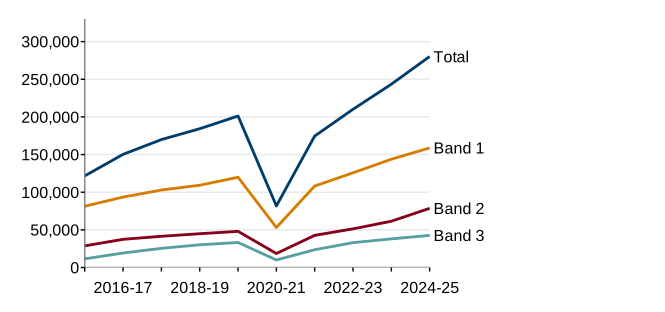
Description of Figure 2: line chart showing that since the pandemic, urgent and follow-up eye care examinations for all three bands, delivered by primary care optometrists have increased each year and exceed pre-pandemic levels.
Source: Eye Health Examination Wales (EHEW) form, NHS Wales Shared Services Partnership
Number of examinations claimed through Wales General Ophthalmic Services 2 scheme (StatsWales)
There were just over 280,000 examinations provided through WGOS 2 in 2024-25, an increase of 15.1% from 2023-24 and a record high.
Nearly six out of ten (56.7%) examinations were for Band 1 examinations which include urgent appointments and referrals from another healthcare provider for conditions such as flashing vision or sudden vision loss.
Nearly three out of ten (28.1%) examinations were for Band 2. These involve further investigations by primary care optometrists with the aim of reducing referrals into secondary care eye services. The number of appointments in this band increased by 27.8% from the previous year, the largest increase of any band. 15.2% were for Band 3 appointments which include follow-up appointments to Band 1 examinations or patient checks following cataract operations.
Further breakdowns including age band and selected symptom are available on StatsWales.
WGOS 3: Low vision assessments and certificates of vision impairment (CVI)
WGOS 3 provides low vision services which aim to help people with visual impairment remain independent. The service does this by providing aids such as magnifiers, enhanced lighting or other assistive tools, in addition to education and employment support and onward referrals to social services and voluntary organisations.
Figure 3: Number of low vision assessments by type, 2023-24 to 2024-25 [Note 1]
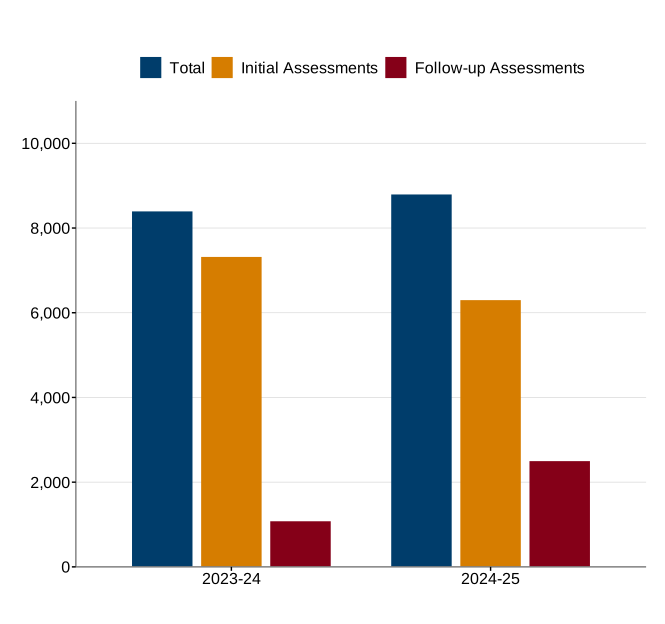
Description of Figure 3: bar chart showing a slight annual increase in the total number of low vision assessments in 2024-25. The increase was driven by a large increase in the number of follow up assessments, while the number of initial assessments decreased.
Source: Low Vision Assessment Record Card, NHS Shared Services Partnership, and Low Vision Service Wales
Low Vision assessments (StatsWales)
[Note 1] Data for initial assessments and follow-up appointments are only available from 2023-24, following the introduction of WGOS 3.
Nearly 8,800 low vision assessments were performed by primary care optometrists in 2024-25, an increase of 4.8% from 2023-24 and broadly similar to the number in the two years prior to the pandemic.
In 2024-25, nearly 6,300 assessments were initial assessments, 13.9% lower than in the previous year. In contrast, there were nearly 2,500 follow-up assessments, almost 2.5 times as many as in the previous year.
Just over two thirds (67.0%) of assessments were for patients ages 80 or older; just over a quarter (26.5%) were for patients aged between 60 and 79; 5.9% were for those aged between 19 and 59; and 0.6% were for patients aged 18 or younger. The age-profile for low vision patients has remained broadly stable over the last decade.
Statistics on visual acuity recorded at assessments and referrals are available on StatsWales.
Certificates of Vision Impairment (CVI)
CVI can be issued to people that are sight impaired or severely sight impaired. When a CVI is issued, the person can register with their local authority and additional support services and benefits can be accessed. Prior to the introduction of WGOS 3 in 2023, a CVI could be issued through Low Vision Service Wales.
Figure 4: Number of Certificates of Vision Impairment (CVI) issued to Welsh residents by age band, 2014-15 to 2023-24 [Note 1]
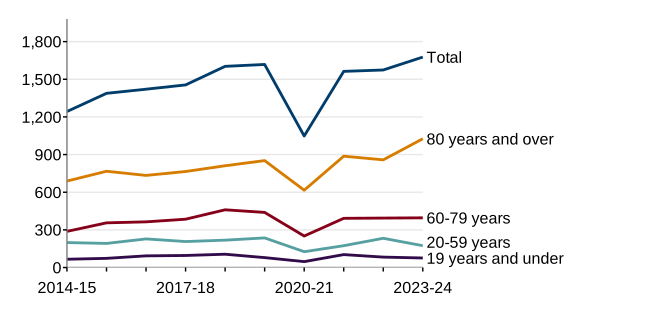
Description of Figure 4: line chart showing the number of CVI issued to Welsh residents has increased slightly over the last three years, and in 2023-24 rose slightly above the pre-pandemic level to the highest on record. Over the last decade, most certificates were issued to people aged 80 and over, and this age group has driven the change in the total number of CVI issued in recent years, with all other age groups remaining broadly stable.
Source: Certificate of Vision Impairment (CVI) form, NHS Wales Shared Services Partnership, and Moorfields Eye Hospital
[Note 1] Data for Welsh residents certified in English practices are provided by Moorfields Eye Hospital, one year in arrears to the Welsh residents’ data certified by Welsh practices. This means that 2023-24 is the latest available year of data for all Welsh residents, however data for Welsh residents certified in Wales is available for 2024-25 and is published on StatsWales.
In 2023-24, there were 1,677 new CVI issued to Welsh residents, an increase of 6.5% from 2022-23.
Of these, more than six out of ten (61.4%) were for patients aged 80 years and older; a little fewer than a quarter (23.7%) were for patients aged between 60 and 79; one in ten (10.4%) were for patients aged between 20 and 59; and one in twenty-five (4.5%) were for patients aged 19 or younger.
Statistics on the cause of sight impairment is published on StatsWales.
Statistics on the ethnic group of patients certified is published on StatsWales.
WGOS 4: Referral filtering and monitoring
WGOS 4 allows certain primary care optometrists to assess referrals and provide treatments to patients with glaucoma and medical retina conditions who would have otherwise been referred into secondary care for treatment. The aim of WGOS 4 is to provide specialist eye care services closer to people’s homes and reduce the burden on secondary eye care services.
Figure 5: Outcome of referral and filtering (WGOS 4) appointments, by condition, 2024-25 [Note 1]
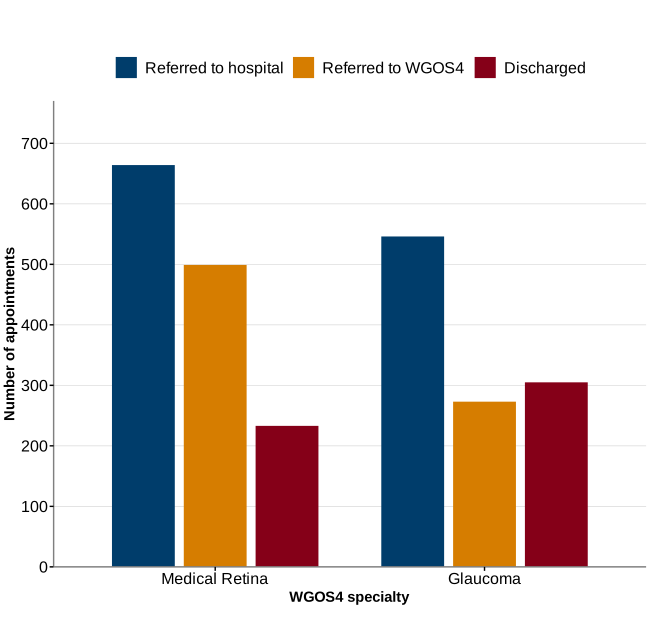
Description of Figure 5: bar chart showing the most common outcome for both medical retina and glaucoma patients was a referral to a hospital ophthalmology department. However, when combined, more patients were either referred for follow-up appointments in a primary care optometry practice for another WGOS 4 appointment or discharged, than were referred into secondary care.
Source: K2 payments system, NHS Wales Shared Services Partnership
Outcome of WGOS 4 appointments by condition (StatsWales)
[Note 1] WGOS 4 was introduced at different times across health boards during 2024-25, so not all health boards reported a full year of activity.
In 2024-25, there were 2,520 WGOS 4 appointments in total; 55.4% were for patients with medical retina and 44.6% were for patients with glaucoma.
The majority (83.1%) of appointments were for referral filtering, while 16.9% were for patient monitoring. Of the referrals that were filtered, 55.9% resulted in the patient being referred to a secondary care ophthalmology department, 24.0% resulted in the patient being discharged, and 20.2% resulted in the patient being referred back to a primary care optometrist.
WGOS 5: Independent prescribing
WGOS 5 allows for primary care optometrists who are qualified to independently prescribe medication, to diagnose and treat certain complex or acute eye conditions directly and prescribe medicines without referring patients to general practice or secondary care.
Figure 6: Outcome of specialist appointment with prescribing optometrist (WGOS 5), by appointment type, 2024-25 [Note 1]
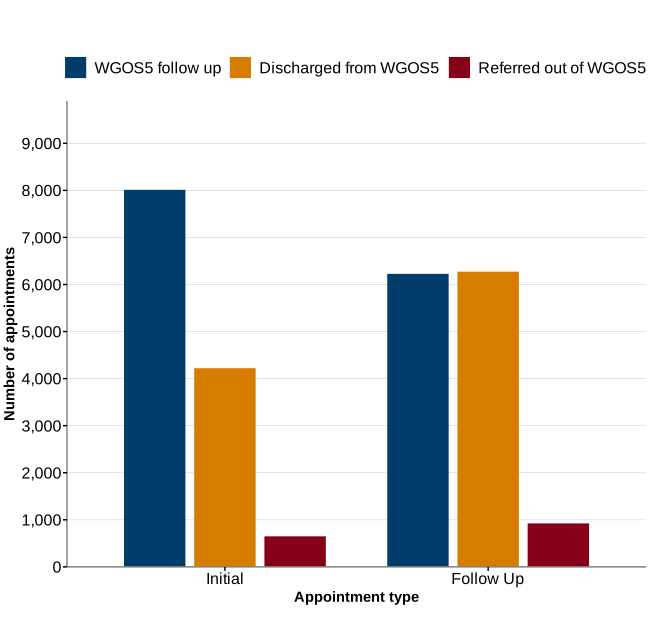
Description of Figure 6: bar chart showing the outcome of most initial WGOS 5 appointments was a follow-up within WGOS 5. In contrast, outcomes for follow-up WGOS 5 appointments resulted in a similar number of patient discharges and referrals for subsequent follow-up WGOS 5 appointments.
Source: K2 payments system, NHS Wales Services Partnership
Outcome of WGOS 5 appointment by appointment type (StatsWales)
[Note 1] WGOS 5 was introduced at different times in different health boards during 2024-25, so not all health board reported a full year of activity.
In 2024-25 there were just over 26,300 WGOS 5 appointments in total. Appointments were nearly evenly split between initial appointments (49.0%) and follow-up appointments (51.0%).
A little more than half (52.1%) of the appointments were for patients aged 19 to 59, 41.3% of appointments were for patients aged 60 or older, and 6.6% of appointments were for patients aged 18 or under.
In total, 54.1% of appointments resulted in a follow-up WGOS 5 appointment, 39.9% resulted in the patient being discharged, while 6.0% of appointments resulted in the patient being referred to services outside of WGOS 5.
Diabetic Eye Screening Wales
Diabetic Eye Screening Wales (DESW) is a national programme provided by Public Health Wales. It delivers screening services in the community to eligible people aged 12 years and over who have been diagnosed with diabetes and are registered with a general practice in Wales.
Patients should be screened every two years if their previous two diabetic eye screenings found no sign of diabetic eye disease. Patients should be screened more often if diabetic eye disease was found.
Figure 7: Number of patients eligible for diabetic eye screening in Wales on 31 March, 2016 to 2025
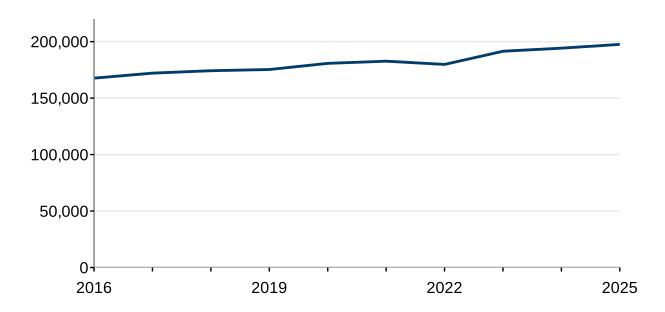
Description of Figure 7: line chart showing the number of patients eligible for diabetic eye screening has been on a steady long-term upward trend, with small annual increases in nine of the last ten years.
Source: Diabetic eye screening system: Optomize, Diabetic Eye Screening Wales
Summary of key statistics for Diabetic Eye Screening Wales (StatsWales)
A little more than 197,000 people were eligible for diabetic eye screening on 31 March 2025, an increase of 1.7% from the previous year and an increase of 17.8% from ten years ago.
Just under 16,600 (or 8.4%) (r) of eligible patients were new registrations during 2024-25.
There were just over 110,000 scheduled appointments in 2024-25, equivalent to 55.8% of patients eligible for the service.
Over 88,000 (r) appointments had results reported from screenings during the year. Of these, 34.1% (r) were found to have at least some degree of diabetic retinopathy.
(r) Revised on 2 February 2026.
Further breakdowns including age band and gender are available on StatsWales.
Hospital Eye Care Services
Figures 8 to 11 are based on referrals data published on 18 September 2025 on StatsWales. These datasets are subject to monthly revisions therefore the data in this stats release may not exactly match data on StatsWales in future months.
Ophthalmology referrals
Optometrists and GPs can refer patients to hospital eye care services (ophthalmology) when the patient has a condition that is too complex to treat in primary care.
Referrals statistics count the number of referrals received by local health boards for a first outpatient consultant appointment (regardless of the patient’s area of residence).
Figure 8: Number of referrals for first outpatient appointment for ophthalmology, 2015-16 to 2024-25
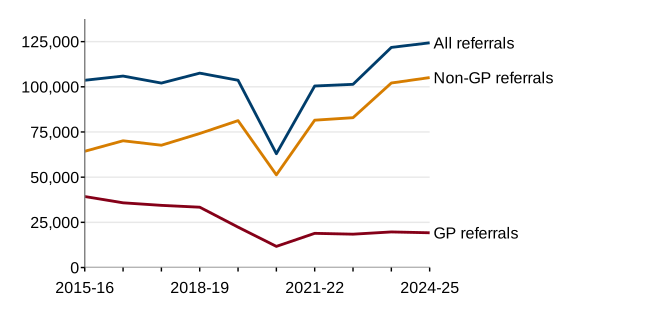
Description of Figure 8: line chart showing the total number of referrals returned to their pre-pandemic level in 2021-22 and have since increased to a record high, driven by increases in referrals from non-GP sources. Referrals from GPs have reduced over the long-term but remained broadly stable over the last four years.
Source: Outpatient Referral Dataset, Digital Health and Care Wales (DHCW)
Referrals by local health board and month (StatsWales)
In 2024-25, there were just over 124,000 referrals for first outpatient appointments for ophthalmology, a 2.1% increase from 2023-24 and a record high. However, the annual rate of growth in referrals was ten times smaller than the growth between 2022-23 and 2023-24.
The majority of referrals (84.5%) were made by non-GPs in 2024-25. This percentage has been on a long-term upward trend and is 22.5 percentage points higher than a decade ago.
Waiting times (referral to treatment)
Waiting times for hospital eye care services are measured by the referral to treatment (RTT) patient pathway time. This counts the time a patient waits from the date which the hospital receives the referral to the date when treatment starts.
Open pathways refer to the patient pathways where the patient has yet to start treatment and they are actively on the waiting list for treatment.
Closed pathways refer to patient pathways where the patient has received treatment or has been deemed by a healthcare professional that they no longer require treatment and are removed from the waiting list.
The statistics in this section are based on patient pathways and not patients. These numbers do not approximate to each other as the same patient could have multiple pathways for different conditions.
A full definition is available in the quality report.
The two longest standing Welsh Government targets associated with RTT are: 95% of patients should wait less than 26 weeks from referral; and no patient should wait more than 36 weeks for treatment from referral.
Figure 9: Closed patient pathways for ophthalmology by grouped weeks wait, 2015-16 to 2024-25 [Note 1]
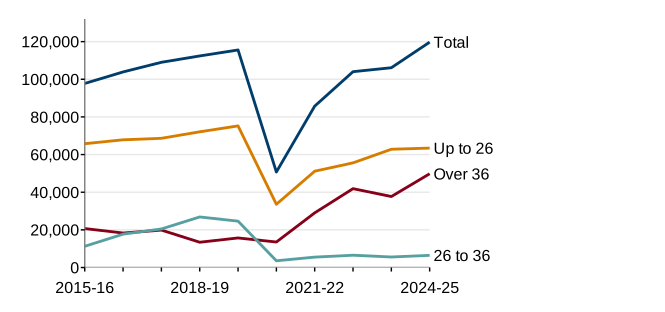
Description of Figure 9: line chart showing a sharp upward trend in the total number of closed pathways over the last four years, peaking in 2024-25 with the highest number on record. Most pathways were closed within 26 weeks, however the number closed after 36 weeks has been on an upward trend since the pandemic.
Source: Referral to treatment times, Digital Health and Care Wales
Closed patient pathways by month, local health board and weeks waiting (StatsWales)
[Note 1] While closed pathway waiting times data are of sufficient quality to be published, they are not subject to the same level of validation as open pathways. As a result, closed pathway data should be used to show an indication of how long patients waited before having their pathway closed, while open pathway data provides a more definitive overview of waiting times in the reference period.
Nearly 120,000 ophthalmology patient pathways closed in 2024-25, an increase of 12.8% from the previous year. The number is 3.6% higher than in 2019-20, the last year largely unaffected by the pandemic.
The majority of patient pathways (53.0%) waited fewer than 26 weeks for their pathway to be closed in 2024-25, but that percentage was 6.2 percentage points lower than the previous year.
41.6% of patient pathways were closed after more than 36 weeks waiting, 6.1 percentage points higher than in the previous year. The number of patients whose pathways closed after 36 weeks or longer was three times as high as in 2019-20.
Figure 10: Number of open patient pathways for ophthalmology by grouped weeks wait, per month, April 2015 to March 2025 [Note 1]
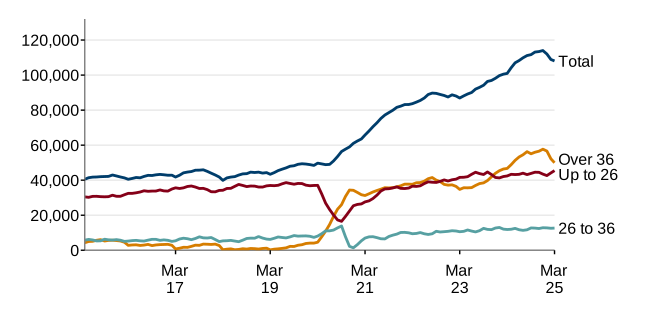
Description of Figure 10: line chart showing the number of open pathways for ophthalmology has increased since April 2015, markedly from the period just after the pandemic started, peaking in December 2024. In the three months since, the number has decreased, driven by a decrease in pathways open for longer than 36 weeks. Most pathways have been open for longer than 36 weeks, in each month since December 2023, this contrasts to the pre-pandemic trend where most pathways were open for fewer than 26 weeks.
Source: Referral to treatment times, Digital Health and Care Wales
Patient pathways waiting to start treatment by month, grouped weeks and treatment function (StatsWales)
[Note 1] Open pathway data is collected at a single point in time each month.
During 2024-25, the number of open ophthalmology patient pathways varied between around 104,000 and 114,000 per month.
At the end of March 2025, there were just over 108,000 open ophthalmology patient pathways. This is an increase of 7.1% from the end of March 2024, and more than double (117.4% higher) the last comparable month largely unaffected by the pandemic (March 2020).
At the end of March 2025, 46.2% of pathways had patients waiting more than 36 weeks, a marginal decrease of less than 0.1 percentage points compared to March 2024 and 37.0 percentage points higher than in March 2020.
The number of pathways where the patient was waiting fewer than 26 weeks was higher in March 2025 compared to March 2020. However, as the overall number of pathways has increased, the percentage of pathways where the patient was waiting fewer than 26 weeks has decreased. At the end of March 2025, 42.1% of pathways had patients waiting fewer than 26 weeks, marginally higher (0.1 percentage points) than in March 2024, but 32.4 percentage points lower than March 2020.
On the 26th of April 2022 the Welsh Government published its programme for transforming and modernising planned care and reducing waiting lists in Wales. This plan sets out a number of key ambitions to reduce waiting times for people in Wales and the relevant data for referral to treatment times are published here: COVID-19 recovery plan, ambitions for referral to treatment waiting times (StatsWales). Figure 11 shows the COVID-19 recovery plan targets data for Ophthalmology RTT pathways before and after the pandemic.
Figure 11: Number of ophthalmology open patient pathways by their referral to treatment waiting times, per month, March 2019 to March 2025 [Note 1]
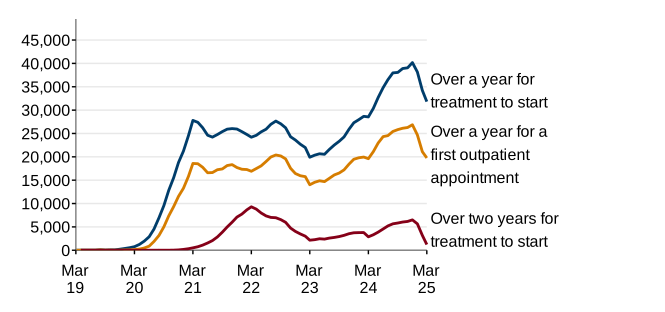
Description of Figure 11: line chart showing the number of pathways where the patient was waiting over a year for treatment to start has been on an overall upward trend over the past five years, but has decreased in the first three months of 2025. The trend for pathways where the patient has waited over a year for their first outpatient appointment has followed a very similar path but at a slightly lower level. The number of patients whose pathway has been open for more than two years has varied over the past five years but in March 2025 reached its lowest level since May 2021.
Source: Referral to treatment times, Digital Health and Care Wales
COVID-19 recovery plan, ambitions for referral to treatment waiting times (StatsWales).
[Note 1] A patient may receive their first outpatient appointment and subsequently wait a period of time before treatment starts.
There were nearly 19,800 pathways where the patient was waiting over a year for their first outpatient appointment at the end of March 2025, a marginal increase of 0.8% from March 2024.
There were just over 31,800 pathways where the patient was waiting more than a year for treatment at the end of March 2025, an increase of 11.5% from March 2024.
There were just over 1,200 pathways where the patient was waiting for more than two years for treatment at the end of March 2025, a decrease of 57.6% from March 2024.
Outpatients
An outpatient attendance is defined as a patient who attends an ophthalmology department at an NHS hospital for treatment or a consultation with either a consultant or a specialist nurse, without staying there overnight. Appointments with other health professionals and telemedicine are not captured.
The statistics presented in this release are based on patients registered to general practices in Wales, which are slightly different to hospital outpatient statistics published on StatsWales which are based on all activity provided in Welsh hospitals.
Figure 12: Number of ophthalmology outpatient attendances by appointment type, 2015-16 to 2024-25
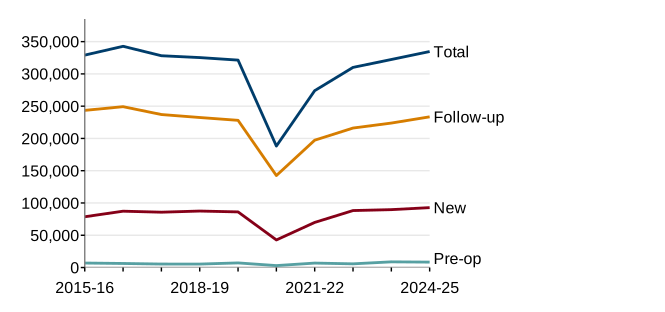
Description of Figure 12: line chart showing the total number of outpatient attendances for ophthalmology departments is now slightly higher than in the three years prior to the pandemic. The number of follow-up appointments has consistently been more than double the number of new appointments over time.
Source: Outpatient dataset, Digital Health and Care Wales
Number of outpatient appointments for ophthalmology (StatsWales)
In 2024-25, there were nearly 335,000 attendances for ophthalmology outpatient appointments, an increase of 3.8% from the previous year. Outpatient activity in 2024-25 was the second highest over the last decade, and was 4.1% higher than in 2019-20 (the last year largely unaffected by the pandemic).
More than 230,000 attendances (or 69.8%) were follow-up appointments, while just over 90,000 appointments (or 27.7%) were for new appointments.
Hospital admissions
Patients are defined as being admitted to hospital if they stay at least one night (inpatients), or if they are admitted electively for treatment or care that does not require an overnight stay in hospital (day cases).
The completeness of clinical coding was lower than usual in 2023-24 with around 15.9% of admissions to ophthalmology departments not having the patient’s primary diagnosis recorded. This data has since been revised and incompleteness reduced to 8.7%. The revised data has been included on StatsWales.
For 2024-25, 7.5% of clinical coding was incomplete. Given the level of incomplete coding over the last three years, it is not possible to accurately compare the number of admissions for specific reasons (such as cataracts, macular degeneration, glaucoma and diabetic retinopathy) in 2022-23, 2023-24 and 2024-25 with previous years.
The total number of admissions to ophthalmology is not affected by this issue and therefore time series comparisons for total admissions can be made fairly.
More information on admissions data is available on the Patient Episode Database for Wales (PEDW) website (Digital Health and Care Wales).
Figure 13: Total number of admissions for hospital eye care, 2015-16 to 2024-25
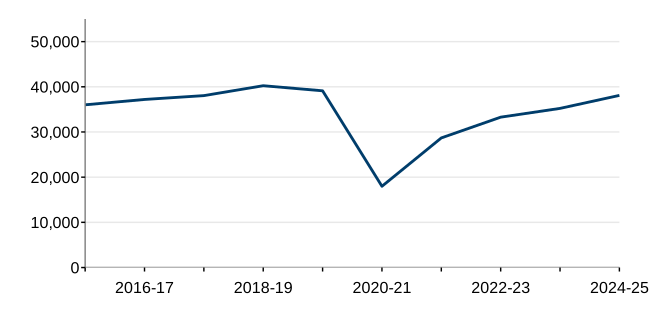
Description of Figure 13: line chart showing that the total number of admissions to ophthalmology departments has increased over the last four years and was marginally below the pre-pandemic level in 2024-25.
Source: Patient Episode Database for Wales (PEDW), Digital Health and Care Wales
Number of admissions for hospital eye care in Wales (StatsWales)
In 2024-25, there were just over 38,000 admissions to ophthalmology departments, an increase of 8.2% from the previous year.
Of the admissions where a primary diagnosis was recorded, 59.9% were for cataracts, 5.9 percentage points higher than the previous year.
17.1% were for macular degeneration, 3.3% were for diabetic retinopathy, and 2.2% were for glaucoma. The percentages for all three of these diagnoses were slightly lower than in the previous year. The remaining 17.3% of admissions were for other diagnoses.
Eye care measures
Eye care measures for NHS outpatients have been designed to provide a framework for new and follow-up appointments for ophthalmology patients, based on the priority and urgency of care required by each patient. These measures are reported in addition to the current referral to treatment waiting times.
Monthly data on eye care measures has been published on StatsWales since April 2019 and more detail on the measures are published in their quality report.
A patient can be categorised as Health Risk Factor R1 if they are at risk of irreversible harm or significant adverse outcomes if their target date is be missed.
Figure 14: Number of ophthalmology pathways for Health Risk Factor R1 patients, waiting for an outpatient appointment and appointments attended, per month, April 2019 to March 2025 [Note 1] [Note 2]
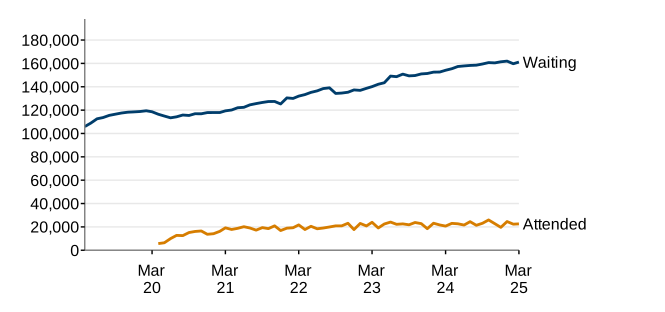
Description of Figure 14: line chart showing a steady increase in the number of patient pathways where high-risk patients have been waiting for an outpatient appointment since April 2019. The number of outpatient appointments attended for high-risk patients have been relatively stable over the past three years, with some month-to-month variations.
Source: Eye care outcome measures, monthly submission proforma, Welsh Government
Patients waiting for an ophthalmology outpatient appointment (StatsWales)
[Note 1] Open pathway data is collected at consistent, single point in time each month.
[Note 2] Attended appointments data available from April 2020.
There were a little more than 161,000 open pathways where the patient was assessed as Health Risk Factor R1 in March 2025, an increase of 4.6% from March 2024.
Nearly all (99.97%) of these patient pathways had a target date allocated.
Nearly half (49.9%) of patient pathways, where the patient had been assessed as Health Risk Factor R1, were waiting within their target date or within 25% beyond their target date in March 2025.
In March 2025, there were just fewer than 22,600 appointments attended where the patient had been assessed as Health Risk Factor R1, an increase of 9.2% from March 2024.
R1 patients had waited within their target date or within 25% beyond their target date in a little more than more than six out of ten (62.5%) appointments attended.
Further information is available through the Eye Care Measures publication.
Workforce
Most of the eye care workforce are based in primary care optometry settings. In order to practise, a primary care optometrist needs to be registered on either the Ophthalmic List or Ophthalmic Supplementary List and at present, these lists provide the best available optometry workforce data. While the lists are reliable sources, they do not include information on where the optometrist is currently working and there may be a period between when a practitioner stops practicing and that practitioner being removed from the list. Data from this source has been used from 2020 onwards; prior to this data was sourced from Central Ophthalmic Payments system. Data from these two sources is not directly comparable.
Ophthalmologists (medical doctors specialising in eye care) and orthoptic staff (eye care professionals specialising in diagnoses and treatments of eye movements disorders and binocular vision) are typically directly employed by the NHS and work in hospital settings. Robust workforce information for these staff is sourced from the NHS human resources system (Electronic Staff Record (ESR)) which has been used to produce accredited official statistics for many years.
Figure 15: Headcount of optometrists and ophthalmic medical practitioners in primary care workforce, 2016 to 2025 [Note 1] [Note 2]
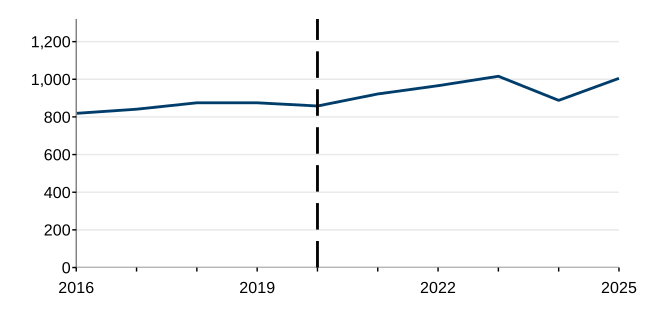
Description of Figure 15: line chart showing the number of optometrists and ophthalmic medical practitioners has been on a broadly upward trend since 2020 when the data source changed.
Source: Central Ophthalmic Payments system (2016-2019), NHS England; Ophthalmic List and Ophthalmic Supplementary List (2020-2025), NHS Shared Services Partnership
[Note 1] Full-time equivalent data not available.
[Note 2] Data for 2016 to 2019 refers to 31 December in each year. Data from 2020 onwards refer to 31 March. Data from the two time periods are not directly comparable, further information is available in the quality report.
Number of ophthalmic practitioners (StatsWales)
There were 1,005 optometrists registered on to work in Welsh optometry practices on 31 March 2025, an increase of 13.2% from the previous year and an increase of 17.1% since comparable data was first collected in 2020.
Following the introduction of WGOS, it became a requirement for student optometrists undertaking their Scheme for Registration placement to be listed on the Ophthalmic Supplementary List, and therefore data for student optometrists is available from 31 March 2024. On 31 March 2025, there were 75 student optometrists registered to undertake their placement, an increase of 41.5% from the previous year.
There was a decrease in 2024 which is likely to be explained by more robust validation of the Ophthalmic List and Ophthalmic Supplementary Lists, following the introduction of WGOS.
Figure 16: Ophthalmology doctors and Orthoptic staff directly employed by the NHS, full-time equivalent (FTE), March 2019 to March 2025 [Note 1]
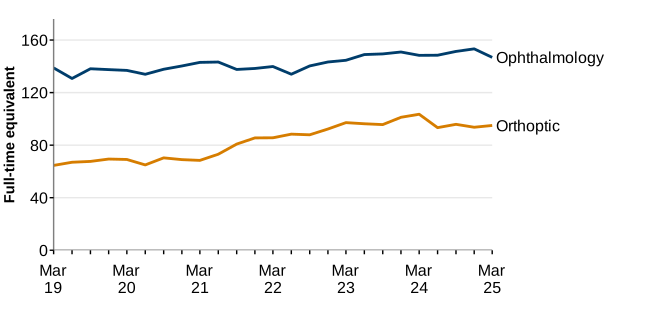
Description of Figure 16: line chart showing that while there has been a small decrease in the most recent quarter, the number of FTE ophthalmology doctors has been on a slight upward trend since March 2020. The number of orthoptic staff increased sharply between 2021 and 2023, but have since remained broadly stable with some quarterly fluctuations.
Source: NHS Electronic Staff Record, Health Education Improvement Wales
Ophthalmology staff directly employed by the NHS (full time equivalent numbers) (StatsWales)
[Note 1] Longer time series available on StatsWales, however prior to 2019, data was only collected on 31 September each year. Comparisons over time should be made with the same reference dates in each year due to seasonal differences in recruitment.
On 31 March 2025, there were 147 FTE ophthalmology doctors directly employed by the NHS in Wales. This is a decrease (1.0%) from the previous year, but a 7.2% increase from five years ago.
There were 95 FTE orthoptic staff directly employed by the NHS, a decrease of 8.2% from the previous year, but an increase of 37.5% from five years ago.
National Survey for Wales
Eye care questions were last included on the 2021-22 National Survey for Wales and a summary of results was published in the Eye care statistics: April 2021 to March 2023 statistical release.
Quality and methodology information
Detailed quality information is published in the quality report.
Diabetic Eye Screening Wales data for 2023-24 and 2024-25 was revised on 2 February 2026. The impact of the revisions is shown in Figure 17.
| Reference Year | Data item | Original data | Revised data | % difference |
|---|---|---|---|---|
| 2024-25 | Eligible Active Patients of which: New registrations | 16,601 | 16,598 | 0.0% |
| 2024-25 | Results Reported | 63,814 | 88,111 | 38.1% |
| 2024-25 | No retinopathy | 28,526 | 52,822 | 85.2% |
| 2024-25 | Any retinopathy | 27,372 | 27,373 | 0.0% |
| 2023-24 | Results Reported | 66,506 | 85,428 | 28.5% |
| 2023-24 | No retinopathy | 35,150 | 54,070 | 53.8% |
| 2023-24 | Any retinopathy | 24,475 | 24,477 | 0.0% |
Official statistics status
All official statistics should show the standards of the Code of Practice for Statistics (UK Statistics Authority).
These are accredited official statistics. They were independently reviewed by the Office for Statistics Regulation (OSR) in June 2012. They comply with the standards of trustworthiness, quality, and value in the Code of Practice for Statistics.
It is Welsh Government’s responsibility to maintain compliance with the standards expected of accreditation. If we become concerned about whether these statistics are still meeting the appropriate standards, we will discuss any concerns with OSR promptly. Accreditation can be cancelled or suspended at any point when the highest standards are not maintained, and reinstated when standards are restored.
Accredited official statistics (OSR) are called National Statistics in the Statistics and Registration Service Act 2007.
Statement of compliance with the Code of Practice for Statistics
Our statistical practice is regulated by the Office for Statistics Regulation (OSR). OSR sets the standards of trustworthiness, quality and value in the Code of Practice for Statistics that all producers of official statistics should adhere to.
All of our statistics are produced and published in accordance with a number of statements and protocols to enhance trustworthiness, quality and value. These are set out in the Welsh Government’s Statement of Compliance.
These accredited official statistics demonstrate the standards expected around trustworthiness, quality and public value in the following ways.
Trustworthiness
The published figures are compiled by professional analysts using the latest available data and applying methods using their professional judgement and analytical skillset.
The statistics are based on long-established administrative sources. For example, most primary care activity data is sourced from claims submitted for payment by optometry practices; secondary care statistics are sourced from various databases which record where patients are in the health system; and workforce data is sourced from either the registrations to work or from NHS HR systems. These are the best available sources for this information and provide a high degree of confidence that the large majority of activities/patients/staff are counted at relevant stages.
These statistics are pre-announced on the Statistics and Research area of the Welsh Government website. Access to the data during processing is restricted to those involved in the production of the statistics, quality assurance and for operational purposes. Pre-release access is restricted to eligible recipients in-line with the Code of Practice for Statistics.
Quality
Statistics published by Welsh Government adhere to the Statistical Quality Management Strategy which supplements the Quality pillar of the Code of Practice for Statistics and the European Statistical System principles of quality for statistical outputs.
Where there are data quality issues, they are stated in the release and on StatsWales. For example, the higher-than-usual level of incomplete clinical coding in secondary care for 2022-23, 2023-24 and 2024-25 has been noted in the release.
Value
The purpose of this statistical release is to provide a compendium of statistical information about eye care in Wales, including both primary and secondary care activity, as well as providing workforce information in both sectors.
These statistics are published annually, primarily based on the financial year that ended four months prior to publication. An in-depth report is also published in HTML format with analysis, charts and commentary focusing on the latest financial year. These are accompanied by a range of StatsWales tables which provide a wide coverage of specific eye care data.
Well-being of Future Generations Act (WFG)
The Well-being of Future Generations Act 2015 is about improving the social, economic, environmental and cultural wellbeing of Wales. The Act puts in place seven wellbeing goals for Wales. These are for a more equal, prosperous, resilient, healthier and globally responsible Wales, with cohesive communities and a vibrant culture and thriving Welsh language. Under section (10)(1) of the Act, the Welsh Ministers must (a) publish indicators ('national indicators') that must be applied for the purpose of measuring progress towards the achievement of the wellbeing goals, and (b) lay a copy of the national indicators before Senedd Cymru. The 46 national indicators were laid in March 2016.
Information on the indicators, along with narratives for each of the well-being goals and associated technical information is available in the Wellbeing of Wales report.
Further information on the Well-being of Future Generations (Wales) Act 2015.
The statistics included in this release could also provide supporting narrative to the national indicators and be used by public services boards in relation to their local wellbeing assessments and local wellbeing plans.