
Fuel poverty modelled estimates for Wales: as at October 2024
This report provides a detailed analysis of modelled estimates on the number of households that were unable to afford to keep their home adequately heated as at October 2024.
In this page
Introduction
This statistical release follows the ‘Fuel poverty modelled estimates for Wales (headline results): as at October 2024’ published in August 2025 and provides a more detailed analysis of the fuel poverty estimates for 2024. This statistical release presents modelled estimates of fuel poverty calculated for Wales, using the Welsh Housing Conditions Survey 2017-18 as a base.
Further detailed analysis and information is available through our interactive dashboard, published tables (fuel poverty estimates) and methodology report. Due to differences in methodology, the 2024 modelled estimates of fuel poverty cannot be directly compared with previous figures, but broad comparisons can be made.
Main points
October 2024
Household type and vulnerability status
- Around 340,000 households (25%) in Wales were in fuel poverty, including 63,000 (5%) in severe fuel poverty and 215,000 (16%) at risk of fuel poverty.
- Around 304,000 vulnerable households (26%) were in fuel poverty, with 46,000 (4%) in severe fuel poverty and 198,000 (17%) at risk of fuel poverty.
- Around 195,000 lower income households (83%) were in fuel poverty, 56,000 (24%) in severe fuel poverty, and 28,000 (12%) at risk of fuel poverty.
Household characteristics
- Households living in the private rented sector were more likely to be fuel poor with 30% of these households living in fuel poverty compared with 24% of owner occupiers and 22% of those in social housing.
- Single pensioner households without children were more likely to be fuel poor with 43% of households living in fuel poverty, whilst 8% of households with two adults and children were in fuel poverty.
- Households where the Household reference person (HRP) is unemployed or on means tested benefits are more likely to be in fuel poverty than those who are not.
- Households where the age of the HRP person is aged 75 and over were more likely to be fuel poor with 44% of households living in fuel poverty, whilst 10% of households with the respondent age 35 to 44 were in fuel poverty.
Dwelling characteristics
- Households living in older properties were more likely to be fuel poor with 33% of households living in pre-1919 dwellings in fuel poverty.
- Households in dwellings with solid walls were more likely to be fuel poor (33%) than those in dwellings with cavity walls. However, whether cavity walls were insulated (21%) or not (22%) had no significant impact on fuel poverty status.
- More than half of households living in dwellings without central heating (59%) were fuel poor compared with those that had central heating where (23%) were fuel poor.
- As the EPC rating of the dwelling decreased the likelihood of being fuel poor increased, with households living in dwellings rated bands A to C (15%) the least likely to be fuel poor compared with those in bands F or G (59%).
Background information
The Welsh Government committed to undertake a periodic review of the plan to tackle fuel poverty 2021 to 2035. The plan was published in March 2021, with the first review published in June 2025. The 2024 modelled estimates of fuel poverty were commissioned from the Building Research Establishment (BRE) to inform the review and to assist in the preparation of interim targets.
Using the WHCS 2017-18 data
The data currently used for fuel poverty estimates is based on older data sources (including the Welsh Housing Conditions Survey 2017-18) that have been rebased using administrative data to reflect more recent living standards. While this remains a robust approach, our confidence in the estimates diminishes as we move further from the 2017-18 baseline. This is due to the growing number of assumptions and adjustments required, which introduces increasing uncertainty. A new Housing Survey is currently planned for 2027-28, which will provide more up-to-date raw data to underpin future fuel poverty estimates and improve their accuracy and reliability.
Definitions
A household is regarded as being in fuel poverty if they are unable to keep their home warm at a reasonable cost. In Wales, the full income fuel poverty definition states that a household is considered to be in fuel poverty if it needs to spend more than 10% of its income (including housing related benefits and net of council tax) on all household fuel use in order to maintain a satisfactory heating regime. This definition is the primary measure used to monitor fuel poverty and track progress over time. For more detail, see Annex A.
Any household having to spend more than 20% is defined as being in severe fuel poverty. A household needing to spend between 8 and 10% is classed as being at risk of fuel poverty (i.e. they are susceptible to relatively small changes in income or energy costs).
Vulnerable households are defined as those with a person aged 60 years or over, a dependent child or children under the age of 16 years, a single person under 25 and/or a person living with a long-term illness or who is disabled.
A lower income household is defined as one whose income is less than 60% of the median household income in the UK before housing costs as published annually in the HBAI report [footnote 1].
Household type and vulnerability status
This section provides a summary of fuel poverty in Wales as of October 2024, based on the 10% indicator under the full income definition, broken down by household type and vulnerability status. Also included are estimates for households at risk of fuel poverty (8-10% indicator) and households in severe fuel poverty (20% indicator). Analysis of the fuel poverty indicators is also provided for vulnerable and lower income households. Detailed visualisations are represented on our interactive dashboard and published tables.
All households
In 2024, around 340,000 households in Wales (25%) were estimated to be in fuel poverty under the full income definition. Previous figures were 196,000 households in Wales (14%) in 2021 and 155,000 (12%) in 2018. Although the methods used to calculate these figures differ and cannot be compared directly, fuel poverty has generally increased over time. This reflects the rise in fuel costs and real terms decrease in household incomes over that time, as discussed later.
Vulnerable households
Living in a cold, damp environment can exacerbate health problems such as asthma and heart conditions therefore it is of specific policy interest to consider the level of fuel poverty among households containing members who are considered particularly at risk of harm from cold conditions in the home. [footnote 2]
Vulnerable households are defined (for these purposes) as those with a person aged 60 years or over, a child or young person under the age of 16 years, a single person household aged under 25 and/or a person who is disabled or has a long-term limiting condition.
In 2024, around 304,000 vulnerable households in Wales (26%) were estimated to be living in fuel poverty under the full income definition. Although not directly comparable, this figure was estimated to be 169,000 (14%) in 2021.
Figure 1: percentage of households in fuel poverty by vulnerability status and year, Wales [Note 1]
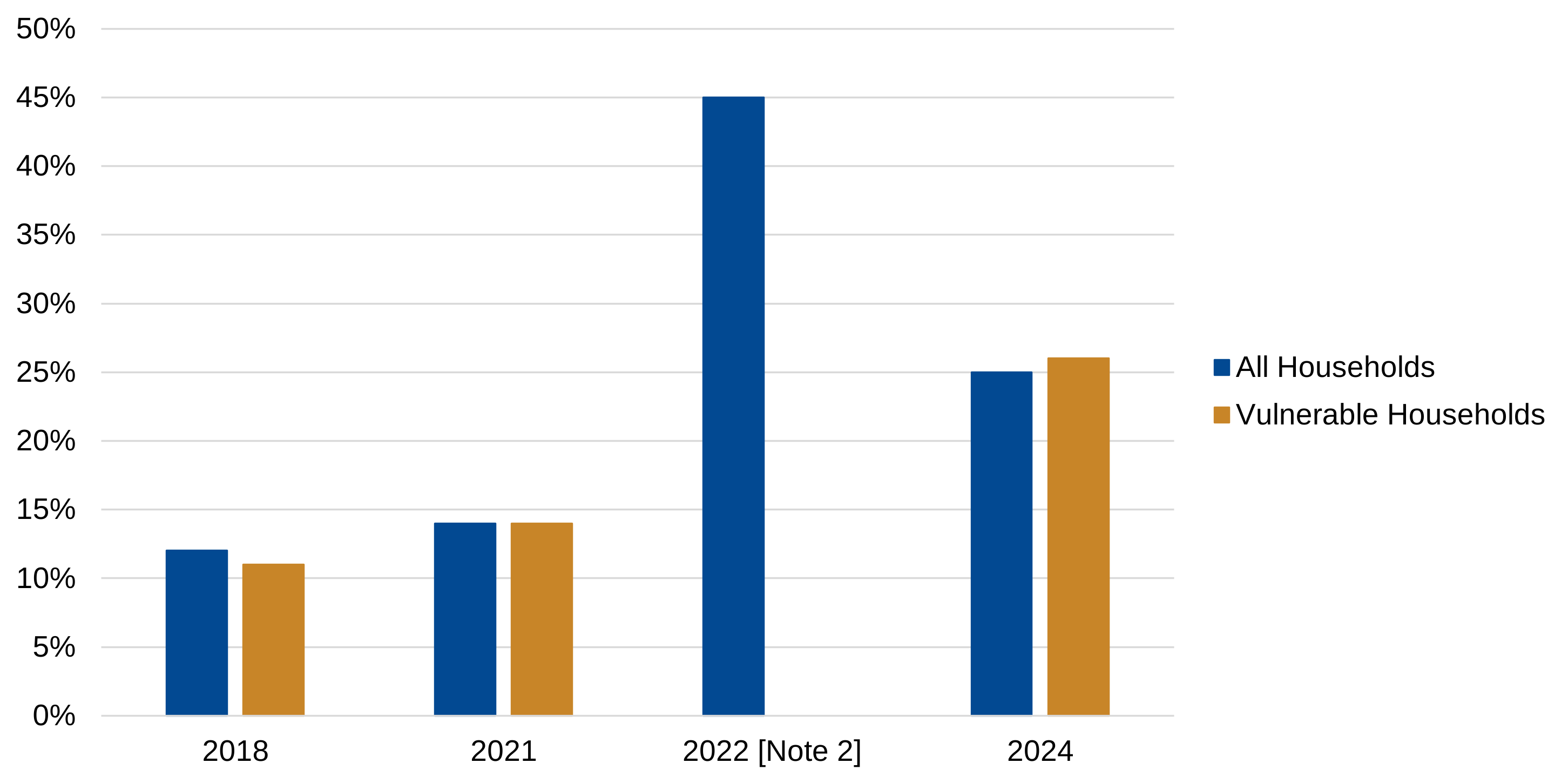
Description of figure 1: bar chart showing the percentage of all households and vulnerable households in fuel poverty.
Source: Building Research Establishment Domestic Energy Model (BREDEM) and Welsh Housing Conditions Survey 2017-18
[Note 1] Based on 1.385 million households in 2024 and 1.379 million households in 2021.
[Note 2] Taking the 2021 modelled estimates of fuel poverty, revising them using fuel prices (electricity, mains gas, and heating oil) from 1 April 2022, and assuming all households are on the price cap.
Severe fuel poverty
A household is defined as being in severe fuel poverty if they would have to spend more than 20 per cent of their income to maintain a satisfactory heating regime.
In 2024, around 63,000 households in Wales (5%) were estimated to be living in severe fuel poverty. Although not directly comparable, 38,000 households in Wales (3%) were estimated to be living in severe fuel poverty in 2021.
Households at risk of fuel poverty
A household needing to spend between 8 and 10% of their income to maintain a satisfactory heating regime is classed as being at risk of fuel poverty (i.e. they are susceptible to relatively small changes in income or energy costs).
In 2024, around 215,000 households in Wales (16%) were estimated to be at risk of fuel poverty. Although not directly comparable, 153,000 households in Wales (11%) were estimated to be at risk of fuel poverty in 2021.
Figure 2: percentage of households in fuel poverty by fuel poverty type and year, Wales [Note 1]
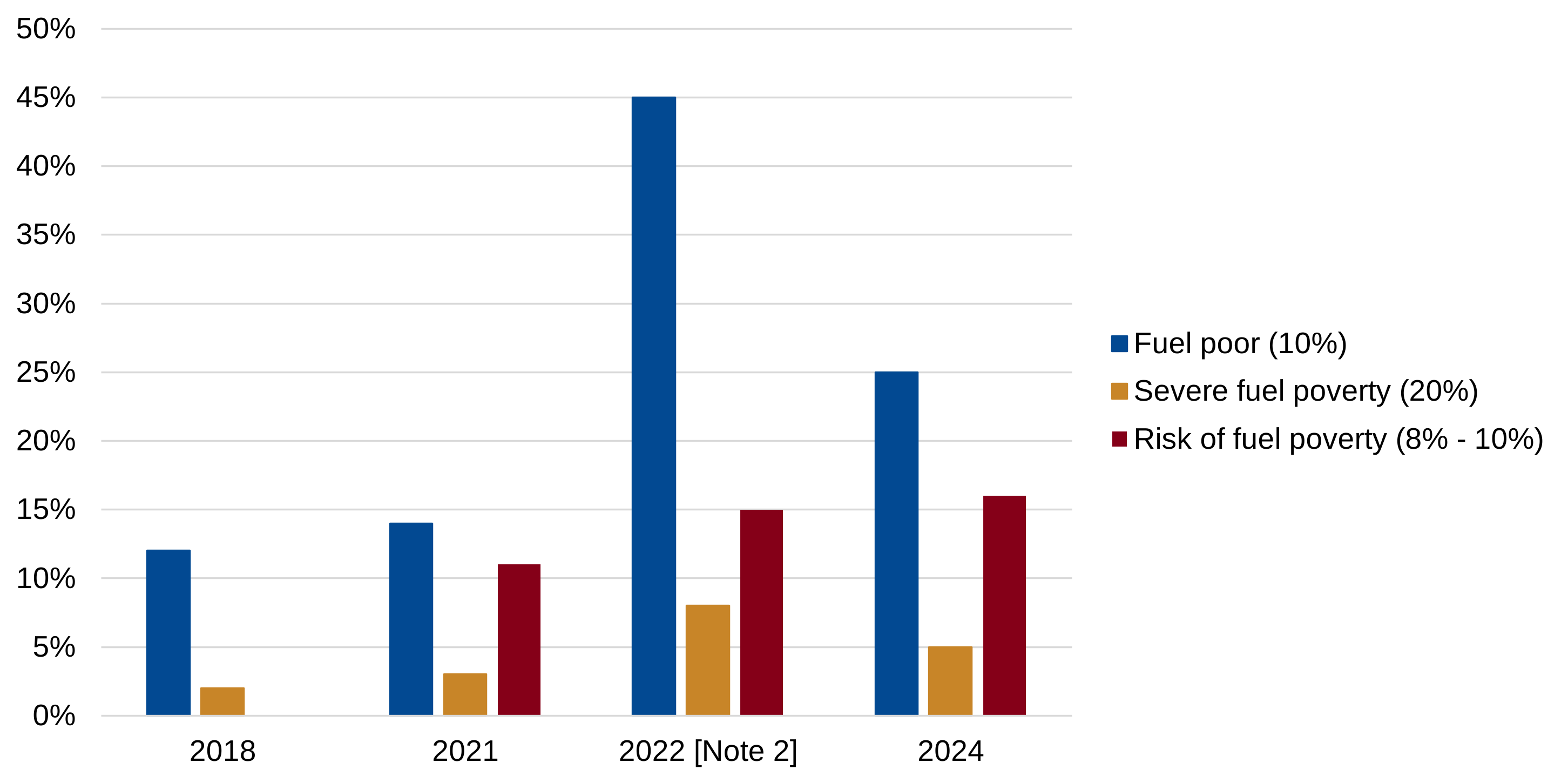
Description of figure 2: bar chart showing the percentage of all households in fuel poverty by fuel poverty type. Severe fuel poverty (20%) is a subset of fuel poor (10%).
Source: Building Research Establishment Domestic Energy Model (BREDEM) and Welsh Housing Conditions Survey 2017-18
[Note 1] Based on 1.385 million households in 2024 and 1.379 million households in 2021.
[Note 2] Taking the 2021 modelled estimates of fuel poverty, revising them using fuel prices (electricity, mains gas, and heating oil) from 1 April 2022, and assuming all households are on the price cap.
Lower income households
A lower income household is defined as one whose income is less than 60% of the median household income in the UK before housing costs.
In 2024, around 195,000 lower income households in Wales (83%) were estimated to be living in fuel poverty. Although not directly comparable, 130,000 lower income households in Wales (59%) were estimated to be living in fuel poverty in 2021.
Household characteristics
This section provides a summary of fuel poverty in Wales as of October 2024, based on the 10% indicator under the full income definition, broken down by household characteristics. Detailed visualisations are represented on our interactive dashboard and published tables.
Household type
In 2024, single-person households were the most affected by fuel poverty, accounting for 55% of all fuel-poor households. Among these, the most common household type was single pensioners without children, making up 32% of all fuel-poor households. This was followed by single non-pensioners without children, who represented 16%. However, two adult households with children represented 5% of all fuel poor households.
Household types vary across Wales, with almost twice as many single pensioner households as single parent households. This uneven distribution helps explain why single person households dominate fuel poverty statistics. In 2024, 43% of single pensioner households were fuel poor, compared to just 8% of two-adult households with children.
Age of Household Reference person (HRP)
The Household Reference Person is the person in whose name the property is owned or rented. If jointly owned or rented it is the person who earns the most. If incomes are equal, it is the eldest.
In 2024, older person households were most affected by fuel poverty. Just over half (51%) of all fuel-poor households had a HRP aged 65 or over. Households with an HRP aged 75 and over had the highest fuel poverty rate (44%) and those aged 35 to 44 had the lowest fuel poverty rate (10%).
Tenure
In 2024, more than two thirds of households in fuel poverty were owner-occupied (68%), mainly because this is the most common type of housing in Wales. However, the fuel poverty rate was highest in the private rented sector, where 30% of households were affected. This compares to 24% of owner-occupied households and 22% of those living in social housing.
Employment status of HRP
Income is one of the three main components that affect fuel poverty, and employment status plays a big role in how much income a household has.
In 2024, households with an unemployed HRP were the most likely to be in fuel poverty (56%), followed by those who were economically inactive (37%). Households with someone in employment were the least likely to be fuel poor, with only 10% affected.
Means tested benefits
In 2024, 40% of households in fuel poverty received means tested benefits (MTB), including housing related benefits. Of all households on these benefits, 19% were fuel poor compared with 12% of those households who were not on these means-tested benefits.
Dwelling characteristics
This section provides a summary of fuel poverty in Wales as of October 2024, based on the 10% indicator under the full income definition, broken down by dwelling characteristics Detailed visualisations are represented on our interactive dashboard and published tables.
Dwelling type
Dwelling type did not have a major impact on the fuel poverty status of households. In 2024, across all types of dwelling, the percentage of households in fuel poverty was broadly similar, ranging from 23% of those living in detached to 28% of those living in end of terrace being fuel poor.
Dwelling age
In 2024, of those households living in older properties (pre-1919) 33% were fuel poor compared to 14% of those living in more modern properties (post 1980).
This is likely to be due in part to the thermal properties of their structure. For example, the most common wall type for pre-1919 properties is solid wall. Solid walls are less efficient at retaining heat, therefore increasing the energy needed to heat a property.
Main heating system and fuel type
One way to protect a household from fuel poverty is to ensure that there is a cost-effective means of heating the dwelling. Central heating, and in particular mains-gas central heating, is considered one of the most cost-efficient heating systems currently in mainstream use in the Welsh housing stock.
Central heating systems include: boiler systems with radiators, warm air and ‘other’ systems such as underfloor heating, and communal systems. Households which do not have central heating systems have higher average fuel costs per year than those that have central heating systems.
In 2024, households living in dwellings without central heating present were more likely to be fuel poor compared with those that had central heating. 59% of households without central heating were living in fuel poverty, compared to 23% of those with central heating. Rates of fuel poverty among those with central heating is close to the typical level for the population as a whole.
Wall type and insulation
In 2024, households in dwellings with solid walls were more likely to be fuel poor (32%) than those who lived in dwellings with cavity walls. However, whether cavity walls were insulated (21%) or not (22%) had no significant impact on fuel poverty status.
Energy efficiency: SAP ratings & EPC band
The Standard Assessment Procedure (SAP) is the methodology used by the Government to assess and compare the energy and environmental performance of dwellings.
SAP works by assessing how much energy a dwelling will consume, when delivering a defined level of comfort and service provision. The assessment is based on standardised assumptions for occupancy and behaviour. This enables a like-for-like comparison of dwelling performance. The ratings are expressed on a scale between 1 and 100, where 100 represents no energy cost.
SAP ratings are divided into bands from A to G. These are the bands used for Energy Performance Certificates (EPC). The highest values (i.e. the highest levels of energy efficiency) are assigned to band A and the lowest values are assigned to band G.
In 2024, as the EPC rating of the dwelling decreased the likelihood of being fuel poor increased, with households living in dwellings rated bands A to C the least likely to be fuel poor (15%) compared with those in bands F to G (59%).
Location: urban or rural classification
The Office for National Statistics (ONS) 2011 Rural - Urban classification of areas is used. A classification is allocated to small Census output areas. Output Areas are treated as ‘urban’ if they are part of a built up area which contains 10,000 people or more. Rural areas include town and fringes, villages, and hamlets and isolated areas.
Households living in rural areas were more likely to be living in fuel poverty. Of all households in rural locations, 26% were fuel poor, compared with 24% of households living in urban areas. In part, this may reflect a greater proportion of households in rural areas not having central heating.
Drivers of fuel poverty
This section looks at how the main components of fuel poverty have changed between 2017-18 WHCS (used to calculate the 2018 fuel poverty estimates) and 2024 and explores how these impact fuel poverty levels in 2024. Section 3 of the methodology report has details of the full household income measure used in the Wales definition of fuel poverty. Section 4 covers changes to the fuel prices, and Section 5 has details on the energy efficiency upgrades and heating regimes.
Modelled household income component
The median annual household income increased by 33% between 2018 and 2024, from £23,600 in 2018 to £31,400 in 2024. It increased by 21% between 2021 and 2024 from £25,900 to £31,400 in 2024.
Figure 3: median household income (£s) by year, Wales
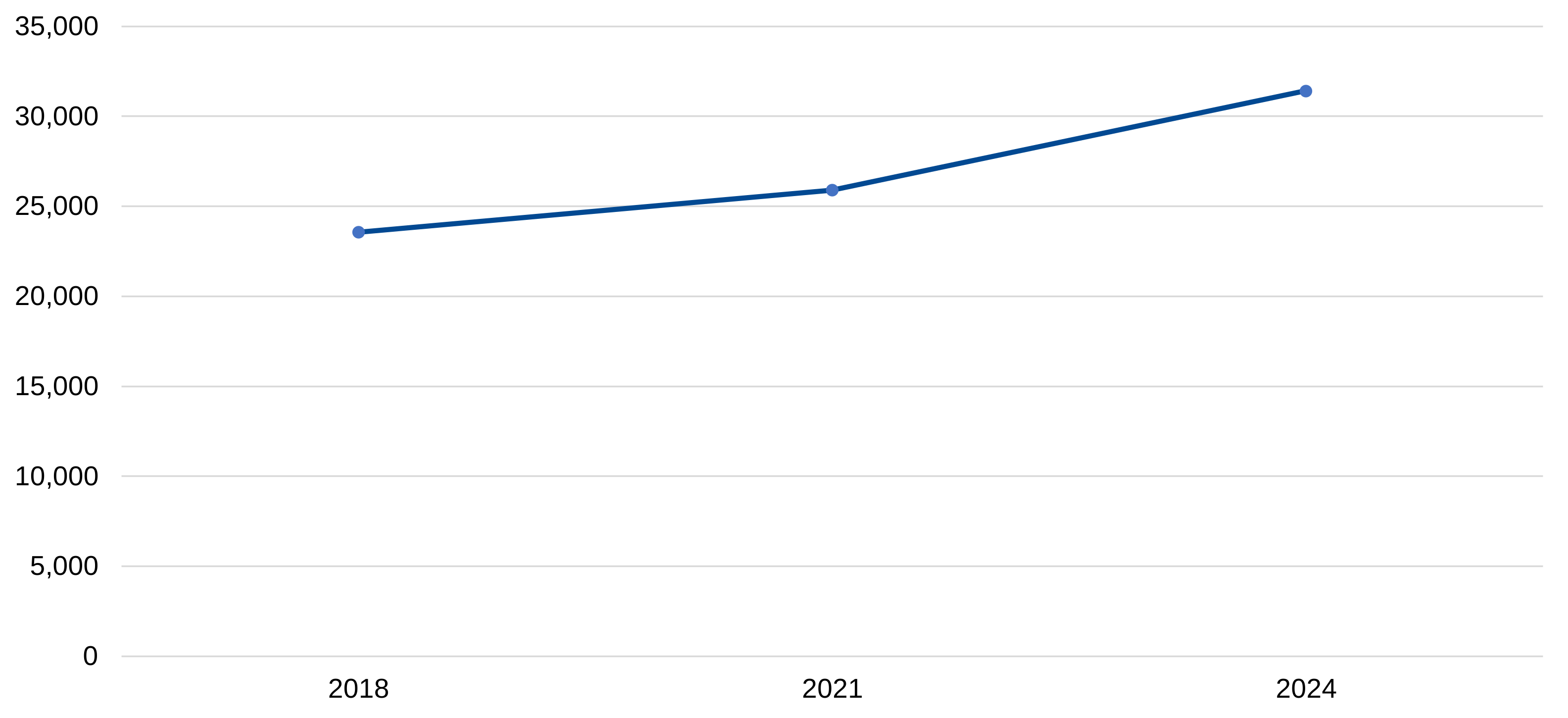
Description of figure 3: time series showing the modelled median household income (£s) in Wales.
Source: Building Research Establishment Domestic Energy Model (BREDEM)
Modelled fuel price component
The mean annual household fuel costs to maintain a satisfactory heating regime also increased between 2018 and 2024, but by 74%, from £1,343 in 2018 to £2,335 in 2024, and increased by 48% between 2021 and 2024 from £1,577 to £2,335 in 2024.
Figure 4: mean fuel prices (£s) by year, Wales
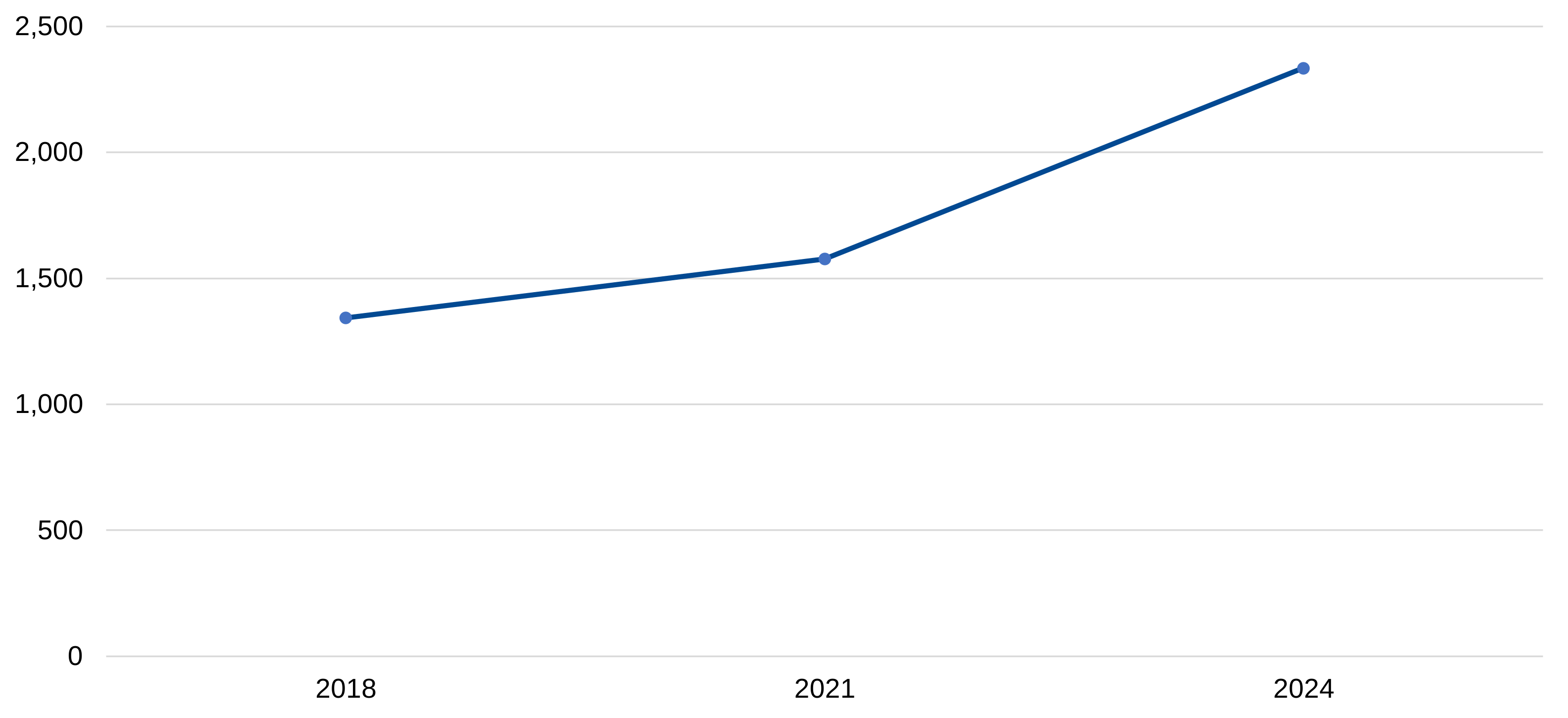
Description of figure 4: time series showing the modelled mean fuel prices (£s) in Wales.
Source: Building Research Establishment Domestic Energy Model (BREDEM)
The change in fuel costs between 2018 and 2024 reflect a combination of factors: energy model updates, fuel price changes, the application of energy efficiency improvements, and modelling of fuel poverty using the 2024 satisfactory heating regime definition.
An analysis of the individual components affecting fuel poverty levels shows that, although both have increased since the 2021 estimates, the rise in the fuel price component has been proportionally greater. This has contributed significantly to the increase in the fuel poverty rate observed in 2024.
Potential impact of energy prices
In 2024-25, the average household energy bill based on standard energy consumption was estimated to be £1,850. This is 37% higher than in 2021-22, when the average household bill was £1,360 [footnote 3]. As a result, more households in Wales now have to spend more than 10% of their income on energy bills, which puts them in fuel poverty. This leaves less income for essentials like food, rent, and other basic needs.
The rise in energy costs is mainly caused by global issues. There have been disruptions in the worldwide energy supply, inflation has pushed up prices, and problems with supply chains have made it even more expensive to get fuel to the UK. These factors have made energy bills unpredictable, and many families are struggling to keep up with the increased costs.
Potential impact of inflation
Inflation has increased the cost of living in Wales since 2021, affecting household budgets and making essentials more expensive. In 2021, the annual Consumer Prices Index including owner occupiers' housing costs (CPIH) inflation rate was 2.5%, but by 2022, it had increased to 7.9%, driven by rising energy prices, food costs, and supply chain disruptions [footnote 4]. Although inflation has eased slightly in 2024 to 3.3%, it remains high, meaning families are paying more for everyday necessities than in 2021. This has reduced the purchasing power of wages and benefits, leaving households with less money to cover rising energy costs.
Fuel poverty across other UK nations
Each UK nation uses a slightly different method to measure fuel poverty and different time reference points. As a result, figures are not directly comparable. The next section gives a summary of how fuel poverty is calculated across the nations. For reference, the latest statistics for England, Scotland, and Northern Ireland are available in their respective publications and the latest available figures are summarised on our on interactive dashboard.
England
Fuel poverty in England (Department for Energy Security and Net Zero) is measured using the ‘Low Income Low Energy Efficiency’ (LILEE) method. A household in England is considered fuel poor if they have a Fuel Poverty Energy Efficiency Rating (FPEER) [footnote 5] of band D or below, and if they were to spend their modelled energy costs required to maintain a satisfactory heating regime, they would be left with a residual income below the official poverty line.
A ‘satisfactory heating regime’ in England is defined as 21°C in the living room and 18°C in other rooms, for 16 hours in a 24-hour period in households for people in during the day. For all other households, 21°C in the living room and 18°C in other rooms is required for nine hours in every 24-hour period on weekdays, and 16 hours in a 24-hour period on weekends.
A ‘satisfactory heating regime’ in England is defined as 21°C in the living room and 18°C in other rooms, for 16 hours in a 24-hour period in households for people in during the day. For all other households, 21°C in the living room and 18°C in other rooms is required for nine hours in every 24-hour period on weekdays, and 16 hours in a 24-hour period on weekends.
Northern Ireland
Fuel poverty in Northern Ireland (Northern Ireland Housing Executive) is measured using the 10% indicator, where a household is fuel poor if fuel costs required to maintain a satisfactory heating regime, are greater than 10% of the household income. A full income measure is used in the fuel poverty calculation with income including housing benefit, Winter Fuel Payments and rates rebates minus household rates.
A ‘satisfactory heating regime’ in Northern Ireland is defined as 21°C in the living room and 18°C in other rooms, for 16 hours in a 24-hour period in households for people in during the day. For all other households, 21°C in the living room and 18°C in other rooms is required for nine hours in every 24-hour period on weekdays, and 16 hours in a 24-hour period on weekends. Income is the full net annual income of the household (income from all sources, including benefits and savings and investments), which is the same as the income used in the fuel poverty figures calculated using the headline Wales 10% measure.
Scotland
Fuel poverty in Scotland (Scottish Government) is set out in section 3 of the Fuel Poverty (Targets, Definition and Strategy) (Scotland) Act (UK legislation), a household is in fuel poverty if:
- in order to maintain a satisfactory heating regime, total fuel costs necessary for the home are more than 10% of the household's adjusted (i.e. after housing costs) net income
- after deducting those fuel costs, benefits received for a care need or disability and childcare costs, the household's remaining adjusted net income is insufficient to maintain an acceptable standard of living
The remaining adjusted net income must be at least 90% of the UK Minimum Income Standard (MIS) (Loughborough University) to be considered an acceptable standard of living, with an additional amount added for households in remote rural, remote small town and island areas.
The heating regimes in Scotland are set out in the Fuel Poverty (Enhanced Heating) (Scotland) Regulations 2020 (UK legislation).
Outline of the methodology
The following section summarises an outline of the methodology further detail can be found in the methodology report. There are three main components used in the calculations of fuel poverty. These are:
- annual household incomes
- household fuel prices
- annual required household energy use
Fuel poverty estimates for Wales have been re-calculated by Building Research Establishment (BRE) to the October 2024 position, using the Welsh Housing Conditions Survey 2017-18 base data and modelling changes to household incomes and fuel prices between 2017 and October 2024. October 2024 was chosen as the reference point, as it falls in line with the energy price cap reviews. Energy efficiency improvements to homes have been applied in line with the measures likely to have been installed in the housing stock during that time [footnote 6].
The 2024 figures have been calculated under the full income definition [footnote 7] and household energy requirements were modelled using the Building Research Establishment Domestic Energy Model (BREDEM 2012 version 1.1).
The WHCS builds a picture of the Welsh housing stock by surveying a sample of dwellings from around the country. A weighting factor needs to be applied to the data to obtain figures that reflect the whole Welsh stock, for dwelling occupants. In 2017/18, there were estimated to be 1.33 million households in Wales. Based on information from StatsWales, household numbers have increased since 2017. Using data on the estimates of household numbers in Wales in 2017 (1,328,269) and 2023 (1,377,071), and assuming a linear trend to 2024, the weighting factors were uniformly adjusted to represent 1.39 million households in Wales in 2024. This does not account for any adjustment in the housing stock, and so caution should be taken with the use and interpretation of household numbers when using the 2024 weighting factor.
Welsh Housing Conditions Survey 2017-18 methodology
The 2017-18 Welsh Housing Conditions Survey (WHCS) was carried out by BRE on behalf of the Welsh Government. Non-invasive inspections were carried out by qualified surveyors in 2,549 properties across Wales between August 2017 and April 2018. Data from the WHCS inspections are used to establish the energy efficiency of the home and, therefore, how much energy is required to heat it. To estimate household fuel costs, BRE takes the required energy consumption of the household and combines this with the known fuel price for the method of payment used by the household and the location of that household in Wales.
The sample for the WHCS was taken from eligible households taking part in the 2017-18 National Survey of Wales, which, if the respondent was the Household Reference Person (HRP), or their spouse/partner, included a detailed set of income and housing cost questions to enable the calculation of annual household incomes for WHCS cases.
Further high level information on the methodology used to produce these estimates can be found in Appendix A.
Appendix A
Below is a brief summary containing descriptions of the methodology used to calculate the 2024 modelled estimates of fuel poverty figures for Wales under the 10% definition. Please see the full methodology report for more information.
Definitions
A household is defined as being fuel poor if they spent more than 10% of their income on fuel. This is calculated using the equation below:
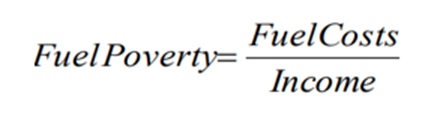
If the ratio from the above equation is greater than 0.1, the household is defined as fuel poor. The total fuel costs for a household are modelled using standard heating regimes that consider how much money the household would be required to spend on fuel costs in order to reach the established standards for comfort based on a satisfactory heating regime. A ‘Satisfactory heating regime’ is 23°C in the living room and 18°C in other rooms, required for 16 hours in a 24-hour period in households with older (a person aged 60 and over) or disabled (a person living with a long-term limiting illness or who is disabled) people. For all other households, 21°C in the living room and 18°C in other rooms is required for nine hours in every 24-hour period on weekdays, and 16 hours in a 24-hour period on weekends.
Any household having to spend more than 20% is defined as being in severe fuel poverty.
A household needing to spend between 8 and 10% is classed as being at risk of fuel poverty (i.e. they are susceptible to relatively small changes in income or energy costs).
Calculating the main components of fuel poverty
There are three main components used to calculate fuel poverty: income, energy prices and energy requirements. Below is a summary of how these components are calculated.
Income
Two different definitions of income are required.
Basic income
This is calculated by totalling the personal incomes of everyone in the household (aged 16 and over), plus any benefit or other income source payments that the household receives (from earned income, state benefits and savings etc.) to provide the Primary Benefit Unit (PBU) income. Income from other benefit units and the Winter Fuel Payment (WFP) if applicable is then added to give the ‘basic income’.
Full income
This is built upon ‘basic income’ by the addition of housing related income, including: housing related benefits (HB), Council Tax Benefit (CTB), and the deduction of Council Tax payable. This is the ‘Full household income’.
Energy prices
The fuel price element of fuel poverty calculation produces fuel prices which can readily be combined with household energy requirement outputs to produce fuel costs.
The National Survey for Wales collects information of the method of payments of gas and electricity, but does not collect information on the exact tariff or supplier. Department of Energy Security and Net Zero (DESNZ) data sources provides gas and electricity ‘average unit price’ and ‘average fixed costs’ (standing charges) for energy supply regions across the UK. The combination of data collected by the National Survey for Wales, and the Quarterly Energy Prices [footnote 8] publication provided by DESNZ are then combined calculate a final fuel price figure. Other data for non-metered fuels is provided from the Sutherland Tables publication and for some fuels, SAP 2012 default values are used and are inflated using Consumer Price Index (CPI) data.
Energy requirements
The amount of fuel required to provide the energy needs of each household is one of the components of fuel poverty and, combined with fuel prices, produces the modelled fuel bill.
Under the fuel poverty definition, the energy required to heat and power a home can be grouped into four categories:
- Space heating: Es (GJ)
- Water heating: Ew (GJ)
- Lights and appliances: ELA (GJ)
- Cooking: Ec (GJ)
The Building Research Establishment Domestic Energy Model (BREDEM) methodology [footnote 9] is used to predict the energy requirements of a household where:
Total household energy requirements = ES + EW + ELA + EC
Total household energy requirements include space and water heating (to meet defined standards), energy for lights and appliances (including requirements for pumps, fans and electric showers, and energy generated by renewables), and energy for cooking. The amount of energy required to heat a dwelling will depend on the building specification such as insulation levels, heating systems, the geographical location of the dwelling, and construction type. A household’s demand for energy will depend on the number of people within the household and the lifestyle and habits of these individuals. Information from the National Survey for Wales and the Welsh Housing Conditions Survey are used to provide details about both dwellings and households. Reduced Data SAP (RdSAP) assumptions are used to deal with missing data and can be found in the SAP procedure document [footnote 10]. It should be noted that the figures now incorporate the revised U-values as published in RdSAP v9.93.
Data on the occupancy characteristics, and region, are provided by the National Survey for Wales. The Welsh Housing Conditions Survey then provides information about the physical characteristics of the home, which are used to inform the modelling of household energy use for fuel poverty, including:
- detailed information about the dimensions
- dwelling type and age
- heating and hot water systems
- dwelling fabric and exposure/shading
- energy efficiency measures
Footnotes
[1] Households below average income (HBAI) statistics (Department for Work and Pensions). A household is said to be in relative low income if their net equivalised household income is below a threshold set at 60% of the average (median) UK household income.
[2] Dampness is a major problem in Wales. It can lead to all sorts of health problems, including asthma, discomfort and mental health issues. Full cost of poor housing in Wales (Public Health Wales)and Homes for health and well-being (Public Health Wales).
[3] Annual domestic energy bills (Department for Energy Security and Net Zero). Average annual energy bills data based on the fixed consumption levels (3,400 kWh for electricity, 11,200 kWh for gas) has shown volatility. 2021-22: £1,360, 2022-23: £2,370, 2023-24: £2,240 and 2024-25: £1850.
[4] Inflation and price indices (ONS). The Consumer Prices Index including owner occupiers' housing costs (CPIH) is the most comprehensive measure of inflation. It extends the Consumer Prices Index (CPI) to include a measure of the costs associated with owning, maintaining and living in one's own home, known as owner occupiers' housing (OOH) costs, along with Council Tax. Both are significant expenses for many households and are not included in the CPI.
[5] The fuel poverty energy efficiency rating (FPEER), is based on SAP, but accounts for the impact of policies which discount households’ energy bills (e.g. the Warm Home Discount). FPEER methodology (Department of Energy & Climate Change).
[6] Based on trends from previous Welsh Housing Condition Surveys, data from the English Housing Survey, solar PV deployment data, and information on UK Government schemes such as ECO and the Renewable Heat Incentive.
[7] See Appendix A.
[8] The metered fuel price data used in the fuel poverty calculations are derived from the DESNZ quarterly energy prices, in tables QEP 2.2.4 and QEP 2.3.4.
[9] The BREDEM methodology used is described in Henderson J, Hart J, BREDEM 2012 A technical description of the BRE Domestic Energy Model, v1.1, January 2015.
[10] BRE 2017. Appendix S: Reduced Data SAP for existing dwellings, RdSAP 2012 v9.93.
Quality and methodology information
Statement of compliance with the Code of Practice for Statistics
Our statistical practice is regulated by the Office for Statistics Regulation (OSR). OSR sets the standards of trustworthiness, quality and value in the Code of Practice for Statistics that all producers of official statistics should adhere to.
All of our statistics are produced and published in accordance with a number of statements and protocols to enhance trustworthiness, quality and value. These are set out in the Welsh Government’s Statement of Compliance.
These official statistics demonstrate the standards expected around trustworthiness, quality and public value in the following ways.
Trustworthiness
We have made these statistics available in a timely manner to meet user needs. We have followed relevant protocols for releasing these statistics, ensuring that circulation before publication has been restricted to eligible recipients only.
Quality
We have made the limitations of this data clear to users (for example, highlighting where comparisons cannot be made across previous estimates due to methodology). Information on the strengths and limitations of fuel poverty estimates are provided in methodology report.
Value
We have made every effort to ensure these statistics are accessible to users, using clear and succinct language (for example, we have expanded commentary to include more policy and economical context). This is supported by our Fuel poverty in Wales: interactive dashboard and published tables (fuel poverty estimates).
You are welcome to contact us directly with any comments about how we meet these standards. Alternatively, you can contact OSR by emailing regulation@statistics.gov.uk or via the OSR website.
Well-being of Future Generations Act (WFG)
The Well-being of Future Generations Act 2015 is about improving the social, economic, environmental and cultural wellbeing of Wales. The Act puts in place seven wellbeing goals for Wales. These are for a more equal, prosperous, resilient, healthier and globally responsible Wales, with cohesive communities and a vibrant culture and thriving Welsh language. Under section (10)(1) of the Act, the Welsh Ministers must (a) publish indicators (“national indicators”) that must be applied for the purpose of measuring progress towards the achievement of the wellbeing goals, and (b) lay a copy of the national indicators before Senedd Cymru. Under section 10(8) of the Well-being of Future Generations Act, where the Welsh Ministers revise the national indicators, they must as soon as reasonably practicable (a) publish the indicators as revised and (b) lay a copy of them before the Senedd. These national indicators were laid before the Senedd in 2021. The indicators laid on 14 December 2021 replace the set laid on 16 March 2016.
Information on the indicators, along with narratives for each of the wellbeing goals and associated technical information is available in the Wellbeing of Wales report.
Further information on the Well-being of Future Generations (Wales) Act 2015.
The statistics included in this release could also provide supporting narrative to the national indicators and be used by public services boards in relation to their local wellbeing assessments and local wellbeing plans.