New house building: April to June 2025
Information on new dwellings started (where building work has commenced) and new dwellings completed (where building work has finished and the dwelling is ready for occupation), for April to June 2025.
In this page
Introduction
The information is based on the reports of local authority building inspectors and the National House Building Council (NHBC). This report does not include information from other PAIs, likely resulting in an undercount in the total number of new dwellings started and completed (see notes). The information in this report covers quarter 1 of the 2025-26 financial year (April to June 2025).
Main points
Figure 1: number of new dwelling starts and completions, quarter 1 2016-17 to quarter 1 2025-26
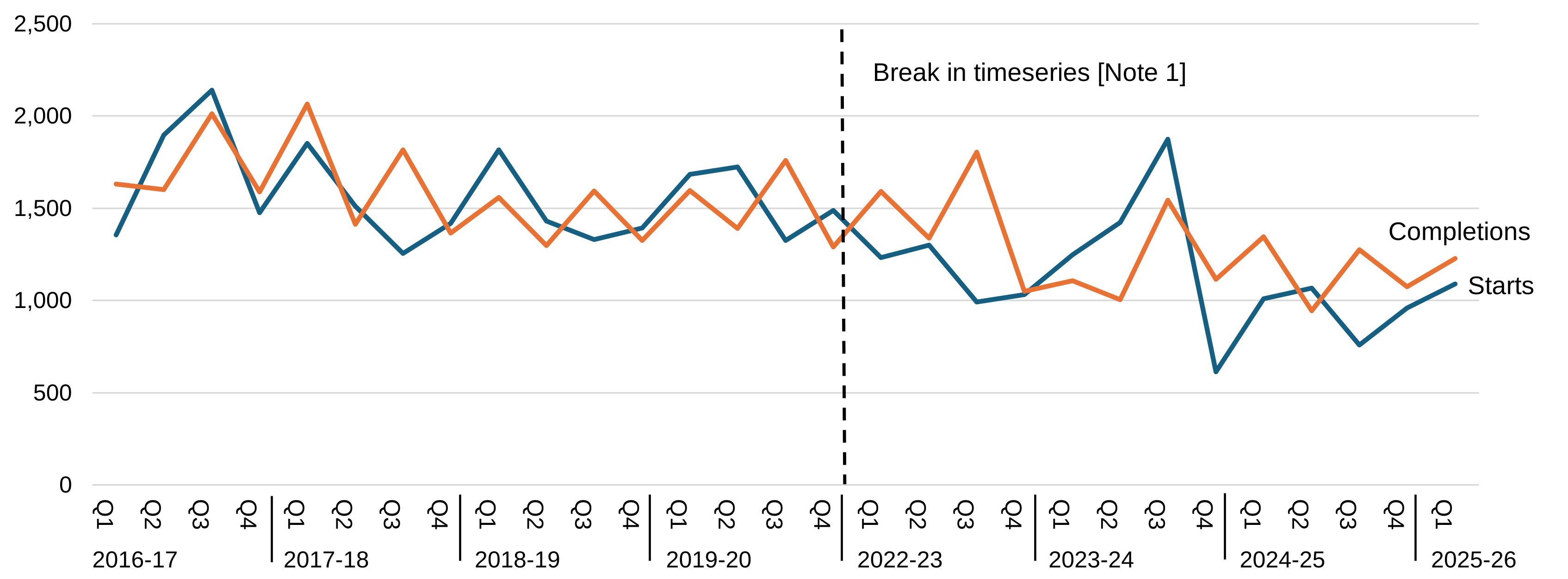
Description of figure 1: a line chart showing that between quarter 1 2016-17 and quarter 1 2025-26, there has been a general decline in the number of new dwellings started and completed.
Source: local authority building inspectors and NHBC data
[Note 1] Quarterly data was not collected for 2020-21 or 2021-22 due to the coronavirus (COVID-19) pandemic.
Between April and June 2025, 1,090 new dwellings were started, 8% more than the same quarter of 2024 (1,011).
Between April and June 2025, 1,228 new dwellings were completed, 9% fewer than the same quarter of 2024 (1,345).
More than two thirds (69%) of new dwellings completed between April and June 2025 contained three or more bedrooms.
Between April and June 2025, most new dwelling completions were accounted for by the private sector (82%), with a smaller proportion accounted for by RSLs (16%) and local authorities (2%) (tenure information should be treated with caution, please see notes for details).
Compared to the same quarter of 2024, the proportion of dwelling completions accounted for by the social sector decreased from 29% to 18%.
Notes
Due to rounding, some figures may not add up to 100%.
This data is based on the reports of local authority building inspectors and the NHBC a private approved inspector. It does not include information from other private approved inspectors, likely resulting in an undercount in the total number of new dwellings started and completed. It is sometimes difficult for building control officers and NHBC to identify the intended final tenure of the property (the basis for the tenure information). This may lead to an under-count for the social sector and an over-count for the private sector. Within the social sector it may also lead to an under-count of local authority new house building and an overcount of RSL house building. Therefore, the tenure data should be treated with caution.
Both starts and completions will be influenced by quarterly fluctuations, including the timing of starts and completions on large sites in some authorities and seasonal factors such as holidays and weather. These statistics are not seasonally adjusted.
We also publish separate statistics on affordable housing provision. The figures cover all additional affordable housing units, whether through new build, purchase, acquisition, leasing or conversion of existing dwellings.
We are currently assessing the feasibility of using alternative administrative data sources to supplement/quality assure these statistics. We intend to publish an update on this work by March 2026.
Main points and StatsWales data are published quarterly and a report is published annually. The information published on StatsWales includes local authority level data as well as the number of new dwellings completed by dwelling type and number of bedrooms.