Reported road casualties: 2024
Data on motorcyclist, pedal cyclist and pedestrian road accidents and casualties with analyses by demographic characteristics for 2024.
In this page
Introduction
This bulletin provides more detailed analysis of the casualties resulting from police recorded road collisions in 2024. The Police recorded road collisions 2024 bulletin, published on 19 November 2025, focuses on the collisions recorded in greater detail.
This release covers 2024 data which was provisionally published on 21 May 2025. In previous years, quarter 4 collisions data have been published as part of a detailed annual casualties publication in the summer. However, due to a delay in data submissions from one police force, we published the quarter 4 and annual 2024 data as ‘provisional’ in May 2025 as part of a quarterly collisions release. These delays have since been resolved, and we are now able to publish a more detailed statical bulletin on casualties in 2024.
Given the increased interest in collisions and casualties data since the roll out of the 20mph default speed limit on 17 September 2023, we published a Chief Statistician’s update on ‘understanding road collisions and casualty statistics’ (Digital and Data blog) on 24 May 2024.
All the underlying data is published on StatsWales, and our road collisions dashboard. This includes additional detail on collisions and casualties by geographical area, speed limit, severity and vehicle type.
Detailed quality information is published in the accompanying quality report.
This release includes the first full calendar year of data since the introduction of the 20mph default speed limit.
Main points
In 2024, there were 4,005 road casualties reported by police forces in Wales, a decrease of 7.9% compared to 2023 and 31.0% lower than in 2019 (prior to the COVID-19 pandemic).
Of these casualties, 84 were killed, 1,007 people were seriously injured and 2,914 people were slightly injured.
Figure 1: proportion of reported road casualties by severity, 2024
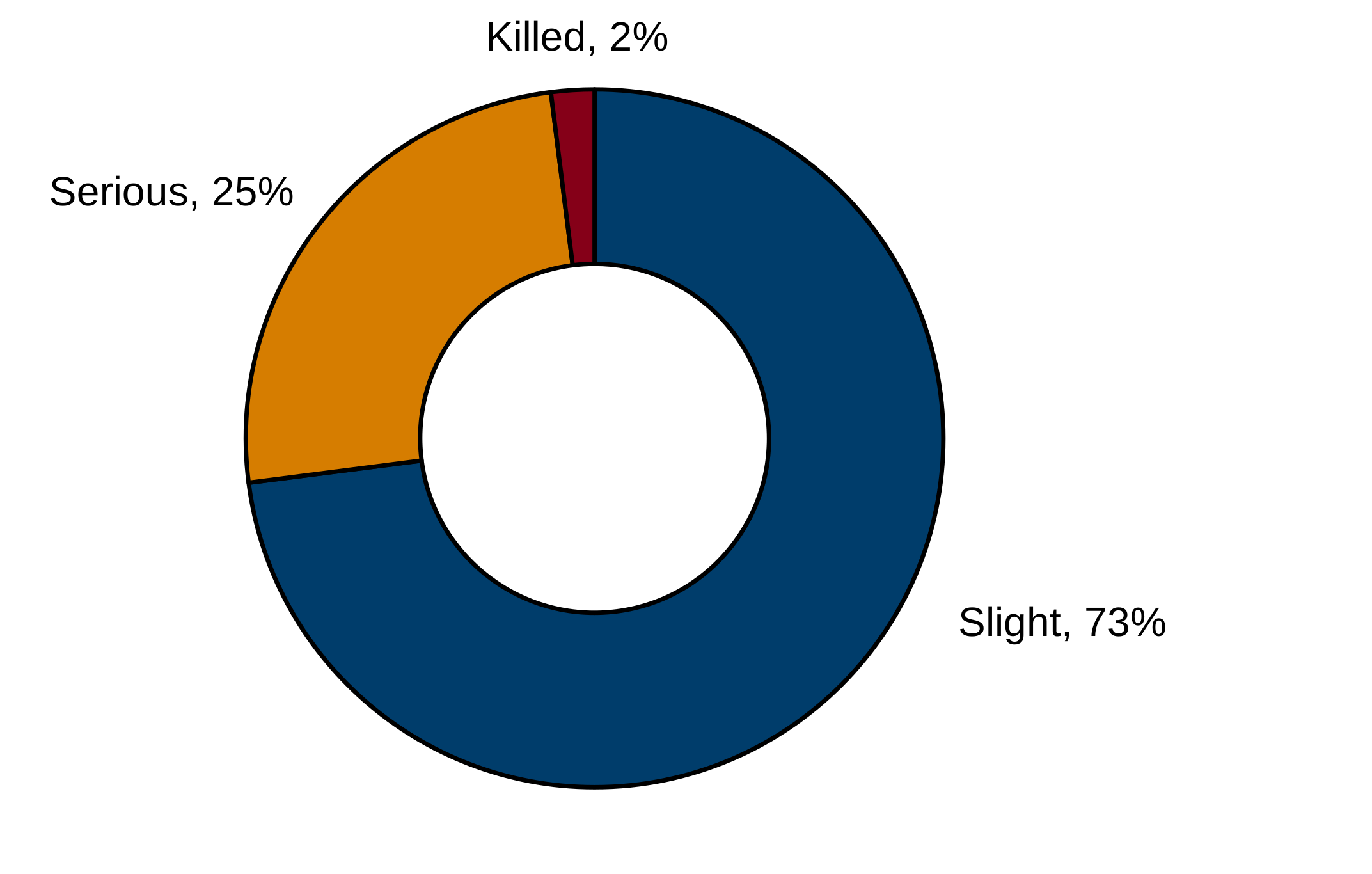
Description of figure 1: the doughnut chart shows the proportion of casualties by severity in 2024. In May 2023 Dyfed Powys police force migrated to an injury-based reporting system (CRaSH - Collision Recording and Sharing) for reporting road collisions where casualties are more likely to be reported as serious than in the previous data collection system. Further information is provided in the accompanying quality report
Source: Road collision statistics, Welsh Government
Males were more likely than females to be casualties, accounting for 61% of all casualties and 68% of all people killed or seriously injured in Wales in 2024.
Young people aged 16 to 24 are disproportionately more likely to be casualties in road accidents. They make up 11% of the population but accounted for 22% of all casualties in 2024.
When adjusting for distance travelled, motorcyclists and pedal cyclists are more likely to be casualties than car users.
Quality and data coverage
The data presented in this report reflect the personal injury road collisions reported by police in Wales. While these data are the most detailed and reliable source of information on road collisions and casualties, they do not provide a complete record of all such incidents – for example, hospital, survey, and compensation claims data indicate that many non-fatal collisions are not reported to or reported by the police.
Overall, the available sources show that collisions reported to, and recorded by, police represent only a subset of all personal injury road collisions, but that coverage of serious injuries and fatalities is good. Further information is provided in the accompanying quality report.
Changes to collisions data collection and reporting since 2023
Two changes have affected police recorded road collisions data since 2023.
1. Adoption of injury-based reporting system for reporting of road collisions
On 15 May 2023 Dyfed Powys police force was the first police force in Wales to migrate to the new standardised reporting tool (CRaSH - Collision Recording and Sharing) which is designed to provide a common way for police to collate and submit road collisions data. CRaSH is an injury-based reporting system (IBRS), and the Department for Transport (DfT) have found that police forces using IBRS are likely to report more severe collisions than in the previous data collection.
This is discussed further in our accompanying quality report and we will continue to analyse the impact of the change.
2. Introduction of the 20mph default speed limit
On 17 September 2023, the default speed limit on restricted roads in Wales changed from 30mph to 20mph. These are usually residential or busy pedestrian streets with streetlights. The changes affected most roads that were 30mph before 17 September, but not all. We have published a map on DataMapWales that shows which roads have stayed at 30mph.
Road casualties
This section presents high level summaries for all casualties in Wales, including some breakdowns by age and gender. The later sections in this bulletin focus on motorcyclist casualties, pedal cyclist casualties, pedestrian casualties and young people. More analysis of these casualties can be accessed from the accompanying road collisions dashboard under casualties’ view and from StatsWales tables.
During 2024, police forces in Wales recorded a total of 2,917 road collisions involving personal injury, which resulted in 4,005 casualties. Of these casualties:
- 84 were killed (2%)
- 1,007 people were seriously injured (25%)
- 2,914 people were slightly injured (73%)
There were 84 people killed in collisions in Wales in 2024 which was the lowest number reported in a calendar year except for 2020 (74). To note, 2020 was like affected by the coronavirus (COVID-19) travel restrictions that saw reduced traffic levels on roads. The number of reported fatal collisions has been broadly stable since 2010.
Care should be taken when interpreting changes in small numbers, such as the number of casualties killed per year. For detailed breakdowns or analysis of change over time it may be more appropriate to look at trends in killed or seriously injured (KSI) casualties.
1,091 (27%) casualties were KSI in 2024. This was 3.2% lower than 2023 and 8.5% lower than 2019 (before the COVID-19 pandemic).
Figure 2 shows the trend in the number of KSI casualties since 1994. Over this time there was a significant fall, from 2,208 in 1994 to a low of 820 in 2020. Care should be taken in comparing with 2020 as the coronavirus (COVID-19) pandemic impacted collision and casualty figures.
The number of KSI casualties reported since 2023 will be impacted by Dyfed Powys police force migrating to injury-based reporting. We would expect to see an increase in reported serious casualties within the Dyfed Powys police force areas, and a decrease in reported slight casualties.
Figure 2: KSI casualties by severity, 1994 to 2024
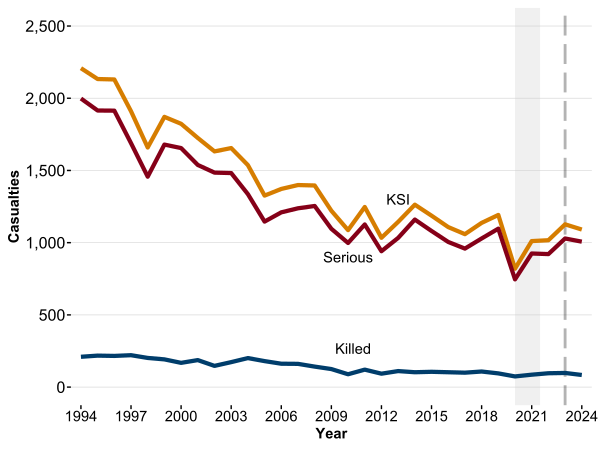
Description of figure 2: the line chart shows the trend in KSI casualties by severity, 1994 to 2024. In May 2023 Dyfed Powys police force migrated to an injury-based reporting system (CRaSH - Collision Recording and Sharing) for reporting road collisions where casualties are more likely to be reported as serious than in the previous data collection system.
Source: Road collision statistics, Welsh Government
Road casualties by type of road user
Figures 3 and 4 show the trends in the number of road casualties for different road user types. All categories of road users have seen an overall decrease in road casualties over time.
Figure 3: road casualties travelling by car, taxi and minibus, 1994 to 2024
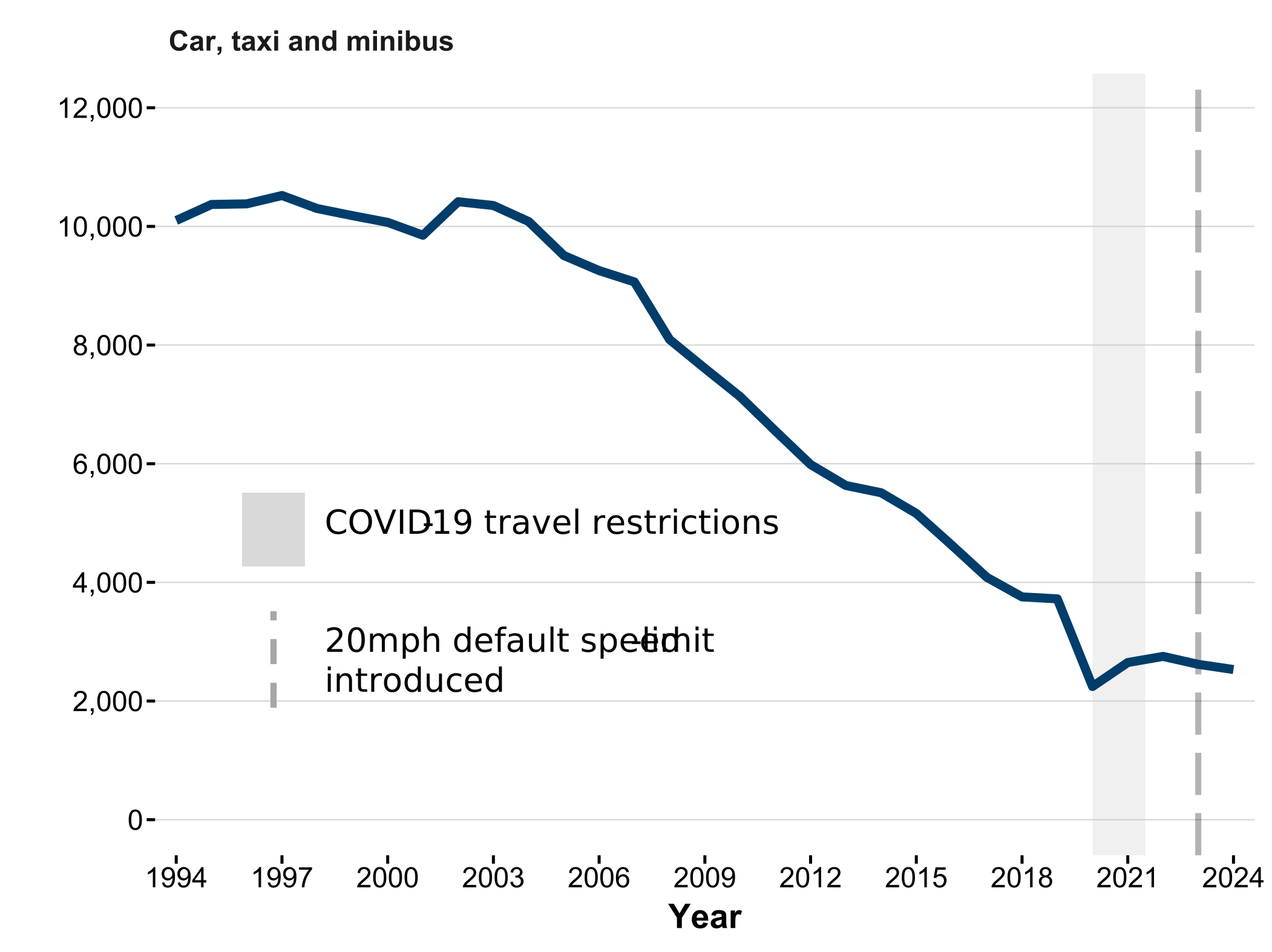
Description of figure 3: the line chart shows the trend in road casualties for ‘car, taxi and minibus’ road users in Wales between 1994 and 2024. The chart shows a general decrease over the last two decades.
Source: Road collision statistics, Welsh Government
Figure 4: road casualties by type of road user excluding ‘car, taxi and minibus’, 1994 to 2024 [Note 1]
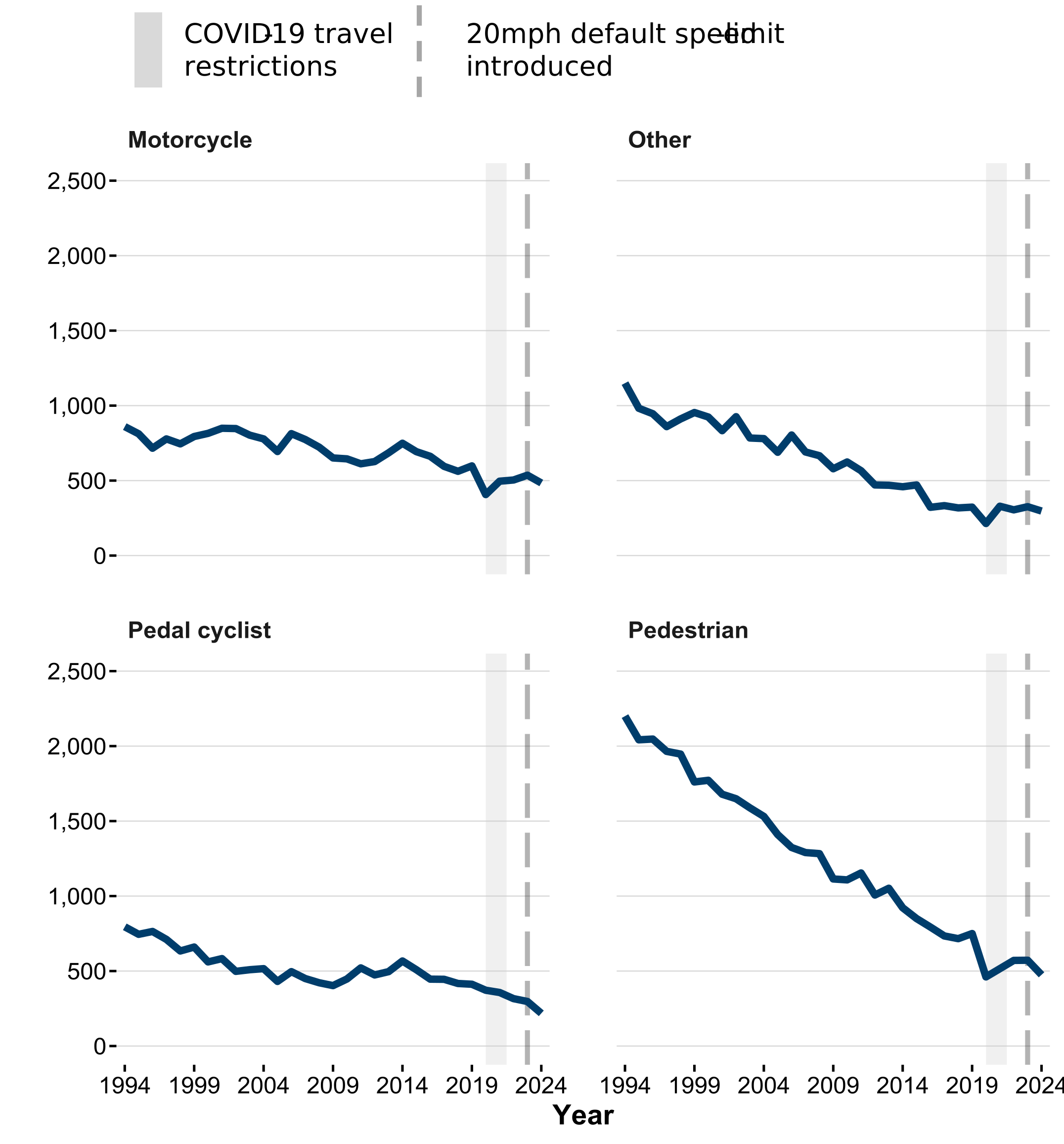
Description of figure 4: the line charts show the trends in road casualties for motorcyclists, pedal cyclists, pedestrians and other road users overtime. The charts show a general decline in road casualties reported for all types of road users.
Source: Police recorded road collisions, Welsh Government
[Note 1] Motorcycle: Includes mopeds, motor scooters, motorcycles and combinations. Other vehicles: Includes buses/coaches, vans and goods vehicles.
There has been a considerable decrease in the number of KSI casualties on Welsh roads since the 1970s for all types of road users.
Each category of road user has a different chance of having a serious injury. Pedestrians, pedal cyclists and motorcyclists are considered to be vulnerable road users as they are at a higher risk of being involved in a collision (relative to distance travelled) or are more vulnerable in terms of becoming a casualty, if involved in a collision.
Car, taxi and minibus users accounted for 63% of total casualties but 49% of KSI casualties in 2024.
Motorcyclists accounted for 12% of total casualties, however, they accounted for 22% of KSI casualties. Pedestrians also accounted for a higher proportion of KSI casualties than they did for total casualties, reflecting that they are more likely to be killed or seriously injured if involved in a collision.
More analysis of these casualties can be accessed from the accompanying Road collisions dashboard under casualties’ view and from the StatsWales tables.
Road casualties by sex and age
Road casualties were more likely to be male than female. Males accounted for 61% of all casualties and 68% of KSI casualties in Wales in 2024.
Figure 5: road casualties by sex and severity, 2024
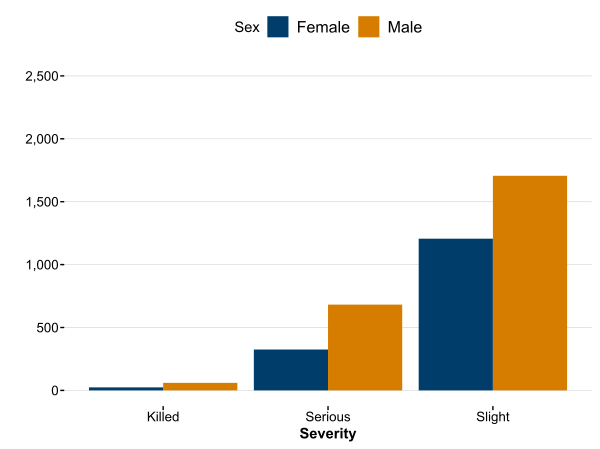
Description of figure 5: the column chart compares the number of male and female casualties by severity in 2024.
Source: Police recorded road collisions, Welsh Government
Figure 6 shows the long-term trend in the number of KSI casualties by age group. Since 1994, the numbers have fallen across all age groups, with children (under 16) having the largest percentage decrease (80.4%), followed by the 16 to 24 age group (59.1%). For the 45 to 69 age group, the number has decreased by 23.4% since 1994.
The number of KSI casualties reported since 2023 will be impacted by Dyfed Powys police force migrating to injury-based reporting. We would expect to see an increase in reported serious casualties within the Dyfed Powys police force areas, and a decrease in reported slight casualties. Further information is provided in the accompanying quality report.
Figure 6: KSI casualties by age group, 1994 to 2024
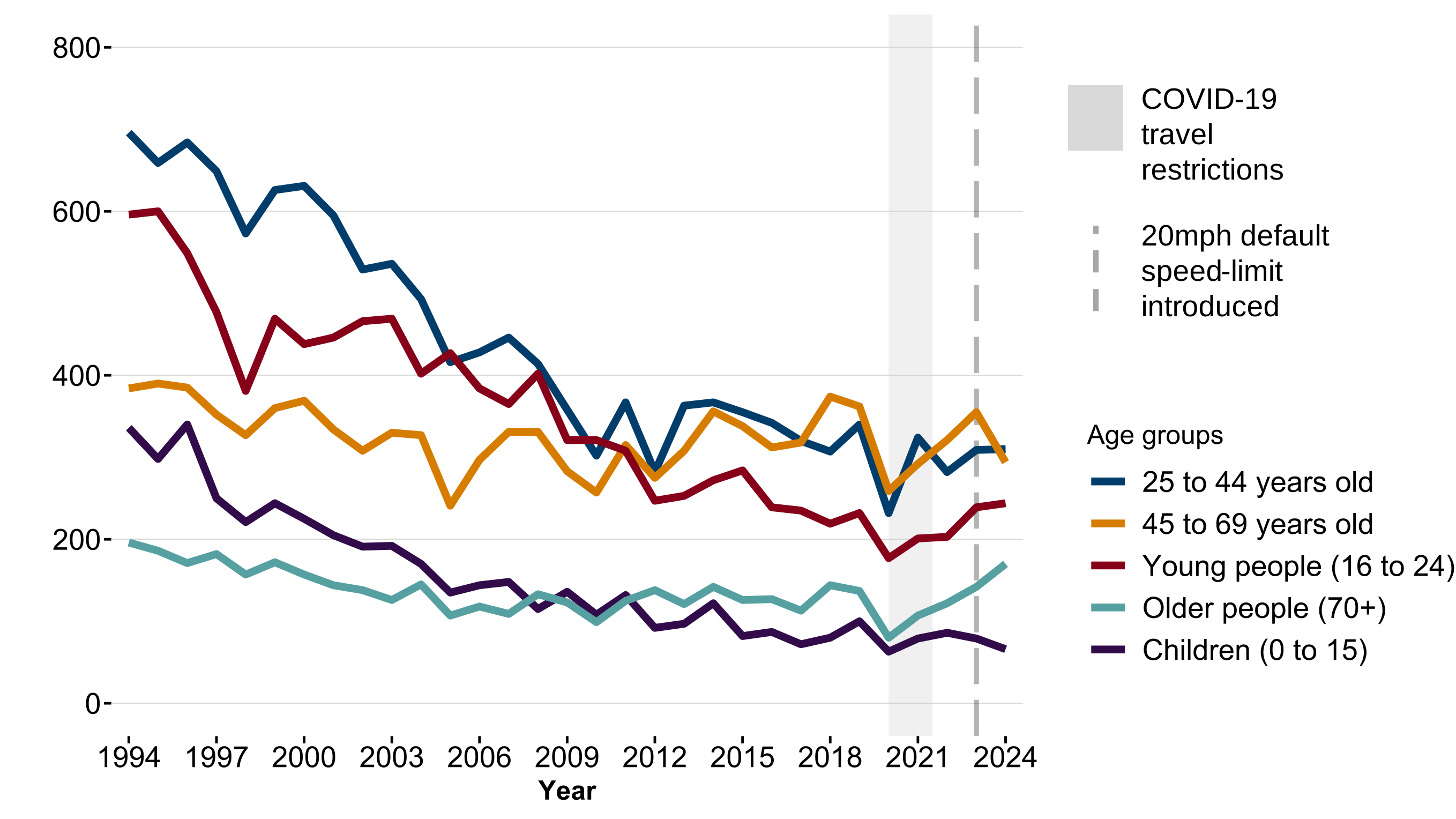
Description of figure 6: the line chart shows the trend in KSI casualties by age group in Wales between 1994 and 2024.
Source: Police recorded road collisions, Welsh Government
One way to examine which road users are the most vulnerable is by looking at the number of casualties as a proportion of the population. The following sections of this bulletin show the number of road casualties reported as a rate per 100,000 people in the population in Wales based on mid-year population estimates for 2024. Population estimates for Wales are published on StatsWales.
In 2024, young people (aged 16 to 24) were the most at risk age group of being injured in a road collision, with 262 casualties per 100,000 young people in the population. Children (aged 0 to 15) were the least at risk age group, with 67 casualties per 100,000 children in the population.
Figure 7 shows the KSI casualties reported as a rate per 100,000 people in the population. It highlights the disproportionately high rate of KSI casualties among young people (16 to 24) in 2024, where there were 72 KSI casualties per 100,000 people in the age group.
The distribution of KSI casualty by age group is similar to previous years for Wales.
Figure 7: KSI casualties per 100,000 population, by age group, 2024
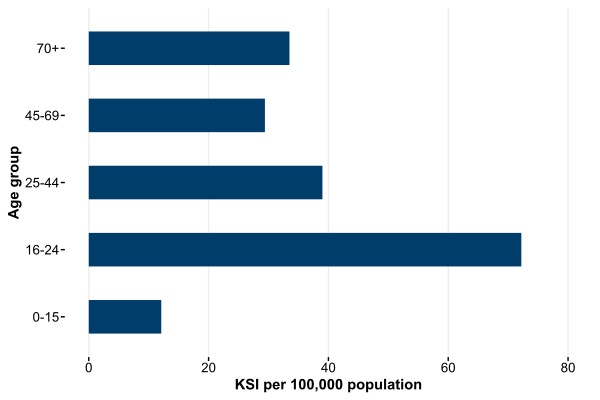
Description of figure 7: the bar chart shows the number of KSI casualties per 100,000 population in Wales in 2024 by age group. Young people (aged 16 to 24) had the highest rate of casualties at 72 per 100,000 population.
Source: Police recorded road collisions, Welsh Government
Casualty rates by age group and road user
Figures 8 and 9 show casualties as a rate per 100,000 people in the population (based on 2024 mid-year population estimates), by age group and road user type. These rates do not necessarily reflect the risk per trip or per kilometre travelled because there may be differences in the number of road users in each category by age.
Young people are the most likely age group to be car user casualties (177 per 100,000) and motorcycle casualties (39 per 100,000).
In 2024, the age group most at risk for pedal cycling accidents was 25 to 44 year olds.
Children (aged 0 to 15) were the most at risk pedestrians in 2024 with a casualty rate of 22 per 100,000, followed by people aged 16 to 24 (19 per 100,000).
Figure 8: casualty rates by age group for car, taxi and minibus users, 2024
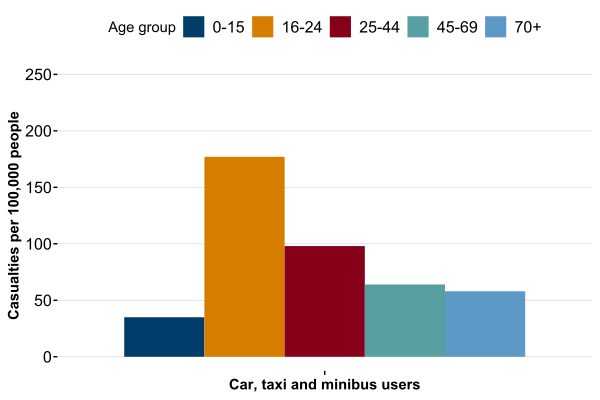
Description of figure 8: the column chart shows the rate of casualties per 100,000 people in the population, by age group, for ‘car, taxi and minibus’ road users in 2024. Young people (aged 16 to 24) reported the highest rate with 177 casualties per 100,000.
Source: Road collision statistics, Welsh Government
Figure 9: casualty rates by age group by motorcycle, pedal cyclist, and pedestrian road users, 2024 [Note 1]
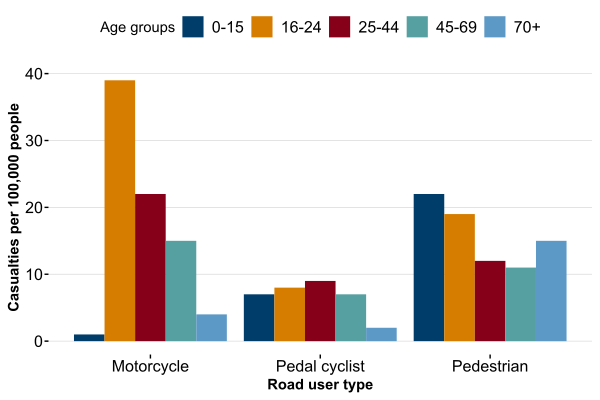
Description of figure 9: the column chart shows the rate of casualties per 100,000 people in the population, by age group, for motorcycle, pedal cycle and pedestrian road users in 2024. For motorcycle users, young people (aged 16 to 24) reported the highest rate with 39 casualties per 100,000 population.
Source: Police recorded road collisions, Welsh Government
[Note 1] Motorcycle: includes mopeds, motor scooters, motorcycles and combinations
We can also look at exposure to risk, expressed as the number of casualties per billion vehicle kilometres travelled. The rates in this section and in table 1 are calculated by dividing, for each road user type, the number of casualties reported by the corresponding estimate of traffic volume in 2024. Road traffic estimates for Wales are released by the Department for Transport as part of their Road traffic statistics collection.
This shows that for the equivalent distance travelled:
- Although car users account for the vast majority of casualties, the relative risk for motorcyclists and pedal cyclists is much higher.
- In 2024, motorcyclists were 22 times more likely than car and taxi occupants to be casualties and 50 times more likely to be killed or seriously injured.
- Pedal cyclists were 11 times more likely than car and taxi occupants to be casualties and were 14 times more likely to be killed or seriously injured.
| Severity | Motorcycles | Cars and taxis | Pedal cycles |
|---|---|---|---|
| Killed | 140 | 2 | 17 |
| Serious | 1,065 | 23 | 322 |
| KSI | 1,205 | 24 | 339 |
| Slight | 1,215 | 84 | 872 |
| Total | 2,420 | 109 | 1,211 |
Description of table 1: the table shows the rate of casualties per billion vehicle kilometres of road traffic volume, by road user type and severity, in 2024.
Source: Police recorded road collisions, Welsh Government. Road traffic estimates, Department for Transport
[Note 1] Total may not add up to individual numbers due to rounding of figures.
Road casualties by speed limit
In this section we present reported road casualties by the speed limit of the road at the location of the collision.
Some data quality issues have been identified relating to the recorded speed limit of the road where collisions occurred. Additional validation checks have been carried out with support from local authorities to ensure speed limit data for collisions on roads with a 20mph or 30mph speed limit are of good quality. However, as a result of these data issues, care should be taken when interpreting this data. This is described in greater detail in the data quality issues section of the Police recorded road collisions: 2023 bulletin.
When considering the number of collisions by the speed limit of the road they occurred on, there are some important factors to consider:
- In 2022, the length of roads with a 20mph speed limit was 870km. On 17 September 2023, this increased to around 13,000km due to a change in default speed limit from 30mph to 20mph. Most roads that were 30mph were changed to 20mph.
- Road sections with a 30mph speed limit were reduced from 13,100km in 2022 to 980km in 2023.
- There are no official data sources currently available on the volume of traffic on roads with different speed limits.
In 2024, there were 1,354 casualties on roads with a speed limit of 20mph, the highest number of casualties compared to other road speeds. This was followed by 60mph road sections with 1,264 casualties.
Figure 10: reported road casualties by road speed limit, 2024
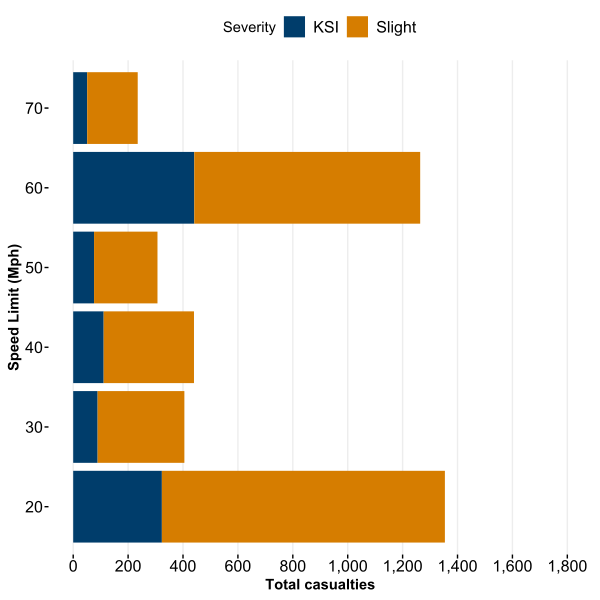
Description of figure 10: the bar chart shows the number of casualties from police recorded road collisions by road speed limit in Wales in 2024.
Source: Police recorded road collisions, Welsh Government
The proportion of casualties that are KSI tends to increase with the speed limit of the road. In 2024, 24% of casualties on a 20mph road were KSI, compared to 35% on 60mph roads.
Table 2 shows the number of casualties of each road user type reported and shows the speed limit of the road where the collision took place. The vast majority of pedal cyclist and pedestrian casualties were involved in collisions on 20mph roads. Car, taxi and minibus users, as well as motorcyclists, were most commonly injured in collisions recorded on 60mph roads.
| Speed limit (mph) | Car, taxi and minibus | Motorcycle | Other | Pedal cyclist | Pedestrian | Total Casualties |
|---|---|---|---|---|---|---|
| 20 | 602 | 146 | 89 | 150 | 367 | 1,354 |
| 30 | 249 | 62 | 21 | 23 | 50 | 405 |
| 40 | 326 | 65 | 22 | 8 | 19 | 440 |
| 50 | 232 | 26 | 35 | 5 | 9 | 307 |
| 60 | 939 | 169 | 99 | 29 | 28 | 1,264 |
| 70 | 183 | 16 | 31 | 3 | 2 | 235 |
| Total | 2,531 | 484 | 297 | 218 | 475 | 3,770 |
Description of table 2: the table reports number of road casualties by road user and speed limit in Wales in 2024. The greatest number of casualties were involved in collisions that occurred on roads with a speed limit of 20mph (a total of 1,354 casualties).
Source: Police recorded road collisions, Welsh Government
Road casualties on roads with 20mph and 30mph speed limits (combined)
This section considers casualties in collisions that occurred on all 20mph and 30mph roads (combined) to allow direct comparisons for the same set of roads before and after the change in default speed limit on restricted roads.
Road collisions data after the change to the 20mph default speed limit is currently limited to a relatively short period of time (this release covers 17 September 2023 to 31 December 2024) and can be volatile over the short term. Care should be taken when interpreting this data over a short time period, we will continue to monitor this over time as more data becomes available. Our Chief Statistician’s update (Digital and Data blog) includes more information.
In 2024, there were 1,759 casualties reported on roads with 20mph and 30mph speed limits (combined) which is the lowest annual number reported in Wales. This is 19.5% lower than in 2023 (2,185 casualties), the year that the change in default speed limit was implemented, and 25.0% lower than in 2022 (2,344 casualties), the most recent full calendar year before the change in default speed limit.
The number of casualties in road collisions on roads with lower speed limits (20mph and 30mph), has generally been declining steadily over the last decade.
Figure 11: reported road casualties on 20mph and 30mph roads, 2010 to 2024
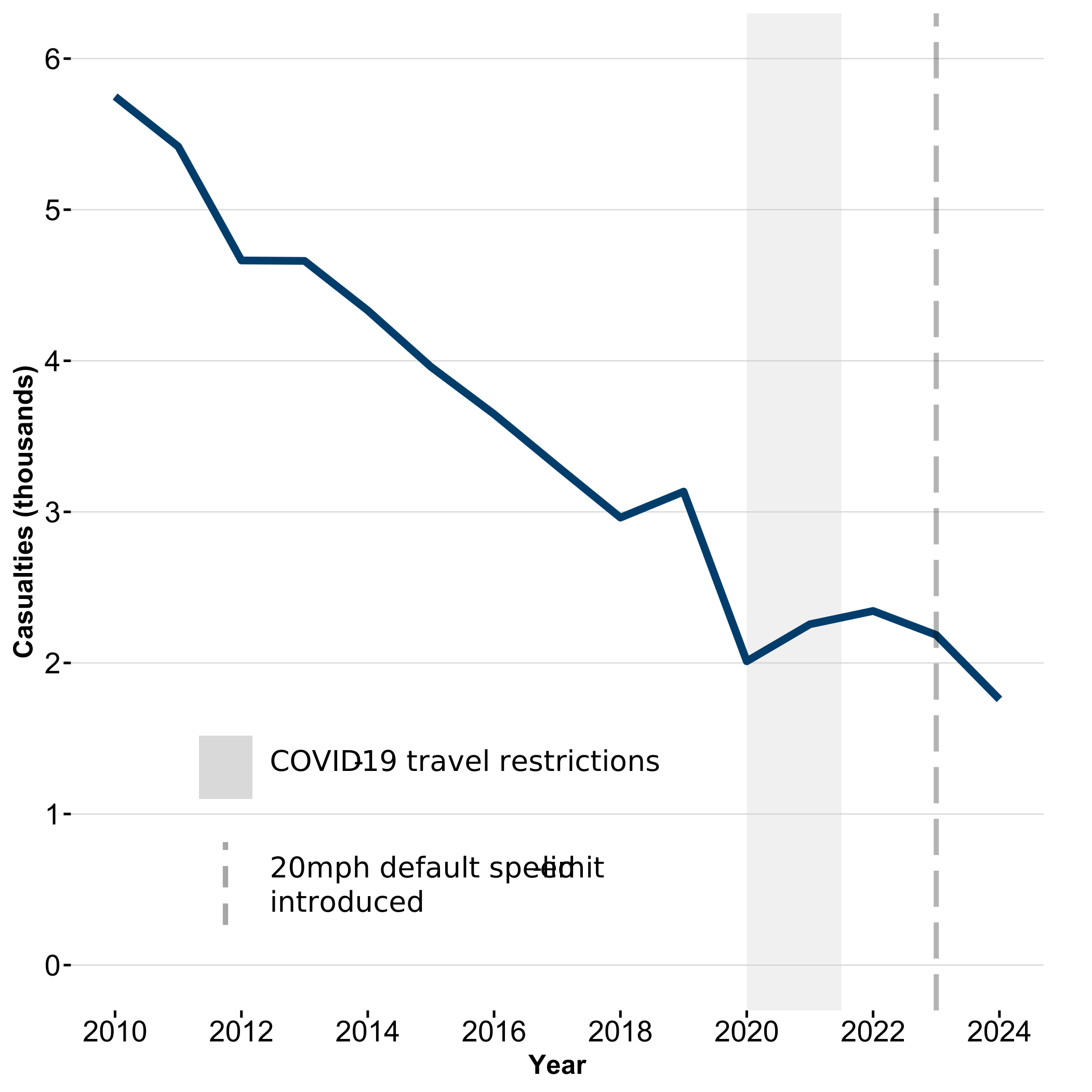
Description of figure 11: the line chart shows a time series for the number of casualties in police recorded road collisions on roads with a 20mph or 30mph speed limit (combined) in Wales each year from 2010 to 2024. The numbers have declined steadily over the last decade.
Source: Police recorded road collisions, Welsh Government
Road casualties by vulnerable road users
The sections below consider vulnerable road users (motorcyclists, pedal cyclists and pedestrians) as well as looking at young person casualties in more detail.
Other detailed information on police reported road casualties, such as local authority breakdowns, can be accessed from the accompanying Road collision dashboard and StatsWales tables.
Motorcycle user casualties
Main points
There were 484 motorcycle casualties reported by the police in 2024, representing 12% of all casualties in Wales.
Of these casualties, 241 were KSI and 243 were slightly injured. The number of KSI and slight casualties are 10% and 9% lower than in 2023 respectively. The number of KSI casualties reported since 2023 will be impacted by Dyfed Powys police force migrating to injury-based reporting. Further information is provided in the accompanying quality report.
The number of motorcycle casualties decreased by 10% compared to 2023. The total number of motorcycle casualties has been generally declining over time (figure 12).
The proportion of motorcycle casualties who are killed or seriously injured generally increases with age up to and including the age group 45 to 69.
The day of the week with the greatest number of motorcycle casualties was Saturday in 2024 (22% of all motorcycle casualties).
Figure 12: motorcycle casualties by severity, 2004 to 2024
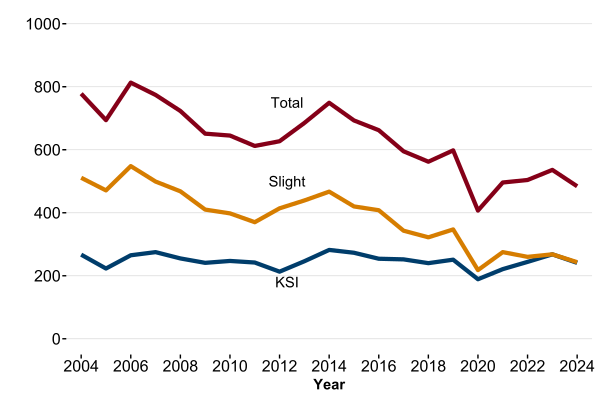
Description of figure 12: the line chart shows the trends in motorcycle casualties by severity between 2004 and 2024. In 2024 there was a 10% decrease in casualties compared to the previous year.
Source: Police recorded road collisions, Welsh Government
Pedal cycle casualties
Main points
Pedal cycle casualties in 2024 fell by 27% compared to the previous year. The number of annual cyclist casualties can be volatile and care should be taken when interpreting this data over a short time period.
There were 218 pedal cycle casualties in 2024 (figure 13), representing 5.4% of all casualties in Wales.
Of these casualties, 61 were KSI casualties and 157 were slightly injured.
In 2024, the vast majority of pedal cyclist casualties were male, accounting for 89% of the total.
69% of all pedal cycle casualties occurred at junctions.
Figure 13: pedal cyclist casualties by severity, 2004 to 2024
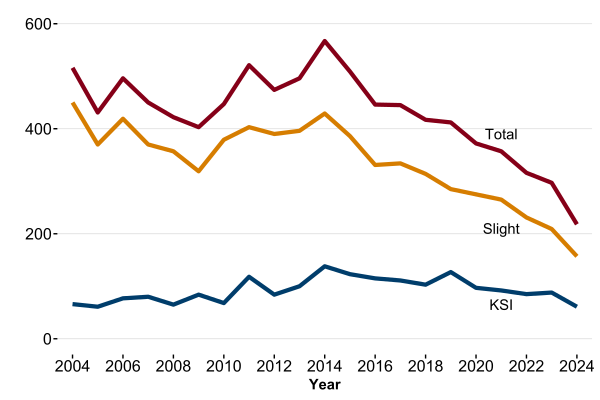
Description of figure 13: the line chart shows the number of pedal cycle casualties between 2004 and 2024. In 2024 pedal casualties fell by 27% compared to the previous year.
Source: Police recorded road collisions, Welsh Government
There was a significant fall in the number of pedal cyclist casualties from the late 1980s onwards, with the lowest total reported in 2009 before increasing between 2010 and 2014 and decreasing since. The number of KSI casualties reported has remained broadly the same over the whole time period.
Pedestrian casualties
Main points
In 2024 there were 475 pedestrian casualties, representing 12% of all casualties in Wales.
Of these casualties, 13 pedestrians were killed, 129 were seriously injured and 333 were slightly injured.
The total number of pedestrian casualties decreased by 17% compared to the previous year.
In 2024, the majority of pedestrian casualties were male, accounting for 54% of casualties.
Figure 14: pedestrian casualties by severity, 2004 to 2024
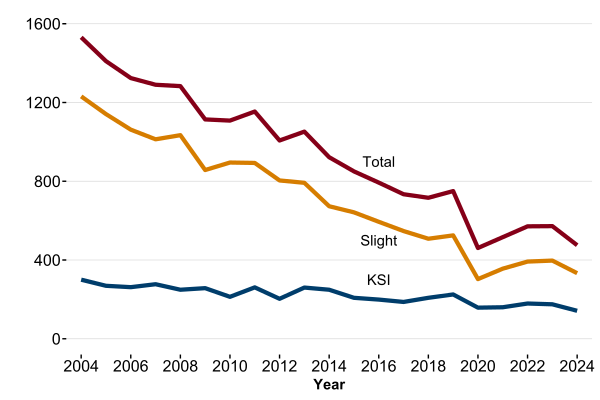
Description of figure 14: the line chart shows a time series of pedestrian casualties by severity in Wales between 2004 and 2024. There has been a decrease in all severities overtime.
Source: Police recorded road collisions, Welsh Government
In 2024, there were 119 pedestrian casualties aged 0 to 15 (25% of all pedestrian casualties), more than in any other age group. The number of pedestrian casualties aged 0 to 15 is 32% lower than in 2023 (176 pedestrian casualties).
Figure 15: pedestrian casualties by age group, 2022 to 2023
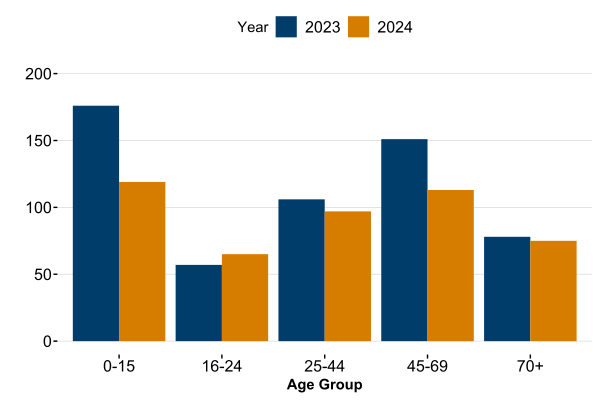
Description of figure 15: the column chart shows a comparison of pedestrian casualties by age group in Wales in 2024 and 2023.
Source: Police recorded road collisions, Welsh Government
Young person casualties
Main points
In 2024, there were 886 road casualties aged 16 to 24 in Wales, a 10.1% fall compared with 2023. 244 casualties aged 16 to 24 were KSI.
Young people are disproportionately more likely to be casualties in road collisions. They make up 11% of the population (based on 2024 population estimates) but 22% of all casualties on the roads in 2024. In particular, young people accounted for 27% of all motorcycle casualties, much higher than the 11% population share.
In 2024, 65% of young person casualties were male and 35% were female.
Males aged 16 to 24 are more likely than females to be casualties across all road user categories. For motorcyclists, there were 11 times as many young male casualties as young females (figure 16).
The majority of young person casualties (63%) were in the car, taxi and minibus road user category.
Figure 16: road casualties aged 16 to 24 by sex and road user type, 2024
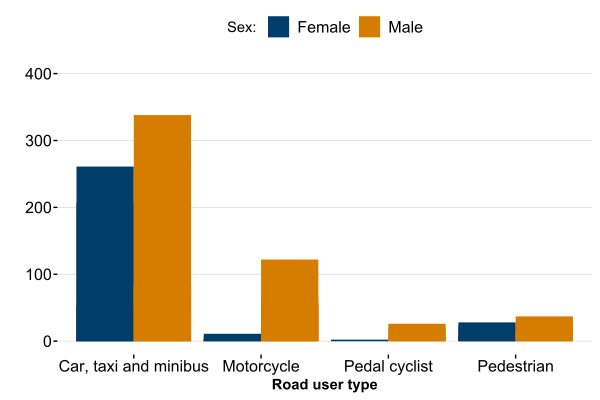
Description of figure 16: the column chart shows a comparison of the number of young person casualties by sex and road user type in 2024. The majority of casualties were ‘car, taxi and minibus’ users (63%).
Source: Police recorded road collisions, Welsh Government
Quality information
Detailed quality information is published in the accompanying quality report. Some main points are below.
These statistics only include road collisions which resulted in personal injury and for which information was reported by the police. It is known that there is an element of under-recording of such incidents, particularly for less severe incidents where police officers may not have been in attendance.
These statistics do not include collisions:
- that were not reported to the police
- that occurred on private land i.e. car parks or fields
- where no personal injury was recorded
- where the collision was later confirmed by a medical professional or coroner to be a suicide or medical episode
Details of the data collection and validation processes, strengths and limitations of the data, and revisions policy are provided in the quality report.
Official statistics status
All official statistics should show the standards of the Code of Practice for Statistics (UK Statistics Authority).
These are accredited official statistics. The designation of these statistics was confirmed in July 2013. They comply with the standards of trustworthiness, quality and value in the Code of Practice for Statistics.
It is Welsh Government’s responsibility to maintain compliance with the standards expected of accreditation. If we become concerned about whether these statistics are still meeting the appropriate standards, we will discuss any concerns with OSR promptly. Accreditation can be cancelled or suspended at any point when the highest standards are not maintained, and reinstated when standards are restored.
Accredited official statistics are called National Statistics in the Statistics and Registration Service Act 2007.
Statement of compliance with the Code of Practice for Statistics
Our statistical practice is regulated by the Office for Statistics Regulation (OSR). OSR sets the standards of trustworthiness, quality and value in the Code of Practice for Statistics that all producers of official statistics should adhere to.
All of our statistics are produced and published in accordance with a number of statements and protocols to enhance trustworthiness, quality and value. These are set out in the Welsh Government’s Statement of Compliance.
These accredited official statistics (Office for Statistics Regulation) demonstrate the standards expected around trustworthiness, quality and public value in the following ways.
Trustworthiness
These statistics use data collected by Welsh Police Forces via the STATS19 system. The UK-level data, together with a full description of the sources and methods used to compile these data can be found on the GOV.UK website (Road Safety Statistics (DfT)).
These statistics are pre-announced on the Statistics and Research area of the Welsh Government website. Access to the data during processing is restricted to those involved in the production of the statistics, quality assurance and for operational purposes. Pre-release access is restricted to eligible recipients in line with the Code of Practice (UK Statistics Authority).
Quality
The published figures provided are compiled by professional analysts using the latest available data and applying methods using their professional judgement and analytical skillset. Statistics published by Welsh Government adhere to the Statistical Quality Management Strategy which supplements the Quality pillar of the Code of Practice for Statistics UK Statistics Authority and the European Statistical System principles of quality for statistical outputs.
The statistical release is then drafted, signed off by senior statisticians and published in line with the Welsh Government’s statement on confidentiality and data access.
Detailed quality information is published in the accompanying quality report.
Value
The purposes of this statistical release and the accompanying data published on StatsWales are to provide evidence for policy development and to inform the media and wider public about the changes to the police recorded road collisions in Wales.
You are welcome to contact us directly with any comments about how we meet these standards. Alternatively, you can contact OSR by emailing regulation@statistics.gov.uk or via the OSR website.
Well-being of Future Generations Act (WFG)
The Well-being of Future Generations Act 2015 is about improving the social, economic, environmental and cultural wellbeing of Wales. The Act puts in place seven wellbeing goals for Wales. These are for a more equal, prosperous, resilient, healthier and globally responsible Wales, with cohesive communities and a vibrant culture and thriving Welsh language. Under section (10)(1) of the Act, the Welsh Ministers must (a) publish indicators (“national indicators”) that must be applied for the purpose of measuring progress towards the achievement of the wellbeing goals, and (b) lay a copy of the national indicators before Senedd Cymru. Under section 10(8) of the Well-being of Future Generations Act, where the Welsh Ministers revise the national indicators, they must as soon as reasonably practicable (a) publish the indicators as revised and (b) lay a copy of them before the Senedd. These national indicators were laid before the Senedd in 2021. The indicators laid on 14 December 2021 replace the set laid on 16 March 2016.
Information on the indicators, along with narratives for each of the wellbeing goals and associated technical information is available in the Wellbeing of Wales report.
Further information on the Well-being of Future Generations (Wales) Act 2015.
The statistics included in this release could also provide supporting narrative to the national indicators and be used by public services boards in relation to their local wellbeing assessments and local wellbeing plans.