
Welsh Index of Multiple Deprivation (WIMD) 2025 results report - Physical environment domain results
WIMD is designed to identify the small areas of Wales that are the most deprived.
In this page
Introduction
The purpose of this domain is to measure factors in the local area that may impact on the wellbeing or quality of life of those living in an area. The domain has a relative weight of 5% in the overall index.
Indicators
Figure 9.1: physical environment domain indicators, WIMD 2025
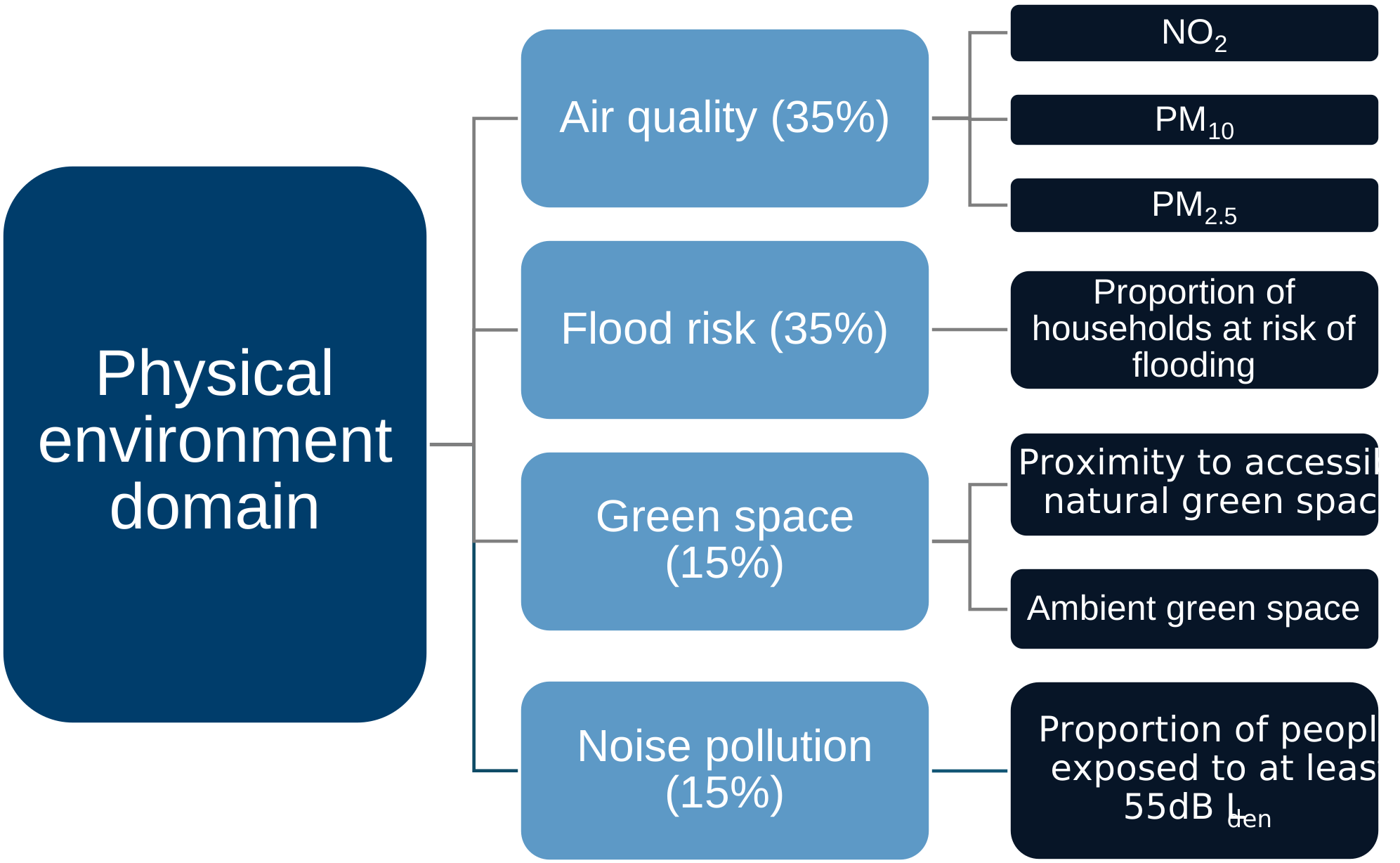
Description of figure 9.1: diagram showing that the physical environment domain has 7 indicators. The indicators are grouped into 4 sub-domains and equally weighted within them. The percentage shown next to each sub-domain is the amount it contributes to the overall domain.
Air quality indicators (35%)
The air quality sub-domain comprises 3 equally weighted indicators which measure the population weighted average concentration values of the key pollutants Nitrogen dioxide (NO2), particulates less than 10 micrometres (PM10) and particulates less than 2.5 micrometres (PM2.5) respectively. Data relate to 2023.
Indicator of flood risk (35%)
The flood risk sub-domain score is based on the proportion of households at risk of flooding from rivers, the sea or surface flooding but it does not account for flood defences. Data relate to 2025.
Indicators that capture access and amount of green space (15%)
The green space sub-domain is comprised of 2 equally weighted indicators:
- proximity to accessible natural green space indicator which measures the proportion of households in each area that are within 300 metres (an approximate 5 minute walk) of an accessible, natural green space (data relate to 2025)
- ambient green space score which measures the ambient greenness of an area using the mean household Normalised Difference Vegetation Index (NDVI) score within a 300 metre buffer around each residential dwelling (data relate to 2024)
Indicator that captures exposure to noise pollution (15%)
The noise pollution sub-domain score is based on the proportion of the population exposed to noise pollution from road and rail sources greater than or equal to 55 decibels. This is a new indicator for WIMD 2025. Data relate to 2021.
Full details on the indicator and construction of the domain is available in the WIMD 2025 technical report.
Main points
Figure 9.2: map of LSOAs shaded by physical environment deprivation group, WIMD 2025
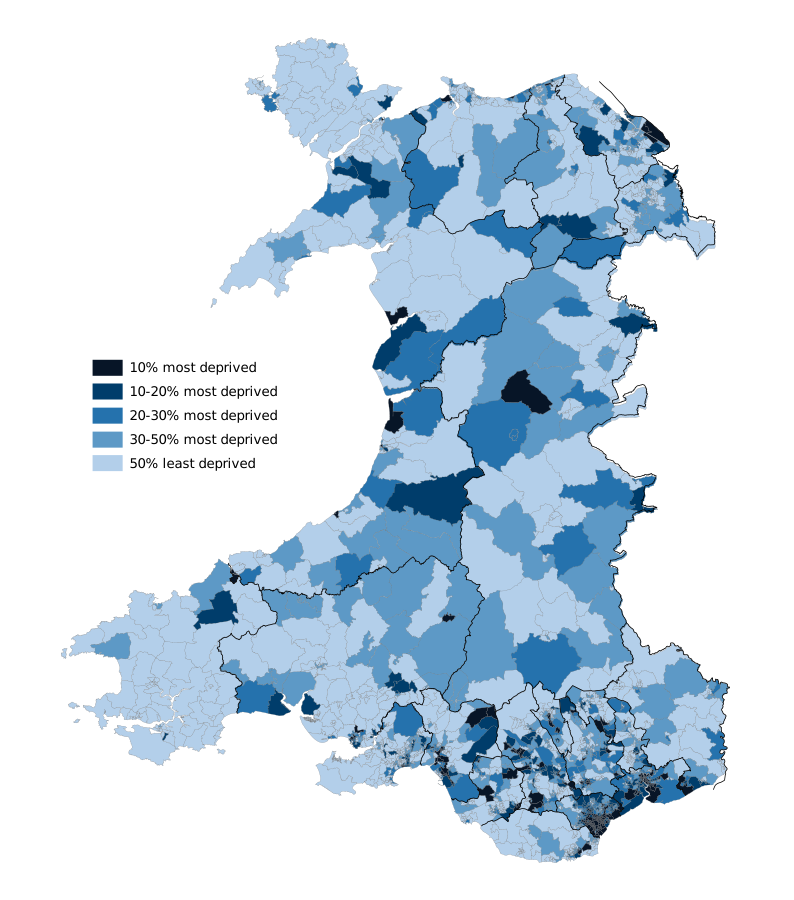
© Crown copyright 2025. Cartographics. Welsh Government.
Description of figure 9.2: the map shows that in the WIMD 2025 physical environment domain, there were clusters of high physical environment deprivation in and around the large cities in South East Wales and to a lesser extent, the North East and South Wales valleys. There were also some isolated areas of high physical environment deprivation across West Wales.
- For the physical environment domain, the most deprived area in Wales was Cathays 12, Cardiff (around Central Cardiff and Cathays Park), this was ranked 13th most deprived in 2019.
- Three of the 10 most deprived areas in WIMD 2025 were also in the 10 most deprived areas in WIMD 2019.
- Eight of the 10 most deprived areas are in Cardiff, the other 2 are in Newport and Neath Port Talbot. All 10 are urban areas.
- The local authority with the highest proportion of areas in the most deprived 10% was Cardiff (39%), followed by Newport (28%) and Neath Port Talbot (21%).
- Isle of Anglesey, Wrexham and Pembrokeshire local authorities had no LSOAs in the most deprived 10% of areas.
There have been some changes in the patterns of physical environment deprivation seen in WIMD 2025 compared to those seen in WIMD 2019. This is to be expected given the inclusion of the new indicator on noise pollution and methodology change in the ambient green space indicator.
The full set of domain ranks from WIMD 2025 and the underlying indicators can be downloaded from the Welsh Government’s StatsWales web pages.
Comparison between WIMD 2019 and WIMD 2025
There have been several methodological changes to the physical environment domain between WIMD 2019 and WIMD 2025, including a new indicator for noise pollution. Therefore, it is not directly comparable with that for WIMD 2019. For full information on how the domain has changed since 2019 see the technical report.
Table 9.1: movement between physical environment deprivation group between WIMD 2019 and 2025
| WIMD deprivation group | 10% most deprived 2025 | 10% to 20% most deprived 2025 | 20% to 30% most deprived 2025 | 30% to 50% most deprived 2025 | 50% least deprived 2025 |
|---|---|---|---|---|---|
| 10% most deprived 2019 | 68% | 23% | 6% | 3% | 2% |
| 10% to 20% most deprived 2019 | 22% | 36% | 20% | 17% | 5% |
| 20% to 30% most deprived 2019 | 4% | 23% | 26% | 31% | 15% |
| 30% to 50% most deprived 2019 | 1% | 4% | 14% | 35% | 46% |
| 50% least deprived 2019 | 0% | 2% | 4% | 16% | 78% |
The table shows the percentage of small areas (LSOAs) in each deprivation group for WIMD 2019 that have stayed or moved group in WIMD 2025. For an explanation of how we have treated the minority of areas that changed boundary, please see the guidance report.
The diagonal (top left to bottom right) shows the percentage of areas which have remained in the same deprivation group. Above the diagonal are percentages of areas which have moved from a more to a less deprived group. Below the diagonal are the percentages of areas which have moved from a less to a more deprived group.
The table shows that:
- most LSOAs in the most deprived and least deprived deprivation groups remained in the same group between 2019 and 2025
- of the 10% most deprived areas in 2019, 68% remained in that group in 2025
- of the 50% least deprived areas in 2019, 78% remained in that group in 2025
Only 39 areas (2%) moved by more than 2 deprivation groups in either direction. Below we focus on the areas that have moved most in or out of the most deprived group.
Relatively more deprived
Four areas have moved from the 50% least deprived group in WIMD 2019 to the 10% most deprived in WIMD 2025 (note that this does not appear in the above table due to rounding), these were areas in Gwynedd, Denbighshire and 2 in Ceredigion.
Relatively less deprived
Three areas moved from the 10% most deprived group in WIMD 2019 to the 50% least deprived group in WIMD 2025, these were areas in Swansea, Carmarthenshire and Rhondda Cynon Taf.
Flood risk was a key driver of large changes in relative physical environment deprivation for each of those seven areas, whether becoming more or less deprived.
Local authority analysis
Figure 9.3: box plot of WIMD 2025 physical environment domain ranks, by local authority
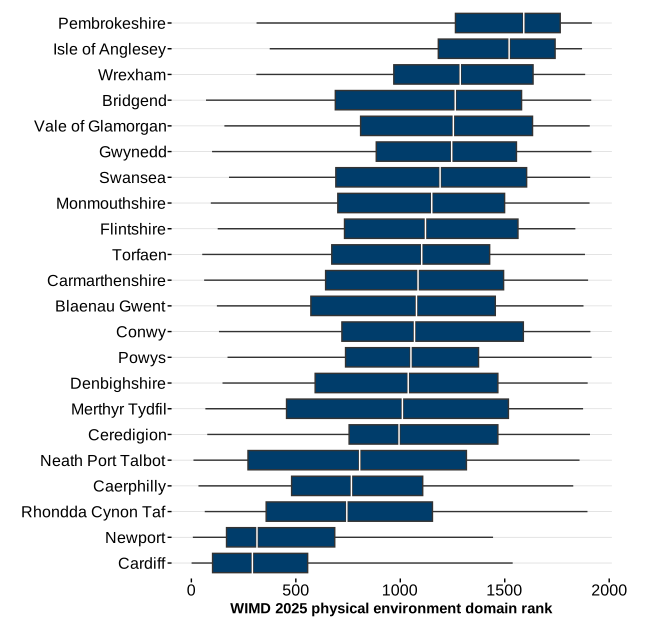
Description of figure 9.3: the chart shows the spread of physical environment domain ranks for each local authority. The blue boxes contain half the total number of small areas (LSOAs) in each local authority, centred on the median (middle) rank for each local authority and the ‘whiskers’ show the full range of ranks within the local authority. Deprivation increases with decreasing rank (that is, towards the left-hand side of the plot).
The spread (inter-quartile range) of physical environment domain ranks is greatest in Merthyr Tydfil and Neath Port Talbot and narrowest in Cardiff, Pembrokeshire and Newport. Pembrokeshire and Isle of Anglesey have the highest median rank (less deprived) and Cardiff and Newport have the lowest (more deprived).
Concentrations of physical environment deprived areas, by local authority
One way of considering WIMD data at the local authority level is to look at the proportion of areas within the local authority that are in the most deprived 10% (or 20% etc) of all areas in Wales. This method can be seen as identifying the concentration of the most deprived areas in a local authority, rather than an average level of deprivation.
The WIMD 2025 physical environment domain results show that:
- the local authority with the highest proportion of areas in the most deprived 10% in Wales was Cardiff (39%) followed by Newport (28%)
- Isle of Anglesey, Wrexham and Pembrokeshire local authorities had no LSOAs in the most deprived 10% of areas
- Powys, Monmouthshire and Denbighshire all only have one LSOA in the most deprived 10% of areas
- Pembrokeshire and Isle of Anglesey were also the local authorities with the lowest concentrations of areas in the most deprived half of Wales, at 8% and 17% respectively
- Cardiff and Newport had the highest percentage of areas in the most deprived 50% in Wales, at 94% and 89% respectively
Concentrations of WIMD 2025 physical environment deprived areas, by local authority on StatsWales.
Other relevant sources
Air quality
Further information on the UK Government’s Pollution Climate Mapping (PCM) model which calculates average pollutant concentrations for each square kilometre of the UK can be found on the Department for Environment, Food & Rural Affairs (DEFRA) website. Information on national well-being indicator 5 (Levels of Nitrogen Dioxide pollution in the air) can be found on the Welsh Government Well-being of Wales website.
Flood risk
A range of reports, evidence and data on flooding can be found on the Natural Resources Wales (NRW) website.
Green space
Data on people’s perceptions of and satisfaction with local green space is collected as part of the National Survey for Wales. Headline results can be found in the National Survey for Wales Results Viewer.
A Green Space Index including data for Wales has been published by Fields in Trust.
Noise pollution
Data on people’s satisfaction with traffic noise levels in their local area (2018-19) and whether they have been regularly bothered by noise from outside their home (2021-22) was collected as part of the National Survey for Wales.
NRW collaborated with Land Use Consultants (LUC) to develop the Tranquillity & Place resource which identifies tranquil places in Wales. Theme 4 of this resource analyses sound environments including road, railway and other sources of sound. Theme 4 results can be found on the Tranquillity and Place storymap.