Sea transport: 2024
Information on ship arrivals, foreign and domestic travel and cargo for 2024.
In this page
Main points
- In 2024, total freight tonnage at all Welsh ports (major and minor combined) was 46 million tonnes (Mt), a decrease of 9.1% from 2023.
- Welsh ports handled 10.7% of the UK’s total freight tonnage in 2024, a slightly lower proportion than 2023.
- Of the total freight tonnage at major ports in Wales, 86.1% was international traffic with just under three quarters (73.8%) of this international traffic being imports.
- Welsh ports act as a gateway between the Republic of Ireland and the rest of Europe, with Holyhead handling the greatest freight tonnage between Ireland and Wales, at 4.3 Mt in 2024.
- These figures were affected by Storm Darragh which forced the facilities at Holyhead port to close in early December. It was not fully reopened until 19 July 2025 and will also affect 2025 figures.
- In 2024, 454,000 lorries and unaccompanied trailers passed through Welsh ports to and from Ireland. This is broadly similar compared to 2023.
We’re proposing to make this report shorter but keep the data on StatsWales. If you’d like to share your views on this or other proposed changes to our transport statistical releases, please complete our consultation before 11 February.
Figure 1: indices for sea freight and passengers at all Welsh ports, 2000 to 2024

Description of figure 1: line chart showing time series indices on changes in sea freight and passengers over time. In 2024, sea passenger traffic decreased by 8% compared to 2023.
Source: Welsh Government analysis of Department for Transport Maritime data
In 2024, sea passenger traffic decreased by 8% compared to 2023.
Sea freight
This section looks at domestic and international freight traffic by type of freight and movement between regions. Total freight tonnage through Welsh ports in 2024 was 46.0 Mt (Figure 2), a decrease of 9.1% compared to 2023. Total freight tonnage through Welsh ports has been generally falling over the last 13 years.
Figure 2: freight through Welsh ports, 2014 to 2024
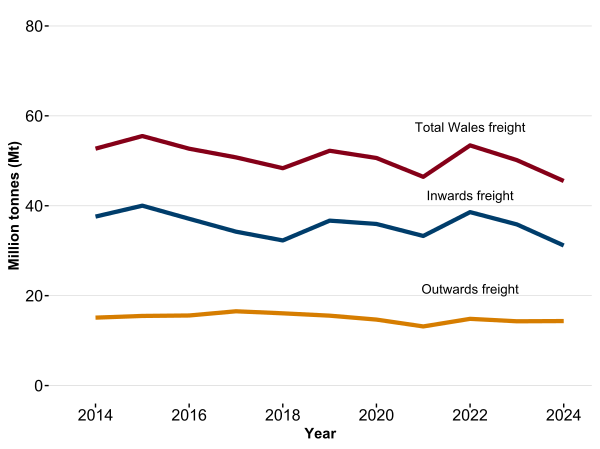
Description of figure 2: line chart showing the movement of sea freight through Welsh ports since 2012.
Source: Welsh Government analysis of Department for Transport Maritime data
Of the 46.0Mt of freight through Welsh ports in 2024, 31.5Mt (68.5%) were goods inwards and 14.5Mt (31.5%) were goods outwards. Freight through Welsh ports accounted for 10.7% of the total tonnage through UK ports in 2024.
The largest components of freight through Welsh major ports in 2024
- Oil products were the largest freight component with a total tonnage of 16.7Mt. Of the total freight, 10.0Mt were exported, with 3.8Mt (38%) sent to destinations elsewhere in the UK and 6.1Mt (62%) exported to the rest of the world.
- Liquefied gas was the second largest freight component with a total tonnage of 8.0Mt; the majority (96.6%) being imported from outside of the UK.
- Crude oil was the third largest with a total tonnage of 7.9Mt; most of which (94.4%) were imported from outside of the UK.
Major ports in Wales
Major ports in Wales (consisting of Milford Haven, Port Talbot, Holyhead, Fishguard, Swansea, Cardiff and Newport) handled a total of 45.5Mt of freight cargo (99.0% of total Welsh sea freight) in 2024. This represents a 9.2% decrease in sea freight through major ports in Wales compared to 2023.
Three of the major ports in Wales meet specialised shipping needs (Figure 3 and Figure 5).
Milford Haven handled 32.9Mt of freight in 2024, mainly crude oil, oil products and liquefied natural gas. These three products accounted for 97.3% of all cargo at this port in 2024 and are likely related to the oil refinery in Pembroke Dock.
Holyhead is the main port for freight and sea passenger transport with the Irish Republic. It handled 4.3Mt of freight in 2024, mainly Roll-on/Roll-off (Ro-Ro) cargo.
Port Talbot handled 2.6Mt of freight in 2024, mainly iron ore, coal and ‘Other dry bulk’ mostly for the adjacent steelworks. This is the second lowest figure since annual records began in 1975. This decrease is due to operations of both blast furnaces at Port Talbot ceasing in September 2024.
In 2024, Milford Haven was the largest port in Wales and the fourth largest port in the UK by freight tonnage, predominantly oil and gas. Freight tonnage at Milford Haven accounts for nearly three quarters (71.5%) of all Welsh port freight. It handled 32.9Mt of freight in 2024, which was 7.7% of the UK major ports total for 2024. When compared with 2023, Milford Haven freight traffic decreased by 1.8Mt (5.2%) (Figure 3). (StatsWales).
Figure 3: sea freight through major Welsh ports, millions of tonnes, 2024
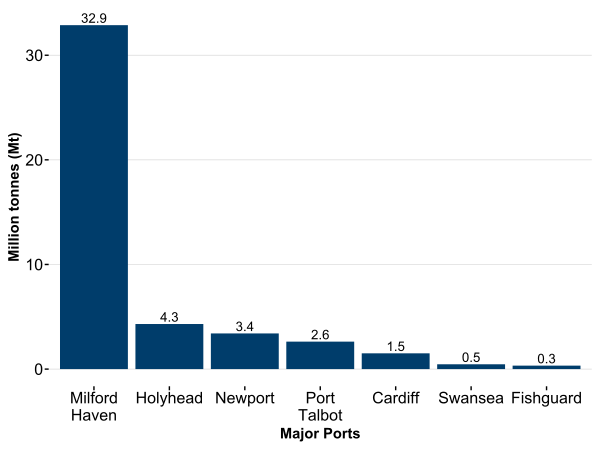
Description of figure 3: The column chart shows the total weight of sea freight handled by each of the 7 major ports in Wales in 2024.
Source: Welsh Government analysis of Department for Transport Maritime data
Figure 4: major sea port locations in Wales

Description of figure 4: The map shows the locations of major sea ports in Wales and sea routes to the Republic of Ireland.
Source: Welsh Government
Figure 5 shows the composition of different sea freight at Welsh major sea ports during 2024. Oil products followed by liquefied gas dominate the sea freight tonnages.
Figure 5: cargo categories of sea freight tonnage via Welsh major ports, 2024
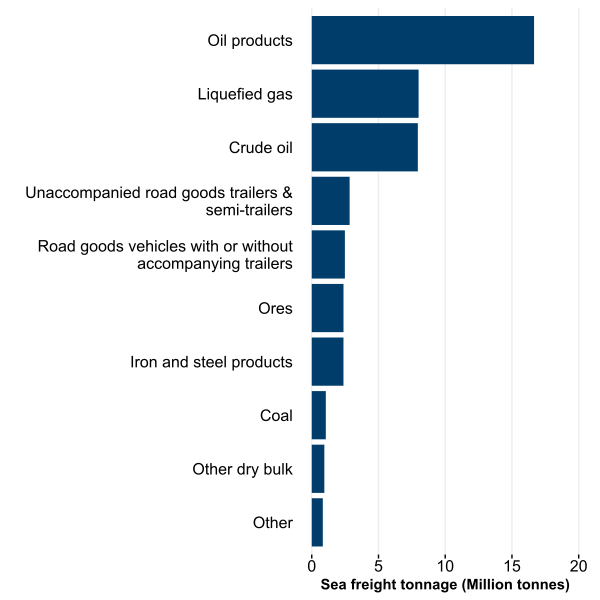
Description of figure 5: the bar chart shows the cargo categories of sea freight via Welsh ports in 2024. Oil products and liquefied gas account for the majority of Welsh sea freight by tonnage.
Source: Welsh Government analysis of Department for Transport Maritime data
Domestic and international freight by cargo
This section covers the movement of sea cargo via the major Welsh ports, with ‘domestic’ referring to coastwise movement (between UK ports) and ‘international’ referring to the movement of cargo to and from overseas destinations. In 2024, 86.1% of the tonnage through major ports in Wales was international freight and 73.8% of international freight through Welsh ports was imported.
Comparing domestic and international traffic for 2024
- 94.4% of crude oil transported through the ports of Wales was international (100% of crude oil transported were imports). The remaining 5.6% was domestic, consisting entirely of imports.
- 71.3% of oil products transported were international, with 51.8% of these exported and 48.2% of these imported. The remaining 28.7% of oil products transported were domestic.
- Roll-on/roll-off (Ro-Ro) movements in 2024 were entirely international.
When looking at international imports and exports for 2024
- Import tonnages were higher than exports, with 28.9Mt and 10.3Mt respectively.
- The majority was either liquid bulk (27.3Mt) or dry bulk (4.0Mt). Liquid bulk includes products such as liquefied gas, crude oil, and oil products. Dry bulk includes coal, ores and agricultural products.
Sea freight by broad region
Sea freight regions include Domestic Traffic, European Union (EU) traffic and non-European (non-EU) traffic. In 2024, non-EU freight from Welsh major ports accounted for 58.3% of all tonnage. The most common commodity being liquified gas, despite non-EU liquefied gas decreasing by a third (33.0%) since 2022. (Figure 6).
In 2024, the majority (74.7%) of imported sea freight was from non-EU countries. The greatest proportion of freight exported from Welsh major ports went to the EU (49.0%), when compared to domestic and non-EU traffic.
Figure 6: sea freight by region via Welsh ports, 2014 to 2024
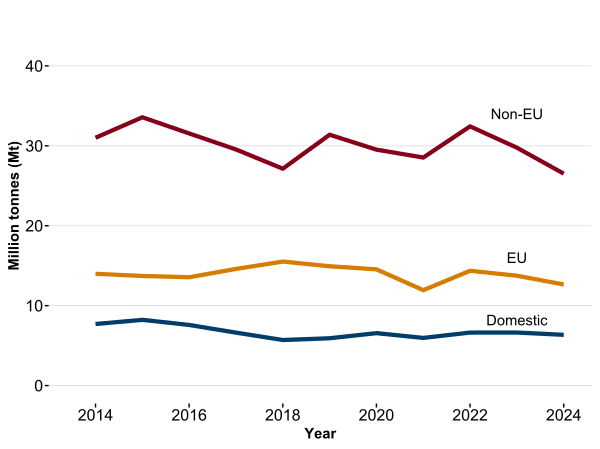
Description of figure 6: the line chart shows the movement of domestic and international (EU and non-EU) regional sea traffic at major Welsh ports for the last 10 years. In 2024, non-EU freight accounted for 58.3% of all tonnage from Welsh major ports.
Source: Welsh Government analysis of Department for Transport Maritime data.
Domestic traffic
The section covers Wales’s sea coastwise freight movements, i.e., freight shipped between UK ports. Since 2015, outward sea freight tonnage has surpassed inward tonnage (Figure 7). In 2024, outward sea freight tonnage from major Welsh ports decreased by 0.4% compared to 2023. Whilst inwards sea freight tonnage decreased by 10.8% compared to 2023.
Figure 7: domestic freight movements between Welsh ports and UK ports, (millions of tonnes) 2014 to 2024
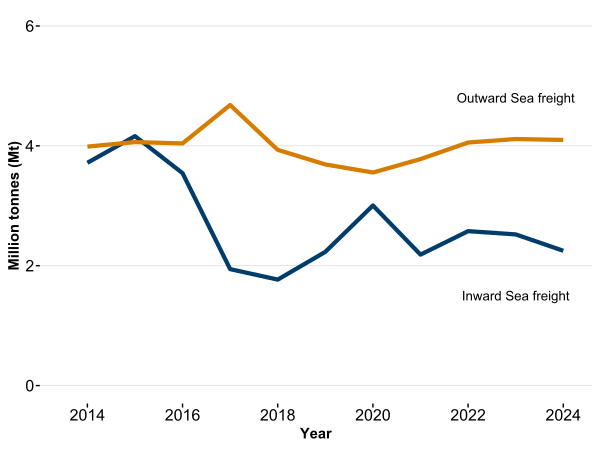
Description of figure 7: the line chart shows the direction of domestic sea freight movements at major Welsh ports and UK ports for the last 10 years. In 2024 outward sea freight tonnage from major Welsh ports decreased by 0.4% compared to 2023.
More information on shipping across the UK can be found from the UK maritime statistics dashboard.
Source: Welsh Government analysis of Department for Transport Maritime data
European Union traffic
This section covers sea freight movement between Wales and countries from the EU and looks at total sea imports and exports from major ports.
In 2024, total tonnage of sea freight exports to the EU decreased by 6.0% to 7.0Mt compared to 2023.
Since the EU Exit referendum, there has been an increase in shipping routes directly between Europe and the island of Ireland, which impacted the number of vehicles using Wales as a land bridge between the continent and Ireland. The weight of exports by sea from Welsh ports have been fluctuating downwards from a high of 10.9 Mt in 2004 to 7.2 Mt in 2015. It then increased between 2016 and 2019; and has been slightly decreasing since (Figure 8).
Figure 8: freight movements between Welsh ports and EU, 2014 to 2024
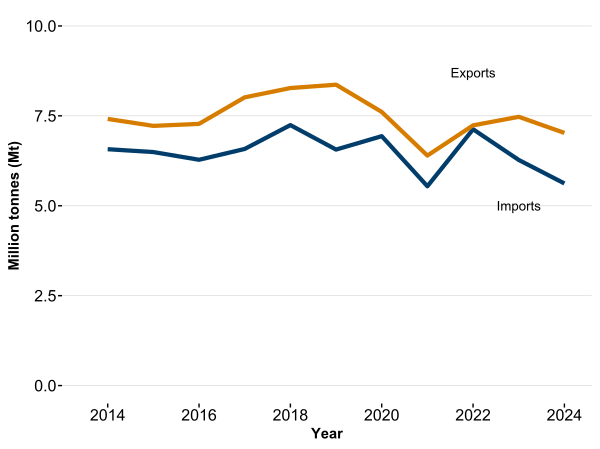
Description of figure 8: the line chart shows the direction of sea freight movements at major Welsh ports and EU for the last 10 years.
Source: Welsh Government analysis of Department for Transport Maritime data
In 2024 there was a 10.4% decrease in total import tonnage from the EU compared to previous year.
Non-European Union traffic
When considering tonnage, most sea imports into Welsh ports come from non-EU countries (Figure 5). In 2024, there was an increase from 2023 in total exports to non-EU destinations of 18.9% whilst imports decreased by 13.9% (Figure 9).
Figure 9: freight imports and exports between Welsh ports and non-EU, 2014 to 2024
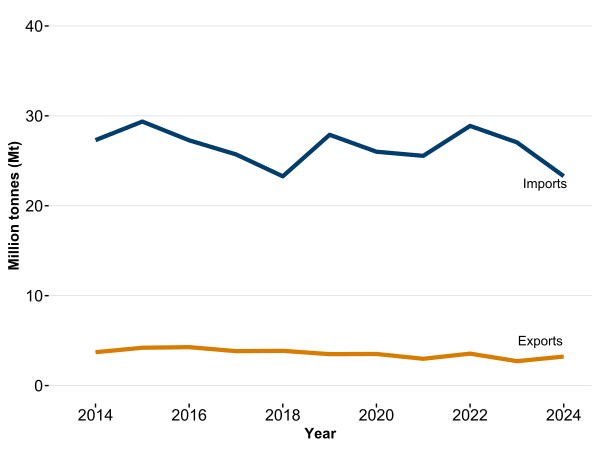
Description of figure 9: the line chart shows the direction of sea freight movements between major Welsh ports and non-EU ports for the last 10 years. In 2024, there was a decreased from 2023 in total imports to non-EU destinations of 13.9%.
Source: Welsh Government analysis of Department for Transport Maritime data
Republic of Ireland freight movements through Welsh ports
Welsh ports (Holyhead in particular) have historically acted as a gateway between the Republic of Ireland and the rest of Europe, with many hauliers opting for shorter sea routes combined with driving across the UK (land bridge). Current trends indicate a decline in the use of Wales as a land bridge since the formal departure of the UK from the EU Single Market and Customs Union in January 2021, combined with increased direct shipping routes between Ireland and continental Europe.
In 2024, 454,000 lorries and unaccompanied trailers passed through Welsh ports to and from Ireland. This is broadly similar to the year before.
However, there was a noticeable drop in lorries and trailers through Welsh ports in 2021, that hasn’t recovered since. (Figure 11). Around half of lorries and trailers came from Ireland and half travelled to Ireland, with 85.1% of traffic to and from Ireland going through Holyhead. (StatsWales)
Figure 10: numbers of lorries and trailers between Irish Republic and Welsh ports by direction, 2014 to 2024

Description of figure 10: the column chart shows the number of lorries and trailers that travelled between Welsh ports and the Republic of Ireland in the latest 10-year period.
Source: Welsh Government analysis of Department for Transport Maritime data
Figure 11 shows the proportion of goods carried on Irish registered HGVs via the land bridge. Of goods carried on Irish registered HGVs from the Republic of Ireland to the continent in 2024, 33.8% went through Wales, while from the continent, 42.0% went through Wales to Ireland. These proportions have reduced significantly since the formal exit from the EU in 2020.
Figure 11: proportion of goods carried from/to the Republic of Ireland from/to the continent on Irish registered HGVs, 2020 to 2024
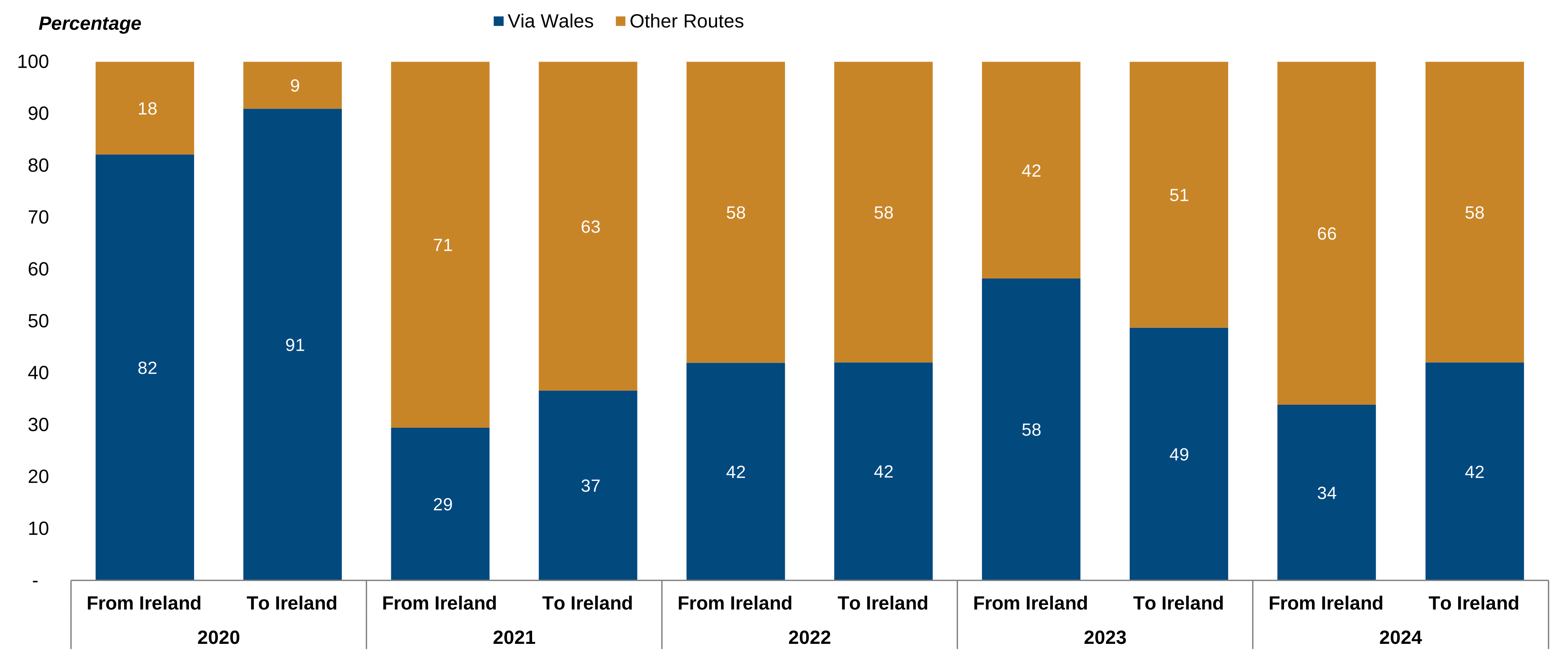
Description of figure 11: the clustered column chart showing the proportions of goods that were carried through Welsh ports between the Republic of Ireland and the continent from 2020 to 2024.
Source: Welsh Government analysis of Central Statistical Office Ireland data
Sea passengers
This section looks at the total number of sea passengers through Welsh ports, this includes passengers travelling by foot, those travelling in vehicles and those travelling as the driver of a goods vehicle.
In 2024, a total of 1.9 million sea passengers travelled between Wales and the Republic of Ireland. 1.5 million (78%) of these passed through Holyhead with the remainder using the ports of Fishguard (13.2%) and Milford Haven (8.8%). (StatsWales).
Since 2000, passenger movements between Ireland and Welsh ferry ports have been in decline. The number of ferry passengers using Welsh ports remained roughly stable since 2012, before a steep decline in 2020 as a result of travel restrictions related to the COVID-19 pandemic. (Figure 12).
In 2024, the number of ferry passengers decreased by 8.0% compared to 2023 (Figure 12).
In 2024, sea passenger traffic through Holyhead port decreased by 7.4% compared to 2023. Sea passenger numbers through Milford Haven decreased by 28.7% over the same period. These are the lowest figures outside the pandemic and since records began in 2003. Unlike the other two ports, sea passengers at Fishguard increased by 8.5% in 2024 compared to 2023.
The Pembroke Dock – Rosslare passenger route data is grouped under ‘Milford Haven’ by the Department for Transport
Figure 12: sea passengers between Wales and Republic of Ireland ports, 2006 to 2024
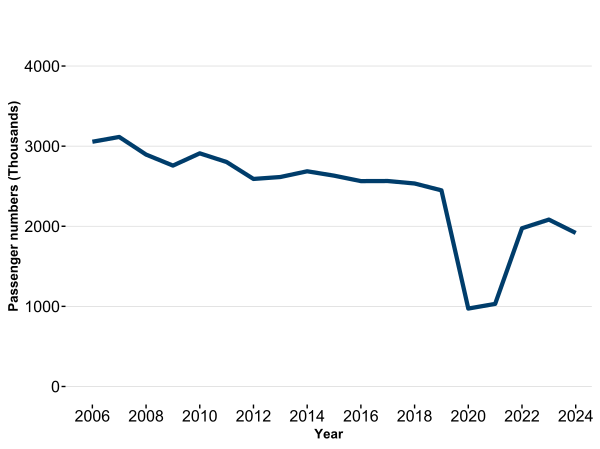
Description of figure 12: the line chart shows the time series for total number of sea passengers travelling between Wales and Republic of Ireland ports from 2006 to 2024. In 2024, the number of ferry passengers decreased by 8.0% compared to 2023.
Source: Welsh Government analysis of Department for Transport Maritime data
Quality information
Context
Related publications
The Department for Transport produces a range of statistics relating to the maritime sector presenting information on domestic waterborne freight, ports, sea passengers, shipping fleets and sea farers. In addition, they produce UK port freight interactive dashboard (Department for Transport) that is useful in understanding UK wide sea statistics
The Northern Ireland Statistics and Research Agency publish an annual statistical bulletin titled 'Northern Ireland Ports Traffic' providing statistics on passenger and freight traffic through Northern Ireland ports.
Relevance
These figures are compiled by the Department for Transport (DfT) and Central Statistical Office Ireland (CSO Ireland). The UK-level data, together with a full description of the sources and methods used to compile these data can be found on the GOV.UK website (Maritime and shipping statistics (Department for Transport)). These statistics are used within and outside the Welsh Government to monitor trends in sea transport and as a baseline for further analysis. They are also used by the Welsh Government to assess the impact of the UK’s departure from the European Union.
Accuracy
Freight data
Source of data
Port freight traffic statistics are based on a combination of data reported to the DfT by port authorities and shipping lines or their agents. Prior to 2000, reporting was by port authorities only. The current collection arrangements for port freight traffic statistics were introduced on 1 January 2000 to meet the requirements of the European Commission (EC) Maritime Statistics Directive (Council Directive 95/64/EC on statistical returns in respect of the carriage of goods and passengers by sea, recast as Directive 2009/42/EC).
Coverage
The statistics relate to traffic to and from ports in Wales. UK-level figures do not cover ports in the Isle of Man or the Channel Islands.
Major and minor ports
Ports are classified as either major or minor by DfT on the basis of current and historical trends in cargo volumes. More detailed data are collected for major ports than for the minor ports, and this is reflected in the statistics which can be produced. Minor ports in Wales include: Barry, Mostyn, Neath, Llanddulas, Port Penrhyn and Burry Port.
Weights
Data presented in this release are based on the weight of freight traffic. All weights are tonnes gross, including crates and other packaging. The tare weights of containers, road goods vehicles, trailers and other items of transport equipment (i.e. the unloaded weight of the vehicle or equipment itself) are excluded.
Cargo types
Major port traffic is classified by cargo type. Cargo type is defined primarily in terms of the means by which the goods are loaded onto or off the vessel - although for some cargo types there is some further subdivision into broad commodities, the method of loading takes priority. A table of cargo types is shown below.
Unitised traffic
Containers
- 20 ft freight units (Cargo Code 31)
- 40 ft freight units (Cargo Code 32)
- Freight units > 20 ft & < 40 ft (Cargo Code 33)
- Freight units > 40 ft (Cargo Code 34)
Roll-on/Roll-off (self- propelled)
- Road goods vehicles with or without accompanying trailers (Cargo Code 51)
- Passenger cars, motorcycles and accompanying trailers/caravans (Cargo Code 52)
- Passenger buses (Cargo Code 53)
- Import/Export motor vehicles (Cargo Code 54)
- Live animals on the hoof (Cargo Code 56)
- Other mobile self-propelled units (Cargo Code 59)
Roll-on/Roll-off (non-self- propelled)
- Unaccompanied road goods trailers & semi-trailers (Cargo Code 61)
- Unaccompanied caravans and other road, agricultural and industrial vehicles (Cargo Code 62)
- Rail wagons, shipborne port to port trailers, and shipborne barges engaged in goods transport (Cargo Code 63)
- Other mobile non-self-propelled units (Cargo Code 69)
Non-unitised traffic
Liquid Bulk
- Liquefied gas (Cargo Code 11)
- Crude oil (Cargo code 12)
- Oil products Cargo code 13)
- Other liquid bulk products (Cargo code 19)
Dry Bulk
- Ores (Cargo code 21)
- Coal (Cargo code 22)
- Agricultural products (Cargo code 23)
- Other dry bulk (Cargo code 29)
Other general cargo
- Forestry products (Cargo 91)
- Iron and steel products (Cargo 92)
- Other general cargo & containers < 20 ft (Cargo code 99)
Unitised goods
Goods which are lifted on or off the vessel in large (20 foot or longer) shipping containers, or rolled on or off in one of a variety of self-propelled or towed units are said to be unitised cargoes. For these cargo types, the number of units as well as the weight of goods is recorded. Subsets of unitised goods are main freight units consisting of all containers and those ro-ro units which are designed to carry freight (categories 51, 61 and 63 above). The purpose of the main freight unit classification is that it excludes those ro-ro units which are not freight carrying – i.e. passenger vehicles, trade vehicles, and other specialised vehicles and trailers.
Geographical classification of traffic
UK port traffic is classified geographically according to where the goods were last loaded or next unloaded at the other end of the sea journey. All traffic is either domestic or international.
Sea passenger data
These figures are compiled by the Department for Transport (DfT). UK-level data, together with a full description of the sources and methods used to compile these data can be found on the GOV.UK website (Maritime and shipping statistics (Department for Transport)).
Source of data
International ferry passenger statistics are collected monthly from ferry operators by DfT. They include drivers of lorries, coaches and other vehicles but exclude passengers on purely domestic routes.
Ship arrival statistics
They are compiled by the Department for Transport and a link to the UK-level data, together with a full description of the sources and methods used to compile these data can be found on the GOV.UK website (Maritime and shipping statistics (Department for Transport)).
Source of data
The primary source used was commercially obtained vessel movement data from Lloyds List Intelligence (LLI) which is now merged with other information on ship movements obtained by the Department for Transport through the system described above for all cargo or passenger carrying movements at major ports and the sea passenger survey. The three data sources are merged at the level of individual vessels calling at each port. The maximum number of calls from any of the three sources is taken as the final estimate.
Coverage and quality
The data are considered a reasonably accurate estimate of the number of commercial shipping movements at UK ports, but are not necessarily exact, and the coverage of certain vessel or traffic types may be variable at the margins. Ship arrival data are not classified as National Statistics. The following list shows the classification of ship types and the ships arrival that are not covered.
- Tankers (Trading) and includes Oil tanker, oil-chemical tanker, chemical tanker, liquid gas tanker, other tanker.
- Ro-Ro vessels (Trading) and includes Ro-Ro passenger, Ro-Ro containers, Ro-Ro other cargo.
- Fully cellular container vessels (Trading) include Container (fully cellular)
- Other dry cargo vessels (Trading) include Bulk carrier, bulk-oil carrier, refrigerated cargo, specialised carrier, general cargo, general cargo-passenger.
- Passenger (Trading) includes Passenger, cruise.
- Other vessels (non-trading) include Offshore supply, dredging, bunkering tanker.
Not included are Work boats which are unlikely to be carrying cargoes (Non-trading) and includes Fish catching, other fishing, offshore (except supply), tugs or towing/pushing craft, offshore vessels other than supply ships, such as drilling vessels, pilot vessels, research ships, fishing boats, military vessels, research, other work vessels, non-seagoing ships, non-merchant ships, non-propelled vessels, non-ship structures, vessels of unknown or unrecorded type.
Timeliness and punctuality
This bulletin reports on Sea Transport in Wales during 2024. Information covers traffic to and from ports in Wales. UK-level figures do not cover ports in the Isle of Man or the Channel Islands. This bulletin is based on annual data which is published by the Department for Transport.
Related publications are available from the Statistics and Research website.
Sea Transport statistics for Wales are available on the StatsWales website.
Accessibility and clarity
This statistical bulletin is pre-announced and then published on the Statistics & Research website and is accompanied by tables on our StatsWales website.
Comparability and coherence
The Department for Transport produces a range of statistics relating to the maritime sector presenting information on domestic waterborne freight, ports, sea passengers, shipping fleets and sea farers.
Official statistics status
All official statistics should show the standards of the Code of Practice for Statistics (UK Statistics Authority).
These are accredited official statistics. Their designation was confirmed in February 2011 following a full assessment against the Code of Practice (UK Statistics Authority). They comply with the standards of trustworthiness, quality and value in the Code of Practice for Statistics.
It is Welsh Government’s responsibility to maintain compliance with the standards expected of accreditation. If we become concerned about whether these statistics are still meeting the appropriate standards, we will discuss any concerns with OSR promptly. Accreditation can be cancelled or suspended at any point when the highest standards are not maintained, and reinstated when standards are restored.
Accredited official statistics are called National Statistics in the Statistics and Registration Service Act 2007.
Statement of compliance with the Code of Practice for Statistics
Our statistical practice is regulated by the Office for Statistics Regulation (OSR). OSR sets the standards of trustworthiness, quality and value in the Code of Practice for Statistics that all producers of official statistics should adhere to.
All of our statistics are produced and published in accordance with a number of statements and protocols to enhance trustworthiness, quality and value. These are set out in the Welsh Government’s Statement of Compliance.
These accredited official statistics (OSR) demonstrate the standards expected around trustworthiness, quality and public value in the following ways.
Trustworthiness
These statistics use data compiled by the Department for Transport (DfT) and Central Statistical Office Ireland (CSO Ireland). The UK-level data, together with a full description of the sources and methods used to compile these data can be found on the GOV.UK website (Maritime and shipping statistics (Department for Transport)).
These statistics are pre-announced on the Statistics and Research area of the Welsh Government website. Access to the data during processing is restricted to those involved in the production of the statistics, quality assurance and for operational purposes. Pre-release access is restricted to eligible recipients in line with the Code of Practice (UK Statistics Authority).
Quality
The published figures provided are compiled by professional analysts using the latest available data and applying methods using their professional judgement and analytical skillset. Statistics published by Welsh Government adhere to the Statistical Quality Management Strategy which supplements the Quality pillar of the Code of Practice for Statistics UK Statistics Authority) and the European Statistical System principles of quality for statistical outputs.
The statistical release is then drafted, signed off by senior statisticians and published in line with the Welsh Government’s statement on confidentiality and data access which is informed by the trustworthiness pillar contained in the Code of Practice for Statistics UK Statistics Authority).
Value
The purposes of this statistical release and the accompanying data published on StatsWales are to provide evidence for policy development and to inform the media and wider public about the changes to the Welsh sea transport.
You are welcome to contact us directly with any comments about how we meet these standards. Alternatively, you can contact OSR by emailing regulation@statistics.gov.uk or via the OSR website.
Well-being of Future Generations Act (WFG)
The Well-being of Future Generations Act 2015 is about improving the social, economic, environmental and cultural wellbeing of Wales. The Act puts in place seven wellbeing goals for Wales. These are for a more equal, prosperous, resilient, healthier and globally responsible Wales, with cohesive communities and a vibrant culture and thriving Welsh language. Under section (10)(1) of the Act, the Welsh Ministers must (a) publish indicators (“national indicators”) that must be applied for the purpose of measuring progress towards the achievement of the wellbeing goals, and (b) lay a copy of the national indicators before Senedd Cymru. Under section 10(8) of the Well-being of Future Generations Act, where the Welsh Ministers revise the national indicators, they must as soon as reasonably practicable (a) publish the indicators as revised and (b) lay a copy of them before the Senedd. These national indicators were laid before the Senedd in 2021. The indicators laid on 14 December 2021 replace the set laid on 16 March 2016.
Information on the indicators, along with narratives for each of the well-being goals and associated technical information is available in the Wellbeing of Wales report.
Further information on the Well-being of Future Generations (Wales) Act 2015.
The statistics included in this release could also provide supporting narrative to the national indicators and are used by public services boards in relation to their local well-being assessments and local well-being plans.