
Relative income poverty: April 2023 to March 2025 (Official Statistics in Development)
For the period up to March 2025, households with an income less than 60% of the UK median, analysed by attributes such as age, economic status and family type.
In this page
What is relative income poverty?
We define a person to be living in relative income poverty if they live in a household where the total household income from all sources is less than 60% of the average UK household income (as given by the median). All figures in this report relate to relative income poverty in Wales after housing costs such as mortgage interest payments/rent, water rates and structural house insurance were paid.
The data we have for relative income poverty comes from the Households Below Average Income (HBAI) report published by the Department of Work and Pensions (DWP).
The Family Resources Survey (FRS) is an annual household survey managed by the DWP. It forms the basis for the Households Below Average Income (HBAI) datasets (DWP), from which official statistics on low income, including relative income poverty, are produced on an annual basis.
All data in this report is Welsh Government analysis of the DWP's Households below average income dataset, based on the Family Resource Survey (DWP).
As explained in the quality and methodology information section, DWP is changing how FRS statistics are produced to improve poverty statistics.
The main change this year is that information on the major state benefits and tax credits is now based on administrative data rather than survey responses, to reduce missing or under‑reported income. The improved approach is sometimes referred to as administrative-linked (or admin-linked) data; with data which has not had the change applied being referred to as unlinked data.
This change applies from financial year ending (FYE) 2022 onwards. As a result, the first 3 year average produced on the new basis covers FYE 2021 to FYE 2023 (due to issues affecting FYE 2021).
Key low‑income measures after this point have changed, creating a break in the data series at FYE 2022. Users should not make direct comparisons of the low-income measures across this break. Our charts clearly mark the break with a dotted line, and tables come with explanatory notes.
More improvements are planned for the next few years, meaning users should be prepared for future revisions.
Because of this, this statistical release is now classed as Official Statistics in Development rather than Accredited Official Statistics.
Section 13 of this report provides a summary of the impact off to using linked administrative data.
Main findings
- Between financial year ending (FYE) 2023 and FYE 2025, 22% of all people in Wales were living in relative income poverty.
- The percentage of people living in relative income poverty has been relatively stable in Wales for the last two decades.
- The impact of using linked administrative data has in general been to decrease relative income poverty rates for different groups by one or two percentages points compared to the previous method, however this varies from a very slight increase for some child poverty figures, to a four percentage point decrease for pensioner poverty in one period.
- Patterns of variation in relative income poverty between different groups (such as age, economic status and family type) are broadly similar to those seen in previous years.
- A new measure for deep material poverty has been introduced. Between FYE 2024 and FYE 2025, 10% of children in Wales were in deep material poverty.
Figure 1: Percentage of people in each UK country living in relative income poverty (after housing costs), three-financial-year averages [Note 1]
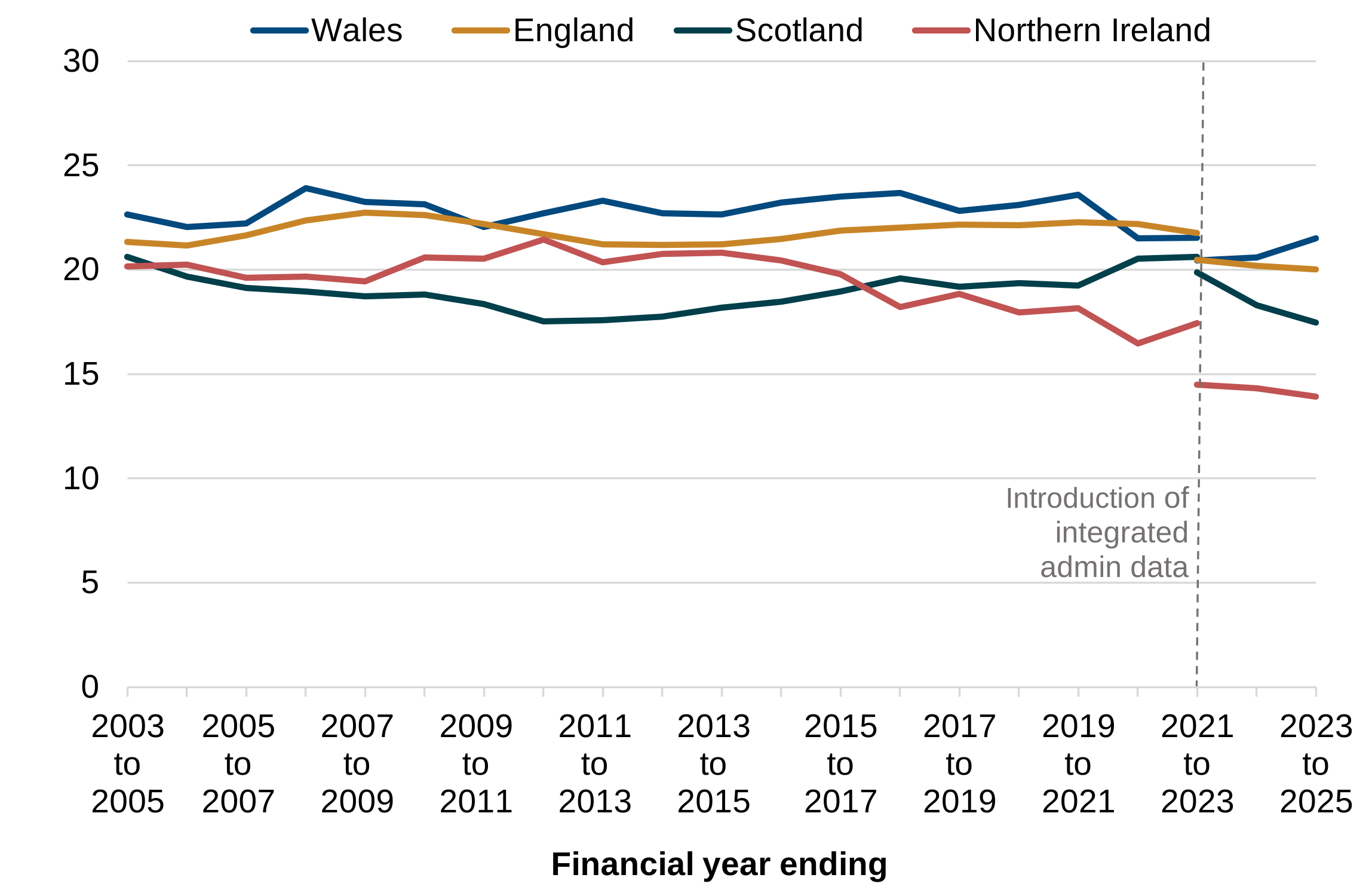
Description of figure 1: a line chart showing that in England the percentage of people living in relative income poverty was slightly lower than in Wales at 20% between FYE 2023 and FYE 2025. In Scotland and Northern Ireland the figures were 17% and 14% respectively.
[Note 1]: Data from the period FYE 2021 to 2023 are not comparable with previous periods due to the introduction of integrated administrative data on benefits not used previously.
Children in relative income poverty
In Wales, 32% of children were living in relative income poverty in FYE 2023 to FYE 2025. This figure has increased slightly from 30% in the previous period (revised figure for FYE 2022 to FYE 2024). However, please take care when interpreting change over the short term because trends can be volatile due to small sample sizes. This two percentage point increase is within the range of typical short term variation seen for this measure, and is not statistically significant.
Figure 2: percentage of children in each UK country living in relative income poverty (after housing costs), three-financial-year averages [Note 1]
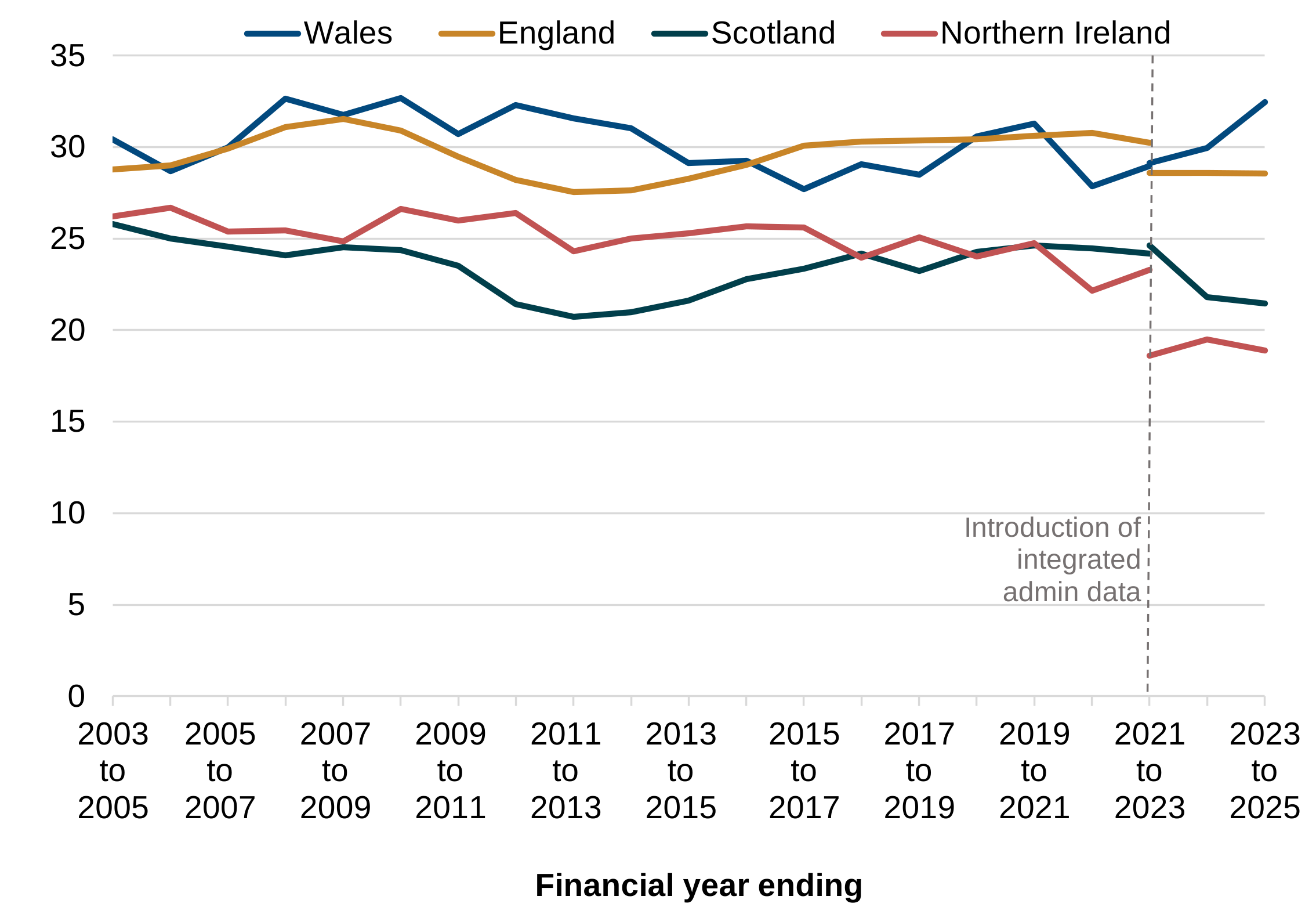
Description of figure 2: a line chart showing that in England the percentage of children living in relative income poverty was slightly lower than in Wales at 29% between FYE 2023 and FYE 2025. In Northern Ireland and Scotland the figures were 21% and 19% respectively.
[Note 1]: Data from the period FYE 2021 to 2023 are not comparable with previous periods due to the introduction of integrated administrative data on benefits not used previously.
Figure 3: percentage of each age group in Wales living in relative income poverty (after housing costs), three-financial-year averages [Note 1]
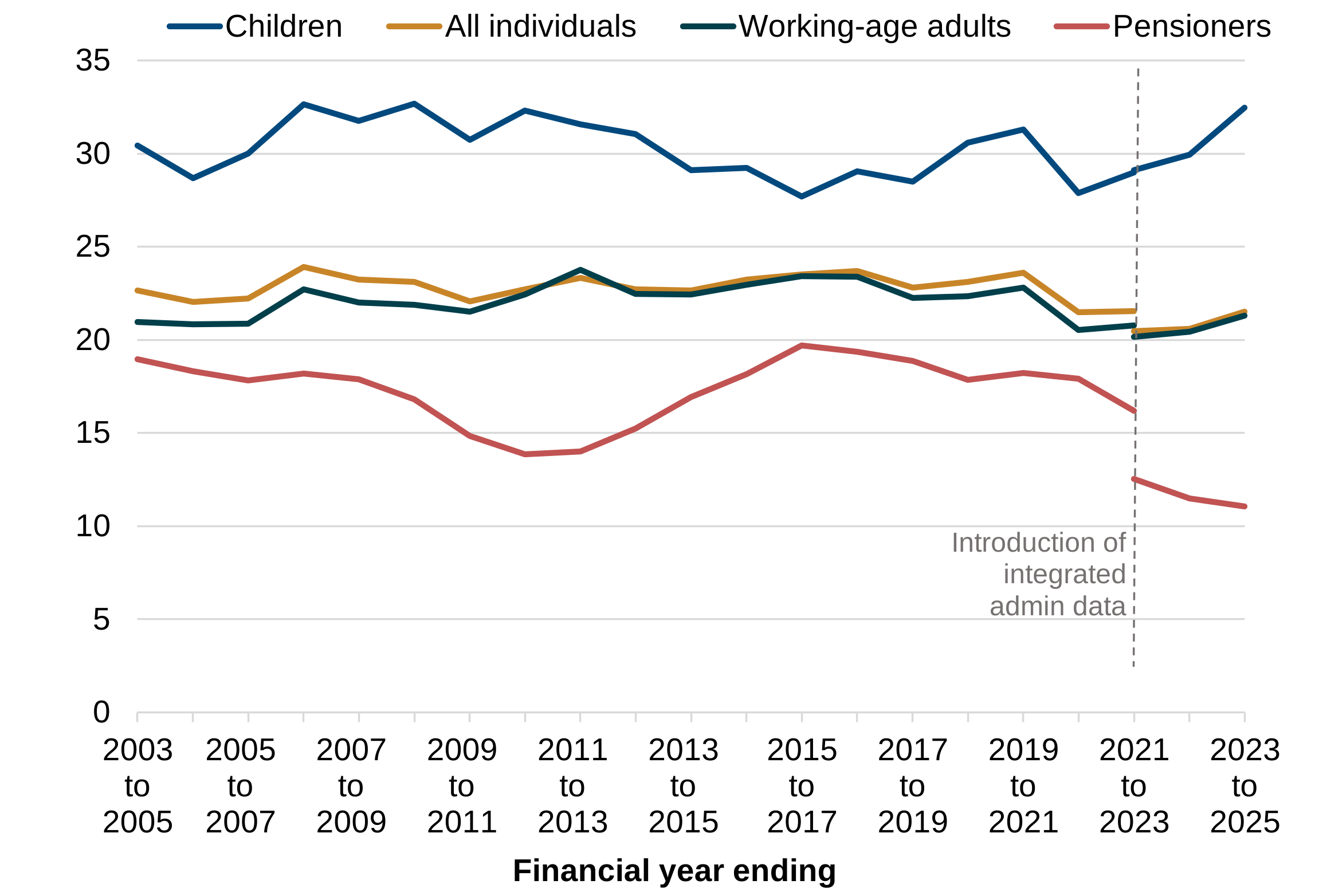
Description of figure 3: a line chart showing that children are consistently the age group most likely to be in relative income poverty and pensioners are the age group least likely to be in relative income poverty.
[Note 1]: Data from the period FYE 2021 to 2023 are not comparable with previous periods due to the introduction of integrated administrative data on benefits not used previously.
This was also true across all four UK nations. A possible reason for this is that adults with children are more likely to be out of work or working fewer hours due to childcare responsibilities.
Working-age adults in relative income poverty
- 21% of working-age adults in Wales were in relative income poverty for the period FYE 2023 to FYE 2025, this is the same percentage as the previous period (FYE 2022 to FYE 2024).
- This is above that seen for England (19%), Scotland (18%) and Northern Ireland (13%) for the latest period.
Pensioners in relative income poverty
- 11% of pensioners in Wales were living in relative income poverty between FYE 2023 and 2025, this is the same percentage as the previous period (revised figure for FYE 2022 to FYE 2024).
- In England and Scotland the percentage of pensioners living in relative income poverty was 13%; in Northern Ireland it was 8%.
This release contains data for one of the national wellbeing indicators (18: Percentage of people living in households in income poverty relative to the UK median: measured for children, working age and those of pension age).
There is an associated milestone with this national indicator: reduce the poverty gap between people in Wales with certain key and protected characteristics (which mean they are most likely to be in poverty) and those without those characteristics by 2035. Commit to setting a stretching target for 2050.
Housing tenure
Figure 4: percentage of people in each type of housing tenure in Wales, living in relative income poverty (after housing costs), FYE 2023 to FYE 2025
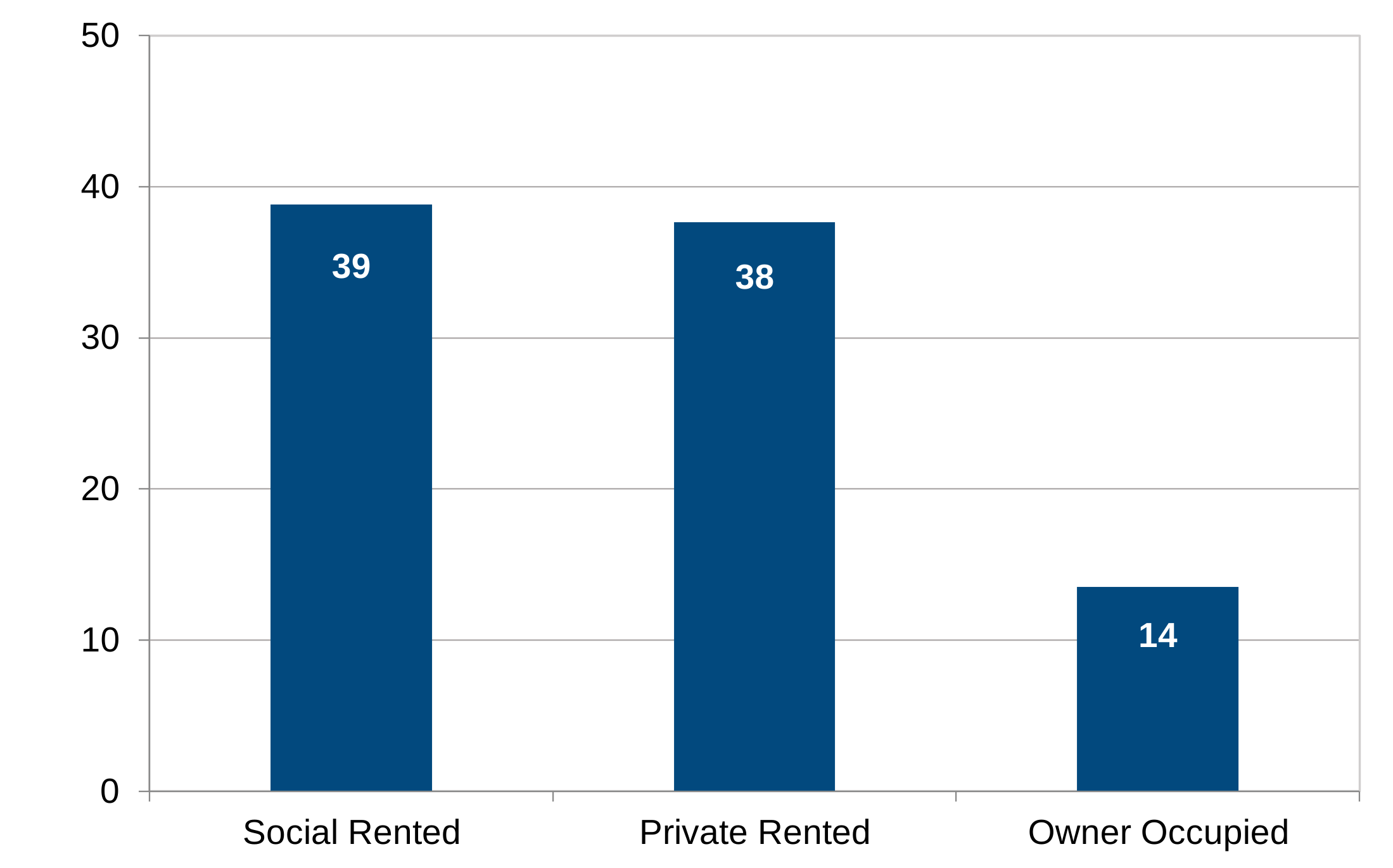
Description of figure 4: a bar chart showing that people in social rented housing (39%) and private rented housing (38%) were more likely to be in relative income poverty than those in owner occupied housing (14%).
However, when considering all people in Wales in poverty (680,000), most of those people lived in owner occupied housing (43%) followed by those living in social rented housing (31%) and private rented housing (27%). Note that these percentages do not sum to 100% due to rounding.
Economic status and type of employment
Although care should be taken with interpretation due to the small number of sampled households, children living in a workless household remained at higher risk of relative income poverty (at 55%) compared to children living in a working household (at 28%) in FYE 2023 to FYE 2025.
Within working households, there was also a marked difference between the likelihood of poverty for children in households where all the adults work (22%) compared to households where some (but not all) adults work (47%).
Figure 5: the percentage of children in Wales who were living in relative income poverty (after housing costs), by economic status of household, three-financial-year averages
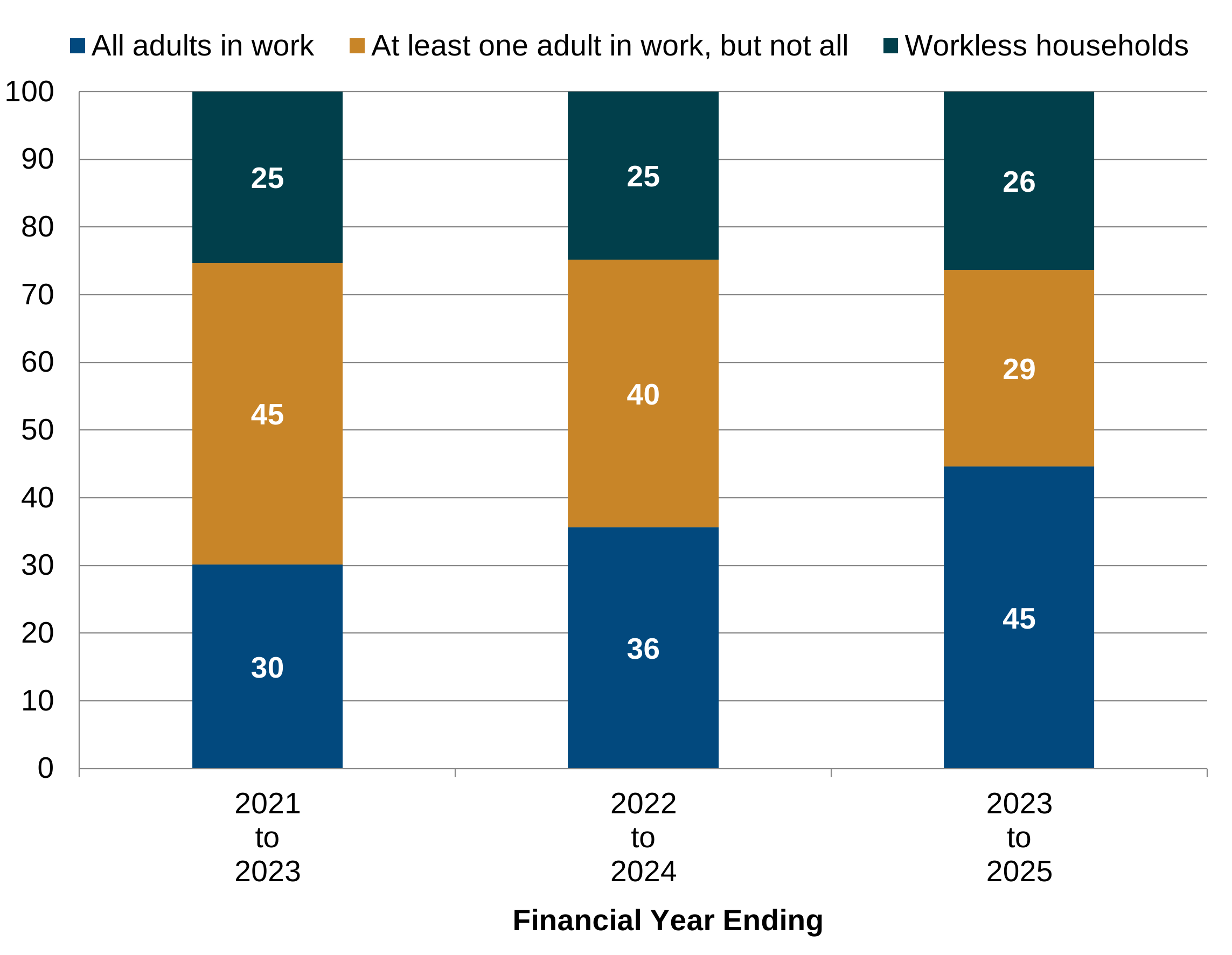
Description of figure 5: a 100% stacked bar chart that shows, in the most recent period, 74% of children who were living in relative income poverty lived in working households (around 160,000 children).
The proportion of children in poverty that lived in households where all adults worked has increased from 30% in the period ending FYE 2023 (the earliest comparable period) to 45% in the period ending FYE 2025. Likewise the proportion that lived in households where some but not all adults worked has decreased from 45% to 29%. Children in household where no adults work have consistently comprised around of quarter of those in poverty over this period.
Figure 6: percentage of working-age adults in each household employment type in Wales, who were living in relative income poverty (after housing costs), FYE 2023 to FYE 2025
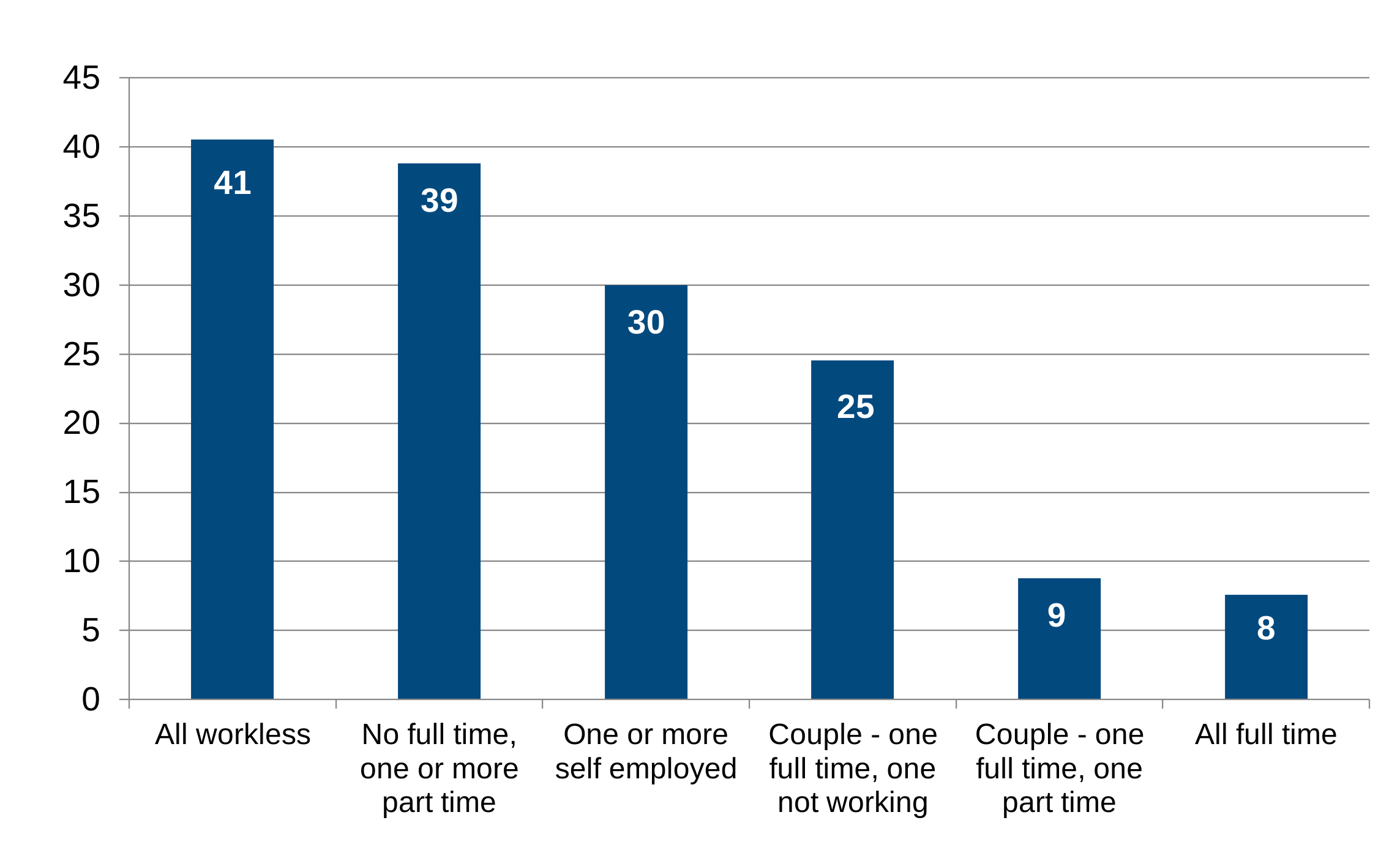
Description of figure 6: a bar chart showing that 41% of working-age adults living in workless households lived in poverty in FYE 2023 to FYE 2025 compared with 8% of working-age adults living in households where all adults worked.
Living with people who work reduces the likelihood of poverty. This risk is especially reduced where all adults work full time. However as households where nobody works are relatively rare most working-age adults in poverty lived in working households. 63% of working aged adults in poverty lived in households where some or all adults worked in the period ending FYE 2025. This has increased from 52% in the period ending FYE 2023.
Family characteristics
Figure 7: percentage of people in each family type in Wales who were living in relative income poverty (after housing costs), FYE 2023 to FYE 2025
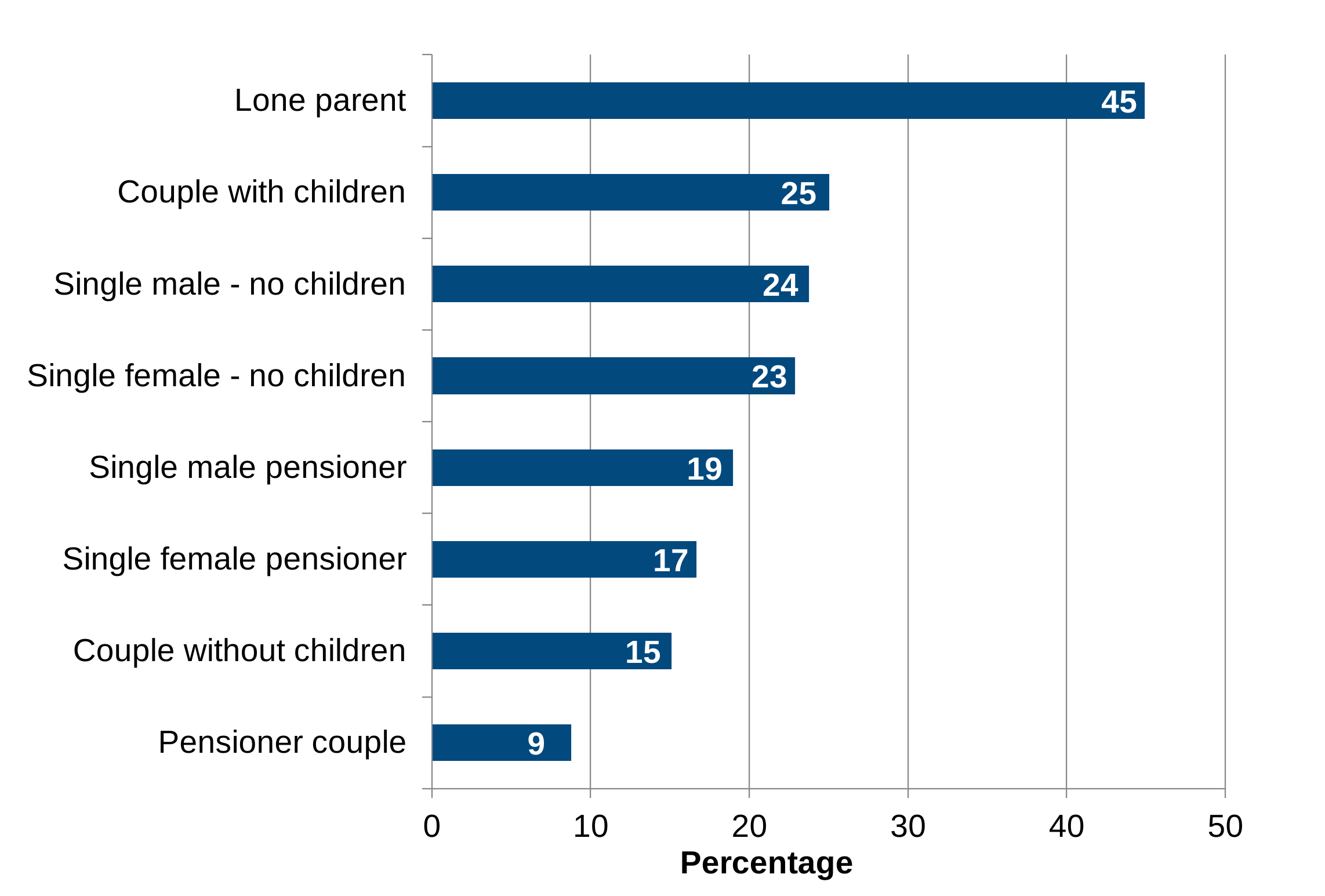
Description of figure 7: a bar chart that shows that in the period FYE 2023 to FYE 2025:
- lone parent households were the family type most likely to be in relative income poverty (at 45%)
- 25% of households composed of a couple with children; 24% of single male and 23% of single female households were in relative income poverty.
The risk of being in poverty for lone parent families has increased from 37% in the period ending FYE 2023 to 45% in the period ending FYE 2025. The risk for all other family types was relatively stable over this period.
What type of families live in poverty?
Around a decade ago, most people living in relative income poverty were living in households with children. However, the pattern is now less clear with a similar proportion of those who are in relative income poverty living in households with children and without children.
Figure 8: the people in Wales who were living in relative income poverty (after housing costs), by family household type, FYE 2023 to FYE 2025
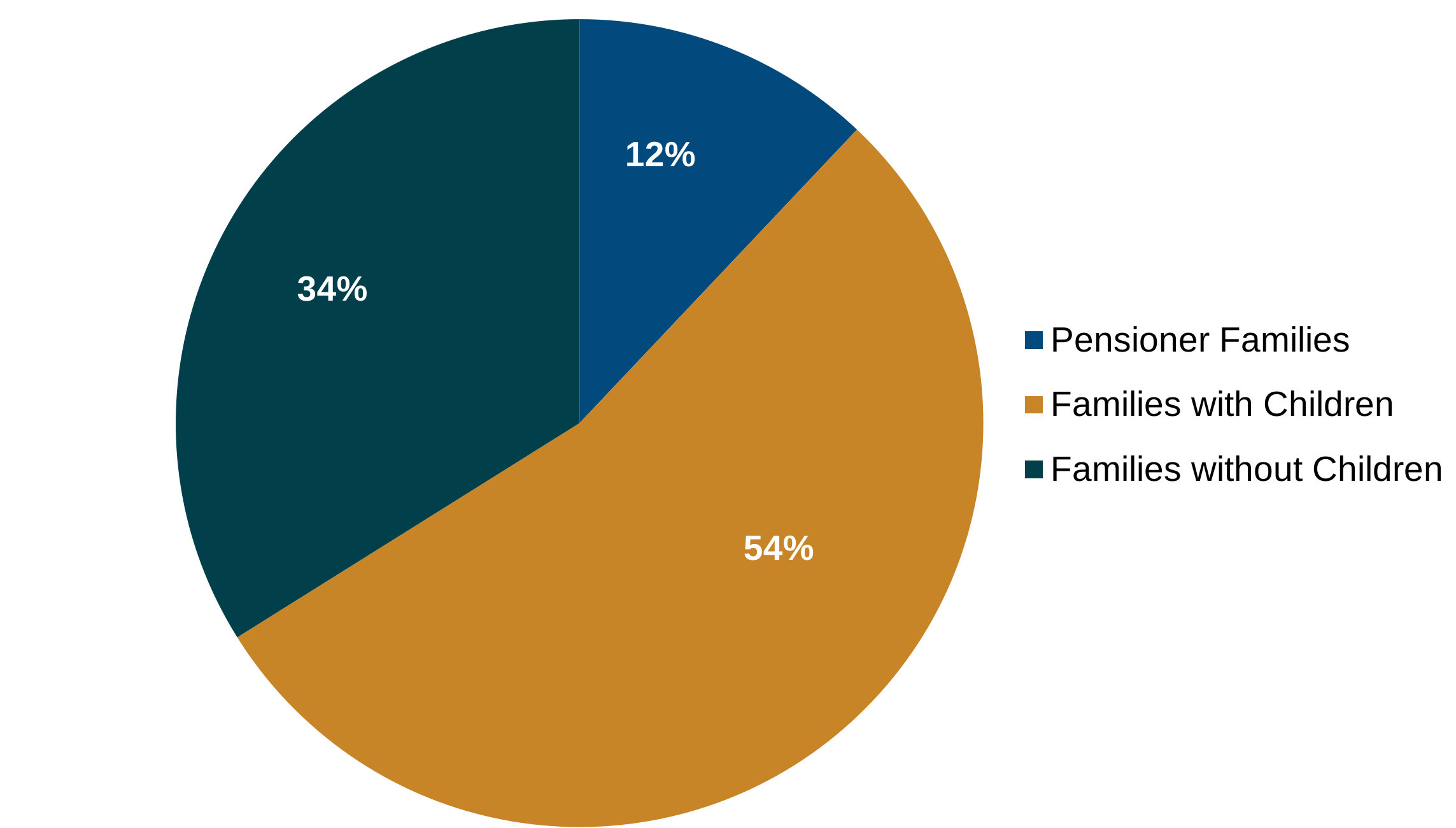
Description of Figure 8: A pie chart showing that, of people living in relative income poverty, 54% were in household with children, 34% were in household without children and 12% were in pensioner household.
Children who lived in households where the youngest child was aged 0 to 4 accounted for 60% of all children that were in relative income poverty in FYE 2022 to FYE 2025.
Figure 9: percentage of children in Wales who were living in relative income poverty (after housing costs), by number of children in the household, FYE 2023 to FYE 2025
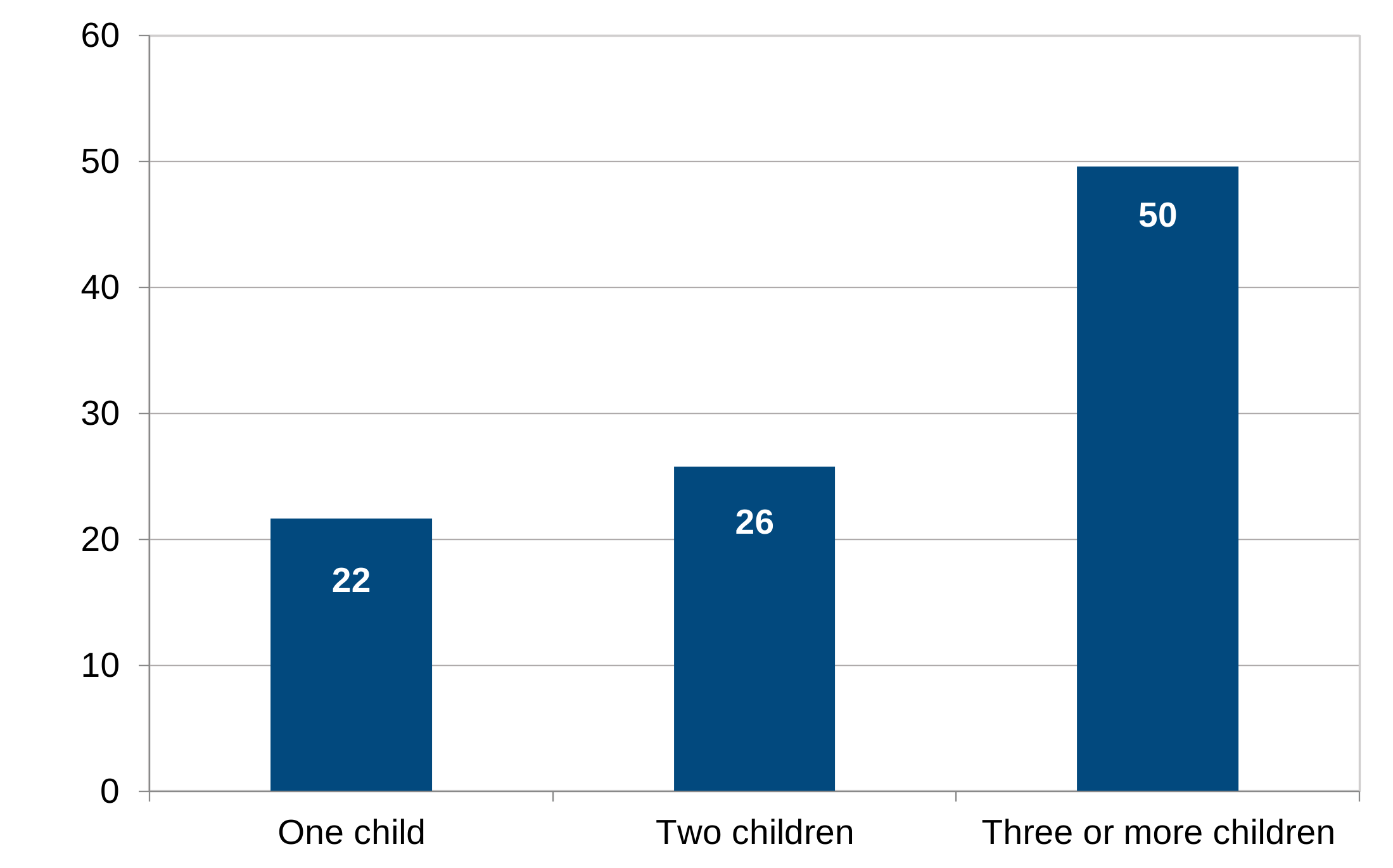
Description of figure 9: a bar chart showing that half of the children who lived in households where there were three or more children were in relative income poverty between FYE 2023 and FYE 2025. This compared with 26% of children living in two child households and 22% living in one child households.
Ethnicity
Households in which the head of household was from a Black, Asian or minority ethnic group were more likely to be in relative income poverty than those with a head of household from a white ethnic group. For the period FYE 2021 to FYE 2025:
- There was a 48% likelihood of people whose head of household comes from a Black, Asian or minority ethnic group living in relative income poverty.
- This compares to a 19% likelihood for those whose head of household comes from a white ethnic group.
- However, because the vast majority of households in Wales have a head who is from a white ethnic group, most people (89%) who were living in relative income poverty were from such households.
For UK data by ethnic group (including further breakdowns by ethnicity) please see the HBAI tables produced by the DWP.
Disability
In the survey data, disabled people are identified as those who report any physical or mental health condition or illness that are expected to last 12 months or more, and which limit their ability to carry out day-to-day activities a little, or a lot. This is in line with the Equality Act definition.
Figure 10: percentage of those who were living in relative income poverty (after housing costs), by disability in the family and age, FYE 2023 to FYE 2025
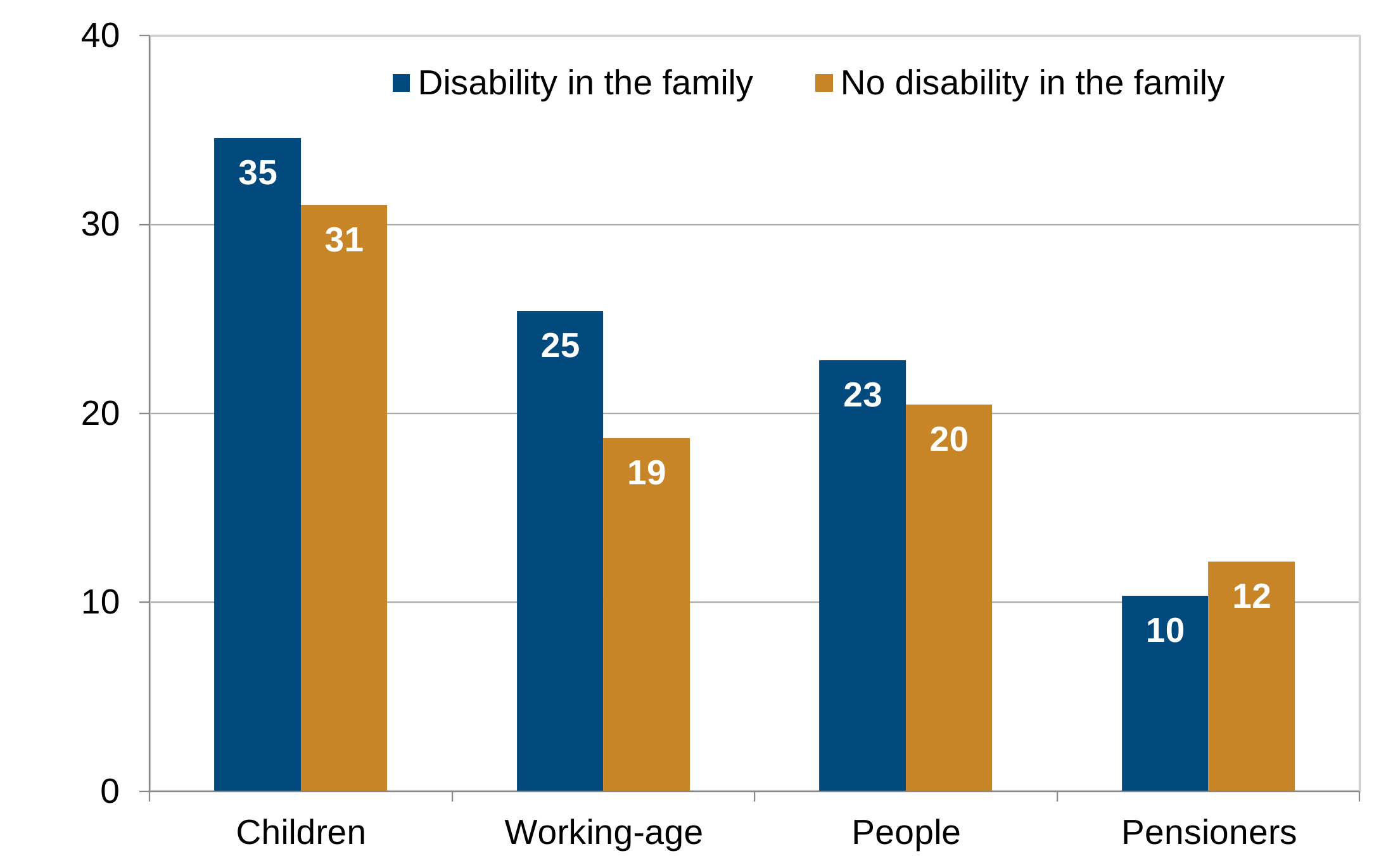
Description of figure 10: a bar chart showing that those living in households where there was a disability in the family were more likely to be in poverty for all age groups except pensioners.
Food banks and food security
Between FYE 2023 and FYE 2025 over half (53%) of people whose head of household had used a foodbank in the last 12 months were in relative income poverty.
Almost 1 in 10 (9%) of all people in relative income poverty said they had used a foodbank in the last 12 months. This compares with 4% of the general population.
The FRS includes questions related to household food security. Food security is separate from food bank usage and is derived from information on a household’s access, attitude and behaviour around food over the last 30 days. Based on this information households are grouped into four food security categories: high, marginal, low and very low. More detail on food security can be found in the methodology report.
Figure 11: percentage of all people, working age adults and children in each food security category for those in relative income poverty and the general population, FYE 2023 to FYE 2025
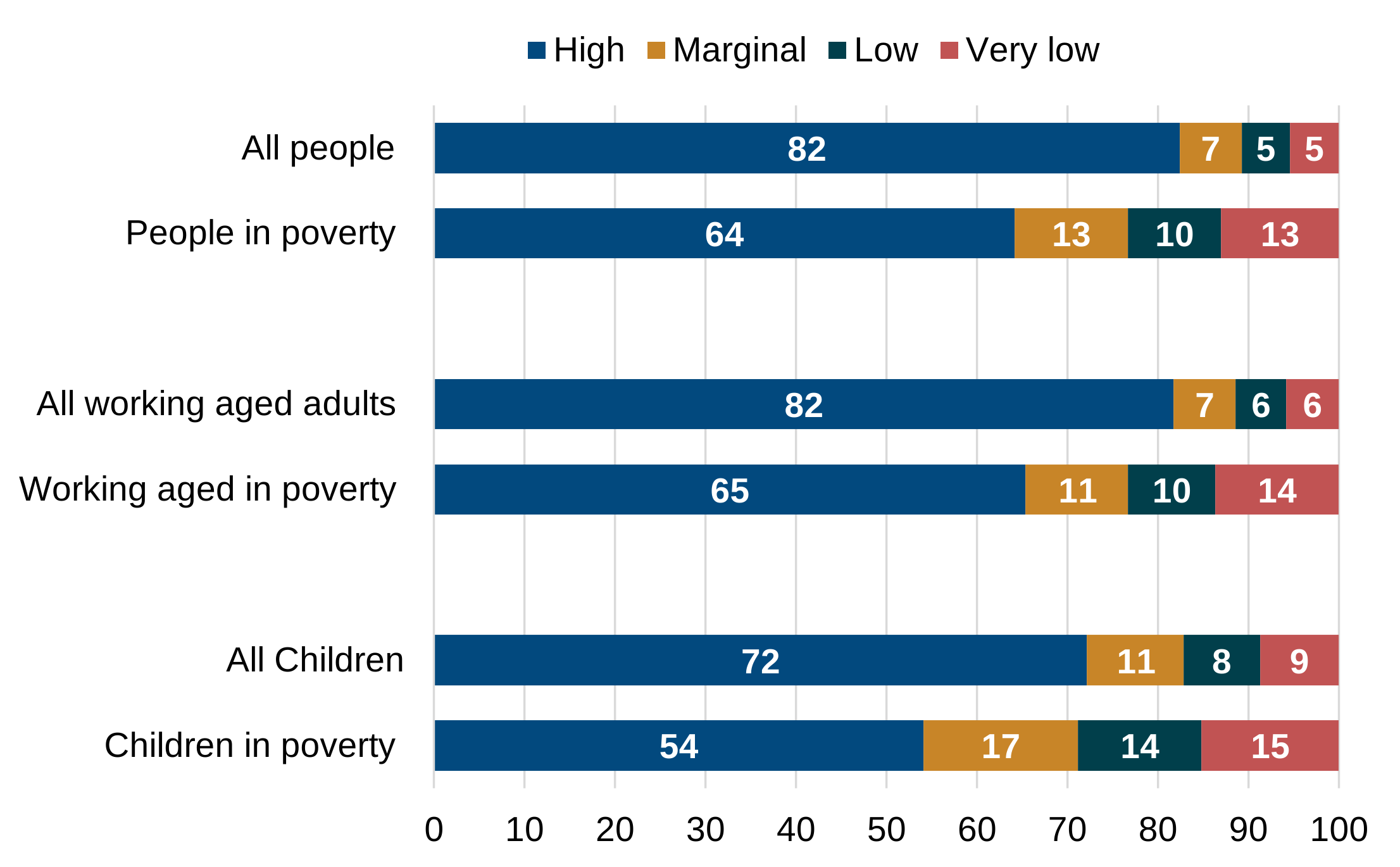
Description of figure 11: a 100% stacked bar chart that shows those in relative income poverty were less likely to be in households with high food security compared with the general population. In the general population 72% of children, 82% of working aged adults and 82% of all people were in households with high food security between FYE 2023 and 2025. This compares with 54% of children, 65% of working aged adults and 64% of all people in relative income poverty.
Note that pensioner data is not presented in the above figure due to low sample sizes. 95% of pensioners lived in households with high food security. This means that 5% of pensioners lived in households with marginal, low or very low food security.
Migrants
People in households whose head of household was a migrant (those born outside of the UK) were more likely to be in poverty compared to those who lived in households with a non-migrant head. Between FYE 2021 and 2025, 34% of people in households whose head of household was a migrant were in relative income poverty compared with 20% of those in households headed by non-migrants.
This is a similar to rate to England (33%) and Scotland (33%) and higher than Northern Ireland (21%).
While people in households whose head of household was a migrant have a higher rate of poverty compared with non-migrants they comprise only 14% of those in relative income poverty due to the comparatively small number of migrants in Wales.
Sexual orientation
The poverty rate was slightly lower for households where the head of household was heterosexual compared with households where the head of household was lesbian, gay, bisexual or thought of themselves as something other than heterosexual.
Between FYE 2023 and 2025, 23% of people in households where the head of household was straight were in poverty compared with 25% of people in households where the head of household was lesbian, gay, bisexual or thought of themselves as something other than heterosexual.
There is no data on the sexual orientation of the head of household for 23% of households in relative income poverty. This is because the head of household was either not present at the interview (and therefore was not asked the question) or chose not to give an answer. 18% of those in this group were in poverty.
Deep material poverty
As outlined in the UK government’s Child Poverty Strategy, Our Children, Our Future: Tackling Child Poverty (Cabinet Office), the new deep material poverty measure has been developed to capture children experiencing a deeper level of poverty than those identified in the relative income poverty statistics.
The deep material poverty measure is based on material deprivation, specifically whether families are lacking at least 4 out of 13 essential material deprivation items. The full list of these items can be found in the Deep material poverty: Financial year ending 2024 (DWP) report.
It will take until spring 2027 before we have the three‑year averages usually used to produce robust estimates for detailed breakdowns such as for countries. However given the importance of this new metric, DWP have published the first estimates of deep material poverty for UK countries and regions in this year’s report, as two‑year averages covering FYE 2024 to FYE 2025.
In Wales 10% of children were in deep material poverty for the period between FYE 2024 and FYE 2025. This corresponds to 67,000 children of the 650,000 children living in Wales. This compares with 14% of children in England, 11% of children in Scotland and 7% of children in Northern Ireland.
Impact of integrating survey and administrative data
This section provides charts and bullet points to illustrate the impact of administrative data linking on the key relative low-income measures for Wales. Note that the use of administrative data is the main reason that data for back-series years (from FYE 2021 to FYE 2023) have been updated from the FYE 2025 publication. There are a small number of other changes which have been made to the back-series at the same time as these improvements (see DWP’s latest HBAI quality and methodology information report) but the impacts of these other changes on low-income measures are much smaller.
The following trend charts show the previous estimates based on unlinked data as a solid line, and the new estimates which include the administrative data linking as a broken line, for comparison. The only two periods that have both types of estimate so far are FYE 2021 to FYE 2023, and FYE 2022 to FYE 2024, and for those data points the gap between the solid and broken lines on the chart shows the impact of the revision.
Figure 12: percentage of each age group in Wales living in relative income poverty (after housing costs) showing estimates using admin linked and unlinked data, three-financial-year averages
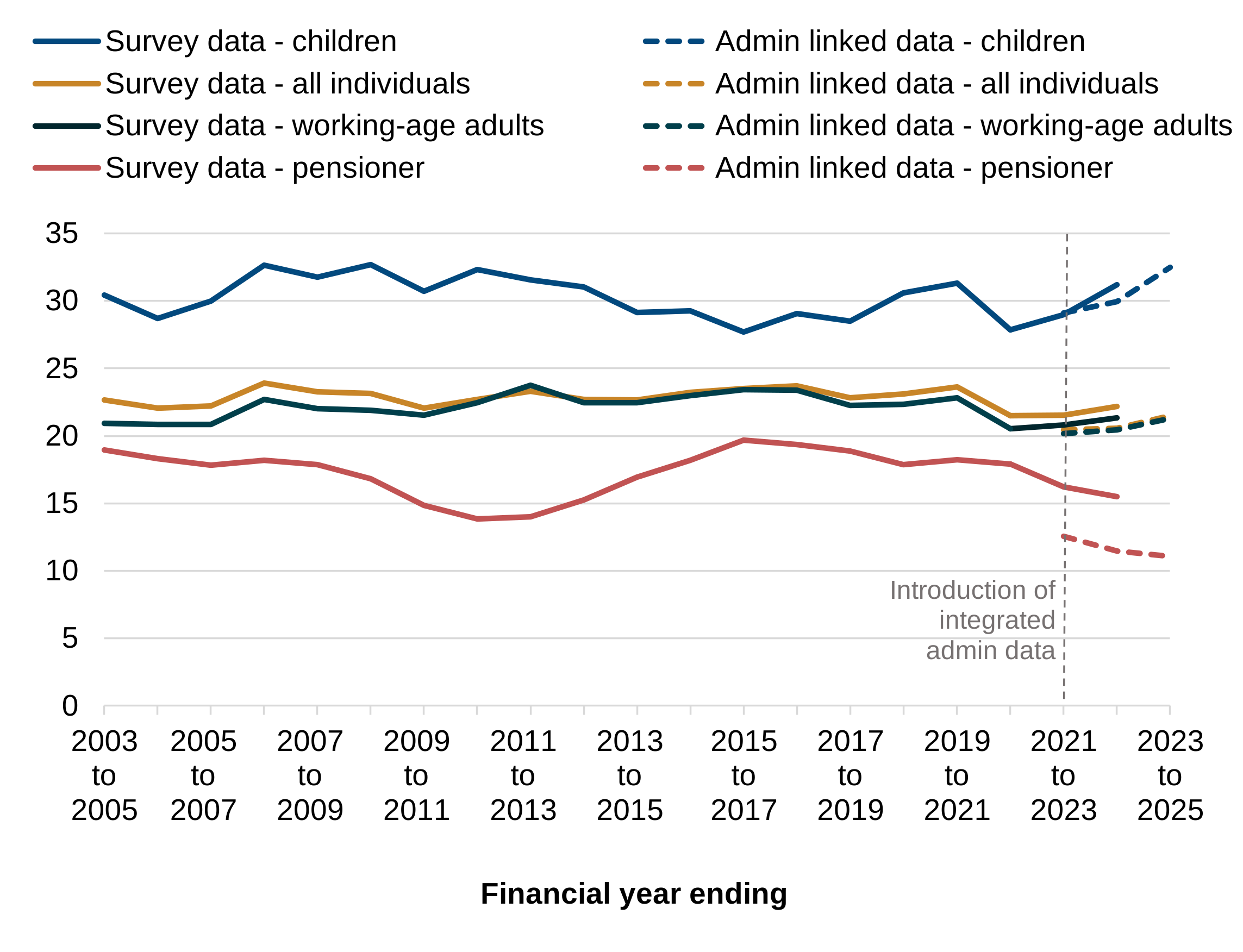
Description of figure 12: a line chart showing that for all individuals, children and working age-adults the difference between the admin linked and non-admin linked estimates for those in relative income poverty is within one or two percentage points. For pensioners the admin linked estimates for relative income is around four percentage points lower (from around 16% to around 12%).
Quality and methodology information
Summary information on what to keep in mind when interpreting these statistics can be found on the Relative income poverty series page.
It’s important to remember that these figures are based on results from the Family Resources Survey (FRS) which is based on a small sample for Wales (around 1,200 households in FYE 2025). We advise caution when looking at year on year changes as these are unlikely to be statistically significant. For more detailed methodological information go to the Relative income poverty: methodology page.
Transformation of Family Resources Survey statistics
DWP is making improvements to the FRS statistics over the next few years, which mean that some data will be revised and will not be comparable with previous years.
The improvements include linking benefits data and administrative earnings data to survey records to reduce underreporting of income and updating the way the statistics are scaled to population totals (known as grossing, or weighting).
Changes will be introduced gradually, as each new improvement is rolled out. For the 2026 data release, administrative data has replaced survey data in measuring income for the majority of DWP and His Majesty’s Revenue and Customs (HMRC) benefits. This will reduce the under-reporting of benefits that is currently seen in the FRS (and therefore HBAI) and improve data quality in both datasets.
This improvement also means there will be a structural break in the HBAI series at this point, and we advise users not to make a direct comparison of changes in income across the break. If comparisons across the break point are required users should follow the advice set out in the HBAI Background, Information and Methodology report (DWP).
Further details on these and future changes can be found in the FRS: release strategy (DWP) and the HBAI: release strategy (DWP). We have also published a Chief Statistician’s blog summarising the upcoming changes to poverty statistics.
FRS fieldwork during FYE 2025
During FYE 2025, survey fieldwork operations continued with face-to-face interviewing as the predominant way of completing the survey. Telephone interviewing was retained as an alternative based on household preference and interviewer availability. Across the UK achieved sample overall, 89% of FRS households were interviewed face-to-face during FYE 2025.
Impact of the coronavirus (COVID-19) pandemic
Fieldwork operations for the FYE 2021 FRS were rapidly changed in response to COVID-19 and the introduction of public health measures. Several factors impacted on response rates and characteristics of respondents to the survey.
Analysis of the HBAI data below UK level is not recommended using the FYE 2021 data as the combination of smaller sample sizes and additional bias means it is not possible to make meaningful statistical assessments of trends and changes in FYE 2021 compared to the pre-coronavirus level.
Any data points that span the FYE 2021 period do not include the FYE 2021 survey data in calculations, as it is judged to be of low quality. This means that affected estimates formerly calculated as 3 to 5 year rolling averages are based on 2 to 4 year rolling averages that omit the FYE 2021 survey data.
Due to the missing data year and the impact of the pandemic on survey response rates, the sample size was smaller than usual in the two periods ending FYE 2021 and FYE 2022. This means that for these periods data are more volatile, and larger changes need to be interpreted carefully.
More information on the FRS fieldwork can be found in the FRS Background Information and Methodology (DWP) report, and the HBAI Quality and Methodology Information (DWP) document provides further details on the composition of the FRS sample.
DWP continue to advise users that changes in estimates over recent years should be interpreted being mindful of the differences in data collection approaches across the period and the effect this had on sample composition. Details of this can be found in the technical reports which were issued alongside the statistical releases covering the pandemic.
Official statistics status
All official statistics should show the standards of the Code of Practice for Statistics (UK Statistics Authority).
These official statistics have in previous years been accredited as National Statistics, in accordance with the Statistics and Registration Service Act 2007, signifying compliance with the Code of Practice for Statistics.
National Statistics are accredited official statistics that meet the highest standards of trustworthiness, quality and public value.
They are accredited as National Statistics following an independent review by the UK Statistics Authority’s regulatory arm, the Office for Statistics Regulation (OSR).
It is Welsh Government’s responsibility to maintain compliance with the standards expected of accreditation. If we become concerned about whether these statistics are still meeting the appropriate standards, we will discuss any concerns with OSR promptly. Accreditation can be cancelled or suspended at any point when the highest standards are not maintained, and reinstated when standards are restored.
The data we have for relative income poverty comes from the Households Below Average Income (HBAI) report published by the DWP. Since the latest review by the Office for Statistics Regulation, DWP have continued to comply with the Code of Practice for Statistics, and have made a number of improvements. For more information please refer to the latest HBAI report on the DWP website. They comply with the standards of trustworthiness, quality and value in the Code of Practice for Statistics.
Accredited official statistics (OSR) are called National Statistics in the Statistics and Registration Service Act 2007.
The changes being introduced to the poverty statistics described in this report will lead to better data in the long run. However, because these changes are still ongoing, the figures are less certain than usual and will be revised in future as methods continue to improve. This impact could be greater when the data are broken down below UK level.
To be open and clear with users, the OSR have agreed that our poverty statistics for Wales being published in 2026 can be temporarily reclassified from Accredited Official Statistics to Official Statistics in Development. This signals that the data can still be used, but that figures are subject to revision as the changes continue to be embedded.
We are committed to helping users understand the developments and interpret changes appropriately. It is still appropriate to use these statistics, however users should take care interpreting trends before and after the change and be prepared for future revisions.
The same approach to reclassification is being taken in Scotland and Northern Ireland. UK-level FRS and HBAI outputs produced by DWP will continue to be published as Accredited Official Statistics. As noted in their regulatory work programme, the OSR are planning to undertake a compliance review of DWP’s statistics based on the transformed FRS.
Social model of disability
The Welsh Government accepts the social definition of disability, in which it is recognised that barriers in society act to disable people who have impairments or health conditions or who use British Sign Language. The Family Resources Survey captures data during the interview based around the Equality Act 2010 which uses the medical definition of disability ('a physical or mental impairment which has a substantial and long-term impact on a person’s ability to carry out normal day to day activities').
Statement of compliance with the Code of Practice for Statistics
Our statistical practice is regulated by the Office for Statistics Regulation (OSR). OSR sets the standards of trustworthiness, quality and value in the Code of Practice for Statistics that all producers of official statistics should adhere to.
All of our statistics are produced and published in accordance with a number of statements and protocols to enhance trustworthiness, quality and value. These are set out in the Welsh Government’s Statement of Compliance.
These official statistics demonstrate the standards expected around trustworthiness, quality and public value in the following ways.
Trustworthiness
These statistics were compiled from Households Below Average Income data derived from the Family Resource Survey, both managed by the DWP. Publications have been pre- announced four weeks ahead of publication and are jointly released with DWP to ensure data is made available to all users at the same time.
There may infrequently be small discrepancies between equivalent figures published by Welsh Government and by DWP relating to relative income poverty. This is because of a difference in the way rates are calculated for datasets that are pooled across multiple years.
These statistics are compiled by professional analysts and statisticians who work under the supervision of the Welsh Government Chief Statistician to ensure that the statistics, data and explanatory material are presented impartially and objectively and are in accordance with the requirements of the Data Protection Act 2018.
Quality
HBAI data is managed and processed by DWP statisticians with statisticians from Welsh Government and other devolved administrations providing additional quality assurance checks.
Additional analysis of HBAI data for Wales is performed by Welsh Government statisticians to provide additional breakdowns. These results are published as a three-to-five-year average to improve accuracy. Results based on fewer than a hundred responses are suppressed and fewer than two hundred are highlighted in the report and flagged as low quality in accompanying tables.
To address benefit income under-reporting and improve the quality of income estimates, from this FYE 2025 publication, administrative data has been integrated into the FRS to replace survey responses for the major DWP and HMRC benefits. This will reduce the under-reporting of benefits that is currently seen in the FRS (and therefore HBAI) and improve data quality in both datasets. Note the underreporting of benefits has not been eliminated, although DWP research continues on how to achieve this with further developments in the future.
Figures between nations can, in general, be directly compared as can changes over time however, as indicated comparisons over time should be treated with additional caution due to the changes in methodology introduced from FYE 2021.
The published figures provided are compiled by professional analysts using the latest available data and applying methods using their professional judgement and analytical skillset. This included careful and independent validation of all elements of the compiling and drafting process by Welsh Government statisticians.
Statistics published by Welsh Government adhere to the Statistical Quality Management Strategy which supplements the Quality pillar of the Code of Practice for Statistics and the European Statistical System principles of quality for statistical outputs.
Further information on the quality of the underlying dataset can be found in DWP’s latest HBAI quality and methodology information report.
Value
In publishing this data, we aim to provide evidence for ministers, policy makers and external stakeholders on poverty, and to inform the wider public.
As mentioned above, in addition to the first release of this data by DWP, further breakdowns of HBAI data for Wales are published by Welsh Government statisticians reflecting key household and protected characteristics, where sample sizes allow reasonably robust estimates.
In the last three years we have seen an increased FRS sample size in Wales following a Welsh Government funded boost of the issued sample. Because of this, we have extended our range of further breakdowns of HBAI data for Wales to include new poverty data for Wales by:
- food bank use
- food security status
- migrant status
- sexual orientation
The statistics and figures have been styled and published in an accessible format in line with accessibility legislation. The figures in this report are also available in the accessible open document spreadsheet (ODS) format and on the StatsWales website.
You are welcome to contact us directly with any comments about how we meet these standards. Alternatively, you can contact OSR by emailing regulation@statistics.gov.uk or via the OSR website.
Well-being of Future Generations Act (WFG)
The Well-being of Future Generations Act 2015 is about improving the social, economic, environmental and cultural wellbeing of Wales. The Act puts in place seven wellbeing goals for Wales. These are for a more equal, prosperous, resilient, healthier and globally responsible Wales, with cohesive communities and a vibrant culture and thriving Welsh language. Under section (10)(1) of the Act, the Welsh Ministers must (a) publish indicators (“national indicators”) that must be applied for the purpose of measuring progress towards the achievement of the wellbeing goals, and (b) lay a copy of the national indicators before Senedd Cymru. Under section 10(8) of the Well-being of Future Generations Act, where the Welsh Ministers revise the national indicators, they must as soon as reasonably practicable (a) publish the indicators as revised and (b) lay a copy of them before the Senedd. These national indicators were laid before the Senedd in 2021. The indicators laid on 14 December 2021 replace the set laid on 16 March 2016 and this release includes one of the national indicators:
Information on the indicators, along with narratives for each of the wellbeing goals and associated technical information is available in the Wellbeing of Wales report.
As a national indicator under the Act they must be referred to in the analyses of local well-being produced by public services boards when they are analysing the state of economic, social, environmental and cultural well-being in their areas.
The Act states national milestones must be set that “…the Welsh Ministers consider would assist in measuring whether progress is being made towards the achievement of the well-being goals.” In doing so Welsh Ministers must specify how we know that a national milestone has been achieved and the time by which it is to be achieved.
National milestones are not performance targets for any individual organisation, but are collective measures of success for Wales.
In this release indicator 18: Income poverty relative to the UK median (different age groups) corresponds to one milestone:
- Reduce the poverty gap between people in Wales with certain key and protected characteristics (which mean they are most likely to be in poverty) and those without those characteristics by 2035. Commit to setting a stretching target for 2050.
Further information on the Well-being of Future Generations (Wales) Act 2015.
The statistics included in this release could also provide supporting narrative to the national indicators and be used by public services boards in relation to their local wellbeing assessments and local wellbeing plans.