Houses in multiple occupation (HMO) licensing: as at 31 March 2025
Information on houses in multiple occupation (HMOs) and HMO licensing as at 31 March 2025.
In this page
Introduction
HMO licensing was introduced under the Housing Act 2004 (UK legislation) to help ensure that HMOs are well managed.
Local authorities are responsible for the mandatory licensing of larger, higher risk HMOs (with a minimum of three stories and five occupants). Local authorities also have the discretion to extend licensing to other categories of HMOs to address particular problems that may exist in smaller properties or in particular geographical areas.
Main points
Between 31 March 2017 and 31 March 2021, the number of mandatory licenses decreased from 2,973 to 2,443. In the most recent three-year period, the number of mandatory licenses has increased, with 3,010 mandatory licenses recorded at 31 March 2025.
Between 31 March 2018 and 31 March 2023, the number of additional licenses declined (from 6,056 to 4,332). In the most recent year, the number of additional licenses has increased to 5,186.
Figure 1: number of licensed HMOs by license type, 31 March 2016 to 31 March 2025 [Note 1]
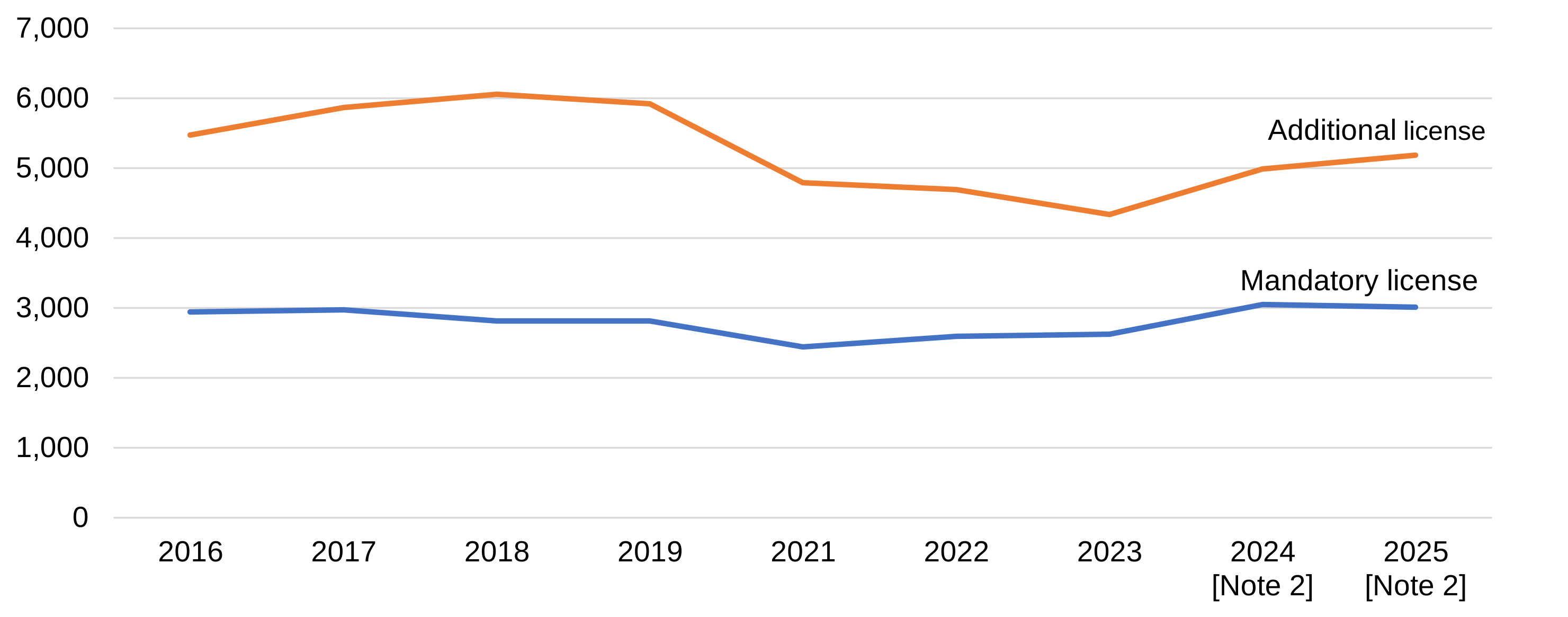
Description of figure 1: line graph showing that the number of mandatory and additional licenses peaked at 31 March 2018.
Source: Hazards and Licenses returns from local authorities
[Note 1] Data not collected for March 2020 due to the impact of the COVID-19 pandemic.
[Note 2] Includes estimated figures for Neath Port Talbot.
At 31 March 2025, the local authorities with the highest number of licensed HMOs were Cardiff (3,265) and Swansea (1,836), both large urban areas with high levels of private rented dwellings and student populations.
Figure 2: number of estimated and known HMOs, 31 March 2016 to 31 March 2025
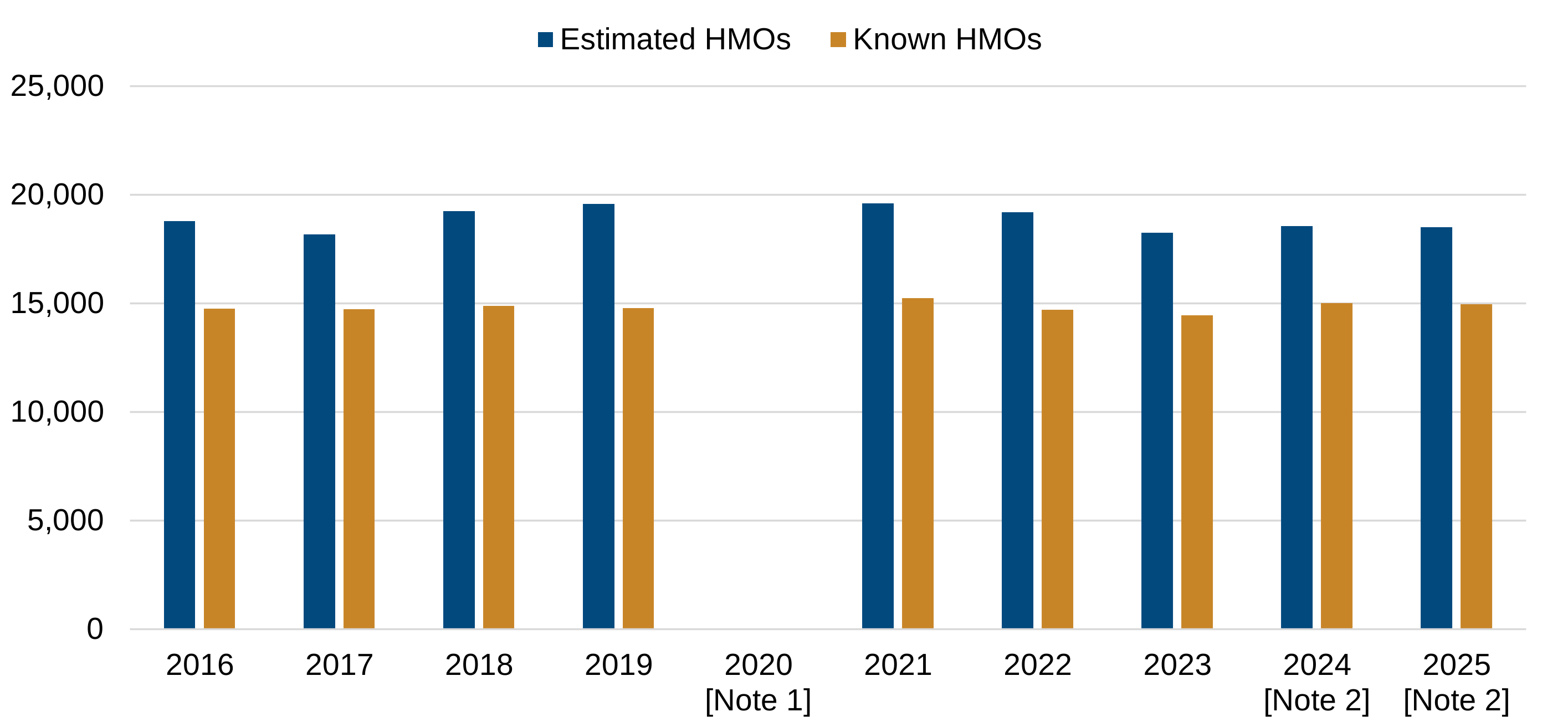
Description of figure 2: clustered bar chart showing that in the past 10 years the number of estimated HMOs has fluctuated between 18,167 and 19,587 while the number of known HMOs has fluctuated between 14,070 and 15,247.
Source: Hazards and Licences returns from local authorities
[Note 1] Data not collected for March 2020 due to the impact of the COVID-19 pandemic.
[Note 2] Includes estimated figures for Neath Port Talbot.
At 31 March 2025, local authorities estimated there were a total of 18,490 HMOs in Wales, similar to the previous year. The number of HMOs known to local authorities was also similar to the previous year (14,954 in March 2025 and 15,016 in March 2024). At 31 March 2025, 81% of estimated HMOs were known to local authorities.
Cardiff and Swansea reported the highest numbers of estimated HMOs in Wales (7,000 and 2,500 respectively). In Cardiff and Swansea, a high proportion of estimated HMOs were known to the local authority (93%). In contrast, Denbighshire reported the third highest number of estimated HMOs (1,352) with a much smaller proportion of these HMOs known to the local authority (16%).
Background
In our recent consultation on statistical outputs, we proposed to stop this report. However, strong feedback to the consultation highlighted the importance of this output for policy development and monitoring housing conditions. We will continue to publish these statistics.
Prior to the 2023 to 2024 publication, this information was included in the ‘Housing hazards and licenses’ annual report.