
Foundational literacy and numeracy plan
Actions to strengthen literacy and numeracy across Wales, helping learners develop the skills they need to succeed.
In this page
Ministerial foreword
Literacy and numeracy skills are central to everything we in education aspire to achieve. They are the building blocks on which engagement in learning, work and life in general are based. They are, therefore, integral to our Programme for Government and vision for an education system of which we can all be proud.
We recognise, however, that standards of literacy and numeracy are not where we want them to be. Welsh learners are on average performing significantly below those in other comparable countries according to the Programme for International Student Assessment (PISA), and we cannot – and will not – carry on as we are.
Let us be clear, this is not the fault of schools or teachers. We have inherited an education system that lacks clarity, coherence and a sure sense of direction. A sustained period of reform has taken its toll, and literacy and numeracy have been lost in the noise. Schools are also facing the pressures we see across wider society. Families are struggling with the cost of living and more children are facing issues with their mental and emotional well-being. This is all increasing the challenges schools manage on a daily basis.
The Foundational Literacy and Numeracy Plan represents an important first step in the development of an equitable education system that works for all. It is about setting clear expectations for action, making roles and responsibilities visible and bringing people and organisations together in ways that allow them to get the very best from one another.
It is deliberately iterative and will be subject to ongoing review and evaluation, based on emerging evidence of what data – and the wider education ecosystem – is telling us. This new, holistic approach will develop as our understanding of where we are and what we need to do next becomes clearer over time. However, evidence currently available is unequivocal that improvements are needed.
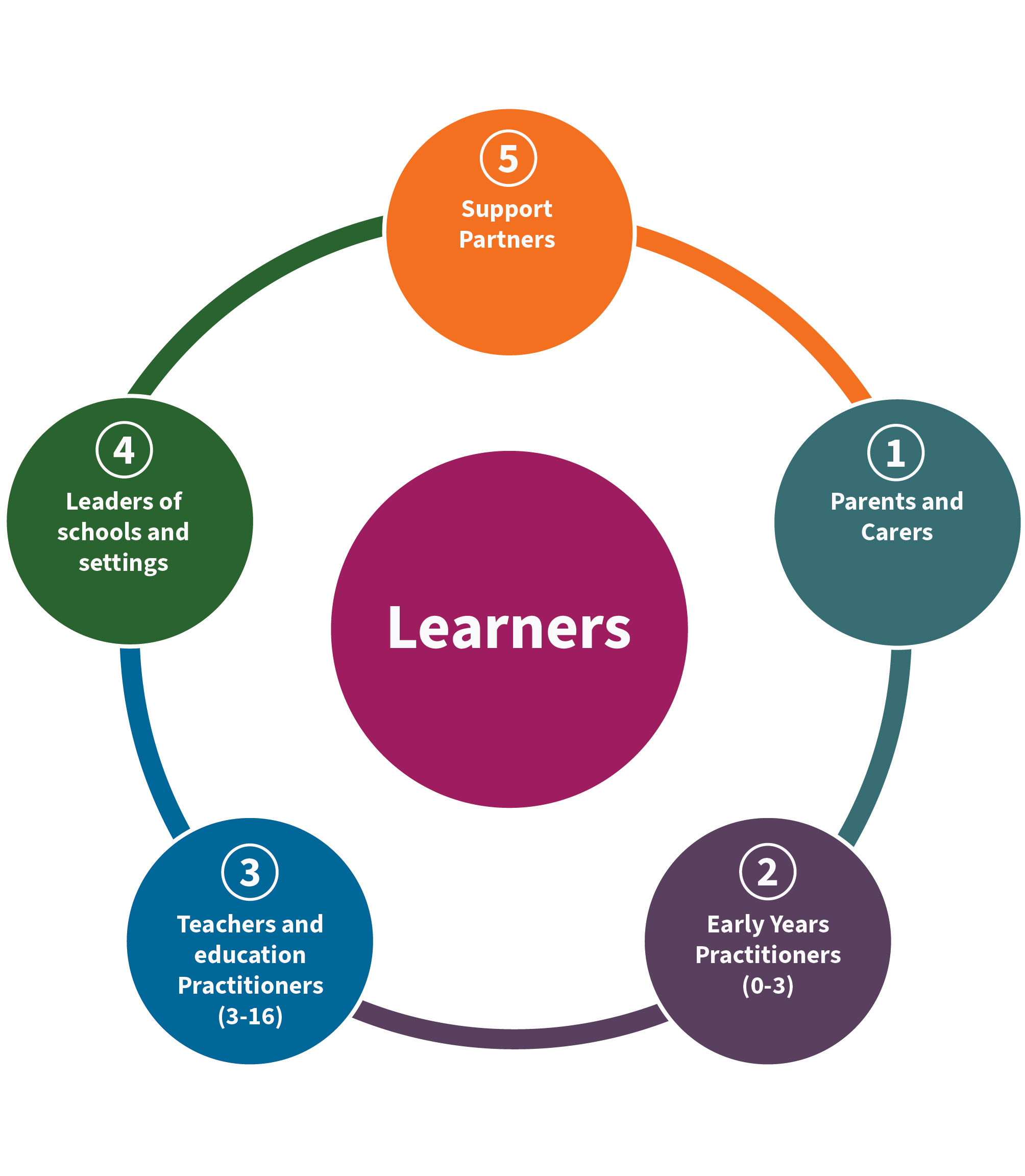
The Plan makes clear the 5 foundations that will drive improved outcomes for learners. We believe that parents and carers, early years practitioners (0 to 3), teachers and education practitioners (3 to 16), leaders of schools and settings and support partners each play a pivotal role in literacy and numeracy development, across the age range.
But they cannot work in isolation – all 5 foundations must work together, like cogs in a wheel, if we are to deliver on our shared goals to raise standards, boost aspiration and improve opportunities for learners in Wales. We are stronger together and believe passionately in the principle of collective responsibility.
So too do we believe in the transformative potential of our Curriculum for Wales. Whilst we have committed to reviewing the curriculum and are open to suggestions on how we might strengthen and make better what we have grown over time, we remain wedded to its underlying principles and purpose-based orientation.
We realise that some people may interpret the introduction of a Foundational Literacy and Numeracy Plan as a departure from the essence of the Curriculum for Wales. On the contrary, we want to be entirely clear that we consider it essential and the mechanism through which our ambition can be fully realised. Literacy and numeracy provide a gateway into the curriculum, and the curriculum itself is dependent on learners who are confident in their use of language and number.
We are a new government with new ambition and make no apology for setting the bar high. Wales is a proud educating nation whose rich history has been driven by a skillful workforce and thoughtful civic society. In launching the Foundational Literacy and Numeracy Plan we are reaffirming our commitment to these principles, which are fundamental to all that we are seeking to achieve.
Raising standards is a joint responsibility that requires a collaborative multi-agency and cross-departmental approach, involving Primary and Secondary Education; Skills and Tertiary Education; Communities and Social Justice; and Culture Heritage, Sport and Welsh Language. The issues our children face require joined up action from across a host of services and cannot be left to schools alone. It is important that government, too, makes best use of its resources by working across boundaries.
We owe it to current and future generations to get literacy and numeracy right – and we each have an important role to play. Achieving this ambition is a team effort and we need your help.
Anna Brychan, Cabinet Minister for Education and the Welsh Language
Cefin Campbell, Deputy Minister for Skills and Tertiary Education
Case for change
Wales’ educational outcomes in literacy and numeracy have been challenging for many years and remain an issue of concern. PISA 2025 results show that 31% of learners were below the Organisation for Economic Co-operation and Development (OECD) baseline proficiency level in reading and 36% were below the baseline level in mathematics. We have lagged behind the rest of the UK and many other comparable OECD countries in successive PISA rounds. In 2025, our highest attaining learners were 2 years lower in reading than their peers in England and over 2 years lower in maths. Similarly, our lower performing learners were 2 years lower in reading than their peers in England and more than 1 year lower in maths. Data from our personalised assessments shows attainment gaps emerging in Year 2 and widening over time. By Year 9, the attainment of learners eligible for free school meals (FSM) is around 3 years lower than that of their peers in reading and around 2 years lower in numeracy.
This is a deeply ingrained issue that cannot be attributed to one single policy, approach or generation. Despite the dedication of our workforce, too many children leave school without the secure literacy and numeracy skills necessary for success in later life.
Equity is central to this. The evidence is clear; poverty remains one of the strongest predictors of educational attainment. It can enforce barriers that affect language development, reading engagement, attendance and wellbeing. These barriers can continue to shape young people’s pathways beyond school, affecting their participation in further learning, training and employment. Provisional estimates suggest that nearly 14% of young people in Wales aged 16 to 24 were not in education, employment or training (NEET) in 2024, while learners eligible for FSM are substantially less likely than their peers to progress to education post-16.
As part of the Welsh Government’s commitment to tackle child poverty and support families across Wales, and in full recognition of the impact of poverty on wellbeing and education, we are urgently developing a new child poverty strategy based on the best international evidence of what works. The strategy and associated actions, targets and measures will aim to reduce the causes and effects of child poverty and give every child the opportunity to reach their full potential. In addition, we are taking direct action to increase the income of families living in poverty, including the urgent development of a Welsh Child Payment, Cynnal, to provide a direct weekly payment for young children in families claiming Universal Credit, while also expanding access to FSM and access to funded childcare.
However, we also recognise that greater collaboration across the public sector and beyond is needed to support our children to reach their potential. Families struggling with bills, facing homelessness or dealing with physical and mental health issues need support from strong multi-agency approaches across national and local government, the health sector and beyond. Our work through Community Focussed Schools and our framework for attendance, behaviour and wellbeing will help schools as they concentrate on teaching our children.
Our vision for the future
By the end of this Senedd term we want to see sustained improvement in literacy and numeracy outcomes across Wales. Success will mean more learners making secure progress, improved attainment at key points of learning and inequalities in attainment and progression narrowing over time. It will mean more learners achieving relevant qualifications and a sustained increase in the proportion of learners leaving secondary education as independent Welsh speakers.
As a basic principle, we want every child in Wales to be given the best possible start in life: before school and throughout their learning journey. Every child should develop strong literacy and numeracy skills, allowing them to reach their full potential. By every child, we mean every child: stretching our most able and talented and providing the necessary support for learners with ALN and those impacted by poverty. No child should be left behind.
We will measure progress through national indicators which are designed to track national standards over time and help us understand the impact of this Plan. These indicators will establish a robust baseline to assess our progress. We will publish national targets on key indicators. Where evidence supports this, we will publish these now and further targets will be published once baselines have been established. Our approach is set out in ‘Measuring Impact’ and ‘Annex C’.
We want Systematic Synthetic Phonics to be used when teaching children to read. They should learn to decode words alongside other aspects of learning to read. We will continue to be led by the evidence, made available to us through our Literacy Expert Panel. Schools will adapt their approaches where children struggle and will identify barriers to literacy and numeracy early, with schools supported to respond. Estyn recognises that Systematic Synthetic Phonics approaches are an important component of reading instruction for learners in all mainstream schools and their enhanced focus on reading inspection is now live. We also welcome their enhanced focus on mathematics from 2027.
We will ensure solid foundations for all children, as well as stretch for our more able and talented learners. This means setting higher expectations, more consistent high-quality provision for all and more targeted, timely support. All of our children deserve the strongest possible foundation in literacy and numeracy. This means supporting learners with Additional Learning Needs (ALN), learners impacted by poverty and multilingual learners with English and Welsh as additional languages (EAL/WAL).
Our approach will recognise the wide range of learning environments that are needed to support children: not only schools, but non-maintained nursery settings, pupil referral units (PRUs) and education other than at school (EOTAS). For this reason, when referring to all of these, we refer to ‘education settings’. The plan also refers to childcare settings which are vital environments for children’s development.
Through the Welsh Language and Education (Wales) Act 2025 we are also clear in our ambition that all learners should leave compulsory education able to use Welsh with increasing confidence and independence. Realising this ambition depends on recognising Welsh language learning as an integral part of literacy and communication, rather than as a separate curriculum consideration.
Literacy in Welsh and English are equally important foundations for learning, participation and achievement. To deliver the Welsh language learning goals set out in the 2025 Act, we must strengthen expectations, teaching practice, assessment, resources and professional learning across the education system. Whilst Welsh-medium education provides the most effective way of developing strong bilingual skills, the 2025 Act provides a legislative framework that enables all schools to increase their provision of Welsh language learning, therefore Welsh language learning must be integrated throughout our approach to improving outcomes for all learners.
Addressing these challenges demands a collective, continuous and long-term approach: there are clear steps we will take in the next 4 years, but lasting success requires a sustained focus over decades. It is therefore essential that we also set out our longer-term aspiration and the concerted action that is required to realise it.
Key foundations for success
We will take a whole-system approach that recognises the many people, services and environments that shape a learner's journey. Progress in literacy and numeracy depends on strong partnerships across all 5 foundations, with each playing a distinct but complementary role in supporting children and young people to thrive. The Foundational Literacy and Numeracy Plan represents a genuinely holistic approach to addressing an issue that is of paramount importance to us all.
Delivering this ambition will require a genuine national partnership and the involvement of all key stakeholders. No single organisation can achieve the change we seek on its own. As such, we have identified 5 key foundations which we consider instrumental in strengthening children’s literacy and numeracy:
- parents and carers
- early years practitioners (0 to 3)
- teachers and education practitioners (3 to 16)
- leaders of schools and settings
- support partners
Our role as government is to create the conditions for these foundations to thrive: setting expectations, providing leadership, evidence-informed support and facilitating strong partnerships that enable those closest to children to make the greatest difference.
Foundation 1: parents and carers
Principles
Literacy, numeracy and communication are strengthened through everyday interaction, reading, conversation and play. As children’s first educators, parents and carers shape attitudes to reading, language and numeracy and are vital partners in supporting learning beyond the classroom.
By strengthening the skills and confidence of parents and carers, and by promoting adult learning, we can tackle inequality, break cycles of disadvantage and create opportunities for future generations. Families must be supported and it is important they have access to information, support, advice, and opportunities. We are committed to Community Focused Schools, which help families play an active role in their children’s learning and have a vital role in bringing together families, schools and services. Early intervention and prevention programmes, such as Flying Start and Families First, identify needs early, provide practical family support and build parenting confidence and strengthen resilience. Together, these approaches help create nurturing home and community environments that support children’s development and enable them to thrive. They provide children’s foundations for learning, wellbeing and future life chances while supporting the Welsh language as part of inclusive, community-based provision.
Actions
We will:
- start work in spring 2027 to develop accessible resources in Welsh, English and the most widely spoken community languages to help parents and carers understand how literacy, mathematics and numeracy are taught in schools and how they can support this learning at home (this will include support for bilingual learners and children with ALN)
- work with Adnodd, throughout the Senedd term, to develop and promote evidence-informed resources that strengthen early language development, literacy, and numeracy from the earliest years and support families to read together and foster a lifelong love of reading
- work with partners to build parents’ and carers’ confidence in supporting mathematics and numeracy, learning from our grant 'Building number confident school communities in Wales' which is in place until 2028 to develop further ongoing support
- map current Adult Basic Skills data and explore the development of a national approach to strengthening adult literacy and numeracy across Wales, by autumn 2027
- strengthen the approach to family learning by bringing together partners across education, childcare, health and community services, by autumn 2027
- throughout the Senedd term, continue to support the development of Community Focused Schools, strengthening engagement with families and communities and supporting children's literacy and numeracy development. We have begun work on developing a wrap-around programme, exploring how different funding streams can be consolidated to underpin a range of approaches to better support engagement with schools
- throughout the Senedd term, continue supporting families and practitioners through our existing early intervention and prevention programmes and initiatives including trauma informed approaches
- work with schools, local authorities, health and social care partners to develop joined-up approaches that improve learner wellbeing, attendance and engagement in learning and pilot a new wrap-around programme to support these aims. This work will start in autumn 2026
- throughout the Senedd term, continue to provide opportunities to support families and communities to increase their use of Welsh and expand opportunities to learn, use and enjoy the language in everyday life by building on initiatives such as Cymraeg i Blant, Clwb Cwtsh and Welsh at Home
Goals
Our goal is to create a Wales where families, communities and schools work together to improve literacy, numeracy and communication skills from the earliest years onwards. We want to empower more parents and carers to read to and support their children and in doing so play a more active role in their learning. Children’s literacy and numeracy should be continuously nurtured and reinforced through their family life as we seek to reinvigorate Wales’ historic culture of valuing education and its place within wider society.
Foundation 2: early years practitioners (0 to 3)
Principles
The foundations of literacy, numeracy and communication are laid long before a child enters school. High-quality early years provision is essential to taking a holistic approach to children’s development, recognising that communication, language, literacy and numeracy grow through play, relationships, and everyday experiences. It ensures support is available at the earliest opportunity. The expansion of Welsh Government funded childcare through the new, Universal Childcare Offer highlights the importance of early development of social and educational skills and offers a significant opportunity to support foundational learning from an early age.
Early years practitioners supported by our Early Childhood Play, Learning and Care (ECPLC) approach have a vital role in supporting children’s literacy and numeracy development, providing rich language experiences, positive relationships and high-quality learning environments.
Actions
We will:
- work with Cwlwm, local authorities, schools and the wider childcare and play sector to promote early childhood play, learning and care (ECPLC) approach and support child development-led, inclusive, and language-rich practice in Wales throughout the Senedd term
- develop, provide and promote high-quality resources that deepen understanding of child development and support the development of foundational literacy and numeracy skills through play, communication and everyday experience throughout the Senedd term
- work with Social Care Wales and Cwlwm throughout the Senedd term, to deliver professional learning that equips practitioners with the expertise and confidence to nurture children's learning, wellbeing and development (this includes support to create environments that provide playful opportunities fostering language development, early mathematical understanding, curiosity and a love of learning through play)
- continue to work with Higher Education Institution partners to develop evidence-informed tools and interventions, including bilingual approaches such as Prosiect Pengwin, to strengthen early identification and support for young children with speech language and communication needs. Prosiect Pengwin work will be completed by summer 2027
- throughout the Senedd term, work with the National Centre for Learning Welsh, the Athrofa (from August 2027 onwards), Mudiad Meithrin, the Coleg Cymraeg and partners to strengthen Welsh language skills across the childcare workforce, building practitioner confidence and capacity to expand Welsh-medium provision and enable more children to develop and continue their Welsh language skills from the earliest years into Welsh-medium education
Goals
Our goal is a confident, skilled and valued early years workforce who support children’s holistic development and can identify and address barriers early. From their earliest years, we want all children to experience rich opportunities to develop language, communication and numeracy through play. This provides strong foundations for future learning. Through early identification, effective support and high-quality provision, our aim is to tackle inequality early, expand access to Welsh-medium experiences and ensure children are ready to continue their learning and development when they start school.
Foundation 3: teachers and education practitioners (3 to 16)
Principles
Through high-quality teaching, strong relationships and a clear focus on learners’ progression, teachers and education practitioners (3 to 16) enable children and young people to develop their knowledge, skills and confidence. Literacy and numeracy are shared responsibilities across the curriculum, meaning all teachers have a role to play in ensuring learners strengthen and apply these skills in meaningful contexts.
We recognise and value the continued dedication of the education workforce to our learners, and the workload pressures they face. We are committed to supporting and working in partnership with all practitioners, so they have the tools to do the job. This includes providing clearer detail and resources and high-quality opportunities for professional learning. A Workforce Impact Assessment has been developed for the Plan, and we will keep this under close review as the Plan is implemented. We must have high expectations for all learners, supported by high-quality, evidence-based teaching and learning and timely support and effective interventions. This means acknowledging the impact that socio-economic disadvantage can have on progression and outcomes.
High-quality teaching begins with understanding learners. We want practitioners to use a wide range of assessment tools and information to understand learners’ individual strengths, aptitudes, starting points and engagement with learning. The professional standards and commitments which describe the skills, knowledge and behaviours that characterise excellent practice and support professional growth support this and are intended to become an integral part of everyday school or setting life. These replaced the Professional Standards for Teaching and Leadership and came into effect in September 2026. We want them to use this information to make informed professional judgments about where children are in their learning and what support and challenge they need to go further. We want practitioners to work together to share their assessment information and practice, enabling them to develop and improve their practice and build a more consistent understanding of expectations. All of this supports schools to set meaningful and ambitious targets for learners that reflect their starting point, their needs and strengths. Our forthcoming curriculum review is intended to secure greater clarity for the education workforce and, as a consequence, strengthen the coherence of the curriculum for learners.
Actions
We will:
- provide clear, detailed statutory guidance setting out what children should learn and when, year-on-year for literacy and for mathematics and numeracy, in line with international evidence, to strengthen teaching, learning, and understanding of progression and support practitioners to stretch the most able learners by being clear about the next steps (consultation in autumn 2026 and publication in spring 2027)
- embed literacy and numeracy in our wider curriculum review (we will commence the review within the next school year), this will include consideration of how we stretch our most able learners and strengthening financial literacy
- review Curriculum for Wales guidance to ensure the role and importance of Systematic Synthetic Phonics (SSP) teaching in learning to read is unequivocal and the expectation is clear that all schools should use SSP as part of their approach (work to commence in autumn 2026)
- develop, consult on, and promote an evidence-informed approach to mathematics and numeracy teaching, drawing on international evidence, practitioner expertise, and the recommendations of the Numeracy Expert Panel (consultation in summer 2027 and publication in autumn 2027)
- renew the Literacy Expert Panel and work with it to build on existing principles, ensuring our approach to literacy is grounded in the best available evidence (work to commence autumn 2026)
- throughout the Senedd term embed and promote Siarad gyda Fi (Talk with Me), the Speech Language and Communication Training Framework and related professional learning resources to strengthen understanding of speech, language and communication development and practitioners' ability to identify and support children with Speech Language and Communication Needs (SLCN)
- work with Dysgu and Adnodd throughout the Senedd term, to develop professional learning and resources for practitioners, equipping them to understand and support literacy and numeracy development (this will include a focus on supporting learners through key transition points, support for the teaching of literacy and numeracy across the curriculum and will also explore practical support for stretching the most able and talented learners)
- work with Dysgu, Adnodd and CAL:ON from autumn 2026 onwards to review and strengthen phonics provision in Welsh and English, so all schools use SSP effectively. This will ensure that practitioners are equipped to support learners at all stages of reading development, including older learners who require additional intervention and support practitioners to deliver phonics programmes effectively and with fidelity. This will also include ‘A Guide to Phonics for Schools in Wales’ (autumn 2026) and a national guide to literacy assessment, providing schools with a holistic package of support for understanding learners’ progress and responding to their needs (spring 2027)
- work with Adnodd, Dysgu and CAL:ON to develop evidence-informed approaches, resources and professional learning to support learners in Dual-language and Welsh medium schools (according to the definition of Dual-language and the primarily Welsh language category schools in the Welsh Language and Education (Wales) Act 2025) as they move from learning to read in Welsh to learning to read in English, building on existing literacy knowledge while developing understanding of the English alphabetic code. This work will start in autumn 2026
- establish a nationally agreed, evidence-informed set of principles on effective teaching methods for the acquisition and learning of Welsh by children and young people aged 0 to 16 across different school language categories as defined in the Welsh Language and Education (Wales) Act 2025, education settings and learner contexts (early summer 2027)
- throughout the Senedd term build on Global Futures, working with partners, Dysgu, Adnodd and CAL:ON to share effective practice with practitioners to help learners use and strengthen their literacy skills in international languages
- ensure that effective practice in supporting multilingual learners with English or Welsh as additional languages is shared across Wales by publishing research in autumn 2026, and working with our local authority partners to develop shared approaches informed by these findings
- develop a new national learner pathways programme to be introduced during the 2027 to 2028 academic year, bringing together the strongest elements of Academi Seren and the Reaching Wider Programme, currently funded by Medr, into a single, coherent offer for learners across Wales. The programme will better support and stretch learners in schools and colleges, including those who are disadvantaged or underrepresented, helping them to fulfil their potential including going on to higher education in Wales
- provide clarification on setting individual learner targets in literacy and numeracy (autumn 2026, this will also be considered as part of the curriculum review)
- work with practitioners throughout the Senedd term, to assess and then track the workload impacts of this Plan, ensuring we support them to prioritise effectively
Goals
Our goal is a confident, skilled and empowered education workforce that can support every learner to make progress in Welsh and English. We want practitioners equipped to provide consistently ambitious expectations, high-quality teaching, and timely support. Strengthening professional confidence and expertise is key to this.
Foundation 4: leaders of schools and settings
Principles
Effective, self-improving education settings are essential for high-quality teaching and learning and ensuring every child gets the support and challenge they need.
This is not an issue for education settings alone. Our support must be clear, accessible and joined up across partners, avoiding bureaucracy and duplication.
High-quality assessment information is essential to supporting learners to progress. Leaders of schools and settings need access to the right assessment tools and information that allows them to track learners’ progress, identify needs early and put appropriate support in place. We want schools in particular to collaborate closely: working together to understand learning and standards and share information, evidence and effective approaches.
This is important at every stage of learning, not just at key transition points, and requires schools to collaborate horizontally with similar schools, as well as vertically with settings across the learning continuum. This is essential so that expectations are consistently challenging, realistic and well understood both within and across schools. It also ensures children get the appropriate support as they move, something we know can be a key obstacle in both their literacy and numeracy.
Assessment information is also central to self-evaluation and improvement planning. This needs to be underpinned by a culture of collaboration: we want to share practice, invite perspectives of other schools, settings and partners and to identify and seek out support where needed. This approach is central to ensuring assessment information leads to genuine improvement and more consistent practice and outcomes across Wales.
The Personalised Assessment Handbook now makes clear that schools are expected to share personalised assessment data where it will support learner progress and drive school improvement.
Actions
We will:
- develop an evidence base and proposals for a national baseline understanding of children’s literacy and numeracy when they start school. Scoping work commences autumn 2026
- work with local authorities from autumn 2026, to encourage and support wider use of the curriculum and assessment arrangements developed for funded non-maintained nursery education settings as part of our interim approach to strengthening practice
- work with CAL:ON to promote free, evidence-based literacy screening tools that help identify learner needs early, target support effectively and improve understanding of learners’ progress over time across education settings (available now). The screening includes assessment of word-reading and decoding skills, including the application of phonics, alongside oral language skills. This can help schools identify whether reading difficulties are associated with decoding or phonics, language comprehension, or both, and target support accordingly. We will work with Dysgu to embed screening at key milestones across the education system, with a view to establishing a consistent national approach and, in time, a national expectation.
- introduce a Year 6 age-related indicator for reading and numeracy through personalised assessments to provide a consistent national reference point for learner progress and support effective transition to secondary school. The indicator will first be available to schools from February 2027 through the national personalised assessments system
- use the statutory Code to describe Welsh language ability, providing a shared framework for Welsh language progression and aligning assessment and qualifications to support consistent monitoring of Welsh language learning across all school language categories. The Code will be published in spring 2027
- ensure existing curriculum and school improvement guidance and support is clear on how literacy and numeracy assessment information should be used by schools in their self-evaluation and improvement planning. Work will commence autumn 2026
- explore the possibility of a consistent framework to support learner transition between schools, particularly from primary to secondary (Year 6 to 7) so that schools are clear on learner progress and any are able to identify support where needed
- provide supporting guidance to schools and local authorities clarifying the approach to setting school improvement targets (autumn 2026)
- test and refine the Enabling Learning guidance with practitioners ahead of publishing refreshed guidance to help strengthen developmentally appropriate teaching and learning from 3 to 16. Testing to begin autumn 2026 with intended publication summer 2027
- provide a library space in every primary school by 2030, giving children access to a dedicated space that fosters a lifelong love of reading in Welsh and English. Over this academic year, we will develop detailed proposals including how library spaces will be defined, delivered and supported. This will include working with local authorities to assess existing provision and the level of investment required, before proceeding with rollout
- continue funding the Pupil Development Grant (PDG), which supports education settings and local authorities address barriers to attainment faced by learners in poverty and children looked after
- from autumn 2026, the Pupil Development Grant Policy Review will improve how we allocate and fund the PDG, how we monitor its use and impact, and how we evaluate the success of grant funding; including on improving numeracy and literacy results
- from autumn 2026, use our existing Mitigating the Impact of Poverty Partnership and Poverty Proofing pilot to explore how schools can reduce cost-related barriers to attainment, including: equipment, learning materials, digital access, transport, uniform, curriculum experiences and wider participation.
- Work to build an open, trusting culture where schools collaborate and with each other and with their local authority
- enable schools to share assessment information and approaches to build more consistent expectations and understanding of progress
- build collective responsibility to identify, share and respond to strengths, challenges and required support
- monitor how the system shares assessment information and, consider legislative change if inconsistencies persist
Goals
Our goal is to use data more effectively, providing leaders with the information they need to better understand their learners and target support where it is needed. We want a culture where relevant information about children is shared between settings so the understanding and support that is built up around a child does not drop off when they move. We want to see confident, self-improving education settings that are clear and open about their strengths, challenges and priorities, collaborate with others and use data effectively to inform their approaches. They need to be aided by supportive Local Authorities and partners, who promote collaborative improvement and facilitate the support education settings need to improve continuously. All of these elements are key in reducing variation and improving literacy and numeracy outcomes across Wales.
Foundation 5: support partners
Principles
High quality, effective and coherent support is vital for sustained improvement. Education settings need consistent messaging and consistently high-quality support. This ensures clarity of expectations at all levels and supports their capacity to meet those expectations. Strong, trusting collaboration between support partners and with the Welsh Government is essential. Our role as a government is to set a clear direction and to support and challenge our partners to deliver it. This will require open and ongoing lines of communication, sharing of what works and honesty when challenges arise. We recognise that support structures have been through a period of upheaval, and that understanding and accessing available support has been challenging for schools. We are committed to a clear, accessible and effective offer for schools that is robust and built on a more intelligent approach to accountability. The work of support partners is essential to this and the success of the Plan more generally. The distinct roles and responsibilities of these partners are set out in Annex A.
Actions
We will:
- build on the findings of the Review of the Roles and Responsibilities of education partners in Wales to develop a more coherent support system. We will reduce unnecessary duplication and simplify messaging and support to schools
- through Education Improvement Team (EIT) collaborate with, listen to and learn from education settings and local authorities, throughout the Senedd term, ensuring that national policy is shaped by the realities of practice and is responsive to local needs
- expect and facilitate organisations to contribute to our national ambitions and signpost the support for education settings outlined in this Plan and build on it, in line with the principles underpinning the CfW
- establish a new Foundational Literacy and Numeracy Delivery Board, chaired by the Cabinet Minister for Education and the Welsh Language, to hold ourselves and support partners accountable for the actions outlined in the Plan
- expect support partners to seek out good practice and explore with them ways and mechanisms of sharing this practice nationally
- through our EIT, work with local authorities throughout the Senedd term as they develop their local collaborative improvement systems to ensure more consistent expectations and approaches across schools, in line with the School Improvement Guidance. This includes supporting them to:
- allow schools to collaborate with similar schools and with other settings across the learning continuum;
- promote continuous learning and improvement through open sharing of data between schools and with the local authority
- work with Medr and the post-16 sector to ensure young people can transition effectively into further education and are ready to continue their learning
Goals
Our goal is a co-ordinated and evidence-informed system that supports literacy and numeracy at every stage of a learner's journey. We need a system where consistent expectations, messaging and support give education settings absolute clarity of what is needed and how to get support to meet those expectations. Crucially, we want strong, trusting relationships between different organisations and with Welsh Government, where they collaborate and share a collective vision.
Measuring impact
We need a clear national understanding of standards across Wales: to know if we are making progress and where future support needs to be targeted.
We will establish a small set of national indicators that provide measures of learners’ attainment and progress in English and Welsh literacy and numeracy. These indicators will also consider their wider engagement with school. These will be used to track national standards over time, understand the impact of this Plan, and to inform further action. We will draw on existing assessment and data collection arrangements wherever possible.
These indicators are set out in Annex C. For attendance, baselines already exist and we have committed in this plan to specific national targets on these. For other indicators, we will work over the next year to establish clear baselines and then agree targets based on these.
Crucially, where the data is sufficiently reliable, these indicators will also help us understand how different groups of learners are progressing, including those affected by poverty and those with ALN.
These indicators are intended to provide a national picture of progress. They will support national transparency and system improvement, not the creation of league tables, and will not be used as school-level indicators. Some of these indicators will also feature in the government’s priorities dashboard, helping to show how this plan contributes to wider progress across Wales.
As part of our broader approach to national evaluation, they will be used together with wider information on attendance and children not in school, learners’ destinations, the education workforce, school improvement, child poverty and other relevant measures. They will also complement the developing Learner Entitlement Indicator Framework for those aged 14 to 16, which will provide a broader picture of learners’ experiences, qualifications, achievements and progression.
Annex A: support partners – roles and responsibilities
Local authorities
Local authorities are essential partners in our approach: supporting schools’ cycle of self-evaluation and collaborative school improvement and ensuring access to support and learning. Our approach will require sustained focus and support from local authorities, and we will continue to work closely with them to ensure our work is co-ordinated and provides schools with a consistent, evidence-based offer.
Estyn
Estyn has a critical role in supporting self-improvement and the quality of leadership, teaching and learning. We welcome Estyn's enhanced focus on improving reading skills, which is an important aspect of this. Our ongoing relationship with Estyn is critical in ensuring education settings have clear, consistent expectations.
Dysgu
Dysgu is Wales’s national professional learning organisation. It supports educators in education settings to be their best and to deliver on our national priorities. Dysgu will lead work to improve teaching, support leadership, and embed evidence-informed and impactful professional learning aligned with Curriculum for Wales that supports literacy and numeracy. This includes supporting the effective delivery of phonics programmes with fidelity and wider literacy and numeracy development for all learners, using evidence-informed approaches across all school language categories.
Adnodd
Adnodd is the national strategic body that leads and co-ordinates the provision of educational resources in Welsh and English. They commission high-quality resources that support the Curriculum for Wales and enrich learning. They work closely with Welsh Government, Dysgu, and other national partners to ensure resources are inclusive, relevant, easy to adapt and accessible. Through collaboration, engagement and research, they bring together learners, practitioners, suppliers and partners from different sectors to share expertise and create inspiring resources.
Initial teacher education providers
Initial Teacher Education (ITE) has an important role in equipping new entrants to the profession to teach literacy and numeracy to a high standard. The criteria for accreditation for ITE programmes, requires ITE providers to ensure student teachers develop the knowledge and skills to teach literacy, numeracy and use of Welsh across the curriculum. They also support students who are preparing to teach in Welsh-medium (referred to as the primarily Welsh language category in the Welsh Language and Education (Wales) Act 2025 or dual language schools to develop the skills they need.
Cwlwm
Cwlwm is the partnership of organisations supporting childcare, playwork and early years provision across Wales. Cwlwm helps childcare settings, including funded non-maintained nursery settings, to provide high-quality, inclusive and developmentally appropriate play, learning and care experiences. Cwlwm will support childcare and early years settings to provide engaging environments and experiences for children to help build strong foundations for their language, literacy and numeracy development.
CAL:ON
CAL:ON is the national centre for literacy in Wales: a national, evidence-informed, bilingual literacy initiative led by Bangor University and funded by Dysgu. It draws on national and international evidence on how children learn to read and write in Welsh and English, and the most effective ways of teaching them. CAL:ON focuses on the practical development, piloting and rigorous evaluation of professional learning resources and literacy programmes, screening tools and guidance for schools, ahead of national roll out. CAL:ON works closely with all partners in the system, including the Literacy Expert Panel. Its research and evaluation evidence ensures that any material entering the education system is rigorously evaluated and shown to be effective in improving standards.
The National Centre for Learning Welsh/the Athrofa
The Athrofa will be established under the Welsh Language and Education (Wales) Act 2025 in August 2027. Functions currently undertaken by the National Centre for Learning Welsh will be transferred to the Athrofa upon its establishment. It will be key in strengthening literacy and realising the Welsh language learning goals set out in the Act. It will work with Welsh Government and key partners to establish and maintain a shared understanding of effective pedagogical practice in relation to Welsh language acquisition and learning (including in immersion settings) and will provide specialist advice and guidance on curriculum content. It will also work in partnership with Adnodd and Dysgu to support the development of a range of resources and professional learning opportunities to support Welsh language acquisition and learning across all school language categories.
Annex B: key dates
| Action | Timeline |
|---|---|
| Establish a Foundational Literacy and Numeracy Plan Delivery Board, chaired by the Cabinet Minister for Education and the Welsh Language, to track progress against timelines | Autumn 2026 |
| Provide clarification on setting individual learner targets in literacy and numeracy | Autumn 2026 |
| Work with Adnodd to develop and promote evidence-informed resources that strengthen early language development, literacy, and numeracy from the earliest years and support families to read together and foster a lifelong love of reading | Work starts autumn 2026 |
| Work with schools, local authorities, health and social care partners to develop joined-up approaches that improve learner wellbeing, attendance and engagement in learning and pilot a new wrap-around programme to support these aims | Work starts autumn 2026 |
| Provide clear, detailed statutory guidance setting out what children should learn and when, year-on-year for literacy, mathematics and numeracy, in line with international evidence, to strengthen teaching, learning, and understanding of progression | Consultation in autumn 2026 and publication in spring 2027 |
| Embed literacy and numeracy in our wider curriculum review, this will include consideration of how we stretch our most able learners and strengthening financial literacy | Work starts autumn 2026 |
| Review Curriculum for Wales guidance to ensure the role and importance of Systematic Synthetic Phonics teaching in learning to read is unequivocal | Work starts autumn 2026 |
| Work with Dysgu, Adnodd and CAL:ON to review and strengthen phonics provision in Welsh and English, ensuring practitioners are equipped to support learners at all stages of reading development, including older learners who require additional intervention and support practitioners to deliver phonics programmes effectively and with fidelity. This includes ‘A Guide to Phonics for Schools in Wales’ | Work starts autumn 2026 |
| Work with Adnodd, Dysgu and CAL:ON to develop evidence-informed approaches, resources and professional learning to support learners in Dual-language and Welsh medium schools (according to the definition of Dual-language and the primarily Welsh language category schools in the Welsh Language and Education (Wales) Act 2025) as they move from learning to read in Welsh to learning to read in English, building on existing literacy knowledge while developing understanding of the English alphabetic code | Work starts autumn 2026 |
| Test and refine the Enabling Learning guidance with practitioners ahead of publishing refreshed guidance to help strengthen developmentally appropriate teaching and learning from 3 to 16 | Work starts autumn 2026 |
| Ensure existing curriculum and school improvement guidance and support is clear on how literacy and numeracy assessment information should be used by schools in their self-evaluation and improvement planning | Work starts autumn 2026 |
| Review the Pupil Development Grant Policy to improve how we allocate and fund the PDG, how we monitor its use and impact, and how we evaluate the success of grant funding; including on improving numeracy and literacy results | Work starts autumn 2026 |
| Use our existing Mitigating the Impact of Poverty Partnership and Poverty Proofing pilot to explore how schools can reduce cost-related barriers to attainment | Work starts autumn 2026 |
| Provide a library space in every primary school by 2030, giving children access to a dedicated space that fosters a lifelong love of reading in Welsh and English | Work starts autumn 2026 |
| Develop an evidence base and proposals for a national baseline understanding of children’s literacy and numeracy when they start school | Work starts autumn 2026 |
| Introduce a Year 6 age-related indicator for reading and numeracy through personalised assessments to provide a consistent national reference point for learner progress and support effective transition to secondary school | The indicator will be available to schools from February 2027 |
| Develop accessible resources in Welsh, English and the most widely spoken community languages to help parents and carers understand how literacy, mathematics and numeracy are taught in schools and how they can support learning at home. This will include support for bilingual learners and children with ALN | Work starts spring 2027 |
| Work with Dysgu, Adnodd and CAL:ON to develop a national guide to literacy assessment, providing schools with a holistic package of support for understanding learner’s progress and responding to their needs | Work starts spring 2027 |
| Establish a nationally agreed, evidence-informed set of principles on effective teaching methods for the acquisition and learning of Welsh by children and young people aged 0 to 16 across different school language categories as defined in the Welsh Language and Education (Wales) Act 2025, education settings and learner contexts | Work starts summer 2027 |
| Develop, consult on, and promote an evidence-based approach to mathematics and numeracy teaching, drawing on international evidence, practitioner expertise and the recommendations of the Numeracy Expert Panel to drive expectations and guidance | Consultation in summer 2027 and publication in autumn 2027 |
| Work with Higher Education Institution partners to develop evidence-informed tools and interventions, including bilingual approaches such as Prosiect Pengwin, to strengthen early identification and support for young children with speech language and communication needs | Prosiect Pengwin work completed by summer 2027 |
| Map current Adult Basic Skills data and explore the development of a national approach to strengthening adult literacy and numeracy across Wales | Autumn 2027 |
| Strengthen the approach to family learning by bringing together partners across education, childcare, health and community services | Autumn 2027 |
| Develop a new national learner pathways programme bringing together the strongest elements of Academi Seren and the Reaching Wider Programme, currently funded by Medr, into a single, coherent offer for learners across Wales | Programme to be introduced during 2027 to 2028 academic year |