Attendance and absence from secondary schools: September 2025 to August 2026
Attendance and absence data in Welsh maintained middle, secondary and special schools for pupils aged 11 to 15, up to the late May bank holiday, including absence by pupil characteristics and persistent absence.
In this page
Introduction
This bulletin relates to pupils of secondary school age in the annual school attendance collection. Secondary collection coverage runs from the start of the academic year to the late May Spring bank holiday.
Free School Meals analysis concerns means-tested eligibility. Persistent absence uses the 10% threshold of the most common number of required sessions. Further details can be found in the associated quality report.
Main points
Comparisons between 2024 to 2025 and 2025 to 2026 academic years
Overall absence:
- 10.9% down from 11.0% between 2025 to 2026 and 2024 to 2025 for all pupils
- 18.8% the same as 18.8% between 2025 to 2026 and 2024 to 2025 for pupils eligible for free school meals
- 8.9% the same as 8.9% between 2025 to 2026 and 2024 to 2025 for pupils not eligible for free school meals
Persistent absence using the 10% threshold:
- 32.8% down from 33.0% between 2025 to 2026 and 2024 to 2025 for all pupils
- 57.8% down from 58.0% between 2025 to 2026 and 2024 to 2025 for pupils eligible for free school meals
- 26.5% down from 26.8% between 2025 to 2026 and 2024 to 2025 for pupils not eligible for free school meals
Comparisons between 2018 to 2019 and 2025 to 2026 academic years
Overall absence:
- 10.9% up from 6.2% between 2025 to 2026 and 2018 to 2019 for all pupils
- 18.8% up from 10.5% between 2025 to 2026 and 2018 to 2019 for pupils eligible for free school meals
- 8.9% up from 5.3% between 2025 to 2026 and 2018 to 2019 for pupils not eligible for free school meals
Persistent absence using the 10% threshold:
- 32.8% up from 17.1% between 2025 to 2026 and 2018 to 2019 for all pupils
- 57.8% up from 35.5% between 2025 to 2026 and 2018 to 2019 for pupils eligible for free school meals
- 26.5% up from 13.4% between 2025 to 2026 and 2018 to 2019 for pupils not eligible for free school meals
Overall absence
Figure 1: percentage of half-day sessions absent from school for secondary-school-age pupils, 2013 to 2014 to 2025 to 2026 [Note 1]
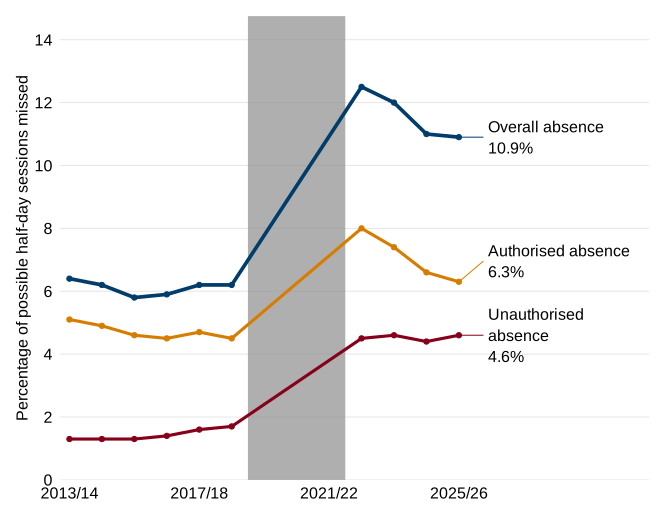
Description of figure 1: a line graph showing overall, authorised and unauthorised absence between 2013 to 2014 and 2025 to 2026. After declining between 2022 to 2023 and 2024 to 2025, overall absence has stayed the same, authorised has declined and unauthorised has increased between 2024 to 2025 and 2025 to 2026.
Source: Attendance Data Collection
[Note 1] There is no data in this collection for the years 2019 to 2020, 2020 to 2021, 2021 to 2022 due to the coronavirus (COVID-19) pandemic. The years where there is data are indicated by the circular markers on the lines. The pandemic period is shaded grey.
Persistent absence
The main-point statistics use the 10% threshold. Required sessions depend on the year and collection; absences need not be consecutive.
Figure 2: percentage of secondary-school-age pupils persistently absent, 2013 to 2014 to 2025 to 2026 [Note 1]
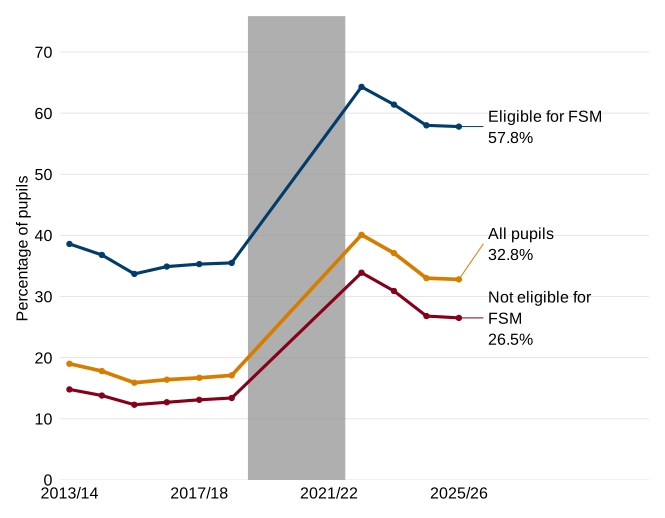
Description of figure 2: a line graph showing persistent absence (10% threshold) for all pupils, pupils eligible for free school meals and pupils not eligible for free school meals between 2013 to 2014 and 2025 to 2026. After declining between 2022 to 2023 and 2024 to 2025, persistent absence has stayed the same for all pupils, and both pupils eligible and not eligible for free school meals between 2024 to 2025 and 2025 to 2026.
Source: Attendance Data Collection
[Note 1] There is no data in this collection for the years 2019 to 2020, 2020 to 2021, 2021 to 2022 due to the COVID-19 pandemic. The years where there is data are indicated by the circular markers on the lines. The pandemic period is shaded grey.
Data
This year there is no open document spreadsheet to accompany this release. All the data within that spreadsheet, plus additional attendance datasets, are available on the day of publication at Pupils | StatsWales. Special school data is not included for the 2025 to 2026 academic year, however it will be included in a combined secondary and primary attendance publication later this year.