
Welsh Government public appointments recruitment data analysis: 2026
The Commissioner for Public Appointments' report on the demographic diversity of applicants and appointees to public appointments.
In this page
Introduction
Data is supplied annually to the Office of the Commissioner for Public Appointments (OCPA) by Welsh Government. This data covers the financial year 2025/26 and is drawn from recruitment data stored in Cais (the Welsh Government’s Recruitment System). This data is then used by OCPA to produce an annual report, which includes Welsh Government and UK Government analysis. Past reports can be accessed here: Annual reports - Commissioner for Public Appointments.
This report considers the Welsh population specifically when exploring the demographic diversity of the applicants and appointees to Welsh public appointments. It is a more detailed, in-depth exploration of the data held in Cais. As a result, it only includes public appointments which were processed by Welsh Government, using the Cais recruitment system, which may not include all public appointments in Wales.
Methodology
Data source and coverage
Data for this report was generated through applicants’ interactions with the Welsh Government recruitment platform, Cais. As applicants entered their personal details and progressed through the recruitment process, their data was automatically collected in line with the privacy notice.
Those applications to public appointments not processed through Cais are not included in this report. Therefore, this report only uses data from public appointment recruitment exercises supported by Welsh Government in 2025/2026. Similarly, it should be stressed that this report only includes applicants to public appointments. It does not include existing board members.
Providing personal information was optional, and applicants could choose not to provide details about their personal characteristics. For the purposes of analysis of the optional demographic characteristics, those who selected “prefer not to say” were removed. The proportion of those applicants who preferred to not provide their details are included as footnotes in each section.
Data extraction and sample
In May 2026, the data from Cais was extracted. 697 applications were extracted from Cais. Out of this number, four of these were withdrawn at the application or interview stage. Therefore, 693 applications were included in the final analysis. Personal identifiers were removed from this data set before it was transferred for analysis.
The data analysed included the applicants’ personal characteristics, and the stages to which they progressed in the recruitment system. To analyse the data, some categories have been grouped, such as ethnicity and sexual orientation. This is in line with the approach taken to suppression (suppression is put in place where a category or response option has 5 or less individuals) to ensure individual applicants cannot be identified via this analysis. Specifically, applicants were grouped into:
- Ages 16-34, 35-44, 45-54, 55-64 and 65 and over
- Male, female and other (which includes non-binary)
- Disabled or no declared disability (if an individual did not answer this question, they were categorised as not having a disability)
- White applicants and ethnic minority applicants
- Heterosexual, Gay/Lesbian and Bisexual/Other
- Christian, Atheist/No Religion and Other Religions (including Buddhist, Hindu, Jewish, Sikh & Muslim)
The data analysed in this report was only for applicants who submitted their applications for roles between 1 April 2025 and 31 March 2026. Incomplete, unsubmitted or duplicate applications were not included in the extraction.
It should be noted that the data used in this report is focused on applications, rather than identifying applicants. Therefore, individuals who applied for multiple public appointments in 2025/2026 will have been included multiple times.
Where relevant, external data sources were used to benchmark applicant profiles to the Welsh population. Population data was sourced from StatsWales, using the most recent official statistics available. Note that applicant and population measures may not be directly comparable because of differences in age coverage, question wording, response categories and data-collection method.
Analysis
Once the data was extracted and grouped, it was analysed by Knowledge and Analytical Services in Welsh Government. The analysis is limited to descriptive statistics, and no further statistical testing was undertaken. Therefore, there is no implication of causality or relationship between any of the results provided in this report.
The following stages were used to define the recruitment process:
- Applied - this includes all applicants
- Shortlisted - applicants whose application forms were passed to the interview and/or assessment centre stage. Personal identifiable (e.g. name) and demographic characteristics (e.g. ethnicity) were suppressed up to this stage. Therefore, recruiting panels did not have had access to applicants’ ethnicity, name, age, disability, gender or sexual orientation until stage 3.
- Found appointable - the applicant passed the interview and/or assessment centre requirements but this does not necessarily mean that they were appointed. Recruiting panels will have had access to applicants’ personal details at this stage.
- Appointed - the appointable applicant was reviewed by the recruiting panel and relevant Minister and the applicant was appointed to the position.
Each stage is successive, and those in early stages were then in the later stages. For example, appointed applicants are included in each of the previous stages (i.e. applied, shortlisted, and found appointable stages). However, the stages may not be equivalent between positions. Some public appointment positions may have had different recruitment procedures than others. For example, some may have involved an assessment centre, while others may have had an interview.
Limitations
For some demographic groups, where a group is fewer than five applicants, the percentages have been rounded to less than five (< 5%) to avoid identifying applicants This is particularly relevant for later recruitment stages where overall numbers of applicants are smaller.
Percentages are based on individuals who provided information for the demographic characteristic concerned, so response rates and the reference year of the population data vary between measures. The findings describe patterns in the data and should not, on their own, be interpreted as evidence of causal differences in recruitment outcomes.
It should also be noted that each demographic characteristic was analysed separately, so this analysis does not examine how outcomes may be shaped by combinations of characteristics. This may be particularly relevant where characteristics are associated, such as ethnicity and religion (see Ethnic group by religion in the UK - Office for National Statistics, which shows that a lower proportion of people from ethnic minority backgrounds reported having no religion), or age and disability.
Findings: protected characteristics
This section compares the protected characteristics of applicants at each stage of the 2025/2026 public appointments recruitment process with the most relevant available data for the Welsh population.
A total of 693 applications were made to public appointments in 2025/2026 via Cais. Of these:
- 222 (32%) were shortlisted
- 104 (15%) were found appointable
- 64 (9%) were appointed
It should be noted that the original 693 may include some individuals who applied for multiple positions and therefore are duplicated in the analysis. Due to the anonymisation of the data at the application stage, it is not possible to know how many applicants are duplicated in the analysis.
Age
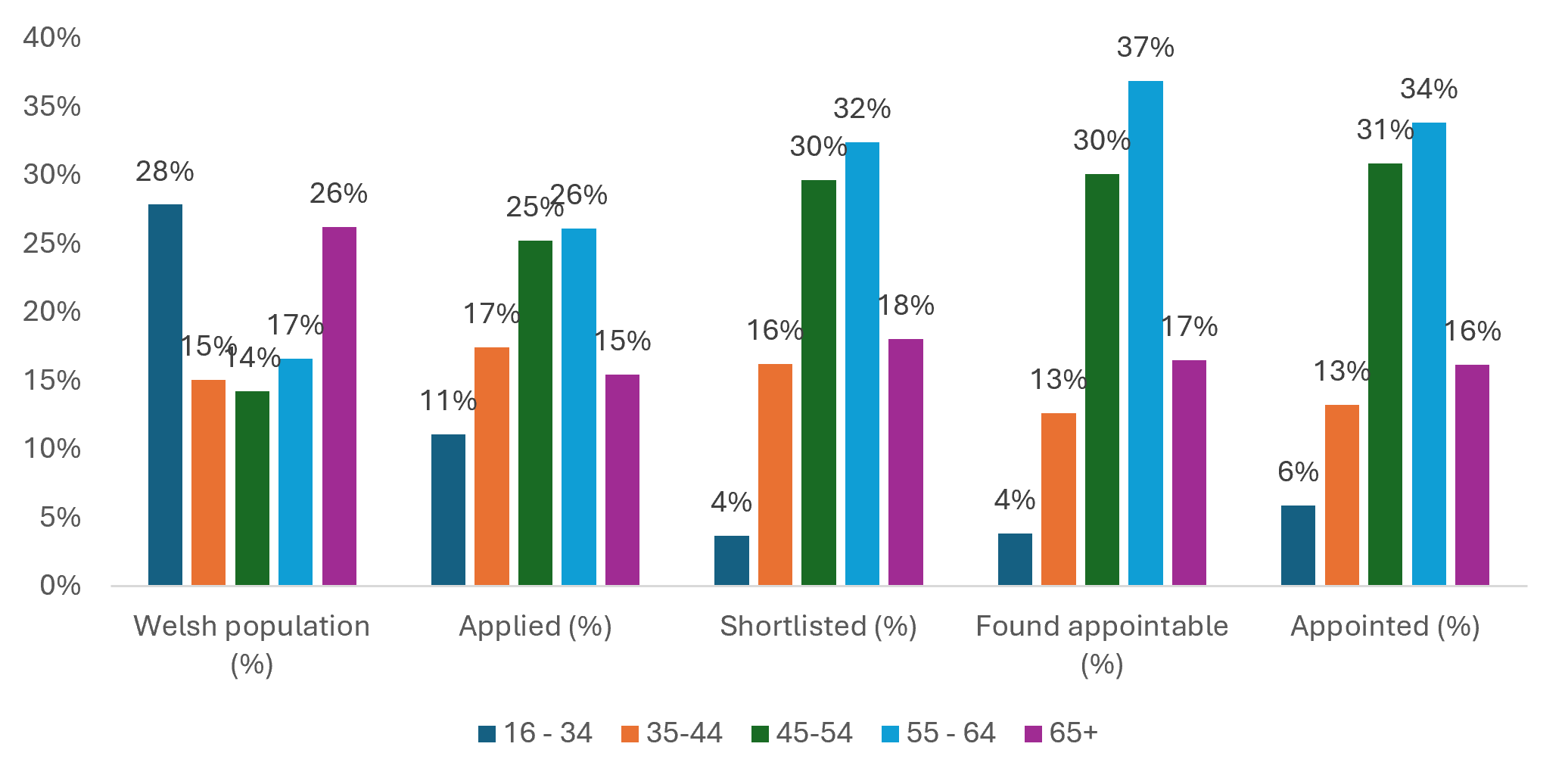
Of those aged 16 or over in the Welsh population, just over a quarter (28%) are aged 16-34, and 26% aged 65 or over, and just under half (46%) are aged 35-64.
This age profile is inverted for those applying for public appointments via Cais. Unlike the Welsh population, where the largest group are aged 16-34, this is the smallest group (12%) amongst applicants for public appointments in Wales via Cais.
Those aged 65 or over are the next smallest group (16%), while those aged 45-54 or 55-64 are the largest groups, see Figure 1.
This pattern amplifies as applicants move through the recruitment process from shortlist to appointment. At the appointment stage, only 6% are aged 16-35 and 65% are aged 45-64.
This suggests that not only do applicants not reflect the age profile of the Welsh population, but the proportion of younger and older applicants decreases across the recruitment stages, while the proportion aged 45-64 increases.
* Of the 693 applicants included in this analysis, 4.6% did not provide their age.
Source: 2024-based national population projections by age, sex and year on StatsWales.
Sex
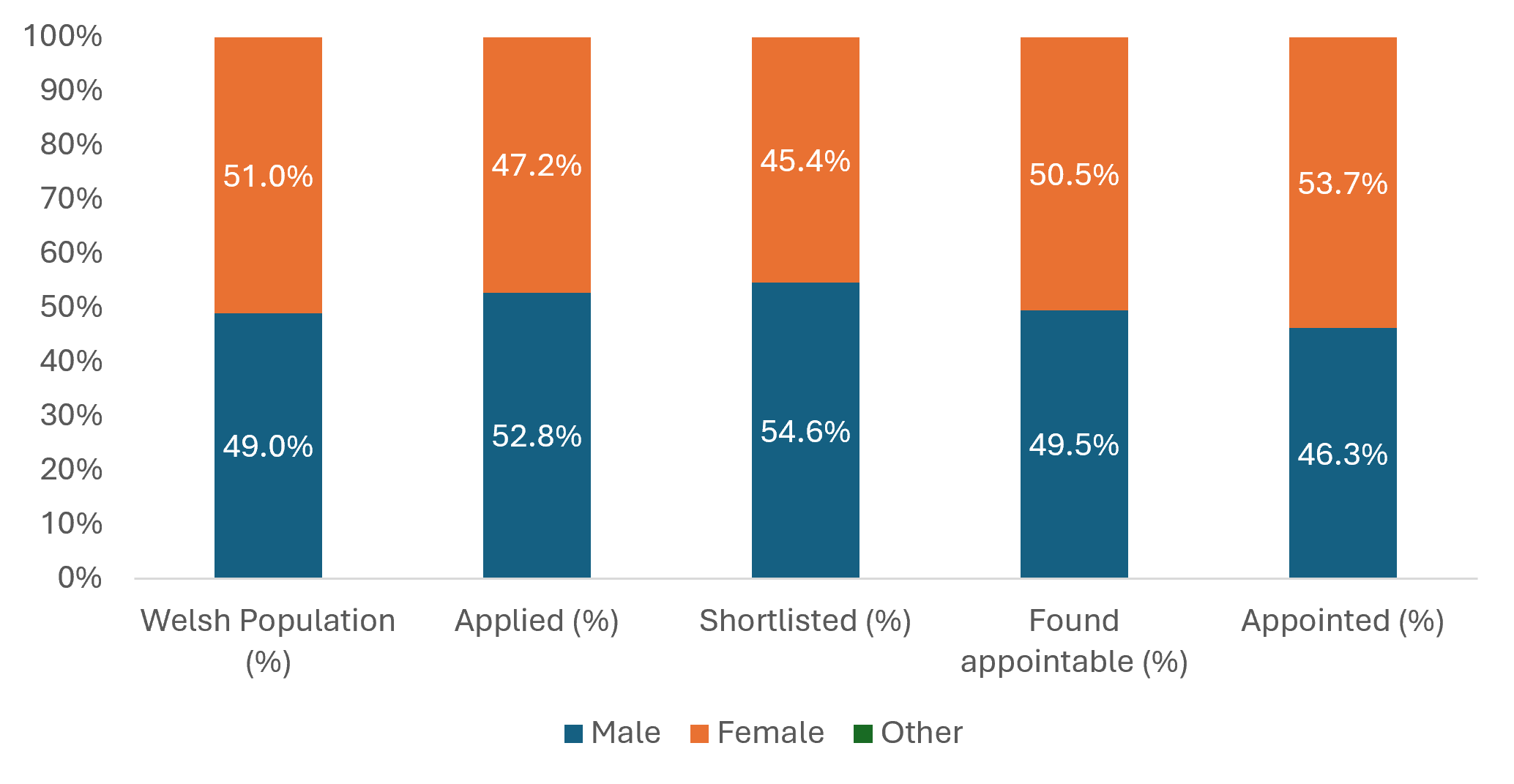
If you consider the whole Welsh population (including those aged 0-15), 51% are women and 49% are men - it should be noted that sex is provided by the individual and may be conflated with gender identity rather than explicitly referring to biological sex. The proportion of the population that is female drops to 50.6% if you consider those aged 16-64 and but rises to 51.4% of those aged 45-64 (the largest age group of those applying for public appointments).
Therefore, despite women representing more than half of the population in Wales, less than half of applicants in the Cais data (47.2%) are women. However, this pattern reverses when it comes to those applicants found appointable and that then go onto being appointed, with 53.7% of appointments were women, see Figure 2.
This suggests that despite being the minority in the total number of applicants, women made up a larger proportion of appointees than of applicants.
* Of the 693 applicants included in this analysis, 2.2% did not provide their sex.
Source for Welsh Population Data: 2024-based national population projections by age, sex and year on StatsWales.
Disability
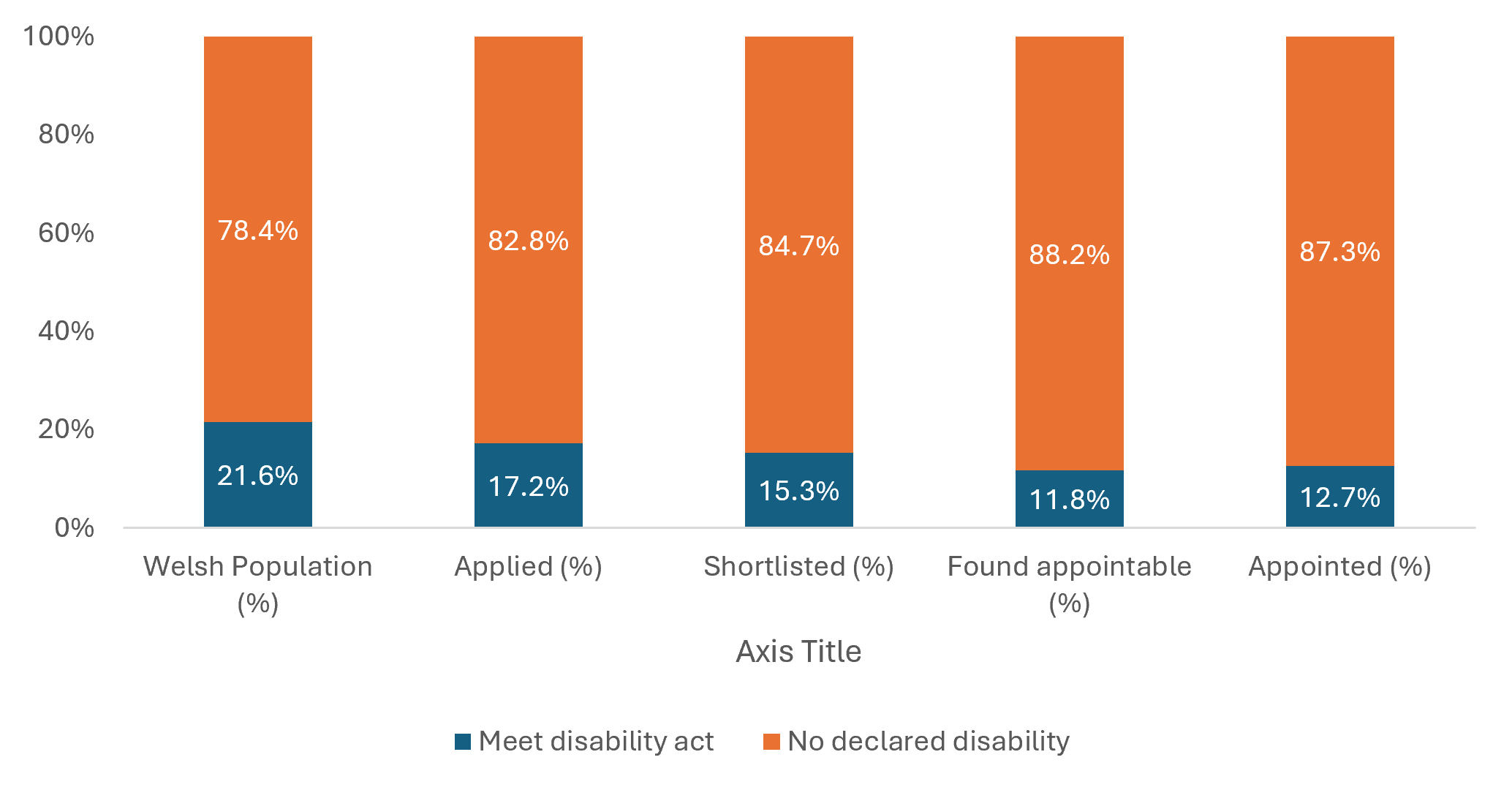
Across the whole Welsh population according to the 2021 census, 21.6% were reported as meeting the Equality Act definition of disabled. (The definition of disability used in the 2021 Census is aligned with the definition of disability under the Equality Act (2010). A person is considered disabled if they self-report having a physical or mental health condition or illness that has lasted or is expected to last 12 months or more, and that reduces their ability to carry out day-to-day activities). However, 19.5% of those aged 16-64 are disabled; 39.9% of those aged 65 and over are disabled.
Figure 3 shows that in 2025/26, 17.2% of applicants recorded in Cais reported themselves to be disabled, and this proportion drops to 12.7% for those appointed. There is a clear drop in the proportion of applicants that are disabled between the shortlisting and found appointable stages. Disabled applicants represented a smaller share at the found-appointable stage than at shortlisting.
Source: Disabled and non-disabled people by age and sex, for Wales, Census 2021 on StatsWales.
Ethnicity
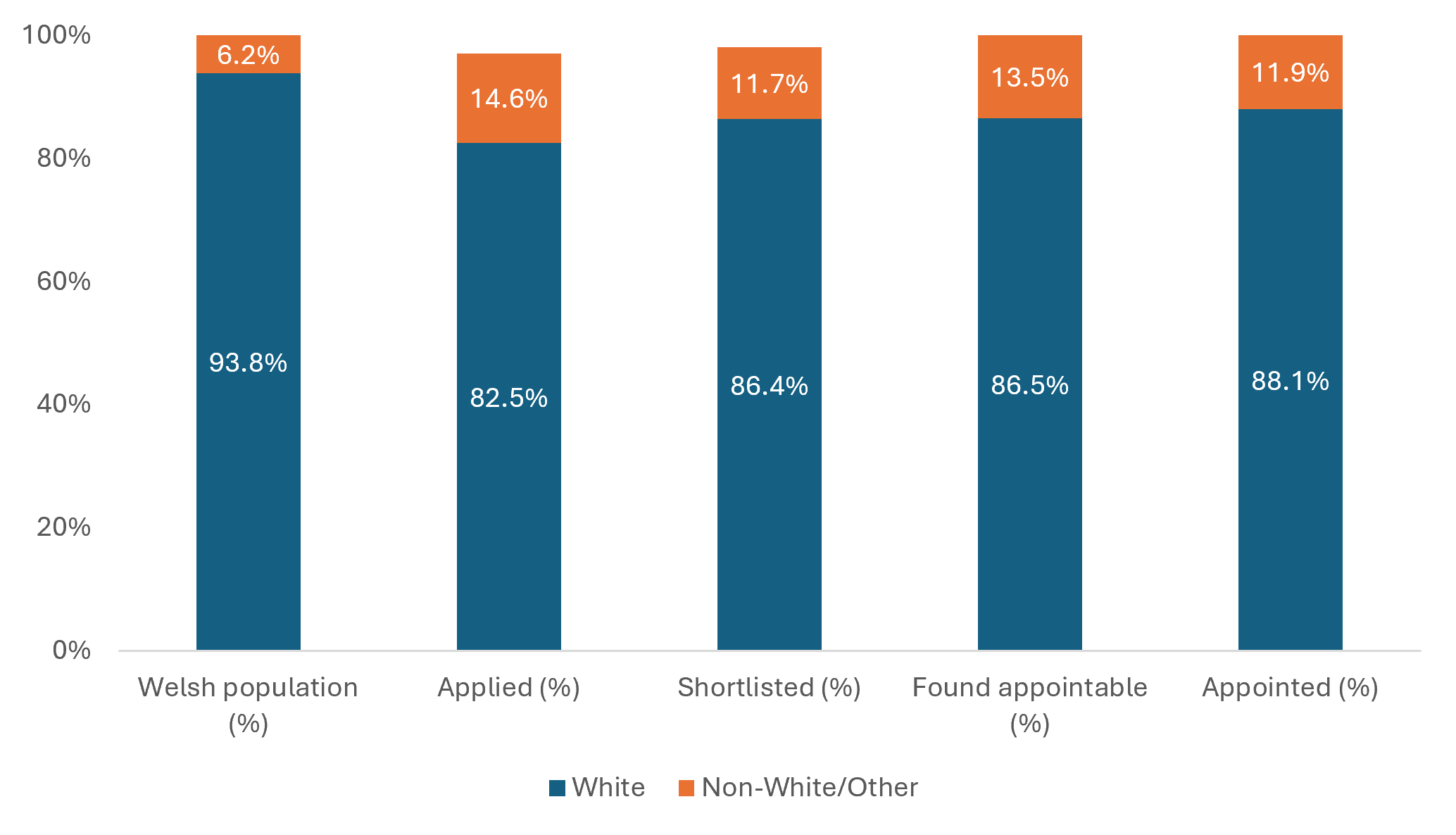
According to the 2021 Census, 6.2% of the Welsh population identified themselves as coming from an ethnic minority background (due to small numbers, different ethnic minorities have been aggregated. While this is necessary for analysis, aggregating ethnic minorities can conceal different outcomes). However, in 2025/26, of those applicants who provided their ethnicity in Cais, 15% of applicants identified themselves as coming from an ethnic minority. While the proportion of appointees who are from an ethnic minority decreased relative to applicants during 2025/2026 (11.9%), it is still higher than the Welsh population, see Figure 4.
This suggests that there is a higher proportion of ethnic minority applicants than is found in the population, but that this proportion decreased through the application stages. However, this decrease is not uniform across all stages, with lower proportions at the shortlist and appointment stage, but a higher proportion at the found appointable stage.
* Of the 693 applicants included in this analysis, 2.9% did not provide their ethnicity.
Source: People by ethnic group, for Wales and local authorities, Census 2021 on StatsWales.
Sexual orientation
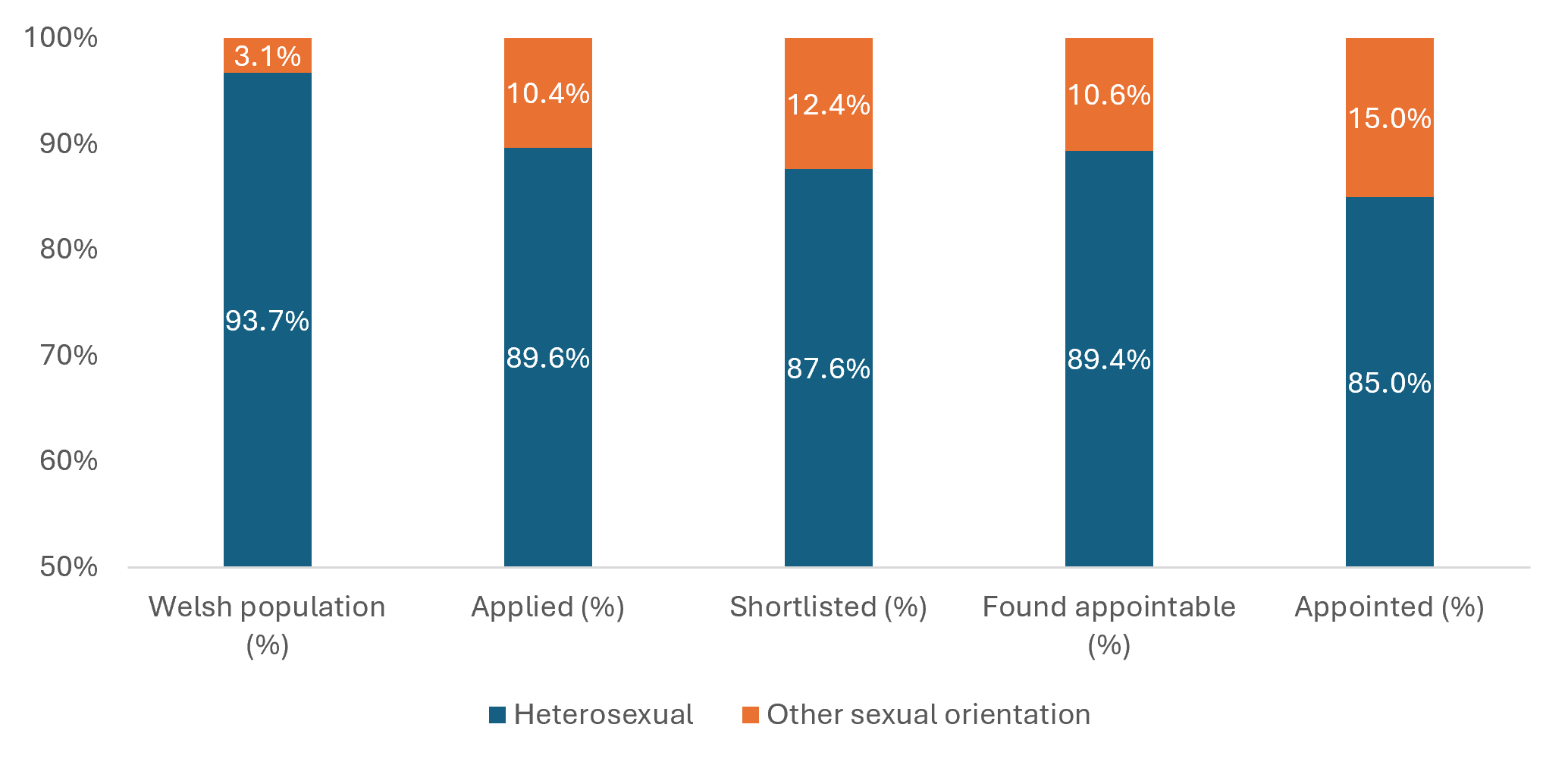
Sexual orientation is asked in the Census to those aged 16 and over. Across the Welsh population, for those who provided the sexual orientation, 3.1% reported having a minority sexual orientation.
However, for applicants who provided their sexual orientation in their Cais application, 10.4% reported a minority sexual orientation. This proportion rose through the application stages so that 15.0% of appointees reported a minority sexual orientation, see Figure 5.
In a similar way to disabled applicants, the proportion of applicants who identified as lesbian, gay, bisexual or another minority sexual orientation decreased between the shortlisting and found appointable stages but then rose again at the appointment stage. This suggests that minority sexual orientation applicants may be less likely to pass assessments but then be more likely to be selected for appointment over other applicants.
* 7.6% of the population and 9.4% of the 693 applicants included in this analysis did not provide their sexual orientation.
Source: People by sexual orientation, for Wales and local authorities, Census 2021 on StatsWales.
Religion
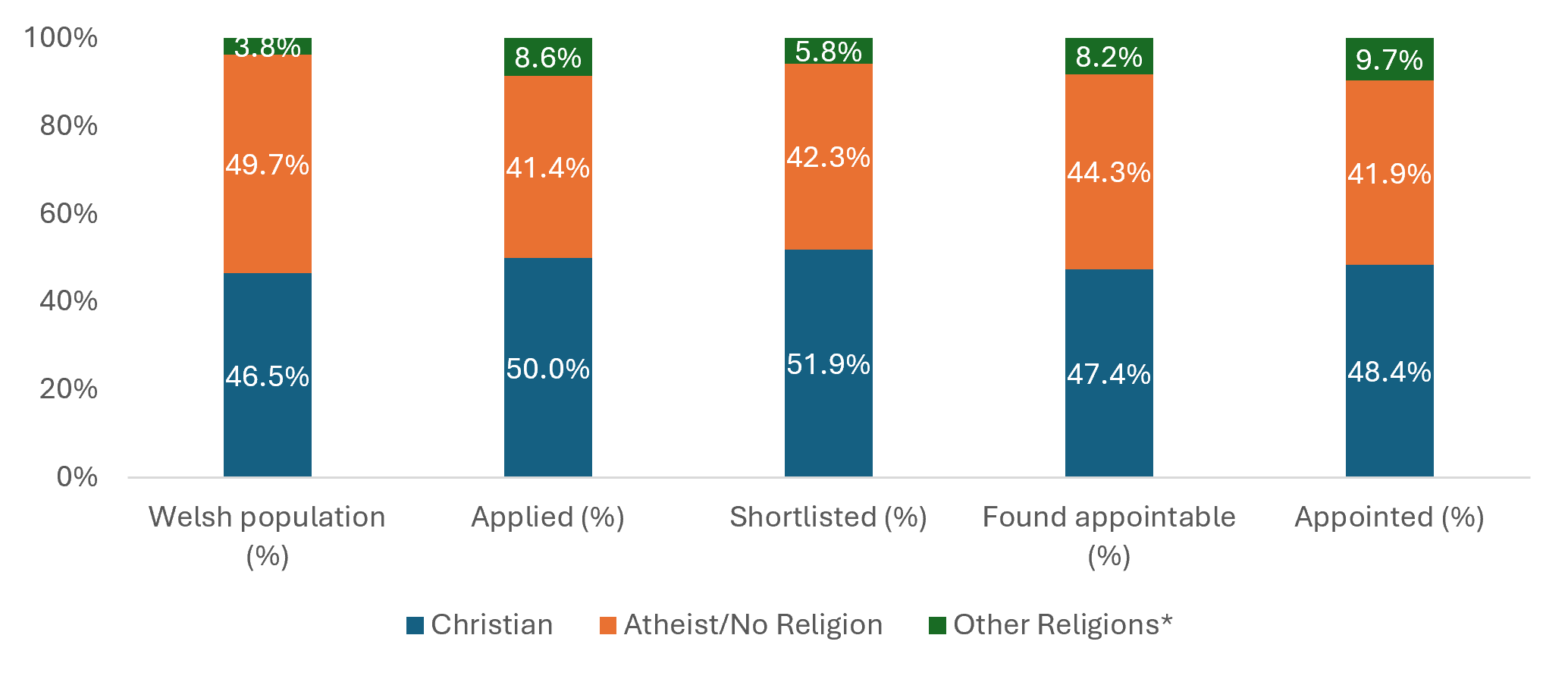
In the 2021 Census, people are asked which religion they connect or identify with (their religious affiliation), whether or not they practise or have belief in it. Across the Welsh population, 46.5% identified as Christian, 49.7% identified as Atheist or having no religion and 3.8% as having another religion.
Figure 6 shows that of those applicants in 2025/26 who provided their religion in their Cais application, 50.0% identified as Christian, which is higher than the population average. Conversely, a smaller proportion (41.4%) identified as Atheist or having no religion.
Through the recruitment stages, the proportion of those identifying as Christian rose to 51.9% at the shortlist stage but then falls to 48.4% at the appointment stage. This contrasts with those identifying as having another religion, which fell 5.8% at the shortlist stage and rose to 9.7% at the appointment stage.
† 6.3% of the population and 7.4% of the 693 applicants included in this analysis did not provide their religion.
*Other religions including Buddhist, Hindu, Jewish, Sikh and Muslim.
Source: People by religion, for Wales and local authorities, Census 2021 on StatsWales.
Findings: Background and experience
This section examines applicants’ background and experience across the 2025/2026 public appointments recruitment process, including place of residence, previous employment, Welsh language ability, socio-economic background and declared political activity. Where suitable data are available, the profile of applicants is also compared with the Welsh population. The findings describe patterns across recruitment stages and should not, on their own, be interpreted as evidence that a particular characteristic caused differences in recruitment outcomes.
Residence
Applicants to public appointments are asked for their local authority of residence. 685 applicants provided their residence in their Cais application, of which 106 (15.5%) lived outside of Wales. All 67 applicants who were appointed provided their residence, with 10 (14.9%) appointees living outside of Wales.
For those who live in Wales, local authorities have been grouped into regions for analysis:
- North Wales: Isle of Anglesey, Gwynedd, Conwy, Denbighshire, Flintshire and Wrexham
- Mid Wales: Powys and Ceredigion
- South West Wales: Pembrokeshire, Carmarthenshire, Swansea and Neath Port Talbot
- South East Wales: Bridgend, Vale of Glamorgan, Cardiff, Rhondda Cynon Taf, Merthyr Tydfil, Caerphilly, Blaenau Gwent, Torfaen, Monmouthshire and Newport
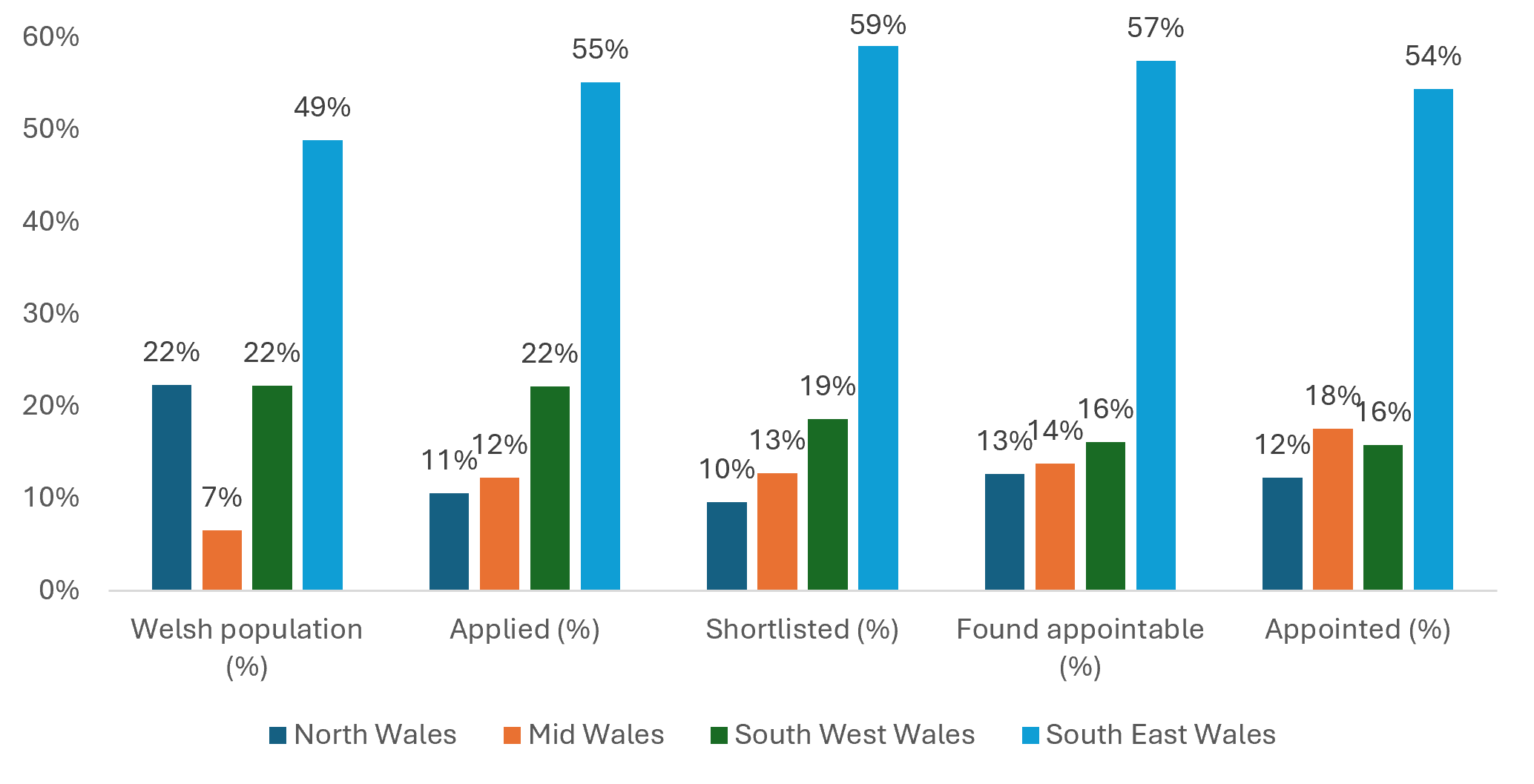
Figure 7 shows that nearly half of the population (49%) and just over half of applicants (54-59% across the application stages) live in South East Wales. Despite making up 22% of the Welsh population, only 11-12% of applicants live in North Wales. Conversely, while only 7% of the population live in Mid Wales, 12% of applicants and 18% of appointees live in Mid Wales.
* Of the 693 applicants included in this analysis, 1.6% of applicants did not provide their residence.
Source: Annual Population Survey: national identity by area and year on StatsWales.
Welsh Language
Applicants were also asked to provide information about their Welsh language abilities: listening and speaking. The majority of applicants (51.7%) had at least basic listening and speaking skills, but applicants are more likely to have listening skills than speaking.
In 2025/2026, 29.4% of public appointment applicants in Cais had no Welsh language listening skills, just over half (51.7%) had basic skills and 18.9% had more advanced Welsh language listening skills, see Figure 9. While the proportion of appointees with no Welsh language listening skills is similar to the proportion of applicants, the proportion of appointees with more advanced listening skills was higher (31.3%) and the proportion of appointees with basic listening skills was lower (40.6%).
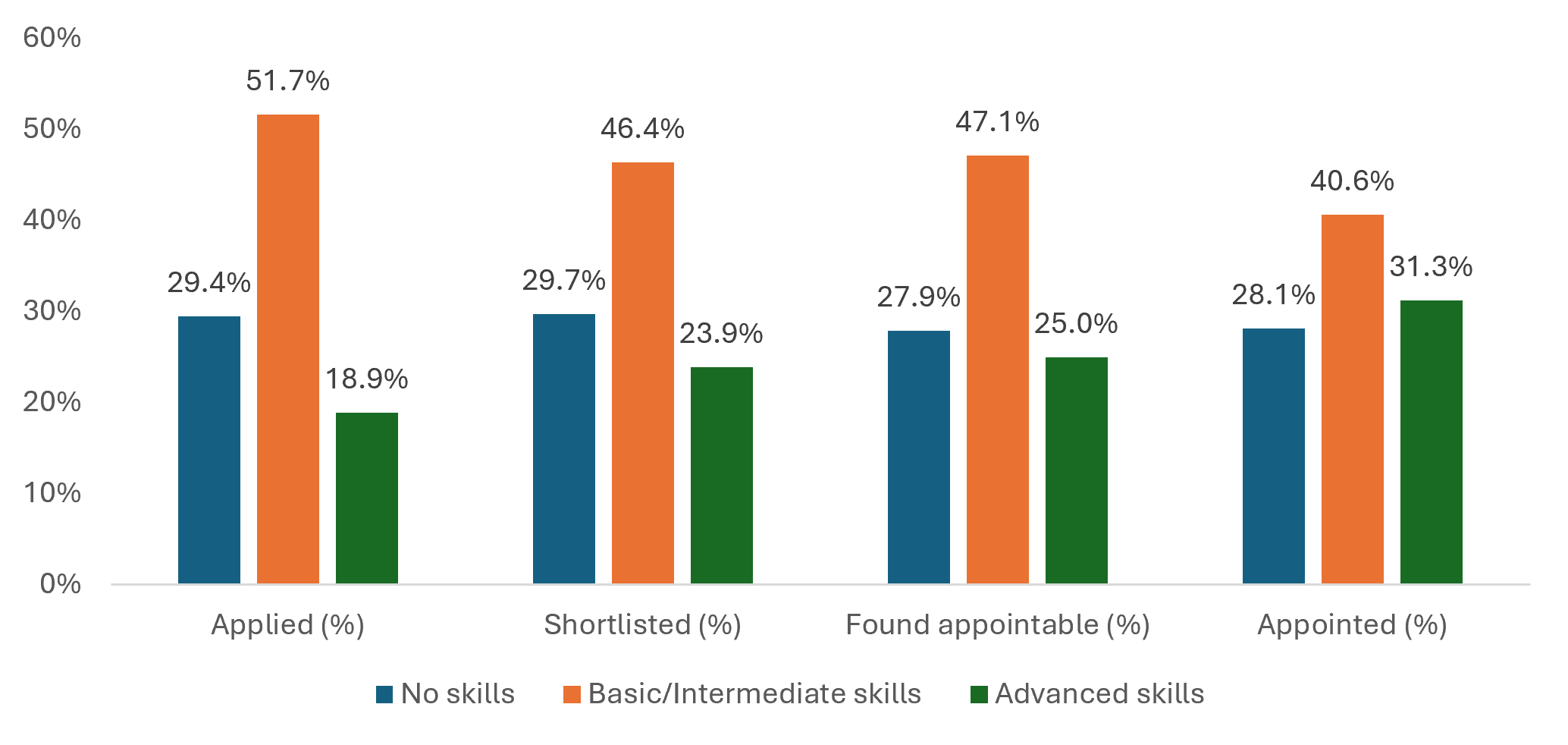
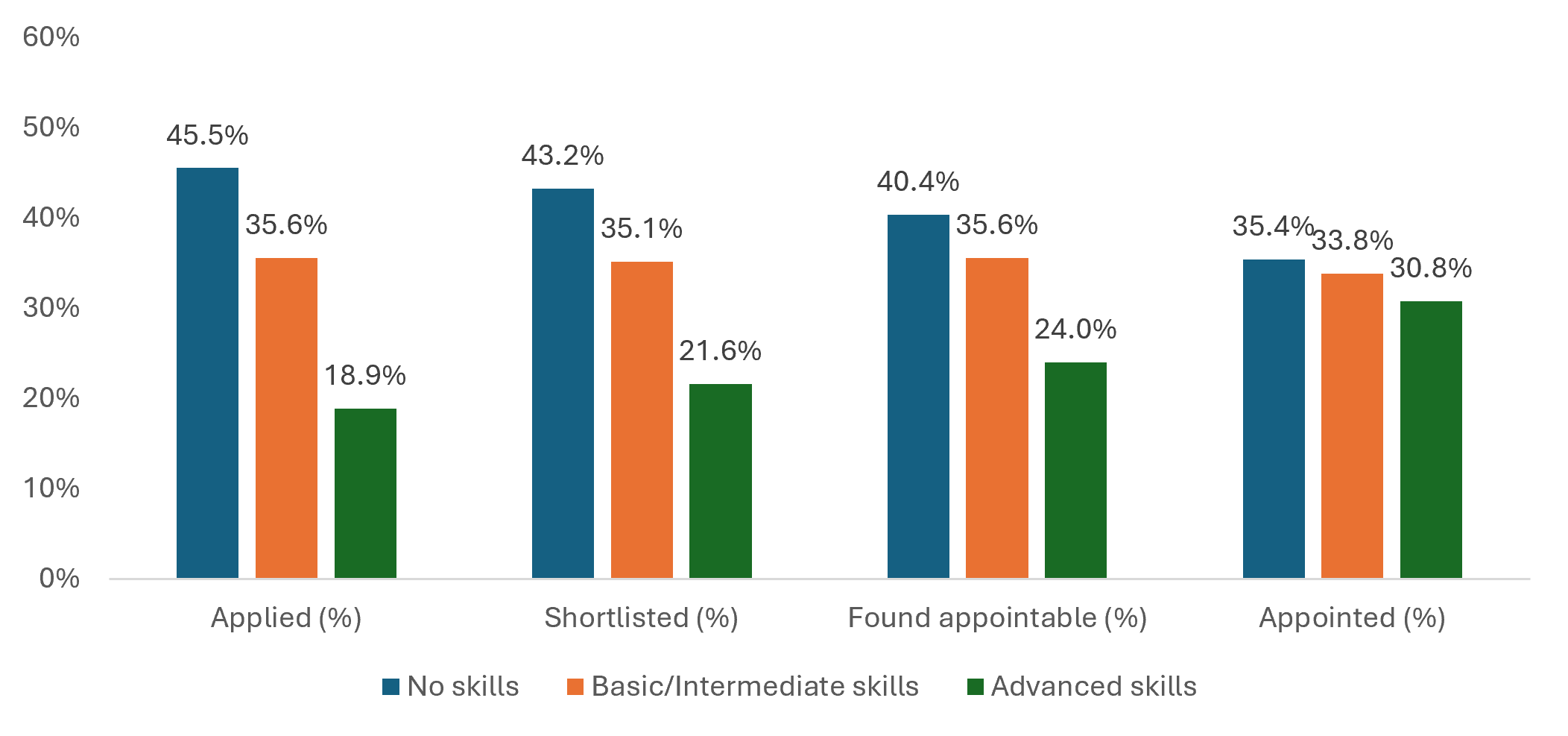
According to the 2025 Annual Population Survey, 27.3% of the adult population report being able to speak Welsh. While not directly comparable, 45.5% of applicants to public appointments via Cais reported not being able to speak any Welsh, 35.6% had basic or intermediate skills and 18.9% reported advanced Welsh language speaking skills, see Figure 10.
From application to appointment, the proportion reporting no Welsh-speaking ability decreased from 45.5% to 35.4%, while the proportion reporting advanced speaking skills increased from 18.9% to 30.8%.
Previous employment experience
Applicants to public appointments via Cais are asked to select the category which best described their previous employment experience. This experience is grouped into:
- Mostly civil service
- Mostly private sector
- Mostly third sector
- Mostly wider public sector
- Mixed
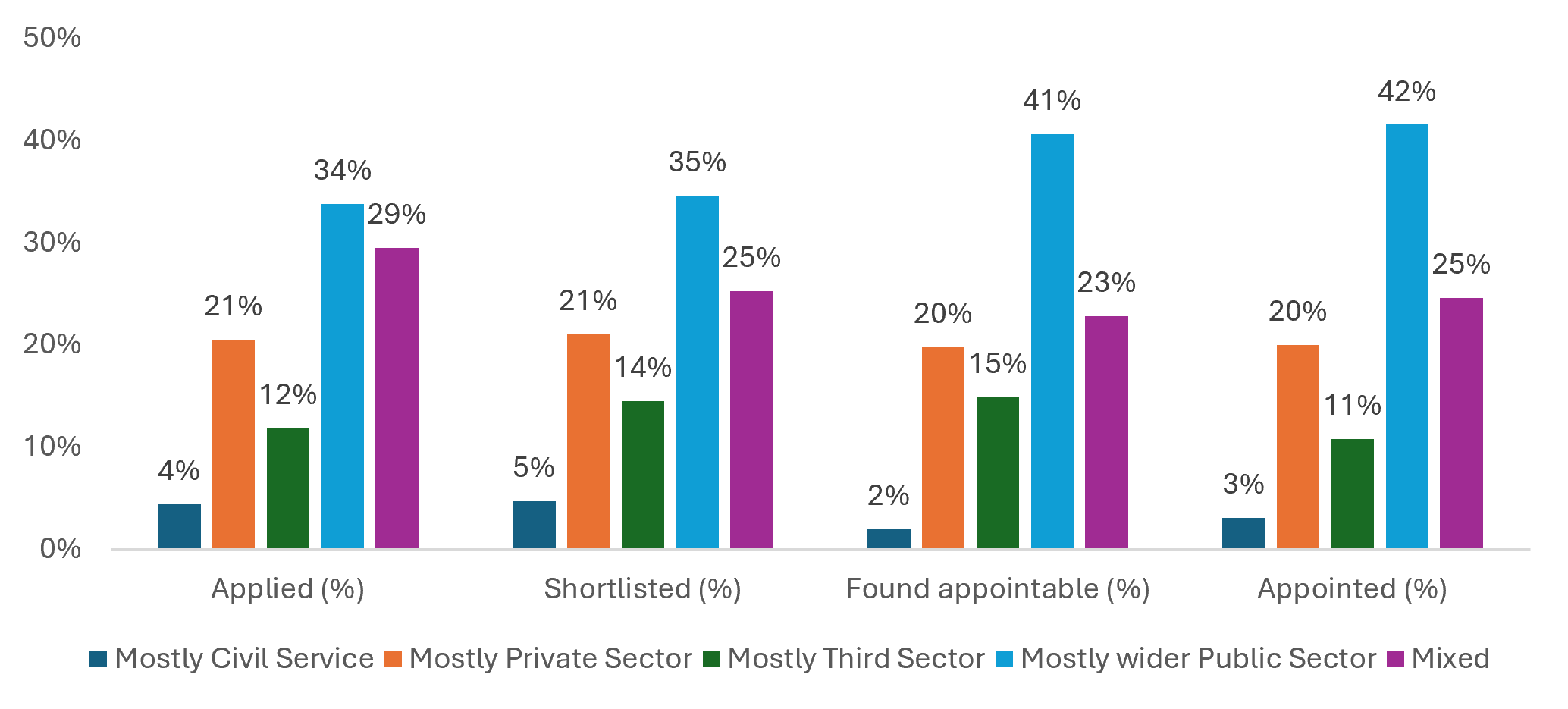
Figure 8 shows that just over a third of applicants (34%) reported having mostly wider public sector experience, followed by mixed (29%), mostly private sector (21%), mostly third sector (12%) and then mostly civil service (4%).
Across the recruitment stages, the proportion with mostly wider public sector experience increased from 34% of applicants at application stage to 42% of appointees at appointed stage.
* Of the 693 applicants included in this analysis, 8.9% of applicants did not provide their previous employment experience.
Socio-economic background
As part of the application process, applicants are asked to indicate if they would describe themselves as being from a lower socio-economic background. This question aims to allow applicants to respond based on their subjective experience of their background, rather than using more objective measures of socio-economic background, such as parental education or profession.
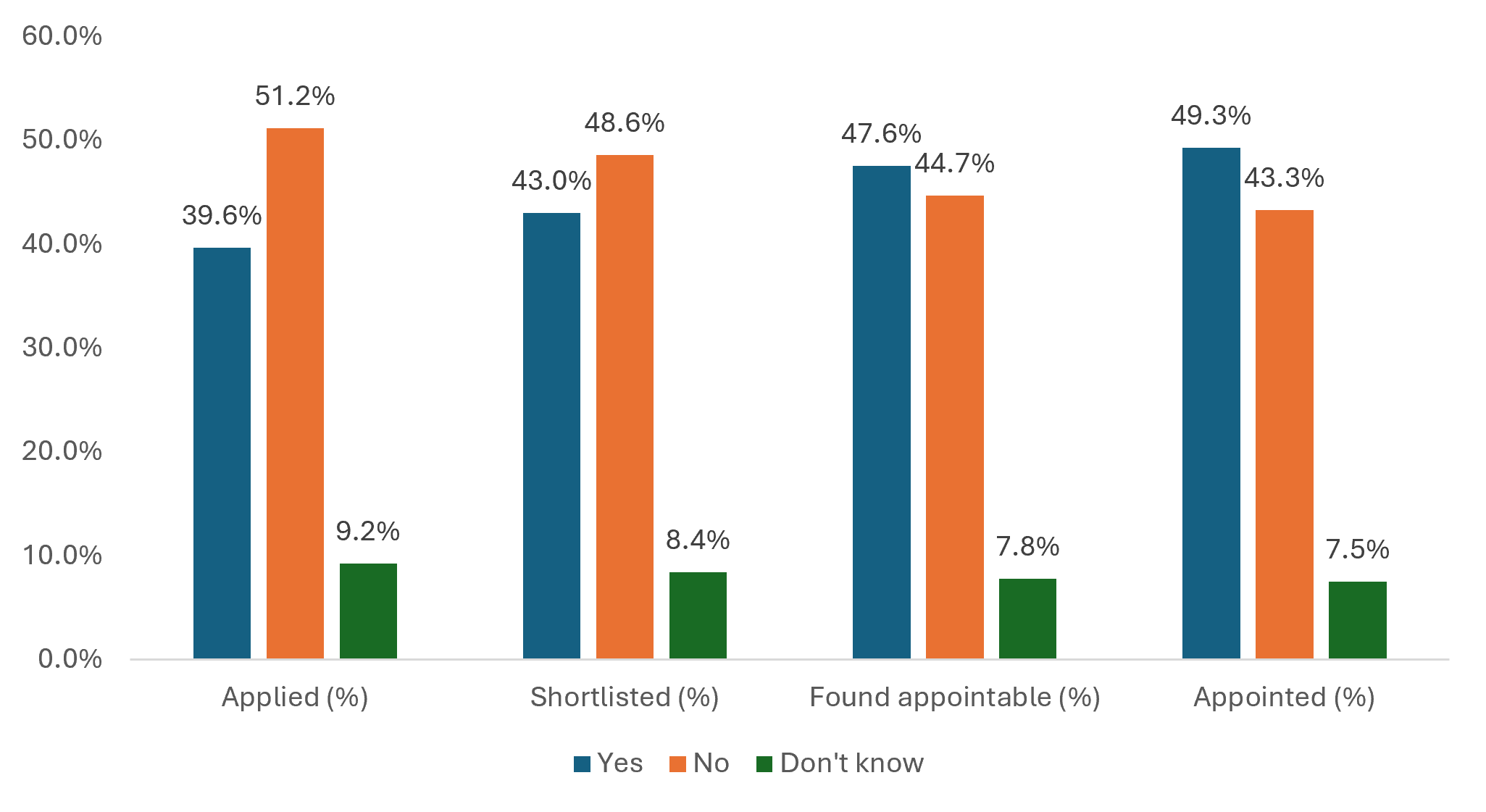
At the application stage, 39.6% reported in their Cais application that they came from a lower socio-economic background. This increased to 49.3% of appointments, see Figure 11.
* Of the 693 applicants included in this analysis, 6.2% did not answer the socio-economic background question.
Declared political activity
All applicants for a public appointment via Cais are asked to provide information about any political activity they have undertaken or political affiliation they have had in the last 5 years. Neither activity nor affiliation is a criterion for appointment (except where statute dictates specific representation). Applicants are asked to provide details of if they have:
- Canvassed
- Held office of local branch
- Spoken as a candidate for office
- Stood as candidate for office
- Any other relevant political activity
If the applicant responds yes to any of the above, they are counted has having declared political activity; they are also asked to provide the name of the political party.
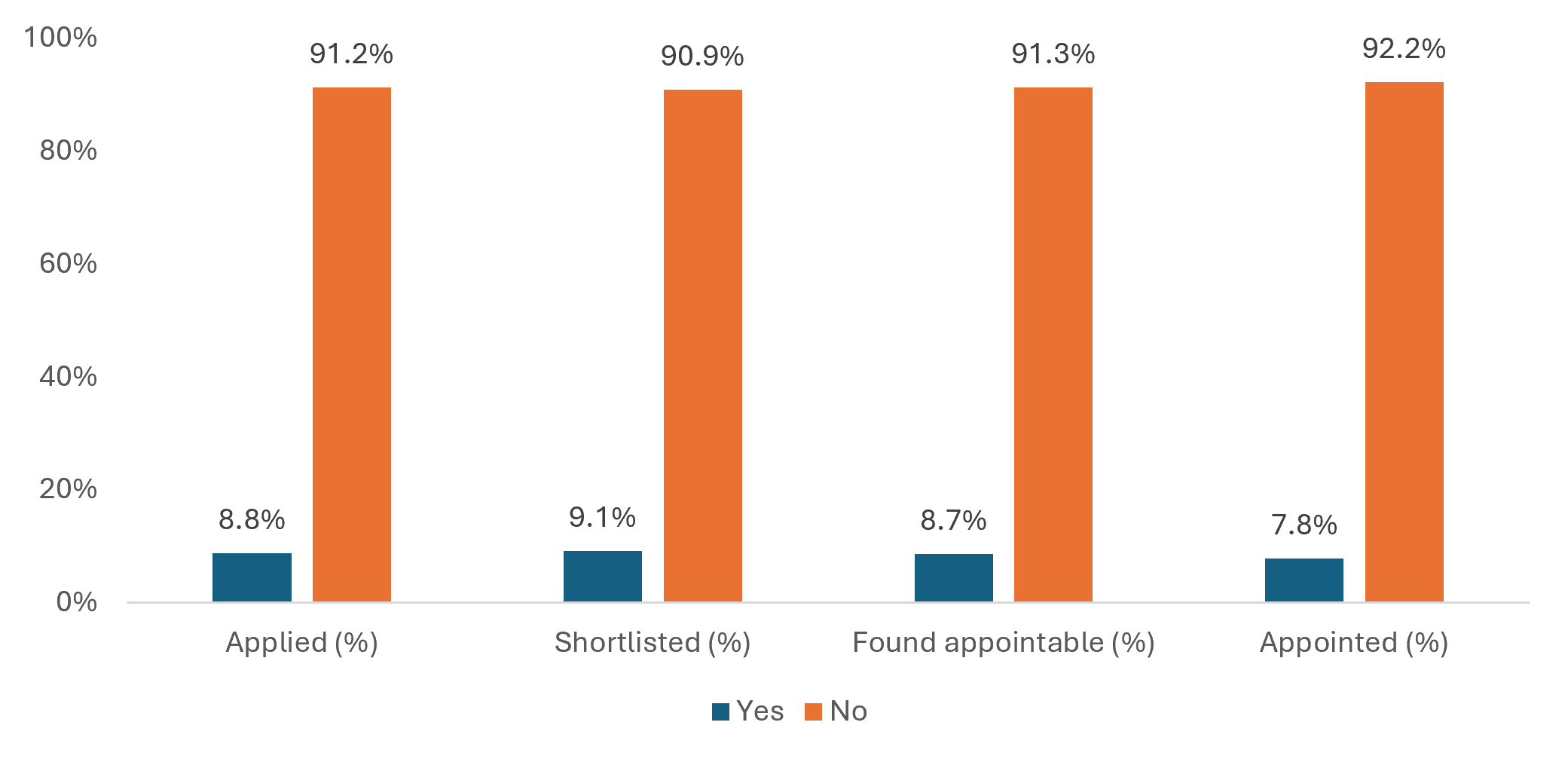
Figure 12 shows that 91.2% of applicants did not have any declared political activity, while this increased slightly to 92.2% of appointees.
* Of the 693 applicants included in this analysis, 1.2% did not provide declared political activity.
Summary
Applicants to Welsh public appointments via Cais in 2025/2026 differed from the Welsh population across several protected characteristics. Applicants were concentrated in the middle and older working-age groups, with people aged 45–64 accounting for 65% of appointees, while women made up a greater proportion of appointees (53.7%) than they did of the Welsh population (51.0%).
Despite making up 21.6% of the Welsh population, disabled applicants represented 17.2% of all applicants and 12.7% of appointees. Ethnic minority applicants and applicants reporting a minority sexual orientation formed larger proportions of applicants than of the Welsh population, although their representation varied across recruitment stages.
The background and experience findings also show differences across recruitment stages. Applicants and appointees were concentrated in South East Wales, while North Wales was underrepresented relative to its share of the population and Mid Wales accounted for a comparatively high proportion of appointees.
Wider public sector experience was the most common employment background and increased from 34% of applicants to 42% of appointees.
Appointees were also more likely than applicants to report advanced Welsh listening and speaking skills and to describe themselves as being from a lower socio-economic background, while more than nine in ten applicants and appointees reported no declared political activity.
Overall, the composition of applicants changed between application, shortlisting, being found appointable and appointment, but the direction and scale of change differed by characteristic. The results identify areas for further investigation - notably age, disability, regional representation and the variation between shortlisting and appointment stages.