Annual survey of hours and earnings: 2025
Data on average hourly, weekly and annual earnings in the UK down to local authority level for 2025.
In this page
Introduction
The survey provides information about the levels, distribution and make-up of earnings and hours worked for employees in all industries and occupations.
The Annual Survey of Hours and Earnings only covers employees and excludes income earned from self-employment, pensions and other sources.
Main points
Full-time weekly earnings
Median gross weekly earnings for full-time adults working in Wales were £704.3 in April 2025. This was 91.9% of the average for the UK (£766.6). Median gross weekly earnings in Wales were the third lowest amongst the 12 UK countries and English regions.
Median gross weekly earnings for full-time adults working in Wales increased by 4.2% between 2024 and 2025, compared to a 6.2% increase between 2023 and 2024.
UK median gross weekly earnings increased by 5.3% between 2024 and 2025. Wales had the second lowest percentage change amongst the 12 UK countries and English regions.
Residence based earnings
Median full-time weekly earnings for those living in Wales in April 2025 increased by 5.0% (to £719.3) over the year. The level in 2025 was 93.8% of the UK average.
Full-time annual earnings
Median gross annual earnings for full-time adults working in Wales in April 2025 were £35,796 for the tax year ending on 5 April 2025, an increase of 4.5% on the previous year.
Gender pay gap
The Pay difference (full-time) for gender in Wales is one of the national wellbeing indicators. A national milestone has been set for this national indicator which is to eliminate the pay gap by 2050. Please see notes for further information. A gender pay gap greater than zero means men’s earnings are higher than women’s.
Figure 1: gender pay difference in Wales by year (median hourly earnings full-time employees excluding overtime) (£), 1997 to 2025
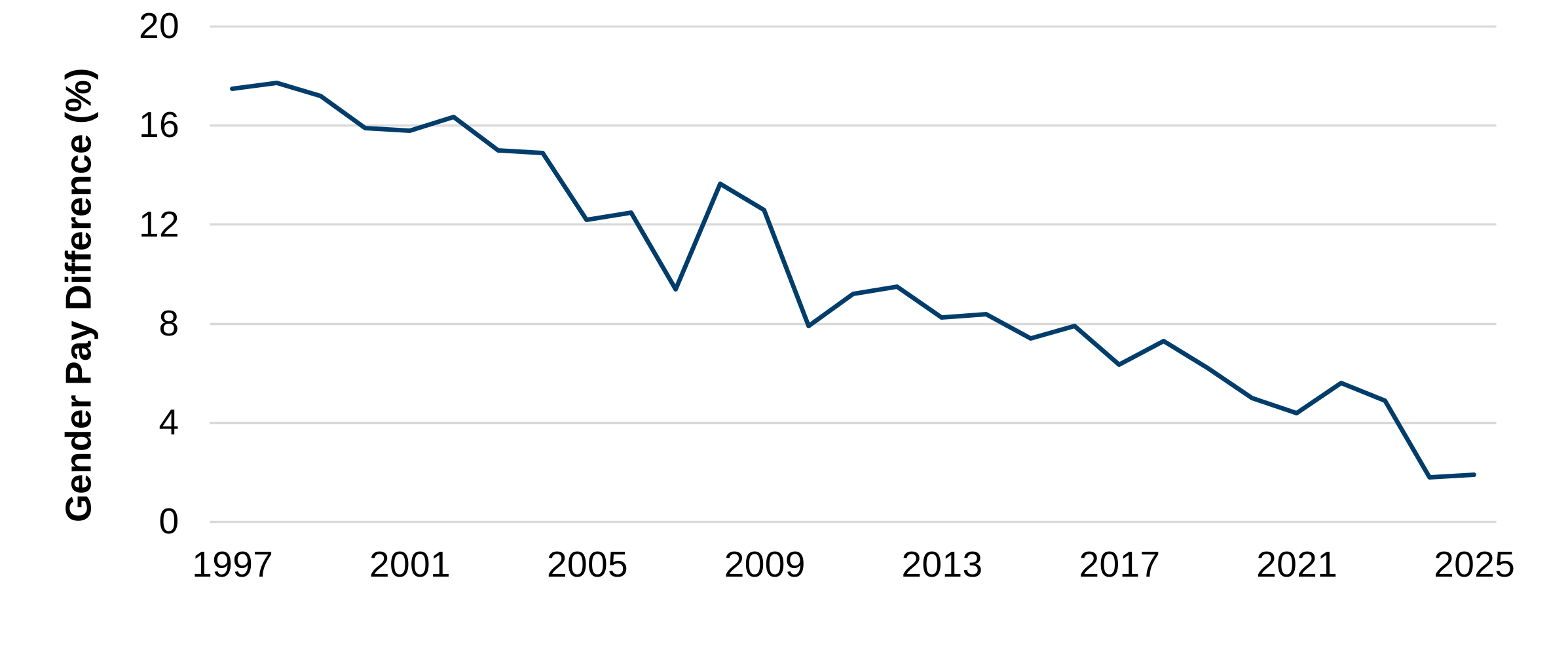
Description of figure 1: a line chart showing that the gender pay difference on a median hourly earnings full-time basis (excluding overtime) has steadily decreased since 1997.
Source: Welsh Government analysis of Annual Survey of Hours and Earnings
The gender pay gap on a median hourly full-time basis (excluding overtime) in April 2025 was 1.9% in Wales and 6.9% in the UK. In Wales the gap widened by 0.1 percentage points and in the UK the gap narrowed by 0.2 percentage points compared to the previous year.
The gender pay gap on a median hourly basis (excluding overtime) for all employees in April 2025 was 9.7% in Wales and 12.8% in the UK. In Wales the gap widened by 0.7 percentage points and in the UK it narrowed by 0.3 percentage points compared to the previous year.
For part time employees women usually earn more than men, resulting in a negative pay gap. The gender pay gap on a median hourly part-time basis (excluding overtime) in April 2025 stood at -3.1% in Wales, narrowing by 0.3 percentage points compared to the previous year. The gap stood at -2.9% in the UK, narrowing by 0.1 percentage points from the previous year. The part time pay gap at geographies below the UK level can be volatile.
Notes
Explanation for the difference in the gender pay gap estimate between full-time and all employees
The gender pay gap estimate is calculated as a differential proportion of two median estimates, the middle points of the data, one for female and one for males. The composition of the male and female employee workforces are quite different, with more women working part-time than men. Because the hourly earnings of part-time employees tend to be less, on average, than the earnings of full-time employees, this means women are more likely to receive lower hourly rates of pay. It's this fact that helps explain why the gender pay gap for all full-time and part-time employees is greater than the gender pay gap for full-time employees only.
Well-being of Future Generations Act (WFG)
The Well-being of Future Generations Act 2015 is about improving the social, economic, environmental and cultural wellbeing of Wales. The Act puts in place seven wellbeing goals for Wales. These are for a more equal, prosperous, resilient, healthier and globally responsible Wales, with cohesive communities and a vibrant culture and thriving Welsh language. Under section (10)(1) of the Act, the Welsh Ministers must (a) publish indicators (“national indicators”) that must be applied for the purpose of measuring progress towards the achievement of the Well-being goals, and (b) lay a copy of the national indicators before Senedd Cymru. The 50 national indicators laid in December 2021 replace the set of 46 national indicators that were laid in March 2016, and this release includes the following national indicator:
- (17) Pay difference for gender, disability and ethnicity
Datasets on StatsWales will be updated following this publication.
Further information
For further information on the quality and methodology of the data used in this headline please see the Office for National Statistics’ Annual Survey of Hours and Earnings quality and methodology information report.