Assistance for housing improvement: April 2024 to March 2025
Information on expenditure by local authorities on housing improvement and Disabled Facilities Grants (DFGs) for April 2024 to March 2025.
In this page
Introduction
This release presents information on financial help provided by local authorities for home improvement and repair under the Regulatory Reform (Housing Assistance) (England and Wales) Order 2002 (UK legislation). It includes information on disabled facilities grants (DFGs) approved under the Housing Grants, Construction and Regeneration Act 1996 (UK legislation). Assistance is primarily aimed at improving private sector housing but is also available for social housing via housing renewal schemes. The information presented in this release is used to monitor trends in local authority activity to improve the quality of housing stock. More detailed tables showing local authority breakdowns are available on StatsWales.
Expenditure data are presented at current prices and make no adjustment for inflation.
Main points
- In the financial year 2024 to 2025, the overall expenditure on assistance for housing improvement (including DFGs) was £54.8 million, 3% lower than in 2023 to 2024.
- Of the £54.8 million overall expenditure, £42.3 million (77%) was spent on mandatory DFGs.
- The average spending per mandatory DFG was £7,800.
Overall expenditure (including DFGs)
This section looks at the overall expenditure of local authority assisted home improvement and repair. This includes:
- direct local authority expenditure (in the form of grants and loans)
- mandatory and non-mandatory DFGs, which contribute to adaptations that enable a disabled person to continue living in their home
- indirect local authority expenditure (in the form of third-party assistance and loans facilitated by local authorities)
- financial contributions made by individual residents
It does not include expenditure by individuals which does not involve, or is not supported by, the local authority.
Figure 1: overall expenditure (£ millions) on assistance for housing improvement by type of expenditure, between 2015 to 2016 and 2024 to 2025 [Note 1]
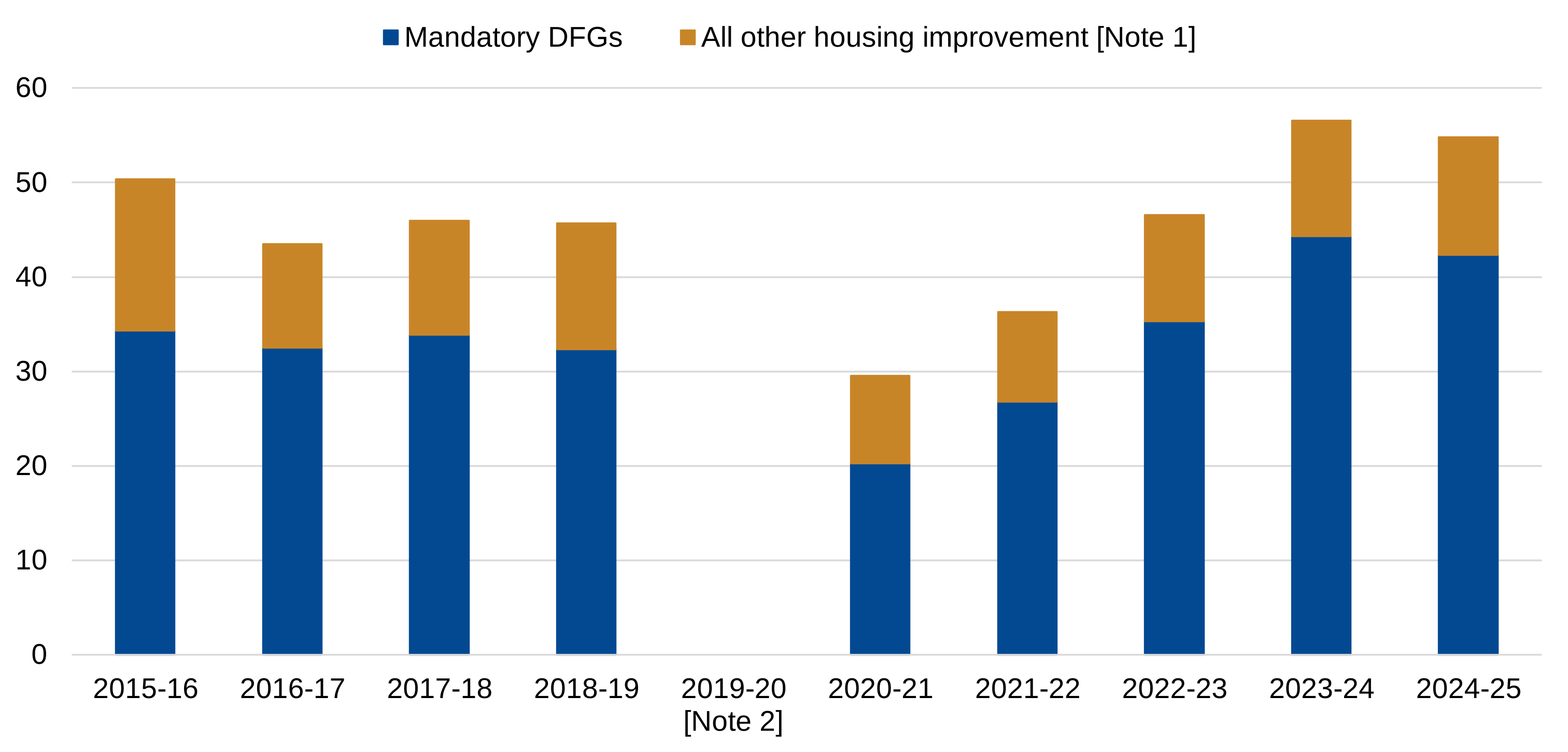
Description of figure 1: a stacked column chart showing that in the past 10 years, expenditure on mandatory DFGs has varied between 68% and 78% while expenditure on other forms of housing improvement has varied between 22% and 32%.
Source: Annual Assistance for housing improvement and Disabled facilities grants for housing returns from local authorities.
[Note 1] Incudes non-mandatory DFGs, direct and indirect local authority assistance and residents' contributions.
[Note 2] Data not collected for 2019-20 due to impact of COVID-19 pandemic.
In 2024 to 2025, the overall expenditure for home improvement and repair was £54.8 million. This marked a 3% decrease on the expenditure recorded in the previous year (£56.5 million) and is a 20% increase on the levels observed prior to the coronavirus (COVID-19) pandemic (£45.7 million in 2018-19).
In 2024 to 2025, mandatory DFGs accounted for 77% of the overall expenditure (£42.3 million). While this was a small decrease compared with the previous year (78%), the proportion in 2024 to 2025 was still the second highest recorded over the past 10 years. In the same year, non-mandatory DFGs accounted for a further £3.3 million (6% of the overall expenditure).
In the past 10 years, spending on indirect local authority assistance (in the form of third-party assistance and facilitated loans) has fluctuated between £257,000 and £3.9 million. In the most recent year, £323,000 was spent on indirect local authority assistance, this was a large decrease on the previous year (£792,000).
Figure 2: overall expenditure (£ thousands) per 1,000 dwellings by local authority, 2024 to 2025 [Note 1]
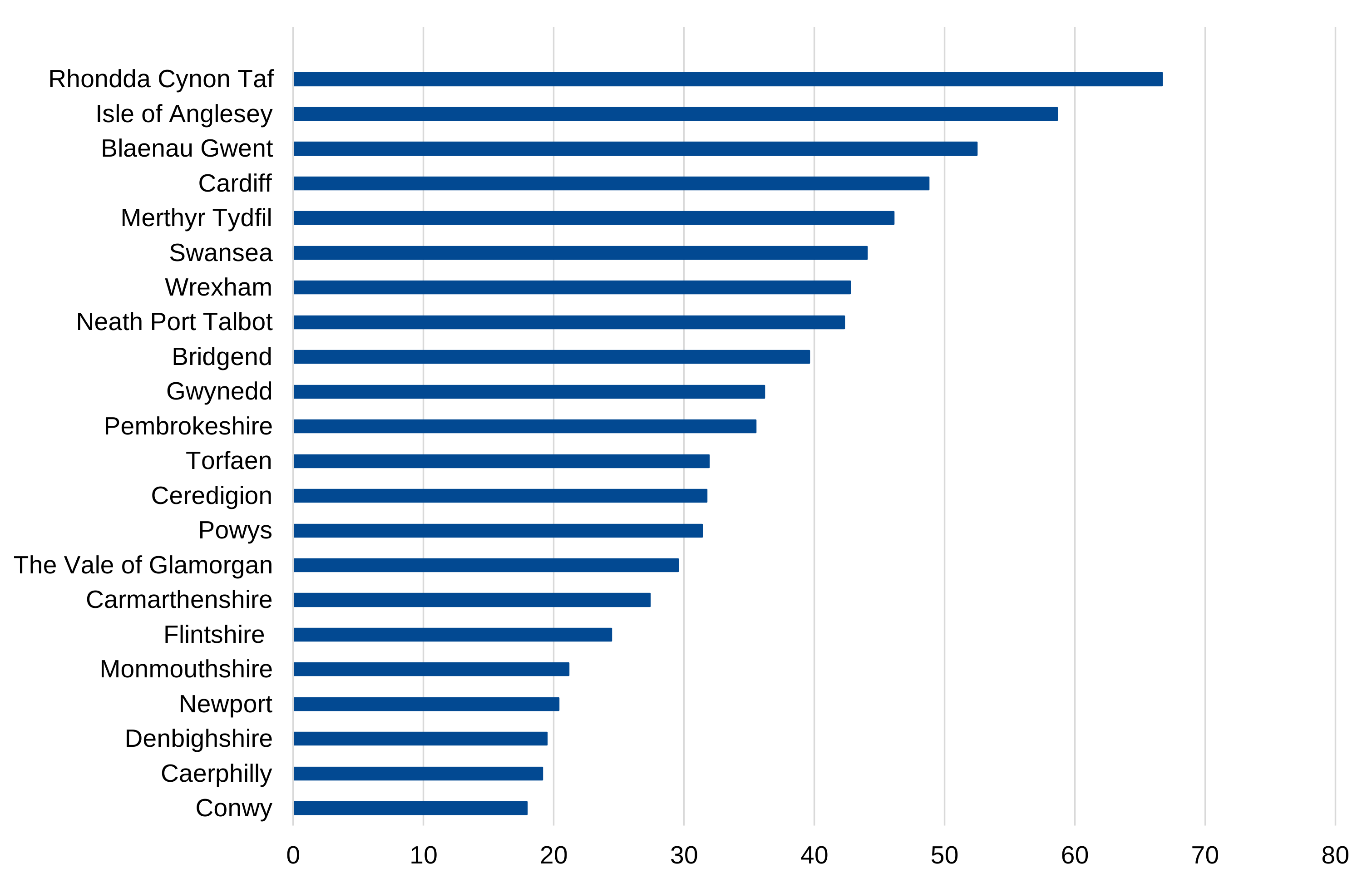
Description figure 2: clustered bar chart showing that the greatest expenditure per 1,000 dwellings was found in Rhondda Cynon Taf, Isle of Anglesey and Blaenau Gwent, with over £50,000 spent per 1,000 dwellings.
Source: Annual Assistance for housing improvement and Disabled facilities grants for housing returns from local authorities.
[Note 1] Based on Dwelling stock estimates at 31 March 2024.
At a local authority level, Cardiff reported the greatest overall expenditure in 2024 to 2025 at £7.7 million (equivalent to spending of £48,800 per 1,000 dwellings). The second and third highest expenditures were reported by Rhondda Cynon Taf (£7.4 million) and Swansea (£5.1 million). Rhondda Cynon Taf also reported the greatest spending per 1,000 dwellings (£66,700).
DFGs
This section of the release focuses on mandatory DFGs (approved under the Housing Grants, Construction and Regeneration Act 1996 (UK legislation)) and additional, non-mandatory DFGs (including ‘top-up’ loans and grants).
In 2024 to 2025, £42.3 million was spent on mandatory DFGs, down 4.5% on the previous year, but continuing to exceed levels observed prior to the pandemic.
Figure 3: average expenditure (£) per mandatory DFG by local authority, 2024 to 2025
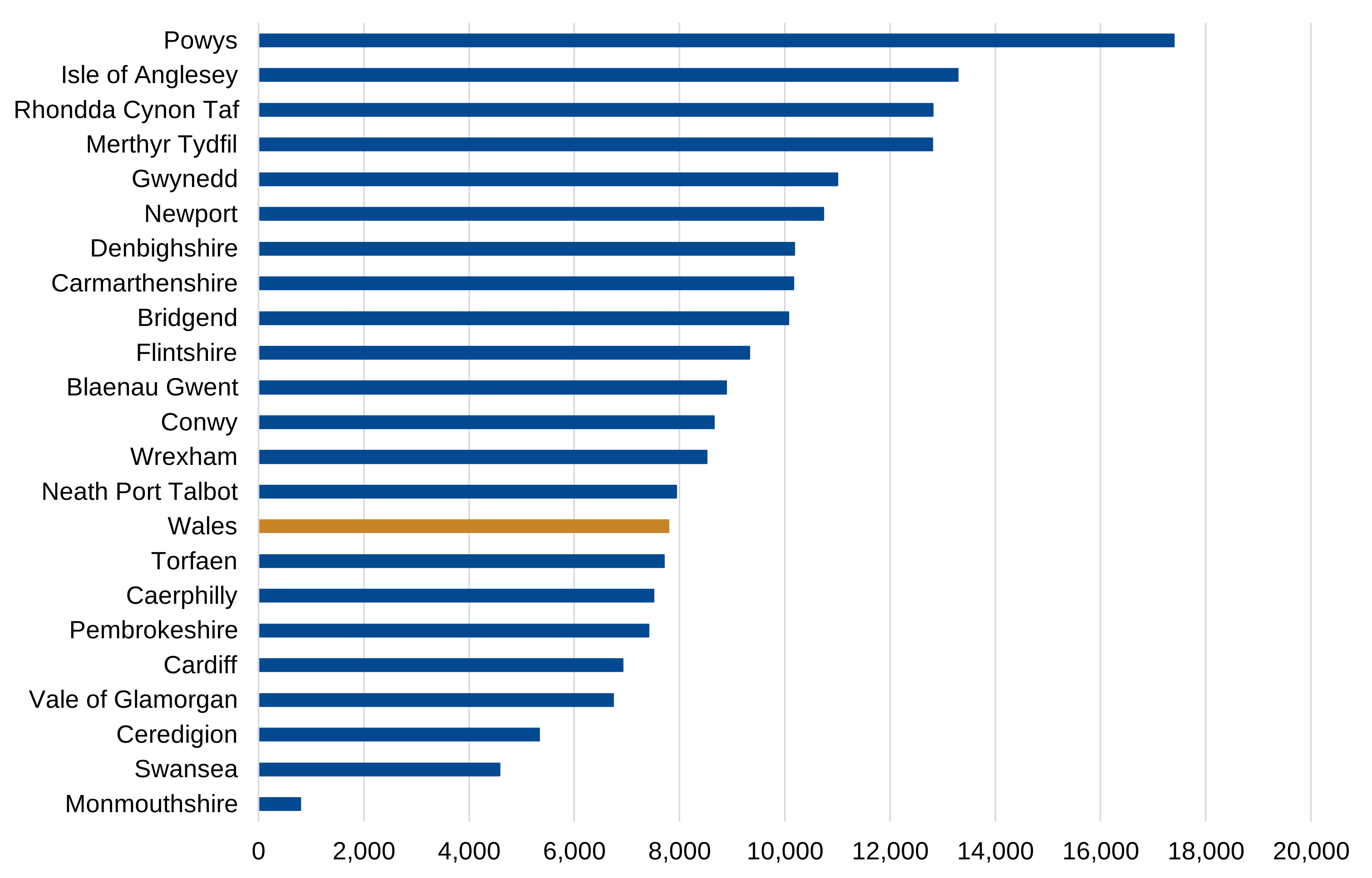
Description of figure 3: a clustered bar chart showing that the average spending per DFG by local authority described in text below.
Source: Annual Assistance for housing improvement and Disabled facilities grants for housing returns from local authorities.
In the most recent year, a total of 5,430 mandatory DFGs were completed. The average spending per mandatory DFG was £7,800, a decrease of £1,600 from the previous year (2023-24 figure has been revised since previously published). At a local authority level, average expenditure per mandatory DFG varied from £17,400 in Powys to £800 in Monmouthshire.
Housing improvement (excluding DFGs)
In 2024 to 2025, £9.1 million was spent on housing improvement through local authority grants, loans, third-party assistance and residents’ contributions, up 4% on the previous year. In total, 2,958 dwellings were improved through this expenditure, down 17% on the previous year. The average spending per dwelling was £3,100.
Figure 4: number of dwellings improved by tenure, 2024 to 2025 [Note 1]
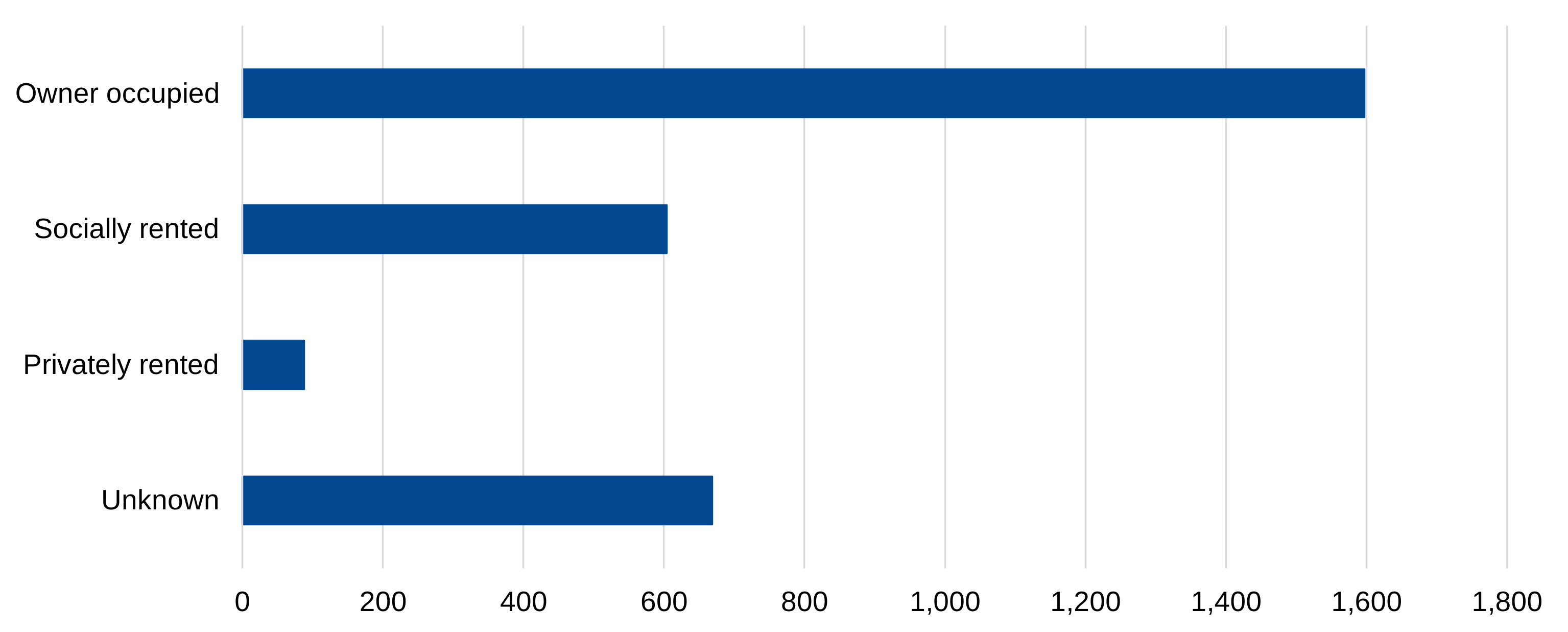
Description of figure 4: a clustered bar chart showing the number of dwellings improved by tenure in 2024 to 2025, described in text below.
Source: Annual Assistance for housing improvement and Disabled facilities grants for housing returns from local authorities.
[Note 1] Excludes dwellings improved through DFGs only.
In 2024 to 2025, most improved dwellings were owner occupied (54%), with smaller proportions in socially rented (20%) and privately rented dwellings (3%). In the same year. In the same year 67% of improvements were for people with disabilities, while 20% were for elderly people aged 60 and over. Please note that if a recipient falls into both disability and elderly categories, they will have been counted in the disability category only.
Future collections
In August 2024 a research report summarising information on housing adaptations completed within the period 1 April 2020 to 31 March 2021 was published. The data within this report was collected directly from Care & Repair agencies, local authorities and housing associations by the Welsh Government. Submissions were received from all 13 Care & Repair agencies, all 22 local authorities, all 23 traditional housing associations, and 10 of 11 Large Scale Voluntary Transfer (LSVT) bodies which took over the ownership of former council housing. Of the 10 LSVTs which submitted a return, three submitted a nil return. This report does not therefore provide a complete national picture of the delivery of housing adaptations. The scope of the data collection for the housing adaptations research report is being considered as to whether it can replace the information currently collected for Assistance for housing improvement as published within this release.
We recently consulted on the content of this publication. Following broad support for reduced content, we have removed a short section relating to renewal area expenditure (expenditure had decreased from £29.1 million in 2013-14 to £2,000 in 2023-24). For further information please see the response to the consultation on proposed changes to Welsh Government statistics outputs.
Quality and methodology information
Official Statistics status
All official statistics should show the standards of the Code of Practice for Statistics (UK Statistics Authority).
These are accredited official statistics, published by the Welsh Government. They were independently reviewed by the Office for Statistics Regulation (OSR) in November 2012. They comply with the standards of trustworthiness, quality and value in the Code of Practice for Statistics.
It is Welsh Government’s responsibility to maintain compliance with the standards expected of accreditation. If we become concerned about whether these statistics are still meeting the appropriate standards, we will discuss any concerns with OSR promptly. Accreditation can be cancelled or suspended at any point when the highest standards are not maintained, and reinstated when standards are restored.
Accredited official statistics are called National Statistics in the Statistics and Registration Service Act 2007.
Statement of compliance with the Code of Practice for Statistics
Our statistical practice is regulated by the OSR. OSR sets the standards of trustworthiness, quality and value in the Code of Practice for Statistics that all producers of official statistics should adhere to.
All of our statistics are produced and published in accordance with a number of statements and protocols to enhance trustworthiness, quality and value. These are set out in the Welsh Government’s Statement of Compliance.
These accredited official statistics (OSR) demonstrate the standards expected around trustworthiness, quality and public value in the following ways.
Trustworthiness
We have made these statistics available in a timely manner to meet user needs. We have followed relevant protocols for releasing these statistics, ensuring that circulation before publication has been restricted to eligible recipients only.
Quality
We have made the limitations of this data clear to users (for example, highlighting where revisions have been made due to resubmission of corrected data returns).
Value
We have made every effort to ensure these statistics are accessible to users, using clear and succinct language (for example, we have expanded commentary to include more policy and operational context)
We welcome any feedback on how we can improve the value of these statistics.
You are welcome to contact us directly with any comments about how we meet these standards. Alternatively, you can contact OSR by emailing regulation@statistics.gov.uk or via the OSR website.
Well-being of Future Generations Act (WFG)
The Well-being of Future Generations Act 2015 is about improving the social, economic, environmental and cultural wellbeing of Wales. The Act puts in place seven wellbeing goals for Wales. These are for a more equal, prosperous, resilient, healthier and globally responsible Wales, with cohesive communities and a vibrant culture and thriving Welsh language. Under section (10)(1) of the Act, the Welsh Ministers must (a) publish indicators (“national indicators”) that must be applied for the purpose of measuring progress towards the achievement of the wellbeing goals, and (b) lay a copy of the national indicators before Senedd Cymru. Under section 10(8) of the Well-being of Future Generations Act, where the Welsh Ministers revise the national indicators, they must as soon as reasonably practicable (a) publish the indicators as revised and (b) lay a copy of them before the Senedd. These national indicators were laid before the Senedd in 2021. The indicators laid on 14 December 2021 replace the set laid on 16 March 2016.
Information on the indicators, along with narratives for each of the wellbeing goals and associated technical information is available in the Wellbeing of Wales report.
Further information on the Well-being of Future Generations (Wales) Act 2015.
The statistics included in this release could also provide supporting narrative to the national indicators and be used by public services boards in relation to their local wellbeing assessments and local wellbeing plans.