Attendance and absence from primary schools: September 2024 to August 2025
Data on authorised and unauthorised absenteeism by pupils of compulsory school age for September 2024 to August 2025.
In this page
Introduction
Attendance and absence data in Welsh maintained primary, middle and special schools for pupils aged 5 to 10 over the entire 2024/25 academic year (from September 2024 to August 2025).
The data in this release relates to attendance of pupils of compulsory school age (ages 5 to 10) in maintained primary, middle, and special schools. The data is derived from the statutory returns provided by local authorities following the end of the academic year. The collection of this data was suspended at the start of the coronavirus (COVID-19) pandemic in March 2020 and no data is available for the school years 2019/20, 2020/21 and 2021/22.
Since September 2020 we have been collecting and publishing daily attendance data from schools. This data is extracted directly from school Management Information Systems (MIS) once a week. This data is collected as management information and is not validated or agreed with schools or local authorities. Therefore, it doesn’t have the same level of quality assurance as the annual attendance data contained within this release. Both weekly and annual data are available for the 2024/25 school year, but for the above reasons are not strictly comparable.
For further information on the different sources of official attendance data and advice on which to use please see Quality and Methodology information section.
Maintained special schools
Data for maintained special schools is collected at aggregate school level and most of the data on absence by pupil characteristics is not available for pupils in these schools. Any data and figures below that include special schools will be noted as such. If there is no note on coverage, then the data will only include maintained primary and middle schools.
Main points
The percentage of half-day sessions missed by primary school-aged pupils has decreased to 7.4% in 2024/25, compared to 7.9% in 2023/24.
Primary school-aged pupils eligible for Free School Meals (FSM) missed 11.8% of half-day sessions in 2024/25, while primary school-aged pupils not eligible for FSM missed 6.1% of half-day sessions. Both figures have decreased since 2023/24; pupils eligible for FSM missed 12.1% of half-day sessions, compared to 6.6% for pupils not eligible for FSM.
Using the 10% threshold, the percentage of primary school-aged pupils that were persistently absent has fallen from 24.7% to 21.8% between 2023/24 and 2024/25.
Using the 10% threshold, 44.7% of primary school-aged pupils eligible for FSM were persistently absent in 2024/25, compared to 46.9% in 2023/24. In 2024/25, 16.0% of primary pupils not eligible for FSM were persistently absent, compared to 18.8% in 2023/24. This is a decrease from 2023/24 for both groups of pupils.
Overall absence
Figure 1: percentage of half-day sessions absent from school of primary school-age pupils, 2013/14 to 2024/25 [Note 1]
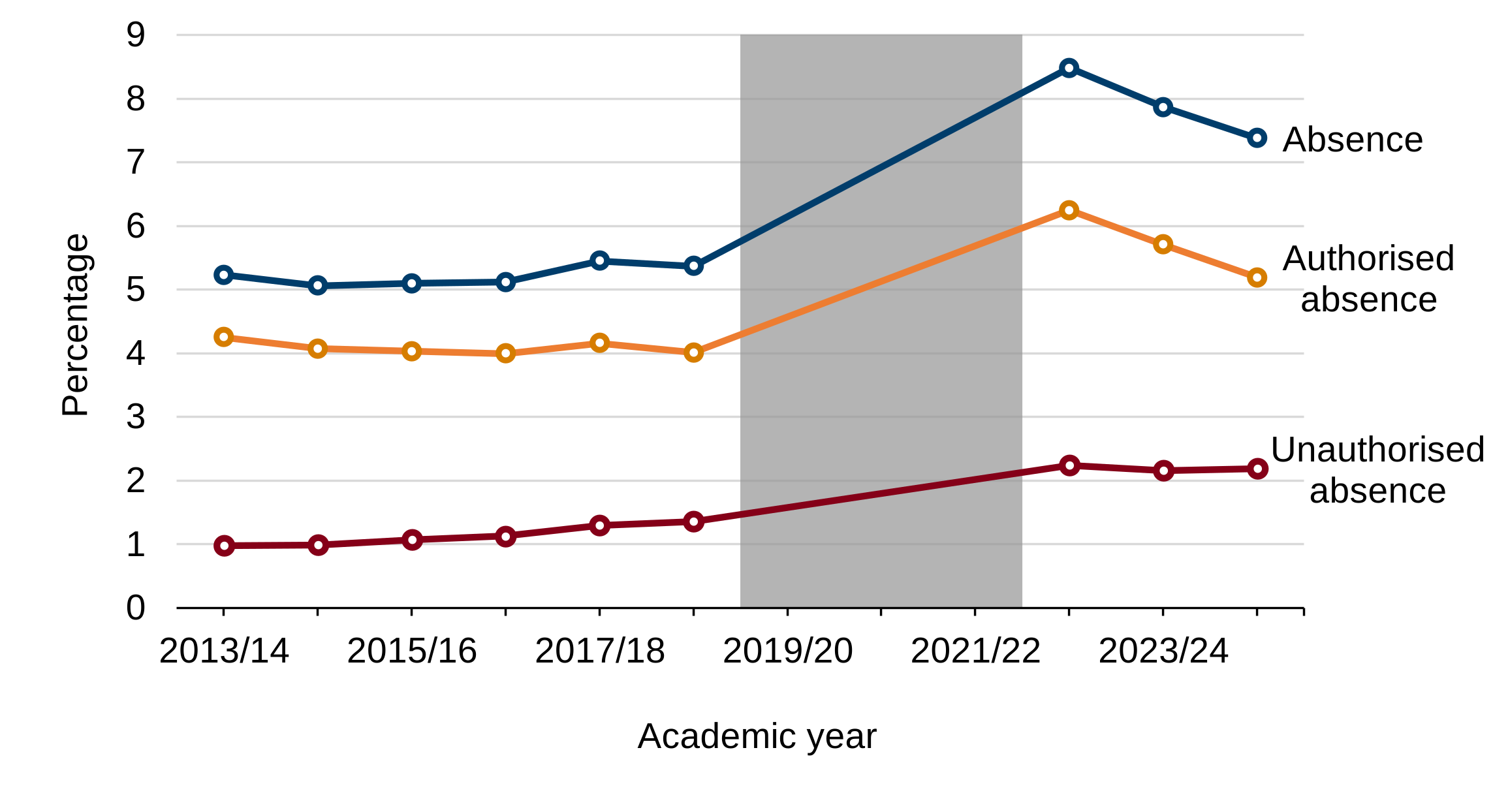
Description of figure 1: a line graph showing absence between 2013/14 and 2024/25. Absence is broken down into authorised and unauthorised absence. There was an increase in overall absence between 2018/19 and 2022/23 following the COVID-19 pandemic. Between 2023/24 and 2024/25 there has been a decrease across all absence types.
Source: Attendance Data Collection: Primary 2024/25 (includes maintained middle, primary and special schools)
[Note 1] There is no data in this collection for the years 2019/20, 2020/21, 2021/22. The years where there is data are indicated by the circular markers on the lines.
Absence by year group
Figure 2: percentage of half-day sessions of absence by year group in 2018/19, 2022/23, 2023/24 and 2024/25
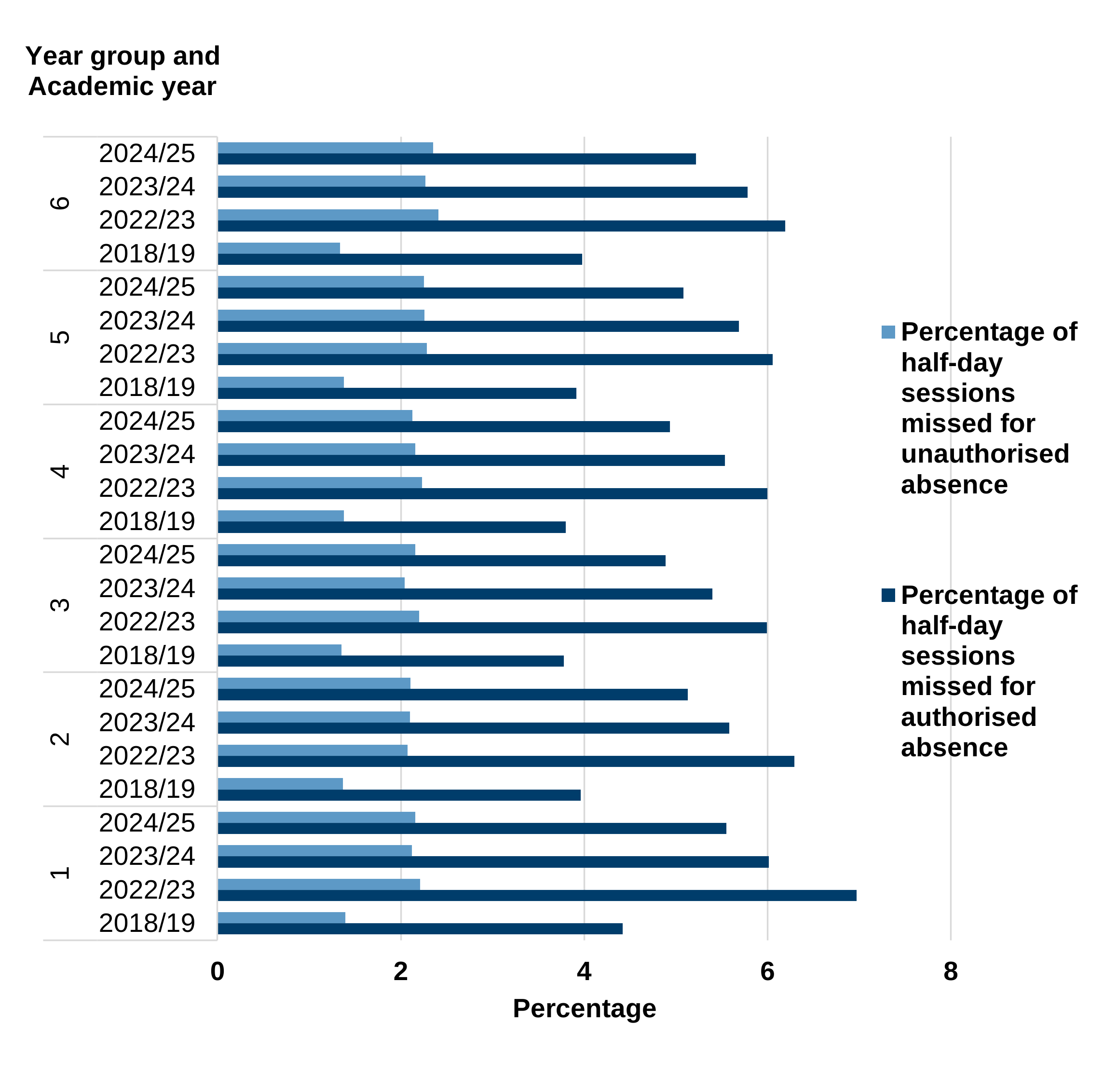
Description of figure 2: a series of stacked bars showing a sharp increase in absence across all year groups following the COVID-19 pandemic, with a slight decrease in 2023/24 and 2024/25. Year 1 pupils have the highest absence in 2018/19, 2022/23, 2023/24, and 2024/25. They also had the largest increase in absence between 2018/19 and 2022/23.
Source: Attendance Data Collection: Primary 2024/25 (includes maintained middle and primary schools)
Absence by Free School Meals (FSM) eligibility
Pupils are eligible for FSM if their parents or guardians receive certain means-tested benefits or support payments.
There have been recent significant changes in FSM provision in Wales as part of the rollout of Universal FSM. For further detail, please read the section in the Quality and Methodology information.
Figure 3: percentage of half-day sessions of absence by FSM eligibility in 2018/19, 2022/23, 2023/24 and 2024/25
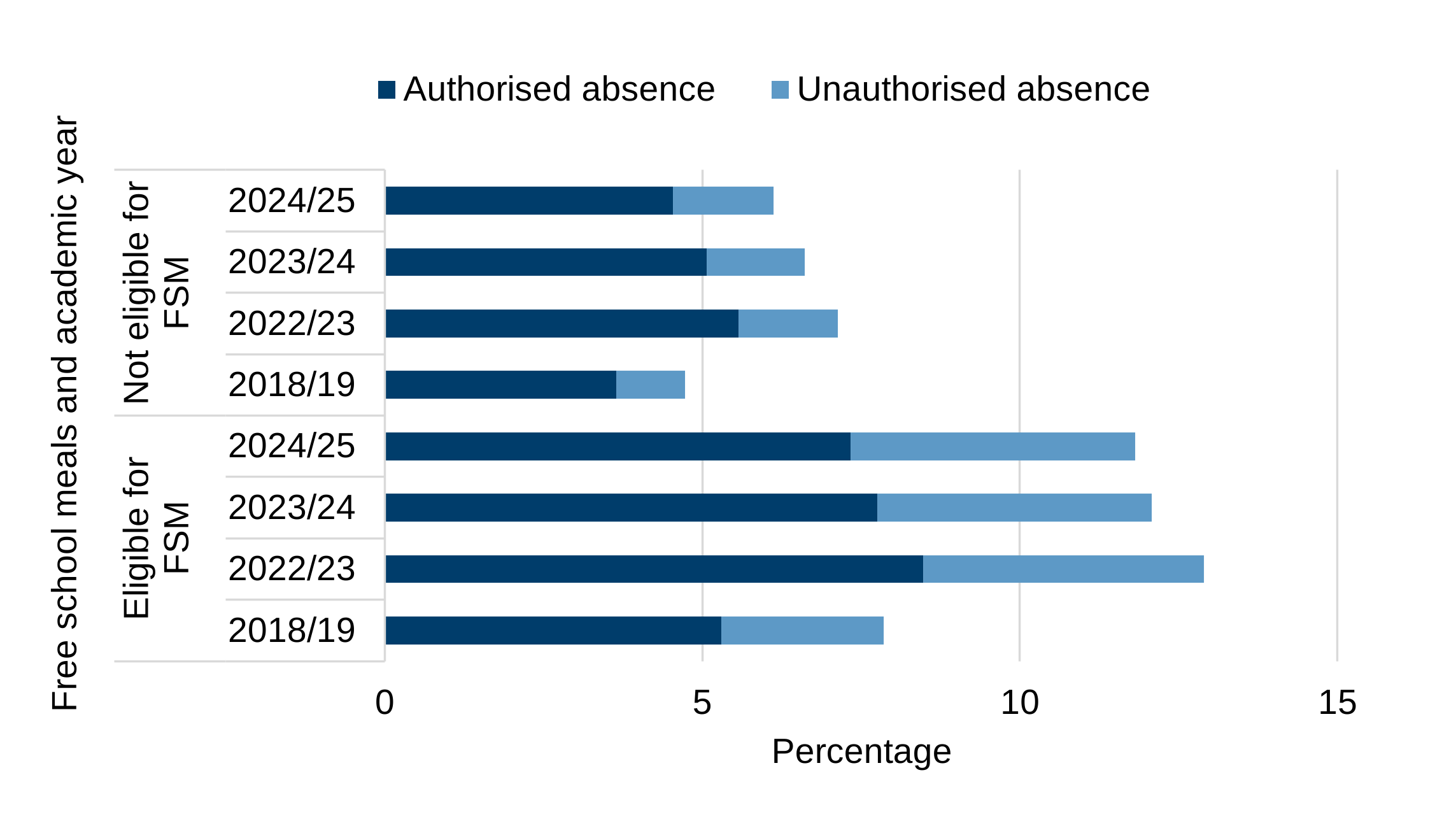
Description of figure 3: stacked bars showing a sharp increase in absence for both pupils eligible and not eligible for FSM following the COVID-19 pandemic. The overall absence for both groups increased between 2018/19 and 2022/23. However this has slightly decreased between 2023/24 and 2024/25.
Source: Attendance Data Collection: Primary 2024/25 (includes maintained middle and primary schools)
Both pupils eligible and ineligible for FSM have seen an increase in unauthorised absence as a proportion of their overall absence between 2023/24 and 2024/25:
- 23.4% to 25.9% of all absences for pupils ineligible for FSM
- 35.8% to 37.9% of all absences for pupils eligible for FSM
FSM eligibility and year group
For Secondary school-age pupils, data published on 30 September 2025 showed that the percentage point gap between pupils eligible and ineligible for FSM was not the same across year groups. There are no Secondary school figures in this publication.
For Primary school-aged pupils, there does not appear to be an obvious pattern in the percentage point gap between pupils eligible and ineligible for FSM across year groups.
Figure 4: percentage point gap between the percentage of half day sessions of absence between pupils eligible and ineligible for FSM by year group in 2018/19, 2022/23, 2023/24 and 2024/25
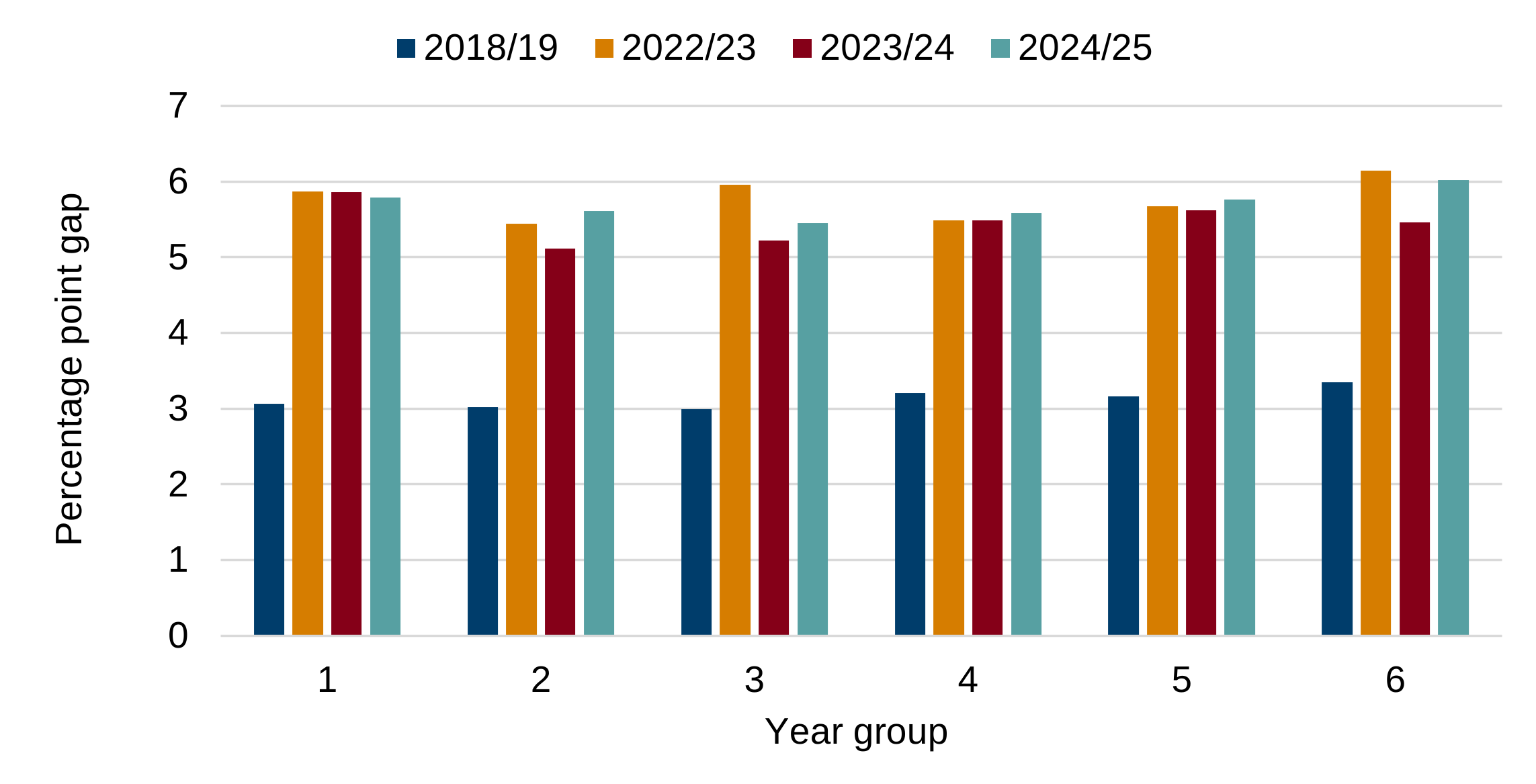
Description of figure 4: a bar chart showing no relationship between the gap in absence between pupils eligible and ineligible for FSM and year group in 2018/19, 2022/23, 2023/24 and 2024/25.
Source: Attendance Data Collection: Primary 2024/25 (includes maintained middle and primary schools)
The gap between pupils eligible and ineligible for FSM approximately doubled across all year groups between 2018/19 and 2022/23. Between 2013/14 and 2018/19 the gap was consistently between 2.4 and 3.3 percentage points. In 2024/25 the gap is between 5.5 and 6.0.
Care should be taken when interpreting this information. It’s not necessarily the case that for future pupils progressing through year groups, that their FSM gap will widen to the degree above. It is possible that the COVID-19 pandemic affected year groups differently.
Absence by further characteristics
Absence by sex
In 2024/25 female pupils missed an average of 7.2% of half-day sessions and male pupils missed an average of 7.6% of half-day sessions. Both sexes have seen a decrease in absence between 2023/24 and 2024/25.
Absence by ethnic background
All ethnic groups have seen a decrease in absence between 2022/23 and 2024/25 following the increase between 2018/19 and 2022/23.
In 2024/25 pupils who identify as Travellers had the highest rate of absence (23.8%, down from 26.3% in 2023/24) whilst pupils who identify as African had the lowest rate of absence (3.9%, down from 4.4% in 2023/24).
Absence by Special Educational Needs/Additional Learning Needs (SEN/ALN)
In 2024/25 11.1% of half-day sessions were missed by pupils with an SEN/ALN provision compared to 6.9% without an SEN/ALN provision.
Persistent absence
Not all pupils are required to be in school for the same number of sessions. School closures, moving schools, inset days, etc. are all instances where a pupil might not be required to attend school, where other pupils might still be required to attend.
Historically, persistent absence was defined as being absent for 20% of the most common number of required sessions. So, if most pupils are required to be in school for 378 half-day session in the year, the threshold for persistent absence was 76 sessions. These sessions need not be continuous for a pupil to be considered persistently absent.
The Welsh Government has now changed the official threshold for persistent absence to 10% of the most common number of required sessions.
For Primary schools, the threshold for 10% persistent absence in 2024/25 is 38 sessions.
The persistent absence figures in this release use the 10% threshold unless explicitly stated.
Figure 5: percentage of primary school-age pupils persistently absent 2013/14 to 2024/25 [Note 1]
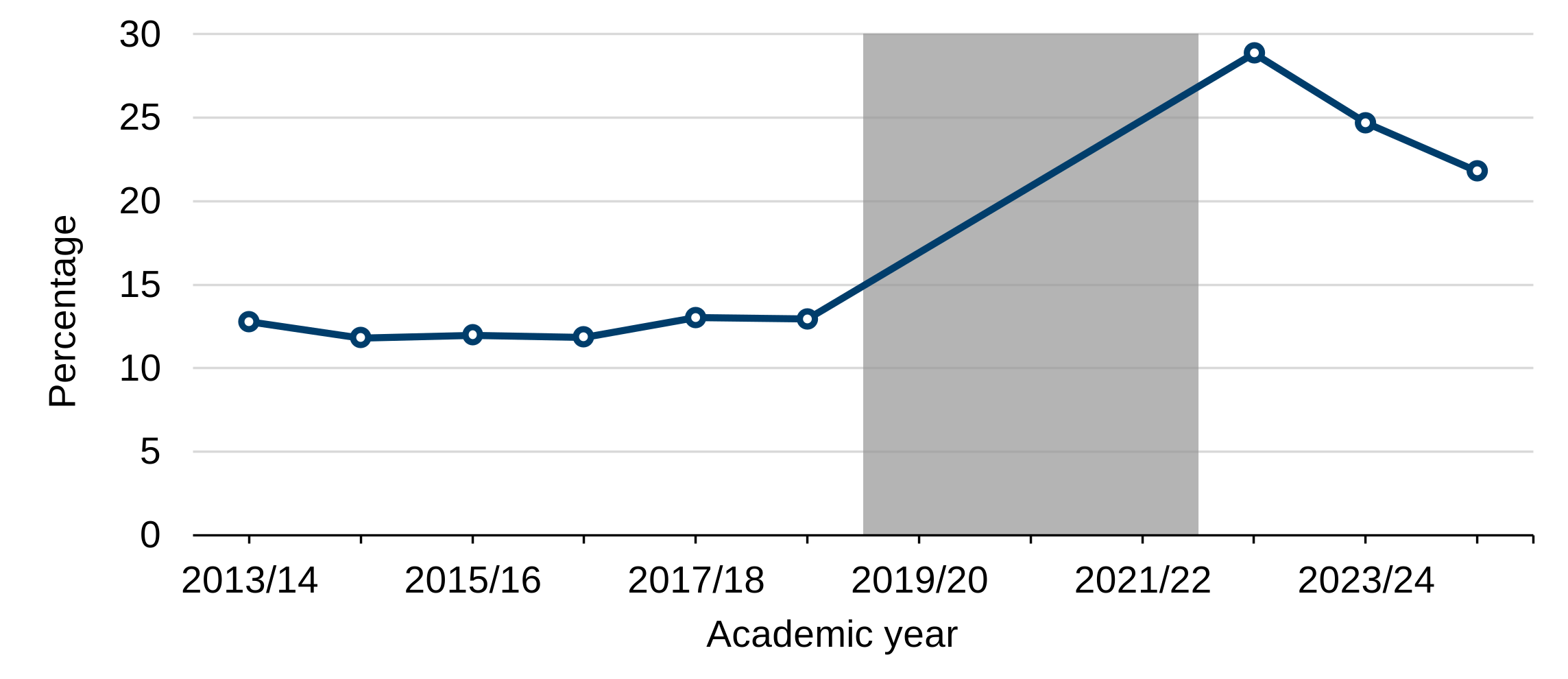
Description of figure 5: a line graph showing percentage of persistently absent primary school age pupils stayed between 11.8% and 13.0% between 2013/14 and 2018/19. Following the coronavirus pandemic, persistent absence nearly doubled between 2018/19 and 2022/23, before falling slightly between 2023/24 and 2024/25 to 21.8%.
Source: Attendance Data Collection: Primary 2024/25 (includes maintained middle and primary schools)
[Note 1] There is no data in this collection for the years 2019/20, 2020/21, 2021/22. The years where there is data are indicated by the circular markers on the lines. The pandemic period is shaded grey.
Persistent absence by year group
Figure 6: percentage of pupils persistently absent by year group, 2018/19, 2022/23, 2023/24 and 2024/25
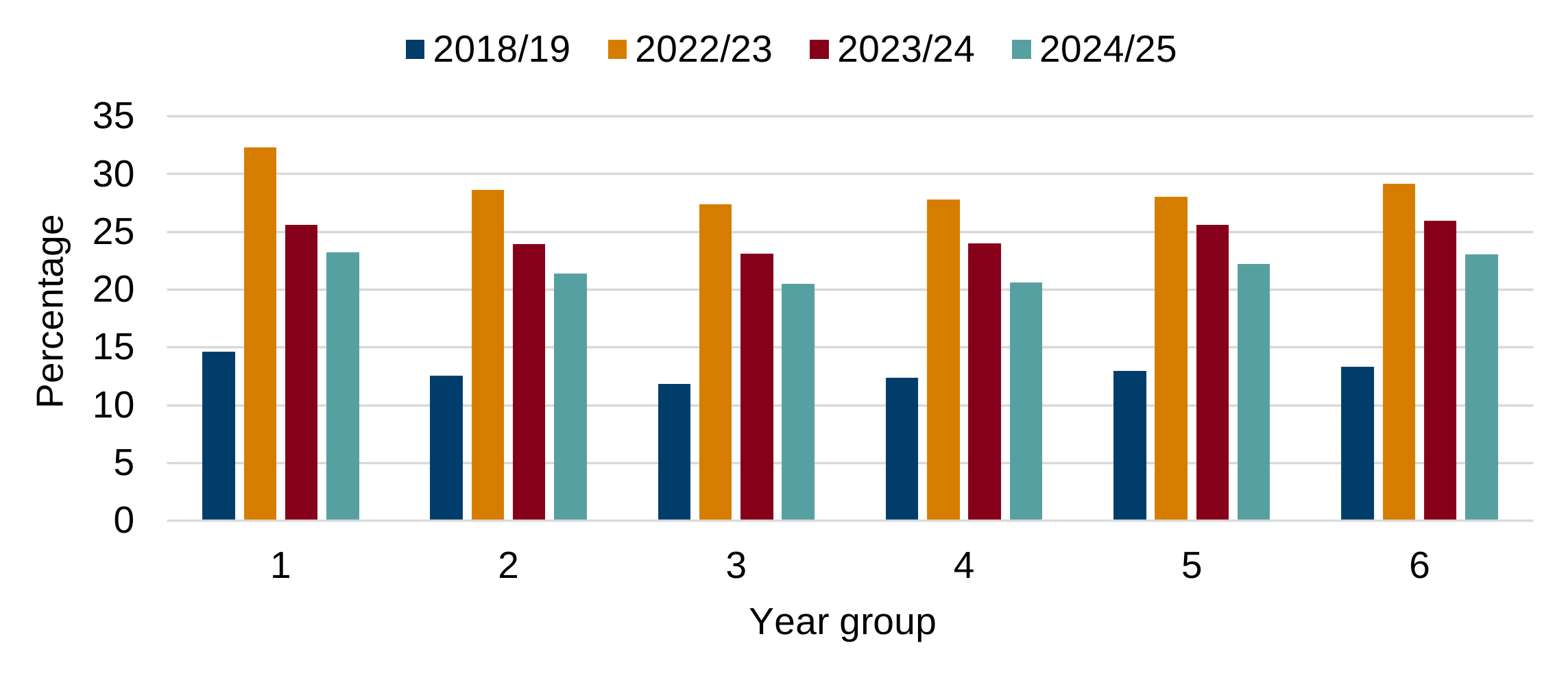
Description of figure 6: a bar chart showing the percentage of persistently absent pupils by year group in 2018/19, 2022/23, 2023/24 and 2024/25. Persistent absence has at least doubled in most cases between 2018/19 and 2022/23, and slightly reduced for each year group between 2022/23 and 2024/25.
Source: Attendance Data Collection: Primary 2024/25 (includes maintained middle and primary schools)
Year 1 pupils have the highest rates of persistent absence, with 23.2% of pupils persistently absent during 2024/25. At 2.3 times its 2018/19 percentage, Year 3 had the highest relative increase in persistent absence following the COVID-19 pandemic. Year 3 has the lowest rate of persistent absence over 2024/25, with 20.5% of pupils persistently absent.
Persistent absence by FSM eligibility
In 2024/25 the percentage of pupils eligible for FSM who were persistently absent has fallen from the highest point in 2022/23 since this collection began.
Figure 7: percentage of pupils persistently absent by FSM eligibility, 2018/19, 2022/23, 2023/24 and 2024/25
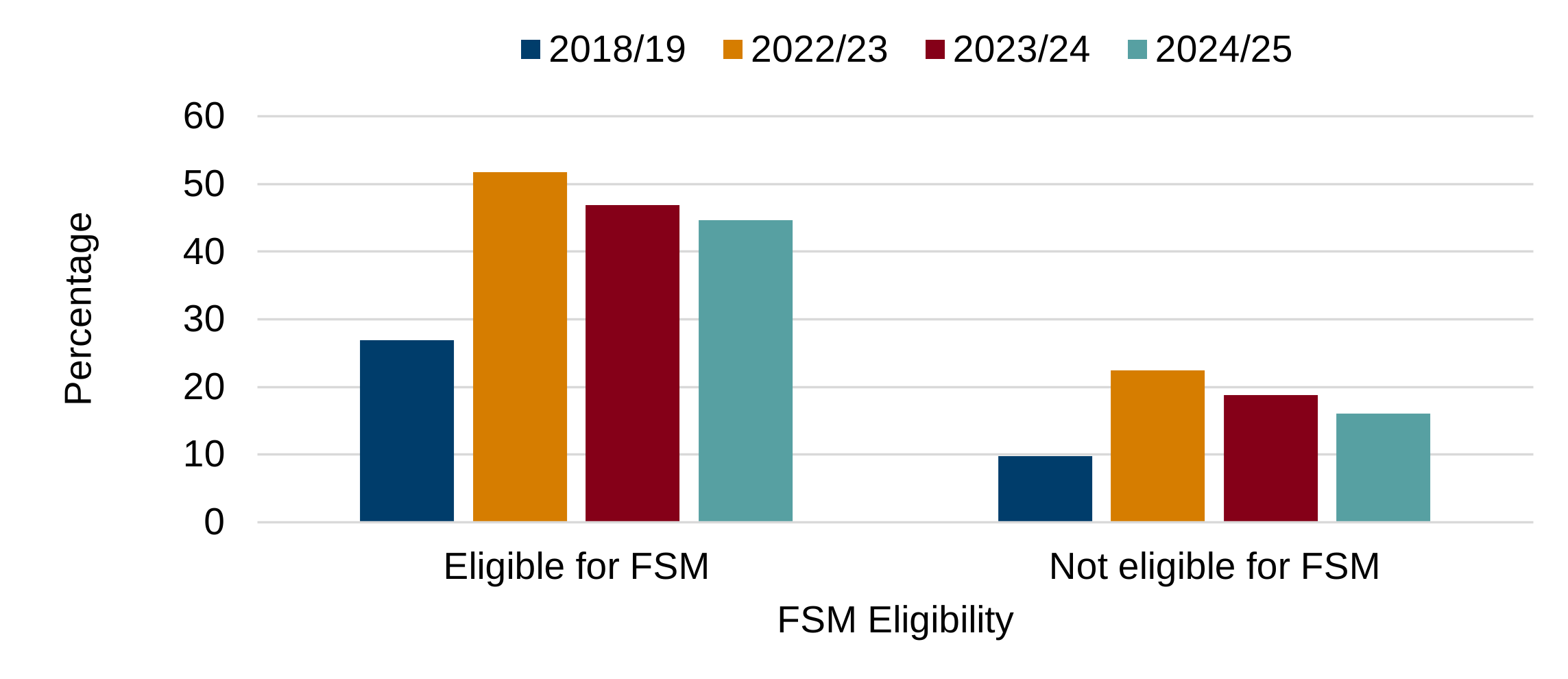
Description of figure 7: a bar chart showing percentage of persistent absence almost doubled for pupils eligible for FSM and more than doubled for ineligible pupils between 2018/19 and 2022/23. It has now slightly fallen between 2023/24 and 2024/25.
Source: Attendance Data Collection: Primary 2024/25 (includes maintained middle and primary schools)
Persistent absence by further characteristics
Persistent absence by sex
There was an increase in persistent absence for pupils of both sexes following the COVID-19 pandemic.
Between 2023/24 and 2024/25, the percentage of pupils that were persistently absent has fallen from:
- 24.0% to 21.2% for female primary school-aged pupils
- 25.3% to 22.4% for male primary school-aged pupils
Persistent absence by ethnic background
A decrease in persistent absence has been seen in pupils of all ethnic backgrounds between 2023/24 and 2024/25.
In 2024/25 the ethnic background with the lowest percentage of persistent absence was Chinese or Chinese British (at 8.4%). The ethnic background with highest percentage of persistent absence was Traveller (at 75.1%).
Persistent absence by SEN/ALN
There was a decrease in persistent absence between 2023/24 and 2024/25 for pupils with all different levels of SEN/ALN provision. In 2024/25 36.4% of primary school-aged pupils with an SEN/ALN provision were persistently absent compared to 20.4% without an SEN/ALN provision.
Quality and methodology information
Definitions
Local authority maintained schools
Schools maintained by the local authorities. The authorities meet their expenditure partly from council tax and partly from general grants made by the Welsh Government.
Middle schools
Ages 3/4 to 16/18.
Secondary schools
Ages 11 to 16/18.
Special schools
Special schools, both day and boarding, provide education for children with ALN or SEN who cannot be educated satisfactorily in mainstream schools.
Additional learning needs (ALN) and special educational needs (SEN)
A person has ALN/SEN if they have a learning difficulty or disability (whether the learning difficulty or disability arises from a medical condition or otherwise) which calls for additional learning provision or special educational provision. Learners with ALN will have their needs identified in individual development plans (IDPs) which are statutory plans created under the ALN Act. Learners with SEN may have School Action, School Action Plus or a Statement, which will cease in August 2025 when the implementation of the ALN system is complete.
Additional Learning Needs
The Additional Learning Needs Code for Wales 2021 (the ALN Code) and regulations came into force on 1 September 2021 to ensure children and young people aged 0 to 25 can access additional support to meet their needs.
As of September 2025, the ALN system is the only statutory framework for supporting children and young people with ALN in Wales. Learners with ALN will have their needs identified in IDPs maintained by either a school or a local authority.
Implementation of the ALN system was ongoing from September 2021 until August 2025. As this publication covers the academic year 2024/25 (as well as years back to the 2013/14 academic year), it includes information about learners with ALN or SEN.
Analysis of the data, along with feedback from local authorities suggest that the fall in ALN/SEN learners over the last four years is due to a systematic review by schools of their ALN/SEN identification and data, both in readiness for and during implementation of the ALN system. This includes assessment of individual needs against the ALN test to identify if they have a significant learning difficulty in learning that requires provision that is additional to, or different from, that which is made generally for all learners.
Welsh Government will continue to monitor the numbers of learners with ALN and work with our partners to ensure the data presents an accurate reflection of the numbers and categories of learners with ALN in Wales. To support this work, the Welsh Government is reviewing the data we collect about learners with ALN to be able to better support learners with ALN and monitor and improve the ALN system.
Individual Development Plans
Individual Development Plans (IDPs) are statutory plans created under the Additional Learning Needs and Education Tribunal (Wales) Act 2018, which came into force on 1 September 2021. A learner may have either a school maintained IDP or a local authority maintained IDP.
Pupils with statements
Pupils for whom the authority maintains a statement of special educational needs under Part iv of the Education Act 1996. A statement may be issued by the local authority after assessment of a child’s needs.
School Action
When a class or subject teacher identify that a pupil has special educational needs they provide interventions that are additional to or different from those provided as part of the school’s usual curriculum.
School Action Plus
When the class or subject teacher and the Special Educational Needs Co-ordinator are provided with advice or support from outside specialists, so that alternative interventions additional or different to those provided for the pupil through 'School Action' can be put in place. The Special Educational Needs Co-ordinator usually takes the lead although day-to-day provision continues to be the responsibility of class or subject teacher.
Free School Meals
Pupils are eligible for free school meals if their parents or guardians are in receipt of certain means-tested benefits or support payments.
Transitional protection for free school meals
On 1 April 2019 the Welsh Government introduced a new transitional protection for free school meals policy. This was brought in to ensure that pupils have their free school meals protected during the Universal Credit rollout period.
This protection applies to individual pupils and will continue until the end of their current school phase, being the end of primary school or end of secondary school.
Any pupil that was eligible for free school meals on the introduction of the policy on 1 April 2019 should also be transitionally protected. In addition, any pupil that has become eligible at any point during the Universal Credit rollout under the new eligibility criteria should also be transitionally protected.
The FSM analysis in this release only includes pupils who are eligible through the means tested criteria. Those eligible through TP or UPFSM are not included.
Types of absence
All (or ‘overall’) absences comprise those which are authorised and unauthorised.
An authorised absence is an absence with permission from a teacher or other authorised representative of the school. This includes instances of absence for which a satisfactory explanation has been provided (e.g. illness, family bereavement or religious observance).
An unauthorised absence is an absence without permission from a teacher or other authorised representative of the school. This includes all unexplained or unjustified absences.
Note that pupils undertaking approved and supervised educational activities conducted away from the school (e.g. work experience or educational visits) are deemed to be present at the school.
Sources of official data on attendance at maintained schools in Wales
Prior to the COVID-19 pandemic we collected and published attendance data annually. This annual data set was collected in line with the Code of Practice for Statistics (UK Statistics Authority) and is designated as National Statistics. Absenteeism from secondary schools was usually published in August, absenteeism from primary schools in December and an additional bulletin on absenteeism from schools by pupil characteristics followed in February.
The data collections underpinning these outputs were suspended at the start of the COVID-19 pandemic in March 2020. There is no data from these collections for the 2019/20, 2020/21 or 2021/22 school years. This release presents the results from the recommencement of these annual collections from the 2022/23 school year onwards.
To inform our policy response to the COVID-19 pandemic we started collecting daily management information on attendance in schools from September 2020 onwards. This data is extracted directly from school management information systems and is not validated or verified in any way with the schools and data is not always available for every school on every day. It is not National Statistics and is of lower quality than the annual data presented in this release. However, it is useful in looking at overall levels of absence and trends at the Wales level and looking at patterns between pupils with different characteristics e.g., free school meals. Attendance at maintained schools has been published regularly since September 2020.
Main differences in data collected on school attendance before and during the COVID-19 pandemic
In October 2022 we published a summary release on attendance before and during the pandemic. This looked at the main differences between the annual and weekly data collections and detailed information on those differences can be found in that release.
Attendance data for the 2024/25 school year
This release contains fully quality assured attendance data to National Statistics standards for primary schools for the 2024/25 school year.
We have also published a weekly release of the management information during the 2024/25 school year leading to an overlap in the time period covered by the two collections. Our advice is that users should use the data in this release as far as possible and only refer to the data in the weekly release if the information needed cannot be found or produced from this annual data set.
| Year group | Annual data | Weekly management information [note 1] | Difference |
|---|---|---|---|
| 1 | 92.3 | 92.2 | 0.1 |
| 2 | 92.8 | 92.7 | 0.0 |
| 3 | 93 | 92.9 | 0.1 |
| 4 | 92.9 | 92.9 | 0.0 |
| 5 | 92.7 | 92.6 | 0.1 |
| 6 | 92.4 | 92.4 | 0.0 |
Source: Attendance Data Collection: Secondary 2024/25, Attendance Data: Management Information
[Note 1] This data is from the release published on 5 August 2025.
The table shows overall attendance for primary schools by year group from September 2024 to August 2025. It shows that both the annual and weekly collections produce consistent results across all year groups.
The above table confirms that at the Wales level both collections for 2024/25 are producing consistent and comparable results. However, it is likely that due to the way the weekly data are collected and the lack of validation that there would ben more significant differences at below the Wales level.
Official statistics status
All official statistics should show the standards of the Code of Practice for Statistics (UK Statistics Authority).
These are accredited official statistics. They were independently reviewed by the Office for Statistics Regulation (OSR) in July 2010. They comply with the standards of trustworthiness, quality and value in the Code of Practice for Statistics.
It is Welsh Government’s responsibility to maintain compliance with the standards expected of accreditation. If we become concerned about whether these statistics are still meeting the appropriate standards, we will discuss any concerns with OSR promptly. Accreditation can be cancelled or suspended at any point when the highest standards are not maintained, and reinstated when standards are restored.
Accredited official statistics are called National Statistics in the Statistics and Registration Service Act 2007.
Statement of compliance with the Code of Practice for Statistics
Our statistical practice is regulated by the OSR. OSR sets the standards of trustworthiness, quality and value in the Code of Practice for Statistics that all producers of official statistics should adhere to.
All our statistics are produced and published in accordance with a number of statements and protocols to enhance trustworthiness, quality and value. These are set out in the Welsh Government’s Statement of Compliance.
These accredited official statistics (OSR) demonstrate the standards expected around trustworthiness, quality and public value in the following ways.
Trustworthiness
The data in this release relates to attendance of pupils of compulsory school age (ages 5 to 10) in maintained middle, secondary and special schools. The data are recorded throughout the year in the school’s management information system following statutory guidance for recoding attendance and absence. The data is derived from the statutory returns provided by local authorities. The returns are authorised and validated by local authorities.
The data collection and validation were carried out between September and November with the data usually being published in December.
All personal data underlying these statistics are processed in accordance with the requirements of the Data Protection Act 2018.
These statistics are pre-announced on the Statistics and Research area of the Welsh Government website. Access to the data during processing is restricted to those involved in the production of the statistics, quality assurance and for operational purposes. Pre-release access is restricted to eligible recipients in line with the Code of Practice (UK Statistics Authority).
Quality
The published figures provided are compiled by professional analysts using the latest available data and applying methods using their professional judgement and analytical skillset. Statistics published by Welsh Government adhere to the Statistical Quality Management Strategy which supplements the Quality pillar of the Code of Practice for Statistics (UK Statistics Authority) and the European Statistical System principles of quality for statistical outputs.
We work closely with local authorities to ensure all data is validated before tables are published. Data is collated by local authorities into an electronic return and submitted to the Welsh Government through DEWi, a secure online data transfer system developed by the Welsh Government. Various stages of automated validation and sense-checking are built into the process to ensure a high quality of data.
All stages in the collection, validation and production of these statistics are led by statisticians from the Government Statistical Group.
The data in this release relate to the 2024/25 school year beginning Friday 1 September 2024 and finishing on Monday 22 July 2025.
DEWi was available for uploading files from 30 May 2025. Local authorities were then asked to validate their data within a specified validation period.
Value
These statistics are used in a variety of ways. Some examples of these are:
- advice to ministers
- to inform the education policy decision-making process in Wales
- to inform Estyn during school inspections
- the education domain of the Welsh Index of Multiple Deprivation
- to assist in research in educational attainment
This release is accompanied by an Open Document Spreadsheet which can be shared and reused widely and which complies with the Government Analysis Function guidance on Releasing statistics in spreadsheets.
Data is clearly presented in each table, with the spreadsheet also including a cover sheet listing each table. The commentary and notes in the release have been developed to try to make the information as accessible as possible to the widest range of users. Furthermore, all our school statistics outputs are published in Welsh and English.
Comparability
England
Statistics: school and pupil numbers (Department for Education)
Scotland
Statistics and research (Scottish Government)
Northern Ireland
Education statistics (Department of Education)
Well-being of Future Generations Act (WFG)
The Well-being of Future Generations Act 2015 is about improving the social, economic, environmental, and cultural wellbeing of Wales. The Act puts in place seven wellbeing goals for Wales. These are for a more equal, prosperous, resilient, healthier, and globally responsible Wales, with cohesive communities and a vibrant culture and thriving Welsh language. Under section (10)(1) of the Act, the Welsh Ministers must (a) publish indicators (“national indicators”) that must be applied for the purpose of measuring progress towards the achievement of the Well-being goals, and (b) lay a copy of the national indicators before Senedd Cymru. The 46 national indicators were laid in March 2016.
Information on the indicators, along with narratives for each of the wellbeing goals and associated technical information is available in the Wellbeing of Wales report.
Further information on the Well-being of Future Generations (Wales) Act 2015.
The statistics included in this release could also provide supporting narrative to the national indicators and be used by public services boards in relation to their local wellbeing assessments and local wellbeing plans.