The aim of this project was for Newport City Council and Newport Live to work together to upgrade Building Management Systems (BMS) across key community assets.
Introduction
Newport City Council (NCC) has committed to becoming a carbon net zero organisation by 2030, in line with Welsh Government ambitions and the Council’s Organisational Climate Change Plan. NCC works collaboratively with partners and stakeholders across all service areas to improve the sustainability and efficiency of public sector assets and work towards these net zero targets.
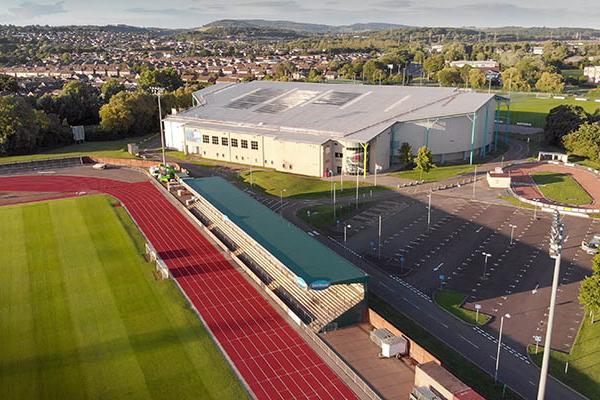
Newport Live, a not-for-profit charitable trust, operates Newport's leisure, sports and cultural facilities on behalf of the Council. The aim of this project was for NCC and Newport Live to work together to upgrade Building Management Systems (BMS) across key community assets. These facilities include the Regional Pool and Tennis Centre, Geraint Thomas National Velodrome of Wales, Newport Stadium and the Riverfront Theatre & Arts Centre. The project aims to improve energy performance, reduce carbon emissions, and safeguard the long-term future of these important public buildings.
The challenge
Several of Newport Live's facilities were operating with ageing or obsolete Building Management Systems.
These issues led to:
- Reduced energy efficiency.
- Increased operational and maintenance costs.
- Difficulty identifying faults and system performance issues.
- Missed opportunities to optimise building performance around actual occupancy and usage patterns.
- Increased risk of equipment failure and service disruption.
A detailed survey of the sites highlighted the urgent need for upgrades to ensure the buildings remain fit for purpose and continue serving communities efficiently and sustainably. The upgrades were to take place during busy operating hours and had to consider operational requirements throughout.
The approach
Newport City Council's Carbon Reduction Team partnered with Newport Live and Cyson Cymru to develop and deliver a coordinated BMS upgrade programme.
The project included:
- Upgrading Siemens BMS controllers and software at the Regional Pool.
- Replacing control systems at the Regional Tennis Centre.
- Replacing failed controls and creating a new control network at the Geraint Thomas National Velodrome of Wales.
- Installing new heating and hot water control timers at Newport Stadium.
- Undertaking a survey and improvement works to the BMS at the Riverfront Theatre.
The upgraded systems were integrated wherever possible and linked to operational booking systems, allowing facilities to better match heating, ventilation, and building operation with actual occupancy. This improves efficiency while reducing energy waste.
The project was developed collaboratively between the Council and Newport Live to ensure works could be scheduled with minimal disruption to visitors, sporting events, performances and day-to-day operations. Management of delivery was supported by the Council's Carbon Reduction Team together with Cyson Cymru.
Contributes towards
This project contributes directly to:
Well-being of Future Generations (Wales) Act 2015
- A Prosperous Wales - Energy-efficient buildings lower running costs, freeing up resources for community programmes and the arts. They also promote green innovation and skills in building technology and energy management.
- A Resilient Wales - Reducing energy consumption and carbon emissions supports environmental resilience and biodiversity by decreasing demand on fossil fuels. Systems can also adapt to climate change impacts (e.g., temperature control).
- A Healthier Wales - Better control of temperature, ventilation, and air quality in leisure and arts spaces improves comfort, well-being, and public health — encouraging active lifestyles and creative participation.
- A More Equal Wales - By reducing operational costs, councils can keep leisure and arts facilities affordable and accessible to all income groups. Good indoor environments also benefit vulnerable users most.
- Prevention - Upgrading the BMS prevents problems such as equipment failure, excessive energy waste, or poor air quality by allowing predictive
- A Wales of Cohesive Communities - Modern, comfortable, and sustainable public spaces encourage community use, volunteering, and social connection. Efficient facilities can remain open longer and serve as community hubs.
- A Wales of Vibrant Culture and Thriving Welsh Language - Investing in arts venues supports cultural participation and the creative sector. Energy savings can be reinvested into arts programmes and cultural activities.
- A Globally Responsible Wales - Reduced carbon footprints, smarter energy management, and sustainable operations align local action with global climate and sustainability goals.
The project also demonstrates the five ways of working by focusing on:
- Long-term - Modern BMS systems improve energy efficiency, reduce carbon emissions, and lower operational costs. This contributes to long-term sustainability and resilience of public assets, ensuring facilities remain affordable and environmentally sound for future generations.
- Prevention - Upgrading the BMS prevents problems such as equipment failure, excessive energy waste, or poor air quality by allowing predictive maintenance and environmental monitoring. It helps avoid future costs and environmental harm.
- Integration - Energy-efficient BMS upgrades support multiple well-being goals at once — from reducing carbon footprints (A Resilient Wales) to improving comfort and air quality for users (A Healthier Wales).
- Collaboration - The upgrade process typically involves collaboration between local authorities, energy specialists, technology providers, and community stakeholders, fostering partnerships and shared responsibility for sustainability.
- Involvement - Involving staff, community users, and local artists in the design and implementation of improvements helps ensure systems meet diverse needs, supporting inclusive and user-focused outcomes.
In addition, the scheme supports Ystadau Cymru priorities by improving public assets for long-term community use, strengthening collaborative asset management, and contributing towards a more sustainable public sector estate.
Impacts and outcomes
Expected outcomes include:
- Improved energy efficiency across four major community facilities.
- Reduced carbon emissions supporting Newport City Council's net zero ambitions.
- Lower energy consumption and operational costs.
- Enhanced monitoring and control of heating, ventilation and other building services.
- Improved fault detection, diagnosis and maintenance planning.
- Increased cyber security resilience through modernised systems.
- Extended lifespan of existing building infrastructure.
- Improved comfort, air quality and user experience for visitors, athletes, performers and staff.
- Future-proofed public assets capable of supporting long-term service delivery.
These improvements will benefit over one million annual visitors to the sports facilities as well as more than 100,000 yearly visitors to the Riverfront Theatre, ensuring high-quality, sustainable public services remain available to local communities. Success will be monitored through ongoing energy consumption and cost data analysis.
This work feeds into the wider approach to reach net zero across NCC sites, which includes installing renewable energy, low carbon heat technology, EV charging, and other energy efficiency initiatives at Newport Live sites.
Lessons learnt and future planning
Positive lessons
- Early collaboration between asset owners, facility operators and technical specialists helps identify opportunities to maximise energy savings.
- Joint working arrangements strengthen project delivery and help minimise disruption to service users.
- Modern Building Management Systems provide significant opportunities for both operational efficiency and carbon reduction.
Challenges
- Ageing systems can vary considerably between sites, requiring tailored solutions rather than a single standard approach.
- Planning upgrades within busy leisure and cultural facilities requires careful scheduling to avoid service interruptions.
- Legacy systems can present technical challenges when integrating with newer technologies.
Future planning
The project has reinforced the importance of proactive asset management and the use of digital technologies to optimise building performance. Newport City Council will continue working with Newport Live and other partners to identify further opportunities for decarbonisation and energy efficiency improvements across its estate.
Data generated through the upgraded BMS systems will support more informed decision-making, enabling targeted future investment in public assets while contributing towards the Council's 2030 net zero commitment. The collaborative approach established through this project will also help shape future sustainable asset management projects across Newport.