Fair work (National Survey for Wales): April 2024 to March 2025
This report looks at peoples’ workplace benefits as well as workplace discrimination within the last 12 months for April 2024 to March 2025.
In this page
Introduction
In April 2024 to March 2025, the National Survey for Wales asked people about fair working. The survey involved around 6,000 people aged 16 and over. It took place in two parts: an interviewer-led section (either by telephone or face-to-face) and then a self-completion section (online or, if a face-to-face interview, on the interviewer’s tablet computer). The fair working questions were asked in the interviewer-led section.
Fieldwork issues were encountered during April 2024 to March 2025 resulting in lower response rates than previous years, smaller sample sizes, and some differences in the sample composition (see quality and methodology information). Due to the smaller sample sizes, confidence intervals around estimates are wider than in previous years, particularly for smaller geographies and population sub-groups.
However, it is still appropriate to use these statistics. At a national level the survey continues to provide reasonable estimates, particularly when used alongside alternative sources. The smaller sample size means that some detailed breakdowns of the data on fair working are not possible in this release.
Main findings
Workplace pensions were the most common workplace benefit, with 95% of employees reporting that they had this. Having the option to work part-time was the most common benefit relating to working hours: 82% of employees had this option.
Factors independently linked with having full pay for sick leave
- Working in the public sector, or in a charity/volunteering role.
- Having a permanent contract.
- Working remotely.
- Having good general health.
87% of people rated their access to learning and development opportunities at work as ‘good’ or ‘very good’.
Factors independently linked with being able to learn Welsh in the workplace
- Being female.
- Being religious.
- Working in the public sector.
- Living in North-West Wales.
- Having a permanent or fixed-term contract.
- Living in the middle 20% of income deprived areas according to the Welsh Index of Multiple Deprivation.
Workplace benefits
In April 2024 to March 2025, 56% of people living in Wales were in paid employment or self-employment. This is 74% of people aged 16 to 64. Of this group, 85% were employees, 13% were self-employed, and 2% were both. Of those who were only self-employed, 63% did most or all their work for one company.
Employees and self-employed people who worked mainly for one company were asked about their workplace benefits.
In April 2024 to March 2025, 95% of employees had a workplace pension (a pension that their employer contributed towards). This is an increase compared with 92% in April 2019 to March 2020.
42% of people worked remotely. 13% of people worked remotely exclusively, and 30% did hybrid working.
Pay during leave
Figure 1: percentages of people who got full pay for time off, by type of leave, May 2020 to March 2021 and April 2024 to March 2025
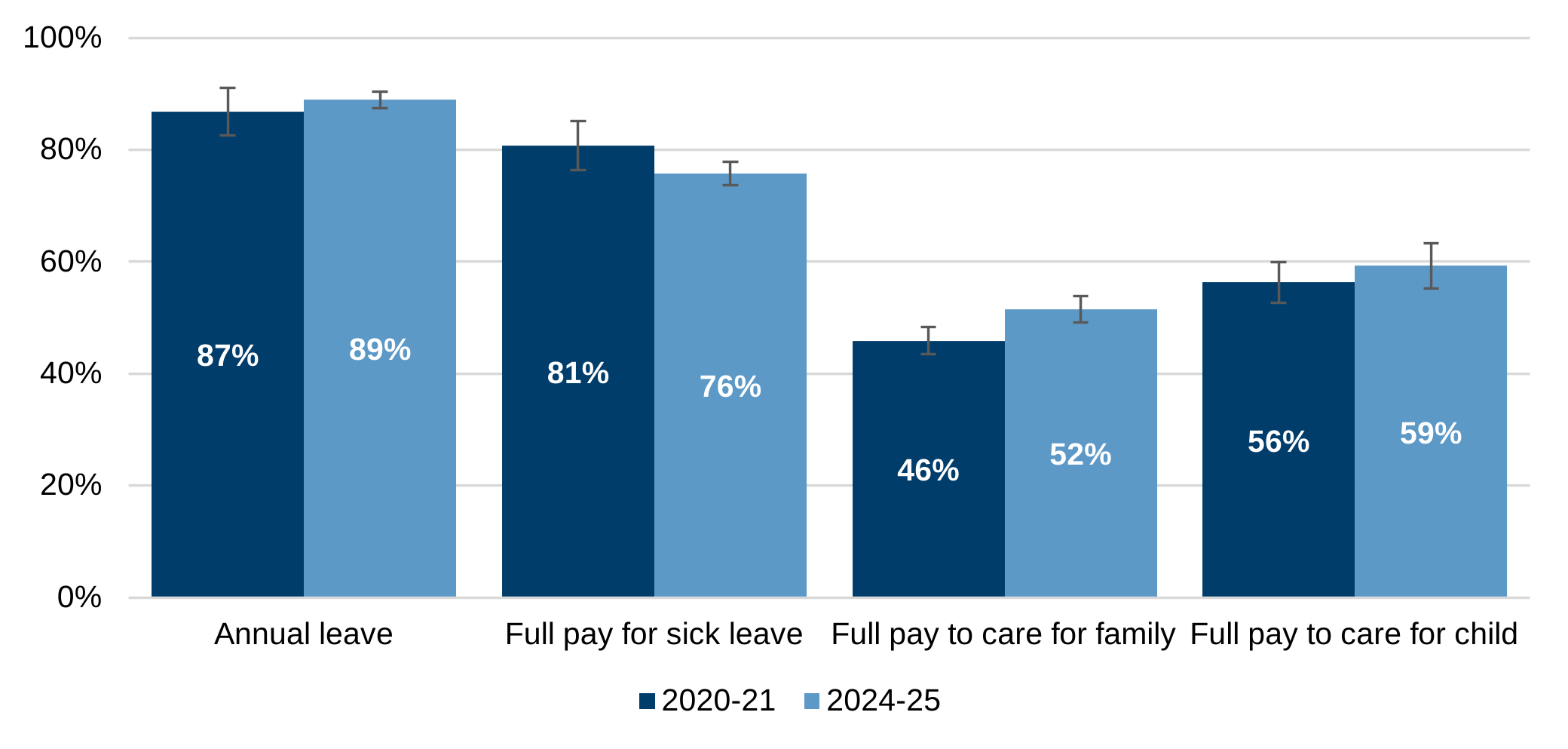
Description of figure 1: bar chart showing in April 2024 to March 2025, 89% of people got paid annual leave, and 76% of people got full pay when taking sick leave, similar to the May 2020 to March 2021 results. In April 2024 to March 2025, 59% of parents said that they would receive full pay if they had to take time off in an emergency to care for their children. 52% of people in April 2024 to March 2025 would receive full pay if they had to take time off to take care of any family member in an emergency, an increase compared with the May 2020 to March 2021 result (46%).
Source: National Survey for Wales
A considerable proportion of people weren’t sure if they would get full pay in an emergency caring situation. 7% of parents didn’t know whether they would get full pay if they had to take time off to care for their children and 13% of people didn’t know whether they would get full pay if they had to take time off in an emergency to care for another family member.
Sick leave
In-depth analysis was carried out to investigate the links between getting full pay when taking sick leave and a variety of different factors. As with all analysis of this type, we are unable to attribute cause and effect for these associations, or to take account of factors not measured in the survey. See quality information for more details.
Sector of work was identified as being linked to linked being able to take sick leave, with 90% of public sector workers and 87% of charity/voluntary organisation workers getting full paid whilst on sick leave. This was higher than for the private sector of whom 72% got full paid sick leave.
Employees on permanent contracts were the most likely to have fully paid sick leave, with 85% having this benefit. This was higher than the national average (76%), as well as employees on fixed term contracts (73%). Employees on zero hours contracts and agency workers were less likely to get fully paid sick leave, with only 13% and 6% of these respective groups having this benefit.
Remote working was also found to be linked with having full pay on sick leave. 88% of people who worked remotely also said they had fully paid sick leave, compared with 67% of those who did not work remotely. 35% of all employees had both of these benefits simultaneously, which was more likely to occur for employees on a permanent contract, with 41%, and less likely for employees on a zero-hours contract, with 1%.
General health was also identified as being linked with having fully paid sick leave, however no differences were found between people in good health, fair health, and bad health.
No independent links were found between having fully paid sick leave and age, sex, having a limiting long-term illness, marital status, ethnicity, religious beliefs, sexual orientation, income deprivation ranking in the Welsh Index of Multiple Deprivation, or region of Wales.
Working hours benefits
Figure 2: working hours related workplace benefits in April 2019 to March 2020 and April 2024 to March 2025
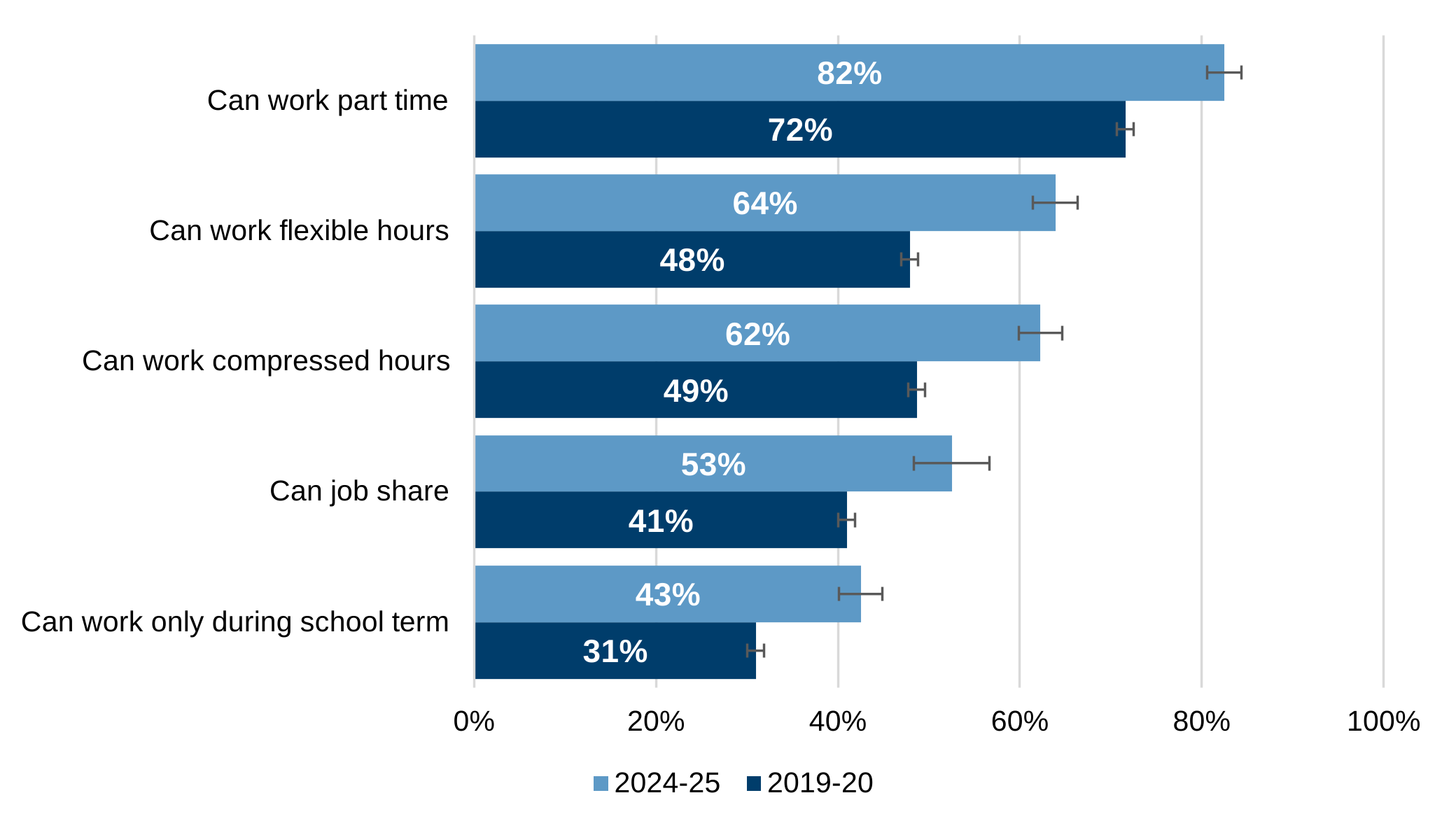
Description of figure 2: bar chart showing workplace benefits relating to work hours. Compared with April 2019 to March 2020, each of these benefits in April 2024 to March 2025 have increased by at least 10 percentage points. The most commonly received working hours related benefit was the ability to work part time, which was available 82% of people. Parents that were employed or self-employed were asked whether they had the ability to work during school terms only, and 43% could. This was the least commonly received working hours benefit.
Source: National Survey for Wales
Decision making
Respondents were asked about who decides their day-to-day work, the results of which are shown in figure 3.
Figure 3: who decides how day-to-day work is done, April 2019 to March 2020 and April 2024 to March 2025
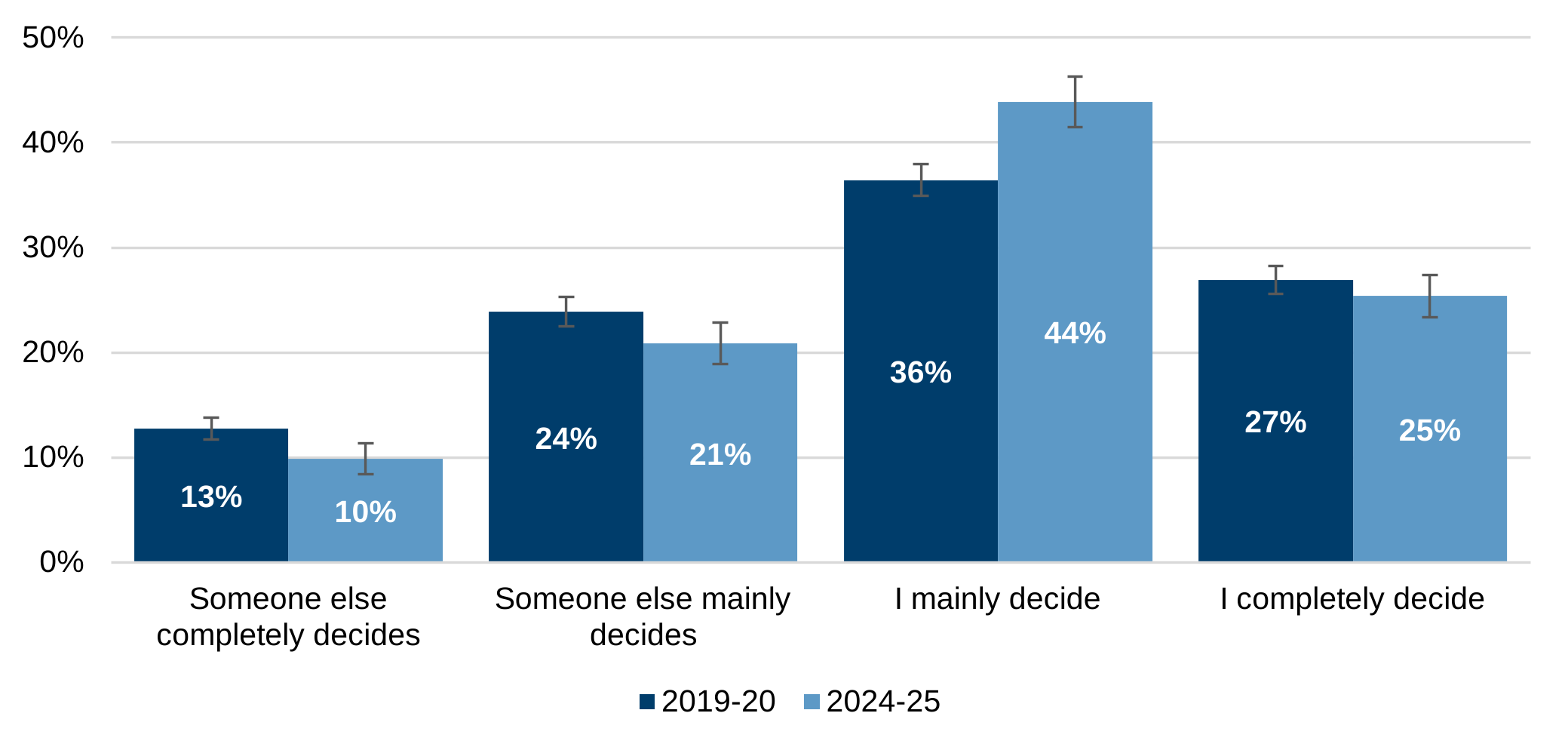
Description of figure 3: bar chart showing who decides the person’s day-to-day work. Compared with April 2019 to March 2020, most categories showed no difference; however, there has been an increase in the number of people who mainly decide their own work, from 36% in April 2019 to March 2020 to 44% in April 2024 to March 2025.
Source: National Survey for Wales
Respondents were also asked about how often they had a say in organisation-wide decisions. 18% of people always have a say in these decisions, and a further 18% usually have a say. 36% said they sometimes had a say in decisions, and the remaining 28% never had a say. No changes were found compared with April 2019 to March 2020.
Learning and development opportunities
Respondents were asked whether their access to learning and development opportunities at work was ‘very good’, ‘fairly good’, ‘not very good’, or ‘not at all good’.
87% of people rated their access to learning and development opportunities at work as ‘good’ or ‘very good’, an increase compared with 79% in April 2019 to March 2020.
Figure 4: ratings of learning and development opportunities, April 2019 to March 2020 and April 2024 to March 2025
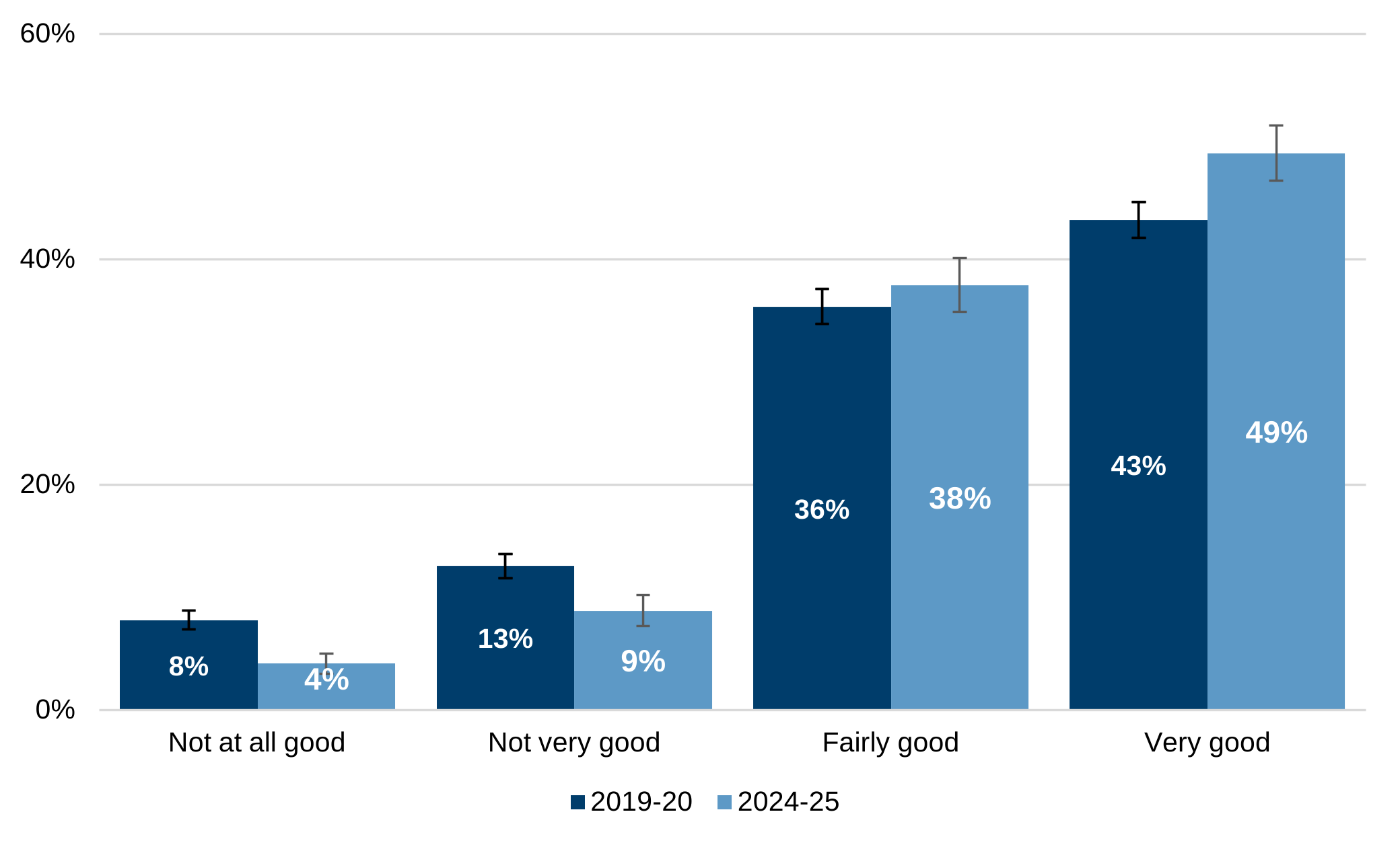
Description of figure 4: column chart showing how people rated the learning and development opportunities in their workplaces, for April 2019 to March 2020 and April 2024 to March 2025. 'Very good' was the most common rating for both years, with 49% in April 2024 to March 2025, an increase from 43% in April 2019 to March 2020. There were corresponding decreases for the negative opinions when comparing April 2024 to March 2025 with April 2019 to March 2020, falling from 8% for 'not at all good' and 13% for 'not very good' in April 2019 to March 2020 to 4% for 'not at all good' and 9% for 'not very good' in April 2024 to March 2025.
Source: National Survey for Wales
Remote workers were more likely to rate their learning and development opportunities as ‘very good’ (56%) than those who did not work remotely(45%).
51% of people in ‘very good’ or ‘good’ health rated their learning and development opportunities as ‘very good’, a higher proportion than those in ‘fair’ health (43%). 16% of those in ‘bad’ or ‘very bad’ health rated their learning and development opportunities as ‘not at all good’.
2% of public sector workers rated their learning and development opportunities as ‘not at all good’, a lower proportion than private sector workers (5%) and the Welsh average (4%).
Welsh language learning opportunities in the workplace
46% of employees said they were offered the opportunity to learn Welsh by their employers, an increase from 31% of employees in 2018-19.
In-depth analysis was carried out to investigate the links between access to Welsh Language learning opportunities and a variety of characteristics. While controlling for links with other factors, the following factors were independently associated with being able to learn Welsh via the workplace.
Female employees were more likely than males to say they were able to learn Welsh in the workplace. 55% of female employees had the opportunity to learn Welsh, compared with 36% of male employees.
People with religious beliefs were also more likely to have the opportunity to learn Welsh in the workplace, with 51%, compared with 42% of those with no religious beliefs.
As with fully paid sick leave, the sector of work was also found to be linked with being able to learn Welsh in the workplace.
Figure 5: ability to learn Welsh in the workplace by sector of work, April 2024 to March 2025
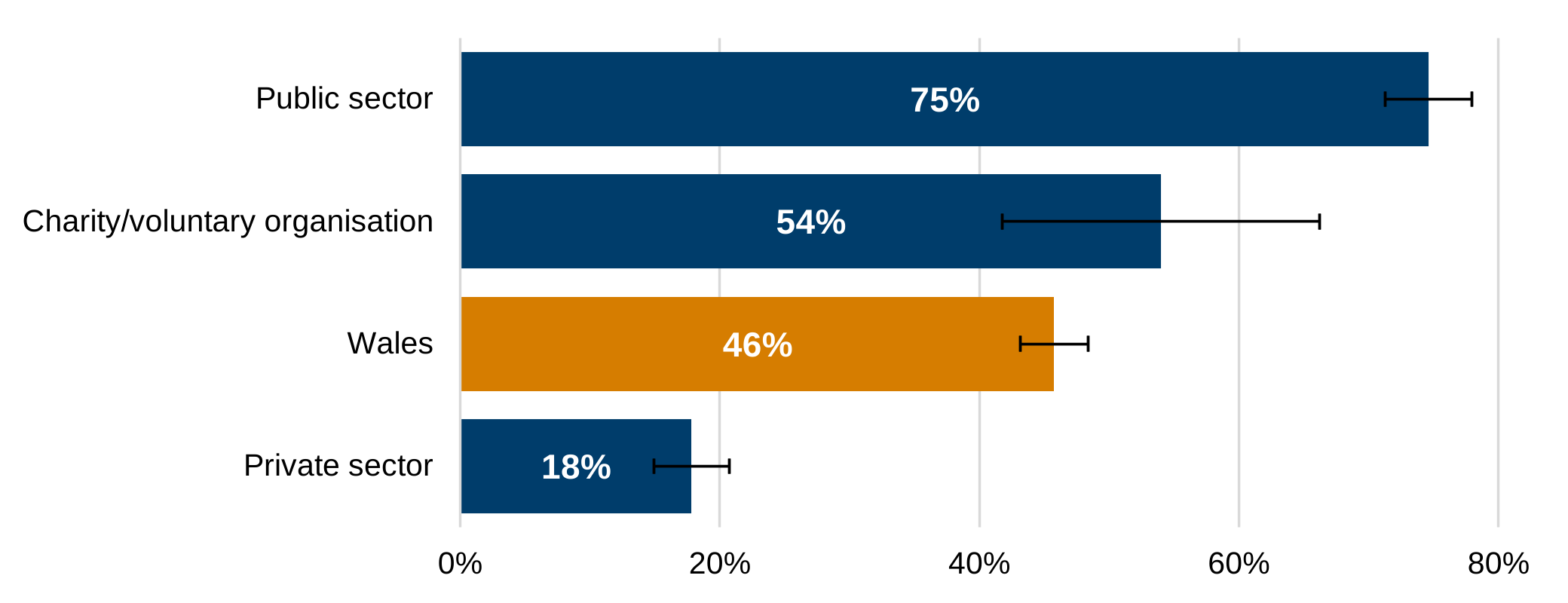
Description of figure 5: bar chart showing whether people could learn Welsh in their workplaces, grouped by sector. Public sector employees were the most likely to be able to learn Welsh, (75% had this). Private sector employees were the least likely to have Welsh learning opportunities (18% had this).
Source: National Survey for Wales
Type of contract was also found to be linked with being able to learn Welsh in the workplace.
Figure 6: ability to learn Welsh in the workplace by contract type, April 2024 to March 2025
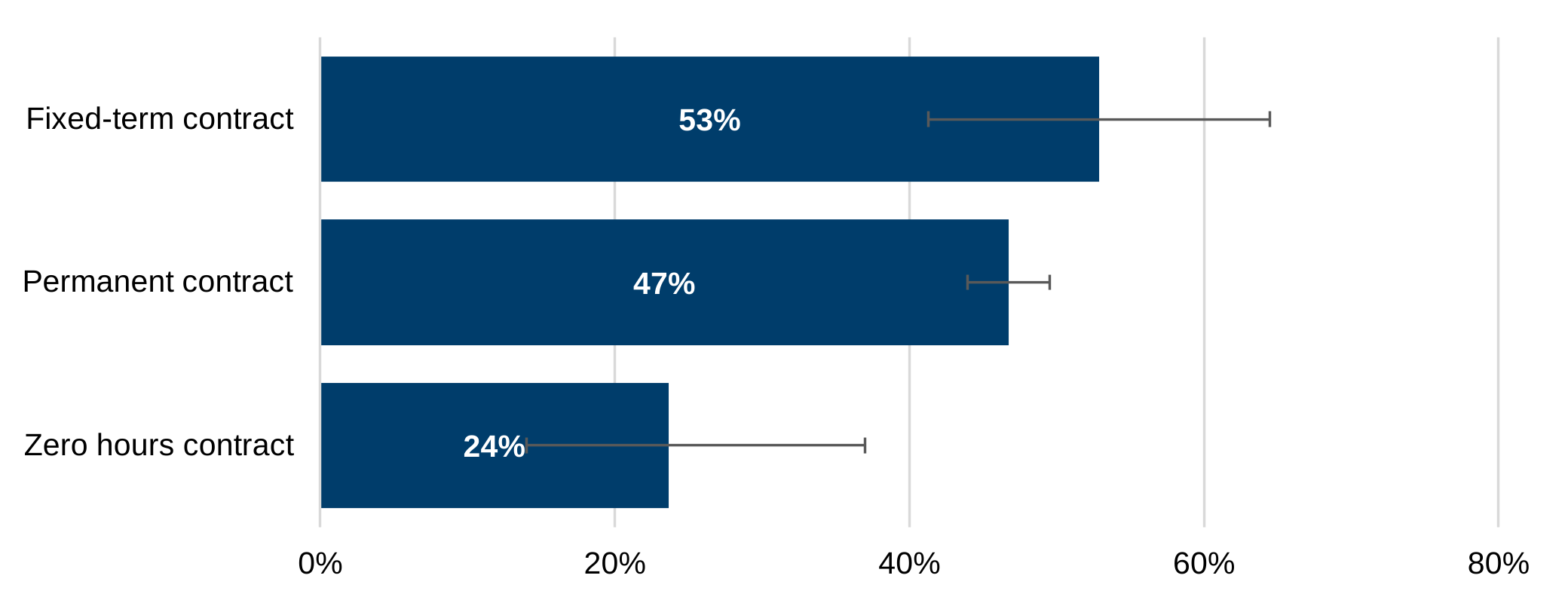
Description of figure 6: bar chart showing the proportions of people who could learn Welsh in their workplaces, grouped by contract type. People on zero hours contracts were less likely to have the opportunity to learn Welsh compared with those on permanent or fixed term contracts, with 24% of those with zero hours contracts having the opportunity compared with 47% and 53% of those with permanent and fixed term contracts, respectively.
Source: National Survey for Wales
Remote workers were also more likely to be able to learn Welsh in the workplace, with 53% of remote workers having the opportunity compared with 40% of those who did not work remotely.
The 2019 Welsh Index of Multiple Deprivation (WIMD) ranked neighbourhoods in Wales based on a variety of factors. The measures used to determine neighbourhood income deprivation were found to be linked with the ability to learn Welsh in the workplace, as shown in the chart below.
Figure 7: ability to learn Welsh in the workplace by WIMD income ranking (by quintile), April 2024 to March 2025
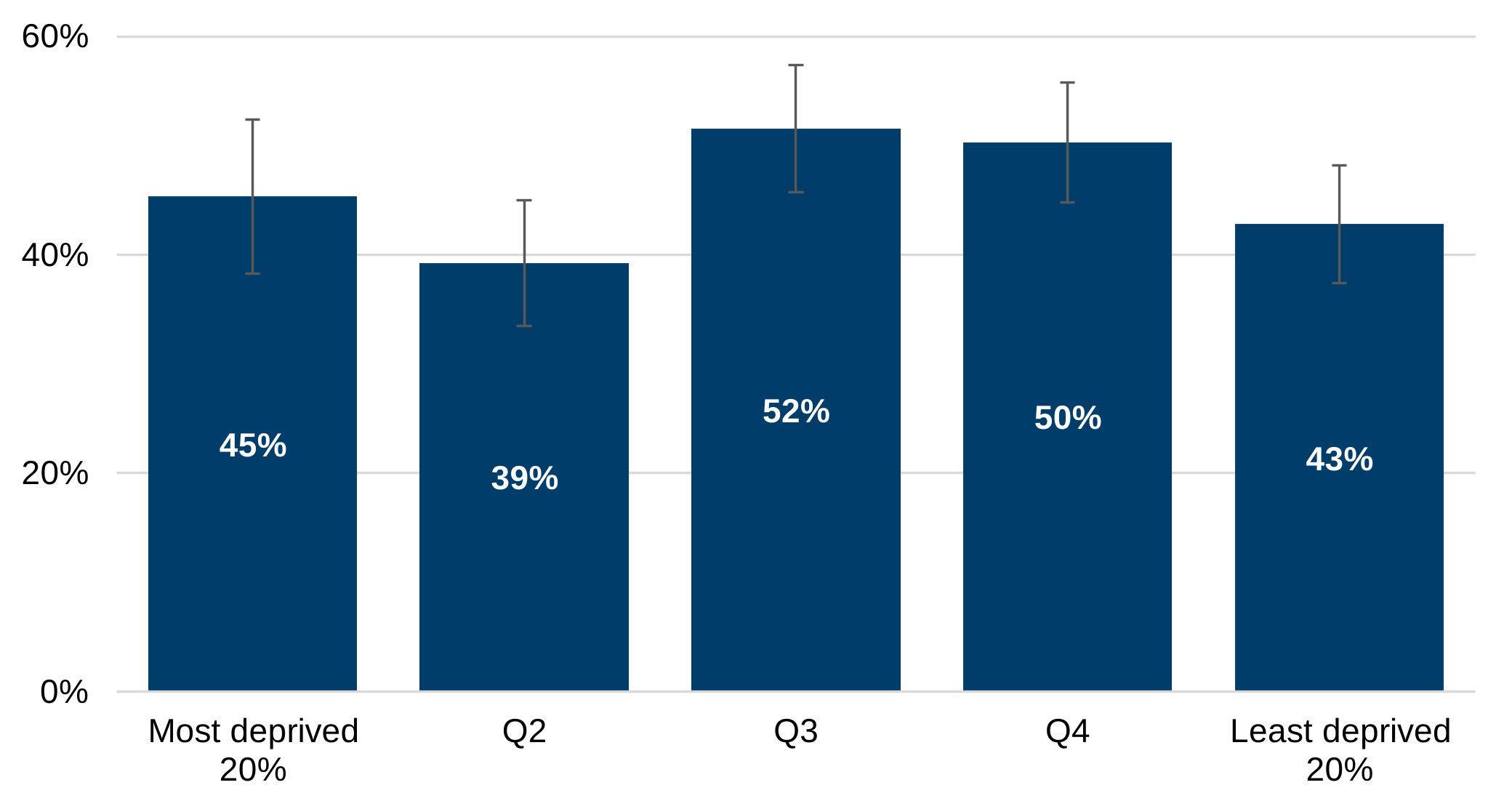
Description of figure 7: bar chart showing whether people could learn Welsh in their workplaces, grouped by WIMD income quintiles. Employees living in the second most income deprived quintile (Q2) were less likely to have the opportunity to learn Welsh when compared with those in less income deprived quintiles. 39% of employees living in the second most income deprived quintile (Q2) compared with 52% of those living in the middle quintile (Q3).
Source: National Survey for Wales
57% of employees in North-West Wales had the opportunity to learn Welsh at work, compared with the national average of 45%. No other regions differed from the national average.
Having a limiting long-term illness was also identified as being linked with having fully paid sick leave, however no differences were found between people in good health, fair health, and bad health.
No independent links were found between having the opportunity to learn Welsh in the workplace and age, marital status, ethnicity, sexual orientation, or urban-rural classification.
Policy context
Workplace benefits
Workplace benefits such as paid leave, sick pay and pensions are central to the Welsh Government’s Fair Work policy, which promotes fair reward, income security and access to the wider benefits workers need to meet basic living costs. The Welsh Government actively encourages these conditions through influence and soft levers. However, employment rights, including statutory entitlements to paid leave and sick pay remain reserved matters, meaning we cannot regulate or compel employers directly in these areas.
Workplace decisions
The Welsh Government’s Fair Work policy places an emphasis on workers being informed, represented and able to influence decision making at organisation level and in day-to-day working practices. The data will help us to better understand the landscape. This aligns with wider Welsh Government commitments to social partnership and collective representation through trade unions. However, the underlying industrial relations legislative framework, including consultation rights and collective bargaining law remains a reserved matter for the UK Government.
Welsh language learning opportunities in the workplace
The National Centre’s Cymraeg Gwaith (Work Welsh) Scheme offers diverse, flexible, fully funded training to employers. There are a variety of options available at all levels of learning Welsh, from intensive tutor-led learning to short self-study courses. The Scheme also provides training, guidance and support to employers to increase the Welsh language skills of the workforce. This includes identifying their Welsh language skills requirements and advice on supporting learners in the workplace.
Comparisons with other sources
The Opinions and Lifestyle Survey, run by the ONS, collects information relating to part-time and remote working. The data is somewhat comparable with the National Survey, where similar rates of hybrid and remote working employees can be found.
The Annual Population Survey, also ran by the ONS, collects data on employment rates in Wales and the UK. No differences were found between the employment rates described by the APS and the National Survey.
Quality information
The April 2024 to March 2025 National Survey for Wales was a large-scale, random-sample survey covering adults aged 16+ across Wales.
Methodology
Addresses were selected at random, and invitations sent by post requesting that a phone number be provided for the address. A phone number could be provided via an online portal or a telephone enquiry line. Where no phone number was provided, telematching was undertaken with available databases of phone numbers to see if one can be found for the address.
The interviewer then called the phone number for the address, established how many adults live there, and selected one at random (the person with the next birthday) to take part in the survey. The selected person was interviewed by phone. Once they had completed the phone section, they were asked to complete an online section and details were sent to them.
If no number was obtained for the address then for a randomly-chosen 46% of such cases the interviewer made a visit to the address to select a respondent and either carried out an in-home, face-to-face interview with them or (if a phone interview was preferred) collected a phone number for them.
The survey lasted around 40-45 minutes on average and covers a range of topics. Respondents were offered a £15 voucher to say thank you for taking part. The achieved sample size each month was around 500 people on average, and the response rate was 18.7% of those eligible to take part.
Survey weighting
Survey weights are used to bring a sample of a population closer to the full population in terms of age, sex, and local authority size, as well as to compensate for variation from target in the numbers of interviews in each health board within each quarter. The weights reduce but will not eliminate the effects of differences in the achieved sample compared with previous years and with the general population. For the April 2024 to March 2025 sample, there is a less even spread of interviews across the year (for example, proportionately fewer in February and March) compared with previous years. As such, care should therefore be taken when comparing results with previous years, and any differences should be explored in the context of other sources.
Statistical analysis
This release uses regression analysis to explore relationships between different characteristics, such as sex or employment contract type, and a given factor of interest, such as paid sick leave or opportunities to learn Welsh. The method keeps other factors constant (sometimes called “controlling for other factors”). The results show potential links between factors, but they do not show that any one factor causes another.
Where the text of this release notes a difference between two survey results, we have checked to ensure that the confidence intervals (sometimes called the “margin of error”) for the two results do not overlap. This suggests that the difference is statistically significant, i.e. that there is less than a 5% or 1 in 20 chance that the results are due to a quirk of the survey sample rather than reflecting a real difference in the wider population. Where no difference is noted, the confidence intervals do overlap.
The survey questionnaire is available on our web pages.
Detailed charts and tables of results are available in our interactive results viewer. For information on data collection and methodology please see our quality report and technical report.
Statement of compliance with the Code of Practice for Statistics
Our statistical practice is regulated by the Office for Statistics Regulation (OSR). OSR sets the standards of trustworthiness, quality and value in the Code of Practice for Statistics that all producers of official statistics should adhere to.
All of our statistics are produced and published in accordance with a number of statements and protocols to enhance trustworthiness, quality and value. These are set out in the Welsh Government’s Statement of Compliance.
These official statistics in development (OSR) demonstrate the standards expected around trustworthiness, quality and public value in the following ways.
Trustworthiness
All personal data underlying these statistics is processed in accordance with the requirements of the Data Protection Act 2018.
National Survey for Wales statistics are published in an accessible, orderly, pre-announced manner on the Welsh Government website at 9:30am on the day of publication. All releases are available to download for free.
All outputs adhere to the Code of Practice by pre-announcing the date of publication through the upcoming calendar web pages. Access to the data during processing is restricted to those involved in the production of the statistics, quality assurance and for operational purposes. Pre-release access is restricted to eligible recipients in line with the Code of Practice (UK Statistics Authority).
The published figures are compiled by professional analysts using the latest available data.
Quality
As noted above, the achieved sample size for the National Survey April 2024 to March 2025 (6,000 respondents) is smaller than originally planned. The smaller sample size is due to the contractor encountering fieldwork issues including response rates being lower than in previous years. There are also changes in the composition of the achieved unweighted sample compared with previous years.
In July 2025 we therefore requested and received from the Office for Statistics Regulation a temporary suspension of accredited official statistics status for this first release and for other outputs based on the April 2024 to March 2025 data. The temporary suspension reflects the fact that the April 2024 to March 2025 outputs generally do not provide sufficiently precise results for small geographic areas and other small subgroups, and that care should be taken in comparing some April 2024 to March 2025 results with those from previous years. All outputs based on April 2024 to March 2025 data are badged as official statistics in development.
It is still appropriate to use these statistics. At a national level, estimates continue to provide a reasonable indication of estimates for Wales, particularly if used alongside alternative sources. However, users should note the wider confidence intervals particularly for smaller geographies and population sub-groups.
All stages in the collection, validation and production of these statistics are led by professional statisticians and the statistics are produced free from any political interference. All statistics are quality-assured prior to publication.
Statistics published by Welsh Government adhere to the Statistical Quality Management Strategy which supplements the Quality pillar of the Code of Practice for Statistics and the European Statistical System principles of quality for statistical outputs.
Set-up work for a new online-first survey design is progressing well and mainstage fieldwork will begin in March 2026, with first results due in summer 2027. One key advantage of the new approach is that it will be possible to deliver much larger achieved sample sizes, and therefore much more precise estimates for small subgroups. Following the start of mainstage fieldwork under the new design in April 2026 to March 2027, we will request that accredited official statistics badging be reinstated by OSR for survey outputs from April 2026 to March 2027 onwards.
Value
These statistics are used in a variety of ways. Some examples of these are:
- providing advice to ministers
- to inform a wide range of policy decisions
The commentary and notes in this release have been developed to try to make the information as accessible as possible to users.
You are welcome to contact us directly with any comments about how we meet these standards. Alternatively, you can contact OSR by emailing regulation@statistics.gov.uk or via the OSR website.
Well-being of Future Generations Act (WFG)
The Well-being of Future Generations Act 2015 is about improving the social, economic, environmental and cultural wellbeing of Wales. The Act puts in place seven wellbeing goals for Wales. These are for a more equal, prosperous, resilient, healthier and globally responsible Wales, with cohesive communities and a vibrant culture and thriving Welsh language. Under section (10)(1) of the Act, the Welsh Ministers must (a) publish indicators (“national indicators”) that must be applied for the purpose of measuring progress towards the achievement of the wellbeing goals, and (b) lay a copy of the national indicators before the Senedd Cymru. These national indicators were laid before the Senedd in 2021. The indicators laid on 14 December 2021 replace the set laid on 16 March 2016.
Information on the indicators, along with narratives for each of the wellbeing goals and associated technical information is available in the Wellbeing of Wales report.
Further information on the Well-being of Future Generations (Wales) Act 2015.
The statistics included in this release could also provide supporting narrative to the national well-being indicators (such as indicator 21: ‘percentage of people in employment’, or indicator 37: ‘number of people who can speak Welsh’) and be used by public services boards in relation to their local wellbeing assessments and local wellbeing plans.