
Flying Start childcare: guidance
Explains what childcare providers must do to ensure they provide quality childcare.
In this page
Audience
This guidance is intended for professionals responsible for planning and managing high quality childcare for young children receiving Flying Start support, including Flying Start advisory teachers and relevant local authority personnel.
All Flying Start practitioners working within childcare settings that provide Flying Start childcare, should be familiar with this document and use it to underpin their practice but take their lead from other guidance such as the Early Childhood Play, Learning and Care (ECPLC) Resources and the National Minimum Standards (NMS) for Regulated Childcare for children up to the age of 12 years in Wales.
About this guidance
This document supports delivery of all Flying Start childcare settings and outlines the ethos of Flying Start childcare. This is not an inspection framework and should be read in conjunction with all Welsh Government guidance on Flying Start.
Flying Start is the Welsh Government’s targeted Early Years programme for families with children under 4 years of age in some of the most disadvantaged areas of Wales.
The core four elements of the programme have been shown to influence positive outcomes for young children and their families. These include:
- Funded quality, part-time childcare for 2 to 3 year olds
- An enhanced health visiting service
- Access to parenting support
- Support for Speech, Language and Communication development
Flying Start childcare should provide enriching and engaging experiences for young children to learn, develop and socialise with their peers in a high-quality effective environment, supported by well qualified, caring, enabling adults.
Expansion of Flying Start childcare
In the 2021-2025 Programme for Government, there was a commitment to deliver a phased expansion of early years provision to include all eligible 2 year olds, with a particular emphasis on strengthening Welsh medium provision.
The first phase of the expansion started in September 2022 and included all four elements of Flying Start. Phase 2 focussed on delivering the high quality part-time childcare element of Flying Start to more 2 year olds during 2023-24 and 2024-25. Phase 3 continued this expansion from 2025/26 onwards with the eventual aim that provision would be available to all 2 year olds in Wales. Priorities for the expansion are to:
- Maximise child development outcomes to support the best start in life, particularly for our most disadvantaged children
- Address inequality and alleviating some of the impacts of deprivation
- Support and strengthen Welsh medium provisions and
- Address gaps in the availability of provision
It has been a longstanding requirement that, where possible, settings should be within “pram pushing” distance of the child’s home. For practical reasons this is considered to be a walk of around 10-15 minutes, and local solutions should have been identified where it wasn’t possible. However, with the expansion into more rural communities, it is recognised that this will not always be possible. Additionally, some families may be using settings in a neighbouring local authority to support them to work or undertake training which may mean that they are not within the original stated distance. Details on cross border arrangements are provided in Appendix 2.
All Flying Start settings must be registered with Care Inspectorate Wales (CIW) and must meet the Standards for Regulated Childcare.
Flying Start childcare delivery models, core or expansion, must meet locally identified needs. Local authorities have the flexibility and discretion to determine the composition of their Flying Start Childcare provision which may include:
- Mixed settings (Flying Start and non-Flying Start children)
- Flying Start only settings
- Maintained schools
- Voluntary/ community/ independent settings including English and Welsh medium day nurseries, play groups, Cylchoedd Meithrin and childminders
- Local authorities need to follow their own procurement rules when formulating Service Level Agreements, which must be verified by their own legal services department
When planning the provision of local Flying Start childcare services, local authorities should make the necessary links with the Childcare Offer for Wales, the Sustainable Communities for Learning Programme (formerly the 21st Century Schools and Colleges Programme) partnerships and with local Welsh Education Strategic Plans (WESPs) to ensure local provision is planned.
Policy context
The Welsh Government’s work on children’s rights is based on our commitment to the principles of the United Nations Convention on the Rights of the Child (UNCRC). Wales has led the way on children’s rights, enshrining them in law through 'The Rights of Children and Young Persons (Wales) Measure 2011'. The Measure requires Ministers to have due regard to the UNCRC when exercising any of their functions.
Underpinned by children’s rights the Welsh Government’s ambition is for each and every child in Wales to have the best possible start in life. We want ‘A Wales for All Children / Cymru i Bob Plentyn’, a Wales where all children have the best start in life, including high quality childcare and early years services and support for parents or carers. What are children’s rights: guidance for parents and carers | GOV.WALES Children’s rights are the driving force behind key programmes and policies like Flying Start.
The Well-being of Future Generations (Wales) Act (WFGA) is about improving the social, economic, environmental and cultural well-being of Wales. It aims to make the public bodies listed in the Act think more about the long-term, work better with people, communities and each other, look to prevent problems in future generations and take a more joined-up approach as well as integrating outcomes and performance measures.
The provision of high-quality Flying Start childcare services is directly in line with WFGA goals relating to ‘A Healthier Wales’ and ‘A More Equal Wales.’ The emphasis placed by Flying Start on early intervention aligns with the preventative and long-term requirements found in the ‘Sustainable Development Principle,’ which is a feature of the Act.
The Early Childhood Play, Learning and Care (ECPLC) Plan for Wales shares a clear vision to work together in supporting babies, young children (0-5), and their families across Wales.
At the heart of this plan are children’s development, their rights, and the importance of play-based learning. Through the vital roles of enabling adults, engaging experiences, and effective environments, the ECPLC approach ensures every baby and young child receives the best possible start in life.
The Early Childhood Play, Learning and Care (ECPLC) Plan for Wales brings together all the important pieces of early childhood support into one clear, shared approach. It connects the Curriculum for Wales, the National Minimum Standards for Childcare, and a wide range of ECPLC resources to help staff work consistently and effectively for every baby and young child across Wales.
This plan supports Flying Start practitioners, Flying Start advisory teachers and local authority leads to work closely together; across childcare, play, and nursery education; to provide smooth, joined-up support for families. It makes sure that children’s rights, development, well-being, and learning are at the heart of everything we do, from birth to age five.
The Welsh Government ECPLC Resources, which we recommend practitioners to use, also includes the Early Childhood Play, Learning and Care (ECPLC): Assessment Arrangements for 0 to 3 year olds in Wales, which guide us in understanding each baby and young child’s unique progress through ongoing, sensitive observation and reflection. These assessments help practitioners to plan so every baby and young child gets the right help to grow and thrive.
Overview
The provision of high quality, part-time childcare for 2 to 3 year olds is integral to the Flying Start programme. High quality childcare gives young children the chance to learn, explore and grow through play. It helps them build skills, make friends, develop their concentration and enjoy new experiences. These are crucial, not only to a child’s subsequent ability to develop and learn, but also to participate effectively in groups, whether in the classroom, the labour market or society.
Research suggests that high quality ECPLC leads to improvements in young children’s development and learning in later years such as enhanced language skills; better educational performance in mathematics and reading; and an increase in positive behaviour/outcomes. Young children who attend high quality early years provision are more independent, concentrate on their play for longer and, on entry to school, are more co-operative and better prepared for the challenges they meet [Effective Provision of Pre-School Education (EPPE) (2003); Schweinhart et al (1993), Love et al (2005)].
The Effective Pre-school, Primary and Secondary Education Project (EPPSE) findings, published in 2014, further emphasises the significance of high-quality pre-school experiences and the longitudinal impacts these experiences can have on educational attainment. A focus on high quality provision should therefore underpin all aspects of Flying Start childcare. Research since the EPPSE study in 2014 has continued to support the principle that high quality childcare and early years provision has long term beneficial outcomes and their impact is particularly heightened for young children from disadvantaged backgrounds.
Flying Start childcare should not only aim to meet the National Minimum Standards for Childcare but also be of the highest quality and strive to be the benchmark for high quality childcare throughout Wales. It should go beyond meeting basic requirements. It should create warm, engaging, and reflective environments where young children feel safe, valued and supported to thrive. At its core is a child-centred, rights-based approach, ensuring every young child’s needs, interests, and voices shape their experiences.
There are three key measures of high quality in a successful Flying Start childcare setting, aligned with the principles of ECPLC, the Curriculum for Wales, and the National Minimum Standards for Childcare. (NMS). We have referenced (not necessarily directly quoted) the relevant NMS, which are correct as of the date of this review.
- Enabling Adults – skilled, nurturing staff who support each child’s learning and development (NMS13)
- Engaging Experiences – meaningful, play-based opportunities that reflect young children’s interests and developmental needs (NMS 7)
- Effective Environments – safe, inclusive and stimulating spaces that promote exploration and well-being (NMS 22)
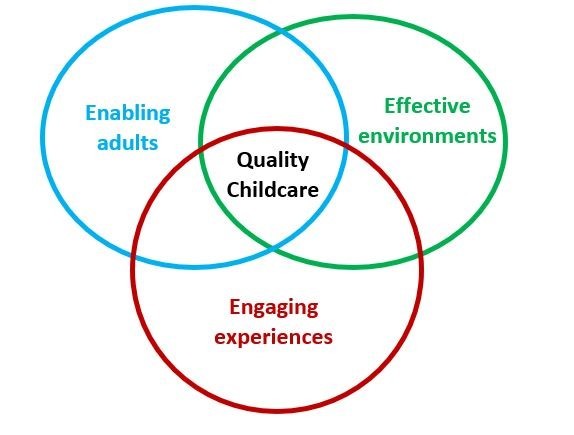
Enabling adults, engaging experiences and effective environments all contribute to the provision of high-quality childcare and provide the foundations on which all future development will be built.
All Flying Start settings are based on the following expectations:
- Staff/practitioners working with young children should be suitably trained and qualified, and understand how young children develop, learn and play, and be sensitive and responsive to their needs and feelings. (NMS 13)
- The role of the enabling adult within the setting is to support and enrich young children’s play and learning, rather than to direct it. (NMS 7)
- Young children need a caring, stimulating environment. The environment both indoors and outdoors, will be warm and inviting, safe and secure, whilst being appropriately challenging, where young children can be happy and feel valued as individuals. (NMS 22). Young children should learn through first-hand, play-based experiences and discovery, where experimentation and independence are encouraged. (NMS 7)
- Learning and play opportunities for young children should have their interests and needs at the centre; provide opportunities for them to thrive and develop their confidence and self-esteem. Young children should be supported to develop the early skills, knowledge and concepts appropriate to their stage of development. (NMS 3,4,7)
- Experiences planned for young children should be sensitive to their individual needs and should take account of cultural norms and values. Children should have the opportunity to learn about other cultures and individuals’ experiences and setting practice and policies should be developed with ethnic minority partners and designed through an anti-racist lens. (NMS 4,7). The DARPL Early Years Toolkit supports leaders to develop an anti-racist culture within all Flying Start settings.
- The opportunities provided should build on children’s previous experiences. There should be a clear link with early language development, play and foundation learning pedagogy. (NMS 3,4,7) Cymraeg I Blant also deliver early language development.
- The Early Childhood Play, Learning and Care: Assessment Arrangements for 0 to 3 year olds in Wales support practitioners and young children in each setting by promoting robust, child‑centred assessment through observation of children’s everyday activities. These observations should be used to support children’s progress, learning and development. (NMS 3,4)
- When a young child joins a Flying Start childcare setting, evidence‑based assessment arrangements, including consideration of the child’s development, should be used to establish a clear understanding of their needs. This should then form the basis for ongoing assessment, enabling practitioners to monitor progress over time and inform future planning for learning and development.
- The assessment arrangements also support the early identification of young children who may require additional support. Where appropriate, practitioners should use this information to work in partnership with other professionals to ensure timely and coordinated support (NMS 3 and 4).
- The ECPLC Assessment Arrangements for 0 to 3 year olds underpin a child‑centred, play‑based approach to everyday observation and assessment, helping practitioners to understand development, plan effectively and respond to each baby’s and young child’s individual needs. This is complemented by the ECPLC Developmental Pathways for 0 to 3 year olds, which focus on what is important for young children’s development and how best to support them to grow and thrive.
- Trusting partnerships must be developed between parents/carers and staff/practitioners. Parents/carers should be included in all discussions about their child and be guided in ways to support their child’s development outside the setting. (NMS 6)
- Settings should develop close links with relevant agencies that can support young children and their families. Information should be shared, and the agencies’ support or advice sought as necessary. (NMS 4,6)
- A range of strategies must be in place to ensure smooth transition between different environments, particularly the transition from home to Flying Start and then on to Nursery education. (NMS 4,6)
Effective Environments (NMS 22, 23,24)
A high quality, effective environment supports young children’s development, learning and well-being in a holistic way. The quality of both the physical and emotional environment directly impacts the quality of provision, and the experiences young children receive.
In Flying Start settings, the environment should be:
- Safe and secure both indoors and outdoors, so young children feel confident to explore
- Warm, welcoming, and friendly for young children and their parents/carers, creating a sense of belonging from the very start
- Rich in opportunities for play, with resources that build on young children’s natural curiosity and encourage active learning
- Inclusive and representative of the diversity of Wales, with authentic images, books, play materials, and displays that reflect a wide range of cultures, languages, abilities, and family experiences – Darpl Early Years Toolkit
Plans for new setting developments/refurbishment should consider access to quality outdoor environments. All outdoor spaces should offer the appropriate areas for learning and practitioners should be supported to maximise the benefit of outdoor spaces, taking full advantage of them.
Children require access to safe and secure outdoor space which is interesting and easily accessible. The outdoors should be well-planned, interesting, and inviting, with areas for exploration, creativity, movement, and quiet reflection. Practitioners should be supported to make full use of the outdoors, recognising its role in fostering young children’s self-regulation, confidence and positive attitudes to learning.
The outdoors is an ideal area for active learning, encouraging appropriate risk taking, learning first-hand about nature and the weather and where large scale and messy activities are possible. The level of care shown in the environment’s management also gives powerful messages to both young children and adults about the way they are valued by the setting leaders. Several organisations provide information on providing stimulating play environments for young children. These include Play Wales and Learning Through Landscapes.
Sufficient safe and secure space, both indoors and outdoors, must be available to create large and small play areas where young children can, for example, use large and small construction materials. The effective environment must provide opportunities for role play, experimenting and investigating, art and craft activities and for sharing books. Appropriate space should also be provided for adults to work with individual young children and small groups. There should also be quiet areas where young children can reflect and rest.
Appropriate space should be available to store young children’s work. Their work should be stored and displayed with care to show it is valued. Where possible, displays should be at children’s height so that they can easily see and take pride in their work. Easy-access storage areas should also be provided as it encourages young children to select materials and equipment which supports their development as autonomous learners.
Staff will also need quiet areas which allow them to work with parents/carers or to have confidential discussions when necessary.
Enabling Adults (NMS13,14,15)
Staff/practitioners or enabling adults appointed to work in/delivering Flying Start childcare must be well skilled and appropriately qualified to deliver high quality provision. They should be warm, responsive, affectionate and readily available. They should be committed to their work with young children and to the ethos of enhanced quality, which is a cornerstone of the Flying Start programme.
Practitioners delivering Flying Start must have experience of working with young children and, as outlined in the NMS, must have the qualifications outlined within Social Care Wales’s Qualification Framework to work as a Flying Start leader or practitioner.
The framework sets out the current qualifications required (and equivalents), as well as past qualifications which are accepted. For childminders delivering Flying Start, it sets out what qualifications are required depending on whether or not childminders employ assistants. For Flying Start leaders, it also sets out the qualifications which can be accepted alongside completion of the All-Wales Induction Framework for Managers.
For those practitioners who do not have the required qualification, there is a lead in time by which practitioners should acquire the necessary qualifications. Timescales are outlined in the Standards for Regulated Childcare. There must be a plan to show how and by when they will be trained to the required standard. This will need to be monitored by the Childcare Advisory Team to ensure that progress is on schedule and qualifications are completed within the agreed time.
All Flying Start childcare practitioners must undertake at least five days or 35 hours annually CPD or professional learning per year, as decided and designated by their Childcare Advisory Teams. This training is in addition to any training requirements outlined in the NMS. Professional learning should meet the needs of practitioners and ensure that all staff have the knowledge, skills, attitudes and understanding required for the job. The cost of backfilling during training should be factored into the local authority’s budget for delivering Flying Start. Social Care Wales has developed the Continuing Professional Development (CPD) | Social Care Wales which can support Continuing Professional Development.
Continuity of practitioners is important. Young children can show signs of increased anxiety or social withdrawal when their carers are constantly changing. Trusted adults are an important part of the support young children need to experience positive mental health and well-being and form a key part of the Welsh Government’s NYTH/NEST framework (Nurturing, Empowering, Safe and Trusted).
Young children who are learning to communicate often develop their own unique ways of expressing themselves. Consistent practitioners are more likely to become familiar with these individual forms of communication and respond effectively. In contrast, new or unfamiliar practitioners may struggle to interpret the child’s needs and intentions (Melhuish, 1991). When caregivers respond sensitively to a child's distress and support them in regulating their emotions, it positively influences the child’s neurological, physiological and psychosocial development (Howe, 2011).
Given these developmental needs, it is considered imperative for leaders/managers of all Flying Start settings to implement strategies and working practices that promote continuity of staffing within Flying Start settings.
Working with young children presents unique emotional and physical challenges, often leading to high levels of stress and burnout among early years and childcare practitioners. Studies over the years have reinforced the importance of structured support systems, including reflective supervision, targeted training and robust support networks, to mitigate these challenges and promote professional well-being. High quality supervision reduces burnout and lowers staff turnover. Further support can be found at Your health and well-being | Social Care Wales
For Flying Start settings, additional trained and qualified practitioners should be employed to provide cover to allow the leader/manager to perform additional duties, such as to meet regularly with parents/carers, undertake home visits and attend meetings where this is required. This cover should be for a minimum of three sessions per month where staffing arrangements allow. Full details of the minimum ratios can be found in the Standards for Regulated Childcare.
In contrast to the NMS, please note that volunteers cannot be counted within the number of adults as part of the minimum adult to child ratio within a Flying Start setting.
Responsive interactions between adult and child are key to supporting Speech Language and Communication development (SLC). Speech, Language and Communication (SLC) is one of the core strands of Flying Start, and as such, all staff in Flying Start settings must have, as a minimum, the ‘core’ level of skill development specified in the All Wales SLC training pathway. Talk with me: all Wales Speech, Language and Communication (SLC) training pathway tool | GOV.WALES
Flying Start speech, language and communication: guidance | GOV.WALES
Childminders
Childminders play a vital role in ensuring Flying Start childcare meets the needs of parents or carers and upholds the professional and quality standards which are a feature of Flying Start childcare provision.
Childminders offer professional childcare for children from birth up to the age of 12 years within a domestic premises that is not the child’s own home. Childminders are well placed to support the early development of young children and work closely with parents and carers to provide flexible, tailored and responsive childcare services.
Where childminders provide Flying Start childcare, Childcare Advisory Teams should work with them, as with other Flying Start providers, to support their provision to ensure that 2 to 3 year olds in their care receive high quality childcare services. Childminders delivering Flying Start are required to hold additional qualifications to those childminders who do not deliver Flying Start. Social Care Wales | Home - Social Care Wales
Engaging Experiences (NMS 4,6,7,8,22)
Early childhood is a crucial time for development. Not receiving the right diet and opportunities for physical and cognitive development can have lifelong effects on life outcomes. Play opportunities and experiences are crucial to the way young children become self-aware and the way in which they learn the rules of social behaviour. To ensure that learning opportunities are maximised, the emotional climate needs to be trusting and respectful.
Play opportunities are vital to young children’s all-round development. It enables young children to develop high aspirations, a positive self-image and a disposition to learning. Young children will naturally problem solve during their play and should have ample opportunities for deep level involvement and uninterrupted active play and learning which is in line with their stage of development. During these periods, time should be built in for creating, reasoning, questioning, speculating and for reflection.
Physical activity is essential for young children's holistic development, supporting their physical health, emotional well-being and readiness for learning. From early sensory exploration to more coordinated movements, young children build gross and fine motor skills. Adults play a crucial role by creating engaging indoor and outdoor play opportunities that promote strength, balance, coordination and agility.
Active play is especially important in early childhood. It lays the foundation for healthy bodies and supports skills such as hand-eye coordination, which are linked to early literacy. The UK Chief Medical Officers recommend that children aged 1–5 engage in at least 3 hours of physical activity daily. This is more than any other age group; highlighting the need to prioritise and reflect this requirement in early years settings.
Play is a powerful way for young children to cope with stress and challenges.
- Helps communication – especially when young children can’t express feelings with words
- Supports emotional health – by releasing emotions, managing fears, and building positive feelings
- Improves social skills – like making friends, forming bonds, and showing empathy
- Builds personal strengths – such as resilience and self-control
Value must be given to perseverance and a positive attitude to learning encouraged. Young children’s efforts, achievement and progress should be recognised and celebrated.
Practitioners in Flying Start settings will need to have a secure knowledge and understanding of the way young children develop and learn. An understanding of developmentally appropriate and engaging experiences should be at the heart of a child’s experience in a Flying Start childcare setting.
Speech, Language and Communication (SLC) underpins all areas of learning, development and care and effective communication is an essential life skill. Flying Start settings must plan carefully to support the development of young children’s SLC skills. Responsive interactions with enabling adults during play and first-hand sensory experiences such as sharing books, singing, exploring role-play and the outdoor environment will provide young children with a rich and practical learning experience. More guidance can be found at Flying Start speech, language and communication guidance.
Movement
Movement is a child's first language, helping them understand their environment and develop physical, sensory and cognitive skills. Humans are designed to move daily, and for children under five, movement is essential for development. In these early years, most children progress from experiencing the world on the floor or in caregivers’ arms to moving independently. Through movement, their bodies build strength and coordination, while brain–body connections develop areas crucial for memory, learning and emotional regulation. Movement also supports language, posture, balance, coordination and spatial awareness.
Children need a wide range of movements, including:
• Cross-lateral actions (crawling, walking, climbing, skipping and running)
• Rolling and rotating
• Swinging and balancing
• Exploring different speeds and levels, using the play environment
As children grow, most should run, climb, hop, jump, crawl, swing, roll, and move confidently over varied surfaces. They should climb stairs with alternating feet, use balls, balance on one leg, scoot or pedal, and lift, carry, push and pull.
Without regular opportunities to move, children cannot meet CMO activity guidelines. For children with movement impairments, collaboration with medical teams ensures safe, appropriate movement throughout the day.
Further information on movement in children can be found within these links:
https://www.earlyyears.wales/en/supporting-professionals
https://www.earlyyears.wales/en/supporting-parents
Assessment and Transitions
Each young child enters a setting as an individual with their own personal experiences in life and will be at their own unique stage of development. Arrangements should be made to ensure a smooth transition into the Flying Start setting for the young child and parent/carer, including the wider multi-agency team.
The A Quality Framework for Early Childhood Play, Learning and Care in Wales, and the ECPLC Reflective Practice Toolkit should be used together to support and enable practitioners to plan, assess, and reflect on their practice. The ECPLC: Assessment Arrangements for 0 to 3 year olds in Wales include a helpful section on ‘Starting with you’ which can be used to support effective transitions. What young children know, can do, are interested in, and need should always form the starting point for their learning. Sensitive and robust assessment of young children entering Flying Start childcare is essential to identifying additional support and any interventions required to help meet individual needs. Continuous assessment should take place throughout a young child’s journey at the setting and should celebrate achievements and progress made.
An ongoing record of observation should be kept informing next steps in learning and development. This will ensure planning focuses on the individual young child and builds upon what they like, are interested in and can do to meet their developmental needs. This will also help early identification of emerging needs and additional learning needs in preparation for transition to the Curriculum for Wales.
Planning should be sufficiently flexible to allow practitioners to adapt and re-structure plans as a result of on-going observation during the daily life of the setting. Flexible pedagogical frameworks with an emphasis on outdoor play and problem solving which focuses on process and developmental goals, rather than on subject outcomes, form the most appropriate learning approaches for this age group. Playful, stimulating indoor and outdoor experiences which will excite, engage and interest young children, whilst motivating and extending their learning should be developed.
Young children need time to settle into a new environment, build trusting relationships with practitioners and peers and adjust to new routines.
Understanding each young child’s unique development is central to nurturing their early experiences. By observing how they play, communicate, move, and interact and by learning about their interests, routines, and what helps them feel secure; we develop a meaningful understanding of who they are. Familiar, accessible materials that young children can return to daily help them feel safe and confident to explore. This careful approach to settling in and transitions helps ensure that every young child feels secure, valued and ready to engage in their new environment.
It may be necessary to modify or adapt the environment and resources to ensure all young children can access and participate fully in the provision, regardless of any additional need or disability.
Young children will usually move into nursery education at the end of their time in Flying Start childcare. Flying Start childcare practitioners should therefore reflect a philosophy and pedagogy, similar to that promoted through foundation learning, in their practice.
A summative assessment of each young child’s progress must be undertaken at the end of their time in Flying Start childcare to inform transition arrangements. Flying Start childcare practitioners, along with any other relevant partners, should work closely with education providers to foster strong links to embed this transition process.
Mental Health & Well-being
Early childhood is a crucial time for cognitive and physical development. Not receiving the right diet and opportunities for physical and cognitive development can have lifelong effects on life outcomes.
Childhood experiences, particularly during the early years can have a significant influence on our health and well-being, across our life course. Studies show there is a strong association between what are termed Adverse Childhood Experiences (ACEs) and other sources of childhood adversity and trauma, and poorer life outcomes, including educational outcomes, economic prosperity, and physical and mental health and well-being. While preventing ACEs is always the goal, one of the ways to mitigate the impact of childhood adversity, and improve outcomes, is by working in a trauma-informed way. The Welsh Government is supporting, promoting and encouraging the adoption of trauma-informed practices in line with the five practice principles and four practice levels, set out in the Trauma-Informed Wales Framework.
The Welsh Government has supported the development of a range of training and support materials, which can help individuals and organisations on their own journeys to becoming trauma-informed. This includes a Trauma and ACE (TrACE) Informed Organisations Toolkit.
Another important protective factor against childhood adversity is resilience. There are a variety of resilience building sources, including the development of social and emotional skills, communication skills, access to social and leisure activities, opportunities to play, friends and a relationship with a trusted adult. This need not be a parent/carer and could be a member of the childcare setting team.
Flying Start practitioners, in collaboration with other multi-agency professionals (as part of a team around the family approach), are essential in the early identification of concerns relating to adverse childhood experiences and trauma and can play a crucial role in mitigating their impact on young children.
The Welsh Government is committed to ensuring mental health and well-being support is available to all babies and children in the right place, at the right time, in the right way. To do this we have co-produced the NYTH/NEST framework (Nurturing, Empowering, Safe and Trusted) with children, families, staff and strategic leads, which supports organisations to create a whole system approach for mental health and well-being.
Support is available to settings wishing to imbed the principles of the NEST framework to support the mental health and well-being of the children in their care. A NEST self-assessment tool is available which offers prompts for discussion and reflection and provides the structure for partnership discussions alongside an action planning tool. NEST training is also available to all through the y Ty Dysgu learning platform. Numerous resources to support Flying Start settings to think about children’s mental health are available on our NEST webpages.
For most babies and young children mental health and well-being support consists of trusted adults providing nurturing, empowering, safe and trusted care and environments. For some young children more support is needed to address concerns such as mental health and well-being needs, behaviour, parent–child relationships or attachment. Early years settings play a vital role in identifying concerns early and acting as trusted adults for children and families. They should act as part of a connected system with everyone working together to support mental health and well-being.
Food & Nutrition & Healthy Eating (NMS 12)
For the healthy development of young children, it is important to create an environment which promotes the benefits of being healthy and in which healthy attitudes and behaviours are encouraged. Early Years settings are encouraged to work, with local support, towards the Healthy and Sustainable Pre-School Scheme National Awards Criteria. This takes a whole setting approach to a range of health issues and is assessed locally.
Having a healthy balanced diet in the early years is vital to young children having the best start in life. This period is a critical window during which the foundations for a young child’s development are established, affecting their lifelong health and well-being. Flying Start settings play a crucial role in supporting good eating patterns to ensure young children grow and develop appropriately, to protect their teeth and to maintain a healthy body weight. Settings also help shape young children’s dietary preferences - exposing young children to a wide range of foods at a young age increases their acceptance of new flavours and textures.
Dental decay is the major source of hospitalisation of young children and data from the 2023-24 Child Measurement Programme for Wales reported around one in four reception class children are living with being overweight or obesity with levels highest in the most disadvantaged areas. Young children living with obesity are five times more likely to have obesity as adults.
Flying Start settings should be working to the highest standards to optimise the food and drink offer to the young children in their care by implementing the Food and Nutrition for Childcare Settings: Food and nutrition for childcare settings: putting it into practice | GOV.WALES Local public health dietitians will also be able to support settings with advice on local initiatives such as healthy snack awards, and on accredited training on nutrition in early years provided through ‘Nutrition Skills for Life’.
Flying Start settings should adhere to cultural and religious dietary requirements. Halal/Kosher/vegetarian and vegan food options should be offered if required. Flying Start settings should be aware of any foods which are not eaten by the child for religious, cultural or alternative reasons. This can be discussed when a family expresses their interest in attending a Flying Start setting.
Support for achieving high quality (NMS18)
Support for achieving high quality is best delivered via a Childcare Advisory Team. The Childcare Advisory Team’s main function is to ensure the quality of Flying Start childcare settings and support Flying Start staff within their area.
This function needs to be led by or include a professional early years Advisory Teacher with qualified teacher status. However, the Childcare Advisory Team’s skills and qualifications should be considered ‘in the round’ and the exact makeup of the Childcare Advisory Teams can be determined locally using a skill-mix approach. The skill-mix within the Childcare Advisory Team should hold the qualifications recognised for Flying Start, as outlined within Social Care Wales's Qualification Framework to work within the Early Years and Childcare Sector in Wales.
The Childcare Advisory Team must have an understanding of play and the different needs and stages of development of young children, particularly the differences between a 2 year old and a 3 year old. The Childcare Advisory Team will promote good practice among Flying Start staff so that young children can transition smoothly to learning within the Curriculum for Wales. Partnership working with other professionals within the local authority is vital to support the individual young child and the childcare setting.
The Childcare Advisory Team must have experience of working in the sector and be able to develop and deliver professional learning for childcare staff. The Childcare Advisory Team will engage regularly with each Flying Start setting to provide support and advice to practitioners. The Childcare Advisory Team will also agree a delivery plan with each Flying Start setting.
All Flying Start settings should have an evidence-based quality assurance system in place, which will be monitored by the local authority using an appropriate tool, which in turn should inform the Setting Improvement Plan. Many settings have used previously, but these are not compulsory: ITERS 3 (Infant/Toddler Environment Rating Scale), SSTEW (Sustained Shared Thinking and Emotional Well-being), Healthy and Sustainable Pre School Scheme (SPSS), National Quality Assurance Schemes or locally designed tools. We recommend settings use the ECPLC resources.
- The Early Childhood Play, Learning and Care Quality Framework for Wales draws together the requirements for delivering the standard of provision for early years settings we want in Wales
- The Early Childhood Play, Learning and Care: Reflective Practice Toolkit have been developed to support individuals and teams to reflect on the quality of their provision
An independent evaluation of the setting’s quality should be carried out by a trained professional, (this is usually from the local authority) supported by clear procedures that promote consistency, fairness and objectivity. Many organisations within the childcare sector offer their own quality assurance schemes and provide guidance and support to help implement them effectively.
Settings are encouraged to explore what support is available via membership of one of the main childcare umbrella organisations in Wales which provide professional advice and support along with a range of other benefits. These are Early Years Wales, Clybiau Plant Cymru Kids’ Clubs, Mudiad Meithrin, National Day Nurseries Association (NDNA Cymru) and Coram PACEY Cymru. More information can also be found on Cwlwm.
Coram PACEY Cymru have a range of resources to support quality home-based childcare, for example the Inspiring Environments Toolkit.
The sharing of best practice should be encouraged through local forums or networks. Childcare providers should be encouraged to visit other settings both within and outside the local authority for the purpose of sharing high quality practice. Practitioners should be expected to feedback observations and learning to the wider team to support ongoing development within their own setting. Flying Start childminders can share their expertise via local forums or Coram PACEY Wales.
The number and length of sessions
Flying Start childcare will focus on improving the outcomes for young children to enable them to transition into Nursery education and in the longer term. Young children can access Flying Start provision from the beginning of the term following their second birthday, up to the end of the term in which they celebrate their third birthday. There may be some degree of flexibility provided where this does not synchronise with local nursery intake arrangements. If different arrangements are made in line with nursery intake, parents must be notified of this in advance.
The Flying Start childcare offer is made available to parents/carers of all eligible 2 to 3 year olds for 12 ½ hours per week, 39 weeks of the year, in line with school terms. For those living in core Flying Start areas they will also be offered access to an enhanced Health Visiting service as well as support in areas such as speech and language. In addition, there should be a minimum of 15 sessions of flexible childcare and/or play provided for the child or family during the school holidays.
Sessions should be for 2 ½ hours per day, 5 days a week, so that the young child gets the maximum benefit from the programme. However, the Flying Start setting has some flexibility in how the 5 sessions are split across the week, where a parent/carer requests a different arrangement, such as when they attend a training course or go to work. The local authority, Flying Start setting and the family must agree on this arrangement.
A flexible approach to the number of sessions attended is often required to cater for the needs of parents/carers or children. For example, if a parent/carer decides to bring the young child for three sessions only, this should be accommodated. However, providers should encourage parents/carers to take up their full entitlement where possible.
Flying Start plans should set out arrangements for managing childcare places to maximise the take up of places and ensure value for money in terms of reallocation.
Young children receiving Flying Start care within a full daycare setting may not have a defined start and end time for their Flying Start sessions. Instead, this care should be seamlessly integrated into their overall daily provision. Prioritising the individual needs of each young child is essential. As such, a young child could spend part of their Flying Start session resting or sleeping, due to the length of time they may have already been at the setting. (For some young children it could be as early as 7:30 or 8:00 a.m.) If this is the case the setting should clearly outline how the child will receive the rest of their Flying Start provision. For example, it could be outlined in the Statement of Purpose either as a narrative and an exemplar timetable.
All Flying Start providers should note that Flying Start childcare is intended as a child development tool. Accordingly, it should not be timetabled during periods when young children are routinely sleeping or having a meal.
Equality, inclusion and additional learning needs (NMS 3,4,6)
The United Nations Convention on the Rights of the Child (UNCRC) states that all children have the right to high quality care that lays firm foundations for the rest of their lives and maximises their innate ability. The convention emphasises the need to respect a child’s identity alongside their family traditions by recognising their distinct culture and valuing the language of the home.
All young children and their parents/carers must be treated as equal regardless of age, disability, gender, marriage and civil partnership, pregnancy and maternity, race, religion or belief, sex and sexual orientation and be fully involved in the life and work of the setting. Early Years Wales has collaborated with DARPL and Cwlwm partners to produce an Anti-racist Toolkit for the Childcare, Early Years and Play sectors which actively supports the Welsh Government’s Anti-racist Wales Action Plan. Leaders should make themselves aware of this document which will support them to develop an anti-racist culture within all Flying Start settings.
Every effort should be made to ensure that all parents/carers of eligible young children within the area are offered and encouraged to take advantage of the Flying Start provision available. This will support the early identification of needs and, where necessary, ensure that support can be provided as early as possible.
Additional Learning Needs
Early identification, intervention and prevention are a key principle underpinning the ALN system. The importance of timely identification and of providing appropriate provision as soon as possible for a child or young person with ALN cannot be over-emphasised. The earlier action is taken, the more effective the action is likely to be. Early intervention is more effective than support provided later.
The Additional Learning Needs and Education Tribunal (Wales) Act and the Additional Learning Needs Code for Wales and supporting regulations, set out the legal framework for meeting the additional learning needs (ALN) of children and young people aged 0–25 in Wales.
Children and young peoples’ rights and aspirations are at the heart of the ALN system, ensuring that the views, wishes and feelings of a child or young person and their family are listened to when decisions are being made about their futures.
Under the system learners with ALN aged 0-25 are entitled to an Individual Development Plan (IDP) which sets out the additional support they need and follows the learner through school and further education – supporting transition and providing consistency, continuity and assurance that provision and rights are protected.
The ALN Act requires each local authority to designate an Early Years Additional Learning Needs Lead Officer (EYALNLO), who has responsibility for co-ordinating the local authority functions under the ALN Act in relation to children under compulsory school age who are not attending maintained schools.
The EYALNLO has an important part to play in improving the early identification of lower-level needs and in preventing the development of ALN; establishing referral routes and raising awareness among multi-agency partners; and helping ensure the early years workforce has the appropriate skills, mechanisms and tools for preventing the development of ALN and supporting young children with ALN.
Local authorities must provide information and advice to children and young people with ALN and their parents/carers. They should also direct and signpost them to other local and national resources and inform them about available advocacy services. Advocacy helps children and young people understand and share their views, and it is the local authorities’ duty to ensure everyone knows about their right to independent advocacy.
Welsh language provision
Flying Start should fully support the Welsh Government’s aim to ensure all our young people exit the education system ready and proud to use the Welsh language in all contexts. This means ensuring Welsh-medium and bilingual childcare provision is actively promoted and that clear pathways to Welsh-medium education are available. It also means providing clear and useful information to all parents/carers about the opportunities bilingualism offers and the options available to them, to ensure they can make an informed choice regarding their child’s linguistic development.
The commitment to support Welsh-medium provision is specifically referenced in the Welsh Government’ Programme for Government commitment in this area – which is to "Deliver a phased expansion of early years provision to include all 2-year-olds, with a particular emphasis on strengthening Welsh-medium provision".
Definitions of language provision:
Welsh-medium: Welsh is the language of the day-to-day activities. Welsh is used as the language of communication with the children. The setting communicates with parents in English and Welsh. Children are fully immersing in the Welsh language
Bilingual: Both Welsh and English are used in the day-to-day activities equally and children acquire the Welsh and English language equally.
Or
Bilingual: English is the language predominantly used in the day-to-day activities with incidental Welsh used such as colours, numbers or songs. English is used as the language of communication with children and parents. Children mainly acquire the English language.
The Flying Start speech, language and communication guidance contains additional information on the benefits of bilingualism and multilingualism, including the evidence base for identifying and supporting bilingual and multilingual children with Speech, Language and Communication Needs (SLCN).
Each local authority is required to prepare a WESP. These statutory plans set out how local authorities plan to grow Welsh-medium education over the next ten years. All local authorities have committed to their ambitious targets of increasing the provision of Welsh-medium education to support the aims and objectives set out in Cymraeg 2050. WESP Regulations were revised in 2019 to include emphasis on careful planning of Welsh-medium early years provision in order to support successful delivery of the WESP outcomes.
It is recognised, as set out in Cymraeg 2050, that early introduction to the Welsh Language through Welsh-medium childcare provision is the best route for our young children to develop bilingual skills. Local authorities must consider their WESP targets when planning delivery of Flying Start provision and may benefit from exploring the support that’s available from the main childcare umbrella organisations in Wales.
Childcare Sufficiency Assessments are also carried out by local authorities to identify gaps in provision, including gaps in Welsh language childcare provision. Local authorities have a duty to ensure the provision of sufficient Welsh-medium childcare, including Flying Start childcare, as stipulated in the Childcare Act 2006.
We know Welsh language early years services and language acquisition work best where there is a clear pathway into primary education and beyond; however, we also know that by establishing Welsh language services in areas where they have not historically been prevalent, we can raise awareness and create new opportunities to access Welsh language provision. This should be considered by local authorities when planning their Flying Start childcare services.
Children in Flying Start areas must be given the option of attending a childcare setting which offers Welsh language provision, regardless of the language spoken within the home. Mudiad Meithrin can support settings with developing their Welsh language provision. Additional support may need to be provided to parents of children attending Welsh medium settings, if Welsh is not the home language.
As part of the Flying Start Performance Data Monitoring, local authorities must record the number of young children whose parents/carers have specifically requested Welsh-medium childcare. The number of these requests which lead to an offer in their preferred language must also be recorded.
Involvement of parents and carers (NMS 2,3,4)
Flying Start childcare should be signposted to eligible parents/carers by the Flying Start team at the appropriate time. Parents/carers should be provided with the necessary information and involved in the choice of the type of setting their child attends.
Parental involvement in their young child’s education from an early age has a significant effect on educational achievement and continues to do so into adolescence and adulthood (Department for Schools, Children and Families, 2008). Practitioners should therefore develop close partnerships with parents/carers and share information about their young child for them to gain maximum benefits from the provision. Parents/carers should be encouraged to engage in transition arrangements prior to starting Flying Start childcare. Other agencies should also contribute and share relevant information that will enable all partners to cater for each young child according to their needs.
Childcare managers and practitioners should be sensitive when working with parents/carers, particularly with the most vulnerable families, such as teen parents/carers, lone parents/carers, those living in refuge and workless households. Flying Start practitioners must ensure that these families do not feel judged or overwhelmed, so that the young child receives the full benefit of the scheme.
If when working with parents/carers, practitioners feel that there is more support needed that goes beyond the support provided by Flying Start, the Families First programme can support parents, families and young people to ensure they are exposed to the best support and opportunities available to give them the best start in life as possible.
The Families First programme is universal and promotes the development of multi-agency systems of support for families, placing emphasis on early intervention and prevention. Families First is a voluntary programme that can be accessed by one or both parents/carers.
The EPPE (2003) research found that the quality of the Home Learning Environment (HLE) has an impact on children’s development. The research demonstrates that, whilst there is a link between parents’ social class and levels of education and children’s outcomes, what parents do with their children is more important than who they are.
The research identified that where parents undertook activities such as reading to children; teaching them songs and rhymes; painting and drawing; playing with letters and numbers; and providing opportunities for them to play with their peers, all helped to promote children’s intellectual and social development. The EPPSE (2014) findings reinforce the importance of the early years HLE and the positive effect this continues to have on academic outcomes. Practitioners providing Flying Start childcare should, therefore, be proactive in helping parents/carers to support their young child’s development and learning at home.
Local authority officials should be proactive in contacting families with young children who are eligible to attend Flying Start childcare, to secure parents’/carers’ support and young children’s attendance at the settings. Sensitivity and initiative may be needed to engage some harder to reach families, so that their young children receive their full allocation of childcare. Persistent shortfalls in attendance may be filled by flexible arrangements or Outreach arrangements. Each local authority should have policies in place to encourage parents/carers towards maximum take up, such as taster sessions outlining the benefits to their young children and themselves before the entitlement period begins.
Parents/carers must be included in discussions about their young child and be guided in ways to support their young child’s development, as well as their well-being and development outside of the setting. Practitioners should welcome parents/carers into the setting and show them they are valued as the young children’s first educators and carers.
Ensuring that parents/carers are aware of the aims of the setting and allowing them to see how staff relate to young children can build parents’/carers’ confidence and could renew their interest in learning. Parents/carers should also be encouraged to engage as much as possible in the life and work of the setting. Engaging parents/carers and developing community partnerships is key. Settings should consider how they engage with families from ethnic minority backgrounds and Gypsy, Roma, Romani and Traveller communities; this could include partnerships with local and national organisations. This could help with family engagement and support a more culturally aware provision. Involving the community will motivate that community to access and use the facility.
When young children become eligible for their early education entitlement, some young children of working parents/carers may also be eligible for additional hours of government funded childcare under the Childcare Offer for Wales. The Childcare Offer consists of two elements; the existing early education entitlement delivered through the Curriculum for Wales and additional hours of government funded childcare. Parents/carers can obtain further information about the Childcare Offer and their eligibility from their local Family Information Service.
Flying Start practitioners should promote the Childcare Offer for Wales, as appropriate, and signpost families to suitable sources of information as young children come to the end of their time in a Flying Start childcare setting.
Supporting Attendance
Good attendance rates are vital to ensuring young children get the maximum benefit from their time in Flying Start childcare environments. Maximising attendance at childcare provides young children with the consistency and continuity required to develop key cognitive and social skills and gives them the stability they need to nurture a sense of belonging.
Attending a Flying Start childcare setting is a valuable opportunity for young children to benefit from a professional childcare environment from an early age to establish stable routines and to help facilitate a smooth transition into the Curriculum for Wales.
Local authorities should have robust procedures in place to manage attendance at Flying Start childcare settings and these should be clearly outlined in formal attendance management policies. Effective attendance management policies should reinforce the role of individual childcare settings in managing attendance and should clearly outline the steps to be taken when a young child does not attend their scheduled Flying Start childcare session. Local authorities are free to design suitable policies and procedures locally, but these should meet the minimum requirements as set out at Appendix 1.
Furthermore, local authorities should proactively encourage attendance via effective engagement with parents and families and through the promotion of positive messages via their chosen communication tools i.e. information sheets, social media channels etc.
Setting clear expectations for parents/carers about the importance of maintaining high levels of attendance not only reinforces the value of engaging fully with the programme but also helps to prepare young children for regular school attendance later in life.
All children and families are unique and there may be circumstances when the local authority considers that it is in a young child’s best interests to attend a childcare setting outside their home local authority. Guidance in respect of Cross Border principles can be found in Appendix 2 of this document.
Data and Monitoring
Local authorities are responsible for ensuring that attendance is recorded effectively across all Flying Start childcare settings. Programme managers/ Childcare Advisory Teams should receive regular attendance reports from setting managers. These should be used to monitor attendance and, where possible, allow corrective action to be taken where attendance levels are a cause for concern.
Attendance Targets
Local authorities are expected to strive to continually improve attendance rates at Flying Start childcare settings; though it is recognised there is a delicate balance to be struck between managing attendance effectively and providing flexible services to children and families.
To encourage a commitment to continual improvement the Welsh Government has set national targets for attendance at Flying Start childcare settings which will be set for local authorities on an individual basis. These are based on national averages and provide a staggered set of aspirational target rates for local authorities to aim for.
The rates set for Flying Start childcare settings are as follows:
75% - Minimum Target
80% - Mid Range Target
85% - Higher Target
Ultimately it will be beneficial for parents/carers and young children to become accustomed with expectations of higher levels of attendance as minimum expectations of school attendance, for those of statutory school age, is set at 95%.
Account Managers will discuss local attendance rates at Flying Start childcare settings with local authorities at formal account management meetings and at other times throughout the year as the need arises.
Unallocated Spaces
Unallocated spaces occur when a Flying Start childcare space is funded and available but is not allocated to a young child. Unallocated spaces can be caused by a number of factors which can include;
- Spaces unallocated as a result of staffing ratios prescribed by the National Minimum Standards
- Spaces unallocated as a result of unpredictability of local take up and demand
- Spaces unallocated as a result of local childcare commissioning models
Whilst we recognise that some level of unallocated spaces is inevitable, local authorities should make every attempt to minimise the number of spaces that are unallocated within their Flying Start childcare settings.
The following steps should be followed by local authorities to ensure unallocated spaces are kept to a minimum.
- Where possible local authority childcare staff should be flexible and should move settings to follow demand
- Long term unallocated spaces should be offered on a needs’ basis via Outreach
- Commissioned spaces should be purchased on a needs’ basis whenever possible and, where this isn’t possible, local authorities should look to gradually reduce their number of block purchased spaces as part of their commissioning model or seek to fill through the Outreach element of the programme
Summary
Positive outcomes for the young child are fundamental to Flying Start. As this document has explained, extensive research shows that high quality childcare helps to deliver positive outcomes. The most important aspect of the funded Flying Start childcare offer for 2 to 3 year old children is that the childcare provided must be of the highest quality possible. Enabling adults caring and supporting in an effective environment, providing engaging experiences will provide the young children of Wales with high quality childcare to support them to have the best possible start in life.
Bibliography
Howe, D. (2011). Attachment Across the Lifecourse (2nd ed.).
Department for Children, Schools and Families (DCSF) (2008), The Impact of Parental Involvement on Children’s Education.
Love, John M. et al (2005), The Effectiveness of Early Head Start for 3-Year-Old Children and Their Parents: Lessons for Policy and Programs (Developmental Psychology, American Psychological Association 2005, Vol. 41, No.6)
Melhuish, E. (1991), Research on day care for young children in the United Kingdom’, from Day Care for Young Children: An International Perspective. Routledge.
Sammons, P. et al (2003). The Early Years Transition & Special Educational Needs (EYTSEN) Project. London: Institute of Education, University of London / Department for Education and Skills
Sylva, K. et al (2004). The Effective Provision of Pre-School Education (EPPE) Project: Final Report – A Longitudinal Study Funded by the DfES 1997–2004. London: Institute of Education.
Sylva, K. et al (2014). Students’ educational and developmental outcomes at age 16: Effective Pre-school, Primary and Secondary Education (EPPSE 3-16) Project (Research Report RR354). London: Department for Education.
Appendix 1: Flying Start childcare setting attendance management minimum standards
Each Flying Start childcare provider should have the following in place as part of their attendance management policy/childcare registration processes.
Parents/Carers
- Local authorities should promote the benefits of a child attending a Flying Start childcare setting i.e. Children who attend pre-school childcare develop better cognitive skills and are better prepared for learning when they enter early education.
- Clear expectations should be set from the outset regarding attendance including consequences of poor attendance.
- Parents/carers should be given information about what constitutes valid reasons for non-attendance.
- Parents/carers should be offered a reduced service if this better suits their needs.
- Clear procedures should be in place where a parent or carer is required to contact childcare settings prior to the session beginning to inform of child’s absence.
Workforce
- Clear processes should be in place for all types of absence (authorised and unauthorised) including a separate process for practitioners to follow for any children with safeguarding issues. Settings must be aware of their legal duties when dealing with any safeguarding matters.
- Childcare practitioners should be given clear instructions of which processes need to be followed when an absence occurs.
- Processes should be in place to manage what is considered to be persistent absence, the definition of persistent absence should also be provided to parents/carers when the Flying Start childcare offer is taken up or upon induction to childcare settings.
- Every childcare setting should have an attendance agreement. This is an agreement with parents/carers which acknowledges the importance of the childcare space and commits the child to attend every session where possible. It should also outline the escalation process and subsequent consequences if attendance is poor. A copy of the agreement should be given to the parent/carer and another kept in the child’s individual record at the childcare setting.
- Childcare settings should promote activities and events which are taking place at settings, to show the value of the service provided and to promote the programme.
- Each local authority should have a mechanism in place to review monthly data from childcare settings, ensuring interventions are made to address issues that arise.
- Policies and procedures should be reviewed regularly and clearly communicated to practitioners (where applicable) and parents/carers when changes/updates occur.
Appendix 2: Cross Border Principles
Flying Start Childcare: When an eligible Flying Start parent requests childcare outside the home Local Authority for their child.
Overarching Cross Border Principles
It is paramount that all decisions are made in the child’s best interests.
Whenever possible, Flying Start childcare settings should be within “pram pushing distance” of a child’s home. For practical reasons this is considered to be a walk of around 10-15 minutes. However, it is recognised with the expansion of Flying Start into more rural communities and supporting families who work and undertake training, this may not always be possible.
Children should attend 5 sessions per week for 2.5 hours each day as this is the optimal approach for child development. However, the ability to take a flexible approach is highlighted within the Flying Start Expansion Childcare Guidance, which is to accommodate requests by parents for different arrangements when there is a specific need and this is able to be accommodated in a Flying Start setting and agreed with the local authority.
All children and families are unique and there may be circumstances when the local authority considers that it is in a child’s best interests to attend a childcare setting outside their home local authority. Such circumstances (which are listed in no particular order) may include but are not limited to:
- where there are safeguarding issues or evidence of complex family dynamics
- when a child is already settled in a childcare setting
- when it would reduce the number of transitions and unnecessary changes to a child’s routine
- when there is a Flying Start childcare setting closer to the family home other than the designated one within their own home local authority
- employment/training arrangements of parent
- shared care living arrangements
- any other factors deemed to be assessed by the local authority to be in a child’s best interests
Guidance for when requests are made for Flying Start Childcare Outside the Home Local Authority in Wales and England.
- All parental requests should be considered against the principles listed above.
- Flying Start eligible children should attend a childcare setting in Wales whenever possible. The setting will need to be commissioned by a local authority as a Flying Start provider and have agreed to meet the quality standards outlined in the Flying Start childcare guidance. They will also need to be registered with Care Inspectorate Wales or Ofsted and adhere to the National Minimum Standards that are relevant to Wales or England.
- All local authorities will need to have a Cross Border procedure that is clear, fair, and transparent for parents, childcare providers and the wider Flying Start Team. An appeals process may need to be considered.
- The home local authority will maintain decision making about whether it is possible for them to support an individual child to access childcare outside their home local authority and whether it is in the best interests of a child.
- The home local authority will need to formally agree (possibly via a Service Level Agreement or protocol) with the bordering local authority where the childcare setting is situated the arrangements for the child. There is no legal requirement for a service level agreement, but formal arrangements need to be agreed.
- The childcare setting will need to agree and they will need to have capacity in respect of occupancy.
- Formal Agreements to include how the childcare setting will receive payment, who will have responsibility for monitoring the quality of the setting and how information associated with Additional Learning Needs (ALN) and Safeguarding issues will be shared between the home local authority, the bordering local authority, any other agency involved with the family and the childcare setting.
- As all Flying Start settings across Wales receive support from a range of professionals including advisory teachers, unnecessary duplication of visits by staff from the home local authority should be avoided where possible.
- Local authorities will need to ensure that responsibilities under the Additional Learning Needs and Education Tribunal (Wales) Act 2018 and the Additional Learning Needs Code for Wales 2021 (the ALN code) are adhered to in any cross-border arrangements. There will need to be communication with the relevant Early Years Additional Learning Needs Lead Officer who is based within each local authority.
- Under the ALN code “where a local authority maintains an Individual Development Plan (IDP) for a child it must secure the additional learning provision and any other provision described in it.” It would be the responsibility of the home Local Authority to decide whether a child has ALN, and they would be responsible for preparing and maintaining the IDP.
- All Information sharing will need to comply with the Data Protection Act 2018, the General Data Protection Regulations (GDPR) and individual local authority and Health Board information sharing protocols.
Additional Guidance for when requests are made for Flying Start Childcare Outside the Home Local Authority in England.
- Whenever possible Flying Start eligible children should attend a childcare setting in Wales as there are no comparable commissioned quality Flying Start childcare settings in England. Furthermore, children will not have the opportunity to develop Welsh Language skills within settings based in England.
- It is not a requirement of the Welsh Government to fund Flying Start Childcare outside Wales. However, there may be times when it is in an individual child’s best interests to attend a setting in England and that will need to be the basis of all decision making alongside the ability of each local authority to develop suitable protocol arrangements. If it is assessed to be in the child’s best interests, then the points below need to be considered:
- The childcare setting would need to be commissioned as a single child Flying Start provider by the home local authority, they will need to agree to meet (within an agreed timeframe) the quality Flying Start childcare guidance and any other requirements of the home local authority such as registering onto their portal. They will also need to be registered with Ofsted and adhere to the National Minimum Standards applicable in England.
- There are some differences between the National Minimum Standards of England and Wales which include ratios alongside their qualification’s framework. This will need to be highlighted to the parent.
- Ofsted will not be aware that Flying Start is funding a child and will need to be advised to ensure that any safeguarding or quality standard issues are communicated with the home local authority.
- All Flying Start settings across Wales receive support from a range of professionals including advisory teachers. When childcare is requested in England this may not be possible at the same level as those in Wales, but the monitoring of quality needs to be considered when arrangements are established.