Homelessness: April 2025 to March 2026
The number of households in temporary accommodation or applying for housing assistance for April 2025 to March 2026.
In this page
Introduction
This release provides information on households applying to local authorities for housing assistance and local housing authorities’ activities under the Housing (Wales) Act 2014 (UK legislation). This includes the prevention and relief of homelessness as well as the number of homeless households in temporary accommodation. In this report we refer to financial years, for example 2025 to 2026, which covers the period of 1 April 2025 to 31 March 2026 unless otherwise stated.
Between 2019 to 2020 and 2022 to 2023, reduced statutory homelessness data collections took place due to the coronavirus (COVID-19) pandemic. Since 2023 to 2024, the full collection has been reinstated.
Data on rough sleepers and the provision of temporary and long-term accommodation for homeless people who present to local authorities for housing support are also regularly published by Welsh Government. Further details are available in the quality and methodology information section.
The Vale of Glamorgan could not submit annual data for 2025 to 2026. Therefore, their figures from 2024 to 2025 have been used as an estimate.
Statutory homelessness statistics relates to outcomes of households rather than number of households presenting for support. A household can hold up to three outcomes per financial year and re-present for support more than once during the year. Therefore, the data may capture multiple outcomes for the same household during the period.
Disclosure control has been applied to the data. All figures less than 3 have been supressed and shown as a ‘*’. All other figures are rounded independently to the nearest 3. As a result, there may be a difference between the sum of constituent items and the total.
For a more detailed breakdown of the legislative process, please see the legislative process section.
Main points
The number of households threatened with homelessness (Section 66) in 2025 to 2026 was 7,662; this is similar to the previous year’s figure of 7,752 (r).
Homelessness was successfully prevented for at least 6 months in 61% of cases, slighter higher than the 59% (r) the previous year.
The number of households assessed as homeless and owed a duty to help secure accommodation (Section 73) was 12,183, a 6% decrease compared to the previous year (13,020 (r) households). Of these, 27% were successfully helped to secure accommodation, slightly higher than the proportion the previous year (25%).
7,017 households were identified as unintentionally homeless and in priority need (Section 75), a decrease of 2% compared to the previous year (7,143 (r) households). Of these, 71% accepted an offer of settled suitable accommodation.
The number of households in temporary accommodation as at 31 March 2026 was 6,201, down 3% from the previous year (6,417 (r) households).
Bed and breakfast and hotels accounted for the greatest proportion of households in temporary accommodation (2,187 households or 35%), down from the previous year (2,532 (r) households or 39% (r)).
Figure 1: households threatened with homelessness (Section 66), owed a duty to help secure accommodation (Section 73) and in priority need (Section 75) between 2015 to 2016 and 2025 to 2026
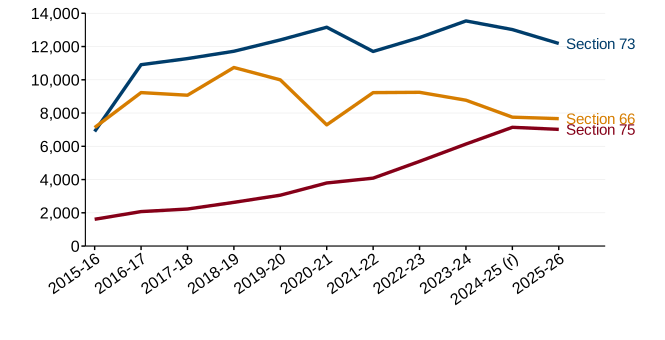
Description of figure 1: a line graph showing that the number of households assessed under Sections 66, 73 and 75 of the Housing (Wales) Act 2014 decreased in 2025 to 2026 compared with the previous year. Assessment outcomes under Sections 66 and 75 fell slightly, while outcomes under Section 73 showed a larger decrease.
Source: Statutory homelessness data collection from local authorities
Homelessness prevention
In its broadest terms, ‘homelessness prevention’ is where a local authority takes positive action to provide housing assistance to someone who the authority considers to be threatened with homelessness within 56 days. Prevention work can also be undertaken before meeting the statutory definition but would not then be recorded against Section 66 prevention outcomes.
Under the current legislation (introduced from 2015), the outcome of a duty is recorded at each stage following the Section 62 (application for assistance with housing) assessment.
It is possible for up to 3 different outcomes to be recorded for each individual household.
The assessment process will not always result in a household being found to be eligible for assistance nor will it always result in a household being found to be either threatened with homelessness within 56 days or homeless.
During 2025 to 2026, following a Section 62 assessment, 384 households were assessed as ineligible, and in a further 5,358 cases the household was assessed as being neither homeless nor threatened with homelessness.
During 2025 to 2026, 7,662 households in Wales were eligible and assessed as being threatened with homelessness within 56 days. This is 1% lower than the 7,752 (r) households recorded the previous year.
Figure 2: outcomes of households threatened with homelessness (Section 66), April 2025 to March 2026 [Note 1]
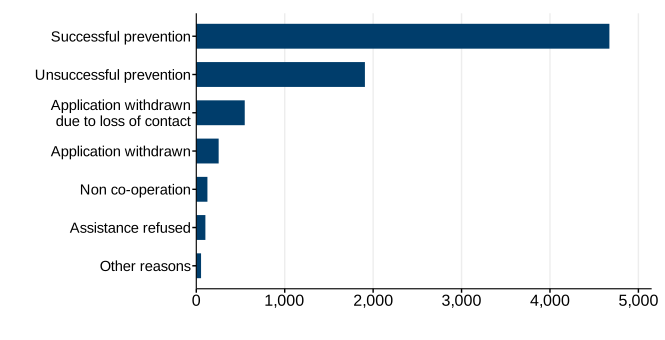
Description of figure 2: a bar chart showing that successful prevention was the most common outcome for eligible households threatened with homelessness (Section 66), during 2025 to 2026, followed by unsuccessful prevention.
Source: Statutory homelessness data collection from local authorities
Households for which assistance has been provided by outcome and household type (StatsWales)
[Note 1] Homelessness prevention is where a local authority takes positive action to provide housing assistance to someone who the authority considers to be threatened with homelessness within 56 days.
During 2025 to 2026, homelessness was successfully prevented for at least 6 months in 61% of cases (4,671 households). This is slightly higher than in both 2024 to 2025 (59% (r)) and 2023 to 2024 (58%). However, it remains below the levels between 2017 to 2018 and 2021 to 2022, when homelessness was successful prevented in around two thirds of cases (66%).
In 25% of cases (1,908 households), prevention of homelessness for at least 6 months was unsuccessful. In these cases, the applying households were discharged and became statutorily homeless. Such households may be owed a duty under Section 73. The proportion of unsuccessful prevention cases during the previous year was also 25% (r).
For the remaining 1,083 households (14%) threatened with homelessness during 2025 to 2026, the prevention duty was brought to an end. The main reason for this was the application being withdrawn (including through loss of contact) which accounted for 10% of all households assessed, slightly less than in the previous year (12% (r)).
Figures 3 and 4 below display the rate of households threatened with homelessness and successfully prevented from homelessness at an individual local authority level.
Figure 3: households found to be eligible and threatened with homelessness (Section 66), April 2025 to March 2026, rate per 10,000 households [Note 1]
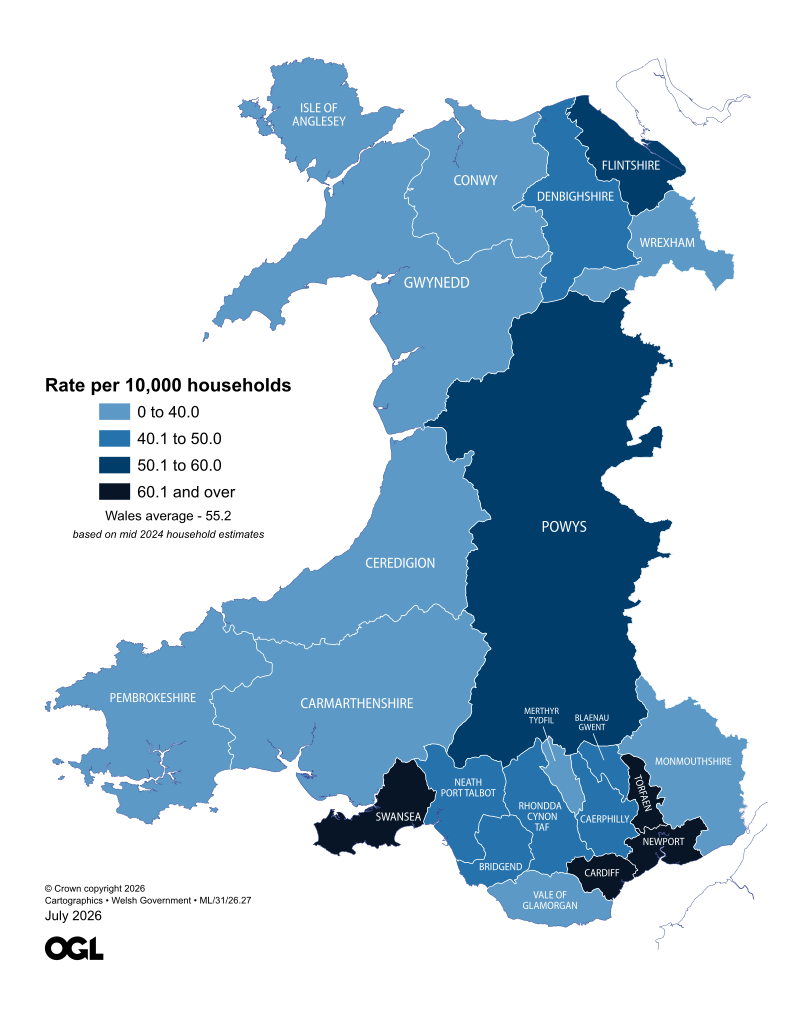
Description of figure 3: a map showing that the areas with the highest rate of households found to be eligible and threatened with homelessness (Section 66) per 10,000 households during 2025 to 2026 were in south Wales.
Source: Statutory homelessness data collection from local authorities
[Note 1] Based on 2024 household estimates (StatsWales)
In Wales, 55.2 households per 10,000 were found to be eligible and threatened with homelessness within 56 days in 2025 to 2026. This is slightly lower than the rate of 56.3 per 10,000 households (r) reported the previous year.
During 2025 to 2026, Cardiff reported the highest number of households assessed as threatened with homelessness within 56 days at 1,377 households. When adjusted for the number of households in each local authority, Newport reported the highest rate, at 105.8 per 10,000 households. This is greater than the highest rate reported the previous year, when Swansea reported 102.6 per 10,000 households.
Comparatively, Gwynedd reported both the lowest number of households assessed as threatened with homelessness (69 households) and the lowest rate, at 13.0 per 10,000 households.
Figure 4: households successfully prevented from homelessness (Section 66), April 2025 to March 2026, rate per 10,000 households [Note 1]
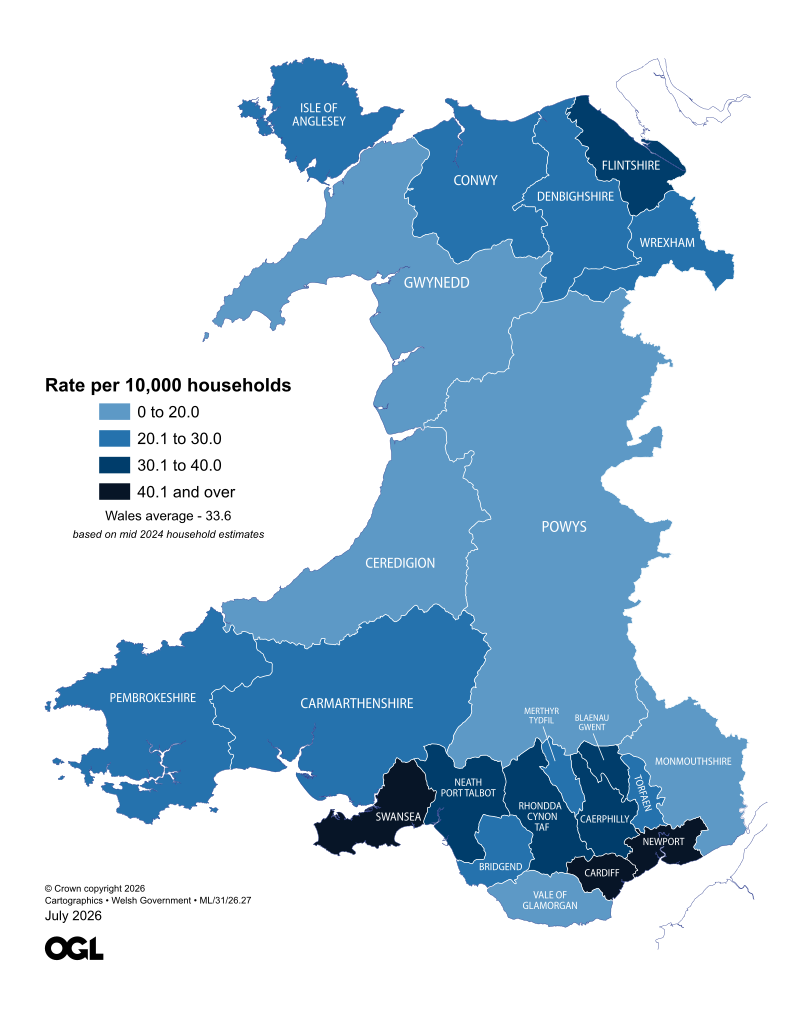
Description of figure 4: a map showing that the areas with the highest rate of households successfully prevented from homelessness per 10,000 households during 2025 to 2026 were in south Wales.
Source: Statutory homelessness data collection from local authorities
[Note 1] Based on 2024 household estimates (StatsWales)
The number of households for whom homelessness was successfully prevented for at least 6 months, as a rate per 10,000 households is a Well Being of Future Generations National Indicator. During 2025 to 2026, the rate for Wales was 33.6 per 10,000 households, which is very similar to the rate reported the previous year, 33.4 per 10,000 households (r).
During 2025 to 2026, Cardiff recorded the highest number of households for whom homelessness was successfully prevented for at least 6 months (984) and the highest rate of successful prevention (62.4 per 10,000 households).
Gwynedd reported the lowest number of successful preventions (36) as well as the lowest rate (6.8 per 10,000 households).
During 2025 to 2026, 16 of the 22 local authorities in Wales reported rates of successful prevention below the Wales average of 33.6 per 10,000 households.
Relief of homelessness
Relief of homelessness under duty to help secure accommodation (Section 73)
The Housing (Wales) Act 2014 (UK legislation) introduced a duty for all local authorities in Wales to help secure suitable accommodation for anyone experiencing homelessness. Following notification that an applicant is homeless, the local authority will be under a duty (Section 73) to take reasonable steps to help to secure accommodation.
Further information is available in the Homelessness Code of Guidance (revised 2016).
Figure 5: outcomes of homeless households owed a duty to help to secure accommodation (Section 73), April 2025 to March 2026 [Note 1]
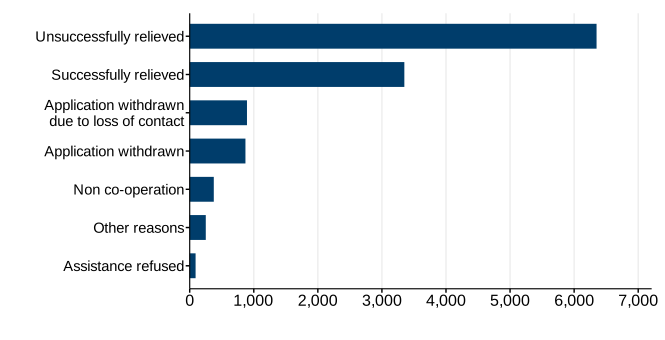
Description of figure 5: a bar chart showing that unsuccessfully relieved was the most common outcome for households assessed as homeless and owed a duty to help to secure accommodation (Section 73) during 2025 to 2026.
Source: Statutory homelessness data collection from local authorities
Households for which assistance has been provided by outcome and household type (StatsWales)
[Note 1] Following notification that an applicant is homeless, the local authority will be under a duty (Section 73) to take reasonable steps to help to secure accommodation.
During 2025 to 2026, 12,183 households were assessed as homeless and owed a duty to help to secure accommodation under Section 73 of the Housing (Wales) Act 2014 (UK legislation). This was a decrease of 6% compared to the previous year. 27% (3,351 households) of those assessed as homeless during 2025 to 2026 were successfully relieved of their homelessness and helped to secure accommodation that was likely to last for 6 months following intervention by the local authority. This is an increase of 2 percentage points compared to the previous year.
In a further 52% of cases (6,351 households), homelessness was unsuccessfully relieved and the duty was ended. This was a decrease compared to the previous year, when it was 55%. The unsuccessful cases were reviewed to establish whether the household was eligible, unintentionally homelessness and in priority need.
For the remaining 2,484 households assessed as homeless during 2025 to 2026, the Section 73 duty was brought to an end. The main reason reported for the Section 73 duty ending was withdrawal of the application (including withdrawn due to loss of contact) which accounted for 14% of all households assessed as homelessness, the same proportion as the previous year.
Non co-operation was the reason given for 3% of cases.
Figure 6: households assessed as homeless (Section 73), April 2025 and March 2026, rate per 10,000 households [Note 1]
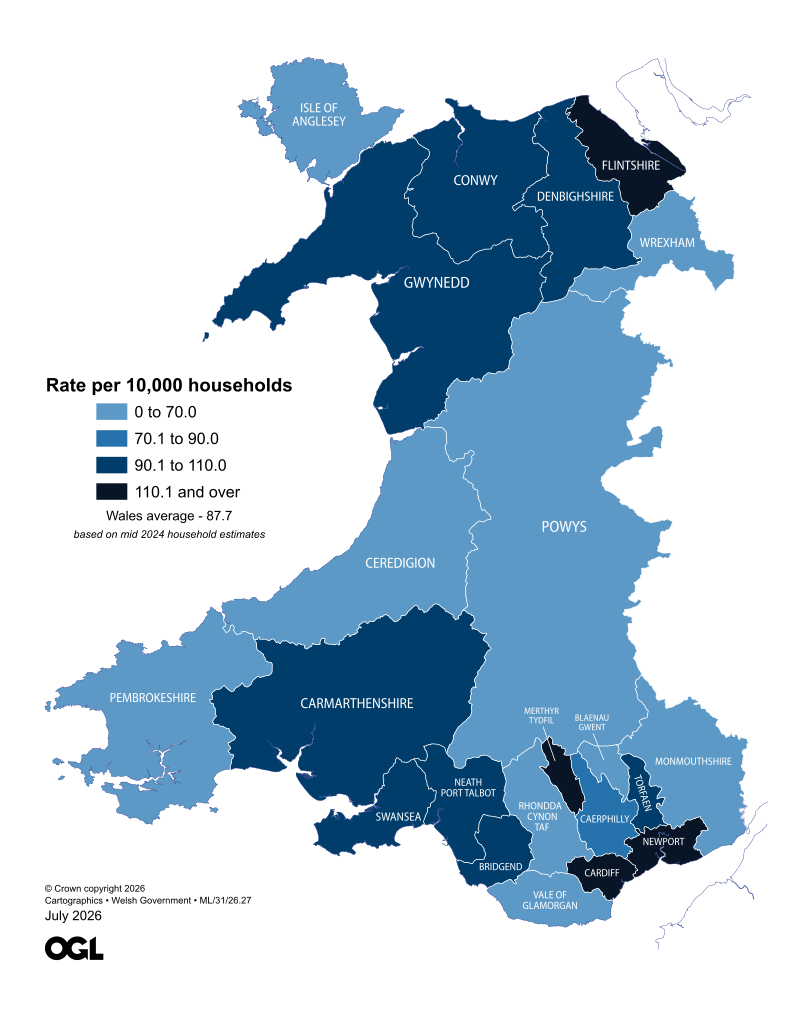
Description of figure 6: a map showing that the areas with the highest rate of households assessed as homeless per 10,000 households during 2025 to 2026 were in north Wales and south Wales.
Source: Statutory homelessness data collection from local authorities
[Note 1] Based on 2024 household estimates (StatsWales)
In Wales, 87.7 households per 10,000 were assessed as homeless in 2025 to 2026, a decrease on the rate of 94.5 per 10,000 households (r) reported the previous year.
Cardiff reported the highest number of households assessed as homeless under Section 73 at 1,791 households. However, the local authority with the highest rate of households assessed as homeless was Merthyr Tydfil at 131.7 per 10,000 households.
Blaenau Gwent reported the lowest number of households assessed as homeless (174 households) whilst Monmouthshire reported the lowest rate (45.0 per 10,000 households).
Relief of homelessness for eligible households unintentionally homeless and in priority need (Section 75)
Under Section 75 of the Housing (Wales) Act 2014 (UK legislation), where households were owed a duty under Section 73 because they were homeless and this duty has ended, the assessment is reviewed.
If the household is homeless, has a priority need and is unintentionally homeless, the local authority will be under a duty (Section 75) to secure suitable settled accommodation. This successful relief of homelessness is sometimes referred to as ‘positive discharge’ of the final duty.
Further information is available in the Homelessness Code of Guidance (revised 2016).
Figure 7: outcomes for households unintentionally homeless and in priority need (Section 75), April 2025 to March 2026 [Note 1]
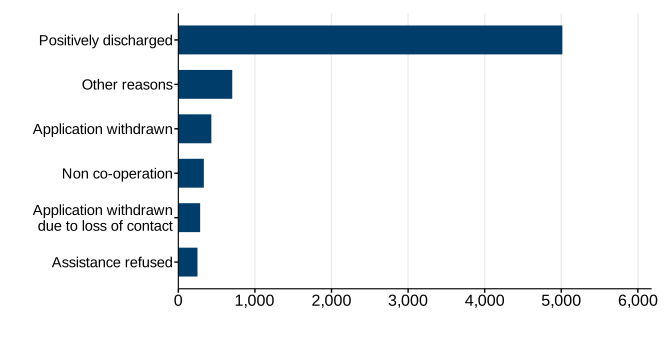
Description of figure 7: a bar chart showing that positively discharged was the most common outcome for homeless households owed a duty under Section 75 during 2025 to 2026.
Source: Statutory homelessness data collection from local authorities
Households for which assistance has been provided by outcome and household type (StatsWales)
[Note 1] If the household is homeless, has a priority need and is unintentionally homeless, the local authority will be under a duty to secure suitable accommodation.
During 2025 to 2026, 7,017 households were assessed as eligible, unintentionally homeless and in priority need and were therefore owed a duty for accommodation to be secured under Section 75 of the Housing (Wales) Act 2014 (UK legislation). This is a decrease of 2% on the 7,143 (r) households recorded the previous year, which saw the highest number since the introduction of the current legislation in April 2015.
Households that were eligible, unintentionally homeless and in priority need, accepted an offer of settled suitable accommodation in 71% of cases (5,013 households). For the remaining 2,004 households assessed as unintentionally homeless and in priority need during 2025 to 2026, the final duty was brought to an end.
‘Assistance refused’ was given as the reason for the Section 75 duty ending in 4% of cases, while ‘application withdrawn’ (including application withdrawn due to loss of contact) accounted for 10% of cases. Other reasons accounted for 10%. Non co-operation was the reason given for 5% of cases, the same as the previous year.
Other outcomes
Whilst assistance is provided for all homeless households as part of the assessment process, this does not always result in accommodation being found. In 153 cases, the household was found to be homeless but not in priority need, whilst in a further 108 cases the homeless household was assessed as being eligible and in priority need but intentionally so.
The data are available on the StatsWales website: Households for which assistance has been provided by outcome and household type.
Positive actions taken to prevent or relieve homelessness
Actions taken
Local authorities were asked to provide information on the types of positive action taken to both prevent homelessness for those assessed as threatened with homelessness within 56 days and to relieve homelessness for those assessed as homeless under Section 73. Prevention could result in the household either remaining within their existing home or moving to alternative accommodation. Where more than one action contributed to preventing a household becoming homeless local authorities were asked to only record the most significant action taken.
Figure 8 shows the most significant actions taken during 2025 to 2026 to prevent homelessness occurring and allow households to remain within their existing home.
Figure 8: percentage breakdown of significant actions taken to successfully prevent homelessness and enable the household to remain in their existing home, April 2025 to March 2026 [Note 1] [Note 2]
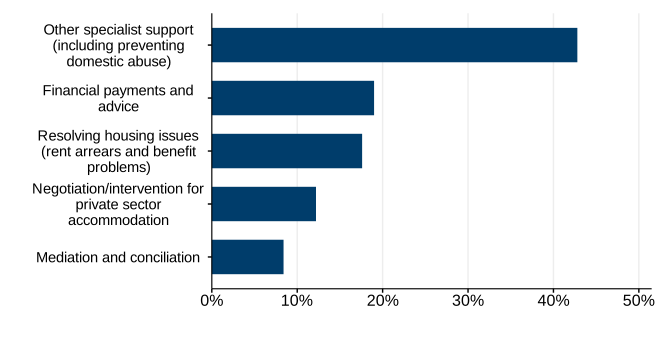
Description of figure 8: a bar chart indicating that in almost 45% of cases, other specialist support (including preventing domestic abuse) was the significant action taken in successfully preventing homelessness and enabling the household to remain in their existing home. This was followed by financial payments and advice.
Source: Statutory homelessness data collection from local authorities
[Note 1] Under Section 66 of the Housing (Wales) Act 2014.
[Note 2] Successfully prevented refers to the number of households for whom homelessness was successfully prevented for at least 6 months as a percentage of all households assessed as being threatened with homelessness within 56 days.
All cases where positive action succeeded in preventing/relieving homelessness (StatsWales)
During 2025 to 2026, 30% of households (1,389) that were successfully prevented from becoming homeless were able to remain in their existing home.
The main action taken to enable households to remain in their existing home was the provision of other specialist support (including the prevention of domestic abuse), which accounted for 43% of all successful preventions.
Financial payments and advice accounted for 19% of cases and resolving housing issues (rent arrears and benefit problems) accounted for 18% of cases.
Negotiation and intervention for private sector accommodation was used to help a further 12% of the 1,389 households remain at home, while mediation and conciliation work helped the remaining 8%.
Alternative accommodation secured to prevent and relieve homelessness
During 2025 to 2026, 3,282 households were successfully prevented from becoming homeless under Section 66 due to local authority assistance in securing alternative accommodation. This represents 70% of the total 4,671 cases of successful prevention during the year.
During 2025 to 2026, 3,351 homeless households were successfully relieved of homelessness under Section 73 due to local authority assistance in securing alternative accommodation. This represents 27% of the total 12,183 households assessed as homeless during the year.
Figure 9: percentage breakdown of alternative accommodation secured to prevent (Section 66) and relieve (Section 73) homelessness, April 2025 to March 2026 [Note 1] [Note 2]
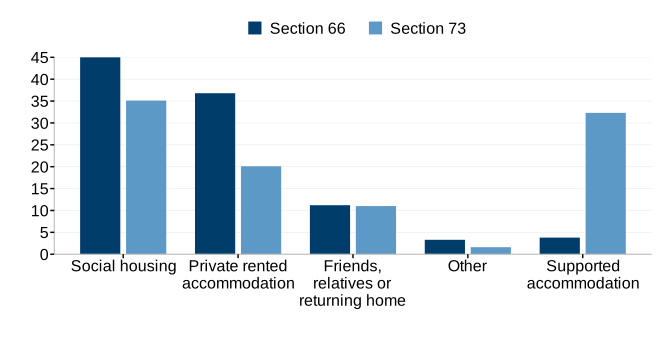
Description of figure 9: a bar chart showing that social housing was the main accommodation secured to both prevent and relieve homelessness under Section 66 and Section 73.
Source: Statutory homelessness data collection from local authorities
[Note 1] Successfully prevented refers to the number of households for whom homelessness was successfully prevented for at least 6 months as a percentage of all households assessed as being threatened with homelessness within 56 days.
[Note 2] Successfully relieved refers to the number of households assessed as being homeless under Section 73 of the Housing (Wales) Act 2014 who were helped to secure accommodation that was likely to last for 6 months.
All cases where positive action succeeded in preventing/relieving homelessness (StatsWales)
During 2025 to 2026, the main type of alternative accommodation obtained to both prevent and relieve homelessness was social housing (45% and 35% respectively). Private rented accommodation was the second main type of accommodation used to prevent homelessness (37%), whilst supported accommodation was the second next main type used to relieve homelessness (32%).
Lead applicant characteristics: gender, age and ethnicity
Households threatened with homelessness
Figure 10: households successfully prevented from homelessness (Section 66) by lead applicant characteristic, April 2025 to March 2026 [Note 1]
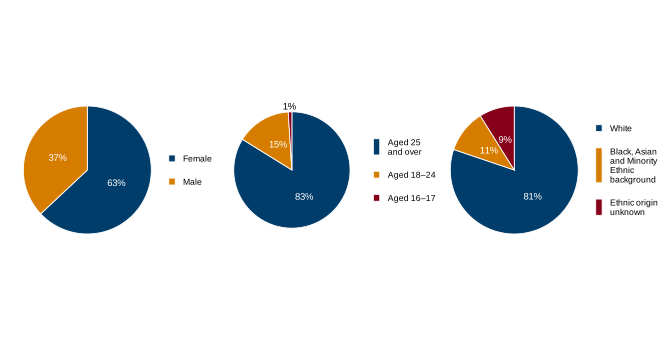
Description of figure 10: pie charts showing the breakdown of households successfully prevented from homelessness by sex, age and ethnicity of lead applicant.
Source: Statutory homelessness data collection from local authorities
Households for which assistance has been provided by outcome, age and gender (StatsWales)
[Note 1] Due to rounding, the percentage total does not equal 100
In 63% of cases the lead applicant was female, and the majority of applicants were aged 25 and over (83%). 81% were from a white background, with ethnic minorities accounting for 11% and applicant ethnicity unknown in 9% of cases.
The 2021 Census indicated that 94% of usual residents in Wales identified as white, whilst 6% identified as ethnic minority/other ethnic groups.
During 2025 to 2026 the percentage split between age and ethnic background of lead applicant was similar for overall presentations and those that were successfully prevented from becoming homeless under Section 66. A small disparity in the sex of lead applicants was observed between overall presentations and cases where homelessness was successfully prevented, with 41% of applicants being male and 59% female.
Households relieved of homelessness
Figure 11: households relieved of homelessness (Section 73) by lead applicant characteristic, April 2025 to March 2026
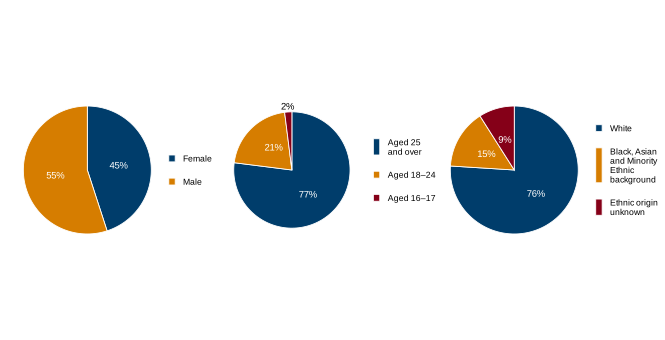
Description of figure 11: pie charts showing the breakdown of households successfully relieved of homelessness by sex, age and ethnicity of lead applicant.
Source: Statutory homelessness data collection from local authorities
Households for which assistance has been provided by outcome, age and gender (StatsWales)
In 55% of cases the lead applicant was male, and the majority of applicants were aged 25 and over (77%). 76% were from a white background, with ethnic minorities accounting for 15% and applicant ethnicity unknown in 9% of cases.
During 2025 to 2026 the percentage split between age and ethnic background of lead applicant was similar for overall presentations and those that were successfully relieved of homelessness under Section 73. A small disparity in the sex of lead applicants was observed between overall presentations and those that were successfully relieved of homelessness, with 60% of applicants being male and 40% female.
Households successfully discharged from homelessness
Figure 12: households successfully discharged from homelessness (Section 75) by lead applicant characteristic, April 2025 to March 2026 [Note 1]
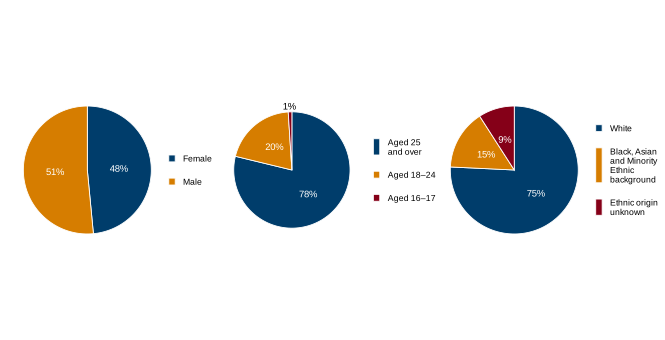
Description of figure 12: pie charts showing the breakdown of households successfully discharged of homelessness by sex, age and ethnicity of lead applicant.
Source: Statutory homelessness data collection from local authorities
Households for which assistance has been provided by outcome, age and gender (StatsWales)
[Note 1] Due to rounding, the percentage total does not equal 100
In 51% of cases the lead applicant was male, and the majority of applicants were aged 25 and over (78%). 75% were from a white background, with ethnic minorities accounting for a further 15%, and 9% of applicant’s ethnicity being unknown.
During 2025 to 2026 the percentage split between age and ethnic background of lead applicant was similar for overall presentations and those that were successfully discharged from homelessness under Section 75. A small disparity in the sex of lead applicants was observed between overall presentations and those that were successfully discharged from homelessness, with 57% of applicants being male and 43% female.
Main reason for households being threatened with homelessness or being homeless
This section of the release looks at the different reasons why households are either threatened with homelessness within 56 days or have become homeless. More detailed information including a breakdown by individual local authority is available on StatsWales.
Threatened with homelessness (Section 66)
During 2025 to 2026, the loss of rented or tied accommodation was given as the main reason for households being assessed as threatened with homelessness within 56 days, accounting for 32% of all cases.
The second most common reason was a parent no longer willing or able to accommodate, accounting for 15% of all cases.
Both the breakdown of a relationship with a partner and other relatives or friends no longer willing or able to accommodate were the main reason given in 13% of cases and rent or mortgage arrears the main reason in 11% of cases.
Homeless (Section 73)
During 2025 to 2026, the main reason given for homelessness was the breakdown of a relationship with a partner, accounting for 20% of all cases. A parent no longer willing or able to accommodate was given as the main reason for the loss of home in 16% of all Section 73 cases, and other relatives or friends no longer willing or able to accommodate in a further 15%.
Both the loss of rented accommodation and prison leaver were the main reason recorded in 14% of cases during 2025 to 2026, and 8% of cases were due to other (including homeless in emergency, returned from abroad, sleeping rough or in hostel) reasons.
Unintentionally homeless and in priority need (Section 75)
Similarly to Section 73 cases, the most commonly recorded reason for homelessness during 2025 to 2026 was the breakdown of a relationship with a partner, accounting for 20% of all cases. Each of parent no longer willing or able to accommodate, loss of rented or tied accommodation and other relatives or friends no longer willing or able to accommodate accounted for 16% of all cases.
Other (including homeless in emergency, returned from abroad, sleeping rough or in hostel) reasons accounted for 7% of cases during 2025 to 2026, with prison leaver accounting for 9%.
Households in temporary accommodation
This section of the release covers all homeless households that were in temporary accommodation at the end of March 2026. These figures do not include all households placed in temporary accommodation throughout the year. It is a snapshot and includes only those households who were in temporary accommodation on the last day of the period, 31 March 2026.
At the start of the COVID-19 pandemic in March 2020, the previous Welsh Government put in place an emergency homelessness response. This response involved additional funding, together with both statutory and non-statutory guidance to ensure that no-one was left without accommodation, together with the support they need, to stay safe during the pandemic.
This ‘no-one left out’ approach resulted in greater numbers of people being supported in temporary accommodation. In 2022, the previous Welsh Government also introduced legislation to add an eleventh priority need category for those who are ‘street homeless’ to ensure no-one in Wales is forced to sleep rough. This ensured the continuation of the ‘no-one left out’ approach. It is likely that the differences seen in the types of provision used for temporary accommodation are a result of these changes to services.
For further information please see the previous Welsh Government’s Ending homelessness in Wales action plan.
Figure 13: number of households in temporary accommodation as at 31 March, 2016 to 2026
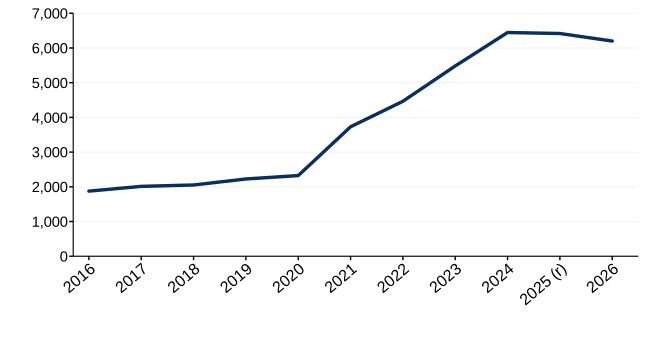
Description of figure 13: a line chart showing that the number of households in temporary accommodation increased considerably between March 2020 and March 2024, before declining slightly between March 2024 and March 2026.
Prior to the COVID-19 pandemic, approximately 2,000 households were in temporary accommodation at the end of March each year. Between March 2020 and March 2024, the number of households in temporary accommodation increased considerably, from 2,325 households to 6,447. At 31 March 2026, 6,201 households were in temporary accommodation, a 3% decrease on the 6,417 (r) at the end of March 2025.
Figure 14: number of homeless households in temporary accommodation as at 31 March 2026, rate per 10,000 households [Note 1]
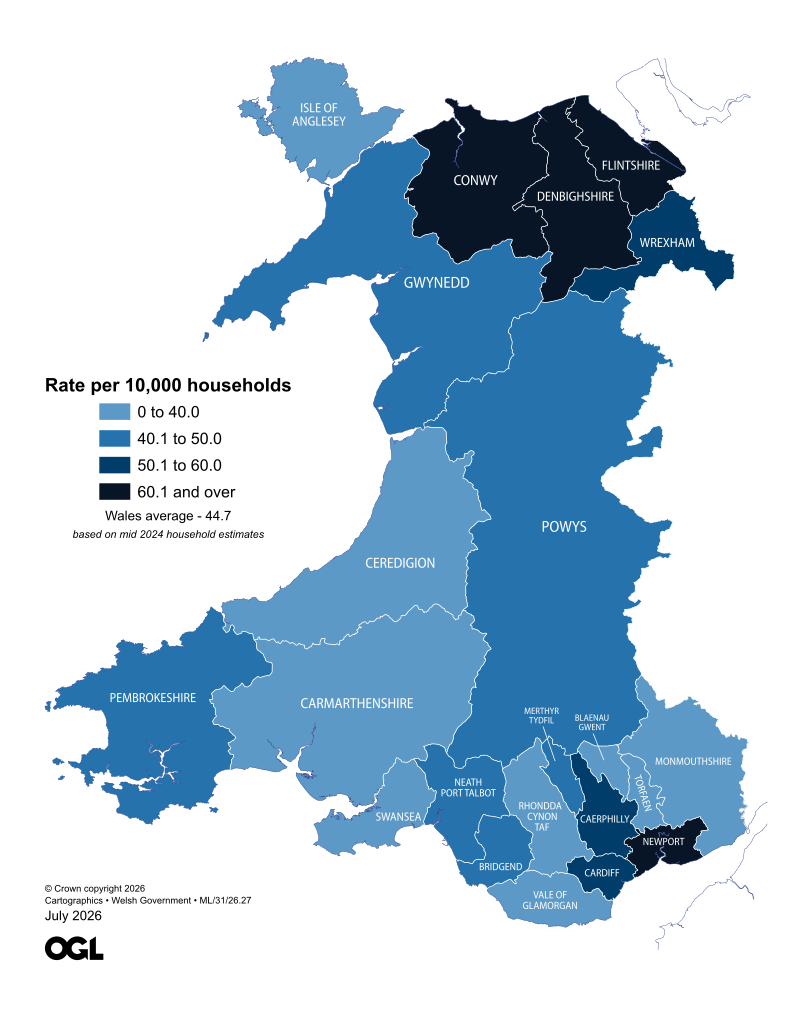
Description of figure 14: a map showing that the areas with the highest rate of homeless households in temporary accommodation per 10,000 households during 2025 to 2026 were in north Wales, as well as Newport, Cardiff and Caerphilly in south east Wales.
Source: Statutory homelessness data collection from local authorities
[Note 1] Based on 2024 household estimates (StatsWales)
Households accommodated temporarily by accommodation type and household type (StatsWales)
Cardiff reported the highest number of homeless households in temporary accommodation (816) followed by Newport (564) who reported the highest rate, at 80.9 per 10,000 households.
Blaenau Gwent reported the lowest number of households in temporary accommodation (60) while Rhondda Cynon Taf reported the lowest rate, at 12.8 per 10,000 households.
The number of households in temporary accommodation decreased in 12 of the 22 local authorities between 31 March 2025 and 31 March 2026. In all other local authorities, the number of households in temporary accommodation remained the same or increased.
Figure 15: households in temporary accommodation, as at 31 March 2026, by type [Note 1] [Note 2] [Note 3] [Note 4]
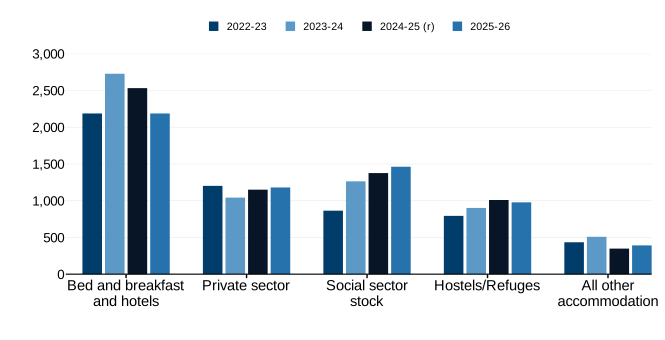
Description of figure 15: a bar chart showing that, compared to last year, the number of households in temporary accommodation has increased in the private sector and social sector stock but decreased in bed and breakfast and hotels, and hostels/refuges.
Source: Statutory homelessness data collection from local authorities
Households accommodated temporarily by accommodation type and household type (StatsWales)
[Note 1] Under the Housing (Wales) Act 2014.
[Note 2] Private sector includes households placed directly with a private sector landlord, private sector accommodation leased by local authorities and private sector accommodation leased by registered social landlords.
[Note 3] Social sector stock includes local authority stock and registered social landlord stock.
[Note 4] Other accommodation includes homeless at home.
At 31 March 2026, bed and breakfast and hotel accommodation continued to be the main type of temporary accommodation used, with 2,187 households (35%). This was a decrease of 345 households compared to the 2,532 (r) households in bed and breakfast and hotels at 31 March 2025.
Compared to 31 March 2025, private sector, social sector stock and other accommodation saw an increase in the number of households temporarily accommodated, while the number of households in hostels/refuges decreased.
20% of all households in temporary accommodation at 31 March 2026 were families with children, a slight decrease from the proportion at 31 March 2025 (23% (r)) and much lower than the proportion prior to the pandemic, when nearly 40% of households in temporary accommodation were families with children.
At 31 March 2026, local authority stock housed the greatest proportion of families with children, at 36% of all families with children housed in temporary accommodation, an increase of 1 percentage point on 31 March 2025. 17% of those families with children were housed in social landlord stock and 10% were housed in bed and breakfasts and hotels.
74% of households in temporary accommodation at 31 March 2026 were single person households, an increase of 4 percentage points on 31 March 2025. Of those single person households, 42% were in bed and breakfast and hotels, with a further 16% in hostels.
Of the 6,201 households in temporary accommodation at 31 March 2026, 3,591 had been in temporary accommodation for under 6 months. 1,365 households had been in temporary accommodation for 6 to 12 months, while the remaining 1,245 households had been in temporary accommodation for over 12 months. 17% of households accommodated for under 6 months were families with children. A slightly larger proportion of families with children was recorded for households accommodated for 6 to 12 months and over 12 months (23% and 24% respectively).
Further breakdowns on the length of time spent in temporary accommodation are available on the StatsWales website: Households accommodated temporarily by accommodation type, household type and length of stay.
Households leaving temporary accommodation - discharge of duty under Section 75
During 2025 to 2026, 7,017 households left temporary accommodation after discharge of duty under Section 75. Most of these (61%) accepted an offer of accommodation through the allocation scheme (part VI 1996 Housing Act).
A further 8% (549 households) withdrew their application and 8% voluntarily ceased to occupy accommodation (534 households). 7% (462 households) became homeless intentionally from accommodation provided and another 7% (495 households) accepted a private sector offer.
Further breakdowns are available on the StatsWales website: Reasons for discharge of duty under Section 75 during the year.
Placements of single person households: 16- and 17-year-olds and care leavers: 18- to 20-year-olds in bed and breakfast and hotel accommodation
Since April 2016, information has been collected centrally covering the placement of 16- and 17-year-old single person households and 18- to 20-year-old (up to 21st birthday) care leavers into temporary bed and breakfast and hotels under either Homelessness or Social Services legislation. This information differs to the statistics shown above as it covers every placement into bed and breakfast and hotels during the year, not only those households that were in temporary bed and breakfast accommodation and hotels at the end of the year.
The information is collected to establish the number of placements made by local authorities into bed and breakfast and hotel accommodation to meet the immediate housing needs of all single person households aged 16 and 17, and care leavers aged 18 to 20 (up to 21st birthday).
During 2025 to 2026, 16- and 17-year-old single person households were placed in temporary bed and breakfast and hotel accommodation under the current Homelessness legislation on 102 occasions, and on a further 69 occasions under the Children’s Social Services legislation.
Care leavers aged 18 to 20 years old were placed into temporary bed and breakfast and hotel accommodation under the current Homelessness legislation on 315 occasions. This has been rising since the start of the COVID-19 pandemic.
The data are available on the StatsWales website: Total placements in bed and breakfasts during the quarter, by length of stay and provision.
Glossary
Bed and breakfast and hotels
This includes privately owned or managed hotels/guest houses with some shared facilities. It does not include hotel annexes consisting of self-contained units of accommodation where meals are not provided – these are classified as private sector accommodation.
Ethnic categories
White
- Welsh / English / Scottish / Northern Irish / British
- Irish Gypsy or Irish Traveller
- Any other white background
Mixed / multiple ethnic
- White and Black Caribbean
- White and Black African
- White and Asian
- Any other mixed / multiple ethnic background
Asian or Asian British
- Indian
- Pakistani
- Bangladeshi
- Chinese
- Any other Asian background
Black / African / Caribbean or Black British
- Caribbean
- African
- Any other black / African / Caribbean background
Other ethnic group
- Arab
- Any other ethnic group
Current property unaffordable
The category 'current property unaffordable' includes cases where a person has become homeless as a result of not being able to afford the rent or mortgage on their home and have acted before rent or mortgage arrears are incurred and eviction or repossession notices have been issued.
Current property unsuitable
The category 'current property unsuitable' should include cases where the home is no longer physically suitable. This will include for example:
- persons returning from hospital who can no longer live in the property until it has been adapted
- environmental issues relating to the property preventing it from being occupied until work has been carried out
- overcrowding, for example, a newborn baby or returning family member
Eligibility
Housing authorities will need to satisfy themselves that applicants are eligible before providing housing assistance. The provisions on eligibility are complex, and housing authorities will need to ensure that they have procedures in place to carry out appropriate checks on housing applicants. Ineligible households will include households not eligible for assistance by virtue of Schedule 2 of the Housing (Wales) Act 2014 (UK legislation) and the Allocation of Housing and Homelessness (Eligibility) (Wales) Regulations 2014.
Homelessness prevention
In its broadest terms, ‘homelessness prevention’ is where a local authority takes positive action to provide housing assistance to someone who the authority considers to be threatened with homelessness within 56 days. Prevention work can be undertaken before meeting the statutory definition but would not be recorded against Section 66 prevention outcomes.
A case is recorded as homelessness prevention when a local authority takes positive action to provide housing assistance to someone who the authority is satisfied is threatened with homelessness within 56 days and has been notified that the duty under Section 66 of the Housing (Wales) Act 2014 (UK legislation) applies to them. A case ceases to be classed as prevention if the household has become homeless. This only applies to those owed a duty under Section 66.
For positive action to be recorded as successful, the authority must be satisfied that the intervention is likely to result in homelessness being prevented for at least 6 months and the accommodation is suitable.
Homelessness relief
Positive action to prevent homelessness cannot be taken once the local authority is satisfied that someone is or has become homeless, for example, the authority has notified the person of a decision and owes a duty under Section 73 of the Housing (Wales) Act 2014 (UK legislation). Following notification that an applicant is homeless, the authority will be under a duty to take reasonable steps to help to secure accommodation. For positive action to be recorded as successful, the authority must be satisfied that the intervention is likely to result in homelessness being relieved for at least 6 months and the accommodation is suitable.
Following notification that a household is owed a duty under Section 73 of the legislation, it is the duty of the local authority to take reasonable steps to help that household to secure accommodation.
Under Section 75 of the Housing (Wales) Act 2014 (UK legislation) where households are no longer owed a duty under Section 73 (as a result of Section 74.2 or 74.3) but following review are found to fall within a priority need category and are unintentionally homeless, it is the duty of the local authority to secure suitable accommodation. The successful relief of homelessness under Section 75 is referred to as a ‘positive discharge’ and the local authority must secure suitable accommodation.
Homeless at home
Refers to any arrangements whereby a household remains in, or returns to, the accommodation from which they are being made homeless for a temporary period, or in other accommodation found by the applicant. It includes any households which moved from accommodation arranged by the local authority into this type of arrangement.
Hostels/refuges
Hostels include shared accommodation, owned or leased and managed by either a local authority, registered social landlord (housing association) or non-profit organisation, including reception centres and emergency units. Male refuges are included with hostels.
Legislation
Housing (Wales) Act 2014 (UK legislation)
The figures in this statistical release are based on Welsh local authorities’ actions under the homelessness provisions of the Housing Act (Wales) 2014 which became law in Wales on 17 September 2014 and included a number of changes to homelessness legislation aimed at reducing levels of homelessness, by placing its prevention at the centre of local authority duties to help people at risk. The legislation was introduced on 27 April 2015 and replaced the previous legislation, Part VII of the Housing Act 1996, which had come into force in January 1997. Further information on the homelessness legislation is available on the Welsh Government website.
Loss of rented/tied accommodation
Where the household has lost their accommodation that was rented for example if the landlord has given them notice. Tied accommodation is occupied as part of a job; if they lose their job, they will also lose the accommodation.
Priority need groups
The priority need categories are defined in Section 70 of the Housing Act 1996 and set out in the Homelessness Code of Guidance. The categories of priority need are:
- a pregnant woman
- a person with whom dependent children reside
- a person who is vulnerable as a result of old age, mental illness, physical disability or other special reason
- a person who is homeless or threatened with homelessness as a result of an emergency such as flood, fire or other disaster
- a care leaver aged 18 to 20
- a person at particular risk of sexual or financial exploitation, aged 18 to 20
- a 16- or 17-year-old
- a person fleeing domestic abuse or threatened domestic abuse
- a person homeless after leaving the armed forces
- a former prisoner who is vulnerable as a result of having served a custodial sentence
- a person who is street homeless
Where more than one priority need category applies the one category which was most crucial in determining priority need should be recorded.
Protected characteristics
The Public Sector Equality duties under the Equality Act 2010 exist to protect people from discrimination on the basis of ‘protected characteristics’. The Equality Act 2010 defines people’s protected characteristics for those using a service as:
- Disability
- Sex (gender)
- Gender reassignment (gender identity or transgender)
- Pregnancy and maternity
- Race
- Religion or belief
- Sexual orientation
- Age
These ‘protected characteristics’ are used in the statutory homelessness data collection.
Self-contained accommodation
This includes all temporary accommodation where the household has sole use of kitchen and bathroom facilities, including property held by local housing authorities, registered social landlords and private sector landlords. A distinction is made between this type of accommodation and accommodation where such facilities are shared with other households (i.e. bed and breakfast, hostels and women's refuges).
Temporary accommodation
Households in temporary accommodation (excluding those for whom a duty is owed, but no accommodation has been secured) on the last day of the period, as arranged by a local housing authority as a discharge of their statutory homelessness functions. In most cases, the authority is discharging a main homelessness duty to secure suitable accommodation until a settled home becomes available for the applicant and their household. However, the numbers also include households provided with accommodation pending a decision on their homelessness application, households pending a review or appeal to the county court of the decision on their case, or possible referral to another local authority, and households found to be intentionally homeless and in priority need who were being accommodated for such period as would give them a reasonable opportunity to find accommodation for themselves.
Quality and methodology information
This release provides summary information on statutory homelessness, which does not include persons sleeping rough.
Detailed information on data quality and methodology can be found in the Homelessness quality report.
Since August 2020, a monthly homelessness collection relating to individuals placed into temporary accommodation and rough sleepers has been collected from local authorities.
It is important to note the following differences between this statutory data collection and our monthly publications on homelessness accommodation provision and rough sleeping, and why the data from the publications shouldn’t be compared.
- Our collections on statutory homelessness capture data on the number of households, not individuals. This data relates to homelessness as defined by the Housing (Wales) Act 2014 (UK legislation).
- The monthly information relates to the number of individuals experiencing homelessness and being supported by local authorities into emergency accommodation or suitable long-term accommodation, as well as the estimates of persons sleeping rough.
In August 2024, the previous Welsh Government made the decision to cease the annual national rough sleeper count with immediate effect. Further details can be found in the Proposals to stop the annual national rough sleeper count: summary of responses.
In April 2026, Isle of Anglesey identified an issue with the recording of temporary accommodation data, whereby households accommodated in hostels and in bed and breakfasts (B&Bs) and hotels had been misclassified for several years. While the total number of households in temporary accommodation was unaffected, the breakdown by accommodation type was incorrect. This also affected the Wales-level figures for these breakdowns.
The recording issue has now been corrected, with revised classifications first reflected in the March 2026 data. Data prior to March 2026 have not been revised, resulting in a discontinuity in the time series from this point onwards. Between March 2025 and March 2026, the number of households in B&Bs and hotels decreased from 45 to 3, while the number in hostels increased from less than 3 to 36. While the recording correction is likely to have contributed substantially to these changes, the exact effect cannot be determined.
Legislative process
This release presents information on the outcomes following assessments made about households who apply for assistance with housing and the ending of duties by local authorities under Section 62 of the Housing (Wales) Act 2014 (UK legislation). It is possible for a single household to have up to 3 separate outcomes under this process depending on the results of the duty owed under the Act. A brief outline of the assessment process is shown in the flowchart below.
Figure 16: legislative process of the Housing (Wales) Act 2014 [Note 1]
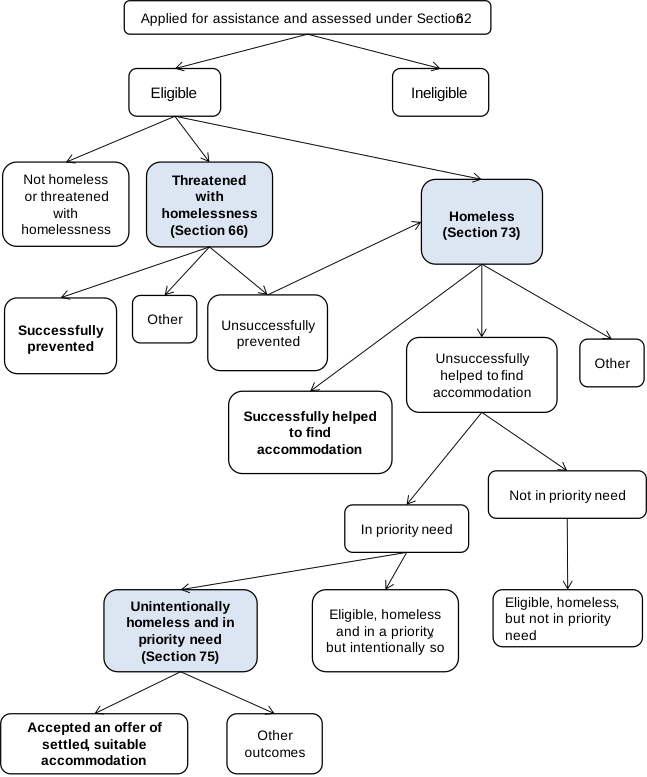
Description of figure 16: a flowchart displaying the legislative process of the Housing (Wales) Act 2014, including the 3 main homelessness duties through which assistance is provided: the Section 66 prevention duty, Section 73 relief duty and Section 75 main housing duty.
Source: Welsh Government
[Note 1] ‘Other’ includes assistance refused, non co-operation and other reasons.
Eligible households are those that may be considered for homelessness assistance. Ineligible households are excluded from statutory homelessness assistance due to immigration status as set out in Schedule 2 of the Housing (Wales) Act 2014 (UK legislation) and the Allocation of Housing and Homelessness (Eligibility) (Wales) Regulations 2014 (UK legislation).
Data estimation
The Vale of Glamorgan was not able to submit annual data for 2025 to 2026. Therefore, their figures from 2024 to 2025 have been used as an estimate.
Revisions
Revisions can arise from events such as late returns from a local authority or when a data supplier notifies the Welsh Government that they have submitted incorrect information and resubmits this. Occasionally, revisions can occur due to errors in our statistical processes. In these cases, a judgement is made as to whether the change is significant enough to publish a revised statistical release. Where changes are not deemed to be significant, these will be updated in the following year’s statistical release. However, minor amendments to the figures may be reflected in the StatsWales tables prior to the next release.
Revised data is marked with an (r) in the statistical release. We also follow the Welsh Government’s statistical revisions policy, details of which are available online.
Last year, Newport and Conwy could not submit annual data for 2024 to 2025. Therefore, their 2023 to 2024 figures were used as an estimate. This year, both Newport and Conwy have provided all 2024 to 2025 data that was previously missing along with this year’s annual return. As a result, 2024 to 2025 data has been revised for these local authorities, the regions they sit within and Wales as a whole. The scale of these revisions can be seen by comparing data in this release with data published in last year’s release, Homelessness: April 2024 to March 2025.
Official statistics status
All official statistics should show the standards of the Code of Practice for Statistics (UK Statistics Authority).
These are accredited official statistics (Office for Statistics Regulation (OSR)). They were independently reviewed by the OSR in March 2019. They comply with the standards of trustworthiness, quality and value in the Code of Practice for Statistics.
It is the Welsh Government’s responsibility to maintain compliance with the standards expected of accreditation. If we become concerned about whether these statistics are still meeting the appropriate standards, we will discuss any concerns with OSR promptly. Accreditation can be cancelled or suspended at any point when the highest standards are not maintained, and reinstated when standards are restored.
Accredited official statistics are called National Statistics in the Statistics and Registration Service Act 2007.
Statement of compliance with the Code of Practice for Statistics
Our statistical practice is regulated by the OSR. OSR sets the standards of trustworthiness, quality and value in the Code of Practice for Statistics (UK Statistics Authority) that all producers of official statistics should adhere to.
All of our statistics are produced and published in accordance with a number of statements and protocols to enhance trustworthiness, quality and value. These are set out in the Welsh Government’s Statement of Compliance.
These accredited official statistics (OSR) demonstrate the standards expected around trustworthiness, quality and public value in the following ways.
Trustworthiness
The data is collected directly from local authorities, from departments that are directly involved with those being assessed for homelessness and applying for temporary accommodation.
Quality
The published figures provided are compiled by professional analysts using the latest available data and applying methods using their professional judgement and analytical skillset. Statistics published by the Welsh Government adhere to the Statistical Quality Management Strategy which supplements the quality pillar of the Code of Practice for Statistics and the European Statistical System principles of quality for statistical outputs.
Data for the Welsh Government Statutory Homelessness Collection is collected by the Welsh Government directly from local authorities. Local authorities complete data collection forms based on data stored on their respective IT systems and return the completed forms to the Welsh Government via its secure web data transfer system.
Validation checks are performed by Welsh Government statisticians and queries referred to local authorities where necessary. The statistical release is then drafted, signed off by senior statisticians and published in line with the statement on confidentiality and data access which is informed by the trustworthiness pillar contained in the Code of Practice for Statistics.
Value
The purpose of the statistical release is to provide evidence for policy development and to inform the wider public about statutory homelessness across Wales. This statistical release also supports the previous Welsh Government’s long-term plan for homelessness: Homelessness Strategy.
The releases will be used to obtain timely and accurate information relating to homelessness prevention and relief, to complement the monthly homelessness accommodation provision and rough sleeping headline, which will be used in informing ministerial advice and decision making in the wider policy context.
You are welcome to contact us directly with any comments about how we meet these standards. Alternatively, you can contact OSR by emailing regulation@statistics.gov.uk or via the OSR website.
Individual level data collection
Currently, homelessness data in Wales is gathered through aggregate returns from local authorities, providing information on households applying for housing assistance and the outcomes of those applications. Work is ongoing to transition to a new data collection approach that will capture individual-level data on homelessness applicants. We believe this shift will significantly enhance our understanding of homelessness in Wales and ultimately support efforts to improve outcomes for vulnerable individuals.
Following the conclusion of a data pilot that took place at the end of 2025, with a small selection of local authorities, which sought to simulate the proposed quarterly data collections, it was agreed that the new data collection would not fully ‘go-live’ from the original April 2026 launch date. Instead, we will continue to pilot the new collection in phased stages between April 2026 and April 2027. This will give time to improve data quality, complete General Data Protection Regulation (GDPR) requirements, and further develop systems.
Well-being of Future Generations Act (WFG)
The Well-being of Future Generations Act 2015 is about improving the social, economic, environmental and cultural wellbeing of Wales. The Act puts in place seven wellbeing goals for Wales. These are for a more equal, prosperous, resilient, healthier and globally responsible Wales, with cohesive communities and a vibrant culture and thriving Welsh language. Under Section (10)(1) of the Act, the Welsh Ministers must (a) publish indicators (“national indicators”) that must be applied for the purpose of measuring progress towards the achievement of the wellbeing goals, and (b) lay a copy of the national indicators before Senedd Cymru. Under Section 10(8) of the Well-being of Future Generations Act, where the Welsh Ministers revise the national indicators, they must as soon as reasonably practicable (a) publish the indicators as revised and (b) lay a copy of them before the Senedd. These national indicators were laid before the Senedd in 2021. The indicators laid on 14 December 2021 replace the set laid on 16 March 2016.
Information on the indicators, along with narratives for each of the wellbeing goals and associated technical information is available in the Wellbeing of Wales report.
Further information on the Well-being of Future Generations (Wales) Act 2015.
The statistics included in this release includes one of the national indicators - the number of households successfully prevented from becoming homeless per 10,000 households (indicator 34).