Incidence of tuberculosis (TB) in cattle in Great Britain: March 2026
Data on tests, new incidents, restricted herds and cattle slaughtered with bovine TB for March 2026.
In this page
Introduction
The Department for Environment, Food and Rural Affairs (Defra) Statistics release, on which this statistical headline is based, includes statistics based on the Wales TB areas.
New TB herd incidents
Figure 1: new herd incidents in Wales, January 2008 to March 2026
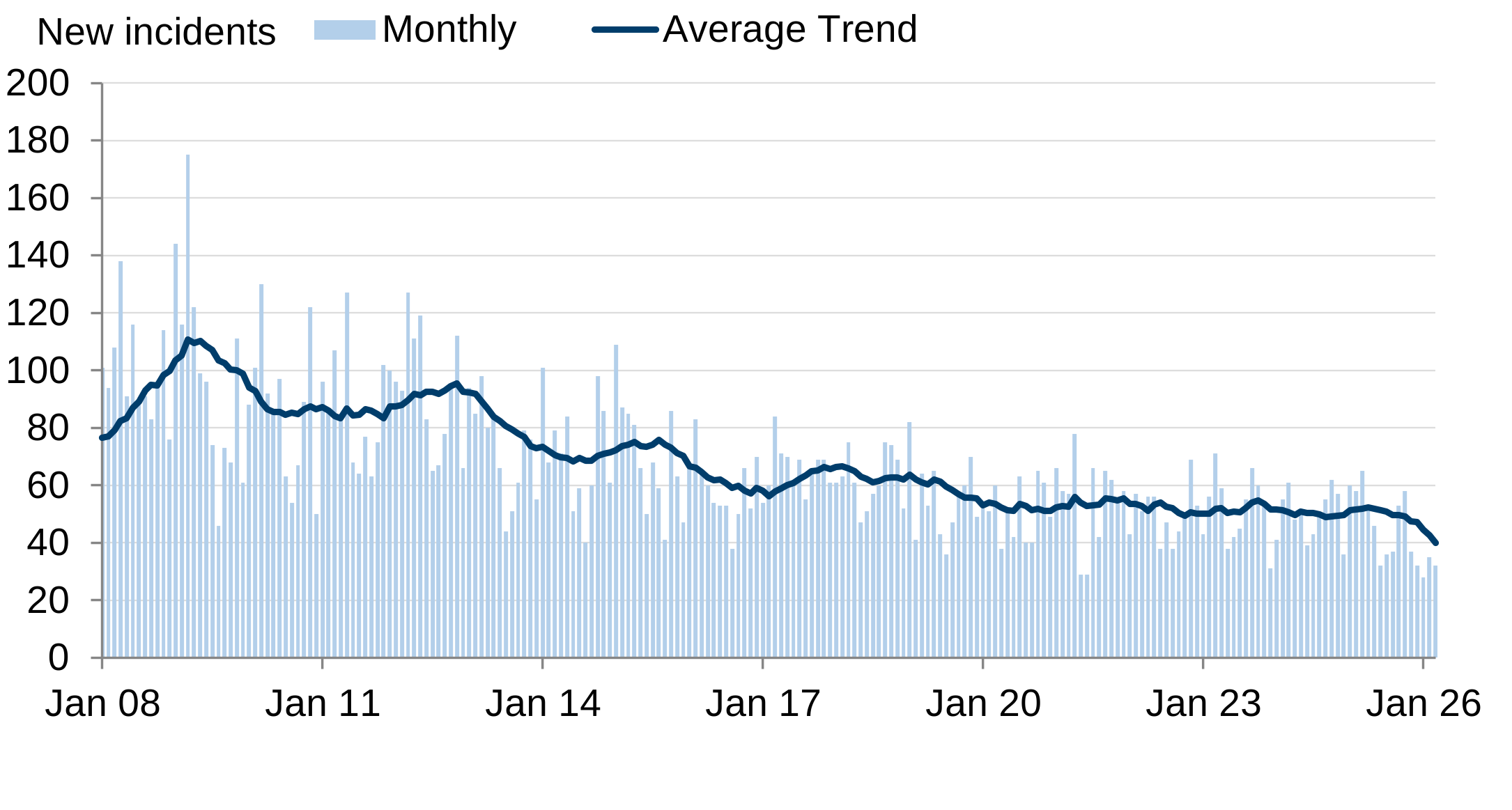
Description of figure 1: A line and bar chart showing the trend in new herd incidents in Wales since 2008. The light blue bars indicate the monthly number of new incidents while the dark line indicates the 12-month rolling average of new incidents.
There were 479 new incidents in the 12 months to March 2026, a decrease of 23.1% compared with the previous 12 months when there were 623 new incidents.
Source: Defra bovine TB statistics
Animals slaughtered for TB control
Figure 2: animals slaughtered in Wales, January 2008 to March 2026
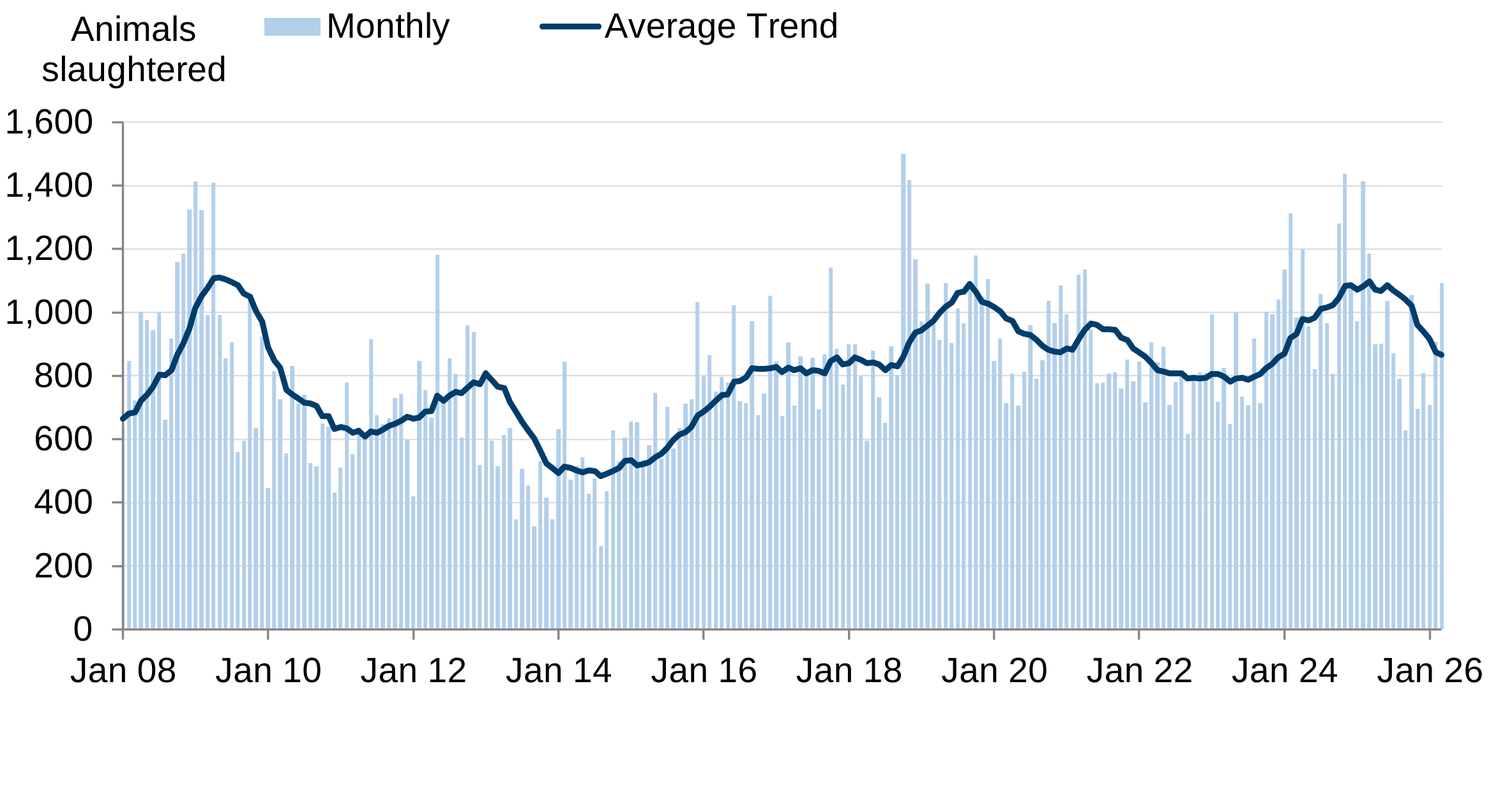
Description of figure 2: A line and bar chart showing the trend in animals slaughtered in Wales since 2008. The light blue bars indicate the monthly number of animals slaughtered while the dark line indicates the 12-month rolling average of animals slaughtered.
There were 10,395 animals slaughtered in the 12 months to March 2026, a decrease of 21.1% compared with the previous 12 months when there were 13,171 animals slaughtered.
Source: Defra bovine TB statistics
Further information
The overall trend for animals slaughtered due to bovine TB control is variable. Much of the rise since 2014 is attributable to increased use of high-sensitivity testing. For example, gamma-testing, removal of Inconclusive Reactors (IRs) and severe interpretation of the skin test have all been used with the intention of clearing up infection and reducing the risk of the disease spreading and breakdowns recurring.
The monthly series is variable, and peaks can be expected from time to time. There had been an increase in the trend until the peak in October 2018 was reached. Further analysis of this trend up to June 2019 has been published in the statistical article: Analysis on the number of animals slaughtered due to bovine TB controls, October 2018 to June 2019.
Increased volumes of gamma testing, coupled with an increased positivity rate to the test, has had a marked impact on the increased number of animals slaughtered for bovine TB control. Using the gamma test alongside the skin test aims to identify and address infection more comprehensively, with the ultimate goal of reducing infection rates and minimising the risk of disease spread and recurring breakdowns. While these efforts are intended to reduce infection in the long term, they can lead to a short-term rise in slaughter numbers as previously undetected infections are uncovered.
Note
There are variations in the monthly figures for several reasons including the seasonal aspect of TB, impact of unusual weather, number of test reading days in a month, impact of herds where many animals are slaughtered in one month, etc. The data are not seasonally adjusted so month-on-month comparisons should be treated with caution.
These statistics are part of a suite of outputs that is used to monitor TB in Wales. For more detailed analysis and discussion of these trends, there is a focus on the quarterly Wales TB dashboard of indicators, which features a handful of key measures in an interactive format.