
Ireland-Wales shared statement 2030
Joint statement by Tánaiste Simon Harris and First Minister of Wales Eluned Morgan.
In this page
Foreword
Over the past 5 years, our Ireland-Wales Shared Statement has provided a dynamic framework for cooperation between us, fostering and supporting connection across the Irish Sea. Building on our historic and rich bonds, the statement reflects the joint ambition of the Irish and Welsh Governments to advance and strengthen our long-standing connections, to the mutual benefit of our peoples.
The Shared Statement has supported the development of strong collaborative links between Wales and Ireland across many areas, from renewable energy, to education and research links, to protecting and promoting our Celtic languages, building cultural partnerships, and supporting our economic and trading ties.
As our relationship continues to evolve, it is essential that our Shared Statement also evolves and adapts. We are pleased to have agreed our new Ireland-Wales Shared Statement 2030 – a forward-looking and action-oriented framework that provides direction for our cooperation to the end of the decade.
We can be proud of what we have achieved so far.
The Ireland Wales Forum has become an annual focal point, bringing together Ministers, officials, and key stakeholders to spotlight cooperation and to identify areas for future focus. With the re-opening of Ireland’s Consulate General in Cardiff in 2019, and the very strong working relationship between it and the Welsh Government Office in Dublin, we have grown the contacts between Ireland and Wales. This has included through regular St Patrick’s and St David’s Day programmes, and contact between our parliamentarians, including through the British Irish Parliamentary Assembly.
The new Shared Statement will enable us to focus on key themes and challenges for Ireland and Wales in the coming years.
This includes supporting cooperation and shared learning around renewable energy, particularly skills development and supply chains. We will also foster research and innovation connections, particularly between our academic and research institutions. We welcome initiatives such as the Developing Irish Sea Cooperation (DISC), which we hope can support wider collaboration around the Irish Sea. Working together to support trade links, including through the resilience of our maritime connections, will also be key. So too is work to protect our environment, particularly our marine environment, and our unique natural and built heritage. Strengthening collaboration between our cultural and heritage institutions, and supporting cultural partnerships, will also be key, particularly given the richness of our Celtic cultures and language.
In carrying forward our work, we will actively look to extend our collaboration and cooperation into new and emerging fields. We will continue to meet annually at the Ireland-Wales Forum to review progress on the implementation of the Shared Statement, to ensure its delivery, and to prioritise areas of focus that are responsive to the wider context in which we work.
The relationship between Ireland and Wales both supports and is supported by a strong Ireland-UK relationship, reflected in the ambition set out in UK-Ireland 2030 Joint Statement, and benefitting from the Common Travel Area (CTA). Working side-by-side through strong East-West institutional relationships, particularly the British Irish Council, will also root our cooperation. Equally, a positive and ambitious UK-EU relationship will be of benefit to work under the statement.
As neighbours, we are committed to continuing to build forward-looking partnerships - rooted in shared values and aspirations - recognising in so doing that we can achieve more together than we can ever do alone.
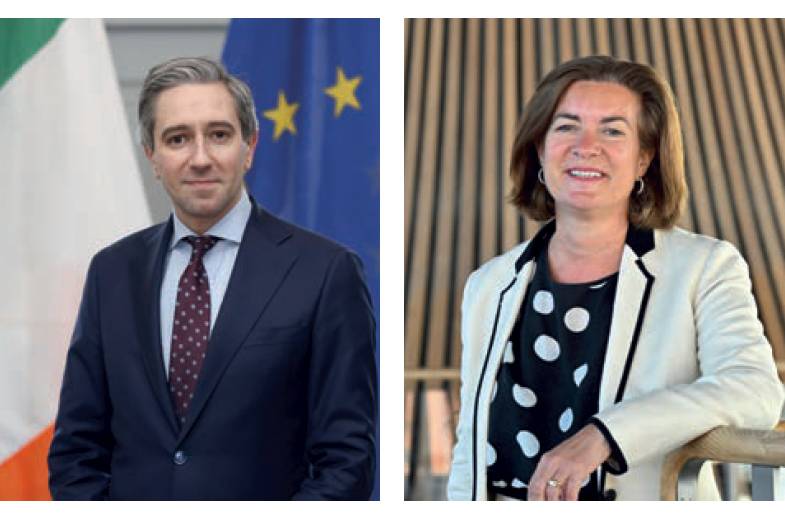
Tánaiste First Minister of Wales
Introduction
The Ireland-Wales Shared Statement 2030 reflects the continuing joint ambition of Ireland and Wales, based on our shared heritage, values and interests, and building on our close people-to-people connections, to deepen cooperation for our mutual benefit.
This new Shared Statement provides an action-oriented, forward-looking framework for bilateral cooperation between the governments of Ireland and Wales, in areas for which the Welsh Government has devolved authority. It builds on, and extends, the Ireland-Wales Shared Statement and Action Plan 2021-2025, agreed in Cardiff in March 2021.
The Ireland-Wales Shared Statement 2030 will advance work under six agreed policy areas:
- Political and Official Engagement
- Climate, Energy, Environment and Sustainability
- Economy and Trade
- Education, Research and Innovation
- Culture, Language and Heritage, and
- Communities, Diaspora and Sport
Since 2021, there has been significant progress made across all areas of the Shared Statement. This is illustrated, in particular, in the Case Studies showcased throughout this document.
In particular, the Ireland-Wales Forum has become an important annual focal point for high-level political engagement, enabling the advance of work in the various areas set out in the Statement. Over the past 5 years, we have seen growing connections between Ireland and Wales in areas including renewable energy; research and academic links; promotion and study of the Welsh and Irish languages; and cultural partnerships, showcasing the many facets of Irish and Welsh contemporary life.
Both Governments are committed to working together to sustain and grow these connections, while simultaneously supporting cooperation in new and emerging areas. To this end, work under this Statement will be underpinned by the renewed and ambitious framework for cooperation set out between Ireland and the UK in the UK-Ireland Joint Statement 2030 agreed in March 2025, as well as agreements supporting the EU-UK relationship. We will continue to work together under the strong East-West institutional relationships established under the Good Friday Agreement,, including through the British-Irish Council and the British-Irish Parliamentary Assembly.
Political and official engagement
Why is this important?
High-level political engagement has been an important part of the Shared Statement 2021-2025. This engagement, particularly through the annual Ireland Wales Forum, provides momentum, direction and visibility to the relationship and to work under the Shared Statement. Coupled with this, regular engagement between parliamentarians helps to build relationships and understanding on issues of common concern to both Ireland and Wales. Regular official-level engagement also helps build sustainable contacts between counterparts, and can help to better identify areas of shared interest, reinforcing cooperation and exchange of experience at all levels to support implementation of the Shared Statement.
What we want to achieve
- Regular ministerial contacts between Ireland and Wales, with the annual Ireland-Wales Forum maintained as the centre point for high-level government engagement
- Strengthened Parliamentary contacts
- Broad and deep official-level engagement across all relevant areas of cooperation
- Regular government and official-level engagement through British-Irish Council structures
How will we do this?
- Maintain and strengthen the annual high-level Ireland Wales Forum, led by the Minister for Foreign Affairs and Trade of Ireland and the First Minister of Wales, engaging political, economic and broader stakeholders to support collaboration and identify opportunities for future cooperation.
- Support annual Ministerial visits connected to St David’s Day and St Patrick’s Day.
- Support the strengthening of parliamentary links, including through the British Irish Parliamentary Assembly (BIPA), and regular contacts between the Oireachtas and Senedd.
- Deepen official-level contacts in priority areas to enable exchange of experience, best practice and to identify areas for cooperation on issues of mutual interest across Wales and Ireland.
- Support cooperation at regional and local authority level to share experience and promote links.
- Ensure active ongoing engagement through British-Irish Council structures to advance areas of common interest.
Annual Ireland Wales Forum
A key commitment under the Ireland-Wales Shared Statement 2021-2025 was to hold an annual Ireland-Wales Forum, led by Ireland’s Tánaiste and Minister for Foreign Affairs and the First Minister of Wales.
Alternating between Ireland and Wales, each annual forum has strengthened government-to-government engagement, supporting, in turn, the broader Ireland Wales bilateral relationship.
With meetings over the past five years in Cardiff, Dublin, Bangor, Cork and Swansea, the Forum has enabled focus on topics to include renewable energy, trade cooperation, port connectivity, language policy, and supporting academic and research links. Each annual gathering has been complemented by site visits, including to the ports at Cork and Holyhead, as well as to innovation and research hubs, including MaREI (the SFI Research Centre for Energy, Climate and Marine research at University College Cork) and the M-Sparc (the first knowledge-based science park in Wales, connected to Bangor University). Importantly, the forum has also facilitated each year engagement with a wide range of partners – business, academic, cultural and diaspora - active in supporting the Ireland Wales relationship.
Climate, energy, environment and sustainability
Why is this important?
Climate change is the defining global challenge of our time, with both Governments united in the urgency of action in response. Ireland and Wales share similar challenges in terms of climate change mitigation and adaptation, protecting our environment and biodiversity. This includes our marine environment in the Irish and Celtic Seas, and decarbonising our economies.
Ireland and Wales have also ambitious plans to develop renewable energy capacities. To realise these, we must develop the necessary skilled workforce, effective supply chains, and infrastructure, to ensure programmes are aligned with transport, marine and environmental priorities. By sharing our experience, we can support sustainable development, green growth and the transition to climate neutrality and a circular economy.
What we want to achieve
- Regular sharing of best practice on protection and restoration of our natural environment, biodiversity, and cultural heritage including climate adaptation and mitigation, conservation, restoration and protection of habitats.
- Regular sharing of information and best practice on the protection and management of our historic environment and its assets, both terrestrial and underwater, including from the effects of climate change.
- Regular engagement in developing offshore renewable energy potential – particularly around research and development; supply chain growth; skills development; and marine planning related to our shared marine environment.
How will we do this?
- Bring together Irish and Welsh Government departments, with businesses, as appropriate, to explore cooperation in offshore and onshore energy, and hydrogen production, including through the Ireland-UK Memorandums of Understanding on Cooperation in Energy Transition, Offshore Renewables and Electricity Interconnection.
- Use our networks to foster connections, and support organisations exploring opportunities for collaboration in the Irish and Celtic Seas, on renewable energy, research and development, and supply chain growth.
- Continued cooperation on large-scale electricity interconnection projects between Ireland and the UK.
- Identify ways to cooperate in green skills training and education programmes that can benefit both countries.
- Using established forums for engagement on marine planning, and through our respective maritime governance and regulatory bodies, continue to work together to share information and guide approaches.
- Encourage discussions and exchanges on initiatives to foster a circular economy.
- Strengthen cooperation between our nature and heritage agencies and services, focussing on protecting our biodiversity, natural habitats, and cultural heritage resources.
- Continued cooperation on recording and investigating the impact of climate change on our terrestrial and maritime historic assets, and developing and promoting shared best practice.
Advancing the renewables agenda
Advancing clean, renewable energy generation is a priority for both the Irish and Welsh governments. Our shared seas – the Irish and Celtic Seas - are a vital resource to this end. Over the period of the 2021-2025 Shared Statement, the Greenlink interconnector between Wexford and Pembrokeshire was completed. With nominal capacity to power 380,000 homes, this subsea interconnector enhances energy security and supports the integration of renewable energy in Ireland and Wales.
Sharing insight and perspectives on advancing the renewable energy agenda has also been a central focus at each Ireland-Wales Forum. This has facilitated engagements with key stakeholders to consider how we can best work together to support the development of ports, supply chains and skills to bring maximum benefit to both countries.
Forums have enabled us to hear directly from Irish companies including ESB, Simply Blue and DP Energy, who are investing in energy projects in Wales. During the 2023 forum, ministers also visited the Morlais tidal stream energy project on Anglesey in North Wales. Run by Menter Môn, a not-for-profit social enterprise, Morlais is the largest consented project of its kind in the world, with a potential generating capacity of 240 MW. The project is an excellent example of how innovation at local level can attract international investment.
Economy and trade
Why is this important?
Trade flows are central to the strong economic links between Ireland and Wales. Ireland is the third largest export values market for Welsh products (£1.8 billion or 10.9% - ‘Welsh international goods trade: 2024’ – Welsh Government). Our ferry connections and seaports remain key to connectivity of both people and goods, and form an essential conduit for goods into the UK, and to EU markets via the land-bridge, and for Welsh goods into Ireland.
Separately, tourism is a key strategic sector that has important benefits for national and regional development in both Ireland and Wales, including providing significant employment. In sharing our experience, we can help with developing the sustainability of our respective tourism programmes and offering.
What we want to achieve
- Deeper economic collaboration and opportunities in sectors of mutual interest
- Increased trade and inward investment in both directions
- Shared learning on supporting sustainable tourism
How will we do this?
- Support regular engagement between Irish and Welsh Government Departments, and respective agencies, to increase the number of bilateral trade and investment promotional opportunities for businesses.
- Support cooperation at regional and local authority level to share experience and promote trade, investment, tourism and sustainable development.
- Strengthen interconnectivity between Ireland and Wales, particular with regard to our ports and ferry connections.
- Work with key business stakeholders, economic development programmes and networks, including Chambers of Commerce, to further develop business-to-business connections.
- Support cooperation between our respective government officials and tourism agencies on best practice to support sustainable tourism initiatives.
- Promote tourism links and routes between key cultural and heritage sites in our respective countries.
Connectivity across the Irish Sea
The Irish Sea is the fulcrum of connection between Ireland and Wales – enabling the movement of goods, ideas and people – across our islands. To this end, the Dublin – Holyhead route is of particular strategic importance connecting Ireland with Wales, Great Britain, and onwards to Europe. Today, the route supports over a hundred sailings each week, and a third of annual Roll On- Roll Off freight traffic between Ireland and Great Britain.
In December 2024, Storm Darragh significantly disrupted Holyhead Port, with damage to berths triggering a cascade of logistical challenges, bringing the seamless flow of goods and passengers across the Irish Sea between Ireland and North Wales to a halt. The strength of bilateral connection between Ireland and Wales underpinned the successful management of the situation, with close and regular contacts between Ministers for Transport, and between the Taoiseach and First Minister. The Welsh Government Taskforce set up to consider future resilience of Holyhead Port also includes strong Irish representation. While the flow of goods and passengers continued at all times on other parts of the Irish Sea, the incident underlined the importance of resilient maritime connectivity across the Irish Sea.
Education, research and innovation
Why is this important?
Education has important personal, societal and economic aspects, supporting individuals’ personal development and participation in all sectors of society, and providing skilled and flexible workforces and innovators, essential to supporting economic prosperity.
By linking policy officials, teachers and teacher educators, we can facilitate the sharing of best policy and practice with maximum impact for both teachers and learners.
When it comes to research and innovation, there are close and longstanding research and innovation collaborative links between Ireland and Wales. The collaboration between businesses and individual researchers, with support from funding agencies and charitable trusts, brings reciprocal benefits to both societies and economies. There are also important collaborative links between our higher education institutions.
What we want to achieve
- Regular sharing of policy and practice, cooperation and engagement between Irish and Welsh policy officials on education-related matters
- Enhanced research and innovation collaborative links, including through Ireland-UK initiatives, and the EU Research and Innovation Framework Programmes.
How will we do this?
- Build on, and develop, relationships between the Departments of Education and Higher Education, Research, Innovation and Science in Ireland and Wales, with a view to sharing best practice and identifying areas of collaboration and engagement across the sector.
- Strengthen engagement on early learning and child development to share best practice and experience.
- Support cooperation between our academic and research centres, and networks we are both members of, on areas of mutual interest and value, to foster research linkages between Ireland and Wales.
- Encourage our Horizon Europe National Contact Points, or equivalents, to work closely together to identify potential calls in the Horizon Europe Work Programmes where our research and innovation communities are well placed to coordinate and/or participate in a project application.
- Enhance contacts between funding agencies supporting research and innovation at the Ireland-Wales level, complemented by Ireland-UK engagement.
- Cooperate on skills training and further education programmes that can benefit both countries, with particular emphasis on Green skills.
Cybersecurity
Digital innovation and technology are central to everyday life, transforming how we live, work, learn and do business. Ensuring that our digital networks and infrastructure are safe and secure, however, is vital to our economic security and societal well-being.
The 4th Ireland-Wales Forum at Munster Technological University (MTU) in Cork focussed on cybersecurity. At its state of the art facilities in the Department of Computer Science, the Tánaiste and First Minister were briefed on MTU’s work in developing skills and fostering innovation to strengthen the security of Ireland’s digital assets and the resilience of its critical infrastructure. They engaged also with students undertaking MTU’s Cyber Innovate programme – an entrepreneurship training programme to support students in developing the expertise, skills and networks to found and lead new cybersecurity start-ups.
An exchange of visits in 2024 with the Wales Cyber Innovation Hub, at Cardiff University, and the Alacrity Foundation - a cyber start-up programme based in Newport - has formed the basis of partnership between the three institutions. As a result, representatives of the Cyber Innovation Hub and the Alacrity Foundation are now members of MTU’s Cyber Innovate advisory board.
Culture, language and heritage
Why is this important?
Ireland and Wales have strong and long-standing cultural, language and heritage connections. Globally, we celebrate our identities through cultural promotion, representing our evolving societies through a modern and creative lens. At home, the creative industries are economically, as well as socially, vital. Many of our national and local cultural institutions are actively engaged in initiatives, which support artists, writers, performers, craftspeople, conservators and collectives to work collaboratively. Leaders in cultural and artistic institutions move freely between Ireland and Wales, while community and local organisations are strongly connected.
Our historical connections, underpinned by a shared Celtic heritage, are fundamental to our respective culture, identity and heritage. We share common challenges in protecting and promoting increased use of our languages within wider bilingual communities, as well as harnessing rapid advances in technology to this end.
What we want to achieve
- Increased connections between our national cultural institutions, with strategic cultural initiatives and partnerships developed and supported, in particular around music, literature and other art forms
- Strong working relationships between the Irish and Welsh Arts Councils, and between Wales Arts International and Culture Ireland
- Regular cooperation in increasing use of the Irish and Welsh languages
- Cooperation in promoting awareness and knowledge of our shared history and tangible and intangible heritage
How will we do this?
- Collaborate to promote the use of Irish and Welsh languages in the context of our national strategies, including through programmes supporting all communities learning and using Irish and Welsh, and on the intergenerational transmission of Welsh and Irish.
- Strengthen ongoing collaboration through networks that allow for greater language exchange and promote cross community language enterprises.
- Continued cooperation, including through the British Irish Council, on matters of mutual interest in the area of language protection and promotion, including relating to digital technology.
- Support Welsh Universities teaching the Irish language.
- Continue support for annual St David’s Day and St Patrick’s Day celebrations.
- Build on collaboration with the Arts Councils of Ireland and Wales, including through the All In cultural access scheme, the Northern European mobility programme, and the Beyond Border programme.
- Work on joint initiatives to promote Welsh and Irish cultural and heritage links, including celebrations of shared heritage.
- Support strategic cultural partnerships focussed on music, literature and other art forms, including cultural partnerships between our respective cultural institutions, such as the National Gallery of Ireland and Amgueddfa Cymru (Museum Wales).
- Support strategic heritage partnerships, including in relation to cultural heritage, monuments and architectural heritage, and foster connections between the National Museum of Ireland and the Amgueddfa Cymru, and the National Archives of Ireland and the National Library of Wales with the UK’s National Archives.
Supporting musical collaboration
The strengthening of musical links between Ireland and Wales has been a particular highlight under the 2021-2025 Shared Statement. Culture Ireland support has enabled more Irish artists to perform at venues and festivals throughout Wales, including the National Eisteddfod, Green Man and Focus Wales.
Since its reopening in 2021, Ireland’s Consulate General in Wales has built strong links with a number of groups, including Comhaltas Newport - Amairgín the Gael - Wales’ only Comhaltas branch. Performances have showcased the rich musical heritage of Ireland, while the branch’s work in teaching Irish traditional music to a new generation of players is showcased annually St. Patrick’s and St. Stephen’s Day sessions. Equally, the annual Ferryside Piping Festival of the Pibyddion Uilleann Cymru (the Uilleann Pipers of Wales), continues to grow and has become a fixture in the calendar.
Other Voices Cardigan has been a highlight of recent years. For a weekend each autumn, the town of Cardigan comes alive with Irish and Welsh music; taking its inspiration from the home of Other Voices in Dingle on Ireland’s Atlantic edge. The collaboration between Irish fiddler Aoife Ní Bhrian and Welsh harpist Catrin Finch vividly captures what such cooperation can achieve. Introduced through Other Voices, their album “Double You” was released to critical acclaim in October 2023, and they have gone on to perform together in Ireland, Britain and globally.
Communities, diaspora and sport
Why is this important?
Communities across Ireland and Wales face many similar opportunities and challenges, when it comes to social, economic and environmental issues. Sharing of experience and approaches, at local and regional levels on these issues, can bring real benefits in helping communities grow and thrive in changing environments. We see also real value in connecting young people across these islands both to exchange experience on issues of common concern and to build understanding between each other.
Separately, Wales and Ireland share a passion for sport - from grassroots community sport to the elite professional level. Recognising the ability of sport to connect in a myriad different ways, we will explore opportunities to work together on shared sporting projects.
For Ireland and Wales our respective diasporas represent an important extension of our network and influence across the world. Sharing experience with one another on how best to support and engage with our global communities will continue to be an important part of our work.
What we want to achieve
- Continued strong engagement with and support for our respective diaspora communities in Ireland and Wales, including at the regional level.
- Shared learning on well-being policy and practice.
- Development of partnerships between our respective youth organisations.
- Strengthened connections and networks between sporting organisations, as well as through major sporting events.
How will we do this?
- Ensure regular information exchange and learning on diaspora policy, including supporting our diaspora communities in third countries.
- Continue to maintain regular contact between the Future Generations of Wales Commissioner and Irish policymakers responsible for the Well-being Framework for Ireland to exchange learning and best practice when it comes to ‘Beyond GDP’ and future generations policy-making.
- Support initiatives that facilitate cooperation between Welsh and Irish youth organisations.
- Collaborate to share best practices in the areas of inclusivity, with the aim of increasing participation and inclusivity in sport to promote broader health and well-being outcomes across society.
- Encourage the development of Gaelic Games in Wales.
- Leverage major sporting events (including major international sporting events such as the 2028 UEFA European Football Championships and other events like the annual men’s and women’s rugby tournaments) to build increased connections between Ireland and Wales, particularly in the areas of tourism, trade and cultural promotion. Look to increased cooperation in the hosting of major sporting events.
Community engagement
Given our geographical proximity, it is not surprising that people of Irish descent can be found in all walks of life in Wales. The Welsh have also travelled far-and-wide, settling amongst communities globally. Given our respective experiences of emigration, sharing learning on how best to support and engage with our communities abroad has been an important part of our work under the Shared Statement, informing policy development.
In Wales, the development of the docks and railways drew thousands of Irish to Cardiff in the mid-nineteenth century. The influx meant that at one point some 40% of people in Cardiff were Irish, with Newtown becoming known as ‘Little Ireland’. The area was extensively re-developed in the 1970s, with its last remaining building - the Vulcan Hotel - operating as a meeting point for the community since 1853. In 2012, the Vulcan was dismantled and reconstructed at St. Fagan’s National Museum of History. The Consulate General of Ireland, and the National Museum Wales, marked the Vulcan’s reopening, with members of the Irish community in July 2024. In its new location at St Fagan’s, Ireland’s strong connections and contribution to Cardiff are clearly in evidence.
