Land Transaction Tax statistics: October to December 2025
Our quarterly Welsh Revenue Authority (WRA) statistics for Land Transaction Tax (LTT). Data includes the number of transactions, tax due and a breakdown for areas within Wales.
In this page
Introduction
Please also see the article on intent behind higher rates transactions for Land Transaction Tax (LTT) which accompanied the August 2025 edition of our statistical release. With a second year of data for higher rate intent available, we presented trends for the first time. If you have any feedback on this analysis, please contact us at data@wra.gov.wales.
LTT is payable on residential and non-residential property and land interests purchased in Wales. The tax rates and tax bands for LTT vary depending on the type of transaction.
This statistical release analyses the main trends in transactions and tax due for LTT. The accompanying spreadsheet and our StatsWales datasets contain more detailed data, which we have begun publishing on the new StatsWales website. Please see the Digital and Data blog about the launch of the new StatsWales service.
LTT statistics provide relatively timely information on activity in the Welsh property market. The statistics are also used by the Office for Budget Responsibility to forecast LTT revenues.
The glossary defines relevant terms used in this release. Our key quality information describes how LTT statistics satisfy the Code of Practice for Statistics.
LTT statistics are accredited official statistics. In February 2022, the Office for Statistics Regulation independently reviewed and accredited these statistics as complying with the standards of trustworthiness, quality and value in the Code of Practice for Statistics. Accredited official statistics are called National Statistics in the Statistics and Registration Service Act 2007.
Our statistical output policy explains the policies and procedures we have in place for publishing official statistics, including our approach to revisions. We also publish the list of posts which have pre-release access to our statistics, including for LTT.
When comparing LTT statistics over time, users should be aware of previous changes to LTT rates which affect the amount of tax due:
- Changes to the nil rate threshold from 27 July 2020 to 31 March 2021
- Extension of the temporary tax reduction period from 31 March 2021 to 30 June 2021
- Increase to the higher residential rates and changes for non-residential property from 27 December 2022
- Changes to main residential rates and bands from 10 October 2022
- Increase to the higher residential rates from 11 December 2024
Main points
Residential transactions
- In October to December 2025, residential transactions were up 8% from the same quarter a year earlier. The tax due was up 19% and rose to the highest quarterly figure seen to date. This was partly influenced by the 1% increase to tax rates in all bands for higher rates residential transactions from 11 December 2024.
- In most months from April to December 2025, the monthly numbers of transactions and amount of tax due were higher than the same month a year earlier.
- The percentage of transactions in the higher property bands has generally been increasing in the past 7 years, though has been more stable in the past 4 years. The trend has been similar for the contribution of these transactions to overall tax due.
Non-residential transactions
- In October to December 2025, non-residential transactions were down 3% from the same quarter a year earlier and the tax due was down 12%.
- In April, May and December 2025, the monthly tax due on non-residential transaction was above the monthly average (£6.9 million), but below it for June to November.
- In October to December 2025, 69% of non-residential tax due was contributed by transactions where there was a purchase involved of over £1 million, despite only representing 6% of non-residential transactions in this period.
Analysis within Wales (data for the year ending December 2025)
By local authority, higher rates transactions as a percentage of all residential transactions varied from 13% in Monmouthshire to 33% in Merthyr Tydfil.
Compared with the previous year (the year ending December 2024), the local authorities with the largest percentage changes were:
- Isle of Anglesey (decrease of 7 percentage points)
- Gwynedd (decrease of 6 percentage points)
- Blaenau Gwent (increase of 4 percentage points)
- Vale of Glamorgan (decrease of 4 percentage points)
- Denbighshire and Wrexham (each with a decrease of 3 percentage points)
All other local authorities had changes of 2 percentage points or less.
In the past several years, there have generally been falls in these percentages in northern and western areas of Wales.
The percentages for Gwynedd were fairly stable at the top of the distribution from 2018-19 to 2021-22 (around 37% to 39%). There was a marked fall the next year followed by a period of stability, before another notable decrease to 25% in the year ending December 2025.
Similarly the percentages for Anglesey declined from 36% (second highest in the list) in 2019-20 to 29% in 2022-23. While there was a notable increase to 34% in the year to June 2024, there followed a larger fall to 23% in the year to December 2025.
It’s important to note that several factors can mean a residential transaction is subject to higher rates. In our second annual article on the intent behind higher rates transactions, published alongside the August 2025 edition of our release, we presented a breakdown of the reasons for these transactions. This uses a question the intent behind the higher rates transaction which was introduced to the tax return in summer 2023. The categories we’ve published data for include:
- buy to let landlord
- second home, holiday home or holiday let
- bridging (buying a new property while trying to sell an existing one)
- other
As we stated in that separate article on higher rate intent, Isle of Anglesey and Gwynedd both saw 5 percentage point decreases in ‘second home, holiday home or holiday let’ purchases as a percentage of all residential transactions. These changes represent most of the decreases seen for all higher rates transactions in these areas. We stated in the article that these trends for ‘second home, holiday home or holiday let’ purchases are consistent with policies around second homes in Wales having some impact on purchasing behaviour and this remains the case.
The LTT statistics only include properties sold in the past year. They don’t represent the full stock of properties in any local authority.
Statistician’s comment
Dave Jones, a statistician in the WRA, commented on these statistics:
Comparing the year to December with the previous year, many areas of Wales saw decreases in their percentage of residential transactions which were higher rates. Particularly the Isle of Anglesey and Gwynedd. We’ve seen similar trends in our past several releases.
Last summer, we reported that many of the trends we saw in higher rates transactions were due to changes in purchases of second homes. This remains the case, and these trends are consistent with policies around second homes in Wales continuing to have some impact on purchasing behaviour.
Nationally in October to December, quarterly residential revenues rose to the highest figure seen to date. There are several reasons for this. There were increases in the number of residential transactions and average property values over that time, and tax rates for higher rates transactions increased from December 2024.
Analysis at the Wales level
Please note that throughout this release, any use of the term ‘non-residential’ includes transactions that are not wholly residential. That is, those transactions which have both residential and commercial elements.
Users should be aware that if a property or piece of land is sold multiple times within a quarter or a year, it would feature multiple times in the statistics for that period. In April 2024 to March 2025, we estimate that between 2.5% and 3% of transactions involved a piece of land or property which has been sold more than once in the year.
The data presented in this release has been extracted on 19 January 2026 unless otherwise stated.
| Transaction type | Transactions [number] October to December 2025 [provisional] | % change (compared with October to December 2024) [note 2] |
|---|---|---|
| Residential | 14,950 | 8% |
| Of which: higher rates residential | 3,140 | 4% |
| Non-residential | 1,660 | -3% |
| All transactions | 16,610 | 7% |
| Transaction type | Tax due [£ millions] October to December 2025 [provisional] | % change (compared with October to December 2024) [note 2] |
|---|---|---|
| Residential | 88.4 | 19% |
| Of which: Additional revenue from higher rates [note 1] | 30.0 | 17% |
| Non-residential | 19.4 | -12% |
| All transactions | 107.9 | 12% |
Source: LTT statistics, by transaction type, transaction description, measure and effective date on StatsWales (includes data back to April 2018, not presented above)
[Note 1] This item only includes the additional revenue from higher rate transactions. This item does not include the main rate component of higher rate transactions.
[Note 2] Estimates for October to December 2024 were made in January 2025.
Largely due to seasonal patterns in the property market, it can be helpful to compare the current period with data from the same period a year earlier. Therefore, when comparing October to December 2025 on a like-for-like basis with October to December 2024:
- the total number transactions rose by 7% and the tax due on those transactions rose by 12%
- residential transactions increased by 8% and the tax due on those transactions increased by 19%
- of which, higher rates transactions rose by 4%
- additional revenue from higher rates residential transactions rose by 17%; this will have been partly influenced by the 1% increase to tax rates in all bands for higher rates residential transactions from 11 December 2024
- non-residential transactions fell by 3%; tax due from non-residential transactions decreased by 12%
Figure 1: Weekly number of transactions submitted to the WRA
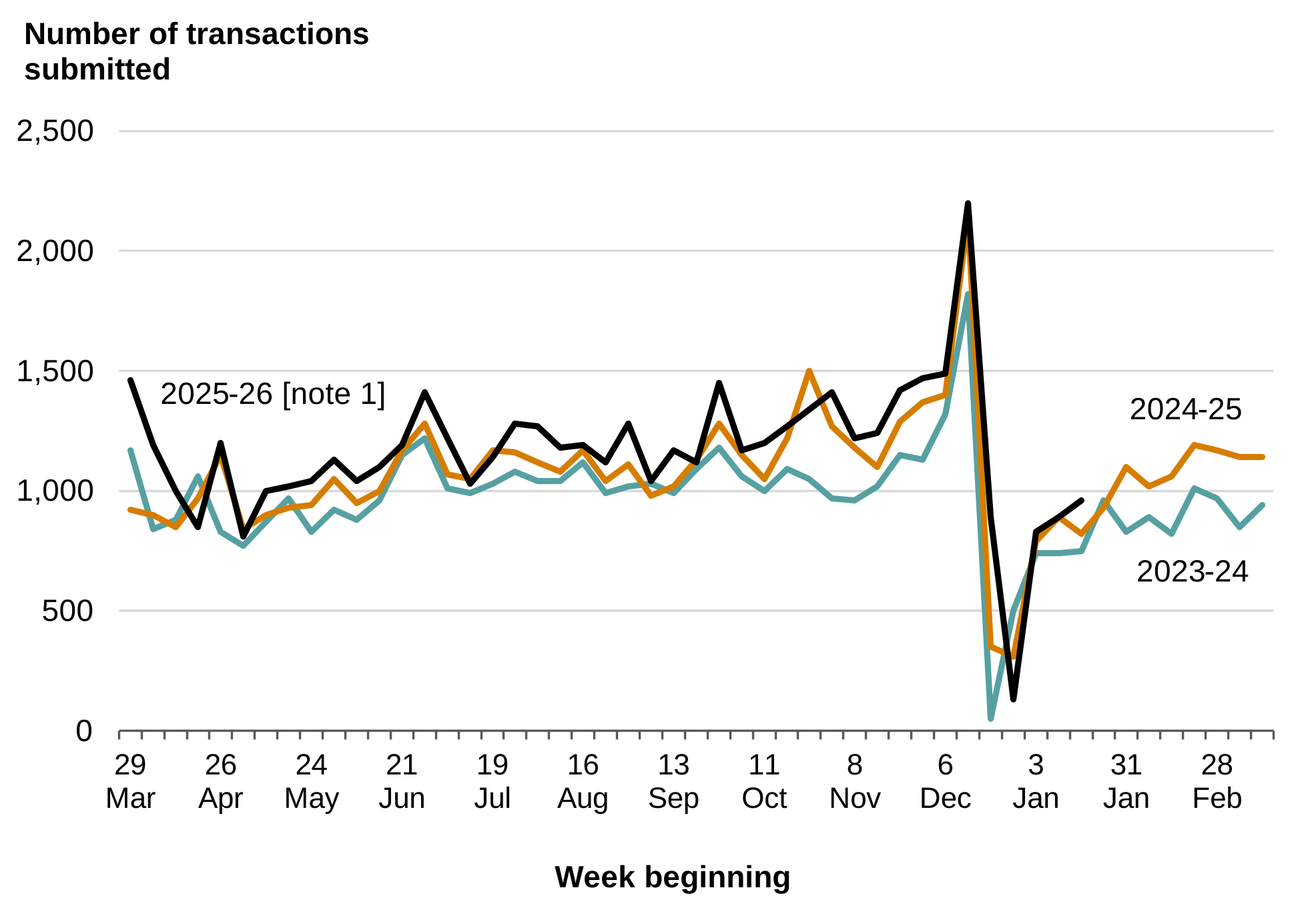
Description of Figure 1: The line chart shows the weekly number of transactions submitted to the WRA had a sharp drop during holidays. Generally, the weekly numbers of transactions submitted since April 2025 were higher than the same week in the previous year.
Source: Weekly number of transactions submitted to the WRA (Open Document Spreadsheet, 168 Kb) (includes data back to April 2018, not presented above)
[Note 1] This includes a small number of transactions effective in January 2026.
Figure 1 above shows the total number of transactions submitted to the WRA in each 7-day period for the latest 3 financial years. These periods begin on a Saturday and end on the following Friday. For example, the point ’29-Mar’ in 2025-26 shows the number of residential and non-residential transactions submitted to the WRA from 29 March to 4 April 2025 (inclusive). The actual dates differ slightly in the previous year. For example, the equivalent week in the previous year ran from 30 March to 5 April 2024 (inclusive).
Figure 1 shows data by submitted date up to and including 23 January 2026. This differs from effective date, which is the date we use for most analysis in this release and for which we extract data as at a particular date (19 January 2026 in this release).
Figure 2: Number of transactions, by type and month the transaction was effective
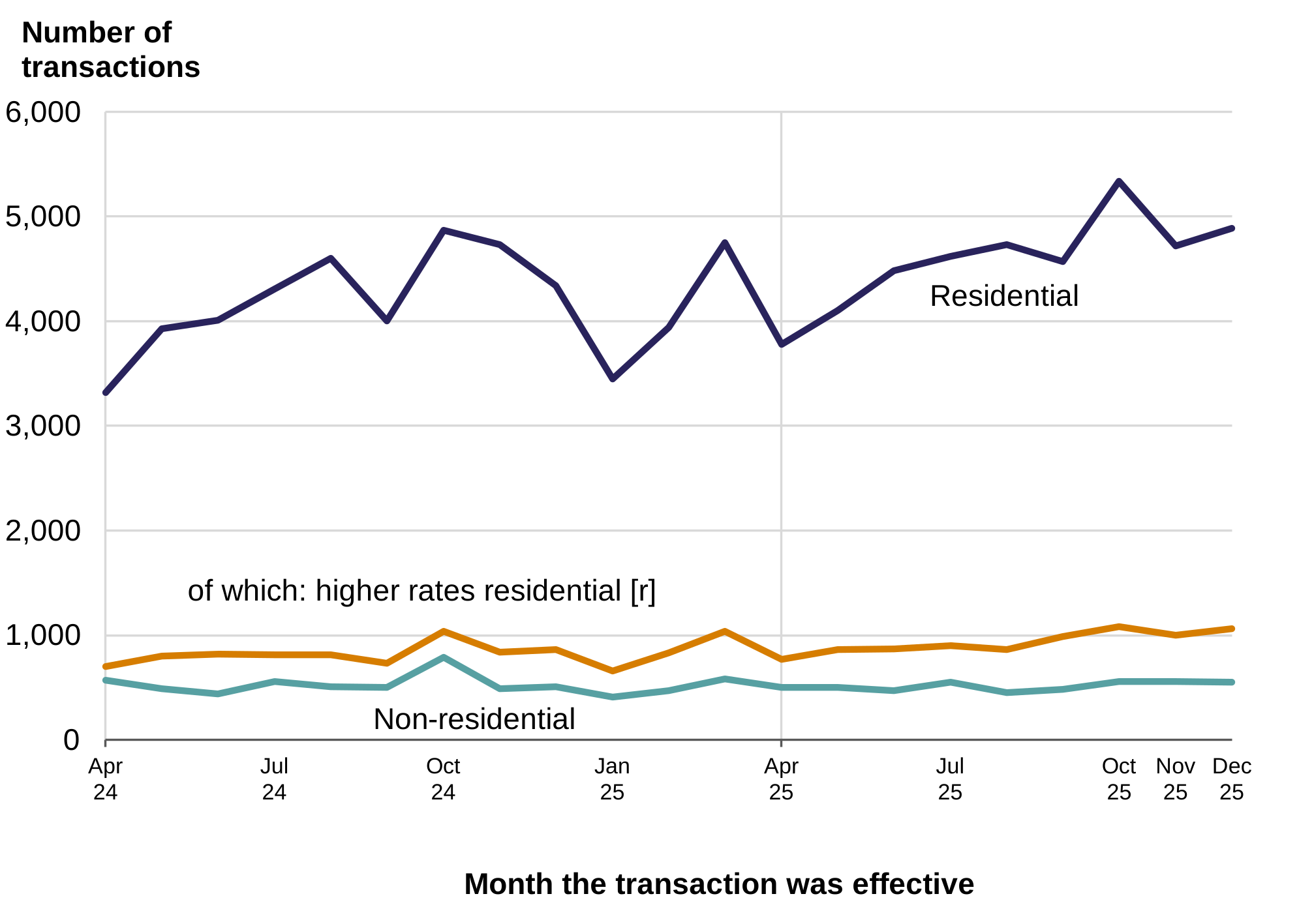
Description of Figure 2: The line chart shows that from April 2025, the monthly number of residential transactions was generally higher than the same month a year earlier. Non-residential transactions were at a lower level and fluctuated with large rises seen in July 2024, October 2024 and March 2025 from the previous months.
Source: LTT statistics, by transaction type, transaction description, measure and effective date on StatsWales (includes data back to April 2018, not presented above)
[p] Values for December 2025 are provisional and will be revised in a future publication.
[r] Values for November 2025 are revised in this publication. Higher rates residential transactions for earlier periods have been revised downwards due to higher rate refunds being claimed.
In a typical year, the number of residential transactions by effective month vary somewhat. There is general seasonality with more transactions in the summer and autumn months, although some fluctuation is due to there being five Fridays in particular months rather than four, with Friday being the most common day of the week on which transactions come into effect.
For most months from April to December 2025, the number of residential transactions was higher than the same month in the previous year.
For non-residential transactions, in March each year we see an increase from the previous month (February). This may generally be due to non-residential leases to be renewed at the end of the financial year. However, in March 2025, the increases in non-residential transactions over the previous month were mainly due to purchases and the reasons for this are unclear.
Figure 3: Tax due on transactions, by month transaction was effective [£ million]
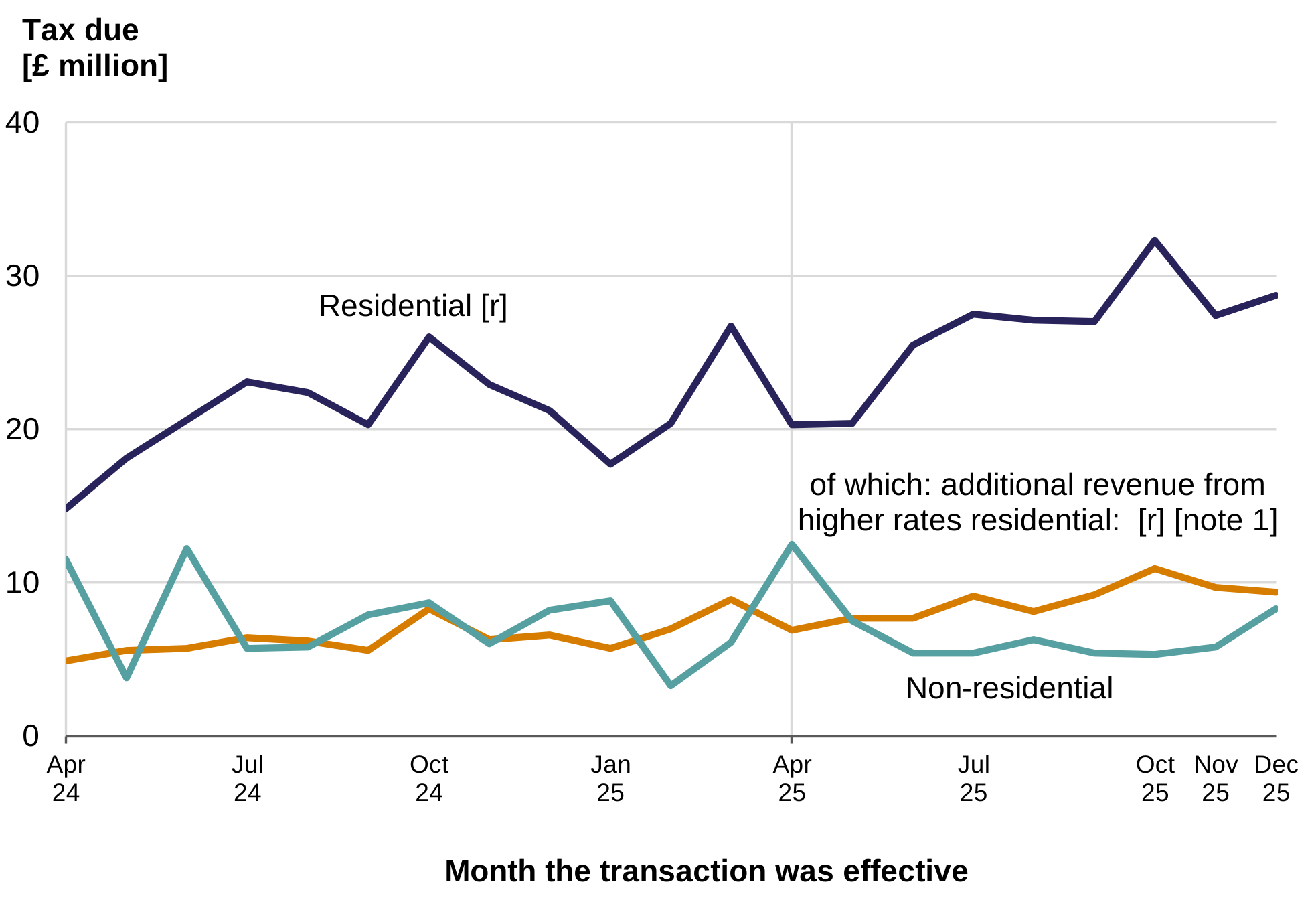
Description of Figure 3: The line chart shows that from April 2025, the monthly amount of tax due on residential transactions was higher than the same month in the previous year. Since April 2024, the monthly non-residential tax due has been higher than the monthly long-term average (£6.9 million) around half the time. The non-residential tax due can vary considerably from month to month, often influenced by a small number of high value transactions.
Source: LTT statistics, by transaction type, transaction description, measure and effective date on StatsWales (includes data back to April 2018, not presented above)
[Note 1] This item only includes the additional revenue from higher rate transactions. This item does not include the main rate component of higher rate transactions.
[p] Values for December 2025 are provisional and will be revised in a future publication.
[r] Residential values for November 2025 and earlier have been revised downwards in this publication. This is to account for refunds of the higher rates of residential tax being paid out.
Residential transactions by value
Figures 4 and 5 below shows quarterly trends in the number of residential transactions and amount of tax due in each tax band. There are six residential tax bands. We have combined the largest two bands here to show results for properties purchased for more than £750,000.
Transactions below £400,000 have been split into two categories based on the nil rate threshold for main rates transactions that was in place at the relevant times in the past five years.
For higher rates transactions, the nil rate threshold has been static over the last five years at £180,000. However, the nil rate threshold for main rate transactions has varied over time and is currently at £225,000. For our analysis, we have grouped these transactions as ‘up to and including the nil rate threshold’ based on thresholds in effect at the time of the transaction. For the full series of the nil rate thresholds, please see Land Transaction Tax rates and bands.
Figure 4: Number of residential transactions, by residential tax band and quarter the transaction was effective
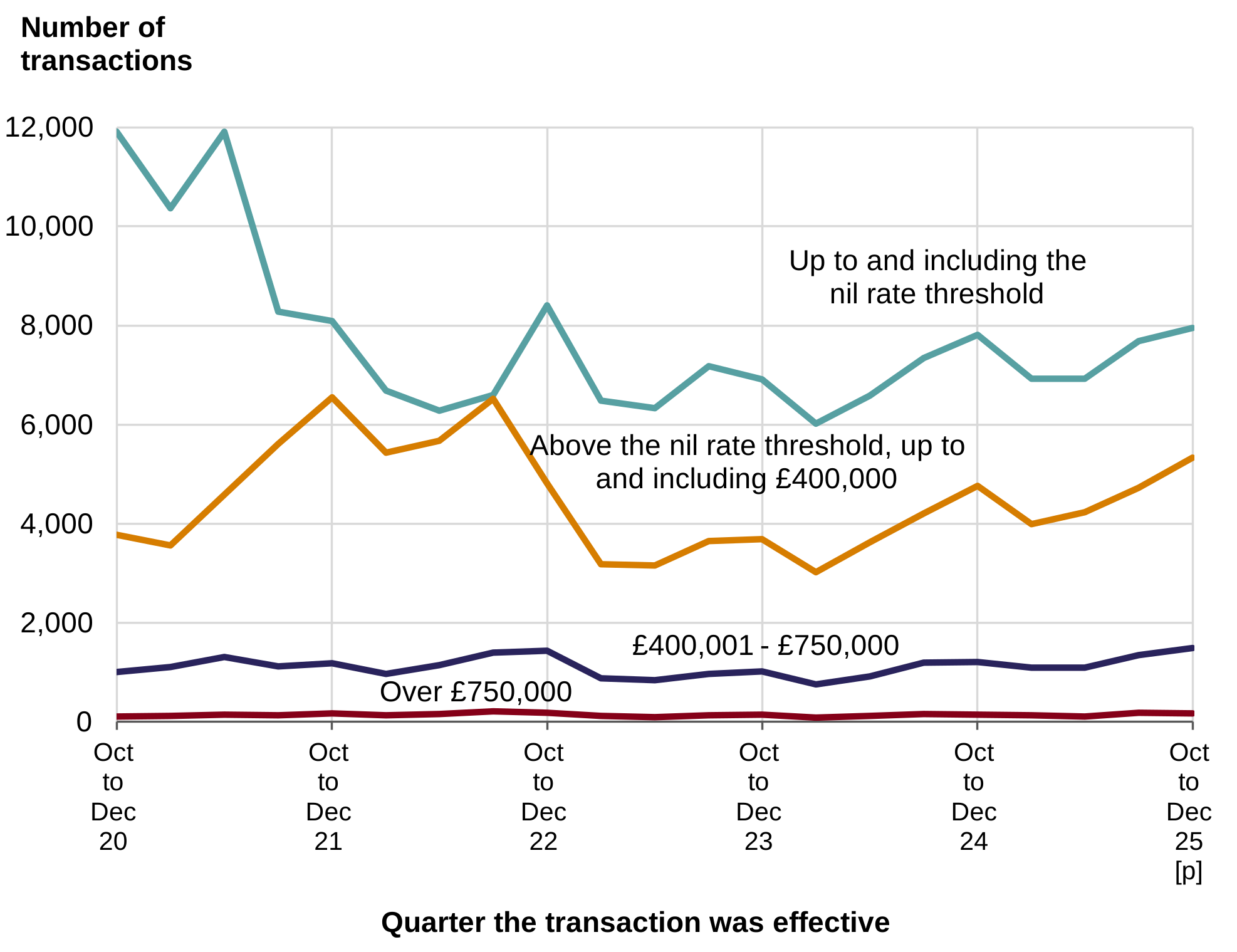
Description of Figure 4: The line chart shows the number of residential transactions in the bands ‘up to and including the nil rate threshold’ and ‘above the nil rate threshold up to and including £400,000’ varied considerably over time, with higher numbers this quarter than the same quarter a year earlier. The quarterly number of transactions in the ‘£400,001 to £750,000‘ band was highest in this quarter. The quarterly number of transactions in the ‘over £750,000’ band was highest in July to September 2022, fell subsequently then have begun to rise again.
Source: Residential LTT statistics, by transaction type, transaction value, measure and effective date on StatsWales (includes data back to April 2018, not presented above)
[p] The values for October to December 2025 are provisional and will be revised in a future publication.
Figure 5: Tax due on residential transactions, by residential tax band and quarter the transaction was effective [£ million]
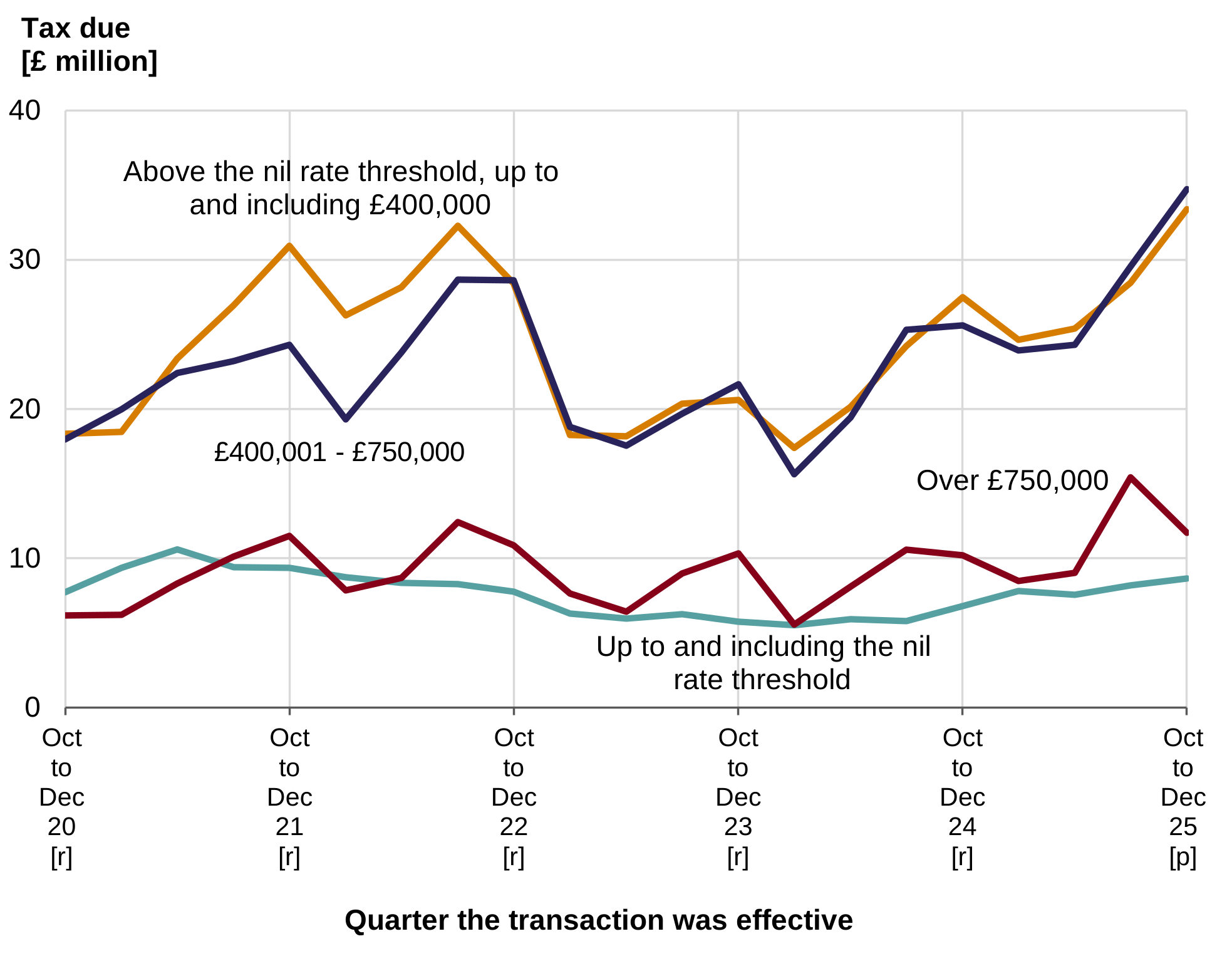
Description of Figure 5: The line chart shows that the quarterly amounts of tax due in the upper value tax bands was considerably higher than five years earlier. This quarter saw the highest and third highest amounts of tax due for the ‘£400,001 to £750,000’ and ‘over £750,000’ bands respectively.
Source: Residential LTT statistics, by transaction type, transaction value, measure and effective date on StatsWales (includes data back to April 2018, not presented above)
[p] Values for October to December 2025 are provisional and will be revised in a future publication.
[r] Values for July to September 2025 and earlier have been revised downwards in this publication. This is to account for refunds of the higher rates of residential tax being paid out.
Figure 6: Percentage of residential transactions and tax due in each tax band, October to December 2025 [provisional]
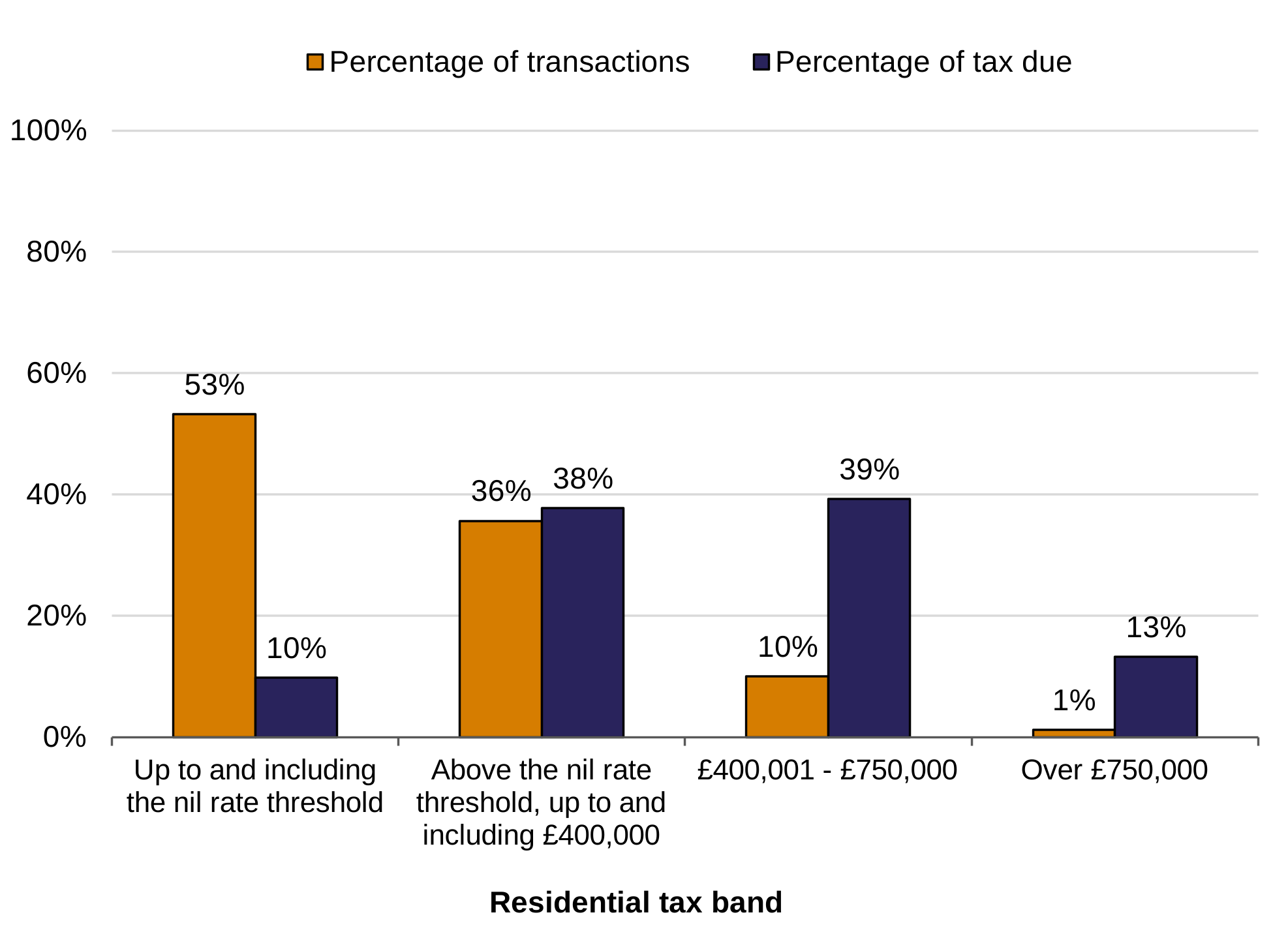
Description of Figure 6: The bar chart shows that in October to December 2025, residential transactions which were up to and including the nil rate threshold accounted for 53% of all transactions and around a tenth of the total tax due. Meanwhile, the 1% of transactions which were over £750,000 accounted for 13% of the total tax due.
Source: Residential LTT statistics, by transaction type, transaction value, measure and effective date on StatsWales (includes data back to April 2018, not presented above)
Figure 6 shows that in October to December 2025, 53% of residential transactions were up to and including the nil rate threshold (defined below Figure 4). Percentages for previous quarters varied between 45% and 71%. In October to December 2025, the transactions for this band accounted for 10% of residential tax due. This is lower than the 22% seen in April to June 2018 (not shown in Figure 6), generally decreasing in the following 4 years to 2022 though remaining more stable since then.
In October to December 2025, the 1% of residential transactions with a value over £750,000 contributed 13% of residential tax due. This was lower than the 19% seen in the previous quarter. For previous quarters, the percentage of transactions in this category remained small. For residential tax due, the percentages generally rose from the 4% seen in April to June 2018 (not shown in Figure 6).
The percentage of transactions with a value £400,001 to £750,000 generally rose in most quarters, from 3% in April to June 2018 to 10% in October to December 2025, though has been more stable in the past 4 years. Similarly, the percentage of residential tax due contributed by these transactions generally rose from 24% in April to June 2018 to 39% in October to December 2025, the highest quarterly figure seen to date.
Non-residential transactions by value
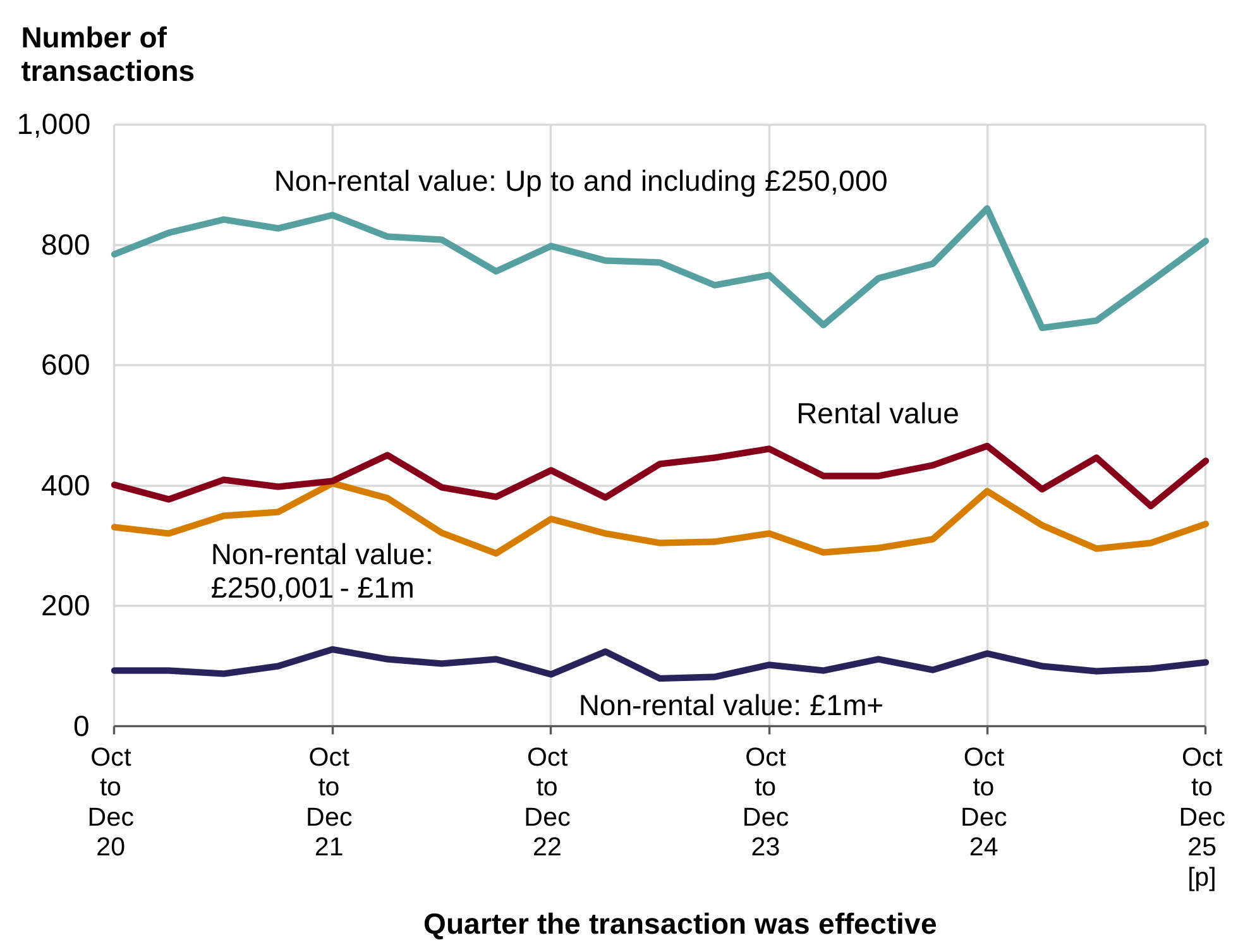
For each tax band, Figures 7 and 8 show the quarterly trends in the number of non-residential transactions and tax due. There are 4 tax bands for the non-rental value. We have combined the smallest 2 bands here to show results for properties with a non-rental value less than £250,000.
Figure 7: Number of non-residential transactions, by value and quarter the transaction was effective [Note 1]
Description of Figure 6: The bar chart shows that in October to December 2025, residential transactions which were up to and including the nil rate threshold accounted for 53% of all transactions and around a tenth of the total tax due. Meanwhile, the 1% of transactions which were over £750,000 accounted for 13% of the total tax due.
Source: Residential LTT statistics, by transaction type, transaction value, measure and effective date on StatsWales (includes data back to April 2018, not presented above)
Figure 6 shows that in October to December 2025, 53% of residential transactions were up to and including the nil rate threshold (defined below Figure 4). Percentages for previous quarters varied between 45% and 71%. In October to December 2025, the transactions for this band accounted for 10% of residential tax due. This is lower than the 22% seen in April to June 2018 (not shown in Figure 6), generally decreasing in the following 4 years to 2022 though remaining more stable since then.
In October to December 2025, the 1% of residential transactions with a value over £750,000 contributed 13% of residential tax due. This was lower than the 19% seen in the previous quarter. For previous quarters, the percentage of transactions in this category remained small. For residential tax due, the percentages generally rose from the 4% seen in April to June 2018 (not shown in Figure 6).
The percentage of transactions with a value £400,001 to £750,000 generally rose in most quarters, from 3% in April to June 2018 to 10% in October to December 2025, though has been more stable in the past 4 years. Similarly, the percentage of residential tax due contributed by these transactions generally rose from 24% in April to June 2018 to 39% in October to December 2025, the highest quarterly figure seen to date.
Non-residential transactions by value
For each tax band, Figures 7 and 8 show the quarterly trends in the number of non-residential transactions and tax due. There are 4 tax bands for the non-rental value. We have combined the smallest 2 bands here to show results for properties with a non-rental value less than £250,000.
Figure 7: Number of non-residential transactions, by value and quarter the transaction was effective [Note 1]
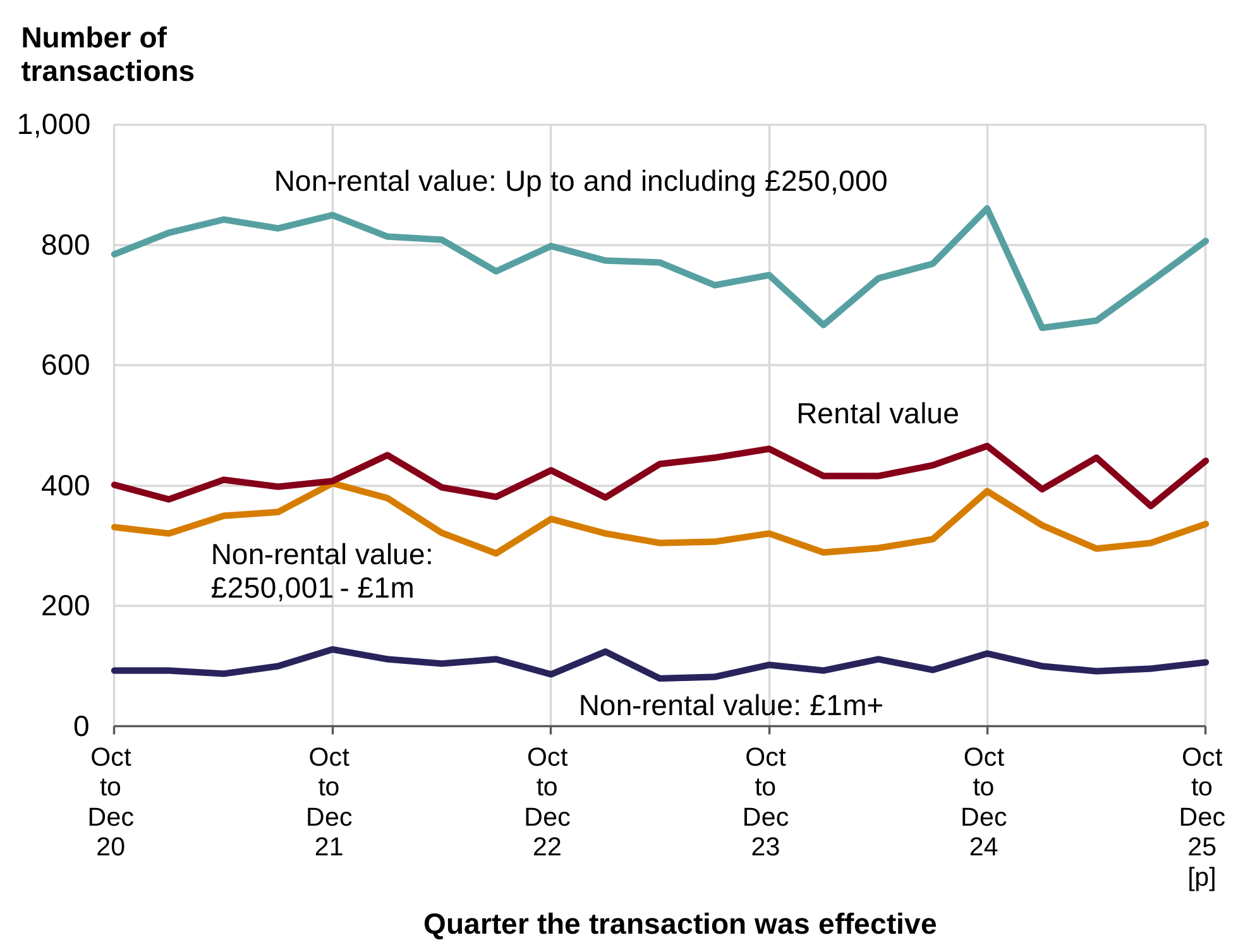
Description of Figure 7: The line chart shows that the quarterly numbers of non-residential transactions in different value bands have fluctuated small amounts in the past 5 years, with some larger peaks in October to December 2024.
Source: Non-residential LTT statistics, by transaction value, measure and effective date on StatsWales (includes data back to April 2018, not presented above)
[Note 1] A small number of newly granted leases have both a premium paid and a rental value. Therefore these transactions are included twice in Figure 7, under both the non-rental value and the rental value.
[p] The values for October to December 2025 are provisional and will be revised in a future publication.
Figure 8: Tax due on non-residential transactions, by value and quarter the transaction was effective [£ million]
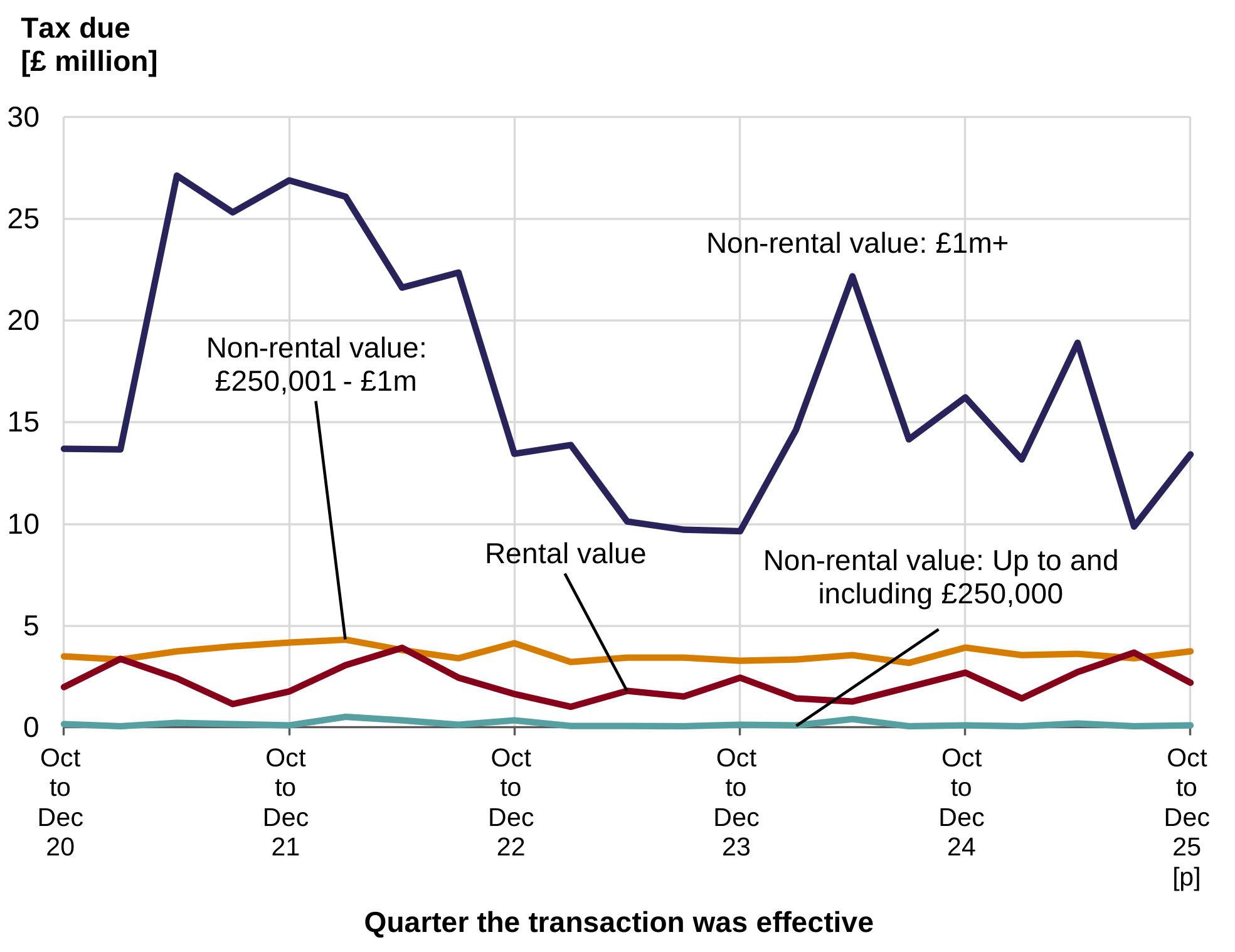
Description of Figure 8: The line chart shows that the quarterly tax due from non-rental value of properties over £1 million has fluctuated greatly over time with the highest values seen in the 6 quarters April 2021 to September 2022, and April to June 2024. The value this quarter rose from the previous quarter but remained lower than most of the 6 quarters prior to that. For all quarters, the tax due from this category was considerably higher than the other two non-rental bands presented and the rental value. The non-residential tax due can vary considerably from quarter to quarter, often influenced by a small number of high value transactions.
Source: Non-residential LTT statistics, by transaction value, measure and effective date on StatsWales (includes data back to April 2018, not presented above)
[p] The values for October to December 2025 are provisional and will be revised in a future publication.
Figure 9: Percentage of tax due on non-residential transactions in each value band, October to December 2025 [provisional]
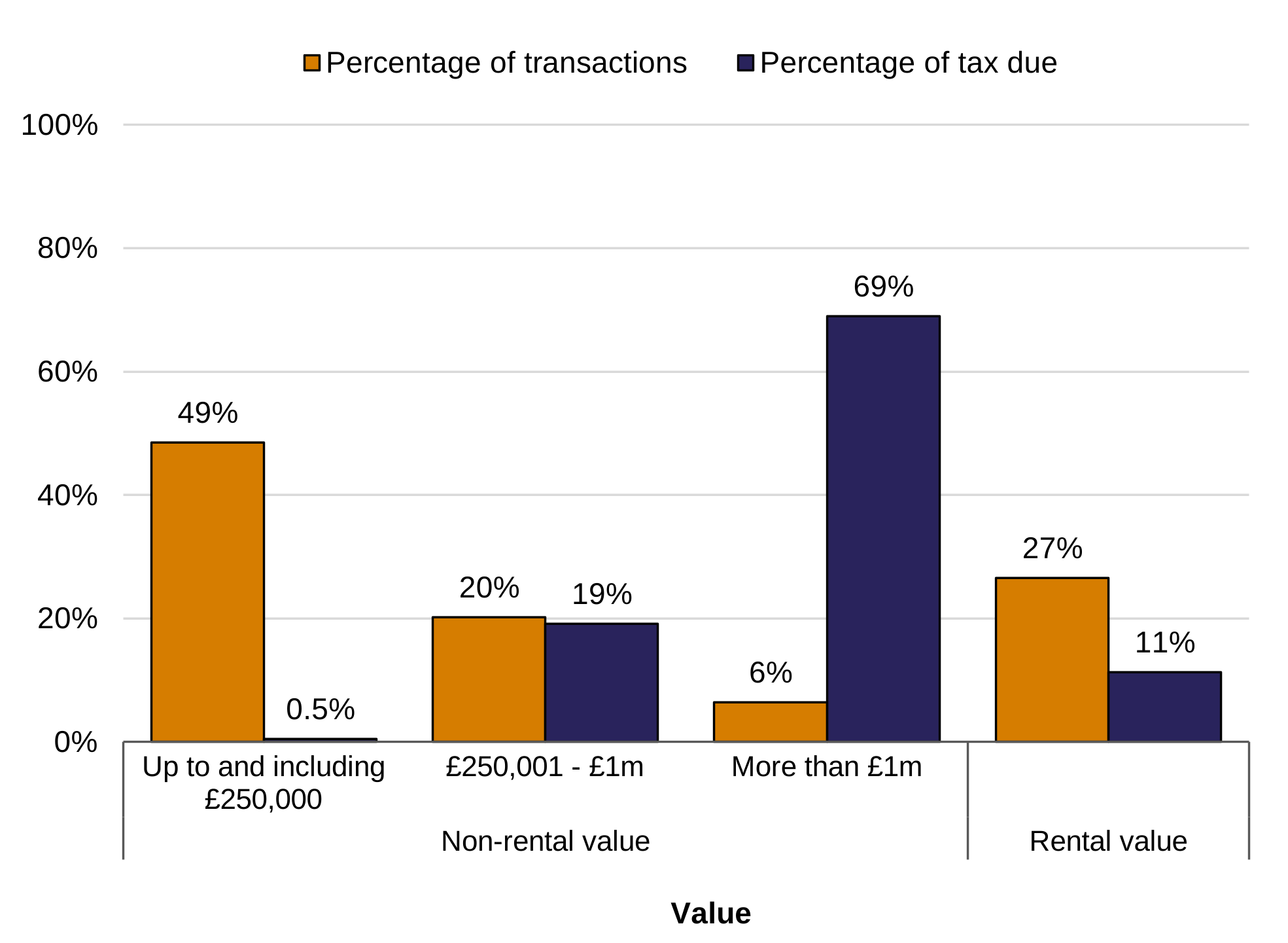
Description of Figure 9: The bar chart shows that in October to December 2025, around half of non-residential transactions had a non-rental value of up to and including £250,000, with those transactions contributing 0.5% of non-residential tax due. The 6% of non-residential transactions with a non-rental value of more than £1 million contributed 69% of tax due. Just over a quarter of non-residential transactions had a rental value associated with the transaction, contributing 11% of non-residential tax.
Source: Non-residential LTT statistics, by transaction value, measure and effective date on StatsWales (includes data back to April 2018, not presented above)
Analysis within Wales
This release presents geographic breakdowns for residential LTT. We present data for January to December 2025 (extracted as at January 2026) and make comparisons with data for January to December 2024 (extracted at January 2025). More detailed data for local authorities, National Parks, Senedd and Westminster Parliamentary constituencies is available on StatsWales.
We have not provided breakdowns by month or quarter, as there would be too few transactions in most local authorities to provide reliable statistics.
The local authority in which the transaction occurs is a mandatory question on the tax return, whereas the postcode where the transaction occurs is an optional question. We have combined these two pieces of information to derive our local authority statistics. Further information on this process and the data quality is available in our key quality information for LTT statistics.
Where supplied, the postcode on the tax return is used to derive the Senedd and Westminster Parliamentary constituencies, the National Park and built-up area.
Figure 10: Higher rates transactions as a percentage of all residential transactions, by local authority and National Park, January to December 2025 and January to December 2024
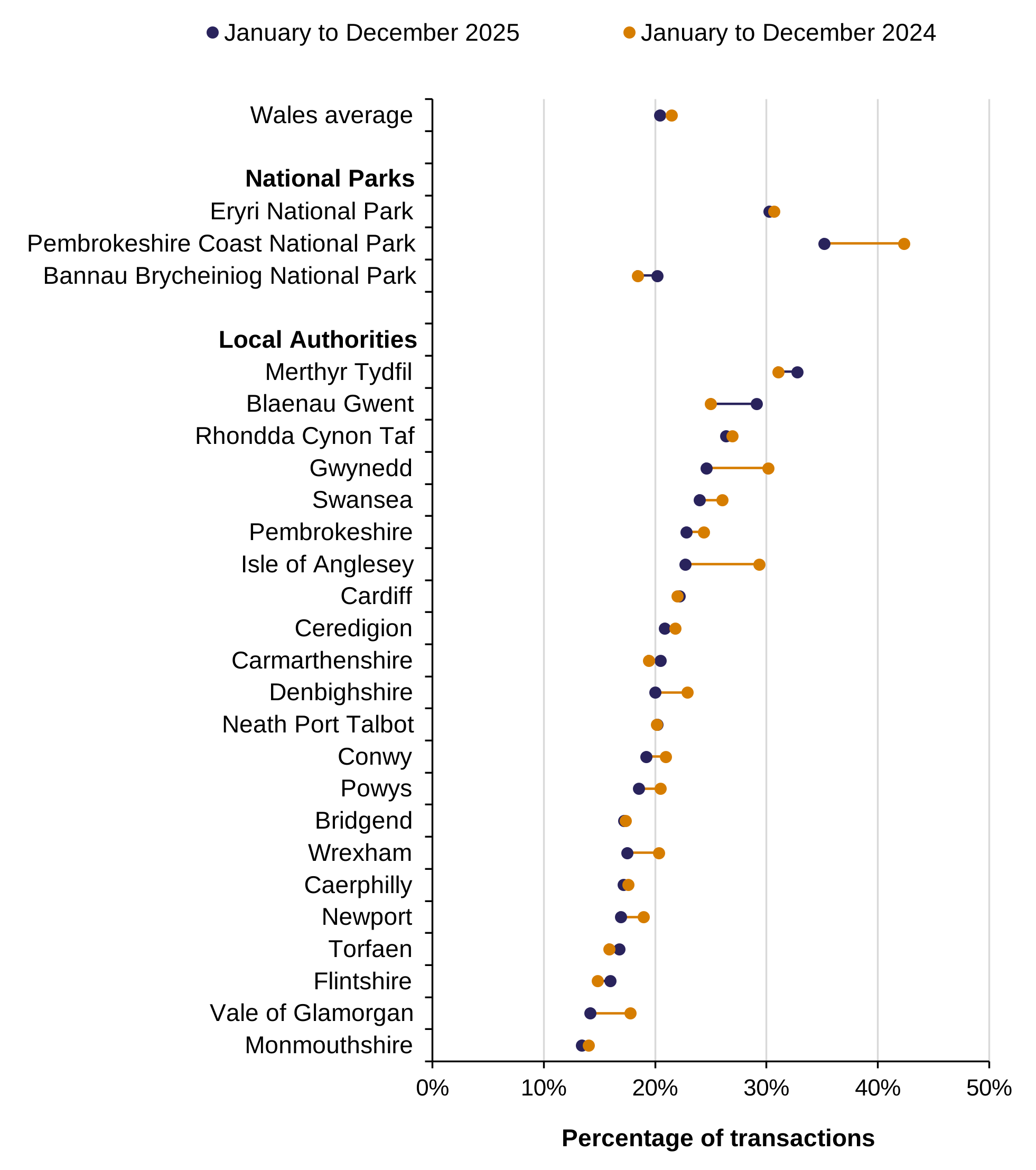
Description of Figure 10: The chart shows that higher rates transactions were relatively higher in Merthyr Tydfil, Blaenau Gwent, Rhondda Cynon Taf, Gwynedd and Swansea. For the latest year compared with a year earlier, most authorities have decreases in their percentage of residential transactions which were at the higher rates, with several exceptions. Some of the areas presented are small and have small numbers of transactions, therefore greater volatility can be expected over time for these areas.
Source: LTT statistics, by local authority, transaction type, measure and effective year on StatsWales (includes data back to April 2018, not presented above)
Residential LTT statistics, by National Park area, transaction type, measure and effective 4-quarter rolling period on StatsWales (includes data back to April 2018, not presented above)
Higher rates transactions were relatively higher in authorities located in the northern and western parts of Wales and in some authorities in the south Wales valleys. The highest percentages were seen in Merthyr Tydfil (33%), Blaenau Gwent (29%), Rhondda Cynon Taf (26%), Gwynedd (25%), and Swansea (24%). Both main reasons for higher rates transactions, namely buy-to-let purchases and second or holiday home/let purchase impact which local authorities reside at the top of the distribution.
The lowest percentage was seen in Monmouthshire (13%).
In terms of percentage points, the local authorities with the largest changes were:
- Isle of Anglesey (decrease of 7 percentage points)
- Gwynedd (decrease of 6 percentage points)
- Blaenau Gwent (increase of 4 percentage points)
- Vale of Glamorgan (decrease of 4 percentage points)
- Denbighshire and Wrexham (each with a decrease of 3 percentage points)
All other local authorities had changes of 2 percentage points or less.
The corresponding changes with the previous year for the three National Parks were:
- Pembrokeshire Coast: 42% to 35%, a decrease of 7 percentage points
- Eryri: 31% to 30% (no change)
- Bannau Brycheiniog: 18% to 20%, an increase of 2 percentage points
In the past several years, there have generally been falls in these percentages in northern and western areas of Wales.
The percentages for Gwynedd were fairly stable at the top of the distribution from 2018-19 to 2021-22 (around 37% to 39%). There was a marked fall the next year followed by a period of stability, before another notable decrease to 25% in the year ending December 2025.
Similarly the percentages for Anglesey declined from 36% (second highest in the list) in 2019-20 to 29% in 2022-23. While there was a notable increase to 34% in the year to June 2024, there followed a larger fall to 23% in the year to December 2025.
As we stated in the August 2025 article on higher rate intent, in the year to June 2025 Isle of Anglesey and Gwynedd both saw 5 percentage point decreases in ‘second home, holiday home or holiday let’ purchases as a percentage of all residential transactions. These changes represent most of the decreases seen for all higher rates transactions in these areas. We stated in the article that these trends for ‘second home, holiday home or holiday let’ purchases are consistent with policies around second homes in Wales having some impact on purchasing behaviour and this remains the case.
Users should be aware that:
- some of the areas presented are small and have small numbers of transactions, therefore greater volatility can be expected over time for these areas
- there are some overlaps in the time periods used when, for example, considering data for the year to September 2025 and year to December 2025.; therefore to derive cumulative changes over time, it is better to calculate percentage changes for the latest year against data for a full year earlier
Further data available
Various other data are not analysed in this release but we publish this data in the spreadsheet accompanying this release and on StatsWales.
Tax due on additional transactions which were untypically large or with restricted detail
Certain transactions have been excluded from the statistics reported in this release. This includes:
- untypically large transactions, which relates to the 2019-20 purchase by Transport for Wales of the Core Valley Line rail asset from Network Rail. £28.2 million of tax was due and paid on this transaction.
- a small number of low-value transactions where we are unable to provide any information other than the total tax figure in the year. This is because there is a risk of revealing details of the individual transactions.
Statistics on annual tax due for these transactions is published on StatsWales:
Reliefs
Taxpayers can claim reliefs on both residential and non-residential transactions. Reliefs reduce the amount of tax due when certain conditions are met. More than one relief can be applied to a single transaction.
Reliefs may reduce the tax due:
- to zero, known as a full relief
- or by a certain percentage or amount, known as a partial relief
Statistics on reliefs are published in the spreadsheet accompanying this release and on StatsWales:
On 7 February 2025, legislation relating to multiple dwellings relief was changed so that cases where dwellings that are subsidiary (worth less than a third of the total value of the transaction) must now be treated as part of the primary dwelling in any main rates residential transaction. This means it is now very rare that multiple dwellings relief will apply in a main rates residential transaction, which we estimate will reduce the value of the relief (or increase total LTT revenues) by between £2.0 and £2.5m per year.
Refunds of the higher rates of residential tax
When a taxpayer claims a refund for higher rates residential LTT, the original transaction is amended to a main rate residential LTT transaction. Refund statistics on a variety of bases are published in the spreadsheet accompanying this release and on StatsWales:
- LTT statistics for higher rate refunds, by effective date on StatsWales
- LTT statistics for higher rate refunds, by effective year and quarter and year and quarter of refund approval on StatsWales
- LTT statistics on tax paid and higher rate refunds (cash basis), by time period on StatsWales
Tax paid
We publish statistics on the amount of tax paid in the spreadsheet accompanying this release and on StatsWales.
LTT statistics on tax paid and higher rate refunds (cash basis), by time period on StatsWales
Analysis of revisions to our published estimates
Our first estimates of transactions and tax due for a particular month are published as provisional estimates. In subsequent releases, we regularly revise those estimates and those for earlier months. The percentage changes we see between first and second estimates for a particular month are now relatively small. These percentages are shown in the spreadsheet accompanying this release.
Contact details
Statistician Dave Jones
03000 254 729
Email: data@wra.gov.wales
Rydym yn croesawu galwadau a gohebiaeth yn Gymraeg / We welcome calls and correspondence in Welsh.
Media
03000 254 770
Email: news@wra.gov.wales
Rydym yn croesawu galwadau a gohebiaeth yn Gymraeg / We welcome calls and correspondence in Welsh.