Mid year estimates of the population: 2024
The mid-year estimates refer to the population on 30 June of the reference year and are published annually.
In this page
Introduction
The Office for National Statistics (ONS) has published mid-2024 population estimates for Wales and England as a whole. This bulletin refers specifically to estimates for Wales.
Estimates for mid-2022 and mid-2023 have been revised by the ONS to incorporate improved international and internal migration data. For international migration, the latest long-term international migration estimates (ONS), which were published in May 2025, have been used. For internal migration, NHS Personal Demographics Service and Higher Education Statistics Agency data, which were previously unavailable, have been used. Further information about the impact of the revisions can be found in the ONS bulletin (ONS).
The population estimates for Wales for this period have been revised upwards to:
- 3,134,000 in mid-2022, an increase of 1,500 (0.05%) from the previously published estimate.
- 3,167,000 in mid-2023, an increase of 2,900 (0.09%) from the previously published estimate.
Main points
- On 30 June 2024, it was estimated that around 3,187,000 people were living in Wales, an increase of 0.6% since mid-2023, or around 19,300 more people.
- The population increase in Wales between mid-2023 and mid-2024 has been driven by positive net international migration.
- People aged 65 years or older were estimated to account for just over a fifth of the total population in Wales in mid-2024 (21.7%, or 693,000 people).
- The local authority in Wales with the largest percentage population increase between mid-2023 and mid-2024 was Newport, which increased by 1.7%.
- The population in England increased by 1.2% between mid-2023 and mid-2024, which is higher than the increase seen in Wales during the same period.
Figure 1: population estimates for Wales, 1991 to 2024 [Note 1] [Note 2]
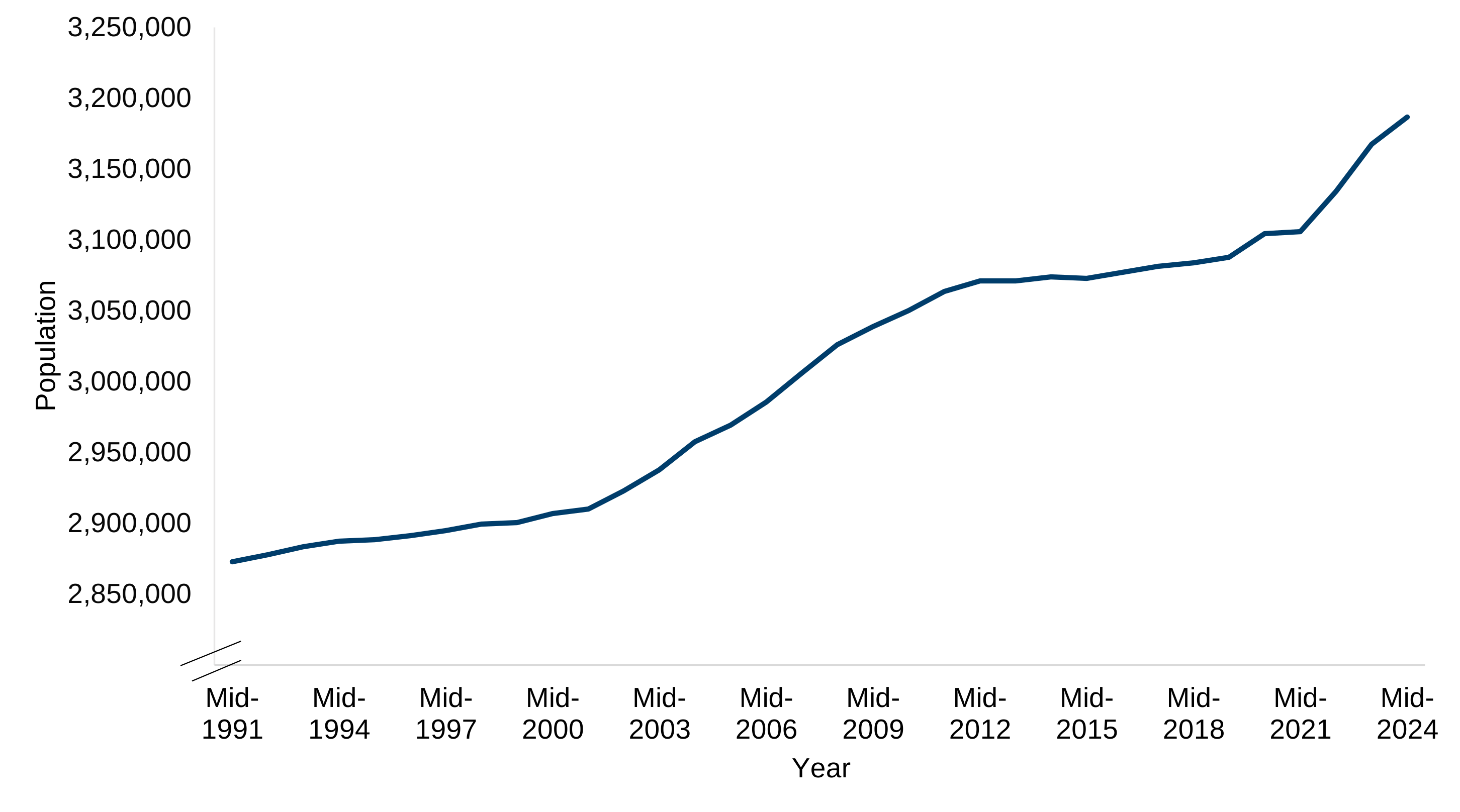
Description of figure 1: this line chart shows that, since the year to mid-1991, the population of Wales is estimated to have increased from 2.87 million to 3.19 million by mid-2024. Since mid-2021, the population has risen more sharply.
Source: Population estimates from the ONS.
[Note 1] The figures for mid-2022 and mid-2023 have been revised.
[Note 2] The y axis on this chart does not start at zero.
Components of population change
Components of population change are the factors that contribute to population change. This includes births and deaths, commonly referred to as natural change, and net migration. Migration is separated into internal migration, which is movements between local authorities in the UK, and international migration, which is movements between Wales and the other countries of the world outside the UK.
Figure 2: net internal and international migration estimates for Wales, mid-2002 to mid-2024 [Note 1]
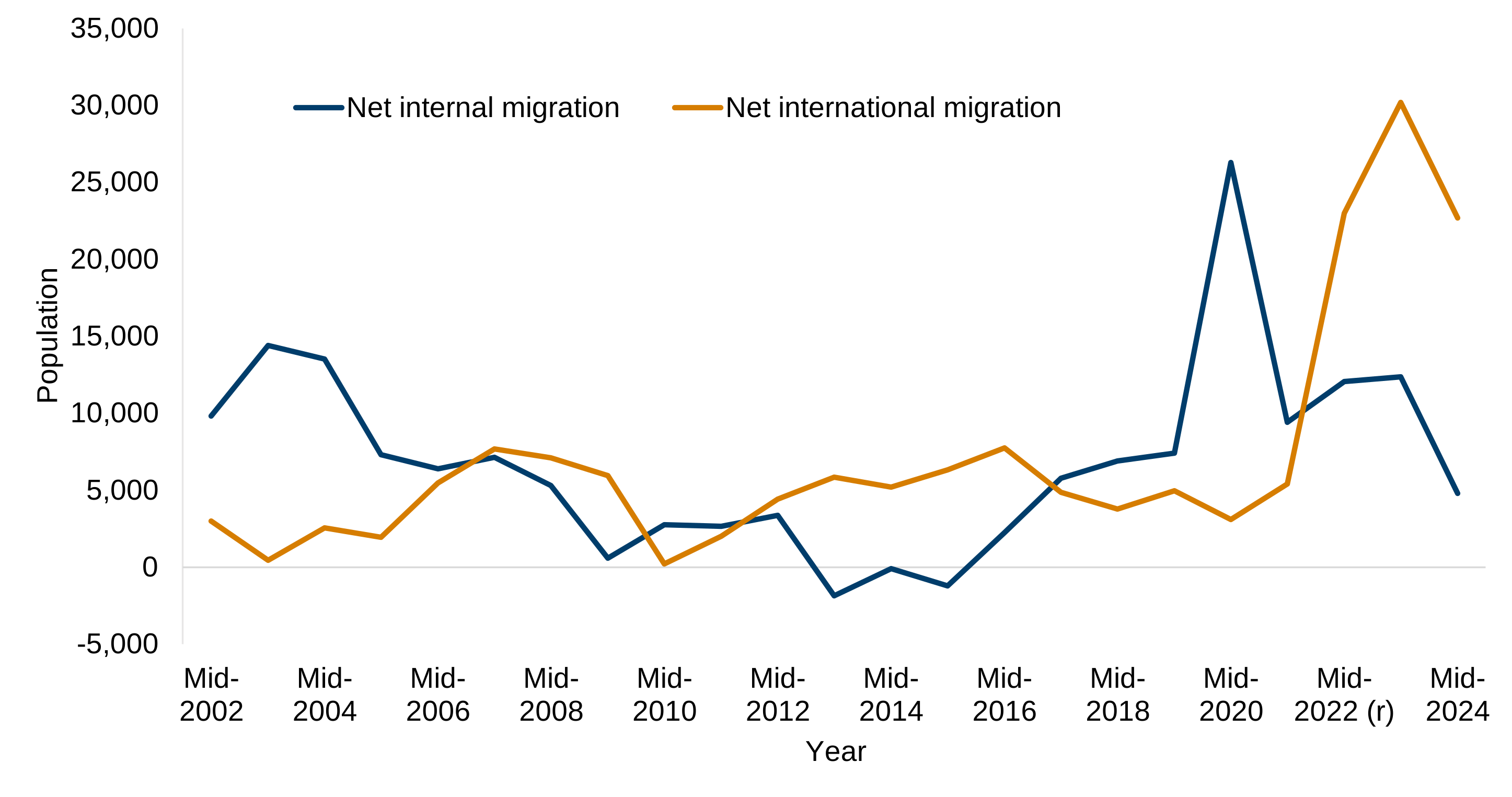
Description of figure 2: this line chart shows that, in the most recent year, net international migration has decreased by almost a quarter compared with the previous year. However, it remains at a higher level than it has been over the past couple of decades. Net internal migration has more than halved during the same period. Since 2020 migration patterns have changed. Net internal migration showed a peak during the start of the COVID-19 pandemic, while net international migration has been greater than net internal migration in the years since 2021.
Source: Population estimates from the ONS.
[Note 1] The figures for mid-2022 and mid-2023 have been revised.
In the year to mid-2024, it is estimated that net international migration to Wales was around 22,700, which is a decrease of almost a quarter (down 24.8%) compared with the year to mid-2023. However, it remains at a higher level than it has been over the past couple of decades. In the period from mid-2011 to mid-2021, average yearly net international migration was around 5,200 for Wales.
Long-term international migration, provisional: year ending December 2024 bulletin (ONS) from the ONS explains how at the UK level, net migration has declined because fewer non-EU+ nationals arrived on work- and study-related visas, and more people departed who originally came on study-related visas.
Net internal migration to Wales, from other UK nations, was around 4,800 in the year to mid-2024, which has decreased by over half (down by 61.1%) from the previous year (12,300 in year to mid-2023).
Figure 3: births and deaths in Wales, mid-2002 to mid-2024 [Note 1]
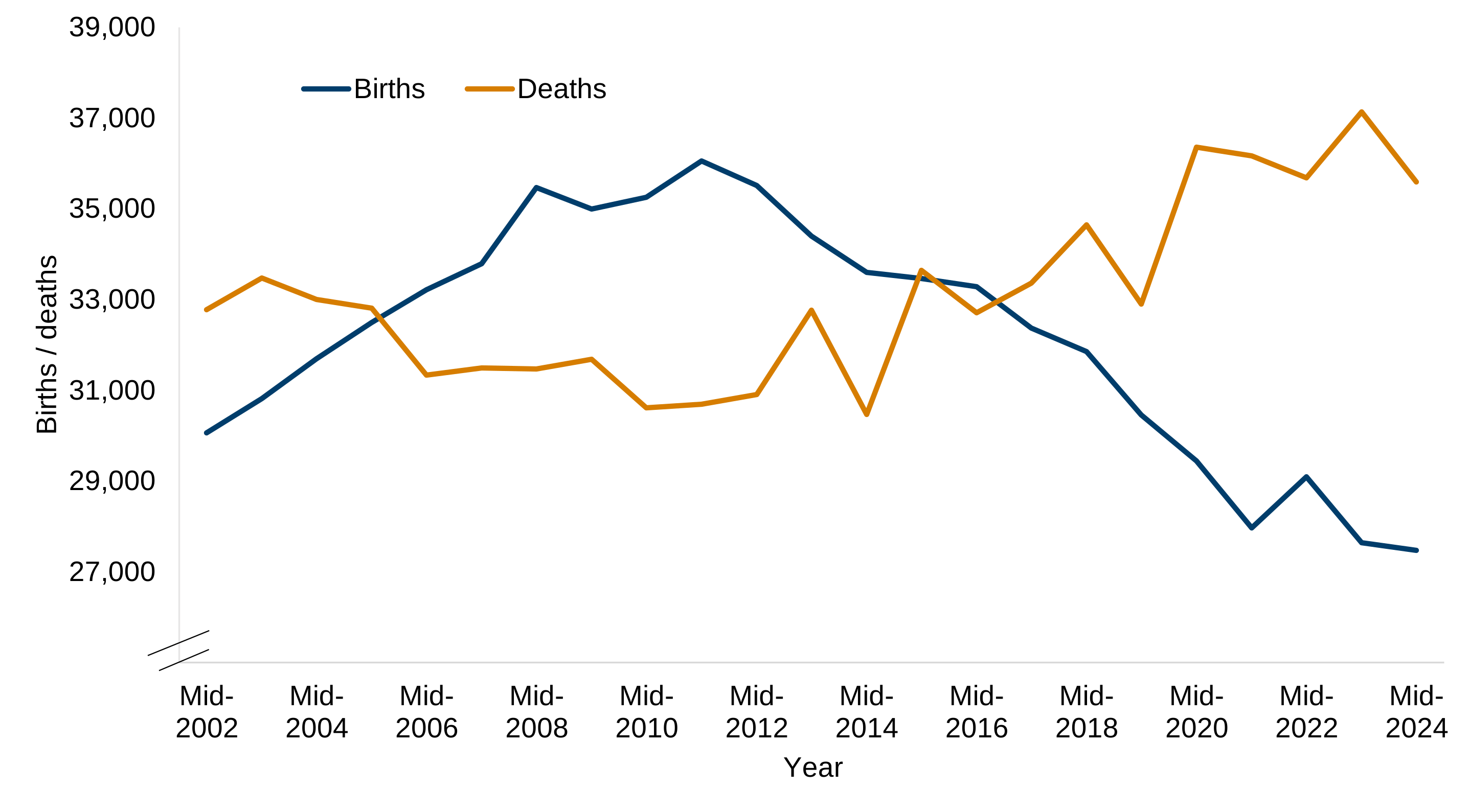
Description of figure 3: this line chart shows that, in the period 2005 to 2017, the number of births was larger than the number of deaths, but since that period the number of deaths has outnumbered the number of births. From the year to mid-2011, the number of births has steadily decreased. The number of deaths has been increasing although the number of deaths in the year to mid-2024 has decreased compared with the previous year.
Source: Population estimates from the ONS.
[Note 1] The y axis on this chart does not start at zero.
In the year to mid-2024, there continued to be more deaths than births in Wales, which is often referred to as negative natural change. There were around 35,600 deaths in Wales in the year to mid-2024, over 1,500 fewer deaths than in the year to mid-2023.
The number of births in the year to mid-2024 was around 27,500, which was a decrease of around 170 compared with the year to mid-2023.
Population by age
Figure 4: population in Wales by broad age group, mid-1991 to mid-2024 [Note 1]

Description of figure 4: this stacked bar chart shows that, since the year to mid-1991, the percentage of the population aged 65 years or older has increased, while the percentage of children and young people aged 0 to 15 years old has decreased slightly. The percentage of people aged 16 to 64 years old has remained at similar levels during the same period.
Source: Population estimates from the ONS.
[Note 1] The figures for mid-2022 and mid-2023 have been revised.
People aged 65 years or older were estimated to account for just over a fifth of the total population in Wales in mid-2024 (21.7%, or 693,000 people). The number has increased by 13.2% in the last 10 years, since mid-2014. The number of people aged 75 years or older has increased by just under a quarter during the same period (up 23.7%), from around 275,000 people in mid-2014 to around 340,000 people in mid-2024.
61.1% of the population were aged 16 to 64 years old in mid-2024 (around 1,948,000 people). The number has increased by 2.0% in the last 10 years, since mid-2014.
Children and young people aged 0 to 15 years old accounted for the remaining 17.1% of the population in mid-2024 (around 546,000 children and young people). This has decreased by 1.1% in the last 10 years, since mid-2014.
Population by local authority
The population is estimated to have increased in all but one of the 22 local authorities in Wales between mid-2023 and mid-2024, with the largest increases in Newport (1.7% increase), Cardiff (1.1% increase) and Wrexham (1.0% increase).
The Isle of Anglesey is the only local authority in Wales whose population is estimated to have decreased between mid-2023 and mid-2024, decreasing by 0.2%, or by around 140 people.
In Wales, every local authority saw positive net international migration in the year to mid-2024, and 18 out of 22 local authorities saw positive net internal migration. Cardiff, Swansea, Rhondda Cynon Taf and Gwynedd saw negative net internal migration in the year to mid-2024.
Cardiff and Newport were the only local authorities who saw more births than deaths in the year to mid-2024.
Figure 5: percentage population change in Wales between mid-2023 and mid-2024, by local authority

Description of figure 5: this map shows that Newport has seen the largest percentage increase in its population between mid-2023 and mid-2024. The Isle of Anglesey was the only local authority in Wales to experience a percentage decrease in population during the same period.
Source: Population estimates from the ONS.
Admin-based population estimates
Mid-year admin-based population estimates (ABPEs) are being produced by the ONS for local authorities in Wales and England. These are official statistics in development (Office for Statistics Regulation (OSR)) while the ONS refines its methods and the data sources used. They do not replace the official mid-year population estimates and should not be used for decision-making. These outputs must not be reproduced without this warning.
The ONS has released ABPEs alongside the accredited official mid-year population estimates. ABPEs use innovative new methods and a wider range of data sources. Differences between the methods and the data sources used mean that the ONS does not expect both sets of estimates to match exactly. More information is available in Understanding mid-year admin-based population estimates for local authorities in England and Wales article (ONS). The ONS also published Admin-based population estimates: local authority case studies, England and Wales, mid-2023 (ONS) in November 2024, which included Cardiff as one of the case studies.
For mid-2024, the admin-based population estimate for Wales was around 3,177,600. This is 0.3% lower than the official mid-year population estimates.
In May 2025, the ONS published an assessment of readiness for admin-based population estimates to become the official estimates of population for England and Wales (ONS). The ONS is working to successfully meet the acceptance criteria (ONS) and are aiming for the ABPEs to become the official estimates of the population in 2026.
Further information on the ABPEs relating to quality assurance, their appropriate usage, and strengths and limitations, is available in the Mid-year admin-based population estimates in England and Wales Quality and Methodology Information (ONS) report.
Population estimates for the UK
UK population estimates, mid-2024
The ONS aims to release a full set of UK population estimates for mid-2024 in autumn 2025. This will include estimates for Northern Ireland produced by the Northern Ireland Statistics and Research Agency and estimates for Scotland produced by National Records of Scotland. Estimates for mid-2011 to mid-2023 will be revised to align with revised population estimates for Scotland.
Quality and methodology information
Official statistics status
All official statistics should show the standards of the Code of Practice for Statistics (UK Statistics Authority).
The mid-year estimates of the population are accredited official statistics, published by the ONS. They were independently reviewed by the OSR in November 2020. They comply with the standards of trustworthiness, quality and value in the Code of Practice for Statistics.
It is Welsh Government’s responsibility to maintain compliance with the standards expected of accreditation. If we become concerned about whether these statistics are still meeting the appropriate standards, we will discuss any concerns with OSR promptly. Accreditation can be cancelled or suspended at any point when the highest standards are not maintained, and reinstated when standards are restored.
Accredited official statistics are called National Statistics in the Statistics and Registration Service Act 2007.
Statement of compliance with the Code of Practice for Statistics
Our statistical practice is regulated by the Office for Statistics Regulation (OSR). OSR sets the standards of trustworthiness, quality and value in the Code of Practice for Statistics that all producers of official statistics should adhere to.
All of our statistics are produced and published in accordance with a number of statements and protocols to enhance trustworthiness, quality and value. These are set out in the Welsh Government’s Statement of Compliance.
These accredited official statistics (OSR) demonstrate the standards expected around trustworthiness, quality and public value in the following ways.
For information about how these accredited official statistics, published by the ONS, demonstrate the standards expected around trustworthiness, quality and public value, see the ONS's quality and methodology report on mid-year estimates of the population (ONS).
You are welcome to contact us directly with any comments about how we meet these standards. Alternatively, you can contact OSR by emailing regulation@statistics.gov.uk or via the OSR website.
Well-being of Future Generations Act (WFG)
The Well-being of Future Generations Act 2015 is about improving the social, economic, environmental, and cultural wellbeing of Wales. The Act puts in place seven wellbeing goals for Wales. These are for a more equal, prosperous, resilient, healthier, and globally responsible Wales, with cohesive communities and a vibrant culture and thriving Welsh language. Under section (10)(1) of the Act, the Welsh Ministers must (a) publish indicators (“national indicators”) that must be applied for the purpose of measuring progress towards the achievement of the wellbeing goals, and (b) lay a copy of the national indicators before Senedd Cymru. Under section 10(8) of the Well-being of Future Generations Act, where the Welsh Ministers revise the national indicators, they must as soon as reasonably practicable (a) publish the indicators as revised and (b) lay a copy of them before the Senedd. These national indicators were laid before the Senedd in 2021. The indicators laid on 14 December 2021 replace the set laid on 16 March 2016.
Information on the indicators, along with narratives for each of the wellbeing goals and associated technical information is available in the Wellbeing of Wales report.
As a national indicator under the Act, they must be referred to in the analyses of local well-being produced by public services boards when they are analysing the state of economic, social, environmental, and cultural well-being in their areas.
The Act states national milestones must be set that “…the Welsh Ministers consider would assist in measuring whether progress is being made towards the achievement of the well-being goals.” In doing so Welsh Ministers must specify how we know that a national milestone has been achieved and the time by which it is to be achieved.
National milestones are not performance targets for any individual organisation but are collective measures of success for Wales.
Some of the national indicators and national milestones use the mid-year estimates of the population as denominators, to calculate rates, for example.
Further information on the Well-being of Future Generations (Wales) Act 2015.
The statistics included in this release could also provide supporting narrative to the national indicators and be used by public services boards in relation to their local wellbeing assessments and local wellbeing plans.