
National Survey for Wales headline results: April 2024 to March 2025
This report contains only a selection of results from April 2024 to March 2025.
In this page
Introduction
This report sets out results on a selection of the many topics included in the National Survey for Wales during 2024-25. The survey involved around 6,000 people aged 16 and over. It took place in two parts: an interviewer-led section (either by telephone or face-to-face) and then a self-completion section (online or, if a face-to-face interview, on the interviewer’s tablet computer).
Fieldwork issues were encountered during 2024-25 resulting in lower response rates than previous years, smaller sample sizes, and some differences in the sample composition (see Quality information). Because of the smaller sample sizes confidence intervals around estimates are wider than in previous years, particularly for smaller geographies and population sub-groups.
However, it is still appropriate to use these statistics. At a national level the survey continues to provide reasonable estimates, particularly when used alongside alternative sources. Care should be taken when interpreting any apparent differences between 2024-25 and previous years: differences could reflect fieldwork issues, or a real change, or both. Where differences are found, results from other sources provide useful context to help with interpreting the differences and we have included such context in this release where available. We will publish topic-specific reports through the year, exploring the results in more detail, and as more comparator data from other 2024-25 sources becomes available. Alongside this we will also add many additional charts and tables to the results viewer.
Welsh language
of people said they speak Welsh daily and can speak more than just a few words of Welsh, a similar figure to 2022-23.
Internet use
of people said they use the internet (at home, work, or elsewhere), an increase from 93% in 2022-23.
- 91% of internet users said they use the internet several times a day, similar to 2022-23.
Work
of people in work said they work remotely for some or all of their working hours, compared with 34% in 2022-23.
This is in line with levels of remote working found in the UK Opinions and Lifestyle Survey (41% in April 2025, 37% in April 2023).
Figure 1: Number of hours worked remotely by people who do any remote working 2022-23 and 2024-25
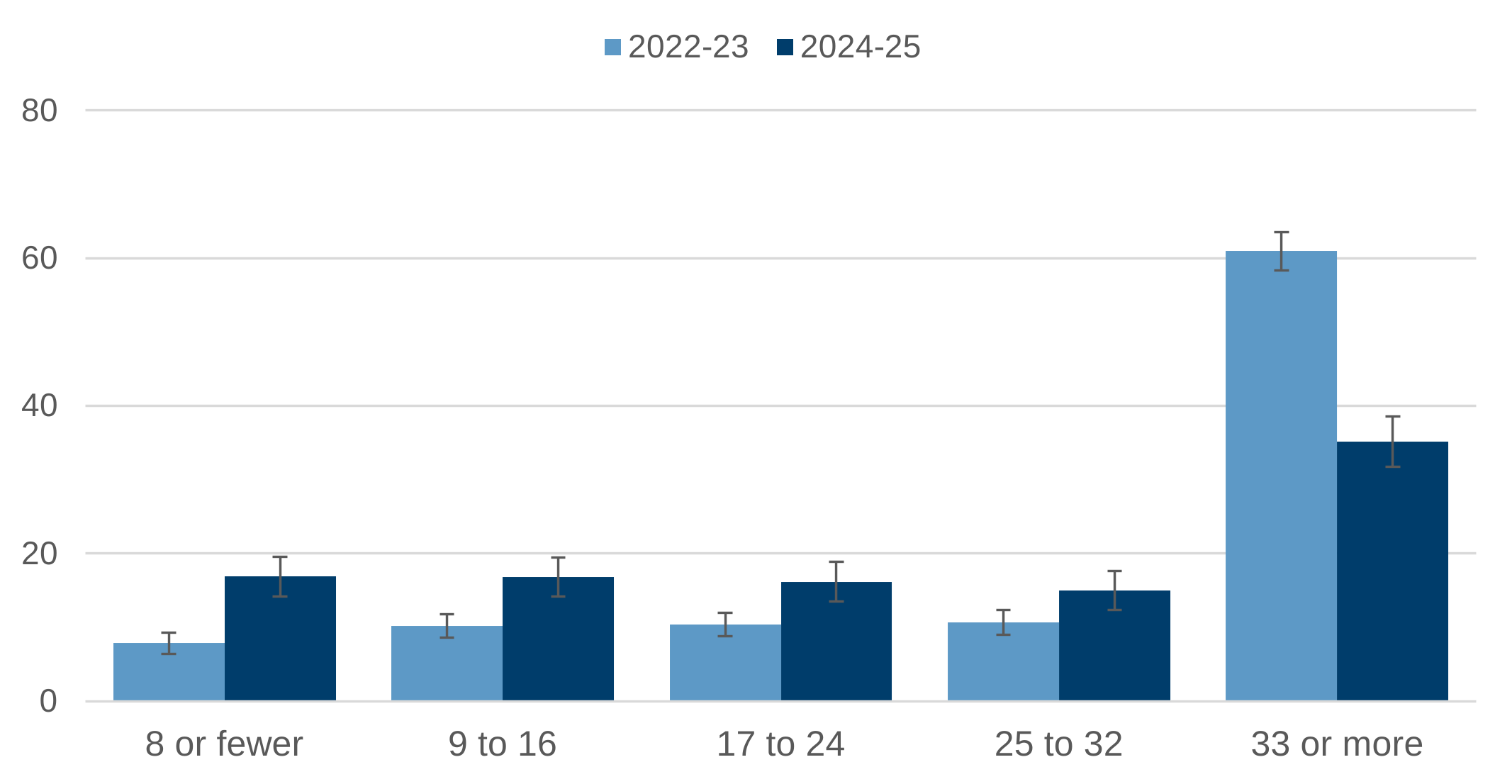
Description of Figure 1: In the National Survey for Wales 2024-25, 35% of people who do any remote working said they did this for more than 32 hours a week, compared with 61% in 2022-23. 17% worked 8 or fewer hours remotely each week, compared with 8% in 2022-23.
Source: National Survey for Wales
Of those who do not usually work remotely, 10% said they don’t want to work remotely and 87% said they can’t work remotely. The other 3% said they both don’t want to work remotely and are unable to. This question was new for 2024-25.
Childcare
of parents with children aged 0 to 14 used childcare so that they could work, study, or attend training.
This level is similar to 2022-23 and is in line with UK levels (the 2023-24 Family Resources Survey found that 50% of families with children used childcare).
Of the parents who used childcare, the most common type was childcare provided by family and friends (86% of parents using childcare). Again, this is a similar level to 2022-23.
25% of parents with a child aged up to 14 used some type of formal childcare, higher than the 18% found in 2022-23 but similar to the 2018-19 level.
Community cohesion
of people said they felt a sense of community within their local area.
This means that they feel that:
- they belong to their local area
- people in the local area from different backgrounds get on well together
- people in their local area treat each other with respect and consideration
The proportion agreeing is lower than in 2021-22, when 64% agreed with these statements. The change was driven primarily by fewer people saying that they feel they belong to their local area: 79% in 2021-22 compared with 73% in 2024-25; the 2024-25 level is similar to the pre-pandemic level (measured in 2016-17 and 2018-19).
32% of people said they volunteer, a similar level to 2022-23.
Local area
of people said they are satisfied with their local area as a place to live, similar to 2021-22, 2018-19 and 2016-17.
Figure 2: Proportion of people who are satisfied that good services are available in their local area, and that they can influence decisions in their local area, 2017-18 to 2024-25
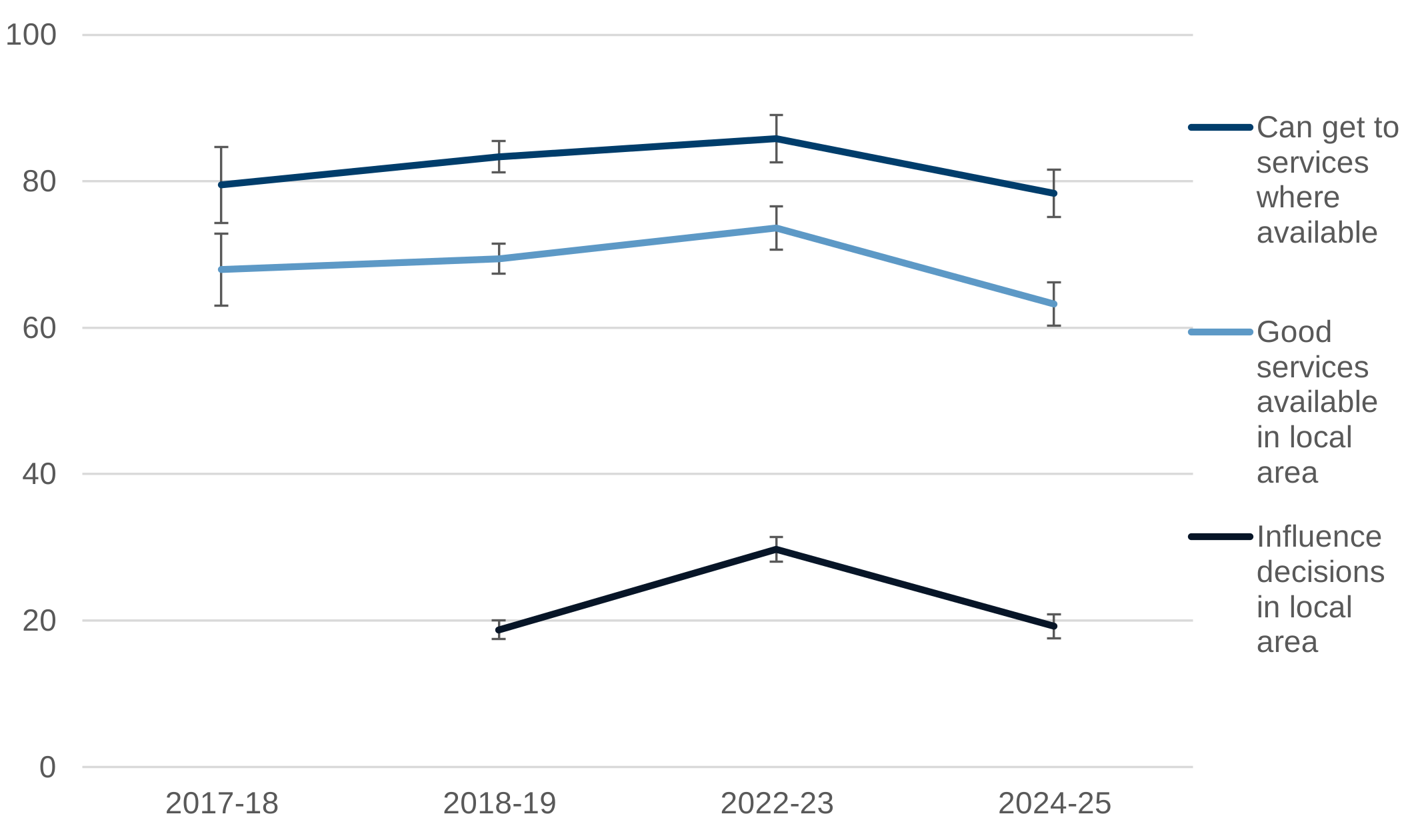
Description of Figure 2: When asked about their involvement in decisions relating to local authority services and budgets, 19% of people said they can influence decisions affecting their local area. This is lower than 2021-22 (30%) but is similar to the level when asked previously in 2018-19. 63% of people said they are satisfied that good services and facilities are available in their local area. This has decreased from 74% in 2021-22 but is similar to the level in 2017-18.
Source: National Survey for Wales
There has also been a decrease in the proportion of people who say they are satisfied that they can get to these services and facilities: 78% in 2024-25. Again, this is a decrease compared with 2021-22 (86%) but is similar to the level when asked previously in 2017-18.
68% of people feel safe at home, walking in the local area, and when travelling, a similar level to 2021-22.
Car use
said they had access to a car, a similar level to 2022-23.
33% said they had avoided or cut down travel by car, a lower proportion than 2022-23 (40%) but similar to 2018-19 (although the question has been revised since then).
Active travel
People were asked how often they walked for 10 minutes or more to get somewhere (i.e. not just walking for pleasure or exercise), and how often they travelled by bike (again, to get somewhere, not just cycling for pleasure or exercise).
Figure 3: Proportion of people who walked or travelled by bike, 2021-22 to 2024-25
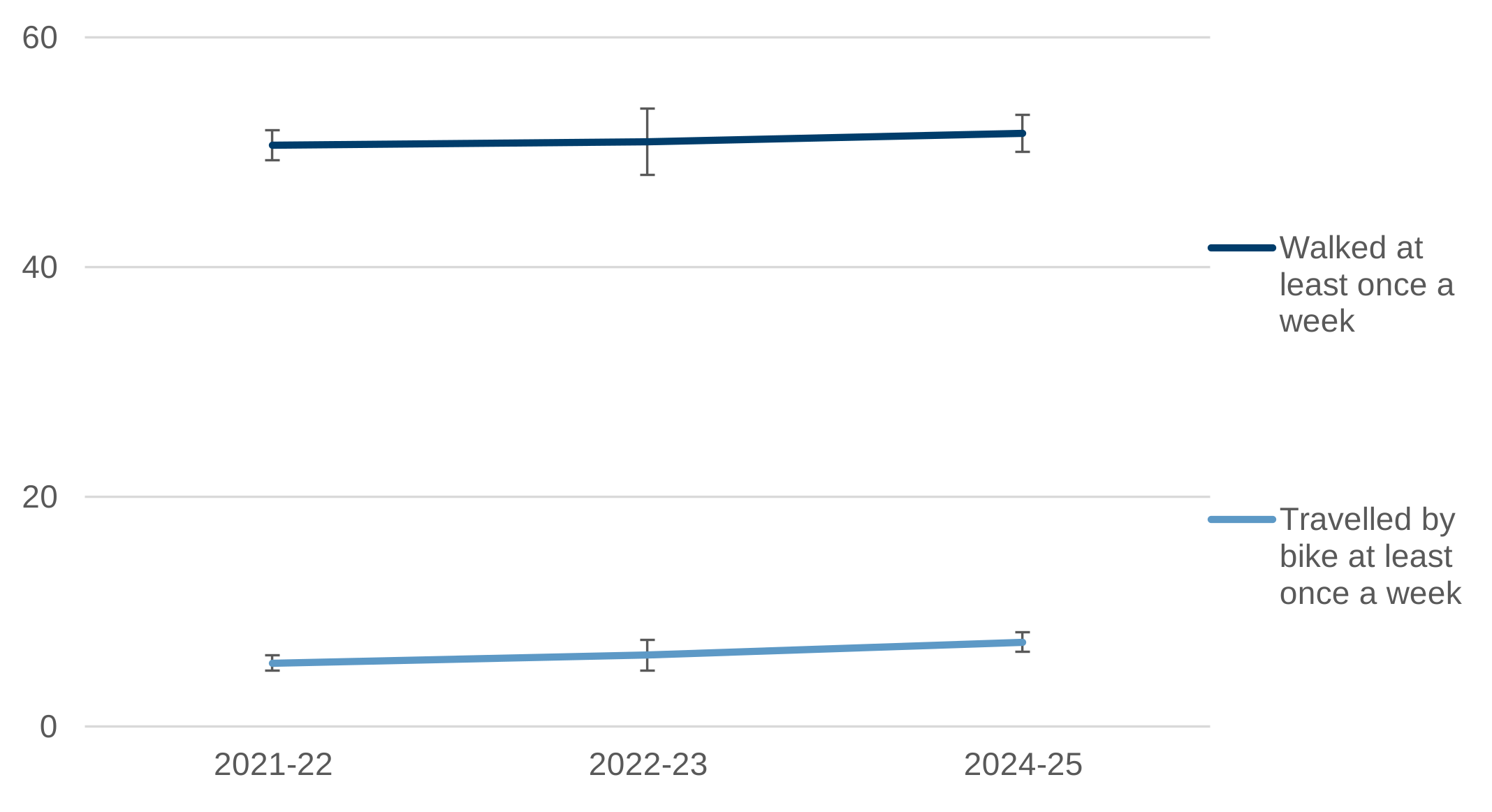
Description of Figure 3: 52% of people said they walked for at least 10 minutes or more to get somewhere at least once a week, a similar proportion to 2021-22 and 2022-23. In 2024-25, 7% of people travelled by bike at least once a week: similar to the 2022-23 level but higher than the 5% found in 2021-22.
Source: National Survey for Wales
Parents were asked about how their children travelled to school. 48% of primary school children were said to walk to school, and 33% of secondary school children. Levels are similar to the last time this was asked, in 2021-22.
Sport and physical activity
of people said they participate in sport or physical activity three or more times per week in 2024-25, a decrease from 39% in 2022-23.
People were asked which sports activities they had done in the last 4 weeks. 59% of people said had done some type of sport, games, fitness activity, or outdoor pursuit. 56% of people said they had done fitness activities (such as fitness classes, running/jogging, cycling, or swimming) and 19% had played sports or games (such as football, rugby, table tennis or golf). 6% of people had done outdoor pursuits like climbing, mountaineering, kayaking, or sailing.
People were also asked whether there were any sports activities they would like to do, or do more of. 35% of people said they want to do more sport or physical activity, an increase from 27% in 2022-23.
22% of people said they want to do more fitness activities, 12% said they want to do more sports or games, and 6% said they would like to do more outdoor pursuits.
Healthy behaviours
of people reported 2 or more healthy behaviours, a similar level to 2022-23.
Welsh Government public health policy focuses on five healthy behaviours:
- not smoking
- not drinking above guidelines
- being a healthy weight
- eating 5 portions of fruit or vegetables
- being active
34% of people reported 4 or 5 of these healthy behaviours, a similar figure to 2022-23.
10% of people said they were smokers, compared with 13% in 2022-23. This continues a gradual downward trend over recent years.
For the other healthy behaviours, similar levels were found in 2024-25 compared with 2022-23:
17% of people said they did not drink alcohol, while 15% drank more than the guideline maximum of 14 units per week.
36% of people were a healthy weight and 62% were overweight or obese, based on self-reported weight and height.
33% of people said they ate 5 or more fruit and vegetable portions the previous day.
59% of people said they were active for at least 150 minutes the previous week, which meets weekly activity guidelines.
Health conditions and health services
of people said they had long-term illnesses or conditions that limit their daily activities, a similar level to 2022-23.
People who had an appointment with a GP in the last 12 months were asked about their most recent visit. 86% were satisfied with the care they received, the same proportion as when the question was last asked in 2021-22.
18% of people said they have difficulty hearing. 68% of those who use hearing aids said they had them provided free through the NHS and 30% paid privately. These findings are similar to when the questions were last asked, in 2021-22.
78% said they had their eyes tested at least every two years. This is an increase compared with 2021-22, when the proportion was 72%.
46% of people said they would go to an optometrist or optician in the first instance if they had pain or redness in their eye, and 39% would go to their GP. These results are similar to those found in 2021-22.
Satisfaction with Welsh Government, health services and education system
People were asked to rate their satisfaction with health services in Wales and the education system in Wales using a scale from nought to ten, where 0 is ‘extremely bad’ and 10 is ‘extremely good’. They were also asked to rate their satisfaction with how the Welsh Government is doing its job, from 0 (extremely dissatisfied) to 10 (extremely satisfied).
In 2024-25, the average ratings out of 10 were:
- 6.2 for the education system
- 5.1 for health services
- 4.8 for the Welsh Government
Figure 4: Satisfaction score for education system, health services, and Welsh Government, 2018-19 to 2024-25
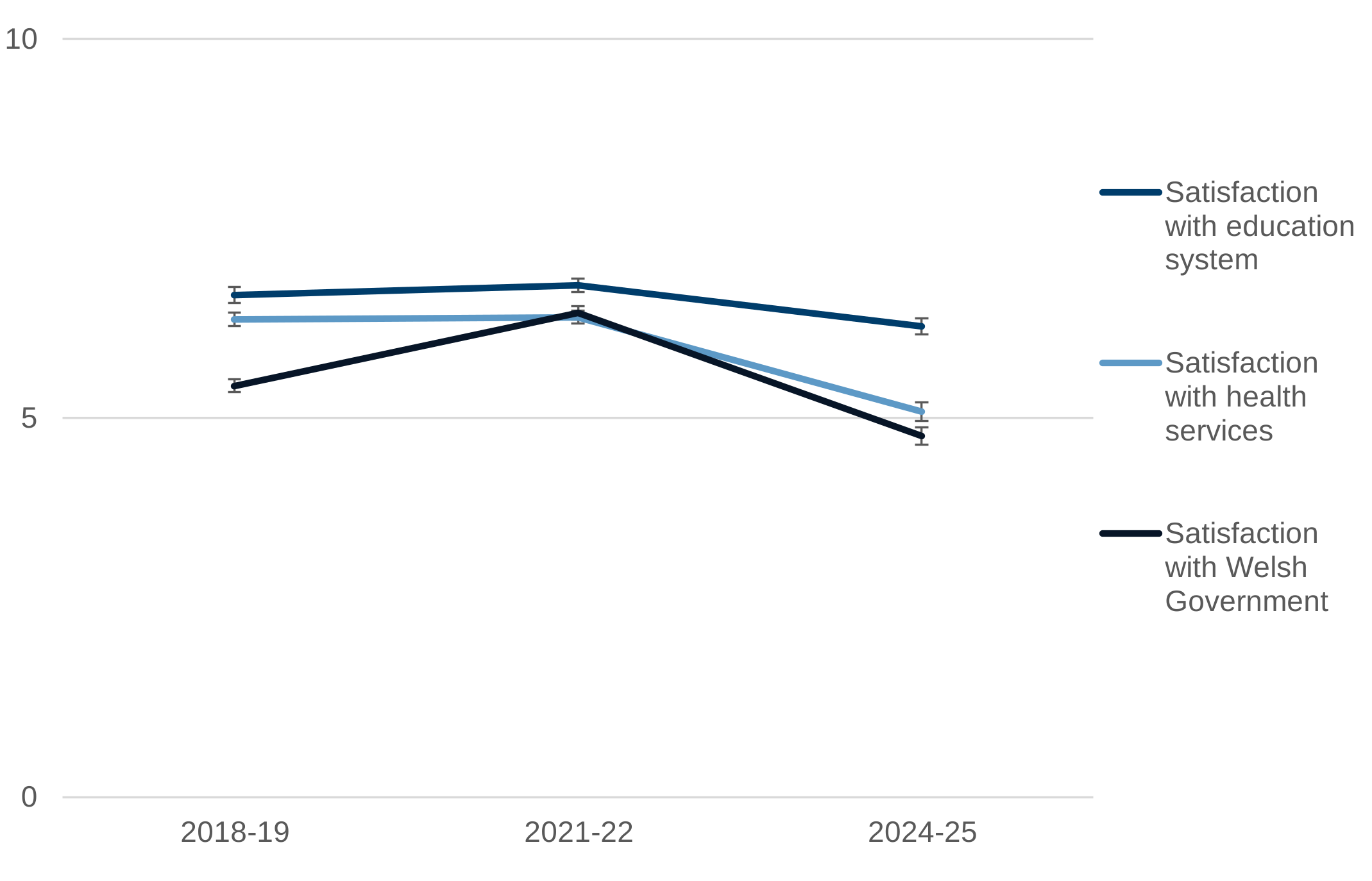
Description of Figure 4: The 2024-25 results were lower than in 2021-22 when the average rating for the education system was 6.8, for health services 6.3, and for Welsh Government 6.4. The 2024-25 results are closer to (but still lower than) results from when the questions were asked in 2018-19.
Source: National Survey for Wales
The questions are taken from the European Social Survey, and so comparator results from 2023-24 are available for other countries across Europe. The results for the UK, based on fieldwork carried out in the second half of 2023, are:
- 4.8 for health services (not a statistically significant difference from the 5.1 mentioned above for Wales)
- 5.4 for the education system
- 3.0 for UK government
As with the National Survey figures, the UK figures for health and government are lower than in 2018-19. However, the 2023-24 UK education figure is not significantly different to the 2018-19 UK education figure.
Material deprivation
of all adults in Wales were classified as materially deprived.
Material deprivation is where people are not able to afford basic things like keeping the house warm. Further information is available in Terms and definitions.
Figure 5: Proportion of people in material deprivation, 2021-22 to 2024-25
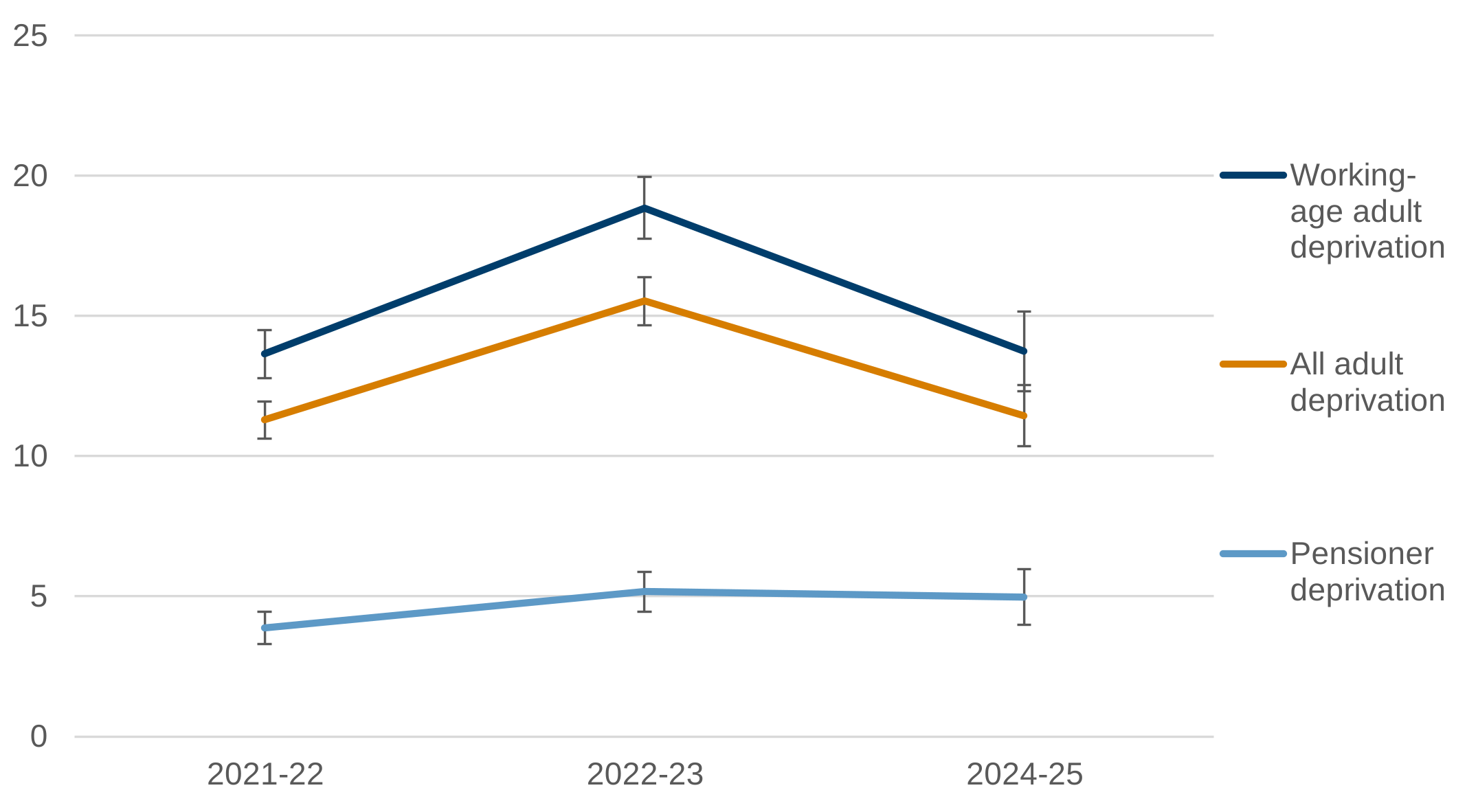
Description of Figure 5: Material deprivation among all adults was 11% in 2024-25, compared with 16% in 2022-23. The 2024-25 figure is similar to that found in 2021-22. The proportion of working-age adults living in material deprivation has fallen to 14% in 2024-25, from 19% in 2022-23. The figure for 2024-25 is similar to 2021-22. The proportion of pensioners living in material deprivation is 5%, similar to both 2021-22 and 2022-23.
Source: National Survey for Wales
For context, deprivation levels measured using the Family Resources Survey have remained fairly constant in recent years.
68% of people said they have no difficulty keeping up with bills and credit commitments. This proportion has increased since 2022-23, when it was 63%, but is lower than in 2021-22 when it was 76%.
People were also asked about their ability to afford food. 1% of people said they didn’t eat meals with meat, fish, or a vegetarian equivalent at least every other day because they couldn’t afford to, which was similar to 2022-23. 2% of people said that there had been at least one day in the previous fortnight when they went without a substantial meal because they couldn’t afford to, again similar to 2022-23.
73% of people said they had minimised energy use at home during the year (whether for financial, environmental, or any other reasons), a similar level to 2022-23.
Wellbeing
People were asked about their mental wellbeing using the Warwick Edinburgh Mental Well-being Scale (WEMWBS), a scale of 14 self-assessed questions with scores ranging from 14 to 70. A higher score (58 to 70) is classified as having high mental wellbeing, 45 to 57 as medium mental wellbeing, and 44 or lower as low mental wellbeing.
The average WEMWBS score in 2024-25 is 48.4. 33% of people have low mental wellbeing, 52% have medium mental wellbeing, and 15% have high mental wellbeing. On average younger people have lower mental wellbeing: those aged 16 to 44 have a score of 47.5, compared with a score of 49.7 for those aged 65 and over. These figures are all similar to those from 2022-23 except for a decrease for those aged 65 and over (the mean wellbeing score for this group in 2022-23 was 50.7).
Quality and methodology information
The National Survey for Wales is a large-scale, random-sample telephone survey covering adults aged 16+ across Wales. Addresses are selected at random, and invitations are sent by post requesting that a phone number be provided for the address. A phone number can be provided via an online portal or a telephone enquiry line. Where no phone number is provided, telematching is undertaken with available databases of phone numbers to see if one can be found for the address.
The interviewer then calls the phone number for the address, establishes how many adults live there, and selects one at random (the person with the next birthday) to take part in the survey. The selected person is interviewed by phone. Once they have completed the phone section, they are asked to complete an online section and details are sent to them.
If no number is obtained for the address then for a randomly-chosen 46% of such cases the interviewer makes a visit to the address to select a respondent and either carries out an in-home, face-to-face interview with them or (if a phone interview is preferred) collects a phone number for them.
The survey lasts around 40 to 45 minutes on average and covers a range of topics. Respondents are offered a £15 voucher to say thank you for taking part. In 2024-25 the achieved sample size each month was around 500 people on average, and the response rate was 18.7% of those eligible to take part.
When comparing the unweighted achieved sample with the 2022-23 unweighted achieved sample, the 2024-25 sample has some differences such as: more Welsh speakers; fewer people aged 25 to 54; more people aged 75+; more people with higher-level qualifications; fewer people with no qualifications; fewer working people; and more people in rural areas. In terms of household type, there were more single-person households in the 2024-25 sample and fewer couples (with or without children). There were fewer people in the areas of lowest income and employment, and more in areas where people have higher levels of qualification and skills. There was also a less even spread of interviews across the year (for example, proportionately fewer in February and March) compared with previous years.
Survey weights are used to bring the sample closer to the population in terms of age, sex, and local authority size, as well as to compensate for variation from target in the numbers of interviews in each health board within each quarter. The weights reduce but will not eliminate the effects of differences in the achieved sample compared with previous years and with the general population. As noted above, care should therefore be taken when comparing results with previous years, and any differences should be explored in the context of other sources. We will publish topic-specific bulletins over the coming months, as further comparators become available from other sources, exploring the results and any differences in more detail. Alongside this we will also be adding many more charts and tables to the results viewer.
Where the text of this release notes a difference between two survey results, we have checked to ensure that the confidence intervals (sometimes called the “margin of error”) for the two results do not overlap. This suggests that the difference is statistically significant, i.e. that there is less than a 5% or 1 in 20 chance that the results are due to a quirk of the survey sample rather than reflecting a real difference in the wider population. Where no difference is noted, the confidence intervals do overlap.
The survey questionnaire is available on our web pages.
Detailed charts and tables of results are available in our interactive results viewer. For information on data collection and methodology please see our Quality report and Technical report.
Statement of compliance with the Code of Practice for Statistics
Our statistical practice is regulated by the Office for Statistics Regulation (OSR). OSR sets the standards of trustworthiness, quality and value in the Code of Practice for Statistics that all producers of official statistics should adhere to.
All of our statistics are produced and published in accordance with a number of statements and protocols to enhance trustworthiness, quality and value. These are set out in the Welsh Government’s Statement of Compliance.
These official statistics in development (OSR) demonstrate the standards expected around trustworthiness, quality and public value in the following ways.
Trustworthiness
All personal data underlying these statistics is processed in accordance with the requirements of the Data Protection Act 2018.
National Survey for Wales statistics are published in an accessible, orderly, pre-announced manner on the Welsh Government website at 9:30am on the day of publication. All releases are available to download for free.
All outputs adhere to the Code of Practice by pre-announcing the date of publication through the upcoming calendar web pages. Access to the data during processing is restricted to those involved in the production of the statistics, quality assurance and for operational purposes. Pre-release access is restricted to eligible recipients in line with the Code of Practice (UK Statistics Authority).
The published figures are compiled by professional analysts using the latest available data.
Quality
As noted above, the achieved sample size for the National Survey 2024-25 (6,000 respondents) is smaller than originally planned. The smaller sample size is due to the contractor encountering fieldwork issues including response rates being lower than in previous years. There are also changes in the composition of the achieved unweighted sample compared with previous years.
In July 2025 we therefore requested and received from the Office for Statistics Regulation a temporary suspension of accredited official statistics status for this first release and for other outputs based on the 2024-25 data. The temporary suspension reflects the fact that the 2024-25 outputs will generally not provide sufficiently precise results for small geographic areas and other small subgroups, and that care should be taken in comparing some 2024-25 results with those from previous years. All outputs based on 2024-25 data will be badged as official statistics in development.
It is still appropriate to use these statistics. At a national level, estimates continue to provide a reasonable indication of estimates for Wales, particularly if used alongside alternative sources. However, users should note the wider confidence intervals particularly for smaller geographies and population sub-groups.
All stages in the collection, validation and production of these statistics are led by professional statisticians and the statistics are produced free from any political interference. All statistics are quality-assured prior to publication.
Statistics published by Welsh Government adhere to the Statistical Quality Management Strategy which supplements the Quality pillar of the Code of Practice for Statistics and the European Statistical System principles of quality for statistical outputs.
Set-up work for a new online-first survey design is progressing well and mainstage fieldwork will begin in March 2026, with first results due in summer 2027. One key advantage of the new approach is that it will be possible to deliver much larger achieved sample sizes, and therefore much more precise estimates for small subgroups. Following the start of mainstage fieldwork under the new design in 2026-27, we will request that accredited official statistics badging be reinstated by OSR for survey outputs from 2026-27 onwards.
Value
This release has been published at the earliest opportunity. Further topic-specific bulletins will be published throughout the year.
These statistics are used in a variety of ways. Some examples of these are:
- providing advice to ministers
- to inform a wide range of policy decisions
This release is accompanied by the National Survey for Wales Results Viewer, a free-to-use tool that allows survey users to view and download charts and tables of results.
The commentary and notes in this release have been developed to try to make the information as accessible as possible to users.
You are welcome to contact us directly with any comments about how we meet these standards. Alternatively, you can contact OSR by emailing regulation@statistics.gov.uk or via the OSR website.
Well-being of Future Generations Act
The Well-being of Future Generations Act 2015 is about improving the social, economic, environmental, and cultural wellbeing of Wales. The Act puts in place seven wellbeing goals for Wales. These are for a more equal, prosperous, resilient, healthier, and globally responsible Wales, with cohesive communities and a vibrant culture and thriving Welsh language. Under section (10)(1) of the Act, the Welsh Ministers must (a) publish indicators (“national indicators”) that must be applied for the purpose of measuring progress towards the achievement of the wellbeing goals, and (b) lay a copy of the national indicators before Senedd Cymru. The first 46 national indicators were laid in March 2016. The National Survey now collects information for 16 of the 50 indicators.
In 2024-25, the survey collected information used to report against the following 11 national indicators.
Indicator no 3
Percentage of adults with two or more healthy lifestyle behaviours.
Indicator no 19
Percentage of people living in households in material deprivation.
Indicator no 23
Percentage who feel able to influence decisions affecting their local area.
Indicator no 24
Percentage of people satisfied with their ability to get to / access the facilities and services they need.
Indicator no 25
Percentage of people feeling safe at home, walking in the local area, and when travelling.
Indicator no 26
Percentage of adults (aged 16+) who report feeling very or fairly satisfied with their local area as a place to live.
Indicator no 27
Percentage of adults (aged 16+) agreeing with three statements about their local area; feeling they belong to the area; that people from different background get on well together; and that people treat each other with respect.
Indicator no 28
Percentage of people (aged 16+) who volunteer.
Indicator no 29
For adults (aged 16 or over), the mean mental well-being score according to the Warwick-Edinburgh Mental Well-being Scale (WEMWBS).
Indicator no 37
Number of people who speak Welsh daily and can speak more than just a few words of Welsh.
Indicator no 38
Percentage of people participating in sporting activities three or more times a week.
As national indicators under the Act these results must be referred to by public services boards when they are analysing the state of economic, social, environmental and cultural well-being in their areas.
The Act states national milestones must be set that “…the Welsh Ministers consider would assist in measuring whether progress is being made towards the achievement of the well-being goals.” In doing so Welsh Ministers must specify how progress against a national milestone will be measured and the date by which it should be achieved.
National milestones are not performance targets for any individual organisation, but are collective measures of progress for Wales.
Information on progress against the indicators, along with narratives for each of the wellbeing goals and associated technical information, is available in the Wellbeing of Wales report.
Next update
More detailed bulletins on specific topics will be produced over the coming months.
The next round of National Survey results is expected to be published in summer 2027. The update will cover results from the 2026-27 fieldwork year.