NHS performance for Welsh Local Health Boards: June 2026
Report providing a summary of NHS performance for the Welsh Local Health Boards, covering emergency department and planned care waiting times, and ambulance response for June 2026.
In this page
Introduction
This quarterly statistical release provides a summary of NHS performance data for individual local health boards. Monthly analysis for Wales as a whole is published in the accompanying NHS Activity and Performance summary. Detailed monthly data for local health boards are also available on StatsWales.
Analyses are presented here for each health board based on established Welsh Government performance targets for emergency departments, outpatient appointments, diagnostics and therapies, and cancer services. The targets presented were established by the previous government. We will continue to report on this basis until those targets are replaced or revised. Figures in this edition cover April, when the previous Government was still in place, and May, when the current government was formed. To date, no changes to the existing targets have been confirmed. You can navigate to specific health boards using the section hyperlinks in the top left of this report.
These analyses are on a health board provider basis, not health board of residence. This means patients resident in one health board but on waiting lists provided by other health boards are counted in those organisations’ figures. This is consistent with the performance management framework in Wales, in that standards and targets are assessed on a provider basis.
A range of new ambulance performance metrics were introduced in July 2025. Health board figures are published on StatsWales. However, it is not possible to summarise these in the format of the key measures for other topics as below. Over time we will explore options for summarising trends in health board performance for the new ambulance measures.
Data in this report have been provided by Digital Health and Care Wales (DHCW). For some measures, Powys is not comparable with the other health boards in Wales. This is because there are significant differences in the number and type of services provided in Powys compared with the other health boards.
Main points
- Of the measures in this report, Powys and Swansea Bay have no pathways waiting longer than two years. Swansea Bay has no one-year waits for a first outpatient appointment.
- Aneurin Bevan, Cardiff and Vale, Cwm Taf Morgannwg, and Hywel Dda have less than 1% of pathways waiting longer than two years. Cwm Taf Morgannwg, Hywel Dda and Powys haveless than 1% of pathways waiting longer than one year for a first outpatient appointment.
- In emergency departments, Aneurin Bevan had the highest proportion of patients admitted, transferred or discharged within the 4 hour target, at 73.9%, while Cwm Taf Morgannwg had the lowest at 57.5%.
- Aneurin Bevan had the lowest percentage waiting longer than 12 hours in emergency departments at 7.2%, while Betsi Cadwaladr had the highest at 17.1%.
- Powys had the lowest proportion of RTT pathways waiting longer than one year at 1.1% of pathways, while Betsi Cadwaladr had the highest at 18.6% of pathways.
- Powys, and Swansea Bay have no RTT pathways waiting longer than two years, while the proportion of pathways waiting longer than two years is less than 1% for Aneurin Bevan, Cardiff and Vale, Cwm Taf Morgannwg, and Hywel Dda. Betsi Cadwaladr has the highest proportion waiting longer than two years at 1.4%.
- For first outpatient appointments, the lowest proportion waiting longer than one year is in Swansea Bay, where there are no pathways. Cwm Taf Morgannwg, Hywel Dda, and Powys have less than 1%. Cardiff and Vale has the highest waiting longer than one year at 10.2% of pathways.
- Cwm Taf Morgannwg currently has the lowest proportion of diagnostic waits longer than the target time of 8 weeks at 2.0%. Betsi Cadwaladr has the highest at 43.0% of pathways.
- For therapies, Powys and Swansea Bay have no pathways waiting longer than the target of 14 weeks. Hywel Dda has the highest proportion waiting longer than 14 weeks, at 20.8% of pathways.
- For cancer services, the highest proportion of patients starting treatment within 62 days from the point of suspicion is currently in Cwm Taf Morgannwg at 62.0%, and the lowest is in Swansea Bay at 48.4%.
Aneurin Bevan
Figure 1: Aneurin Bevan performance summary to April 2026 for scheduled care and May 2026 for unscheduled care [Note 1]
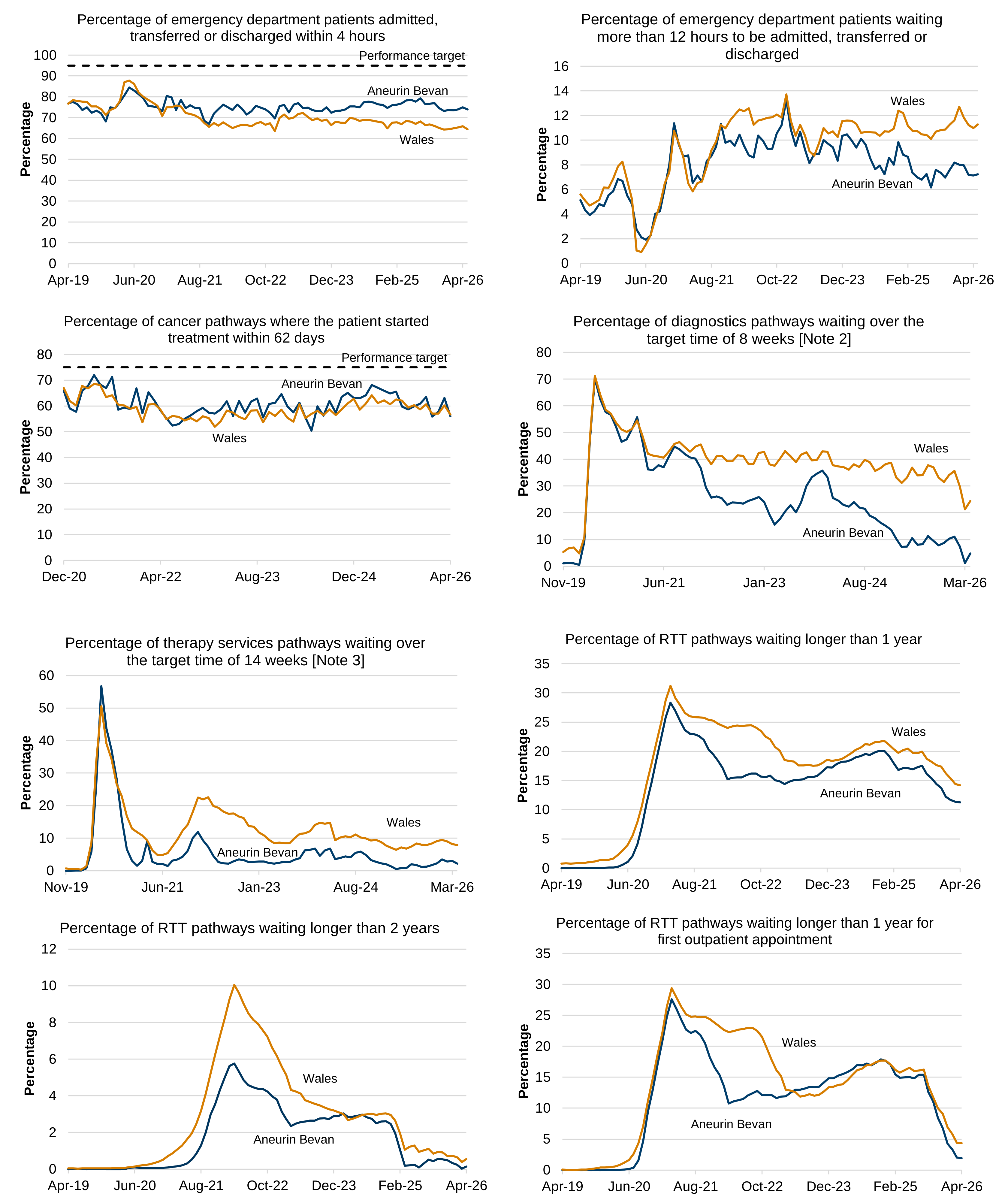
Description of figure 1: a series of charts showing comparative performance for Aneurin Bevan local health board and Wales for selected measures in urgent and emergency care and planned care. The key points are summarised in the narrative section below.
Source: Emergency department data set (DHCW), Diagnostic and therapy services waiting times (DHCW), Referral to treatment times (DHCW), Suspected Cancer Pathway (DHCW)
Health and Social Care statistics, on StatsWales
[Note 1]: The percentage axes of these charts are on different scales and this should be taken into account comparing between these measures.
[Note 2]: Neurophysiology data for Aneurin Bevan became available in June 2023, adding around 1,000 pathways that had not been reported previously. Neurophysiology diagnostics services were provided by Aneurin Bevan before June 2023, however those data are not available. This affects the comparability of diagnostic data for Aneurin Bevan and Wales over time.
[Note 3]: From April 2024 audiology and weight management pathways were no longer reported in the therapies data, meaning they are not directly comparable with data up to March 2024.
Unscheduled care in May 2026
73.9% of emergency department patients were admitted, transferred or discharged within 4 hours. There is no discernible long-term trend in performance.
7.2% of patients waited more than 12 hours to be admitted, transferred or discharged. This has been changeable in recent years.
Scheduled care in April 2026
4.8% of pathways were waiting over the target time for diagnostics tests. This figure has fallen over the past few years.
2.2% of pathways were waiting over the target time for therapy services. This figure has been relatively stable over the past year.
11.3% of RTT pathways were waiting longer than 1 year. This figure has fallen in the past year.
0.1% of RTT pathways were waiting longer than 2 years. This figure has been less than 1% for over a year.
1.9% of pathways were waiting longer than 1 year for their first outpatient appointment. This figure has fallen considerably in the past six months.
56.0% of cancer pathways started their first definitive treatment within the target time. Performance has fluctuated over time.
Summary
Aneurin Bevan performed better than the Wales average for the percentage of emergency department patients admitted, transferred or discharged within 4 and over 12 hours.
Performance is currently better than the overall Wales figures for diagnostic tests and therapies and similar to the overall Wales figures for cancer treatment waiting times. For RTT waiting lists and for first outpatient appointment waits, performance is better than the overall Wales average.
Betsi Cadwaladr
Figure 2: Betsi Cadwaladr performance summary to April 2026 for scheduled care and May 2026 for unscheduled care [Note 1]
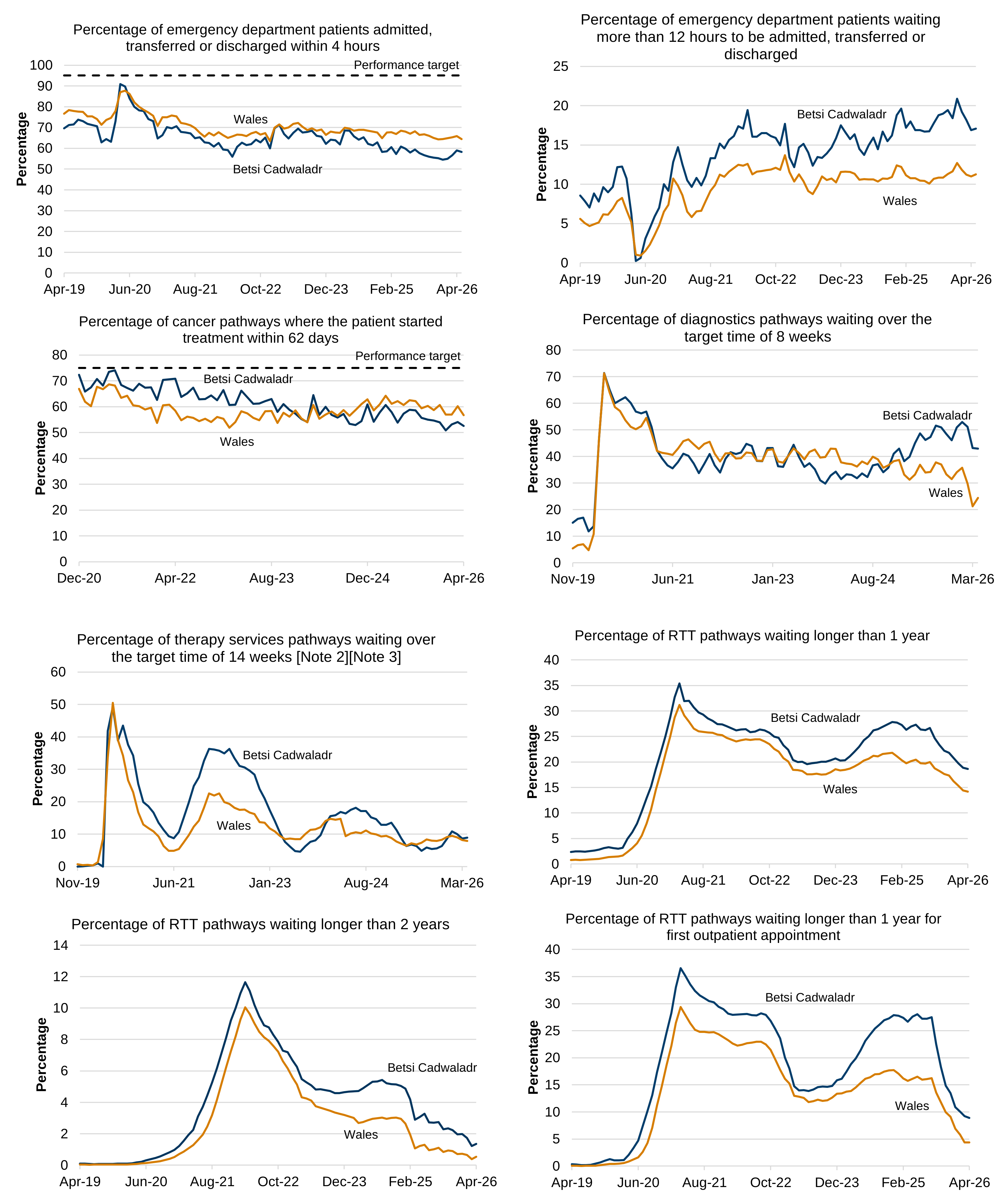
Description of figure 2: a series of charts showing comparative performance for Betsi Cadwaladr local health board and Wales for selected measures in urgent and emergency care and planned care. The key points are summarised in the narrative section below.
Source: Emergency department data set, DHCW, Diagnostic and therapy services waiting times, DHCW, Referral to treatment times, DHCW, Suspected Cancer Pathway, DHCW
Health and Social Care statistics, on StatsWales
[Note 1]: The percentage axes of these charts are on different scales and this should be taken into account comparing between these measures.
[Note 2]: In April 2020 Betsi Cadwaladr did not submit any data for therapies, please see the quality information for more information.
[Note 3]: From April 2024 audiology and weight management pathways were no longer reported in the therapies data, meaning they are not directly comparable with data up to March 2024.
Emergency department data for Betsi Cadwaladr University health board for December 2025 to March 2026 have been revised. The data originally published indicated a significant fall in 4-hour performance compared with previous figures, however the revised figures show performance was relatively stable.
Unscheduled care in May 2026
58.2% of emergency department patients were admitted, transferred or discharged within 4 hours. Performance has fluctuated over time.
17.1% of patients waited more than 12 hours to be admitted, transferred or discharged. This has generally increased in recent years.
Scheduled care in April 2026
43.0% of pathways were waiting over the target time for diagnostics tests. Performance has fluctuated over time.
8.9% of pathways were waiting over the target time for therapy services. Performance has fluctuated over the past few years.
18.6% of RTT pathways were waiting longer than 1 year. This figure has fallen in the past six months.
1.4% of RTT pathways were waiting longer than 2 years. This figure has fallen over the past year.
8.9% of pathways were waiting longer than 1 year for their first outpatient appointment. This figure has fallen considerably in the past six months.
52.5% of cancer pathways started their first definitive treatment within the target time. The long term trend is generally slightly downwards.
Summary
The percentage of emergency department patients admitted, transferred or discharged within 4 hours and over 12 hours is currently worse than the Wales average.
Performance is currently worse than the overall Wales figures for diagnostic tests, similar for therapies, and worse for cancer treatment waiting times. Performance is worse than the Wales average for RTT waiting lists and first outpatient appointment waits.
Cardiff and Vale
Figure 3: Cardiff and Vale performance summary to April 2026 for scheduled care and May 2026 for unscheduled care [Note 1]
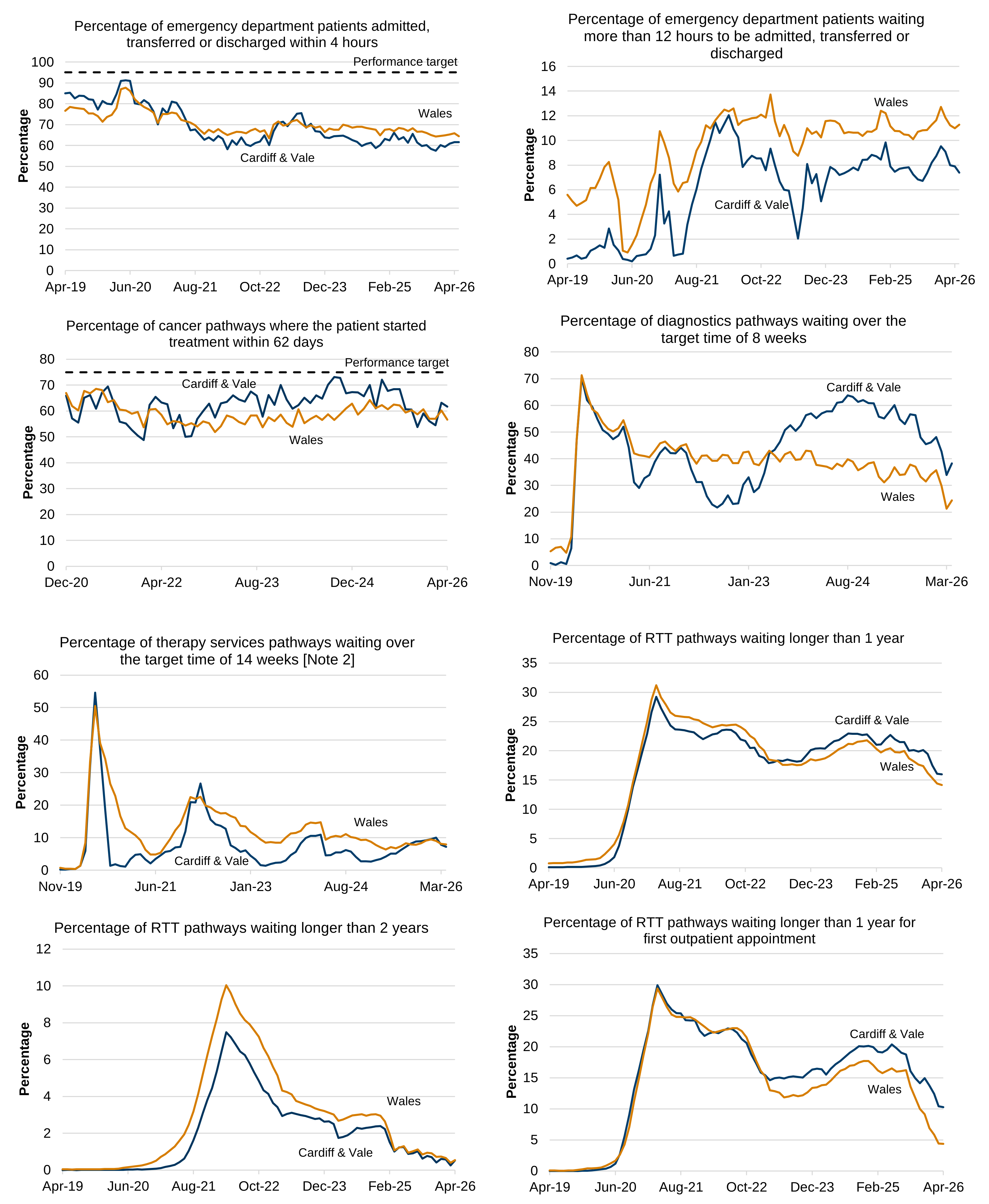
Description of figure 3: a series of charts showing comparative performance for Cardiff and Vale local health board and Wales for selected measures in urgent and emergency care and planned care. The key points are summarised in the narrative section below.
Source: Emergency department data set, DHCW, Diagnostic and therapy services waiting times, DHCW, Referral to treatment times, DHCW, Suspected Cancer Pathway, DHCW
Health and Social Care statistics, on StatsWales
[Note 1]: The percentage axes of these charts are on different scales and this should be taken into account comparing between these measures.
[Note 2]: From April 2024 audiology and weight management pathways were no longer reported in the therapies data, meaning they are not directly comparable with data up to March 2024.
Unscheduled care in May 2026
61.6% of emergency department patients were admitted, transferred or discharged within 4 hours. Performance has fluctuated over time.
7.4% of patients waited more than 12 hours to be admitted, transferred or discharged. The trend in these figures is very changeable.
Scheduled care in April 2026
38.2% of pathways were waiting over the target time for diagnostics tests. The trend has been decreasing in the past year.
7.2% of pathways were waiting over the target time for therapy services. This figure has increased in the past year.
16.0% of RTT pathways were waiting longer than 1 year. The current trend is changeable.
0.5% of RTT pathways were waiting longer than 2 years following a long-term downward trend.
10.2% of pathways were waiting longer than 1 year for their first outpatient appointment. This figure has fallen in the past six months.
61.7% of cancer pathways started their first definitive treatment within the target time. Performance has fluctuated over time.
Summary
The percentage of emergency department patients admitted, transferred or discharged within 4 hours is currently worse than the Wales average, and the percentage waiting more than 12 hours is better than the Wales average.
In Cardiff and Vale, performance is currently worse than the overall Wales figures for diagnostic tests. Performance is currently similar to the overall Wales figures for therapies, better for cancer treatment waiting times, and similar for RTT pathways waiting longer than two years. Performance is currently worse than the overall Wales figures for RTT pathways waiting longer than one year and worse for first outpatient appointment waits.
Cwm Taf Morgannwg
Figure 4: Cwm Taf Morgannwg performance summary to April 2026 for scheduled care and May 2026 for unscheduled care [Note 1]
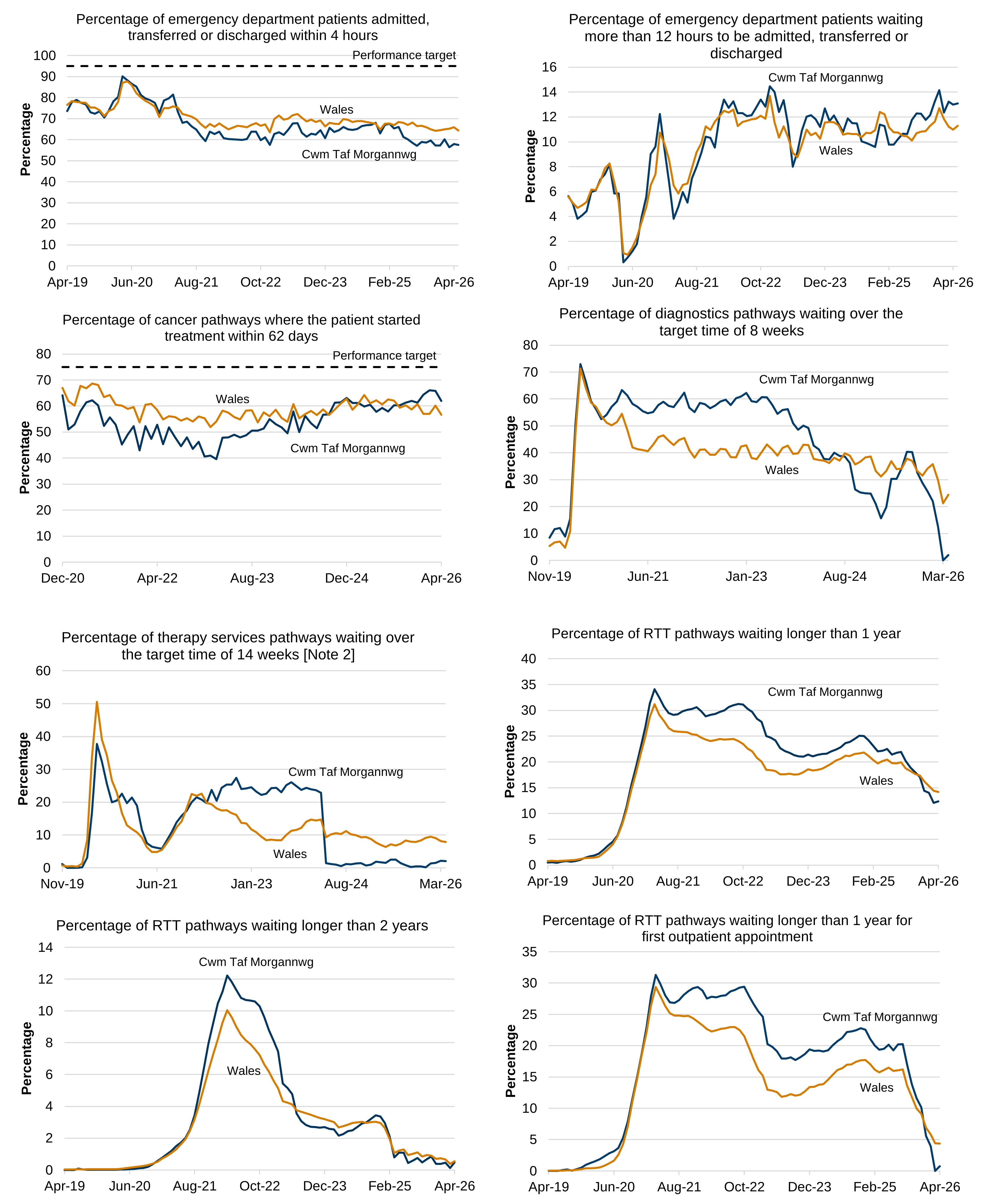
Description of figure 4: a series of charts showing comparative performance for Cwm Taf Morgannwg local health board and Wales for selected measures in urgent and emergency care and planned care. The key points are summarised in the narrative section below.
Source: Emergency department data set, DHCW, Diagnostic and therapy services waiting times, DHCW, Referral to treatment times, DHCW, Suspected Cancer Pathway, DHCW
Health and Social Care statistics, on StatsWales
[Note 1]: The percentage axes of these charts are on different scales and this should be taken into account comparing between these measures.
[Note 2]: From April 2024 audiology and weight management pathways were no longer reported in the therapies data, meaning they are not directly comparable with data up to March 2024.
Unscheduled care in May 2026
57.5% of emergency department patients were admitted, transferred or discharged within 4 hours. This has been relatively stable in the past few years.
13.1% of patients waited more than 12 hours to be admitted, transferred or discharged. The trend in this figure is changeable.
Scheduled care in April 2026
2.0% of pathways were waiting over the target time for diagnostics tests. This figure has fallen considerably in the past six months.
2.0% of pathways were waiting over the target time for therapy services. This has been relatively stable recently.
12.3% of RTT pathways were waiting longer than 1 year. This figure has fallen in the past year.
0.5% of RTT pathways were waiting longer than 2 years. This figure has remained stable for the past year.
0.8% of pathways were waiting longer than 1 year for their first outpatient appointment. This figure has fallen considerably in the past six months.
62.0% of cancer pathways started their first definitive treatment within the target time. Performance has improved in recent years.
Summary
The percentage of emergency department patients admitted, transferred or discharged within 4 hours and over 12 hours is currently worse than the Wales average.
In Cwm Taf Morgannwg, performance is currently better than the overall Wales figures for diagnostic tests, therapies, cancer treatment waiting times, RTT pathways waiting one year, and first outpatient appointment waits. Performance is similar for RTT pathways waiting two years.
Hywel Dda
Figure 5: Hywel Dda performance summary to April 2026 for scheduled care and May 2026 for unscheduled care [Note 1]
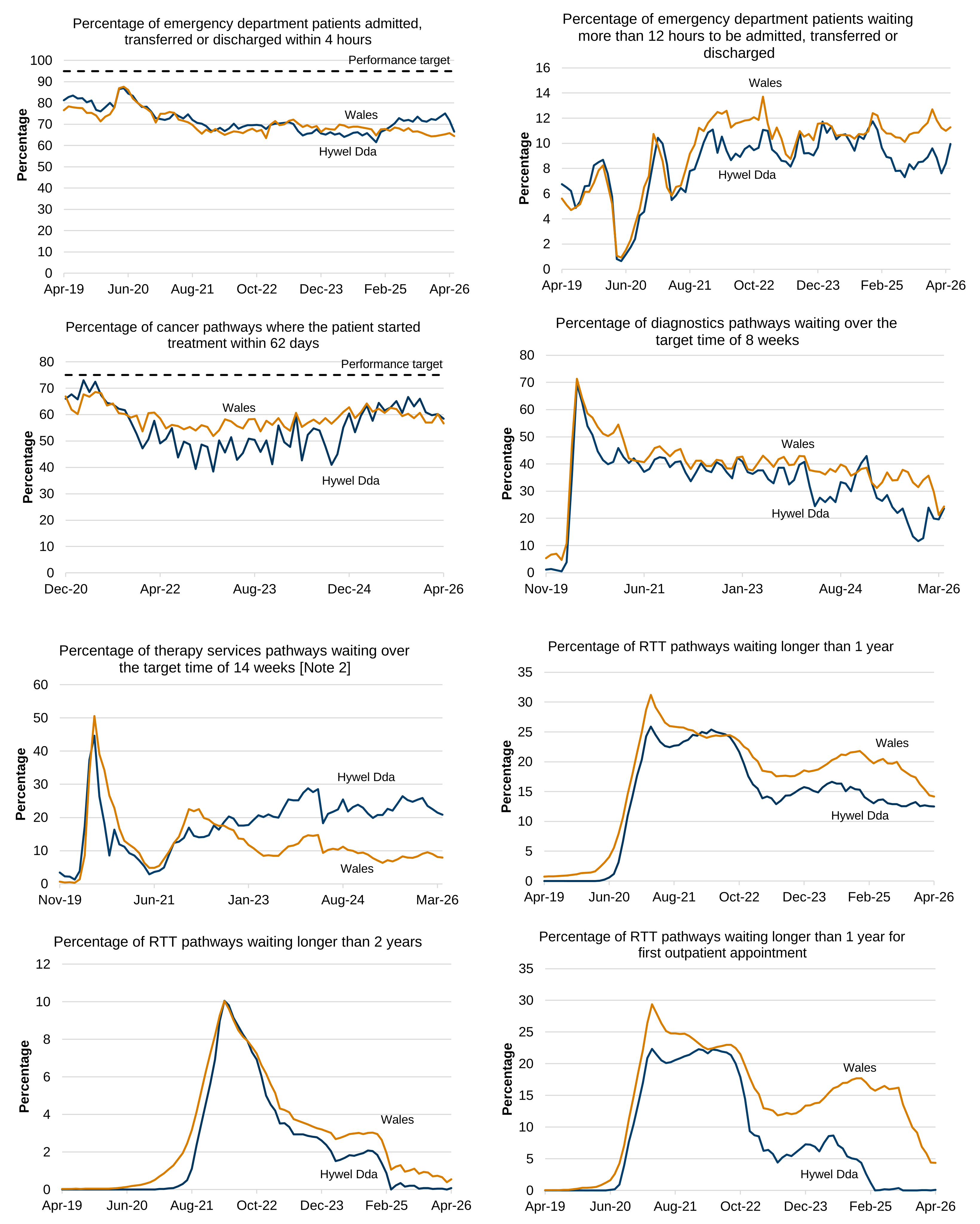
Description of figure 5: a series of charts showing comparative performance for Hywel Dda local health board and Wales for selected measures in urgent and emergency care and planned care. The key points are summarised in the narrative section below.
Source: Emergency department data set, DHCW, Diagnostic and therapy services waiting times, DHCW, Referral to treatment times, DHCW, Suspected Cancer Pathway, DHCW
Health and Social Care statistics, on StatsWales
[Note 1]: The percentage axes of these charts are on different scales and this should be taken into account comparing between these measures.
[Note 2]: From April 2024 audiology and weight management pathways were no longer reported in the therapies data, meaning they are not directly comparable with data up to March 2024.
Unscheduled care in May 2026
66.5% of emergency department patients were admitted, transferred or discharged within 4 hours. Performance has fluctuated over time.
9.9% of patients waited more than 12 hours to be admitted, transferred or discharged. The trend has been changeable in recent years.
Scheduled care in April 2026
23.6% of pathways were waiting over the target time for diagnostics tests. The trend has been changeable in recent years.
20.8% of pathways were waiting over the target time for therapy services. There has been no discernible trend in the past few years.
12.5% of RTT pathways were waiting longer than 1 year. This has been relatively stable over the past year.
0.1% of RTT pathways were waiting longer than 2 years. The percentage of pathways has been less than 1% for the past year.
0.1% of RTT pathways were waiting longer than 1 year for their first outpatient appointment. The percentage of pathways has been less than 1% for the past year.
58.4% of cancer pathways started their first definitive treatment within the target time. Performance has fluctuated over time.
Summary
The percentage of emergency department patients admitted, transferred or discharged within 4 hours and more than 12 hours is better than the Wales average.
Performance is currently similar to the overall Wales figures for diagnostic tests and cancer treatment waiting times. Performance is better than the Wales average for RTT waiting lists and first outpatient appointment waits. Performance is currently worse than the overall Wales figures for therapies.
Powys
Figure 6: Powys performance summary to April 2026 for scheduled care [Note 1]
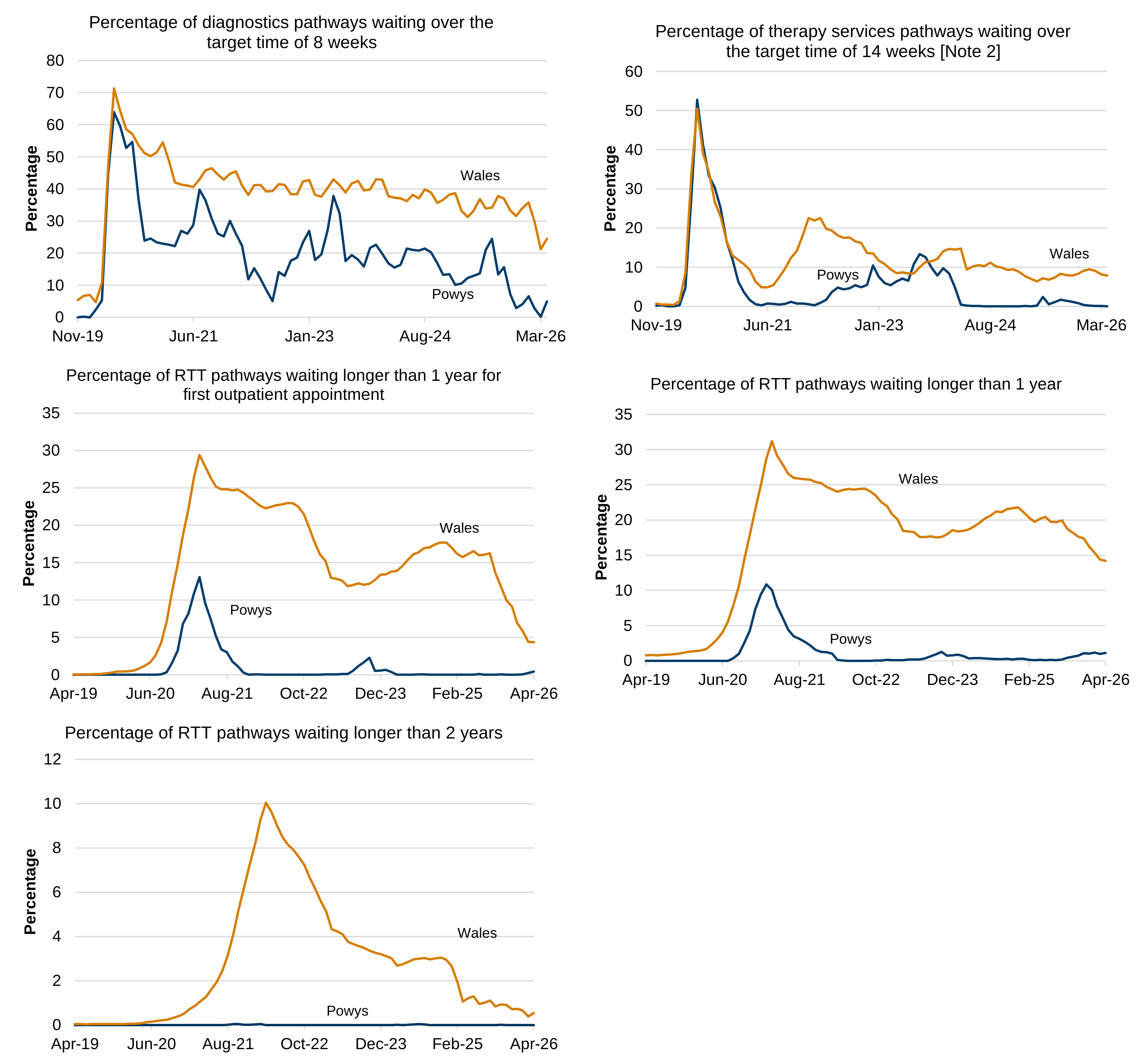
Description of figure 6: a series of charts showing comparative performance for Powys local health board and Wales for selected measures in urgent and emergency care and planned care. The key points are summarised in the narrative section below.
Source: Diagnostic and therapy services waiting times, DHCW, Referral to treatment times, DHCW
Health and Social Care statistics, on StatsWales
[Note 1]: The percentage axes of these charts are on different scales and care should be taken when comparing between these measures.
[Note 2]: From April 2024 audiology and weight management pathways were no longer reported in the therapies data, meaning they are not directly comparable with data up to March 2024.
Scheduled care in April 2026
4.9% of pathways were waiting over the target time for diagnostics tests. The general trend is changeable but down significantly since the start of the pandemic.
There were no pathways waiting over the target time for therapy services. This figure has been stable for the past two years.
1.1% of RTT pathways were waiting longer than 1 year. This figure has risen slightly recently, but has been generally stable for the past few years.
There were no pathways waiting longer than 2 years. This figure has been at a pre-pandemic level for some time.
A small number (fewer than 20) of RTT pathways were waiting longer than 1 year for their first outpatient appointment. This figure has been at a pre-pandemic level for some time.
Summary
For some measures, Powys is not comparable with the other health boards in Wales. This is because there are significant differences in the number and type of services provided in Powys compared with the other health boards. Figures are, however, broadly comparable with other health boards for diagnostics and therapy pathways, and RTT waiting lists. Performance is currently better than the overall Wales figures for diagnostic tests, therapies, and RTT waiting lists.
Swansea Bay
Figure 7: Swansea Bay performance summary to April 2026 for scheduled care and May 2026 for unscheduled care [Note 1]
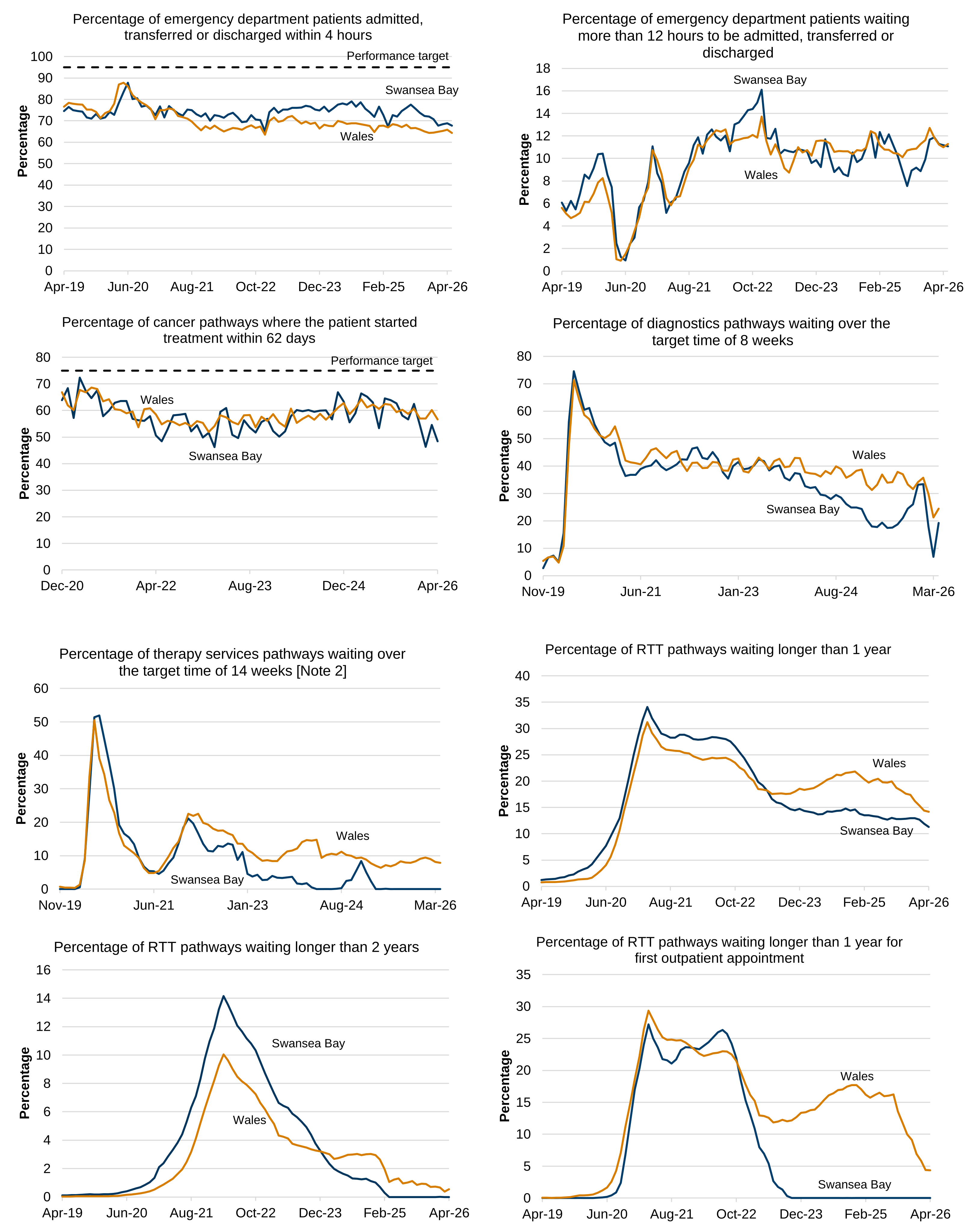
Description of figure 7: a series of charts showing comparative performance for Swansea Bay local health board and Wales for selected measures in urgent and emergency care and planned care. The key points are summarised in the narrative section below.
Source: Emergency department data set, DHCW, Diagnostic and therapy services waiting times, DHCW, Referral to treatment times, DHCW, Suspected Cancer Pathway, DHCW
Health and Social Care statistics, on StatsWales
[Note 1]: The percentage axes of these charts are on different scales and this should be taken into account comparing between these measures.
[Note 2]: From April 2024 audiology and weight management pathways were no longer reported in the therapies data, meaning they are not directly comparable with data up to March 2024.
Unscheduled care in May 2026
67.7% of emergency department patients were admitted, transferred or discharged within 4 hours. There is no discernible long-term trend in performance.
11.1% of patients waited more than 12 hours to be admitted, transferred or discharged. The general trend is changeable.
Scheduled care in April 2026
19.2% of pathways were waiting over the target time for diagnostics tests. This figure has fluctuated in the past year.
There were no pathways waiting over the target time for therapy services. This has been the case for the past year.
11.3% of RTT pathways were waiting longer than 1 year. This figure has been stable for the past two years.
There are no pathways waiting longer than 2 years. This has been the case for the past year.
There are currently no patients waiting longer than 1 year for a first outpatient appointment. This has been the case for most of the past two years.
48.4% of cancer pathways started their first definitive treatment within the target time, with no discernible long-term trend.
Summary
The percentage of emergency department patients admitted, transferred or discharged within 4 hours is currently better than the Wales average, and the percentage waiting more than 12 hours is similar to the Wales average.
In Swansea Bay, performance is currently better than the overall Wales figures for diagnostic tests, therapies, RTT waiting lists, and first outpatient appointment waits. Performance is worse than the Wales average for cancer treatment waiting times.
Quality and methodology information
Further quality and methodology information relevant to this statistical release can be found in the NHS activity and performance summary quality report.
Official statistics status
All official statistics should show the standards of the Code of Practice for Statistics (UK Statistics Authority).
These are accredited official statistics. They were independently reviewed by the Office for Statistics Regulation (OSR) in July 2012. They comply with the standards of trustworthiness, quality, and value in the Code of Practice for Statistics.
It is Welsh Government’s responsibility to maintain compliance with the standards expected of accreditation. If we become concerned about whether these statistics are still meeting the appropriate standards, we will discuss any concerns with OSR promptly. Accreditation can be cancelled or suspended at any point when the highest standards are not maintained, and reinstated when standards are restored.
Accredited official statistics (OSR) are called National Statistics in the Statistics and Registration Service Act 2007.
Statement of compliance with the Code of Practice for Statistics
Our statistical practice is regulated by the OSR. OSR sets the standards of trustworthiness, quality and value in the Code of Practice for Statistics that all producers of official statistics should adhere to.
All of our statistics are produced and published in accordance with a number of statements and protocols to enhance trustworthiness, quality and value. These are set out in the Welsh Government’s Statement of Compliance.
These accredited official statistics demonstrate the standards expected around trustworthiness, quality and public value in the following ways.
Trustworthiness
These statistics are compiled from a range of sources derived from administrative data systems in use across the NHS in Wales. Data on the 111 service, 999 ambulance calls and ambulance response times are provided by the Wales Ambulance Services NHS Trust (WAST), and all other data sources are collected by the Welsh Local Health Boards and provided to DHCW to enable them to be collated at a national level.
The data collections are overseen by the Welsh Information Standards Board (WISB) (DHCW), which is the custodian of the Information Standards Assurance Process. WISB mandates data collections through the NHS and Local Heath Boards, appraises information standards and provides assurance on matters related to confidentiality and consent.
The published figures are compiled by professional analysts using the latest available data and applying methods using their professional judgement and analytical skillset.
These statistics are pre-announced on the Statistics and Research area of the Welsh Government website. Access to the data during processing is restricted to those involved in the production of the statistics, quality assurance and for operational purposes. Pre-release access is restricted to eligible recipients in line with the Code of Practice (UK Statistics Authority).
Quality
Statistics published by Welsh Government adhere to the Statistical Quality Management Strategy which supplements the Quality pillar of the Code of Practice for Statistics and the European Statistical System principles of quality for statistical outputs.
Data standards and definitions are established by the Welsh Information Standards Board (WISB). Guidance is issued to the data providing organisations and training provided to staff responsible for collecting the data at source. DHCW collates and validates health board level data and queries anomalous and missing data directly with the health boards. Before validated datasets are provided by DHCW to Welsh Government, all data are signed off by health boards. DHCW provides validated datasets to Welsh Government, where analysts process the data to produce the aggregate statistics in the format required for publication. Welsh Government undertakes final validation checks which can be queried with DHCW and the health boards before publication. The statistical release is signed off by senior statisticians before publication.
Value
The purposes of this statistical release and the accompanying data published on StatsWales are: to provide evidence for policy development; to inform the media and wider public about activity and performance in the Welsh NHS; to enable service providers such as Local Health Boards and WAST to monitor their own performance.
Reliable statistics on the volume of activity undertaken in the NHS, the size of waiting lists, ambulance response times and emergency department and cancer waiting times are vital to inform users about the state of NHS services and the performance of the Welsh government and the Local Health Boards. These services have a significant impact on citizens’ lives and these topics feature prominently in media coverage and political discourse.
The information published here also supports the Welsh Government’s long term plan for health and social care: A Healthier Wales.
The timeliness of the data provides the most recent update using reliable data.
You are welcome to contact us directly with any comments about how we meet these standards. Alternatively, you can contact OSR by emailing regulation@statistics.gov.uk or via the OSR website.
Well-being of Future Generations Act (WFG)
The Well-being of Future Generations Act 2015 is about improving the social, economic, environmental and cultural wellbeing of Wales. The Act puts in place seven wellbeing goals for Wales. These are for a more equal, prosperous, resilient, healthier and globally responsible Wales, with cohesive communities and a vibrant culture and thriving Welsh language. Under section (10)(1) of the Act, the Welsh Ministers must (a) publish indicators (“national indicators”) that must be applied for the purpose of measuring progress towards the achievement of the wellbeing goals, and (b) lay a copy of the national indicators before Senedd Cymru. Under section 10(8) of the Well-being of Future Generations Act, where the Welsh Ministers revise the national indicators, they must as soon as reasonably practicable (a) publish the indicators as revised and (b) lay a copy of them before the Senedd. These national indicators were laid before the Senedd in 2021. The indicators laid on 14 December 2021 replace the set laid on 16 March 2016.
Information on the indicators, along with narratives for each of the well-being goals and associated technical information is available in the Wellbeing of Wales report.
Further information on the Well-being of Future Generations (Wales) Act 2015.
The statistics included in this release could also provide supporting narrative to the national indicators and be used by public services boards in relation to their local well-being assessments and local well-being plans.
We want your feedback
We welcome any feedback on any aspect of these statistics which can be provided by email to stats.healthinfo@gov.wales.
Next update
17 September 2026