
NHS workforce: staff directly employed by NHS Wales: 30 September 2025
Quarterly statistics on the number of staff, sickness absence and number of vacancies.
In this page
Introduction
This statistical release summarises statistics on staff directly employed by NHS Wales, including sickness absence and vacancy rates that were previously published as separate releases.
The statistics on staff employed and sickness absence are sourced from the NHS Electronic Staff Record (ESR), provided by Health Education and Improvement Wales and published as official statistics. Vacancies statistics are published as official statistics in development (Office for National Statistics (ONS)) and are collected from each NHS organisation by Welsh Government.
Workforce statistics for each local health board are published on StatsWales.
These statistics are published as there is wide public interest, and we welcome feedback on their use.
Workforce data for primary care services such as general medical practitioners (GPs) and NHS dental practitioners are not included in this release and are published separately as they are independent NHS contractors.
Main points
- On 30 September 2025, in total there were 99,933 full-time equivalent (FTE) staff, an annual increase of 2.0% and a ten-year increase of 31.0%.
- There were 8,886 FTE medical and dental staff, an annual increase of 3.7%.
- There were 40,019 FTE registered nursing, midwifery and health visiting staff, an annual increase of 1.8%
- 76.4% of the workforce were female; 92.2% had no disability recorded; and nearly four out of five (78.2%) were 55 years old or younger.
- Between 1 October 2024 and 30 September 2025, the average sickness absence rate was 6.3%, a marginal increase of 0.1 percentage points from the same period a year ago and 1.2 percentage points higher than the same period 10 years ago.
- During the most recent quarter (1 July to 30 September 2025) the sickness absence rate ranged from 8.9% for healthcare assistants and support workers to 2.2% for medical and dental staff, when comparing staff groups
- Anxiety, stress, depression and other psychiatric illnesses were the leading causes of sickness absence. across all health boards and organisations (37.4% of all sickness) during the most recent quarter.
- On 30 September 2025 the estimated number of FTE vacancies across NHS Wales was 5,752 and the estimated vacancy rate was 5.7%, 0.2 percentage points lower than on the same date in the previous year.
- The vacancy rate ranged from 3.8% for the registered nursing, midwifery and health visiting staff group to 8.4% for the nursing, midwifery and health visiting support staff group.
Summary of staff directly employed
Analysis for staff directly employed focusses on the number of full-time equivalent (FTE) staff employed on the last day of the latest available quarter.
FTEs are generally considered the best measure of staffing levels as it accounts for part-time working.
One FTE is the equivalent of a person working the standard hours for their grade (usually 37.5 hours a week) and more detail is provided in the Staff directly employed by the NHS quality report.
Figure 1: headcount and full-time equivalent (FTE) staff directly employed by NHS Wales on 30 September, 2016 to 2025 [Note 1]
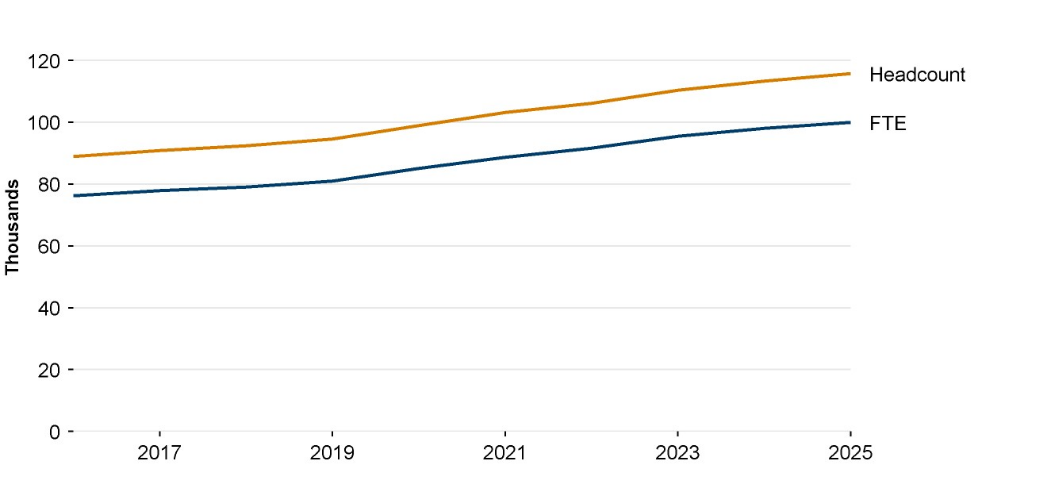
Description of figure 1: line chart showing that both FTE and headcount has increased with broadly the same trend over the last 10 years. Both measures show a sharper increase over the last six years.
Source: Electronic Staff Record, Health Education and Improvement Wales (HEIW)
NHS staff summary by staff group and year on StatsWales
[Note 1] In this chart headcount refers to the ‘assignment count’ which is the number of filled posts on the reference date.
On 30 September 2025, there were 99,933 FTE staff directly employed by the NHS, 2.0% more than on the same date in the previous year.
Over the long-term, the total number of FTE NHS staff has increased; there were 31.0% more FTE staff compared to 30 September 2016.
The rate of change has increased since the COVID-19 pandemic, with 23.3% more FTE staff employed compared to 30 September 2019 (the last directly comparable date prior to the pandemic).
Figure 2: number of full-time equivalent (FTE) staff directly employed by NHS Wales on 30 September, by staff group, 2016 to 2025
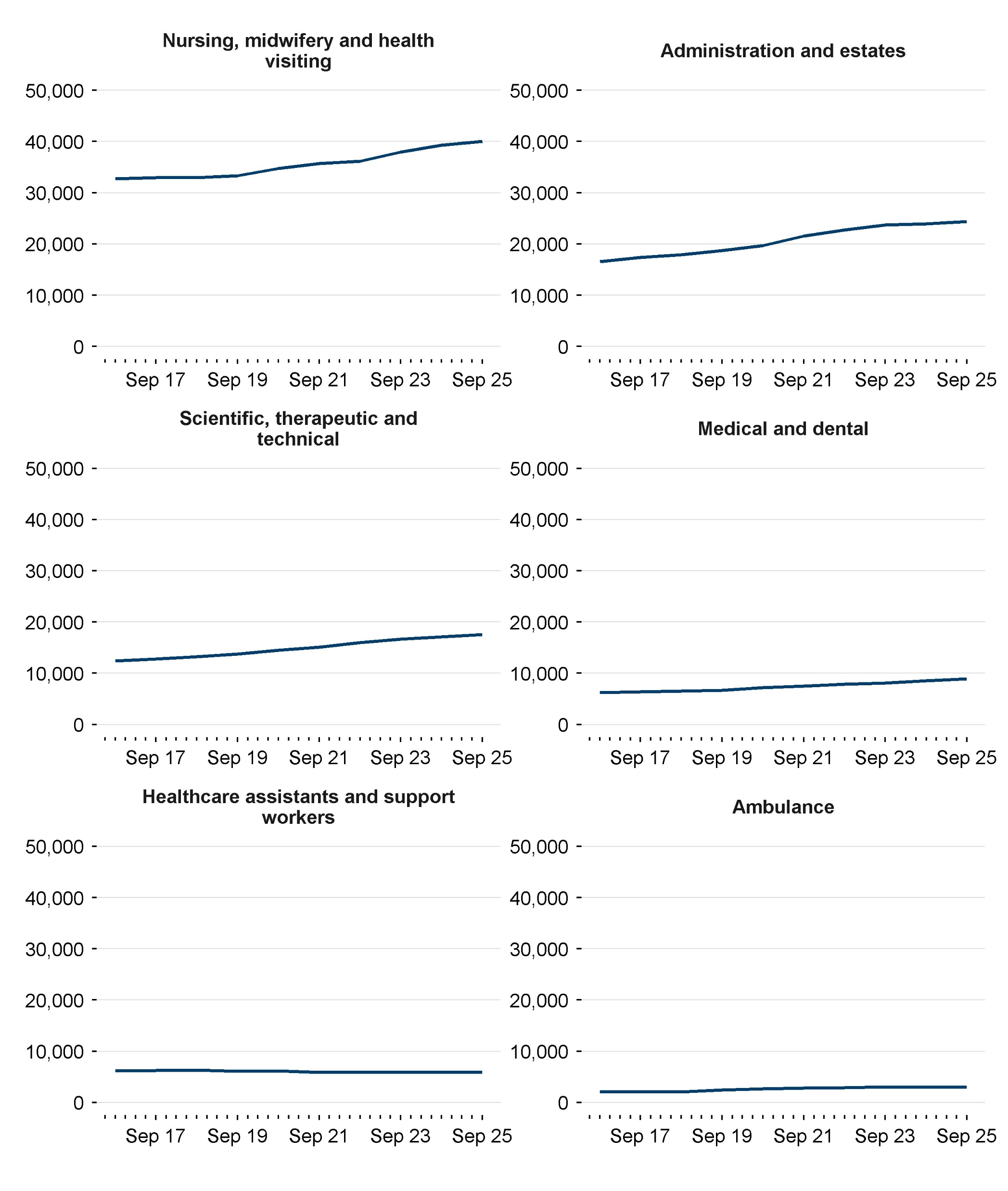
Description of figure 2: line charts showing a long-term upward trend in the number of FTE staff for all staff groups apart from healthcare assistants which has remained at a broadly similar level.
Source: Electronic Staff Record, Health Education and Improvement Wales (HEIW)
NHS staff summary by staff group and year on StatsWales
8.9% of FTE of all staff on 30 September 2025 were medical and dental staff. The number of staff in this group has increased each year over the last ten years and has increased by 42.2% since 30 September 2016.
The rate of increase for medical and dental staff has accelerated since the pandemic and there were nearly a quarter (23.2%) more medical and dental staff than five years ago.
Four in ten (or 40.0%) of all FTE staff were registered nursing, midwifery and health visiting staff, the largest staff group. There has been a steady long-term upward trend with 22.3% more staff since 30 September 2016.
17.6% of all FTE staff were scientific, therapeutic and technical staff. The FTE of staff in this group has increased every year of the last ten years and was 41.3% higher than on 30 September 2016.
Nearly a quarter (or 24.4%) of all FTE staff were in the administration and estates group. The FTE of staff in this group has increased every year for the last ten years and was 47.1% higher than on 30 September 2016.
3.0% of all FTE staff were ambulance staff. Significant changes to the ambulance section of the NHS Occupation Codes Manual between 2018 and 2019 limit long term comparisons, but there were 12.2% more ambulance staff than on 30 September 2020.
6.0% of FTE of all staff were healthcare assistants (HCAs) and other support staff. The FTE of this group has remained broadly stable over the last ten years, with some small year-to-year fluctuations. The short-term fluctuations are in-part due to the re-coding of some HCAs to nursing assistants/auxiliaries, which is noted in the Staff directly employed by the NHS quality report.
Staff characteristics
Statistics on NHS staff characteristics are published on StatsWales and include gender, age band, disability, ethnic group and nationality by staff group.
Staff characteristics statistics are based on records where a known status was recorded and therefore provide an indication of the characteristic breakdown of NHS staff. Where records are not stated or missing, the percentage is included within each section indicating the level of uncertainty with these statistics. If the staff with missing data have a systemically different characteristic profile than those with a known status, these statistics would change.
Characteristic data is published based on a unique headcount. Where staff work in more than one staff group and/or organisation they are counted in each category, but only once at Wales level.
Where characteristic data was recorded, on 30 September 2025:
- just over three-quarters (76.4%) of the workforce were female
- nearly four out of five (78.2%) were 55 years old or younger; 19.5% were 56 to 65 years old; and 2.3% were 66 years or older
- 92.2% had no disability recorded
- nine out of ten (89.8%) had UK nationality; 7.8% had non-European Union nationalities and 2.4% had European Union or European Economic Area nationalities
- 85.7% were from any White ethnic group; 6.4% were from any Asian ethnic group; 2.1% were from any Black ethnic group; 1.9% were from Other ethnic groups and 1.3% were from Mixed ethnic groups
Sickness absence rates
Sickness absence rates are derived by dividing the FTE number of days recorded as sick by the FTE number of days available. The number of FTE days available are based on calendar days which equate to 365 days of the year or 366 days for a leap year.
Sickness rates show seasonal variation throughout the year typically with lower rates in summer and higher rates in winter. Data for single months and 12-month moving averages are shown in figure 3.
Figure 3: trends in sickness absence rates in NHS Wales, September 2016 to September 2025
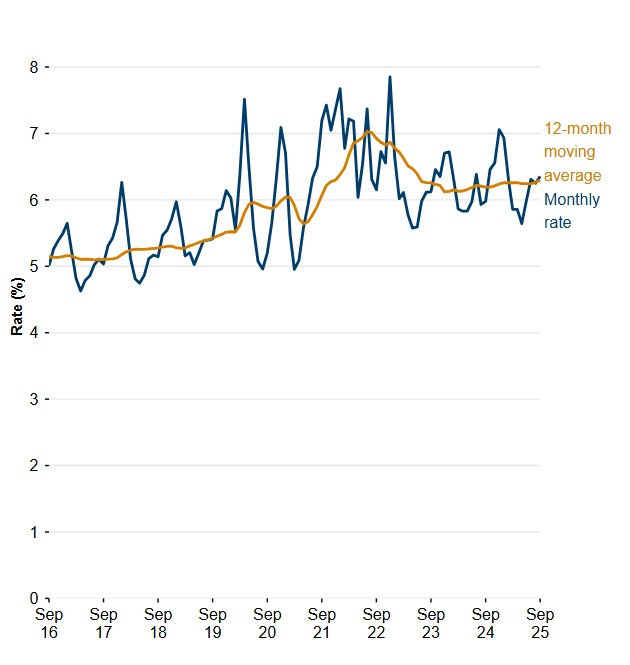
Description of figure 3: line chart showing that the 12-month moving average sickness absence rate has been on a slight upward trend since January 2024. The rate remains below the peaks seen during the pandemic, but higher than period before the pandemic.
Source: Electronic Staff Record, Health Education and Improvement Wales (HEIW)
Sickness absence in the NHS, percentage of staff absent by reason and staff group (StatsWales)
In the 12 months between 1 October 2024 and 30 September 2025, the average sickness absence rate was 6.3%, a marginal increase of 0.1 percentage points from the same 12-month period in the previous year.
The trend has changed over the last ten years. The moving average ranged between 5.1% and 5.4% for all 12-month periods ending September 2016 and August 2019, but increased sharply during the COVID-19 pandemic, reaching record highs (7.0%) for the 12-month periods ending 31 July and 31 August 2022. The rate then fell reaching its lowest point (6.1%) since the pandemic for the 12 months ending December 2023. Since, the rate has increased slowly, reaching 6.3% for the 12 months ending September 2025.
Statistics for sickness absence by reason and staff group are published on StatsWales. For the quarter 1 July to 30 September 2025, the largest category for sickness absence was anxiety, stress, depression and other psychiatric illnesses accounting for 37.4% of all sickness absence in the NHS. This was followed by other musculoskeletal problems (8.8%) and gastrointestinal problems (7.4%).
Sickness absence rate by NHS Wales organisation
Figure 4: sickness absence rates by organisation, July to September 2025 compared to the same quarter in the previous year
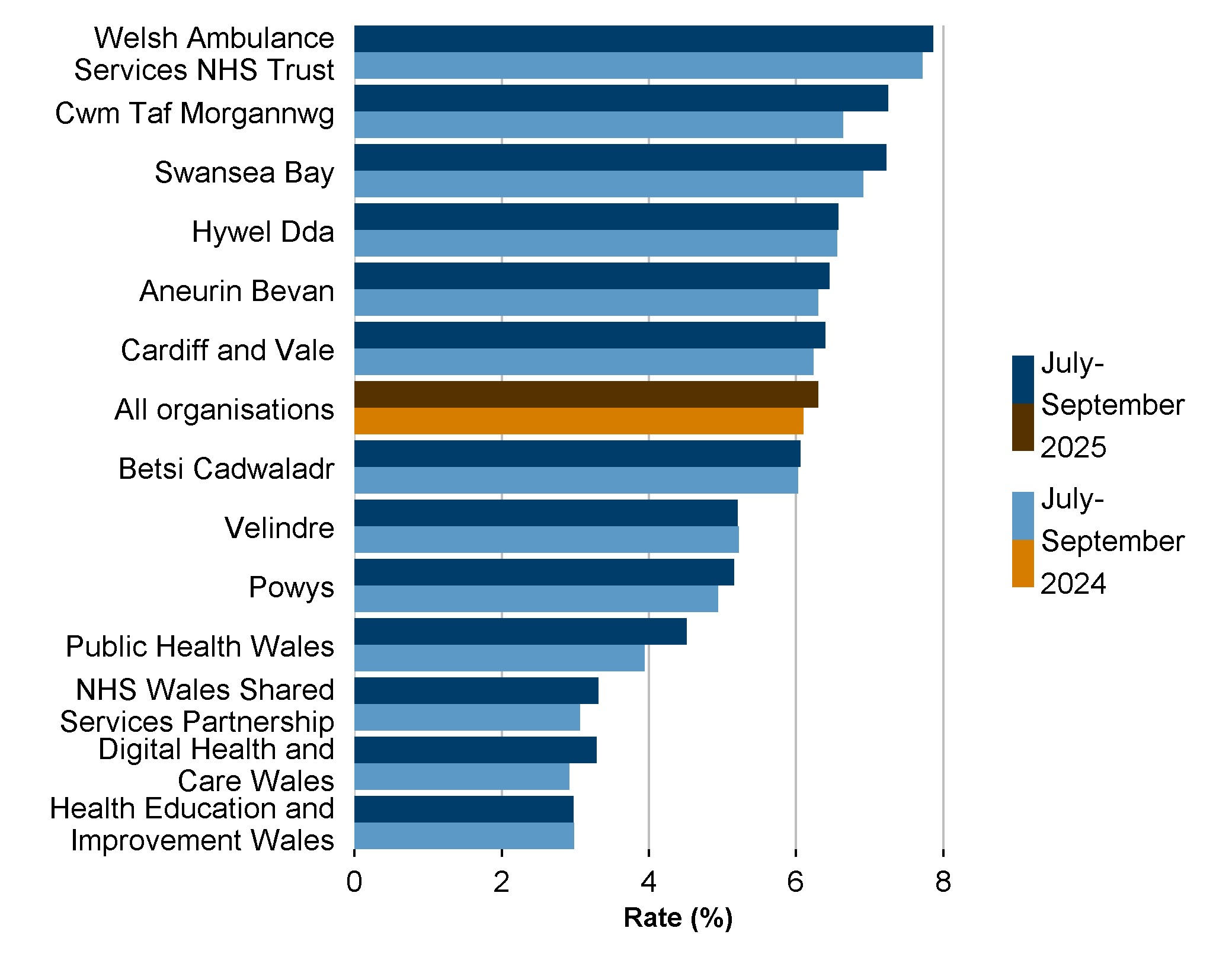
Description of figure 4: bar chart showing that sickness absence rates vary widely by NHS organisation and are generally higher in the seven health boards and the Welsh Ambulance Services Trust, than in the other NHS organisations.
Source: Electronic Staff Record, Health Education and Improvement Wales (HEIW)
Sickness absence in the NHS, percentage of staff absent by reason and staff group (StatsWales)
In the quarter that ended on 30 September 2025, sickness absence rates stayed the same or increased in eleven of the thirteen NHS organisations when compared to the same quarter in the previous year. The annual changes ranged from a marginal decrease for staff in both Velindre and Health Education and Improvement Wales, to a 0.6 percentage point increase for staff in both Public Health Wales and Cwm Taf Morgannwg.
The Welsh Ambulance Services University NHS Trust had the highest sickness absence rate (7.9%) of all NHS organisations, a 0.1 percentage point increase from the same quarter in the previous year.
The lowest sickness absence rates were in Health Education and Improvement Wales (3.0%), Digital Health and Care Wales (3.3%) and the NHS Wales Shared Services Partnership (3.3%). These organisations also had the lowest sickness absence rates in the same period in the previous year.
Sickness absence rate by staff group
Figure 5: sickness absence rates by staff group, September 2016 to 2025
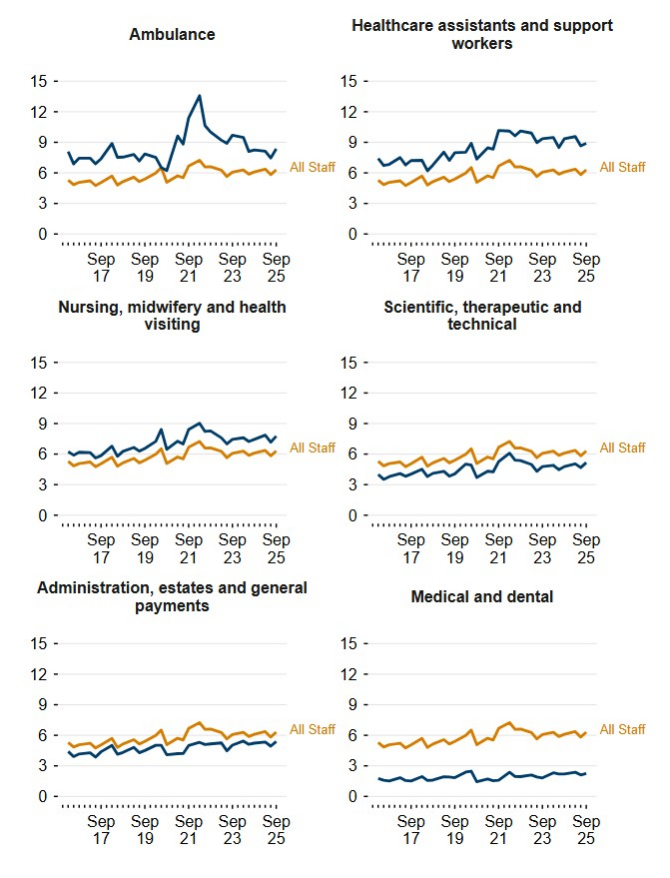
Description of figure 5: bar chart showing that sickness absence rates varied widely between different staff groups; the rate for healthcare assistants and support staff was nearly four times greater than for medical and dental staff.
Source: Electronic Staff Record, Health Education and Improvement Wales (HEIW)
Sickness absence in the NHS, percentage of staff absent by reason and staff group (StatsWales)
Comparing the sickness absence rate for the latest quarter and the same quarter in the previous year shows changes ranging from a 0.5 percentage point decrease for healthcare assistants and support workers to an increase of 0.4 percentage points for scientific, therapeutic and technical staff.
Medical and dental staff had the lowest sickness absence rate in the quarter (2.2%) and has had the lowest rate in all quarters since data was first collected in 2009.
Healthcare assistants and support workers had the highest sickness absence rate in the quarter (8.9%).
Vacancy rate by staff group
An NHS Wales ‘vacancy’ is defined as the difference between the number of funded FTE posts as recorded on the finance general ledger, and the number of FTE staff in post as recorded on the NHS Electronic Staff Record (ESR). The vacancy rate is the number of vacancies divided by the number of funded FTE posts recorded on the general ledger.
The statistics only include vacancies for staff who would be directly employed by NHS Wales. They do not include primary care contractors such as general medical practitioners (GPs) or NHS dental practitioners.
Vacancy statistics are designated as official statistics in development because there are known limitations of the data which are detailed in the NHS vacancy statistics quality report.
Figure 6: vacancy rates by staff group, 31 December 2022 to 30 September 2025 [Note 1] [Note 2]
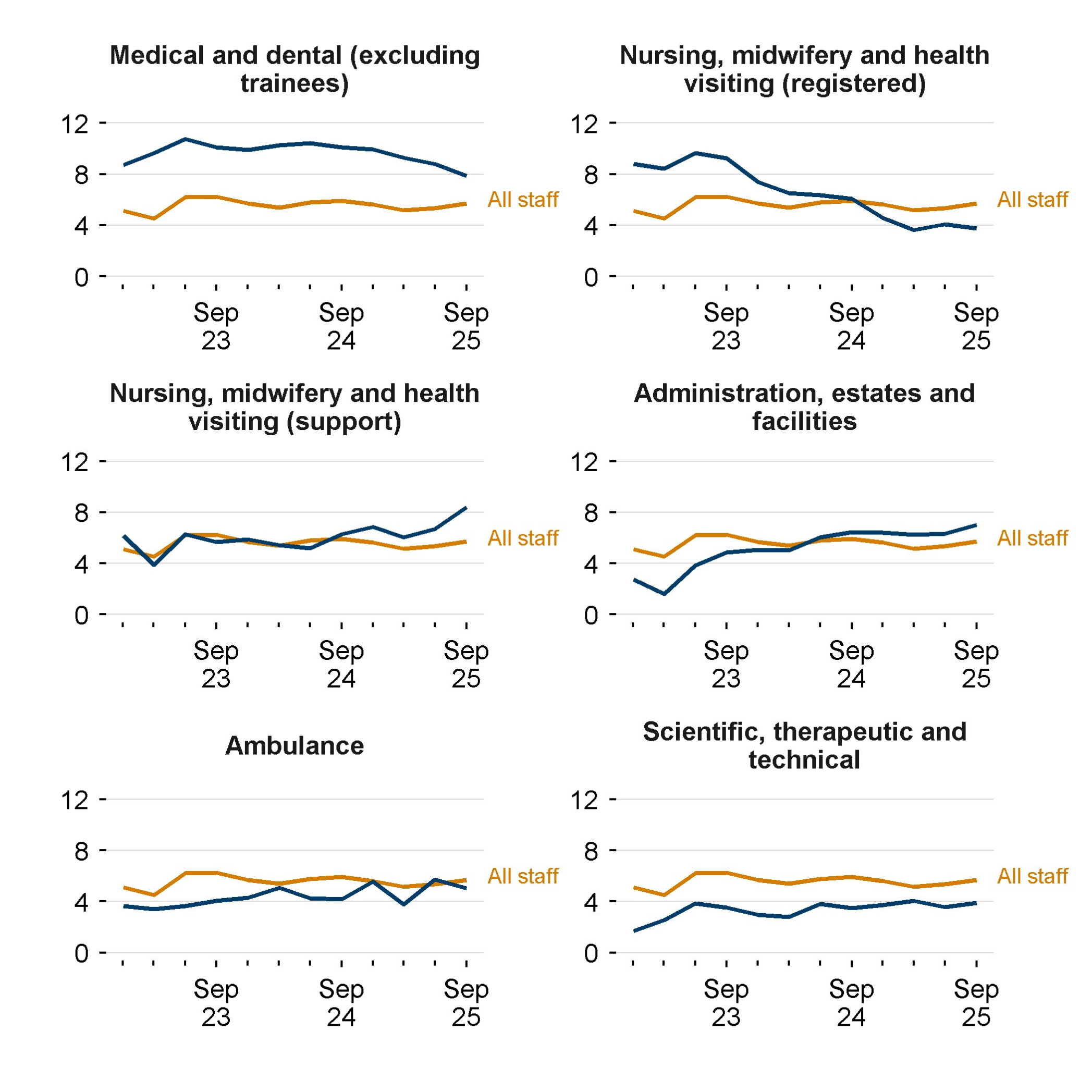
Description of figure 6: line charts showing the overall vacancy rate for NHS Wales has remained broadly stable over the last two years, but there have been variations between different staff groups. Rates for registered nurses and medical and dental staff have decreased while rates for administrative and nursing support staff have increased over the same period.
[Note 1] Excludes medical and dental trainees, medical and dental single lead employer trainees, and pharmacy single lead employer trainees.
[Note 2] Staff groups are labelled slightly differently to those used in the staff directly employed charts because in the vacancies data staff are grouped by ‘subjective code’ rather than ‘NHS occupation code’ as subjective code is a common data item in both the finance general ledger and ESR.
Source: NHS vacancy data collection, Welsh Government
NHS staff vacancies by organisation, staff group and date (StatsWales)
On 30 September 2025 the estimated number of full-time equivalent (FTE) vacancies across NHS Wales was 5,752 and the estimated vacancy rate was 5.7%. The vacancy rate was 0.2 percentage points lower than on the same date in the previous year.
The estimated number of full time equivalent (FTE) vacancies by each staff group and change since the same date in the previous year was:
414 in medical and dental staff (excluding trainees), with an estimated vacancy rate of 7.9%, a decrease of 2.2 percentage points.
1,080 in registered nursing, midwifery and health visiting staff, with an estimated vacancy rate of 3.8%, a decrease of 2.3 percentage.
1,167 in nursing, midwifery and health visiting support staff, with an estimated vacancy rate of 8.4%, an increase of 2.1 percentage points.
702 in scientific, therapeutic and technical staff, with an estimated vacancy rate of 3.9%, an increase of 0.4 percentage points.
2,218 in administration, estates and facilities staff, with an estimated vacancy rate of 7.0%, an increase of 0.5 percentage points.
171 in ambulance staff, with an estimated vacancy rate of 5.0%, an increase of 0.9 percentage points.
Vacancy rate by NHS organisation
Figure 7: vacancy rate by NHS organisation, 30 September 2024 and 2025 [Note 1]
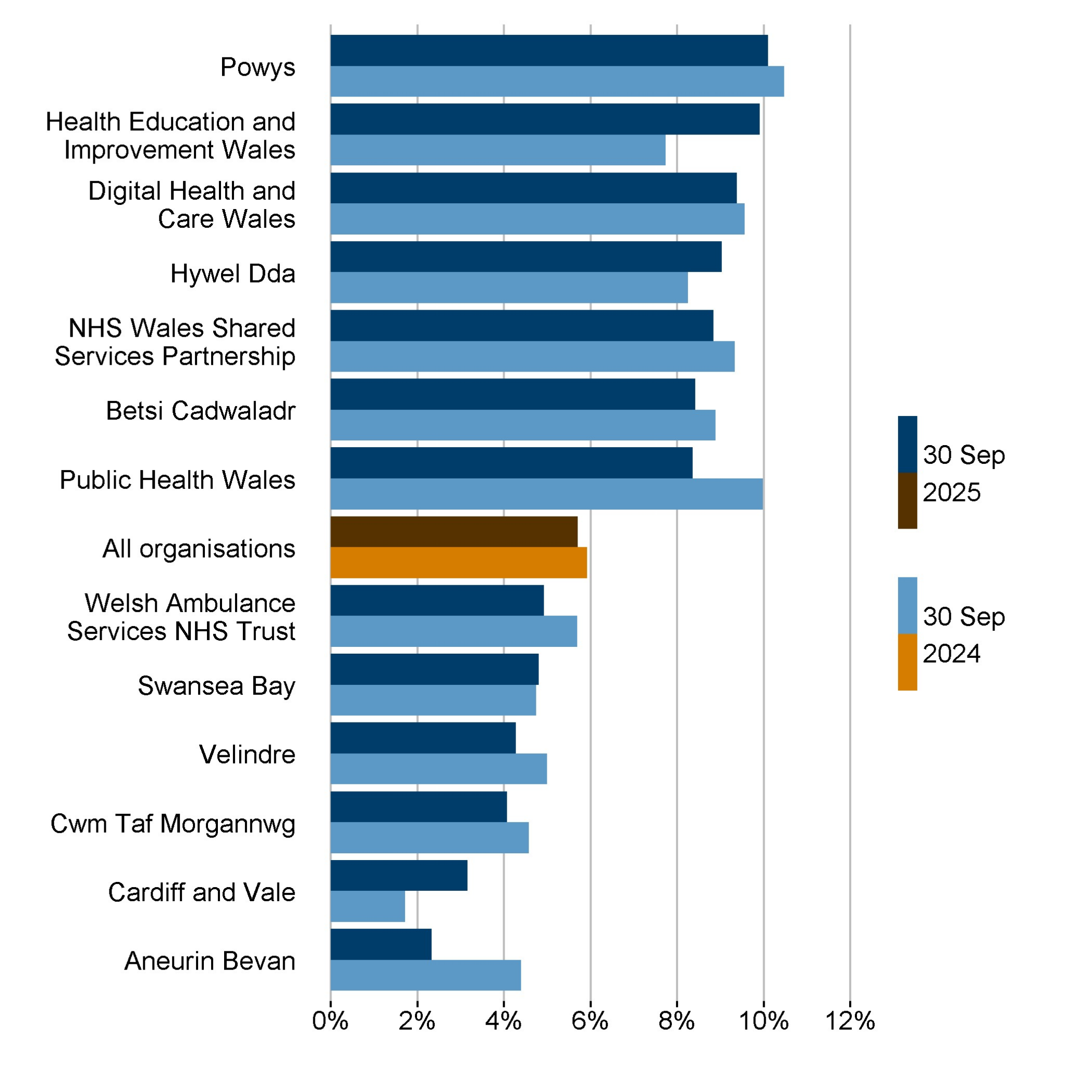
Description of Figure 7: bar chart showing large variation in the vacancy rate among NHS organisations; the highest rate was in Powys, more than four times higher than in Aneurin Bevan, the organisation with the lowest rate.
[Note 1] Excludes medical and dental trainees, medical and dental single lead employer trainees, and pharmacy single lead employer trainees.
Source: NHS vacancy data collection, Welsh Government
NHS staff vacancies by organisation, staff group and date (StatsWales)
On 30 September 2025, the estimated vacancy rates were lower in nine of the thirteen NHS organisations when compared with the same date last year. The annual change ranged from a decrease of 2.1 percentage points in Aneurin Bevan to an increase of 2.2 percentage points in Health Education and Improvement Wales.
The vacancy rate for the seven local health boards combined was 5.5%, with the highest rate in Powys (10.1%) and the lowest rate in Aneurin Bevan (2.3%). The local health board average was slightly lower than the rate for all NHS organisations and 0.2 percentage points lower than on the same date in the previous year.
Quality and methodology information
The number of staff directly employed by the NHS has some seasonal patterns, linked to set times in the year when newly qualified staff can be recruited into permanent roles. As such, fair comparisons can only be made with the same date or period in previous years.
The percentages in this release are rounded to the nearest 0.1. Percentage point changes are calculated based on the unrounded numbers.
Full details of quality issues are provided in the Staff directly employed by the NHS quality report.
Statement of compliance with the Code of Practice for Statistics
Our statistical practice is regulated by the Office for Statistics Regulation (OSR). OSR sets the standards of trustworthiness, quality and value in the Code of Practice for Statistics that all producers of official statistics should adhere to.
All of our statistics are produced and published in accordance with a number of statements and protocols to enhance trustworthiness, quality and value. These are set out in the Welsh Government’s Statement of Compliance.
These official statistics demonstrate the standards expected around trustworthiness, quality and public value in the following ways.
Trustworthiness
Workforce statistics are produced with integrity and are presented without political interference. All analysis included in this release is matter of fact and the presentation of these statistics is designed to minimise any misleading inferences.
The decision to introduce a vacancies data collection and publish subsequently publish vacancies statistics as official statistics in development was on it was done with the public good in mind and approved by the Chief Statistician.
These statistics were pre-announced on the Statistics and Research area of the Welsh Government website more than 28-days before publication and were published at 9.30am on the release date. Pre-release access is granted to a short list of Welsh Government officials, no more than 5 days before the publication date, in accordance with the Pre-release Access to Official Statistics (Wales) Order 2009.
Where revisions have been necessary statistics have been republished with explanatory notes so that users are aware of what happened.
All underlying data is stored securely with access restricted to only the statisticians who produce this publication. Statistics are compiled by professional statisticians using the latest available data and applying methods using their professional judgement and analytical skillset.
Quality
The statistics are produced in line with our Statistical Quality Management Strategy. Validation checks are performed by Welsh Government statisticians and queries referred to HEIW and other NHS organisations where necessary. Staff are grouped based on occupation code within ESR, and published data aligns the main groups referred to in the NHS Occupation Code Manual.
The statistical release is approved by senior statisticians before publication. Data is published in line with statement on confidentiality and data access each quarter.
As the Electronic Staff Record is a live system and data extracts are taken from it, data presented may be revised in future editions of the statistical release. Over recent years a number of quality issues have been identified with the data, some of which have been resolved. To help users to interpret the data and understand where those limitations may be; these are described more clearly in the Staff directly employed by the NHS quality report.
Value
The NHS is Wales’s largest employer and provides crucial services to the whole population. The purpose of the statistical release is to inform users about staffing, sickness absence and vacancy levels in NHS Wales. Published together, they aim to give a more complete picture of the staff directly employed by the NHS workforce.
Statistics are typically published quarterly with a three-month lag between the reference period of the latest statistics and publication. Methods of counting staff, sickness absence and vacancies are all defined in the main statistical release and expanded upon in the quality report. The statistics are published with brief analysis and commentary, in addition to open data format tables which are published on StatsWales. StatsWales data is accompanied by metadata to aid interpretation and assess the quality of the data. The outputs are aimed to provide the whole range of users with the level of information they need.
You are welcome to contact us directly with any comments about how we meet these standards. Alternatively, you can contact OSR by emailing regulation@statistics.gov.uk or via the OSR website.
Well-being of Future Generations Act (WFG)
The Well-being of Future Generations Act 2015 is about improving the social, economic, environmental and cultural wellbeing of Wales. The Act puts in place seven wellbeing goals for Wales. These are for a more equal, prosperous, resilient, healthier and globally responsible Wales, with cohesive communities and a vibrant culture and thriving Welsh language. Under section (10)(1) of the Act, the Welsh Ministers must (a) publish indicators (“national indicators”) that must be applied for the purpose of measuring progress towards the achievement of the wellbeing goals, and (b) lay a copy of the national indicators before Senedd Cymru. Under section 10(8) of the Well-being of Future Generations Act, where the Welsh Ministers revise the national indicators, they must as soon as reasonably practicable (a) publish the indicators as revised and (b) lay a copy of them before the Senedd. These national indicators were laid before the Senedd in 2021. The indicators laid on 14 December 2021 replace the set laid on 16 March 2016.
Information on the indicators, along with narratives for each of the wellbeing goals and associated technical information is available in the Wellbeing of Wales report.
Further information on the Well-being of Future Generations (Wales) Act 2015.
The statistics included in this release could also provide supporting narrative to the national indicators and be used by public services boards in relation to their local wellbeing assessments and local wellbeing plans.
Contact details
NHS Workforce and Primary Care Statistics
Email: stats.healthinfo@gov.wales
Media: 0300 025 8099