
Data used in Welsh Revenue Authority performance reporting 2024 to 2025
The Welsh Revenue Authority’s performance measures. Provides transparency to the underlying data in the performance report within our annual report and accounts.
In this page
Introduction
The Welsh Revenue Authority (WRA) published its annual report and accounts for 2024 to 2025 on 23 July 2025, including a section covering the organisation’s performance during the financial year (the ’performance overview’ ).
Several charts and 1 table are used in this data annex, presenting data for each of the WRA’s different performance measures for the 2024 to 2025 period. While these performance measures are referenced in the report, most of the detailed information is omitted. Therefore, this report provides a more comprehensive view of the WRA’s performance data, making the underlying data sets fully accessible for further reference or analysis by interested parties.
Some tax risk indicators presented in previous years’ reports have been discontinued this year. The change reflects the WRA’s different approach to managing this work since October 2023, making those data no longer relevant. More details can be found in our 2023 to 2024 annual report and accounts and the discontinued charts can still be viewed in our 2023 to 2024 data annex (see charts 10 to 16). The Our Approach section of our 2024 to 2025 annual report and accounts contains more information on tax risk.
For data visualisation purposes, it’s sometimes more effective to display reverse values of the WRA’s performance indicators. For example, the percentage of returns filed on time is close to 100%, making any variation difficult to discern on a 0% to 100% scale in a static image. Rather than using a 95% to 100% scale, which would exaggerate the variation, this report presents the percentage of returns not filed on time, using a scale of 0% to 5%. Where this technique is applied, data for both the reverse measure and the actual measure is available in the accompanying spreadsheet.
This report includes concise analysis of each measure. Readers may wish to consider this alongside the more detailed narrative in the performance report, which contextualises the organisation’s approach and objectives.
Please note that most analysis below relates to Land Transaction Tax (LTT), although Landfill Disposals Tax (LDT) data are also included where relevant. For further details see Land Transaction Tax | GOV.WALES and Landfill Disposals Tax | GOV.WALES.
Data
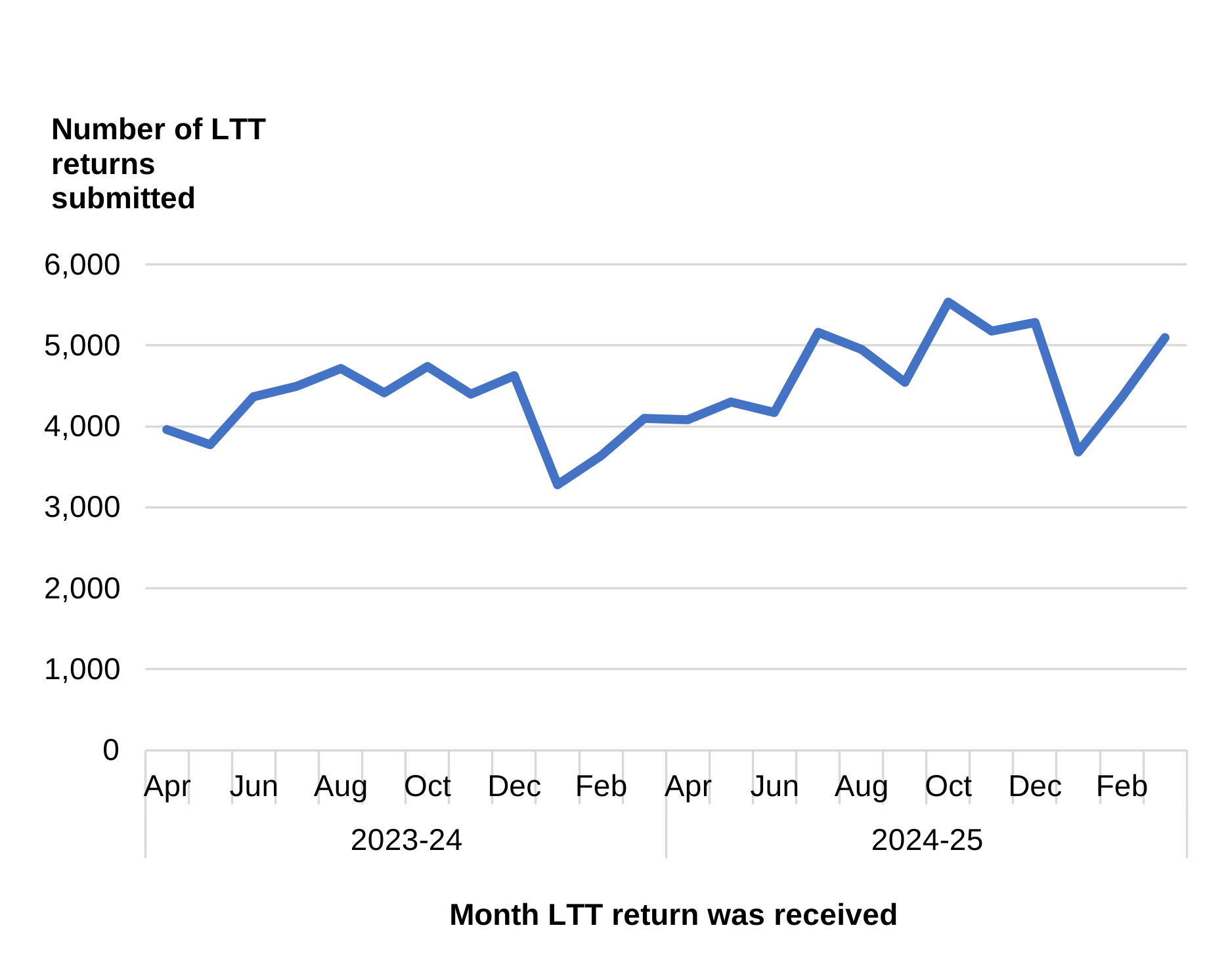
Chart 1: number of LTT returns submitted
This chart is not shown explicitly in the related annual report.
Chart 1 sets out the context against which the performance measures should be considered. It shows how the number of monthly LTT transactions has changed throughout 2023 to 2024 and 2024 to 2025, displayed on a scale of 0 to 6,000 transactions.
The chart shows a clear seasonal pattern across both years, starting at approximately 4,000 transactions in April 2023. Each year shows a general upward trend in transactions until December, followed by a decline during the post Christmas period, before the cycle begins again. Transaction volumes in 2024 to 2025 exceeded those of 2023 to 2024 by several hundred in most months.
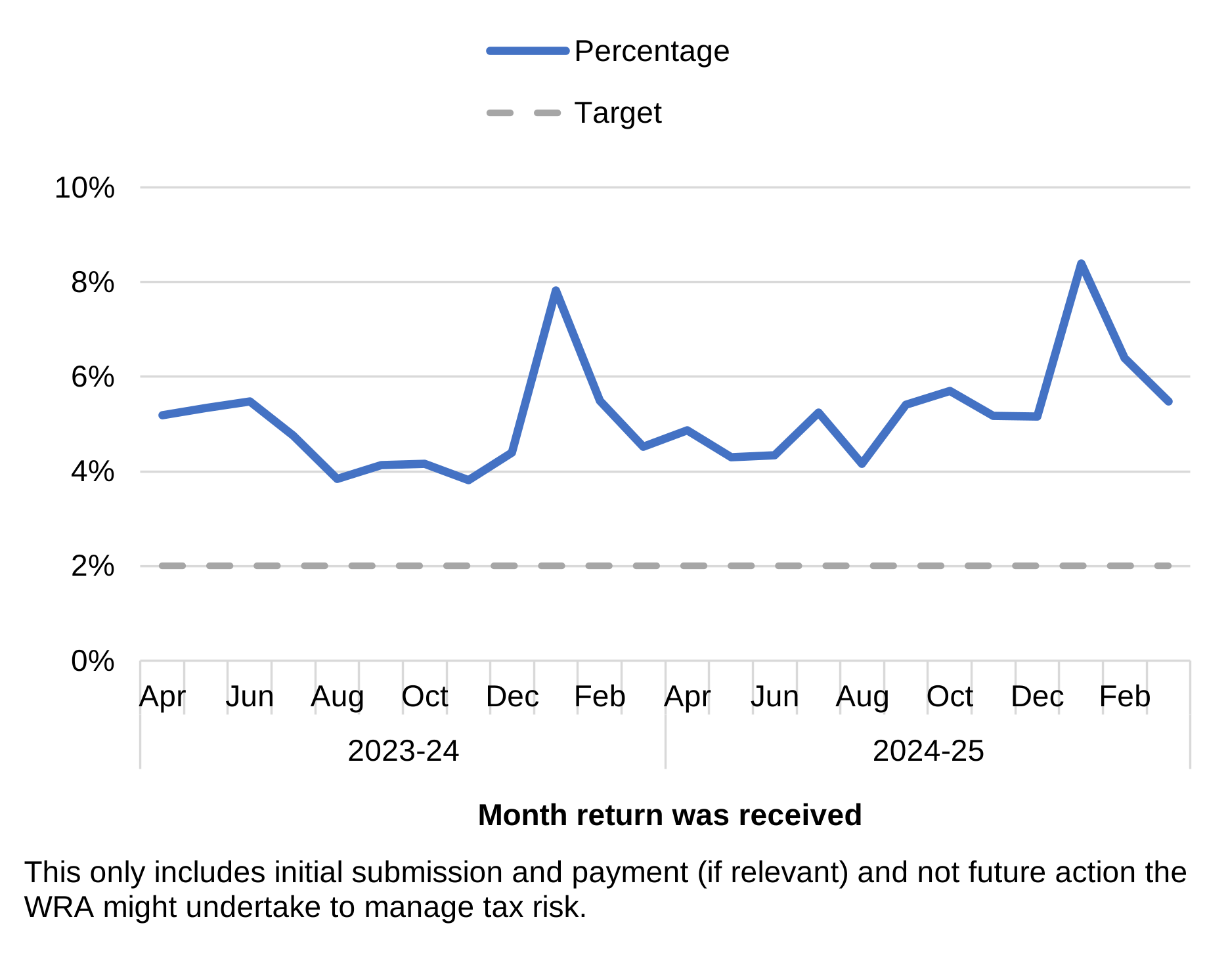
Chart 2: percentage of transactions not processed automatically through to initial payment, by month received
This chart is not shown explicitly in the related annual report.
The WRA has a performance target to automatically process 98% of transactions without manual involvement. This target includes both the receipt of digital transactions and automatic matching of first payments to transactions with a financial liability, covering both LTT and LDT.
Chart 2 uses the reverse technique explained in the introduction. It shows how the monthly percentage of transactions that required manual intervention has changed over the course of 2023 to 2024 and 2024 to 2025, using a scale of 0% to 10%.
The chart shows fluctuating percentages across both years, with peaks during each Christmas period followed by immediate declines. Beyond these seasonal spikes, the trend remains relatively consistent at approximately 5%, which exceeds the 2% target set for this measure.
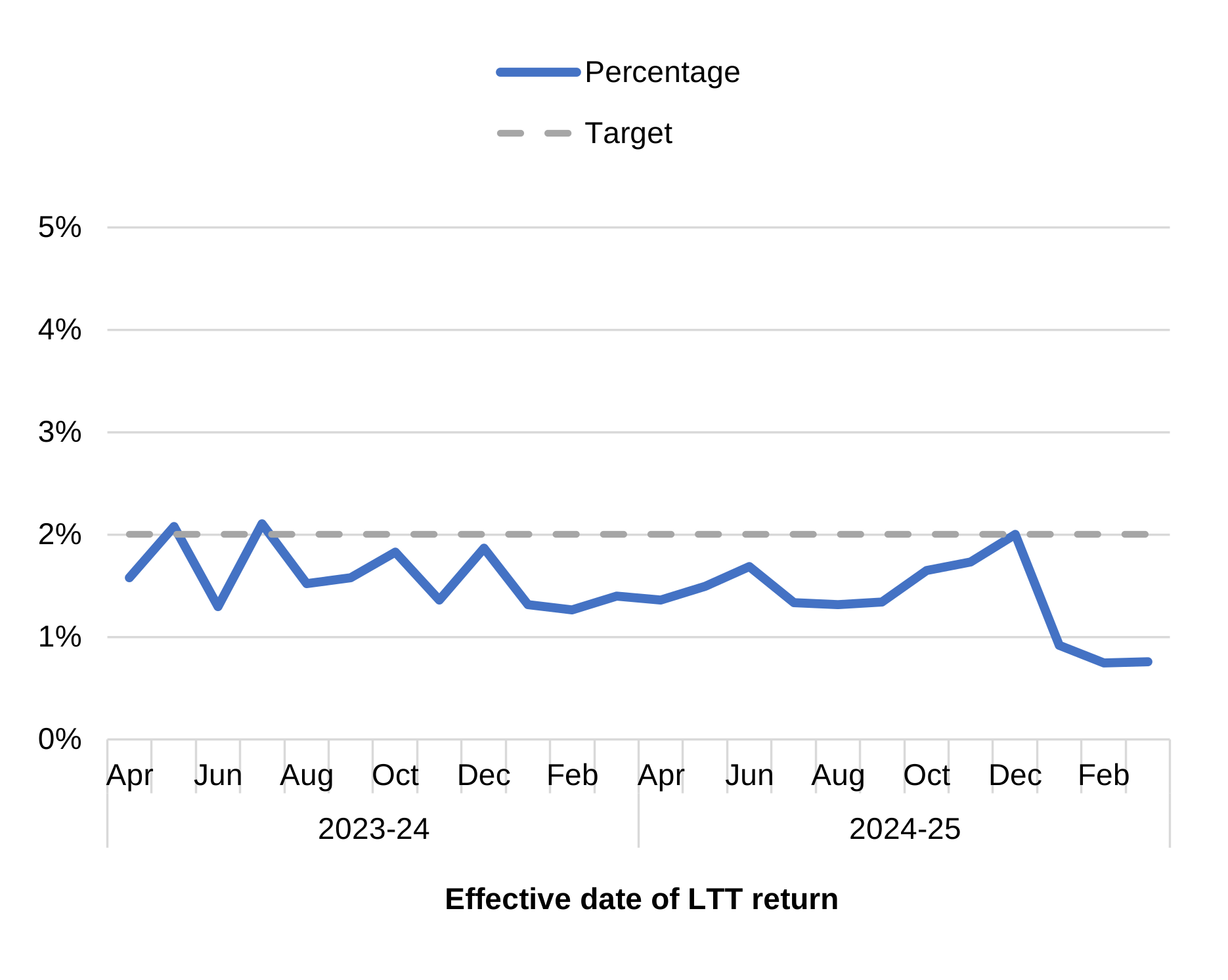
Chart 3: the percentage of LTT returns received beyond 30 days, by month transaction was effective
This chart is not shown explicitly in the related annual report.
The WRA maintains a performance target of 98% for timely LTT returns, meaning those received within 30 days of the effective date.
Chart 3 uses the reverse technique outlined in the introduction. It shows how the percentage of transactions received beyond the 30 day time frame has changed throughout 2023 to 2024 and 2024 to 2025, using a scale of 0% to 5%.
The chart shows that the percentage of late returns (received outside 30 days) fluctuated marginally on a downward trend across both years. It consistently remained below the 2% threshold corresponding with the WRA’s target for this measure. During the fourth quarter of 2024 to 2025, late submissions reached their lowest levels to date, with fewer than 1% of returns received outside the 30 day window.
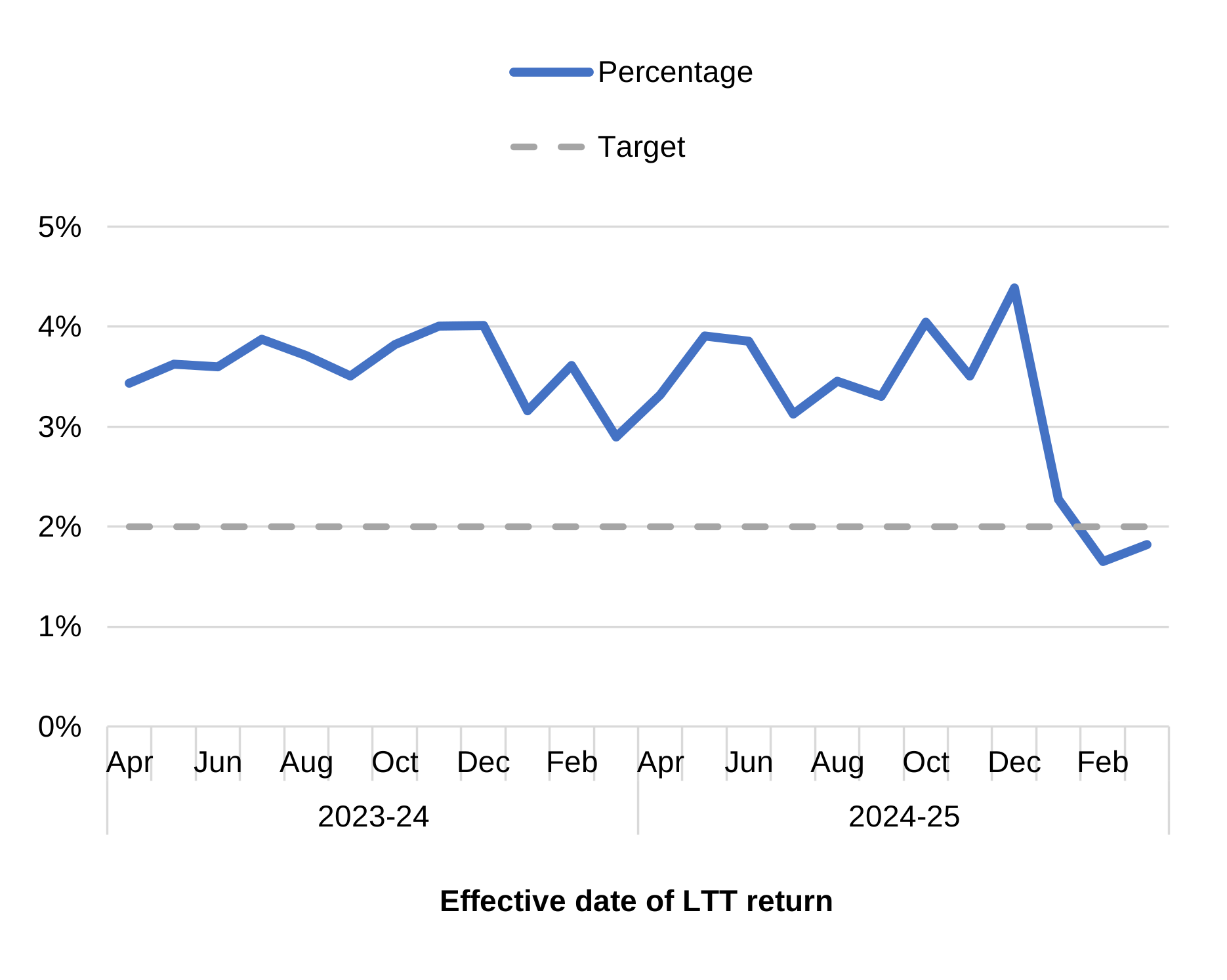
Chart 4: the percentage of Land Transaction Tax returns paid outside of 30 days, by month transaction was effective
This chart is not shown explicitly in the related annual report.
The WRA maintains a performance target of 98% for receiving LTT payments within the required time frame of 30 days of the effective date.
Chart 4 uses the reverse technique outlined in the introduction. It shows the percentage of transactions from each month that were paid beyond the 30 day deadline throughout 2023 to 2024 and 2024 to 2025, using a scale of 0% to 5%.
The chart shows that the percentage of late payments (outside 30 days) fluctuated between 3% and 4% across most months. Some increases occurred during the Christmas periods of both years, followed by decreases in the subsequent quarters.
Overall, the trend shows a slight downward trajectory, with a significant improvement in the final quarter of 2024 to 2025 when late payments fell below 2%. This met the performance measure target set by the WRA.
Chart 5: percentage of LTT debts collected beyond the 30 day and 90 day time frames, by month transaction was effective
This chart is not shown explicitly in the related annual report.
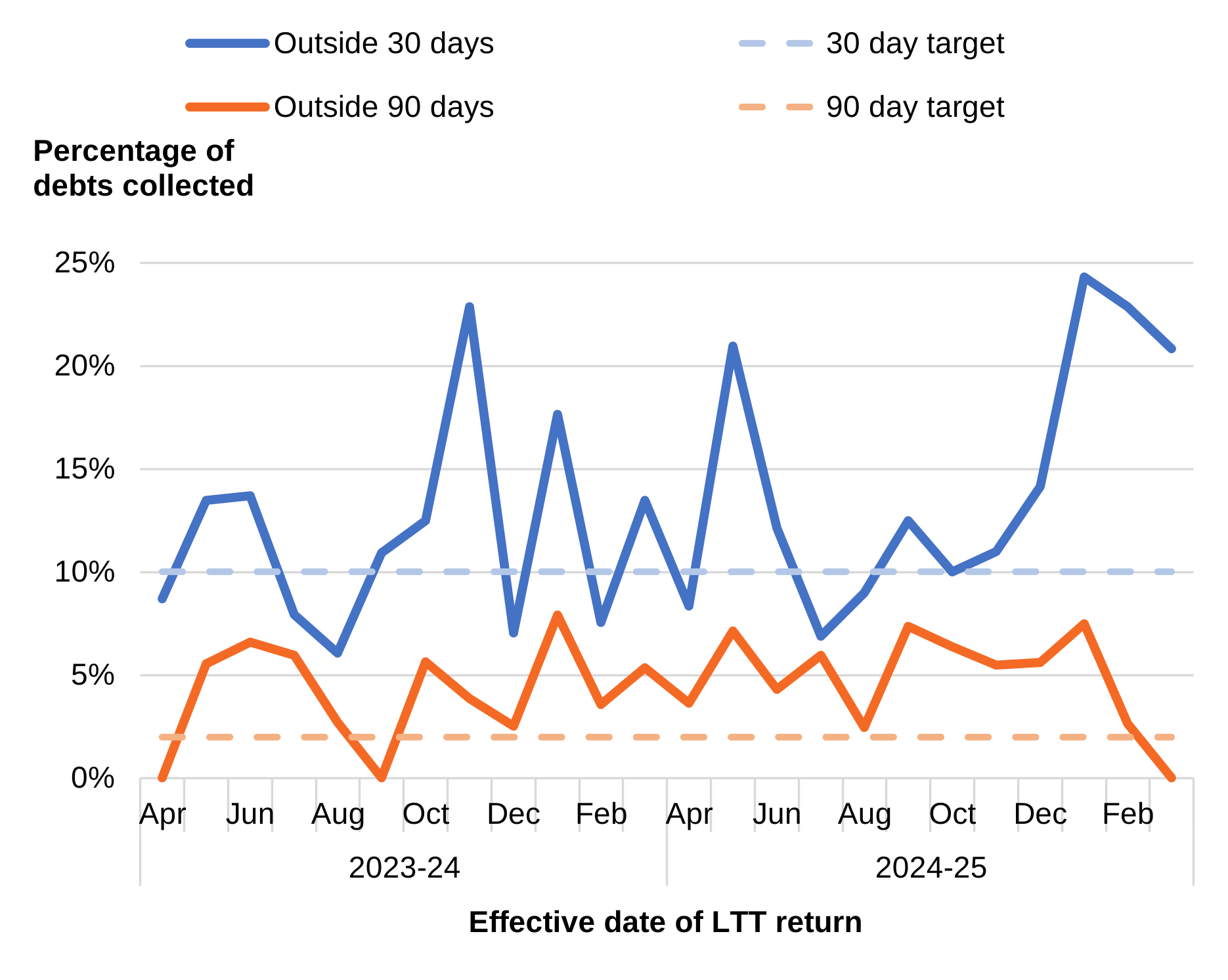
A debt is created when any LTT transaction with a financial liability is not paid within 30 days of the effective date. The WRA aims to collect payments on these transactions within an additional 30 days and has a target of collecting 90% of those debts in that time frame. Additionally, there is a target to collect 98% of these debts within a 90 day period.
Transactions submitted so late that they are already a debt more than 30 or 90 days old are excluded from these calculations as they create a bias. Instead, these cases undergo separate internal analysis to ensure comparable time frames are achieved following receipt.
Chart 5 uses the reverse technique explained in the introduction. It shows how the percentage of debts that were collected outside both the 30 day and 90 day windows has evolved throughout 2023 to 2024 and 2024 to 2025, using a scale of 0% to 30%.
The chart shows that the percentage of debts collected outside the 30 day window generally remained at or near our threshold throughout most of 2023 to 2024 and 2024 to 2025. There was notable fluctuation around a broadly flat overall trend, with particular spikes occurring after the Christmas period in both years due to reduced operational capacity.
A similar trend emerges in the percentage of payments made beyond 90 days. Although Chart 5 shows both the 30 day and 90 day payment percentages periodically dipped below their respective targets of 10% and 2% set by WRA, the primary 30 day measure ended 2024 to 2025 close to the desired target.
It’s worth noting that both measures are highly volatile due to decreasing number of debt cases involved, and the number of cases missing these targets has remained low for several years.
Chart 6a: number of and mean average days to pay LTT higher rate refunds, by month of request
This chart is not shown explicitly in the related annual report.
Chart 6b: the percentage of LTT higher rate refunds paid beyond the 30 day and 60 day time frames, by month of request
This chart is not shown explicitly in the related annual report.
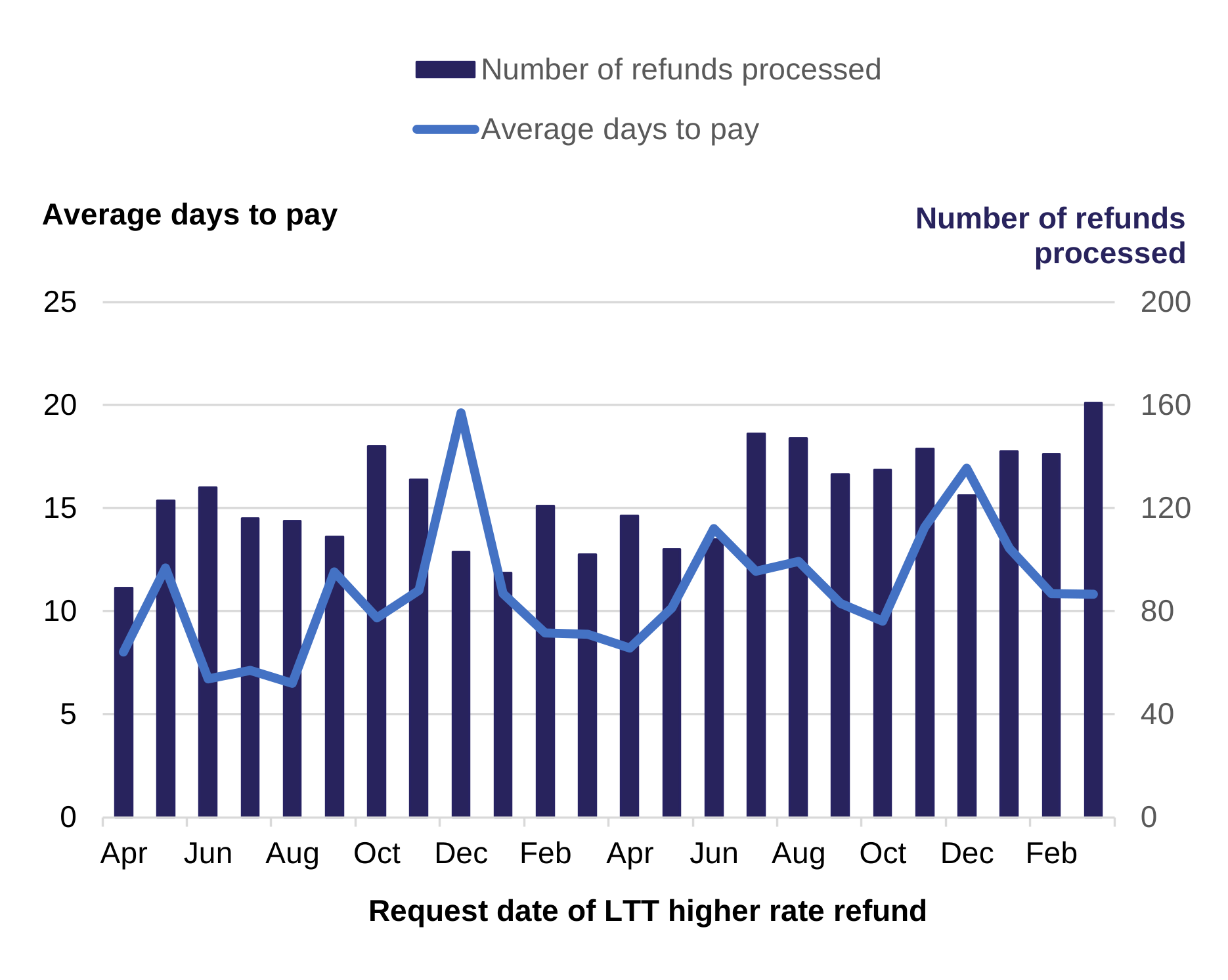
When a taxpayer purchases a new main residence without simultaneously selling their former main residence, they become liable for the higher rate of residential LTT. Those who sell their former main residence within 3 years are usually eligible for a refund of the difference between the higher and main rates of LTT on the original transaction.
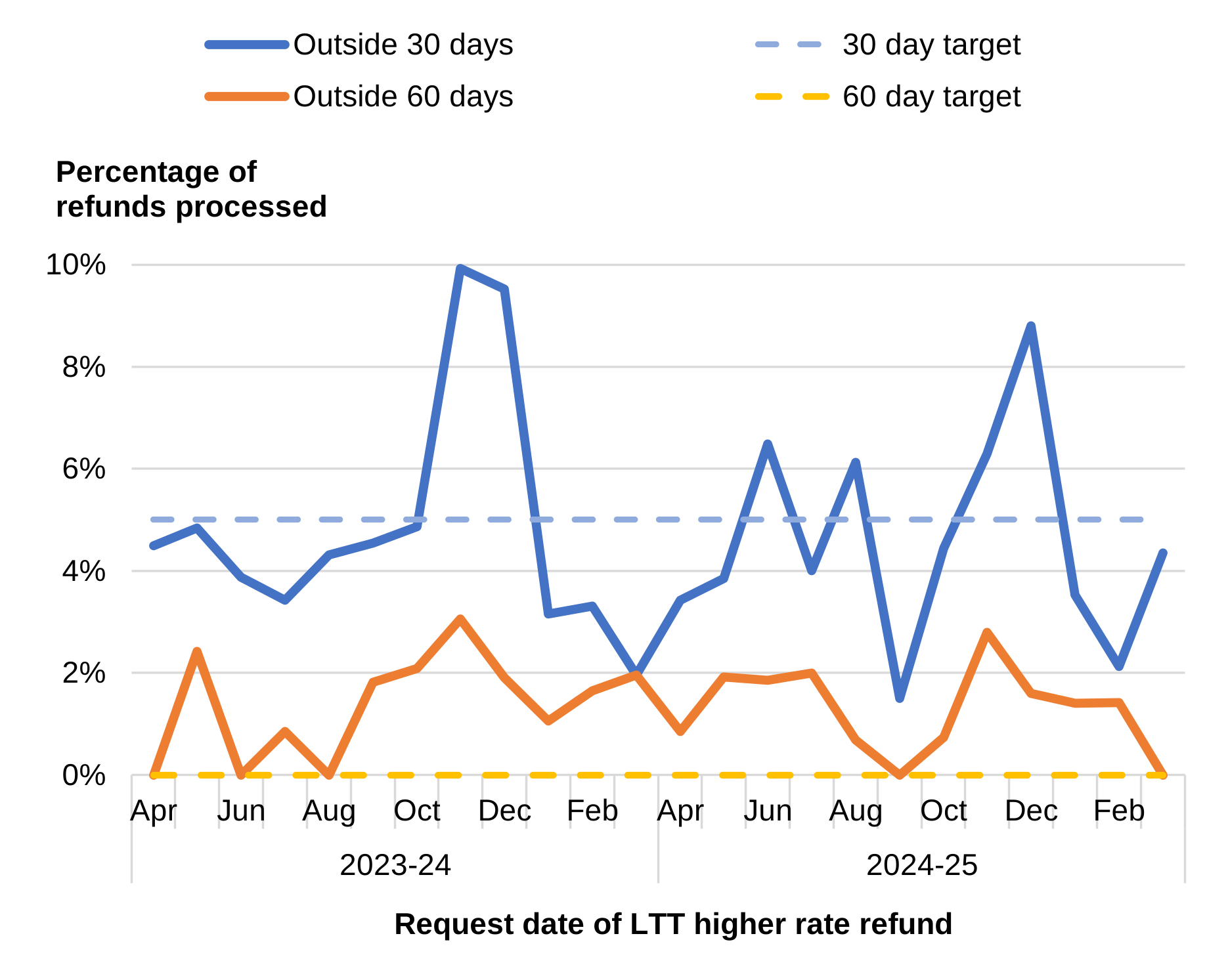
The WRA aims to process these higher rate refunds as promptly as possible, with a commitment to complete payments within 30 days of receiving the request.
Chart 6a shows the monthly processing time for higher rate refund requests throughout 2023 to 2024 and 2024 to 2025, using a scale of 0 to 25 days. It also displays bars showing the number of refunds processed each month, scaled from 0 to 200. Chart 6b uses the reverse technique explained in the introduction. It shows the percentage of higher rate refund requests paid outside both 30 day and 60 day time frames during 2023 to 2024 and 2024 to 2025, using a scale of 0% to 10%.
Chart 6a shows that while the volume of higher rate refunds has followed a broadly upward trend over the 2 year period, the average processing time has remained relatively stable. Seasonal peaks occurred around Christmas in both years, followed by a return to the previous levels shortly after.
Chart 6b shows a slight downward trend in the percentage of higher rate refunds paid outside the 30 day target over the 2 year period, with most months in both financial years falling below the WRA’s 5% target threshold. While there were instances around Christmas when the target was not achieved, swift recovery followed in both years. The percentage of refunds paid beyond 60 days rarely exceeded 2% (representing fewer than 5 cases per month) and frequently reached the 0% target set by the WRA.
Chart 7a: average days to pay Land Transaction Tax general refunds, by month of request
This chart is not shown explicitly in the related annual report.
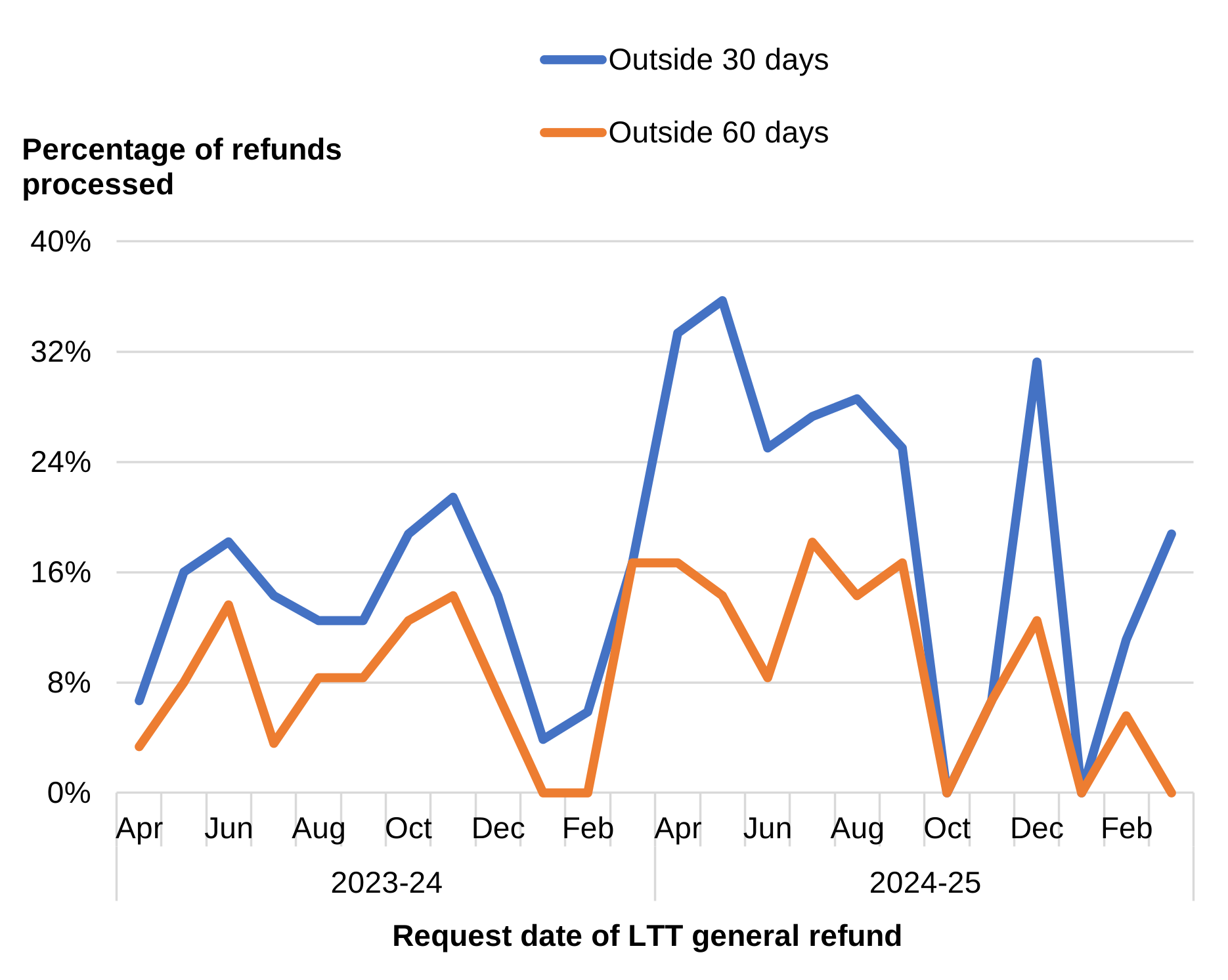
Chart 7b: percentage of LTT general refunds paid beyond the 30 day and 60 day time frames, by month of request
This chart is not shown explicitly in the related annual report.
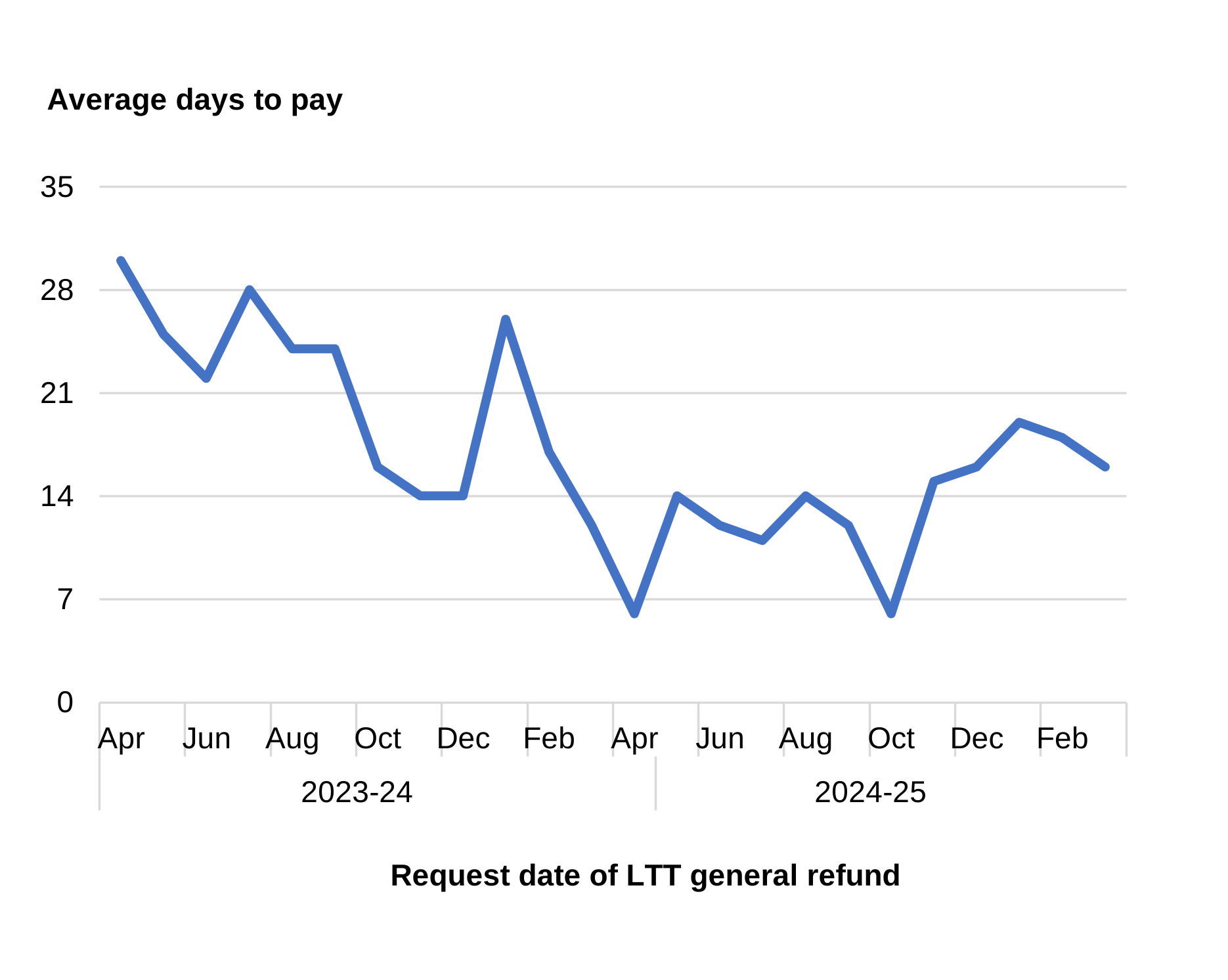
The WRA previously committed to reports on general repayments alongside measures for higher rate refunds. These repayments may relate to duplicate payments, subsequent claims for relief, or overpayment following changes in tax bands. While higher rate refunds constitute the majority of refunds, these more general repayments account for the remaining 20%.
The WRA’s annual report and accounts for 2022 to 2023 clarifies why we do not apply a target to these general repayments, primarily due to difficulties matching repayment requests to the repayments themselves. Nevertheless, the WRA continues to monitor this data and presents it here for transparency.
Chart 7a shows how the time taken to process general refund requests has changed each month throughout 2023 to 2024 and 2024 to 2025, using a scale of 0 to 40 days.
Chart 7b uses the reverse technique explained in the introduction. It shows how the percentage of all refund requests paid outside both 30 and 60 days has changed over the course of 2023 to 2024 and 2024 to 2025 using a scale of 0% to 40%%.
Chart 7b shows that the average time to pay general refunds has fluctuated over the last 2 years, while the underlying trend has remained stable. Chart 7a shows a high degree of variability in the percentage of general refunds paid within 30 and 60 days. Although the overall trend in the percentage of refunds paid outside 30 days has increased between 2023 to 2024 and 2024 to 2025, this reflects some deliberate changes to operational practice. Cases are then usually resolved within 60 days (as shown by the overall downward trend in that latter measure).
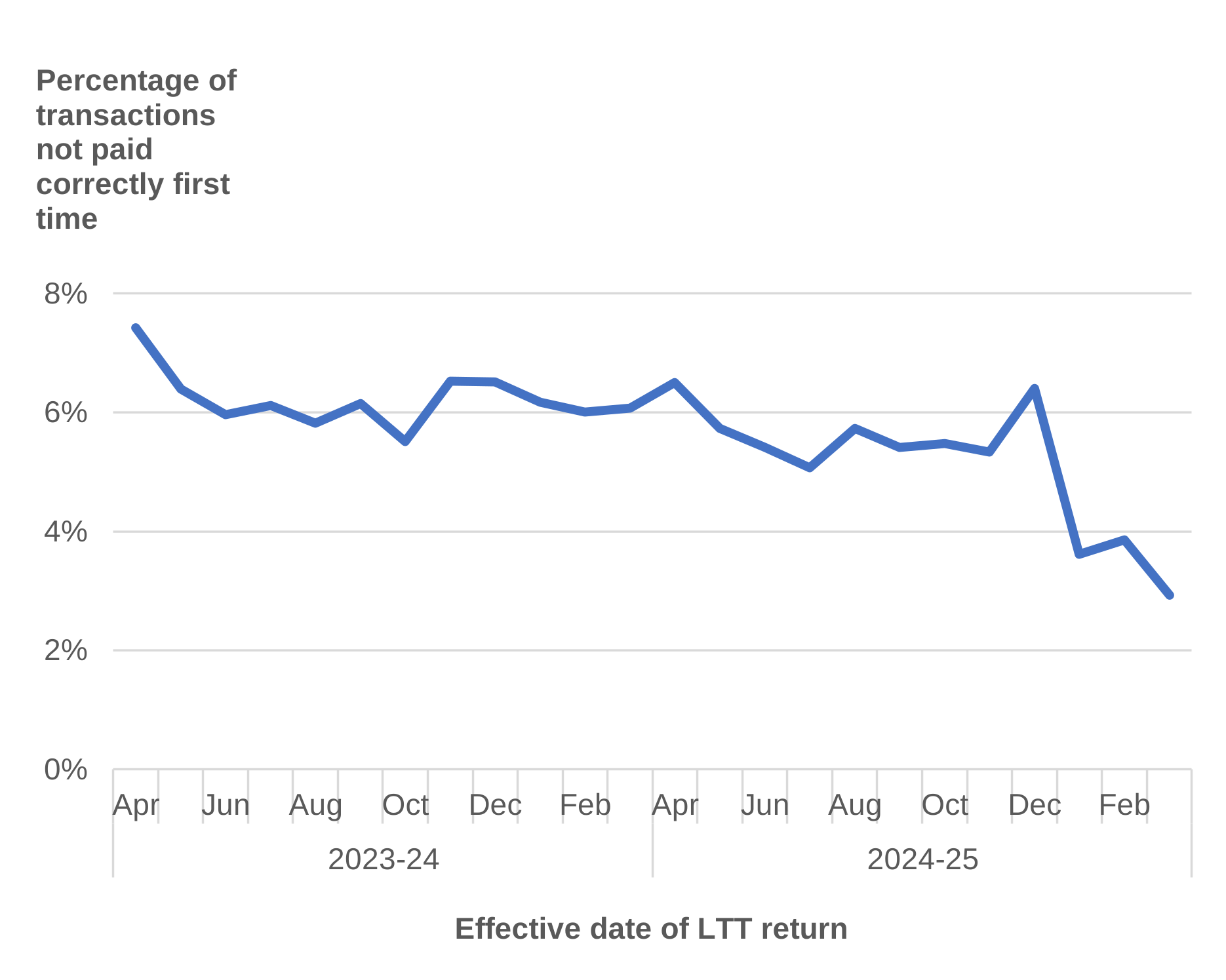
Chart 8: percentage of transactions not paid correctly first time, by effective month
This chart is shown as chart 1 in the related annual report.
The WRA aims to capture information about how easy it is to use our services, with 1 measure for this being the percentage of transactions paid correctly first time. We interpret this as transactions paid in full in a single payment, and exclude transactions where amendments to the tax due have been made. This is because any amendments affect the number and level of payments for reasons unrelated to the ease of use of our services.
Chart 8 uses the reverse technique explained in the introduction. It shows how the percentage of transactions effective in each month and not paid correctly the first time has changed over 2023 to 2024 and 2024 to 2025, using a scale of 0% to 10%.
The chart shows that the percentage of transactions not paid correctly the first time has decreased steadily over the last 2 years, reaching a low of approximately 3% by the end of 2024 to 2025.
Table 1: tax risk cases by profile since the ‘contact all' approach began in October 2023
| Quarter transaction was received | LTT risk 4: tax treatment of different property types | LTT risk 5: in relation to a specific relief (relief a) | LTT risk 6: landlords usually pay higher rates | Other risks | All identified risks |
|---|---|---|---|---|---|
| 2023 to 24 Qtr 3 | 155 | 55 | 15 | 35 | 255 |
| 2023 to 24 Qtr 4 | 70 | 30 | 15 | 30 | 150 |
| 2024 to 25 Qtr 1 | 70 | 40 | 15 | 40 | 170 |
| 2024 to 25 Qtr 2 | 70 | 30 | 20 | 40 | 160 |
| 2024 to 25 Qtr 3 | 90 | 40 | 20 | 55 | 205 |
| 2024 to 25 Qtr 4 | 90 | 25 | 10 | 115 | 240 |
This table is not shown explicitly in the related annual report.
The WRA conducts detailed analysis of data contained in each transaction to identify characteristics that may indicate potential errors or risks in the submitted information. Each identified tax risk undergoes separate analysis to determine the number of affected transactions and the tax amount at risk, enabling tracking over time.
The performance overview section of the WRA’s annual report and accounts for 2024 to 2025 explains more about the organisation’s approach to managing tax risk.
Table 1 summarises the number of transactions in our risk profiles following the mid 2023 to 2024 change in approach to contact all cases where tax risk is present. The table provides an overview of the WRA’s current tax risk management work, highlighting the most significant areas identified during late 2023 to 2024 and 2024 to 2025. The ‘other risks’ category will expand as ongoing work identifies new risks, which may subsequently appear as separate categories in future versions of this table.
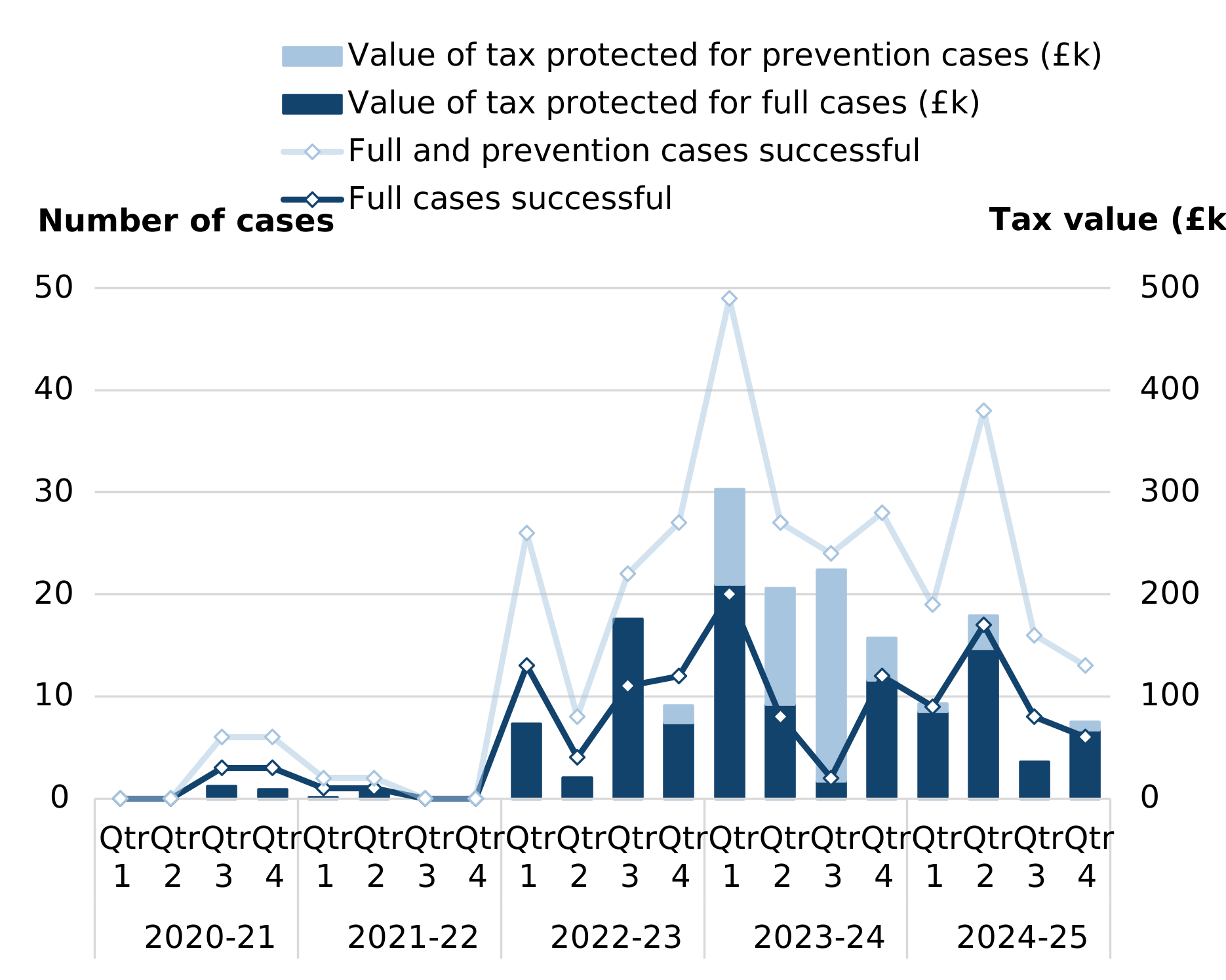
Chart 9: number and value of cases where LTT was protected
This chart is not shown explicitly in the related annual report.
Since 2022 to 2023, the WRA has significantly enhanced its tax protection efforts. This work focuses on cases where taxpayers have submitted downward amendments to LTT returns that appear incorrect. In such cases, the WRA may open an enquiry, which typically results in successfully protecting tax revenue that might otherwise have been inappropriately refunded.
Chart 9 shows quarterly numbers of tax protection cases from 2019 to 2020 and 2024 to 2025, using a scale of 0 to 50 cases. Accompanying stacked bars represent the equivalent tax value of these cases, scaled from £0 to £500,000. The visual features 2 distinct lines: 1 showing tax protected following full enquiries, and another incorporating cases where preventative activity successfully protected tax without requiring a complete enquiry. The bars are stacked correspondingly to reflect these 2 categories.
The chart shows minimal tax protection activity until 2022 to 2023, followed by substantial increases throughout 2023 to 2024. A notable drop in numbers is evident in 2024 to 2025, probably attributable to direct action by WRA to reduce the primary sources of inappropriate claims, thus reducing the need for enquiries.
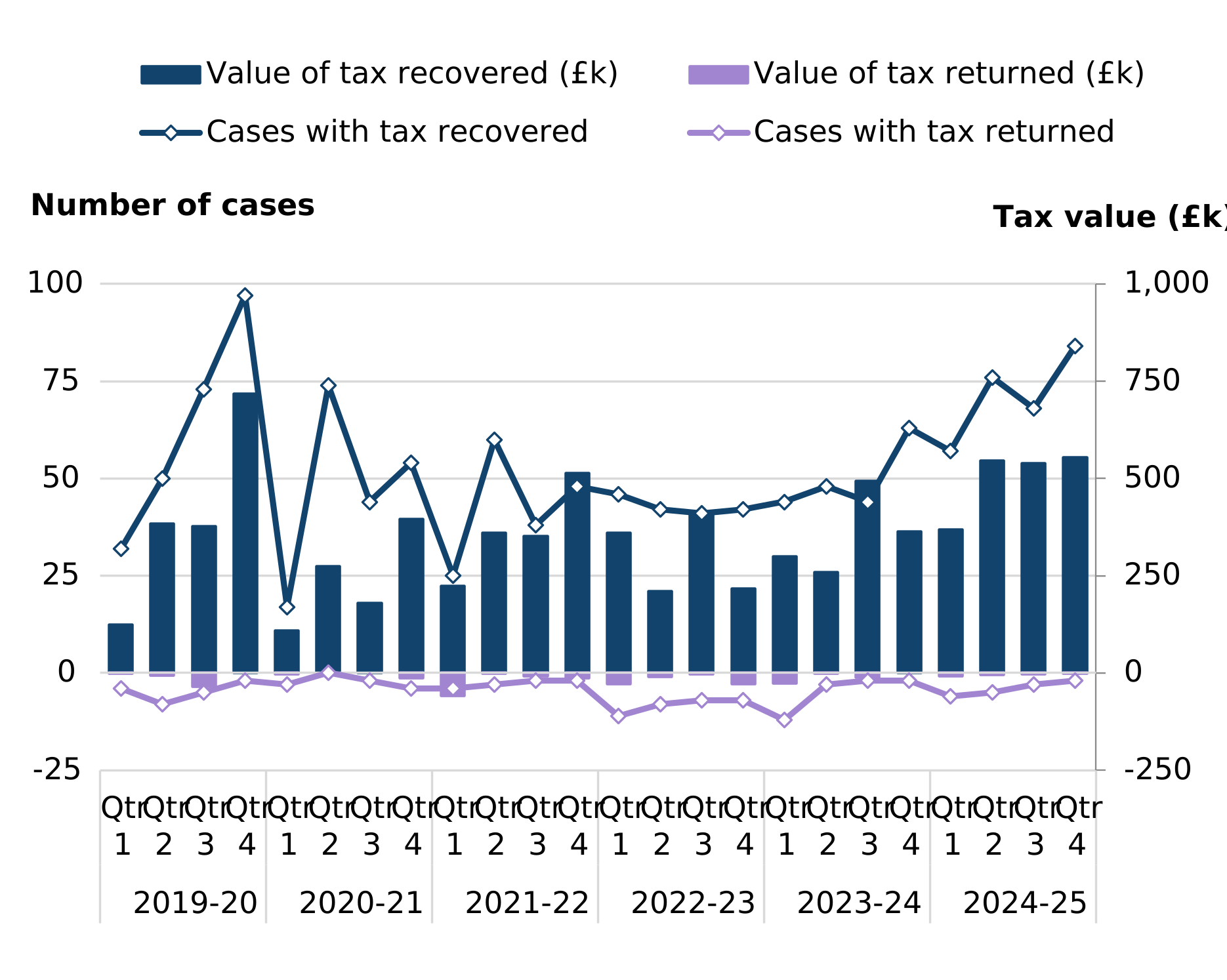
Chart 10: number and value of cases where LTT was recovered or returned
This chart is shown as chart 1 in the related annual report, and the data is referred to in the section titled 'Performance overview.'
For cases within the LTT tax risks identified by the WRA, an enquiry is typically opened into the tax return, which may result in an amendment, usually increasing the tax due. In these cases, the term ‘tax recovery’ denotes the value of these upward amendments. Conversely, the term ‘tax returned’ refers to when either an enquiry or less formal investigation suggests an overpayment of tax, which is subsequently refunded.
Chart 10 shows the number of quarterly cases where tax was recovered or changed between 2019 to 2020 and 2024 to 2025, using a scale of 0 to 150 cases. Accompanying bars show the equivalent tax value of these cases, scaled from £0 to £1.5 million. Tax returned cases appear on the negative side of the axis, scaled from 0 to 30 cases, with corresponding amounts scaled from £0 to £300,000.
The chart shows the variable nature of tax recovery since 2019, reflecting the evolving case profile over time. Initially, the WRA focused on addressing obvious tax risks, which were relatively straightforward to resolve. After closing these risks through system improvements to the tax return process, the WRA shifted its attention to more complex risk areas, resulting in a stabilisation of tax recovery cases between 2020 to 2021 and 2023 to 2024.
During 2024 to 2025, tax recovery cases have tracked on an upward trajectory as the WRA has dedicated additional resources to both understanding broader tax risks and pursuing appropriate recovery actions. Consequently, 2024 to 2025 has seen the highest volume of tax recovered to date.
Throughout the period between 2019 to 2020 and 2024 to 2025, both case numbers and tax return levels have remained broadly consistent in each quarter. Minor peaks have occurred during periods immediately following tax rate changes, typically associated with administrative errors and inadvertent tax overpayments.