
Wellbeing of Wales 2025 - A globally responsible Wales
A summary of progress on improving our social, economic, environmental and cultural wellbeing.
In this page
A globally responsible Wales
Author: Melanie Brown
A globally responsible Wales: A nation which, when doing anything to improve the economic, social, environmental and cultural wellbeing of Wales, takes account of whether doing such a thing may make a positive contribution to global wellbeing. This goal recognises that in an inter-connected world what we do to make Wales a sustainable nation can have positive and adverse impacts outside of Wales.
Progress towards the goal
Some progress continues to be made towards the globally responsible Wales goal, with updated data showing further reductions in greenhouse gas emissions. There is a national milestone for greenhouse gases which is for Wales to achieve net-zero greenhouse gas emissions by 2050. In 2023, it was estimated that greenhouse gas emissions released into the atmosphere directly from within Wales totalled 34.1 million tonnes of carbon dioxide equivalent (MtCO2e), a decrease of 6% from 2022, and a decrease of 38% from the base year. The base years for UK greenhouse gas emissions are 1990 for carbon dioxide, methane and nitrous oxide, and 1995 for the fluorinated gases. Consumption emissions associated with goods and services consumed by Welsh households were estimated to be 25.0 MtCO2e in 2020, a decrease of 37% from 2001.
There is also a national milestone relating to global footprint which is for Wales to use only its fair share of the world’s resources by 2050. The latest estimates show that while the global footprint per person in Wales reduced by nearly a third between 2004 and 2018, it remains over twice the estimated biocapacity of Wales. If the entire world population lived like the citizens of Wales, humanity would require 2.08 Earths.
In academic year 2024 to 25, there were 20,248 entrants for the Global Citizenship Challenge at Key Stage 4. There were 13,550 entries for the new advanced global community project.
Global Context, United Nations Sustainable Development Goals
On 1 January 2016, the world began implementation of the 2030 Agenda for Sustainable Development, the transformative plan of action based on 17 Sustainable Development Goals (SDGs), to address urgent global challenges over the next 15 years. The SDGs emphasise a universal agenda that requires all UN member states, both rich and poor alike, to take action to support sustainable development.
There are many factors which dictate whether Wales is becoming a more globally responsible nation.
The Well-being of Future Generations Act, with its Welsh specific well-being goals, provides a framework for Wales’s contribution to the achievement of the United Nations Sustainable Development Goals. For the most part, the other 6 narrative reports, through their assessment of our progress towards the national well-being goals, demonstrate our overall contribution as a nation to the international sustainable development agenda. For example, we report elsewhere on national trends on issues such as poverty, inequalities and fair work. This narrative on a globally responsible Wales therefore focuses on areas that are most relevant to the global agenda in particular.
The 50 national indicators for Wales have also been mapped for indicative purposes against the 17 Sustainable Development Goals to help you navigate between progress here in Wales, and the relationship to each of the SDGs.
National Indicators: mapping to Well-being and UN Sustainable Development Goals (interactive tool)
Whilst some of the narrative is drawn from national indicators and official statistics, some of the data presented in this section is contextual and uses data or factual statements related to specific policies or programmes, where we have considered it relevant to the overall narrative. These data are not collected through official statistics sources, and although reported here for context, we cannot provide full assurance about data quality. However, where possible, more information about the data can be found in the quality information for the Wellbeing of Wales report.
Climate change
Goal 13 of the UN SDGs is to “take urgent action to combat climate change and its impacts”.
People in Wales are concerned about climate change.
The National Survey results for financial year 2022 to 2023 show that the vast majority (97%) of people in Wales thought the world’s climate was changing. In 2022 to 2023, 74% of adults were fairly concerned or very concerned about climate change, similar to the results in 2021 to 2022 (76%) and in 2020 to 2021 (76%).
In 2022 to 2023, 56% of people thought that climate change was mainly or entirely due to human activity. 94% thought human activity was involved to some extent in the world’s climate changing.
Greenhouse gas emissions
There is a national milestone for greenhouse gases which is for Wales to achieve net-zero greenhouse gas emissions by 2050.
In 2023, it was estimated that emissions released into the atmosphere directly from within Wales (known as territorial emissions) totalled 34.1 million tonnes of carbon dioxide equivalent (MtCO2e).This represents a decrease of 6% since 2022. The decrease from 2022 to 2023 continues a recent trend of more significant reductions, with an overall decline of 29% between 2016 and 2023.
Three main sectors contributed to the latest year’s decline.
- Energy supply: Fluctuating activity at power stations has had a notable impact on emissions in this sector. Emissions from power stations fell by 29% between 2022 and 2023, following a 42% increase between 2020 and 2022.
- Domestic transport: Emissions from this sector decreased by 2% between 2022 and 2023, despite an overall increase since the lifting of COVID-19 travel restrictions in 2020.
- Residential buildings: Emissions fell by 6% between 2022 and 2023, continuing a downward trend observed since 2021.
Figure 7.1: estimated Welsh territorial emissions of greenhouse gases (Mt CO2e), 1990 to 2023 [Note 1]
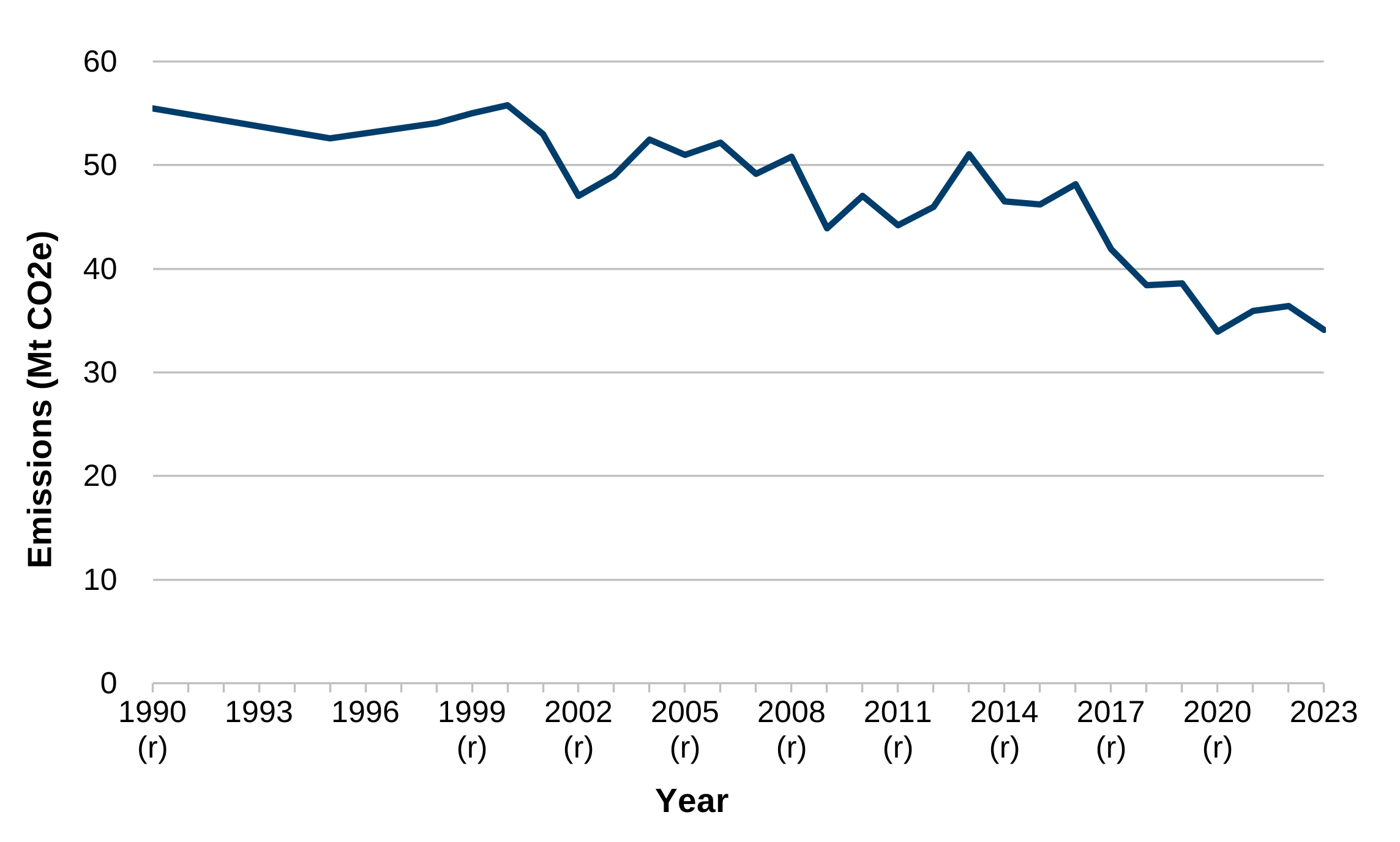
Description of figure 7.1: the line chart shows the volume of territorial greenhouse gas emissions (megatonnes) in Wales in between 1990 and 2023. Emissions in Wales have fallen by 38% since the base year. Emissions decreased by 6% between 2022 and 2023.
Source: National Atmospheric Emissions Inventory
[Note 1]: previously published figures have been revised and marked with (r)
There has been a fall of 38% since the base year emissions. The long-term emission reduction trend since the base year are mainly due to efficiencies in energy generation and business sector heating (of buildings and for processes), the use of natural gas to replace some coal and other fuels as well as abatement in some chemical industries, reductions in emissions from anaerobic waste management and variations in manufacturing output (for example in iron and steel, bulk chemical production).
The largest emission sector was the industry sector, which accounted for 31% of all greenhouse gas emissions in Wales. This sector is dominated by fuel combustion in the iron and steel production process, such as blast furnaces, coke production, flaring, and sinter production.
The domestic transport sector is the second largest sector making up 17% of Welsh emissions. This is followed by the agriculture sector (15%), the electricity supply sector (15%), the buildings and product uses sector (11%), the fuel supply sector (10%), with other sectors each making smaller contributions of 3% or less.
These figures on territorial greenhouse gas emissions only take account of emissions within Wales. This does not include emissions associated with the production of goods and services outside of Wales even if these are imported into Wales. Equally, emissions associated with the production of goods and services in Wales are counted as Welsh emissions even if these are exported for consumption elsewhere.
Emissions of greenhouse gases attributed to the consumption of global goods and services in Wales
Greenhouse gas emissions associated with goods and services consumed by Welsh households (known as consumption emissions or carbon footprint) are estimated.
These estimates were last produced in 2023, and include data up to 2020. A fuller explanation is available in last year’s Wellbeing of Wales report.
Last year we reported that emissions linked to goods and services consumed by Welsh households, known as consumption emissions, fell from 40.0 MtCO₂e in 2001 to 25.0 MtCO₂e in 2020. Most of these emissions came from imported goods and services. These estimates are uncertain, especially for imports, so long-term trends are more reliable than year-to-year changes.
Figure 7.2: estimated Welsh consumption emissions footprint (Mt CO2e), 2001 to 2020
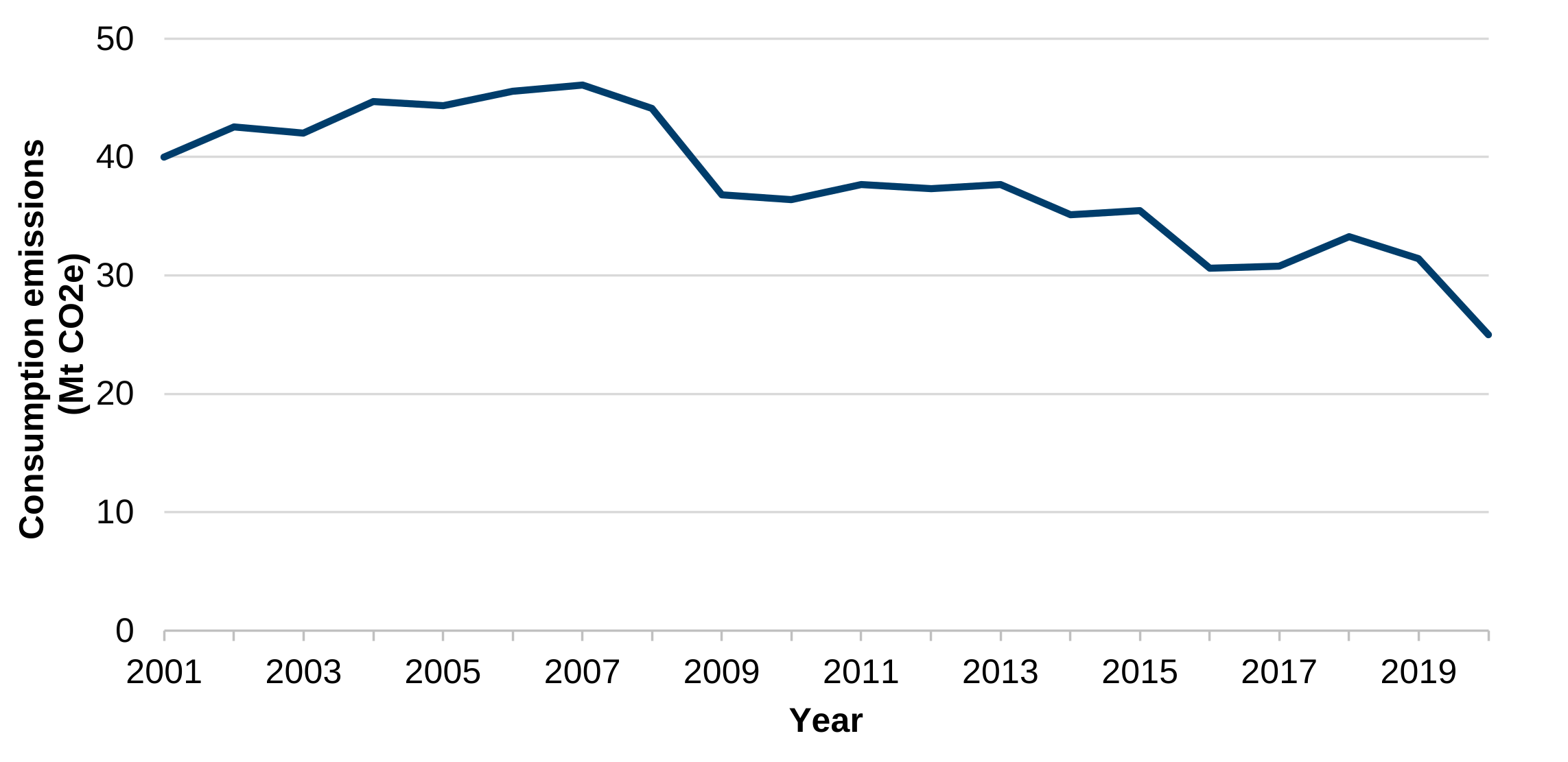
Description of figure 7.2: the line chart shows the volume of estimated consumption emissions (megatonnes) in Wales show a general downward trend since 2001. Between 2001 and 2020, Wales’ estimated consumption emissions footprint has decreased by 37%, from 40 Mt CO2e to 25 Mt CO2e.
Source: Consumption Emissions Footprint, Wales, 2001 to 2020 (Mt CO2e), University of Leeds consumption based emissions estimate.
Mode of travel
Some forms of travel, including road traffic, make a substantial contribution to carbon emissions. There is no evidence of a shift away from cars as the main method of travel in Wales.
A national indicator on the percentage of journeys by walking, cycling or public transport was added to the national indicator set in December 2021. This data will be sourced from the National Travel Survey for Wales with results expected in 2026.
In the short-term, data from the Labour Force Survey on usual mode of travel to work and data from the National Survey for Wales on mode of travel to school can be considered.
As in most other parts of the UK outside London, private road transport remains the dominant mode of travel and accounts for the overwhelming majority of commuting journeys in Wales.
In 2023, 81% of commuters in Wales used a car as their usual method of travel to work. There has been little change to the proportions of Welsh residents that usually use each mode of travel to get to work over the last decade.
Figure 7.3: usual mode of travel to work by Welsh residents, 2023 [Note 1] [Note 2] [Note 3]
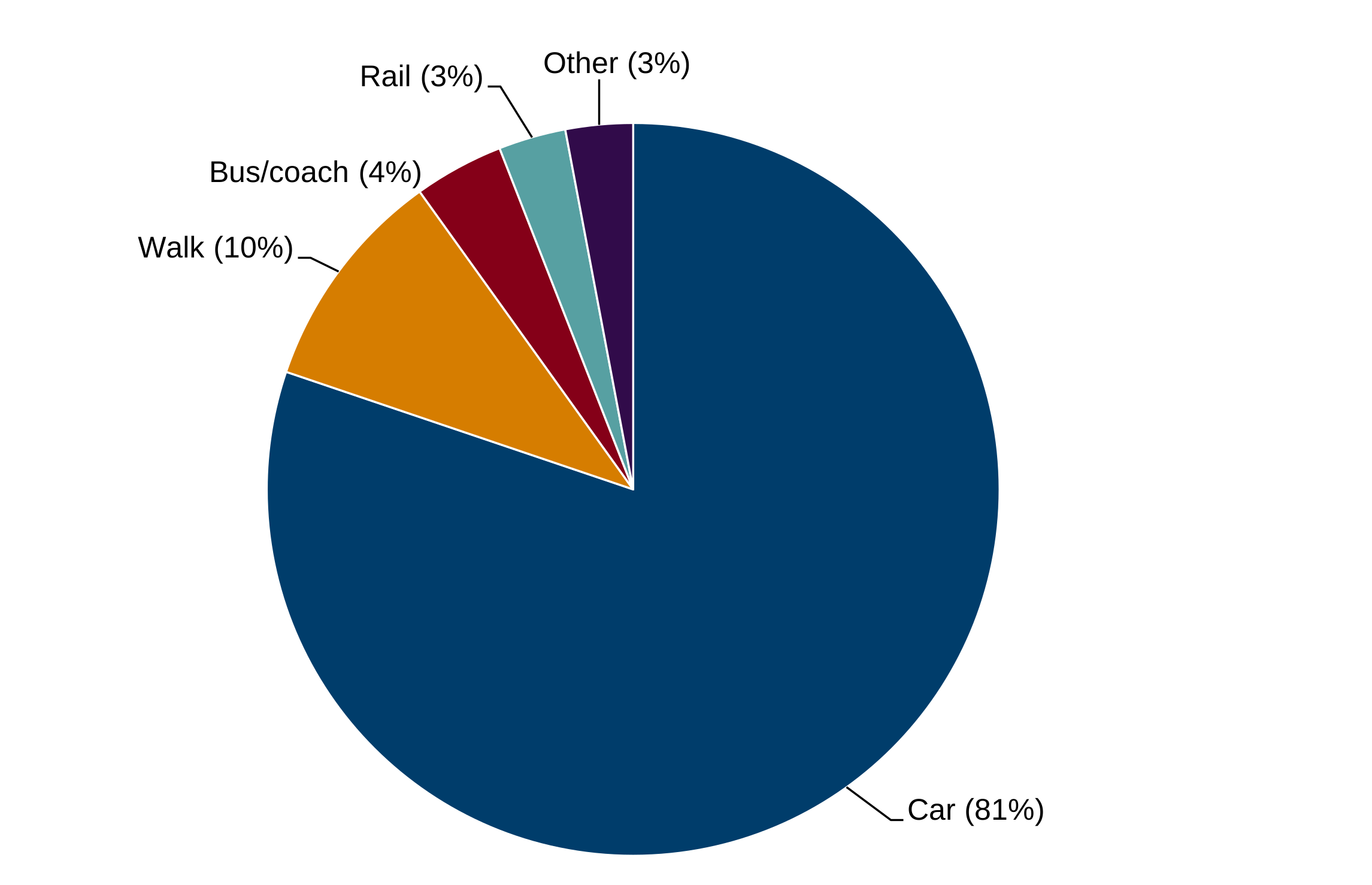
Description of figure 7.3: a pie chart showing that the majority (81%) of Welsh residents travelled to work by car in 2023.10% of residents walked, with 4% using a bus or coach, and 3% using rail services.
Source: Transport Statistics Great Britain: Usual method of travel to work by region of residence
[Note 1] Respondents were asked what their usual method of travel was.
[Note 2] Categories that have been supressed due to low quality have been included in the “Other” category.
[Note 3] Figures may not sum to 100% due to rounding.
Global footprint
Our global footprint is the total environmental burden that society places on the planet. Globally, we are consuming more natural resources than the world is able to replace.
The national milestone for this indicator is that Wales will only use its fair share of the world’s resources by 2050. A global footprint for Wales was calculated by JNCC using the Ecological Footprint methodology, which is further explained in the Wellbeing of Wales: 2024 report. This is part of a wider project to improve understanding of the global environmental footprint and impacts of commodities that are consumed within Wales, but that may be produced anywhere in the world.
Using the Ecological Footprint methodology, Wales’s global footprint has generally decreased from around 17.0 million global hectares (gha) in 2004 to 12.3 million gha in 2018. The global footprint per person has reduced by nearly a third over this time period, and stood at 3.9 gha per person in 2018. However, this remains over twice the estimated biocapacity of Wales. In other words, if the entire world population lived like the citizens of Wales, humanity would require 2.08 Earths.
Figure 7.4: global footprint, global hectares (gha) per person, 2004 to 2018
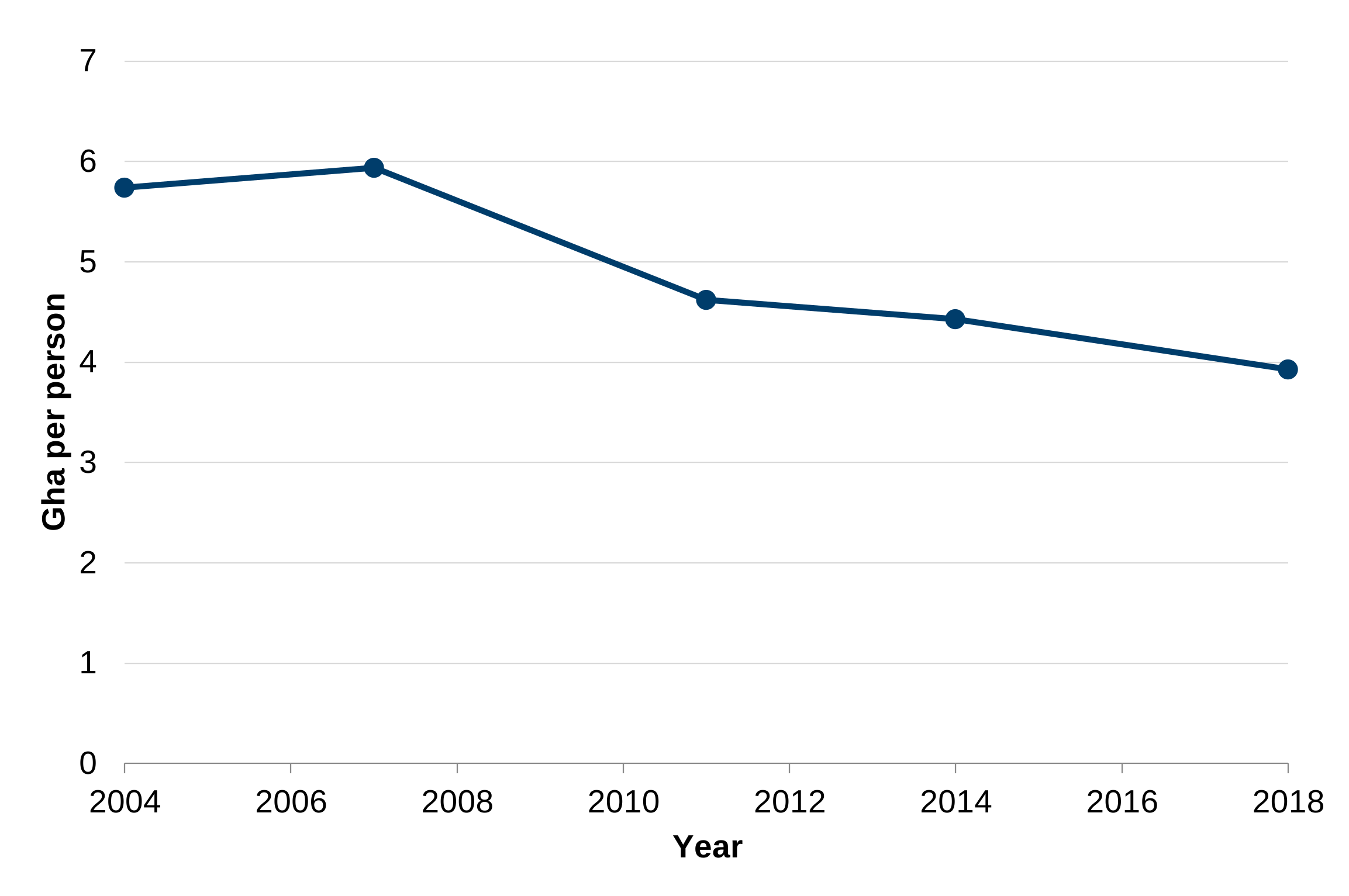
Description of figure 7.4: a line chart showing the global footprint (gha) per person in Wales, at three/four yearly intervals between 2004 and 2018. The global footprint per person has gradually decreased over the period.
Source: Understanding the Global Environmental Footprint and Impacts of Welsh Consumption, JNCC
An alternative measure of Wales’ Ecological Footprint uses slightly higher quality input data but does not allow for comparison over time. This footprint was around 10.7 million gha in 2019, equivalent to approximately 3.4 gha per person.
Active global citizenship
The National Survey for Wales asks people about what activities they have done to help with international issues such as poverty, human rights, war, refugees or climate change. The responses in financial year 2024 to 2025 are broadly consistent with those from the last time these questions were included in 2021 to 2022.
13% of those surveyed have done 3 or more of the 4 following actions to help with global issues: donating or raising money, campaigning, volunteering, or changing what they buy.
33% of people say they have donated or helped raised money in the preceding 3 months to help with global issues. The most common issues people donated or raised money for were international poverty (19%) and to support refugees (16%). 40% of women say they gave money, compared with 27% of men.
16% of people say they have campaigned for international issues in last 12 months to help with global issues and 8% say they have volunteered. 8% of people campaigned for civilians affected by war of conflict while 3% volunteered to support refugees, and 3% volunteered to support poverty issues.
50% say they have changed what they buy because of global issues. People aged 65 to 74 were the group most likely to have made changes to what they buy (58%).
Modern slavery
Referrals of potential victims of modern slavery in Wales have increased in recent years, but this rise has slowed down over the last two years.
The UN SDGs include a target on ‘Ending modern slavery and human trafficking’. Modern slavery is the term used within the UK and is defined within the Modern Slavery Act 2015. The Act categorises offences of Slavery, Servitude and Forced or Compulsory Labour and Human Trafficking.
According to the National Crime Agency (NCA), the recorded incidents of potential victims of slavery to the National Referral Mechanism (NRM) or via the Duty to Notify (DtN) process continue to increase each year in Wales.
In 2024, there were 563 referrals of potential victims of modern slavery received by police forces in Wales. This is similar to the number of referrals in 2023 (559 referrals). Some increases in recent years are probably due to improved reporting and changes in how the data are recorded.
Figure 7.5: NRM referrals sent to police forces in Wales for investigation, 2018 to 2024
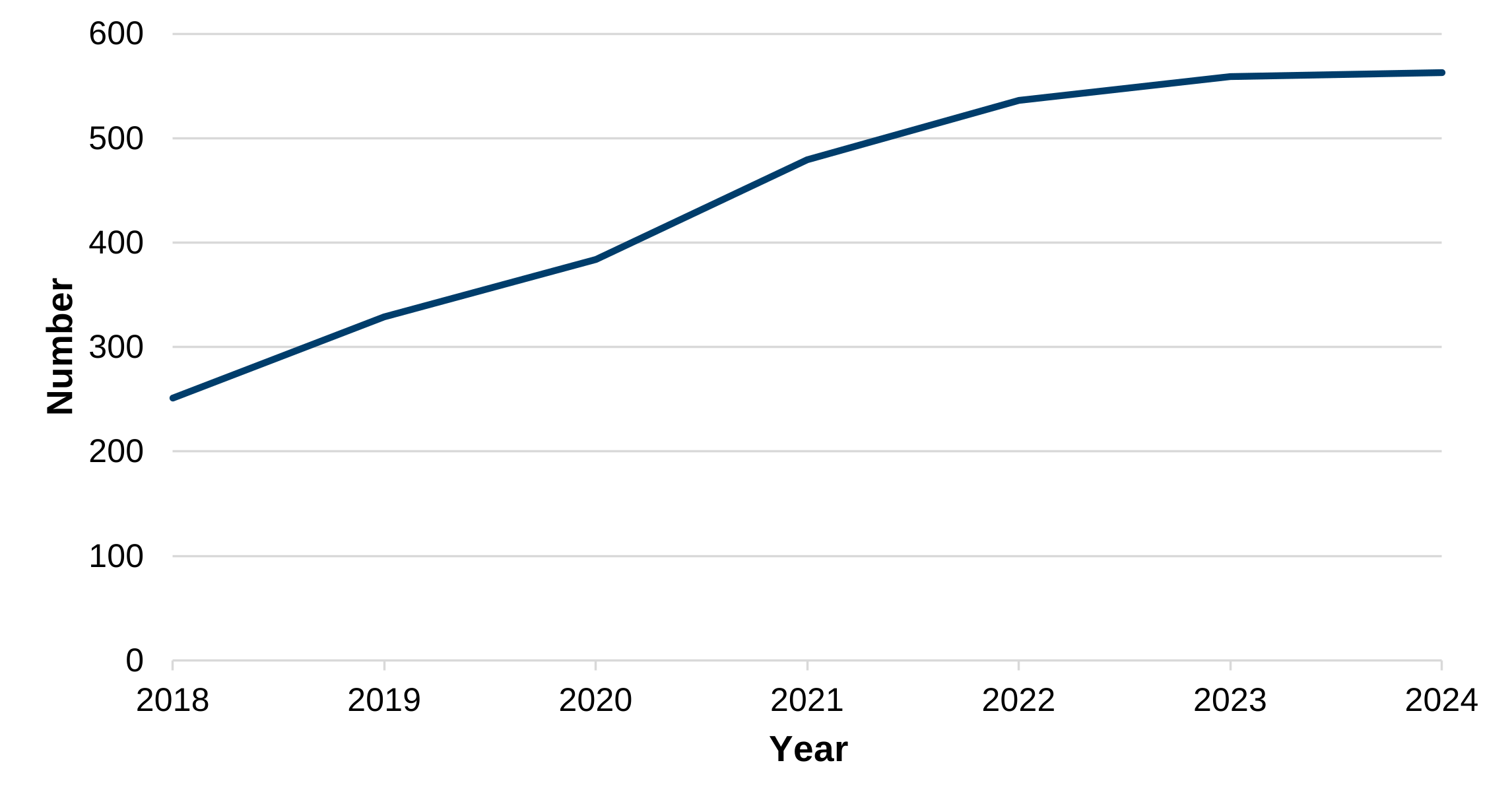
Description of figure 7.5: a line chart showing the number of referrals to the National Referral Mechanism for police forces in Wales between 2018 and 2024. The number of referrals has increased over the time period.
Source: National Referral Mechanism statistics, Home Office
In 2024 139 of the referrals were for females (25%) and 424 were for males (75%).
There were 198 (35%) individuals referred for adult exploitation categories and 341 (61%) referred for exploitation as a minor. 24 (4%) were not specified or unknown.
The most common type of exploitation for both adults and minors was ‘criminal’. However, for females (both adults and minors) the most common exploitation was ‘sexual’.
Forced marriage and female genital mutilation
Forced marriage or possible female genital mutilation has been identified in Wales.Goal 5 of the UN SDGs include a target to ‘eliminate all harmful practices, such as child, early and forced marriage and female genital mutilation’.
According to the Foreign, Commonwealth & Development Office, the number of cases that the Forced Marriage Unit (FMU) gave advice or support to in Wales, has decreased each year since 2019. The FMU gave advice or support to less than 5 cases in 2024, with a similar number in 2023. This follows a peak of 37 cases in 2019.
Due to low numbers relative to some other parts of the UK, the trend for Wales has been volatile since 2015. Following the introduction of the first COVID-19 lockdown, referrals to the FMU decreased and have not yet increased to levels seen before the pandemic. This may be attributable to reasons derived from the pandemic, such as restrictions on weddings and travel. A procedural change regarding whether to log a new case as a referral or a general enquiry is also likely to have had a minor impact on the overall number of cases compared with previous years and so direct comparisons should be treated with caution.
Figure 7.6: number of cases the Forced Marriage Unit gave advice or support to in Wales, 2015 to 2024 [Note 1] [Note 2]
| Year | Cases |
|---|---|
| 2015 | 25 |
| 2016 | 14 |
| 2017 | 17 |
| 2018 | 28 |
| 2019 | 37 |
| 2020 | 15 |
| 2021 | 8 |
| 2022 | 6 |
| 2023 | [c] |
| 2024 | [c] |
Description of figure 7.6: a table of the number of cases where the Forced Marriage Unit (FMU) gave advice or support in Wales in relation to a possible forced marriage and/or possible female genital mutilation (FGM) in Wales. Due to low numbers relative to some other parts of the UK, the trend for Wales has been volatile since 2015.
Source: Foreign, Commonwealth & Development Office, Forced Marriage Unit statistics 2024
[Note 1] Owing to changes in recording practices the data from 2020 are not directly comparable with the data in previous years.
[Note 2] Some shorthand is used in this table, [c]= less than 5.
Global citizenship education
The UN SDG ‘Quality Education’ recognises the importance of obtaining a quality education and all learners acquiring the knowledge and skills needed to promote sustainable development, including sustainable lifestyles, human rights, gender equality and global citizenship.
In academic year 2024 to 2025, there were 20,248 entrants for the global citizenship challenge at Key Stage 4. There were 13,550 entries for the new advanced global community project. For Key Stage 4, provisional data shows 99% of entries achieved a level 1 pass or above. For the new advanced skills baccalaureate global community project, provisional data shows 73.2% achieved a C or above, and 97.3% achieved an E or above.
Food poverty
Some adults in Wales are facing food poverty and are concerned about affording food.
The UN SDG ‘Zero Hunger’ aims to end hunger and achieve food security and improve nutrition.
The financial year 2024 to 2025 National Survey for Wales reported that 4% of households had received food from a food bank in the last 12 months with a further 2% saying they hadn’t but had wanted to.
Asylum seekers
The number of asylum seekers receiving support has remained steady in the past few years but has increased since the start of the decade.
Goal 16 of the UN SDGs is to ‘promote peaceful and inclusive societies for sustainable development, provide access to justice for all and build effective, accountable and inclusive institutions at all levels’.
Complete figures for the numbers of asylum seekers and refugees who are resettled in Wales are not available. However, figures are published relating to the number of refugees resettled under the UK Resettlement Scheme (and formerly the Vulnerable Persons Resettlement Scheme), and the number of those currently receiving asylum support.
As at the end of March 2024, a total of 1,533 refugees have been resettled in Wales under the Vulnerable Persons Resettlement Scheme and the Vulnerable Children Resettlement Scheme (2016 to 2022) and UK Resettlement Scheme (2021 onwards).
Section 95 provides support for asylum seekers who have an asylum claim or appeal outstanding and failed asylum seekers who had children in their household when their appeal rights were exhausted, and includes those in receipt of:
- dispersed accommodation: those in receipt of accommodation only, or both accommodation and subsistence
- subsistence only: whereby the applicant receives cash to support themselves but who have found their own accommodation
At the end of March 2025, more than 3,100 asylum seekers were receiving support in Wales, a similar number to the previous year. The number rose sharply between 2012 and 2016, but has stayed broadly more stable since then, with a dip in 2022 and 2023.
Figure 7.7: number of asylum seekers in receipt of Section 95 support, between financial years 2004 to 2005 and 2024 to 2025
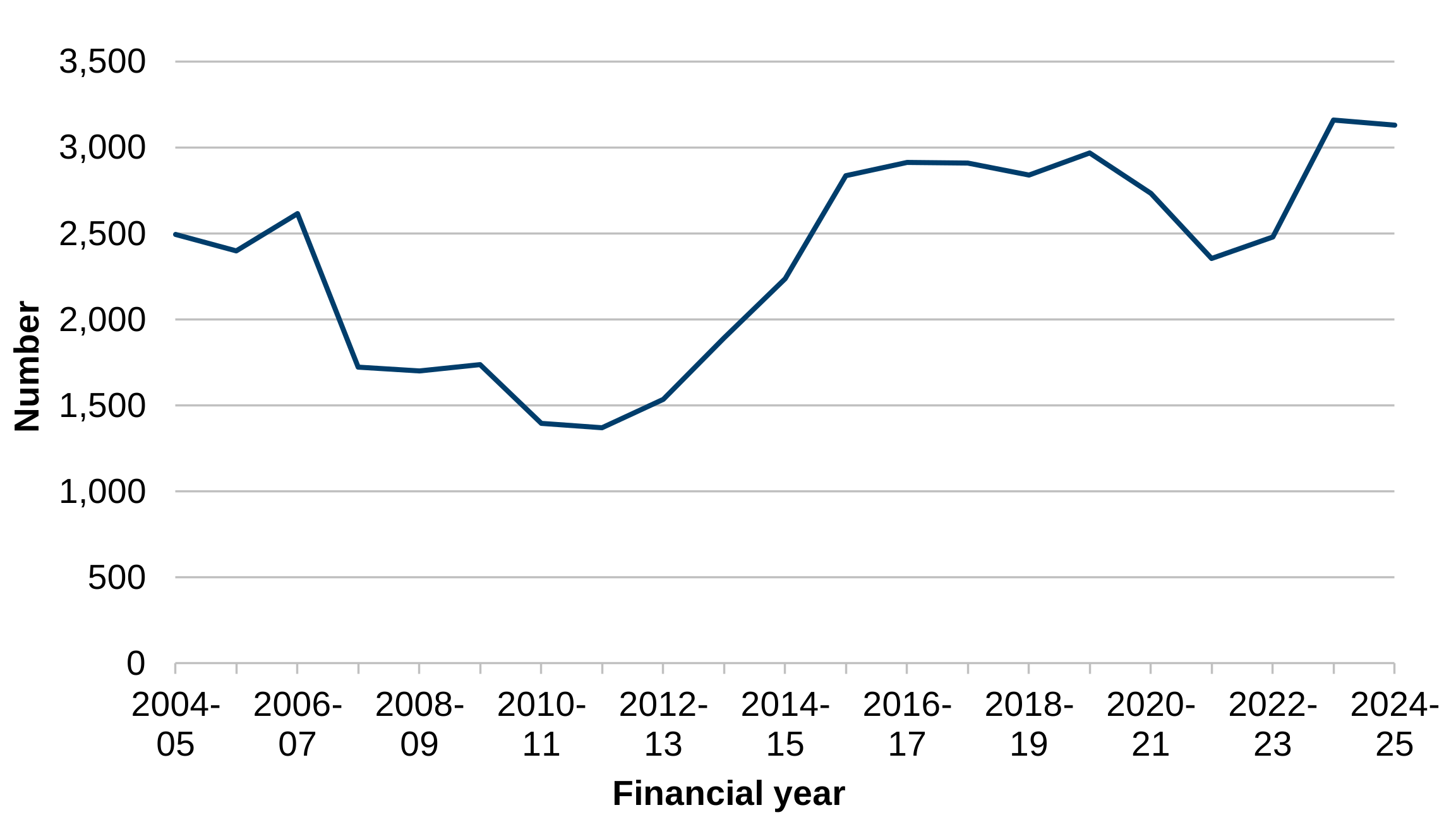
Description of figure 7.7: the line chart shows the number of asylum seekers receiving support remained steady in the financial year 2015 to 2016 to financial year 2019 to 2020, followed by decreases until 2021 to 2022, with increases in 2022 to 2023 and 2023 to 2024 and remaining similar in 2024 to 2025.
Source: Home Office Immigration statistics, financial year 2024 to 2025
Vaccination coverage
Vaccination uptake in young children continues to be high but has decreased slightly since its highest levels in financial year 2013 to 2014, for both ‘6 in 1’ DTaP/IPV/Hib/HepB1 for those reaching their first birthday, and MMR uptake of one dose by 2 years of age.
The UN SDG Sustainable Development goal ‘Good Health and Well-being’ states the importance of providing access to affordable and essential medicines and vaccines. The World Health Organisation has a vision for a world without measles, rubella and congenital rubella syndrome (CRS).
‘6 in 1’ DTaP/IPV/Hib/HepB1 vaccine uptake (all 3 doses) in children reaching their first birthday decreased very slightly to 94.1%, compared to 94.2% in the previous year.
MMR uptake of one dose by 2 years of age increased very slightly from 92.9% to 93%. This is suboptimal for preventing outbreaks of measles (target uptake is 95%).
Figure 7.8: percentage uptake of childhood immunisations in Wales, financial years 2008-09 to 2024-25 [Note 1]
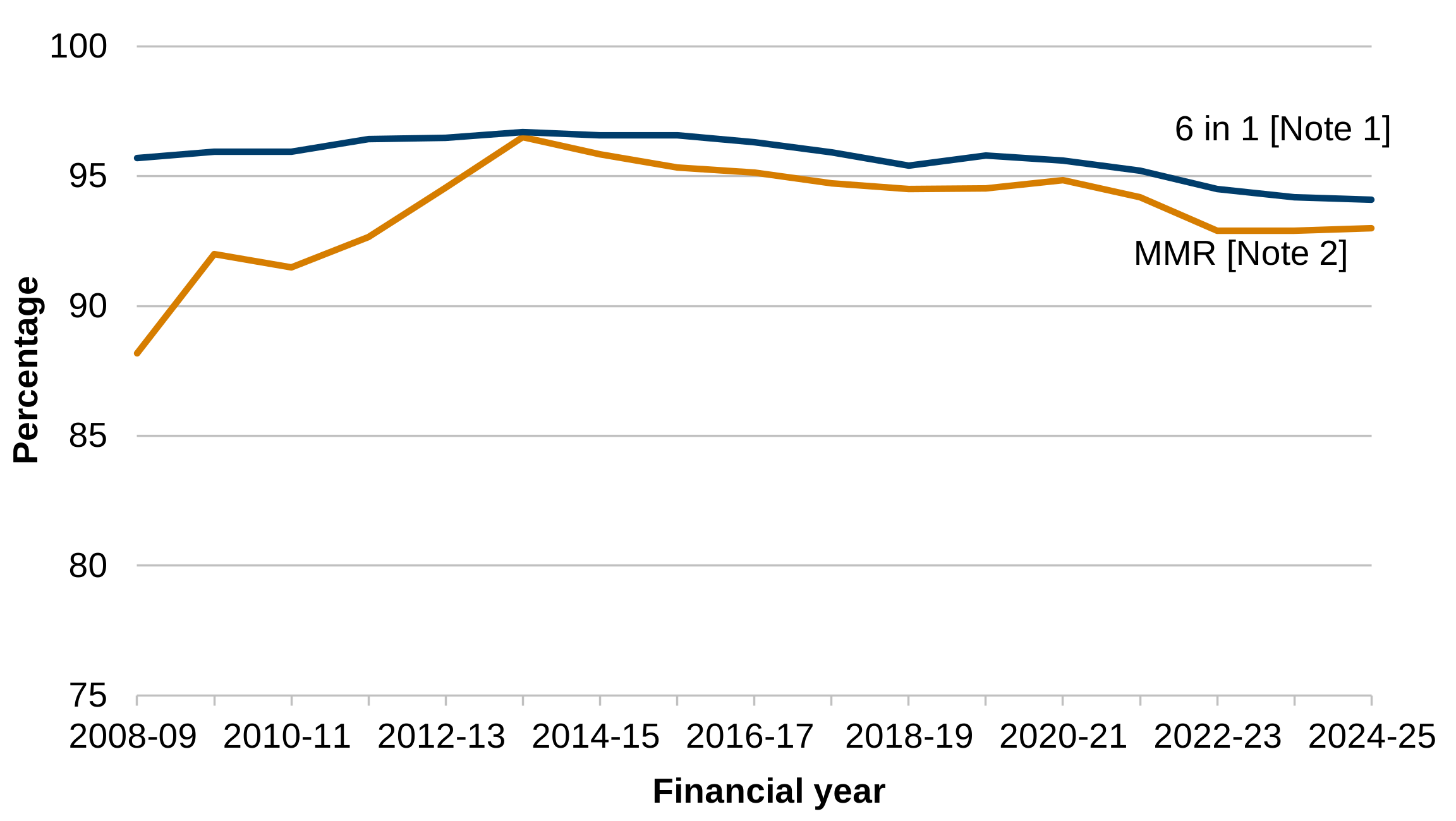
Description of figure 7.8: the line chart shows percentage uptake of MMR and the 6 in 1 vaccine from financial year 2008 to 2009 to financial year 2024 to 2025. The uptake for both the '6 in 1' and MMR have decreased since they reached their highest levels in 2013 to 2014. Uptake in 2024 to 2025 was 93.0% for MMR, and 94.1% for ‘6 in 1’.
Source: National immunisation uptake data, Public Health Wales
[Note 1] Chart axis does not start at zero.
[Note 2] The ‘6 in 1’ vaccine, protects against diphtheria, tetanus, pertussis (Whooping Cough), polio, Hib and Hepatitis B infection. The majority of one year olds referred to in this report would have been eligible for the ‘6 in 1’ vaccine, replacing the ‘5 in 1’ vaccine due at 4, 8 and 12 months.
[Note 3] MMR protects against measles, mumps and rubella. Data shows uptake for the first dose at 2 years of age.
Further reading
Previous Well-being of Wales reports, have included further analysis of:
- eco-schools
- physical punishment of children
- world heritage sites
This report covers a wide range of subjects, and therefore in this report it is only possible to consider high level measures of progress. Further reading can be found below:
Statistics on Ukrainians in the UK (Home Office)