
Wellbeing of Wales 2025 - Progress towards national milestones
A summary of progress on improving our social, economic, environmental and cultural wellbeing.
In this page
National milestones
The milestones are generational targets which describe the pace and scale of change needed in key areas under the 7 wellbeing goals. In December 2021, the Welsh Government published the first wave of Wales’s national milestones, with the second wave set in November 2022. There are 17 national milestones in total, covering 16 national indicators.
This chapter aims to assess progress of the national milestones. Change is assessed since 2015, as this was the year of the Well-being of Future Generations Act, although the milestones themselves were not set until later. Where data is not available for 2015, the nearest possible year has been used.
The assessment in this chapter helps us understand and communicate progress towards the goals and milestones, however it should not necessarily be used to evaluate the impact of the Well-being of Future Generations Act as many other factors will influence the direction of some indicators. It is also important to consider indicators and milestones in the context of longer-term trends prior to 2015, which are presented in the following chapters of this report.
We assign each measure as either improved, deteriorated, no change or not assessed. Where possible, we have used measures such as statistical significance to make this assessment. In our assessment, we have not considered whether the milestones are on course to be met, simply the direction of change.
Progress towards the milestones
Some of the 17 milestones have multiple parts to them, so in total we made 20 assessments of progress. 10 of these were assessed as improved since 2015 (or the nearest possible year), suggesting that Wales is heading in the right direction towards the milestone. However, in some cases, even though the trend may be moving in the right direction, we will need to move faster to reach the target by 2050. 4 milestones showed a deterioration and 6 showed little or no change.
For one milestone (energy performance of homes) progress cannot yet be assessed because there is only one year of data.
In most cases, the milestones continued to follow a longer-term trend that was established before 2015. Longer term trends, and more detailed analysis of the milestones are included within the relevant chapters throughout the Wellbeing of Wales report.
The following sections of this chapter provide the progress assessment for each milestone.
To increase the healthy life expectancy of adults and narrow the gap in healthy life expectancy between the least and the most deprived by at least 15% by 2050
Deteriorated: adult healthy life expectancy between 2015 to 2017 and 2021 to 2023
Deteriorated: the gap in female healthy life expectancy between most and least deprived areas between 2015 to 2017 and 2020 to 2022. The gap in male healthy life expectancy has remained stable.
Figure 1: gap in healthy life expectancy between most and least deprived areas, females and males, 2015 to 2017 to 2020 to 2022 [Note 1]
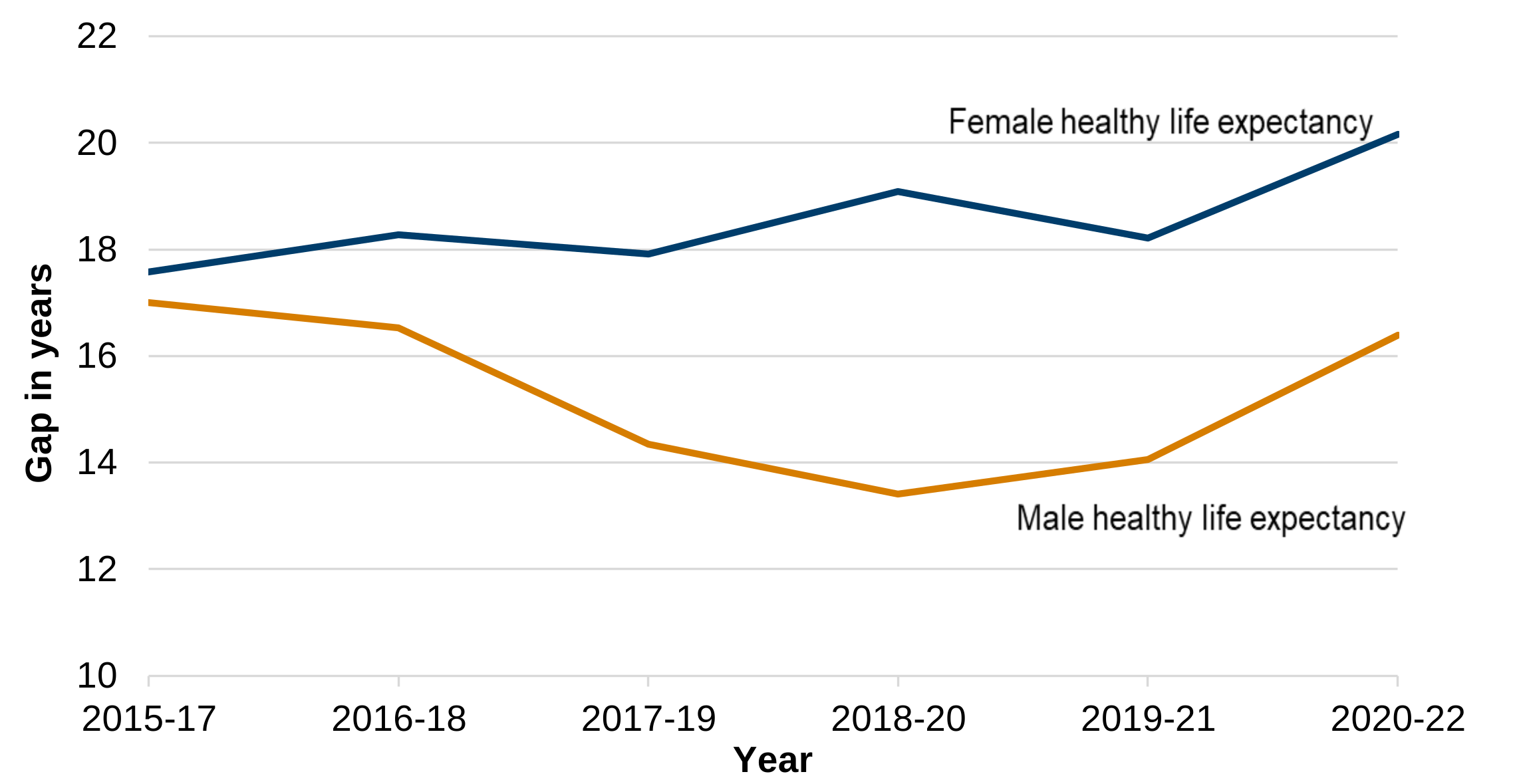
Description of figure 1: a line chart showing that healthy life expectancy at birth has fallen for females from 62.0 years in 2015 to 2017 to 59.6 years in 2021 to 2023 and males from 61.2 years in 2015 to 2017 to 60.3 years in 2021 to 2023. The gap in healthy life expectancy between most and least deprived areas appears to have also deteriorated for females (from 17.6 to 20.2 years). The gap in male healthy life expectancy has remained relatively stable (from 17.0 to 16.4 years) between 2015 to 2017 and 2020 to 2022,.
Source: Public Health Outcomes Framework for Wales reporting tool, Public Health Wales
[Note 1] Y axis does not start at zero
To increase the percentage of adults with 2 or more healthy lifestyle behaviours to more than 97% by 2050
Improved: between financial years 2020 to 2021 and 2024 to 2025
Figure 2: percentage of adults with 2 or more healthy lifestyle behaviours, 2016-17 to 2024-25 [Note 1], [Note 2], [Note 3], [Note 4]
![Figure 2: Percentage of adults with 2 or more healthy lifestyle behaviours, 2016-17 to 2024-25 [Note 1], [Note 2], [Note 3], [Note 4]](/sites/default/files/2025-10/figure-m2-percentage-of-adults-with-two-or-more-healthy-lifestyle-behaviours-2016-17-to-2024-2.svg)
Description of figure 2: a line chart showing that the percentage of adults with 2 or more healthy behaviours deteriorated from 2016 to 2017 to 2019 to 2020. The trend since 2020 to 2021 appears to have improved to around similar levels seen in 2016 to 2017 but is not directly comparable, due to a change in the method of reporting.
Source: National Survey for Wales, Welsh Government
[Note 1] Results from 2020 to 2021 are not comparable with previous years due to changes in the survey
[Note 2] Results from 2020 to 2021 are for January to March only and not annual data
[Note 3] The National Survey did not take place in 2023 to 2024 therefore there is no data for that year
[Note 4] Y axis does not start at zero
To increase the percentage of children with 2 or more healthy behaviours to 94% by 2035 and more than 99% by 2050
Improved: between academic years 2017 to 2018 and 2023 to 2024
Figure 3: percentage of young people aged 11 to 16 with 2 or more healthy behaviours, 2017 to 2018 (academic year) to 2023 to 2024 [Note 1]
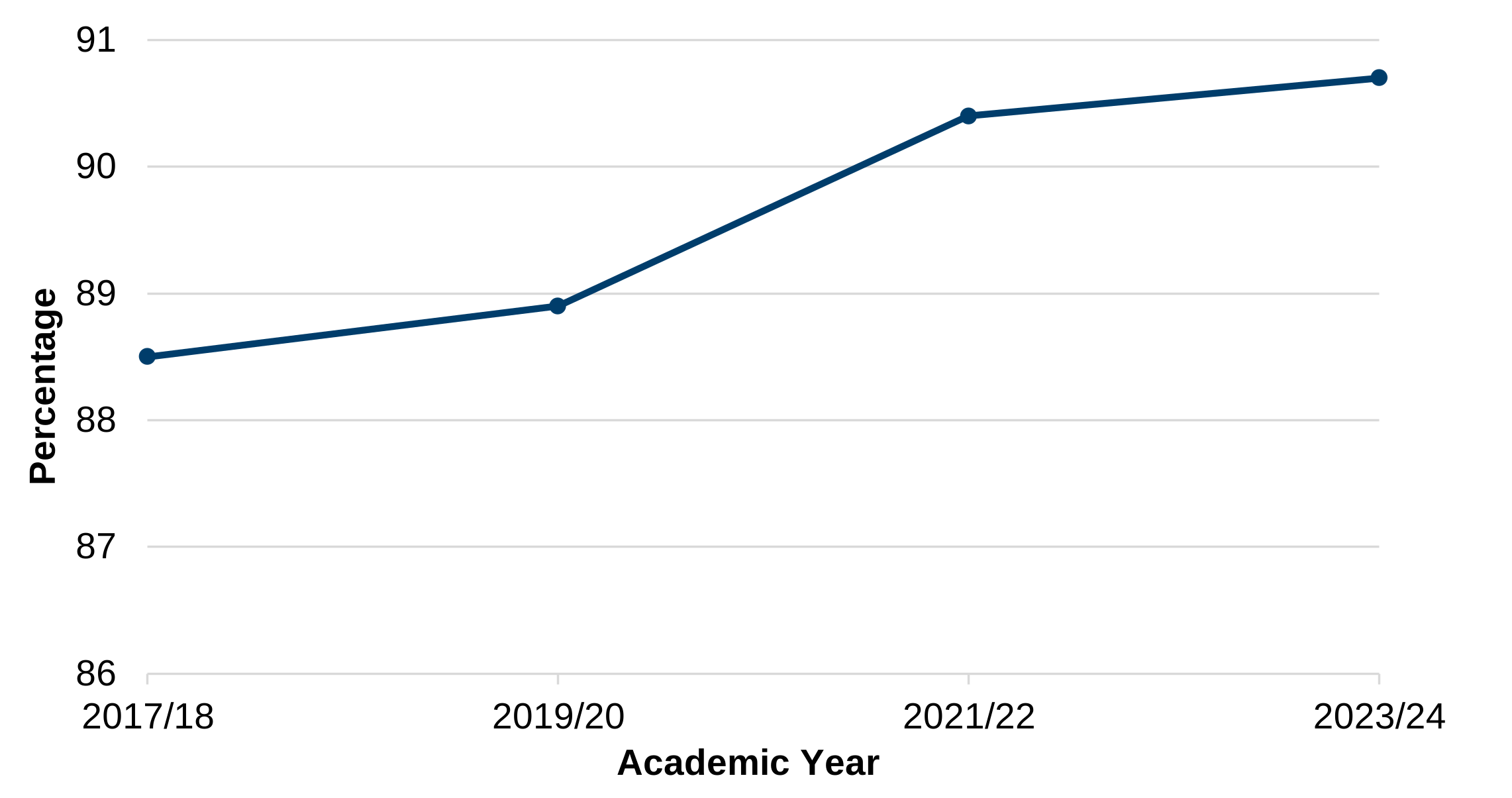
Description of figure 3: a line chart showing that the percentage of young people aged 11 to 16 with 2 or more healthy behaviours has improved from 88.5% in 2017 to 90.7% in academic year 2023 to 2024.
Source: School Health Research Network Student Health and Wellbeing Survey
[Note 1] Y axis does not start at zero
75% of working age adults in Wales will be qualified to level 3 or higher by 2050
Improved: between 2015 and 2024
Figure 4: percentage of adults of working age (18 to 64) with a qualification at Level 3 or above, 2015 to 2024
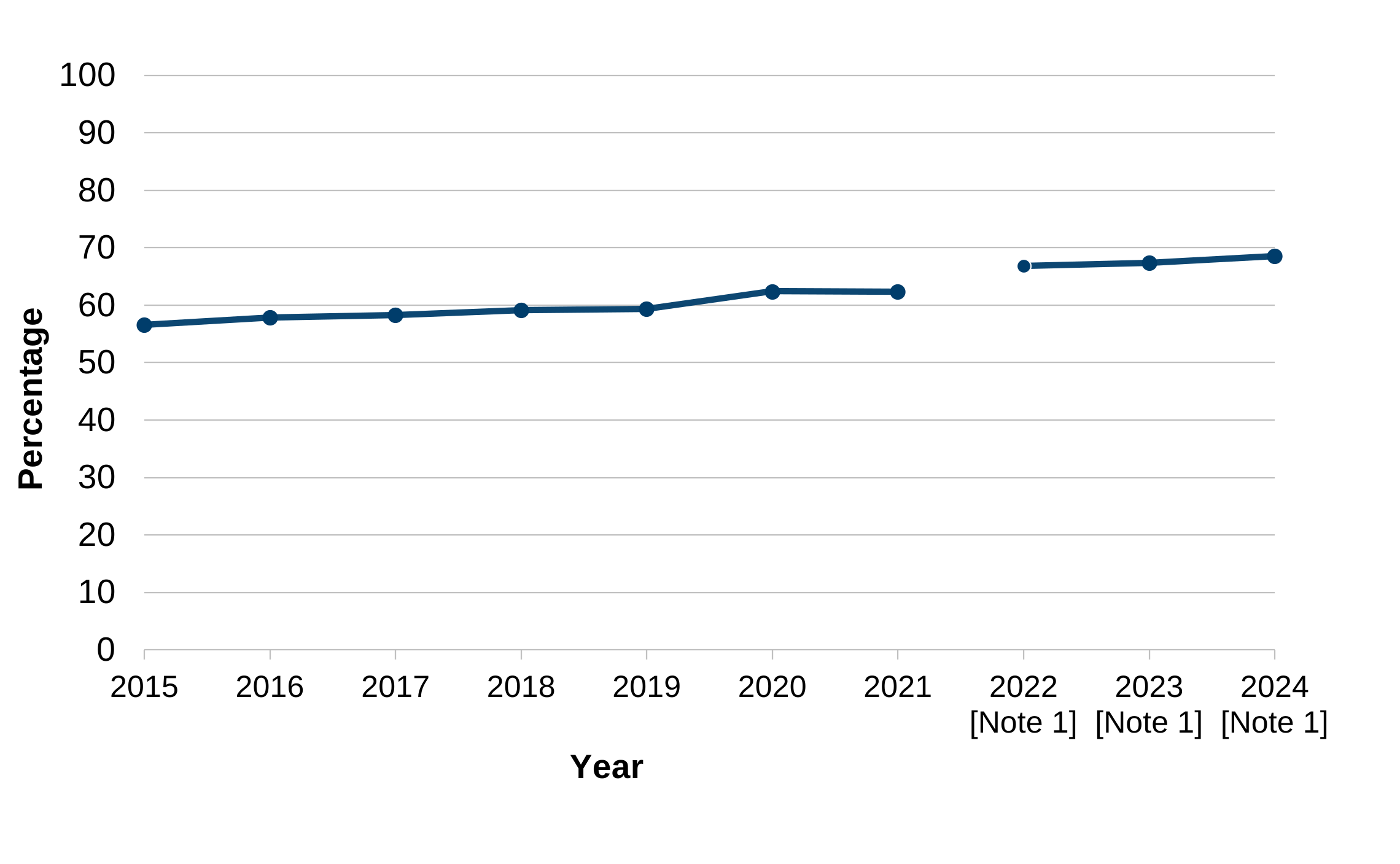
Description of figure 4: a line chart showing that an estimated 68.6% of working age adults in Wales were qualified to level 3 or higher in 2024. This figure is likely to be higher than it would have been otherwise, following the changes to the questions on the Annual Population Survey to reflect the current qualifications framework in 2022. In 2015 an estimated 56.6% of working age adults were qualified to level 3 or higher according to the qualifications framework in place at that time.
Source: Welsh Government analysis of Annual Population Survey, Office for National Statistics
[Note 1] Estimates for 2022 onwards cannot be compared to previous years following changes to the questions on qualifications in the Annual Population Survey.
The percentage of working age adults with no qualifications will be 5% or below in every local authority in Wales by 2050
Improved: between 2015 and 2024
Figure 5: proportion of working age adults with no qualification by local authority, 2024
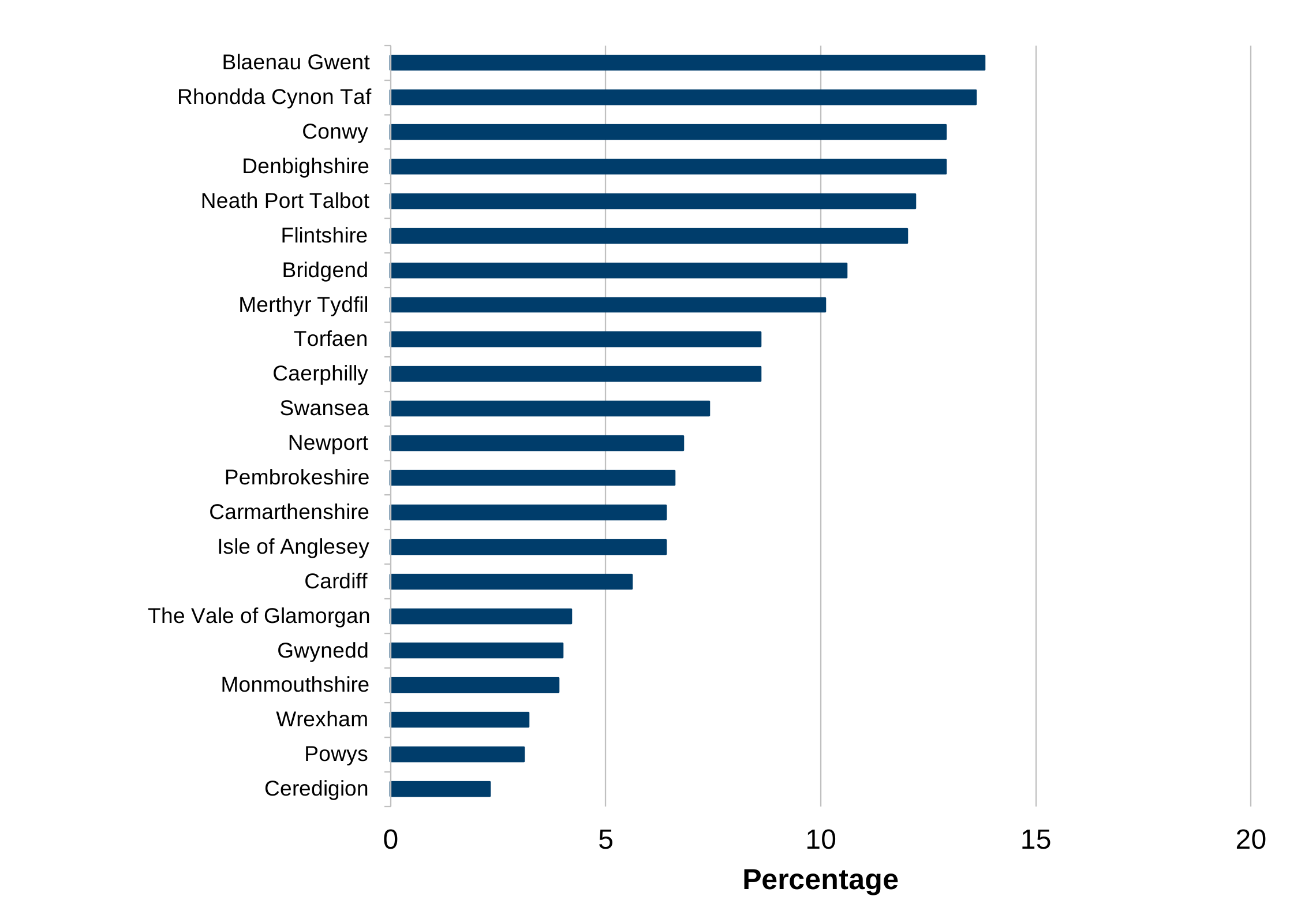
Description of figure 5: a bar chart showing that there are currently 6 local authorities where the percentage of working age adults with no qualifications is below 5%: Ceredigion, Powys, Wrexham, Monmouthshire, Gwynedd and Vale of Glamorgan. In 2015 there were none.
Source: Welsh Government Analysis of Annual Population Survey, Office for National Statistics
Improve gross disposable household income (GDHI) per head in Wales by 2035 and commit to setting a stretching growth target for 2050
No change: between 2015 and 2023
Figure 6: GDHI per head in Wales, £ and index (UK = 100), 2015 to 2023
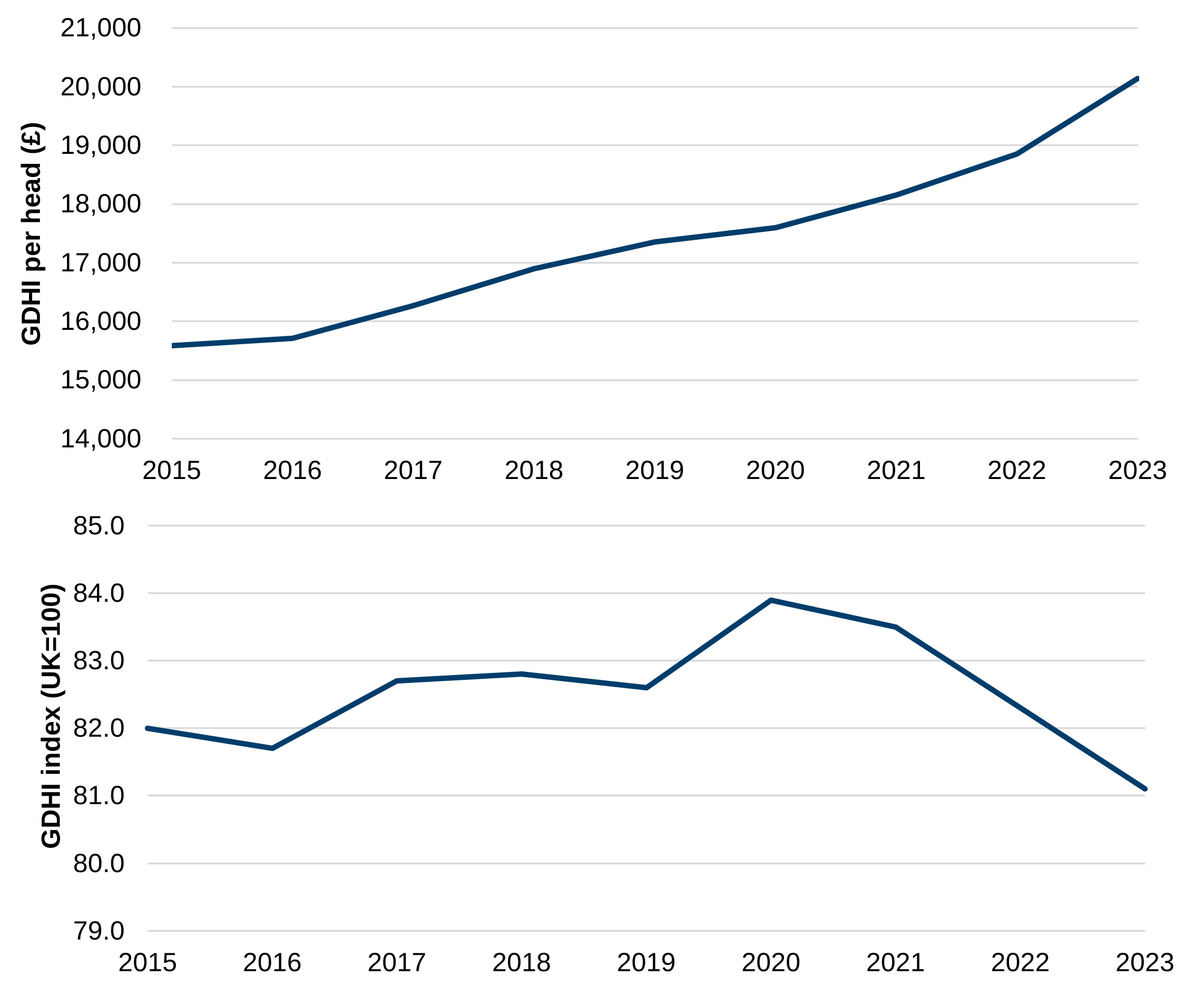
Description of figure 6: two line charts showing GDHI per head and GDHI index, relative to the UK. GDHI per head in Wales has increased in cash value over the period 2015 to 2023, from £15,600 in 2015 to £20,100 in 2023; an increase of 29.2%. This does not account for inflation over the period. However, GDHI per head relative to the UK (as shown by the index), which does account for inflation by looking at the relative change, has slightly decreased over the period 2015 to 2023 from 82.0% to 81.1%.
Source: Regional GDHI, Regional Accounts, ONS
Wales will use only its fair share of the world’s resources by 2050
Improved: between 2014 and 2018
Figure 7: Global Footprint (gha) per person, 2014 to 2018
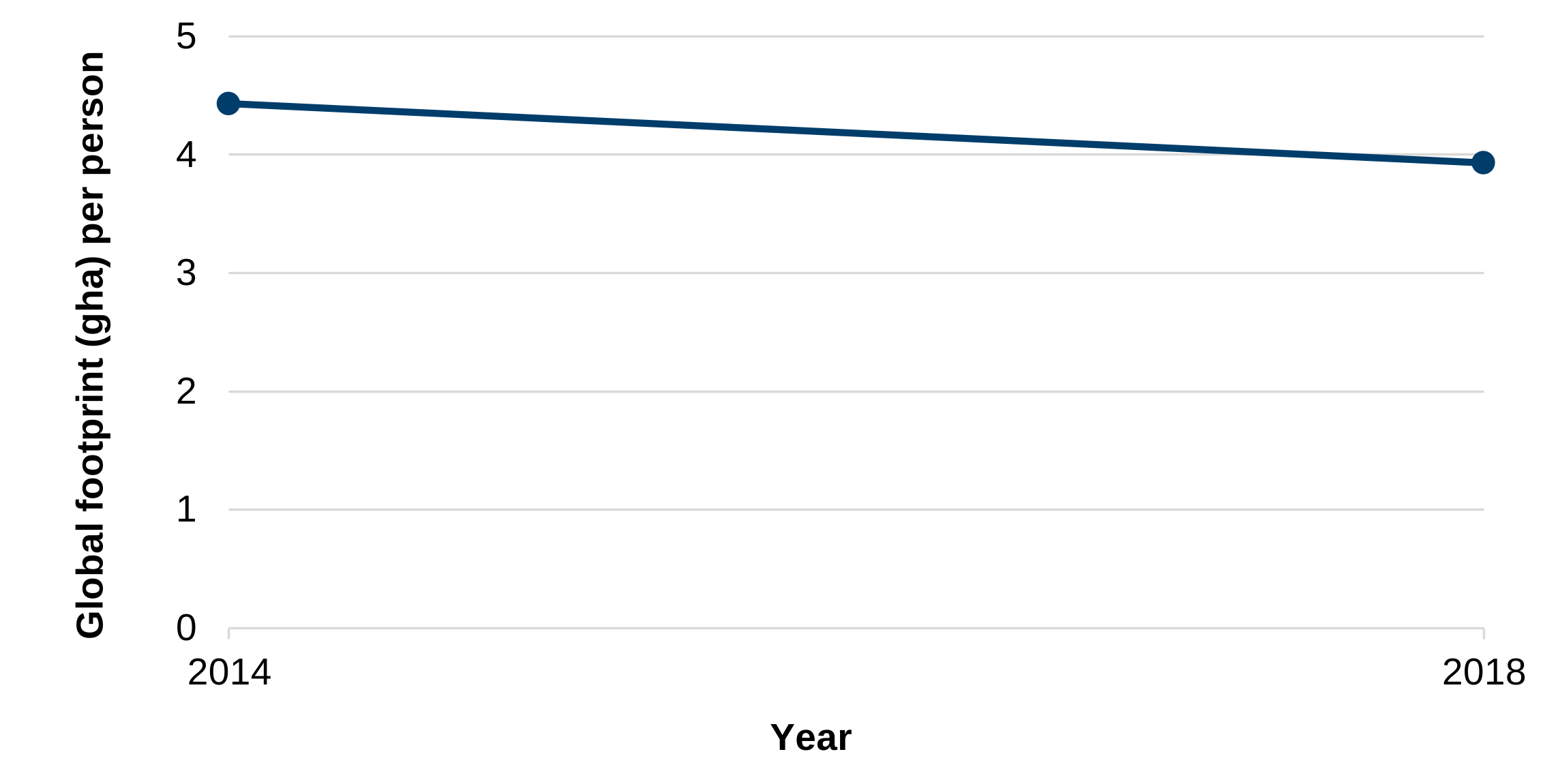
Description of figure 7: a line chart showing that the global footprint per person has reduced by 11% between 2014 and 2018. The global footprint per person was 3.9 gha per person in 2018, compared to 4.4 gha per person in 2014.
Source: Understanding the Global Environmental Footprint and Impacts of Welsh Consumption, JNCC
An elimination of the pay gap for gender, disability and ethnicity by 2050
Gender pay gap: improved between 2015 and 2024
Disability pay gap: no change between 2015 and 2024
Ethnicity pay gap: no change between 2015 and 2024
Figure 8: gender pay difference in Wales (median hourly earnings full-time employees excluding overtime), April 2015 to April 2024
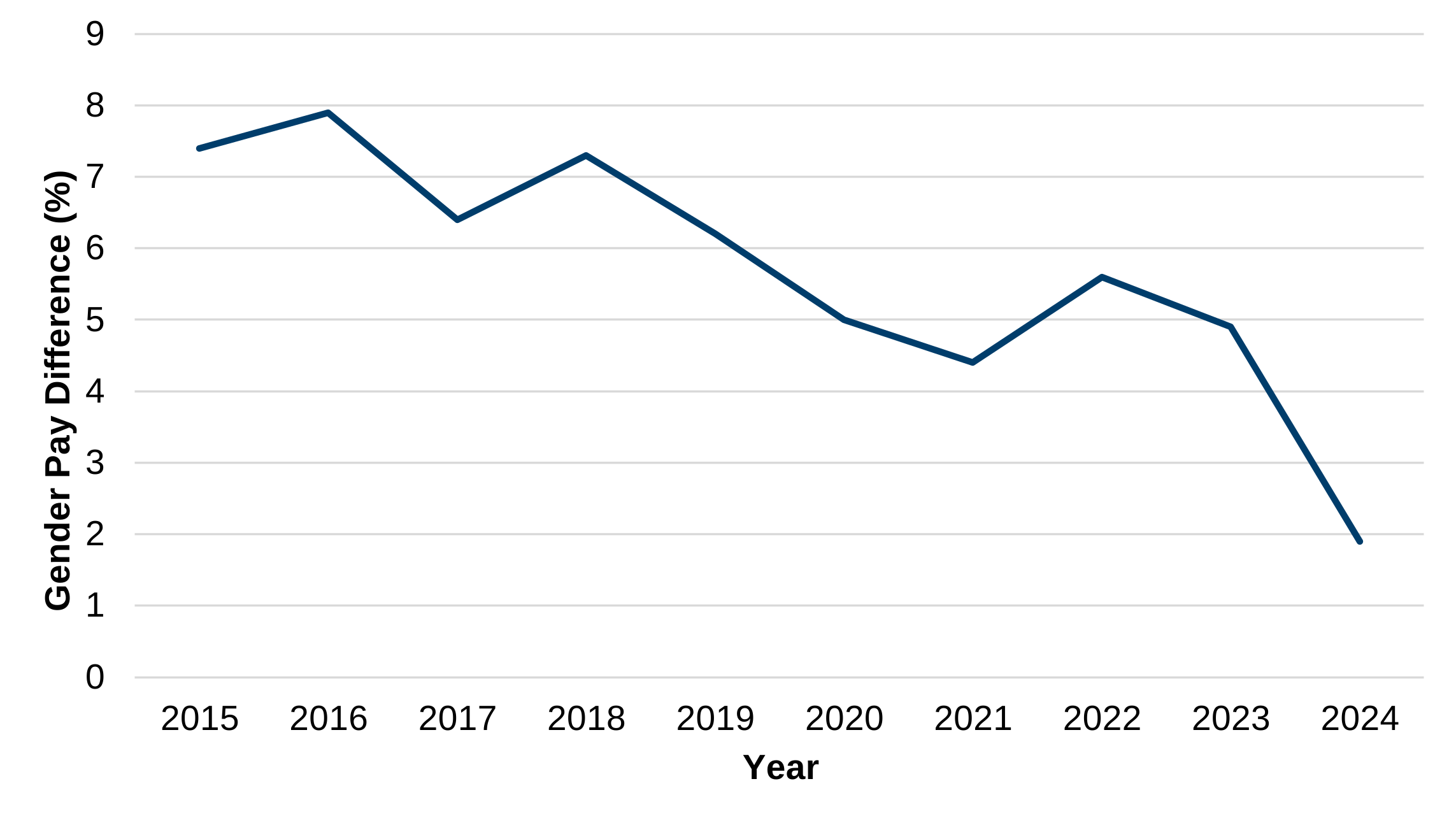
Description of figure 8: a line chart showing that since April 2015 the gender pay gap on a median hourly full-time basis (excluding overtime) has narrowed, from 7.4% to 1.9% in April 2024.
Source: Welsh Government analysis of the Annual Survey of Hours and Earnings (ASHE).
Figure 9: ethnicity and disability pay differences in Wales (median hourly earnings, all employees), year ending December 2015 to December 2024
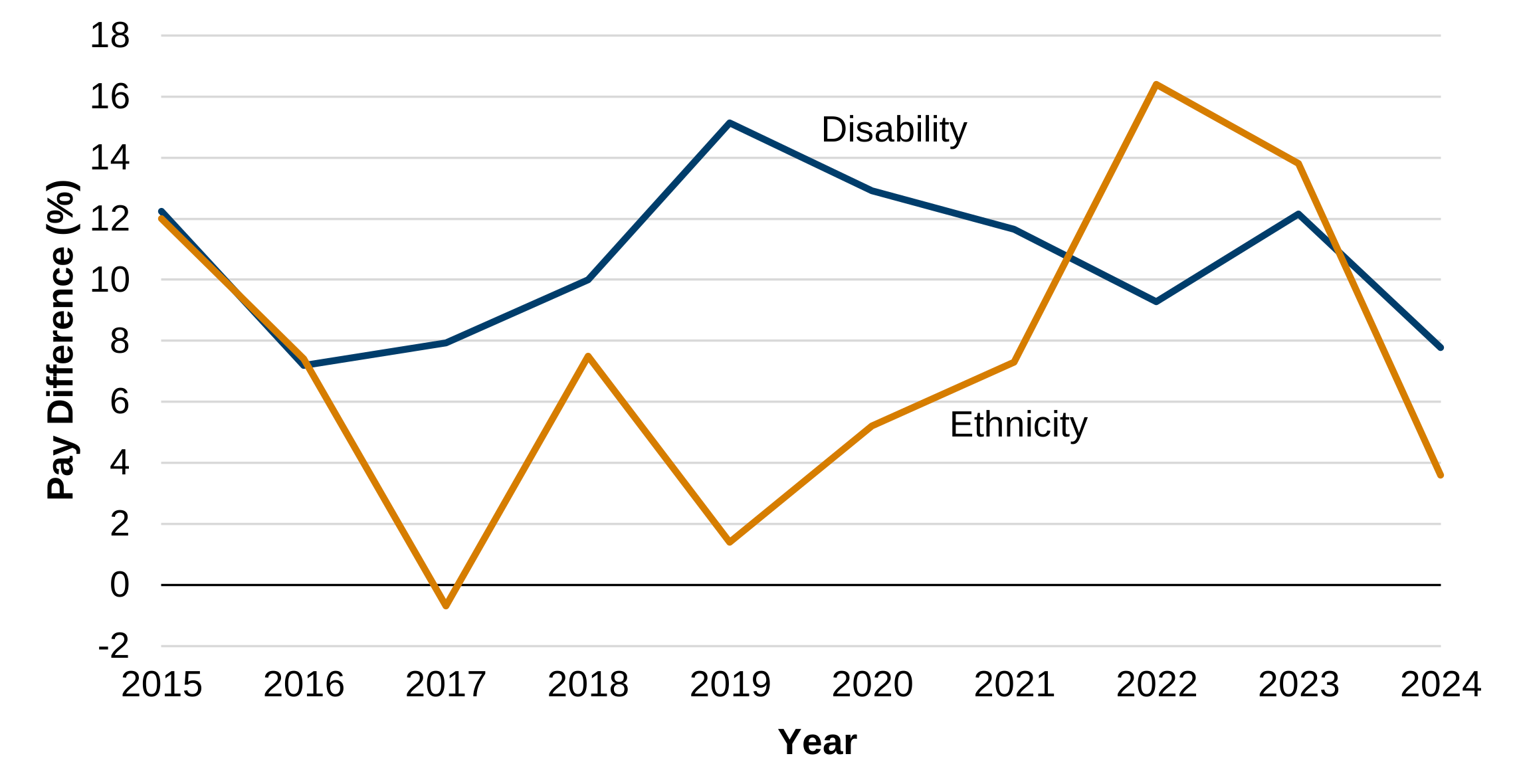
Description of figure 9: a line chart showing that ethnicity and disability pay gaps have been volatile over the period since 2015. The ethnicity pay gap decreased from 12.0% in 2015 to 1.4% in 2019 but then rose to 16.4% in 2022, it has since declined to 3.6% in 2024. The disability pay gap rose from 12.2% in 2015 to a high of 15.1% in 2019 but has decreased to 7.8% in 2024. The change between 2015 and 2024 is not statistically significant for ethnicity or disability.
Source: Welsh Government analysis of the Annual Population Survey.
Reduce the poverty gap between people in Wales with certain key and protected characteristics (which mean they are most likely to be in poverty) and those without those characteristics by 2035. Commit to setting a stretching target for 2050
The characteristics included in the scope of this milestone have not yet been agreed. In the interim, this report concentrates on differences between broad age groups.
No change: between broad age groups between the 3 year period to March 2015 to the 3 year period to March 2023
Figure 10: percentage of each age group in Wales living in relative income poverty (after housing costs), 3-financial-year averages
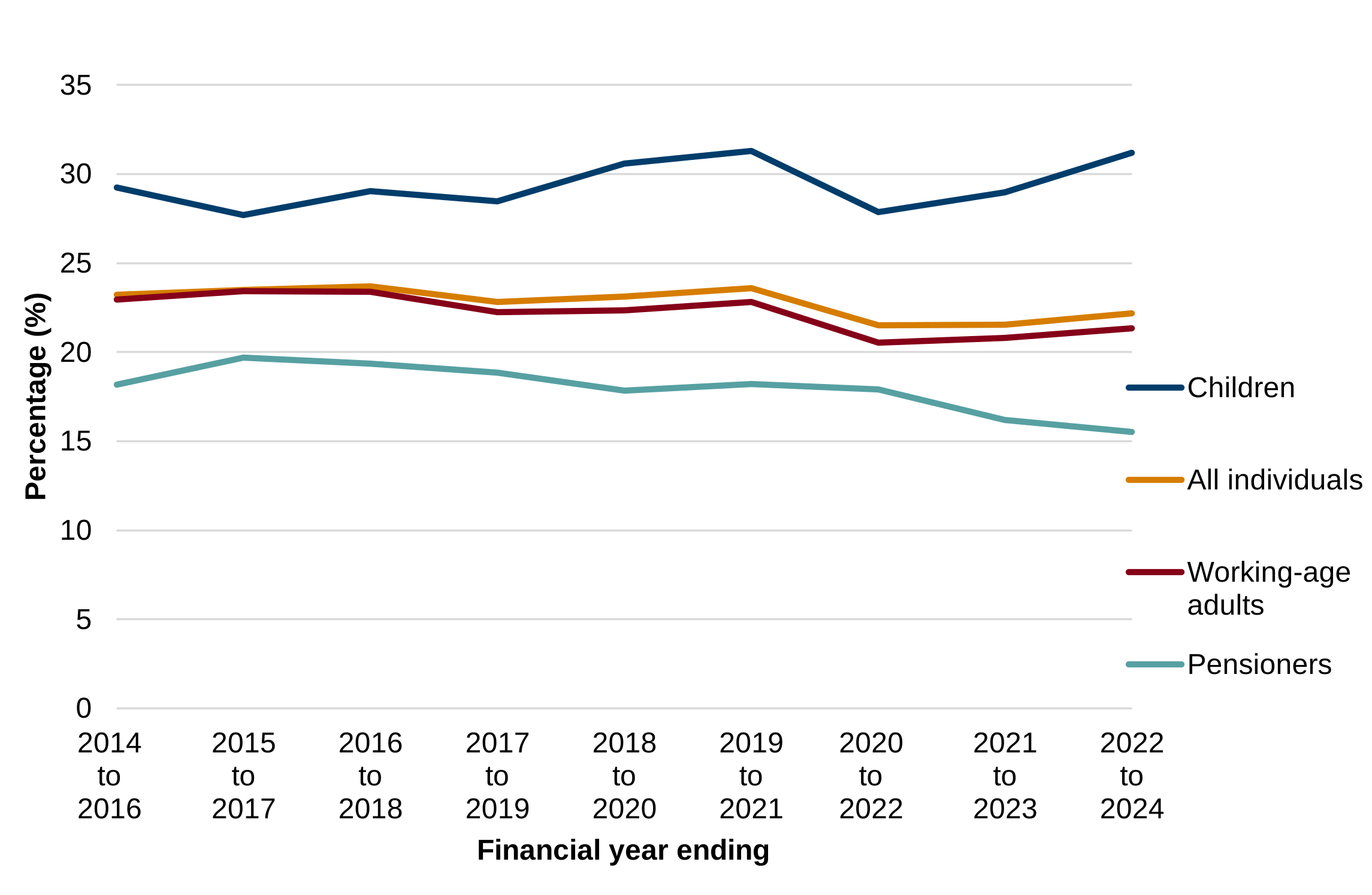
Description of figure 10: a line chart showing that children are consistently the age group most likely to be in relative income poverty in Wales. 31% of children were in relative income poverty in the three-year period to March 2024, the same as in the three-year period to March 2014. The gap between the percentage of children in poverty and the percentage of the whole population in poverty in the 3-year period to March 2024 was 9.0 percentage points, compared to 8.3 in the period to March 2014 though these are not statistically significant changes
Source: Relative Income Poverty: April 2023 to March 2024
Eradicate the gap between the employment rate in Wales and the UK by 2050, with a focus on fair work and raising labour market participation of under-represented groups
Improved: between year ending March 2015 and year ending March 2025
Figure 11: employment rate for people aged 16 to 64, UK and Wales, year ending March 2015 to March 2025
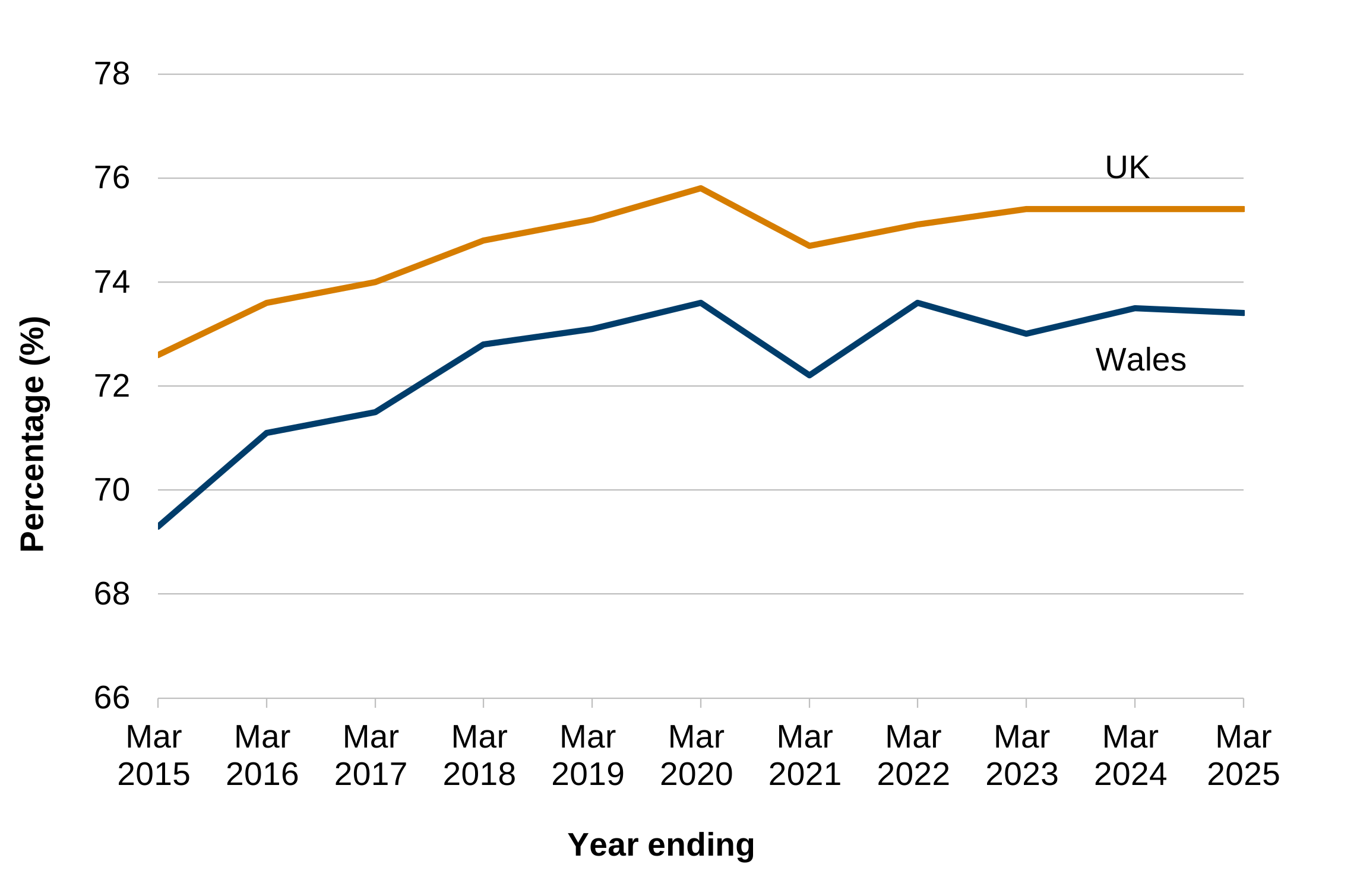
Description of figure 11: a line chart showing that the employment rate gap between Wales and the UK has fluctuated since the year ending March 2015, however the gap has narrowed overall.
The employment rate gap between Wales and the UK has narrowed between the years ending March 2015 and March 2025, with the gap decreasing from 3.3 to 2.0 percentage points over this period.
Source: Welsh Government analysis of the APS.
At least 90% of 16 to 24 year olds will be in education, employment, or training by 2050
Improved: between 2015 and 2023
Figure 12: participation of young people in education and the labour market by age group, Wales, 2015 to 2023
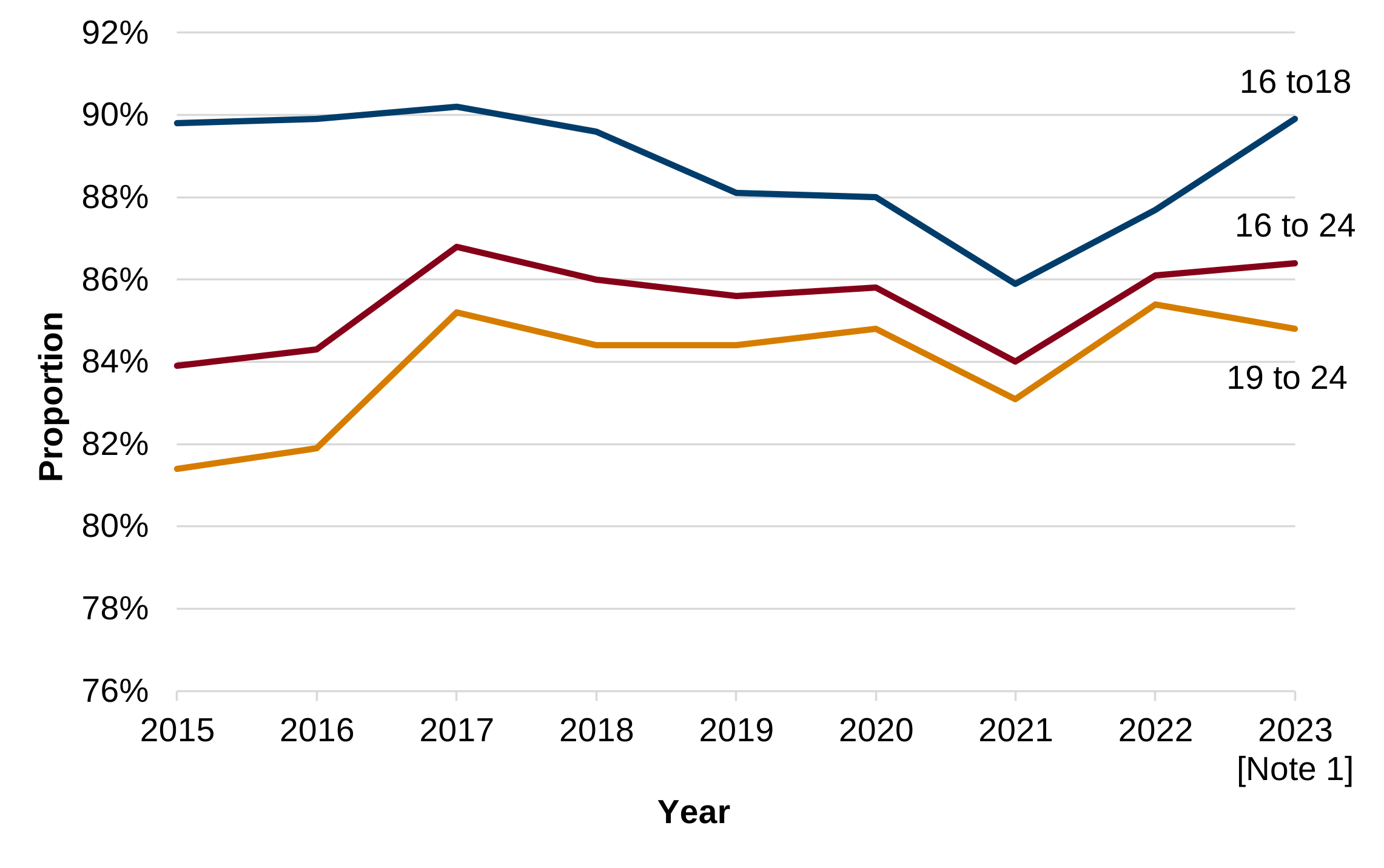
Description of figure 12: a line chart showing that the proportion of 16 to 24 year olds in employment, education or training has fluctuated between 2015 and 2023, however it has improved overall.
Provisional estimates show that 86.4% of 16 to 24 year olds were in education, employment or training in 2023, up from 83.9% in 2015. The proportion of young people in education, employment of training has also increased for the 16 to 18 age group (rising slightly from 89.8% to 89.9%) and the 19 to 24 age groups (increasing from 81.4% to 84.8%).
Source: Welsh Government, Open University and HEFCW.
[Note 1]: figures for 2023 are provisional.
Increase the percentage of people who volunteer by 10% by 2050, demonstrating Wales’s status as a volunteering nation
Improved: between year ending March 2017 and year ending March 2025
Figure 13: percentage of people volunteering, between financial year 2016 to 2017 and 2024 to 2025
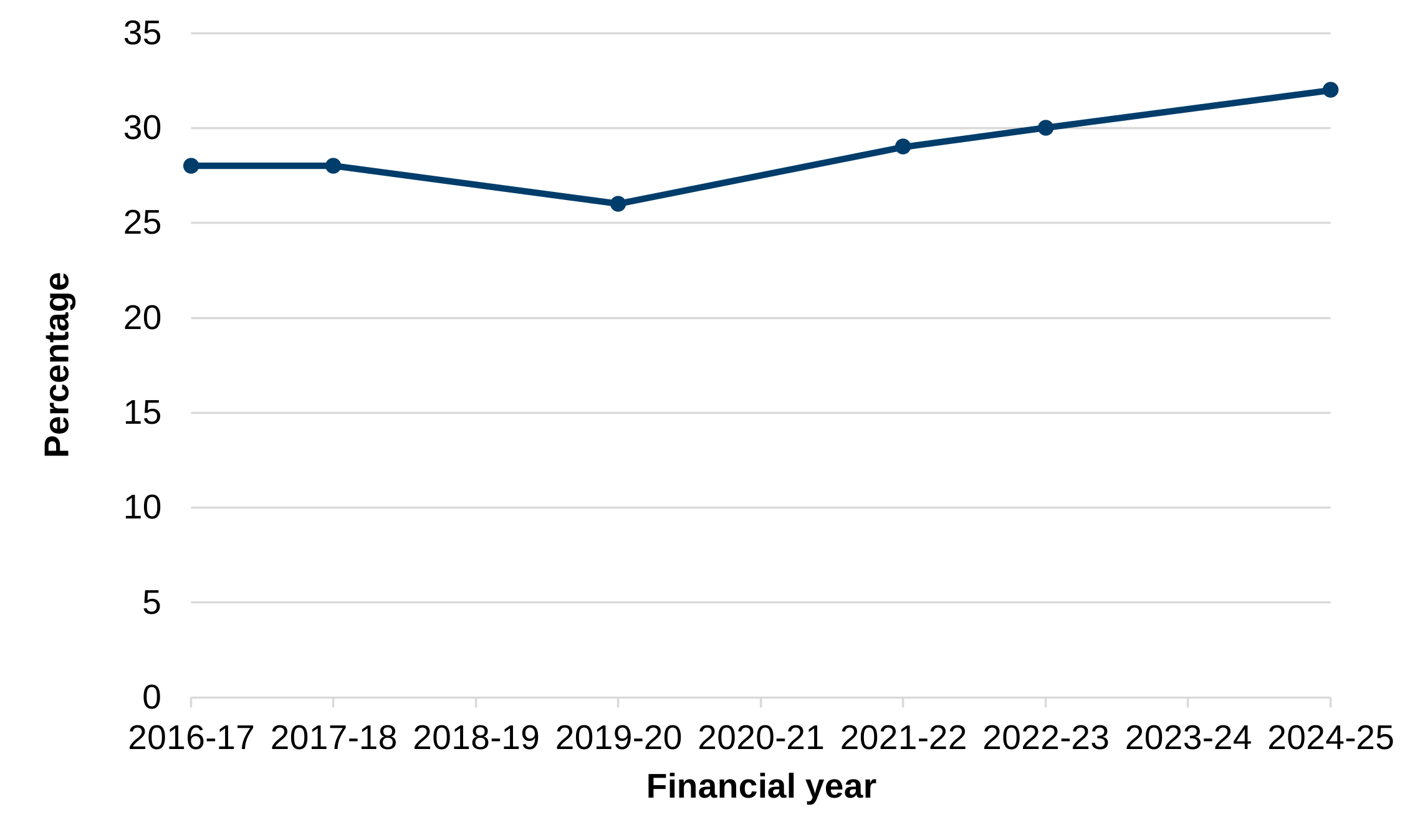
Description of figure 13: a line chart showing that the percentage of people who say they have volunteered increased overall, from 28% in 2016 to 2017 to 32% in 2024 to 2025, despite a slight dip in 2019 to 2020. The national milestone has been met.
Source: National Survey for Wales, Welsh Government.
To improve adult and children’s mean mental wellbeing and eliminate the gap in adult and children’s mean mental wellbeing between the most deprived and least deprived areas in Wales by 2050
No change: for adults between financial year 2016 to 2017 and 2018 to 2019 or between 2021 to 2022 and 2024 to 2025.
Deteriorated: for children between 2017 and 2023
Figure 14: Average Warwick-Edinburgh Mental Wellbeing Scale score for adults, by deprivation, financial year 2016 to 2017 to 2024 to 2025 [Note 1], [Note 2]
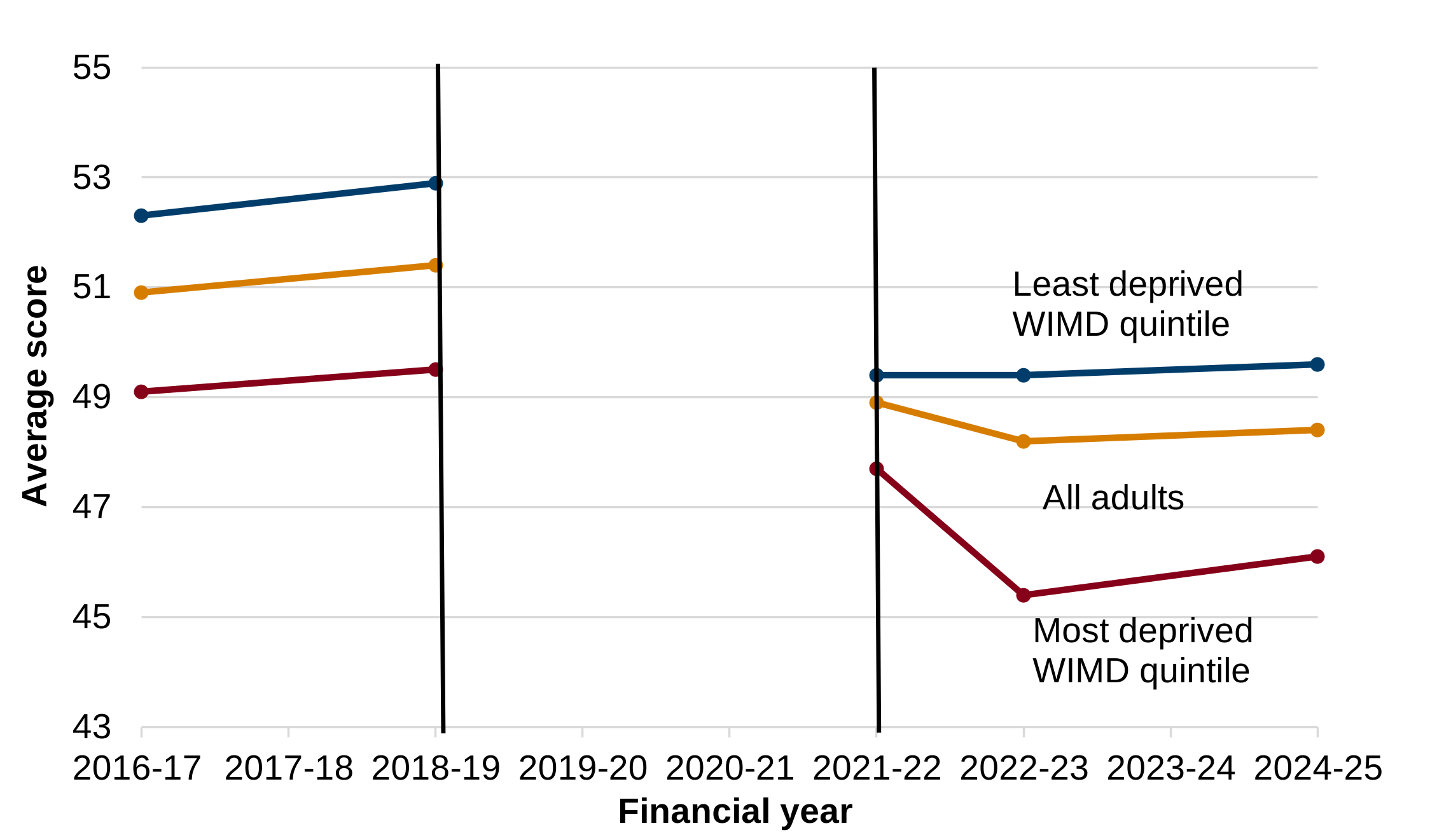
Description of figure 14: a line chart showing that the average Warwick-Edinburgh Mental Wellbeing Scale (WEMWBS) score for adults did not show any significant change between financial year 2016 to 2017 and 2018 to 2019 or since 2021 to 2022. The gap in the average WEMWBS score between those from the most and least deprived areas appears to have widened since 2021 to 2022.
Source: National Survey for Wales, Welsh Government
[Note 1] Results from 2020 to 2021 are not comparable with previous years due to changes in the survey
[Note 2] Y axis does not start at zero
Figure 15: Average Short Warwick-Edinburgh Mental Wellbeing Scale score for young people aged 11 to 16, by affluence, 2017 to 2018 (academic year) to 2023 to 2024 [Note 1]
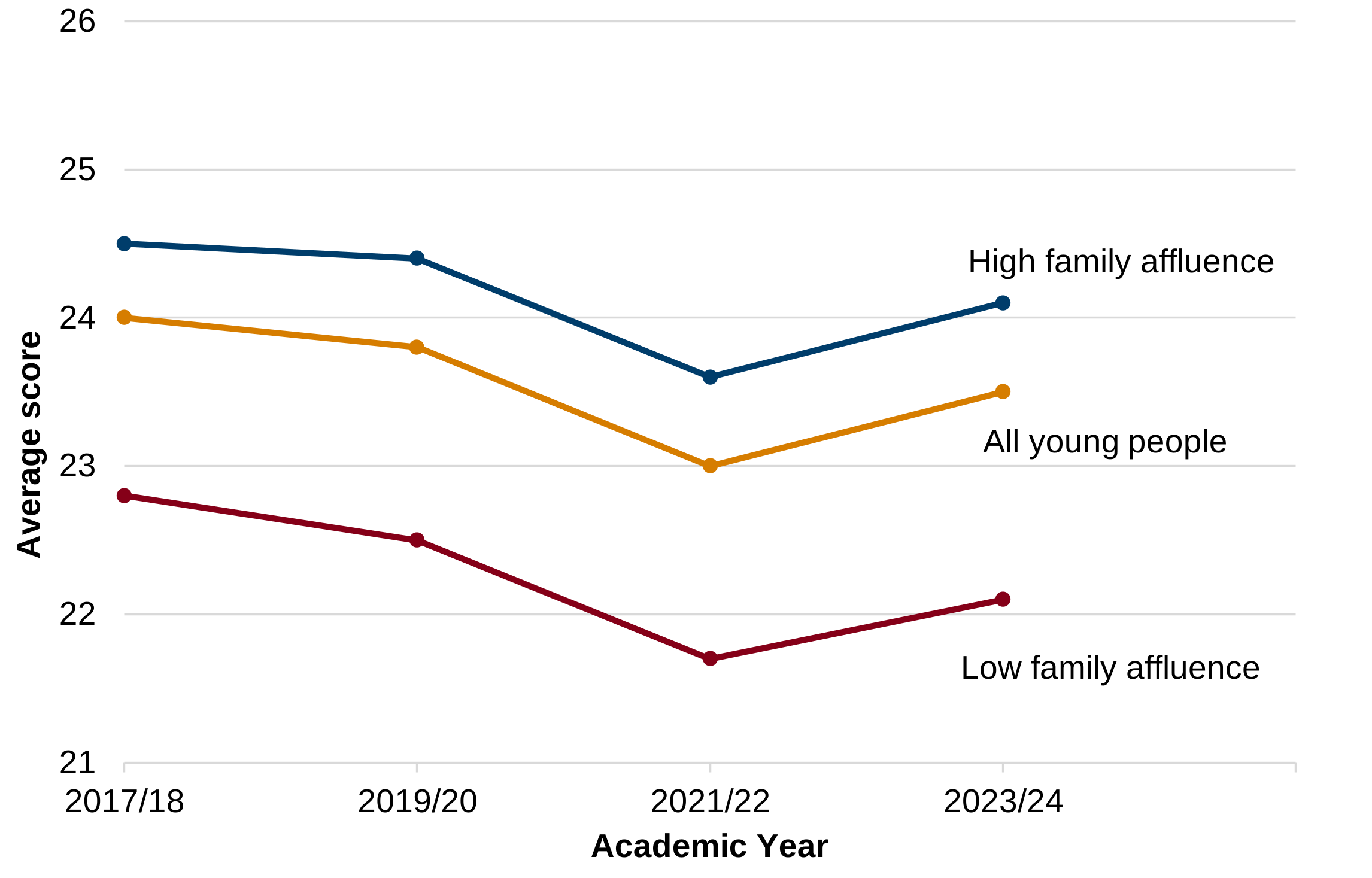
Description of figure 15: a line chart showing that the average Short Warwick-Edinburgh Mental Wellbeing Scale (SWEMWBS) score for young people aged 11 to 16 has declined from 24.0 in academic year 2017 to 2018 to 23.5 in 2023 to 2024. The gap in the average SWEMWBS score between those from low and high family affluence has widened from 1.7 in 2017 to 2018 to 2.0 in 2023 to 2024.
Source: School Health Research Network Student Health and Wellbeing Survey
[Note 1] Y axis does not start at zero
All homes in Wales will have adequate and cost-effective energy performance by 2050
Change not assessed
According to the Welsh Housing Conditions Survey financial year 2017 to 2018, 47% of residential dwellings were considered to have adequate energy performance (a SAP rating of 65 or above). More recent data is not available.
A million Welsh speakers by 2050
Deteriorated: between 2011 and 2021
Figure 16: number of people aged three years or older able to speak Welsh, 2011 to 2021
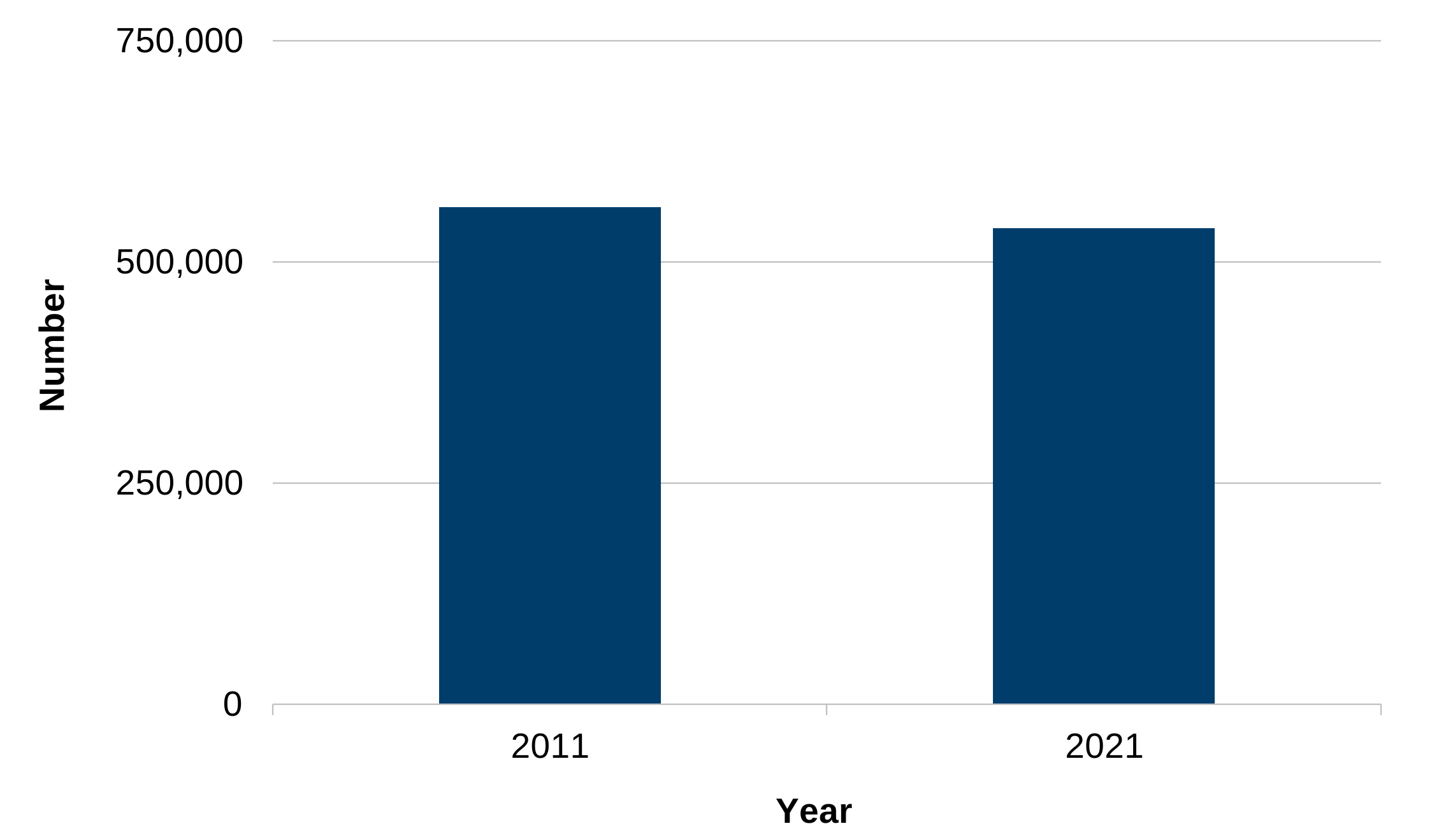
Description of figure 16: a column chart showing that the number of Welsh speakers fell from 562,000 in 2011 to 538,000 in 2021. Over the long term, the number of Welsh speakers has been falling, down from almost one million people in 1911 to 538,000 in the most recent census.
Source: Census of Population
Wales will achieve net-zero greenhouse gas emissions by 2050
Improved: between 2015 and 2023
Figure 17: emissions of greenhouse gases, 2015 to 2023 [Note 1]
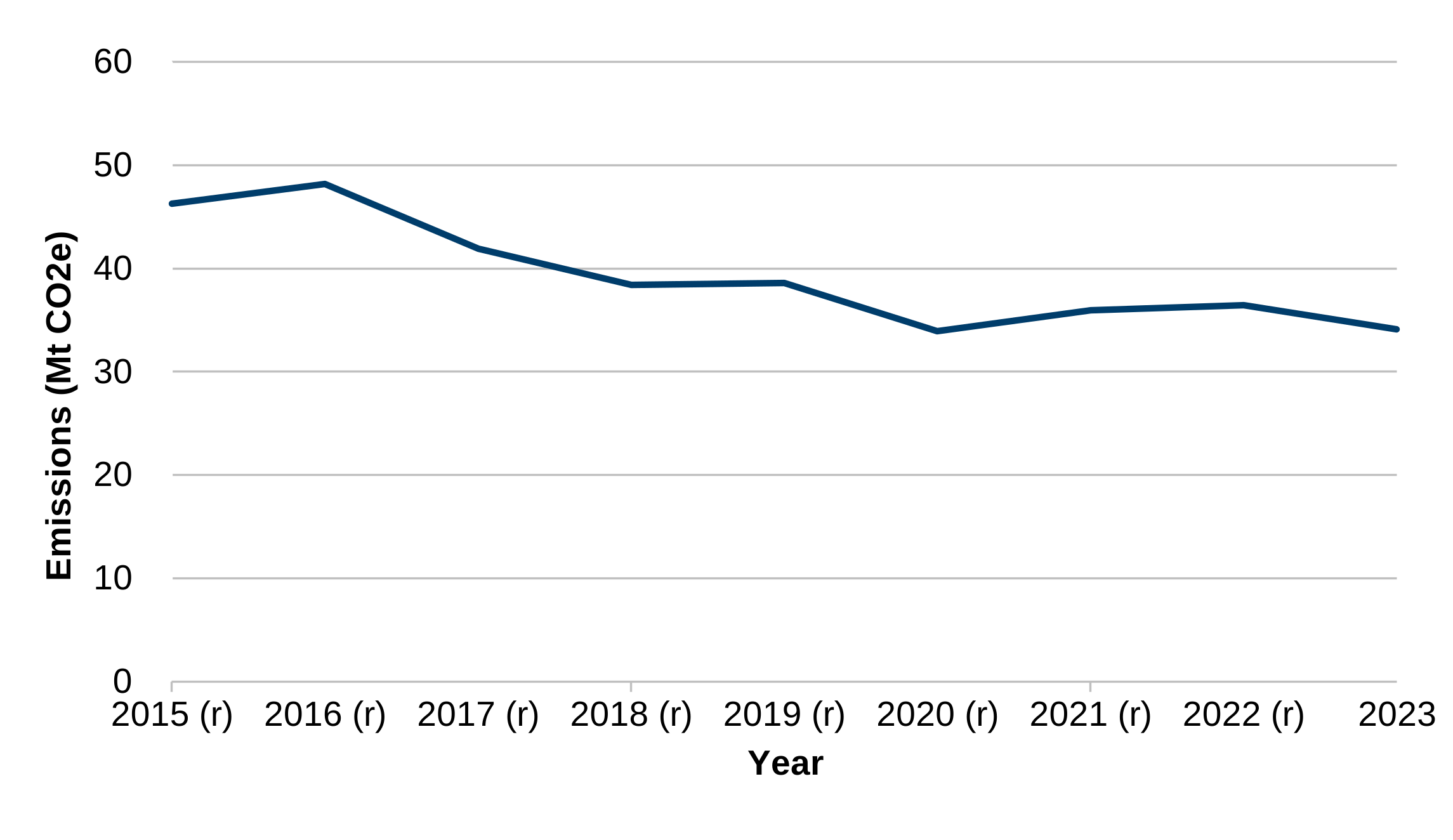
Description of figure 17: a line chart showing that in 2023, emissions released into the atmosphere directly from within Wales, known as territorial emissions, totalled 34.1 million tonnes of carbon dioxide equivalent, this was 46.2 in 2015. There has been a decrease of 26% between 2015 and 2023.
Source: National Atmospheric Emissions Inventory
[Note 1]: previously published figures have been revised and marked with (r)
To reverse the decline in biodiversity with an improvement in the status of species and ecosystems by 2030 and their clear recovery by 2050
No change: between 2011 and 2016
Source: Status of Biological Diversity in Wales (ERAMMP)
Over a long-term period (1970 to 2016), the index of distribution change for section 7 priority species in Wales had declined to 87% of its baseline value in 1970. Over the short-term period (2011 to 2016), the value of the indicator increased from 85 to 87 and was assessed as stable.