Permanent and fixed-term exclusions from schools: September 2023 to August 2024
Data on all pupils in maintained primary, middle, secondary and special schools and pupil referral units for September 2023 to August 2024.
In this page
Introduction and overview
This release covers all permanent and fixed-term exclusions from maintained schools and EOTAS provisions in Wales from September 2023 to August 2024. Comparisons are made with earlier academic years from 2011/12 onwards.
The most recent data was collected in Spring 2025 and includes exclusions during the 2023/24 academic year.
Due to an issue with duplication between School (PLASC) and Educated Other than at School (EOTAS) exclusions, historical exclusion numbers have been higher than should have been. The difference was relatively small representing at most 1.1% of all Fixed-term exclusions.
We have revised the data in this publication, and information on the changes can be found in the accompanying spreadsheet. This duplication only affected exclusions in EOTAS provision. All other data is unaffected.
The commentary only refers to the revised/corrected data.
Exclusions are split by the length and type of exclusion. The 3 categories used are:
- Fixed-Term Exclusions (5 days or less)
- Fixed-Term Exclusions (over 5 days)
- Permanent Exclusions
Further detail can be found in definitions.
Exclusions are recorded as part of the Pupil Level Annual School Census (PLASC) for the previous academic year. So, this year, when the PLASC was collected for the 2024/25 academic year in Spring 2025, the exclusions data refers to the 2023/24 academic year.
The figures below show the rate of exclusions per 1,000 pupils over time; the shaded areas show years affected by the COVID-19 pandemic.
Figure 1: rate of Fixed-Term Exclusions 5 Days or Less, 2011/12 to 2023/24

Description of Figure 1: a line graph showing the rate of fixed-term exclusions of up to 5 days per 1,000 pupils between 2011/12 and 2023/24. The rate increased slowly from 26.7 exclusions per 1,000 pupils in 2013/14 to 41.0 exclusions per 1,000 pupils in 2018/19. During the COVID-19 pandemic the rate dropped to 2013/14 levels. In the most recent year for which there is data, 2023/24, the rate has increased to 73.2 per 1,000 pupils, the highest value recorded.
Source: Pupil Level Annual School Census (PLASC).
Figure 2: rate of Fixed-Term Exclusions Over 5 Days, 2011/12 to 2023/24

Description of Figure 2: a line graph showing the rate of fixed-term exclusions of more than 5 days per 1,000 pupils between 2011/12 and 2023/24. The rate is low. The rate had fallen from 2.3 exclusions per 1,000 pupils in 2011/12 to 1.7 per 1,000 pupils in 2018/19, falling again during COVID-19. In the most recent year for which there is data, 2023/24, the rate has risen sharply to 2.7 exclusions per 1,000 pupils, the highest value recorded.
Source: Pupil Level Annual School Census (PLASC).
Figure 3: rate of Permanent Exclusions, 2011/12 to 2023/24
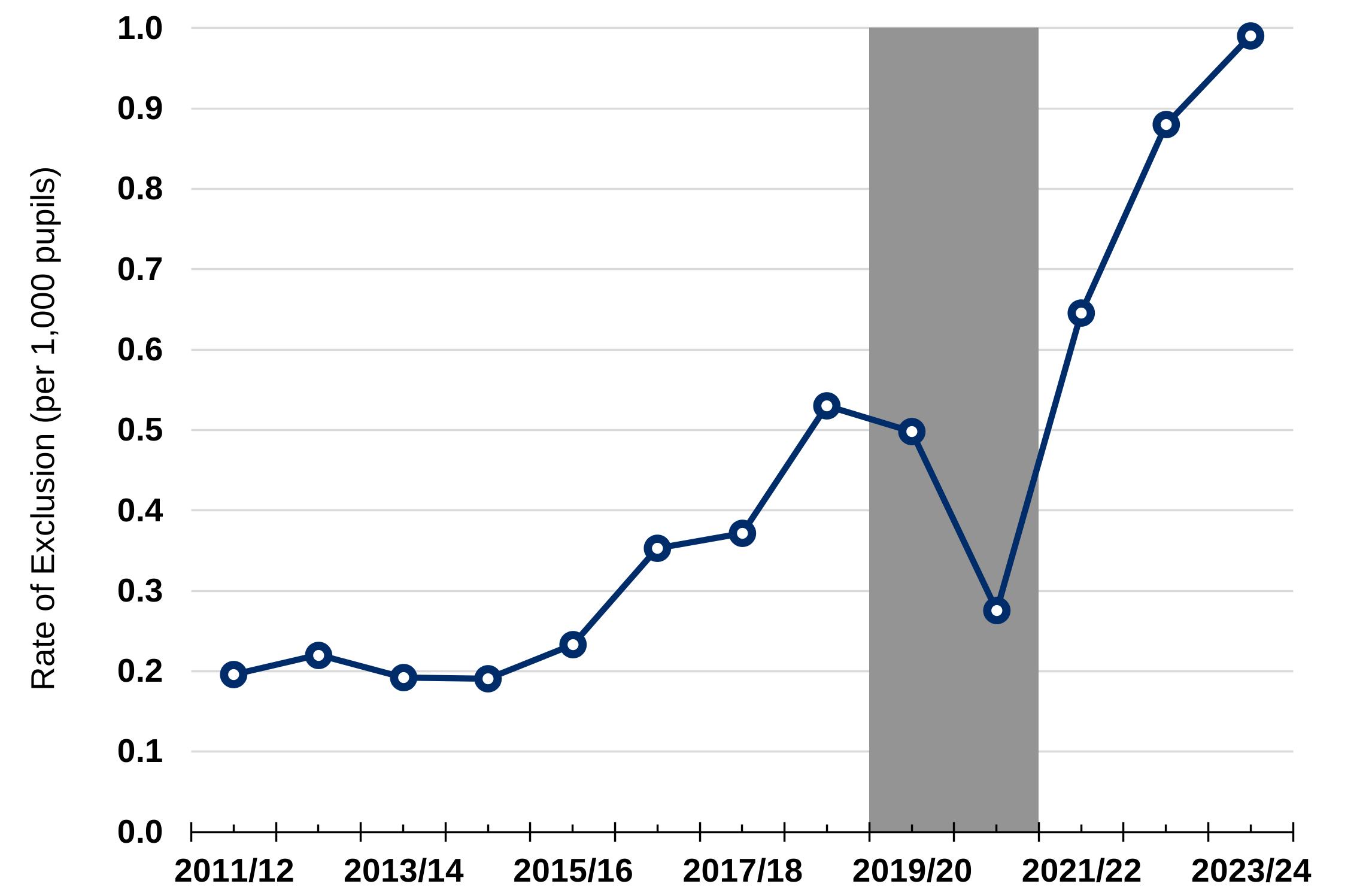
Description of Figure 3: a line graph showing the rate of permanent exclusions per 1,000 pupils between 2011/12 and 2023/24. The rate increased steadily from 0.2 per 1,000 pupils in 2011/12 to 0.5 per 1,000 pupils in 2018/19. It dropped to 0.3 per 1,000 pupils in 2020/21 during the COVID-19 pandemic. In 2023/24 it increased to 1.0 per 1,000 pupils, the highest value recorded.
Source: Pupil Level Annual School Census (PLASC)
Main points: maintained schools
In 2023/24, every type of exclusions has increased since 2022/23 and reached the highest rate since 2011/12.
- The rate of permanent exclusions has increased to 1.0 per 1,000 pupils in 2023/24, compared to 0.8 per 1,000 pupils in 2022/23
- The rate of fixed-term exclusions of over 5 days has increased to 2.7 per 1,000 pupils in 2023/24, compared to 2.4 per 1,000 pupils in 2022/23.
- The rate of fixed-term exclusions of 5 days or less has increased to 71.9 per 1,000 pupils in 2023/24, compared to 63.6 per 1,000 pupils in 2022/23.
Types of school 2023/24
For pupils in mainstream schools, secondary schools had the highest rates of exclusion for all exclusion lengths. This is a change from the pattern prior to COVID-19 when special schools had the highest rates of exclusions for fixed-term exclusions. The rate of secondary school exclusions has increased for all exclusion lengths between 2018/19 and 2023/24.
Primary schools had the lowest rates of exclusions for all exclusion lengths. This is the same as in previous years.
Age
In Wales, it is typical for pupils within the same academic year group to vary in age by up to 12 months. This variation is primarily due to the school admissions policy, which sets 1 September as the cut-off date for entry into Reception. Consequently, pupils born in September are nearly a year older than those born in the following August within the same cohort.
Further age variation may arise from deferred entry, where parents choose to delay their child’s start in Reception if they feel the child is not ready. This is permitted under the Welsh Government’s School Admissions Code (2013), which allows for flexibility in school starting age based on individual circumstances. Additionally, pupils may repeat or skip a year due to specific educational or developmental needs, further contributing to age differences within a cohort.
For the pupils we have age data for:
- pupils aged 13 have the highest rate of fixed-term exclusions (5 days or less)
- pupils aged 5 have the lowest rate of fixed-term exclusions (5 days or less)
- pupils aged 14 have the highest rate of fixed-term exclusions (over 5 days)
- pupils aged 5 have the lowest rate of fixed-term exclusions (over 5 days)
- pupils aged 14 have the highest rate of permanent exclusions
- pupils aged 5 have the lowest rate of permanent exclusions
Sex
Figure 4: rate of fixed-term exclusions by sex
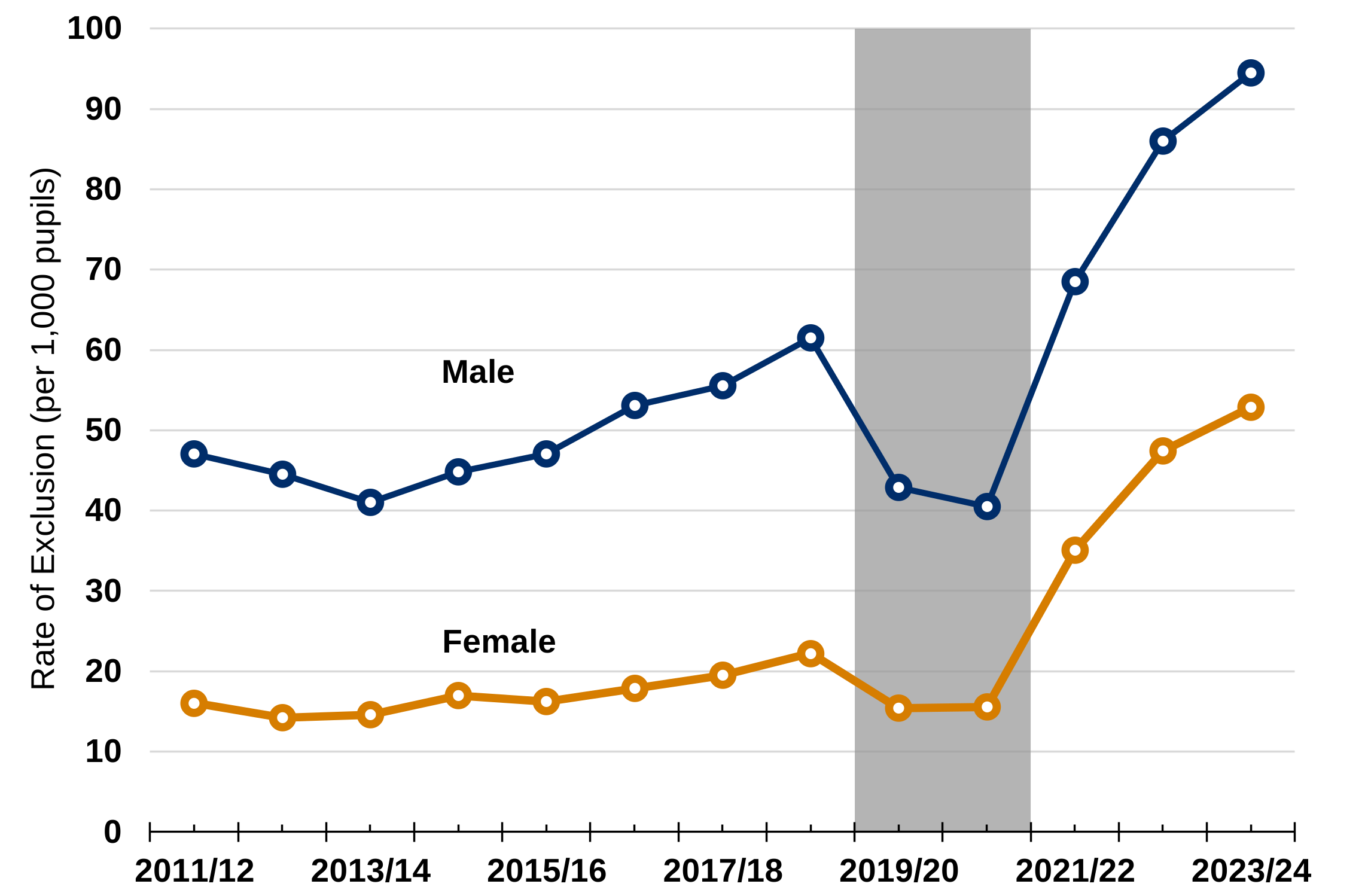
Description of Figure 4: a line chart showing the rate of fixed-term exclusions by sex between the years 2011/12, and 2023/24. Since 2011/12, the rate of fixed-term exclusions has steadily increased for both males and females, however, males have a higher rate of exclusions across all years.
Source: Pupil Level Annual School Census (PLASC)
Figure 5: rate of permanent exclusions by sex
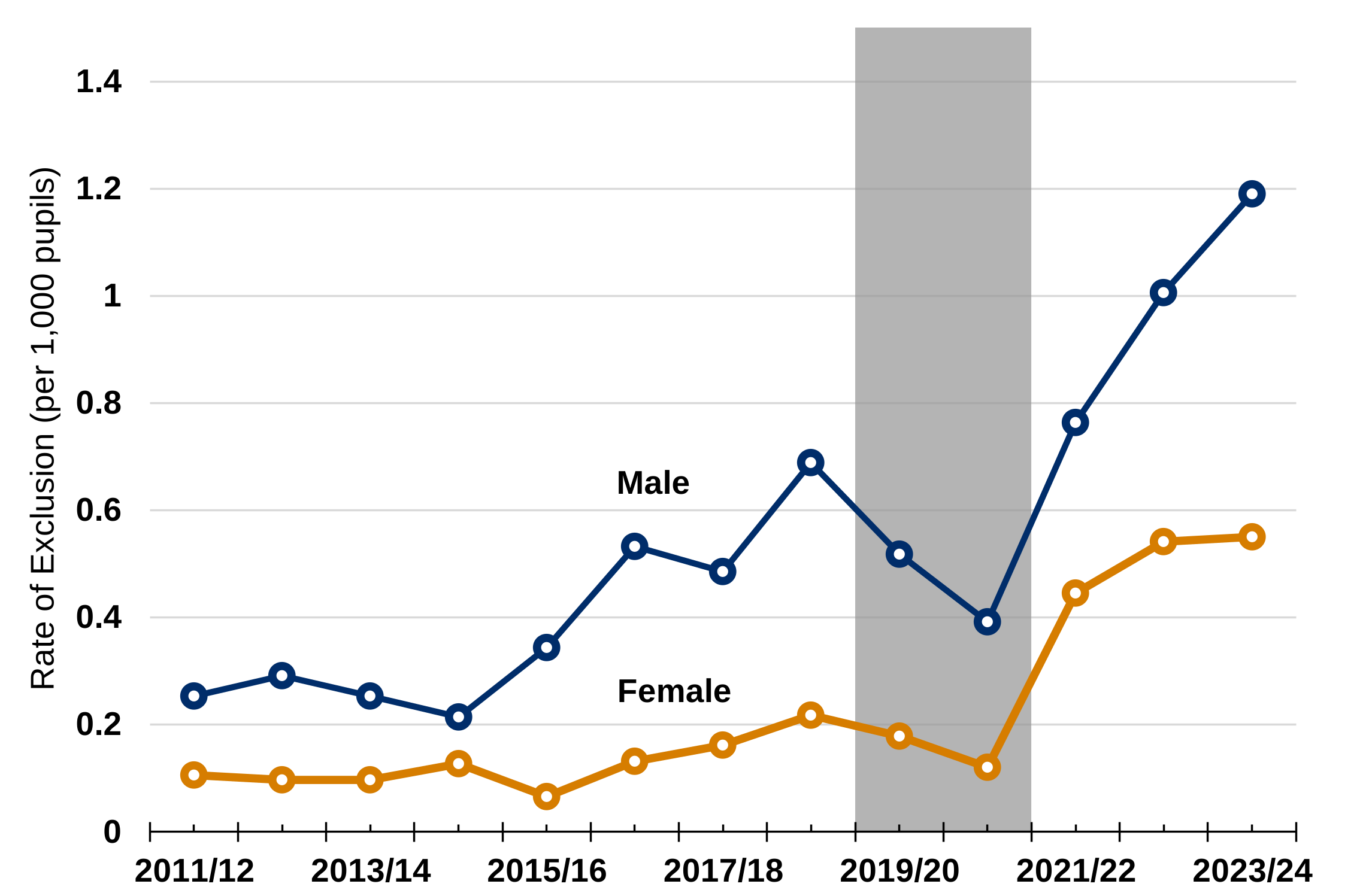
Description of Figure 5: a line chart showing the rate of permanent exclusions by sex between the years 2011/12 and 2023/24. In all years, males were seen to have a higher rate of exclusions than females, however the gap between the two has increased significantly since 2011/12.
Source: Pupil Level Annual School Census (PLASC)
Free School Meal (FSM) eligibility
Pupils are eligible for FSM if their parents or guardians are in receipt of certain means-tested benefits or support payments.
The rate of fixed-term exclusions is almost 3.7 times higher for those eligible for FSM than those not eligible for FSM in 2023/24. For permanent exclusions the value is 4.4 times higher. This is an increase from 2022/23 in both cases.
Special Educational Needs/Additional Learning Needs (SEN/ALN)
In 2023/24 the rate of fixed-term exclusions (5 days or less) by pupils with an SEN/ALN provision was 217.0 per 1,000 pupils compared to 53.1 per 1,000 without an SEN/ALN provision.
The rate of fixed-term exclusions (over 5 days) by pupils with an SEN/ALN provision was 9.1 per 1,000 pupils compared to 1.8 per 1,000 without an SEN/ALN provision.
The rate of permanent exclusions by pupils with an SEN/ALN provision was 3.0 per 1,000 pupils compared to 0.6 per 1,000 without an SEN/ALN provision.
Pupils can have more than one need, which means that when counting the number of pupils with each need the total number of pupils across all needs can be greater than the original number of pupils.
For example, if a pupil receives a fixed-term exclusions and has both the needs:
- Dyslexia
- Moderate Learning Difficulties
That would count as 1 exclusion in each need and 1 pupil in each need.
Pupils with Attention Deficit Hyperactivity Disorder (ADHD) or Behavioural, Emotional and Social Difficulties (BESD) needs had the highest rates of exclusions in 2023/24.
- The rate of fixed-term exclusions for pupils with an ADHD SEN/ALN was 519.4 per 1,000 pupils.
- The rate of fixed-term exclusions with a BESD SEN/ALN was 507.7 per 1,000 pupils.
Pupils with a Profound and Multiple Learning Difficulties, and Severe Learning Difficulties needs have the lowest rate of fixed-term exclusions. These pupils are the only group with SEN/ALN that have a lower rate of exclusions than pupils with no SEN/ALN.
The rate of fixed-term exclusions has increased for most needs between 2022/23 and 2023/24 as has the rate for those without SEN/ALN needs.
Ethnic background
We do not have data for the ethnic background of all pupils. Some pupils prefer not to provide the information, and for some the information wasn’t obtained. For pupils that we do have information for:
- pupils with a Roma ethnic background have the highest rate of fixed-term exclusions (5 days or less)
- pupils with an Chinese or Chinese British ethnic background have the lowest rate of fixed-term exclusions (5 days or less)
- pupils with a White ethnic background have the highest rate of fixed-term exclusions (over 5 days)
- pupils with an Asian ethnic background have the lowest rate of fixed-term exclusions (over 5 days)
- pupils with a White ethnic background have the highest rate of permanent exclusions
- pupils with an Asian ethnic background have the lowest rate of permanent exclusions
Reasons for exclusions
Figure 6: percentage of all Exclusions by Exclusion Reason, 2023/24

Description of Figure 6: a bar chart showing the reasons for exclusions as a percentage of all exclusions. The highest percentage of exclusions was for persistent disruptive behaviour (30.8%) and the lowest was for sexual misconduct (0.3%).
Source: Pupil Level Annual School Census (PLASC)
[Note 1] This figure includes all exclusions, of all lengths, fixed-term and permanent.
The most common reason given for all exclusions in 2023/24 was ‘persistent disruptive behaviour’ at over a 3 out of 10 exclusions (30.8%). The second most common reason was ‘verbal abuse/threatening behaviour against an adult’ at 20.0% of all exclusions. These figures are similar to those in 2022/23.
Looking at specific lengths of exclusions
- ‘Persistent disruptive behaviour’ was the most common reason given for fixed-term exclusions of 5 days or less at 31.6% of those exclusions.
- ‘Physical assault against a pupil’ was the most common reason for fixed-term exclusions of over 5 days, at 24.2% of those exclusions.
- ‘Physical assault against a pupil’ was the most common reason for permanent exclusions, at 30.5% of those exclusions.
Distribution of exclusions
The charts in this section show how, for pupils with at least one fixed-term exclusion (excluded pupils), the majority of exclusions and missed sessions are received by a minority of those pupils. Only 3.2% of all pupils received any exclusion in 2023/24. Most pupils never receive any kind of exclusion.
The charts only include fixed-term exclusions.
We created these charts by sorting all excluded pupils by fewest (on the left) to most exclusions (on the right). Then we add each pupil and their exclusions as we move along the graph from left to right. We keep a running total until we’ve counted all pupils and exclusions. Finally, we convert the numbers into percentages.
If the graphs were perfectly straight diagonal lines from bottom-left corner to top-right corner, every pupil would have the same number of exclusions. The more curved the graphs, the more unevenly exclusions and missed sessions are spread between pupils.
Figure 7: cumulative distribution of exclusions, 2023/24
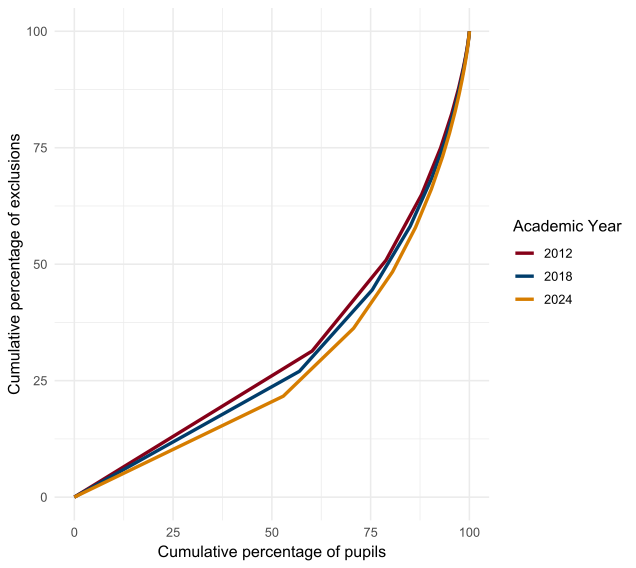
Description of Figure 7: a line chart showing relationship between the percentage of pupils excluded and how many exclusions they represent in the academic years 2011/12, 2018/19, and 2023/24. The chart shows that the majority of exclusions are received by a small minority of pupils.
Exclusions are unevenly spread between excluded pupils. In 2023/24 the least excluded half of pupils received only 20.5% of all exclusions. Whereas the most excluded 18.5% of pupils received 50% of all exclusions.
Over 50% of all excluded pupils only receive 1 exclusion in a year. The percentage of excluded pupils only receiving 1 exclusion has fallen from a high of 62.4% in 2013/14 to a low of 52.9% in 2023/24.
Figure 8: cumulative distribution of sessions missed, 2023/24
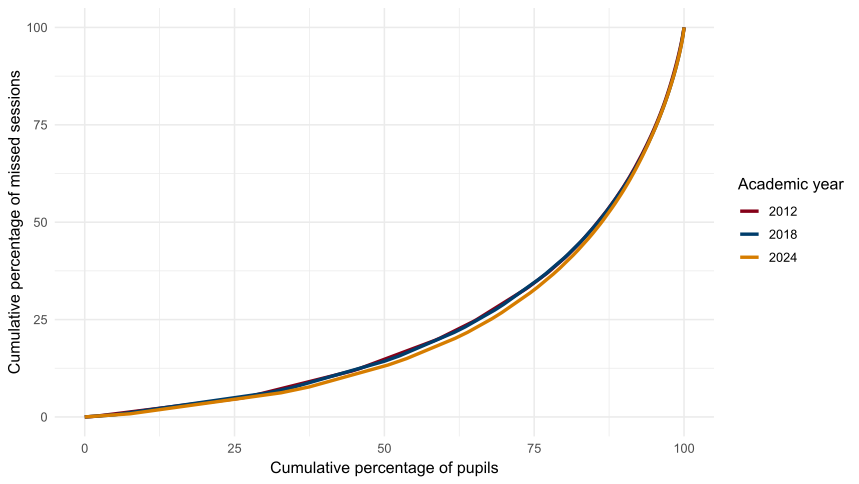
Description of figure 8: a line chart showing cumulative relationship between the percentage of pupils excluded, and how many sessions of school missed due to an exclusion they represent, in the academic years 2011/12, 2018/19, and 2023/24. The chart shows that the majority of sessions missed due to an exclusion are missed by a small minority of pupils.
Missed sessions are unevenly spread between excluded pupils. In 2023/24 the least excluded half of pupils are responsible for 13.1% of all excluded sessions. Whereas the most excluded 13.7% of pupils are responsible for 50% of all excluded sessions.
Definitions
Types of exclusion and other definitions
A permanent exclusion refers to a pupil who is excluded and their name removed from the school register. This pupil would then be educated at another school or via some other form of provision.
A fixed-term exclusion refers to a pupil who is excluded from a school but remains on the register of that school because they are expected to return when the exclusion period is completed.
A managed move is an arrangement whereby parents/carers of pupils in danger of exclusion agree with schools and local authorities that it is in the best interests of their child that they be removed from the roll of the current school and placed in another educational establishment. Data for managed moves is not currently available.
Additional learning needs (ALN) and special educational needs (SEN)
A person has ALN/SEN if they have a learning difficulty or disability (whether the learning difficulty or disability arises from a medical condition or otherwise) which calls for additional learning provision or special educational provision. Learners with ALN will have their needs identified in individual development plans (IDPs) which are statutory plans created under the ALN Act. Learners with SEN may have School Action, School Action Plus or a Statement, which will cease in August 2025 when the implementation of the ALN system is complete.
Changes to special educational needs data following the implementation of the Additional Learning Needs and Education Tribunal (Wales) Act 2018
The Additional Learning Needs Code for Wales 2021 (the ALN Code) and regulations came into force on 1 September 2021 to ensure children and young people aged 0 to 25 can access additional support to meet their needs.
Implementation of the ALN system is ongoing, with children moving from the SEN system to the ALN system until August 2025. Learners with ALN will have their needs identified in IDPs maintained by either a school or a local authority.
Analysis of the data, along with feedback from local authorities suggest that the fall in ALN/SEN learners over the last four years is due to a systematic review by schools of their ALN/SEN identification and data, both in readiness for and during implementation of the ALN system. Learners supported through School Action and School Action Plus (those requiring the least amount of special educational provision) may no longer be identified as ALN/SEN in PLASC. This is either because their needs are short term, do not require provision additional to, or different from, that which is provided for other learners, that can be addressed as part of holistic provision.
Additionally, schools were asked to stop using the ‘General learning difficulties’ category and to reassess an appropriate category of need for such pupils. This category had become a catch-all for those requiring catch up support, with minor needs and/or where multiple needs existed, instead of its original intent, which was to capture learners awaiting assessment. This has also led to some pupils no longer being identified as ALN/SEN in PLASC. The ‘General learning difficulties’ category was removed from 2023 onwards.
Welsh Government will continue to monitor the numbers throughout implementation of the Additional Learning Needs (ALN) and Education Tribunal (Wales) Act and work with our partners to ensure the data presents an accurate reflection of the numbers and categories of learners with ALN in Wales. To support this work, Welsh Government are reviewing the ALN legislative framework to ensure that it is clear and consistently understood.
Free school meals
Pupils are eligible for free school meals if their parents or guardians are in receipt of certain means-tested benefits or support payments.
Universal primary free school meals
The Welsh Government has committed to providing all primary school children in Wales with FSM by 2024. The rollout began in September 2022. 20 local authorities have now completed the rollout, and the remaining 2 local authorities are on track to complete the rollout by September 2024.
Whilst this rollout of FSM to those not previously eligible for them has started, the data presented in this release does not reflect the total number of pupils receiving FSM in January 2023. Instead, it includes only the number of pupils who are eligible for FSM if their parents or guardians are in receipt of certain benefits (as reported in previous years) or those who are transitionally protected. Please see the free school meal information guide for full details of eligibility criteria and benefits.
Transitional protection for free school meals
On 1 April 2019 the Welsh Government introduced a new transitional protection for FSM policy. This was brought in to ensure that pupils have their free school meals protected during the Universal Credit rollout period.
This protection applies to individual pupils and will continue until the end of their current schools phase, being the end of primary school or end of secondary school.
Any pupil that was eligible for free school meals on the introduction of the policy on 1 April 2019 should also be transitionally protected. In addition, any pupil that has become eligible at any point during the Universal Credit rollout up to 31 December 2023 under the new eligibility criteria should also be transitionally protected.
Quality and methodology information
Further quality information can be found the quality report for this release.
Official statistics status
All official statistics should show the standards of the Code of Practice for Statistics (UK Statistics Authority).
These are accredited official statistics. They were independently reviewed by the Office for Statistics Regulation (OSR) in July 2010. They comply with the standards of trustworthiness, quality and value in the Code of Practice for Statistics.
It is Welsh Government’s responsibility to maintain compliance with the standards expected of accreditation. If we become concerned about whether these statistics are still meeting the appropriate standards, we will discuss any concerns with OSR promptly. Accreditation can be cancelled or suspended at any point when the highest standards are not maintained, and reinstated when standards are restored.
Accredited official statistics are called National Statistics in the Statistics and Registration Service Act 2007.
Statement of compliance with the Code of Practice for Statistics
Our statistical practice is regulated by the OSR. OSR sets the standards of trustworthiness, quality and value in the Code of Practice for Statistics that all producers of official statistics should adhere to.
All of our statistics are produced and published in accordance with a number of statements and protocols to enhance trustworthiness, quality and value. These are set out in the Welsh Government’s Statement of Compliance.
These accredited official statistics (OSR) demonstrate the standards expected around trustworthiness, quality and public value in the following ways.
Trustworthiness
The data in this release relates to all maintained schools and EOTAS pupils in Wales, and is collected as part of the EOTAS and PLASC collections.
Data for maintained schools is derived from the PLASC returns supplied by schools open on census day, which is usually in January each year. The returns are authorised by headteachers and validated by local authorities. Independent schools complete an aggregate STATS1 return which is authorised by headteachers.
EOTAS data is derived from returns supplied by local authorities for pupils with a EOTAS provision during census week, which is usually in January each year. The returns are authorised and validated by local authorities.
The data collection and validation are carried out between January and May.
These statistics are published in an accessible, orderly, pre-announced manner on the Welsh Government website at 9:30am on the day of publication.
This output adheres to the Code of Practice by pre-announcing the date of publication through the upcoming calendar web pages.
Quality
The published figures provided are compiled by professional analysts using the latest available data and applying methods using their professional judgement and analytical skillset. Statistics published by Welsh Government adhere to the Statistical Quality Management Strategy which supplements the Quality pillar of the Code of Practice for Statistics (UK Statistical Authority) and the European Statistical System principles of quality for statistical outputs.
PLASC and EOTAS are electronic collections of pupil and school level data. Schools record data on pupils and the school throughout the year in their Management Information System (MIS) software. This data is collated into an electronic PLASC return and submitted to the Welsh Government through DEWI, a secure online data transfer system developed by the Welsh Government. Various stages of automated validation and sense-checking are built into the process to ensure a high quality of data to inform policy making and funding.
Due to the level of COVID-19 cases in January 2022, the 2022 census date was delayed to 15 February 2022. School closures between December 2020 and March 2021 due to the COVID-19 pandemic meant that the 2021 census date was delayed to 20 April 2021.
Last year we carried out additional validation of the data with local authorities on pupils eligible for free school meals. Please see our Chief Statistician’s update on this.
This year we developed additional validation rules which helped to identify any issues with the FSM eligibility data at an earlier stage. We then worked with local authorities during the validation period to ensure that correct data was provided.
For EOTAS, we work closely with local authorities to ensure all data is validated before tables are published. Data is collated into an electronic return and submitted to the Welsh Government through DEWi, a secure online data transfer system developed by the Welsh Government. Various stages of automated validation and sense-checking are built into the process to ensure a high quality of data.
Value
These statistics are used in a variety of ways. Some examples of these are:
- advice to ministers
- to inform the education policy decision-making process in Wales including school reorganisation
- to inform Estyn during school inspections
- the education domain of the Welsh Index of Multiple Deprivation
- to assist in research in educational attainment
This release is accompanied by an Open Document Spreadsheet which can be shared and reused widely and which complies with the Government Analysis Function guidance on Releasing statistics in spreadsheets.
The commentary and notes in the release have been developed to try to make the information as accessible as possible to the widest range of users. Furthermore, all our school statistics outputs are published in Welsh and English.
Comparability
England
Attendance and Absence (GOV.UK)
Scotland
School Exclusion Statistics (Scottish Executive)
Northern Ireland
Pupil Suspensions and Expulsions (Department for Education, Northern Ireland)
Well-being of Future Generations Act (WFG)
The Well-being of Future Generations Act 2015 is about improving the social, economic, environmental and cultural well-being of Wales. The Act puts in place seven well-being goals for Wales. These are for a more equal, prosperous, resilient, healthier and globally responsible Wales, with cohesive communities and a vibrant culture and thriving Welsh language. Under section (10)(1) of the Act, the Welsh Ministers must (a) publish indicators (“national indicators”) that must be applied for the purpose of measuring progress towards the achievement of the Well-being goals, and (b) lay a copy of the national indicators before the National Assembly. Under section 10(8) of the Well-being of Future Generations Act, where the Welsh Ministers revise the national indicators, they must as soon as reasonably practicable (a) publish the indicators as revised and (b) lay a copy of them before the Senedd. These national indicators were laid before the Senedd in 2021. The indicators laid on 14 December 2021 replace the set laid on 16 March 2016.
Information on the indicators, along with narratives for each of the wellbeing goals and associated technical information is available in the Wellbeing of Wales report.
Further information on the Well-being of Future Generations (Wales) Act 2015.
The statistics included in this release could also provide supporting narrative to the national indicators and be used by public services boards in relation to their local wellbeing assessments and local wellbeing plans.