
Counselling for children and young people: September 2024 to August 2025
Provision of independent counselling services for children and young people aged between 11 and 18 and pupils in Year 6 of primary school for September 2024 to August 2025.
In this page
Introduction
Local authorities in Wales are required to make reasonable provision of independent counselling services for children and young people aged between 11 and 18 on the site of each secondary school that it maintains and for pupils in Year 6 of primary school. A local authority may in addition offer counselling services at other locations, e.g. at independent schools, further education colleges or at other community facilities.
This data informs the development of counselling services for children and young people in Wales.
Counselling in this context gives children and young people the opportunity to talk face to face with a counsellor about their worries and concerns, to work through difficult feelings so that they can learn to manage them. Where appropriate counselling may lead to a referral to another service (e.g. Child and Adolescent Mental Health Services (CAMHS), child protection services).
All data in this report is collected by the Welsh Government from local authorities in an aggregated data collection form.
Impact of the coronavirus (COVID-19) pandemic
This report covers a time period (academic year September 2016 to August 2017 to academic year September 2024 to August 2025) which includes the coronavirus (COVID-19) pandemic. The statistics prior to March 2020 include face to face counselling only. Since March 2020 counselling carried out via online sessions has been included to reflect changes to counselling provision during the pandemic. In the 2024 to 2025 academic year, 99% of counselling sessions were carried out face to face. School closures between March and August 2020 and January to March 2021 are likely to have had an impact on the 2019 to 2020 and 2020 to 2021 statistics presented within this report.
Main points
- 13,428 children or young people received counselling services in the 2024 to 2025 academic year, down by 508 (4%) compared with 2023 to 2024.
- school-based and other education staff were the most common form of referral, accounting for over half of all referrals (61%).
- females accounted for around two thirds of children and young people who received counselling in 2024 to 2025, and males accounted for a third.
- anxiety and family issues were the most common type of issue for children and young people who received counselling.
- 86% of children and young people did not require onward referral after completion of counselling sessions.
Sex, local authority, form of referral, age group and ethnicity
Figure 1: number of children and young people who received counselling in Wales, by sex [Note 1]
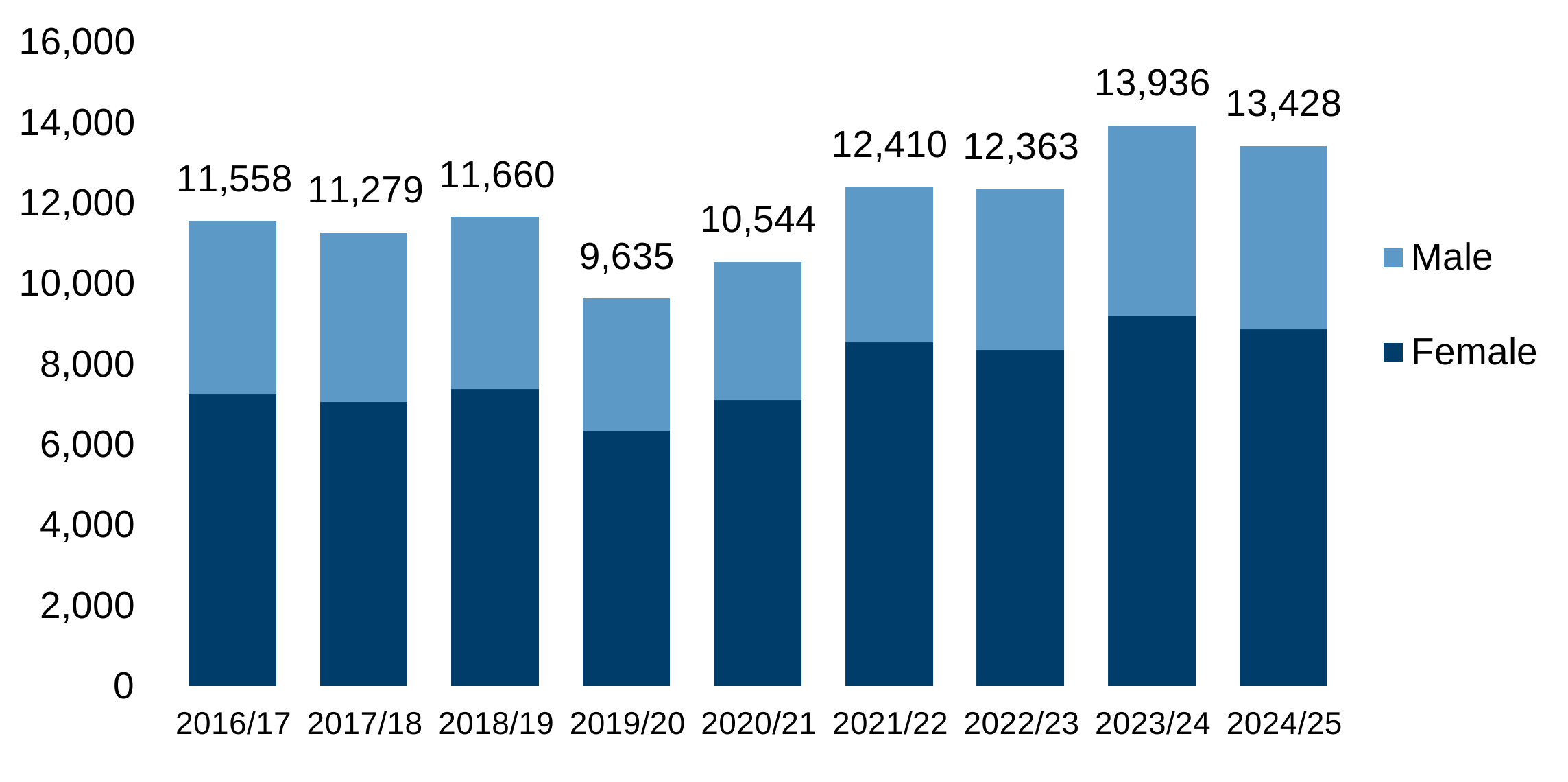
Description of figure 1: a stacked bar chart showing that the number of children and young people who received receiving counselling fell during the coronavirus (COVID-19) pandemic but has since increased to the highest level recorded in 2023 to 24, before falling slightly in 2024 to 25. Around two-thirds of children and young people who received counselling were female and one-third were male in each year since 2016 to 17.
[Note 1] In 2022 to 2023, male and female were clarified to refer to sex at birth in the data collection form. The number of children or young people receiving counselling who did not identify as male or female or who preferred not to say is included in a table in the quality section.
- 13,428 children or young people received counselling services in 2024 to 2025, down by 508 (4%) compared with 2023 to 2024.
Figure 2: Number of children and young people (per 100 of resident 10 to 18 year olds) who received counselling in Wales by local authority, September 2024 to August 2025 [Note 1]
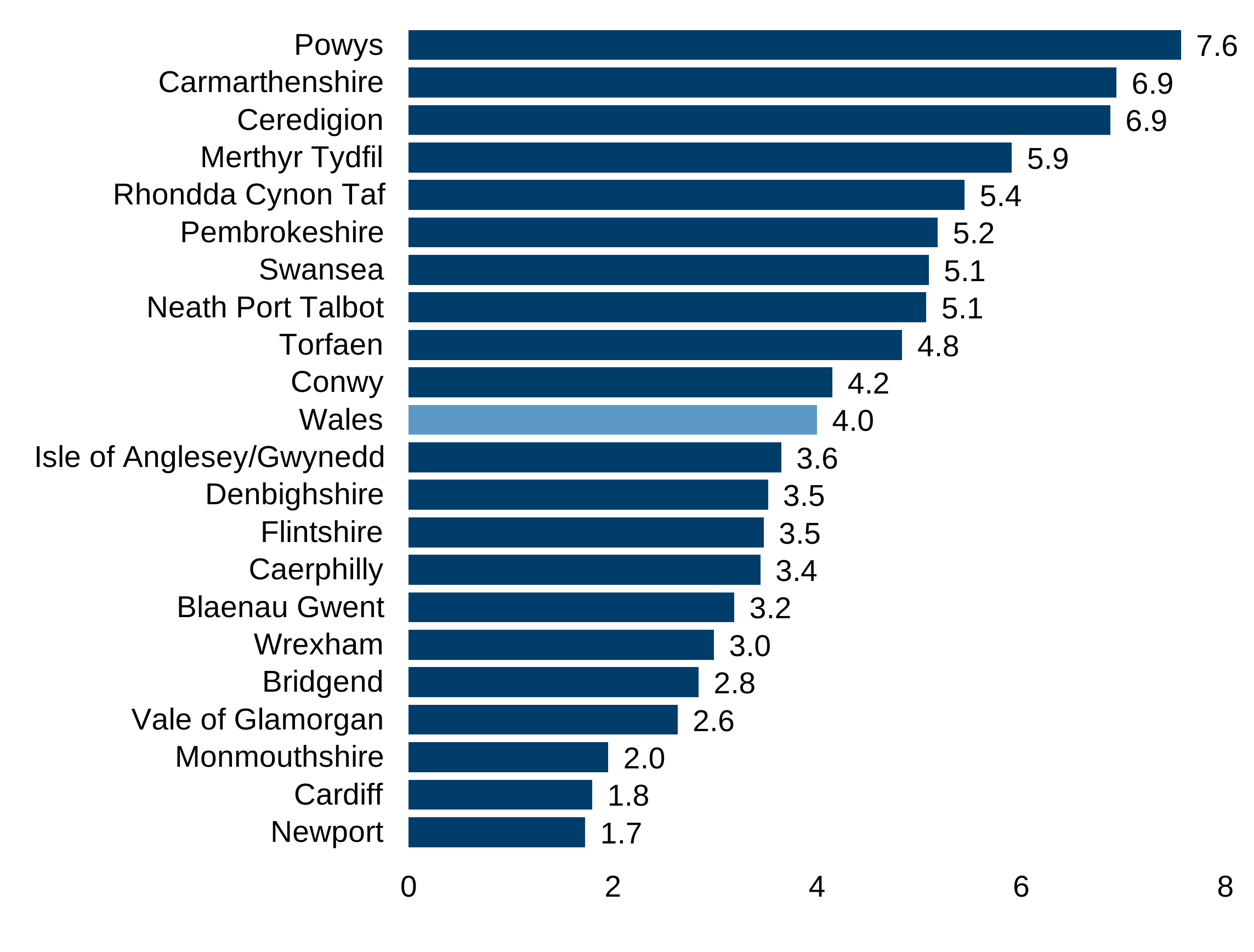
Description of figure 2: a bar chart showing that Powys had the highest rate of children and young people receiving counselling and Newport had the lowest rate.
[Note 1] Population estimates obtained from 2024 Mid-year population estimates produced by the Office for National Statistics.
- 4.0 children and young people per 100 of resident 10 to 18 year olds received counselling in Wales in 2024 to 2025.
- The rates for local authorities ranged from 1.7 in Newport to 7.6 in Powys.
Figure 3: form of referral of children and young people who received counselling by sex, September 2024 to August 2025 [Note 1]
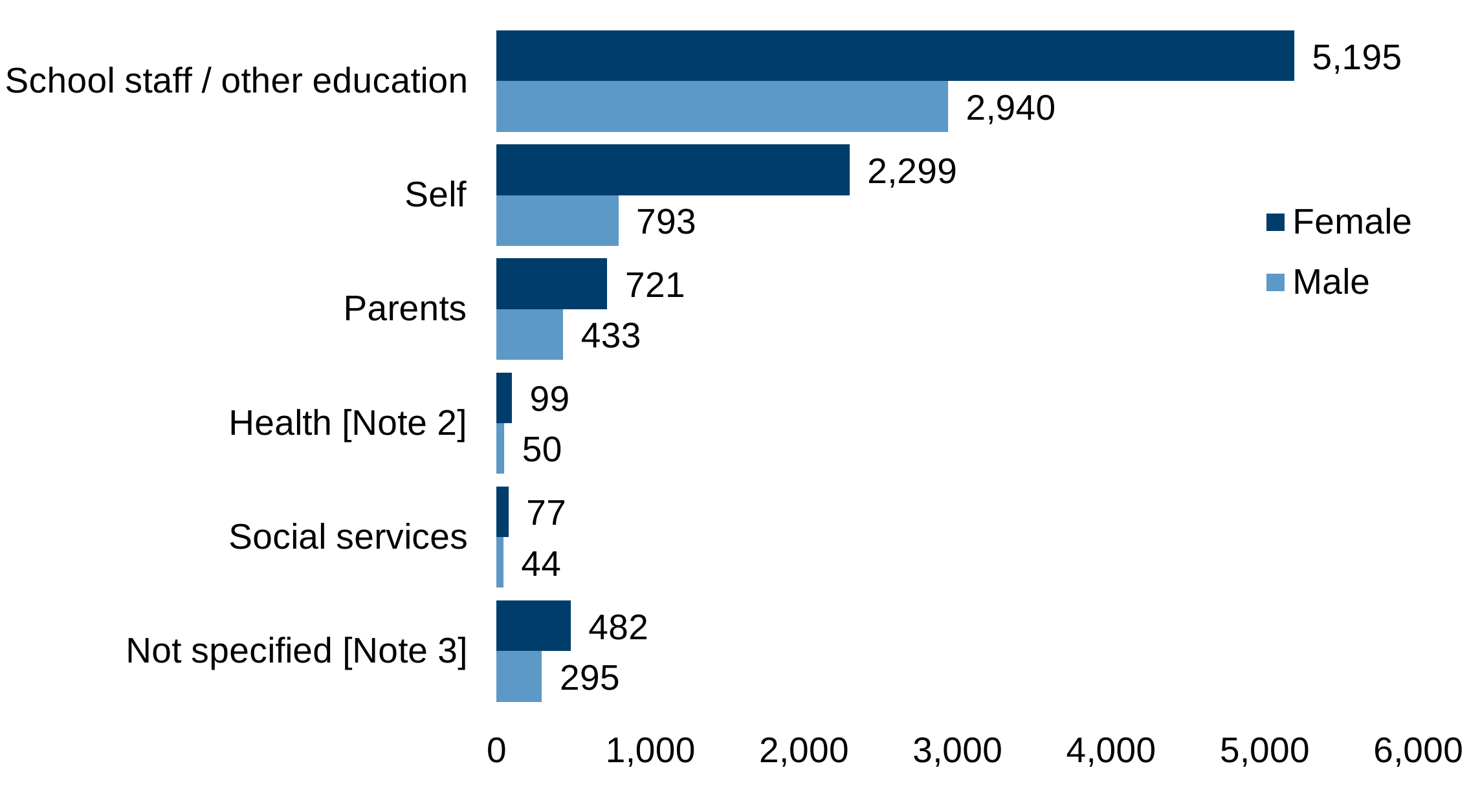
Description of figure 3: a bar chart showing that over half of the children and young people who received counselling were referred by school based or other education staff for both males and females.
[Note 1] In 2022 to 2023, male and female were clarified to refer to sex at birth in the data collection form. The number of children or young people receiving counselling who did not identify as male or female or who preferred not to say is included in a table in the quality section.
[Note 2] GP, hospital, school nurse etc.
[Note 3] Not specified includes the categories ‘Prefer not to say’, ‘Not known’ and ‘Other’.
- The most common form of referral was by school-based and other education staff, which accounted for over half of all referrals (61%) in 2024 to 2025.
- Self referral was the second most common form of referral (23%), followed by parents (9%).
- Males and females displayed a similar trend in their form of referral, with referral by school-based and other education staff the most common, followed by self referral.
- Females were more likely to refer themselves (26% of all female referrals), compared with 17% of all male referrals).
- Males were more likely to have been referred by school-based and other education staff (65% of all male referrals compared with 59% of all female referrals).
Figure 4: number of children and young people who received counselling in Wales by sex and school year age group, September 2024 to August 2025 [Note 1]
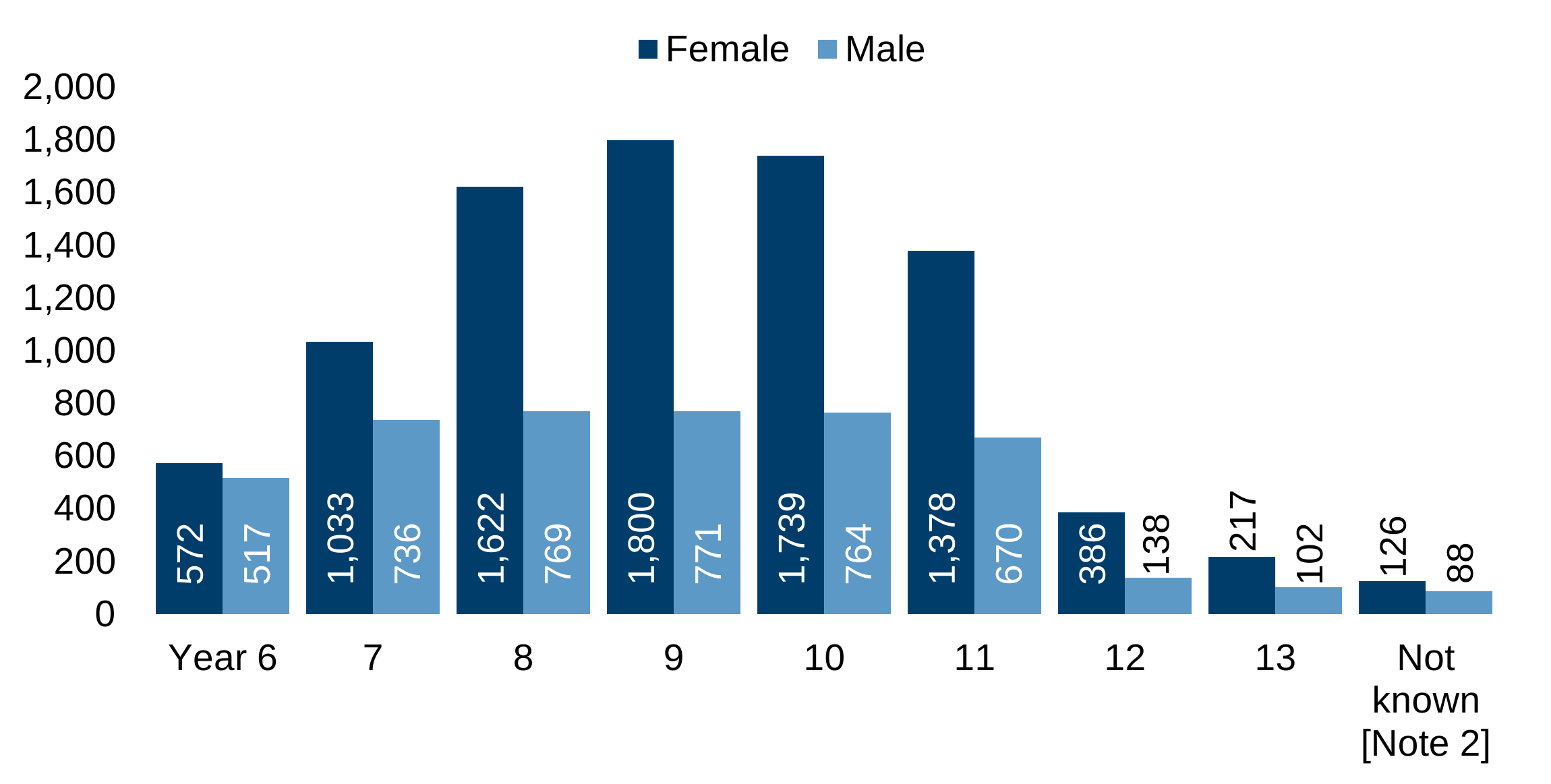
Description of figure 4: A bar chart showing that the most common school year group for children and young people who received counselling was Year 9 for both males and females.
[Note 1] In 2022 to 2023, male and female were clarified to refer to sex at birth in the data collection form. The number of children or young people receiving counselling who did not identify as male or female or who preferred not to say is included in a table in the quality section.
[Note 2] Not known includes children who received counselling in school years 1 to 5.
- The Year 9 age group (for the most part, these are children aged 13 to 14) had the highest number of children and young people who received counselling, followed by the Year 10 age group in 2024 to 2025.
- The Year 13 age group (that is, those young people in sixth form or having left school) had the lowest number.
- The Year 9 age group accounted for 19% of all children and young people who received counselling in 2024 to 2025.
- There were more females than males who received counselling in all year groups.
- From Year 7 to Year 11 the number of males who attended counselling remained relatively similar, between 650 and 800 in each year group.
| Ethnic background | Number | Per cent |
|---|---|---|
| White | 11,460 | 85.3 |
| Mixed Race | 300 | 2.2 |
| Asian or Asian British | 112 | 0.8 |
| Black or Black British | 75 | 0.6 |
| Chinese or Chinese British | 12 | 0.1 |
| Any other ethnic background | 124 | 0.9 |
| Not known | 1,345 | 10.0 |
| Total | 13,428 | 100.0 |
The table shows that the majority (85.3%) of children and young people who received counselling identified themselves as White in 2024 to 2025. The distribution is broadly representative of the distribution of young people in the wider school population.
[Note 1] Not known has increased from 2.9% in 2023 to 2024 to 10.0% in 2024 to 2025. This is due to a large amount of uncompleted data in Swansea following a change in service provider.
Presenting and predominant issues
A presenting issue is the reason that a client self-refers or is referred to a counsellor. Local authorities are asked to record up to three presenting issues per child or young person. The figure below shows the percentage of children and young people who received counselling with each of the five most common presenting issues. The percentages are based on the total number of children and young people, not the total number of issues recorded.
Figure 5: main presenting issues for children and young people who received counselling, by sex, September 2024 to August 2025
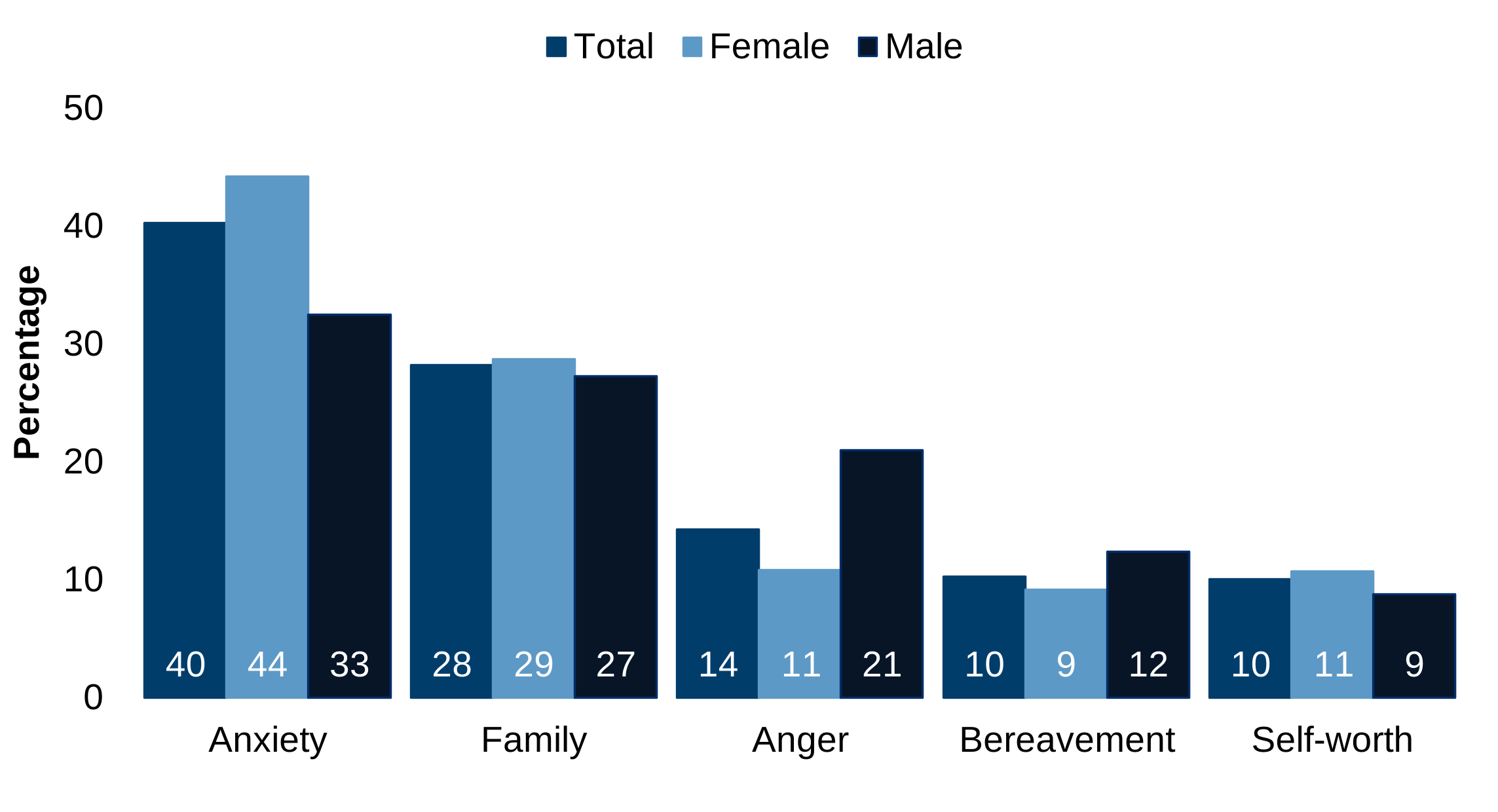
Description of figure 5: a bar chart showing that anxiety, family issues, anger, bereavement and self-worth were the most common presenting issues.
- Anxiety was the most common presenting issue for both females (44%) and males (33%) in 2024 to 2025.
- Anxiety increased as a presenting issue from 23% in 2016 to 2017 to 46% in 2022 to 2023 but has decreased to 40% in 2024 to 2025.
- Family issues was the next most common presenting issue for both females (29%) and males (27%).
- Males were more likely than females to be referred due to anger issues, 21% for males compared with 11% for females.
- Females were more likely than males to be referred due to self-worth issues, 11% for females and 9% for males.
A predominant issue is the underlying issue(s) that is identified during the counselling process. For example, a young person’s presenting issue may be anger, but through the counselling process, they may come to realise that the predominant issue is family relationships. Local authorities are asked to record up to three predominant issues per child or young person. The chart below shows the percentage of children and young people who received counselling with each of the five most common predominant issues. The percentages are based on the total number of children and young people, not the total number of issues recorded.
Figure 6: main predominant issues for children and young people who received counselling, by sex, September 2024 to August 2025 [Note 1]
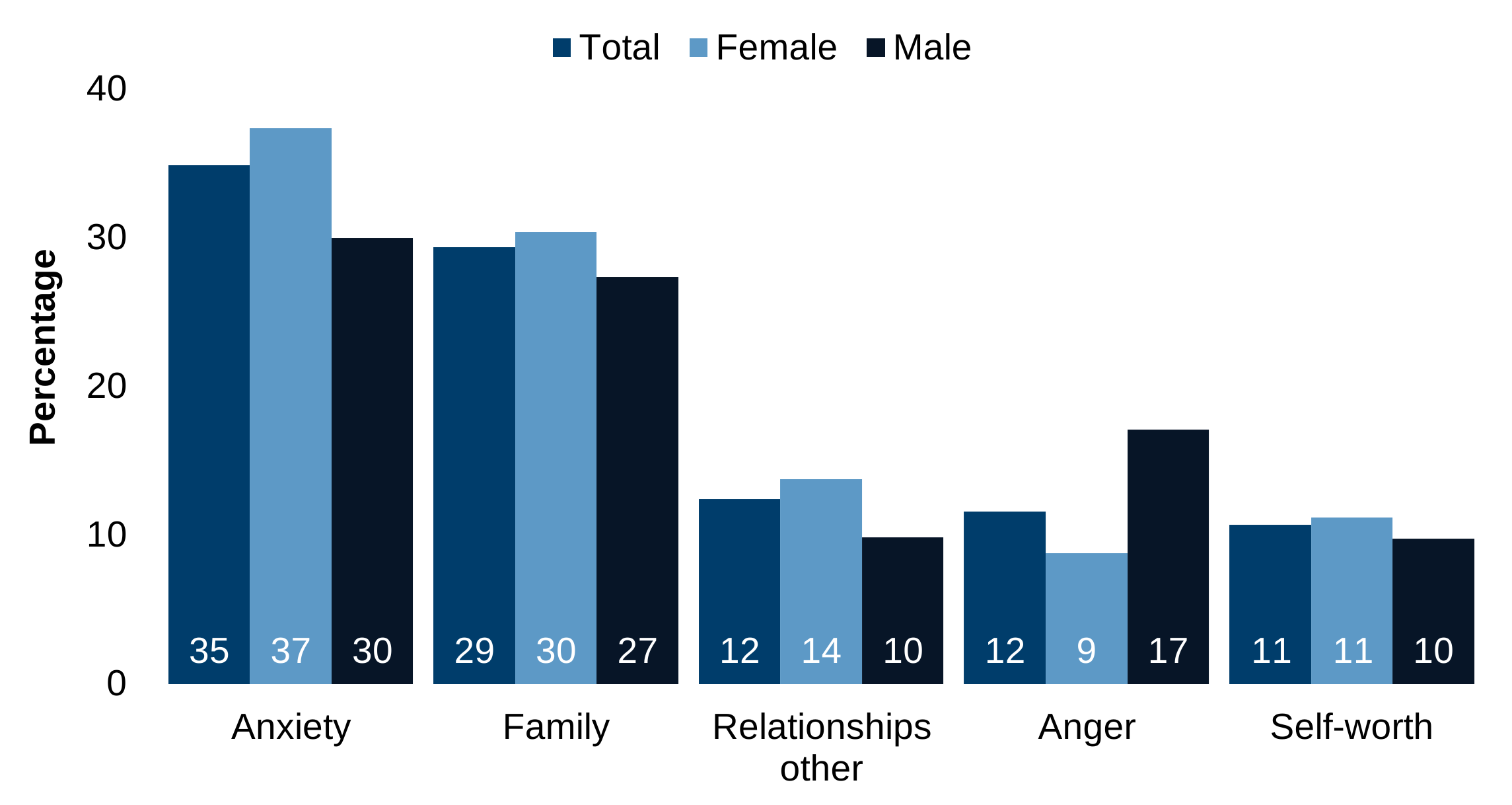
Description of figure 6: a bar chart showing that anxiety, family issues, other relationships, anger and self-worth and were the most common predominant issues.
[Note 1] ‘Relationships other’ are relationships other than with boyfriend/girlfriend or with teachers.
- The two most common predominant issues were the same as the two most common presenting issues overall, anxiety and family issues.
- Bereavement was in the top 5 most common presenting issues, but other relationships were identified as being in the top 5 most common predominant issues.
- Anxiety increased as a predominant issue from 20% in 2016 to 2017 to 43% in 2022 to 2023 but fell to 35% in 2024 to 2025.
Average YP Core scores
YP Core is a measure of psychological distress reported by young people, both before and after counselling. For further information on the form completed by young people please refer to the following link: CORE Measurement Tools (CORE-10) (Child Outcomes Research Consortium).
Figure 7: average improvement in YP Core score for children and young people who received counselling in Wales by local authority, September 2024 to August 2025
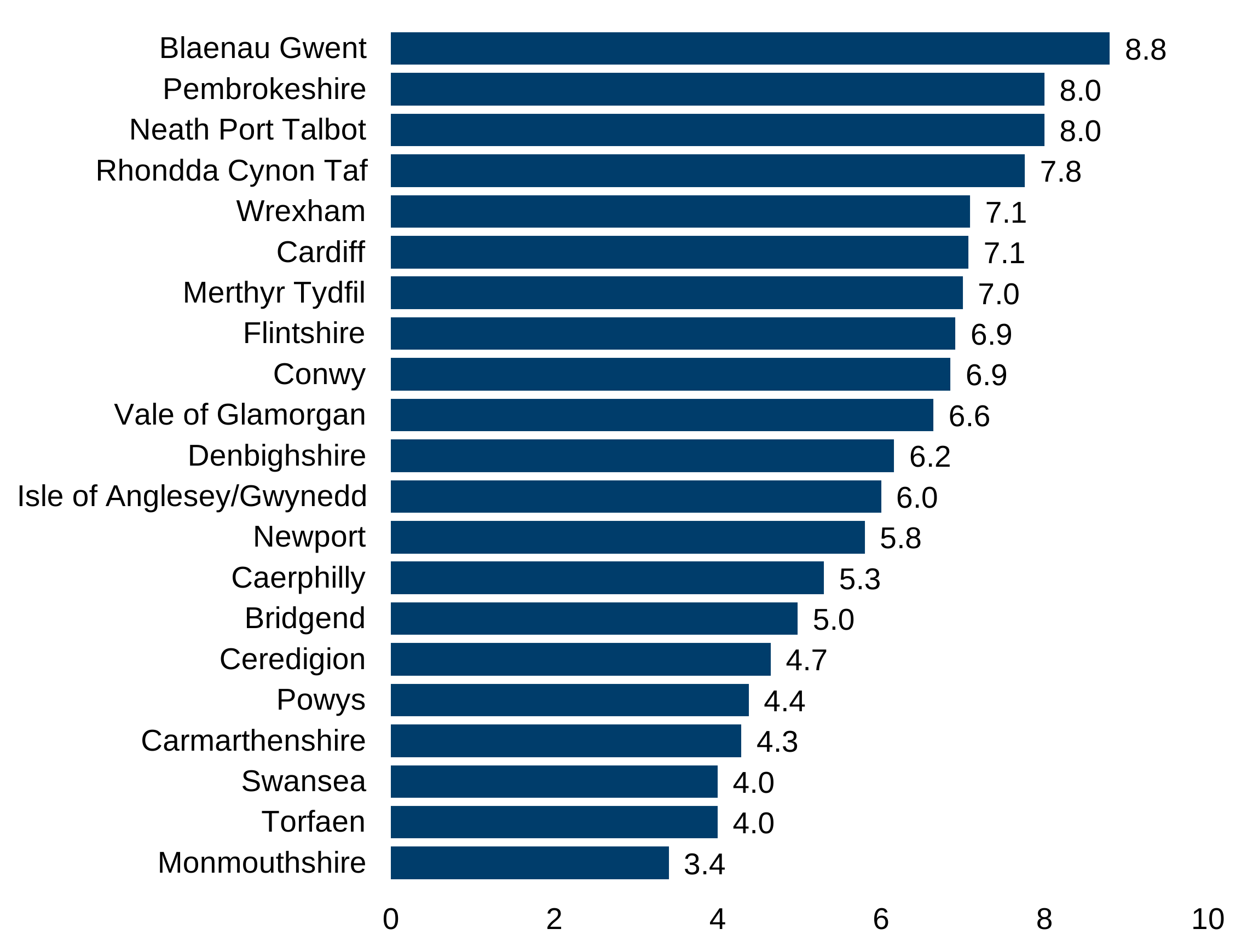
Description of figure 7: a bar chart showing that the average improvement in YP Core score amongst children and young people who received counselling in 2024 to 2025 ranged from 3.4 in Monmouthshire to 8.8 in Blaenau Gwent.
Onward referrals
| Onward referral | Number | Per cent |
|---|---|---|
| Specialist CAMHS | 270 | 2.0 |
| Child Protection | 273 | 2.0 |
| Other | 556 | 4.1 |
| None | 11,535 | 85.7 |
| Not known | 822 | 6.1 |
| Total | 13,456 | 100 |
The table shows that most children and young people who received counselling did not require any form of onward referral once counselling sessions had been completed (85.7% in 2024 to 2025).
[Note 1] The total in table 2 is slightly higher than in the other table and charts in this release due to some pupils receiving multiple referrals in Pembrokeshire.
- 2.0% of children and young people who received counselling were referred onwards to the Child and Adolescent Mental Health Service (CAMHS) in 2024 to 2025. This is up from 1.7% in 2023 to 2024.
Counselling sessions attended
Figure 8: average number of counselling sessions attended by children and young people who received counselling in Wales by local authority, September 2024 to August 2025
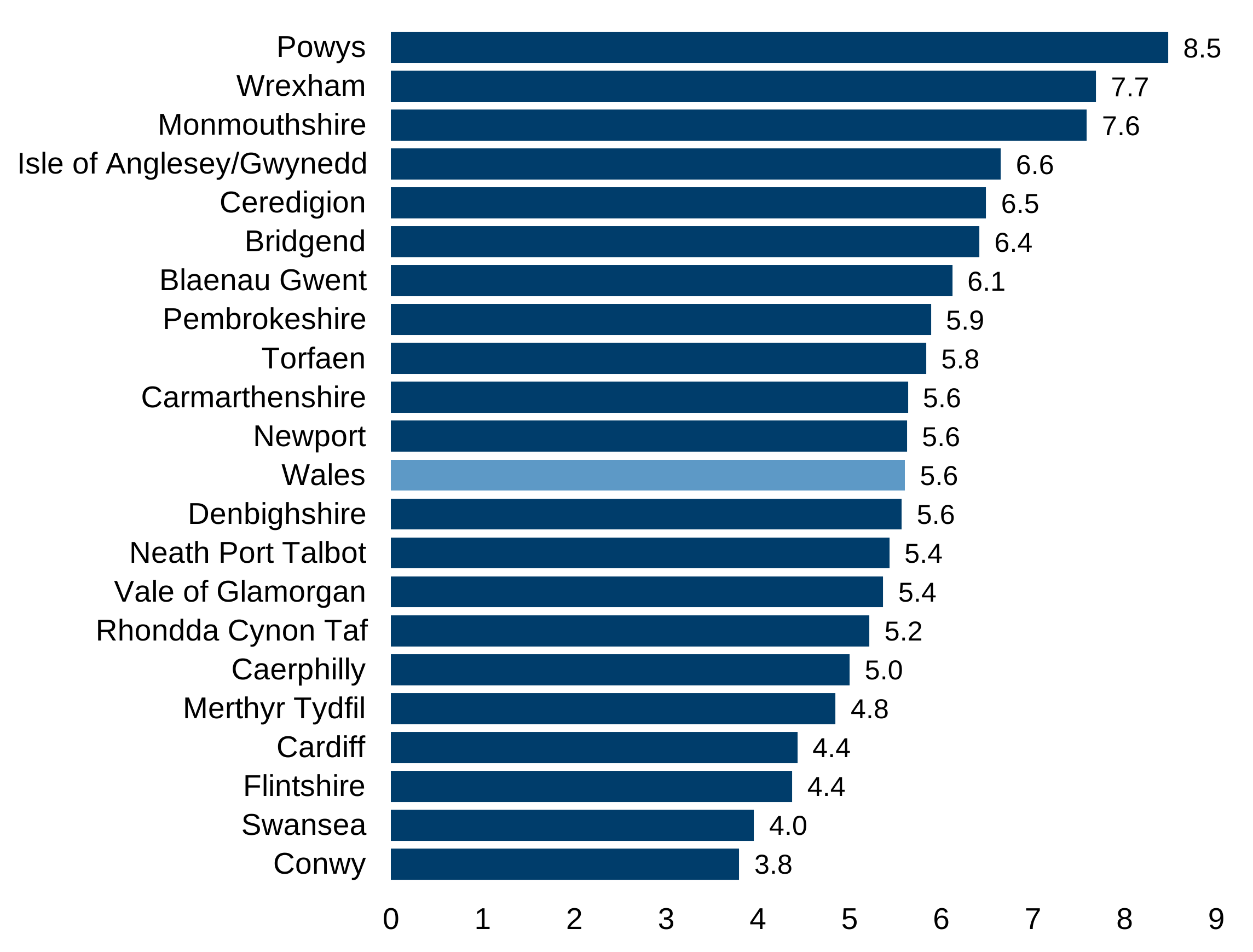
Description of figure 8: a bar chart showing that Powys had the highest average number of counselling sessions attended by children and young people and Conwy had the lowest.
- In 2024 to 2025 the average number of counselling sessions attended by children and young people who received counselling in Wales was 5.6, unchanged from 2023 to 2024.
- The average number of counselling sessions attended in local authorities ranged from 3.8 in Conwy to 8.5 in Powys.
- 99% of counselling sessions were carried out face to face in 2024 to 2025 and 1% were carried out remotely. Face to face counselling was lower during the pandemic, at 71% in 2020 to 2021.
Quality and methodology information
Statement of compliance with the Code of Practice for Statistics
Our statistical practice is regulated by the OSR. OSR sets the standards of trustworthiness, quality and value in the Code of Practice for Statistics that all producers of official statistics should adhere to.
All of our statistics are produced and published in accordance with a number of statements and protocols to enhance trustworthiness, quality and value. These are set out in the Welsh Government’s Statement of Compliance.
These official statistics demonstrate the standards expected around trustworthiness, quality and public value in the following ways.
Trustworthiness
Local authorities, and their counselling providers where applicable, compile aggregated data on children and young people accessing counselling and submit that data to the Welsh Government. Information compiled for each academic school year is required to be provided by 31 October following the end of the academic school year. The returns are then validated by the Welsh Government and published in a statistical release in March.
Due to the sensitivity of the data it must be transferred to the Welsh Government via a secure medium and also held in a secure environment.
The local authority, or the person who provides the counselling service, must not provide information about an identified individual or provide information in such a way (either by itself or combined with other information) that it identifies an individual or enables an individual to be identified.
These statistics are published in an accessible, orderly, pre-announced manner on the Welsh Government website at 9:30am on the day of publication.
This output adheres to the Code of Practice by pre-announcing the date of publication through the upcoming calendar web pages.
Quality
The published figures provided are compiled by professional analysts using the latest available data and applying methods using their professional judgement and analytical skillset. Statistics published by Welsh Government adhere to the Statistical Quality Management Strategy which supplements the Quality pillar of the Code of Practice for Statistics (UK Statistical Authority) and the European Statistical System principles of quality for statistical outputs.
This is an annual collection that local authorities are required to provide to the Welsh Government.
The local authorities Isle of Anglesey and Gwynedd provide a joint data collection return, therefore the data for these local authorities cannot be shown separately.
Conwy were unable to provide data for 2023 to 2024. We used the data provided by Conwy for 2022 to 2023 to impute their data for 2023 to 2024.
In 2022 to 2023, male and female were clarified to refer to sex at birth in the data collection form.
| Year | Number |
|---|---|
| 2021/22 | 322 |
| 2022/23 | 78 |
| 2023/24 | 74 |
| 2024/25 | 35 |
Figures are based on the numbers of children and young people who have received counselling and have finished their episode(s) of counselling during the period. The statistics prior to March 2020 include face to face counselling only. Since March 2020 counselling carried out via online face to face sessions has been included to reflect changes to counselling provision during the pandemic.
The age group of those children and young people who received counselling is based on their school year rather than actual age. Please note not all the children and young people who receive counselling are school pupils. Where this occurs these children and young people are included in the school year age group they would typically attend if they were in school.
Since 2014 there has been considerable work on guidance and definitions to ensure consistency between authorities, to clarify some known issues, and reflect current policy. For this reason comparisons with data prior to 2015 to 2016 should be treated with considerable caution.
Value
These statistics are used in a variety of ways. Some examples of these are:
- ministers and the Senedd Research in the Senedd
- members of the Senedd Cymru/Welsh Parliament
- other government departments
- local authorities
- local Health Boards including Child and Adolescent Mental Health Services (CAMHS)
- the Education Directorate in the Welsh Government
- other areas of the Welsh Government
- the research community
- students, academics and universities
- individual citizens and private companies
Counselling in this context gives children and young people the opportunity to talk face to face with a counsellor about their worries and concerns, to work through difficult feelings so that they can learn to manage them. Where appropriate counselling may lead to a referral to another service (e.g. Child and Adolescent Mental Health Services (CAMHS), child protection).
The School Standards and Organisation (Wales) Act 2013 requires a Local Authority to provide an independent counselling service on the site of each secondary school that it maintains. A Local Authority may in addition offer counselling services at other locations, e.g. at independent schools or at a local community centre, youth centre or other community facility for young persons who are not in school and/or wish to access counselling outside of a formal education setting.
In the 2025 to 2026 financial year the Welsh Government provided over £3m additional funding for school counselling services to support improvements in and an expansion of counselling to existing and new clients. The Welsh Government commissioned independent research to examine the impact of counselling services for children and young people, which was published in July 2024. This will support commissioners and providers of counselling services in ensuring the most appropriate interventions are used and that they are able to consistently evidence impact across Wales.
School Standards and Organisation (Wales) Act 2013
The School Standards and Organisation (Wales) Act 2013 became law in Wales on 4 March 2013. The purpose of the Act sets out proposals to strengthen school standards, enhance local determination and reduce complexity. Under Section 92 of the School Standards and Organisation (Wales) Act 2013, local authorities are required to make reasonable provision of independent counselling services for children and young people aged between 11 and 18 and pupils in Year 6 of primary school. Under Section 93 local authorities are required to provide anonymised information about these counselling services to the Welsh Government, in compliance with a direction issued by the Welsh Ministers under Section 93 of the 2013 Act.
Where a local authority has arranged for a person to provide an independent counselling service on its behalf, the authority must give the person a copy of the Welsh Ministers’ direction and that person must compile the information necessary for compliance with the direction and submit it to the local authority.
Further information on the School Standards and Organisation (Wales) Act 2013 (Welsh Parliament).
This statistical release is accompanied by more detailed tables on StatsWales, a free to use service that allows visitors to view, manipulate, create and download data.
There are no official statistics published by other UK countries on counselling for children and young people. However, there is data published for Wales about children receiving care and support who are recorded as having a mental health problem and about waiting times for specialist Child and Adolescent Mental Health Services (CAMHS).
The commentary and notes in the release have been developed to try to make the information as accessible as possible to the widest range of users. Furthermore, all our school statistics outputs are published in Welsh and English.
Well-being of Future Generations Act (WFG)
The Well-being of Future Generations Act 2015 is about improving the social, economic, environmental and cultural wellbeing of Wales. The Act puts in place seven wellbeing goals for Wales. These are for a more equal, prosperous, resilient, healthier and globally responsible Wales, with cohesive communities and a vibrant culture and thriving Welsh language. Under section (10)(1) of the Act, the Welsh Ministers must (a) publish indicators (“national indicators”) that must be applied for the purpose of measuring progress towards the achievement of the Well-being goals, and (b) lay a copy of the national indicators before Senedd Cymru. Under section 10(8) of the Well-being of Future Generations Act, where the Welsh Ministers revise the national indicators, they must as soon as reasonably practicable (a) publish the indicators as revised and (b) lay a copy of them before the Senedd. These national indicators were laid before the Senedd in 2021. The indicators laid on 14 December 2021 replace the set laid on 16 March 2016.
Information on the indicators, along with narratives for each of the wellbeing goals and associated technical information is available in the Wellbeing of Wales report.
Further information on the Well-being of Future Generations (Wales) Act 2015.
The statistics included in this release could also provide supporting narrative to the national indicators and be used by public services boards in relation to their local wellbeing assessments and local wellbeing plans.
The commentary and notes in the release have been developed to try to make the information as accessible as possible to the widest range of users. Furthermore, all our school statistics outputs are published in Welsh and English.