
Data about the Welsh language outside Wales: user engagement survey results
This publication is part of a joint work programme between the Welsh Government and the Office for National Statistics (ONS) to improve the understanding of Welsh language statistics.
In this page
Introduction
This statistical article presents the findings of a short survey on the data needs of users in relation to the Welsh language outside Wales. At present, there is no comprehensive source of information about the Welsh language ability of people who live outside Wales.
Main findings
Note that this was a voluntary survey among stakeholders and data users. The results are not necessarily representative of all relevant stakeholders, and this is considered further in the section on data quality.
The main data priority identified by respondents was information on the number of Welsh speakers outside Wales, with 89% expressing particular interest in this figure. In addition, the geographical distribution of speakers was considered essential by many, reflecting the need to understand the location of the Welsh-speaking community beyond Wales.
There was a strong demand for breakdowns by age and geographic area, suggesting that data users were keen to understand language patterns in specific social and regional contexts. In contrast, there was less demand for data by gender, occupation and ethnicity, although some saw value in these dimensions.
Almost half of respondents considered that data on Welsh speakers outside Wales should be collected once every five years, with 40% suggesting the need for annual data. This reflects the need for up-to-date data without overloading resources or respondents.
The most common use of the data, according to the respondents, would be to support the development of language policies or strategies. In addition, over half indicated that they were likely to use the data to monitor the impact of programmes or policies, and to support Welsh language networks and events outside Wales.
Background and context
In April 2023, we published a work plan outlining the work that the ONS and the Welsh Government were planning to undertake to improve our understanding of the main survey and administrative data sources used to produce statistics about the Welsh language. The work plan was accompanied by a blog published by the Chief Statistician (Digital and Data Blog).
The first output from the work plan was published in October 2023. This statistical article explored differences between estimates of Welsh language ability in the 2021 Census and the Labour Force Survey, which underpins the Annual Population Survey (APS).
This is the second output from the work plan, which is to understand data needs on Welsh language ability outside Wales. The research question in the plan is: "What data already exists to understand more about people who are able to speak Welsh but live outside Wales?"
To address this, a short survey was conducted as the first phase of the project, with the aim of documenting user requirements for these types of data. Engaging with stakeholders and data users has enabled us to gather insights about their needs, and the findings are summarised in this report.
Methodology
The survey was conducted between 1 March and 5 May 2025 using an online questionnaire via the SmartSurvey platform. The aim of the survey was to gather views from a wide range of stakeholders and data users. The survey was shared directly with relevant stakeholders via email as well as through language and statistical forums, including statistics user panels and policy networks.
121 responses were received in total, including 37 completed responses and 84 partial responses. While the partial responses offer some insight, the analysis is primarily based on the completed responses to ensure data consistency, depth and quality.
59% of the responses were provided through the medium of Welsh. Respondents were not required to disclose their job or the organisation for which they work, but representation was noted from local councils, organisations working specifically on the Welsh language, statistical institutes and individuals with a personal interest in promoting the language.
This approach has allowed us to gather a diversity of perspectives, including from organisational stakeholders and individual users, and has provided an initial basis for understanding data needs relating to Welsh speakers outside Wales.
Data quality
Gaps in the data
The survey reached a wide range of stakeholders including the Commission for Welsh-speaking Communities, the Welsh Language Commissioner, the Economic Statistics User Group, the Third Sector Statistics User Panel, the Wales Statistical Liaison Committee and Welsh Government policy officers. However, it is important to note that there are gaps in the sample. In particular, there was a lack of representation from individuals interested in data about the Welsh language outside Wales that are not affiliated with established networks or partners with the Welsh Government. As a result, the views of less visible or informal users may not be fully represented.
In addition, as the survey is based on voluntary participation, there is a risk of self-selection bias where respondents are more likely to have a strong interest or close connection to the Welsh language. These limitations should be considered when interpreting the findings.
Limitations of the data currently available
At present, there is no official data available on Welsh speakers outside Wales. The question about Welsh language ability was not asked in England in the 2021 Census, but there was a question on main language. In 2021, 7,000 people in England (less than 0.1%) said Welsh was their main language. This is a decrease from 8,200 reported in 2011. Please note that this does not capture everyone in England who is able to speak Welsh, only those who considered Welsh to be their main language.
It is not possible to use characteristics such as place of birth, nationality or main language to estimate the number of Welsh speakers outside Wales. For example, parents from Wales who are able to speak Welsh may have raised their children in England and passed on the language to them, but do not necessarily embrace a Welsh nationality. In addition, it is likely that many Welsh speakers in England would not identify Welsh as their main language as they are all fluent in English.
Therefore. there is currently no comprehensive data source that shows us the number of Welsh speakers outside Wales.
Data priorities
The main data priority identified by respondents was information on the number of Welsh speakers outside Wales, with 89% expressing a particular interest in this figure. In addition, the geographical distribution of Welsh speakers was also considered essential by many respondents, reflecting a need to understand the location of Welsh language communities across the world.
Figure 1: percentage of respondents who indicated that the following areas of interest would be useful to them
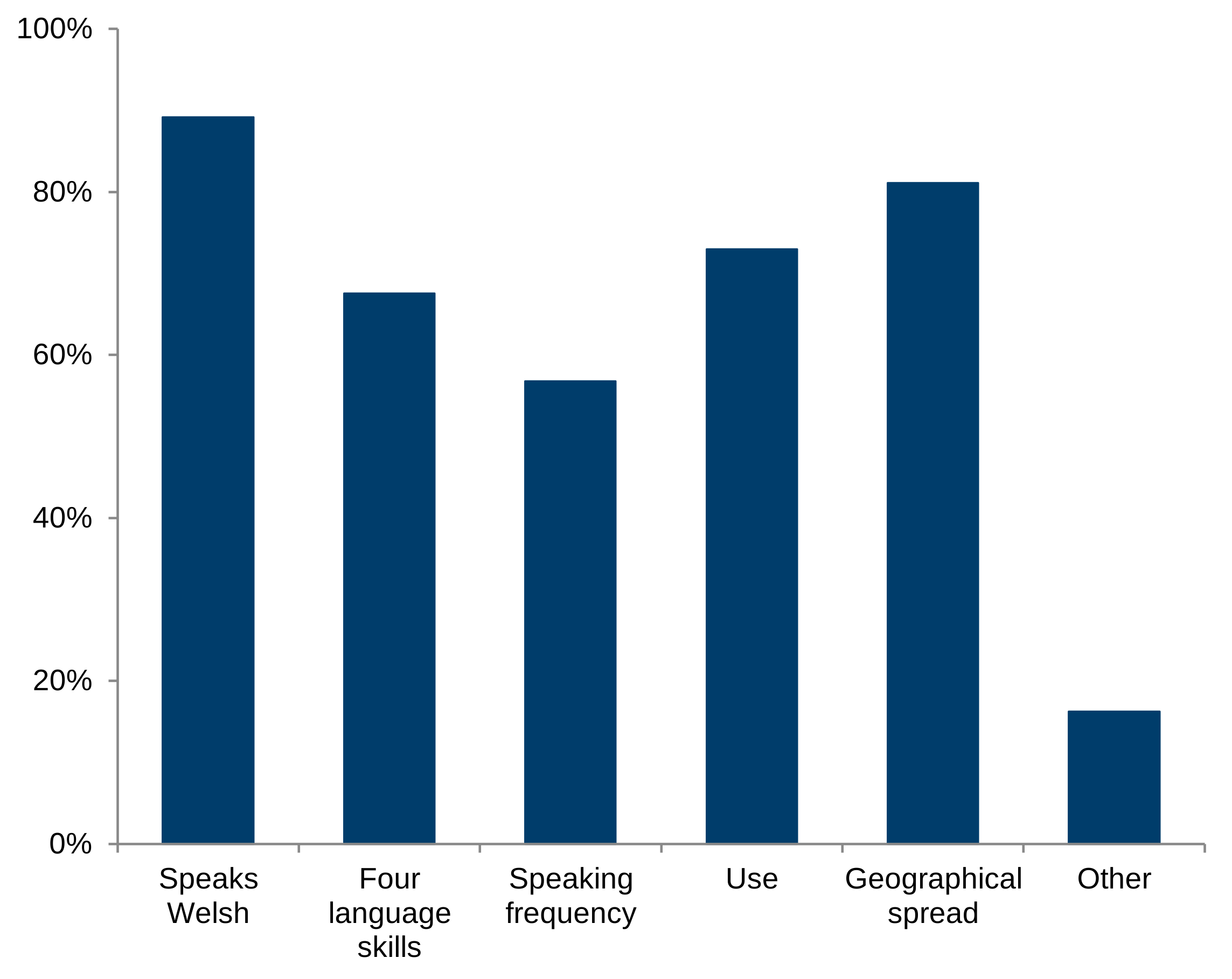
Description of figure 1: a bar chart showing the percentage of respondents who felt that the six priorities identified in the survey would be useful. These vary from 89% for the ability to speak Welsh to 16% in the "other" category. The chart is based on 37 responses.
Source: Data survey about the Welsh Language outside Wales, Welsh Government
There was a strong demand for a breakdown of the data by age and geographic area, suggesting that data users were keen to understand the language patterns in specific social and regional contexts. In contrast, there was less demand for data by gender, occupation and ethnicity, although some respondents saw value in these dimensions.
Figure 2: percentage of respondents who indicated that the following demographics would be useful to them
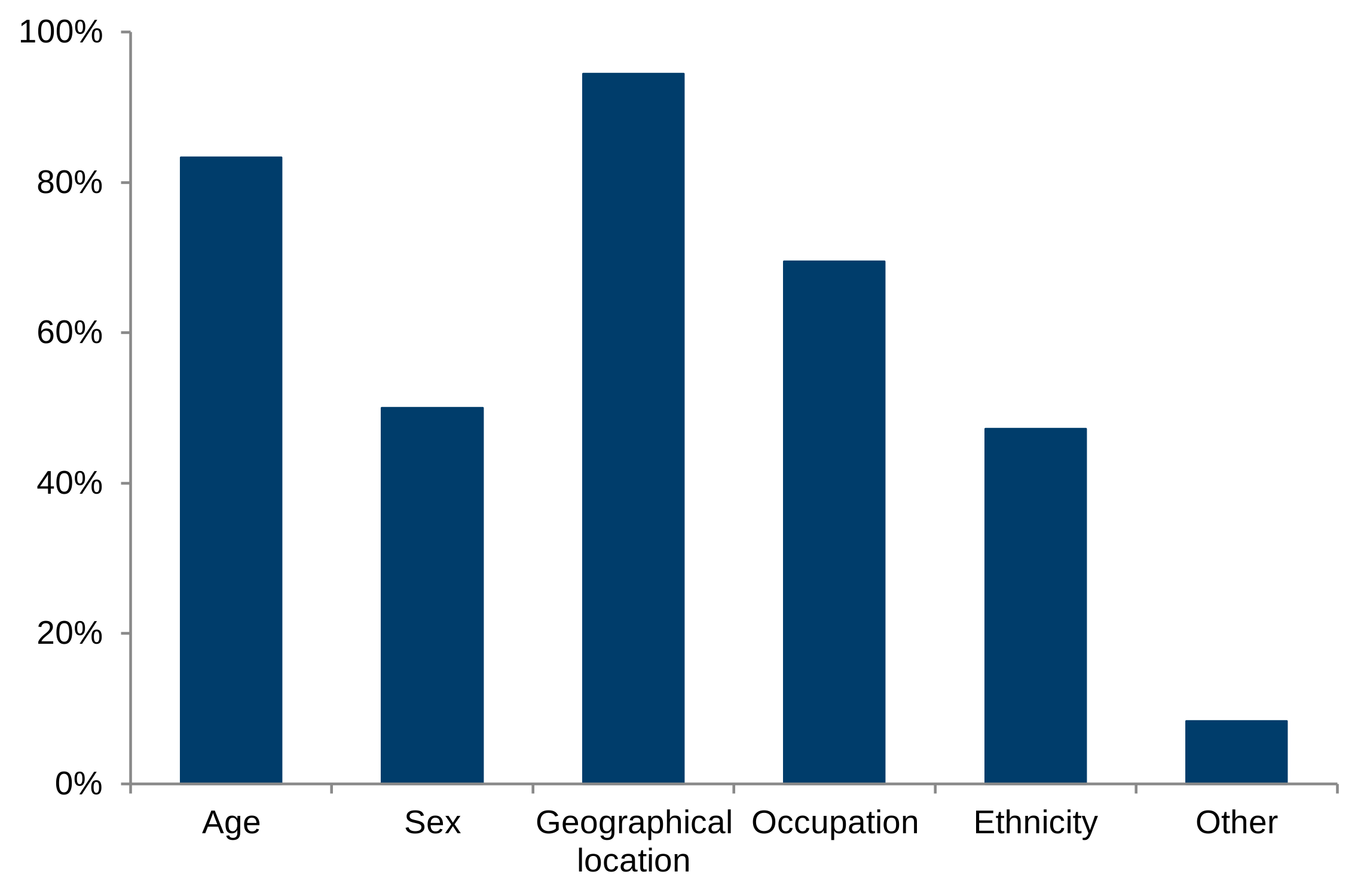
Description of figure 2: a bar chart showing the percentage of respondents who felt that the six demographics identified in the survey would be useful. It varies from 94% for geographic location to 8% in the "other" category. This chart is based on 36 responses.
Source: Data survey about the Welsh Language outside Wales, Welsh Government
Open comments: additional data needs
In the survey, a number of respondents identified additional data areas that would be useful to improve understanding of Welsh speakers who live outside Wales. These suggestions can be grouped into 4 main themes.
1. Personal background and language
There was a demand for more detailed data on individual background, including:
- place of birth and place of upbringing
- where and how Welsh was learned
- nationality
- details of education, including place of education
- the group of Welsh speakers born and raised outside Wales need to be identified –noting that not everyone has migrated
These points reflect the range of language experiences that exist and emphasise the need to distinguish between Welsh speakers who were brought up in Wales and those who were brought up outside Wales.
2. Use and engagement with the language
A number of respondents emphasised the need for data on how the Welsh language is used outside Wales. These comments suggest the importance of understanding not only who speaks Welsh, but how, where and when the language is used in everyday life.
3. Social and economic factors
It was noted that socio-economic indicators are relevant to understanding the living contexts of Welsh speakers, and how these factors can influence language use.
4.. Connection with Wales
One point in particular was raised about the potential to use data to understand how to attract people back to Wales. This suggests an interest in understanding the ongoing links between Welsh speakers and Wales, including the possibility of returning or contributing remotely.
Frequency of data collection
Almost half of respondents considered that the data on Welsh speakers who live outside Wales should be collected once every five years, with 40% suggesting the need for annual data. This reflects the need for up-to-date data without overloading resources or respondents.
Figure 3: how often should data on Welsh speakers outside Wales be collected and reported
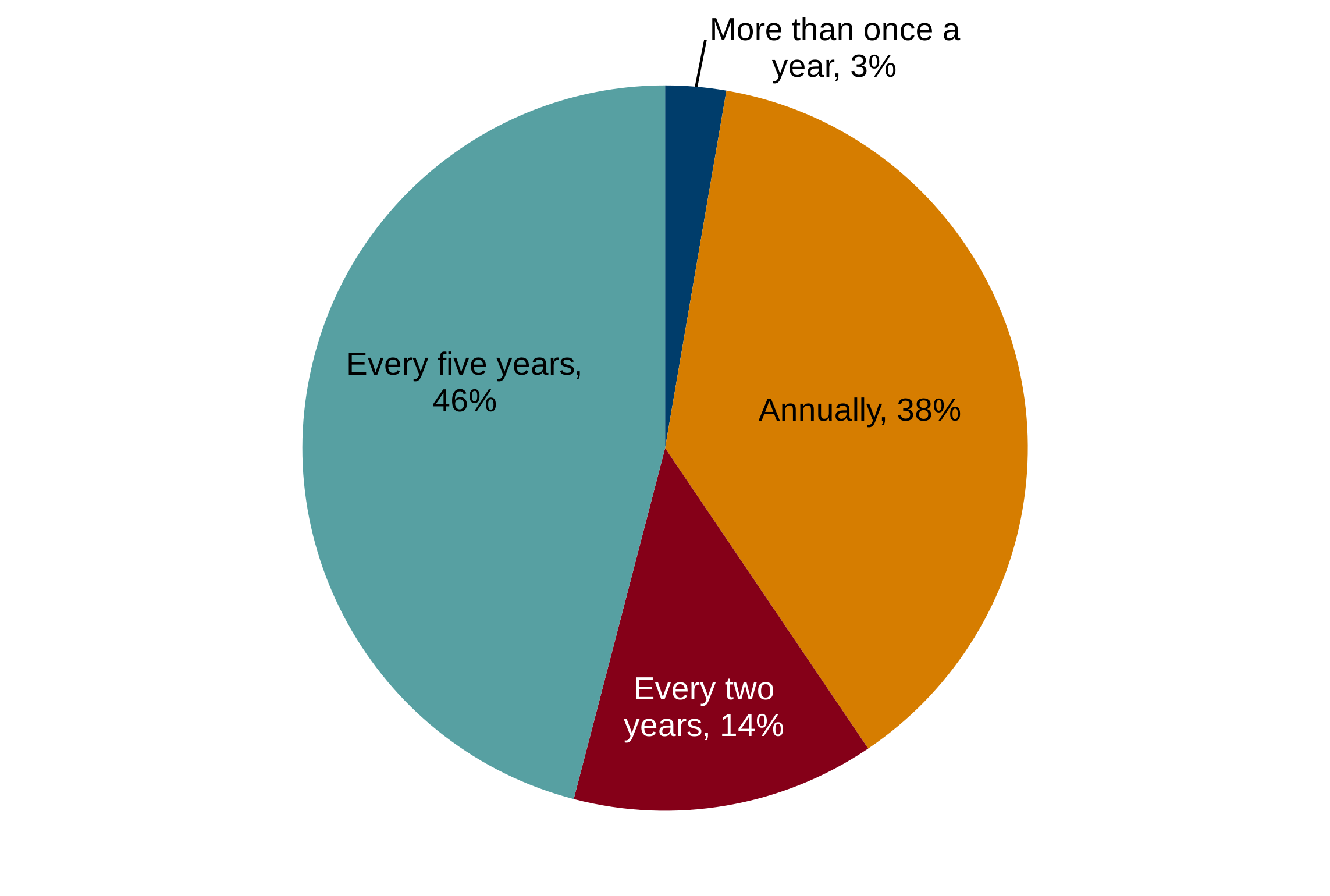
Description of figure 3: a pie chart showing the distribution of responses when asked how often data on Welsh speakers outside Wales should be collected and reported. It varies from 46% who said every 5 years and 3% who said more than once a year. This chart is based on 37 responses.
Source: Data survey about the Welsh Language outside Wales, Welsh Government
Proposed use of data
According to the respondents, the most common use of the data would be to support the development of language policies or strategies. In addition, over half indicated that they were likely to use the data to monitor the impact of programmes or policies and to support Welsh networks and events outside of Wales.
Figure 4: use of data on the Welsh language outside Wales
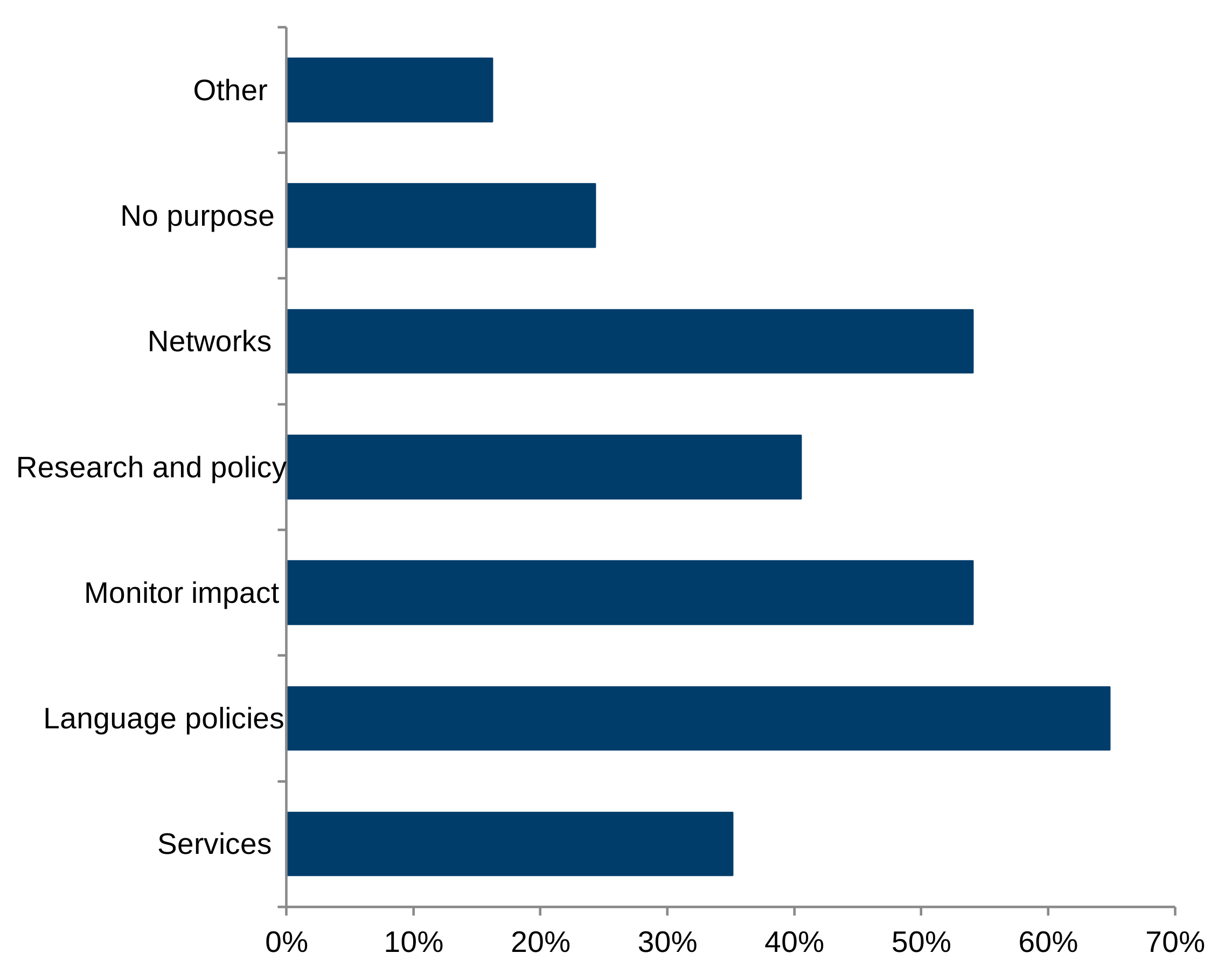
Description of figure 4: a horizontal bar chart showing the percentage of respondents who would use data on the Welsh language outside Wales by the types of use identified in the survey. They vary from 65% for language policies to 16% for the "other" category. This chart is based on 37 responses.
Source: Data survey about the Welsh Language outside Wales, Welsh Government
The need for data: reasons cited by respondents
The survey respondents identified a variety of reasons why data on Welsh speakers outside Wales would be useful. These can be grouped into 5 main themes.
1. Recognition and visibility
The points cited by emphasise the need to ensure that Welsh speakers outside Wales are included in the statistical picture and are recognised as part of the wider Welsh speaking community. Among the comments made:
Formal and statistical recognition of this group.
If the data doesn't exist, it's hard for the group to be considered in public policies.
Under-counting undermines confidence in the Welsh language and its continuity.
Lack of data makes research difficult.
2. Planning and policy intervention
Respondents identified several ways in which data on Welsh speakers outside Wales could support policy work. There was a demand for information to assist with:
- recruitment planning
- job marketing
- the development of campaigns to encourage people to return to Wales
In addition, respondents emphasised the value of the data for:
- planning interventions to promote the Welsh language beyond Wales
- developing policies that have a wider reach beyond the borders of Wales
It was also noted that the data would be useful across several policy areas including:
- education
- economy
- housing and migration
These themes suggest that this data can support strategic decisions and the planning of services relevant to the Welsh language beyond Wales.
3. Understanding experiences and needs
Respondents noted that data was needed to help understand the experiences of Welsh speakers living outside Wales including how their personal characteristics, such as background, education or social circumstances for example, influence their use of the language. It was emphasised that this group is likely to have different experiences to those living in Wales and therefore it is important not to treat the two groups as one. Without specific data, it was noted that it’s difficult to design policies or provide services that respond to their needs. These comments suggest the need to ensure that services and policies relating to the Welsh language are relevant, inclusive and based on an understanding of the diverse experiences of its speakers.
4. Community, culture and learning
The comments on this area focus on the role of the Welsh language within diverse communities, and note how data can support efforts to strengthen culture and learning, for example:
- helping to stablish opportunities for learners
- promoting the Welsh language within various groups
- helping to understand how Welsh speakers outside Wales sustain and influence Welsh culture
These themes suggest that data is important in:
- supporting learning
- promoting the language
- maintaining cultural connections
5. Migration and mobility
This area explores the role of data in understanding migration and mobility patterns and the ways in which such information can inform individuals' experiences and their decisions to move. Among the examples cited were:
- helping those planning to move to find Welsh speaking communities
- understanding the challenges that prevent people from living in Wales
- demonstrating that there is no disadvantage to Welsh-medium education
These points suggest how data can support individuals in making decisions to move and in assessing the impact of policies on migration and returning.
Next steps
This report is the starting point to understand data needs on Welsh language ability outside Wales. As part of the joint work plan with the ONS we will continue to work collaboratively to strengthen the existing evidence base and to consider options for collecting this type of data.
In addition, we will continue to work closely with the ONS on a wider range of data relating to the Welsh language, including planning for the 2031 Census and the proposed changes to the Labour Force Survey.
Welsh is a national language which belongs to everyone in Wales and to its speakers around the world. The work of the independent Commission for Welsh-speaking Communities is to make recommendations to strengthen public policy regarding language sustainability in communities, and the use of Welsh as a community/social language. In the second phase of its work, the Commission will consider the presence of the Welsh beyond Wales, including the contribution that Welsh speakers there could make to strengthen the language. As part of its remit, the Commission will publish in due course a report on the Welsh language outside Wales, reflecting the ambition to ensure that the Welsh language reaches all communities.
Contact details
Welsh Language Statistics Team
Email: WelshLanguageData@gov.wales
Media: 0300 025 8099