
Formation of a consolidated Welsh public energy company
We want your views on proposals to create a single public energy company for Wales.
In this page
Overview
The aim of this consultation is to understand views regarding the proposal to create a single public energy company for Wales.
The document sets out the current context and the proposals for change.
We would like your feedback on the goals and proposed functions of the company.
1. Ministerial foreword
Wales has the natural resources, the ambition and the policy foundations to build a cleaner, fairer and more secure energy future. Every region now has an energy strategy, and every local authority has a local energy plan. The task before us is to move from planning to delivery.
That means building more clean energy in Wales, owning more of it in Wales, and ensuring that more of the value created by Welsh energy resources is retained for the benefit of people, communities, businesses and public services in Wales. Private investment will remain essential, and Wales also needs public capability of its own: the ability to develop projects, support communities, work with public bodies, mobilise finance and ensure that public benefit is built into energy development from the start.
This consultation sets out proposals for creating a single Welsh public energy company. The company would be publicly owned on behalf of the people of Wales and would bring together, strengthen and build on existing Welsh energy delivery functions, including Trydan Gwyrdd Cymru, Ynni Cymru and relevant energy support currently delivered through the Welsh Government Energy Service.
The purpose of the company would not be to replace existing energy suppliers or directly set household electricity prices. Its purpose would be to help Wales reduce energy costs over time by developing and owning renewable energy assets, supporting local and community ownership, investing in smart local energy systems, helping more organisations use locally generated energy, attracting investment into Welsh energy infrastructure, and reinvesting value for public benefit.
At a local level, this could mean supporting communities, co-operatives, councils and public bodies to own and benefit from renewable generation, storage, flexibility and smart energy assets. It could mean helping homes, businesses and public buildings use energy more intelligently, generating, storing and using power closer to where it is needed. Where regulatory arrangements allow, it could also support new local energy models that link Welsh generation more directly to local demand.
At a larger scale, Wales must also ensure that major clean energy developments create lasting Welsh value. For very large projects, such as offshore wind in the Celtic Sea, the question is not only how much energy is generated, but how Wales secures benefits through supply chains, ports, skills, infrastructure, ownership stakes where appropriate, and long-term economic opportunity.
The proposal in this consultation is therefore about more than institutional tidying. It is about whether Wales should create a serious national energy institution with the capability to turn plans into projects, projects into assets, and assets into long-term public value.
No final decisions have been made on the company’s precise form, legal status, governance, functions or delivery model. I want to hear views on what the company should do, how it should work with existing organisations, how it should support communities and businesses, and what safeguards are needed to ensure transparency, accountability and value for money.
I particularly welcome views on how the company could help grow Welsh and community ownership, support smart local energy systems, work with partners, attract investment, and ensure that the benefits of Wales’s energy transition are felt by people across the country, including those communities most exposed to high energy costs.
This is an opportunity to shape how Wales builds, owns and benefits from the clean energy future. I encourage everyone with an interest in Wales’s energy system, including communities, public bodies, businesses, developers, trade unions and citizens to respond.
Adam Price MS
Cabinet Minister for Enterprise, Connectivity and Energy
2. Executive summary
The Welsh Government is consulting on the creation of a single, publicly owned energy company for Wales. The proposed company would bring together existing energy delivery functions, creating a stronger national capability to develop renewable energy, support local ownership, attract investment and ensure that more of the economic value from Wales's energy resources benefits people and communities in Wales.
The case for change
Wales has significant renewable energy resources and strong policy ambitions for decarbonisation, local ownership and community benefit. However, the Welsh Government believes that:
- Delivery capability is fragmented across several organisations.
- Stakeholders can find current arrangements confusing.
- Opportunities to align investment and maximise public benefit are sometimes missed.
- Public resources are increasingly constrained and need to be used more efficiently.
- Wales needs stronger public capability to complement private sector investment and to increase Welsh ownership and control of energy assets.
The proposed company is intended to provide clearer leadership, stronger delivery capability, better coordination and a more coherent focus on retaining value for Wales.
What the company will do
The company's purpose would be to transform Wales's natural energy resources into tangible benefits for people. It would
- Develop and own renewable energy assets and invest in smart local energy systems.
- .Support community, public and local ownership of energy projects.
- Help public bodies, businesses and communities make better use of locally generated energy.
- Attract investment into Welsh energy infrastructure.
What the company will not do
The company is not intended to:
- Replace existing energy suppliers.
- Directly set household electricity prices.
- Displace private sector investment.
- Take responsibility for wider business support programmes.
- Lead domestic housing retrofit programmes.
The company is envisaged as the practical delivery arm of the forthcoming National Energy Strategy, working alongside private investors. Its long-term goal is to improve energy affordability by increasing Welsh ownership, supporting local energy systems and encouraging innovative local energy arrangements.
The company’s proposed functions
Function 1: Smart systems
Build on the work of Ynni Cymru to enable communities, councils and public bodies to generate, store and use energy locally. Support local ownership of distributed generation, battery storage, flexibility services and smart local energy systems.
Function 2: Welsh-owned generation at scale
Continue Trydan Gwyrdd Cymru’s work to develop utility-scale wind and solar developments on the public estate and potentially beyond.
Function 3: Shared ownership
Increase ownership of renewable generation in Wales by taking equity stakes in larger projects and supporting shared ownership opportunities, particularly where communities or other local bodies do not have the capacity to participate directly.
Function 4: Helping industry address grid constraints
Support businesses facing electricity network constraints through coordination, local generation, storage, flexibility services and other innovative "behind the meter" solutions.
Function 5: Wales as a test bed
Help Wales become a national centre for energy innovation by testing new approaches to smart energy systems, local energy markets, hydrogen, flexibility and whole-system energy solutions that could later be deployed across Great Britain.
Function 6: Capitalising construction
Working with public and private finance partners, bring together funding and investment needed to develop and build energy projects at scale.
Key consultation questions
The consultation asks for views on five broad areas:
Structure and governance
- Whether a single Welsh public energy company would add value.
- Whether Trydan Gwyrdd Cymru should form the basis of the new company.
- What the company should be called.
- How the company should be governed and how value should be returned to Wales.
Functions and delivery model
- The existing functions that should transfer from Ynni Cymru and the Welsh Government Energy Service.
- Whether the company should become the preferred developer on public land.
Ownership and community benefit
- The company's role in supporting communities to participate in energy projects.
- Approaches to community benefit and potential national benefit-sharing arrangements.
Business and innovation
- How the company could help address grid constraints for industry.
- How Wales could become a test bed for smart energy innovation.
Outcomes on retaining value in Wales
The proposals aim to ensure that more of the value created by Welsh energy resources remains in Wales. The consultation argues that greater Welsh ownership of generation, energy infrastructure and associated investments will increase the benefits retained by Welsh communities and the public sector.
In essence, the proposal is to create a national energy institution that can turn Welsh energy resources into long-term public value, helping ensure that the economic, social and environmental benefits of the energy transition are retained and shared more widely across Wales
3. Purpose of the consultation
The purpose of the consultation is to understand the views of the public and relevant organisations in relation to the proposal to create a single public energy company for Wales. We would like your feedback on the goals and proposed functions of the company, and any evidence you can provide to help us evaluate the impacts of these proposals.
The Welsh Government is considering how best to establish a Welsh Public Energy Company (“company”) that builds on the mature and successful energy landscape already present in Wales. The proposed company would build on existing Welsh Government-supported energy delivery functions, including Trydan Gwyrdd Cymru, Ynni Cymru and functions delivered by the Welsh Government Energy Service (WGES). Its purpose would be to strengthen Wales’s ability to deliver renewable and low carbon energy projects and ensure more of the value from energy development is retained in Wales and leads to practical benefits for people and communities.
These proposals are made in the context of a complex landscape and challenging public sector settlement. We have set out the landscape from the Welsh perspective and recognise there are complex interactions between reserved and devolved powers and funding mechanisms in this space. These proposals initially consider how the existing funding and resources can be deployed most effectively and where evidence shows it will have the greatest value for people in Wales. Even as a Programme for Government priority, the case will still need to be made for committing additional funding to the functions outlined in this document.
This is an early consultation. No final decisions have been made on the company’s precise form, legal status, functions, governance or delivery model. The Welsh Government wants to hear from communities, public bodies, businesses, energy developers, community energy organisations, children and young people, equality organisations, environmental bodies, rural and urban stakeholders, academia, and others with an interest in Wales’s future energy system.
The consultation findings will help inform the Welsh Government’s Integrated Impact Assessment and future decisions on the Company’s role, functions and delivery model.
4. Vision for the future company
The aim of the company is to translate Wales’s substantial natural resources for energy generation into tangible and meaningful benefits for people and communities. We believe we can achieve this by integrating functions that currently sit across multiple organisations, making the landscape more coherent, and delivery more purposeful.
What the company would do
Its purpose would be to:
- develop and own renewable energy assets;
- support community, municipal and local ownership;
- invest in smart local energy systems;
- help public bodies, businesses and communities use locally generated energy more effectively;
- attract investment into Welsh energy infrastructure; and
- ensure that a greater share of value from Welsh energy resources is retained in Wales for public benefit.
Over time, this could help reduce energy costs by increasing local ownership, reducing exposure to energy price volatility and supporting local energy market innovation where regulatory arrangements permit.
The company would not replace existing energy suppliers or directly set household electricity prices. Instead, its role would be to improve affordability over time by increasing Welsh ownership, supporting local energy systems, retaining energy revenues within Wales and enabling innovative local energy arrangements where regulatory frameworks allow.
Wales cannot rely on private developers alone if it wants more community ownership, more Welsh value, more local energy and a closer link between energy generation and household bills. It needs public capability of its own, to develop projects, structure partnerships, support community ownership, work with public bodies, aggregate public-sector demand, and invest where the market will not. The company is intended as the practical delivery arm of the National Energy Strategy we have committed to publish. It is not intended to be a replacement for private investment, but a collaborator with and shaper of it, and a means of ensuring that Wales holds a stronger stake in what gets built.
The high-level functions set out below indicate the areas in which the company may be expected to deliver over the next few years. In some areas delivery capacity already exists, and in others the company would need to develop expertise and additional capacity.
Function 1: Smart systems
Building on the Ynni Cymru programme to date, the company will drive much more local ownership of distributed generation, energy storage, flexibility services and other smart local energy assets. This local layer will be owned by communities, co-ops, councils and the public estate, connected at distribution level, and matched to local demand through smart local systems, flexibility services and, where regulatory and supplier arrangements permit, local tariff arrangements. Ynni Cymru is envisaged as a supporter of, and an important investor in, building out community and distributed generation.
Function 2: Welsh-owned generation at scale
Trydan Gwyrdd Cymru will continue to develop utility-scale wind and solar, continuing projects on the public estate, and looking in the medium term to wider opportunities and partnerships. Trydan Gwyrdd Cymru as the state-owned developer will demonstrate how utility scale renewables can be developed to maximise the benefit to the people of Wales and in the most exemplary way.
Function 3: Shared ownership
The company could build on Trydan Gwyrdd Cymru’s development and finance skills to start taking equity in larger schemes on behalf of communities, so local ownership grows. We know there are other organisations active in the space of shared ownership and the Welsh Government would welcome discussions on how they and the new company could work together effectively in this area.
For very large-scale projects such as offshore wind, aspects of marine energy and nuclear power, full public ownership may not always be practical. The objective would be to secure the greatest feasible Welsh value through supply chains, infrastructure investments, skills development, intellectual property and, where appropriate, minority public equity stakes. The income that could arise if responsibility for the Crown Estate in Wales were devolved in future would be an important factor. We also want to explore whether there are opportunities from siting energy-intensive industries where the power lands.
Function 4: Helping industry address electricity grid constraints
Network companies and the National Energy System Operator are undertaking major planning to increase future grid capacity in the medium and long term. However, many businesses face immediate constraints. The company could help address those shorter-term challenges through coordination, local generation, storage, flexibility and behind-the-meter solutions.
The company could evolve to help tackle grid issues at strategic sites, to support our approach of meeting local needs from local generation. This could involve the company having a role in accelerating grid connections, which could be as an intermediary to coordinate or tackle barriers, or with a much more active role providing support on “behind the meter” solutions at various scales, to enable business activity and decarbonisation, as using electricity from on-site generation can protect the businesses from high gas prices.
“Behind the meter” refers to assets like renewable generation, storage, smart controls and appliances installed on the user’s side of the electric meter, meaning the electricity it produces or stores is used onsite before it reaches the utility meter and the grid.
Function 5: Wales as a test bed
Wales has pioneered a range of innovative approaches to local energy, from the Energy Local principle developed in Bethesda, to early testing of hybrid heat pumps in Bridgend, to the exciting developments tackling heat decarbonisation in challenging conditions in Tanygrisiau. The team behind Energy Local has since worked with other community groups to get early changes in the regulatory regime to enable more local use of energy.
Our work with Ynni Cymru continues to develop models that support local use of generation to reduce costs locally and reduce the demand for large scale generation and new grid, which we consider will help reduce overall energy system costs.
The Welsh Government’s Climate Innovation programme in collaboration with Ynni Cymru has evolved several hydrogen and smart local energy systems (SLES) demonstrator projects, including the Hy-PR SLES project in Milford Haven, and the HARVEST social virtual power plant (SVPP) demonstrator based in Llanidloes. The company could have a role in scaling up these and other approaches across Wales.
Our ambition for Wales is that we become a country of experimentation; a sandbox at national level, testing new approaches and benefiting from the cutting-edge knowledge we are developing. We have an opportunity to de-risk GB-wide reform by trialling and proving it in Wales first. We want to use our own power at home to create value in a way that can be scaled up across and beyond Wales.
Function 6: Capitalising construction
The company can play an important part in considering how to fund the extensive programme of energy development across Wales envisaged in local and regional plans. There are two phases to this work. One is bridging the considerable job of turning great ideas and place-based ambition into investable projects. The revenue investment needed to do this is a major hurdle, and the company could have a function in developing a holistic picture of the opportunity and thinking through how it can be met.
The second phase is accessing capital to build the pipeline of projects that transforms the country over the next 15 years. There is capital available from a number of sources, but it is challenging to deliver projects at a range of scales and time profiles, with different rates of return. Ideally the company would work with delivery partners, financial institutions and investors around a single mission, and a single balance sheet. The long-term intent would be for the company to be able to finance projects in portfolios, and act as the counterparty for the UK Government, Great British Energy and private capital, with a clear remit to grow local ownership and bring bills down.
5. Context in which the proposals have been developed
Wales has significant renewable energy resources and a strong policy commitment to decarbonisation, local ownership, community benefit and a fair transition to a clean energy system.
The three separate Welsh Government organisations and programmes working in the fields of renewable energy and decarbonisation are Trydan Gwyrdd Cymru, the Ynni Cymru programme and the Welsh Government Energy Service (WGES). Other organisations are active in the energy landscape that will also have an interest in the wider functions of the company.
The Welsh Ministers are considering whether these functions should be brought together, more closely aligned or presented through a more coherent delivery model. The purpose is to create stronger delivery capability, clearer access for users, better coordination, and a sharper focus on retaining benefits for people, communities, businesses and the public sector in Wales.
Why change?
Wales has developed strong regional energy strategies and delivery programmes. However, delivery capability is dispersed across multiple organisations, and this means stakeholders can find the landscape difficult to navigate. We have concerns that opportunities to align investment and delivery are sometimes missed; and public resources are increasingly constrained.
The Welsh Government believes a single public energy company could provide clearer leadership, stronger delivery capability and a more coherent approach to retaining value for Wales.
6. Existing energy-related organisations and their activities
Trydan Gwyrdd Cymru (Function 2)
Trydan Gwyrdd Cymru is the state-owned renewable energy developer tasked with developing utility-scale renewable energy projects on publicly owned land in Wales. Current projects being explored are in the range of 20 to 250 MW of generating capacity. The principle behind the Trydan Gwyrdd Cymru programme is that when renewable energy is developed in wholly public ownership, the projects will retain the maximum value possible for people in Wales.
Trydan Gwyrdd Cymru is wholly owned by the Welsh Ministers. It has been set up as a company limited by shares owned by Welsh Ministers, with a Chief Executive and fifteen employees, overseen by an independent board of directors. Trydan Gwyrdd Cymru is developing a portfolio of renewable projects on public land, primarily on the woodland estate. The purpose of the company is to accelerate the transition to renewable electricity generation in Wales, whilst retaining more of the benefits of such projects for the people of Wales. Trydan Gwyrdd Cymru has a goal of developing 250 MW of generating capacity by 2030 and 1 GW by 2040.
Ynni Cymru (Function 1)
Ynni Cymru is a programme set up to support the implementation of SLES by community ventures, public bodies and small and medium enterprises (SMEs) across Wales. The programme has learned about the viability of such systems through delivering a grant programme and working alongside the owners of the projects to provide technical support and build knowledge in Wales. The programme is run by a third party under contract to the Welsh Government.
Welsh Government Energy Service (Functions 1, 2, 3)
The Welsh Government Energy Service (WGES) programme provides the public sector and community enterprises technical, commercial and procurement advice and expertise, plus access to funding, to support the success of energy projects from concept to implementation.
In particular, WGES works with these organisations to:
- reduce energy use;
- generate locally-owned, renewable energy;
- reduce carbon emissions;
- promote electrification and reduce reliance on fossil fuels.
Support is provided across the following workstreams:
- Building energy systems
- Low carbon heat
- Transport
- Renewable energy
- Energy planning
- Emerging solutions
The WGES also has important responsibilities outside the energy portfolio, including managing the emissions reporting system for the Welsh public sector and providing advice on climate resilience and emerging solutions for Welsh public bodies. A key goal of this consultation is to understand how best to deliver on both our energy and climate goals in a way that feels coherent and purposeful.
The WGES programme is provided by third-party providers under contract to, and funded by, the Welsh Government. The current WGES framework is due to end in March 2027. Our intention is to preserve continuity of service whilst work on the new company is ongoing, and there will be an announcement on this in due course.
Access to finance (Function 6)
The WGES manages the Community Prep Grant fund on behalf of Welsh Government, providing grants for early stage feasibility of projects. The Development Bank of Wales manages the Local Energy Loan Fund, making funding available to local energy projects for development and construction stages.
We also work with a range of partners, including the WGES and Salix Finance, to deliver a range of decarbonisation programmes for the Welsh public sector. This includes:
- The Wales Funding Programme – a low interest capital loan funding scheme supporting renewable energy and energy efficiency projects across the public sector.
- Local Authority/ Public Sector Low Carbon Heat Grant – a capital grant funding scheme to support heat decarbonisation on public sector estates.
- Electric Vehicle and Charging Infrastructure Grant – a capital grant funding scheme to support the transition to low-emission fleets.
- Invest to Save – a ‘grant in advance’ scheme for bodies not permitted by legislation to take on loan funding (particularly health boards and trusts).
- Digarbon – a targeted loan scheme supporting the decarbonisation of the further and higher education estate.
- Project Design and Development Grant – a revenue grant scheme to support the development of future capital projects.
Some of this funding directly supports energy generation such as solar PV, but the majority of funding is for energy efficiency and broader decarbonisation measures such as heat pumps, LED lighting, and fleet transition to electric vehicles. We are interested in views about whether it would make sense for these ‘non-generation’ decarbonisation schemes to sit in the new company or not.
Salix Finance acts as the delivery and administration body for Welsh Government-funded public sector decarbonisation loan schemes, including the Wales Funding Programme, Digarbon, and elements of Invest to Save. They manage financial administration, technical review, and project governance to support the financial delivery of projects.
Wider landscape
There are a range of other energy-related activities across Wales that inform the context in which the company will be delivering.
Regional energy delivery
The Welsh Government funds an energy team of about three people in each region, in Corporate Joint Committees or related structures, to work with local authorities and Growth Deal teams on delivering energy priorities. Over the last three years, the teams have worked with local authorities to develop each authority’s Local Area Energy Plan. These plans are based on energy demand and how that is expected to change. They show the scale of the change that needs to happen to create a clean energy system, and give an idea of the local value, including well-paid careers, that could be created through delivering this transition. Delivering these plans is a major undertaking, and our National Energy Strategy will say more about our planned approach. Each region and authority will need support in choosing the portfolio of projects it will take forward to secure these benefits. They will be important stakeholders alongside businesses in informing the type of support from the energy company that would be most useful.
Business support
Business Wales offers a wide range of information and support on resource efficiency, managing finance, green policies and practices as well as workshops.
Business Wales developed the green ambition digital information to help businesses to improve their knowledge and understanding of resource efficiency. These resources encourage businesses to take action to mitigate their impact on climate change, supporting the Welsh Government ambition towards net zero economy. They provide easy access to digital content and interactive online events including a series of expert sessions.
The Green Growth Pledge (GGP) and Green Growth Pledge Plus (GGP+) provide a progressive framework that helps Welsh businesses improve sustainability, reduce energy consumption and embed decarbonisation into everyday operations. The introductory GGP supports businesses in taking practical action through bespoke SMART commitments across key sustainability themes, helping them demonstrate positive environmental and social impact while supporting the Well-being of Future Generations (Wales) Act. Building on this foundation, GGP+ promotes continual improvement by enabling businesses to review progress, adapt actions and strengthen their sustainability performance through a structured, flexible approach aligned to Net Zero ambitions. Together, the pledges help businesses enhance competitiveness, meet growing customer and supply chain expectations, improve environmental performance, and contribute to Wales's transition to a low-carbon, sustainable economy.
The Business Wales website includes a dedicated cost of doing business section, which brings together information, guidance and tools to help businesses reduce costs and use resources more efficiently.
The Business Online Support Service (BOSS) includes a dedicated greener business module that helps organisations understand their environmental impact and take practical steps to operate more sustainably.
Business Wales Decarbonisation Advisers help businesses reduce carbon emissions and improve sustainability by providing tailored advice, practical actions and strategic support. They assist companies in measuring and managing their environmental impact through tools such as the Business Wales Carbon Calculator, developing carbon reduction plans, identifying opportunities to improve efficiency and competitiveness, and embedding sustainability into business operations. A revised web-based version of the Carbon Calculator is scheduled for release on the BOSS platform in 2026.
The Development Bank of Wales Green Business Loan Scheme offers discounted interest rates and patient capital to support businesses undertaking energy efficiency and decarbonisation projects. It offers funding from £1,000 up to £1.5m. The scheme also provides access to fully and part-funded consultancy support to carry out business specific energy audits.
We do not propose to include business support as part of the new company. However, we envisage businesses being important in the work of the new company, in place based projects.
Housing retrofit
Welsh Government is committed to a retrofit programme to upgrade energy inefficient homes and fossil fuel heating systems – to improve living standards, tackle fuel poverty, support good jobs and local businesses, and reduce carbon emissions from our homes. We started work immediately by reviewing existing delivery schemes and injecting further in-year funding, including piloting neighbourhood level, cross-tenure retrofit. The different approaches deployed in these pilots will inform our longer term retrofit programme.
We do not propose to include domestic retrofit as part of the new company. However, we are interested to hear how it could work alongside established and emerging activity in the sector to develop place-based programmes that might look across different building types, such as commercial and business premises, to create local energy markets.
Community Energy Wales
The Welsh Government provides grant funding to Community Energy Wales (CEW) to act as the voice of the sector and deliver a range of actions and support to communities. CEW has set up Ynni Teg, a developer that has established its own projects to support CEW, and also acts for and with communities who do not have the capacity or desire to become developers. Ynni Teg has pioneered work with commercial developers on taking an ownership stake in commercial developments on behalf of communities.
Great British Energy
Great British Energy (GBE) was set up by the UK Government in 2024 to deliver the benefits of a cleaner, more secure energy system to the British public. Their mission is Public Ownership of Energy with Purpose: accelerating clean energy and the industries that support it, ensuring UK workers and communities reap the benefits of clean, secure, home-grown energy.
GBE and the UK Government jointly published a Local Power Plan in 2026 that sets out operation in areas similar to those delivered under the WGES. The Welsh Government is working with the UK Government and GBE on delivery arrangements as GBE develops its programmes.
7. Proposal for initial change
Why we are proposing this change
The Welsh Government has committed to creating a single public body for Wales. We are seeking views on whether this commitment will add value to Wales, as well as what should be included in the company, both initially and over the medium to longer term.
Wales has valuable natural energy resources that are not currently providing sufficient tangible benefits that people can feel in their day-to-day life. This may be because the benefits are being delivered very locally to projects, or it may be that they are not visible enough.
We have set out the delivery landscape, which some people consider is complex, with lots of different bodies delivering in similar areas. The public purse is also increasingly constrained as costs increase, so we need to explore ways of delivering more value from our existing spending envelope.
The Welsh Government considers that having an energy company that brings several functions together would mean that energy delivery is more coherent and understandable, and more efficient, to help us deliver more and to make more connections between different strands of the work.
It also could enable better communication of the value delivered from a Welsh-owned portfolio of projects and a better understanding of the role of energy in improving people’s lives in Wales.
Question 1:
Do you agree that a single Welsh energy company would add value and lead to better outcomes for people? What do you see as the potential benefits and risks, and how could we maximise/minimise them?
Basis for the new body
Our initial proposal is to use the existing company, Trydan Gwyrdd Cymru, as the core of the new public company. Trydan Gwyrdd Cymru is wholly owned by the Welsh Ministers, who provide it with a remit letter and funding; has a legal form, an organisational structure, policies and systems. Classified as a public body, it can employ staff, hold assets and make financial decisions. It is overseen by an independent board. Using this existing structure as a basis for delivery would allow the public energy company to become effective quickly in the early stages, although its structure and processes would evolve to include the additional functions that are proposed.
Trydan Gwyrdd Cymru currently has a development team, technical staff who are responsible for developing wind and solar projects. They develop and deliver projects with the support of services provided under contract.
Trydan Gwyrdd Cymru also has a business team, responsible for the central activities such as finance, HR and operational effectiveness. Adding additional development teams to the Trydan Gwyrdd Cymru structure could drive efficiencies of scale for the central activities, though supporting a wider range of delivery is likely to need additional capacity.
Trydan Gwyrdd Cymru’s remit and operational documents will need to change substantially to accommodate new functions. It depends on the final constitution of the new company, but it is possible that the board will need additional expertise to steer a company with a wider remit. The Welsh Government partnership team that works with the company will also need to develop capacity to provide appropriate support.
We are currently exploring options for establishing the company. Using the existing public body as a basis would enable the company as proposed to be established sooner, accelerating delivery of the benefits. Operating as a single entity will enable opportunities to join up across different areas of delivery.
Question 2:
Do you agree that it makes sense to use the existing company, Trydan Gwyrdd Cymru, as the basis for the new Welsh public energy company?
Corporate governance
All public bodies are subject to strict governance requirements, to ensure accountability, transparency, value-for-money and effective delivery, whilst allowing day-to-day operational independence. The governance arrangements are set out in detail in key governance documents that are subject to Ministerial approval. Trydan Gwyrdd Cymru, like all Welsh Government public bodies, is governed by a Framework Document that sets out how it should operate. The Framework Document sets out what decisions are made by Ministers and which are delegated to the company. This is delivered through close working with a dedicated partnership team in Welsh Government. Trydan Gwyrdd Cymru’s current governance arrangements also include oversight by an independent board, Ministerial scrutiny of board appointments and periodic company plans and reports. The board membership includes relevant expertise in renewable energy development and commercial operations, along with representatives from broader Welsh society. Trydan’s accounts are independently audited and published through Companies House.
Question 3:
Considering its proposed functions, are there any particular governance arrangements that you feel would be of benefit to the new Welsh public energy company?
Company name
The Welsh Government is considering whether the new company should:
- retain the name Trydan Gwyrdd Cymru;
- adopt the name Ynni Cymru; or
- adopt a new name reflecting the wider remit of the organisation.
Both names already have some recognition. Ynni Cymru reflects a broad national energy mission including community energy, local ownership, smart energy systems and investment; Trydan Gwyrdd Cymru is more closely associated with utility-scale renewable electricity development.
We would welcome your views on a name for the new company, reflecting its remit and its Welsh identity.
Question 4:
Should the new company retain the name Trydan Gwyrdd Cymru, adopt the name Ynni Cymru, or use a different name? Please explain your preference.
Operating model (Function 2)
Currently Trydan Gwyrdd Cymru operates under the model that it is the Welsh Government’s development company, with all project assets remaining in direct ownership of the Welsh Ministers. This model ensures that the Welsh Ministers have the ability to direct how the value created from renewables developed with Welsh public money deliver value to Wales. It also has other benefits, including the fact that the Welsh Government benefits from the Crown exemption, meaning that value realised directly through the ownership of project assets is not subject to UK corporation tax.
The model proposed by the Welsh Government is for a company that can develop, own and invest in assets itself. This means it would also have control over the value and liabilities created by its work.
The Welsh Government’s purpose in creating this new company is to ensure that value flows to the people of Wales, harnessing Wales’s natural assets to make life better, especially for the most vulnerable. A lot depends on the final constitution of the company, but we are considering whether the incorporation documents of the company should include requirements on how value is allocated.
The current board has non-executive directors who have experience in realising local value. Additional security could be secured through a benefits realisation strategy, or through the form of the company directly. We would value your views and evidence on appropriate mechanisms to ensure that returning value to the people of Wales, in a way that helps the least affluent, is embedded in the company structure.
Question 5:
Do you agree that the new energy company should have a leadership role and the capability to identify and secure new funding opportunities to advance its purpose and mission?
Question 6:
What models, mechanisms or requirements should be used to ensure that the company returns the right level of value to Wales? How should the company balance its need for resourcing to deliver with the return of value to people?
Access to public land for the energy company (Function 2)
Trydan Gwyrdd Cymru has been working with the Welsh Government and Natural Resources Wales (NRW) to identify the opportunity for renewable generation on the public estate and to develop projects in wholly public ownership. The majority of opportunities identified are on the Welsh Government Woodland Estate, managed for Welsh Ministers by NRW, though there is currently one site on other Welsh Government land.
Previously, when a developer has shown interest in accessing a site on the woodland estate, NRW has considered whether using that land for energy generation is appropriate. It has then offered the opportunity to lease the land out on a public basis. Bids were judged as to the public value they would deliver. Developers are operating on the Welsh Government woodland estate as a result of lease options over the last decade.
As this leasing process is resource-intensive, it limits the number of developments that NRW can consider at any one time. Other proposals have been received where developers are offering the opportunity for co-development, for example where a wind farm is being developed on private land and allocating adjoining public land to allow a slightly larger wind farm. Currently NRW considers any application for access to land for energy development depending on the circumstances.
With the establishment of Trydan Gwyrdd Cymru, the Welsh Government considers that it would be challenging for any commercial developer to develop sites and deliver greater value than could be delivered under wholly public ownership, on the basis that a public developer could deliver 100% of the value realised to the Welsh public purse. The Welsh Government is working through how this would work in practice, but our proposal is to adopt the position that Trydan Gwyrdd Cymru should be the developer of choice for public land in Wales. This includes but is not restricted to the woodland estate.
This would not rule out opportunities for other actors to access public land for energy purposes, where projects adjoining land could deliver public benefit, for cable access or other such specific circumstances.
It would however establish the principle that Trydan Gwyrdd Cymru would have first access to public land. The basis of this decision is to retain the most value possible from generation on public land.
Wider public land
With the proposed establishment of the new company, it could potentially play a wider role in supporting the public sector to deliver, depending on its capacity and access to development resources. The vision for the company includes it being able to develop projects on public land beyond the Welsh Government public estate.
There are many ways this could be done, from acting on behalf of the landowner to having a land agreement with the landowner and developing projects more independently. We will consider this in more detail as we develop the thinking on the company’s future functions and structure. We are interested in your views on whether the company could hold a wider mandate as the public sector developer of first refusal, based on the same principle of maximising local value retention.
Question 7:
Do you agree with the principle of first offering suitable areas of public land, which are suitable for development, to the publicly owned company to consider developing for the public good?
Approach to realising value from projects
Ideally all projects would be developed, built and operated in public ownership to deliver their maximum lifetime value to Wales. However, there will be challenges in funding a multi-billion-pound fleet of renewables. The financial returns from renewable energy projects can be realised at different stages in the project lifecycle. The biggest returns arise from developing, building and operating the generating assets through the whole life of the facility, but there are potentially two drawbacks to this approach. Firstly, construction and ownership require large amounts of capital to be raised, which may not always be possible for a public-sector developer. Secondly, under this model the financial returns accrue slowly over a long period through the operating phase (typically 30 years).
Alternative models include selling a project at the end of the development phase once planning consent is received, or selling a project after construction. Both of these options deliver much quicker financial returns to the public purse, allowing the profit to be used for near-term public priorities. However, they would deliver less value over the longer term. Selling after the project is built and is operating is likely to deliver more value than selling after planning consent, but this approach also requires capital to be raised.
As each project gets to the point of a planning decision, if successful, the decision will have to be made on whether to build or to sell the consented project and invest that money in work that benefits people in Wales, including an ongoing project pipeline.
Question 8:
Under what circumstances should the company sell consented projects rather than retain ownership and operation?
Raising capital
If projects are to be retained in the public sector during the construction and operating phases, then large amounts of capital would be required. For example, a 100 MW onshore wind farm requires capital investment in the region of £100m to £200m. The Welsh Government has limited borrowing powers and is currently unlikely to be able to directly fund the full costs of project construction and operation.
Other options for capital funding could include investment by organisations such as the UK National Wealth Fund and private sector investment (e.g. by private sector energy companies or financial groups). These options would allow more projects to proceed but would dilute the Welsh public ownership of the generating assets. There may be other public sector capital-raising options, such as investment by Welsh public sector pension funds, and share offers to the people of Wales. The availability of capital here could be more limited than the UK and private sector options. Whilst this is a complex area with considerations beyond the scope of this consultation, we would like your thoughts on the key principles.
Question 9:
Do you believe the company should seek 100% Welsh public sector ownership of its projects, or should it look more broadly for available capital? Do you have any other thoughts on raising capital?
Future of Ynni Cymru (Function 1)
The Ynni Cymru Smart Local Energy programme was established to support community groups, public sector and SMEs to develop SLES to support net zero energy ambitions and to develop innovative solutions that ultimately reduce energy bills. These SLES systems typically include three or more of: solar generation, battery storage, electric vehicle chargers, heat pumps, and smart control systems, allowing generation and consumption to be optimised for minimum running cost. The programme provides technical support and manages government-funded capital grants to facilitate this work up to 100% of the project value, as these projects would not proceed without external funding.
Ynni Cymru has been operating for three years and has clearly demonstrated that SLES can deliver local benefit, and the approach of combining assets to meet demand behind the meter works in the current regulatory system. The intention of the programme was always to establish the case for the function and, if proven, identify where the function should be housed.
Ynni Cymru has delivered work that can be grouped into three functional areas:
- Delivering increasingly smart energy projects, currently under a grant scheme;
- Testing and developing new models for deploying SLES, working with people active in the field;
- Distilling the learning from development and deployment into insights to inform Welsh Government policy
The Welsh Government proposes to put these functions onto a permanent delivery basis. We considered a range of options, including
- remaining as a programme within the Welsh Government;
- establishing a wholly owned Welsh Government company as an arm’s length body; either public or a Community Interest Company (CIC);
- incorporating within an existing government‑owned company (e.g. Trydan Gwyrdd Cymru); or
- developing a strategic partnership or joint operating model with another entity, for example such as Great British Energy (GBE).
Our preferred model is that the Ynni Cymru delivery functions should become part of the new public body for energy delivery. We also propose that the function of distilling learning from delivery and developing policy should become part of the Welsh Government as the policy organisation. This will build the capacity of Welsh Government to propose regulatory and financial changes to the UK Government to enable deployment of locally owned smart projects and evaluate the UK’s proposals against the experience in Wales.
Question 10:
Do you agree that Ynni Cymru’s delivery functions should transfer into the company? If not, where do you think they would be more appropriately located?
Question 11:
Do you agree that the policy function of Ynni Cymru should transfer into Welsh Government? If not, where do you think it would be more appropriately located?
Ynni Cymru funding model (Function 6)
The original intent of the Ynni Cymru programme was to establish how best to invest the available funding to enable the delivery support to be self-supporting in the long term, alongside delivering local value. The Ynni Cymru team has been using the projects that have been grant funded to understand in detail the costs of delivering SLES and the impact on bills.
If Ynni Cymru remains a grant model, it will limit the scale of delivery and the function cannot be self-sustaining. We therefore propose to change the approach to an investment model. This would involve Ynni Cymru either investing alongside a community, SME or public body to deliver a SLES scheme, with a revenue-sharing agreement; or offering products such as “Energy as a service”, where Ynni Cymru would own and manage the delivery of an installation and replace the organisation’s energy bill with a service charge. This is similar to some of the market-leading offers from commercial energy suppliers. More work will be needed on the detail of services to be offered, and how value would be allocated between Ynni Cymru and the partner organisation. At this stage we are looking to establish the principle of a change to enable delivery at a larger scale.
Question 12:
Do you agree that Ynni Cymru moving from capital grants to an investment model is a rational change?
Welsh Government Energy Service (WGES)
The WGES delivers a mature range of functions across the energy and climate portfolios. The WGES is commissioned under a framework contract between the Welsh Government and a group of delivery companies.
The service supports community energy groups and co-operative ventures to develop mid-sized community-owned renewable energy schemes, including onshore wind, solar and hydro power. For these projects, the WGES provides technical support and manages a mix of capital grants from the Welsh Government and loan funding from the Development Bank of Wales. The WGES also supports Ynni Cymru in delivering the Ynni Cymru programme, working on a local basis across sectors.
This energy-focused activity complements the WGES’s other remit of supporting the public sector on broader climate issues. This includes running the reporting process for public sector carbon emissions, delivering Welsh Government funded schemes to reduce emissions (including energy generation projects) and providing technical advice and guidance on climate resilience and adaptation. This support for public sector climate activity reflects:
- The key leadership role of public bodies in Welsh communities, and their value as ‘first movers’ on climate activity. All citizens in Wales regularly interact with public bodies, and seeing progress in settings like health boards increases the Welsh Government’s credibility on climate issues and can inspire further change.
- The influence of public sector supply chains, which have a wide footprint in Wales and can drive and influence further change, especially when combined with effective procurement policy.
The service also has a role in horizon-scanning to identify emerging solutions that could improve delivery, such as new technologies.
Officials have considered a range of options for how the WGES would relate to the new company. The WGES’s functions broadly fall in four camps:
- Support for community energy schemes and generation.
- Support for public sector energy generation – i.e. solar PV.
- Support for public sector energy efficiency projects; i.e. heat pumps and LED lighting.
- Support for broader public sector climate activity with no direct energy interface – i.e. emissions reporting, electric vehicle charging infrastructure, climate adaptation support.
We think it is logical that the WGES’s community energy activity should move to the company once it is established. However, there are multiple options for where the remainder of the WGES’s other current functions could sit once the company is established.
One option could be to move all of the WGES’s functions into the company once it is established. This would be the most integrated option and would create the most straightforward landscape of support. However, this would create a very wide-ranging organisation with many of its functions (particularly those in the broader climate space) not directly aligned to the company’s main mission of translating Wales’s natural energy advantage into tangible benefits for people and communities. It could also lead to missed opportunities to support work in the broader climate and nature space, including the developing Climate and Nature Plan.
Additionally, the current framework model allows access to a wide range of skills and capacity. Moving the WGES’s functions away from a contracting model to a permanent company is unlikely to deliver the flexible access to the support service users need in the long term.
We are conscious that any future approach needs to balance delivery of our energy aspirations alongside support for the climate and nature portfolio. Our view is this would best be achieved by retaining some kind of successor to the WGES alongside the company, to take forward climate and nature-focused activity in a more purposeful and directive way than would be possible under the company and to complement the more energy-focused activity of the company. However, this approach would create its own challenges and risks:
- The energy landscape could still feel fractured and confusing with the company and the WGES successor both in operation, especially if both bodies provide services for Welsh public bodies.
- Splitting functions that are closely integrated within the framework of the WGES across the company and the WGES successor could create short- to medium-term inefficiencies.
Looking at the four areas of activity currently undertaken by the WGES above, there is not necessarily an ‘ideal split’ of these functions between the company and a successor to the WGES that feels both intuitive for stakeholders and fully optimised in terms of operational efficiency and strategic insight.
As the areas of climate and energy overlap, a split could mean missed opportunities to deliver in a fully integrated and place-based way – for instance, understanding where public sector projects could deliver wider community benefits.
To address these challenges, our view is that some kind of interface will be needed between the two bodies. This could take the form of more formal options like a ‘single front door’ for external partners and/or shared governance. It could be a more informal option such as the company drawing on support from the WGES supplier framework contract where wider capacity is needed; a memorandum of understanding between the two bodies; and/or communications materials ensuring the remit of both bodies are clear. We are interested in thoughts on how this could best work in practice.
A potential model for initial operation is illustrated in figure 1. The model would continue to be delivered broadly as it is now, with a small team in the company delivering the local energy function. The company would be able to draw on additional delivery capability from the contract currently managed by the Welsh Government, and its successor contract.
Under this model, activities shown as part of ‘Climate Service’ would be overseen by the Welsh Government under the remit of the Cabinet Minister for Rural Resilience and Sustainability. Activities shown as part of the ‘Welsh Public Energy Company’ would be carried out by the new company, working under the remit of the Cabinet Minister for Enterprise, Connectivity and Energy.
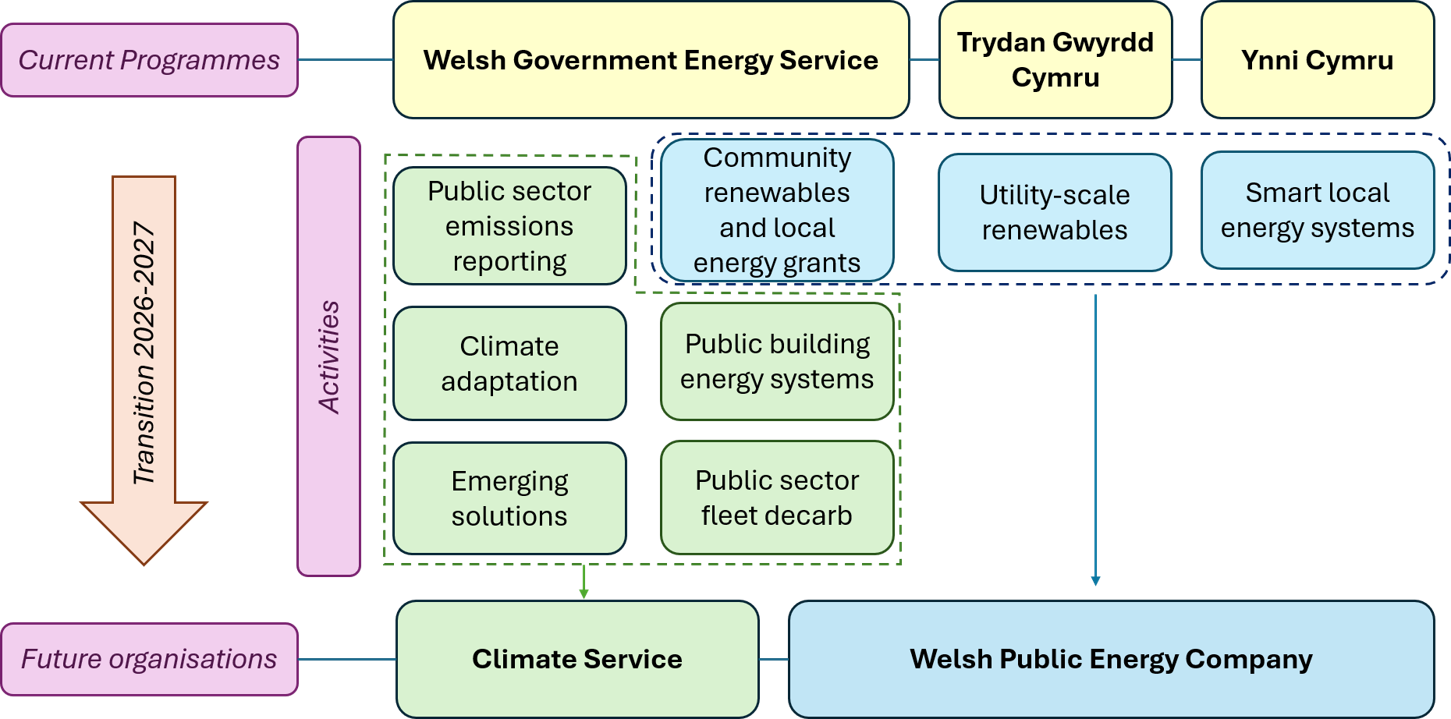
Figure 1: Proposed transition of organisations and activities
The diagram illustrates the existing functions that are proposed to be part of the new Welsh public energy company, and those to be retained within a Welsh Government climate service.
Question 13:
Do you agree that providing technical support to community energy groups for renewable energy projects should be a function of the new company?
Question 14:
Do you agree that capital grants and publicly financed loans should continue to be provided for these projects?
Question 15:
Do you agree it would make sense to retain a successor to the WGES, working closely with the new company (potentially through a ‘single front door’ or similar) but focusing on climate and nature activity under the Rural Resilience and Sustainability portfolio?
Question 16:
What are the key risks and opportunities associated with retaining a separate successor to WGES, compared with integrating all of the WGES functions into the new company?
Local Ownership of Energy Generation (Function 1)
The Welsh Government has published a policy on local ownership of energy generation assets in Wales. This set out the principle that Welsh organisations owning assets in Wales was more likely to mean benefit is retained in Wales. It set out that the preferred approach would be that all projects are locally owned in Wales, though this requires Welsh bodies to take on all the costs and risks associated with development.
The policy document defines those organisations that contribute to local ownership, which includes all organisations wholly owned and based in Wales. Community ownership and public ownership are specific sub-sets of local ownership that are mentioned in this document. The Welsh Government is now looking to drive this principle further to maximise the local use of generation in Wales and keep the most value possible in Wales. We will explore this area further as part of developing the National Energy Strategy. The existing guidance will remain in place until the Welsh Government develops its local ownership policy on proposals that will go beyond the scope of this consultation.
Shared ownership (Function 3)
Most newly developed energy generation is taken forward by commercial developers. One way of achieving local ownership is by communities, local authorities or nearby businesses becoming a shareholder in these commercial projects. There is currently no legal requirement for shared ownership of energy projects in Wales, although some developers have voluntarily agreed an element of shared ownership of some projects. This approach was led in Wales in projects on the public estate, where creating local value was an important factor in leasing sites to commercial developers over the last decades.
Local ownership does require investment from the communities themselves, which may not always be possible. Communities need a certain amount of resource to be a counter-party to large commercial companies, as well as potentially tens of millions of pounds to make the investment. The Welsh Government has provided funding through the WGES and CEW for shared ownership development and is working with the Development Bank for Wales on how communities could access funding for buying into shared projects.
Ynni Teg, the developer arm of CEW, has been very active in working with commercial developers on behalf of communities. However, they are limited in capacity to act for all communities that might want to work with a development near them. The Welsh Government is proposing that the new company could have a role in working on behalf of communities to take up these opportunities. The company could act as the counterparty, either with the community as an active partner, or where there is no suitable community group. The purpose would be to find ways for communities to own and benefit from developments near them, without having to deal with the complexity of commercial developments.
Question 17:
Do you agree that Welsh Government should set a policy expectation that some amount of local ownership (such as 15 to 25%) should be required for large scale (>5MW)energy projects in Wales?
Question 18:
What evidence do you have that there is an appetite among communities, local government and business for taking part in shared ownership of generation?
Question 19:
What capacity and capability is needed to deliver a higher amount of locally owned generation through shared ownership? Which organisations are currently delivering in this area?
Question 20:
Shared ownership is about retaining value in Wales. Do you agree that Trydan Gwyrdd Cymru’s projects, as they are wholly publicly owned already, should not be expected to fulfil a shared ownership requirement?
Question 21:
Do you agree that the new company could have a role in securing local or shared ownership where communities are unable to do this themselves?
Community Benefit Funds (Function 6)
Separately from any form of ownership, privately-owned energy projects usually provide community benefit funds, though this principally applies to fixed offshore, onshore wind and solar projects. Publicly owned projects developed by Trydan Gwyrdd Cymru will also deliver community benefit funds. As the level of development continues, there is opportunity to bring together this funding to deliver broader long-term impacts for the people of Wales, as well as supporting those near the developments.
Not all places are able to host generation, and there is no clear correlation between areas where development is happening and the most disadvantaged areas of Wales. The Welsh Government is considering whether it would be reasonable for a proportion of the value generated by energy generation projects toprovide benefits across Wales as well as to host communities. Any national mechanism would be intended to complement, rather than replace, benefits received by host communities.
Early thinking is that contributions to a Welsh Energy Wealth Fund (name to be established in future work) could allow value from projects to support the most vulnerable in Wales as well as those living in areas where projects are being delivered. This could be achieved by working with developers and communities to set agreed funding priorities. We will work with CEW and wider stakeholders to consider how benefits could be considered strategically to deliver wider impacts as part of a fairer system. The Welsh Government will also work with partners to ensure there is more information on community benefit funds that are already in place.
New functions for the company
In addition to functions currently carried out by existing bodies, the new company could undertake new activities with the long-term goal of accelerating a clean energy system and tackling energy bills for bill payers in Wales.
Tackling grid issues for industry (Function 4)
The company could evolve to play a role tackling grid issues, to support our approach of meeting local needs from local generation.
As described before, there is a long-term plan to establish the 21st century grid across Great Britain, which will be a once in a century change. Though Welsh network companies are working hard on medium-term investment, this will still take years, and constraints on the transmission grid won’t be fully tackled until the late 2030s.
We need to help industry find better solutions to the current challenges, so they can expand and create more productive sites in Wales. The UK Government has an Acceleration Connections team, which is focused on the largest commercial projects in the UK, and acts as a broker to see what interim solutions could be developed. The Welsh Government carries out a similar function, working with network companies to highlight urgent challenges and convening those involved to identify solutions, but at a small scale and on a case-by-case basis.
The company could have a role in accelerating grid connections. This could be as an intermediary to coordinate or tackle barriers, similar to what the Welsh Government currently does. This could expand to play a much more active role, providing support in devising “behind the meter” solutions at various scales for groups of industrial or commercial businesses who might otherwise not work together. This could enable business activity and decarbonisation as having independent generation and could protect more businesses from energy cost spikes driven by high energy prices.
Question 22:
What role should the Welsh public energy company play in helping businesses address grid and energy-cost constraints, and where should responsibilities remain with Welsh Government, network companies and NESO?
Test bed
The WGES, Ynni Cymru and the Welsh Government’s Climate Innovation Programme have been supporting innovation where possible. The community sector has worked together across the UK to bring forward proposals for changes to the regulatory regime that enable more local supply options.
The Ynni Cymru function in the new company will have a role in testing new models to see what other regulatory changes may be needed across Great Britain. Beyond that, the Welsh Government has a strong appetite for Wales to be a home for innovation, testing new approaches and benefiting from the cutting-edge knowledge we are developing. We have an opportunity to de-risk national reform by trialling and proving it in Wales first where it delivers on our objectives and priorities. We want to use our own power at home to create value and increase resilience in a way that can be scaled up across and beyond Wales.
We are very interested in your thoughts on the areas where a Welsh focus could deliver real returns, and the role the new company can play in that area. In particular, we are interested in experimental projects where the Welsh Government can work directly with Ofgem to enable them to happen.
Question 23:
What areas should the Welsh Government, and the new company in due course, focus on to deliver on the ambition for Wales to be a test bed for smart energy systems?
The new company offers an opportunity for a changed approach to delivering energy outcomes in Wales. Against the challenging public funding picture, we are setting out an ambition to deliver more prosperity from energy.
Question 24:
What other activities would you like to see the company undertaking in support of the long-term goal to drive down energy bills, recognising the constraints on public sector funding?
8. Wellbeing of future generations
These proposals are intended to support the wellbeing of future generations goals as follows:
A prosperous Wales
More locally managed projects promoting local supply chains as far as possible and generating income for Wales through the life of the projects will increase prosperity.
A resilient Wales
Accelerating deployment of renewable energy, particularly at a local level, increases Wales’s capacity as a nation to maintain or enhance a biodiverse natural environment that can adapt to change, particularly to climate change. More smart local systems can help protect against power outages.
A healthier Wales
More renewable generation displaces fossil fuels and can lead to cleaner air. More efficient local energy systems with lower costs can lead to warmer homes, fuel poverty reduction and healthier environments.
A more equal Wales
Retaining the benefits of projects for the people of Wales can provide more investment in communities that have been left behind by the loss of old industries.
A Wales of cohesive communities
Owning assets within a community, with local investment and community decision-making can increase community cohesion and confidence.
A Wales of vibrant culture and thriving Welsh language
Creating high-value local jobs in delivering energy projects can give young people better prospects locally in their own communities rather than moving away.
A globally responsible Wales
Accelerating the energy transition and displacing fossil fuels from the energy system will have an impact on global emissions, helping to reduce the unavoidable impacts of climate change.
9. Our vision for the future
Our vision is for one Welsh national energy company, owned by the people of Wales for the people of Wales, with a clear remit to bring down bills over the medium to longer term.
10. Implementing the change
We will work with the organisations with delivery most closely related to the immediate changes proposed, Trydan Gwyrdd Cymru, Ynni Cymru and the providers of WGES, to make sure that we have a shared understanding of the changes proposed and are clear about the impacts and the benefits of any changes. We are most concerned that the people whose jobs could be impacted by these proposals have security and clarity as soon as this can be achieved.
After we have received feedback from the consultation, we will finalise our proposals in line with the findings and publish a consultation response. It is likely that at that point we will need to consult in detail with the people and organisations directly affected. We will then publish a transition plan setting out the details of the changes and the expected timeline.
Consultation questions
Question 1
Do you agree that a single Welsh energy company would add value and lead to better outcomes for people? What do you see as the potential benefits and risks, and how could we maximise/minimise them?
Question 2
Do you agree that it makes sense to use the existing company, Trydan Gwyrdd Cymru, as the basis for the new Welsh public energy company?
Question 3
Considering its proposed functions, are there any particular governance arrangements that you feel would be of benefit to the new Welsh public energy company?
Question 4
Should the new company retain the name Trydan Gwyrdd Cymru, adopt the name Ynni Cymru, or use a different name? Please explain your preference.
Question 5
Do you agree that the new energy company should have a leadership role and the capability to identify and secure new funding opportunities to advance its purpose and mission?
Question 6
What models, mechanisms or requirements should be used to ensure that the company returns the right level of value to Wales? How should the company balance its need for resourcing to deliver with the return of value to people?
Question 7
Do you agree with the principle of first offering suitable areas of public land, which are suitable for development, to the publicly owned company to consider developing for the public good?
Question 8
Under what circumstances should the company sell consented projects rather than retain ownership and operation?
Question 9
Do you believe the company should seek 100% Welsh public sector ownership of its projects, or should it look more broadly for available capital? Do you have any other thoughts on raising capital?
Question 10
Do you agree that Ynni Cymru’s delivery functions should transfer into the company? If not, where do you think they would be more appropriately located?
Question 11
Do you agree that the policy function of Ynni Cymru should transfer into Welsh Government? If not, where do you think it would be more appropriately located?
Question 12
Do you agree that Ynni Cymru moving from capital grants to an investment model is a rational change?
Question 13
Do you agree that providing technical support to community energy groups for renewable energy projects should be a function of the new company?
Question 14
Do you agree that capital grants and publicly financed loans should continue to be provided for these projects?
Question 15
Do you agree it would make sense to retain a successor to the WGES, working closely with the new company (potentially through a ‘single front door’ or similar) but focusing on climate and nature activity under the Rural Resilience and Sustainability portfolio?
Question 16
What are the key risks and opportunities associated with retaining a separate successor to WGES, compared with integrating all of the WGES functions into the new company?
Question 17
Do you agree that Welsh Government should set a policy expectation thatsome amount of local ownership (such as 15 to 25%) should be required for large scale (>5MW)energy projects in Wales?
Question 18
What evidence do you have that there is an appetite among communities, local government and business for taking part in shared ownership of generation?
Question 19
What capacity and capability is needed to deliver a higher amount of locally owned generation through shared ownership? Which organisations are currently delivering in this area?
Question 20
Shared ownership is about retaining value in Wales. Do you agree that Trydan Gwyrdd Cymru’s projects, as they are wholly publicly owned already, should not be expected to fulfil a shared ownership requirement?
Question 21
Do you agree that the new company could have a role in securing local or shared ownership where communities are unable to do this themselves?
Question 22
What role should the Welsh public energy company play in helping businesses address grid and energy-cost constraints, and where should responsibilities remain with Welsh Government, network companies and NESO?
Question 23
What areas should the Welsh Government, and the new company in due course, focus on to deliver on the ambition for Wales to be a test bed for smart energy systems?
Question 24
What other activities would you like to see the company undertaking in support of the long-term goal to drive down energy bills, recognising the constraints on public sector funding?
Question 25
What, in your opinion, would be the likely effects of the proposals on the Welsh language? We are particularly interested in any likely effects on opportunities to use the Welsh language and on not treating the Welsh language less favourably than English.
- Do you think that there are opportunities to promote any positive effects?
- Do you think that there are opportunities to mitigate any adverse effects?
Question 26
In your opinion, could the proposals be formulated or changed so as to:
- have positive effects or more positive effects on using the Welsh language and on not treating the Welsh language less favourably than English; or
- mitigate any negative effects on using the Welsh language and on not treating the Welsh language less favourably than English?
Question 27
We have asked a number of specific questions. If you have any related issues which we have not specifically addressed, please use this space to report them:
How to respond
Submit your comments by 30 November 2026, in any of the following ways:
- complete our online form
- download, complete our response form and email: YmatebionYnni-EnergyResponses@gov.wales
- download, complete our response form and post to:
Consultation on formation of a consolidated Welsh public energy company
Energy Policy
Welsh Government
Cathays Park
Cardiff
CF10 3NQ
UK General Data Protection Regulation (UK GDPR)
The Welsh Government will be data controller for Welsh Government consultations and for any personal data you provide as part of your response to the consultation.
The Welsh Ministers have statutory powers they will rely on to process this personal data which will enable them to make informed decisions about how they exercise their public functions. The lawful basis for processing information in this data collection exercise is our public task; that is, exercising our official authority to undertake the core role and functions of the Welsh Government (Art 6(1)(e) UK GDPR).
Any response you send us will be seen in full by Welsh Government staff dealing with the issues which this consultation is about or planning future consultations. In the case of joint consultations, this may also include other public authorities. Where the Welsh Government undertakes further analysis of consultation responses then this work may be commissioned to be carried out by an accredited third party (e.g. a research organisation or a consultancy company). Any such work will only be undertaken under contract. The Welsh Government’s standard terms and conditions for such contracts set out strict requirements for the processing and safekeeping of personal data.
In order to show that the consultation was carried out properly, the Welsh Government intends to publish a summary of the responses to this document. We may also publish responses in full. We publish responses anonymously and your name and contact details will not be included. If you would like your name or other details published alongside your response, please let us know when you submit your response, and we will include them.
You should also be aware of our responsibilities under Freedom of Information legislation and that the Welsh Government may be under a legal obligation to disclose some information.
If your details are published as part of the consultation response, then these published reports will be retained indefinitely. Any of your data held otherwise by the Welsh Government will be kept for no more than three years.
Your rights
Under the data protection legislation, you have the right:
- to be informed of the personal data held about you and to access it
- to require us to rectify inaccuracies in that data
- to (in certain circumstances) object to or restrict processing
- for (in certain circumstances) your data to be ‘erased’
- to (in certain circumstances) data portability
- to lodge a complaint with the Information Commissioner’s Office (ICO) who is our independent regulator for data protection
For further details about the information the Welsh Government holds and its use, or if you want to exercise your rights under the UK GDPR, please see contact details below:
Data Protection Officer
Welsh Government
Cathays Park
CARDIFF
CF10 3NQ
e-mail: dataprotectionofficer@gov.wales
Information Commissioner’s Office
Wycliffe House
Water Lane
Wilmslow
Cheshire SK9 5AF
Tel: 0303 123 1113
Website: https://ico.org.uk/