Occupations with growing demand: 2025
Ranked analysis of occupations showing those with the strongest recent increases in demand.
In this page
Background
This analysis ranks occupations in Wales using 3-digit Standard Occupational Classification (SOC) 2020 codes according to recent changes in labour market indicators of demand.
The ranking was based on 9 indicators of demand covering changes in:
- earnings
- paid hours
- employment
- recruitment activity
- online job adverts
Occupations were ranked separately on each indicator and then assigned an overall demand rank based on their average rank across all indicators, with each indicator given equal weight. To be included in the ranking, occupations were required to have data available for at least 6 of the 9 indicators of demand.
The indicators of demand were:
- 1-year and 3-year percentage change in median hourly earnings for all employees (2024 to 2025 and 2022 to 2025)
- 1-year and 3-year percentage change in median weekly paid hours worked for all employees (2024 to 2025 and 2022 to 2025)
- 1-year and 3-year percentage change in employment (years ending December 2024 to December 2025 and years ending December 2022 to December 2025)
- 1-year and 3-year percentage change in the average number of new monthly online job adverts (2024 to 2025 and 2022 to 2025)
- Change in the proportion of workers who were new hires between 2019 to 2021 and 2022 to 2024
Once occupations had an assigned demand rank, they were then grouped into 4 “demand bands” based on cumulative workforce employment:
- ‘Top demand’: the highest-ranked occupations, those within the top 20% of cumulative employment
- ‘Higher demand’: the next highest-ranked occupations, those within the subsequent 30% of cumulative employment (20.1% to 50%)
- ‘Lower demand’: all remaining ranked occupations, those within the remaining 50% of cumulative employment
- ‘Unranked’: Occupations that could not be ranked as insufficient data was available
Additional information on skills and qualifications was also included to provide context but was not used in the demand ranking. These indicators comprised:
- ONS occupational skill level (levels 1 to 4)
- the proportion of workers qualified to Regulated Qualifications Framework (RQF) level 3 or above
The analysis drew on data from the Annual Population Survey, Annual Survey of Hours and Earnings, and Textkernel online job adverts data. All results relate to Wales and use the latest available data at the time of calculation up to December 2025.
The skills by occupation analysis uses data from the UK Standard Skills Classification (UKSSC) framework, which provides information on the importance of skills required for occupations classified under the SOC system. The UKSSC framework includes individual skills, skill groups and broader skill areas. Results presented in this release are based on skill areas.
UKSSC skill importance scores are available at the 4 and 6-digit SOC level. To produce estimates at the 3-digit SOC level, 6-digit occupations were weighted according to their share of employment within the parent 3-digit occupation using Census 2021 data. Where multiple skills contributed to a skill group or skill area within an occupation, importance scores were averaged before weighting and aggregation.
The resulting employment-weighted skill area scores were summed and used to identify the most important and common skill areas across occupations identified as being in top or higher demand in Wales. Scores should be interpreted as indicative measures of relative skill importance rather than precise estimates.
Main findings
Across Wales in 2025:
- 215,100 people (14.7% of the workforce) were working in 13 ‘top demand’ occupations (those which showed the strongest recent growth in demand)
- The 13 ‘top demand’ occupations comprised:
- Sports and fitness occupations (SOC 343)
- Legal associate professionals (352)
- Finance associate professionals (353)
- Sales, marketing and related associate professionals (355)
- Construction and building trades (531)
- Food preparation and hospitality trades (543)
- Teaching and childcare support occupations (611)
- Leisure and travel services (621)
- Hairdressers and related services (622)
- Metal working machine operatives (812)
- Assemblers and routine operatives (814)
- Road transport drivers (821)
- Other drivers and transport operatives (823)
- a further 502,500 people were working in 23 ‘higher demand’ occupations (those showing above average growth in demand)
- several of the ‘top demand’ occupations had substantial employment bases, although many of the largest occupations in Wales were classified as ‘higher demand’; this included:
- Caring personal services (80,600 in employment)
- Teaching professionals (57,300)
- Sales assistants and retail cashiers (51,900)
- ‘top demand’ occupations were concentrated in intermediate-skilled occupations, split between ONS skill level 2 (47.7%) and level 3 (52.3%)
- most ‘top demand’ occupations had relatively low to moderate levels of pay, with median hourly earnings below £20
- the skill area most frequently required for top and higher demand occupations was managing organisational and operational records (present in 22 of 36 occupations); the next most frequently required skills were:
- leading organisational operations and improvements (17 occupations)
- communicating complex, technical or sensitive information (17 occupations)
- the public administration, education and health industry employed the largest share of workers in both ‘top demand’ occupations (23.0%, 49,200 in employment) and ‘higher demand’ occupations (47.7%, 239,000), driven primarily by employment in education
Occupations in demand
Across the Welsh labour market, there were 13 occupations that were categorised as ‘top demand’ occupations, which showed the strongest increase in recent demand. These occupations accounted for 14.7% of the workforce in 2025, equating to 215,100 in employment.
Figure 1: employment level and proportion by demand band, year ending December 2025
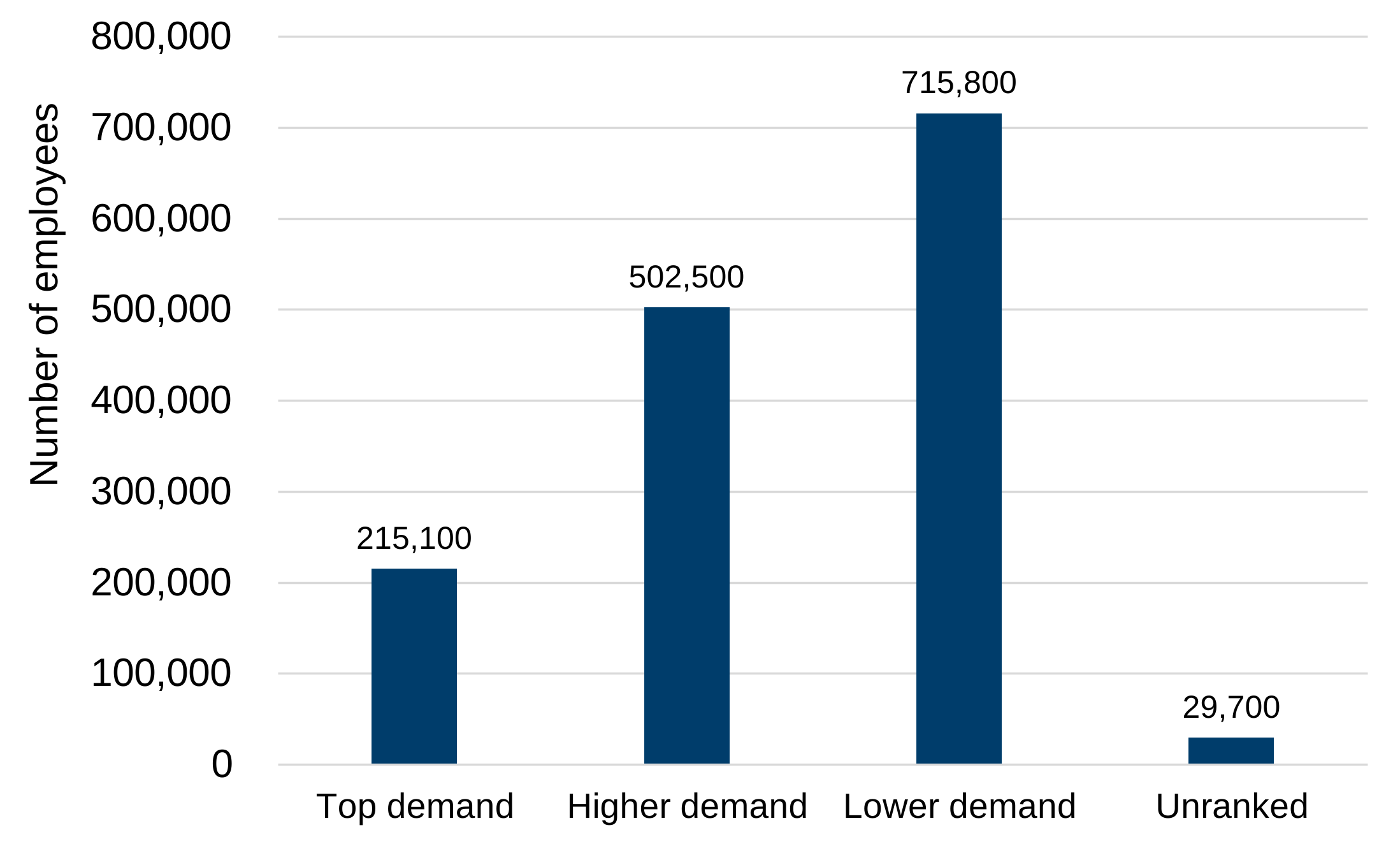
Description of figure 1: a column chart showing that ‘top demand’ occupations accounted for 14.7% of employment and higher demand occupations for 34.3%, covering a combined 49.0% of those in employment. A similar proportion (48.9%) worked in lower demand occupations, while 2.0% were in unranked occupations.
Source: Welsh Government analysis of the Annual Population Survey
Organised by their SOC major group, the 13 ‘top demand’ occupations fell into 4 groups: Associate professional occupations, Skilled trades occupations, Caring, leisure and other service occupations, and Process, plant and machine operatives. The 13 ‘top demand’ occupations comprised:
- Associate professional occupations: Sports and fitness occupations (SOC 343), Legal associate professionals (352), Finance associate professionals (353), and Sales, marketing and related associate professionals (355)
- Skilled trades occupations: Construction and building trades (532) and Food preparation and hospitality trades (543)
- Caring, leisure and other service occupations: Teaching and childcare support occupations (613), Leisure and travel services (621), and Hairdressers and related services (622)
- Process, plant and machine operatives: Metal working machine operatives (812), Assemblers and routine operatives (814), Road transport drivers (821), and Other drivers and transport operatives (823)
There were a further 23 occupations categorised as ‘higher demand’. These occupations accounted for 34.3% of the workforce in 2025, equating to 502,500 employees.
Organised by their SOC major group, the 13 ‘top demand’ occupations fell into 4 groups: Associate professional occupations, Skilled trades occupations, Caring, leisure and other service occupations, and Process, plant and machine operatives. The 13 ‘top demand’ occupations comprised:
- Associate professional occupations:
- Sports and fitness occupations (SOC 343)
- Legal associate professionals (352)
- Finance associate professionals (353)
- Sales, marketing and related associate professionals (355)
- Skilled trades occupations:
- Construction and building trades (531)
- Food preparation and hospitality trades (543)
- Caring, leisure and other service occupations:
- Teaching and childcare support occupations (611)
- Leisure and travel services (621)
- Hairdressers and related services (622)
- Process, plant and machine operatives:
- Metal working machine operatives (812)
- Assemblers and routine operatives (814)
- Road transport drivers (821)
- Other drivers and transport operatives (823)
There were a further 23 occupations categorised as ‘higher demand’. These occupations accounted for 34.3% of the workforce in 2025, equating to 502,500 in employment.
Organised by their SOC major group, these ‘higher demand’ occupations were more widely spread than the ‘top demand’ group. They had a particularly strong presence in managerial, professional and associate professional occupations. The 23 ‘higher demand’ occupations comprised:
- Managers, directors and senior officials:
- Production managers and directors (SOC 112)
- Functional managers and directors (113)
- Health and social services managers and directors (117)
- Managers and proprietors in hospitality and leisure services (122)
- Managers and proprietors in health and care services (123)
- Managers and proprietors in other services (125)
- Professional occupations:
- Natural and social science professionals (211)
- Research and development and other research professionals (216)
- Medical practitioners (221)
- Teaching professionals (231)
- Associate professional occupations:
- Welfare and housing associate professionals (322)
- Business associate professionals (354)
- HR, training and other vocational guidance professionals (357)
- Regulatory associate professionals (358)
- Administrative and secretarial occupations: Administrative occupations: records (413)
- Skilled trades occupations:
- Building finishing trades (532)
- Construction and building trades supervisors (533)
- Caring, leisure and other service occupations: Caring personal services (613)
- Sales and customer service occupations:
- Sales assistants and retail cashiers (711)
- Sales related occupations (712)
- Process, plant and machine operatives:
- Process operatives (811)
- Mobile machine drivers and operatives (822)
- Elementary occupations: Elementary cleaning occupations (922)
Figure 2: employment levels for the largest top and higher demand occupations, year ending December 2025
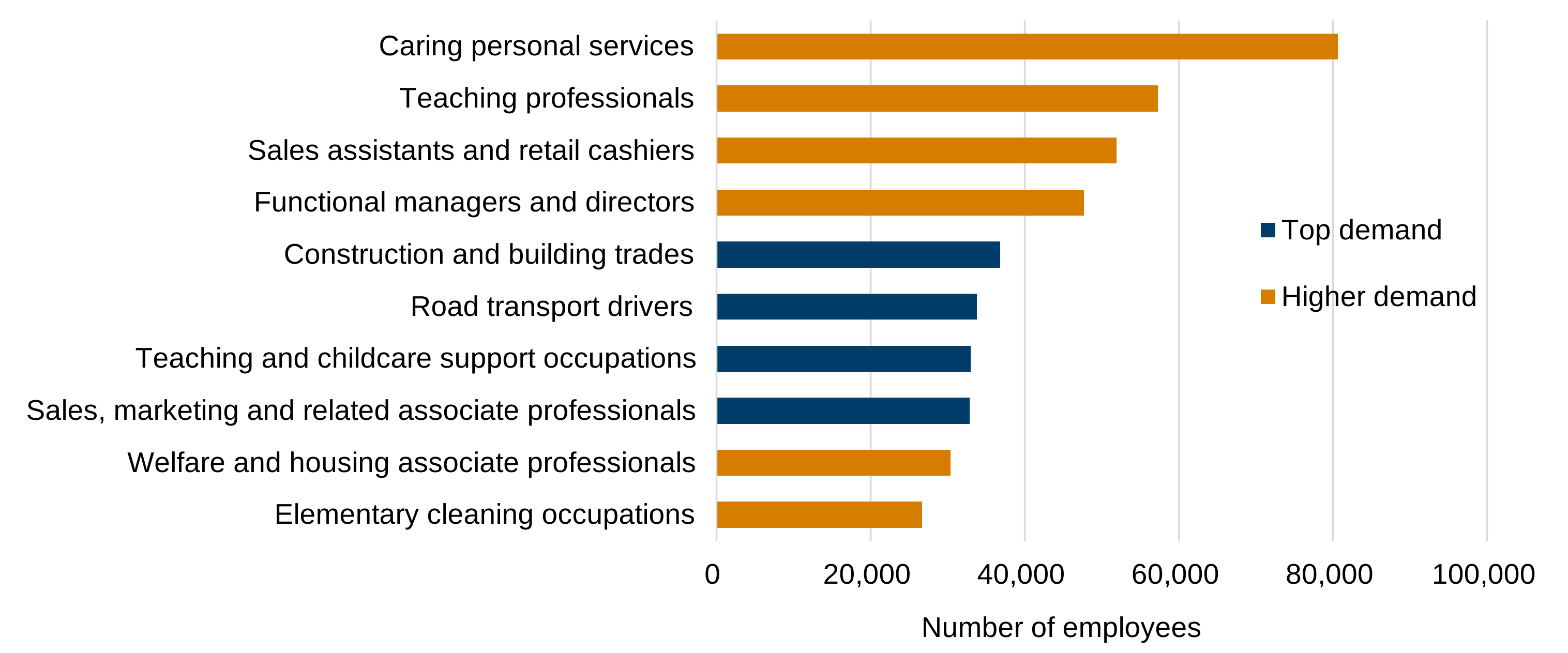
Description of figure 2: a bar chart showing that higher demand occupations generally had larger employment bases than top demand occupations, particularly Caring personal services, Teaching professionals, Sales assistants and retail cashiers, and Functional managers and directors. Several top demand occupations also employed substantial numbers of workers, with Construction and building trades and Road transport drivers having the highest employment levels within the band.
Source: Welsh Government analysis of the Annual Population Survey
Several of the ‘top demand’ occupations had substantial employment bases, meaning that demand pressures could affect relatively large numbers of workers. Within the ‘top demand’ group, employment was highest in:
- Construction and building trades at 36,800 employed (2.5% of employed workforce in Wales)
- Road transport drivers at 33,800 (2.3% of employed workforce)
- Teaching and childcare support occupations at 33,000 (2.2% of employed workforce)
- Sales, marketing and related associate professionals at 32,900 (2.2% of employed workforce)
- Food preparation and hospitality trades at 20,400 (1.4% of employed workforce)
However, these ‘top demand’ occupations were not necessarily the largest occupations in the Welsh labour market overall, which tended to be classified as ‘higher demand’ occupations. This included:
- Caring personal services at 80,600 employed (5.5% of employed workforce in Wales)
- Teaching professionals at 57,300 (3.9% of employed workforce)
- Sales assistants and retail cashiers at 51,900 (3.6% of employed workforce)
- Functional managers and directors at 47,700 (3.2% of employed workforce)
This suggested that while the strongest increases in demand were not necessarily occurring in Wales’ largest occupations, many large occupations were nevertheless experiencing increased demand.
Overall recruitment demand, measured by the average number of new monthly online job adverts, broadly reflected occupation size. The 2 largest occupations showed the highest volumes of job adverts in 2025: Caring personal services (1,576 average new monthly online job adverts) and Other elementary services occupations (969 adverts). However, several ‘top demand’ occupations generated relatively high numbers of adverts for their workforce size. The ‘top demand’ occupations with the highest volumes of job adverts were:
- Road transport drivers (863)
- Sales, marketing and related associate professionals (808)
- Teaching and childcare support occupations (771)
This indicated that while recruitment demand was generally linked to employment size, some ‘top demand’ occupations were experiencing particularly strong demand relative to their workforce size. It should be noted that while online job adverts provide an indication of recruitment demand, differences in recruitment methods across occupations may affect the volume of adverts observed.
The ‘top demand’ occupations were not generally high-paying occupations, as most had median hourly earnings below £20 in 2025. The highest-paid occupations within ‘top demand’ occupations were:
- Other drivers and transport operatives (£28.11 per hour)
- Sales, marketing and related associate professionals (£19.82 per hour)
- Finance associate professionals (£19.38 per hour)
- Construction and building trades (£17.13 per hour)
However, many ‘top demand’ occupations had relatively low median hourly earnings, including:
- Hairdressers and related services (£12.63 per hour)
- Food preparation and hospitality trades (£13.75 per hour)
- Road transport drivers (£14.58 per hour)
This suggested that ‘top demand’ occupations were concentrated in roles with low to moderate levels of pay.
In contrast, the ‘higher demand’ occupations spanned a much wider range of pay levels, from lower-paid roles to some of the highest-paid occupations. These included:
- Medical practitioners (£44.09 per hour)
- Health and social services managers and directors (£31.32 per hour)
- Teaching professionals (£30.13 per hour)
Skill level and qualification requirements for in-demand occupations
The occupation bands were examined by their required skill level. The ONS assigns a skill level from 1 to 4 to each 2-digit SOC: The ONS skill levels are:
- skill level 1, which covers occupations where competence is associated with satisfactory grades from compulsory education
- skill level 2, which covers occupations which require the knowledge provided via a good general education, but which typically have a longer period of work-related training or work experience
- skill level 3, which applies to occupations that normally require a body of knowledge associated with a period of post-compulsory education but not normally to degree level
- skill level 4, which applies to occupations that normally require a degree or equivalent period of relevant work experience
Further information on the classification of skill levels is available in ONS’ article on SOC 2020 structure and descriptions.
Figure 3: proportion of employment in top and higher demand occupations by skill level in Wales, year ending December 2025
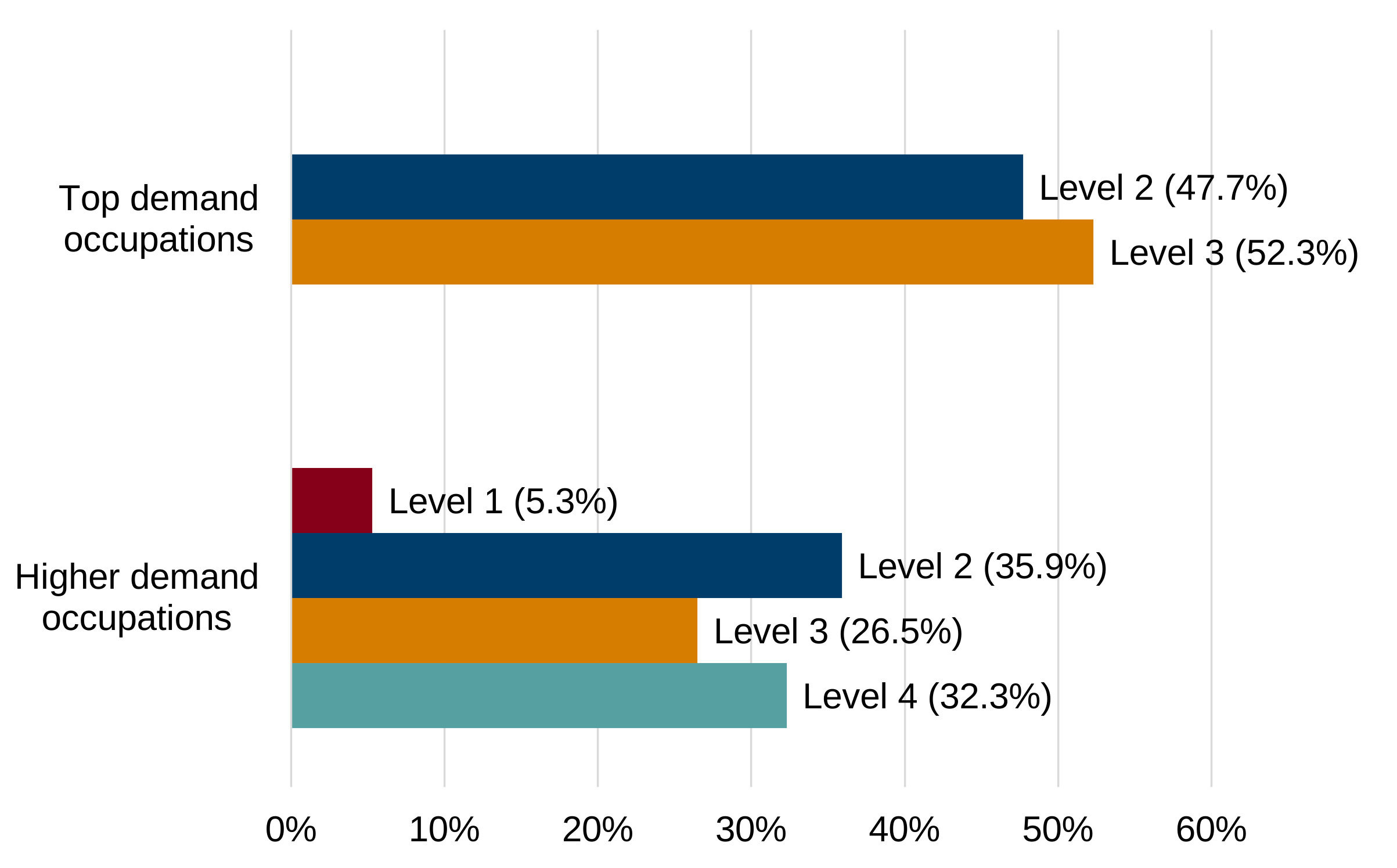
Description of figure 3: a bar chart showing that ‘top demand’ occupations were concentrated at skill levels 2 and 3, and ‘higher demand’ occupations were primarily spread across levels 2, 3, and 4 with a small proportion also at level 1.
Source: Welsh Government analysis of the Annual Population Survey
All ‘top demand’ occupations required intermediate skill levels normally below degree level, falling within ONS skill level 2 (47.7% of ‘top demand’ employment) and 3 (52.3%) in 2025. No ‘top demand’ occupations were classified at skill level 1 (occupations requiring satisfactory grades from compulsory education) or skill level 4 (occupations requiring a degree or equivalent level of experience). This suggested that the occupations experiencing the strongest recent increases in demand were concentrated in roles requiring intermediate levels of skill and training.
In contrast, ‘higher demand’ occupations showed broader skills requirements, spanning all 4 ONS skill levels. While a large proportion of those employed in this demand group were classified at skill levels 2 (35.9%) and 3 (26.5%) in 2025, almost one-third (32.3%) were classified at skill level 4. These included:
- Teaching professionals
- Medical practitioners
- Natural and social science professionals
- Research and development and other research professionals
A small proportion of ‘higher demand’ employment was in occupations at skill level 1 (5.3%). This indicated that demand pressures outside of the ‘top demand’ occupations were spread more evenly across intermediate- and higher-skilled occupations.
This pattern was also reflected in qualification levels. Around 64.3% of workers in ‘top demand’ occupations were qualified to RQF level 3 or above (equivalent to A-level or higher qualifications) in 2025, compared with 73.3% in ‘higher demand’ occupations. Several ‘higher demand’ occupations also had particularly high proportions of workers qualified to RQF level 3 or above, including:
- Teaching professionals (97.0%)
- Medical practitioners (96.4%)
- Research and development and other research professionals (93.1%)
- Natural and social science professionals (93.1%)
This suggested that, while the occupations experiencing the strongest recent increases in demand generally required intermediate levels of skill and training, ‘higher demand’ occupations were more likely to be associated with higher qualification levels.
Skills required for in-demand occupations
The UK Standard Skills Classification framework provides data on skill requirements and importance by SOC. This data was used to calculate the most frequent skill areas required across top and higher demand occupations in Wales, and their associated importance scores. More information on the methodology is available in the background section.
Figure 4: frequency of top 10 skill areas across top and higher demand occupations, year ending December 2025
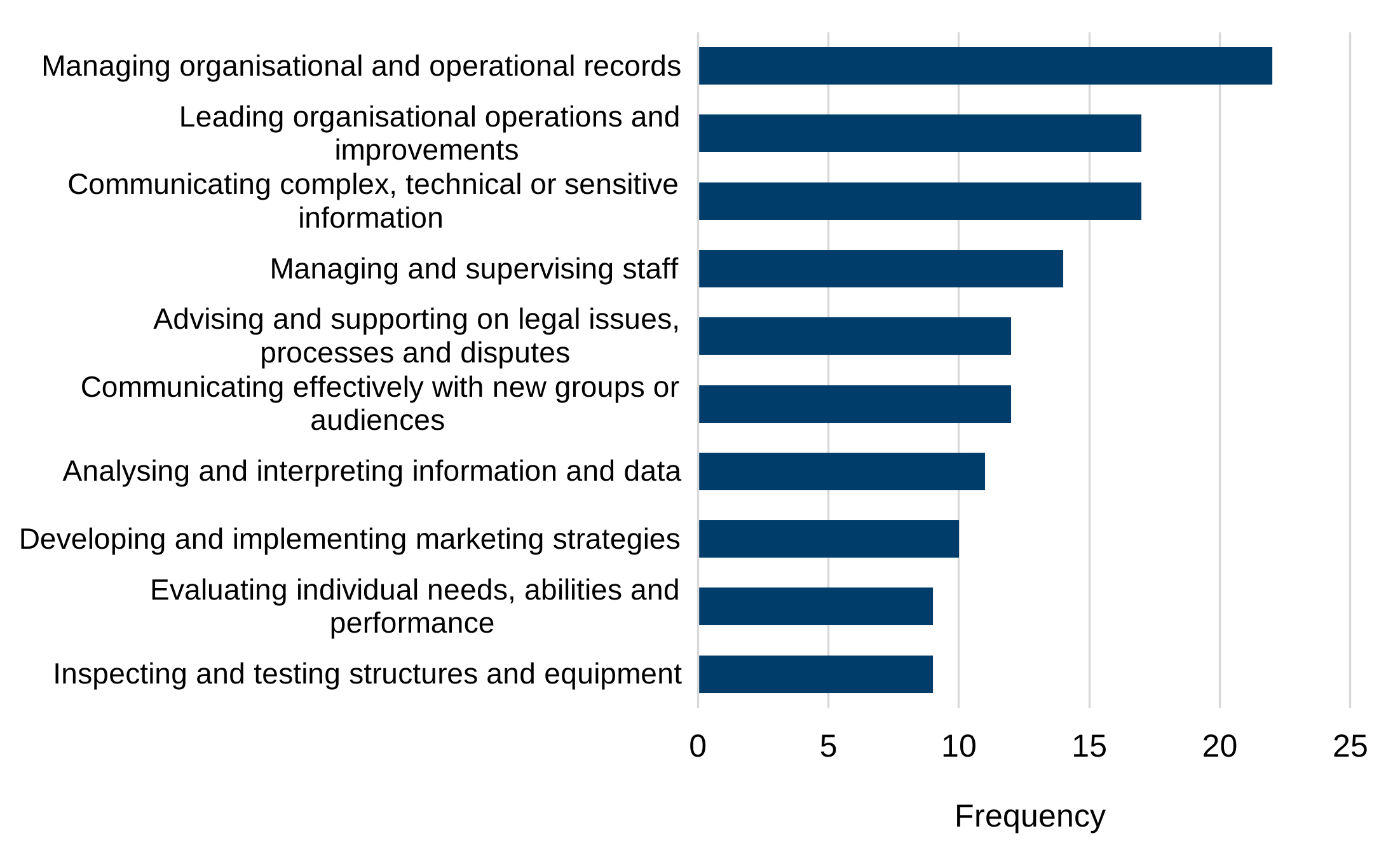
Description of figure 4: a bar chart showing that managing organisational and operational records was the most commonly required top 10 skill area, occurring in 22 of the 36 top and higher demand occupations.
Source: Welsh Government analysis of UK Standard Skills Classification framework skills by SOC data.
The skills areas most frequently appearing in the top 10 for top and higher demand occupations were:
- managing organisational and operational records (present in 22 of 36 occupations)
- leading organisational operations and improvements (17 occupations)
- communicating complex, technical or sensitive information (17 occupations)
This pattern was broadly similar for ‘top demand’ occupations, with 6 of the 10 most frequently occurring skill areas shared across both groups. Managing organisational and operational records remained the most frequently occurring skill area (present in 10 of 13 ‘top demand’ occupations), followed by developing and implementing marketing strategies and communicating complex, technical or sensitive information (both present in 6 occupations).
In the ‘top demand’ band, the most frequently occurring skill areas also showed links to particular occupational groups. Managing organisational and operational records and conducting commercial and legal research were most commonly associated with ‘Associate professional occupations’. Communicating complex, technical or sensitive information was particularly associated with ‘Caring, leisure and other service occupations’, although it also featured in some ‘Associate professional occupations’. Evaluating and verifying information was concentrated in ‘Process, plant and machine operative occupations’ and ‘Construction and building trades' in ‘Skilled trades occupations’.
Information on the specific skills associated with each ‘top demand’ occupation is available in the accompanying data tables.
Demand for occupations across industries
The public administration, education and health industry employed the largest number of workers in ‘top demand’ (49,200) and ‘higher demand’ (239,000) occupations, accounting for 23.0% and 47.7% of employment in ‘top demand’ and ‘higher demand’ occupations respectively. This reflected the large concentration of top and higher demand occupations in the public administration, education and health industry.
Figure 5: employment levels by industry for ‘top demand’ and ‘higher demand’ occupations, year ending December 2025
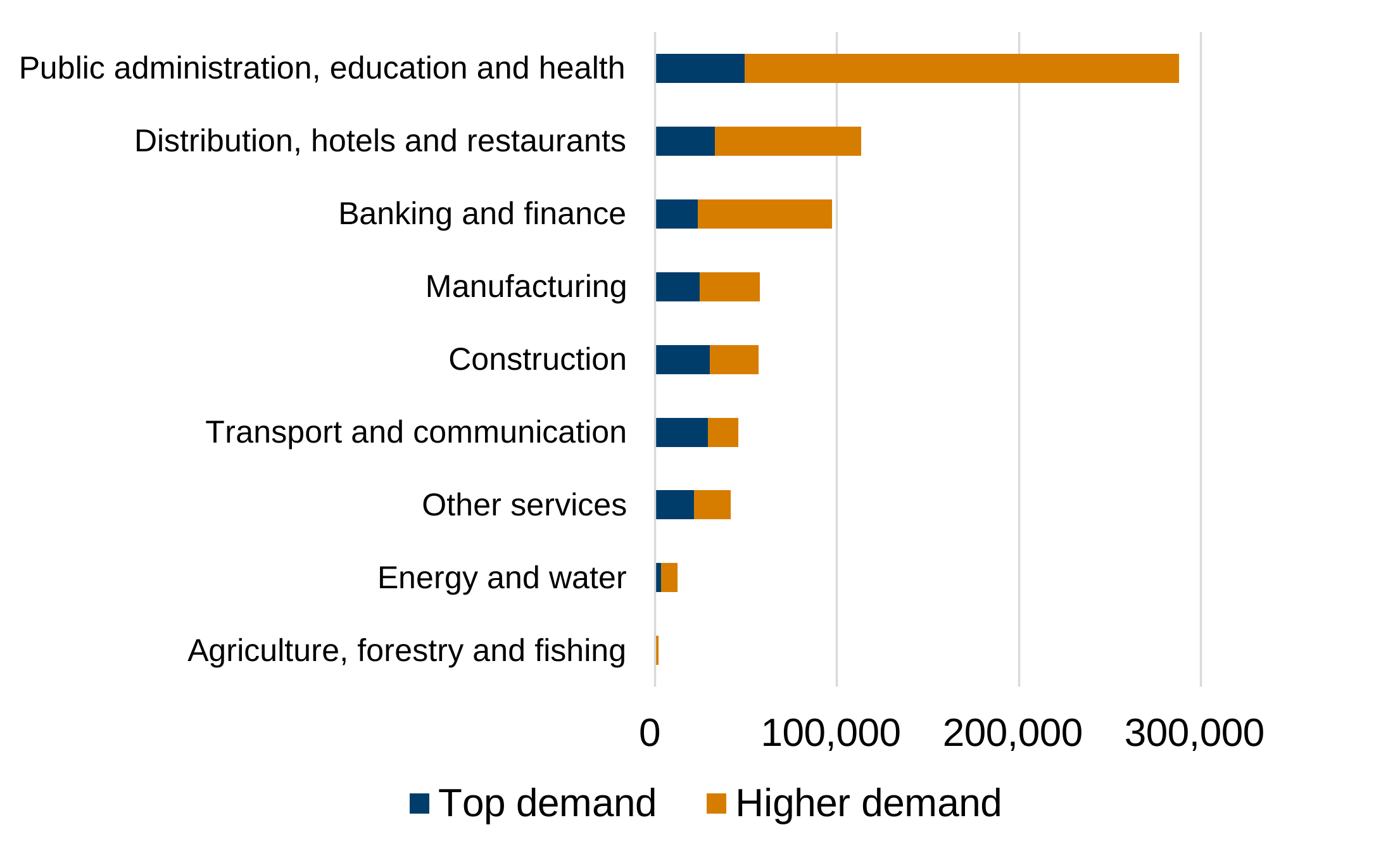
Description of figure 5: a bar chart showing that the public administration, education and health industry accounted for the largest share of employment in both ‘top demand’ and ‘higher demand’ occupations in Wales.
Source: Welsh Government analysis of the Annual Population Survey
Most of those employed in public administration, education and health in the top and higher demand groups were in education at 104,900 (36.4%), followed by:
- Public administration and defence; compulsory social security at 50,200 (17.4%)
- Human health activities at 49,200 (17.1%)
- Residential care activities at 46,100 (16.0%)
While education accounted for the largest share of employment in this group; given the large employment size the sectors with smaller proportions still accounted for a large number of individuals.
Outside of public administration, education and health, employment in ‘top demand’ occupations was relatively evenly distributed across the industries:
- distribution, hotels and restaurants (32,800 in employment, 15.4%)
- construction (30,000, 14.0%)
- transport and communication (29,000, 13.6%)
- manufacturing (24,400, 11.4%)
- banking and finance (23,400, 10.9%)
These all accounted for a substantial share of employment within the ‘top demand’ group. This suggested that the occupations experiencing the strongest recent increases in demand were spread across a broad range of industries rather than concentrated within a single sector.
In contrast, ‘higher demand’ occupations were more concentrated within public administration, education and health, which accounted for almost half (239,000, 47.7%) of employment in the group. Smaller, although still substantial, shares were found in:
- distribution, hotels and restaurants (80,300, 16.0%)
- banking and finance (74,000, 14.8%)
This indicated that increased demand outside of the ‘top demand’ occupations was concentrated more heavily in public services and professional occupations.
Contact details
Report author: Employability and Skills, Knowledge and Analytical Services
For further information please contact:
Employability and Skills
Knowledge and Analytical Services
Welsh Government
Cathays Park
Cardiff
CF10 3NQ
E-mail: kasemployabilityandskillsresearch@gov.wales
Social research number: 80/2026
Digital ISBN: 978-1-80853-240-5