Participation of young people in education and the labour market: 2023 and 2024 (provisional)
Data on the number and proportion of 16 to 24 year olds in education, training and employment for 2023 and 2024 (provisional).
In this page
Introduction
This release provides summary information on the learning activities and labour market status of young people aged 16 to 24 in Wales, based on a number of different data sources. Further detail on these sources and the derivation of these statistics is provided in our methodology note.
Final estimates for 2023 are provided along with provisional estimates for 2024 which use the best data currently available for each aspect of participation; this includes some final data, some provisional data and some modelling.
This release provides the definitive source for estimates of the proportion of young people who are not in education, employment or training (NEET) in Wales. It also contains data for one of the 50 national well-being indicators. These estimates provide more reliable and robust NEET estimates due to the inclusion of multiple data sources. Further information on the differences between the NEET sources is available in our guide to understanding the different sources of statistics on young people who are NEET in Wales.
There is additional uncertainty around estimates for years impacted by the COVID-19 pandemic (2020 to 2022), owing to issues with some of the data sources used to derive them. An explanation is provided in the quality and methodology information section.
Main points
16 to 24 year olds
The proportion of 16 to 24 year olds in education or training was 49.0% in 2024, a decrease from 51.1% in 2023.
The proportion in employment was 54.7% in 2024, a decrease from 59.0% in 2023.
Final estimates for 2023 indicate that the proportion who were NEET decreased from 13.8% in 2022 to 13.2% in 2023. Provisional estimates suggest that this proportion increased to 13.7% in 2024.
16 to 18 year olds
Participation of 16 to 18 year olds in education or training was 73.7% in 2024, a decrease from 75.7% in 2023.
The proportion in employment was 34.9% in 2024, a decrease from 40.3% in 2023.
Final estimates for 2023 indicate that the proportion who were NEET decreased from 12.1% in 2022 to 9.2% in 2023. Provisional estimates suggest that this proportion increased to 11.7% in 2024.
19 to 24 year olds
The proportion of 19 to 24 year olds in education or training was 37.0% in 2024, a decrease from 39.1% in 2023.
The proportion in employment was 64.3% in 2024, a decrease from 68.0% in 2023.
Final estimates for 2023 indicate that the proportion who were NEET increased from 14.6% in 2022 to 15.1% in 2023. Provisional estimates suggest that this proportion then decreased to 14.7% in 2024.
Participation of 16 to 18 year olds in education and the labour market
There was a gradual decrease in the proportion of 16 to 18 year olds in education or training between 2014 and 2019. The proportion has fluctuated since, and has decreased over the latest year from 75.7% in 2023 to 73.7% in 2024.
For the proportion of 16 to 18 year olds in employment, there was a gradual increase between 2014 and 2018, however this fell sharply in 2020 (the first year of the COVID-19 pandemic) to 32.2%. The proportion saw an increase to 42.1% in 2022, however has seen decreases each year since then to 34.9% in 2024.
Figure 1: proportion of 16 to 18 year olds in Wales classed as NEET, in employment or in education or training, 2014 to 2024 [Note 1]
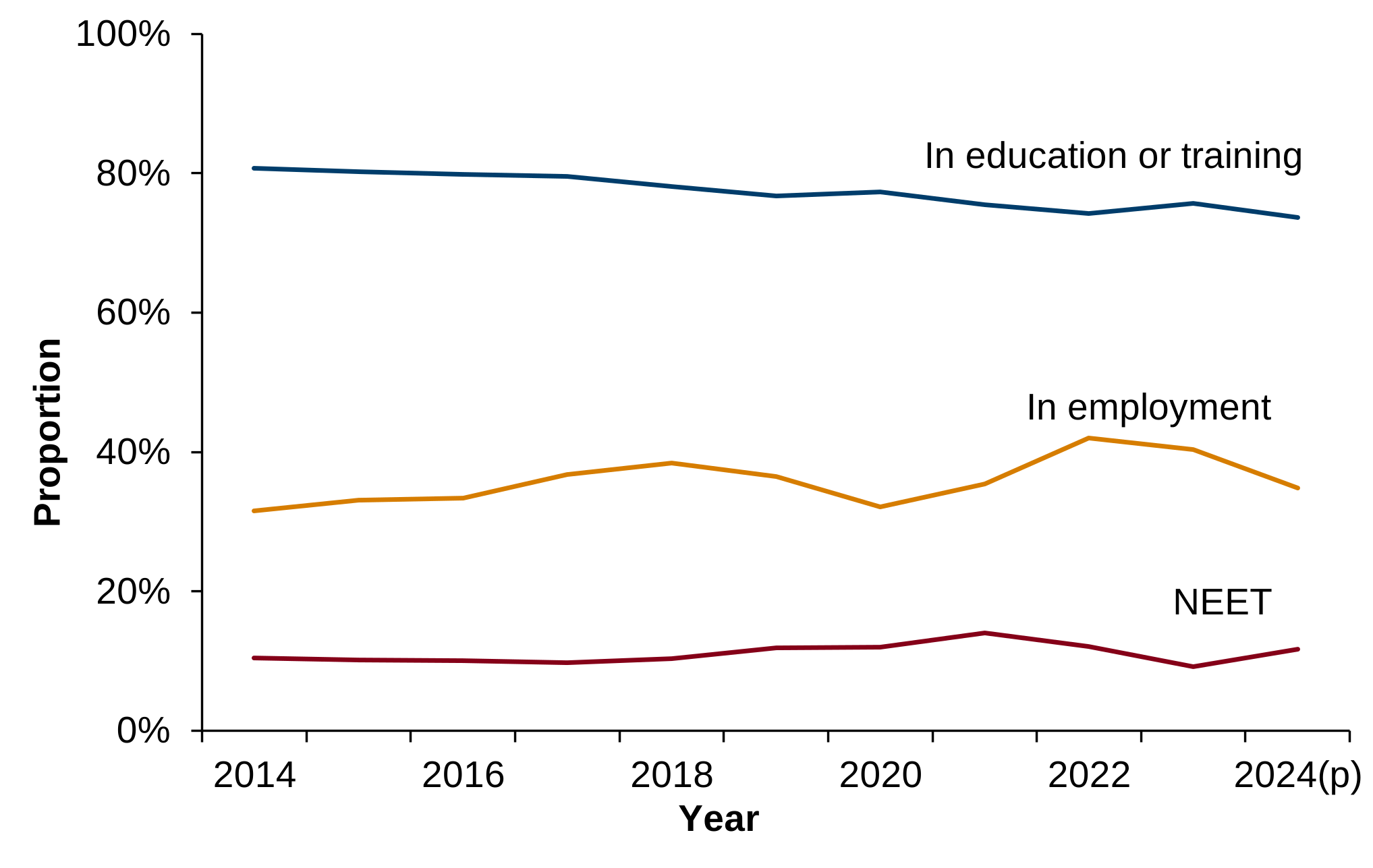
Description of figure 1: a line chart showing the proportion of 16 to 18 year olds in education or training gradually decreased between 2014 and 2024, whereas the proportion in employment has increased overall across the same time period. The proportion who were NEET remained relatively stable until an increase in 2021, although the proportion has since seen an overall decrease to pre-pandemic levels.
Source: Welsh Government, Open University and HEFCW
[Note 1] An individual may be in both education/training and employment.
(p): Figures for 2024 are provisional.
Participation of adults and young people (StatsWales)
Employment
34.9% of 16 to 18 year olds were in full or part-time employment in 2024, down from 40.3% in 2023.
In 2024, 14.6% of 16 to 18 year olds were in full or part-time employment and not in education or training, a decrease from 15.1% in 2023.
Approximately 20.2% of 16 to 18 year olds were estimated to be engaged in both employment and some type of education or training in 2024, a decrease compared to 25.2% in 2023. Most of these were students in full-time education who were also working part-time.
Education and training
In total, 73.7% of 16 to 18 year olds were engaged in some kind of education or training (full or part-time) in 2024, a decrease from 75.7% in 2023.
Participation in full-time education was 59.0% in 2024, down from 62.1% in 2023.
A higher proportion of females aged 16 to 18 were in full-time education in 2024 – 61.2% compared with 56.8% of males.
By single year of age, 68.8% of all 16 year olds were undertaking full-time education in 2024 compared with 59.0% of 17 year olds and 48.7% of 18 year olds.
Participation in training was higher for males than for females. In total, 8,000 16 to 18 year olds were engaged in training (both work-based learning courses and job-related training) in 2024. This is comprised of approximately 5,200 (9.0%) males and 2,800 (5.2%) females.
Not in education, employment or training (NEET)
An estimated 13,100 16 to 18 year olds (11.7%) were NEET in 2024, compared to 10,100 (9.2%) in 2023. This increase was driven by a rise in the proportion of economically inactive (excluding students) 16 to 18 year olds.
The number of 16 to 18 year olds who were NEET in 2024 comprised of 3,200 (2.8%) unemployed young people and 9,900 (8.9%) who were economically inactive (excluding students). This compares to 5,200 (4.7%) unemployed young people and 4,900 (4.5%) who were economically inactive (excluding students) in 2023.
Participation of 19 to 24 year olds in education and the labour market
The proportion of 19 to 24 year olds in education or training has remained broadly unchanged since 2014 fluctuating around 37% to 40%, with the latest data estimating the proportion at 37.0% in 2024.
In contrast, the proportion in employment gradually increased from 2014 to 2017 and has fluctuated since then. The highest proportion in employment was seen in 2023 (68.0%) but has decreased to 64.3% in 2024.
Figure 2: proportion of 19 to 24 year olds in Wales classed as NEET, in employment or in education or training, 2014 to 2024 [Note 1]
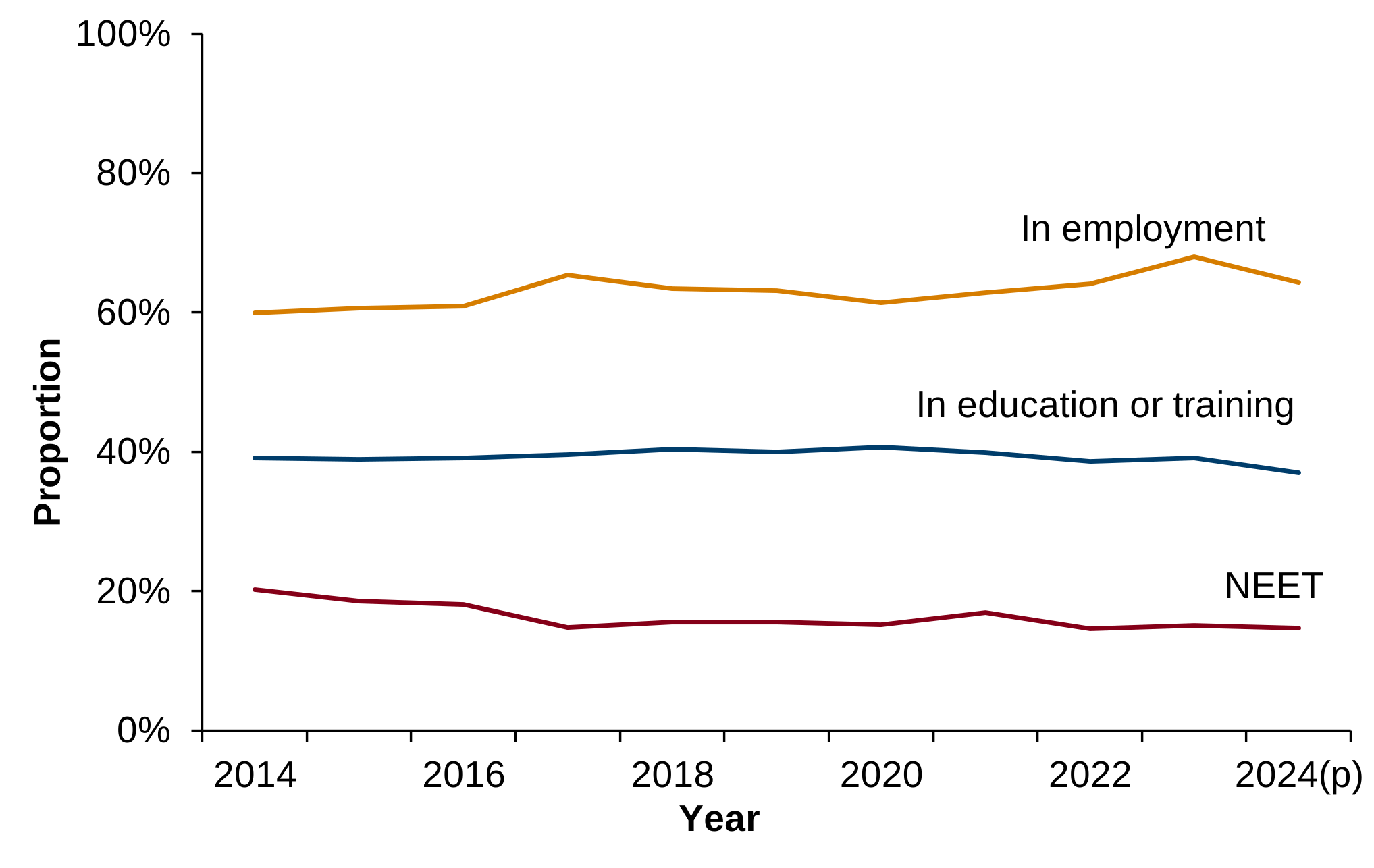
Description of figure 2: a line chart showing the proportion of 19 to 24 year olds in education or training has remained relatively stable since 2014. The proportion in employment has fluctuated, however has increased overall since 2014. The proportion who were NEET has decreased overall since 2014.
Source: Welsh Government, Open University and HEFCW
[Note 1] An individual may be in both education/training and employment.
(p): Figures for 2024 are provisional.
Participation of adults and young people (StatsWales)
Employment
64.3% of 19 to 24 year olds were estimated to be in full or part-time employment in 2024, down from 68.0% in 2023.
48.3% of 19 to 24 year olds were in full or part-time employment but not in education or training in 2024.
Approximately 16.0% of 19 to 24 year olds were estimated to be engaged in both employment and some type of education or training in 2024, a decrease compared to 22.2% in 2023. Most of these were either students in full-time education who were also working part-time or individuals in full-time employment who were also training.
Education and training
In total, 37.0% of 19 to 24 year olds were engaged in some kind of education or training (full or part-time) in 2024.
26.7% of 19 to 24 year olds were in full-time education in 2024, down from 28.9% in 2023.
A higher proportion of females aged 19 to 24 were in full-time education (29.3%) compared to males (24.4%) in 2024.
There were 14,400 (6.2%) 19 to 24 year olds engaged in training (both work-based learning courses and job-related training) in 2024, with participation rates being equal for both males and females at 6.2%.
Participation in full-time education decreased with age. Of all 19 year olds, 45.5% were in full-time education in 2024 compared with 18.8% of 22 year olds and 10.6% of 24 year olds.
Not in education, employment or training (NEET)
An estimated 34,000 of 19 to 24 year olds (14.7%) were NEET in 2024, a decrease compared to 15.1% in 2023.
In 2024, 16.7% of females aged 19 to 24 were NEET, an increase of 2.9 percentage points compared to 2023. This was driven by an increase in the proportion of those unemployed.
For males aged 19 to 24, 12.9% were NEET in 2024, a decrease of 3.4 percentage points compared to 2023. This was driven by a decrease in the proportion of those economically inactive.
The 34,000 19 to 24 year olds estimated to be NEET in 2024 comprised of 11,100 (4.8%) unemployed young people and 22,900 (9.9%) who were economically inactive (excluding students).Compared to 2023, the proportion of those who were unemployed increased (from 3.6%) and the proportion who were economically inactive (excluding students) decreased (from 11.4%).
Figure 3 compares participation in full-time education by level of study in 2024 with the position in 2019. Whilst participation in full-time education decreases with age, the participation rates of those aged 23 and 24 were slightly higher in 2024 than 5 years earlier, whereas the participation rates of those aged 16 to 22 were lower. For those aged 16, the proportion in full time education decreased by 4.4 percentage points between 2019 and 2024. This proportion decreased by 5.4 percentage points for those aged 17 and by 3.6 percentage points for those aged 18, over the same time period.
Figure 3: participation in full-time education by level of study and age, 2019 and 2024
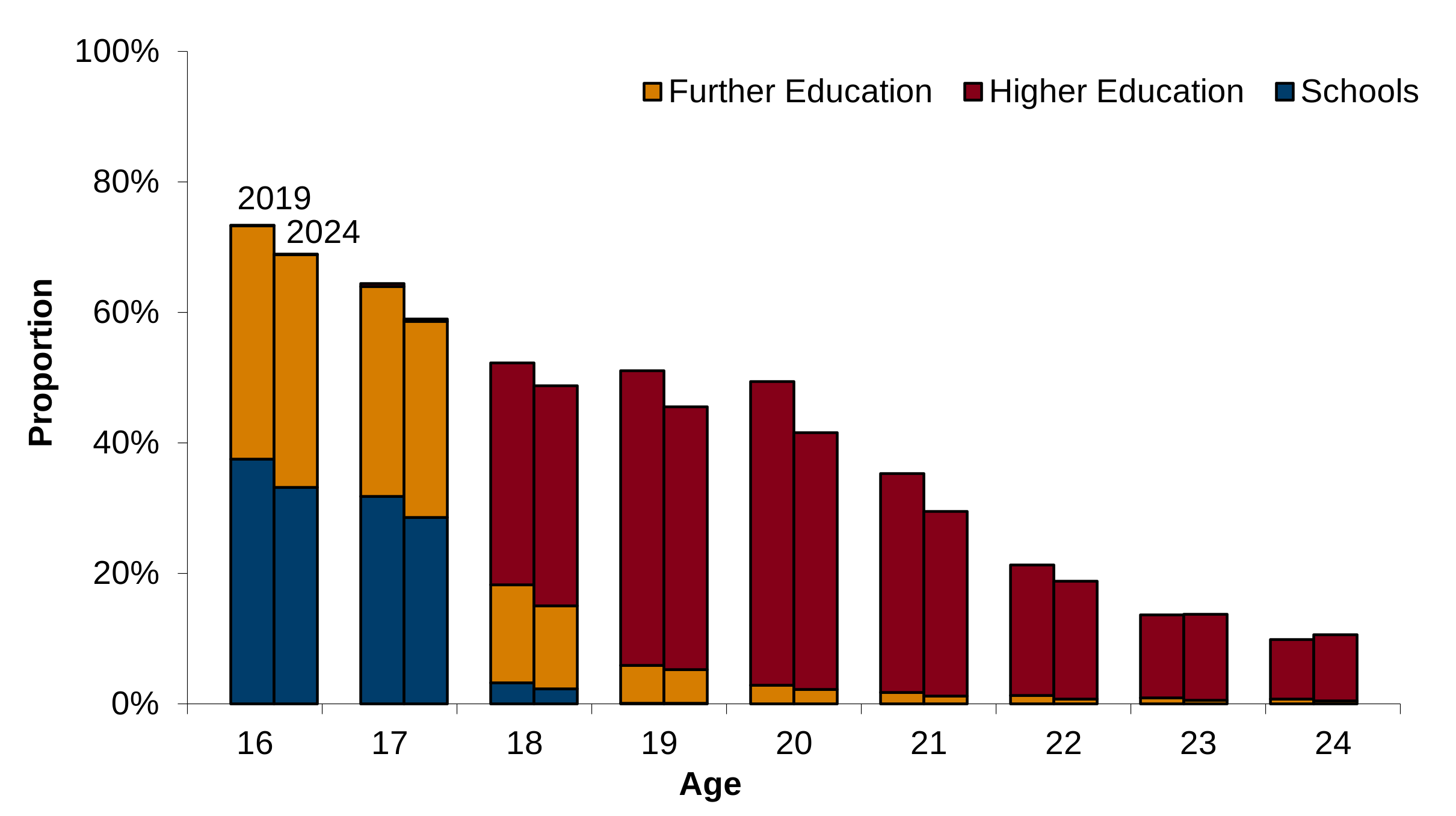
Description of figure 3: a stacked bar chart showing that a slightly higher proportion of those aged 23 and 24 were in full-time education in 2024 compared to 2019, whereas a smaller proportion of those aged 16 to 22 were in full-time education over the same period. For those aged 16 and 17, School and Further Education are the two main types of full-time education, however for those aged 18 and above this changes to Higher Education.
Source: Welsh Government, Open University and HEFCW
National indicator and national milestone
This release contains data for one of the national wellbeing indicators (Indicator 22: percentage of people in education, employment or training, measured for different age groups).
There is a national milestone associated with this indicator – ‘at least 90% of 16 to 24 year olds will be in education, employment, or training by 2050’. Whilst this release considers data for 16 to 18 year olds and 19 to 24 year olds separately, the national milestone is based on the full 16 to 24 age range.
Provisional estimates show that 86.3% of 16 to 24 year olds were in education, employment or training in 2024, down from 86.8% in 2023.
Policy and operational context
This release presents the annual snapshot of participation of young people in education and the labour market. The statistics are used within the Welsh Government to monitor trends in the level of participation in education and training, and the proportion of young people who are NEET.
The Youth Engagement and Progression Framework was originally published in 2013 and was refreshed in September 2022. The Framework is a systematic mechanism to identify and respond to young people at risk of becoming NEET, who are NEET and/or who are at risk of being homeless. It focuses on young people aged 11 to 18 and is built of 6 core components:
- Early identification
- Brokerage
- Monitoring progression
- Provision
- Employability and employment opportunities
- Accountability
These statistics are of relevance to Stronger, Fairer, Greener Wales: A Plan for Employability and Skills. The technical annex for the strategy refers to the national indicator based on data from this release (see also the Well-being of Future Generations Act section below). These statistics are also part of the evidence base for the Young Persons Guarantee.
Quality and methodology information
Relevance
The statistics are used within the Welsh Government to monitor trends in the level of participation in education and training, and the proportion of young people who are NEET.
Other users of these statistics include:
- members of the Senedd and the Research Service in the Welsh Parliament
- other government departments
- students, academics and universities
Accuracy
Sampling variability
The economic status proportions are estimated from the Annual Population Survey (APS). Therefore, these estimates will be subject to variation due to sampling error and also non-sampling error and should be treated with caution. As a result changes in trend need to be interpreted with a degree of caution, as changes could be attributed to sampling effects as well as real effects. Currently it is not possible to distinguish between these impacts.
The APS has seen a fall in sample sizes over recent years and has not been reweighted to latest population estimates, resulting in increased volatility and uncertainty in estimates produced from the survey. It is still appropriate to use the statistics in this release, however users should be aware of the increased volatility and uncertainty of the estimates derived from the APS.
Revisions policy
Provisional 2024 figures will be finalised in next year’s publication. The following table shows the difference between the 2023 provisional estimates published in last year’s release and the final published estimate for the key series of the proportion who are NEET, and the proportion in education or training.
| Data category | NEET: number | NEET: per cent | In education or training: number | In education or training: per cent |
|---|---|---|---|---|
| Provisional | 11,000 | 10.1 | 80,200 | 73.2 |
| Final | 10,100 | 9.2 | 83,000 | 75.7 |
| Difference | -900 | -0.9 | 2,800 | 2.5 |
| Data category | NEET: number | NEET: per cent | In education or training: number | In education or training: per cent |
|---|---|---|---|---|
| Provisional | 35,100 | 15.2 | 88,700 | 38.5 |
| Final | 34,200 | 15.1 | 88,600 | 39.1 |
| Difference | -900 | -0.1 | -100 | 0.6 |
Table 1a and 1b show the difference between the provisional and final 2023 estimates for those aged 16 to 18 and 19 to 24.
For those aged 16 to 18 the changes are due to upward revisions in the number in full-time and part-time education and downward revisions in the number not in education or training. For those aged 19 to 24 the changes are impacted by slight downward revisions in the numbers of those in part-time education, training and employment.
Estimates for 2022 have been revised in this release to correct for an issue in accurately apportioning those with a gender other than male or female. The majority of the impacts due to the revision are small, with the largest impact showing a 0.5 percentage point increase in the proportion of those aged 16 to 18 in education or training.
Revisions for earlier years are only made in line with revisions to source data. Totals may not match due to rounding.
Further information is available in the Participation of young people in education and the labour market methodology note.
Population data
Mid-year population estimates up to and including 2024 (based on the 2021 Census for estimates from 2012, and the 2011 census for earlier years), along with 2022-based population projections, are used in deriving these participation estimates.
Comparisons with previous years
The methodology used to produce the Higher Education Statistics Agency (HESA) data has been updated from the 2022/23 academic year, impacting NEET estimates from 2022 onwards. The impacts of this methodology change on the estimates are small, with the difference in the higher education student population between the old and new methodology being less than 1 percentage point. Given this, no break in the time series is necessary, and comparisons before and after 2022 can still be made. Further information is available in the methodology note.
Timeliness and punctuality
This Statistical Release is published annually, usually in Autumn, and covers the preceding year end (provisional data) and the year earlier (final data).
Accessibility and clarity
This statistical release is pre-announced and then published on the Statistics and Research website of the Welsh Government. All underlying data for this release as well as other years are available on the StatsWales website.
Comparability and coherence
For this release, participation in education and the labour market has been estimated using population, education and work-based learning data along with the Annual Population Survey (APS) to estimate the labour market status. Further information on these sources and the derivation of the statistics presented in this release is available in our methodology note.
In addition to this release we publish a bulletin Young people not in education, employment or training (NEET) to provide users with more timely and detailed (but less statistically robust) NEET statistics based on the APS only.
Statement of compliance with the Code of Practice for Statistics
Our statistical practice is regulated by the OSR. OSR sets the standards of trustworthiness, quality and value in the Code of Practice for Statistics that all producers of official statistics should adhere to.
All of our statistics are produced and published in accordance with a number of statements and protocols to enhance trustworthiness, quality and value. These are set out in the Welsh Government’s Statement of Compliance.
These accredited official statistics (Office for Statistics Regulation) demonstrate the standards expected around trustworthiness, quality and public value in the following ways.
Trustworthiness
We publish guidance for users on the different NEET sources for Wales. This includes detailed guidance on the differences between the sources and definitions, and brief overview of the methodology used for each source.
The data for this release have been calculated from adminstrative, survey and modelled data and tabulated by Welsh Government statisticians with a focus on ensuring that the statistics, data and explanatory material is presented impartially and objectively. Information on each of the sources and the methodology is detailed in the methodology note associated with this release.
All personal data underlying these statistics are processed in accordance with the requirements of the Data Protection Act 2018.
These statistics are pre-announced on the Statistics and Research area of the Welsh Government website. Access to the data during processing is restricted to those involved in the production of the statistics, quality assurance and for operational purposes. Pre-release access is restricted to eligible recipients in line with the Code of Practice (UK Statistics Authority).
Quality
The estimates in this release are the definitive source of NEET estimates for young people in Wales. These estimates provide more reliable and robust NEET estimates than the APS NEET release due to the inclusion of multiple administrative data sources. Further information on the differences between the NEET sources is available in our guide to understanding the different sources of statistics on young people who are NEET in Wales.
The APS is used as part of the process to calculate the estimates presented in this release (further information is available in the methodology note). The APS has seen a fall in sample sizes over recent years and has not been reweighted to latest population estimates, resulting in increased volatility in estimates produced from the survey. It is still appropriate to use the statistics in this release, however users should note the increased uncertainty of the estimates.
All stages in the collection, validation and production of these statistics are led by professional statisticians. All statistics are quality-assured prior to publication.
Value
Our official statistics on young people not in education, employment or training (NEET) show the trends in the proportion of young people aged 16 to 24 that are NEET in Wales. Once final school and higher education figures are available, these statistics are published at the earliest opportunity in order to assist users in understanding the latest trends in NEET rates. The statistics will be updated on an annual basis.
These statistics are used in a variety of ways. Some examples of these are:
- Advice to ministers
- To inform education and employability policy decision making process in Wales
- To assist and monitor progress for programmes aimed at providing and improving educational and employment opportunities to young people in Wales, such as the YPG, Youth Engagement and Progression Framework, and the national indicator.
This release is accompanied by StatsWales tables, a free to use service that allows visitors to view, manipulate, create and download data.
The commentary and notes in the release have been developed to try to make the information as accessible as possible to the widest range of users. Furthermore, all our school statistics outputs are published in Welsh and English.
You are welcome to contact us directly with any comments about how we meet these standards. Alternatively, you can contact OSR by emailing regulation@statistics.gov.uk or via the OSR website.
Well-being of Future Generations Act (WFG)
The Well-being of Future Generations Act 2015 is about improving the social, economic, environmental and cultural wellbeing of Wales. The Act puts in place seven wellbeing goals for Wales. These are for a more equal, prosperous, resilient, healthier and globally responsible Wales, with cohesive communities and a vibrant culture and thriving Welsh language. Under section (10)(1) of the Act, the Welsh Ministers must (a) publish indicators (“national indicators”) that must be applied for the purpose of measuring progress towards the achievement of the wellbeing goals, and (b) lay a copy of the national indicators before Senedd Cymru. Under section 10(8) of the Well-being of Future Generations Act, where the Welsh Ministers revise the national indicators, they must as soon as reasonably practicable (a) publish the indicators as revised and (b) lay a copy of them before the Senedd. These national indicators were laid before the Senedd in 2021. The indicators laid on 14 December 2021 replace the set laid on 16 March 2016 and this release includes one of the national indicators:
- (22) Percentage of people in education, employment or training, measured for different age groups.
Information on the indicators, along with narratives for each of the well-being goals and associated technical information is available in the Wellbeing of Wales report.
As a national indicator under the Act they must be referred to in the analyses of local wellbeing produced by public services boards when they are analysing the state of economic, social, environmental and cultural wellbeing in their areas.
The Act states national milestones must be set that “…the Welsh Ministers consider would assist in measuring whether progress is being made towards the achievement of the wellbeing goals.” In doing so Welsh Ministers must specify how we know that a national milestone has been achieved and the time by which it is to be achieved.
National milestones are not performance targets for any individual organisation, but are collective measures of success for Wales.
In this release indicator 22 percentage of people in education, employment or training, measured for different age groups corresponds to a national milestone:
- At least 90% of 16 to 24 year olds will be in education, employment, or training by 2050
Further information on the Well-being of Future Generations (Wales) Act 2015.
The statistics included in this release could also provide supporting narrative to the national indicators and be used by public services boards in relation to their local well-being assessments and local well-being plans.
We want your feedback
We welcome any feedback on any aspect of these statistics which can be provided by email to labourmarket.stats@gov.wales.
Open Government License
All content is available under the Open Government Licence v3.0, except where otherwise stated.
Contact details
Labour Market and Skills Statistics
Email: labourmarket.stats@gov.wales
Media: 0300 025 8099
SDR 108/2025