
Patterns in reading and numeracy attainment: September 2018 to August 2025
Report looking at patterns in attainment in reading and numeracy, using national-level data from the personalised assessments. Personalised assessments are taken by learners in Year 2 to Year 9 in maintained schools in Wales.
In this page
Introduction
This report presents information on reading and numeracy attainment changes over time, with the addition of analysis by sex, the gap between learners eligible for free school meals and their peers, and ethnicity. The analysis has been carried out using anonymised, national-level data from the personalised assessments, up to the end of the 2024 to 2025 academic year. Throughout this report, references to academic years are expressed in the form ‘2024 to 2025’ which would mean the period from September 2024 to August 2025.
Personalised assessments in Reading and Numeracy are online assessments designed to help support development of reading and numeracy skills. They are used in schools as one of a range of approaches to support progression (Hwb) as part of Curriculum for Wales. Annual personalised assessments are mandatory for learners in Years 2 to 9 in maintained schools. The assessments comprise:
- Numeracy which is taken in 2 parts - Numeracy (Procedural) and Numeracy (Reasoning)
- Reading in Welsh and English (see note on timing of introduction of personalised assessments below, and further information on each assessment and the mandatory requirements in the main section of this report)
The assessments provide schools with information on the reading and numeracy skills of individual learners and an understanding of strengths and areas for improvement in these skills. Following completion of assessments, schools have access to feedback on skills, progress, and a range of reports to help plan teaching and learning. The Welsh Government is clear that the purpose of these assessments is to support progression in learning. The publication of this report does not involve any change for schools; personalised assessments will continue to be taken in the same way and used alongside other forms of assessment designed by schools in accordance with the Curriculum for Wales framework. While the purpose of personalised assessments is to support progress at an individual level, anonymised data from personalised assessments can also provide some information on reading and numeracy skills at a national level, showing changes in attainment over time and differences between demographic groups.
Therefore, the Welsh Government has compiled this report to assist in understanding patterns of attainment in reading and numeracy over time and the potential impact of the coronavirus (COVID-19) pandemic. This report uses anonymised data from personalised assessments taken between 2018 to 2019 (the introduction of the first assessment) and 2024 to 2025. Following the publication of this report, releases will be issued which will eventually show trends and provide important information on learners' development of skills over time, at a national level.
The releases will form part of a wider range of qualitative and quantitative national-level information on learner achievement, complementing, for example our international studies, PISA and (in the future) PIRLS (Progress in International Reading Literacy Study) and TIMSS (Trends in International Mathematics and Science Study) as well as our national Key Stage 4 outcomes.
A note on timing and data availability
Personalised assessments were phased in over a period of 4 academic years:
- Numeracy (Procedural) from 2018 to 2019
- Reading in Welsh and English from 2019 to 2020
- Numeracy (Reasoning) from 2021 to 2022
This report uses data from 2018 to 2019 to 2024 to 2025. However, COVID-19 disruption has resulted in a gap in data for 2019 to 2020, the year when administration of the assessments was most impacted by the pandemic. Whilst some personalised assessments were taken during this period, 2019 to 2020 is not included in this analysis due to insufficient data being available.
In the following sections the assessments are listed in order of their introduction in schools in Wales.
Patterns in attainment over time, by assessment subject and year group
This section of the report compares the attainment of learners in a given year group over several academic years. For example, it compares the attainment of Year 3 learners in the Numeracy (Procedural) assessment in 2018 to 2019, 2020 to 2021, 2021 to 2022, 2022 to 2023, 2023 to 2024 and 2024 to 2025. Therefore, for a given year group, different cohorts of learners constitute the dataset at different points in time.
For the purposes of this report, to make comparisons at a national level, we express average higher or lower attainment in terms of months. We do this for ease of understanding and because of the nature of the assessments, which do not have a common grading scale of the type used for examinations, for example. Please note that we round all data to the nearest month and in some cases this will mean that a displayed total may not equal the sum of the figures that make up that total. When interpreting the figures in this report, it is important to remember that younger learners have a higher rate of progress year-on-year, in absolute terms, than older learners (see the technical annex for further information).
In both the 'Patterns of attainment in reading and numeracy: September 2018 to August 2023' and 'Patterns of attainment in reading and numeracy: September 2018 to August 2024' releases we used 2022 to 23 as a consistent year of reference across all subjects. This gave us a common reference point to calculate months’ progress and examine demographic differences by subject, an important factor considering the pre/post-pandemic introduction of the different assessments. In this report we continue with this approach and use 2022 to 2023 as the reference year for months’ progress calculations, and as a benchmark of the difference between years. Keeping the reference year consistent makes comparison between reports easier, as the charts will appear similar to those in the June 2024 and June 2025 reports and allow us to see changes more clearly.
This report uses the updated assessment question difficulty scale that was first used in the June 2025 release. This new scale was introduced in 2023 to 2024 for all assessments to ensure the difficulty estimate for each question were as up-to-date and as representative of the population of learners in Wales as possible, using data that is now available on how learners respond to these questions. Previously, items were assigned a level of difficulty that’s calculated or calibrated based on item responses from learners and at the point each separate assessment was rolled out, which was staggered over some years. This update was necessary to ensure that teachers, learners and parents continue to receive the highest quality information from these assessments to inform teaching and learning.
Implementing this change has impacted on the data in this release. To allow a fairer comparison between 2023 to 2024, which uses the new difficulty scale, and other years, the new scale has to be retrospectively applied to all previous years. As a result, the progress data shown in this and the June 2025 release is of a higher quality than in previous releases. More information is available in the Quality and methodology information section below.
The impacts on learning during and after the pandemic have been the subject of several studies in the UK and internationally – see the evidence section of the document linked to this report. The patterns seen in Wales are similar to the research findings in other countries.
A note on interpreting the figures in this section can be found in the linked technical annex. The figures show patterns in average attainment for Years 3, 6 and 9; data for other year groups is available in the accompanying spreadsheet.
In each of the charts below, average attainment is presented as months higher or lower than the attainment of the same year group in 2022 to 2023 (2022 to 2023 attainment is denoted by zero point on the horizontal axis of the graph). Note that 2019to 2020 is not included due to insufficient data in the year most impacted by the COVID-19 pandemic.
Lower take up of assessments during 2020 to 2021, the year which saw continued disruption during and following the pandemic, may impact on the patterns seen in that year.
Summary of attainment by subject
There has been an increase in attainment across year groups for both English Reading and Welsh Reading in 2024 to 2025, relative to 2023 to 2024. Most year groups also saw attainment levels in Welsh and English Reading exceeding those in 2020 to 2021 (the first year for which Reading data is available). This builds upon the improvement from 2023 to 2024, with attainment in English and Welsh Reading both showing strong recovery after the decline following the pandemic.
For Numeracy (Procedural) and (Reasoning) attainment has increased for the older year groups, compared to 2023 to 2024. For the younger year groups attainment is lower than in 2023 to 2024, although for the majority, attainment is still showing an improvement relative to the decline following the pandemic. Numeracy (Procedural) in 2024 to 2025 remains below the levels observed in 2018 to 2019, prior to the pandemic. Details for all year groups are shown in the accompanying dataset (Tables 1 to 4).
Numeracy (Procedural)
The Numeracy assessment is taken in 2 parts. The Numeracy (Procedural) assessment focuses on numerical facts and procedures – the numerical ‘tools’ that are needed to apply numeracy within a range of contexts. It is taken annually by all learners in Years 2 to 9. This assessment was introduced in the 2018 to 2019 academic year and is the only assessment for which data is available both before and after the disruption caused by COVID-19.
Figure 1: Numeracy (Procedural) - difference in attainment by academic year, relative to 2022/23, in months
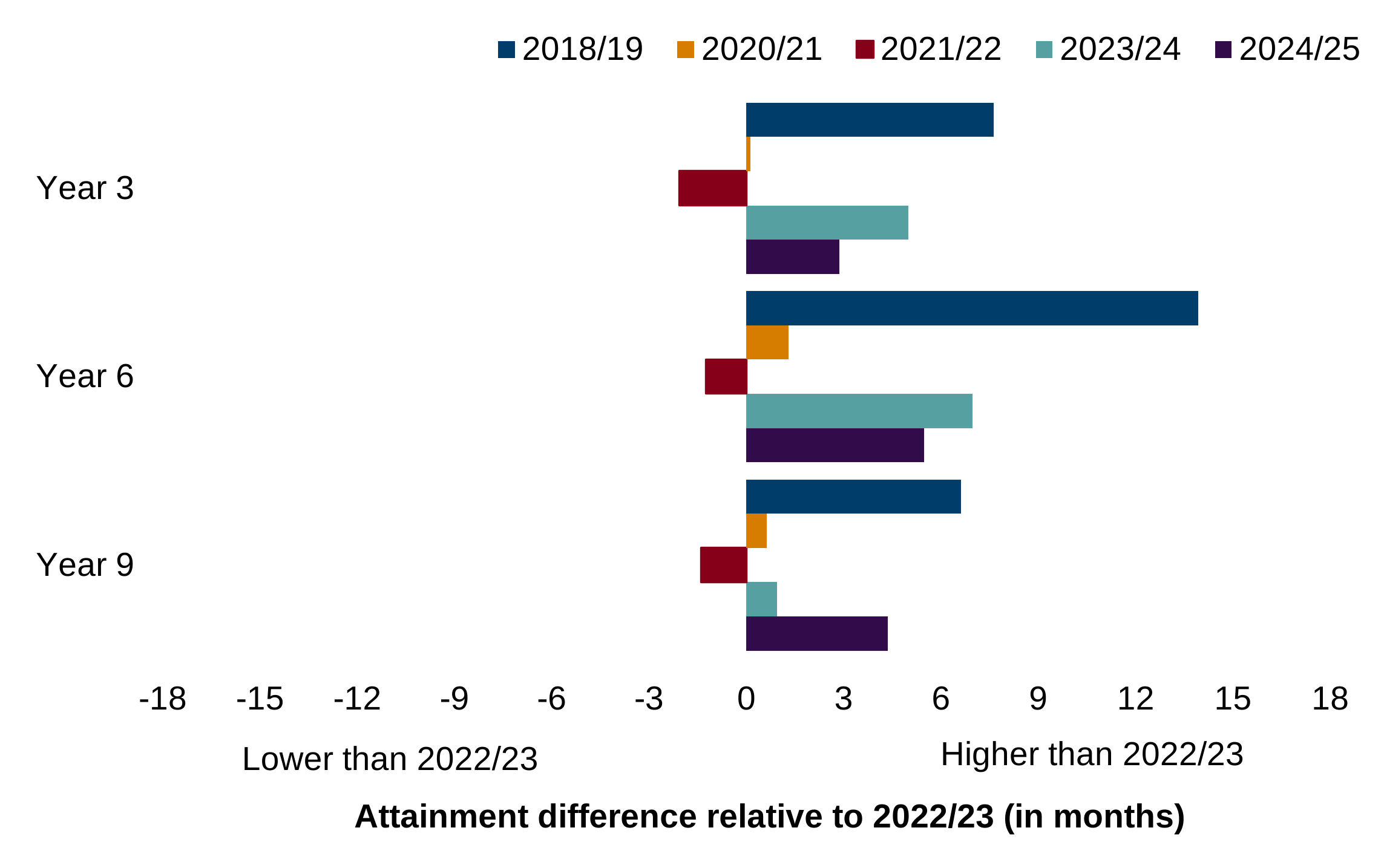
Description of figure 1: a bar chart showing the average attainment in the Numeracy (Procedural) assessments of the cohort of learners who were in Year 3, 6, or 9 in 2018 to 2019, 2020 to 2021, 2021 to 2022, 2023 to 2024 and 2024 to 2025, compared to 2022 to 2023.
Main points
In 2024 to 2025, relative to 2023 to 2024, the changes in attainment were:
- a decrease of 2 months in Year 3
- a decrease of 1 month in Year 6
- an increase of 3 months in Year 9
Summary
Attainment for Numeracy (Procedural) in 2024 to 2025 is lower for younger years (Year 2 to Year 6), and higher for older years (Year 7 to Year 9), in comparison to 2023 to 2024. Attainment in 2024 to 2025 remains below 2018 to 2019 levels for all year groups, although there has been an increase compared to 2022 to 2023.
Welsh Reading
The Welsh Reading personalised assessments focus on how well learners understand a text in Welsh and whether they are able to make judgements about what they are reading. The Welsh Reading assessment is taken annually by learners in Years 2 to 9 whose learning is through the medium of Welsh. The assessment was introduced in the 2019 to 2020 academic year, however there was insufficient data available for that year due to the disruption caused by the COVID-19 pandemic.
Figure 2: Welsh Reading - difference in attainment by academic year, relative to 2022/23, in months
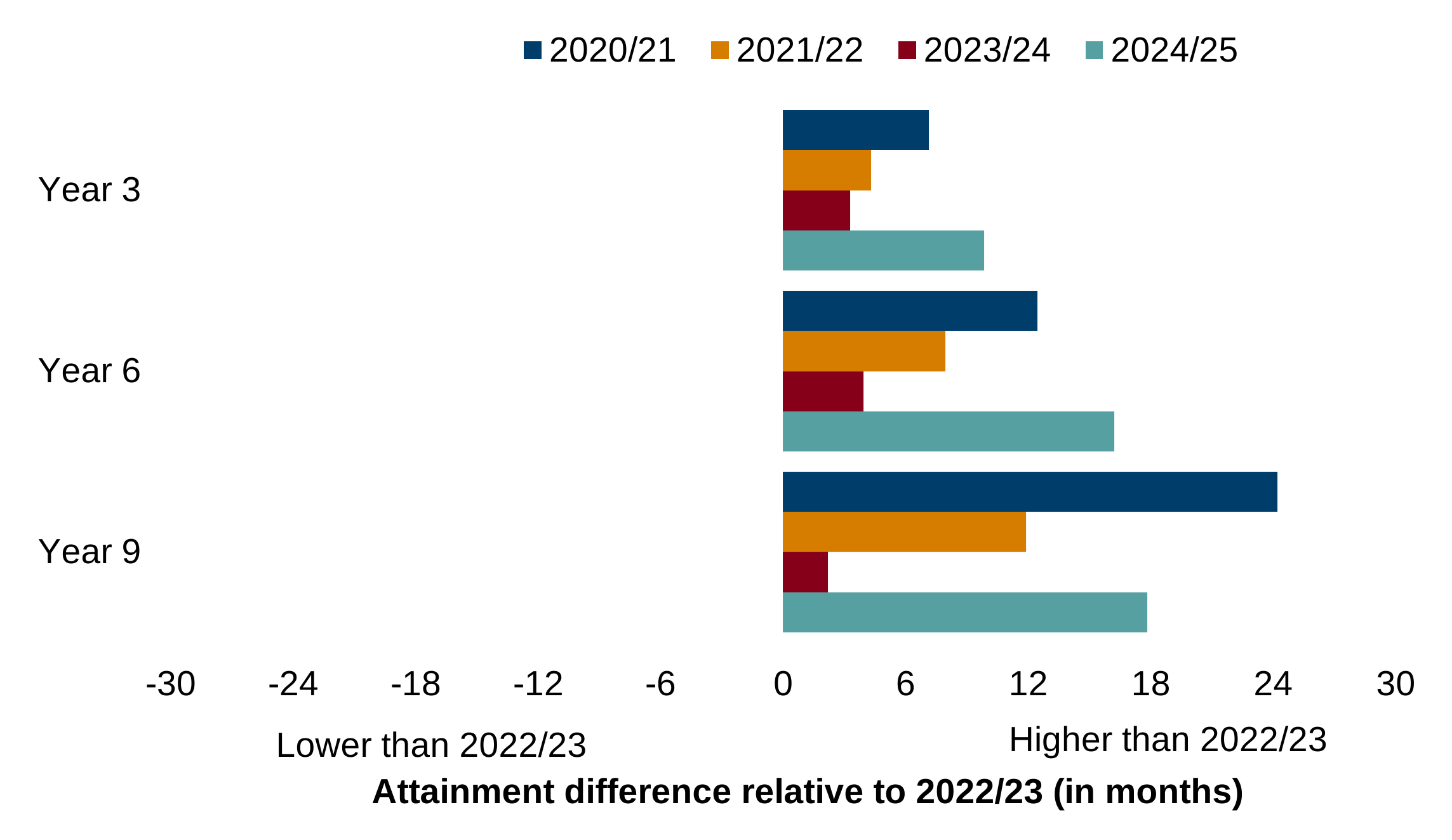
Description of figure 2: a bar chart showing the average attainment in the Welsh Reading assessments of the cohort of learners who were in Year 3, 6, or 9 in 2020 to 2021, 2021 to 2022, 2023 to 2024 and 2024 to 2025 compared to 2022 to 2023.
Main points
- Attainment in 2024 to 2025 in Year 3 and Year 6 exceeded levels seen in 2020 to 2021 by 3 months and 4 months respectively. Attainment in Year 9 was 6 months lower in 2024 to 2025 than in 2020 to 2021.
- In 2024 to 2025, relative to 2023 to 2024, the changes in attainment were:
- an increase of 7 months in Year 3
- an increase of 12 months in Year 6
- an increase of 16 months in Year 9
Summary
There is a continued recovery in attainment in 2024 to 2025 in Welsh Reading. Years 3 to 9 all saw an increase in attainment compared to the previous year (2023 to 2024). Attainment in Years 3 to 7 increased above levels initially observed in 2020 to 2021.
English Reading
The English Reading personalised assessments focus on how well learners understand a text and whether they are able to make judgements about what they are reading in English. The English Reading assessment is taken annually by learners in Years 2 to 9 whose learning is through the medium of English. For learners whose learning is through the medium of Welsh, the English Reading personalised assessment is optional in Years 2 and 3 and mandatory in Years 4 to 9. The English Reading online assessment was introduced in the 2019 to 2020 academic year, however there was insufficient data available for that year due to the disruption caused by COVID-19.
Figure 3: English Reading - difference in attainment by academic year, relative to 2022/23, in months
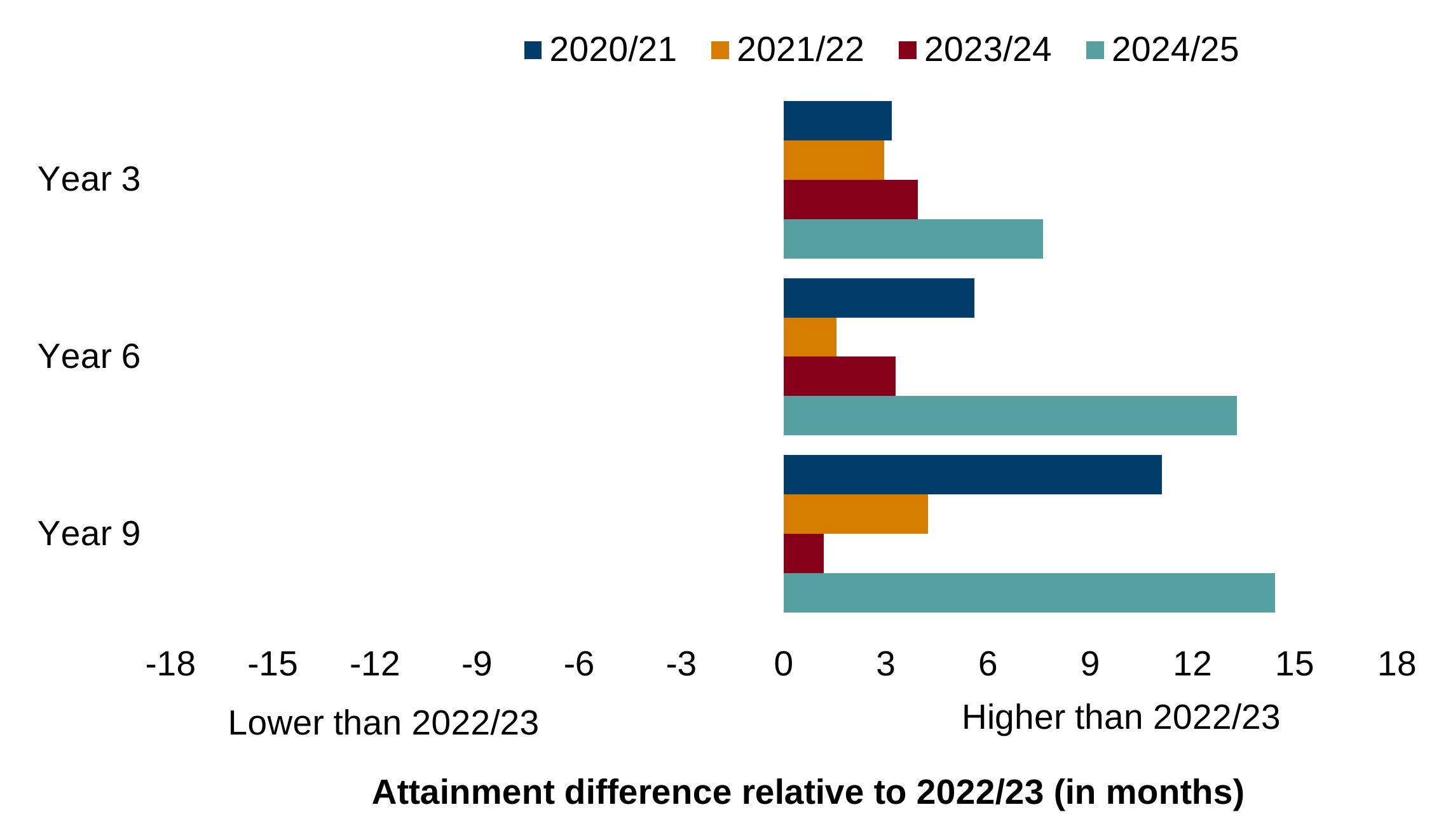
Description of figure 3: a bar chart showing the average attainment in the English Reading assessments of the cohort of learners who were in Year 3, 6, or 9 in 2020 to 2021, 2021 to 2022 and 2023 to 2024, compared to 2022 to 2023.
Main points
- Attainment in 2024 to 2025 was the highest since the assessment began for Years 3 to 9.
- In 2024 to 2025, relative to 2023 to 2024, the changes in attainment were:
- an increase of 4 months in Year 3
- an increase of 10 months in Year 6
- an increase of 13 months in Year 9
Summary
In 2024 to 2025, attainment in English Reading increased for all year groups compared to the previous year (2023 to 2024), with older year groups showing the greater increase. Attainment for Year 3 to Year 9 in 2024 to 2025 has also exceeded levels observed in 2020 to 2021 with Year 2 remaining stable. We are seeing a continued recovery in attainment in 2024 to 2025 following a decline in attainment between 2020 to 2021 and 2022 to 2023.
Numeracy (Reasoning)
The Numeracy (Reasoning) personalised assessment focuses on how well learners can use and apply what they know to solve numerical problems. It is taken annually by learners in Years 2 to 9. It was the last assessment to be introduced in the phased roll-out, and data is available for 4 academic years only: 2021 to 2022, 2022 to 2023, 2023 to 2024 a 2024 I 2025.
Figure 4: Numeracy (Reasoning) - difference in attainment by academic year, relative to 2022/23, in months
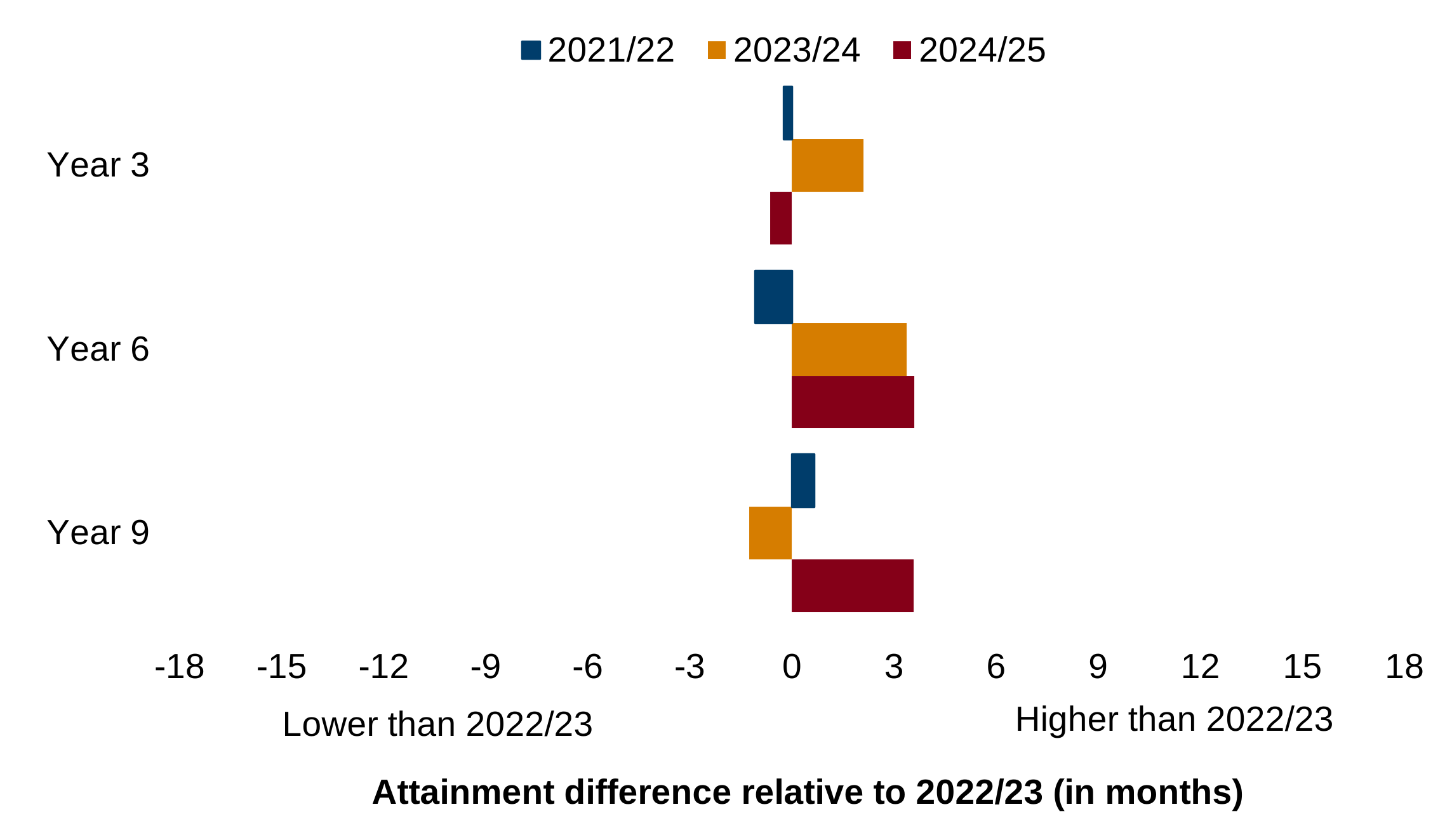
Description of figure 4: a bar chart showing the average attainment in the Numeracy (Reasoning) assessments of the cohort of learners who were in Year 3, 6, or 9 in 2021 to 2022 and 2023 to 2024 compared to 2022 to 2023.
Main points
In 2024 to 2025, relative to 2023 to 24, the changes in attainment were:
- a decrease of 3 months in Year 3
- relatively stable in Year 6
- an increase of 5 months in Year 9
Summary
Attainment for Numeracy (Reasoning) has been relatively stable between 2021 to 2022 and 2024 to 2025, with no clear pattern of improvement or decline between year groups. Compared to 2023 to 2024, the older year groups showed an increase in attainment in 2024 to 2025, whilst the younger years showed a decrease.
Attainment by sex
This section of the report breaks down the attainment shown in the above section by sex. Sex is defined in this context as biological sex at birth. It compares the difference in attainment, expressed in months, achieved by males and females for each academic year, for selected year groups. An example of how this breakdown of attainment is worked out can be found in the Technical Annex.
The figures below show patterns for Year 6 for each of the subjects; data for other year groups is available in the accompanying spreadsheet. All data are shown as attainment in months relative to reference year 2022 to 2023. Each chart presents the years for which each assessment was in place, except for the year 2019 to 2020 for which there was insufficient data due to the disruption caused by COVID-19. Attainment is presented by an individual line for Year 6 females and Year 6 males, with the gap between the lines representing the average attainment difference. Note that the scale varies between charts, so visually similar changes may represent different magnitudes of attainment difference across subjects.
Summary of attainment by sex
The typical differences in outcomes between the sexes that have been widely observed across many studies and assessments of females outperforming males on reading assessments, and males outperforming females on numerical assessments were also observed here on the National Personalised Assessments in Wales. These differences were observed from Year 2 and generally increased across the year groups. Details for all year groups are shown in the accompanying dataset.
In 2024 to 2025 the difference in attainment between males and females is at its largest since the introduction of each assessment for Years 3, 6 and 9 for every subject (with the exception of Year 9 for Numeracy (Procedural) where the difference was largest in 2022 to 2023, and at its second largest in 2024 to 2025). Males continue to outperform females in numerical assessments and the difference is growing, whilst females continue to outperform males in reading assessments and that difference is also growing.
Numeracy (Procedural)
Figure 5: Numeracy (Procedural) - attainment in 2018/19 to 2024/25 by sex, in months
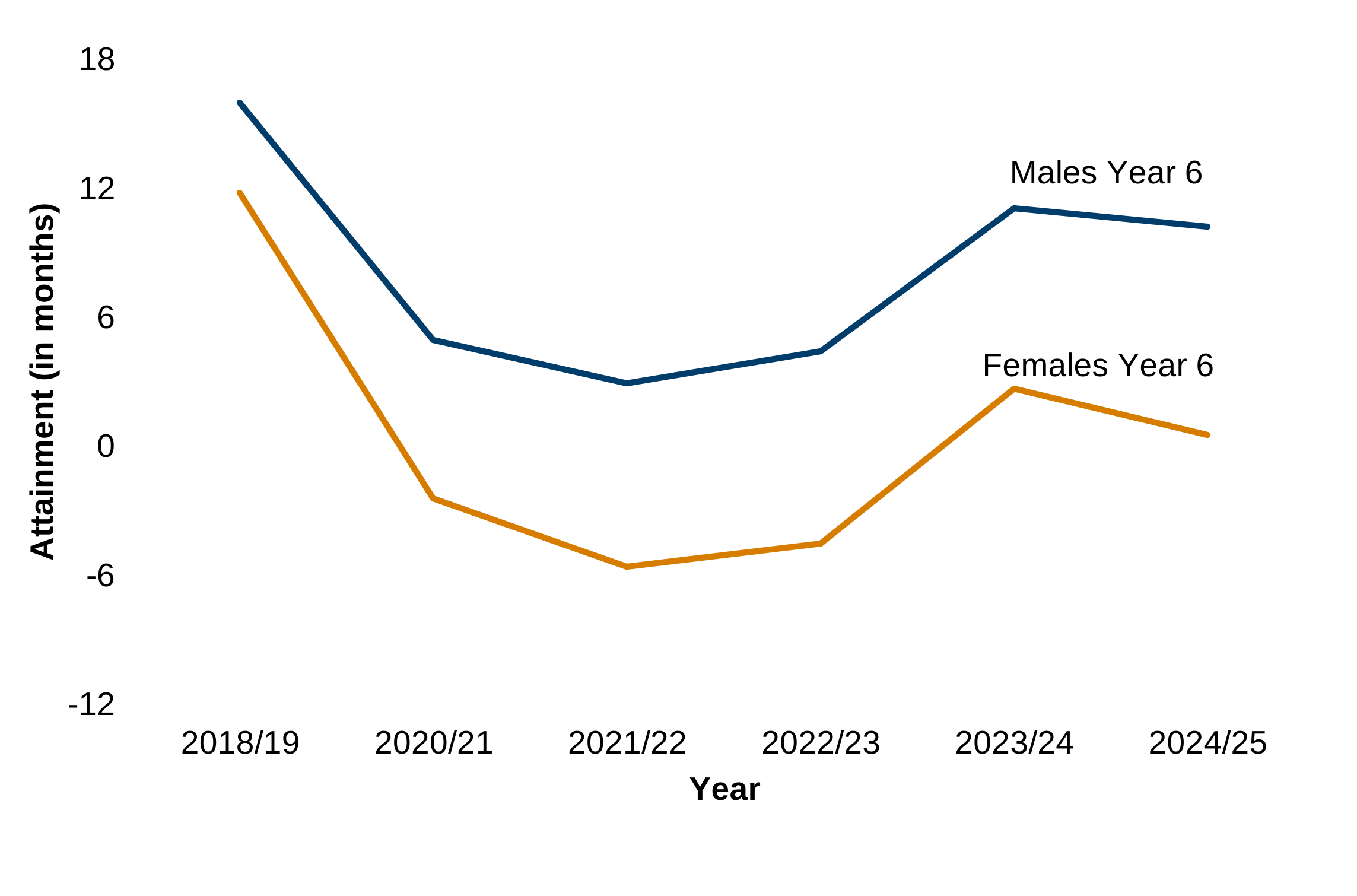
Description of figure 5: A line chart showing the average attainment of females and males in Numeracy (Procedural), for the cohort of learners who were in Year 6 in each academic year.
Main points
- The average attainment of males is consistently higher than that of females.
- In Year 6 (see Figure 5) the difference in attainment by sex was 10 months and increased by 1 month in 2024 to 2025, relative to 2023 to 2024. In 2018 to 2019 the difference in attainment was 4 months. This difference steadily grew to 9 months by 2022 to 2023 and 2023 to 2024, with a further increase to 10 months in 2024 to 2025.
- The difference between males and females increases for older year groups (see table 5a in the accompanying spreadsheet).
- In 2024 to 2025, Year 9 had the largest difference in attainment of 11 months, and Year 2 had the smallest difference of 3 months.
Summary
For Numeracy (Procedural) males continue to outperform females. The attainment difference between males and females has increased slightly in 2024 to 2025, compared with 2023 to 2024. The difference had increased gradually from 2020 to 2021 to 2022 to 2023, before decreasing in 2023 to 2024.
Welsh Reading
Figure 6: Welsh Reading - attainment in 2020/21 to 2024/25 by sex, in months
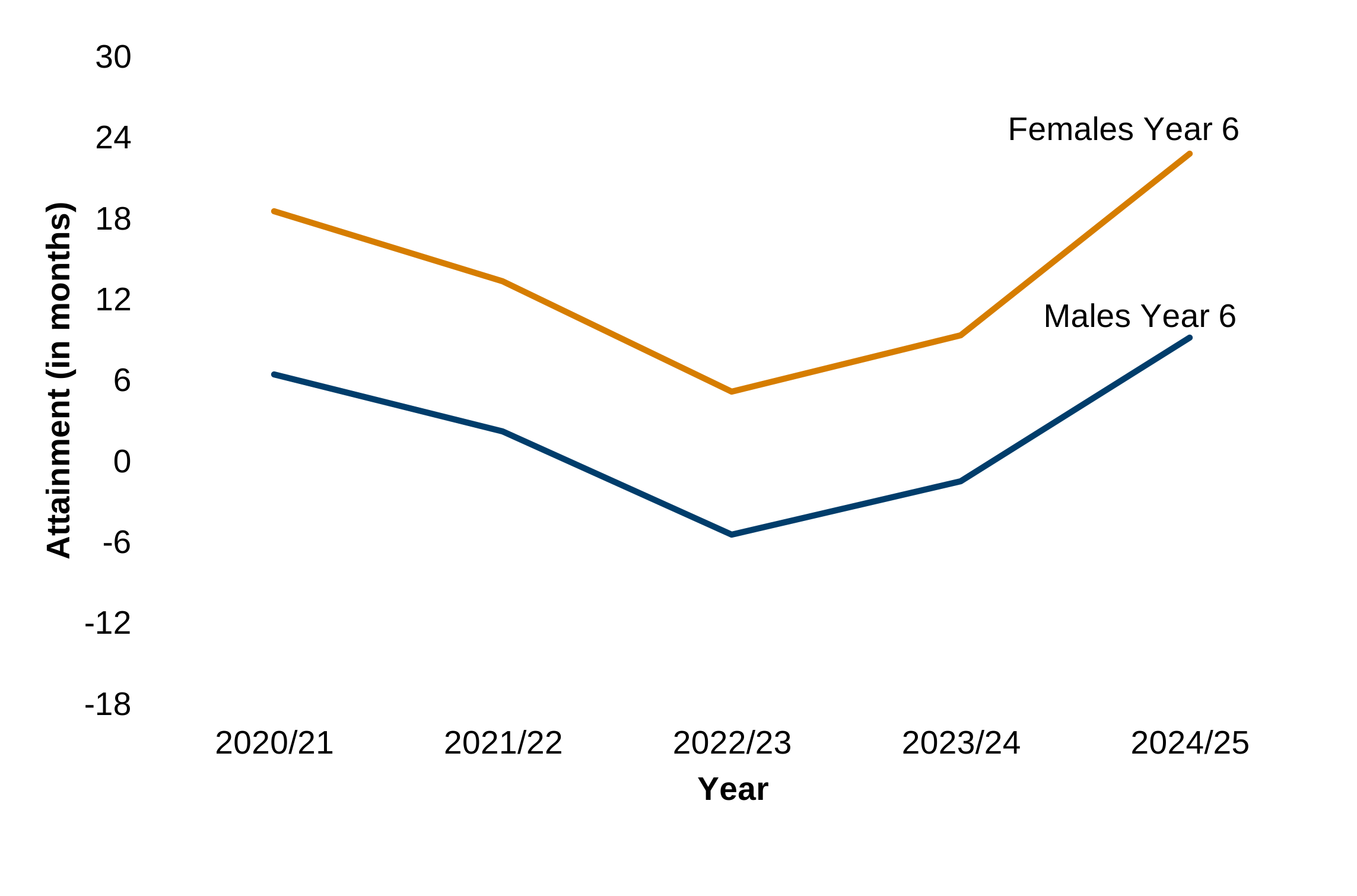
Description of figure 6: a line chart showing the average attainment of females and males in Welsh Reading, for the cohort of learners who were in Year 6 in each academic year.
Main points
- Attainment values consistently show the average attainment of females to be higher than that of males for Welsh Reading.
- In Year 6 (see Figure 6) the difference in attainment was 14 months an increase of 3 months relative to 2023 to 2024. In 2020 to 2021 the difference in attainment was 12 months which fell to 11 months by 2022 to 2023 before widening again to 14 months by 2024 to 2025.
- In 2024 to 2025, Year 9 had the largest difference in attainment with 28 months, whilst Year 5 had the smallest difference with 10 months (see table 6a in the accompanying spreadsheet).
- The difference in attainment increases for older year groups.
Summary
For Welsh Reading, females continue to achieve higher attainment than males and the difference in attainment increased to a new high in 2024 to 2025.
In younger year groups, the difference in attainment gradually decreased between 2020 to 2021 to 2022 to 2023, before increasing again each year from 2022 to 2023 to 2024 to2025. For older year groups this decrease was seen in 2023 to 2024 but then there was a large increase in the attainment difference in 2024 20 2025 for Year 9.
English Reading
Figure 7: English Reading - attainment in 2020/21 to 2024/25 by sex, in months
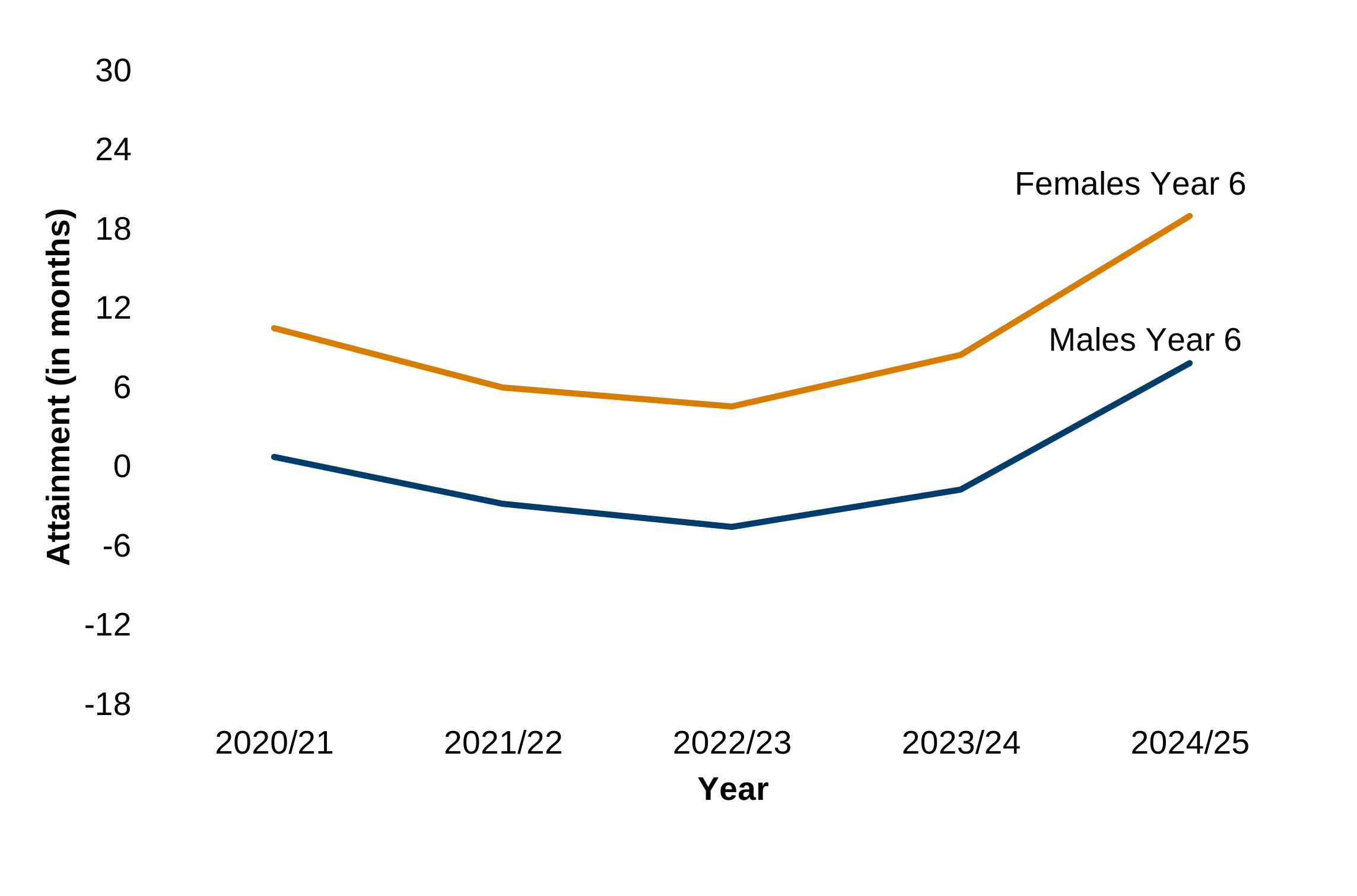
Description of figure 7: a line chart showing the average difference in attainment between females and males in English Reading, for the cohort of learners who were in Year 6 in each academic year.
Main points
- Attainment values consistently show the average attainment of females to be higher than that of males for English Reading.
- In Year 6 (see Figure 7) the difference in attainment was 11 months and increased by 1 month in 2024 to 2025, relative to 2023 to 2024. In 2020 to 2021 the difference in attainment was 10 months. This fell to 9 months in 2021 to 2022 before rising steading to 11 months by 2024 to 2025.
- The difference in attainment increases for older year groups.
- In 2024 to 2025, Year 7 had the largest difference in attainment of 19 months, whilst Year 2 had the smallest difference of 5 months (see table 7a in the accompanying spreadsheet).
Summary
Females continue to outperform males in English Reading, the difference in attainment between males and females increased in 2024 to 2025 for all year groups, when compared with all academic years since 2020 to 2021.
Numeracy (Reasoning)
Figure 8: Numeracy (Reasoning) - attainment in 2021/22 to 2024/25 by sex, in months
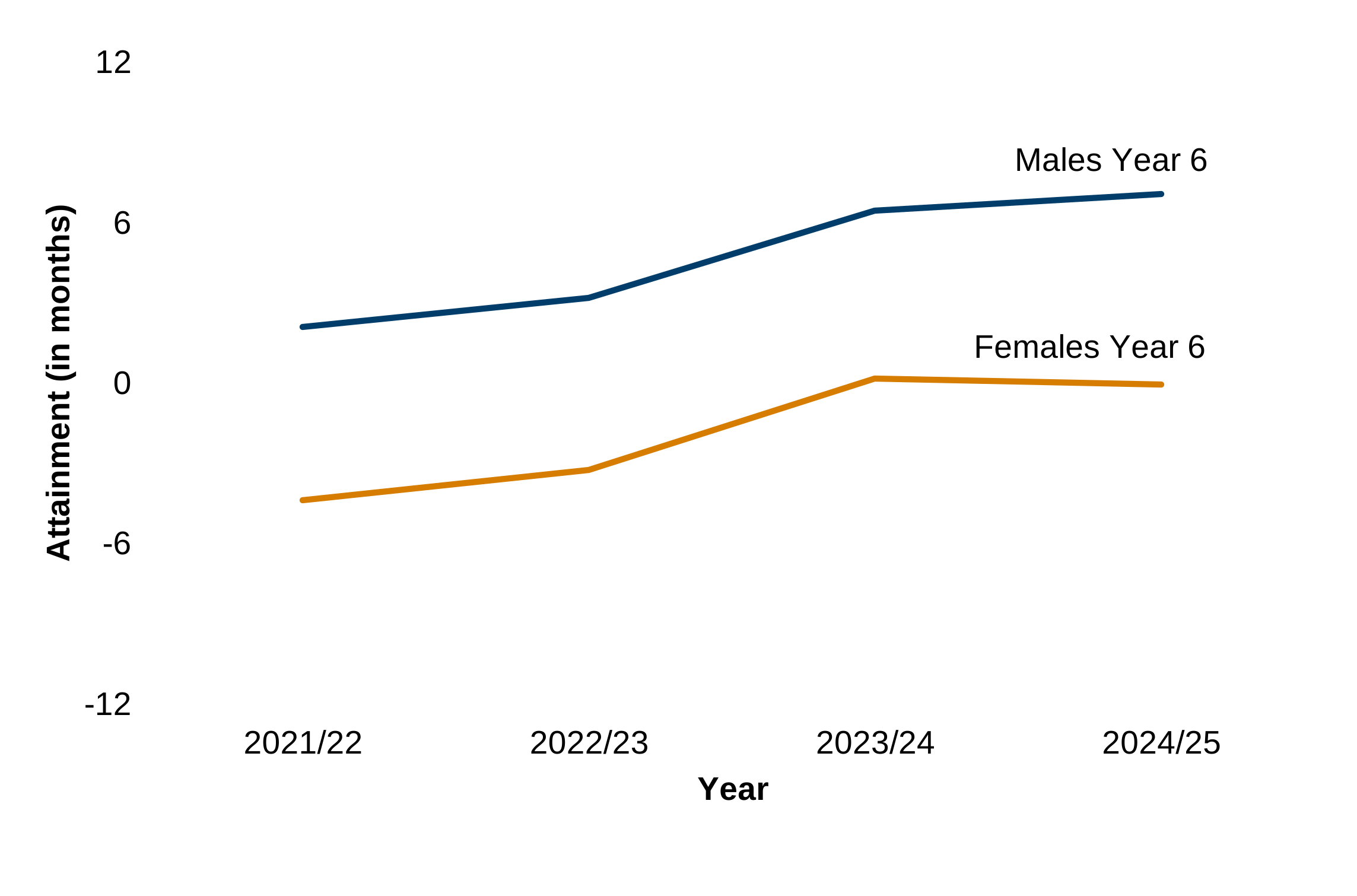
Description of figure 8: a line chart showing the average attainment of females and males in Numeracy (Reasoning), for the cohort of learners who were in Year 6 in each academic year.
Main points
- Attainment values consistently show the average attainment of males to be higher than that of females for Numeracy (Reasoning).
- In Year 6 (see Figure 8), the difference was 7 months. There was a 1 month increase in the difference in attainment in 2024 to 2025 when compared with 2023 to 2024. In 2021 to 2022 the difference in attainment was 6.5 months. This fell steadily to 6.3 months by 2023 to 2024 before increasing to 7.1 months in 2024 to 2025.
- The attainment difference increases for older year groups.
- In 2024 to 2025, Year 7 had the largest difference in attainment of 11 months, whilst Year 2 has the smallest difference of 3 months (see table 8a in the accompanying spreadsheet).
Summary
Males continue to outperform females in Numeracy (Reasoning) the attainment difference between males and females remained relatively stable, with a small increase between 2021 to 2022 to 2024 to 2025.
Attainment by eligibility for free school meals
This section of the release breaks down the attainment shown in the first section by free school meals (FSM) eligibility and reports, expressed in ‘months’, the difference in attainment between, learners who are eligible (eFSM) and learners who are not eligible for free school meals (nFSM). This is done in each academic year, for selected year groups. An example of how this breakdown of attainment is worked out can be found in the technical annex.
Learners can currently be eligible for FSM if their parents or guardians are in receipt of certain means-tested benefits or support payments, or through the transitional protection scheme, or the universal primary free school meal policy. For this release we only include learners who are eligible if their parents or guardians are in receipt of certain means-tested benefits or support payments.
The figures below show attainment by eFSM and nFSM for Year 6 for all subjects; data for other year groups is available in the accompanying dataset. Each chart presents the years for which each assessment was in place, except for the year 2019 to 2020 for which there was insufficient data due to the disruption caused by COVID-19.Note that the scale on the charts varies for each subject, and so similar changes in the lines could reflect different differences in attainment for the different subject.
Summary of attainment in 2018 to 2019 to 2024 to 2025 by free school meal entitlement
The typical socioeconomic advantage gap differences that have been widely observed across many studies are reflected here with the attainment of free school meals eligible learners being substantially below that of learners not eligible for free school meals. These differences manifested in the younger year groups and grew across all assessments in the intervening years up to Year 9.
In terms of trends since assessments have been in place, for the Numeracy (Procedural) assessment the attainment difference remains approximately steady across academic years, with a slight increase in 2024 to 2025. Numeracy (Reasoning) was also relatively steady, with small increases or decreases when compared with 2024 to 2025.
The difference increased for Welsh Reading and English Reading in 2024 to 2025 relative to 2023 to 2024 (with the exception of Year 9 for Welsh Reading and Year 8 for English Reading, which both remained relatively stable). The overall trends for English Reading and Welsh Reading for the different year groups of learners across time were that there was either a decrease in 2021 to 2022 in the eFSM difference relative to 2020 to 2021, followed by an increase in difference across time, or that the difference remained relatively stable from across time.
Numeracy (Procedural)
Figure 9: Numeracy (Procedural) - attainment in 2018/19 to 2024/25 by free school meal entitlement, in months
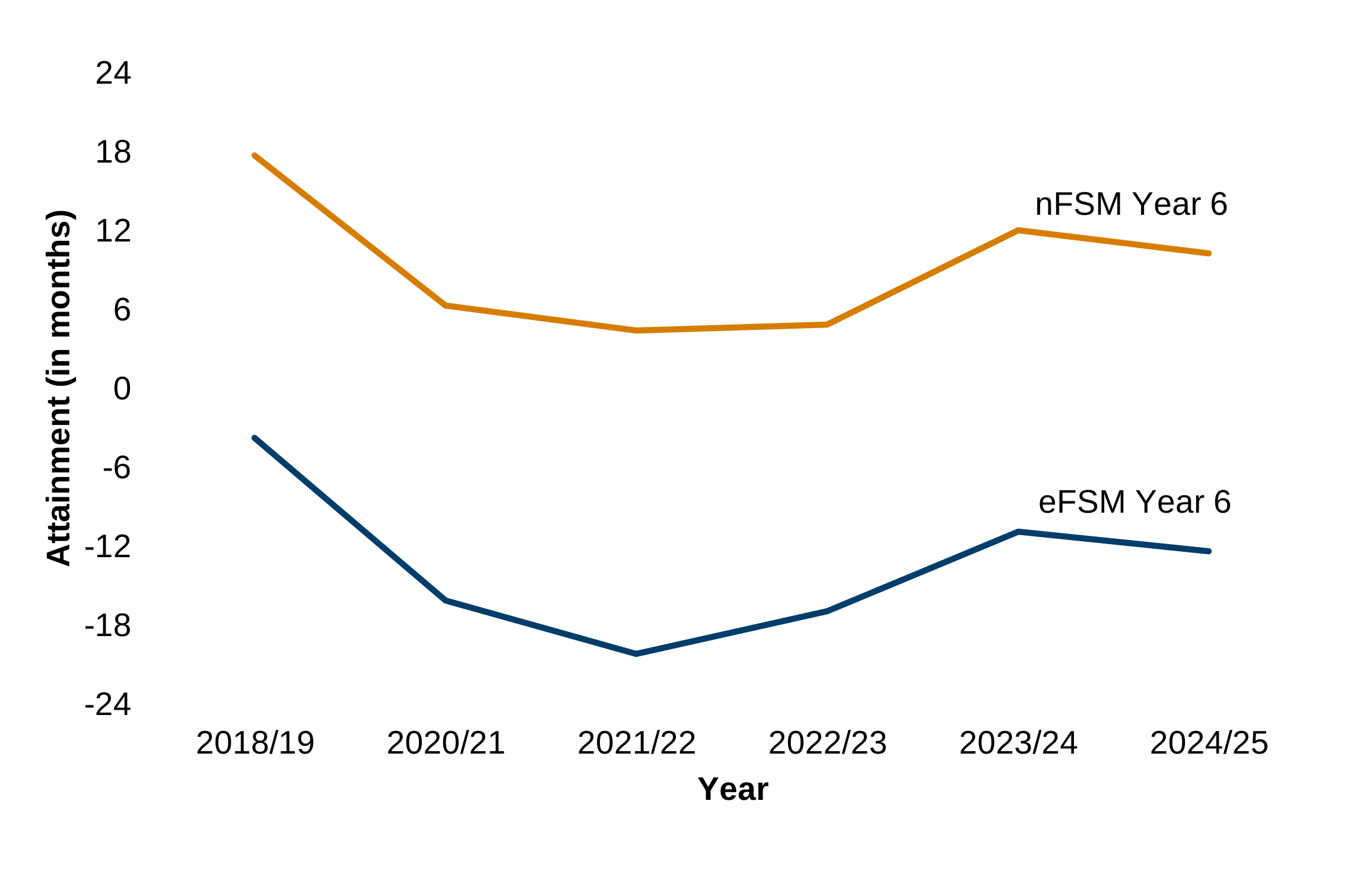
Description of figure 9: a line chart showing the average attainment of learners eligible for free school meals (eFSM) and learners not eligible for free school meals (nFSM) in Numeracy (Procedural), for the cohort of learners who were in Year 6 in each academic year.
Main points
- Attainment values consistently show that the average attainment of nFSM learners is higher than that of eFSM learners.
- In Year 6 (see Figure 9) the difference in attainment was 23 months, remaining relatively stable between 2023 to 2024 and 2024 to 2025. In 2018 to 2019 the difference was 22 months, increasing to 25 months in 2021 to 2022, before returning to 22 months in 2022 to 2023.
- In 2024 to 2025, Year 7 has the largest difference in attainment of 30 months, whilst Year 3 has the smallest difference of 13 months (see table 9a in the accompanying spreadsheet).
Summary
In Numeracy (Procedural) assessments, overall, the difference in attainment for eFSM has remained relatively constant between 2018 to 2019 and 2024 to 2025, varying slightly year to year, with average attainment of nFSM learners higher than that of eFSM learners.
Welsh Reading
Figure 10: Welsh Reading - attainment in 2020/21 to 2024/25 by free school meal eligibility, in months
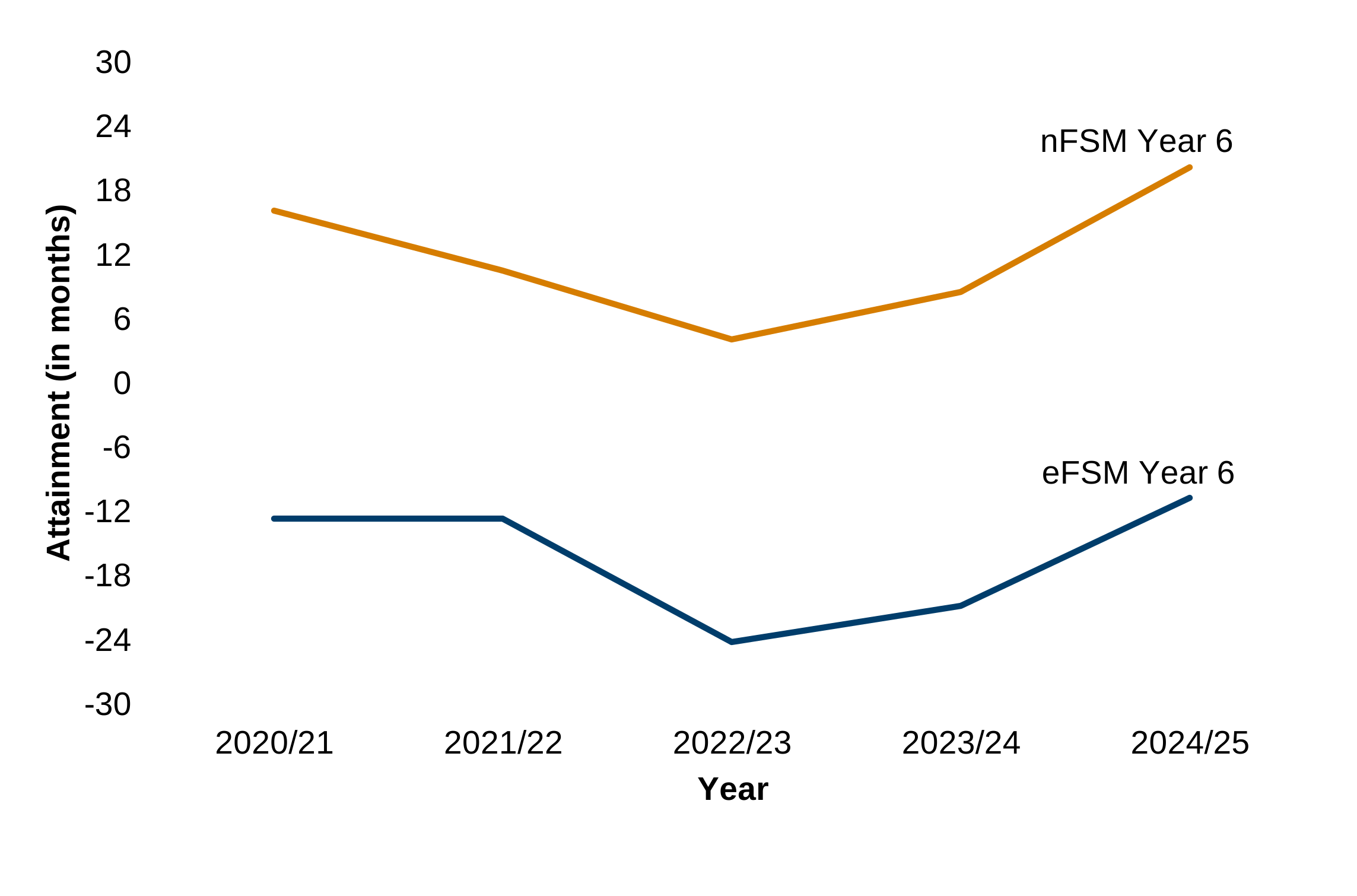
Description of figure 10: a line chart showing the average attainment of eFSM and nFSM learners in Welsh Reading, for the cohort of learners who were in Year 6 in each academic year.
Main points
- Attainment difference values consistently show that the average attainment of nFSM learners for Welsh Reading is higher than that of eFSM learners.
- In Year 6 (see Figure 10) there was a difference in attainment of 31 months in 2024 to 2025, an increase of 2 months relative to 2023 to 2024. In 2020 to 2021, the difference in attainment was 29 months, decreasing to 23 months in 2021 to 2022, before increasing to 28 months in 2022 to 2023.
- In 2024 to 2025, Year 8 had the largest difference in attainment of 45 months, and Year 2 had the smallest difference of 26 months (see table 10a in the accompanying spreadsheet).
Summary
In 2024 to 2025, the attainment difference for FSM for Welsh Reading was larger than in previous years for the younger years, having increased since 2021 to 2022, and remained steady in Year 9.
English Reading
Figure 11: English Reading - in 2020/21 to 2024/25 by free school meal entitlement, in months
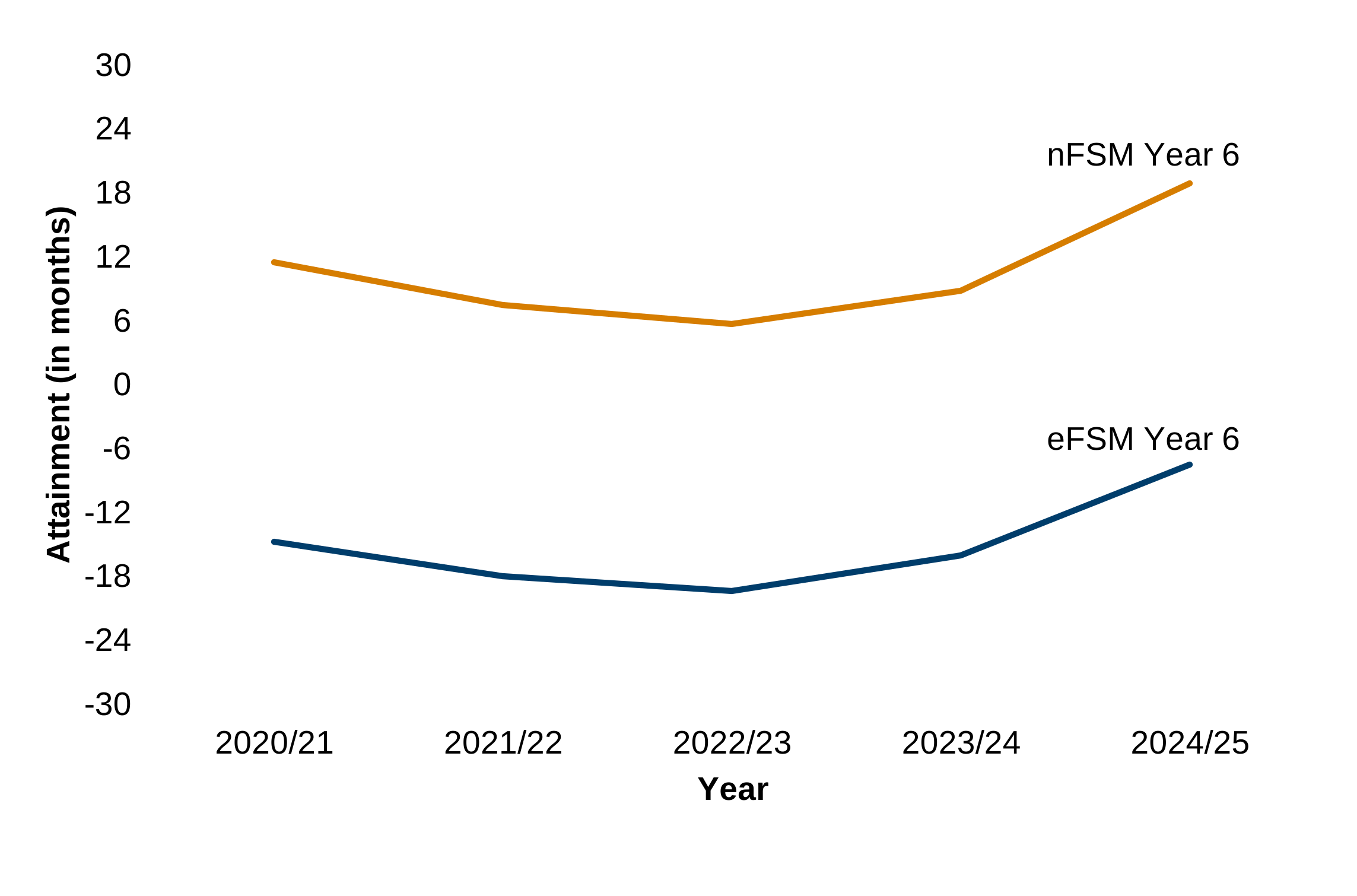
Description of figure 11: a line chart showing the average attainment of eFSM and nFSM learners in English Reading, for the cohort of learners who were in Year 6 in each academic year.
Main points
- Attainment values consistently show that the average attainment of nFSM learners for English Reading is higher than that of eFSM learners.
- In Year 6 (see Figure 11) the difference in attainment was 26 months in 2024 to 2025, an increase of 2 months from 2023 to 2024. In 2020 to 2021, the difference in attainment was 26 months, decreasing to 25 months in 2022 to 2023.
- In 2024 to 2025, Year 7 has the largest difference in attainment of 43 months, and Year 3 had the smallest difference of 15 months (see table 11a in the accompanying spreadsheet).
Summary
For English Reading, the attainment difference for FSM increased relative to 2023 to 2024 for all year groups and is now the largest difference to date, for most year groups.
Numeracy (Reasoning)
Figure 12: Numeracy (Reasoning) - attainment in 2021/22 to 2024/25 by free school meal entitlement, in months
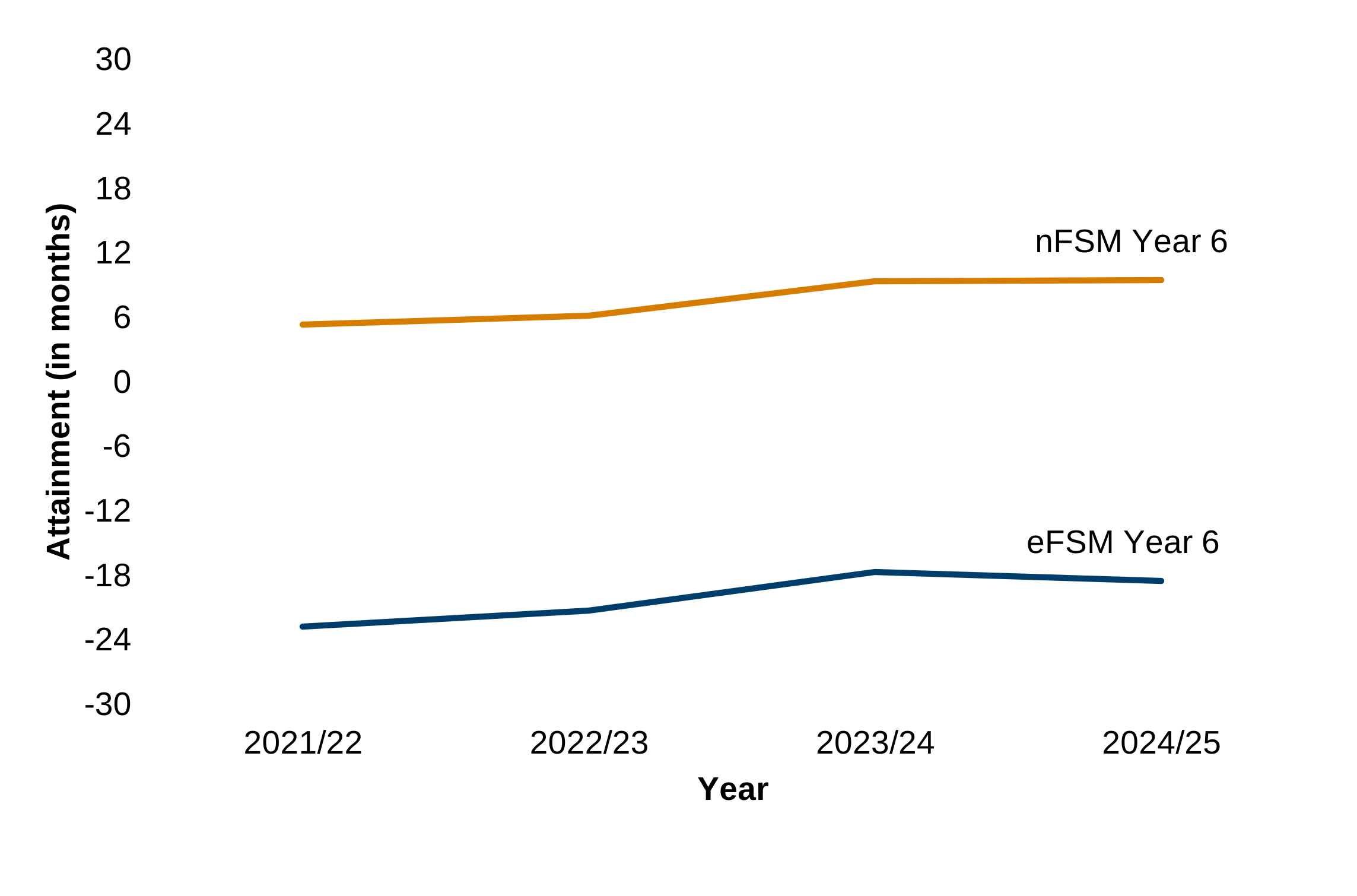
Description of figure 12: a line chart showing the average attainment of eFSM and nFSM learners in Numeracy (Reasoning), for the cohort of learners who were in Year 6 in each academic year.
Main points
- Attainment difference values consistently show the average attainment of nFSM learners for Numeracy (Reasoning) to be higher than that of eFSM learners.
- For Year 6 (see Figure 12) the difference in attainment was 28 months in 2024 to 2025, a 1 month increase from 2023 to 2024. In 2021 to 2022 the difference in attainment was 28 months, and 27 months in 2022 to 2023.
- In 2024 to 2025, Year 9 had the largest difference in attainment of 30 months, and Year 3 had the smallest difference of 14 months.
Summary
In 2024 to 2025 the difference in attainment for eFSM in Numeracy (Reasoning) has slightly increased for most year groups, but the overall pattern across time is that the difference over different academic years remains approximately steady.
Attainment by ethnicity
To examine the effects of ethnicity on attainment, a similar approach was taken to the other analyses of demographic variables in previous sections of this report by comparing individual ethnic groups against a reference ethnic group. For ethnicity analysis we chose White – British 2022 to 2023 as the reference group and year. This was because White – British is the largest ethnic group in Wales, providing a stable baseline to compare other groups. The academic year 2022 to 2023 was chosen as this was the same one chosen for other analyses. Due to small numbers of learners in some ethnic groups, data in Wales are summarised for 19 major ethnic groups in Wales and to focus this section we present only those that showed a statistically significant difference from White – British learners. Point 0 on the vertical axis represents “White – British” learners in 2022 to 2023, and we also show “White - British” attainment in other academic years in relation to this. The complete set of outcomes by ethnicity can be found in the data tables that accompany this report.
Differences based on 10 or fewer cases have been suppressed to protect the confidentiality of data about individual learners. In the charts below suppressed values are indicated with a [c] symbol. The graphs below only include ethnic groups where there was a statistically significant difference in outcomes between that ethnic group and White British. Therefore, there may be different ethnic groups shown in each chart. Where an ethnic group is not shown then their outcomes were not statistically different to the outcomes of White British learners. Positive differences above the 0 point on the vertical axis indicate that the ethnic group has higher attainment compared to White British learners in 2022 to 2023, while a negative difference indicates that the group of learners’ attainment is below the level of this reference group. Data for all academic years are available in the accompanying spreadsheet.
Summary of attainment by ethnicity
There is a difference in attainment in favour of Chinese or Chinese British, White and Asian, Any other Asian background, and Any other mixed background learners in the Numeracy (Procedural) and (Reasoning) assessments and English Reading. For Welsh Reading the difference in attainment was most pronounced in favour of White and Asian and Any other White background.
Gypsy, Roma and Traveller learners had lower levels of attainment across all assessments, across all academic years for which assessment information is available.
The difference in attainment for ethnic groups above the level of White British learners in 2022 to 2023 increased for most groups across all subjects in 2024 to 2025, relative to 2023 to 2024.
Numeracy (Procedural)
Figure 13: Numeracy (Procedural) - difference in attainment in 2018/19, 2022/34 and 2024/25 by ethnicity, in months, relative to White British learners in 2022/23
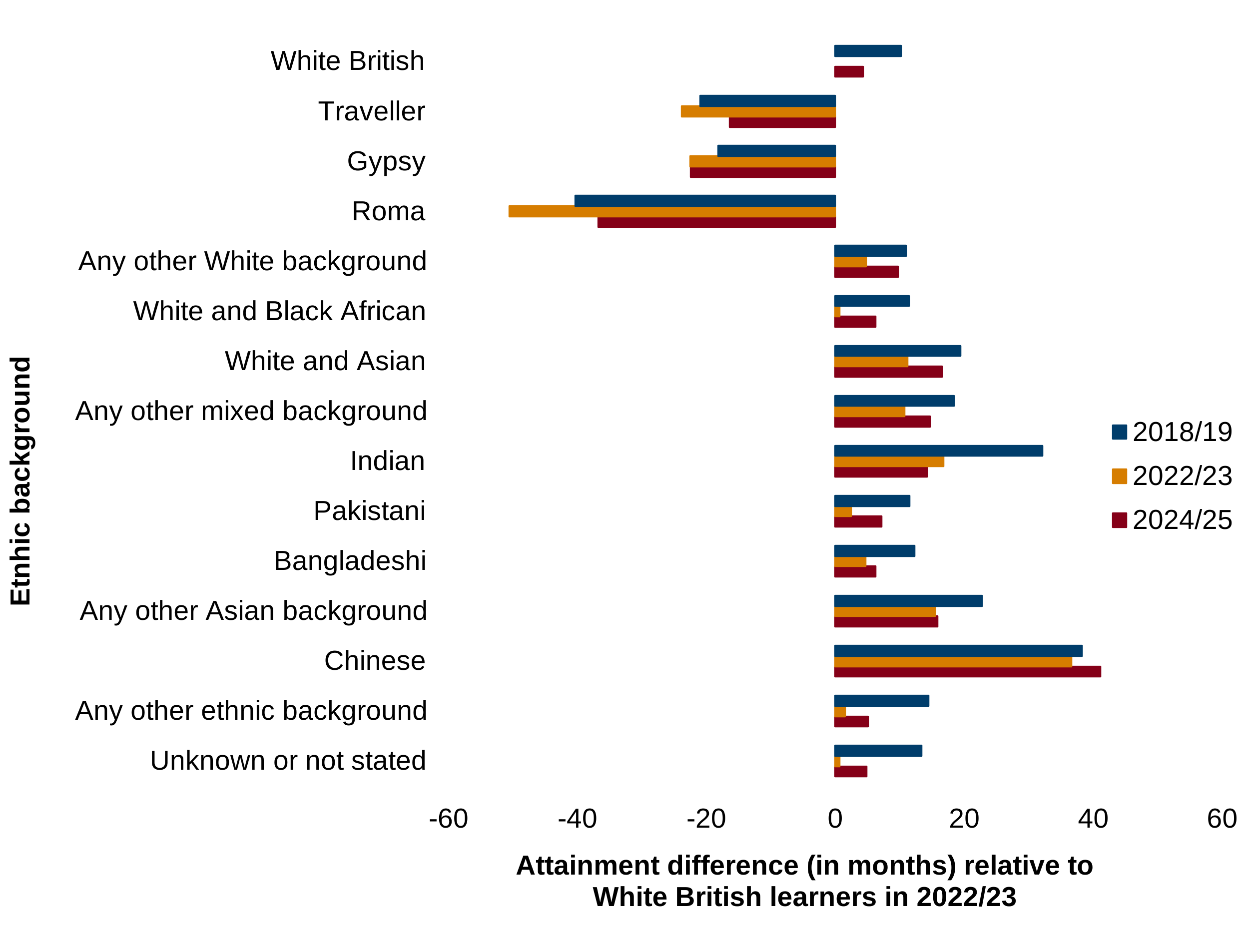
Description of figure 13: a bar chart showing the average difference in attainment for Numeracy (Procedural) assessments between different ethnic groups, relative to White British learners in 2022 to 2023.
Main points
- In 2024 to 2025, Gypsy, Roma and Traveller learners’ attainment was significantly below the level of the 2022 to 2023 cohort of White British learners.
- In 2024 to 2025, all other learners shown in the chart had significantly higher attainment than the 2022 to 2023 cohort of White British learners, with Chinese or Chinese British having the highest attainment.
Welsh Reading
Figure 14: Welsh Reading - difference in attainment in 2020/21, 2022/23 and 2024/25 by ethnicity, in months, relative to White British learners in 2022/23 [Note 1]
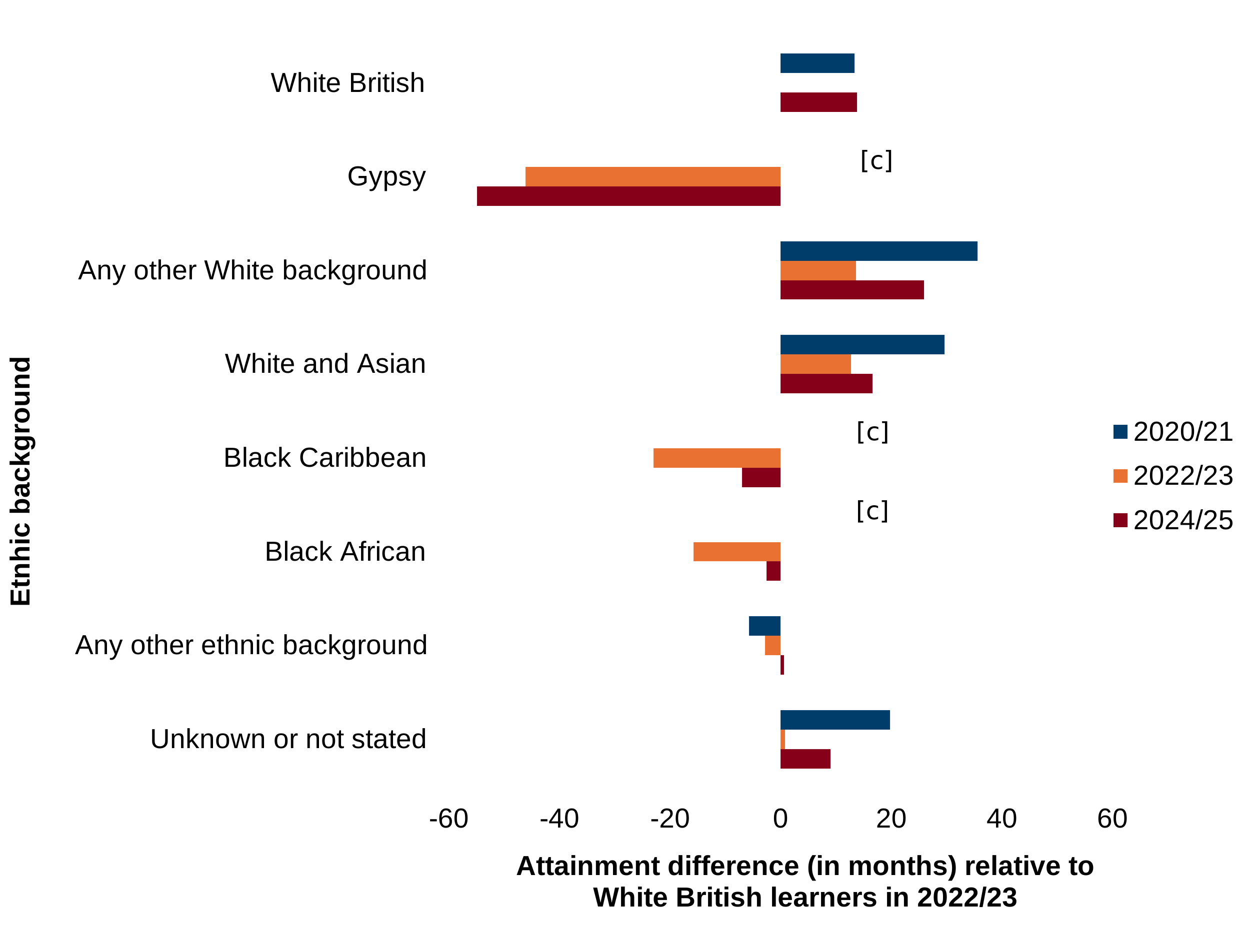
Description of figure 14. a bar chart showing the average difference in attainment for Welsh Reading assessments between different ethnic groups, relative to White British learners in 2022 to 2023.
[Note 1] the [c] in figure 14 denotes that data item is disclosive or not sufficiently robust for publication.
Main points
- In 2024 to 2025, Black African, Black Caribbean and Gypsy learners’ attainment was below the level of the 2022 to 2023 cohort of White British learners.
- In 2024 to 2025, attainment for all other learners shown in the chart was above the level of the 2022 to 2023 cohort of White British learners.
English Reading
Figure 15: English Reading - difference in attainment in 2020/21, 2022/23 and 2024/25 by ethnicity, in months, relative to White British learners in 2022/23
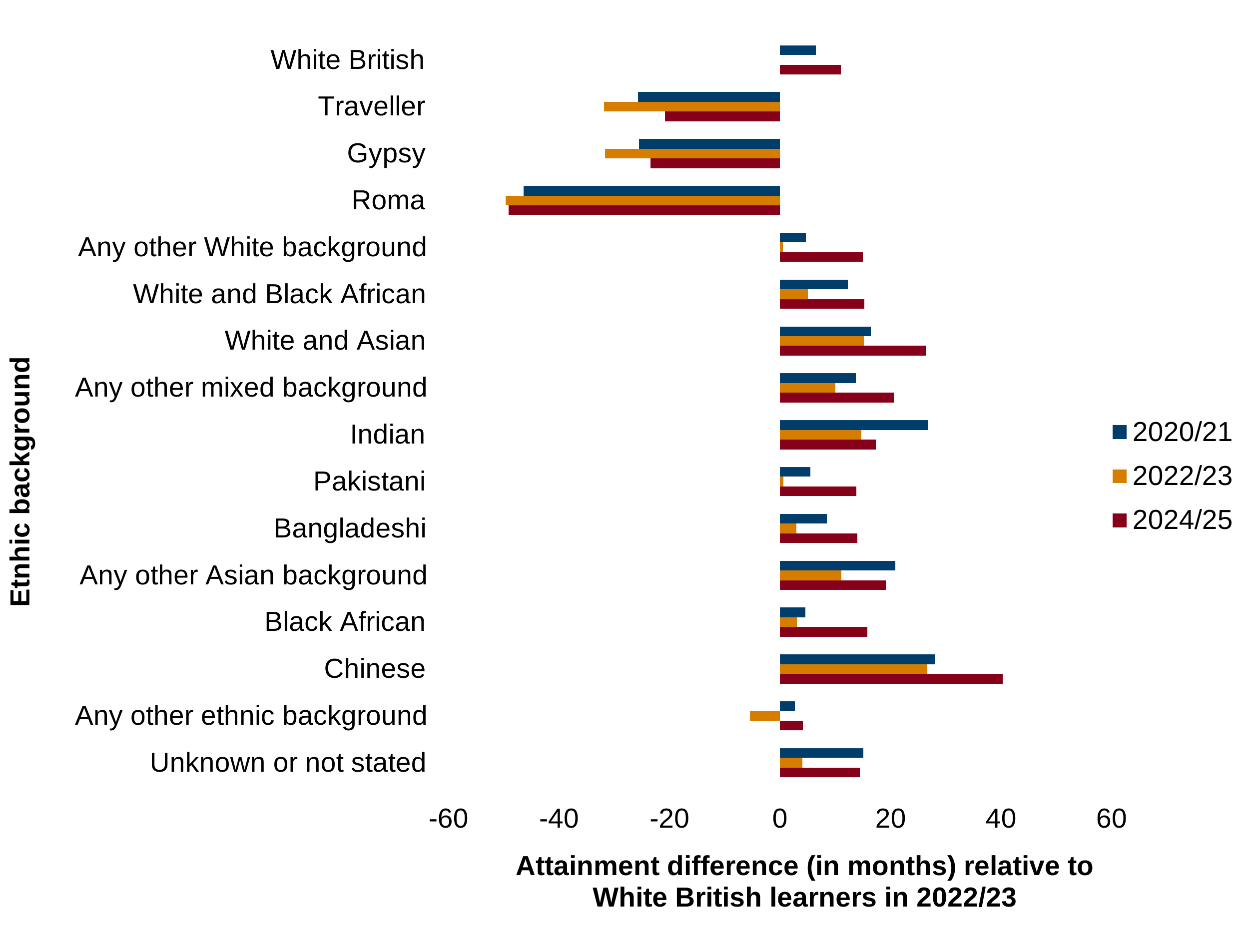
Description of figure 15: a bar chart showing the average difference in attainment for English Reading assessments between different ethnic groups relative to White British learners in 2022 to 2023.
Main points
- In 2024 to 2025, Gypsy, Roma and Traveller learners’ attainment was below the level of the 2022 to 2023 cohort of White British learners.
- In 2024 to 2025, attainment for all other learners shown in the chart was higher than the 2022 to 2023 cohort of White British learners.
Numeracy (Reasoning)
Figure 16: Numeracy (Reasoning) - difference in attainment in 2021/22, 2022/23 and 2024/25 by ethnicity, in months, relative to White British learners in 2022/23
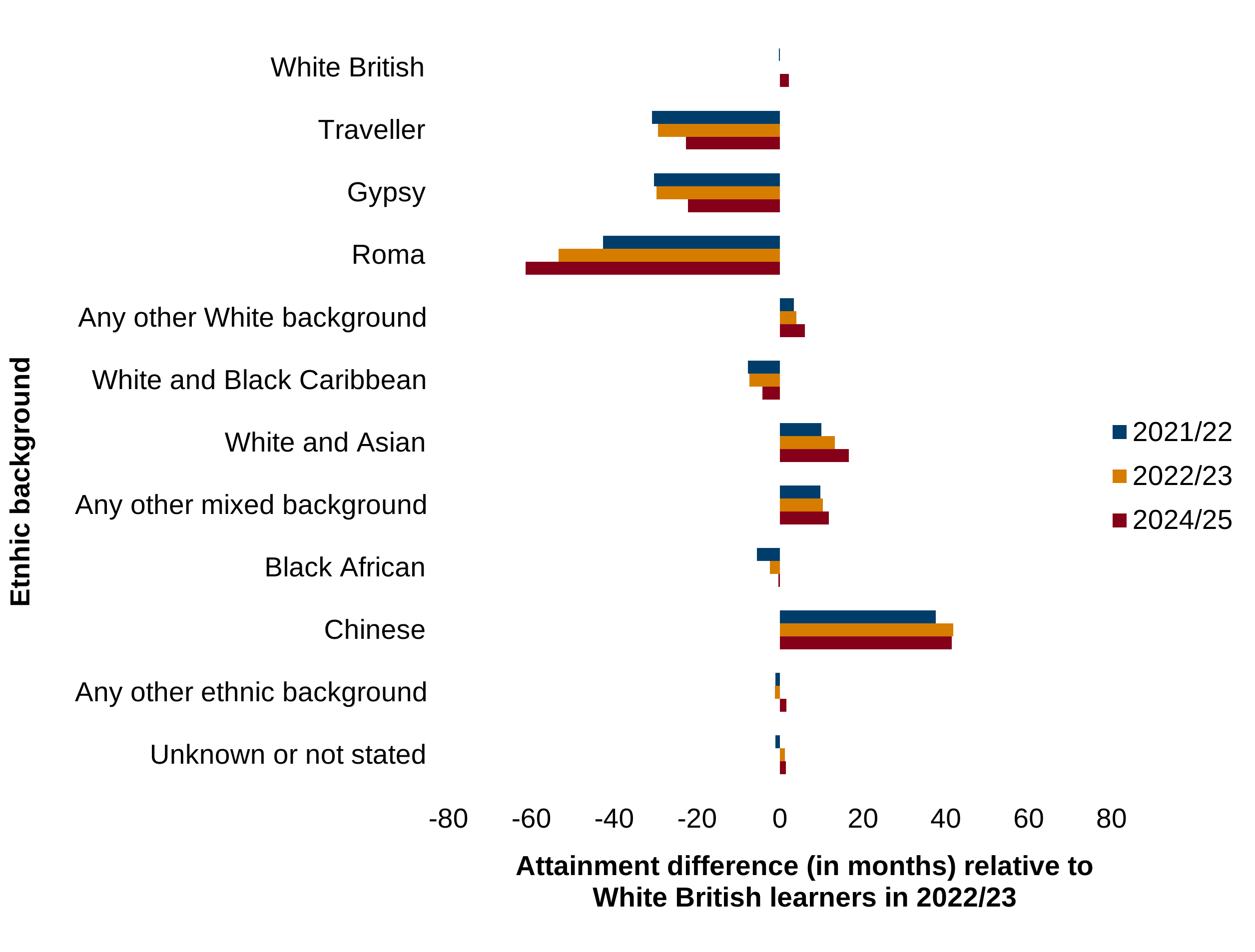
Description of figure 16: a bar chart showing the average difference in attainment for Numeracy (Reasoning) between different ethnic groups and White British learners in 2022 to 2023.
Main points
- In 2024 to 2025, Black African, Gypsy, Roma, Traveller and White and Black Caribbean learners’ attainment was below the level of the 2022 to 2023 cohort of White British learners.
- In 2024 to 2025, attainment for all other learners shown in the chart was above the level of White British learners in 2022 to 2023.
Further information
This is the fourth release on reading and numeracy based on national-level data from personalised assessments. It is intended that further releases using personalised assessment data will be made.
Quality and methodology information
Updated question difficulty scales
Question difficulty scales are updated regularly to give teachers and learners the most accurate information available. As we collect more information from the personalised assessments, our understanding of the ability of year groups will grow and item difficulties can be updated to reflect this new information. A new difficulty scale was introduced in 2023 to 2024 to ensure the difficulty estimates for each assessment question were as up-to-date and as representative of the population of learners in Wales as possible and were first published in the 'Patterns of attainment in reading and numeracy: September 2018 to August 2024' release in this series. This release continues to use this new difficult scale but publications in this series before June 2025 will use the previous difficulty scale for years up to and including 2022 to 2023 and will not match the data in this release for those same academic years. Additional information can be found in the Updating the item difficulty scale section in the technical annex of the June 2025 publication.
Statement of voluntary application of the Code of Practice for Statistics
These statistics are not classed as official statistics. However, we have applied the principles of the Code of Practice as far as possible during development.
These statistics have been developed at pace and published at the earliest possible opportunity to assist users in understanding the patterns of attainment in reading and numeracy for our younger learners and the potential impact of the COVID-19 pandemic. It has not yet been possible to meet the following requirements for official statistics.
- There has not yet been an opportunity to engage with users not working in the education sector to understand what they need from these statistics.
We have voluntarily applied the Code of Practice for Statistics (UK Statistics Authority) as follows.
Trustworthiness
The data have been extracted from operational systems and tabulated by external contractors with extensive experience in analysing and presenting such information and include professional statisticians. The release has been produced with advice from statisticians who work under the supervision of the Welsh Government Chief Statistician to ensure that the statistics, data and explanatory material is presented impartially and objectively.
All personal data underlying these statistics are processed in accordance with the requirements of the Data Protection Act 2018. We have put in place a thorough governance process with the contractor to ensure that the data are securely managed and reviewed before release.
Quality
The data in this release originate from the online adaptive personalised assessments taken annually by all learners in Years 2 to 9. This has been matched with demographic data on learners from our annual school census. Both sources originate from schools and undergo extensive validation both on entry in individual schools and once the data has been received by us. These data sources are considered to be of sufficient quality to support this analysis. All stages in the collection, validation and production of these statistics are supported by professional statisticians working for the contractor and statisticians from the Government Statistician Group.
Our data collection tools and processes have been tailored and refined to suit the requirements of these assessments. Established and proven statistical techniques and packages have been used to ensure the robustness of the analysis.
All data are quality-assured prior to publication. The analysis has been verified by independent analysts, and all outputs have passed through multiple rounds of review.
Value
By summer 2025 learners in Wales were assessed for the third year in Numeracy (Reasoning), marking the point at which there were at least three years of data for all four areas that are assessed. This provided sufficient data to be able to present a robust national picture. We have published this release at the earliest opportunity to assist users in understanding patterns of attainment in reading and numeracy over time and the potential impact of the COVID-19 pandemic, particularly amongst our youngest learners.
The figures have been published in an accessible ODS format which can be shared and reused widely and which complies with the Government Analysis Function guidance on releasing statistics in spreadsheets. Data are clearly presented in each table, with the spreadsheet also including a cover sheet listing each table. The commentary and notes in the release have been developed to try to make the information as accessible as possible to the widest range of users.
The data in this release is extracted directly from information made available to schools, learners and teachers following the completion of the online assessments. This does not place any additional burden on learners, teachers, schools or local authorities.
This is the fourth release in what will become an annual official statistics release. Following this release, we will be consulting with users on the content, timing and accessibility of this release. We will use this feedback to improve subsequent releases.
Relevance
The purpose of personalised assessments is to support progression in reading and numeracy by providing learners, schools, parents and carers with feedback on skills and progress. At a national level, anonymised data from personalised assessments can also provide information on patterns of attainment and demographic differences which may help support understanding of educational trends in Wales over time.
Accuracy
The Welsh Government works closely with the appointed supplier to deliver the online personalised assessments in order to ensure all data are validated before tables are published. Various stages of automated validation and sense-checking are built into the process to ensure a high quality of data.
More information on the nature and administration of the personalised assessments can be found on the personalised assessments (Hwb) pages of the Welsh Government website.
Timeliness and punctuality
These results are being published at the earliest opportunity to assist users in understanding patterns of attainment in reading and numeracy over time and the potential impact of the COVID-19 pandemic. The assessments covered in this release were taken up to the end of the summer term 2025.
Accessibility and clarity
This Statistical Release is pre-announced and then published on the Statistics section of the Welsh Government website. It is accompanied by an Open Document Spreadsheet.
Comparability
The personalised assessments have been designed to meet the needs of learners and teachers in Wales and are not comparable with assessment data for other countries e.g. SATS (Standard Assessment Tests) in England.
Well-being of Future Generations Act (WFG)
The Well-being of Future Generations Act 2015 is about improving the social, economic, environmental and cultural wellbeing of Wales. The Act puts in place seven wellbeing goals for Wales. These are for a more equal, prosperous, resilient, healthier and globally responsible Wales, with cohesive communities and a vibrant culture and thriving Welsh language. Under section (10)(1) of the Act, the Welsh Ministers must (a) publish indicators (“national indicators”) that must be applied for the purpose of measuring progress towards the achievement of the Well-being goals, and (b) lay a copy of the national indicators before Senedd Cymru. Under section 10(8) of the Well-being of Future Generations Act, where the Welsh Ministers revise the national indicators, they must as soon as reasonably practicable (a) publish the indicators as revised and (b) lay a copy of them before the Senedd. These national indicators were laid before the Senedd in 2021. The indicators laid on 14 December 2021 replace the set laid on 16 March 2016.
Information on the indicators, along with narratives for each of the wellbeing goals and associated technical information is available in the Wellbeing of Wales report.
Further information on the Well-being of Future Generations (Wales) Act 2015.
The statistics included in this release could also provide supporting narrative to the national indicators and be used by public services boards in relation to their local wellbeing assessments and local wellbeing plans.
Contact details
School Statistics
Email: school.stats@gov.wales
Media: 0300 025 8099
SFR: 50/2026