
Research on the potential for establishing a National Centre for Independent Living in Wales - Executive summary
We worked with the Disability Rights Taskforce to conduct research into options for a National Centre for Independent Living and how it could operate. We wanted to test how we co-produce research to support disabled people.
In this page
Background and introduction
Research rationale
In September 2023, the Chairs of the Disability Rights Taskforce (DRTF) Working Groups agreed to collaborate with the Disability Disparity Evidence Unit (DDEU) with the aim of co-producing Government Social Research (GSR). The DRTF had previously identified a series of recommendations, one of which related to Independent Living.
The working group members recommended establishing a National Centre for Independent Living (NCFIL), to be run and controlled by disabled people. It would be aimed at:
- strengthening knowledge and understanding about the right to Independent Living
- increasing knowledge and skills regarding good practice in supporting and achieving Independent Living
- devising strategies to broadening access and take-up of Direct Payments including developing the market for Personal Assistants
- maximising the role of local Centres for Independent Living through provision of support and access to resources
This research aimed to further explore this DRTF Working Group recommendation with a range of stakeholders and use a co-production approach.
Independent Living in Wales
In 2019, the Welsh Government published Action on Disability: The Right to Independent Living, which set out its actions to address the main issues faced by disabled people across a range of policy areas.
It also made clear Welsh Government’s support for the UN Convention on the Rights of Disabled People (UNCRDP), making a commitment to consider how the convention could be effectively embedded in Welsh law.
Throughout this report we refer to the convention as the ‘Convention on the Rights of Disabled People’ or UNCRDP rather than the given name, ‘Convention on the Rights of People with Disabilities’. This is to reflect our commitment to the Social Model of Disability.
The Convention was adopted by the UN General Assembly in 2006 and ratified by the UK in 2009. It acts as an agreement by governments to recognise and protect the rights of disabled people. This includes those rights relating to Independent Living which are summarised by the Equality and Human Rights Commission as:
- disabled people have an equal right to live in and take part in the community
- disabled people have the right to the same choice and control as non-disabled people
- governments should do everything they can to ensure disabled people enjoy these rights
Data on wellbeing outcomes for disabled people in Wales
As of the 2021 Census, disabled people, as defined as those who have a physical or mental health condition or illness lasting or expected to last 12 months or more, made up 21% of the population. This is 670,000 people in Wales. Approximately 48,500 adults in Wales had a care and support plan as of March 2024 according to Welsh Government Social Services activity data.
In 2002 the Welsh Government adopted the social model of disability. Rather than defining people as disabled by their impairment (i.e. the medical model of disability), people with impairments or long-term health conditions are considered to be disabled by physical, attitudinal and organisational barriers created by society. Many of the data sources in this section use medical model definitions of disability in line with the Equality Act 2010 definition. In the Equality Act a “disability” means a physical or a mental condition which has a substantial and long-term impact on your ability to do normal day to day activities. However, we have used social model language in this section where possible.
The Wellbeing of Wales 2024 data suggests that disabled people experience worse outcomes than non-disabled people across a number of areas related to Independent Living, including employment, income, and well-being.
According to the National Survey for Wales 2022-23, one in four disabled people or people with a limiting long-standing illness (25%) lived in a household in material deprivation. This is compared to 11% of non-disabled people. 22% of disabled people or people with a limiting long-standing illness said they feel lonely most or all of the time, compared to 7% of non-disabled people. Disabled people also had lower life satisfaction than non-disabled people.
The employment rate for disabled people aged 16 to 64 in Wales was 50.9% in the year ending September 2024. This is compared to a rate of 81.5% for non-disabled people. The employment rate gap was 30.6 percentage points. In 2023, for those in employment, disabled people in Wales earned, on average, £1.75 (12.2%) less per hour than non-disabled people.
Co-production approach
This research was a prototype for co-producing GSR. It set out to test if it is possible to co-produce this type of research, how much can be co-produced and to show how it could be done in the future.
The co-production team combined the lived experience of disabled people with a broad knowledge of disability rights and social research. The team included DRTF Working Group Chairs, and Welsh Government research and policy officials.
The team’s goal was to learn how to produce research together. This would improve the quality and use of evidence which informs decisions affecting disabled people.
Methodology
Based on the DRTF Working Group’s recommendation to establish an NCFIL, the co-production team developed an NCFIL Vision document, which included:
- the suggested overall scope for an NCFIL
- core elements of what ‘good’ Independent Living looks like
- suggested organisations and activities which could help to enable and support Independent Living
- the types of activities that an NCFIL could do
- suggested foundational principles for an NCFIL
- practical questions to consider for designing an NCFIL
The team held a deliberative workshop in October 2024 to explore ideas from the co-production team’s vision about establishing an NCFIL. The co-production team recognised that a wide range of stakeholders need to deliver the right services for Independent Living to work well. Participants were invited to take part in an extended discussion, with background information given, to support discussions. Participants were chosen to represent different experiences and knowledge about social care issues that affect disabled people. Participants included:
- disabled people
- representatives from a range of different impairment groups (IGs) and Disabled People’s Organisations (DPOs)
- trade unions
- local government and other public sector organisations
- the social care sector
- individuals working in academia or with other related expertise
- Welsh Government officials
A DPO is ‘an organisation led, directed, and governed by disabled people, with a commitment to the social model of disability and the promotion of human rights for disabled individuals’.
An IG can broadly be defined as ‘an organisation whose purpose is to further the interests of people with a specific impairment, which is not run and governed exclusively, or at all, by disabled people’.
In total, 30 participants from 19 different organisations contributed to the research.
Members of the co-production team jointly chaired and delivered the workshop. Welsh Government researchers observed the discussions and took notes of discussion themes and points of agreement.
The workshop was run as an online meeting to make the research accessible. Participants could contribute their views in alternative ways if they preferred.
An agenda, details of the discussion prompts, instructions for joining the virtual discussion and background information on Independent Living in Wales were shared ahead of the workshop.
The data collected are shown in this report as a summary of the participants’ views on the co-production team’s vision. This includes opinions on what Independent Living should mean in practical terms, how an NCFIL could help to support Independent Living for disabled people, and options for delivery models.
This research did not aim to fully evaluate the current approach to Independent Living in Wales. The participant sample was not fully representative of all types of stakeholders involved in social care and Independent Living.
There are some limitations associated with this method. It is important to make sure information given to participants is balanced and not biased towards one viewpoint. It can also result in bias as different groups of stakeholders may be more or less willing to attend a workshop than others.
Research findings
What Independent Living means in practice
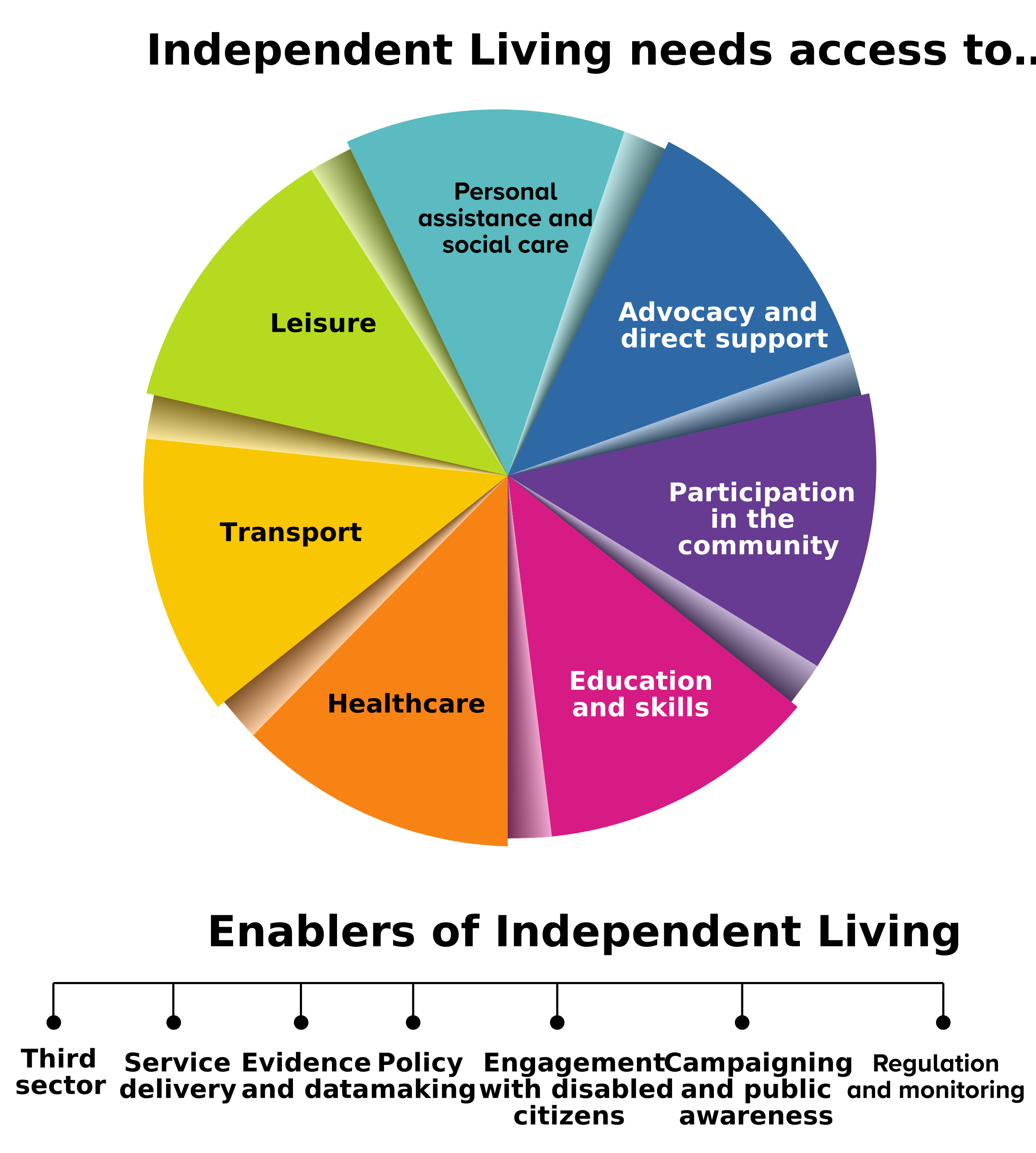
Participants deliberated on the co-production team’s vision of what excellence for Independent Living looked like. The following elements were identified by the co-production team within their vision for a NCFIL as being necessary for Independent Living.
- Personal assistance and social care
- Advocacy and direct support
- Participation in the community
- Education and skills
- Healthcare
- Transport
- Leisure
Participants were shown the following types of either organisation or activity which the co-production team had identified within their vision as helping to enable and support Independent Living.
- Third sector
- Service delivery
- Evidence and data
- Policy making
- Engagement with disabled citizens and co-production
- Campaigning and public awareness
- Regulation and monitoring
The diagram below includes the elements and enablers deemed as needed by the co-production team.
Figure 1: Elements of Independent Living and enablers taken from the co-production team’s Vision
Participants agreed that an important first step would be to agree to a definition of ‘Independent Living’ for an NCFIL and to share this with stakeholders. It was proposed that it should include the empowerment of disabled people to live a fulfilling life ‘on the same basis as their non-disabled peers’. Participants were aware of many variations in how different people interpreted the term. It was thought that an agreed definition would help people needing support to understand their rights. This could also raise awareness about how structures in society and practical services or processes need to work together to support disabled people.
It was felt that independent Living should mean appropriate social care but should also underpin other aspects including quality of life and personal fulfilment, and enable full engagement with the community. It was felt that it should not mean ‘doing things by yourself’ or living alone.
When considering excellence for Independent Living, it was widely agreed that disabled people need to be in positions to lead and influence decisions nationally. A ‘golden thread’ throughout discussions was considering how to ensure lived experience is taken into account when enabling Independent Living in Wales. Many participants spoke about the negative mental health impacts from feeling out of control of their own lives or living with worry about potential policy changes which could impact the support they receive.
Many participants perceived a gap between what should be available to support Independent Living and what happens in practice. This was felt to impact policy and service design as well as delivery.
Participants provided examples of organisations not complying with the Equality Act 2010 (Government Equalities Office and Equality and Human Rights Commission) including failure to properly assess the impacts of decisions on disabled people. Others highlighted the lack of guidance for those providing services under the Social Services and Well-being (Wales) Act 2014 (UK legislation) (SSWBA). They felt this made it difficult for organisations to understand how to adhere to the UNCRDP which sets out the overarching rights of disabled people.
The most common suggestion to enable Independent Living was having person-centred support with viable service options available and the ability to choose. This included good quality personal care, which participants felt that when working well positively impacts other areas of life such as work and family relationships. For example, it could enable parents to focus on parenting or provide the consistent and reliable support needed so that individuals can work or study. Participants also noted that other services need to work well to support wider aspects of life such as health, work, education, family and leisure.
Many felt that a vital element to enable Independent Living was an effective third sector, because it provides services direct to citizens and enables them to engage with decision-makers.
Participants considered the services that were available. Examples of limitations to services were highlighted. These included a lack of choices, or access to the right information in accessible formats that would enable choices to be made. It was noted that these examples go against the SSWBA principle of ‘Voice and Control’ of ‘putting the individual and their needs at the centre of their care’.
Negative experiences shared by participants showed that problems with collaboration between services can affect support for disabled people. Some described services as ‘fragmented’, and examples of individuals needing to access several different providers for support with a single issue were shared.
There were also experiences shared of different support services available in different parts of Wales. Some gave examples of variations in personal care services accessed through local authorities in terms of support offered and barriers to accessing Direct Payments (Social Care Wales) to pay for personal care.
What activities an NCFIL could do to improve Independent Living for disabled people in Wales
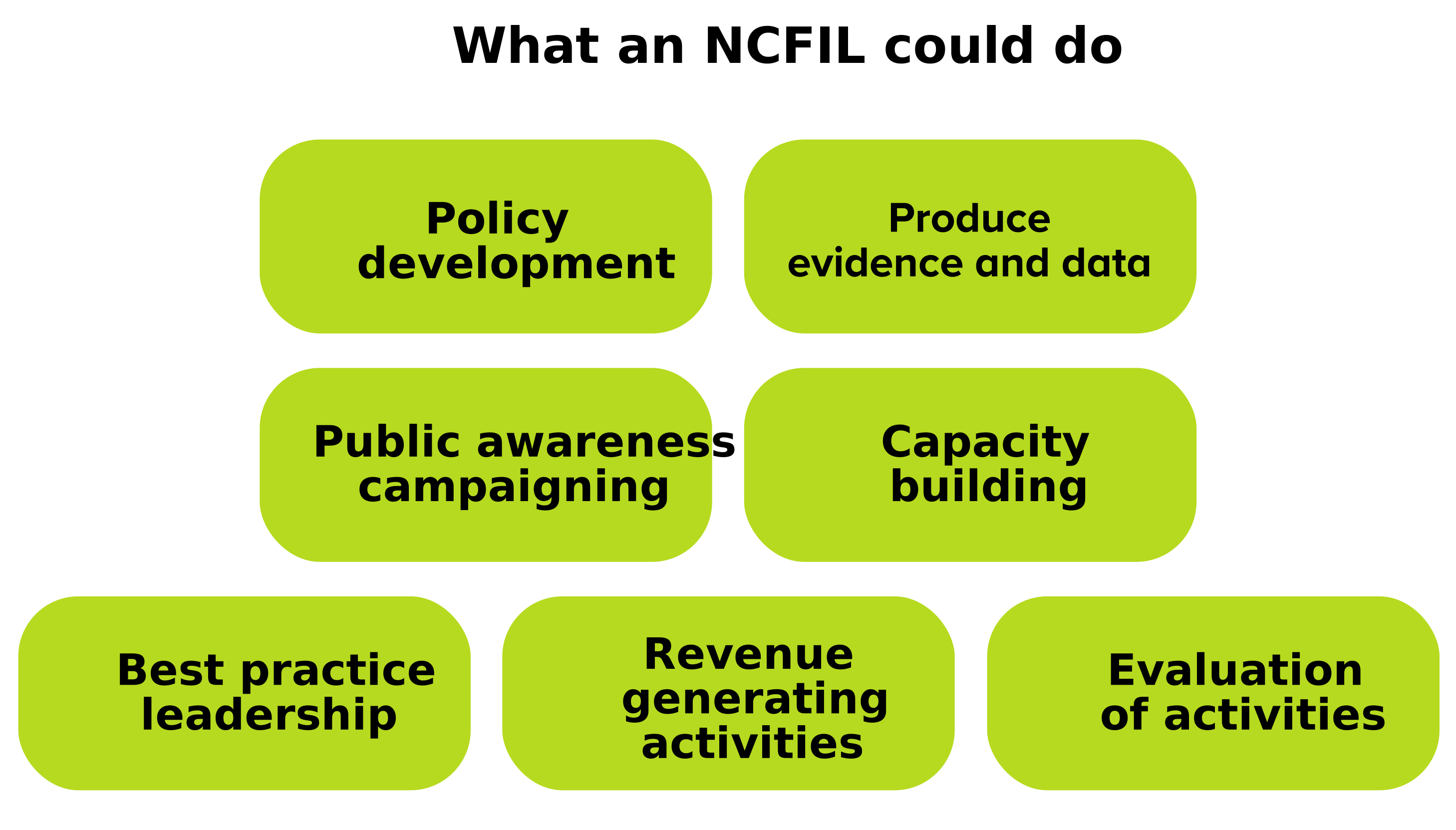
Participants felt that an NCFIL is needed to bring together stakeholders to enable Independent Living in a range of practical ways. Participants strongly agreed that the activities suggested by the co-production team in the NCFIL Vision (listed below) would help to enable Independent Living.
- Policy development: advocate for disabled people’s involvement in policy making in Wales to support Independent Living.
- Produce evidence and data: on Independent Living and disseminate findings to inform policy.
- Public awareness: campaigning, educational activity to change societal attitudes.
- Capacity Building and Networks: support local Centres for Independent Living (CILs) and other organisations supporting disabled people.
- Best practice leadership: develop guidance and best practice, training and networking opportunities to support organisations.
- Potential for revenue-generating activities: including consultancy services, training and product development.
- Evaluation to monitor the Centre’s activities against agreed success criteria.
Figure 2: Suggested activities for a National Centre for Independent Living taken from the co-production team’s Vision
Leadership and representation activities
Leadership and representation were deemed to be important to make an NCFIL effective in supporting Independent Living. In particular, having an NCFIL led by disabled people and with disabled people represented at all levels within the organisation. It was thought this would improve the quality of decision making and would provide a powerful example of disabled people in leadership positions. It would demonstrate to other organisations and to the public how to make a workplace accessible.
Participants said there was a need to improve how disabled people’s lived experience is included when central and local government make decisions and policies about social care and other factors which support Independent Living. It was felt that an NCFIL could facilitate meaningful citizen engagement.
Participants suggested that training should be available to encourage citizens to act as representatives. It was proposed that coaching could aim to improve confidence, public speaking skills, and provide citizens with the tools to feel able to represent themselves with a variety of audiences. Participants thought this could result in a greater diversity of voices involved in national conversations and avoid over-burdening a few individuals. It was deemed that fair remuneration (payment) should be given to individuals who act as representatives.
Communications and policy activities
Many saw a function of an NCFIL would be presenting a strong and unified voice to drive change and influence policy locally and nationally. It was felt that an NCFIL should represent disabled people’s interests in policy and decision making which impacts on Independent Living. It was suggested that it could take an overview of how different policy areas should work together to support disabled people, and communicate this to stakeholders. It could also provide lived experience perspectives. It was considered that messages being voiced by disabled people should also help the public to better understand the right to Independent Living.
Participants felt that an NCFIL could build networks and share expertise, which would help to reduce regional variations in services and support. Suggestions for how this might be achieved included development of a Wales-wide strategy for Direct Payments, and facilitating better collaboration across organisations.
Evidence and data
Participants suggested that an NCFIL could produce evidence and data to support better decision-making, which takes into account lived experience.
Some felt that there is insufficient data currently available to evaluate progress on tackling inequalities in Wales, and that an NCFIL could look at ways to improve the evidence to show whether policies were working effectively. Some noted a gap in accountability for organisations delivering outcomes related to Independent Living. It was felt that data reported generally focuses on outputs such as numbers of individuals supported, and this does not give a full picture of the impacts on disabled people. An NCFIL could also produce evidence that helps to understand what future priorities for supporting disabled people should be.
Some suggested that an NCFIL could support the establishment of an academic centre focusing on disability studies in Wales.
Supporting stakeholders
Participants felt that it was very important to support organisations that provide services to disabled people and advocate for them. Effective collaboration was deemed necessary for Independent Living. It was thought that supporting better collaboration would strengthen the link from local groups engaging with individuals, to national decision making.
Participants thought that an NCFIL could provide support to and bring together stakeholders who already deliver services. They felt this would need to complement what is already working well and should not duplicate what is already in place. Stakeholders mentioned were CILs, DPOs and Disability Wales, and local authority officials who support accessibility.
DPOs were seen to play a vital role in delivering services directly to citizens and were seen to be well positioned to understand issues at community level. It was noted by many that third sector organisations often have difficulties in securing regular funding and so are less able to deliver longer term, consistent services. Participants felt that support should be provided to improve resilience of DPOs. It was suggested that this could include training, professional services support, and peer networks. Best practice sharing was deemed to be particularly valuable to smaller organisations. It was thought this could include guidance on working with volunteers, accessible working, and communicating to others what Independent Living means in practice.
Participants suggested that best practice could be shared by established regional networks such as Regional Partnership Boards and the newly established National Office for Care and Support.
Volunteers were seen to play an important role within third sector organisations. However, participants noted that many such organisations rely largely on volunteers, with only a few paid employees to deliver services. This was deemed to present a sustainability risk, and participants felt that services that support disabled people should be adequately funded without the need to rely on unpaid labour.
Revenue generating activities
Participants identified gaps in current services which an NCFIL could help to fill, including providing training for organisations and individuals, accessibility awareness sessions, or training to conduct accessibility audits.
Practical considerations for designing an NCFIL
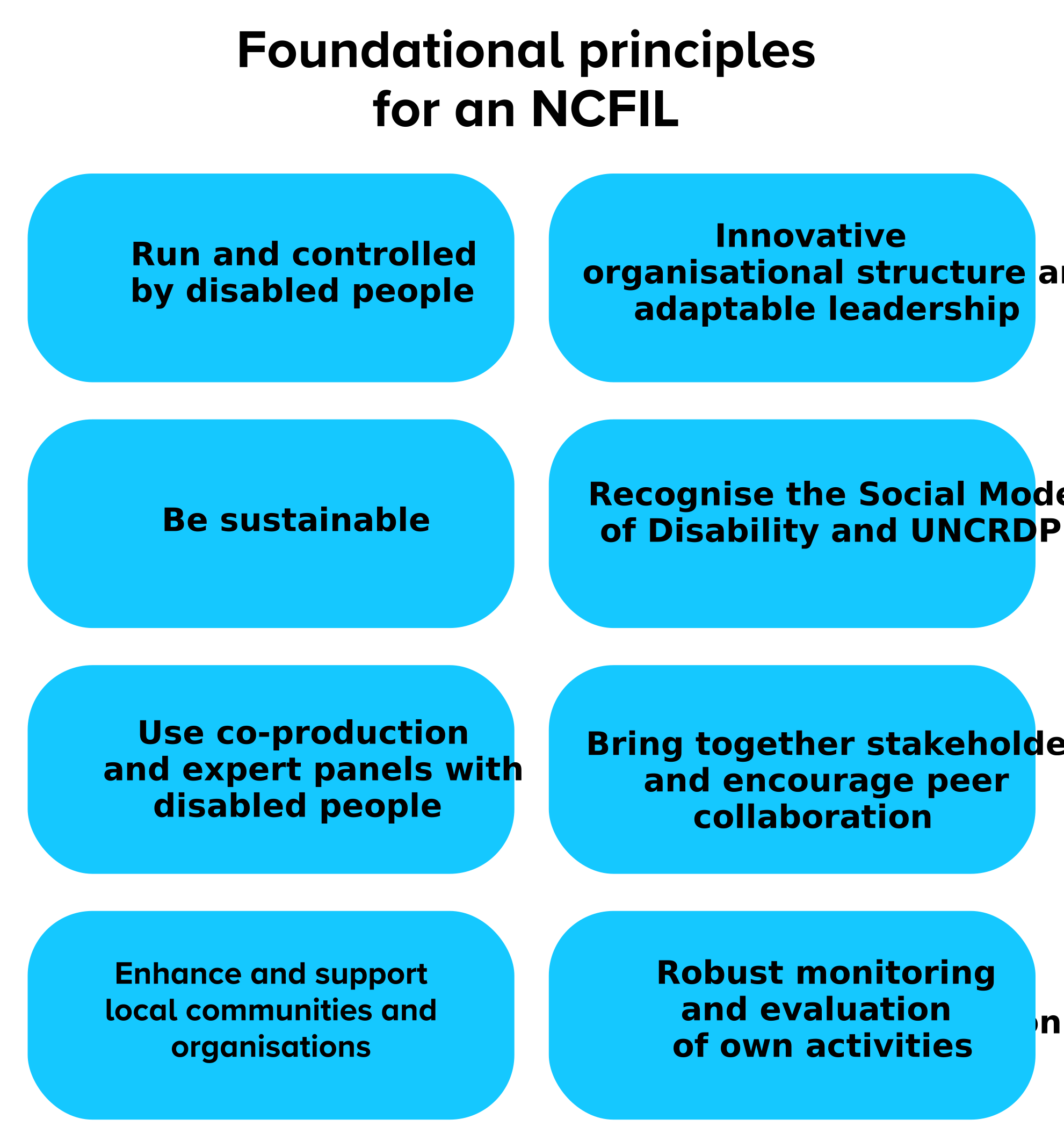
The co-production team proposed the following principles which, if built into the design of an NCFIL would help it to effectively deliver the proposed activities. Discussions explored some practical considerations and options for different organisational models below, with the principles in mind.
The co-production team’s vision suggested that an NCFIL should:
- be run and controlled by disabled people
- use an innovative organisational structure & adaptable leadership
- be sustainable
- recognise the Social Model of Disability & align to the UNCRDP
- use co-production and expert panels with disabled people active at all levels
- bring together stakeholders to encourage peer support and collaboration
- enhance and support local communities and organisations
- include robust monitoring and evaluation of its own activities
Figure 3: Foundational principles for a National Centre for Independent Living taken from the co-production team’s Vision
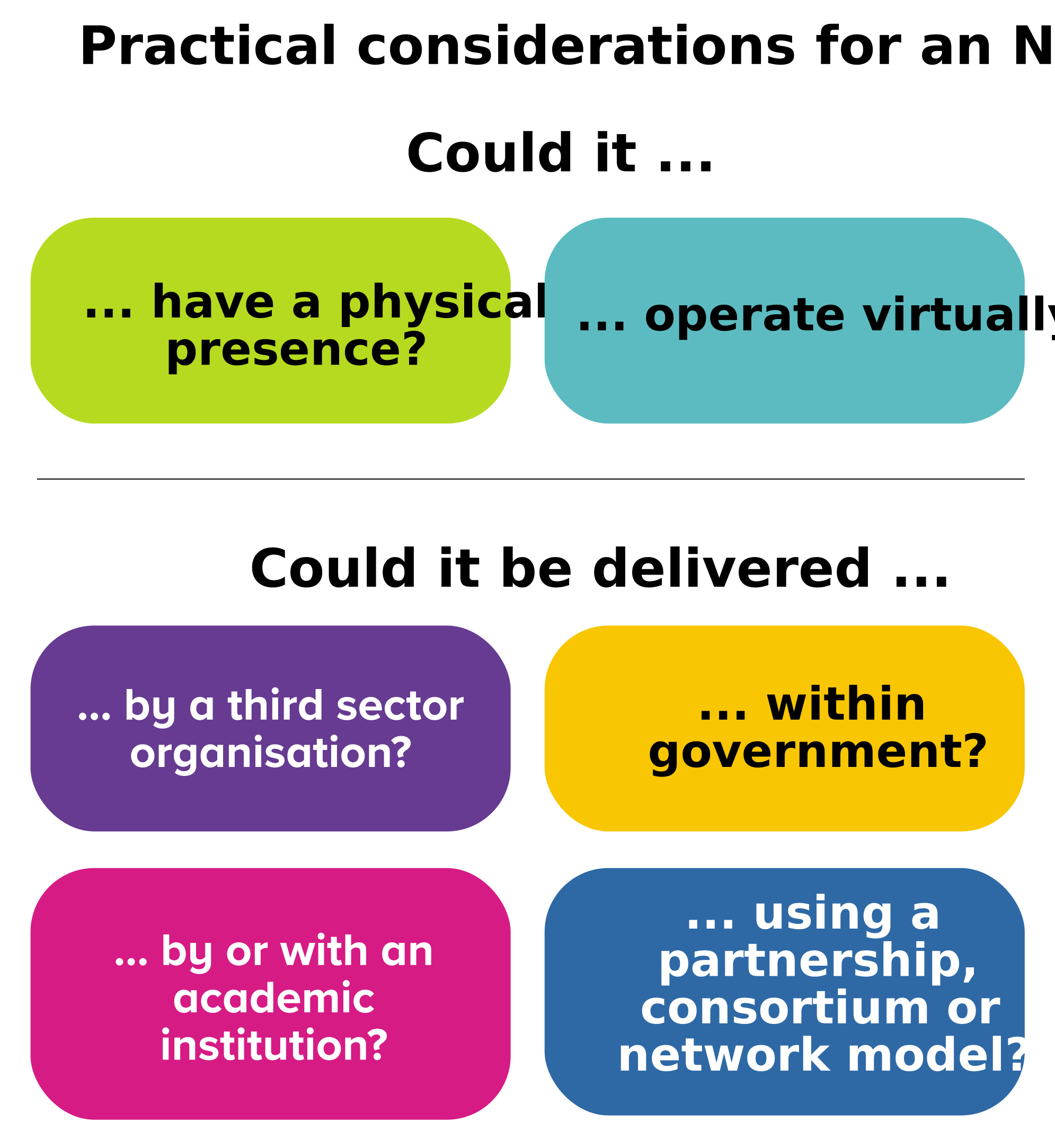
The co-production team identified the following practical considerations for participants to deliberate.
- Could it have a physical presence?
- Could it operate virtually?
- Could it be delivered by a third sector organisation?
- Could it be situated within government?
- Could it be delivered by or in partnership with an academic institution?
- Could it use a partnership, consortium, or network model?
Figure 4: Practical considerations for designing a National Centre for Independent Living taken from the co-production team’s Vision
The importance of lived experience
One of the most important considerations raised was the need to have lived experience at the heart of decision-making at all levels of an NCFIL. It was suggested this should include leadership within the organisation and include citizens’ voices through co-production. It should also provide accessible working environments and fair payment for employees and volunteers.
It was deemed that the establishment of an NCFIL within the third sector would work well to support inclusion of lived experience within leadership roles. Participants felt this would also enable effective engagement with disabled people. It was noted that many DPOs are run by disabled people.
Complementing existing stakeholder organisations
When exploring strengths and weaknesses of different types of organisations, all groups discussed models involving more than one organisation working together to deliver an NCFIL. Partnerships, hub and spoke models and networks were all considered as good options for delivering the wide range of proposed activities and areas impacting Independent Living.
Participants felt an NCFIL should be designed in a way that would support effective engagement with stakeholder organisations and citizens.
Some participants suggested that an existing organisation could be commissioned to set up an NCFIL. Others suggested that creating local authority access and advocacy posts could support some of the identified activities.
Accessibility
Accessibility for stakeholders was considered essential for an NCFIL to function well and to demonstrate a gold standard for accessible employment and stakeholder engagement. It was agreed that an NCFIL should offer a range of accessible ways for people to access its services including digital and non-digital.
It was deemed that the activities carried out by an NCFIL should be spread across Wales. Participants felt strongly that it was important to consider the varying access needs of disabled people living in different regions and different types of areas, for example cities, towns, and rural areas.
It was suggested that there could be risks around having an NCFIL in a single or main physical place. Some felt having it in Southeast Wales could make regional inequalities worse and alienate stakeholders in other regions.
A few had concerns that the building could become the focus instead of the activities of an NCFIL. Nevertheless, maintaining an in-person presence across Wales was deemed to be essential. Ideas to support regional engagement included working with networks of local third sector organisations or universities, having local or regional branches of an NCFIL, running in-person events across Wales, and working with Regional Partnership Boards.
Funding, strategy, and governance
Many participants thought an NCFIL should receive funding to deliver the main and most important activities. Others felt that generating independent sources of income would be more sustainable. Everyone agreed that sufficient funding to deliver core activities without reliance on volunteers would be needed.
It was thought that a benefit of situating an NCFIL within government would provide better access to funding, and some thought that an academic institution would also be well-placed to access grants to deliver activities. Whilst many advantages of establishing an NCFIL within the third sector were identified by participants, it was deemed that issues around funding, reliance on volunteers, as well as skills and capacity posed risks. It was suggested that a joint model involving other delivery partners could mitigate these risks.
It was felt an NCFIL would need to have control over its strategic direction and to be able to challenge effectively. Participants felt that situating an NCFIL within the academic sector would offer more freedom to set strategy than the other models proposed. Many thought that to have enough independence to have an impartial view, an NCFIL could not be set up within government, but some public sector organisational models were explored.
Some suggested considering an arms-length body with a government mandate, and others explored an NCFIL’s activities being delivered via local authorities though it was agreed that a national overview was necessary. Alignment to Regional Partnership Board structures was proposed by one group, who explored the idea of a hub and spoke model, linking local and national organisations and potentially involving other sectors such as academia and third sector.
Participants felt it would be important for an NCFIL to be able to find out what citizens wanted and needed, and to influence decisions that were being made at a national level. It was thought that a third sector model could effectively support this having access to citizens across Wales, through existing networks and local or community groups.
It was also suggested that an NCFIL’s strategy could be aligned to existing frameworks such as The Well-being of Future Generations, or Anti-racist Wales Action Plan: 2022.