
Restricting the promotion of high fat, salt and sugar foods: implementation guidance - Part 6: location promotions
How The Food (Promotion and Presentation) (Wales) Regulations 2025 restricts 'less healthy' products.
In this page
In store restrictions on location promotions
The regulations describe where qualifying businesses must not present specified food inside a physical store. They provide that the location restrictions apply to stores that have 185.8m2 (2,000 ) or greater of ‘relevant floor area’ and which do not only or mainly sell food from a single category in schedule 1. Please note the meaning of ‘relevant floor area’ set out within these regulations differs from that set out within the Sunday Trading Act 1994.
Parts of the store that do not count towards the relevant store area:
- parts which are not used for displaying goods or for serving customers in connection with the sale of goods
- parts used mainly for the preparation or sale of food intended for immediate consumption, whether on or off the premises (whether something is intended for immediate consumption will need to be assessed by the enforcement authority)
- rooms used for consultation with customers in connection with any medical services offered in the store
- a part occupied by a business (‘a concession’) other than the business primarily responsible for managing and operating the store, but only where the concession operates its own payment facilities (the definition of a concession is not dependent on whether staff working for the primary businesses run or work at the concession)
Examples of places that may be viewed as this part of a store (not exhaustive):
- storage areas
- stock rooms
- communal staff areas such as:
- break rooms
- locker rooms
- staff kitchens
- food preparation areas, for example, areas used mainly to cook and prepare items intended for immediate consumption
- deli counters if selling food intended for immediate consumption
- sandwich counters if selling food intended for immediate consumption
- coffee shops
- canteens
- pharmacy
- opticians’ services
- post office
- automated machines, for example, photobooths and vending machines that take their own payments and are not operated by the business primarily responsible for managing and operating the store
Diagrams of examples of the location restrictions can be found in annex 3.
Concessions
Concessions are defined in the regulations as being a business other than the business primarily responsible for managing and operating the store.
Concessions in stores do not contribute towards the calculation of the 185.8m2 (2,000 square feet) necessary for application of location promotion restrictions.
Concessions can be out of home businesses or retail businesses.
Example 1: on-site cafés
If a store has a total floor area of 2,500 square feet, but had a café on site that is run by a separate out of home franchise that is 550 square feet, this would take the relevant floor area to under the 185.8m2 (2,000 square feet) threshold and therefore the store would not be subject to the location restrictions.
The square footage of a store, however, does not determine its exemption from volume price promotions. Any business in scope of the policy, regardless of physical size, will be restricted from offering volume price promotions.
Example 2: retail concession counters
If a convenience store has a retail concession counter (for example, a counter selling prepacked food or a counter selling clothing with separate payment facilities), this retail concession counter will be exempt from the relevant floor area of that convenience store.
If said concession counter is a qualifying business but under 185.8m2 (2,000 square feet) it would be exempt from the location restrictions, but not the volume price promotion restrictions.
If a store has a concession which is a qualifying business and over 185.8m2 (2,000 square feet), the concession itself it would be subject to both the price and location restrictions as a qualifying business in its own right.
Restricted areas in store
Businesses in scope must not present specified food in store at any of the following areas.
Any area within 2m of a checkout facility
Checkout facility means a facility in the store intended to be used by consumers to pay for products. This includes a counter at which a cash register is used (including the area behind the counter) and a self-checkout terminal. It may also include other till points or electronic points of sale. However, specified food can be presented within 2m of a checkout facility if it is presented in (but not at the end of ) an aisle.
Any area within 2m of a designated queuing area
This can be defined as an area set aside and marked for the purpose of providing a place for consumers to wait to make a purchase. For example, it could be set aside or marked by signs, floor markings, barriers, units or shelving designed to guide customers in a queue to the point of purchase. However, specified food can be presented within 2m of a designated queueing area if it is presented in (but not at the end of) an aisle.
Ends of aisle displays
These are displays at the end of (but not in) an aisle, or on a separate structure (for example, an island bin, free-standing unit which could be a fridge or freezer, side stack or clip strip) connected or adjacent to, or within 50cm of, the end of an aisle. An end-of-aisle display may include displays facing the checkout, into the store or the store perimeter. An ‘end-of-aisle display’ is not in an aisle but instead the perpendicular end of the aisle, which will need to be assessed by the enforcement authority when assessing the premises.
Store entrances
The regulations restrict the presentation of specified food at any point within the prohibited distance of the midpoint of any public entrance to the store’s main shopping area. Specified food should not be placed at any point within this area, irrespective of whether it can be seen from the store entrance. Diagrams can be found in annex 3.
A covered external area
This restriction applies to covered areas, outside and connected to a store’s main shopping area, through which the public passes to enter the main shopping area (for example, the foyer, lobby or vestibule). Individual cases will of course be considered and assessed individually by an enforcement officer to determine whether the area in question is in scope of the restrictions.
Aisle ends
The ‘aisle end’ restrictions in the regulations capture promotion of products presented in a display at the ends of (but not in) aisles in stores, or on a separate structure connected to or adjacent to, or within 50cm of, the ends of the aisle. For example, island bin displays, side stacks or clip strips. An end-of-an-aisle display is not the last section in the aisle, but instead the perpendicular end of the aisle, which may be assessed by the enforcement authority when assessing the premises.
Only displays of specified food are restricted at aisle ends. If freestanding equipment is placed within an aisle (at least 50cm from the aisle end) or is attached to the aisle itself, so long as it is not ‘connected or adjacent to’ the aisle end, it is not in scope of the ‘aisle end display’ location promotion restrictions.
If an aisle ends in a wall, by definition there is no aisle end at that point upon which food can be displayed.
Diagrams are provided in annex 3 showing examples of aisle ends in scope.
Determining what may form an aisle
When carrying out an inspection, enforcement officers will need to assess on a case-by-case basis whether a display unit is considered an aisle or another free-standing or island-type unit. Businesses who are unsure if display units in their store are in scope of aisle end restrictions should contact their Local Authority for support. A display unit which is not an aisle with an aisle end may still be a separate structure connected or adjacent to, or within 50cm of, the end of an aisle. To assist businesses in complying with this aspect of the regulations, this section of the guidance seeks to illustrate what enforcement officers may consider when assessing a business’ compliance.
To determine what constitutes an aisle, this is likely to depend on the formation in which the relevant structures are displayed. An ‘aisle’ takes its natural meaning whereby there’s a long, narrow space or passageway between rows.
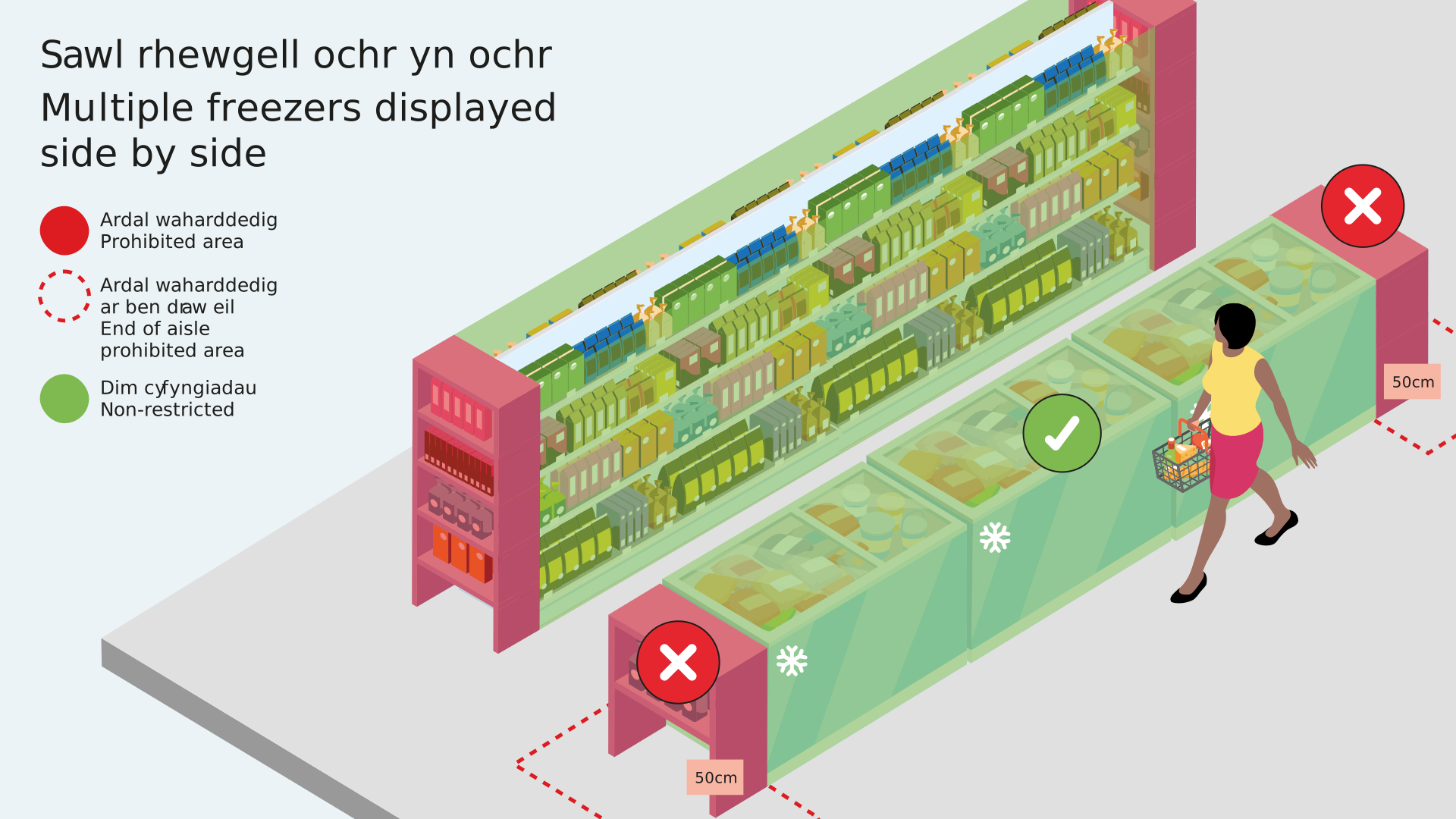
Example 1: freezer units displayed side-by-side
If multiple freezer units are displayed side-by-side with another freezer unit, as in the image below, the units may form an aisle with an aisle end.
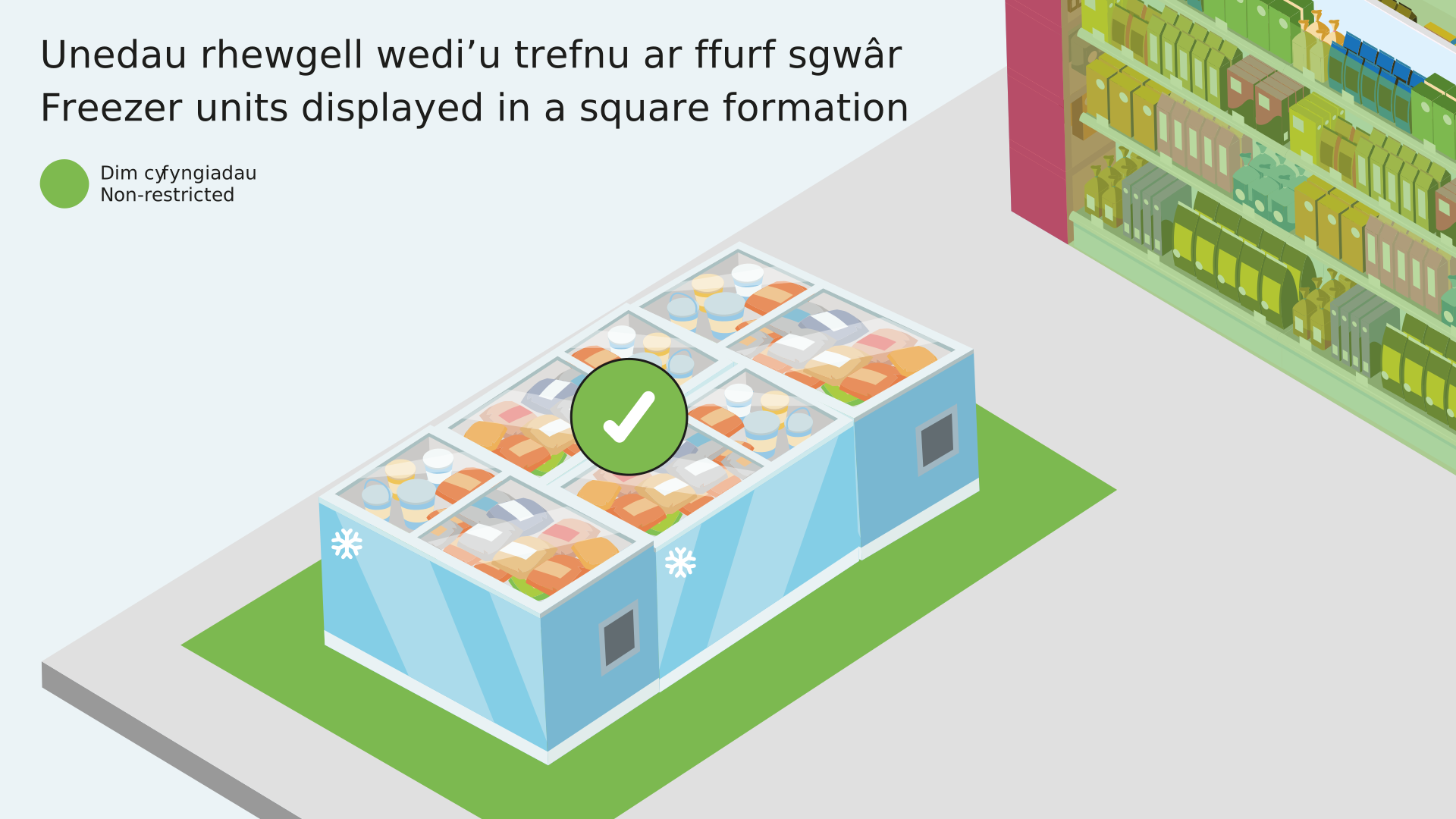
Example 2: freezer units displayed in a standalone square or rectangular formation
If a single freezer unit is displayed on its own or several units are displayed back-to-back in a standalone square or rectangular formation, which does not create any long space or passageway between rows, the units may typically be considered a separate structure to an aisle, such as an island.
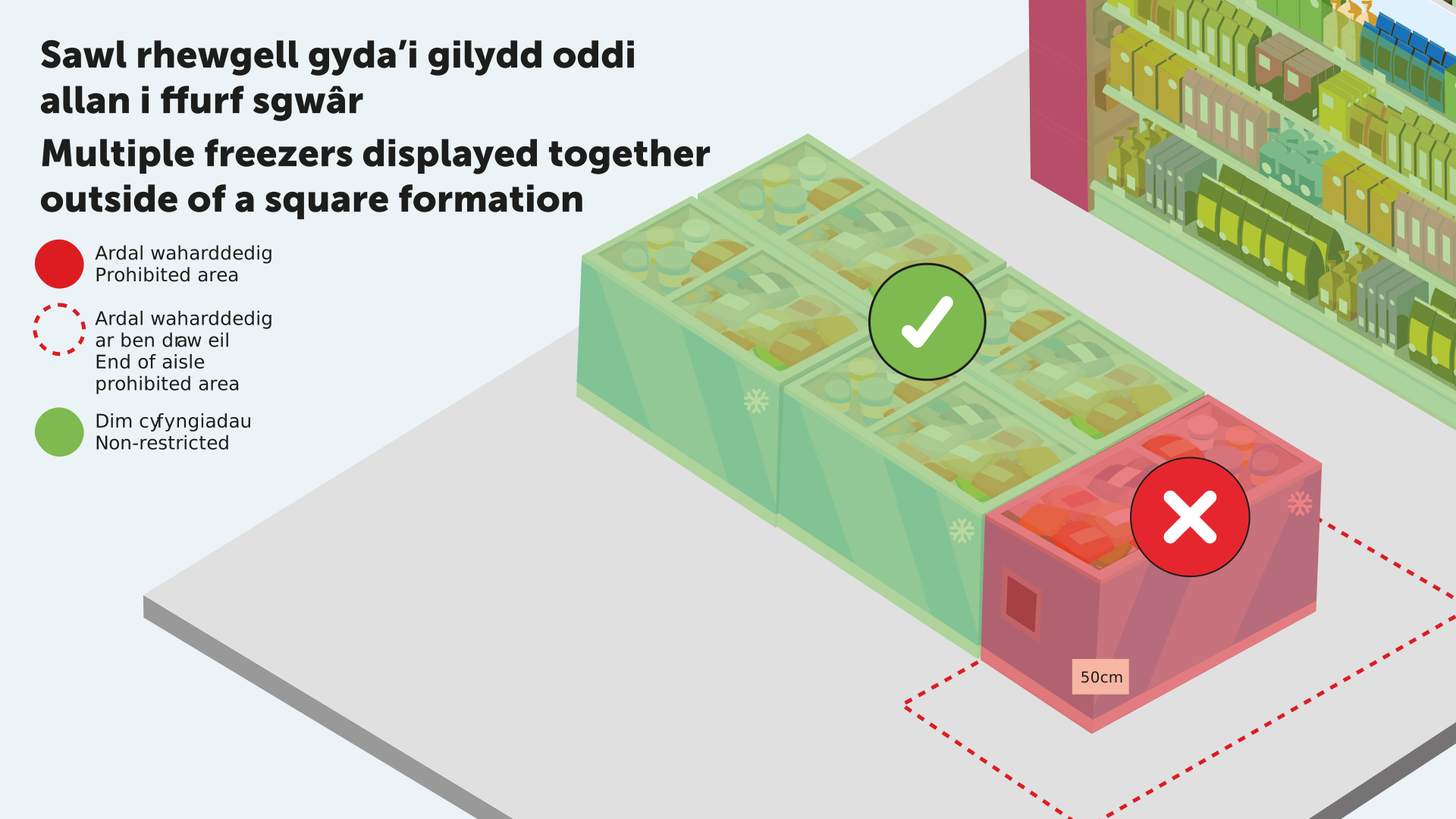
Example 3: multiple freezer units displayed together in a longer formation
If an additional freezer was added to the square formation of freezer units above, and the formation was displayed adjacent to another aisle creating a long space or passageway, the units may become an aisle with an aisle end.
Store entrances
No specified food is permitted to be displayed within 15m, or the distance described by the formula below, of the midpoint of any public entrance to the store’s main shopping area, whichever is smaller. The midpoint is the point halfway from the left side of the store entrance to the right side.
Formula: prohibited distance from the store entrance
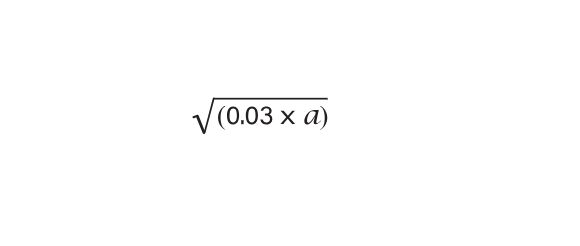
In the equation above, α is the ‘relevant floor area’ of the store. A distance is determined using this equation by multiplying the ‘relevant floor area’ by 0.03 and finding the square root of that figure. For example, a store of 185.8m2 would be prohibited from displaying a restricted product within 2.4m, or just over 7.7 feet, of the entrance. This can be seen in the following equation:
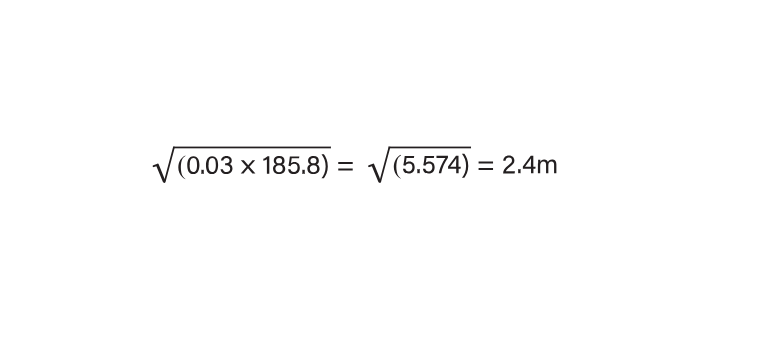
In the equation above, the store’s relevant floor area of 185.8m2 is multiplied by 0.03. This equals 5.574. The prohibited floor area is therefore calculated by finding the square root of 5.574. The square root rounded by one decimal place is 2.4m.
The table below illustrates the prohibited entrance areas, as a measure of ‘relevant floor area’.
| Relevant floor area | Prohibited distance |
|---|---|
| 185.8m2 (2,000 square feet) | 2.4m |
| 278.7m2 (3,000 square feet) | 2.9m |
| 371.6m2 (4,000 square feet) | 3.3m |
| 464.5m2 (5,000 square feet) | 3.7m |
| 557.4m2 (6,000 square feet) | 4.1m |
| 650.3m2 (7,000 square feet) | 4.4m |
| 743.2m2 (8,000 square feet) | 4.7m |
| 836.1m2 (9,000 square feet) | 5.0m |
| 929.0m2 (10,000 square feet) | 5.3m |
This prohibited distance would form a semi-circle inside the store around the relevant public entrance. An illustration of a store entrance restriction can be found in annex 3.
Examples of application of the prohibited distance from the public store entrance:
- if the store entrance is a lift, the midpoint of that entrance would be the midpoint of the lift door through which the lift is exited and the store entered
- if the store entrance is by escalators or stairs, the midpoint of that entrance would be the top of the last step into the store
Aisles within a restricted store entrance area
In instances where an aisle is within the restricted store entrance area, specified food cannot be placed in this area, even if it is in the aisle and not an aisle end. In some cases, both sides of the aisle may be within the restricted store entrance area. In these instances, qualifying HFSS products cannot be placed in the restricted areas of the aisle on either side of the aisle, as illustrated in the example provided in annex 3.
The restricted store entrance area must be free of all specified food, however it is displayed.
Covered external areas
Specified food must not be placed in a ‘covered external area’, which means a covered area, outside and connected to a store’s main shopping area, through which the public passes to enter the main shopping area (such as a foyer, lobby or vestibule).
This is a separate restricted area to the prohibited store entrance area.
Further examples of areas that could be assessed by enforcement authorities as a ‘covered external area’ include petrol forecourts and shop awnings.
Internal entrances to food halls within a department store (or similar)
Entrance areas to different sections or departments within the same store occupied by the same qualifying business may not be a public entrance for the purposes of the restriction on store entrance areas. For example, a food hall within a department store may only be accessible internally within the store building. The prohibited store entrance area applies in respect of any public entrance to the department store’s main shopping area, and not the point where the food hall begins.
However, if a concession within a larger store is a qualifying business and its area within the store is over 185.8m2 (2,000 square feet) in size then the entrance to the concession’s area may be the public entrance to the concession’s main shopping area.
Multiple store entrances
The restriction on store entrance areas applies to any public entrance to the store’s main shopping area. Prohibited distances may overlap for store entrances that are close to each other
Online restrictions for location promotions
Businesses in scope of the regulations must not cause specified food online (including in apps), to be offered for sale in specified locations considered equivalent to key locations in stores. For example, offering specified food for sale on the homepage of a website is considered equivalent to placing specified food at the store entrance of a physical store.
These restrictions do not apply to a qualifying business which only or mainly sells food from a single category in schedule 1. For example, an online cake shop or specialist shops for chocolate or sweets.
The restrictions apply to qualifying businesses selling food online in Wales.
Alongside ensuring compliance with these regulations, businesses should also check whether they are in scope of UK Government’s broadcasting and online advertising regulations. There is a section within this guidance (entitled ‘broadcast and online advertising regulations’) which seeks to support you in understanding the key areas of alignment and difference between these 2 regulations.
Restricted locations online
A qualifying business must not cause specified food to be offered for sale on an online marketplace in the following online ‘locations’:
- The homepage (whether or not the consumer enters the online marketplace via the homepage). For example, an image of a specified food that a consumer could add to their shopping basket from that point on a homepage (such as, via an ‘add to basket’ icon) may not be permitted. However, an image of a specified food signposting to a taxonomy page that may have specified food on or not (including category pages that are ‘offers’ pages) may be permitted on a homepage, subject to compliance with UK Government online advertising regulations.
- While a consumer is searching for or browsing products other than schedule 1 food, unless certain instances apply (see regulations 7(4) and (5) in the regulations and the examples below, which illustrate some common scenarios businesses may encounter).
- While a consumer is searching for or browsing schedule 1 food, unless the specified food falls within the same schedule 1 category or certain instances apply (also see regulations 7(4) and (5) of the regulations and the non-exhaustive examples below).
- On a page not opened intentionally by the consumer, such as a pop-up page or a brand burst. When, for example, customers are proceeding to payment, there must not be a promotion (pop-up or under, or otherwise) of a HFSS or ‘less healthy’ food, even if the customer purchased this item on their last shop or it is a favourite item. This restriction also covers pop-up pages that may open when a consumer is browsing a schedule 1 category page, even if the pop-up page is promoting the same schedule 1 food. For example, a pop-up page promotion of a biscuit cannot open while a consumer is browsing the ‘biscuits’ page that they intentionally opened.
- On a ‘favourite products’ page. This restriction applies unless the consumer has previously purchased the specified food (whether in store or online) or intentionally identified it as a favourite product. However, specified food must not, in any event, be given greater prominence than other products on a’ favourite products’ page. For example, within the list or grid of favourites, a specified food that is made bigger, ‘flashier’ or given special prominence in other ways over other products. Specified food flavour variants, different pack sizes, other products within the same category, or any other products that have not been previously purchased or identified by the consumer are not permitted to be promoted within the ‘favourites’ page because they have not been previously purchased or intentionally identified as favourite products. If a favourite product that has been previously purchased or intentionally identified is out of stock, a substitution can only be made if the product suggested as a substitute is a homogenous product and not a variation. A homogeneous product is one that cannot be distinguished from competing products from different suppliers. The product has essentially the same physical characteristics and is the same quality as similar products from other suppliers on a checkout page.
- On a checkout page. This covers all pages shown to a consumer as part of the checkout process, such as the consumers basket or any pages dealing with payment, collection or delivery. If a ‘favourites’ page opened by the consumer is part of the checkout flow, the ‘favourites’ page restriction applies to this page.
Specified food must not be offered for sale as part of a volume price promotion anywhere on an online marketplace of a qualifying business in scope.
The regulations prevent specified food being offered for sale online while a consumer is searching or browsing food products. The examples below outline some exemptions to these restrictions.
Examples of searching restrictions
Example 1: searching for a schedule 1 food
If a consumer intentionally searches for a schedule 1 food, for example ‘chocolate’, in any part of their search, the search results may be any food within the same schedule 1 category, food offered for sale together with ‘chocolate’ as part of a relevant special offer, food marketed under a name which matches ‘chocolate’ in whole or in part, or food with an ingredient listed on the packaging which matches ‘chocolate’ in whole or in part. For example, chocolate confectionery, chocolate biscuits, chocolate-flavoured confectionery or chocolate ice cream.
Example 2: searching for a food other than schedule 1 food
If a consumer intentionally searches for a food product that is not in schedule 1, specified food must not appear in the search items list, but may be able to if:
- The name under which the specified food is marketed matches, in whole or in part, with the search term. For example, ‘prawn cocktail crisps’ may be permitted to show on the search listings (in whatever form, for example, banners or featured products and so on) if ‘prawn’ was the search term, as they share part of the name under which the specified food is marketed.
- An ingredient listed on the packaging of the specified food matches, in whole or in part, with the search term. For example, a prawn-based ready meal may be shown in the search listing as they contain the same ingredient as the search term ‘prawn’.
- The specified food is offered for sale together with the food product searched for as part of a relevant special offer. For example, a retailer may be able to promote a dessert product when a consumer searches for a ready meal if the dessert is part of a ‘dine in for 2’ offer.
Example 3: general categories
Specified food may appear in the search items list where a general category of product is used as a search term by the consumer and it includes the specified food. Any specified food that feasibly falls under that general category may then be permitted on the search listings page. For example, if a customer searched for ‘vegan food’, vegan cakes and vegan pizzas may show up in the search results. A general category of product may include categories relating to seasonality such as ‘Christmas’ (where Christmas confectionery, Christmas cake and other Christmas-related products could be shown) and browsing categories relating to nutritional or dietary characteristics, such as ‘low-calorie meals’, ‘BBQ’ and so on.
Example 4: hampers
If a consumer searches for ‘chocolate’ and a chocolate product was part of a hamper or kit containing other products that included specified food items from different schedule 1 categories, the hamper product itself may be able to be shown on the search listings.
Potential examples of this could be where the hamper:
- is marketed under a name which matches, in whole or in part, with the search term, for example, a hamper marketed under the name of ‘chocolate fudge brownies’ where the search term was ‘chocolate’
- includes specified food with an ingredient listed on its packaging that matches, in whole or in part, the term that is searched for, for example, a hamper containing chocolate and salted caramel tray bake where the search term is ‘chocolate’
Examples of browsing restrictions
Example 1: browsing for a schedule 1 food
If a consumer browses a ‘chocolate’ taxonomy tab page, generally no other specified food should be shown on that page.
Exceptions to this are if:
- The specified food is in the same schedule 1 category as the food being browsed for.
- A specified food is offered for sale together with the food the consumer is browsing as part of a ‘relevant special offer’. For example, if a consumer browses a ‘chocolate’ taxonomy page and chocolate was in a meal deal with crisps, sandwich and a soft drink, these items may be able to be shown on the taxonomy tab page.
- The specified food is feasibly included within the general category of product the consumer searched for. For example, if a consumer browses a taxonomy page such as ‘chocolate, any specified food which feasibly falls under this general category may show up on this taxonomy page, such as chocolate cakes and chocolate ice cream. A general category of product may include categories relating to ‘Christmas’ (where Christmas confectionery, Christmas cake and other Christmas-related products can appear on the taxonomy page) and browsing categories relating to nutritional or dietary characteristics, such as ‘low-calorie meals’, ‘BBQ’ and so on.
Example 2: browsing for products other than schedule 1 food
If a consumer intentionally browses a taxonomy category page, for example, ‘vegan food’ specified food must not appear on the taxonomy page, but may be able to if:
- The specified food is feasibly included within the general category of product the consumer searched for. For example, if a consumer browses a taxonomy page such as ‘vegan food’, any specified food which feasibly falls under this general category may show up on this taxonomy page, such as vegan cakes and vegan pizzas.
- A specified food is offered for sale together with the food the consumer is browsing as part of a ‘relevant special offer’. For example, a retailer may promote a dessert product which is a specified food when a consumer browses vegan food, if the dessert is part of a ‘dine in for 2’ offer.
Example 3: hampers
If a consumer browses a ‘chocolate’ taxonomy page and a chocolate product was part of a hamper containing other products that included specified food items from the same schedule 1 category only, the hamper product itself would be able to be shown on the browsing page.
However, other such hampers including specified food items from different schedule 1 categories may not be permitted to be shown on the ‘chocolate’ taxonomy browsing page, unless the other specified food items within the hamper were included in the general category of chocolate products. For example, a hamper containing chocolate and chocolate biscuits may be shown on the ‘chocolate’ taxonomy page.
There is no exemption for retail online marketplaces that mainly sell non-food items but offer food in scope in restricted locations. These businesses are in scope of the regulations.
Special offers pages
Some taxonomy tabs on a retailer’s website that are dedicated special offer pages. For example, a page opened intentionally by a consumer for the purpose of browsing ‘special offers’, are not prohibited from offering specified food. Therefore, products under such a taxonomy tab could contain a mix of specified food and non-specified food belonging to different categories.
Special offers may include ‘deals of the week’ and so on. The restriction on offering specified food for sale as part of a volume price promotion however continues to apply.
Banners or headers
Banners or headers on an online marketplace may also be in scope of the online restrictions. Factors to consider include whether they are owned and controlled by the qualifying business (such as, they are not advertisements linking through to third-party websites) and whether they are offering specified food for sale in a location which is not permitted.
Broadcast and online advertising restrictions
The UK government has committed to implementing the advertising restrictions for less healthy food or drink on television and online. The restrictions are set out in the Communications Act 2003 (as amended by the Health and Care Act 2022) and are due to come into force UK wide on 5 January 2026. In agreement with the government, broadcasters and advertisers, with the support of online platforms and publishers, have made a public commitment to voluntarily comply with the restrictions from 1 October 2025. The Advertising (Less Healthy Food Definitions and Exemptions) Regulations 2024 provide the definitions for products, businesses and services in scope of the lab advertising restrictions and there is supporting guidance on the products in scope. The advertising restrictions are intended to work alongside other regulatory interventions on obesity, such as these regulations.
The below illustrates the areas of alignment between The Food (Promotion and Presentation (Wales) Regulations 2025 and The Advertising (Less Healthy Food Definitions and Exemptions) Regulations 2024.
Product categories in scope
Category 1 to 12 in both sets of regulations are intended to align as much as possible. However, there are some clear differences in category 13 that businesses should note. These differences reflect that the UK-wide advertising restrictions on less healthy food or drink also apply to products sold in the out of home sector as well as retailers and manufacturers, whereas these regulations apply only to products sold by retailers and manufacturers (with the exemption of sugary drinks in the out of home sector).
Businesses in scope
The UK Government advertising restrictions apply to businesses with 250 or more employees that pay to advertise less healthy food and drink products. Conversely, The Food (Promotion and Presentation) (Wales) Regulations 2025 apply to businesses with 50 or more employees offering pre-packed food for sale online and in store. The Welsh regulations do not apply to the out of home sector, except where businesses offer free refills on non-pre-packed sugary drinks.
Liability
Under The Food (Promotion and Presentation (Wales) Regulations 2025, retailers are liable for breaches in store, and retailers or online aggregators may be responsible for sales online.
Under UK government’s advertising restrictions, advertisers are liable for any breaches of the prohibition on paid-for advertising on the internet. Service providers for on-demand programme services under UK jurisdiction are liable for any breaches of the broadcast restrictions.
In areas of overlap, such as if a company has paid for advertising of an identifiable HFSS product displayed in an area restricted under the promotions regulations (for example, on a retail homepage, checkout page or page not intentionally opened by the consumer), the retailer or aggregator may be liable for the breach of promotions regulations.
It is possible that the frontline regulator of the advertising restrictions (Advertising Standards Authority) could also find the retailer liable in breach of the advertising restrictions if in its capacity as an advertiser, it has paid for placement of an advert for an identifiable less healthy product online.