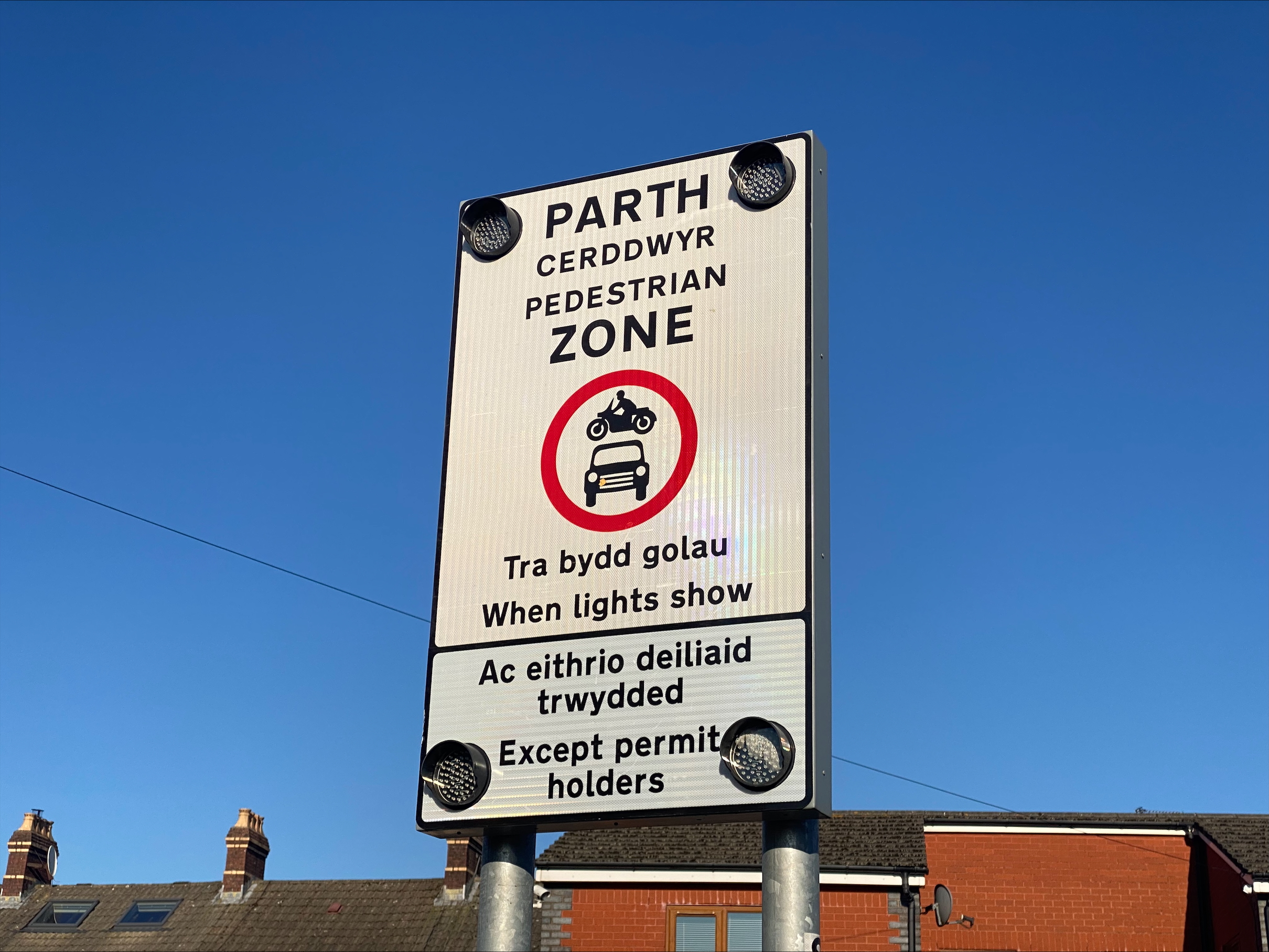
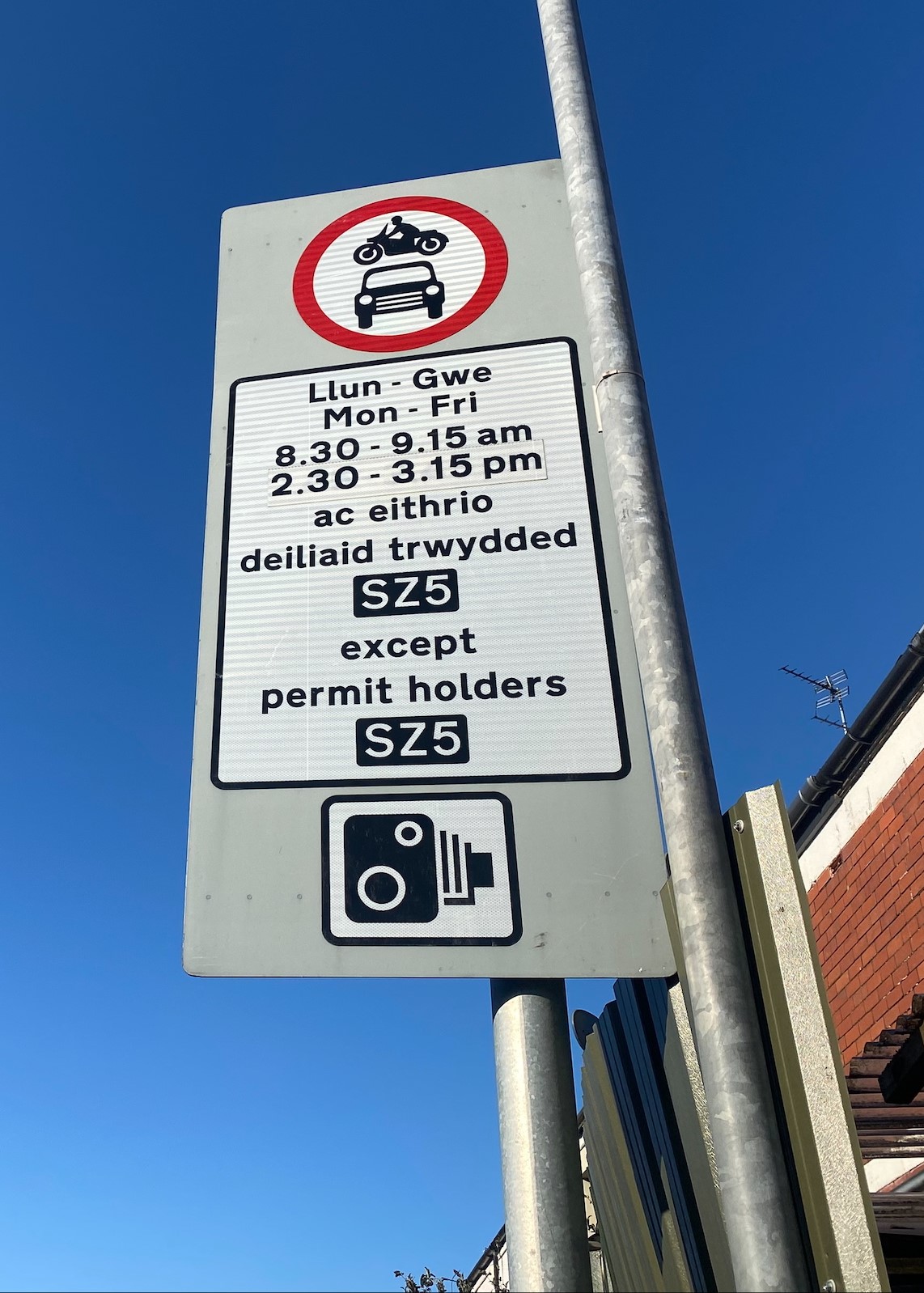
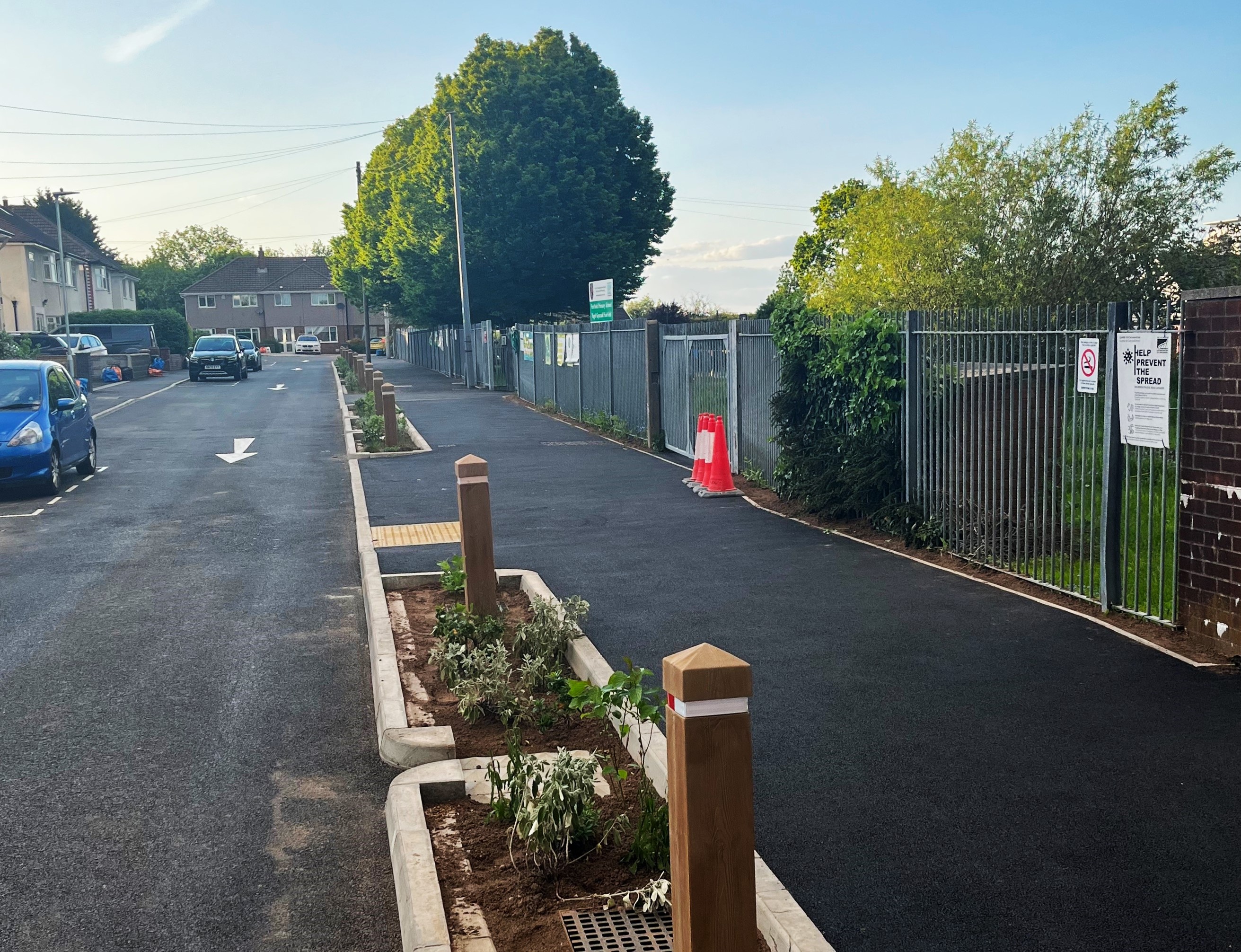
Enforcement of School Street restrictions can be carried out by local authorities where they have taken on the powers to do so under Part 6 of the Traffic Management Act 2004.
Information on applying for Part 6 powers is available in the guidance to local authorities.
It is recommended that local authorities allow for a minimum of 6 months for the process to apply for these powers. The powers allow local authorities to issue Penalty Charge Notices (PCNs) to any non-exempt motor vehicles entering the School Street during its hours of operation.
The police retain powers to issue Fixed Penalty Notices for contraventions of School Street restrictions even if the local authority has taken on the Part 6 powers. If the police and the local authority initiate enforcement for the same contravention, police action would take precedence.
Automatic number-plate recognition (ANPR) cameras can be used to enforce School Streets by issuing PCNs remotely to registered keepers of non-exempt motor vehicles.
Cameras can be fixed or in a mobile unit.
Mobile cameras can be a more cost-effective option, as they can be moved between sites, allowing spot checks across multiple School Streets and other locations.
If CCTV enforcement is used, authorities should consider alerting drivers to this by installing the advisory sign prescribed by the Traffic Signs Regulations and General Directions 2016 for areas in which enforcement cameras are in use (diagram 878).
In line with the statutory guidance on enforcing moving traffic offences, authorities should issue warning notices for first-time contraventions.
Where the local authority has not taken on enforcement powers, the enforcement of School Street restrictions remains a police responsibility.
Given the competing pressures on police resources, it is important to engage with the police at an early stage in the development of plans for a School Street to understand what support and enforcement they will be able to provide.
Use of barriers
Some School Streets have been implemented using portable barriers and volunteer stewards. This approach needs careful thought and is unlikely to be an appropriate solution.
Maintaining a stewarded and barriered School Street has significant resource implications which may risk the long-term viability of a scheme; some authorities are moving away from this approach as ‘volunteer fatigue’ results in fewer willing stewards coming forward over time. Volunteer harassment has unfortunately been a problem in some areas as well, which may also contribute to a reluctance to get involved. Volunteer stewards do not have the legal power to stop traffic but must rely on the signs and barriers.
A physical barrier creates a road closure, which is different to an access restriction. Barriers cannot be used to give effect to a TRO for ‘no motor vehicle’ access restrictions, as these are different and must be signed as shown above.
‘No motor vehicle’ signing should not be used in conjunction with barriers, as this creates a conflict between the vehicle access restriction and the road closure which will make enforcement difficult.
A road closure requires a TRO, in the same way an access restriction does. Closures are usually put in place for road works or special events with temporary TROs. A temporary TRO can only be made for specific reasons and is unlikely to be suitable for a permanent, part-time restriction for School Streets.
Exceptions from a closure cannot be provided as comprehensively as with an access restriction; as well as the physical barrier making it harder for permit holders to access the road, there is no equivalent of the sign plate showing ‘except permit holders’ or similar.
Requiring volunteers to open the barrier to allow permit holders through is not appropriate as it puts an onus on them to determine if the driver is a genuine permit holder and opens them up to possible harassment and abuse, and potential road safety risks.
Road closure signs and barriers are not enforceable by local authorities as they are not included within Part 6 of the Traffic Management Act 2004, meaning engagement with the police will be needed at an early stage of scheme development.
If used, barriers must incorporate the sign shown in Diagram 7105 and prescribed in the Traffic Signs Regulations and General Directions 2016.
Barrier designs used for roadworks and other temporary situations will incorporate this. White-on-red temporary signs should also be provided stating the details of the closure.
Barriers and stewards may be effective for a short-term trial or events such as Walk to School Week but signed access restrictions and camera enforcement are more likely to be successful for permanent schemes.