
Science Research Evidence: winter modelling 2025 to 2026 - Part 5: acute respiratory illnesses hospital admissions
This paper provides modelled scenarios for influenza and pneumonia, COVID-19 and respiratory syncytial virus (RSV) for the upcoming winter season.
In this page
Top line summary
Our 2025 to 2026 winter modelling scenarios now use more specific ICD-10 codes for influenza and RSV, which differs from last year’s approach. This change was implemented to ensure consistency between data provided by PHW and DHCW (Digital Health and Care Wales).
Winter 2024 to 2025 saw 4,349 influenza admissions, the highest since the pandemic.
Influenza admissions during the non-pandemic years peaked between 24 December and 1 February.
Influenza modelling scenarios have peak admissions ranging from 51 to 109 daily admissions for winter 2025 to 2026. The peak in the occupancy scenarios for patients admitted due to influenza ranges from 153 to 602.
There were fewer RSV paediatric (aged 0 to 4 years) admissions during the 2024 to 2025 winter than previous winters. RSV paediatric admissions during the non-pandemic years peaked between 11 November and 8 December.
Respiratory Syncytial Virus (RSV) scenarios for the winter 2025 to 2026 have peak paediatric admissions ranging from 16 to 18 daily admissions between 18 November and 11 December. The daily peak in the number of beds occupied by RSV patients ranges from around 39 to 45.
COVID-19 admissions scenarios suggest a peak of 10 to 40 admissions between 3 and 8 October while COVID-19 occupancy scenarios estimate peaks of 164 to 542 beds between 13 to 20 October.
Combined scenarios assess the collective impact of influenza, RSV and COVID-19 and other infections (pneumonia, acute bronchitis and bronchiolitis, measles, norovirus, whooping cough, streptococcus A, and Human Metapneumovirus (HMPV)).
The moderate combined scenario estimates a peak admission of 214 admissions on 24 December and peak occupancy of 1,885 beds on 7 January.
The severe combined scenario estimates a peak admission of 296 admissions on 24 December and peak occupancy of 2443 beds on 5 January.
Influenza admissions
To assess the impact of influenza (flu) on secondary care in Wales, daily hospital admissions related to influenza were deduced using International Classification of Diseases, Version 10 (ICD-10) codes: J09-J11. These codes do not include pneumonia (J12-J18) as was done in previous winter modelling reports, but will be added to the ‘other infections’ category (please see the combined scenarios). Subsequently, admissions data was smoothed by calculating the 7-day rolling averages. Following this, peaks and trends during each season were identified.
Figure 2: 7-day rolling average of daily influenza admissions, between April 2020 and March 2025 [Note 1].
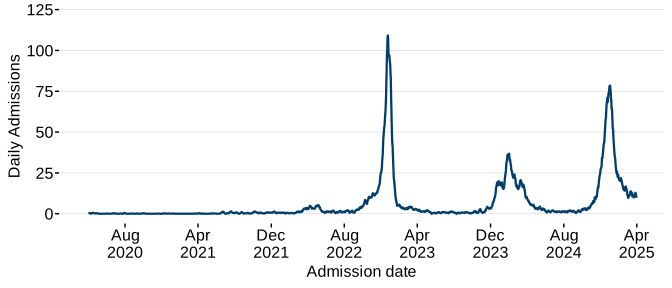
Description of Figure 2: A line chart showing the 7 day rolling average of recorded daily influenza admissions in Wales.
Source: Digital Health and Care Wales (DHCW)
[Note 1]: Data includes diagnosis codes J09 to J11 from ICD-10
During the winter of 2024 to 2025, defined as 1 September 2024 to 31 March 2025, a total of 4,349 influenza admissions were recorded – highest recorded since the pandemic (3,892 in 2022 to 2023 winter and 2,437 in 2023 to 2024 winter). 4% of these admissions were to the Intensive Care Unit (ICU). The average length of stay due to influenza was 8 days across all ages in the 2024 to 2025 winter. The daily admissions among all ages showed a peak of 78 in 2024 to 2025 in the first week of January, around twice the size of 2023 to 2024 winter peak. However, the peak was much smaller compared to 2022 to 2023 peak.
To model influenza admission scenarios for the winter of 2025 to 2026, different approaches were used based on historical data and statistical modelling techniques. The severe scenario uses admission data from the 2022 to 2023 winter, which saw a high number of admissions post-pandemic. The high scenario is based on data from winter 2024 to 2025. For other scenarios, statistical techniques were applied: the moderate scenario uses the Seasonal Autoregressive Integrated Moving Average (SARIMA) technique, and the low scenario uses the Exponential Smoothening (ETS) technique. Please see the appendix for further information on statistical modelling techniques used.
Table 1: Names of influenza admission and occupancy scenarios and the statistical models applied.
| Scenario name | Technique |
|---|---|
| Severe | Repeat of 2022 to 2023 data |
| High | Repeat of 2024 to 2025 data |
| Moderate | SARIMA |
| Low | ETS |
Figure 3: daily influenza admissions scenarios – winter 2025 to 2026. (Note 1]
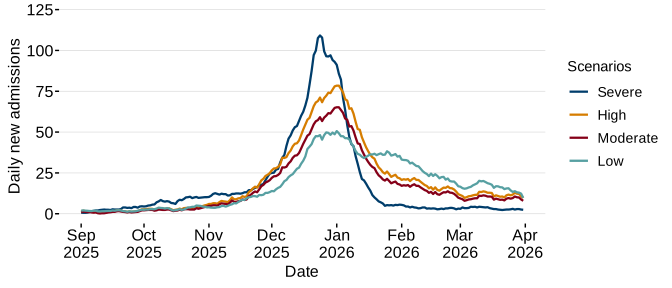
Description of figure 3: A line chart illustrating various projected scenarios (low, moderate, high, severe) for admissions due to influenza during the 2025 to 2026 winter season.
Source: SRE (Science Research Evidence) calculations.
[Note 1]: Note that the ‘High’ scenario depicts the 2024 to 2025 actuals.
The severe scenario estimates a peak of 109 admissions in the last week of December while the high, moderate and low scenarios estimate a peak of 78, 65 and 51 admissions respectively during the first week of January.
Figure 4: 7-day rolling average of daily influenza occupancy, between April 2020 and March 2025 [Note 1].
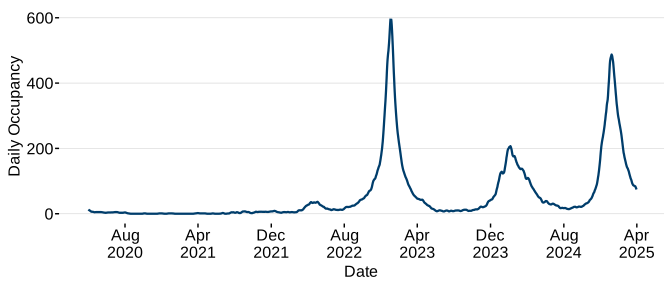
Description of Figure 4: a line chart showing the 7-day moving average of hospital occupancy due to influenza in Wales.
Source: Digital Health and Care Wales (DHCW).
[Note 1]: Data includes diagnosis codes J09 to J11 from ICD-10.
Influenza occupancy peaked between 3 January and 5 February in the last three years (excluding the pandemic years). The highest peak in influenza occupancy was observed in the 2022 to 2023 winter where a maximum value of 602 beds per day was observed. During the winter of 2024 to 2025, the occupancy due to influenza peaked at 487 beds per day on 7 January 2025, smaller than the 2022 to 2023 peak but more than twice the peak height as the winter before (2023 to 2024).
Figure 5: Daily influenza occupancy scenarios – winter 2025 to 2026. [Note 1]
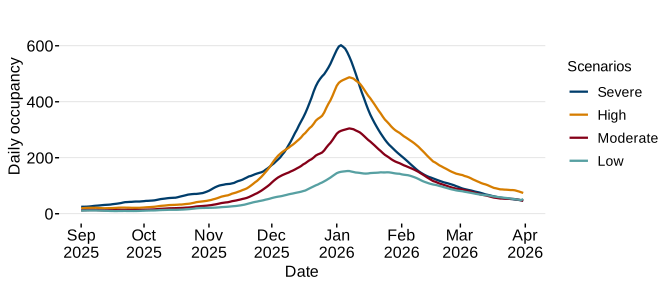
Description of figure 5: A line chart representing various projected scenarios (low, moderate, high, severe) for influenza-related hospital occupancy in Wales.
Source: SRE calculations.
[Note 1]: Note that the ‘High’ scenario depicts the 2024/25 actuals.
The techniques used to create admissions scenarios were also used to develop influenza occupancy scenarios. The severe occupancy scenario estimates a peak of 602 beds on 3rd January 2026 while the high, moderate and low scenarios estimate a peak of 487, 305 and 153 beds respectively during the 6 to 7 January 2026.
RSV paediatric admissions (ages 0 to 4)
GOV.UK notes that RSV is a common respiratory virus that usually causes mild, cold-like symptoms (it is in the same family as the human parainfluenza viruses and mumps and measles viruses). While most RSV infections usually cause mild illness, infants aged less than 6 months may develop conditions such as bronchiolitis and pneumonia, resulting in hospital admissions. By age 2 years, most children have had at least one RSV infection as noted by the Lancet's website. Therefore, admissions for the 0 to 4-year-old age group were analysed between April 2020 and March 2025. Compared to the previous winter modelling report, narrower ICD-10 codes were used to deduce RSV admissions that are specific to the pathogen (J12.1, J20.5, J21.0 and B97.4 instead of J20-J22 that covers all cases of bronchitis and bronchiolitis).
Starting in August 2024 for Scotland and September 2024 for England and Wales and as noted by GOV.UK, the UK became the first country to introduce RSV vaccines for pregnant women and adults aged 75 to 79. The NHS adult vaccine campaign includes a routine program where older adults are offered the RSV vaccination within 12 weeks of their 75th birthday and a one-off catch-up campaign for those aged 75 to 79. The maternal vaccination is expected to protect both expectant mothers and their babies from serious illness. Data for winter of 2024 to 2025 is now available to assess the outcomes following the first year of the RSV vaccination programme’s implementation.
Figure 6: 7-day rolling average of daily paediatric RSV admissions (ages 0 to 4), between April 2020 and March 2025 [note 1].
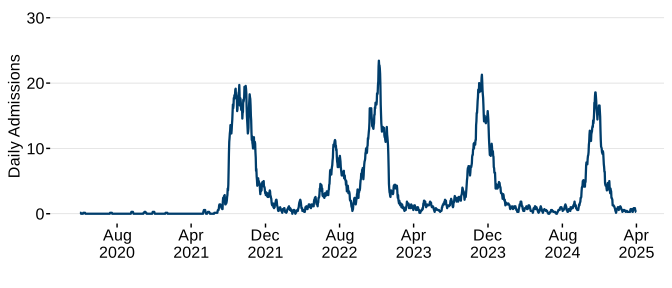
Description of figure 6: a line chart showing recorded daily Respiratory Syncytial Virus (RSV) admissions among children aged 0 to 4 in Wales.
Source: Digital Health and Care Wales (DHCW).
[Note 1]: Data includes diagnosis codes J12.1, J20.5, J21.0 and B97.4 from ICD-10.
During the 2024 to 2025 winter season, there were a total of 1,020 RSV paediatric (aged 0 to 4 years) admissions. This was a 26% decrease compared to the previous season and 23% decrease compared to the 3-year average. Age groups 1 to 6 months, 7 to 12 months and 1 to 4 years showed a decrease of 33%, 26% and 14% respectively compared to the 2023 to 2024 season. The greater reductions among the youngest age groups may reflect the temporary protection effects of the maternal vaccination which is likely to last ~ 6 months after birth. The admissions showed a peak of 19 daily admissions on 17 to 18 November 2024, a week later than the previous season. Over the last three winters, the RSV admissions peaked between 11 November and 8 December.
UKHSA (United Kingdom Health Security Agency) collates data on test-confirmed hospitalised RSV cases in England through the Severe Acute Respiratory Infection (SARI) Watch surveillance system which is a sentinel system that collects data from small network of acute NHS trusts reporting voluntarily. SARI data on GOV.UK suggests that hospital admission rate (excluding Intensive Care Unit (ICU) or High Dependency Unit (HDU)) among those aged under 5 years, peaked at 46.17 per 100,000 in week 48 2024. This is similar to the peak observed in 2023 to 2024 winter (including ICU or HDU) noted on GOV.UK where the hospitalisation rate peaked at 44.83 per 100,000 in week 48 2023, with the data noted on GOV.UK. Cumulative rates for both seasons are similar as well, although 2023 to 2024 is slightly lower than 2024 to 2025. This indicates that there are no significant reductions in winter 2024 to 2025 compared to the previous season among children under 5 years in England. Nevertheless, it remains possible that younger cohorts (1 to 6 months that derive benefits from maternal vaccination) could experience decreases. However, we do not have access to the granular data for these age groups for England to investigate further.
To generate admissions and occupancy scenarios, a modified version of Susceptible, Exposed, Infectious, Recovered, and Susceptible (SEIRS) compartment transmission model (SE2I2RS), incorporating two compartments for the pre-infectious and infectious states was created. (For more details, please refer to the ‘Effect of respiratory syncytial virus (RSV) vaccines on hospital admissions in Wales’ paper). The model was calibrated using admission data from the winters of 2022 to 2023 and 2023 to 2424. With these two winters serving as reference points, vaccine uptake rates among target groups—specifically pregnant women and adults aged 75 to 79 - were varied between 0% and 90% and a range of scenarios were created. For this winter modelling report, the modelling scenarios with Vaccine Uptake (VU) values of 30% and 60% were chosen and are presented below.
Table 2: Names of RSV admission and occupancy scenarios, including details of the SEIR model assumptions (vaccine uptake and reference winter). [Note 1].
| Scenario name | Reference Season | Vaccine uptake |
|---|---|---|
| High season, VU= 30% | 2022 to 2023 winter | 30% |
| High season, VU= 60% | 2022 to 2023 winter | 60% |
| Low season, VU= 30% | 2023 to 2024 winter | 30% |
| Low season, VU= 60% | 2023 to 2024 winter | 60% |
[Note 1]: VU refers to vaccine uptake (%)
Figure 7: daily RSV paediatric admissions (ages 0 to 4 years) scenarios – winter 2025 to 2026.
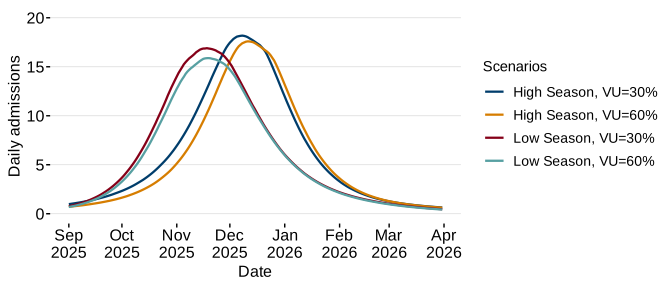
Description of figure 7: A line chart representing projected scenarios for RSV admissions among children aged 0 to 4 years in Wales, factoring in vaccination uptake rates of 30% and 60% for a high season and a low season.
Source: SRE calculations.
High season scenarios with VU= 30% and VU= 60% indicate a projected peak of 18 admissions between 8 and 11 December 2025, while low season scenarios with VU= 30% and VU= 60% forecast a peak of 16 to 17 admissions between 18 and 19 November. Please note that the effect of the vaccination is more apparent in younger age groups <1 years old where the model estimates reductions 9 to 31% in infants aged 1 to 6 months, and 3 to 12% reduction in 7 to 12 months with a vaccine uptake range between 0 to 90% (See the ‘Effect of respiratory syncytial virus (RSV) vaccines on hospital admissions in Wales’ paper). The model suggests that improving the vaccine uptake rate from 30% to 60% could reduce RSV admissions (in 0 to 4 year olds) over the 2025 to 2026 winter season from 1,345 to 1,252 admissions for the high scenario and from 1,299 to 1,222 admissions for the low scenario.
Figure 8: 7-day rolling average of daily paediatric RSV occupancy (ages 0 to 4), between April 2020 and March 2025 [note 1].
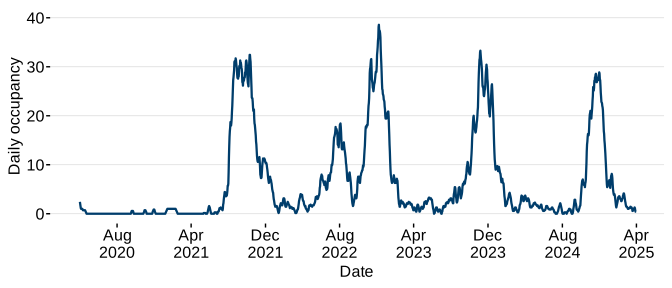
Description of Figure 8: a line chart of RSV-related bed occupancy among children aged 0 to 4 years in Wales, broken down.
Source: Digital Health and Care Wales (DHCW).
[Note 1]: Data includes diagnosis codes J12.1, J20.5, J21.0 and B97.4 from ICD-10
Bed occupancy due to RSV in children aged 0 to 4 years peaked at 29 beds per day on November 30, 2024, lower than the previous year’s peak of 33 beds per day on 6 November 2023.
Length of stay for younger age groups remained unchanged in winter 2024 to 2025 compared to previous winters. Children aged 1 to 4 years with RSV stayed an average of 1.85 days during the 2024 to 2025 season, similar to the data from the past three years. Similarly, the length of stay among infants aged 1 to 6 months and 7 to 12 months was comparable to previous years.
Figure 9: Daily RSV paediatric (ages 0 to 4) occupancy scenarios – winter 2025 to 2026
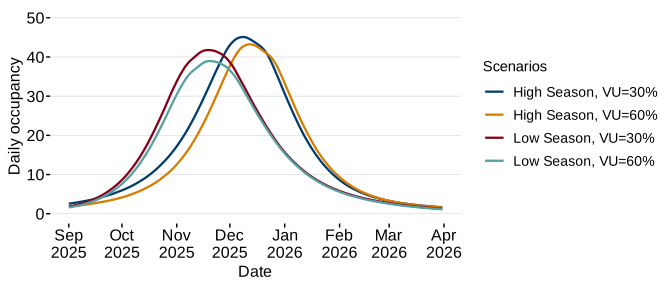
Description of figure 9: A line chart representing projected scenarios for RSV bed occupancy among children aged 0 to 4 years in Wales, factoring in vaccination uptake rates of 30% and 60% for a high season and a low season.
Source: SRE calculations.
Using the length of stay data from the 2022 to 2023 and 2023 to 2024 winters, RSV occupancy scenarios were generated from the output of the SE2I2R model. In high season occupancy scenarios with vaccine uptake (VU) levels at 30% and 60%, projections indicate a peak demand of 43 to 45 beds between 8 and 12 December 2025. In low season occupancy scenarios with VU at 30% and 60%, the estimated peak in beds ranges from 39 to 42 beds during 19 to 20 November 2025.
RSV admissions in older adults (ages 75 and above)
During the 2024 to 2025 season, there were a total of 224 RSV admissions among adults aged 75 and above with the daily admissions peaking at 3.43 admissions during the last week of December. The total admissions numbers in ages 75+ increased by 64% compared to the 2023 to 2024 season and by 35% compared to the 3-year average. Adults aged 75 to 79 showed an increase of 19% compared to the 2023 to 2024 winter but a 10% decrease compared to the 3-year average. Interpretation of this result is challenging due to low numbers and varying seasonal pressure due to RSV.
Figure 10: 7-day rolling average of daily RSV admissions in older adults (ages 75 and above), between April 2020 and March 2025 [note 1].
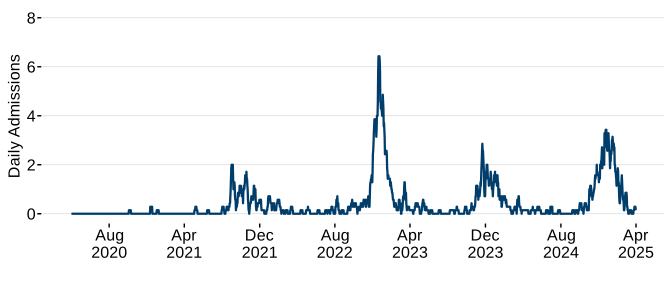
Description of figure 10: a line chart showing RSV-related admissions in older adults ages 75 and above in Wales.
Source: Digital Health and Care Wales (DHCW).
[Note 1]: Data includes diagnosis codes J12.1, J20.5, J21.0 and B97.4 from ICD-10.
RSV vaccination programmes in older adults across the UK
Evidence from England and Scotland on the impact of the RSV vaccination program on hospital admissions is varied. A study noted on the Lancet website from the UKHSA found that the RSV vaccination has resulted in a 30% (95% confidence interval (CI) 18% to 40%) reduction in RSV hospitalisation rates among adults aged 75 to 79 in England. A similar study noted on the Lancet website by Public Health Scotland found a 62% (95% CI 35.0% to 79.8%) decrease in adults aged 74 to 79 years. Both studies employ regression discontinuity design (RDD) which uses a predefined cutoff — an age-based eligibility for the vaccine — to estimate effects by comparing outcomes among individuals above and below the threshold. They compare the hospitalisation rate for those in the late 70s age range in this season with a modelled expected hospitalisation rate for the 2024 to 2025 season in the absence of a vaccine programme. The improved protection against RSV-related hospitalisations in Scotland compared to England could be due to:
- the earlier start date of their programme
- the increased level of vaccine uptake in the eligible population occurring earlier in the RSV season
Neither study compares the current RSV admission rates (from 2024 to 2025 winter) to other winters prior to the introduction of the vaccination programme.
A study by Costello Medical and noted on their website showed that the weekly English hospital admission rates of RSV positive cases per 100,000 population in adults aged 75+ for the 2024 to 2025 season have been comparable to the 2023 to 2024 season, when an RSV vaccine was not available for the older adult population. Similarly with reference to Public Health Scotland's website, the RSV incidence rate per 100,000 population in Scotland in 2024 to 2025 season was comparable to that of the previous season without vaccination. Further study of the broader age category of 75+ versus the narrower group that is eligible for vaccination may yield useful evidence regarding these dynamics.
Figure 11: daily RSV admissions scenarios (adults aged 75 to 79) – winter 2025 to 2026
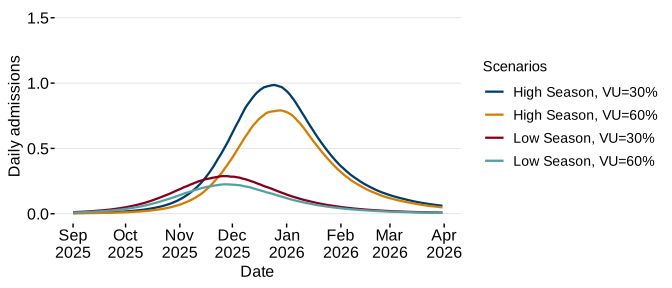
Description of figure 11: line chart representing four projected scenarios for RSV admissions for adults aged 75 to 79 in Wales, factoring in vaccination uptake rates of 30% and 60% for a high season and a low season.
Source: SRE calculations.
The average length of stay of adults aged 75 to 79 due to RSV in Wales was 14.25 days in the 2024 to 2025 winter compared to 8.22 days in 2023 to 2024 winter. Similarly, adults aged 80 and above showed a higher length of stay in 2024 to 2025 winter (23.37 days vs 11.34 days).
The model suggests that improving the vaccine uptake rate from 30% to 60% could reduce RSV admissions (in 75 to 79-year-olds) over the 2025 to 2026 winter season from 68 to 54 admissions for the high scenario and from 23 to 18 admissions for the low scenario.
Figure 12: 7-day rolling average of daily RSV occupancy in older adults (ages 75 and above), between April 2020 and March 2025 [note 1].
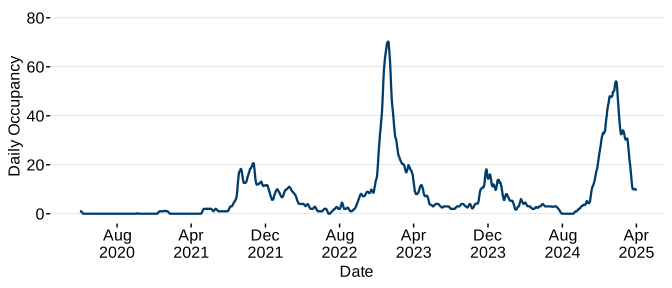
Description of Figure 12: A line chart showing RSV-related bed occupancy in older adults 75 and above in Wales.
Source: Digital Health and Care Wales (DHCW).
[Note 1]: Data includes diagnosis codes J12.1, J20.5, J21.0 and B97.4 from ICD-10.
During the first week of January in the winter of 2024 to 2025, the peak in occupancy in older adults was observed in the third week of January, which occurred nearly two months after the peak occupancy among children aged 0 to 4 years. As adults tend to occupy beds for longer durations, they contribute more significantly to overall bed occupancy. Occupancy for adults aged 75 and above reached a peak of 54 beds, which was almost three times higher than the previous winter (2023 to 2024). This finding may seem contradictory, as vaccination is typically associated with a reduced length of hospital stay. However, the vaccination status of hospitalised individuals within the dataset is not known. It is possible that unvaccinated individuals were more likely to be admitted and experienced worse outcomes. Age may have been another contributing factor to length of stay.
Figure 13: Daily RSV occupancy scenarios (adults aged 75 to 79) – winter 2025 to 2026.
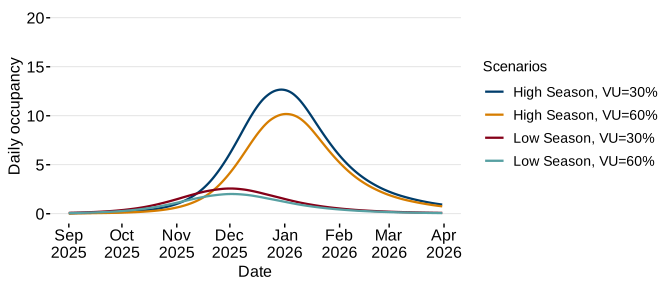
Description of figure 13: A line chart representing four projected scenarios for RSV bed occupancy for adults aged 75 to 79 in Wales, factoring in vaccination uptake rates of 30% and 60% for a high season and a low season.
Source: SRE calculations.
This section only presents modelling scenarios for adults aged 75 to 79 who are eligible for vaccination. (Results for those aged 80 and above are included in the model but not shown here. For these results see the ‘Effect of respiratory syncytial virus (RSV) vaccines on hospital admissions in Wales’ report). High season occupancy scenarios with VU= 30% and VU= 60% indicate a projected peak of 10 to 13 beds between 30 December 2025 to 2 January 2026, while low season occupancy scenarios with VU= 30% and VU= 60% estimate peak occupancy of 2 to 3 beds per day between 1 to 2 December 2025.
COVID-19
In May 2023, the World Health Organization (WHO) announced that COVID-19 is no longer classified as a global health emergency. However, the WHO also emphasised that the risk of virus evolution remains, with new variants emerging.
Figure 14: 7-day rolling average of daily COVID-19 admissions, between March 2020 and March 2025 [note 1].
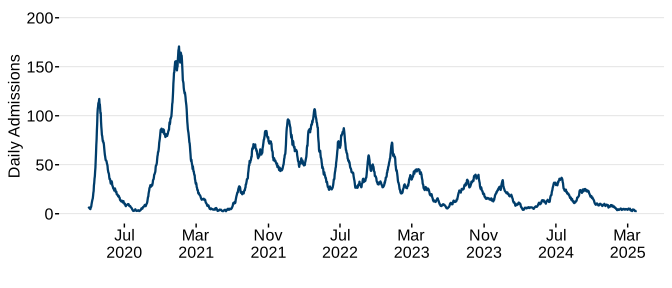
Description of Figure 14: A line chart of COVID-19 related admissions in Wales.
Source: Digital Health and Care Wales (DHCW).
[Note 1]: Data includes diagnosis codes U07.1, U07.2, U09.9 and U10.9 from ICD-10.
COVID-19 admissions during winter have been at the lowest levels since the pandemic. In Wales, admissions due to COVID-19 showed a similar decreasing trend totalling 2,228 admissions in the winter of 2024 to 2025, compared to 4,248 in 2023 to 2024. Additionally, the daily admissions showed a peak of 25 admissions in the first week of October 2025 after which the admissions continued to show a decreasing trend. The average length of stay due to COVID-19 was 15.1 days was across age groups. Adults aged 65 and above accounted for majority of admissions (68%) and showed a length of stay of 19.5 days on average. COVID-19 admissions can occur outside of winter, though this is outside of the scope of the modelling, it is important for decision makers to be aware of and consider in their planning.
Statistical modelling techniques were used to project future COVID-19 admission scenarios for the winter of 2025 to 2026. The severe and moderate scenarios correspond to repeats of data from the 2023 to 2024 and 2024 to 2025 winters respectively, while the low scenario is based on SARIMA modelling.
Table 3: names of COVID-19 admission and occupancy scenarios and the statistical models applied.
| Scenario name | Technique |
|---|---|
| Severe | Repeat of 2023 to 2024 data |
| Moderate | Repeat of 2024 to 2025 data. |
| Low | SARIMA |
Description of table 3: presents different COVID-19 admission and occupancy projected scenarios methods used.
Figure 15: daily COVID-19 admissions scenarios – winter 2025 to 2026. [Note 1]
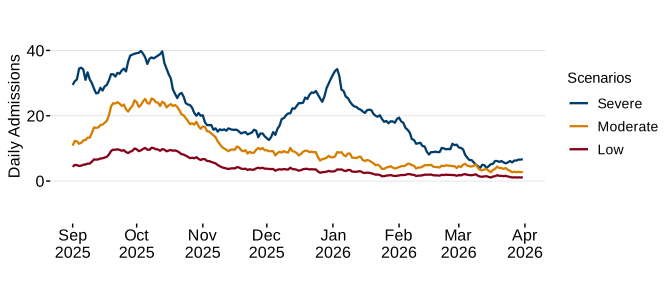
Description of Figure 15: A line chart representing different projected daily COVID-19 admissions scenarios (low, moderate, severe) for Winter 2025 to 2026.
Source: SRE calculations.
[Note 1]: Note that the ‘moderate’ scenario depicts the 2024 to 2025 actuals.
The severe COVID-19 admissions scenario projects a peak of 40 admissions on 3 October, while the moderate and low scenarios estimate peaks of 25 and 10 admissions on 8 October, respectively. All three COVID-19 scenarios anticipate peaks occurring in October. RSV scenarios suggest peaks between November and December while influenza scenarios suggested peaks between December and January.
Figure 16: 7-day rolling average of daily COVID-19 occupancy, between March 2020 and March 2025 [note 1]
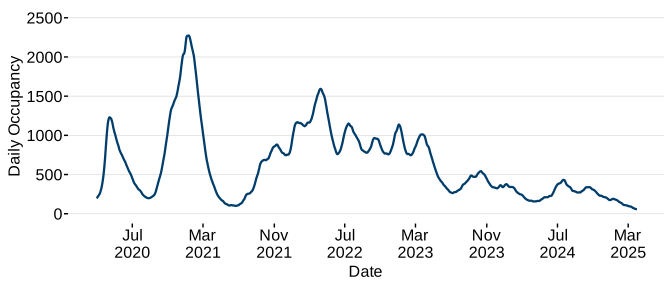
Description of figure 16: a line chart showing the 7-day rolling average of daily COVID-19 occupancy, in Wales.
Source: Digital Health and Care Wales (DHCW).
[Note 1]: data includes diagnosis codes U07.1, U07.2, U09.9 and U10.9 from ICD-10.
Figure 17: daily COVID-19 occupancy scenarios – winter 2025 to 2026. [Note 1].
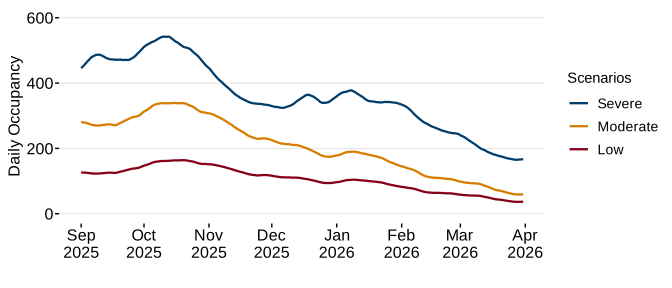
Description of figure 17: A line chart representing different projected daily COVID-19 bed occupancy scenarios in Wales for Winter 2025 to 2026.
Source: SRE calculations.
[Note 1]: Note that the ‘Moderate’ scenario depicts the 2024 to 2025 actuals.
The severe COVID-19 occupancy scenario estimates a maximum of 542 beds required on 13 October. The moderate and low scenarios project peaks of 339 and 164 beds on 15th October and 20th October, respectively.
Other infections
To assess the impact of other infections, admissions attributed to pneumonia (J12-18), acute bronchitis and bronchiolitis (J20-J22X, excluding RSV codes), Measles (B05-B06), Norovirus (A08.1), Whooping cough (A37), Streptococcus A (B950, A400, and A389), and Human Metapneumovirus (HMPV) (B9781, J211, and J123) were quantified.
During the 2024 to 2025 winter season, there were 21,055 admissions attributable to the other infections mentioned above (down from 23,177 in 2023 to 2024 and 22,089 in 2022 to 2023). Most of the admissions involved pneumonia, acute bronchitis, and bronchiolitis. There were 281 admissions attributed to Norovirus, representing a 24% increase compared to the previous winter (2023 to 2024), which had 226 admissions. The rapid mutation in 2024/25 may have caused some individuals to be infected with norovirus twice, as noted on GOV.UK. The average length of stay for patients admitted with Norovirus was 20.83 days, exceeding that of patients diagnosed with influenza or COVID-19. Admissions related to Strep A decreased to 193 in the 2024 to 2025 winter, compared to 316 in 2023 to 2024 and 535 during the 2022 to 2023 season. Patients admitted with Strep A had an average length of stay of 6.62 days. Admissions for measles and whooping cough have remained low over the past five years, with fewer than 10 admissions for measles and fewer than 50 admissions for whooping cough reported during this period.
Combined scenarios
In order to assess the collective impact of the three winter viruses (flu, RSV and COVID-19), a moderate and a severe scenario was selected for each and then combined with the three-year average of ‘other infections’ mentioned above (2022 to 2023, 2023 to 2024 and 2024 to 2025). The Low scenario estimates were not included in the combined analysis.
The combined moderate scenarios are based on the following four projections:
Table 4: details of scenarios used in the creation of moderate combined admissions and occupancy scenarios.
| Infection | Scenario/season | Details |
|---|---|---|
| Influenza | Moderate | Repeat data from the 2024 to 2025 season |
| RSV | Low season, VU = 30% | Model fit to 2023 to 2024 winter, vaccine uptake of 30% in pregnant women and older adults |
| COVID-19 | Moderate | Repeat data from the 2024 to 2025 season |
| Other infections | Three-year average | Average of 2022 to 2023, 2023 to 2024, and 2024 to 2025 winter |
Description of table 4: outlines the scenarios used to develop the moderate combined projections for hospital admissions and bed occupancy in Wales.
Table 5: details of scenarios used in the creation of severe combined admissions and occupancy scenarios.
| Infection | Scenario | Details |
|---|---|---|
| Influenza | Severe scenario | Repeat data from the 2022 to 2023 season |
| RSV | "high season, VU = 30%" | Model fit to 2022 to 2023 season, vaccine uptake of 30% in pregnant women and older adults |
| COVID-19 | Severe scenario | Repeat data from the 2023 to 2024 season |
| Other infections | Three-year average | Average of 2022 to 2023, 2023 to 2024, and 2024 to 2025 winter |
Description of table 5: outlines the scenarios used to develop the severe combined projections for hospital admissions and bed occupancy in Wales.
Figure 18: combined moderate scenario – daily hospital admissions (including ICU admissions) for winter 2025 to 2026.
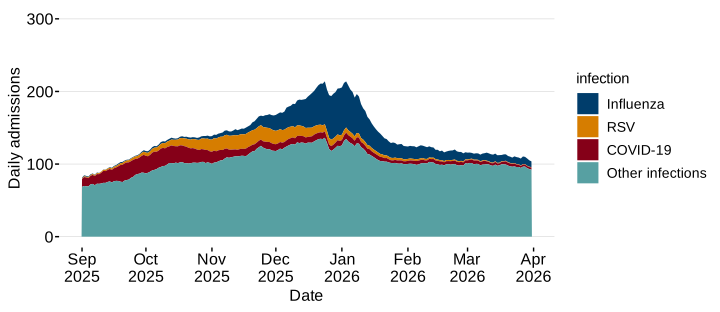
Description of figure 18: An area chart illustrating the combined moderate scenarios for daily hospital admissions across Wales during the 2025 to 2026 winter season for influenza, RSV, COVID-19, and "Other infections".
Source: SRE calculations.
Figure 19: combined severe scenario – daily hospital admissions (including ICU admissions) for winter 2025 to 2026.
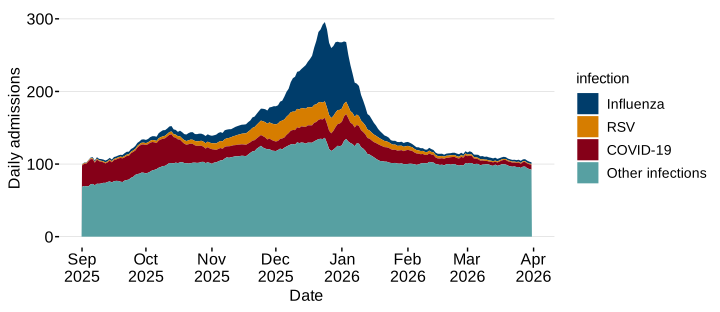
Description of figure 19: An area chart illustrating the combined severe scenarios for daily hospital admissions across Wales during the 2025 to 2026 winter season for influenza, RSV, COVID-19, and “Other infections”.
Source: SRE calculations.
The majority of winter pressure on the hospitals can be attributed to “other infections” defined above (not COVID-19, RSV or influenza), that accounted for 61% to 73% of admissions due to infectious diseases in the past three winters. COVID-19 admissions accounted for 8 to 23%, influenza admissions 8 to 15% while RSV accounted for 5 to 6% within the same time frame. According to modelling projections, the severe combined admissions scenario anticipates a peak of 296 admissions on 24 December 2025, whereas the moderate scenario estimates a maximum of 214 admissions on the same day.
Figure 20: combined moderate scenario – daily occupancy (including ICU admissions) for winter 2025 to 2026.
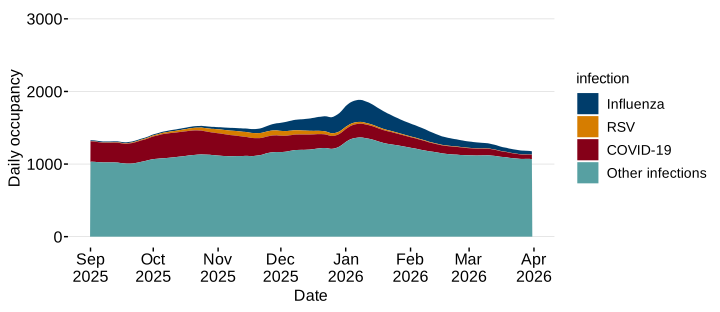
Description of figure 20: An area chart illustrating the combined moderate scenarios for all daily hospital occupancy across Wales during the 2025 to 2026 winter season for influenza, RSV, COVID-19, and ‘Other infections’.
Source: SRE calculations
Figure 21: combined severe scenario – daily occupancy (including ICU admissions) for winter 2025 to 2026.
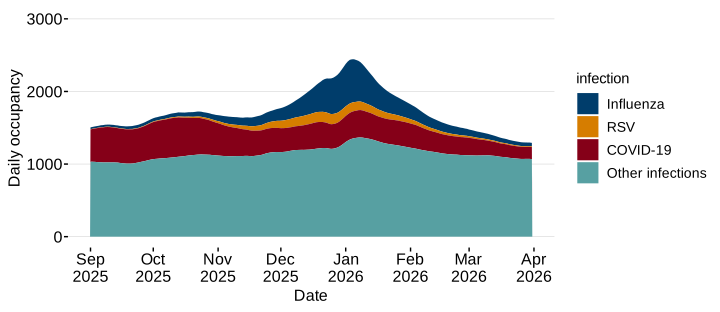
Description of figure 21: An area chart illustrating the combined severe scenarios for daily hospital occupancy across Wales during the 2025 to 2026 winter season for influenza, RSV, COVID-19, and ‘Other infections’.
Source: SRE calculations
The severe combined occupancy scenario estimates a peak of 2,443 occupied beds on 5 January 2026, whereas the moderate scenario estimates a maximum of 1,885 beds occupied on 7 January 2026.