
Social services national outcomes framework: annual report 2025
How we measure the wellbeing of people who receive care and support and unpaid carers who receive support.
In this page
Foreword
I welcome this report which brings together the best available evidence we hold on people’s well-being in Wales and offers an important snapshot of where progress has been made, as well as where further action is required. Overall, the findings demonstrate encouraging signs of improvement across several key areas, while also underlining the importance of sustained focus and collective effort to address ongoing and emerging challenges.
I am pleased to note some clear positive outcomes. Educational achievements among adult learners continues to strengthen, with higher success rates across adult learning, vocational courses and apprenticeships. In addition, the proportion of disabled adults in employment has reached its highest level in the past 5 years, reflecting progress towards greater inclusion and opportunity in the labour market. These improvements are significant and demonstrate the value of sustained investment, partnership working and person-centred approaches.
The report also highlights areas where standards have been maintained, including the continued achievement of full compliance with the Welsh Housing Quality Standards across social housing stock. This represents a strong and consistent foundation for people’s well-being and demonstrates the importance of long-term commitment to quality and safety in living conditions. Similarly, employment levels among people aged 50 and over, and stability in overall qualification levels among working age adults, reflect resilience in parts of the social and economic system.
At the same time, the report identifies areas of concern that require continued attention. In particular, the rising numbers of children and adults being referred for safeguarding concerns, alongside increases in reported domestic and sexual abuse, underline the ongoing need for effective prevention, protection and early intervention. These trends reinforce the importance of strong safeguarding arrangements and multi-agency collaboration to support those at risk.
This report has also been shaped by changes in national data collection arrangements. The National Outcomes Framework was established 10 years ago, and some data collections have evolved, paused or ceased entirely. In addition, some data was not available at the time of drafting or is not directly comparable with previous years due to methodological changes. As a result, not all sections could be fully updated this year. Where this is the case, future reports will aim to reflect new or reinstated data sources as they become available.
Despite these limitations, the evidence presented here provides valuable insight into the lived experiences of people and the effectiveness of current systems and services. It confirms that progress is being made in important areas, while clearly identifying where further improvement is needed. This report will continue to inform learning, policy development and planning, supporting our shared ambition to enhance well-being, reduce inequality and ensure that everyone in Wales is supported to live safe, fulfilling and independent lives.
Executive summary
This report provides a summary of the available data we hold about people’s well-being. There are clear positive outcomes noted in this report. For example, both educational outcomes for adult learners and employment for disabled adults has shown improvements. The report also importantly identifies areas still needing improvement, for example addressing the rising number of adults and children being referred for safeguarding concerns.
Some data collections have changed over time, the National Outcomes Framework was established 10 years ago. Also, some data for this year’s report was not available at the time of drafting or data may not be comparable to previous years due to changes in collection methodology. Additionally, some collections have ceased entirely, and so the associated indicators have been discontinued. As a result, there are some sections and indicators which have not been updated in this report.
Securing rights and entitlements
Much of the data needed for this section was not available for this report. However, there was available data on the percentage of voluntary organisations offering family welfare and children’s activities, which had fallen between 2023 and 2025 from 9% to 6%. Also, data was available for the percentage of adults who receive care and support receiving a direct payment in 2023 to 2024, which has increased to 12.8% from 11.1% in 2021 to 2022.
Physical health, mental health, & emotional well-being
There was no data available from the National Survey for Wales or Children Receiving Care and Support census for this reporting year. This section will be updated in future reports.
Protection from abuse and neglect
There has been an increase of domestic abuse and sexual abuse incidents and offences in Wales. Domestic abuse rose 1.5% in 2023 to 2024 and sexual abuse rose by 12% in 2024 to 2025.
In addition to this, the proportion of children in Wales being re-registered on local authority child protection registers has increased by 0.6% points in the last year, as well as a rise in adults at risk of abuse or neglect both in relation to same and different categories of abuse.
Education, training, and recreation
Across all adult learning indicators, success rates increase in the last year, there has been a higher proportion of successful completions in adult learning, vocational courses and apprenticeships.
In addition, the percentage of economically active people aged 16 to 64 had at least 1 qualification has remained stable at just above 91%. However, less than half (41%) of care leavers completed at least 3 consecutive months of employment, education or training in the year.
Domestic, family, and personal relationships
There was no data available from the National Survey for Wales for this reporting year. This section will be updated in future reports.
Suitability of living accommodation
All social housing stock in Wales was compliant with the Welsh Housing Quality Standards, including acceptable fails, an achievement that has been maintained from last year. Additionally, the proportion of voluntary organisations offering housing support has remained the same since 2023 at 1%.
Contribution made to society
Similarly, data from the National Survey was not available for two of the four indicators for this section. However, the available data shows that there has been a reduction in the proportion of voluntary organisations involved with community activities, youth activities and children’s and families’ activities between 2023 and 2025. In that period, the percentage of voluntary organisations offering community activities fell from 22% to 15%, the percentage offering disability support fell from 3% to 2% and the percentage offering youth activities fell from 5% to 3%.
Social and economic well-being
The employment rate of adults aged 50 and over has remained between 37% and 39% since 2020. Similarly, the proportion of 19 to 24 year olds not in education, employment, or training (NEET) has remained between 15% and 17%.
However, this year we have seen the highest percentage of people aged between 16 and 64 who are Equality Act Core or work-limiting disabled in employment than in the past 5 years, at just under 30%.
Suitability of living accommodation
All social housing stock in Wales was compliant with the Welsh Housing Quality Standards, including acceptable fails, an achievement that has been maintained from last year. Additionally, the proportion of voluntary organisations offering housing support has remained the same since 2023 at 1 percent.
Introduction
Background
In 2011, the Welsh Government published its ambitions for the future of social care: Sustainable Social Services for Wales: A Framework for Action. This:
- set out the priorities for developing sustainable social services in Wales.
- produced a framework for meeting the challenges facing social services in the next decade.
- it will provide a system centred on the well-being of:
- people who receive care and support
- unpaid carers who receive support (for example, short breaks or respite)
Legislation supports Sustainable Social Services for Wales. The Social Services and Well-Being (Wales) Act (‘the Act’) came into force in April 2016.
Regulations, Codes of Practice and Statutory Guidance support the Act. Local authorities, health boards and Welsh Ministers have duties under the Act. They have a duty to promote the well-being of people who need care and support, and unpaid carers who need support.
The Act transforms social care in Wales and aims to improve people’s well-being. Care and support services across Wales will focus on:
- the well-being outcomes that people who need care and support want to achieve
- the well-being outcomes that unpaid carers who need support want to achieve
- people’s rights and responsibilities
The National Outcomes Framework:
- describes the well-being of people who need care and support and unpaid carers who need support
- meets the requirements of Part 2 Section 8 of the Act
- builds on the national well-being outcomes from the well-being statement
- includes national outcome indicators that relate to eight aspects of well-being.
The national outcome indicators evidence whether the national well-being outcomes are being achieved. They provide a measure of the well-being of people who need care and support and for unpaid carers who need support.
The national outcome indicators were set by Welsh Government. The Welsh Government collaborated with a wide range of stakeholders from across Wales. The full list of indicators, their source and most recent data can be found in Annex A of this report.
The key objectives of the national outcomes framework are:
- to promote the well-being of people who need care and support and unpaid carers who need support in Wales
- to show if services are improving well-being outcomes for people who need care and support, it will do this using consistent and comparable indicators
- to describe the national well-being outcomes that people who need care and support, these are the outcomes that people should expect to achieve to live fulfilled lives
- to measure if Wales is achieving the goals set out in the Well-being of Future Generations (Wales) Act 2015
Public Health Wales produces the Public Health Outcomes Framework, a sister framework to the National Outcomes Framework. Where National Outcomes Framework indicators overlap with those in the Public Health Outcomes Framework, we refer readers to the PHOF. These are:
- 13. percentage of adults (aged 16 or over) who have 2 or more healthy lifestyle behaviours:
- not smoking
- healthy weight
- eat 5 fruit or vegetables a day
- no drinking above guidelines
- meet the physical activity guidelines
- 14. percentage of live single births with a birth weight of under 2500 grams
- 18. healthy life expectancy at birth
- 19. hip fractures amongst older people
- 44. gap in healthy life expectancy between least and most deprived
About this report
The evidence from the National Outcomes Framework reports contributes to a larger evidence base for Wales, which includes data collected, local authority annual reports and other requirements, such as Populations Needs Assessments. We will use this evidence to identify the national priorities for improvement. This will provide an understanding of the impact of care and support on people’s lives.
This report will include data up to 31 March 2025, where possible. Where this is not possible, the most recently published data will be included.
Data quality and sources
Details of the data sources used to compile this report, and their quality, are available in the annexes at the end of this document.
There are 4 categories of people included in this report:
- people with care needs, who have indicated that they receive care and support.
- people who do not receive care and support
- people who have responsibilities as an unpaid carer
- people who are not unpaid carers (non-carers)
These categories are not mutually exclusive. Therefore, some individuals may receive care and support and also have caring responsibilities themselves. Similarly, individuals who do not receive care and support may or may not be unpaid carers receiving support.
The National Survey for Wales is a survey of adults in private households, therefore, children under the age of 16 are not included. Also, adults living long-term in residential care homes are not included. This means a significant portion of people receiving care and support are not included in this report. Please note, data from the National Survey for Wales 2020 to 2021 onwards cannot be directly compared to previous years due to changes to the survey mode from face-to-face to telephone and online. This was due to COVID-19.
In addition, the questions used for determining people receiving care and support and carers receiving support changed. Therefore, they may not be comparable. However, data for 2018 to 2019 is provided for reference.
Temporarily unavailable data
Due to cost pressures and falling response rates experienced by surveys in general, fieldwork for the 2025 to 2026 National Survey for Wales will not proceed. Work has begun on an online-first survey approach which is expected to run from 2026 to 2027. This means that several indicators, listed in the summary of measures updated section, will not be updated in this report and may be affected in future National Outcomes Frameworks.
Securing rights and entitlements
Everyone has a right to a voice and to be heard. People should have real control over their day to day lives. The rights of people who need care and support, and unpaid carers who need support, are central to the 2014 Act. This well-being statement reflects that commitment.
Key well-being outcomes include helping people to be in control of their own lives. It also includes helping people to make decisions about their care and support.
Outcome Indicators
- 1. percentage of people who rate the care and support they have received as excellent or good
- 2. percentage of people whose care and support has helped them have a better quality of life
- 3. percentage of people who feel they have been treated with respect
- 4. percentage of people who rate the people who provided their help, care, and support as excellent or good
- 5. percentage of people that received the right information or advice when they needed it
- 6. percentage of people reporting that they are in control of their daily life as much as they can be
- 7. percentage of people who felt involved in decisions about their care and support
- 8. percentage of voluntary organisations offering family welfare and children’s activities
- 9. percentage of adults who receive care and support receiving a direct payment
Data from National Survey for Wales is unavailable for indicators 1 to 7, these are not updated in this report.
8. Percentage of voluntary organisations offering family welfare and children’s activities
The third sector complements statutory services. They provide services for the benefit of people and communities in Wales.
Voluntary organisations offer activities to support family welfare and children. These may include:
- preschool provision
- local centres providing services
- adoption and fostering services
- children’s rights organisations
- services for disabled children.
In August 2025, 6% of voluntary organisations were involved in children’s and families’ activities. This is lower than July 2023, when 9% of voluntary organisations were involved in children’s and families’ activities.
This data was taken from a snapshot in August 2025 and may not reflect the data held by Wales Council for Voluntary Action (WCVA) at another time.
Source: WCVA
9. Percentage of adults who receive care and support receiving a direct payment
Direct payments allow people to buy the care and/or support they need, for more information see this guide to direct payments in Wales. Local authorities provide adults who need care and/or support the money. This is one way in which individuals can take control over the ways their care and support needs are met.
The proportions of adults with direct payments used to meet their care and support needs has remained around 11%. It was:
- 12.8% in 2023 to 2024
- 12.0% in 2022 to 2023
- 11.1% in 2021 to 2022
- 11.4% in 2020
Source: Performance and Improvement Framework for Social Services
Physical and mental health & emotional well-being
We need good physical, mental and emotional health to maximise our quality of life. This is true for people who need care and support, and for unpaid carers who need support. This well-being statement recognises this. Being healthy and active can allow children to develop to their full potential. It decreased the likelihood of needed help from care and support services in later life. For adults, good physical and emotional health can help people keep their independence. Many factors contribute to mental health and emotional well-being. To improve the well-being of individuals, services must work holistically. Services need to work with the individual and see their life as a whole. Working together they can support the individual to achieve what matters to them.
Outcome Indicators
- 10. percentage of people with high happiness scores
- 11. percentage of people with high life satisfaction scores
- 12. percentage of people with high mental well-being
- 15. percentage of children receiving care and support with mental health problems
- 16. percentage of children receiving care and support with up-to-date immunisations
- 17. percentage of children receiving care and support aged 5 and over with up-to-date dental checks
- 20. percentage of adults reporting their health in general is very good or good
Data from National Survey for Wales is unavailable for indicators 10 to 12, and 20. The data from the Children Receiving Care and Support Census has not been published for 2024, which means data is not available for indicators 15 to 17. Therefore, this section has not been updated in this report.
Protection from abuse and neglect
Everyone has the right to be safe and protected from abuse and neglect. The Social Services and Well-being (Wales) Act strengthens existing safeguarding arrangements for children. It has introduced a duty for agencies (e.g. NHS Wales) to report situations where adults are at risk of abuse or neglect.
Supporting individuals to protect the people that matter to them is also an important well-being outcome. For example, by educating people to recognise the signs and risks of abuse and neglect.
Feeling safe in public spaces can increase the likelihood of an individual getting out. This would result in them enjoying their local community and feel a sense of belonging. This in turn reduces social isolation.
Outcomes Indicators
- 21. percentage of people reporting they feel safe
- 22. percentage of re-registrations of children on local authority child protection registers
- 23. incidence of domestic abuse
- 24. incidence of sexual offences
- 25. percentage of adults at risk of abuse or neglect referred more than once during the year
Data from National Survey for Wales is unavailable for indicator 21, this indicator is not updated in this report.
22. Percentage of re-registrations of children on local authority child protection registers
It is important that we protect children who continue to be at risk, for example, when a child is at risk of potential repeated safeguarding issues.
8.1% of children placed on local authority child protection registers during 2023 to 2024 had been registered previously in the past 12 months. This is higher than the 7.5% in 2022 to 3023 and 6.2% reported in 2021 to 2022 and 7.4% in 2020 to 2021.
Source: Performance and Improvement Framework for Social Services
23. Incidence of domestic abuse
Tackling all forms of abuse is an overriding priority for the Welsh Government. The Violence against Women, Domestic Abuse and Sexual Violence (Wales) Acthighlights this.
In Wales there were:
- 87,969 domestic abuse incidents and offences in 2023 to 2024
- 86,637 domestic abuse incidents and offences in 2022 to 2023
- 89,728 domestic abuse incidents and offences in 2021 to 2022
Domestic abuse and sexual offences data should be read with a caveat as it is known that a high proportion of offences are not reported to the police, and changes in recorded figures may reflect changes in reporting or recording rates rather than in actual victimisation. For these reasons, caution should be used when interpreting trends in these offences.
Source: Domestic abuse in England and Wales, Office for National Statistics
24. Incidence of sexual offences
Tackling all forms of sexual violence is an overriding priority for the Welsh Government. The Violence against Women, Domestic Abuse and Sexual Violence (Wales) Act highlights this.
In the year ending March 2025, 10,577 sexual offences were recorded in Wales. This is a 12% increase from 2024 (9,464), and the highest level recorded in the last four years.
Source: Crime in England and Wales, Office for National Statistics
25. Percentage of adults at risk of abuse or neglect referred more than once during the year
Some adults will be referred to social services more than once. This may be for the same or different categories of abuse. In respect of referrals for the same category, a lower figure as this indicates that what was done in response to the initial referral may not have been effective, or this is another perpetrator. However, for different types of abuse and neglect, it is encouraged that people are reported regardless of type of abuse.
The total number of referrals of adults at risk of abuse or neglect has increased over the last several years. However, there has been variation in the percentage of referrals made more than once. The total number of referrals of adults at risk of abuse or neglect rose has risen steadily from 2020 to 2021 to 2023 to 2024, and the percentage of adults being referred more than once in a year either for the same category or different category of abuse or neglect been around 32% since 2022 to 2023.
In 2023 to 2024, 18,169 adults were reported being at risk of abuse or neglect during the year:
- 15.0% were referred more than once for the same category of abuse or neglect
- 17.9% were referred more than once for a different category of abuse or neglect
In 2022 to 2023, 16,162 adults were reported being at risk of abuse or neglect during the year:
- 14.7% were referred more than once for the same category of abuse or neglect
- 17.2% were referred more than once for a different category of abuse or neglect
Data was not available for 2019 TO 2020 due to COVID-19.
Source: Performance and Improvement Framework for Social Services, Stats Wales
Education, training and recreation
Learning and doing things that matter are important well-being outcomes. This is true for people who receive care and support and for unpaid carers who need support. The well-being statement recognises this. Children need to develop skills to help them achieve their educational potential. This may include progressing to further or higher education. As adults, a lack of basic educational skills can impact on people’s daily lives. We need skills such as reading, writing and numeracy to understand forms and bills.
Learning is not limited to children and their education. Adult learning and training allow people to further develop knowledge and skills. This can give people a sense of independence and improve confidence. It can also improve a person’s ability to get and keep a job. Having a regular income and staying out of poverty can have a positive impact on well-being.
Outcomes Indicators
- 26. percentage of people reporting that they are able to do the things that matter to them
- 27. key Stage 3 results for children looked after
- 28. key Stage 4 results for children receiving care and support
- 29. school attendance rates of children looked after
- 30. learner outcomes in further education, work based learning and adult community learning sectors
- 31. percentage of adults aged 16 to 64 with at least one qualification
- 32. percentage of care leavers who have completed at least 3 consecutive months of employment, education or training in the 12 months since leaving care
Data from National Survey for Wales is unavailable for indicator 26. The data from the Children Receiving Care and Support Census has not been published for 2024, which means data is not available for indicators 27 to 29.
30. Learner outcomes in further education, work-based learning and adult community learning sectors
Learning providers in all sectors are crucial to driving education standards forward. This indicator looks at the proportion of learners achieving qualifications. It includes general education, vocational, adult learning and apprenticeships.
Achievement rates for vocational outcomes, apprenticeships and adult learning are calculated by the Welsh Government, there are a number of general education achievement outcomes. In this report we use the percentage of learners at the 8 week point who go on to achieve 3 or more A-levels at grades A* to E, as the most comparable to achievement rates in other educational pathways.
In 2023 to 2024, 69% of learners successfully achieved 3 or more A-levels at grades A* to E. This is lower than the peak of 75% in 2021 to 2022, but higher than the results from other years since 2018 to 2019.
In regard to success rates for adult learning, vocational learning and for apprenticeships:
- success rates in adult learning increased from 82% in 2021 to 2022 to 87% in 2023 to 2024, this is lower than 90% seen in 2018 to 2019
- success rates in vocational learning increased from 74% in 2021 to 2022 to 80% in 2023 to 2024, the previous highest result was 80% in 2018 to 2019.
- success rates in apprenticeships increased from 66% in 2021 to 2022 to 74% in 2023 to 2024, this is lower than the 81% seen in 2018 to 2019
Source: Learner outcome measures for apprenticeships and adult learning
31. Percentage of adults aged 16 to 64 with at least one qualification
Educational qualifications can impact a person’s ability to get and keep a job. A job helps well-being as it improves a person’s ability to receive a regular income.
The regulatory framework supporting National Vocational Qualifications (NVQs) was withdrawn in 2015 and replaced by the Regulated Qualifications Framework (RQF), therefore, qualification estimates have been replaced with estimates on an RQF basis. Data for this item includes qualifications defined as other qualifications and trade apprenticeships, as well as NVQ (prior to 2022) and RFQ (from 2022 onwards).
In 2024, 91.4% of economically active people aged 16 to 64 had at least one qualification. This figure has remained stable over the past several years with between 91.2% and 91.4% of economically active people in 2022 to 2023.
Source: Annual Population Survey/Local Labour Force Survey
33. Percentage of care leavers who have completed at least 3 consecutive months of employment, education or training in the 12 months since leaving care
In 2023 to 2024, there were 2,849 care leavers in Wales who were Categories 2, 3 and 4 young people. Of these, 41.3% have completed at least 3 consecutive months of employment, education or training in the year. This figure is not comparable to previous years’ reports, as the data collection has changed.
Source: Performance and Improvement Framework for Social Services, Stats Wales
Domestic, family and personal relationships
Having strong social networks, family and friendships can reduce social isolation. This is true for people who receive care and support and for unpaid carers who need support. The well-being statement recognises this.
Having a sense of belonging to a community can improve people’s confidence and self-worth. It can also reduce feelings of isolation by allowing people to engage with each other.
Outcome Indicators
- 34. percentage of people reporting overall emotional and social loneliness
- 35. percentage of people who think that people in their local area treat each other with respect and consideration
- 36. percentage of people who feel they belong to their local area
- 37. percentage of people who think that their local area is a place where people from different background get on well together
Data from National Survey for Wales is unavailable for indicators 34 to 37. Therefore, this section has not been updated in this report.
Contribution made to society
Being able to engage and make a contribution to society are key well-being outcomes. It is important that people feel valued in their communities and in society. This is true for people who receive care and support and for unpaid carers who need support. The well-being statement recognises this.
These outcomes can make a person feel worthwhile. This in turn can help people take better care of their physical, mental and emotional health. A low sense of worth can impact on well-being. It can affect mental health and how people relate to friends and family.
Outcome Indicators
- 38. percentage of people report the things they do in life are worthwhile
- 39. percentage of people who volunteer
- 40. percentage of voluntary organisations offering community or youth activities
- 41. percentage of voluntary organisations offering disability activities
Data from National Survey for Wales is unavailable for indicator 38 and 39, these are not updated in this report.
40. Percentage of voluntary organisations offering community or youth activities
Voluntary organisations aim to support individuals. They can include registered charities, housing associations, credit unions, community interest companies, trusts and local community groups.
Community activities can include groups working to regenerate communities or improve access to services. They can also include community newsletters and development programmes. Youth activities are groups that involve young people. They can include youth centres, clubs, uniformed organisations, sports and cultural groups.
In November 2025, 15% of voluntary organisations in Wales offered community activities and 3% offered youth activities. This is lower than in July 2023 where 22% of voluntary organisations in Wales offered community activities and 5% offered youth activities.
Please note, this data was taken from a snapshot in November 2025 and July 2023 and may not reflect data held by WCVA on another occasion.
Source: WCVA
41. Percentage of voluntary organisations offering disability activities
The voluntary sector can offer innovative ways of meeting three challenges facing social care: increasing demand, decreasing funds and changing expectations.
In November 2025, the percentage of voluntary organisations offering disability activities was 2%. This is lower than in July 2023, where 3% of voluntary organisations offered disability activities.
This data was taken from a snapshot in November 2025 and July 2023 and may not reflect data held by WCVA on another occasion.
Source: WCVA
Social and economic well-being
People’s social and economic status can impact their well-being. This is true for people who receive care and support and for unpaid carers who need support. The well-being statement recognises this.
Good quality, secure employment is fundamental to people’s economic, physical, and mental well-being. Removing work-related barriers for older adults and disabled people also helps reduce inequalities and can help people live healthy, independent, and fulfilling lives.
High employment rates are vital to raising living standards. They also help to reduce inequality and poverty. Some people may face barriers to employment. Barriers may include health problems or a lack of skills. Removing barriers and supporting people to stay in work will improve people’s well-being. They will have the same access to services and opportunities as others. People will be able to play an active role in society. This will help them live healthy, independent, and fulfilling lives.
The social and economic conditions of an area can also impact on well-being. For example, children who are in need of care and support are more likely to live in the more deprived areas of Wales.
Outcome Indicators
- 42. employment rate of adults aged 50 and over
- 43. employment rate of adults aged 16 to 64 who are Equality Act Core or work-limiting disabled
- 45. percentage of 19 to 24 year olds who are not in education, employment or training (NEET)
- 46. percentage of materially deprived households
Data from National Survey for Wales is unavailable for indicators 46, this indicator is not updated in this report.
42. Employment rate of adults aged 50 and over
The employment rates for adults aged 50 and over have remained between 37 and 39 percent since 2020. They were:
- 37.5% in 2024
- 38.0% in 2023
- 37.8% in 2022
- 38.3% in 2021
- 38.9% in 2020
The Office for National Statistics conducted a study into the reasons for workers aged over 50 years leaving employment since the start of the coronavirus pandemic. They reported people experiencing long-term sickness and students as the reason for the rise in economic inactivity.
In 2022, the sickness absence rate for those with long-term health conditions was at 4.9 percent, its highest point since 2008 when it was 5.1%. Data for sickness and absence rates in 2023 was not published at the time of completing this report.
Source: Annual Population Survey/Local Labour Force Survey
43. Employment rate of adults aged 16-64 who are Equality Act Core or work-limiting disabled
‘Equality Act Core’ is defined as people with disabilities who meet the definition of ‘disabled’ in the Equality Act 2010. Respondents to the Annual Population and Labour Force Surveys are defined as having a ‘work-limiting disability’ if they answer that they have a physical or mental health condition or illness lasting or expecting to last 12 months or more, and that this condition or illness reduces their ability to carry out day-to-day activities a lot.
The 2024 employment rates of all people aged 16 to 64 and Equality Act Core or work-limiting disabled people were the highest seen in the past 5 years, at 29.9%, and higher than pre-pandemic rates. However, despite the employment rate for all people aged 16 to 64 falling to 72.8%, employment rates for Equality Act Core or work limiting-disabled people remained noticeably lower than those of all people.
Figure 1: Comparison of employment rates of adults aged 16 to 64 between 2019 and 2023 between disabled people and all individuals.
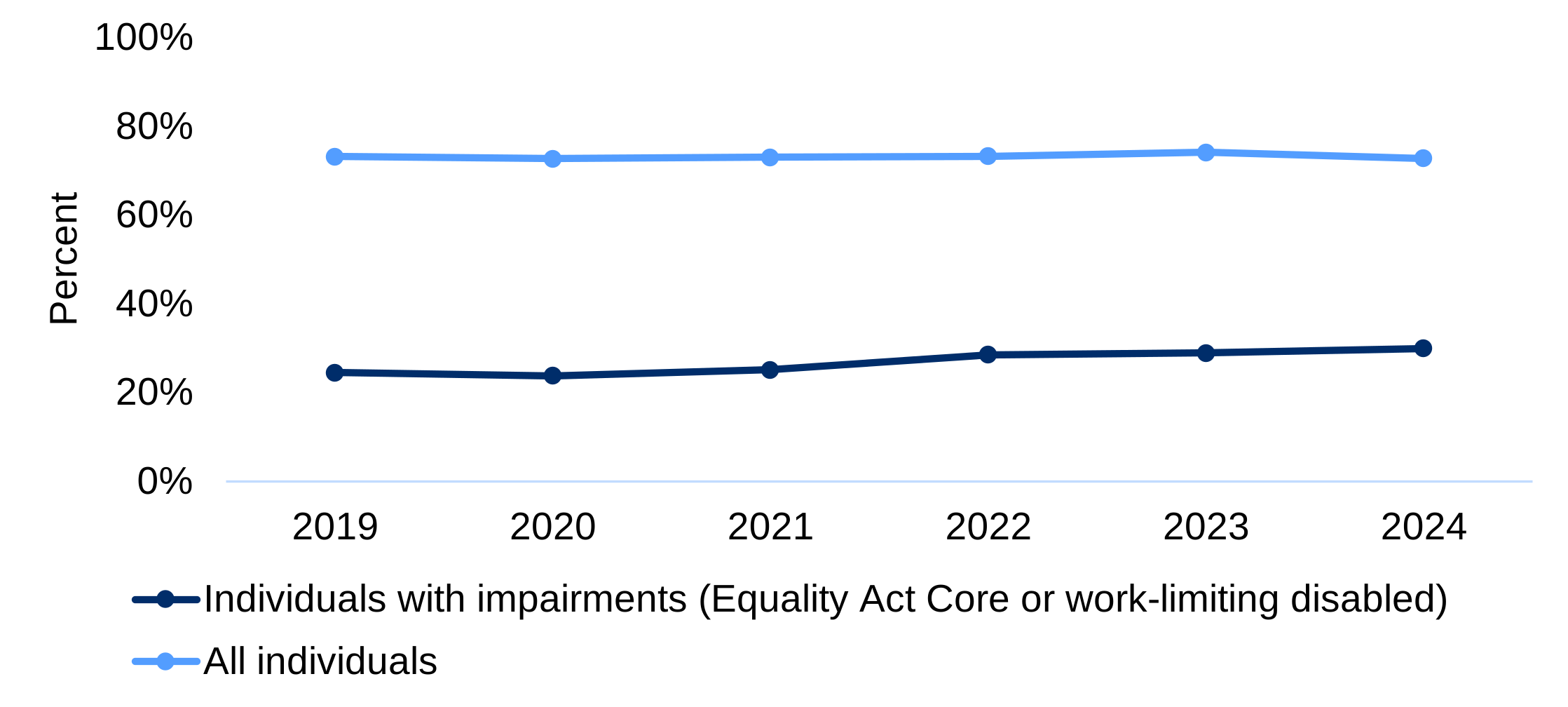
Description of Figure 1: A line chart comparing the employment rates of disabled adults aged 16 to 64 with all adults aged 16 to 64, from 2019 to 2024. Employment rates for disabled adults were consistently and noticeably lower than for all individuals.
Source: Annual Population Survey/Local Labour Force Survey
45. Percentage of 19- to 24-year-olds who are not in education, employment or training (NEET)
Training, education, or employment is important for young adults aged 19 to 24. If a young adult is not in training, education or employment, this can impact their well-being and wider society. It can lead to increases in general health problems or crime rates.
In 2023, 15.2% of 19 to 24 year olds in Wales were NEET (figure 4), which is higher than 2022 but lower than the 22.9% reported 10 years ago.
Figure 2: Proportion of 19 to 24 year olds not in education, employment, or training (NEET) between 2004 and 2022.
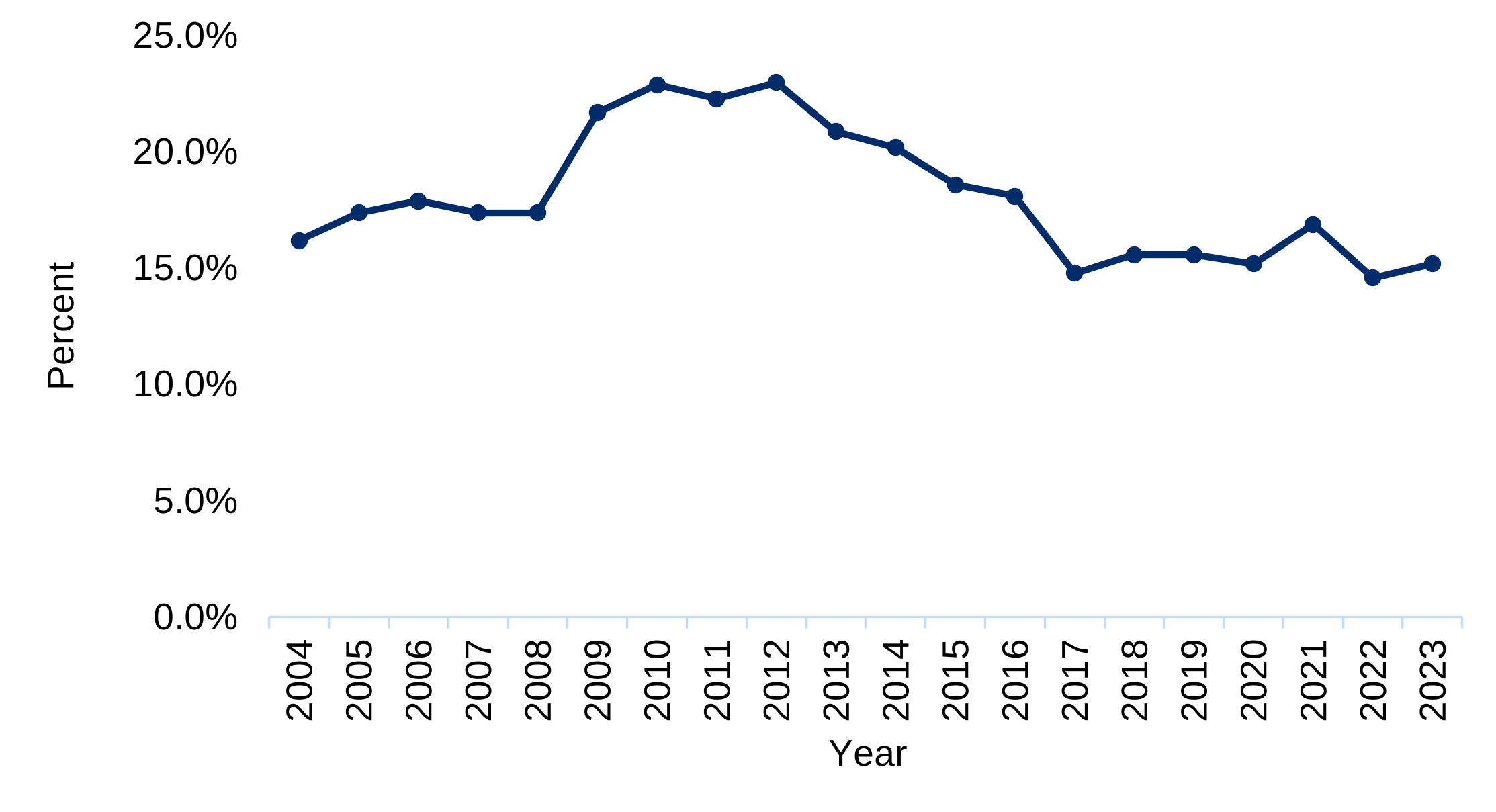
Description of Figure 2: A line chart showing the proportion of 19- to 24-year-olds not in education, employment, or training (NEET) between 2004 and 2023. The rate was broadly stable between 2004 and 2008, with an upward trend from 2009 to 2012 where it reached a peak of 23.0 percent. It then decreased to 14.8 percent in 2017 and remained broadly stable again at between 14 and 17 percent.
Source: Participation of young people in education and the labour market
Suitability of living accommodation
Living in safe, satisfactory, and appropriate accommodation can have an impact on well-being. This is true for people who receive care and support and for unpaid carers who need support. The well-being statement reflects this.
Poor living conditions and overcrowding can have a negative impact on well-being. It can lead to poor physical and mental well-being. It can also impact children’s learning and development.
Targeted approaches are often needed to ensure that social care for people experiencing homelessness is available, accessible, and provided to the same standards and quality as for the general population.
Services need to work together to ensure accommodation is appropriate. This includes care and support services, local authorities and housing associations.
Outcome Indicators
- 45. percentage of people reporting that their accommodation is suitable for their needs
- 46. percentage of homeless households which include dependent children
- 47. percentage of voluntary organisations offering housing support
- 48. percentage of social housing compliant with Welsh Housing Quality Standard (WHQS)
Data from National Survey for Wales is unavailable for indicator 47, and data for 2024 to 2025 was unavailable for indicator 28, these indicators have not updated been in this report.
49. Percentage of voluntary organisations offering housing support
The third sector complements statutory services. They provide services for the benefit of people and communities in Wales. They provide support, enabling people to support themselves, where appropriate.
In August 2025, 1% of voluntary organisations offered housing support, such as homelessness projects, care and repair schemes, housing advice services and tenant and residents associations. This is the same as the proportion in July 2023 (1%).
This data was taken from a snapshot in August 2025 and July 2023 and may not reflect data held by WCVA on another occasion.
Source: WCVA
50. Percentage of social housing compliant with Welsh Housing Quality Standard (WHQS)
Social landlords provide social housing. They include local councils and housing associations. Housing associations are not-for-profit organisations that own, let, and manage rented housing.
The quality of social housing in Wales can impact well-being. The WHQS was first published in 2002 and updated in 2008. Its aim is to ensure that all dwellings are of good quality and suitable for the needs of residents. The Welsh Government expects all social landlords in Wales to bring all their homes up to this standard.
In 2022 to 2023, 100% of all social housing stock in Wales was compliant with the WHQS, including acceptable fails. This was the same as 2021 to 2022, where 100% of all housing stock in Wales was compliant.
Source: Welsh Housing Quality Standard
Next steps
The Welsh Government Social Services Performance and Improvement Framework offers additional data. We may use this data as indicators in the future. Also, new guidance for Local Authority Social Services Annual Reports was published in May 2024, which will change how local authorities report on their services.
It is anticipated that together with the Performance and Improvement Framework, Local Authority Annual Reports and this National Outcomes Framework, the National Office for Care and Support can produce a rounded view of social services performance and outcomes in the future through a new State of the Nation Report.
Summary of measures updated
Full list of indicators by number, and whether they have been updated, amended or discontinued.
Securing rights & entitlements
- percentage of people who rate their care and support as excellent or good: not updated
- percentage of people whose care and support has helped them have a better quality of life: not updated
- percentage of people who feel they have been treated with respect: not updated
- percentage of people who rate the people that provided their help, care, and support as excellent or good: not updated
- percent of people that received the right information or advice when they needed it: not updated
- percentage of people reporting that they are in control of their daily life as much as they can be: not updated
- percentage of people who felt involved in decisions about their care and support: not updated
- percentage of voluntary organisations offering family welfare and children’s activities: updated
- percentage of adults who receive care and support receiving a direct payment: updated
Physical & mental health & emotional well-being
- percentage of people with high happiness scores: not updated
- percentage of people with high life satisfaction scores: not updated
- percentage of people with high mental well-being: not updated
- percentage of adults (aged 16 or over) who have two or more healthy lifestyle behaviours: not updated. See Public Health Outcomes Framework
- percentage of live singleton births with a birth weight of less than 2,500 grams: not updated. See Public Health Outcomes Framework
- percentage of children receiving care and support with mental health problems: updated
- percentage of children receiving care and support with up-to-date immunisations: updated
- percentage of children receiving care and support aged 5 and over with up-to-date dental checks: updated
- healthy life expectancy at birth: not updated. See Public Health Outcomes Framework
- hip fractures amongst older people: not updated. See Public Health Outcomes Framework
- percentage of people reporting that their health in general is good or very good: not updated
Protection from abuse and neglect
- percentage of people reporting they feel safe: updated
- percentage of re-registrations of children on local authority child protection registers: updated
- incidence of domestic abuse: updated
- incidence of sexual offences: updated
- percentage of adults at risk of abuse and neglect referred more than once during the year: updated
Education, training & recreation
- percentage of people reporting that they are able do the things that matter to them: not updated
- key stage 3 results for children receiving care and support: updated
- key stage 4 results for children receiving care and support: updated
- school attendance rates for children looked after: updated
- learner outcomes in further education, work-based learning, and adult community learning sectors: updated
- percentage of adults aged 16–64 with at least one qualification: updated
- percentage of children receiving care and support achieving expected level of learning or above at foundation phase: not updated
- percentage of care leavers who have completed at least 3 consecutive months of employment, education or training in the 12 months since leaving care: updated
Domestic, family & personal
- percentage of people reporting overall, emotional, and social loneliness: not updated
- percentage of people who think that people in their local area treat each other with respect and consideration: not updated
- percentage of people who feel they belong to their local area: updated
- percentage of people who think that their local area is a place where people from different backgrounds get along well together: updated
Contribution made to society
- percentage of people reporting the things they do in life are worthwhile: not updated
- percentage of people who volunteer: not updated
- percentage of voluntary organisations offering community or youth activities: updated
- percentage of voluntary organisations offering disability support: updated
Social & economic well-being
- employment rate of adults aged 50 and over: updated
- employment rate of adults aged 16 to 64 who are Equality Act core or work-limiting disabled: updated
- gap in healthy life expectancy between least and most deprived: not updated. See Public Health Outcomes Framework
- the percentage of 19 to 24 year olds who are not in education, employment, or training (NEET): updated
- percentage of materially deprived households: not updated
Suitability of living accommodation
- percentage of people reporting that their accommodation is suitable for their needs: not updated
- percentage of homeless households which include dependent children: updated
- percentage of voluntary organisations offering housing activities: updated
- percentage of social housing compliant with Welsh Housing Quality Standards: updated
Quality and methodology information
This document is not classed as official statistics as it contains data from non-government sources in addition to that collected and published by Welsh Government and UK Government. We have applied the principles of the Code of Practice for Statistics as far as possible during development as follows:
- quality assurance
- most appropriate available data
- reviewed regularly for using best available data for the purposes required
Trustworthiness, quality and value
The statistics in this report demonstrate the standards expected around trustworthiness, quality, and public value.
Details of the data collection and validation processes, strengths and limitations of the data, and revisions policies can be seen in the quality and methodology sections of the original publications:
- National Survey for Wales
- Social Services activity: April 2022 to March 2023 (Official Statistics in development) | GOV.WALES
- Children Receiving Care and Support Census: on 31 March 2023 (official statistics in development) | GOV.WALES
- Domestic abuse in England and Wales overview - Office for National Statistics
- Crime in England and Wales - Office for National Statistics
- Consistent performance measures for post-16 learning (achievement): August 2022 to July 2023 | GOV.WALES
- Learner outcome measures for apprenticeships and adult learning: August 2022 to July 2023 | GOV.WALES
- Annual Population Survey/Local Labour Force Survey: Summary of Economic Activity
- Participation of young people in education and the labour market | GOV.WALES
- Homelessness: April 2023 to March 2024 | GOV.WALES
- Welsh Housing Quality Standard: as at 31 March 2023 | GOV.WALES
- WCVA
You are welcome to contact us directly with any comments about how we meet the statistical quality standards. Alternatively, you can contact OSR by emailing regulation@statistics.gov.uk or via the OSR website.
Well-being of Future Generations Act
The Well-being of Future Generations Act 2015 is about improving the social, economic, environmental and cultural wellbeing of Wales. The act puts in place 7 wellbeing goals for Wales. These are for a more equal, prosperous, resilient, healthier and globally responsible Wales, with cohesive communities and a vibrant culture and thriving Welsh language. Under section (10)(1) of the act, the Welsh Ministers must (a) publish indicators (“national indicators”) that must be applied for the purpose of measuring progress towards the achievement of the wellbeing goals, and (b) lay a copy of the national indicators before Senedd Cymru. Under section 10(8) of the Well-being of Future Generations Act, where the Welsh Ministers revise the national indicators, they must as soon as reasonably practicable (a) publish the indicators as revised and (b) lay a copy of them before the Senedd. These national indicators were laid before the Senedd in 2021. The indicators laid on 14 December 2021 replace the set laid on 16 March 2016 and this release includes 15 of the national indicators namely:
- 1. percentage of live single births with a birth weight of under 2,500g
- 2. health life expectancy at birth including the gap between the least and most deprived
- 3. percentage of adults with two or more healthy lifestyle behaviours
- 8. percentage of adults with qualifications at the different levels of the National Qualifications Framework
- 19. percentage of people living in households in material deprivation
- 21. percentage of people in employment
- 22. percentage of people in education, employment or training, measured for different age groups
- 23. percentage who feel able to influence decisions affecting their local area
- 24. percentage of people satisfied with their ability to get access to the facilities and services they need
- 25. percentage of people feeling safe at home, walking in the local area, and when travelling
- 26. percentage of people satisfied with local area as a place to live
- 27. percentage of people agreeing that they belong to the area; that people from different backgrounds get on well together; and that people treat each other with respect
- 28. percentage of people who volunteer
- 30. percentage of people who are lonely
- 34. number of households successfully prevented from becoming homeless per 10,000 households
Information on the indicators, along with narratives for each of the wellbeing goals and associated technical information is available in the wellbeing of Wales report.
The statistics included in this release could also provide supporting narrative to the national indicators and be used by public services boards in relation to their local wellbeing assessments and local wellbeing plans.
As national indicators under the act, they must be referred to in analyses of local wellbeing produced by public services boards when they are analysing the state of economic, social, environmental and cultural wellbeing in their areas.
The act states national milestones must be set that “the Welsh Ministers consider would assist in measuring whether progress is being made towards the achievement of the wellbeing goals.” In doing so, Welsh Ministers must specify how we know that a national milestone has been achieved, and the time by which it is to be achieved.
National milestones are not performance targets for any individual organisation but are collective measures of success for Wales.
In this release indicators 2, 3, 8, 21, 22, and 28 correspond to the following milestones:
- 2. to increase the healthy life expectancy of adults and narrow the gap in healthy life expectancy between the least and the most deprived by at least 15% by 2050
- 3. to increase the percentage of adults with two or more healthy lifestyle behaviours to more than 97% by 2050
- 8. 75% of working age adults in Wales will be qualified to level 3 or higher by 2050,
- 8. the percentage of working age adults with no qualifications will be 5% or below in every local authority in Wales by 2050
- 21. eradicate the gap between the employment rate in Wales and the UK by 2050, with a focus on fair work and raising labour market participation of under-represented groups
- 22. at least 90% of 16 to 24 year olds will be in education, employment, or training by 2050
- 28. increase the percentage of people who volunteer by 10% by 2050, demonstrating Wales’s status as a volunteering nation
Further information on the national indicators can be found on national indicators and national milestones for Wales.
This release also includes 9 contextual indicators, namely:
- crime in England and Wales (ONS)
- crime Survey for England and Wales (ONS)
- health expectancies in Wales with inequality gap (PHW)
- homelessness statistics
- labour market in the regions of the UK (ONS)
- labour market statistics (APS)
- material deprivation
- national Survey for Wales
- WHQS
which were referenced in the technical document of the Well-being report.
Further information on the act can be found on Well-being of Future Generations (Wales) Act 2015: guidance.
Contact details
Statistician: Sorcha Egan