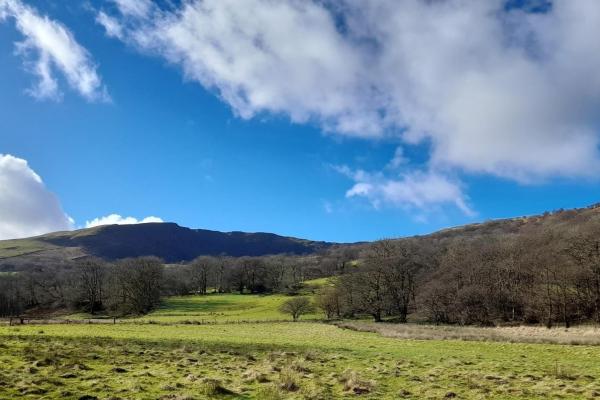
A Local Places for Nature Challenge Fund project at Ty Mawr Farm, Bannau Brycheiniog National Park, restoring habitats, enhancing biodiversity, and connecting people to nature through partnership and innovation.
Key details
- Location: Ty Mawr Farm, Tarrell Valley, Bannau Brycheiniog National Park
- Project Type: Landscape-scale habitat restoration and community engagement
- Partners: National Trust, Bannau Brycheiniog National Park Authority, Local Nature Partnership, Natural Resources Wales, Plantlife Cymru, Wildlife Trust of South and West Wales, others
- Funding: £246,463 from Welsh Government’s Local Places for Nature Challenge Fund (2023–25)
Aims
- Restore and reconnect natural habitats (woodland, grassland, river, peatland)
- Develop learning and visitor facilities (barn, classroom, improved access)
- Create a demonstration site for nature recovery and regenerative agriculture
- Engage communities, schools, and volunteers in nature-based activities
Outputs and impact
- Habitat Restoration
- 14ha new woodland, 6ha hay meadow/species-rich pasture, riparian woodland, hedgerow restoration
- River Tarrell restoration (large wood structures, floodplain reconnection)
- Sphagnum and tree nursery established
- Peatland and grassland restoration, seed harvesting and drying facility
Community engagement
- Bioblitz event, steering group, school and volunteer involvement
- New classroom and improved access for visitors
- Demonstration site for national and international partners
Biodiversity
- 4075 species recorded in Tarrell Valley, 167 at Ty Mawr, 47 Section 7 priority species (see appendix for full list)
- Increased invertebrates, wildflowers, and indicator species for healthy habitats
Benefits
- Social: Community access to nature, learning, and wellbeing
- Environmental: Landscape-scale biodiversity recovery, climate resilience, carbon storage
- Economic: Skills development, demonstration of sustainable farming and land management
- Partnership: Strong collaborative model for future projects
Quotes
“The project has showcased the value of collaboration, drawing in partners and stakeholders to achieve so much more than what has been directly funded through the grant.”
“Physical improvements, supporting nature recovery, are already evident, and these in themselves will make a significant contribution to the valley’s ecological resilience.”
Legacy and next steps
- Ongoing monitoring, further river restoration, and community engagement planned through 2026
- Continued partnership working, sharing learning, and scaling up nature recovery across the National Park and beyond