
Wellbeing of Wales 2025 - A healthier Wales
A summary of progress on improving our social, economic, environmental and cultural wellbeing.
In this page
The goal for a healthier Wales
Author: Dr William Perks
A healthier Wales: a society in which people’s physical and mental wellbeing is maximised and in which choices and behaviours that benefit future health are understood.
Progress towards the goal
Limited progress has been achieved towards a healthier Wales, with many national indicators deteriorating and the COVID-19 pandemic significantly affecting trends.
Healthy life expectancy has declined for both males and females since 2011 to 2013. The gap between most and least deprived areas has also widened for females, while initially narrowing for males up until 2018 to 2020 before widening again until 2020 to 2022.
The proportion of single babies born with low birth weight has shown an increase in the last decade, rising to 6.3% in the latest period, the highest rate recorded.
The percentage of adults with two or more healthy behaviours declined between financial years 2016 to 2017 and 2019 to 2020. Since 2020 to 2021, the trend appears to have improved slightly, though changes in methods limit comparability across the full time series.
Among young people, the percentage with two or more healthy behaviours has improved since 2017.
Adult mental wellbeing scores and the gap between the most and least deprived were stable between financial years 2016 to 2017 and 2018 to 2019. Since 2021 to 2022, the trend also appears to have remained stable, though changes in methods limit comparability across the full time series.
For young people, average mental wellbeing scores declined between across the time series, with the gap between low and high family affluence widening.
Housing conditions have improved, with 82% of dwellings free from serious hazards in 2017 to 2018, up from 71% in 2008, across all housing types.
Life expectancy
Life expectancy had been rising since World War II but has slowed in the past decade.
Main contributors to past improvements were for people aged 60 to 84, though gains in this group have now slowed.
In 2021 to 2023, life expectancy increased compared to 2020 to 2022, rising to 82.0 years for females and 78.1 years for males, and are now broadly in line with the last pre-COVID-19 pandemic period (2017 to 2019).
Healthy life expectancy in the same period dropped to 60.3 years for males and 59.6 years for females, both lower than 2020 to 2022 and 2011 to 2013, when the time series began.
Figure 3.1: life expectancy and healthy life expectancy at birth, by sex, between 2001 to 2003 and 2021 to 2023 [Note 1]
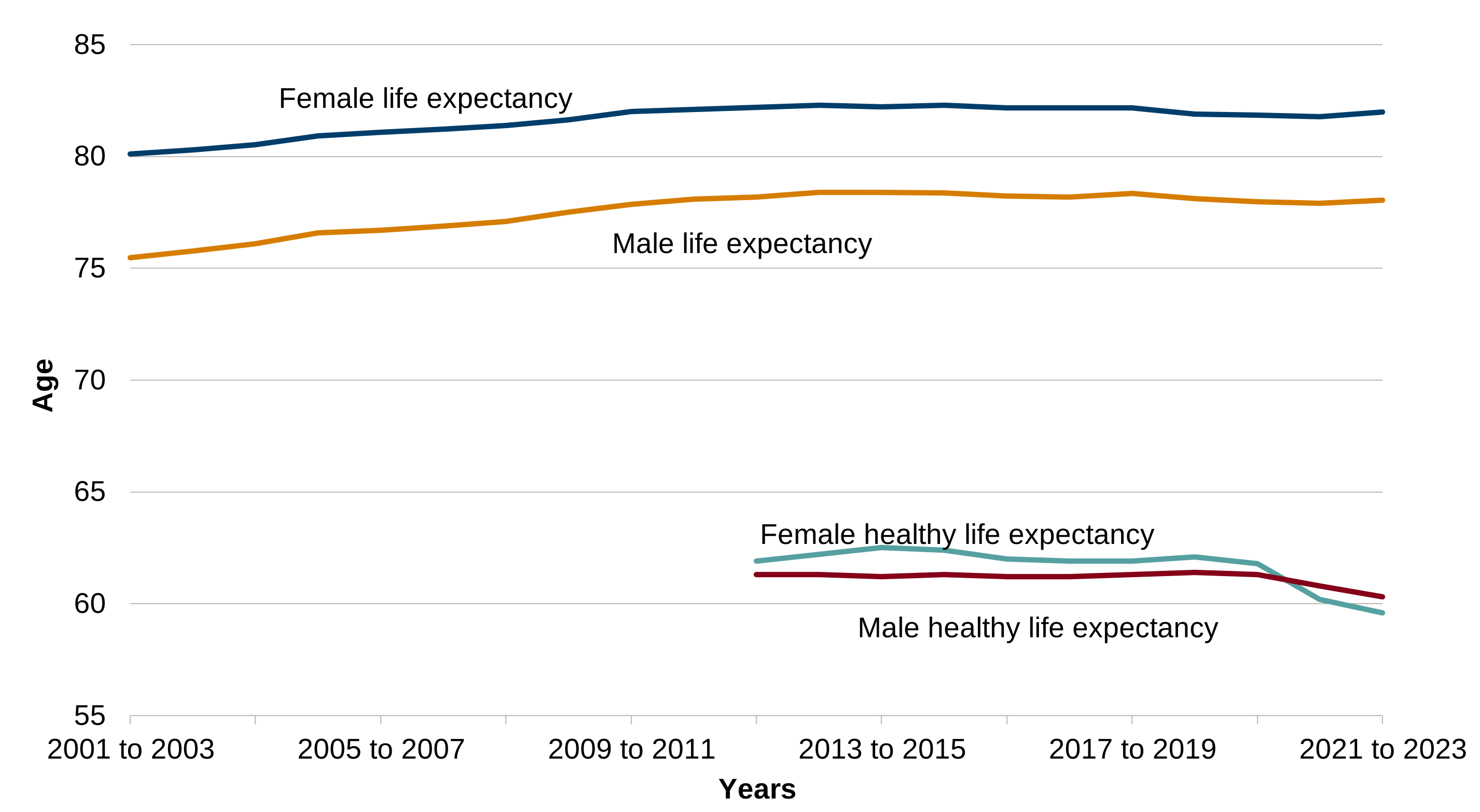
Description of figure 3.1: line chart showing life expectancy had been increasing but recently stalled and declined. Healthy life expectancy has also decreased, with a notable drop for females.
Source: Life expectancy and Health state life expectancies in England, Northern Ireland and Wales, Office for National Statistics (ONS)
[Note 1] Y axis does not start at zero
Causes of deaths
In 2024, deaths decreased compared to 2023 but remained higher than pre-pandemic levels.
Long-term trends show falling age-standardised mortality rates (ASMRs), which adjust for population size and age structure, although these also remain higher than pre-pandemic levels.
Dementia and Alzheimer disease and ischaemic heart disease were the top causes of death.
Figure 3.2: age-standardised mortality rates per 100,000 people, 1994 to 2023
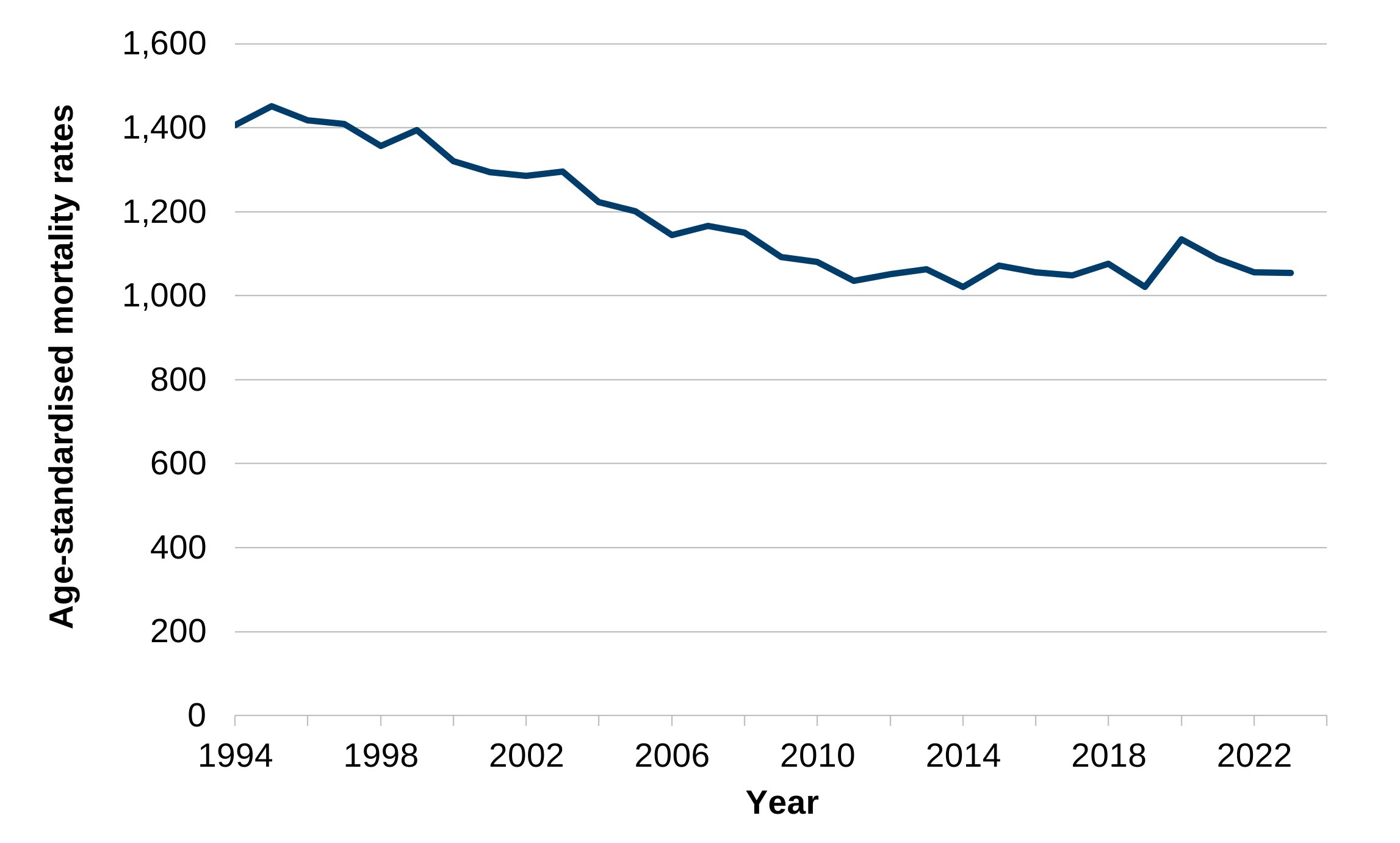
Description of figure 3.2: line chart showing improvements in age-standardised mortality rates over the long-term
Source: Deaths registered in England and Wales, ONS
Inequalities in life expectancy and mortality
The national milestone on healthy life expectancy is to increase the healthy life expectancy of adults and narrow the gap in healthy life expectancy between the least and the most deprived by at least 15% by 2050.
Inequalities in life expectancy and mortality remain wide.
Between 2013 to 2015 and 2020 to 2022, the gap in healthy life expectancy between most and least deprived areas increased for females and for males, initially decreasing up until 2018 to 2020, but subsequently increasing again until 2020 to 2022.
The life expectancy gap is smaller than the gap in healthy life expectancy for males and females but has also been increasing for both, indicating growing inequality.
Figure 3.3: absolute gap in life expectancy and healthy life expectancy between most and least deprived areas, males and females, between 2011 to 2013 and 2020 to 2022
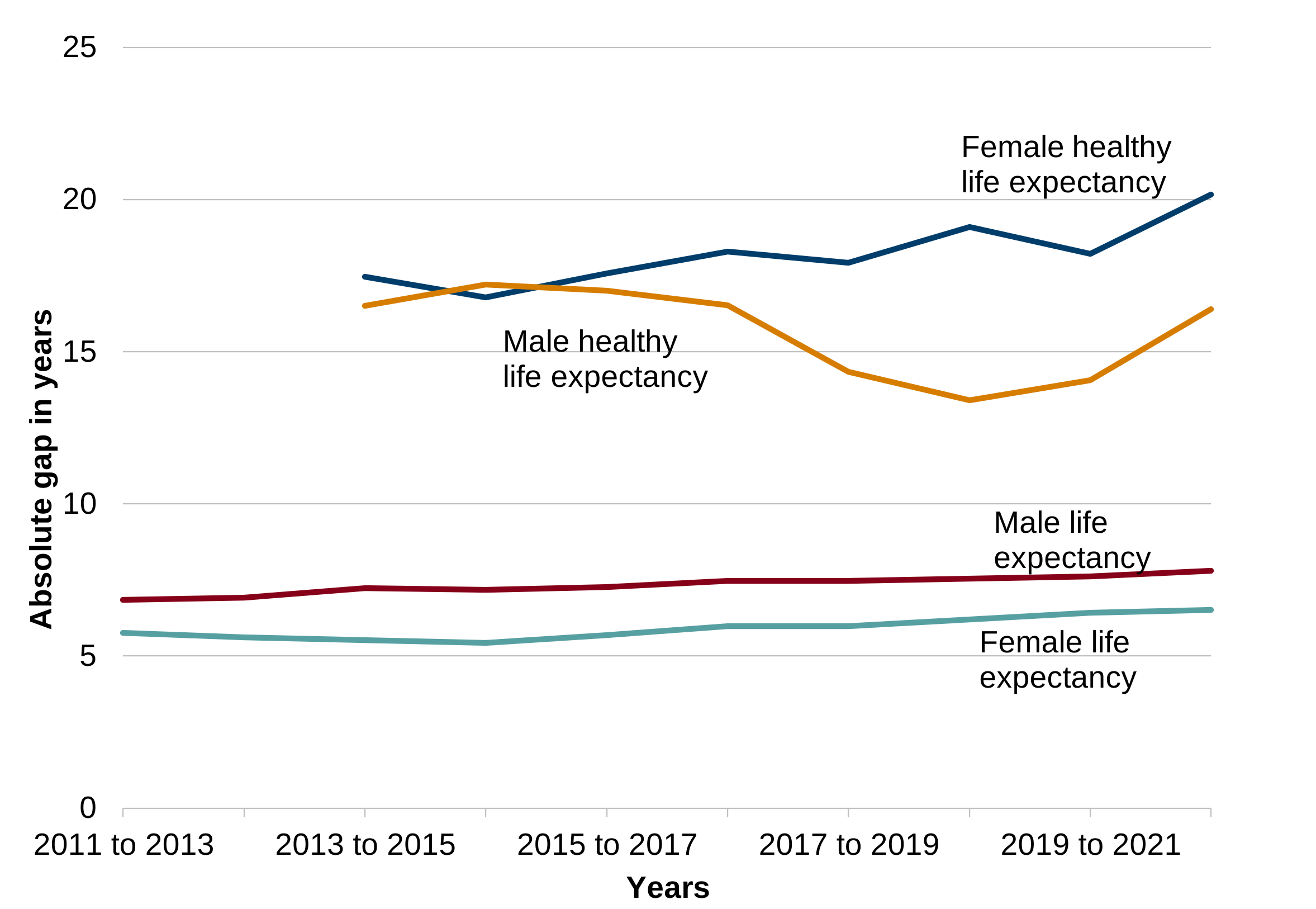
Description of figure 3.3: line chart showing the gap in healthy life expectancy has increased for females and remained stable for males. The life expectancy gap is smaller for males and females but has been increasing for both.
Source: Healthy life expectancy by national area deprivation, Wales, time series ONS
Healthy babies
The percentage of low birth weight single babies has been relatively stable over time, at between 5% and 6%. But there has been an upward trend since 2015, with 6.3% in 2024 the highest rate recorded.
In 2024, 7.0% of female babies and 5.6% of male babies had low birth weight, consistent with long-term patterns.
Figure 3.4: percentage of singleton births with a birth weight of under 2,500g, 2005 to 2024
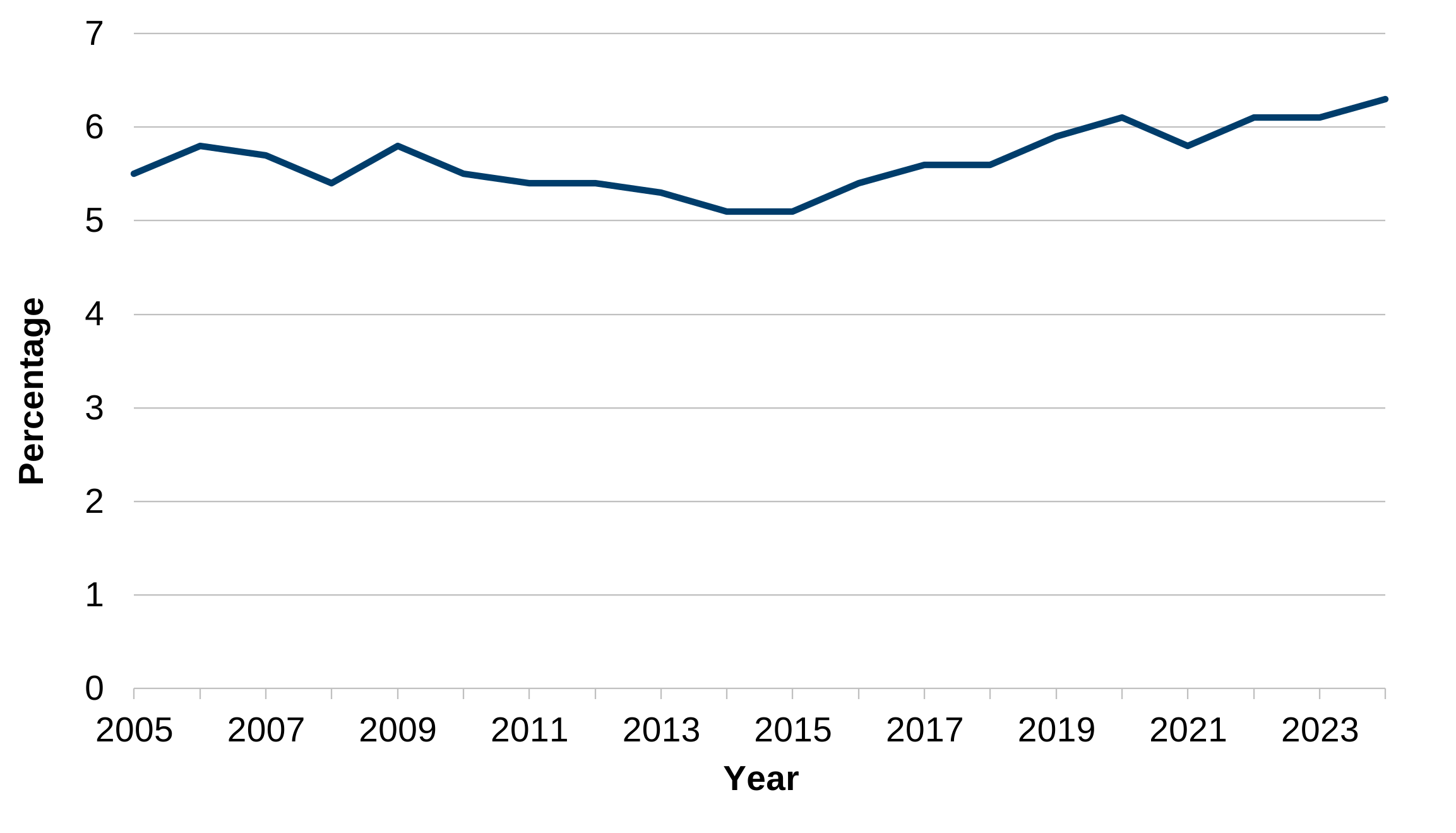
Description of figure 3.4: line chart showing rate of low birth weight babies has typically fluctuated between 5% and 6%. There has been an upward trend since 2015 with the highest rate recorded in 2024.
Source: Maternity and birth statistics, Welsh Government
Healthy lifestyle behaviours
The national milestones on adult and children’s healthy lifestyle behaviours are:
- to increase the percentage with two or more healthy behaviours to more than 97% for adults by 2050
- to increase the percentage with two or more healthy behaviours to 94% for children by 2035, and to more 99% by 2050
The National Survey for Wales was adapted due to the pandemic, as such it is not possible to directly compare results for adults from prior to financial year 2020 to 2021.
Prior to the pandemic, between 2016 to 2017 and 2019 to 2020 the percentage of adults with two or more healthy behaviours deteriorated and is short of the national milestone. The trend since 2020 to 2021 appears to have improved slightly but is not comparable with previous years.
In 2024 to 2025 93.6% of adults reported following two or more healthy lifestyle behaviours, such as not smoking, drinking within guidelines, eating fruit and vegetables, being physically active, and maintaining a healthy weight.
In 2024 to 2025, the percentage of adults with two or more healthy lifestyle behaviours were less common among males, adults aged 45 to 64, and those living in more deprived areas.
Figure 3.5: percentage of adults with two or more healthy lifestyle behaviours, between financial years 2016 to 2017 and 2024 to 2025 [Note 1] [Note 2] [Note 3] [Note 4]
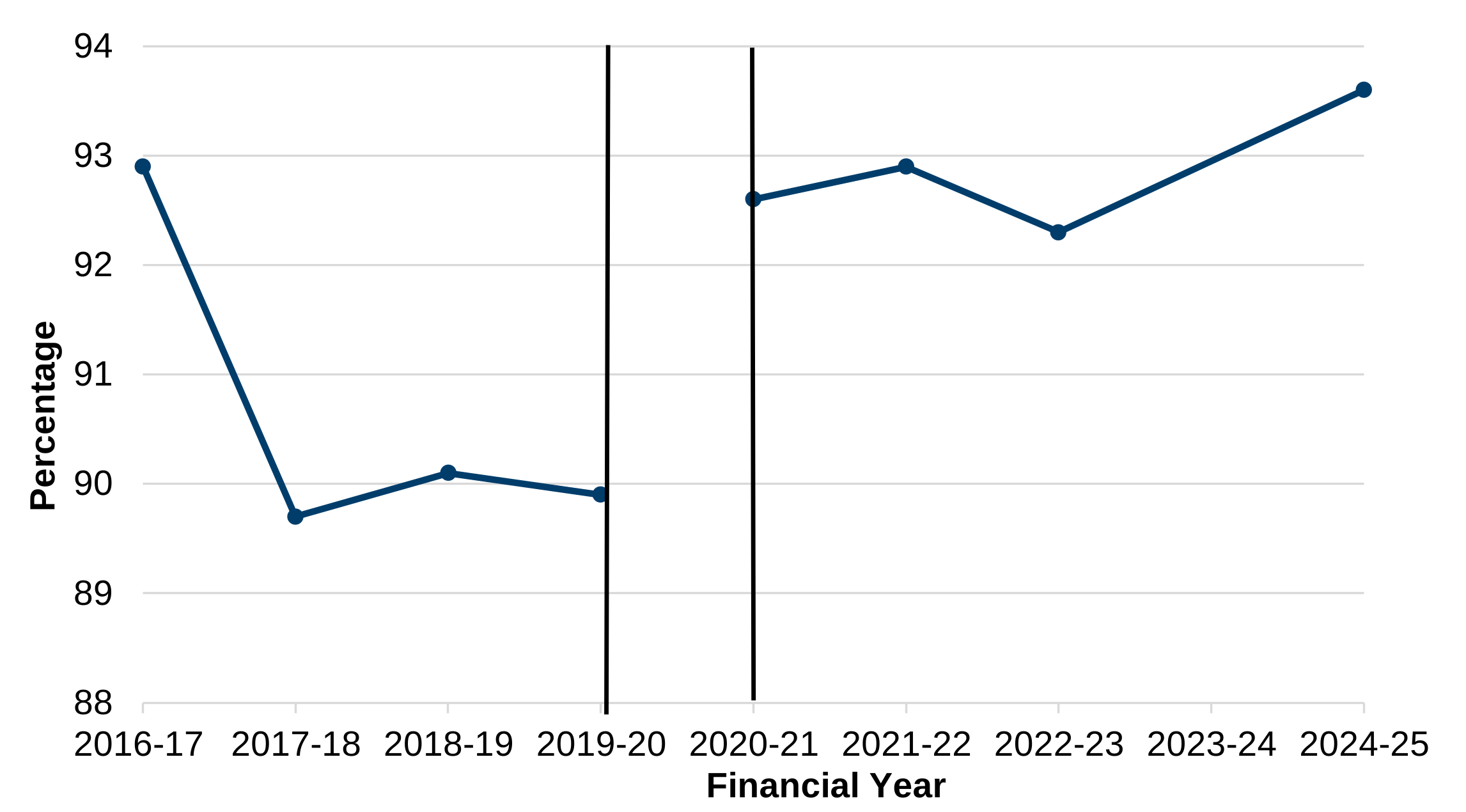
Description of figure 3.5: line chart showing percentage of adults with two or more healthy behaviours deteriorated between 2016 to 2017 and 2019 to 2020. The trend since 2020 to 2021 appears to have improved slightly.
Source: National Survey for Wales, Welsh Government
[Note 1] Results from 2020 to 2021 are not comparable with previous years
[Note 2] Results from 2020 to 2021 are for quarter 4 only and not annual data
[Note 3] The National Survey did not take place in 2023 to 2024 therefore there is no data for that year
[Note 4] Y axis does not start at zero
In the academic year 2023to 2024, 90.7% of young people aged 11 to 16 met the national milestone for healthy lifestyle behaviours, an improvement from previous years. These behaviours include not smoking, rarely drinking alcohol, eating fruit or vegetables daily, and being physically active for at least an hour each day.
Young people reported low levels of smoking (4.2%) and drinking alcohol (35.6%) but also reported low levels of eating fruit or vegetables daily (46.5%) or being physically active for an hour or more each day (18.3%). Since 2017, smoking and alcohol behaviours have improved, but diet and physical activity have remained the same.
Figure 3.6: percentage of young people aged 11 to 16 with two or more healthy behaviours, 2017 to 2018 (academic year) to 2023 to 2024 [Note 1]
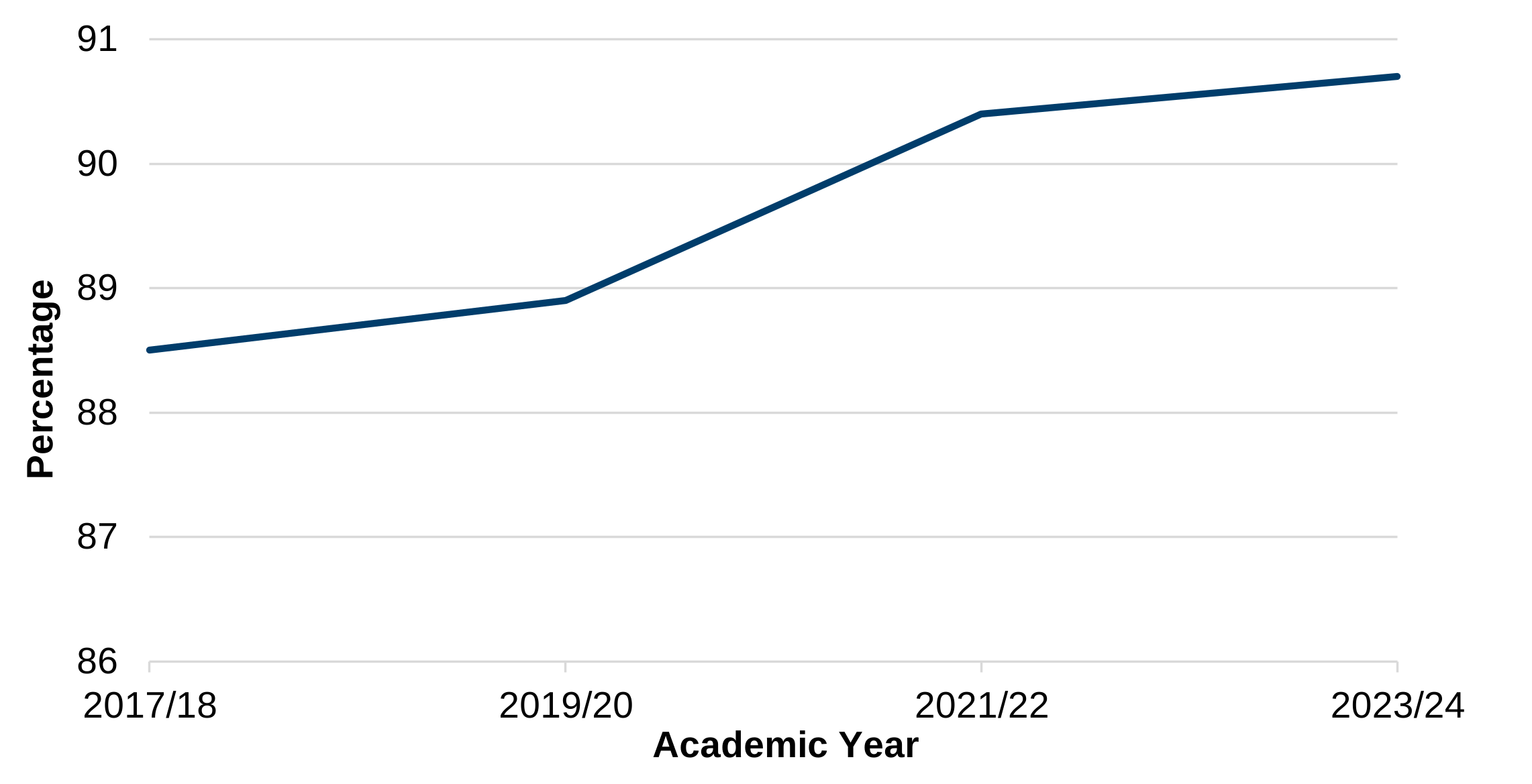
Description of figure 3.6: line chart showing percentage of young people with two or more healthy behaviours has improved between 2017 to 2018 and 2023 to 2024.
Source: School Health Research Network Student Health and Wellbeing Survey
[Note 1] Y axis does not start at zero
Mental health and wellbeing
The national milestone on mental wellbeing is to improve adults’ and children’s mean mental wellbeing and eliminate the gap in adults’ and children’s mean mental wellbeing between the most deprived and least deprived areas in Wales by 2050.
The National Survey for Wales was adapted due to the pandemic, as such it is not possible to directly compare results for adults from prior to 2020 to 2021.
In financial year 2024 to 2025, the average mental wellbeing score among adults was 48.4 on the Warwick-Edinburgh Mental Wellbeing Scale (WEMWBS), indicating medium wellbeing, similar to the previous year.
33% of adults scores corresponded to a low mental wellbeing, 52% to a medium mental wellbeing and 15% to a high mental wellbeing.
The gap in the average WEMWBS score between the most and least deprived areas has remained similar since 2021 to 2022.
Figure 3.7: average Warwick-Edinburgh Mental Wellbeing Scale score for adults, by deprivation, between 2016 to 2017 and 2024 to 2025 [Note 1] [Note 2]
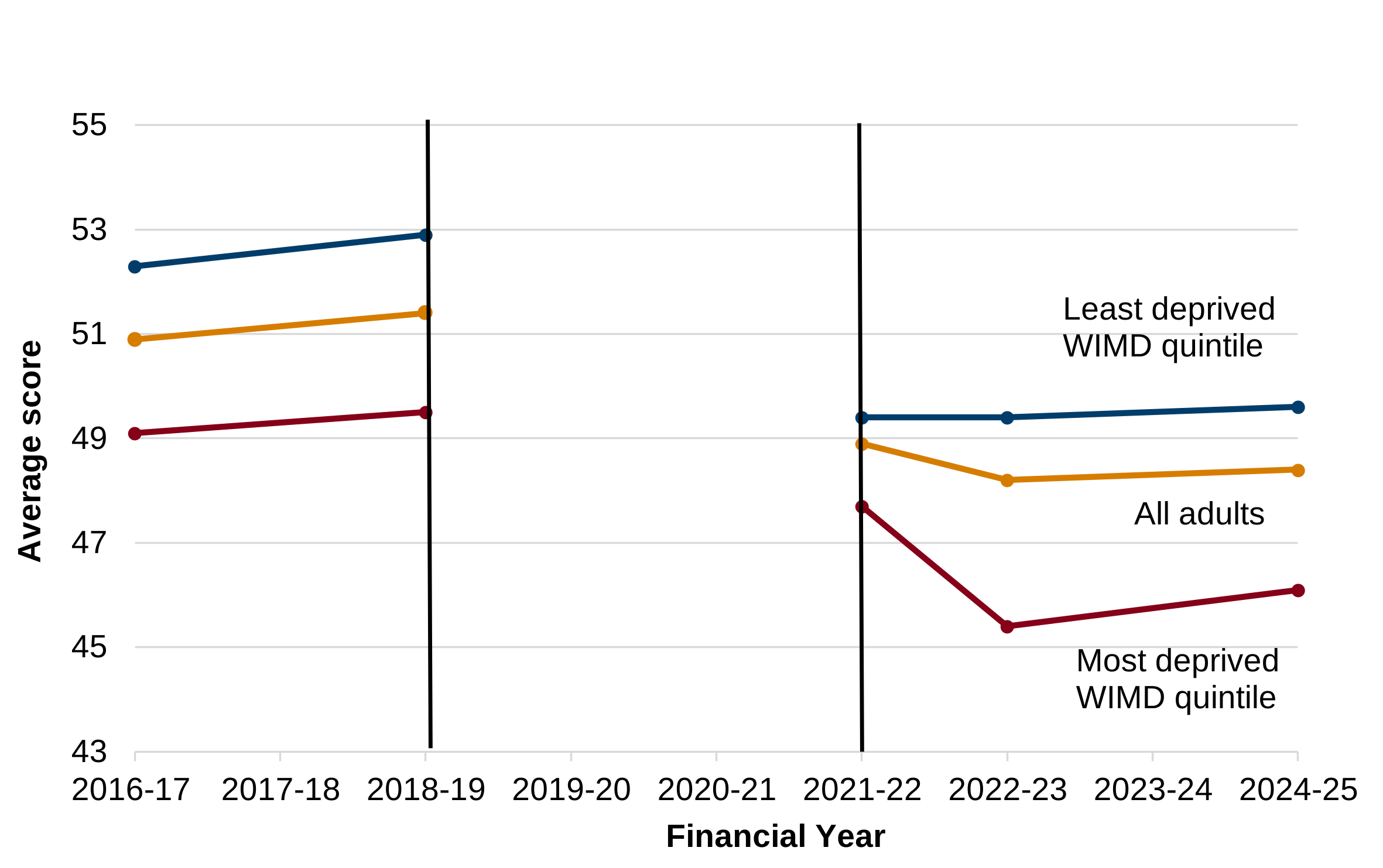
Description of figure 3.7: line chart showing the average mental wellbeing score did not show significant change prior to 2018 to 2019 or since 2021 to 2022.
Source: National Survey for Wales, Welsh Government
[Note 1] Results from 2021 to 2022 are not comparable with previous years
[Note 2] Y axis does not start at zero
Using Short Warwick-Edinburgh Mental Wellbeing Scale (SWEMWBS), the average mental wellbeing score for young people aged 11 to 16, fell from 24 in 2017 to 2018 to 23.5 in 2023 to 2024, indicating a decline in mental wellbeing.
Scores from the SWEMWBS is based on a shorter set of questions to the adult WEMWBS and so scores are not directly equivalent.
The gap between low and high family affluence groups has widened, from 1.7 in 2017 to 2018 to 2.0 in 2023 to 2024.
Young people identifying as neither a boy nor a girl reported the lowest wellbeing, followed by girls, with boys reporting the highest. Mental wellbeing also declined with age.
Figure 3.8: average Short Warwick-Edinburgh Mental Wellbeing Scale score for young people aged 11 to 16, by affluence, between academic years 2017 to 2018 and 2023 to 2024 [Note 1]
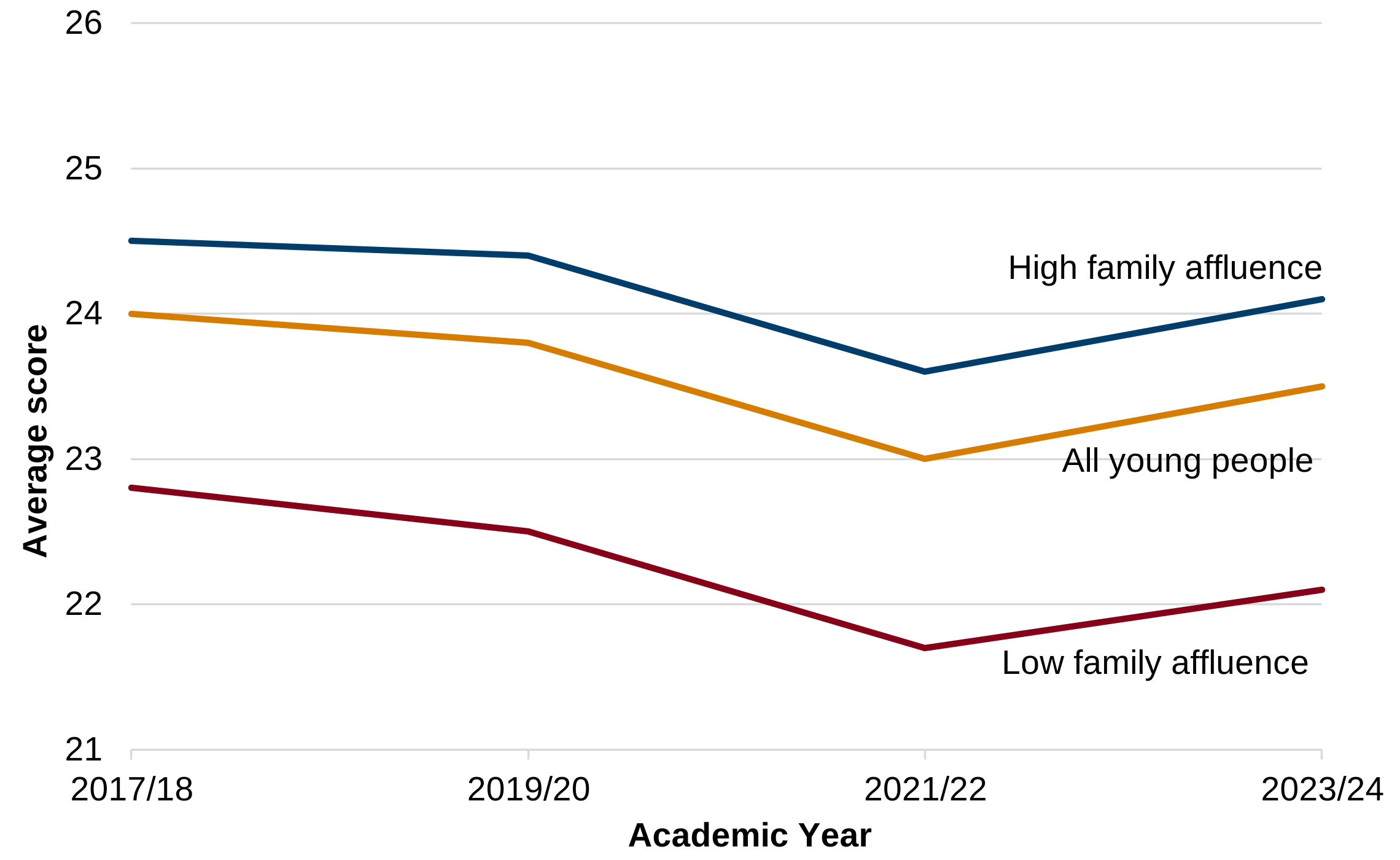
Description of figure 3.8: line chart showing the average mental wellbeing score for young people declined between 2017 to 2018 and 2023 to 2024. The gap between those from low and high family affluence has widened.
Source: School Health Research Network Student Health and Wellbeing Survey
[Note 1] Y axis does not start at zero
Hazardous housing
A range of factors influence health, including employment, air pollution, and housing. Housing conditions have improved over the decade to financial year 2017 to 2018, reducing health risks.
The most recent Welsh Housing Conditions Survey in 2017 to 2018 showed 82% of homes were free from serious (category 1) hazards, up from 71% in 2008, with improvements across all housing types.
Housing is also assessed using the Housing Health and Safety Rating System (HHSRS), mainly in the private rented sector and typically in response to complaints. As such these figures are not directly comparable with the broader Welsh Housing Conditions Survey. In 2023 to 2024, 66% of these assessments were free from category 1 hazards, consistent with previous years.