Year 11 attendance and progression to post-16 education: September 2016 to August 2024
An analysis using linked data investigating the strength of attendance as a predictor of progression to post-16 education.
In this page
Introduction
This analysis explores the relationship between school attendance in year 11 and progression outcomes in post-16 education.
The outcomes include:
- overall progression
- course completion
- programme level choices
It assesses the predictive strength of attendance, how this is mitigated by relevant confounding factors, and examines how it has evolved over time (pre- and post COVID-19 pandemic). The aim is to enhance understanding of the main drivers behind post-16 participation outcomes.
This article describes the association between attendance and post-16 progression. It makes no claims about causality or the underlying mechanisms behind this association. There are likely to be multiple factors at play when considering changes in the predictive strength of attendance on progression. This includes pandemic related changes to examination and assessment practices during and following the COVID-19 pandemic (Medr statistical release: Progression from Year 11 to tertiary education, August 2017 to January 2025) due to the correlation between attainment and attendance.
Levels of absence in Welsh maintained secondary schools increased across all year groups following the COVID-19 pandemic, with a slight decrease in the current academic year 2024 to 2025 (not included in this analysis). A Welsh Government statistical release: Attendance and absence from secondary schools: September 2024 to August 2025 found that year 11 learners had the highest overall absence of any year group in 2018 to 2019, the year immediately preceding the COVID-19 pandemic, and the highest increase between 2018 to 2019 and 2022 to 2023, the year immediately following. The trend of increased absence in year 11, an important school year with regard to transitioning from compulsory to post-16 education, prompted this analysis to explore the impact of absence in year 11 on progression and associated outcomes.
The number of learners progressing from Year 11 to tertiary education has increased between academic years 2020 to 2021 and 2024 to 2025. However, the proportion of year 11 learners progressing has remained broadly steady over the same period (Medr statistical release: Progression from Year 11 to tertiary education, August 2017 to January 2025). Medr have announced statistics on the number of learners progressing for the latest academic year 2025 to 2026 will be published in March 2026 in the upcoming Medr statistical release: Progression from Year 11 to tertiary education: August 2023 to November 2025.
This analysis does not examine progression rates or the number of learners progressing. Instead, it focuses on the factors associated with progression to post-16 education.
This work was carried out by the Data Acquisition and Linking for Research team (DALfR), which is the Welsh Government component of the Administrative Data Research (ADR) Wales partnership.
Coverage
Our base cohort comprises all year 11 pupils in maintained schools in Wales between academic years 2016 to 2017 and 2023 to 2024, excluding 2019 to 2020 and 2021 to 2022. During these years, the annual school attendance collection was suspended due to COVID-19 disruptions and temporarily replaced by a daily collection from school management systems. For consistency and comparability, only annual attendance data was used as the outcome measure for this analysis.
This publication refers to academic years. For example, 2023 to 2024 means the September 2023 to August 2024 academic year.
Main points
Attendance is a strong predictor of post-16 progression outcomes.
- Lower attendance is strongly associated with a reduced likelihood of pupils continuing to post‑16 education.
- Among learners who progressed to post-16 education, lower year 11 attendance was associated with a higher likelihood of course non-completion the following year.
- Learners with lower attendance who progressed were more likely to choose a vocational course rather than an AS level course.
Although the strength of the association between attendance and progression outcomes has weakened following the COVID-19 pandemic, attendance remains the strongest influencing factor amongst those considered. This highlights the central role of attendance in shaping learner pathways.
From other influencing factors considered, the following groups were more likely to progress compared with their reference categories.
- Female learners.
- Asian/Asian British learners.
- Learners attending Welsh-medium schools.
- Learners who were competent or fluent in English.
These groups also had a lower likelihood of non-completion or choosing a vocational course.
In contrast, learners with a non-Welsh national identity were less likely to progress overall. Learners with a national identity of ‘English, Irish or Scottish’, as well as Free School Meal (FSM) eligible learners, were less likely to complete their programme of study and more likely to select a vocational course.
Logistic regression
We used logistic regression to examine predictors of post-16 progression related outcomes, running the models in 3 stages.
- Unadjusted model estimating the overall relationship between year 11 attendance and each outcome.
- Adjusted model assessing attendance while controlling for sex, ethnic group, FSM eligibility, English as an additional language (EAL), national identity, and school language medium.
- Interaction model examining attendance and outcomes by pre‑ and post‑pandemic periods to explore changes over time.
Odds ratios (ORs) were calculated for each category relative to a designated reference group. An OR greater than 1 indicates that the outcome is more likely for that category compared with the reference group, while an OR less than 1 indicates that the outcome is less likely.
Odds ratios are reported alongside confidence intervals (CI) to show the level of uncertainty around the estimated association due to sampling variability. The odds ratio gives a single point estimate. The confidence interval indicates the range of values within which the true population effect is likely to lie and helps assess both the precision and statistical significance of the estimate.
Unless noted otherwise, odds ratios presented are statistically significant to at least the 5% level, indicating the associations are unlikely to be due to chance. More information on logistic regression and odds ratios can be found in the quality and methodology section.
Overall progression
The first outcome examined was overall progression from year 11 to post-16 education within Wales. Learners progressing outside of Wales are not included in the dataset, which may influence overall progression estimates (learners in border local authorities are more likely to attend post-16 education in England than learners further from the border).
Odds ratios were calculated to compare progression likelihood across year 11 attendance categories, using learners with attendance of ‘97% to 100%’ as the reference group.
Figure 1: unadjusted and adjusted odds ratios for progression to post-16 education by year 11 attendance category, 2016/17 to 2018/19 and 2022/23 to 2023/24
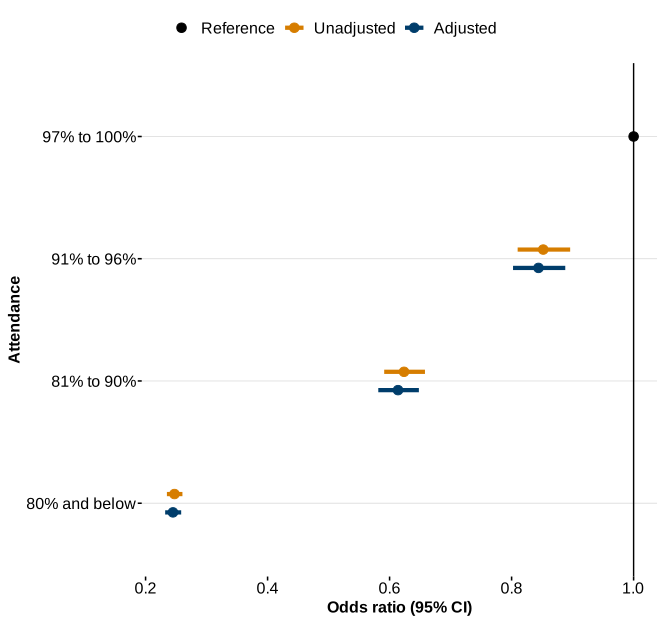
Description of figure 1: a forest plot comparing odds ratios across attendance categories. Each category is shown for both adjusted and unadjusted models. As attendance decreases the likelihood of progression to post-16 education also decreases compared to the reference group.
Source: Linked Education Data, Welsh Government
The odds ratios as shown in figure 1 illustrate learners in lower attendance categories are less likely to progress compared to the reference group (learners with 97% to 100% attendance).
In the unadjusted model, compared to those in the ‘97% to 100%’ reference category:
- learners in the ‘91% to 96%’ category were 15% less likely to progress (OR = 0.85, CI: 0.81-0.90)
- learners in the ‘81% to 90%’ attendance category were 38% less likely to progress (OR = 0.62, CI: 0.59-0.66)
- learners with attendance ‘80% and below’ were 75% less likely to progress (OR = 0.25, CI: 0.23-0.26)
The adjusted model’s odds ratios were only marginally reduced indicating the relationship between attendance and progression is largely unaffected by the additional factors considered.
Figure 2: pre- and post-pandemic odds ratios for progression to post-16 education by year 11 attendance category, 2016/17 to 2018/19 and 2022/23 to 2023/24
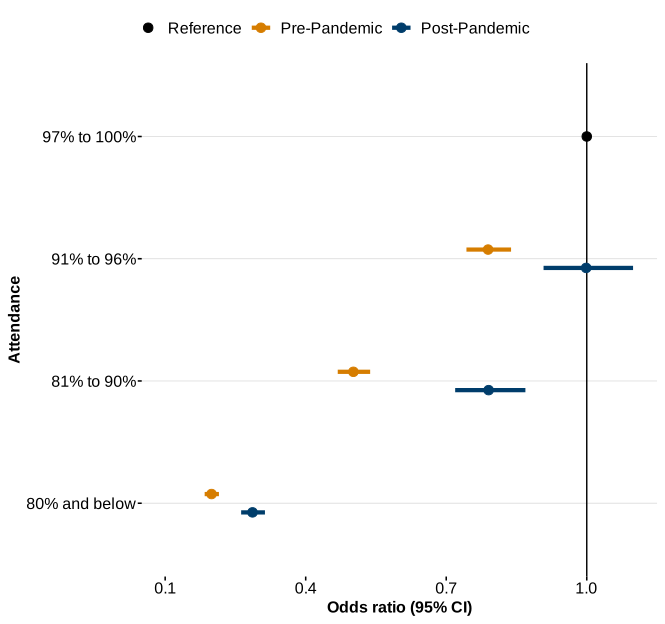
Description of figure 2: a forest plot of odds ratios for progression by attendance category, comparing pre-pandemic and post-pandemic periods. Post-pandemic, the gaps in progression likelihood between the reference group and other attendance categories are smaller, demonstrating a weaker relationship between attendance and progression post-pandemic.
Source: Linked Education Data, Welsh Government
For the pre- and post- pandemic comparisons shown in figure 2, the ORs by time period were estimated using an interaction model that included attendance, time, and their interaction term. No additional confounders were included in the model, and the resulting ORs are unadjusted.
Figure 2 illustrates odds ratios for progression to post-16 education by attendance category. Learners in year 11 in academic years 2016 to 2017 to 2018 to 2019 were considered the pre-pandemic cohort and those in year 11 in academic years 2022 to 2023 to 2023 to 2024 the post-pandemic cohort.
The difference in progression likelihood between learners with ‘97% to 100%’ attendance (the reference group) and other attendance categories is reduced post-pandemic, indicating the predictive strength of attendance has decreased overall. Compared to those in the ‘97% to 100%’ reference category:
- the likelihood of progressing to post-16 education was higher for learners with 91% to 96% attendance post-pandemic (OR = 1.00, CI: 0.91 - 1.10, not significant) than pre-pandemic (OR = 0.79, CI: 0.74 - 0.84)
- the post-pandemic OR for the ‘91% to 96%’ attendance group indicated a shift to no meaningful difference in the likelihood of progressing compared to the reference category, however, this was not statistically significant and should be interpreted with caution
- learners in the ‘81% to 90%’ attendance category had an increased likelihood of progressing from OR = 0.50 (CI: 0.47- 0.54), to OR = 0.79 (CI: 0.72 - 0.87)
- the likelihood of progressing for learners with attendance ‘80% and below’ increased from OR = 0.20 (CI: 0.18-0.21) to OR = 0.29 (CI: 0.26 - 0.31)
The odds ratios for post‑pandemic learners with lower attendance, including those with attendance of 80% and below increased. This indicates a general weakening in the relationship between attendance and progression. It reflects an increase in the number of learners in lower attendance categories while overall progression remains broadly stable. Despite this reduction in strength, learners in lower attendance categories were still substantially less likely to progress than those with higher attendance.
Course non-completion
The second outcome we considered was post-16 course non-completion. This focused on learners who progressed to post-16 education and left without completing their latest programme. The analysis explored the impact of attendance in year 11 on the risk of course non-completion the following year.
Odds ratios were calculated to compare the likelihood of non-completion across year 11 attendance categories, using learners with attendance of ‘97% to 100%’ as the reference group.
Figure 3: unadjusted and adjusted odds ratios for course non-completion by year 11 attendance category, 2016/17 to 2018/19 and 2022/23 to 2023/24
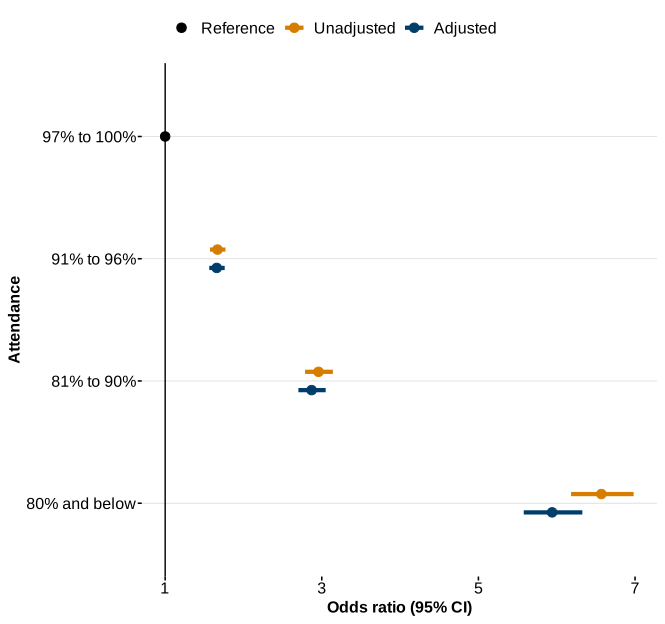
Description of figure 3: a forest plot comparing the odds ratios across attendance categories. Each category is shown for both adjusted and unadjusted models. For those who progressed, as attendance decreases the likelihood of leaving without completing their programme of study increases (compared to the reference group).
Source: Linked Education Data, Welsh Government
The odds ratios as shown in figure 3 illustrate learners in lower attendance categories are more likely to leave without completing their course, compared to the reference group.
In the unadjusted model, compared to those in the ‘97% to 100%’ reference category:
- learners in the ‘91% to 96%’ category were 1.67 times more likely to leave without completing their programme of study (OR = 1.67, CI: 1.57 - 1.77)
- learners in the ‘81% to 90%’ attendance category were almost three times more likely to leave without completing their programme of study (OR = 2.96, CI: 2.79 - 3.14)
- learners with attendance ‘80% and below’ were over six times more likely to leave without completing their programme of study (OR = 6.57, CI: 6.18 - 6.98)
The adjusted model demonstrated that controlling for covariates had little impact on the odds ratios for both the ‘91% to 96%’ category and the ‘81% to 90%’ category, which were similar to their unadjusted values. However, in the ‘80% and below’ category, the odds ratio decreased from 6.57 to 5.94 (CI: 5.58 - 6.33) after adjustment, suggesting that some of the association between attendance and non-completion in the unadjusted model was accounted for by confounding factors.
Figure 4: pre- and post-pandemic odds ratios for course non-completion by year 11 attendance category, 2016/17 to 2018/19 and 2022/23 to 2023/24
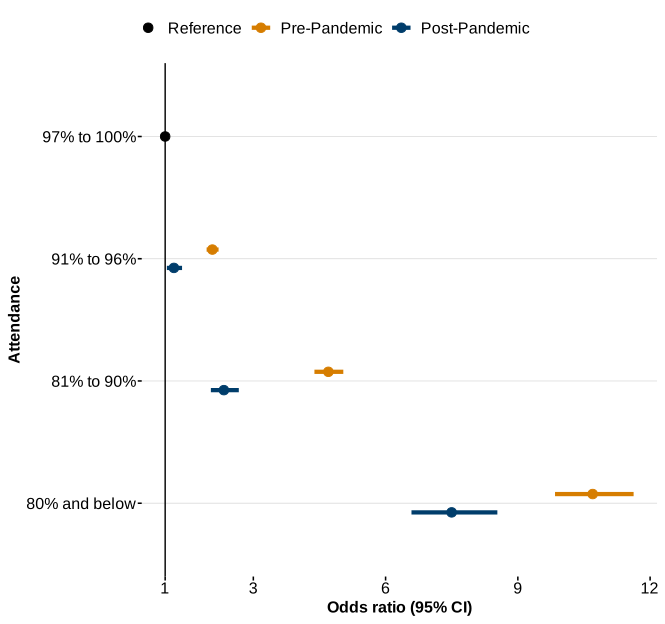
Description of figure 4: a forest plot comparing odds ratios for attendance categories, shown for pre-pandemic and post-pandemic periods. The plot shows that post-pandemic, the differences in outcome likelihood between the reference group and other attendance categories is smaller, indicating a weaker association between attendance and course non-completion compared to the pre-pandemic cohort.
Source: Linked Education Data, Welsh Government
The difference in the likelihood of non-completion between learners with ‘97% to 100%’ attendance and other attendance categories is reduced post-pandemic compared to pre-pandemic. This indicates the predictive strength of attendance has decreased overall for this outcome.
For those who progressed to post-16 education:
- learners in the ‘91% to 96%’ attendance category were over twice as likely to leave without completing their programme of study than the reference category pre-pandemic (OR = 2.07, CI: 1.94 - 2.21), decreasing to 1.2 times post-pandemic (OR = 1.20, CI: 1.04 - 1.39)
- learners in the ‘81% to 90%’ attendance category were 4.7 times more likely to leave without completing their programme of study than the reference category pre-pandemic (OR = 4.70, CI: 4.39 - 5.04), decreasing to 2.3 times more likely post-pandemic (OR = 2.33, CI: 2.04 - 2.68)
- learners with attendance ‘80% attendance and below’ were 10.7 times more likely to leaving without completing their programme of study than the reference category pre-pandemic (OR = 10.70, CI: 9.84 - 11.63), decreasing to 7.5 times more likely post-pandemic (OR = 7.50, CI: 6.60 - 8.55)
In both the pre- and post-pandemic periods, learners in lower attendance categories were more likely to leave without completing their course compared with the reference group. While the strength of this association weakened post-pandemic, learners with lower attendance still faced a substantially higher risk of non-completion than those in higher attendance bands.
Course choice (AS Level or Vocational)
The third outcome examined was course choice. The reported odds represent learners who progressed to post-16 education and the likelihood of selecting a vocational pathway as opposed to an AS level pathway. Although a range of other pathways are available to learners after year 11, these are not included in this section of the analysis. The regression model required a two‑category outcome, and the two pathways examined represent the most common post‑16 routes.
Figure 5: unadjusted and adjusted odds ratios for vocational course choice by year 11 attendance category, 2016/17 to 2018/19 and 2022/23 to 2023/24
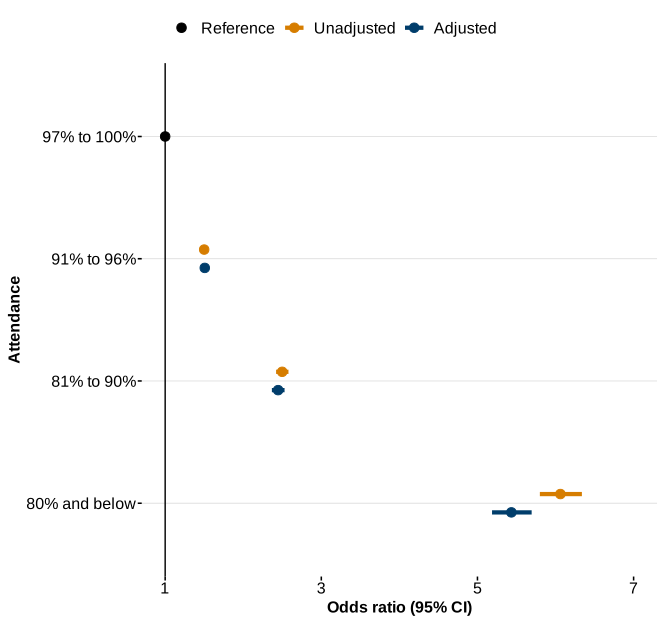
Description of figure 5: a forest plot comparing odds ratios across attendance categories. Each category is shown for both adjusted and unadjusted models. As attendance decreases, the likelihood of choosing a vocational course increases compared to the reference group.
Source: Linked Education Data, Welsh Government
The odds ratios shown in figure 5 illustrate learners in lower attendance categories are more likely to choose a vocational course compared to the reference group.
In the unadjusted model, compared to those in the ‘97% to 100%’ reference category:
- learners in the ‘91% to 96%’ category were 1.5 times more likely to choose a vocational course (OR = 1.50, CI: 1.46 - 1.54)
- learners in the ‘81% to 90%’ attendance category were 2.5 times more likely to choose a vocational course (OR = 2.50, CI: 2.42 - 2.58)
- learners with attendance ‘80% and below’ were 6.1 times more likely to choose a vocational course (OR = 6.06, CI: 5.80 - 6.34)
The adjusted model demonstrated that controlling for covariates had little impact on the odds ratios for both the ‘91% to 96%’ category and the ‘81% to 90%’ category, which remained similar to their unadjusted values. For the ‘80% and below’ category, the odds ratio decreased from OR = 6.06 (CI: 5.80 - 6.34) to OR = 5.43 (CI: 5.19 - 5.69) after adjustment, suggesting that whilst the association remains strong, part of the relationship between attendance and course choice observed in the unadjusted model was explained by confounding factors.
Figure 6: pre and post pandemic odds ratios for vocational course choice by year 11 attendance category, 2016/17 to 2018/19 and 2022/23 to 2023/24
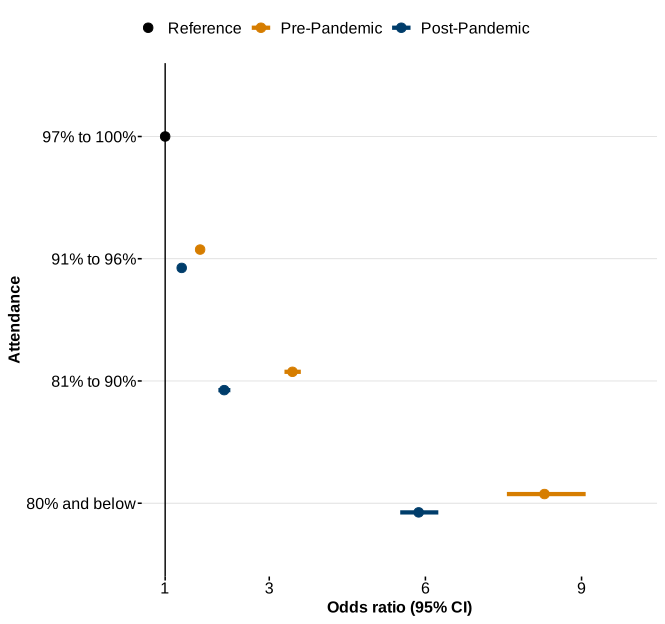
Description of figure 6: a forest plot comparing odds ratios for attendance categories, shown for pre-pandemic and post-pandemic periods. Post-pandemic, the differences in outcome likelihood between the reference group and other attendance categories is smaller, indicating a weaker association between attendance and course choice compared to the pre-pandemic cohort.
Source: Linked Education Data, Welsh Government
The difference in the likelihood for choosing a vocational course between learners with ‘97% to 100%’ attendance (the reference group) and other attendance categories is reduced post-pandemic, indicating the predictive strength of attendance has decreased overall for this outcome.
For those who progressed to post-16 and chose either AS or vocational courses:
- learners in the ‘91% to 96%’ attendance category were 1.7 times more likely to choose a vocational course than the reference category pre-pandemic (OR = 1.67, CI: 1.62 -1.73), decreasing to 1.3 times post pandemic (OR = 1.32 CI: 1.25 - 1.39)
- learners in the ‘81% to 90%’ attendance category, were 3.4 times more likely to choose a vocational course than the reference category pre-pandemic (OR = 3.45, CI: 3.29 - 3.61), decreasing to 2.1 times post-pandemic (OR = 2.13, CI: 2.02 - 2.25)
- learners with attendance ‘80% attendance and below’ were 8.3 times more likely to choose a vocational course compared to the reference category pre-pandemic (OR = 8.29, CI: 7.57 - 9.09), decreasing to 5.9 times post-pandemic (OR = 5.87, CI: 5.52 - 6.25)
In both pre- and post-pandemic periods, learners in lower attendance bands were more likely to choose a vocational course in relation to the reference group. Although the strength of the association between attendance and outcome is reduced post-pandemic, learners in the lower attendance bands were still more likely to choose vocational courses over AS-level courses overall.
Additional factors
To examine how confounding factors influence progression (overall, course non-completion and subject choice) we estimated adjusted odds ratios for each demographic category included in the adjusted model as shown in figure 7.
Figure 7: adjusted odds ratios for progression related outcomes by year 11 demographic characteristics, 2016/17 to 2018/19 and 2022/23 to 2023/24
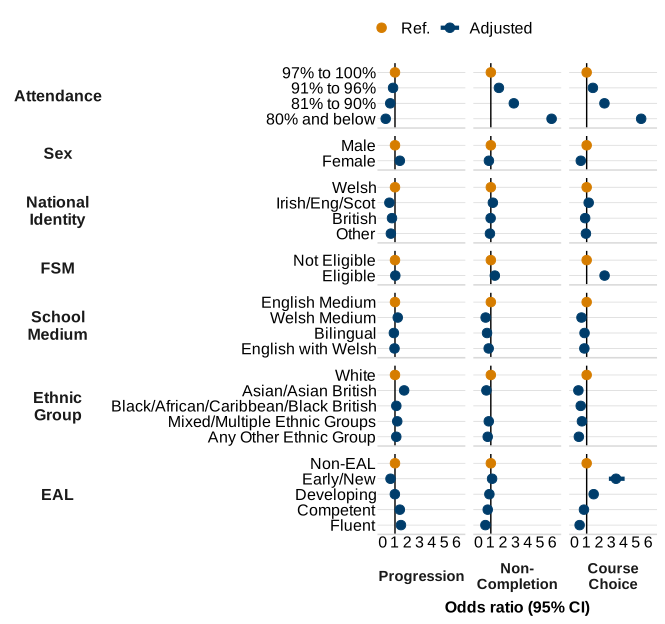
Description of figure 7: a forest plot comparing odds ratios for each demographic category included in the adjusted model across all outcomes. Relative to the reference groups, being female, Asian/Asian British, attending a Welsh-medium school, and being competent/fluent in English were associated with higher likelihood of progression, lower likelihood of non-completion, and lower likelihood of choosing a vocational course.
Source: Linked Education Data, Welsh Government
[Note 1] For outcome 1 (overall progression) the following categories do not reach significance at the 5% level: Ethnic group: Black/African/Caribbean/Black British; Other ethnic group. EAL proficiency: Developing; FSM: Eligible for FSM.
[Note 2] For outcome 2 (course non completion) the following categories do not reach significance at the 5% level: National identity: British national identity; Other national identity. EAL proficiency: New/early; Developing. For Ethnic Group: the Black/African/Caribbean/Black British category has been suppressed due to low sample size, which resulted in an estimate that did not meet reliability thresholds.
[Note 3] For outcome 3 (course choice) the following category does not reach significance at the 5% level: National identity: Other national identity.
In the adjusted model, compared to males, female learners were more likely to progress. Among those who progressed, females were less likely to leave before completing their programme of study and less likely to choose a vocational course. A similar pattern was seen for Asian/Asian British learners and those in Welsh-medium schools.
Learners in the competent or fluent EAL categories were also more likely to progress and, if they progressed, less likely to leave before completing their course, and less likely to select vocational pathways. Conversely, compared to their reference category, learners with a national identity other than Welsh were less likely to progress. Learners with the national identity ‘English, Irish or Scottish’ were more likely not to complete their programme of study, and more likely to choose vocational courses.
For overall progression, FSM eligibility had an odds ratio of 1 and was not significant in the adjusted model, despite appearing influential when tested alone. This suggests the association was explained by other factors, particularly attendance. Once attendance was included in the model, FSM’s independent effect disappeared, indicating that including attendance either mediates or confounds the relationship between FSM and progression.
For the other outcomes, among those who progressed, FSM eligibility was associated with a higher likelihood of course non-completion and choosing a vocational course.
In our adjusted models, attendance category consistently demonstrated the strongest association with each outcome, highlighting the importance of attendance in influencing learner pathways.
Dataset information
To ensure cohort consistency and avoid duplication of effort, a linked dataset was provided by Medr, Wales’s Commission for Tertiary Education and Research.
This dataset was originally created for their February 2025 publication: Progression from Year 11 to tertiary education, August 2017 to January 2025 (Medr).
The Medr linked dataset combined multiple data sources to provide a comprehensive view of learner progression.
- Pupil Level Annual School Census (PLASC): an electronic collection of pupil and school-level data from all maintained primary, middle, secondary, nursery and special schools, collected in January each year.
- Post-16 education data collection: a pupil and school-level data return to the Welsh Government, from local authorities and all maintained secondary and middle schools with learners in National Curriculum year 12 and above, collected in Autumn each year.
- Lifelong Learning Wales Record (LLWR): detailed learner data from Welsh maintained post-16 education and training providers. Data submissions are subject to periodic freezes throughout the academic year, after which submitted data is locked for validation and official use.
- School attendance weekly management information data collection: weekly attendance figures from Welsh maintained schools to monitor pupil attendance. Returns are subject to weekly freezes, after which submitted data is locked for validation.
We then linked Welsh Government annual attendance data using unique pupil number (UPN) as our main linking field. The annual attendance data collection is a statutory Welsh Government return of pupil-level attendance data from all Welsh maintained schools at the end of each academic year.
Our linked dataset covers academic years between 2016 to 2017 and 2023 to 2024. However, annual attendance data was unavailable for the pandemic period; therefore, the analysis excludes academic years 2019 to 2020, 2020 to 2021, and 2021 to 2022.
Additionally, only enrolment into the academic year immediately following year 11 is considered. Learners who took a break following year 11 and began post-16 education in a later academic year are not included in the Medr linked dataset.
In the annual attendance data collection, data for maintained special schools is collected at aggregate school level and most of the data on attendance by pupil characteristics is not available for pupils in these schools. Therefore, records from special schools are not represented in this analysis.
Quality and methodology information
For the linked Medr dataset, full details on quality and methodology, including definitions, can be found in their publication, Progression from Year 11 to tertiary education, August 2017 to January 2025 (Medr).
Main quality considerations that may impact the analysis in this article include:
Provisional 2024 to 2025 data: figures are based on in-year data. Post-16 programmes of study have been drawn from January 2025 LLWR freeze. The data may not fully capture all learning up to the freeze date and will be subject to future revisions. Data for the remainder of the academic year is not included, which may affect statistics for 2024 to 2025.
Provisional 2023 to 2024 data: figures for 2023 to 2024 are also provisional, as data from the Post-16 Data Collection replaces the weekly management information once available.
Quality of weekly attendance data: weekly management information on school attendance has not undergone the same level of quality assurance as accredited official statistics and may be subject to future revisions.
Data quality and comparability
For this analysis, attendance was calculated as the proportion of sessions attended out of the total sessions possible. The type of absence, including whether absences were authorised or unauthorised, was not considered.
The headcounts and absence category proportions presented in this analysis may differ from those published in the annual Attendance and absence from secondary schools statistical release. These differences arise due to the data linking methodology applied to create the integrated dataset. During the linkage process, some records are inevitably lost because of unmatched identifiers or incomplete data across sources. As a result, figures in this analysis should not be considered directly comparable to official attendance statistics.
For authoritative estimates of overall absence and attendance trends, users should refer to the annual attendance release, which remains the official source of attendance statistics. The figures in this report are intended to support analytical insights into progression and non-completion outcomes, rather than to provide definitive attendance measures.
This release is accompanied by an Open Document Spreadsheet which can be shared and reused widely and which complies with the Government Analysis Function guidance on Releasing statistics in spreadsheets.
Logistic regression
Logistic regression models the relationship between explanatory variables and a binary outcome by estimating the log‑odds of the outcome. Exponentiating the model coefficients produces odds ratios, which describe how the odds of the outcome differ between groups.
In this analysis we used RStudio (version 4.2.2) to fit logistic regression models, examining the effect of year 11 attendance as an influencing factor on post-16 progression-related outcomes.
The 3 outcomes we analysed were:
- progression (overall progression from year 11 to post-16 education)
- non-completion (learners who left post-16 education without completing their latest programme of study)
- course choice (AS Level or Vocational course type)
For each outcome, we created binary regression models in 3 stages.
Stage 1: we fitted an unadjusted model, to estimate the overall relationship between attendance in year 11 and each progression outcome. This provided a baseline understanding of the association, without accounting for the influence of other factors.
Stage 2: we then ran an adjusted model, incorporating additional learner characteristics: gender, ethnic group, national identity, FSM eligibility, EAL and school language medium. Including these variables assessed the influence of attendance while controlling for potential confounding factors.
Stage 3: examined the interaction between attendance and the pre- and post-pandemic time periods, to explore whether the relationship between attendance and progression outcomes changed over time. By including this interaction, we investigated whether the impact of attendance has remained consistent or was influenced by wider external factors, in particular the COVID-19 pandemic.
Regression limitations
While logistic regression is a widely used method, it has some recognised limitations which shaped the design of our analysis:
Binary outcome restriction: logistic regression is designed for binary outcomes, outcomes with multiple categories would require an alternative approach (e.g. multinomial or ordinal logistic regression).
When predictor variables are highly correlated (multicollinearity), it can affect the reliability of the model by distorting coefficient estimates and increasing uncertainty. This makes it difficult to assess the individual impact of each variable and may result in unstable or misleading odds ratios. To mitigate this issue, we combined or excluded certain variables during model development. For example, attainment was not included in the model because it is too closely correlated with attendance.
Large sample requirement: logistic regression generally requires a sufficiently large sample size to produce reliable estimates, especially when including multiple predictors. Our analysis adhered to the Events Per Variable (EVP) rule, which recommends at least 10 outcome events per predictor variable in the model. For example, if the model includes seven predictors, there should be at least 70 cases of the outcome of interest. This helped to ensure stable coefficient estimates and reduced the risk of overfitting.
Logistic regression is a valuable method for exploring associations between variables and predicting binary outcomes. Odds ratios provide insight into the relative likelihood of different groups experiencing a given outcome. However, the model does not account for all potential influencing factors, including those excluded due to multicollinearity or those not captured in the data.
Definitions
Maintained schools
Schools maintained by Welsh local authorities. The authorities meet their expenditure partly from council tax and partly from general grants made by the Welsh Government.
Vocational pathway
Defined in this analysis as vocational programme of study within a further education institution or school sixth form. Vocational programmes are a set of learning activities taken by a learner with the aim of preparing them for a specific area of work. BTECs are a typical vocational qualification taken as part of a vocational programme. Other types of vocational provision, such as apprenticeships, are not included.
Notes
Statistical articles generally relate to one-off analyses for which there are no updates planned, at least in the short-term, and serve to make such analyses available to a wider audience than might otherwise be the case. They are mainly used to publish analyses that are exploratory in some way, for example:
- introducing a new experimental series of data
- a partial analysis of an issue which provides a useful starting point for further research but that nevertheless is a useful analysis in its own right
- drawing attention to research undertaken by other organisations, either commissioned by the Welsh Government or otherwise, where it is useful to highlight the conclusions, or to build further upon the research
- an analysis where the results may not be of as high quality as those in our routine statistical releases and bulletins, but where meaningful conclusions can still be drawn from the results
Where quality is an issue, this may arise in one or more of the following ways.
- Being unable to accurately specify the timeframe used (as can be the case when using an administrative source).
- The quality of the data source or data used.
- Other specified reasons.
However, the level of quality will be such that it does not significantly impact upon the conclusions. For example, the exact timeframe may not be central to the conclusions that can be drawn, or it is the order of magnitude of the results, rather than the exact results, that are of interest to the audience.
The analysis presented does not constitute an official statistic, but may be based on official statistics outputs, and we have applied the principles of the Code of Practice for Statistics as far as possible during development. An assessment of the strengths and weaknesses in the analysis will be included in the article, for example comparisons with other sources, along with guidance on how the analysis might be used, and a description of the methodology applied.
Articles are subject to the release practices as defined by the release practices protocol, and so, for example, are published on a pre‑announced date in the same way as other statistical outputs.
Contact details
Data Acquisition and Linking for Research (ADR Wales)
Email: ADRWales@gov.wales
Media: 0300 025 8099