Preparing
We have carried out successful mediations many times. Mediation is an emergent process. Every conflict is unique, and it is important to trust the process, to trust yourself to respond in the moment and to trust in not knowing what will happen.
Stay present to what is happening and allow things to unfold. The centre of the disagreement may clarify and dissipate at any time during this process.
Offer a named mediator and support mediator to the two participants. Are they happy to work with these mediators? If not, offer alternative mediators.
Invite all 4 participants to bring a witness with them, not to take part in the conversation but to watch and listen, to be extra ears for the participants or for the wider learning system.
Before meeting, the lead mediator can provide questions or documents based on the details of the mediation task, separately to each participant. These enable participants to reflect, think, and perhaps write, about themselves, their feelings, style and motivation, before the session.
Make it clear at this stage that more than one session might be necessary to provide the support needed and could be part of a longer process.
Coming together
The process of exploring and supporting change together can be held in a virtual or actual room. Quiet music as you enter the room can be helpful to enable a calm start, with minimal conversation.
The mediator welcomes everyone to the space. In a virtual meeting, they may spotlight the four participants to focus our attention. In a physical room, witnesses may be asked to move their chairs two paces back.
The mediator explains the process we will be using, including the four steps that participants have already seen on the preparation document.
- Motivation - The Story of Us
- Fears and Hopes
- Interaction Styles & Warning Signs
- Appreciation
These are based on evidence from appreciative enquiry. This starts with determining what is working well, and what our aspirations are (rather than what is broken or not working). This can help us to move forward more effectively. We might come back to these more difficult things later in the process.The mediator will explain the following:
the difference between rules-based and principle-based systems.
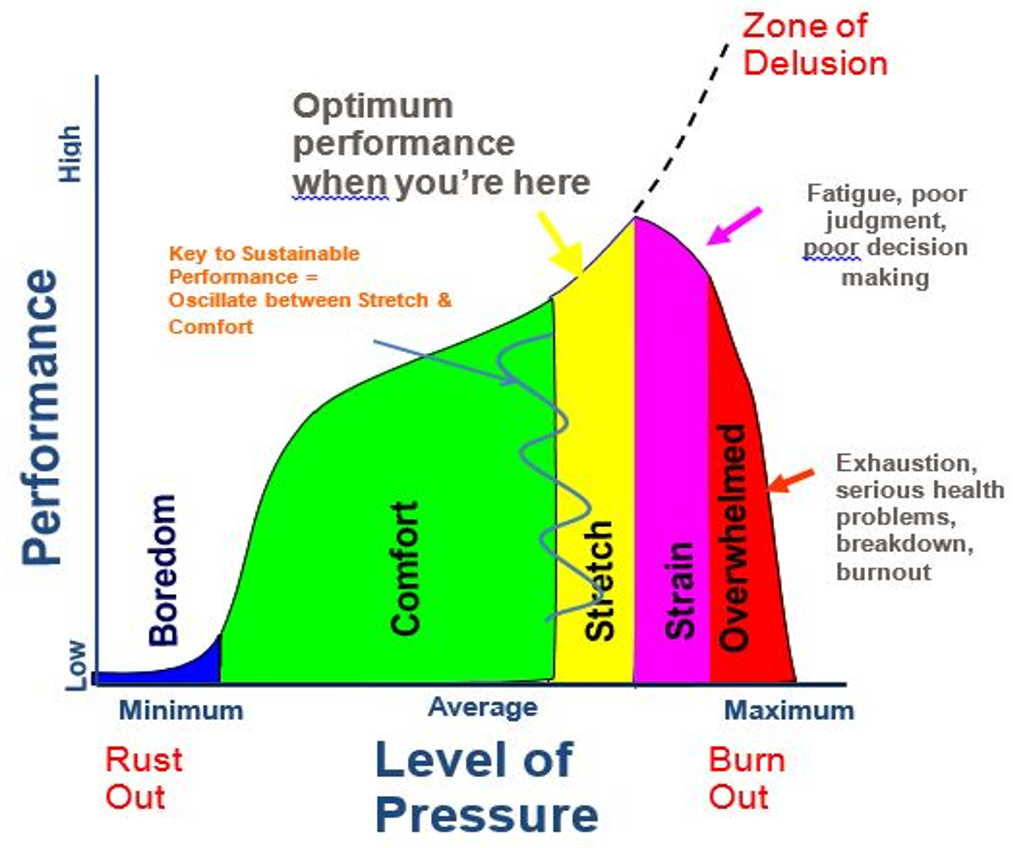
the challenges of adrenaline in our bodies when we are in a challenging session such as this and how this reduces our ability to hear.
- the role of the witnesses to help overcome this challenge by listening. They are asked to be impartial, fair, observational and kind.
that mediators will be taking notes to share with participants.
the time that is being allowed for this first session, including any renegotiation that is necessary at this stage, e.g. if someone has another meeting immediately after this, then this session should close earlier to allow for transition.
- accepting not knowing quite what is going to happen and trusting learning to emerge.
The mediator checks whether everyone feels good and safe enough to give today’s session a try. If not, we will resume on another day, place or time.
The lead mediator introduces the support mediator who will be helping with time keeping and vibe watching. They will ask people to stop speaking once they have had their allotted time. They may suggest that everyone takes a moment to pause if emotions are running high. The support mediator explains that others can also call for a pause whenever they need to.
(You can share out the tasks in different ways, as suits the mediation team.)
If appropriate, the support mediator provides a grounding exercise suitable to the group.
The lead mediator explains how much you are hoping to cover today, that the pace of the meeting will be slowed to allow more time, if it is feeling too rushed.
Motivation - The Story of Us
This section is about our desire, or just the need, to be together in the same space. What are the reasons you choose to collaborate? Why do you, <<name>>, need to collaborate with <<name>>? And <<name>>, why do you need to collaborate with <<name>>?
Who would like to go first?
[this person remains first for this and all of the following questions.]
The question is repeated for the other person. Each answer is timed (e.g. 3 minutes).
Silences are welcomed and held. At the end of the time, the support mediator signals, and if necessary, states, that time is up.
The mediator may gently ask whether there is more to say and if/when there is completion, offer a final pause before moving on to the next section.
Fears and hopes
Fears - Explain the importance of fears and the power that fear can have over us if it is not expressed/observed. This is about the fears you have around this relationship. Do you have any fears and what are they?
[again, each participant is given their own time to answer]
Hopes - Naming your hopes will help you to know that you’re on the right track together and to celebrate together when someone’s hopes have been reached.
What are your hopes?
[again, each participant is given their own time to answer]
Interaction styles and warning signs
It is a human foible to see ourselves as the centre of the universe; when someone says something unkind, we think immediately that this is about us but there may be many other reasons that are actually not related to us at all.
Interaction styles - This question has 2 parts, the first part of this question is about how and when you are at your best. Acknowledging that life is hard, and we may seldom be at our best.
On your very best day, what is your natural style when you are in a good place?
The second part is an acknowledgement of your personal style. How do you like to work and be?
[again, each participant is given their own time to answer]
Warning signs - Now for the opposite, again in two parts. Firstly, when things are stressful or difficult, what might other people notice about you, what are the warning signs they might see? What do you need when you are in this state? And secondly (perhaps the hardest part to do) what would help you to feel less stressed?
This is to help with self-realisation, but also to help you to support each other.
When things start to be stressful, I look like this….
When things start to get stressful, I need this…
[again, each participant is given their own time to answer]
Possibly a good point to take a short break, if you haven’t done that yet.
Whenever you are restarting, restart with an acknowledgement of gratitude from the mediator.
This next step is to work on expectations. Is there anything we need to go over before we start that? You may not remember everything, of course, that is fine. We will share notes with you so that you can see each other’s contribution after the session. Is there anything else that needs to be said or heard before we move on?
Appreciation
Coming in reverse order this time (and leaving the agenda for a moment), I’d like to invite each of you to share something that you appreciate or admire in the other person.
[again, each participant is given their own time to answer]
Expectations
The mediator may be able to draw out an example that has already emerged, if so, what else can you do to support and help each other in the future?
[again, each participant is given their own time to answer]
Closing
Thank everyone, note the progress, however small the steps, explain where further support is available and agree the next meeting if required.
Remove the spotlight or move the chairs forward again.
Invite a check out comment from any or everyone in the group.
Notes
Remember that you may not get through all these stages in one session. That is fine. It is ok to meet as many times as required.
We are creating a positive learning space that is just one space on a much longer journey of learning in all our meetings and interactions together.
Learning in the virtual space is preparation for learning beyond the availability of these spaces.
Generative conflict takes practice, be gentle and keep practicing.
Other things that may be useful
Broccoli Seed Agreement – Gesturing Towards Decolonial Futures
The Transformative Power of Restorative Justice with Charlotte Calkin