Local authority population projections: 2022-based
The 2022-based projections provide estimates of the size of the future population and are based on assumptions about births, deaths, and migration.
In this page
Revision note
The low and high population variant projections that were originally published on 20 November 2025 were revised on 24 June 2026, due to a small error in the national population variant projections that were used.
By mid-2032, the revised low population variant is around 13,600 (0.4%) lower than the original low population variant at the Wales level. By mid-2047, the revised low population variant is around 131,400 (3.9%) lower than the original low population variant at the Wales level.
By mid-2032, the revised high population variant is around 12,100 (0.4%) higher than the original high population variant at the Wales level. By mid-2047, the revised high population variant is around 117,900 (3.3%) higher than the original high population variant at the Wales level.
In Figure 5, the low and high population variants have been revised. Changes have been marked with an (r). None of the main messages have changed as a result of these revisions.
Introduction
The 2022-based population projections provide statistics on the potential future size and age structure of the population of local authorities in Wales. These projections supersede the previous 2018-based projections.
We have also published 2022-based local authority household projections for Wales alongside these projections.
Population projections are subject to uncertainty and are based on assumptions about future trends in fertility, mortality and migration. These projections are not forecasts, and do not attempt to predict the impact that future government policies, changing economic circumstances, or other factors, such as short-term changes in international migration, might have on demographic behaviour. Population change at the local level may be shaped by economic growth and housing policies, which are not taken into account in these projections.
The ‘principal' projection is the main projection, and is based on assumptions about future fertility, mortality and migration considered to best reflect demographic patterns at that time. It can be considered to be a ‘central’ projection. Most of the analyses below are based on the principal projections unless stated otherwise.
Other projections, or ‘variant’ projections, are also available alongside the principal projection. They are based on alternative future scenarios of fertility, mortality and migration compared with the principal projection. These provide an indication of uncertainty, but do not represent upper or lower limits of future demographic behaviour.
Projections are available on StatsWales for the 25-year period, from mid-2022 to mid-2047. However, this report focusses on the first 10 years of the projection period as projections tend to become increasingly uncertain in the longer-term, as much may change over that timescale. This is particularly so for detailed age and sex breakdowns.
These local authority population projections are not constrained to the Office for National Statistics’s (ONS) national population projections (ONS). What this means is that the sum of the local authority population projections does not match the national population projections. People who are interested in population projections at the Wales level should use the ONS’s national population projections.
Population projections may differ from published population estimates now and in the near future. We recommend using the most recent mid-year estimates for all years where they are available.
We have made some changes to the methods for calculating these projections. We have published a blog alongside the release, detailing some of the changes between these projections and the previous projections. Further information can be found in the quality and methodology information section.
Main points
Between mid-2022 and mid-2032:
- the population is projected to increase in all 22 local authorities
- the local authorities projected to see the largest increases in their population are Cardiff (up 10.5%), Newport (up 10.2%) and the Vale of Glamorgan (up 9.9%)
- this compares with a projected population increase of 5.9% for Wales in the ONS’s 2022-based national population projections (ONS)
- the local authorities projected to see the smallest increases in their population are Merthyr Tydfil (up 1.0%), Caerphilly (up 1.2%) and Wrexham (up 1.3%)
- it is projected that all local authorities, other than Newport, will see a decrease in the number of children and young people aged 0 to 15 years old
- it is projected that the population aged 65 years or older will increase in all local authorities
- for all local authorities, projected population increases are mainly driven by positive net migration
Population projections by local authority
Figure 1: percentage change in the population projections by local authority, mid-2022 to mid-2032
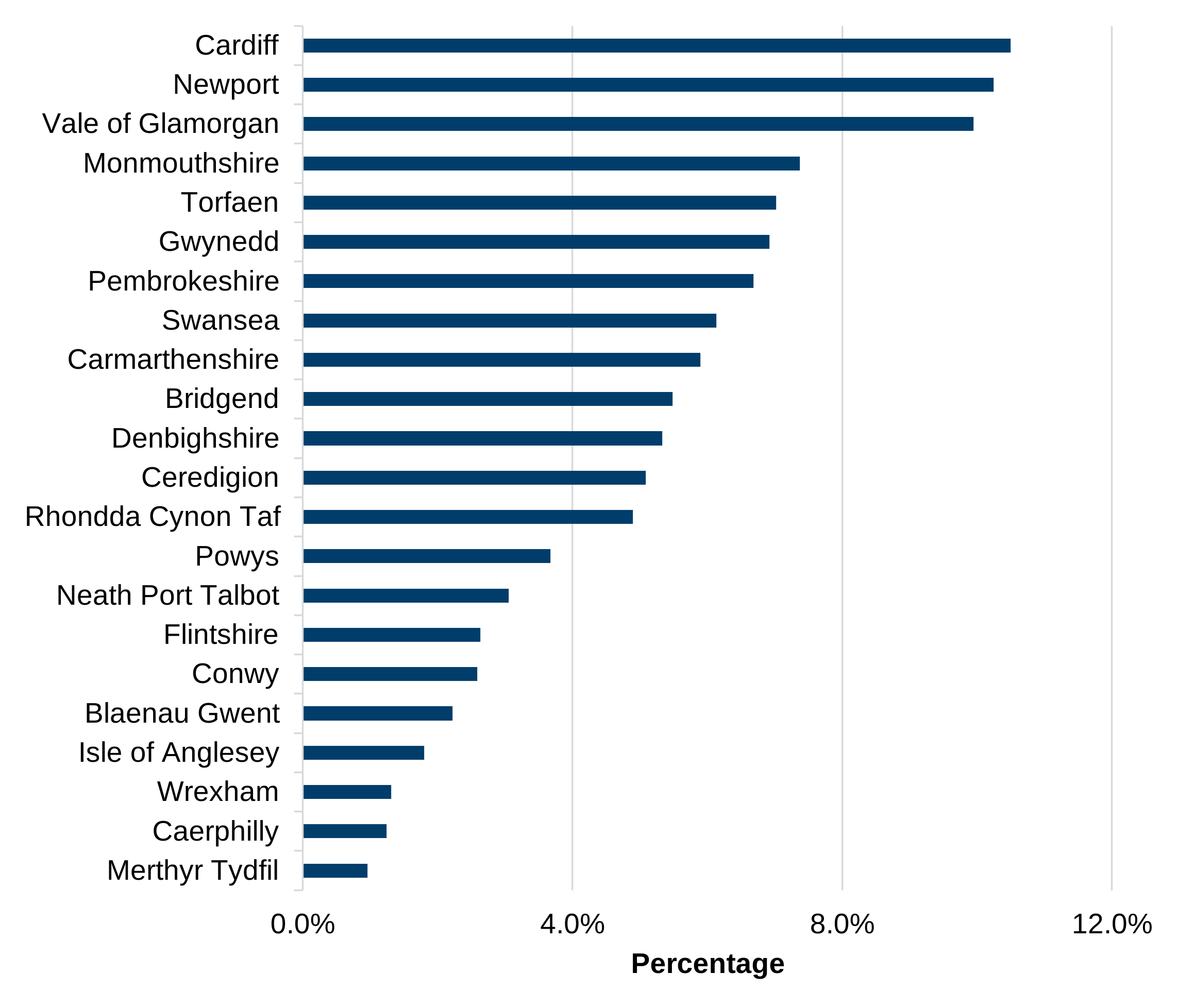
Description of figure 1: a bar chart showing all local authorities are projected to see an increase in their population between mid-2022 and mid-2032. The local authorities projected to see the largest increases in their population are in south-east Wales while the local authorities with the smallest projected increases are in north Wales and the south Wales Valleys.
Source: 2022-based local authority population projections for Wales from the Welsh Government.
2022-based population projections by local authority, age, sex, year and variant, on StatsWales
During the period mid-2022 to mid-2032, the population is projected to increase in all local authorities. This is different to the previous 2018-based projections, which projected that the population would decrease in four local authorities during the first 10 years of the projections.
The projected trends seen here broadly reflect the latest trends seen in the ONS’s mid-year estimates of the population (ONS). Mid-year population estimates are published annually and provide an estimate of the current population. The local authorities that have seen the largest percentage increases in their population between mid-2018 and mid-2022 are Newport, Cardiff, and the Vale of Glamorgan. Conversely, Blaenau Gwent, Merthyr Tydfil and Caerphilly have seen decreases in their population estimates during the same period.
Figure 2: projected population by local authority, mid-2032
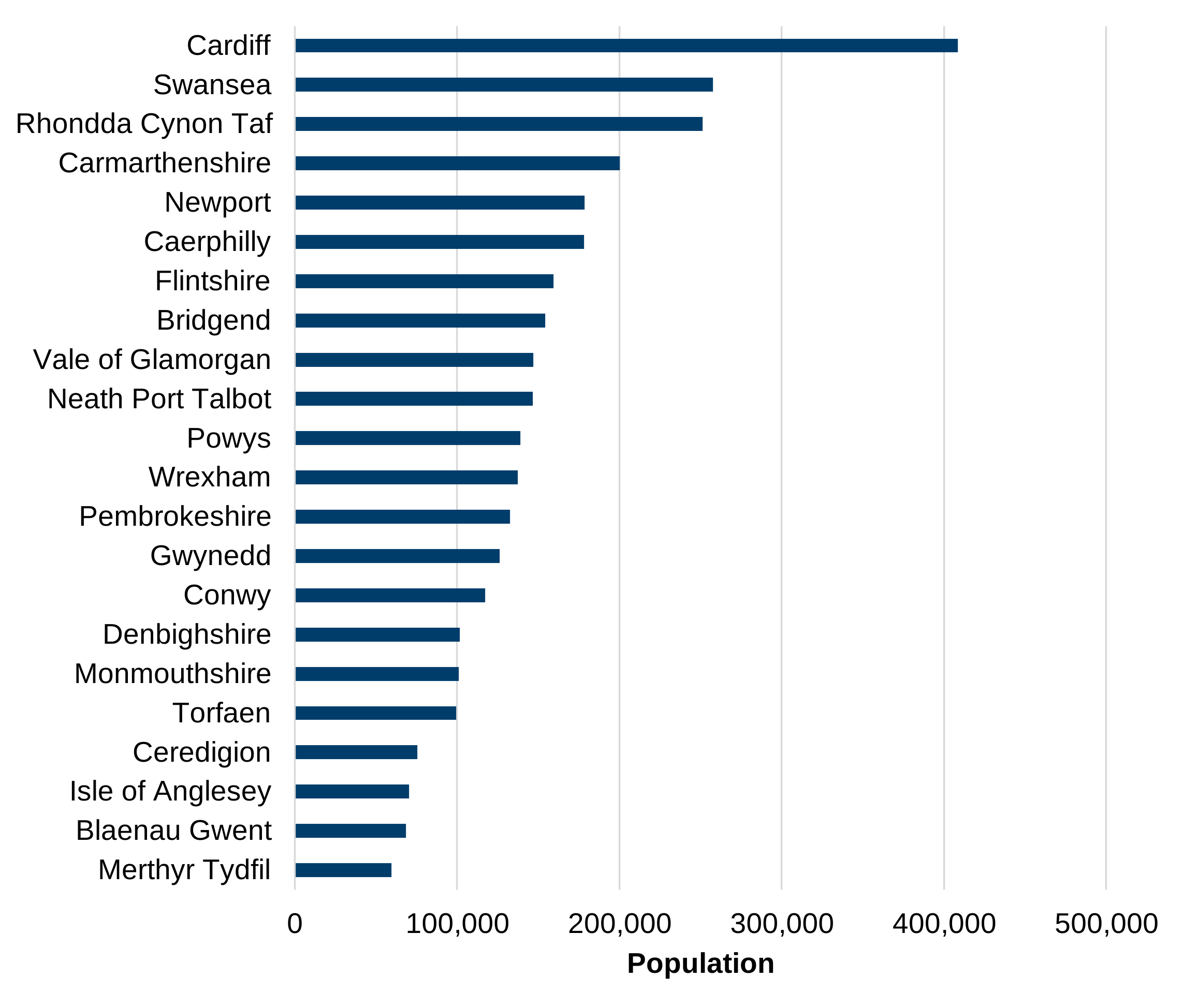
Description of figure 2: a bar chart showing the projected population for each local authority by mid-2032. Cardiff is projected to continue having the largest population, followed by Swansea and Rhondda Cynon Taf. Merthyr Tydfil, Blaenau Gwent and the Isle of Anglesey are projected to continue to have the smallest populations.
Source: 2022-based local authority population projections for Wales from the Welsh Government.
2022-based population projections by local authority, age, sex, year and variant, on StatsWales
The population of Cardiff is projected to be nearly 409,000 people by mid-2032. This is over 150,000 more people than the second largest local authority, Swansea, and more than double all other local authorities except for Swansea and Rhondda Cynon Taf. The population of Cardiff is projected to account for over 12% of the population in Wales by mid-2032.
The majority of local authorities are projected to have a population of between 100,000 and 200,000 by mid-2032.
Population projections by age
Figure 3: change in the population projections by local authority and age, mid-2022 to mid-2032 [Note 1]
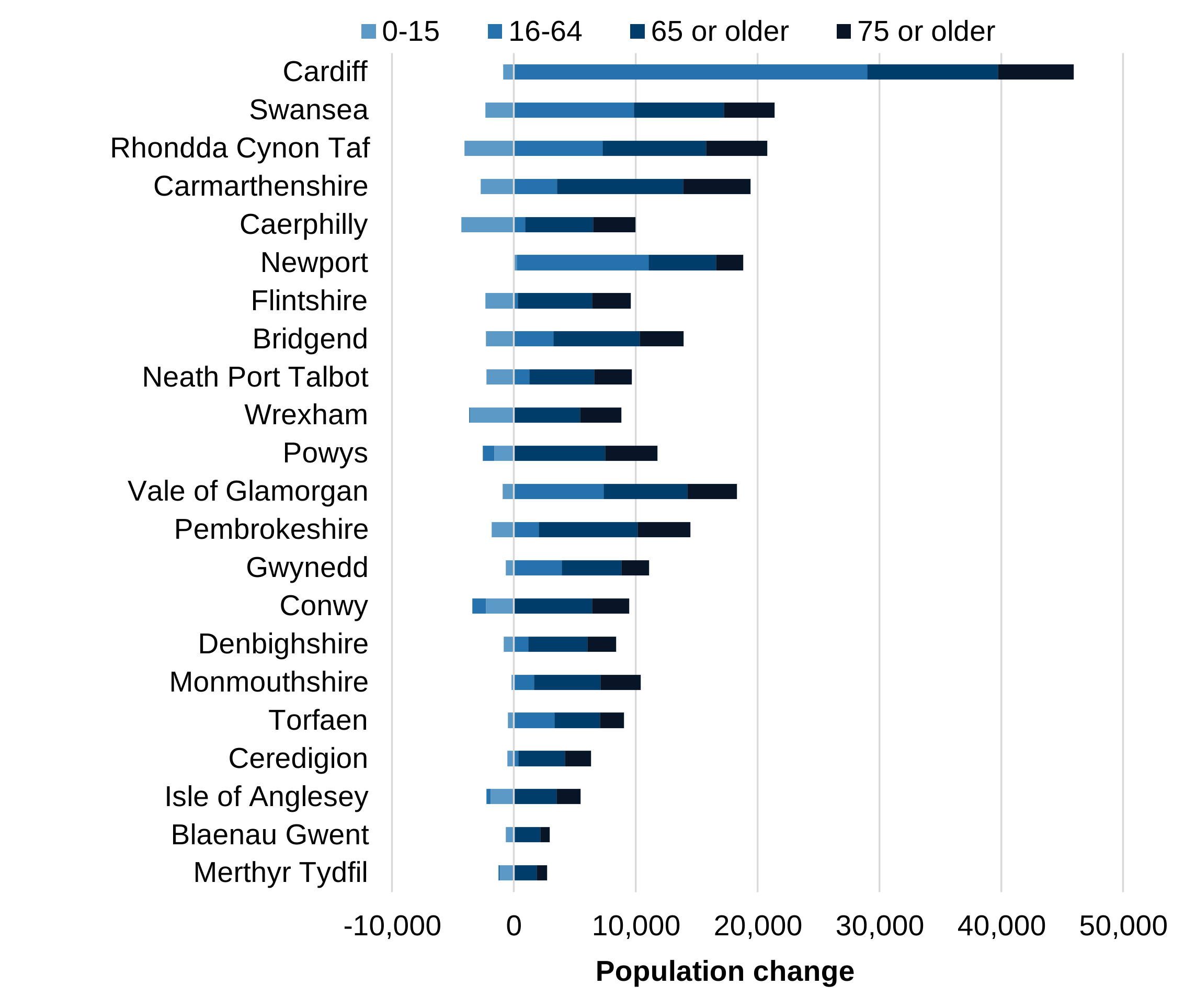
Description of figure 3: a stacked bar chart showing that during the period mid-2022 to mid-2032, the population is projected to continue to age in all local authorities, with increases projected in the number of people aged 65 years or older, and 75 years or older. Newport is the only local authority projected to see an increase in the number of children and young people aged 0 to 15 years old.
Source: 2022-based local authority population projections for Wales from the Welsh Government.
[Note 1] the data for 75 or older shown on the chart is contained within the data for 65 or older.
2022-based population projections by local authority, age, sex, year and variant, on StatsWales
It is projected that all local authorities, other than Newport (up 0.7%), will see a decrease in the number of children and young people aged 0 to 15 years old between mid-2022 and mid-2032.The local authorities projected to see the largest percentage decreases in the population aged 0 to 15 years old are the Isle of Anglesey (down 16.6%), Wrexham (down 14.5%) and Caerphilly (down 13.4%).
It is projected that the local authorities with the largest percentage increases in the working-age population aged 16 to 64 years old between mid-2022 and mid-2032 are largely urban local authorities along the M4 corridor in south Wales (namely Cardiff, Newport, the Vale of Glamorgan, Swansea, Torfaen, Rhondda Cynon Taf and Bridgend), and Gwynedd.
The local authorities projected to see the largest percentage decreases in the working-age population during the same period are largely rural local authorities, namely Conwy (down 1.7%), Powys (down 1.2%), the Isle of Anglesey (down 0.8%) and Merthyr Tydfil (down 0.5%).
It is projected that the population aged 65 years or older will increase in all local authorities between mid-2022 and mid-2032, with the largest percentage increases in Pembrokeshire (up 24.6%), the Vale of Glamorgan (up 23.2%) and Bridgend (up 23.1%).
By mid-2032, over 30% of the population is projected to be aged 65 years or older in Powys (32.6%), Conwy (32.4%), the Isle of Anglesey (31.3%) and Pembrokeshire (30.9%). Cardiff is projected to have the lowest percentage of the population aged 65 or older (15.8%) by mid-2032.
It is projected that the population aged 75 years or older will increase in all local authorities during the same period, with the largest percentage increases in the Vale of Glamorgan (up 28.5%), Pembrokeshire (up 27.4%) and Monmouthshire (up 27.1%).
Components of population change
The local authority population projections broadly consist of the following components of population change: births, deaths, internal migration (which is movements between local authorities in Wales and other parts of the UK), and international migration (which is movements between Wales and countries outside of the UK).
Natural change is the difference between the number of births and deaths. It is negative when there are more deaths than births, which leads to a naturally decreasing population. It is positive when there are more births than deaths, leading to a naturally increasing population.
Net migration is the difference between the number of people moving into an area and moving out of an area. It is negative when more people move out of an area than move in. It is positive when more people move into an area than move out.
In these projections, migration is projected to add to the population of all local authorities between mid-2022 and mid-2032. However, most local authorities are also projected to see negative natural change during the same period, that is, more deaths than births. Net positive migration is projected to more than offset the negative natural change, resulting in overall projected population increases.
Figure 4: change in the population projections by local authority and component of change, mid-2022 to mid-2032 [Note 1]
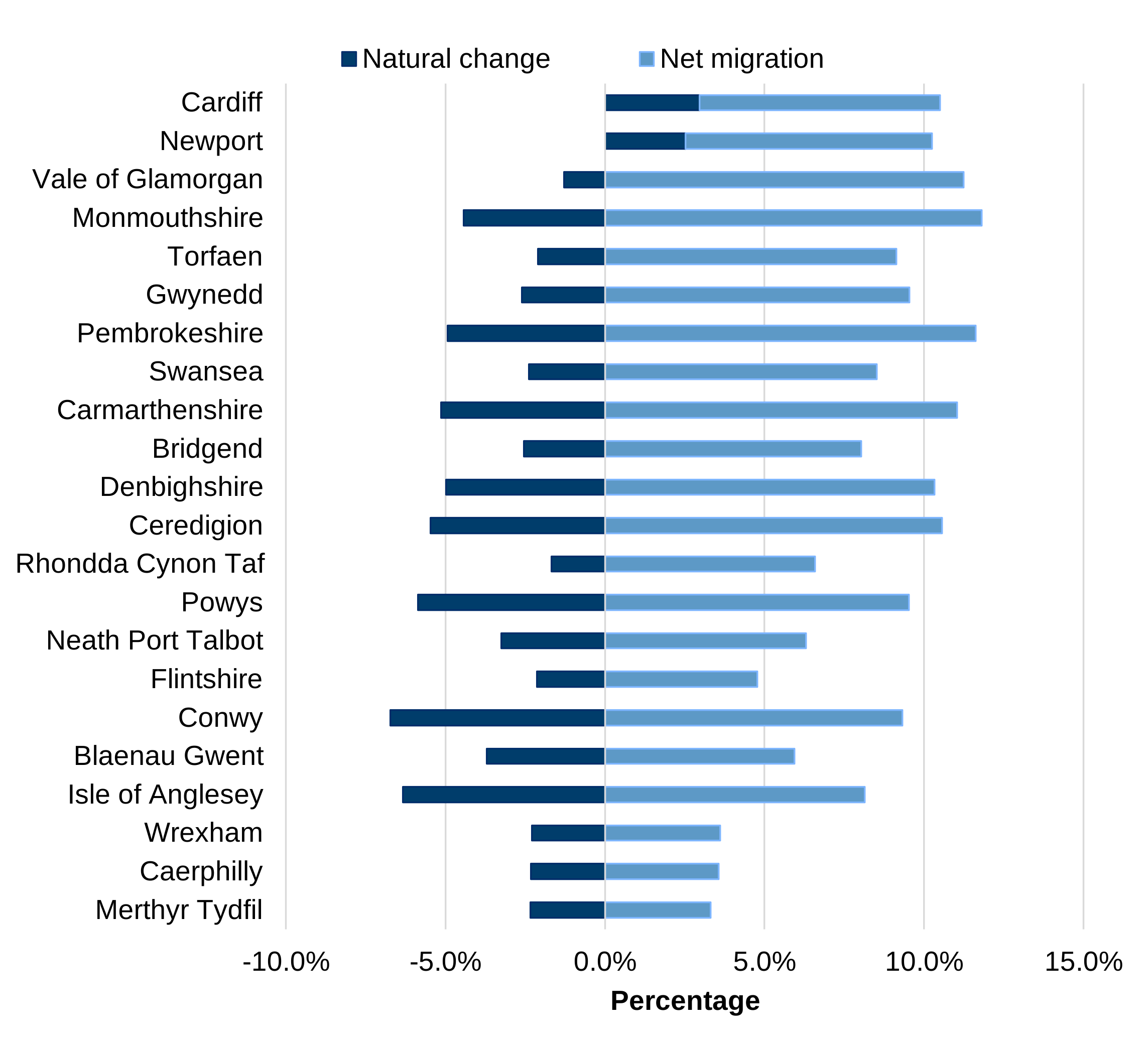
Description of figure 4: a bar chart showing that for all local authorities population increases by mid-2032 are mainly driven by positive net migration, that is, more people moving into the area than moving out.
Source: 2022-based local authority population projections for Wales from the Welsh Government.
[Note 1] Natural change is births minus deaths. Net migration is inward minus outward migration.
2022-based population projections by local authority, age, sex, year and variant, on StatsWales
Cardiff and Newport are the only two local authorities that are projected to see positive natural change as well as positive net migration between mid-2022 and mid-2032.
During the period mid-2022 to mid-2032, the number of births is projected to decrease in the majority of local authorities, with the largest projected percentage decrease in Merthyr Tydfil (down 9.0%). The number of births is projected to increase in three local authorities, which are Cardiff, Monmouthshire and the Vale of Glamorgan.
The number of deaths is projected to increase in the majority of local authorities, with the largest projected percentage increases in Monmouthshire (up 9.6%), Pembrokeshire (up 9.3%) and the Vale of Glamorgan (up 8.0%).
The number of deaths is projected to decrease in three local authorities, which are Blaenau Gwent, Merthyr Tydfil and Swansea.
This means that natural change, that is, the difference between the number of births and the number of deaths, is projected to be increasingly more negative in nearly all local authorities.
The highest levels of projected inward and outward international migration in the period between mid-2022 and mid-2032 can be seen in Cardiff, Swansea, Gwynedd and Newport. Net international migration is projected to be lower for every local authority by mid-2032 compared with mid-2022.For internal migration, both inward and outward internal migration is projected to increase in all local authorities during the period mid-2022 to mid-2032. Net internal migration is projected to increase for the majority of local authorities during this period.
Variant projections
In addition to the principal projections presented above, we have also published a full set of variant projections. This includes a range of projections based on different assumptions related to fertility, life expectancy, migration and age structure. These provide an indication of uncertainty, but do not represent upper or lower limits of future demographic behaviour. Further details about these variant projections can be found in the quality and methodology information section below.
Figure 5: variant population projections, mid-2022 to mid-2032 (r) [Note 1]
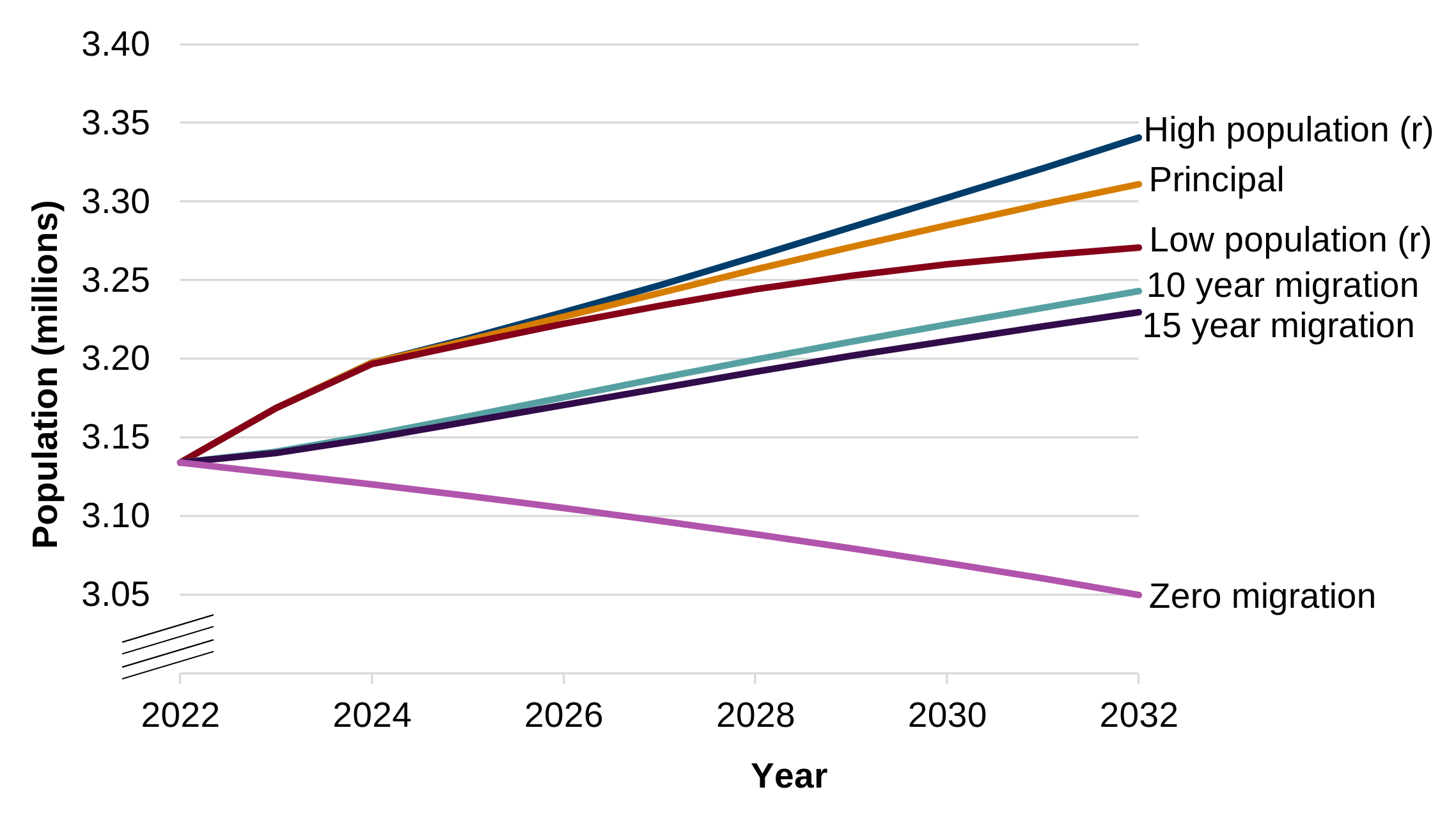
Description of figure 5: a line chart showing differences in the projected population at the Wales level between the principal projection and the five other variant projections for the period mid-2022 to mid-2032. The variant projections include a zero migration variant, a 10-year average and 15-year average migration variant, and high and low variant projections. The high population variant has the highest projected population for the period mid-2022 to mid-2032, while the zero migration variant shows projected population decrease over the period.
Source: 2022-based local authority population projections for Wales from the Welsh Government
[Note 1] The y-axis on this chart does not start at zero.
2022-based population projections by local authority, age, sex, year and variant, on StatsWales
(r) revised on 24 June 2026
Between mid-2022 and mid-2032, the population is projected to increase by 5.6% in the principal projection. For the high and low population variants, the population is projected to increase by 6.6% (r) and 4.4% (r) respectively during the same period. Under the zero migration variant, the population is projected to decrease by 2.7%, while the 10-year and 15-year average migration variants project population increases of 3.5% and 3.0%, respectively.
Under the high population projection, for the period mid-2022 to mid-2032 the population is projected to increase in all local authorities. Projected population growth varies between 11.7% (r) in Cardiff and 1.8% (r)in Merthyr Tydfil. Projected population growth is around 0.9 (r) percentage points higher than the principal projection for all local authorities.
Under the low population projection, for the period mid-2022 to mid-2032, the population is projected to increase in 21 out of the 22 local authorities. Projected population change varies between 8.9% (r) increase in Cardiff to 0.2% (r) decrease in Merthyr Tydfil. Projected population growth is around 1.3 (r) percentage point lower than the principal projection for most local authorities.
Under the zero migration projection, for the period mid-2022 to mid-2032 the population is projected to decrease in 20 of the 22 local authorities. The populations in Cardiff and Newport are projected to grow by 3.1% and 1.0% respectively. Conwy and the Isle of Anglesey are projected to see the largest decreases by mid-2032, down 6.8% and 6.2% respectively.
Under the 10-year average migration projection, for the period mid-2022 to mid-2032 the population is projected to increase in 21 out of 22 local authorities. The Isle of Anglesey is the only local authority whose population is projected to see a slight decrease over the period, down 0.1%. The Vale of Glamorgan and Newport are the local authorities projected to see the largest increases by mid-2032, up 6.9% and 6.4% respectively.
Under the 15-year average migration projection, for the period mid-2022 to mid-2032 the population is projected to increase in all local authorities in Wales, apart from in the Isle of Anglesey, which is projected to decrease very slightly (down 0.03%). Cardiff and the Vale of Glamorgan are the local authorities projected to see the largest increases by mid-2032, up 6.0% and 5.2% respectively.
Comparisons with mid-year population estimates
The ONS published population estimates for Wales and England for mid-2024 on 30 July. It is therefore possible to compare the mid-year estimate for mid-2024 with the projected population for mid-2024 for all local authorities.
Figure 6: percentage difference between the mid-2024 estimate of the population and mid-2024 population projection from the 2022-based projections, by local authority
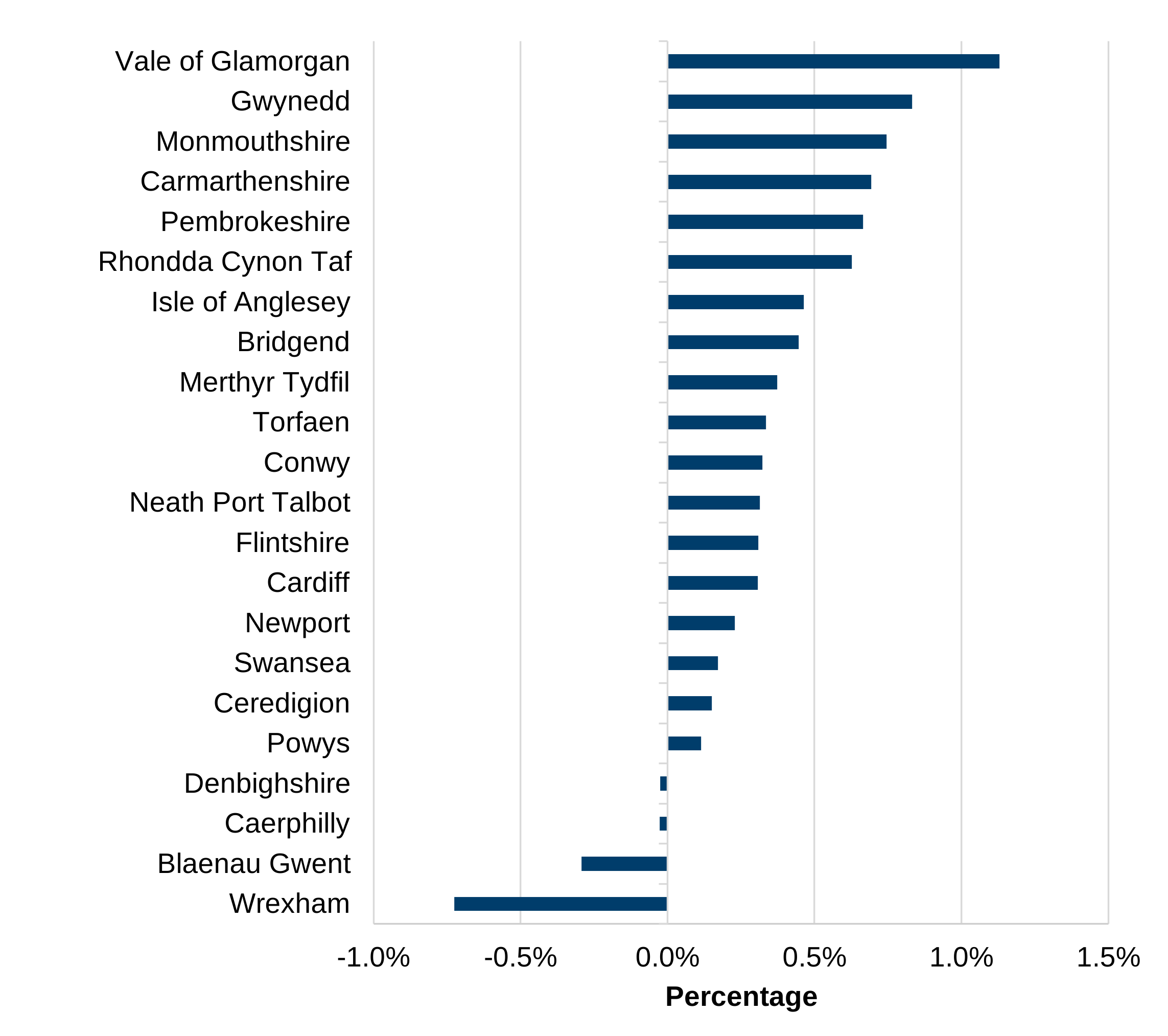
Description of figure 6: a bar chart showing that for most of the local authorities, the mid-2024 population projection from the 2022-based projections is slightly higher than the mid-year estimate for mid-2024. The projection for mid-2024 was lower than the estimate for mid-2024 in Wrexham, Blaenau Gwent, Caerphilly and Denbighshire.
Source: 2022-based local authority population projections for Wales from the Welsh Government.
2022-based population projections by local authority, age, sex, year and variant, on StatsWales
The national population projection for Wales for mid-2024 is 0.2% higher than the equivalent mid-year estimate of the population for the same year, or around 5,400 higher. The sum of the local authority population projections for mid-2024 is 0.3% higher than the equivalent mid-year estimate, at around 10,700 higher.
We have constrained international migration in our projections for the period 2022-23 and 2023-24 to match the published estimates of international migration in the mid-year estimates of the population. Therefore, the differences seen here between the mid-year estimates and the local authority population projections are largely driven by internal migration, with net internal migration in 2023-2024 estimated to be lower than that projected for most local authorities.
At the Wales level, net internal migration was lower between mid-2023 and mid-2024 than it had been for the five-year period that these projections are based on, between mid-2017 and mid-2022. This explains, in part, some of the differences we see between the mid-year estimates and the projections at the start of the projection period.
Comparisons with the 2018-based local authority population projections
Following Census 2021, the census-based 2021 mid-year estimates were compared with the 2021 mid-year estimates rolled forward from Census 2011. This reconciliation of the mid-year population estimates with Census 2021 found that mid-year estimates for mid-2021 for Wales rolled forward from Census 2011 were around 66,600 higher than those based on Census 2021. On 9 April 2024, we published an article, Analysis of the rebased mid-year population estimates following Census 2021 which gives some further analysis of this at a Wales level.
The rebasing of mid-year population estimates following Census 2021 therefore adjusted the mid-year estimates to align with Census 2021, revising the components of change for the mid-year estimates.
Our last set of local authority population projections were based on mid-year estimates of the population up to and including mid-2018. These were therefore based on mid-year estimates rolled forward from Census 2011, whereas the 2022-based local authority population projections are the first to be based on estimates based on Census 2021. Some of the differences between our previous projections and these new projections are therefore because of the rebasing of the mid-year estimates by the ONS.
The differences between 2018-based and 2022-based local authority population projections, therefore, reflect not only the change in demographic trends seen during this time period, but also the change in the methods between the two sets of projections, as well as the change in the base year of the projection.
There have been some notable underlying demographic changes in the period between mid-2018 and mid-2022. At a Wales level, the birth rate has continued to fall, with the total fertility rate falling from 1.63 in 2018 to 1.46 in 2022. Improvements in life expectancy have stalled, while migration patterns have fluctuated substantially in recent years.
Patterns of international migration have changed. Net international migration is estimated to have continued to increase in Wales broadly until mid-2016, after which it decreased overall for several years, dropping to its lowest level in recent years by mid-2020 during the coronavirus (COVID-19) pandemic.
However, net international migration increased significantly between mid-2021 and mid-2024. These changes resulted in Wales’s population in mid-2022 being estimated at 3.13 million, which is 35,900 (1.1%) lower than was projected by mid-2022 in the 2018-based national population projections.
Figure 7: percentage difference between projected mid-2032 population using 2018-based and 2022-based projections, by local authority
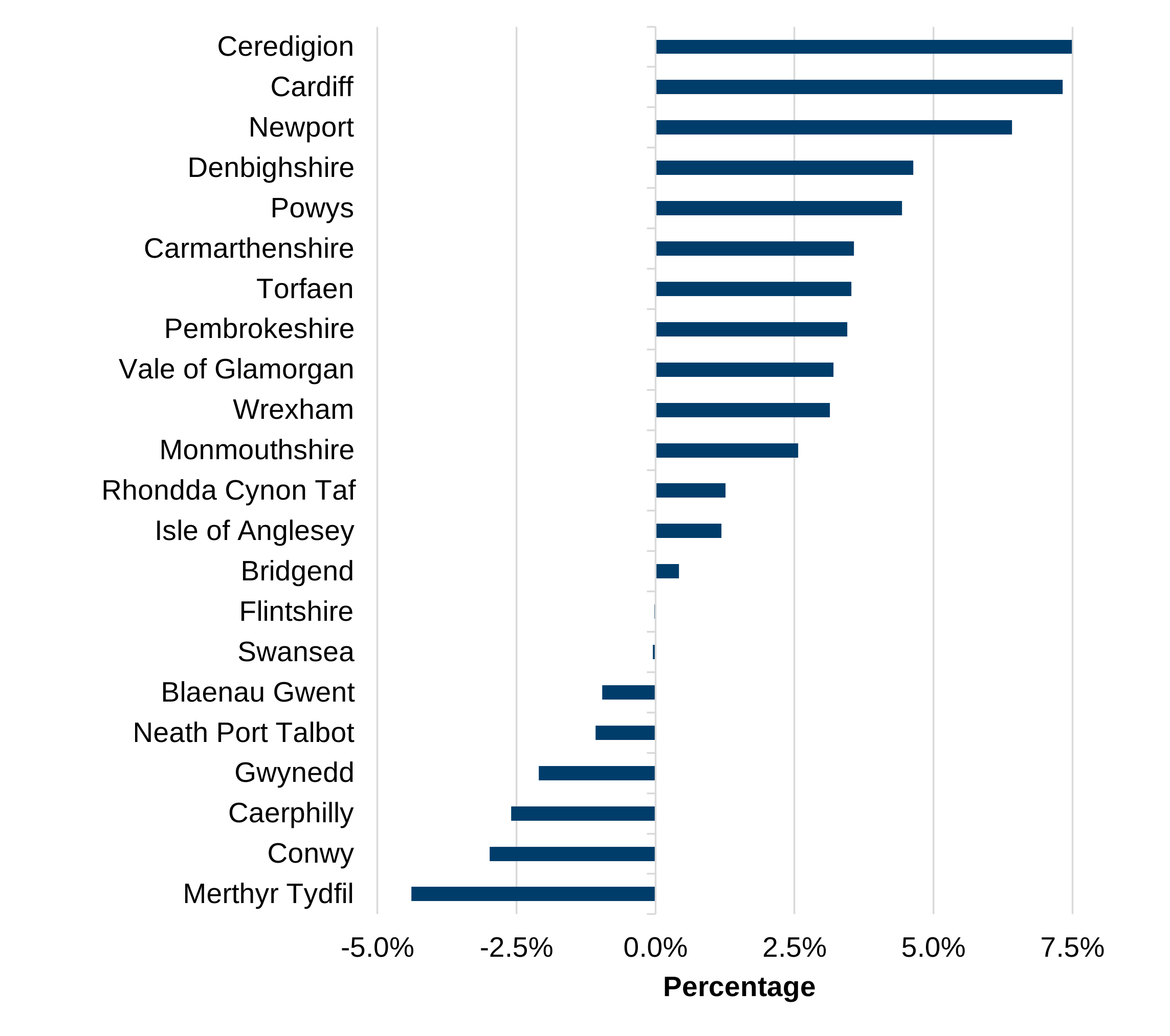
Description of figure 7: a bar chart showing that the projected population for mid-2032 is higher in the 2022-based projections than in the 2018-based projections for 14 out of 22 local authorities.
Source: 2022-based local authority population projections for Wales from the Welsh Government.
2022-based population projections by local authority, age, sex, year and variant, on StatsWales
The local authorities with the largest positive difference between the 2018-based projections and the 2022-based projections in mid-2032 are Ceredigion and Cardiff.
The local authorities with the largest negative difference between the 2018-based projections and the 2022-based projections in mid-2032 are Merthyr Tydfil and Conwy.
All local authorities whose populations are projected to be lower in mid-2032 when comparing the 2022-based projections with the 2018-based projections are still projected to see an increase in their population between mid-2022 and mid-2032.
Quality and methodology information
All projections refer to the population on 30 June of the reference year.
There is already a margin of error in the underlying input data used in the projections, for example, estimates of the current population and past migration flows. In addition, our assumptions about the future cannot be certain, as patterns of births, deaths, and migration are always liable to change and can be influenced by many factors. As a result of this, actual future population size can deviate from that which is projected.
2022-based national population projections, Wales
In January, the ONS released a full set of projections for the UK (ONS). This included principal and variant projections for the UK, Great Britain, England, Wales, Scotland and Northern Ireland. We also published a bulletin focusing specifically on Wales.
Variant projections for Wales
The range of variant projections include a ‘high population’ variant, based on high fertility and high life expectancy. The migration assumptions are the same as the principal projection.
The ‘low population’ variant is based on low fertility and low life expectancy. The migration assumptions are the same as the principal projection.
The ‘zero migration’ variant, or natural change only, illustrates the projected population of each local authority if there was no inward or outward migration in the future.
The ‘10-year average migration’ variant uses 10 years of data for both international and internal migration, rather than 5 years of data that are used in the principal projection. This evens out a potentially atypical 5-year period. However, it also risks dampening the effect of more systemic changes that have occurred over the 10 years.
The ‘15-year average migration’ variant uses 15 years of data for both international and internal migration, rather than 5 years of data that are used in the principal projection. Similarly, this evens out a potentially atypical 5-year period. However, it also risks dampening the effect of more systemic changes that have occurred over the 15 years.
Mid-year population estimates
These local authority population projections are based on mid-year population estimates of the population for mid-2024 (ONS) published on 30 July.
We recommend the continued use of population estimates for years up to and including mid-2024, for Wales and local authorities.
Technical report
To accompany the data in this release, we will be updating our technical report for subnational population and household projections. This will be published in the coming months. More detailed information about quality and methods for the projections, including the underlying assumptions, will be available here.
Official statistics status
All official statistics should show the standards of the Code of Practice for Statistics (UK Statistics Authority).
These are accredited official statistics. They were independently reviewed by the Office for Statistics Regulation (OSR) in January 2020. They comply with the standards of trustworthiness, quality and value in the Code of Practice for Statistics.
It is Welsh Government’s responsibility to maintain compliance with the standards expected of accreditation. If we become concerned about whether these statistics are still meeting the appropriate standards, we will discuss any concerns with OSR promptly. Accreditation can be cancelled or suspended at any point when the highest standards are not maintained, and reinstated when standards are restored.
Accredited official statistics are called National Statistics in the Statistics and Registration Service Act 2007.
Statement of compliance with the Code of Practice for Statistics
Our statistical practice is regulated by the OSR. OSR sets the standards of trustworthiness, quality and value in the Code of Practice for Statistics that all producers of official statistics should adhere to.
All of our statistics are produced and published in accordance with a number of statements and protocols to enhance trustworthiness, quality and value. These are set out in the Welsh Government’s Statement of Compliance.
These accredited official statistics (OSR) demonstrate the standards expected around trustworthiness, quality and public value in the following ways.
Trustworthiness
Population projections are based on mid-year population estimates (as at 30 June each year). Mid-year population estimates for Wales and England are produced by the ONS. In order to produce the local authority projections, the population estimates are combined with assumptions about births, deaths, and migration. These assumptions are based on past trends.
For migration, the United Nations definition of an international migrant is used, that is, people who change country of residence for a period of at least 12 months. Short-term migrants, for example, seasonal migrant workers, are not counted in the population estimates.
These local authority population projections are based on the mid-year estimates of the population for mid-2022 for local authorities in Wales.
The base data used to make the calculations are produced by the ONS for the length of the projection period, usually 25 years. In order to produce population projections, assumptions need to be formed to project future levels of fertility, mortality, and migration for each local authority.
Local authority population projections are produced using a well-established demographic approach known as the cohort component method. Specifically, these population projections are calculated by:
- taking the most recent year’s population estimate
- taking out special population groups
- ageing every person on one year
- adding births and subtracting deaths
- allowing for inward and outward migration
- adding back in the special population groups
The assumptions are generally based on trends during the most recent five years, and the projections indicate what may happen should these trends continue.
Special population groups include the number of prisoners and armed forces within each local authority. From mid-2011 onwards, prisoners were regarded as usually resident at an institution if they were serving a custodial sentence of six months or more.
Quality
These published figures are compiled by professional analysts using the latest available data and applying methods using their professional judgement and analytical skillset. Statistics published by the Welsh Government adhere to the Statistical Quality Management Strategy which supplements the Quality pillar of the Code of Practice for Statistics (UK Statistics Authority) and the European Statistical System principles of quality for statistical outputs.
Validation checks are performed by Welsh Government statisticians. The statistical release is then drafted, signed off by senior statisticians and published in line with the statement on confidentiality and data access which is informed by the trustworthiness pillar contained in the Code of Practice for Statistics (UK Statistics Authority).
On 30 July, the ONS published mid-year estimates of the population for Wales and England for mid-2024. Estimates for mid-2022 and mid-2023 were revised by the ONS to incorporate improved international and internal migration data. We have incorporated the revised estimates into these projections.
The methods for calculating these population projections were developed in close collaboration with the Wales Sub-national Projections (WaSP) group, which includes local authority and national park officials in Wales. This group is a forum for technical discussion on the methods and to agree the assumptions and base data to be used. Members of WaSP include representatives with knowledge of and/or experience of demographic data and population and household projections.
As part of the development work for these population projections, the WaSP group agreed to the following changes to the international migration assumptions.
To take into account the recent changes in the long-term international migration estimates, we decided to adjust the international migration assumptions for these projections. International migration data in these projections have been constrained for each local authority, for both inward and outward international migration, for the period mid-2022 to mid-2023 and mid-2023 to mid-2024, to match the international migration estimated published in the revised mid-year population estimates in July. The method remains unchanged for all other years in the projection period, from mid-2025 onwards.
Further information will be available in the technical report.
Value
The purpose of the statistical release is to provide evidence for planning services and estimating future population-based needs at a national and local level, to inform the allocation of resources, to support well-being and population needs assessments, and for the onward calculation of statistics, such as local authority household projections and in the weighting of surveys.
You are welcome to contact us directly with any comments about how we meet these standards. Alternatively, you can contact OSR by emailing regulation@statistics.gov.uk or via the OSR website.
Well-being of Future Generations Act (WFG)
The Well-being of Future Generations Act 2015 is about improving the social, economic, environmental and cultural wellbeing of Wales. The Act puts in place seven wellbeing goals for Wales. These are for a more equal, prosperous, resilient, healthier and globally responsible Wales, with cohesive communities and a vibrant culture and thriving Welsh language. Under section (10)(1) of the Act, the Welsh Ministers must (a) publish indicators (“national indicators”) that must be applied for the purpose of measuring progress towards the achievement of the wellbeing goals, and (b) lay a copy of the national indicators before Senedd Cymru. Under section 10(8) of the Well-being of Future Generations Act, where the Welsh Ministers revise the national indicators, they must as soon as reasonably practicable (a) publish the indicators as revised and (b) lay a copy of them before the Senedd. These national indicators were laid before the Senedd in 2021. The indicators laid on 14 December 2021 replace the set laid on 16 March 2016.
Information on the indicators, along with narratives for each of the wellbeing goals and associated technical information is available in the Wellbeing of Wales report.
Further information on the Well-being of Future Generations (Wales) Act 2015.
The statistics included in this release could also provide supporting narrative to the national indicators and be used by public services boards in relation to their local wellbeing assessments and local wellbeing plans.
Contact details
Population and Migration Statistics
Email: stats.popcensus@gov.wales
Media: 0300 025 8099
SFR 103/2025